Posted in Random Things Tours

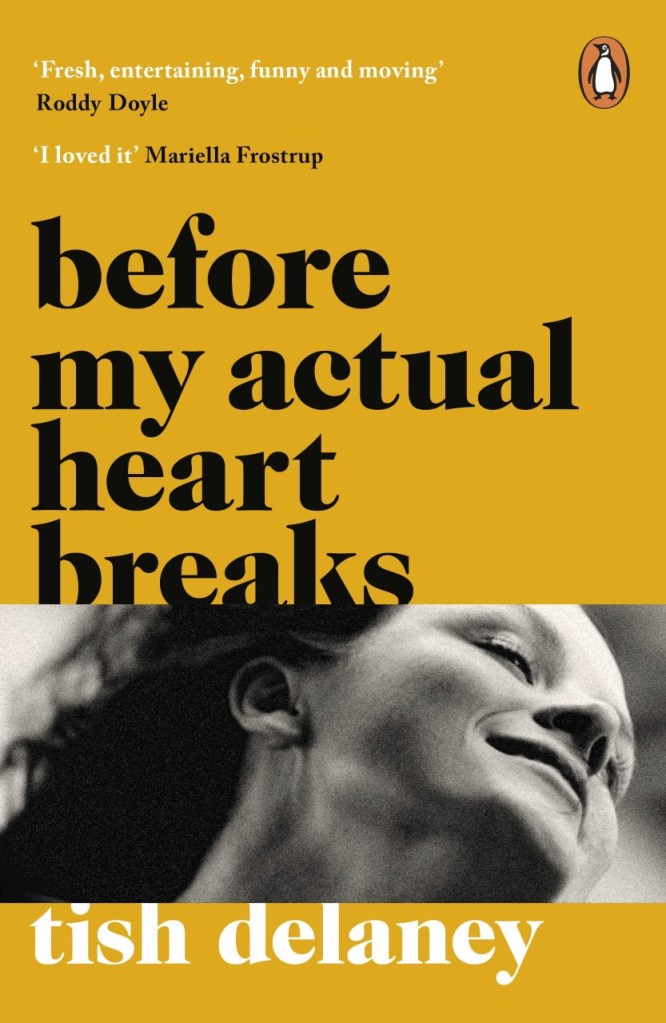
Before My Actual Heart Breaks by Tish Delaney.

‘If I could go back to being sixteen again, I’d do things differently.’

‘Everyone over the age of forty feels like that, you total gom,’ says my best friend Lizzie Magee.

Oh my goodness, my heart did break for the intelligent, spirited and strangely beautiful Mary Rattigan. She is a character who will stay with me, especially the childhood Mary and her battles with Mammy – a woman who I hated so strongly it was as if she was a real person! The Rattigan’s life on her parent’s farm in Ireland is at odds with her romantic and wild nature. She wants to fly. She will not be satisfied until she flies out of her dirty and dangerous surroundings, leaving ‘The Troubles’ behind her. She doesn’t care where she goes, as long as she’s free and lives happily ever after. However, life has a way of grounding us and Mary is no exception. In a life punctuated by marriage, five children, bombings, a long peace process and endless cups of tea Mary learns that a ten minute decision can change a whole life. These lessons are hard won and she’s missed a hundred chances to make a change. Can she ever find the courage to ask for the love she deserves, but has never had?

This book really did play with my emotions and there were times I felt completely wrung out by Mary’s life. It was emotionally and physically exhausting. Her Mammy is physically and psychologically abusive. Not above a slap, when hateful words aren’t having the effect she wants, Mammy is a ‘bitch’. Often turning up at the tea table with a bruised face or black eye, Mary longs for her father to intervene. However, he never opens his mouth, unless it’s to smoke his pipe. She loves him but at the same time, hates him for his silence and his cowardice. Mammy is a hypocrite, playing the perfect Catholic matriarch on the surface – always loving or feeding her sons, cooking perfect chicken roasts for her family and getting out the best china when the priest comes for tea. It broke my heart when she left Mary without tea, then next morning as the boys all line up for their lunch boxes Mary is given an empty one. I felt so emotional for this girl, who doesn’t expect any better. There are two women she can rely on for a little bit of maternal support and love, her Aunt Eileen who ruined herself and now lives with her illegitimate daughter Bernie and Bridget Johns who lives at the next farm across and is always ready with a cuppa and a shoulder to cry on. Both know what’s going on at Mary’s home and have taken her under their wing. Eileen goes as far as bringing the priest down to the farm when she feels Kathleen has gone way too far in disciplining Mary.

I was desperate for Mary’s eventual flight from the farm, following in the footsteps of her brothers. Sadly, she doesn’t get to fly as far as she expects; it seems she swaps one imprisonment for another. The emotionally gutting thing about Mary is that she always has a tiny kernel of hope. She underestimates her mother’s capacity for evil – but as long as everything looks ok to others and the parish priest, then her daughter’s happiness is Mammy’s top priority. There’s a point where Mary knows she’s done wrong, she expects to be punished and is willing to take it, but she hadn’t banked on giving up everything – her dreams, her education, her future. She doesn’t dream that her Dad would let that happen even if she does expect it from her Mammy. As a result she’s more angry with him than anyone. I don’t want you to think that this book is a drag to read. It really isn’t. There are some passages that are hilariously funny. Mary is irreverent, mischievous and has a few sayings that made me laugh out loud. I loved her description of her Mum backing out of the room so she didn’t ‘show her backside to the priest’. I went to a Roman Catholic primary school, but when we moved to a different area for my Dad’s work there wasn’t a school close enough and I went to the local school, followed by a grammar school when I passed my eleven plus. My mum was worried that I wouldn’t have the same teaching I did at primary, so I did lessons at the convent after school. Then I got to go on a Catholic kid’s retreat, in Derbyshire. We did loads of outdoor activities and had mass every evening at 6pm, with a young monk called Declan who everyone fancied and a rather bohemian priest who played guitar and had us singing every night. I remember being very proud that when the bishop came for tea, I was chosen to sit next to him. Our idea of fun was pretending to baptise each other in bed! So, Delaney’s description of Mary’s school holiday felt very familiar and made me laugh.

‘The groups would be mixed so we could hear what boys our own age, from the same religion, and the same class background for the most part, had to say about the Troubles and how they affected life in Carncloon, and what we had to say back. Fascinating stuff. Then after dinner, when we’d settled the cons and cons of people blowing ten bags of shite out of each other on a daily basis for twenty years, we were going to have a sing-song. Hymns and popular folk songs as Father Kevin, apparently, was a dab hand on the guitar’.

There’s a blasé tone to Delaney’s writing about ‘The Troubles’, but it’s clear from Mary’s narration that they have a huge impact on those that live alongside the unpredictability, hate, protests and rising violence. It comes very close to home on a couple of occasions and Delaney describes historical events that I remember vividly, particularly the murder of two undercover police officers who drove into an IRA funeral. I remember the headlines, the pictures and the descriptions of violence that no one could condone and how they caused friction in our family, between the Irish Catholic background of my Mum and the loyalty to the British Army instilled in my father. There were subjects we didn’t venture into or talk about. The hunger strikes were something I was very aware of and the conditions of the Maze Prison. I had a huge amount of admiration for Mo Mowlam who negotiated a peace process despite her cancer diagnosis. I am probably a similar age to Delaney so I felt an affinity with her and understood her. Mary’s need to be loved is so raw she can’t even articulate it. How can she understand or recognise love when she’s never felt it? She has been told she’s nothing, so nothing is what she deserves. Delaney writes about love and the realities of marriage with such wisdom and tenderness that I was rooting for Mary Rattigan till the very last page.

Meet The Author.

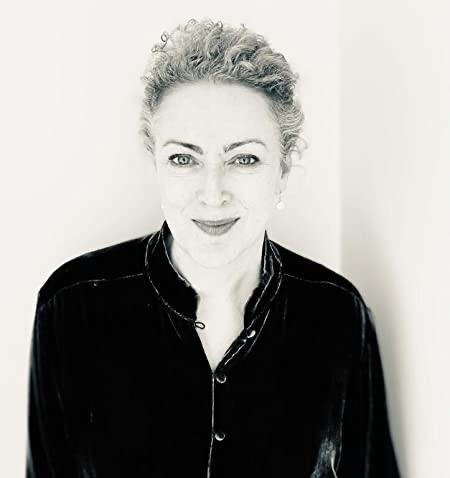
Tish Delaney was born and brought up in Northern Ireland at the height of the Troubles. Like a lot of people of her generation, she left the sectarian violence behind by moving to England. After graduating from Manchester University, she moved to London and worked on various magazines and broadsheets as a reporter, reviewer and sub-editor. She left the Financial Times in 2014 to live in the Channel Islands to pursue her career as a writer. Before My Actual Heart Breaks, her debut novel, will be published by Hutchinson in 2021.

Posted in Netgalley, Publisher Proof

Wish You Were Here by Jodi Picoult

This was my first full on pandemic book. Others have mentioned or touched upon the changes of the last eighteen months, but this was full immersion!

I’ve been disappointed with the last two of Jodi Picoult’s books. They were still well written, but for some reason I felt detached from everyone in A Spark of Light – maybe because in the U.K. abortion isn’t such a contentious issue? The Book of Two Ways felt almost so full of detail that I was reading a textbook and losing interest in the story itself. This was a glorious return of form that I truly loved. Diana and her boyfriend Finn live in New York City, he is a doctor and she works at an auction house for fine art, on the verge of promotion to become an Art Specialist at Sotheby’s. She’s trying to acquire a Toulouse Lautrec painting that hangs in the bedroom of a Japanese artist -loosely based on Yoko Ono. Then, everything changes. Finn and Diana have a very set life plan and part of that was an upcoming visit to the Galápagos Islands. However there are rumours flying around in the medical community of a strange new virus in Wuhan, China. It seems like SARS in that it affects breathing, because it causes pneumonia and requires huge amounts of resources to keep patients alive. Diana’s boyfriend feels torn, as a doctor he’s worried and thinks they should be preparing but the president is on TV telling everyone it’s no worse than flu. What’s the truth?

. She meets Abuela’s granddaughter Beatrice who appears to have secrets and an inner pain that brings out a maternal instinct Diana didn’t know she had. Tour guide and Beatrice’s father, Gabriel, is the perfect person to be stranded with. He knows every corner of the island and has no work, so he can show Diana some of the sights she would never have seen ordinarily. The islands sound miraculous and here Picoult really does create an incredible sense of place. The seals lazily basking on the jetty, the sea turtles and their nests buried in sand, lush vegetation and lizards lying around intertwined. I could see and taste the salt air. I loved the islanders too – their openness to Diana, the bartering market set up when the island quarantined itself from the world. Everything is vivid and almost hyper-real. Then came the twist!! Oh my goodness I did not expect that at all. This was brilliantly done and shocked me. Yet it was all too plausible.

Diana has one link to the world beyond the Galapagos and that’s the occasional email from Finn. In it we see the reality of the COVID-19 epidemic in New York City. They have so many people being admitted and not enough people recovering and moving through rehabilitation. What do you do when the resources simply run out? Finn is exhausted, has permanent bruises on his cheeks, because they have to keep their masks so tight and is struggling mentally. He describes to her the patients lost, ones he can’t forget, because there are too many to remember them all. This was tough reading and I’ll be honest, I learned things about the virus I’d never heard before such as vascular compromise, bowel necrosis and neurological deficit. There were points where I felt a bit breathless and panicky. As someone who had to shelter from the virus, it made me think twice about going out in a couple of places. Anyone who thinks it’s just a ‘bit of flu’ should be locked in a room with the audio book playing on repeat! Please don’t let this put you off though. It’s beautifully written and the insight it gives into how hard things have been for those in the medical profession is priceless. We owe it to them to read such well-researched and thoughtful accounts of the pandemic. The Galapagos sections are like paradise in comparison and this was the space where I could take a long deep breath.

This book is Picoult at her best, in that it has an interesting storyline, and characters as well as an issue she could really get her teeth into. As the book started I was prepared for it to be set within the art world and I was already curious to see her relationship with Kito – the Japanese art collector – because they seemed to be on a similar wavelength. I thought we might end up embroiled in a legal battle over ownership or whether the painting was a forgery. Then everything she’d built at the beginning became subsumed by the pandemic and it became a totally different story. The structure effectively echoes how our lives have been interrupted and changed forever. There are people who went into the pandemic with a job that no longer exists. People have lost friends, family members and partners. The pandemic has changed people, they are looking at how they live and making changes. We moved into the country, and I’m sure others have done similar, focusing on enjoying life and working to live instead of living to work. There are people like me, who were disabled, but felt like part of society still. Gradually, over the last 18 months, I have become a recluse and I’ve felt more and more separated from people. Especially those people who say the vulnerable should be kept inside, so that ‘normal people’ can have their lives back. I’ve felt like an inconvenience, and like we’re holding the rest of the country to ransom. I’m hoping these feelings change with time, but who knows? I could understand Diana’s decision at the end of the novel, it might have seemed illogical but I got it. When you’ve been through something momentous you change, and part of that is re-evaluating life and choosing what makes you happy. It’s trying to recapture hope. I don’t want things to ‘go back to the normal’; I want this pandemic to mean something and I want things to get better. Diana takes that decision for herself and I found that both brave and uplifting.

Meet The Author


Jodi Picoult is the author of twenty five internationally bestselling novels, including MY SISTER’S KEEPER, HOUSE RULES and SMALL GREAT THINGS, and has also co-written two YA books with her daughter Samantha van Leer, BETWEEN THE LINES and OFF THE PAGE. She lives in New Hampshire with her husband and three children. 

Her most recent adult novel, A SPARK OF LIGHT first published in the UK on 30th October 2018, and was a #1 Sunday Times and New York Times bestseller. 

Follow Jodi Picoult on Twitter @JodiPicoult and find out more at http://www.jodipicoult.co.uk or on Facebook/JodiPicoultUK.

Posted in Random Things Tours

On the Edge by Jane Jesmond.

I was thoroughly gripped by this tense thriller set in Cornwall and concerning Jenifry Shaw – an experienced free climber who is in rehabilitation at the start of the novel. She hasn’t finished her voluntary fortnight stay when she’s itching for an excuse to get away and she finds one when her brother Kit calls and asks her to go home. Sure that she has the addiction under control, she drives her Aston down to her home village and since she isn’t expected, chooses to stay at the hotel rather than go straight to her family home. Feeling restless, she decides to try one of her distraction activities and go for a bracing walk along the cliffs. Much later she wakes to darkness. She’s being lashed by wind and rain, seemingly hanging from somewhere on the cliff by a very fragile rope. Every gust of wind buffets her against the surface causing cuts and grazes. She gets her bearings and realises she’s hanging from the viewing platform of the lighthouse. Normally she could climb herself out of this, most natural surfaces have small imperfections and places to grab onto, but this man made structure is completely smooth. Her only chance is to use the rapidly fraying rope to climb back to the platform and pull herself over. She’s only got one go at this though, one jerk and her weight will probably snap the rope – the only thing keeping her from a certain death dashed on the rocks below. She has no choice. She has to try.

I don’t know about you, but my heart was racing and this was just the opening! I thoroughly enjoyed this intense thriller, so much in fact, I read it in one sitting. This was too good to put down. Jen can trust no one, as she tries to investigate her own attempted murder. The dark, taciturn, Nick Crawford has to be dodgy. He’s not from the village and claims to be a carpenter, but Jen has her suspicions that his business is a cover. After all, she should know, she has been dealing with drug dealers her whole life. Could it be him who drugged her, then left her for dead at the lighthouse not knowing about her past; the talent for climbing she inherited from her father and the buzz she’d get from free climbing the seemingly impossible. Even man made structures were no match for her and the rush was incredible, hanging out with other adrenaline junkies – the base jumpers, the parkour and free running enthusiasts. The way the author wrote about this world was fascinating and very beguiling. I’m fond of saying to clients in workshops that as adults we forget to play, I now fulfil that by crafting, sewing and writing stories. My early readers will know that I broke my back when I was 11 doing somersaults in the playground when I should have been high jumping. The author truly made me think of a time before my accident when I was largely free to do as I liked. My brother and I would climb a pair of willow trees, bent so far over one of rural Lincolnshire’s many drainage dykes, that a child could lie full length in them. He would be fishing. I would take a sketchbook or journal and spend the day scribbling or sketching flowers. In the descriptions of Jen’s climbing days I remembered the freedom of a body that was loose and easy to use. The body that took me up Snowdon and other mountains, or went wild swimming and could take on any challenge without fear of pain or exhaustion. Times where it’s just you and nature. Jen promised her brother Kit that she would give up free climbing after a terrible accident left one of their friends paralysed. I understood giving up something that’s such a huge part of who you are and the need to replace that adrenaline rush with something, to self-medicate.

The sense of place was incredible. The author conjured up my Cornwall almost immediately with her descriptions of the tin mine, the crashing sea on the cliffs and fog on the moors. I recognised the sea mist that seems to coat your car and your windows. The weather was hugely important, with storms amping up the tension in the opening chapters and the fog of the final chapters adding to the mystery. Will we find out who is behind the strange and dangerous events Jen has uncovered or will it remain obscured? Cornwall is the perfect place to hide criminal activity, hence the history of smuggling and piracy, so why would it be any different today? Has the cargo changed? I loved that the author wove modern events and concerns into the story, because it helped the story feel current and real. The concerns around development and tourism are all too real for a county, dependent on the money tourism brings, but trying to find a balance where it doesn’t erode the Cornish culture. Local young people are priced out of the property market and we get a sense of that here with Kelly who left to become a dancer until a knee injury forced her home to live with her brother Talan. Kit and Jen both left in order to make their way in life, setting up a climbing business that Jen managed. Yet they are in financial dire straits after Kit and his wife try to renovate the family home into a well-being centre. Jen and Kit’s home, Their house is more of a stately home, but not an attractive one – Jen refers to it as a grey block or brick with none of the embellishments expected of a historic building. Their mum says Kit has renovated the soul from the house, and since the family spend most of their time in the unrenovated kitchen I was inclined to agree. However, without the new business opening and attracting tourists they’ll be ruined. It’s a constant love hate relationship between Cornishman and incomer.

The final chapters, as Jen discovers what’s going on in her home village, is absolutely nail-biting. I was also holding my breath in parts. I won’t give anything away but the revelations are startling and no one is who they seem. I was surprised by most of the twists and it made for a fantastic conclusion. As I usually do with a author thats new to me, I didn’t read any of the promo stuff until I’d finished the book. When I’d recovered from holding my breath, I looked the author up because I was keen to read her back catalogue. Surprisingly, this is her first novel. I’d be incredibly proud of it. It’s well-paced, exciting, and has a great central character who doesn’t need a rescuer. She can save herself. I loved the way the author built atmosphere and that simmering tension that grabs you at the outset and doesn’t let up. I’m not surprised this was picked out of a pile of submissions; it stands out. If this is what Jane Jesmond is opening with, I can’t wait to see what she’s doing next.

Meet the Author

On The Edge is JANE JESMOND’s debut novel and the first in a series featuring dynamic, daredevil protagonist Jen Shaw. Although she was born in Newcastle Upon Tyne, raised in Liverpool and considers herself northern through and through, Jane’s family comes from Cornwall. Her lifelong love of the Cornish landscape and culture inspired the setting of On The Edge. Jane has spent the last thirty years living and working in France. She began writing steadily six or seven years ago and writes every morning in between staring out at the sea and making cups of tea. She also enjoys reading, walking and amateur dramatics and, unlike her daredevil protagonist, is terrified of heights!

Why not check out some more reviews from these lovely bloggers.

Posted in Random Things Tours

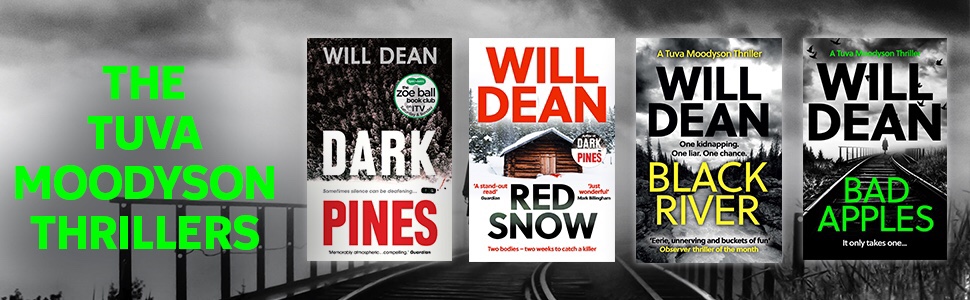
Bad Apples by Will Dean.

Wow! Will Dean does like to put his heroine in some terrifying situations. There is so much about this series that I love, then a good 20% that makes me feel a bit sick or unsettled. In the last book it was snakes that had me a bit on edge. This time? Well it’s saying something when a severed head is the most comfortable thing about Tuva’s investigation.

We’re back in Gavrik, deep in the northern most part of Sweden and Tuva is back at the local newspaper, but has a more senior role and a new colleague to oversee in the shape of eager young newbie Sebastian. In fact, things are pretty good in Tuva’s world. Best friend Tammy is back in her food truck dishing up the best Thai food around. Tuva is in a steady relationship with police officer Noora, which works really well although they have to keep a boundary between police work and what ends up in the paper. As part of her new role, the Gavrik newspaper will now also cover the nearby hilltop community of Visberg. With a treacherous ascent road through the forest, there’s really enough danger in this assignment, but when Tuva stops for a moment in her truck, she winds down the window and hears a terrified human scream. Never one to run away from danger, she hurries towards the noise and finds a woman covered with blood and a body, without it’s head. The man is Arne Persson: resident of Visberg; local plumber; member of the choir and the town’s chamber of commerce. Tuva’s introduction to Visberg is going to be an unpleasant one. Instead of getting to know the residents and building trust, every one of them will know she discovered Persson’s headless body and every one of them could be a possible suspect.

Dean has a wonderful way of describing these remote northern towns and their eccentric residents. I often wonder whether it is living in such an inhospitable environment breeds eccentricity or whether odd individuals are attracted to it’s remoteness. Quirky details are brought into the narrative that feel surreal and put the reader on edge. Local pizza maker Luke Kodro obliges residents with the oddest pizza toppings I’ve ever heard of – ‘fillet steak, onion, mushroom, bearnaise, peanuts and banana’. However, many view him with suspicion because he’s from Bosnia and one even names him as the ‘our local, friendly, war criminal’. There’s also Hans Wimmer who has a shop in the town square selling all sorts of timepieces, but down in the basement has rare clocks including some handmade ‘organic’ examples. We also meet old friends like the Sorlie sisters, running a pop-up shop selling their unique trolls and masks for the town’s peculiar celebration Pan Night. Tuva asks about this festival, but most residents are secretive about what it entails. Even the sisters warn Tuva that it’s a celebration for hill folk only and that outsiders aren’t welcome after dark. This piques Tuva’s curiosity and she overcomes her revulsion enough to buy an animal mask from the sisters and plans to gate crash. The Pan Night chapter is a highlight of the book for me and the way the author covers all the senses gives the reader a truly immersive experience. There a bonfires, falling apples being crushed underfoot, animal masks, people walking backwards or getting frisky under park benches and the most disgusting balloons it’s ever been my misfortune to imagine. In this town, any one of the residents might have killed Arne Persson and I was a long way from solving the case.

I love how Tuva has changed since the first novel. There was a guarded quality to her at first, a sense of keeping herself separate that might have something to do with her deafness or possibly life experiences. Here there’s a softening to her character. She’s still brave and resilient, with an intrepid sense of adventure, but her ties to people have always been minimal. Her friend Tammy has recovered well from her kidnap ordeal and they are still close, looking after each other as family. Her boss Lena also looks after Tuva in a motherly way that’s very different to the difficult relationship Tuva had with her late mother. I noticed a relationship building between Tuva and the little boy at the flat next door, who isn’t having the easiest family life and seems to trust Tuva. She agrees to baby sit him on a couple of occasions and is touched by his faith in her. I guess most importantly, the biggest change is her long term relationship with Noora. This seems to have a stabilising effect on Tuva, although the relationship terrifies her as much as it makes her happy. What is the future for the couple? Could Tuva be comfortable even sharing her living space with another person? She isn’t sure, even though she knows she loves Noora.

This book picks you up and takes you on a fascinating and thrilling ride that builds in tension to a terrifying ending that I didn’t see coming at all. I had to stop reading at one point, because I realised I was so tense I was gritting my teeth! I’m sure the author has a hotline to my fears and this ending tapped into them perfectly. Needless to say, if I was Tuva, I’d be packing up the Hilux and leaving the hill folk to murder each other! I think the way the author depicts Tuva’s deafness is interesting. Usually Tuva uses it to her own advantage – taking her hearing aids out when she’s writing a piece means she can focus and taking them out at home means she can’t hear next door. However, it can also leave her vulnerable and the author uses it to intensify the horror element of the book, particularly towards the finale. There’s something about another person touching her hearing aids that feels so personal and also like a violation, depending on who it is. Every time I know a Tuva Moodyson book is coming, the excitement starts to build. By the time it’s in my hands I’m ready to drop all my other reading to dive in. Of course when something is so anticipated there’s also a fear about whether the book will live up to expectations. Bad Apples did not disappoint and is a fabulous addition to this excellent series.

Published by Point Blank on 12th October 2021.

Why not check out the other reviews on the blog tour..

Meet The Author.

If you don’t already follow Will Dean on Twitter you’re missing out on fantastic photos, including those of his huge St Bernard and the country surrounding his cabin in the woods. He grew up in the East Midlands and had lived in nine different villages before the age of eighteen. His debut novel, Dark Pines, was selected for Zoe Ball’s Book Club, shortlisted for the Guardian Not the Booker prize and named a Daily Telegraph Book of the Year. The second Tuva Moodyson mystery, Red Snow, won Best Independent Voice at the Amazon Publishing Readers’ Awards, 2019, and was longlisted for the Theakstons Old Peculiar Crime Novel of the Year 2020. His third novel, Black River, was chosen as Observer Thriller of the Month. Will Dean lives in Sweden where the Tuva Moodyson novels are set.

Posted in Publisher Proof

Blasted Things by Lesley Glaister.

This is the first novel I’ve ever read by Lesley Glaister and when I finished, I couldn’t believe I’d never heard of her before. Set in one of my favourite historical periods, during and after WW1, this novel was evocative and moving. The author clearly has a deep understanding of the period and the rapidly shifting society her characters are living in. Her characters are fully rounded, with depths to get lost in and the effects of trauma to unravel and understand. This is an exploration of the effects of war and loss on our two main characters, Vincent and Clementine. The scars are both physical and mental, halting their progress as they try to move forward and making it very difficult to be who they truly are. When they, quite literally, bump into each other a strange relationship emerges that will have a haunting resolution. I could see these two people in my mind’s eye and I found myself thinking about them, even when the book was closed.

Clementine was a hands on during the war, volunteering as a Red Cross nurse close to the front. Her boyfriend Dennis had proposed and he didn’t want her to interrupt their lives. He didn’t fight, being a doctor he could claim to be needed by the patients in his area, so he wanted their lives together to start. Clem wanted to be part of the war effort, so along with her friend Gwen she ‘ran away’ (Dennis’s words) and became part of a medical unit. She wasn’t just taking temperatures either, her stomach is strong enough to be in the operating tent, helping to hold patients down during amputations and disposing of mangled limbs. The author’s depiction of working in the medical tents is vivid and gritty. I was able to imagine the struggle to keep wounds clean in the squalor and sick men comfortable on camp beds crawling with lice. The description of Clem’s hair stayed with me, tied up out of the way, but greasy and alive with lice. I could feel her desperate need to wash it, and the shock she feels when the doctor, Powell, finds hot water and washes it for her. I found that image so romantic, because he’d realised what she most wanted at that moment and provided it for her. He washes her hair with such kindness and a gentle touch, I almost fell in love with him myself. They have a deep and immediate connection, so Clem knows she must write to Dennis and explain what has happened.

However, before Clem can write two things happen. She realises she is pregnant and tragedy strikes, when the unit is bombed both Clem and Powell are injured in the blast. Clem has a picture in her brain, like a flashback, of a stove pipe from the boiler embedded in Powell’s back. She knows in that first second that she has lost him. Only days later she miscarries alone in the toilets, and this scene was so real and so emotive I cried. She’s lost the love of her life and now the last part of him has gone too. Numb and shocked she returns home and seems to sleepwalk into the same situation she left behind. In the next section of the book she is married to Dennis, who doesn’t know about her wartime experiences. They live above his doctor’s surgery and they have a child together, a little boy, but she grieves Powell and their little girl. I felt she was living behind a mask, being who she thinks she has to be rather than who she is. The ambivalence she feels towards her son is well represented, because she still grieves for that first child. There are physical signs, written on the body, that she has Edgar. The silvery stretch-marks mark the time she was pregnant, yet there are no signs of her daughter. It’s like she never existed.

Vincent meets Clem when she’s visiting her sister-in-law Harri. Feeling stifled, Clem goes out for some air and keeps walking, until she’s miles away and not sure of how to get back. She takes a quick breather at a bridge and steps into the road, just as a biker comes along. As he swerves to miss the crazy lady stood in the middle of the road, he loses control of his bike and crashes. Clem strangely sees something of Powell in him at that first glimpse. Actually, Vincent is a product of the same terrible war that left Clem bereft. For Vincent it left him wounded physically and emotionally. He has a facial disfigurement that means he wears a mask, literally and figuratively. Vincent has been left in a very reduced position by the war. His marriage has failed and the job he was assured would still be his when he returned from the front, has been taken away from him. How can a man who looks like him, be the face of an insurance company? He has nowhere to live, so he’s latched onto a woman called Doll, who runs a local pub. She’s easy with her favours, and Vincent takes advantage of this to lodge upstairs. He can’t cope with how much he’s lost and wants to replace it, with visions of marriage to Doll and being the welcoming host from behind the bar. He doesn’t love Doll, but they get on and there are worse places to be. Similarly, he notices how well dressed Clem is and thinks she might be manipulated into paying for his bike’s repairs. In the end, she visits him at the hospital and offers to pay, leaving her details and the possibility of a connection between them. They are both suffering the effects of trauma and might sense that shared perspective on the world. If Vincent is willing to settle with Doll, might this be another opportunity for him? What exactly can their relationship be?

I was worried for Clem, who is vulnerable. However, I was worried for Vincent too, he has lost so much and is vulnerable in his own way. He’s not one of the ‘glorious fallen’ heroes, and unlike Clem’s husband doesn’t have any status here at home either. He’s a reminder of exactly how ugly and terrible war can be, and nobody wants to remember. Dennis certainly doesn’t want to hear his wife’s tales of war. The author pitches him perfectly, a man who chose not to fight, but likes to remind everybody that he was fighting to keep the families of those soldiers fit and healthy. He represents the old order of things, with class barriers and men as head of the home. His need for control extends to his sister as well as his wife; there’s one right and respectable way to be in the world. When her friend Gwen visits for tea, he makes it quite clear that she’s not the right company. Not only did she get Clem to run away to war, but now she’s clearly having a lesbian relationship. His way of dealing with the world is on the wane though and he felt to me like a dinosaur that doesn’t know it’s extinct. He hasn’t been through the seismic change the others have and can’t identify with them. War has changed a whole generation of people around the world. I felt for Clem, who is part of this changed generation. She knows the future is different, but she’s chained herself to the past. Is it too late?

This was so beautifully written, with well-chosen words that create rhythm and take the reader on a journey through their senses. This explosion of sights, sounds and sensations bring an immediacy to the prose. This is not some long winded description of what a battlefield was like, it is the sounds and smells as they happen. I felt like I was there:

‘Where was the fear? She searched herself as she listened: sometimes the rat-tat-tat of gunfire, rapid and snippy like the keys of two vast, duelling typewriters battering out threats to each other on a paper sky; crumpings like oil drums being crushed by massive fists; a whistling followed by the soft whoomph of a missile striking, then virtual silence, then the battering of the typewriters again’.

The author truly does show us what’s happening and the contrast of passages like the one above and the quiet, clock-ticking, stillness of Clem’s home is so effective. No wonder Clem takes to walks; she needs to breathe. Every character is flawed, but no one is irredeemable. Through Clem she shows how women were restricted by society and I love that Gwen and her girlfriend had chosen a different path. Most poignantly, she shows how war interrupts lives and takes away people’s livelihoods, opportunities and in Clem’s case, even her creativity. I think this is one of the best books I’ve read on the aftermath of trauma. The author has so much compassion and empathy for her characters and because of that, so does the reader. I didn’t want this book to end and that’s the biggest compliment a reader can give.

Meet The Author.

Lesley Glaister is a fiction writer, poet, playwright and teacher of writing. She has published fourteen adult novels, the first of a YA trilogy and numerous short stories. She received both a Somerset Maugham and a Betty Trask award for Honour Thy Father (1990), and has won or been listed for several literary prizes for her other work. She has three adult sons and lives in Edinburgh (with frequent sojourns to Orkney) with husband Andrew Greig. She teaches creative writing at the University of St Andrews and is a Fellow of the Royal Society of Literature.

Published by Sandstone Press on 7th May 2020

Posted in Publisher Proof, Random Things Tours

Freckles by Cecilia Ahern

It seems a strange admission to start a review with, but I’ve never liked Cecilia Ahern’s books. In fact P.S. I Love You brings me out in a rash. There has always been something too saccharin and sweet about them. So, when I was browsing NetGalley and saw her new novel I had pretty low expectations, but the blurb piqued my interest and here I am swallowing my words. So, when I had a chance to come on the blog tour, I had to take it. I wanted to let other readers, maybe those who hadn’t liked her other novels, know that Freckles is a fantastic read and I absolutely LOVED it.

Five people.

Five chances.

One woman’s search for happiness.

Allegra Bird’s arms are scattered with freckles, a gift from her beloved father. But despite her nickname, Freckles has never been able to join all the dots. So when a stranger tells her that everyone is the average of the five people they spend the most time with, it opens up something deep inside.

The trouble is, Freckles doesn’t know if she has five people. And if not, what does that say about her? She’s left her unconventional father and her friends behind for a bold new life in Dublin, but she’s still an outsider.

Now, in a quest to understand, she must find not one but five people who shape her – and who will determine her future.

Told in Allegra’s vivid, original voice, moving from modern Dublin to the fierce Atlantic coast, this is an unforgettable story of human connection, of friendship, and of growing into your own skin.

Our heroine, Allegra Bird, is quirky, surprising, incredibly loveable, and finds other human beings quite difficult to understand. She’s a parking warden in her little corner of Dublin and every day has a strict routine. She walks down to the bakery where owner, Spanner, greets her with a coffee and a Belgian waffle. She then follows her route, making sure that the same car is parked outside a certain hairdressers, then makes her way to where a yellow Ferrari is constantly illegally parked. She has a small flat in a large family home, with babysitting duties as part of the deal. On Fridays she goes to a small art gallery in town where there’s a life drawing class. It turns out she’s the regular model – I said she was surprising – and she is fascinated with how the artists approach her freckles. There are some freckles that she used to scratch into star constellations, and she’s fascinated to see if they ignore them or over dramatise them as if they’re huge, angry slashes. This is her daily routine, but when she gives the man with the yellow Ferrari his umpteenth ticket, something changes. He tells her she’s the sum of the five people she’s closest too and he doesn’t mean it as a compliment. As a reader we can see that from his perspective Allegra is a pernickety, humourless, jobsworth. However, we also know that Allegra is sensitive and this really hits home with her. She doesn’t have five people – but what if she could curate her five from people who inspire her or who are really successful? If the theory is correct, then by curating her five she could curate her life, becoming more successful in the process.

The joy I felt in this novel was from seeing how Allegra related to other people. For her, other people behave in totally illogical ways (and I have to say I was in agreement with her about some of them – particularly her dreadful landlady). I loved the relationship with Tristan, built from his inability to park his Ferrari legally. She thinks she’s simply being helpful by taking him forms for permits, so is baffled when he illogically persists in paying from hour to hour, relying on his rather lazy staff to keep an eye on the time. These two hate each other at first, but watching as they try to understand each other is wonderful. When Allegra goes back home to visit her Dad she thinks she might slot back into island life easily. She imagines, like people do when they move away, that nothing will have changed when they return. Will old friends be there for Allegra and make up her five? When she’s with her Dad, we see where some of her quirks come from, because he isn’t the best at picking up other people’s signals either. She finds out he’s been stopped from attending his choir because he’s made a pass at one of the administrators, who has felt uncomfortable and made a complaint. He’s a man stuck in the behaviour of an earlier decade, he seems baffled that just touching a woman on the knee is enough to be labelled a pervert. He has brought Allegra up by himself, but she had come to an age where she wanted to know more about her mother and life beyond this place stranded in the Atlantic. When the results of her search are revealed, I was genuinely surprised. I felt so protective of Allegra by this point, I was desperate for everything to work out the way she wanted. It was this hope that created so much tension towards the end, and I couldn’t stop reading.

I loved Allegra’s unique voice as she lets us into her mind and her world. This wouldn’t be a Cecilia Ahern book without being heartwarming and full of humour, but this story is more complex than that. There are darker characters, parts that are more painful or remain unresolved, that show a real maturity and development. It’s about being proud of where you’re from, but also finding your authentic self – a journey that sometimes needs some distance from where we grew up. The author contrasts genuine, warm and accepting people with the false, Instagram brigade who are more interested in how life looks than how it is. Her characters are brilliant here, more complex and nuanced than I’ve seen before. There are even some that turn out to be deeply narcissistic and I wanted to protect Allegra from them. I loved the contrast between the city streets of Dublin and the wild Atlantic island Allegra calls home. In a way this is the decision she has to make. Where is home? Which place truly suits the person she is instead of the woman she thought she had to be in order to be accepted. Does she know that when we are our authentic selves, we attract people to us anyway. Our true five perhaps? All through the novel I found myself responding emotionally to the story, but Allegra’s character simply made me smile and perspective on her world made me smile inside. Not that she needs it, because I know millions love her writing, but if Ahern keeps writing characters like Freckles, she has found herself a brand new fan.

Meet The Author


After completing a degree in Journalism and Media Communications, Cecelia wrote her first novel at 21 years old. Her debut novel, PS I Love You was published in January 2004, and was followed by Where Rainbows End (aka Love, Rosie) in November 2004. Both novels were adapted to films; PS I Love You starred Hilary Swank and Gerard Butler, and Love, Rosie starred Lily Collins and Sam Claflin. 

Cecelia has published a novel every year since then and to date has published 15 novels; If You Could See Me Now, A Place Called Here, Thanks for the Memories, The Gift, The Book of Tomorrow, The Time of My Life, One Hundred Names, How To Fall in Love, The Year I Met You, The Marble Collector, Flawed, Perfect and Lyrebird. 

To date, Cecelia’s books have sold 25 million copies internationally, are published in over 40 countries, in 30 languages. 

Along with writing novels, Cecelia has co-created the US ABC Comedy Samantha Who? and has created many other original TV projects.

Posted in Random Things Tours

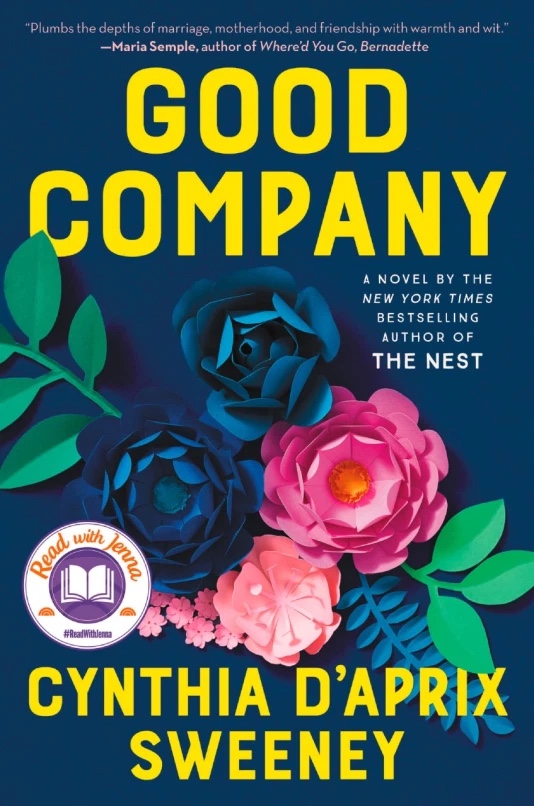
Good Company by Cynthia D’aprix Sweeney

Flora and Julian struggled for years, scraping together just enough acting work to raise their daughter in Manhattan and keep Julian’s small theatre company—Good Company—afloat. A move to Los Angeles brought their first real career successes, a chance to breathe easier, and a reunion with Margot, now a bona fide television star. But has their new life been built on lies? What happened that summer all those years ago? And most importantly, what happens now?

GOOD COMPANY follows two couples entering the midpoint of their lives, against the backdrop of the New York theatre scene and Hollywood. It tells a story of what it means to, as the author says, “truly love but never truly know another person”.

By chance this week I’ve read two books that focus on that mid-point in life, either that or the universe is trying to tell me something. It seems to be a time of shake-ups and regrets. The time when we look at life and either wonder where our younger selves and their vitality disappeared to, or take stock and realise if we don’t make our dreams a reality soon, we never will. It’s the archetypal mid-life crisis on one hand and we shake things up – buy a motorbike, a sports car or trade in our partner for a different type of ‘racy little number’. Other people throw out the ordinary life and go travelling, create a micro-brewery or start a bucket list. For me it means getting some writing experience and gaining confidence with an MA, while finally sitting down and starting to write my book (wish me luck).

Flora meanwhile, is feeling the need to catalogue the years of mementos and evidence of what she and husband Justin have achieved in life. Whether it’s through the theatre group Good Company that they work on together, or through the family they’ve created. The author sets the scene with something familiar that we’ve all done, clearing out old cupboards and storage spaces we’ve been neglecting for years. Flora is looking for a photograph, but is also enjoying reminiscing over the years they’ve spent together professionally and personally. The photo she’s looking for is from when their daughter Ruby is about five years old and they’re staying in Julian’s family mansion in upstate New York for the summer. At the bottom of the filing cabinet she finds it, an envelope of photographs marked ‘KEEP’ from that very summer. Under it is another envelope with an object in, so Flora opens it to find Julian’s wedding ring. This is nothing new. He’s had at least three since they’ve been together. However, on closer inspection this is their first ring, she had engraved especially for him. We all know that feeling. When you discover something that makes the bottom fall out of your world. Julian claimed to have lost this ring on their summer vacation, somewhere outdoors. So how did it get here, carefully sealed and buried under years of family detritus?

We also get to take a look at Flora’s friend Margot, who alongside Ben and Julian used to tread the boards with Good Company. She was one of those friends so interwoven in their lives she’s like family. In fact a five year old Ruby was so taken with Margot that she was always on her knee and being cuddled. Another photo from that summer shows them all, each intertwined in some way with the other. When people are that close, boundaries can be forgotten and it’s hard to see where your ‘self’ ends and the other begins. When one boundary is crossed, others can be breached too. We see that Margot could be overbearing, even interfering, especially back when Flora is planning to marry Julian. Now a famous actress, with a lead role in a hospital soap, we start to see her personality emerging during an interview with a very well informed journalist. It’s clear that she’s well versed in avoiding the difficult question and very willing to manipulate to get what she wants.

I found the setting fascinating, whether it was a beautifully realised New York or sunny LA I felt like I’d escaped into a different world world while reading. I love the idea of Broadway, it was the only thing I wanted to do when I turned 40 – go to Manhattan and see a Broadway show. To be able to read behind the scenes made me feel like I was reading an episode of Smash, a series that I used to watch with a stupid grin on my face. I love to see people perform so it was an absolute joy to have that feeling after being barred from live theatre for so long now. As we sit back and observe the ins and outs of these characters, we can really observe and analyse their behaviour. We see the individual behaviour but also how it feeds into the group dynamic. I could see the established roles, the shorthand they have developed when communicating, and some undercurrents that even the group aren’t aware of. Margot’s controlling ways have followed her through life, Julian is more passive and even powerless in some situations, and Flora is awakening to the fact that sometimes the individual is more important than the group. Many people in middle age are ‘stuck’ in friendship dynamics that are unhealthy and need to change. It can be impossible to change within the group and only by walking away can the individual put themselves first or initiate change in their own life. Our friends can be used to us being one way and may even actively try to manipulate or force us to stay in our little box. I could see all of this here and for a therapist it’s a delicious psychological puzzle to unravel.

I can see why the author’s debut novel was such a success. This was a great character driven read, with a great sense of place to get lost in. I became fully immersed in Flora’s life and all the complexities of these interwoven friendships and marriages. A wonderful ‘holiday read’ to get lost in from a novelist well-versed in the dynamics of people and their friendship circles. It might even make you think about your own friendships. I must just mention that stunning cover art too.

Thanks to Anne Cater at Random Things Tours and Ecco Harper Collins for having me on the tour.

Meet The Author

Cynthia D’Aprix Sweeney’s debut novel, The Nest, was a smash success, receiving widespread critical acclaim and named a Best Book of 2016 by many, including The Washington Post. Much of what made The Nestbeloved is back in play with GOOD COMPANY, including Sweeney’s distinctive wit and her incisive examination of the way people, and their relationships—with others and themselves—evolve over decades.

Posted in Rachels Random Resources

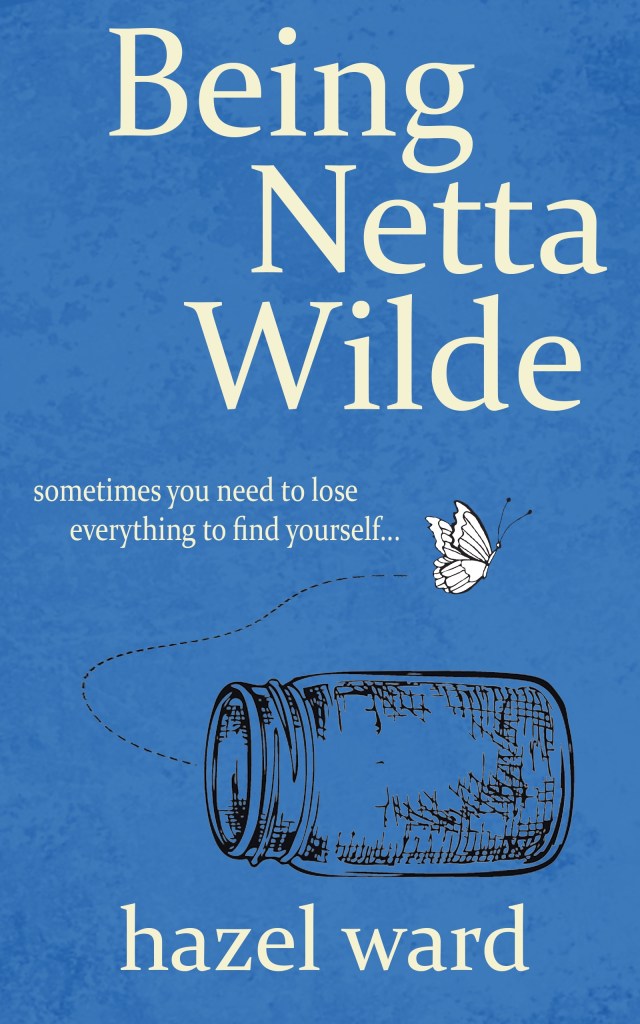
Being Netta Wilde by Hazel Ward.

An uplifting story of love, loss and second chances that celebrates friendship and human connections.

Netta Wilde was all the things Annette Grey isn’t. Netta Wilde was raw, unchecked and just a little bit rebellious. She loved The Clash and she loved being Netta Wilde.

Annette Grey is an empty, broken woman who hardly knows her own children. Of course, it’s her own fault. She’s a bad mother. An unnatural mother. At least, that’s what her ex-husband tells her.

The one thing she is good at …

the one thing that stops her from falling …

is her job.

When the unthinkable happens, Annette makes a decision that sets her on a journey of self-discovery and reinvention. Along the way, her life is filled with friends, family, dogs, and jam. Lots of jam.

Suddenly anything seems possible. Even being Netta Wilde again.

But, is she brave enough to take that final step when the secrets she keeps locked inside are never too far away?

I chose to read this novel, purely because I am a middle-aged woman who looks back to the nineties from time to time and wonders what would that girl think of who I am now? I still wear floral dresses, Doc Marten boots and big slouchy cardigans. I still listen to the same music sometimes, go to gigs and read, constantly. Of course there are times I think I’ve lost myself – that underneath the avalanche of life experience I’ve taken on a different shape. There are times life has been so difficult I haven’t been able to find the girl I was. I’m at my happiest when I’m close to her. When I feel we’re still connected. The times when I can’t find her and I feel completely lost, she’s still there. She never really goes away.

Annette Gray doesn’t know that. She thinks she’s lost her self. She’s become drab, miserable and as Gray as her name suggests. I thought it was clever to create a structure where the actual story feels dull and slow, just as Annette does. It just didn’t come alive at first. Then I realised what the author was doing. As we see flashbacks to her university days they do come alive like the bit in Wizard of Oz where Dorothy wakes from her black and white world to glorious technicolour. It isn’t surprising that she feels so drained. Under the pressure of a terrible marriage where all of her confidence was eroded, it was no surprise to me that she had lost herself. Colin, thankfully now her ex-husband, is unfortunately still playing a huge role in her life. Not only is he a spiteful bully, he has conditioned his children to treat their mother the same way. While working she has footed the bill for their life, while never getting chance to see her children or even put across what life was life was like for her. Even now they’re grown up, their Dad still influences how they feel about her.

When Netta is made redundant I worried that this was another setback for her and when Colin starts complaining about his hand-outs I worried she would crumble. However, this is where the book really does take on some colour and Annette Gray starts to find her inner Netta Wilde again. I loved the joy she found at the foodbank and the new friends she makes there. She also has time for a new hobby that brings her happiness and self-fulfilment – jam making. As a jam maker, I know the satisfaction that comes from a completed batch on the pantry shelf. Like Sophie’s mum in Peep Show, I like to give my batches quirky names that remind me of when I made them – Blair Resignation Plum and Downton Abbey Zingy Damson being two from my shelves! This new lease of life and financial upheaval really opens Netta’s eyes. She can no longer afford to subsidise Colin or her children the way she has, and when she realises she’s been taken for a ride, even more revelations come to light that made me furious. I was dying for the children to realise what a thoroughly unpleasant man Colin is. I also wanted them to see the real person Netta was, someone willing to give up her home to live more simply so she could look after others. Her fellow volunteers at the foodbank really do rally round and become the family she’s been missing for so long.

I think many women lose each themselves, because of the expectation that we’re the caregivers in life. Not just for children, but for elderly parents, disabled siblings and sick spouses. Instead of rebelling, we internalise this and blame ourselves for our rebellious and ‘unnatural’ feelings if we don’t want to do it. Often we don’t even stop and ask ourselves if the men in our family and of our age have the same expectations placed upon them. I think the book captures an experience familiar to many middle aged women. It is peopled with great characters and has a real sense of someone awakening to who they want to be for the next chapters of their life. Someone who’s still a little bit Netta Wilde of yesteryear, but brought bang up to date. The Netta Wilde for now.

Meet The Author

Hazel Ward was born in a back-to-back house in inner city Birmingham. By the time the council knocked the house flat and packed her family off to the suburbs, she was already something of a feral child who loved adventures. Swapping derelict houses and bomb pecks for green fields and gardens was a bit of a culture shock but she rose to the occasion admirably and grew up loving outdoor spaces and animals. Especially dogs, cats and horses. 

Strangely, for someone who couldn’t sit still, she also developed a ferocious reading habit and a love of words. She wrote her first novel at fifteen, along with a lot of angsty poems, and was absolutely sure she wanted to be a writer. Sadly, it all came crashing down when her seventeen-year-old self walked out of school after a spot of bother and was either too stubborn or too embarrassed to go back. It’s too long ago to remember which.  What followed was a series of mind-numbingly dull jobs that paid the bills but did little to quell the restlessness inside. 

Always a bit of a smart-arse, she eventually managed to talk herself into a successful corporate career that lasted over twenty years until, with the bills paid and the children grown up, she was able to wave it all goodbye and do the thing she’dalways wanted to do. While taking a fiction writing course she wrote a short story about a lonely woman who was being made redundant. The story eventually became her debut novel Being Netta Wilde.

Hazel still lives in Birmingham and that’s where she does most of her writing. When she’s not there, she and her partner can be found in their holiday home in Shropshire or gadding about the country in an old motorhome. Not quite feral anymore but still up for adventures. 

Social Media Links – 

https://hazelwardauthor.com

https://www.facebook.com/hazelwardauthor

https://twitter.com/hazelward

https://www.instagram.com/hazel.ward

https://www.youtube.com/channel/UCrmdeA7DKEXhrj6n


Purchase Links

UK – https://www.amazon.co.uk/Being-Netta-Wilde-Hazel-Ward-ebook/dp/B0947351XQ

US – https://www.amazon.com/Being-Netta-Wilde-Hazel-Ward-ebook/dp/B0947351XQ

Posted in Random Things Tours

Everything Happens For a Reason by Katie Allen.

Mum-to-be Rachel did everything right, but it all went wrong. Her son, Luke, was stillborn and she finds herself on maternity leave without a baby, trying to make sense of her loss.

When a misguided well-wisher tells her that “everything happens for a reason”, she becomes obsessed with finding that reason, driven by grief and convinced that she is somehow to blame. She remembers that on the day she discovered her pregnancy, she’d stopped a man from jumping in front of a train, and she’s now certain that saving his life cost her the life of her son.

Desperate to find him, she enlists an unlikely ally in Lola, an Underground worker, and Lola’s seven-year-old daughter, Josephine, and eventually tracks him down, with completely unexpected results…

Both a heart-wrenchingly poignant portrait of grief and a gloriously uplifting and disarmingly funny story of a young woman’s determination, Everything Happens for a Reason is a bittersweet, life- affirming read and, quite simply, unforgettable.

When I first talked to Karen Sullivan at Orenda about this incredible book – part of the Jubilant June publishing event – she told me I would cry but I would love it. She was right. I did cry. I cried buckets. I did love it too. This novel reminded me so much about my own loss. I cried for Rachel, I cried for the author, and I cried for anyone who has suffered this terrible loss. Mostly, and selfishly, I cried for myself. I do know the profound sense of loss Rachel goes through, because I lost three pregnancies, one with twins, when I was in my twenties. Of course these were miscarriages, not full term pregnancies, and as someone once tactfully told me ‘better to lose them earlier, than to actually have to give birth, or to have your baby die after a few days’ as if we were playing some sort of ‘Grief Top Trumps’. I was told many things in the months after each miscarriage: there was probably something wrong with the baby; we don’t always understand God’s plans; maybe it wasn’t meant to be. People don’t say these things because they’re malicious. They say these things because they don’t know what to say and silence seems unacceptable. The most useful thing anyone said was from the nurse who discharged me the first time. I was so traumatised by the past 24 hours I was staring ahead, not really seeing and not really listening. She touched my hand and said ‘it isn’t your fault, remember that’.

However, as it happened again and again, I did feel guilty and wracked my brain looking for things I might have done wrong. Rationally I knew it was not my fault, but I wasn’t always rational. Was this to do with my MS? Did I take a tablet I shouldn’t? Should I have helped in the charity shop sorting and labelling clothes, moving boxes? I wasn’t trying for a baby so was it the lack of vitamins? No folic acid? My body felt like such an inhospitable place. It was already attacking itself, now it was attacking my babies. Is it because I shouldn’t be a mum? Did I have a right to bring a baby into my already imperfect world, with my imperfect body? My brain switched off. My heart broke. I was told I had incomplete miscarriages, the baby dies but doesn’t ‘come away’. I then had to read and sign a clinical form that referred to my baby as the ‘products of conception’ and was headed ‘Consent for Termination’. My guilt clicked in again. What if they were wrong and I was killing my baby? To really complete the trauma I contracted an infection after my third miscarriage, and the doctor who had to examine and admit me to hospital actually slapped me on my bare leg because I wasn’t moving fast enough. I felt like my body wasn’t mine anymore. It broke my relationship. It took me on a long, painful journey of finding out that becoming a Mum was going to be more difficult for me because I had Hughes Syndrome, a clotting abnormality. It would be so difficult that I had to choose my own mental health over becoming a mother. I couldn’t make sense of what I’d done wrong to deserve this, on top of my other disabilities.

This is all our central character, Rachel, is trying to do. She wants to make sense of why her baby, Luke, died. She latches onto a platitude and weaves a story around it. If everything does happen for a reason, what could that reason be? Then she thinks of that fateful day when she stopped a stranger from jumping in front of a train, the same day she found out she was pregnant. What if he’d been meant to die? Then, because he was saved, someone else had to die in his place. It’s not clear if she truly believes this, or whether she has to think a greater purpose is at play, because if Luke’s death is without a reason she will fall into the abyss. So, we follow her search for the man she saved. Maybe if she sees him making the most of his second chance at life, she can accept her loss. There is, of course, sadness and grief on the journey, but there’s also humour and the hope that Rachel will work through the worst of her loss and find some peace and acceptance in this awful situation.

The writer is incredibly courageous to take her experiences and lend them to Rachel for the purposes of the novel. As we follow her ‘non-maternity leave’ she tells her story with such a frank, raw, and brutal honesty. This could be a difficult read for someone only just going through the same experience, but for me, I felt like someone had finally seen the pain I was carrying. I would no longer have to stand in the Post Office queue, watching people going about their business, with a terrible inner urge to scream ‘my baby died’. Rachel’s story is told through a series of emails addressed to the son she’s lost. In this private correspondence she can express her worst fears and nothing is left unsaid. There is also a sense for her, that she can send them somewhere; that somehow, Luke can see them. The authenticity of this stream of consciousness can only be achieved by letting us delve deeply into Rachel’s feelings and state of mind. It seems so authentic, because it is. Katie has delved into her very soul for this novel and welcomed us in. I can’t thank her enough. I admire her enormously. It inspires me to keep going, to keep writing my own story.

The fact that this is Rachel’s world means that everyone we meet, we can only see through her eyes. I really enjoyed some of these characters and they do bring balance to a tough story by creating some of the lighter, more humorous moments. Josephine, the daughter of a woman who helps Rachel in her search, has an offbeat humour that I really enjoyed. She really doesn’t have the ability to filter her thoughts before they come out of her mouth, and while that’s always funny, it can also be very insightful in a quirky way. The author has a unique ability to affect the reader’s emotions in one way and then switch them round again very quickly. Rachel’s family mean well when they help and hope she can ‘move on’ from her grief. Some don’t fully understand her quest and want the very best for her. I found myself understanding their confusion and agreeing with their wish that she heals emotionally. The next second I’d be furious, because something has been said that’s so glaringly insensitive. I’d want to turn the air blue with a few ‘F’ words.

I know I have rambled about my own experiences here and maybe I haven’t said enough about why you should read the book. However, I can honestly say this is the book about the loss of a baby, and the chance to be a mother, that is the most authentic I have ever read. I felt represented by this story and by this talented debut author. It’s unique structure, it’s rawness and ability to plumb the depths of despair, while still making you laugh and dare to hope, is simply extraordinary. It is beautifully written and captures our human need to make sense of something that is senseless. No one should be told how to grieve. Each person, and each individual loss is different. We humans find it difficult to accept that some life-experiences have no explanations or answers. When we can’t find meaning, we create it. So, we tell each other stories.

I’d like to say a big thank you to Karen at Orenda for putting this book in front of me months ago, then waiting patiently for my response. I’d also like to thank Anne Cater for letting me ramble like this on the blog tour.

Meet The Author

Everything Happens for a Reason is Katie’s first novel. She used to be a journalist and columnist at the Guardian and Observer, and started her career as a Reuters correspondent in Berlin and London. The events in Everything Happens for a Reason are fiction, but the premise is loosely autobiographical. Katie’s son, Finn, was stillborn in 2010, and her character’s experience of grief and being on maternity leave without a baby is based on her own. And yes, someone did say to her ‘Everything happens for a reason’.
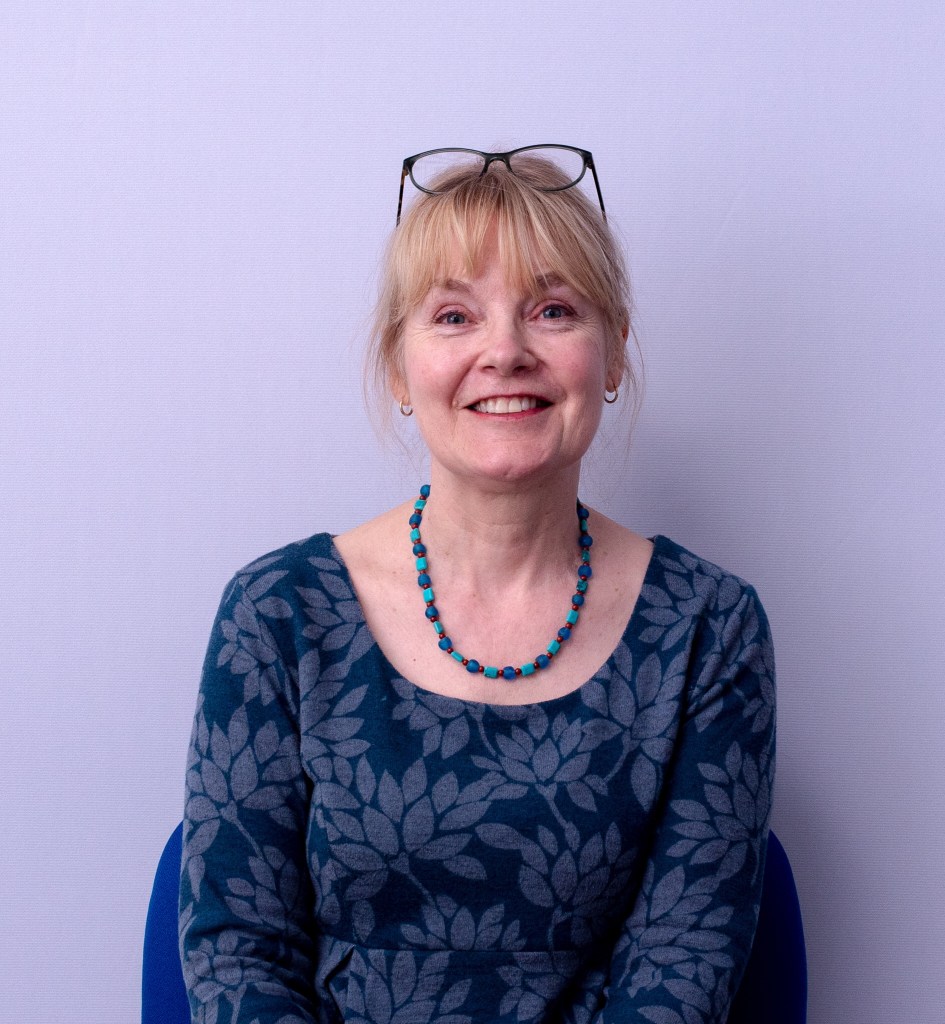
Katie grew up in Warwickshire and now lives in South London with her husband, children, dog, cat and stick insects. When she’s not writing or walking children and dogs, Katie loves baking, playing the piano, reading news and wishing she had written other people’s brilliant novels.

Posted in Random Things Tours

The Other Times of Caroline Tangent by Ivan D. Wainewright.

This book had a premise that was so attractive for someone like me who loves going to gigs and has missed it so much over the last eighteen months. My gig-going best friend and me often talk about which were our favourites, those breakthrough gigs that made your favourite band or those gigs that just captured the zeitgeist. The gig I went to that was a real cultural moment was at Alexandra Palace in 1994; Blur with Pulp as supporting artists. It was a real Britpop landmark and during Song 2, being pummelled and pushed about in the pit at the front I fainted and had to be carried out of the crowd. I’ve been lucky enough to see most of my favourites – Muse, Manic Street Preachers, The Killers, Depeche Mode, U2, Florence and the Machine- but if I did invent a time machine and could go back in time to any gig, it would be The Stone Roses 1989/90. They’re my band that got away. Everyone has one and sometimes we only see their importance in hindsight and simply wish we could have been there.

This is what happens to Caroline Tangent. Her music loving husband Jon, builds a time machine in his basement workshop. One surprising day he whisks her away to a controversial music performance – Kanye West at Glastonbury, 2015. She has on her gardening clothes, so luckily she’s pretty much dressed for a muddy field in Somerset. He didn’t choose the gig because they were huge fans of Kanye, but because it’s an important moment in music history, when there was an outcry over the direction Glastonbury was taking, considering it had always been dominated by more rock or indie groups than anything else. Their second trip is more complicated. Greenwich Village NYC, 1966. The preparation almost heightens their anticipation for the gig. Jon keeps the artist a secret, but they have to scour eBay for vintage clothing and work out how to get round the need for 1960s currency. Although, as Jon jokes, the exchange rate is pretty good. As they settle in a café, Caroline doesn’t recognise the musician playing, but they soon finish their set and on walks a young man with a guitar. It takes a moment because his name is different, but as soon as she realises who it is her excitement bubbles over. That’s Jimi Hendrix!

I found the way the writer created Jon and Caroline’s world really different for such a sci-fi concept. He didn’t treat it like sci-fi, but more like an exploration of long term relationships, friendship and all human life. We get to know their long term friends who they meet for dinner once a month. These people are relatable, and not perfect by any means. He creates tension between Jon and Andrew, who were producing copies of old concert tickets and posters to sell online as the real thing. They’re three dimensional and we see all their good and bad points. Caroline and Jon have managed to keep their time travel a secret so far. She wanted to tell their friends and share his incredible invention, but Jon is adamant it has to be just the two of them. He explains that the secret is just too big, look at how much trouble Caroline is having keeping it to herself? He knows their friends and one of them would be bound to tell someone outside their circle. However adamant he is, there are moments when they’re all together that he sails close to the wind.

I felt unsure about Jon early on, the fact that he’s in this seemingly fractious relationship with Andrew and has produced false memorabilia before made me question his character. I thought their reasons for continuing to visit the past might be different and I didn’t always like the way he treated Caroline. At first I just thought he was very controlled – I know my other half and if he’d developed the capability to build a time machine in his workshop he wouldn’t have been able to keep it to himself. Jon seemed to like having the secret, being superior and even where there were clashes he’d caused, holding himself above the argument. As time went on I noted he was gaslighting Caroline too, letting things go wrong and insinuating she was to blame, or that something she knew had happened, hadn’t happened at all. I was so glad she had such a strong friendship with Bree for support. I felt sad for her, because although she is an emotionally intelligent woman, her love for her husband has made her blind to who he really is.

Of course we all know that the cardinal rule of time travel is not to change anything. Jon goes into great detail about the about chaos theory – the idea that events are interlinked so intricately that it might only take a butterfly flapping its wings on one side of the world to cause a tsunami somewhere else. No matter how small the change in the past, it could have a seismic effect on their future. As much as they want it to be fun and all about the music, past traumas do start to haunt them. Their world could be about to turn upside down because one of them makes a terrible decision. I don’t want to reveal any more, just that this is a time travel novel that is more about the emotional journey of the people involved, than it is about the destinations. I did love the destinations though, and how the author made me feel I was there in 1960s NYC, or 1930s Paris. I think it would be great to create a Spotify playlist alongside the book so readers can fully immerse themselves in the music. The best way I can describe the novel is to say it’s sci-fi with a very big heart. Sometimes the most important and life changing places we travel are within ourselves.

Meet The Author

Ivan D Wainewright lives in Kent (England) with his partner, Sarah and their slightly neurotic rescue Staffie, Remi. Before moving to Kent, he lived in North London, Leeds and Singapore. When not writing, he can be found watching (and occasionally) playing football, running, listening to music from Chumbawamba to Led Zeppelin, arguing over politics and trying to cook. He has been an independent IT consultant for many years, working solely with charities and not-for-profit organisations.

For more on this novel check out these other bloggers on the tour.