Posted in Throwback Thursday

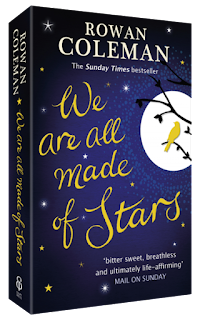
Throwback Thursday! We Are All Made Of Stars by Rowan Coleman

This book was originally published in 2015, but the first time I’ve read it is after reading Rowan Coleman’s novel The Girl at the Window. I do like to feature books as I discover them, rather than trying to chase the latest or next best thing.This may sound weird but I actually picked this up as light relief between a couple of deeply dystopian reads. I think there is an incredible skill in writing about such a serious subject but with such a lightness of touch and an edge of romance. Coleman has a group of characters, all linked to the Marie Francis hospice in some way. The story comes from all their points of view interspersed with letters written from patients in their final days, revealing secrets and emotions that have been held back, offering advice or instructions on where the money has been left.

These letters are written by Stella, who works at the hospice at night, giving her plenty of time to listen to patients and capture their last words. Behind her professional exterior Stella has her own problems. Her night shifts have become a way of avoiding problems at home. Her husband Vinny was a soldier and has returned home after losing his leg in a bomb blast. Now they feel like different people who are unable to connect and Stella runs miles every day to avoid her fear this is the end of their marriage. One of the letters Stella writes leads us to Hugh. Hugh is an academic researcher and collects artefacts relating to death such as death masks, Victorian mourning brooches and photos of dead loved ones. Hugh’s mum left when he was small leaving a suicide note. This personal tragedy has possibly lead to his research and has left him very isolated and scared of connection. When a single mum moves next door with her son, Hugh’s cat Jake starts to spend time there and they name him Ninja. This shared cat brings them closer, but will Hugh be able to form a relationship with his new neighbours and how will he cope when Stella delivers a letter that will change his life?

Finally, we meet Hope who is a young woman with cystic fibrosis recuperating at the hospice before returning home. Hope’s best friend and lifelong hanger on is Ben. They have been close friends for years and he has seen her in the worst moments of her illness. He visits every day at the hospice, and patients and staff start to notice that maybe there’s more than friendship here. Hope doesn’t think so, but she is starting to realise that she is missing out on things in life. Her friendship with a young girl, Issy, begins to make her think. Issy is terminally ill and tells Hope how sad she is to be leaving life when she has experienced so little. She makes Hope promise to live life to the full and try all the experiences Issy has missed out on. This inspires Hope and she asks Ben to help her fulfil this promise, knowing it might change their relationship forever.

It was Hope and Stella’s narratives that most resonated with me. I knew how I wanted their narratives their narratives to end happily. I know how it feels to have your plans cut into by an illness so young, the need to have new experiences and live like any other girl in their early twenties. I remembered the hen nights missed and friends celebrating graduations, weddings and births of their first children when I had none of these things in sight. So I identified with Hope’s need to do as much as possible before time runs out. Yet, I also felt for Stella, who tries her hardest to make people’s last wishes a reality while her own life is falling apart. She gives constantly, at home and the hospice, so when she finds she can maybe reunite two people she throws caution to the wind. I wanted her and Vinny to find their way through their difficulties and come together again, but with his survivor’s guilt and difficulties coming to terms with his amputation it’s no easy task.

This book seems so light and easy to read but is packed full of real, honest and deep emotions across the characters. Maybe I found the subject easy to enjoy, because I’m used to this world. I know people who might read the hospice setting and pass it over, but they’d be missing out. This book relates what life limiting illness is really like; it’s not easy, but you can still live well and all the other parts of life like learning, being fulfilled, finding meaning and feeling love are still very much part of the experience. Within these characters, and the letters Stella writes for her patients, are glimpses of human life that take us far beyond them as patients and closer to them as people.

Published by Ebury Press and available in all formats.

Meet the Author

I’m Rowan Coleman, and I live in England with my husband, 4 children and 2 dogs! The Girl at the Window is my 14th novel is my twelfth novel. I am also the author of the internationally bestselling THE MEMORY BOOK, the double award winning THE RUNAWAY WIFE, and the NYT bestseller THE ACCIDENTAL MOTHER and the Zoe Ball ITV Bookclub pick THE SUMMER OF IMPOSSIBLE THINGS. Growing up dyslexic made my dream of becoming a writer seem impossible, but I never gave up trying and in 2001 I won Young Writer of the Year competition in Company Magazine. This lead to the publication of my first novel, and I’ve never looked back since.

Posted in Netgalley

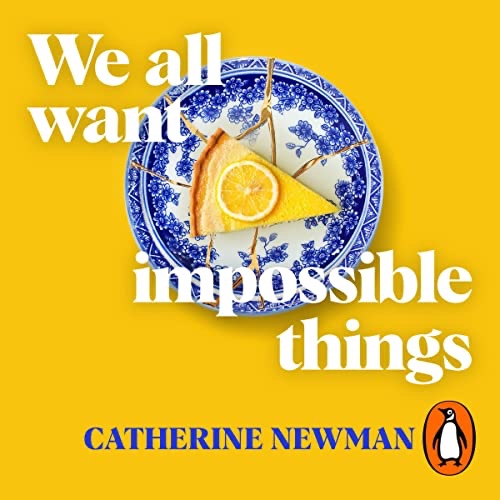
We All Want Impossible Things by Catherine Newman

This book was a joy. That’s going to seem odd when I explain what it’s about, but it is joyful and full of life. Even though at it’s centre there’s a death. Ash and Edi have been friends forever, since childhood in fact. They’ve gone through adolescence together: survived school; other girls; discovering boys and even that awkward phase of starting adult life, when one went to college and the other stayed behind. They’ve both married and been each other’s maids of honour and become mothers. Instead of any of these things pulling them apart they’ve remained platonic partners in life. However, now Edi is unwell and decisions need to be made. After years of struggle with being, treatment, remission and recurrence, Edi now has to decide how she’ll be dying. With all the hospices locally being full, Ash makes an offer – if Edi comes to a hospice near Ash, she can devote time to being with her and Edi’s husband can get on with every day life for her son Dash. There’s a hospice near Ash that’s like a home from home, with everything that’s needed medically, but the informality and personal touch of a family. Now Ash and Edi have to negotiate that strange contradiction; learning how to live, while dying.

This is just the sort of book I enjoy, full of deep emotion but also humour, eccentric characters and situations. It takes us through a process of how someone’s life and death changes those around them, with unexpected behaviours and consequences all round. Firstly the environment the author creates is so wonderfully rich and full of warmth, whether we’re at the hospice or in Ash’s welcoming home. She does this with layers of detail, from the decor to the people and some seriously mouthwatering food. The hospice is an absolute wonderland – this may sound like a very weird description, but having had a loved one become terminally ill from multiple sclerosis and not cancer, it was a horrible wake up call to realise there was nowhere for him to die. I would have loved to be in this incredibly nurturing environment that’s more of a family home, where they’re putting comfort and individuality first, with first class medical care always available in the background to play it’s part. I loved the busy kitchen with a cornucopia of treats in the fridge, because here no one is on a diet. Each room is very individual, but there’s are little links between such as the hospice dogs wandering in and out, the smell of someone else’s favourite food, the wandering guitar player or the ever present soundtrack to Fiddler on the Roof from another room. All of these elements come together and create a warm embrace for Edi, but also for her loved ones who spend a lot of time there.

Ash’s home and family life is so enviable I wanted to be part of it. Her estranged husband Honey is an incredible chef and her daughter seems to have picked up the talent. The author’s descriptions of their meals really did make the mouth water and are their way of contributing and supporting Ash. All of these people are so nurturing, in Honey’s case this is despite he and Ash being separated. Before you think this sounds schmaltzy and sentimental I can assure you that these characters are not perfect. Each has their flaws and their ways of coping, some of which are destructive and possibly difficult for others to understand. Ash particularly has a novel approach to grief, but I understood it. If we look beneath the surface, it’s a way of forging connection with others on the same journey and expressing their love for Edi. It’s also a distraction, a way of leaving all the paraphernalia of death behind and affirming life. That doesn’t mean her behaviour isn’t confusing, especially to her teenage daughter who supplies whip smart commentary, eye rolls and remarkable wisdom. The men in this friendship group seem to understand that their grief is secondary, because Edi is the love of Ash’s life. I enjoyed the little addition of Edi’s other friend – the college friend – who Ash has concerns about. Does Edi like her more than Ash? Do they have a special bond? The author provides us with this loving picture but then undermines it slightly, so it isn’t perfect. We are imperfect beings and no one knows how they will react in a time like this, until we’re there. Catherine Newman shows this with realism, charm, humour and buckets of compassion.

Published by Doubleday 12th Jan 2023

Meet The Author

Catherine Newman is the author of the kids’ how-to books How to Be a Person and What Can I Say?, the memoirs Catastrophic Happiness and Waiting for Birdy, the middle-grade novel One Mixed-Up Night, and the food and parenting blog Ben and Birdy, and she edits the non-profit kids’ cooking magazine ChopChop. She is also the etiquette columnist for Real Simple magazine and a regular contributor to the New York Times, O, The Oprah Magazine, The Boston Globe, and many other publications. She lives in Amherst, Massachusetts, with her family. Visit her website at http://www.catherinenewmanwriter.com

Posted in Netgalley

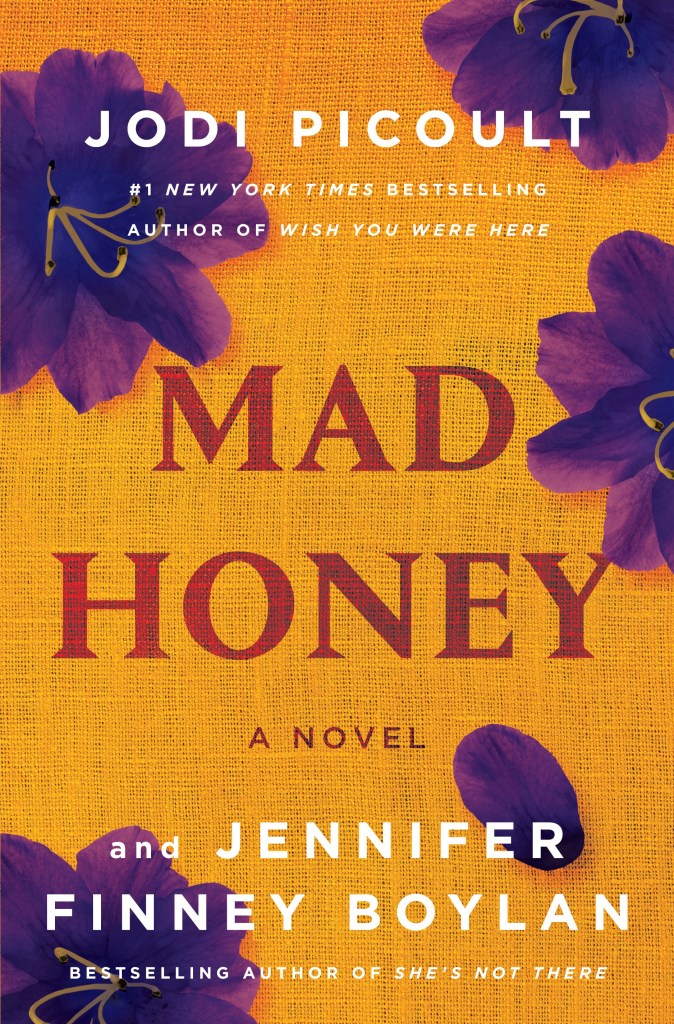
Mad Honey by Jodi Picoult and Jennifer Finney Boylan

I was granted access to this novel on NetGalley and couldn’t wait to read it, bumping it to the top of my TBR when I had a free weekend. This is Jodi Picoult in her element. Her last book was an interesting take on the pandemic and a couple of her recent novels have been more experimental, moving away from the legal case structure of her earlier work. When I met Jodi Picoult several years ago I asked about her writing. Did she start with character, or was it the controversial issues she explores that start the writing process? Having covered racism, school shootings, teen suicide and abortion it seems that these complex issues drive her imagination. She admitted that these issues do spark her creativity and if an issue stays in her mind for a couple of weeks she knows it has potential. Then she starts to research and during that process, characters form and make themselves known to her. I loved the flow of Picoult’s writing and the tension she builds around the featured legal case, but thought she’d maybe moved away from this way of working. When Jennifer Finney Boylan approached her with the idea to write a book together with a trans character at it’s heart, Jodi Picoult had been thinking about setting a novel around trans rights for a number of years. The structure of Mad Honey feels like vintage Picoult and even where Jennifer Finney Boylan takes over the narration I didn’t notice a huge difference in tone or style. I’ve never read Jennifer Finney Boylan, but she is the first openly transgender American to write a bestselling book, a book that is now thought of as an important part of the transgender canon. She is the perfect writer to join Picoult in this venture that’s bound to be controversial considering the trigger warnings I’ve seen used. Picoult and Boylan haven’t shied away from controversy in choosing to write about one of today’s hottest and most complicated topics; the complexities of being transgender. Yet the combination of authors takes away the debate over ‘own voice’ narratives and brings a sensitivity and knowledge to the project it wouldn’t have had if Picoult had written alone.

We meet Olivia and her son Asher, who live near a small town in New Hampshire. When Asher was a toddler she fled her abusive marriage to return to the place she grew up. Her timing was perfect, as her father was starting to struggle physically and needed to teach Olivia all the wisdom he’d accrued in a lifetime of keeping bees. Now Olivia is the bee expert, tending daily to her hives where each queen bee is named after a musical diva: Celina, Gaga, Beyoncé. The toddler who was just steady enough on his feet to intervene when his father attacked his mother, is now a six foot ice hockey player in his final year before leaving for college. Asher is a popular teenager with lots of friends and now he has girlfriend Lilly too. Lilly understands starting over, so Olivia feels they have something in common. She likes Lily when she’s been over to the house and she’s successfully helped them with the bees, who are a good judge of character. Lilly feels happy for the first time in her life and Asher is a huge part of that, although there is still a part of her that wonders if she can truly trust him, be open and be vulnerable. Then out of the blue Olivia takes the call every parent dreads. It’s the police. Lily is dead and Asher has been arrested for her murder. She calls her brother Jordan to come to New Hampshire and be Asher’s lawyer. In her mind there’s no way that the gentle boy she knows could have done this. However, as the case starts to unfold she realises that Asher has hidden more than he’s shared. Could he be exhibiting the same tendencies as his father? As Olivia knows more than anyone, we rarely know the people we love as well as we think we do.

I think it’s incredibly hard to take on writing about someone else’s experience, especially someone from a minority group. When it comes to books about disability, my own minority, I do prefer ‘own voice’ narratives. After all, who better to write a character with a disability than a writer with a disability? Failing that I want to know that an author has done their very best to represent that minority, through research and spending time with people who have a disability. I want to know they’ve asked the hard and sometimes uncomfortable questions that take them to the heart of how living in that body might feel. Armed with that they can hopefully create a character who feels real rather than clichéd and avoids stereotypes. I have to be honest and say I don’t know enough about being transgender to judge whether the authors have everything right, but I can see they’ve tried and truly wanted to write about transgender rights in a mainstream novel that’s very likely to be a bestseller. I guess time will tell how the book is received as it moves out into the world. In her acknowledgments, Jennifer Finney Boylan quotes a terrible statistic; in the year that she and Picoult wrote the book, ‘more than 350 transgender people were killed around the world, more than a fifth of them inside their own homes’. This awful number stayed with me and I was glad these authors are starting a conversation, with a mainstream audience who might not seek out information about being transgender ordinarily. It helped me have a conversation with my 75 year old dad who becomes confused between gender and sexuality and is totally baffled by labels like transgender, transsexual, non-binary. I think these are conversations everyone should have and maybe the book is an entry point, inspiring people to read more ‘own voice’ narratives.

Picoult speaks for me when she says it never occurred to her to think of a transgender woman as anything other than a woman, but it was good to have my view challenged, because it showed me how vehemently some corners of society disagree with me. We are given a lot of background information that clearly comes from both author’s research, but is presented in the guise of Olivia educating herself. She talks about how common it is for animals to change gender, from clown fish to bearded dragons and female hyena’s who can have retractable penises. She’s pressing home the argument against those who claim transgender people are unnatural and that if you were not born with the sexual organs of a woman then you’re not a woman. There does seem to be a huge emphasis on the ability to procreate, but where does that leave women like me who can’t have children? Or those who’ve had a hysterectomy? Are we not real women too? I was very interested in something called ‘passing’, a concept that applies to race, disability, sexuality: an African-American man may be treated very differently if he has a lighter skin tone; a gay man may ‘pass’ as straight in order to be avoid prejudice at work; someone with an invisible disability like mine can be seen as able-bodied with all the benefits of both ways of being. If a transgender woman has a naturally feminine look she can pass as a woman more easily than someone who is is taller or broader. This ability to pass means no one, not even someone the transgender woman is in a sexual relationship with, need ever know that their assigned sex at birth was different. Of course this then begs the question of whether there is an obligation to disclose this information and when? All of this debate comes into the novel’s courtroom sections, in the guise of expert testimony so it doesn’t feel like endless exposition. There are times when opinions may be offensive to some readers, but I think they reflected the reality of being transgender and the discrimination faced.

The story flows beautifully and really grabbed hold of me quickly. I found myself unable to do anything until I’d finished reading, so I let uni work and household chores pile up, completely engrossed in the terrible situation both Asher and Lily’s mums find themselves in. I did feel this was Olivia and Ava’s story, despite our narrators being Lily and Olivia. For me the transition between the two writers is seamless. I really couldn’t tell whether I was reading Jodi or Jennifer’s writing and I know they worked hard at this, swapping sections for re-writes at times. I did feel for Olivia who has fled a terrible situation to protect her boy from her violent husband. I understood how she and Asher had become a tight unit, now challenged by Asher’s age and this new person coming into their small world. I thought the aftermath of being a victim of violence was tackled really well, as Olivia’s job keeps her hidden from the world. She doesn’t make friends and relationships haven’t been on her radar at all. I felt the weight of this massive change looming over them, Asher going away to college and leaving his mum alone for the first time. Her protection of them both has been necessary, but she must be lonely at times. It was interesting to see her reaction to a possible romance, could she take down those walls and start to build a life for herself? By contrast, Lily’s chapters are lighter than Olivia’s, capturing that moment of being on the cusp of adulthood. Lily is brim full of potential and possibility. She’s like a newly transformed butterfly taking it’s first flight. Then all of a sudden she’s gone and it feels like a light has been snuffed out. How much harder must it be for Ava, who has nurtured and protected her daughter in much the same way as Olivia has protected her son? Ava stayed with me after the book had ended because her loss is unimaginable and her only solace is to retreat into the natural world where she feels at home. I found myself hoping she experienced the healing power of nature and didn’t feel too lonely out there on the Appalachian Trail.

I enjoyed the bee analogy that ran through the book, the reference to Mad Honey referring to bees who’ve collected pollen from rhododendrons and laurels. Unfortunately the honey produced is poisonous, causing dizziness, convulsions and cardiac symptoms. The ancient Greeks used it in germ warfare, it’s success dependent on the eater’s expectations of sweetness not deadly poison. The analogy between this and Olivia’s husband is clear as she describes the love bombing in their early relationship and her utter shock when he first lashes out in anger. Her biggest fear is that Asher could be cut from the same cloth as his father, when she sees nothing but her sweet boy. However, she knows that her own mother-in-law would have struggled to accept that her boy was a monster behind closed doors. The tension is brilliantly handled, rising slowly as we get to the final days of the court when I found myself biting my nails! I wasn’t sure how I felt about Asher and the potential verdict, I wasn’t sure I believed his version of events and if Asher was found innocent, would we ever find out what happened to Lily? The twists and turns here were brilliant, with the killer blow delivered just as everything is starting to calm down.

I’m hoping that this novel can be a gateway novel, an introduction to the issues that inspires readers to really think about the experience of transgender people, hopefully inspiring readers to search out writing by transgender authors going forward. There is one scene where Olivia seeks out the woman who runs the town’s record store, because she’s known to be transgender. Here she gets to ask the her the questions that are running through her mind and although she’s a reluctant authority on the subject, she doesn’t get offended by Olivia’s insensitivity or ignorance. What she does reinforce for her is that no one can speak for all trans women, because ‘when you’ve met one trans woman, you’ve met one trans woman’. What it reinforces for me is that gender and sexuality are a spectrum, there are as many ways of being as there are people. Our need to categorise, label and compare creates a pyramid of bigotry and ultimately divides us. All we can hope is that future generations find ways of relating to each other that bridge these man made divides. It’s only then that all people can live ‘with power, and fierceness, and with love’ and, as one of our characters says, without the obligation ‘to explain and defend the things I have known in my heart since the day I was born.’

Mad Honey is published on 15th November by Hodder and Stoughton

Meet the Authors.

Jennifer Finney Boylan is a bestselling author, transgender activist and professor at Barnard College. She is also a contributing opinion writer for the New York Times. She has written thirteen books, including novels, collections of short stories, and her memoir. Her 2003 memoir She’s Not There: A Life in Two Genders was the first book published by an openly transgender American to become a bestseller and has become as ‘a seminal piece of the trans literary canon”.

Jodi Picoult is the #1 New York Times bestselling author of twenty-eight novels, including Wish You Were Here, The Book of Two Ways, A Spark of Light, Small Great Things, Leaving Time, and My Sister’s Keeper, and, with daughter Samantha van Leer, two young adult novels, Between the Lines and Off the Page. Picoult lives in New Hampshire. Her next novel, Mad Honey, co-written with Jennifer Finney Boylan, is available on November 15th.

Posted in Random Things Tours

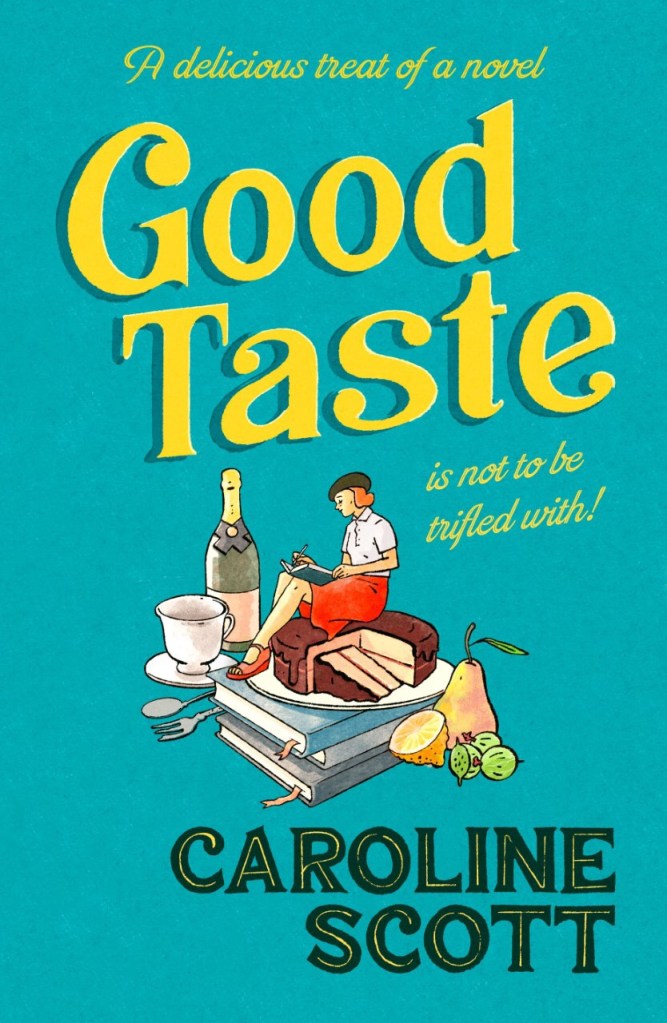
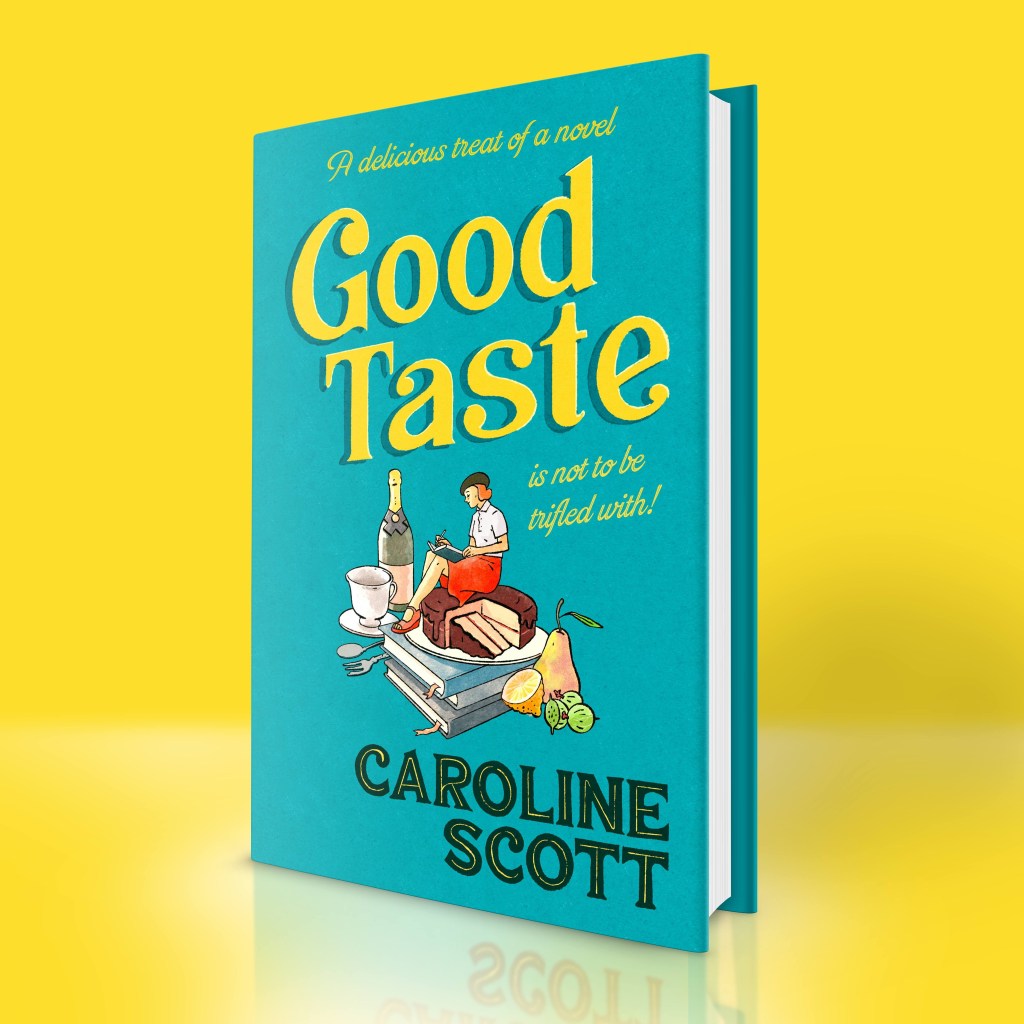
Good Taste by Caroline Scott.

In-between a couple of intense crime reads I was so ready for the comforting nostalgia of Caroline Scott’s new novel. Don’t let my description fool you though. Caroline has a wonderful way of keeping her writing light and soft, but the merest peek under that surface reveals themes that delve so much deeper into society and the historical period of our heroine Stella. Set in the fascinating time period between the two World Wars, England is struggling through a depression and Stella has had something of a life change. It’s 1932 and Stella is facing the first Christmas without her mother. With memories of her mother’s frailty last Christmas and the fear of that obvious empty chair, Stella has moved back from London to a small cottage in the West Riding of Yorkshire in order to be near her father. Money is tight, since her first book The Marvellous Mrs Raffald hasn’t done as well as she’d hoped. Celandine Cottage is rather shabby and Stella is surviving on the money she’s paid by a women’s magazine for writing a weekly article with five new recipes. When she’s summoned to London by her publisher, she’s half expecting her novel to be pulped and although she wants to write a biography of 18th Century cookery writer Hannah Glasse, she’s rather gloomy about her prospects. She’s shocked when he tasks her with a new project – a history of English food. He wants a book that will inspire English housewives and remind English men of a nostalgic past. Although as Stella starts to think about her research, she realises that a lot of food people consider to be quintessentially English, is actually from elsewhere. So she sends out a letter:

Sir,

Would any housewife in your region be kind enough to share a traditional recipe with which she may be acquainted? Is there a favourite pie made by your grandmother? A cake that you fondly recall from childhood? A dish that’s particular to your village? Perhaps a great-aunt left you a hand-written book of her recipes?

This knowledge and these flavours have been passed down to us through the generations. But an urgent effort is required to collect and catalogue these dishes. If you are able to assist with this task, you would be doing a great service.

Please correspond with the address below. I will gratefully acknowledge all contributions,

Stella Douglas

However, as she sets off on her planned route to meet food makers and the nation’s housewives her car breaks down. A dashing young man called Freddie comes to her rescue and her plans move in a different direction, perhaps toward something more imaginative.

I enjoyed Stella, mainly because she is very much the modern woman, living alone and paying her own way at a time when women’s lives changed enormously. During WW1 women were encouraged to work, because they were needed to fulfil job roles that men had left behind as they went to fight in the trenches. Women became more used to living alone, making their own way and working outside of the home so when the war ended and men returned, there was tension. Some men wanted their wives back in the home so they could be breadwinners of their family. However, so many men were lost and injured, so the changes did stand and the following generations of women were keen to shape their own destiny. Stella was enormously likeable and intelligent, very measured in her approach to the task and able to see immediately that it was much more complicated than expected. As she listed those foods seen as English she could see the influence of foreign imports in them, as well as in her spice rack. Even the humble potato conjured up images of the Crusader, Tudor explorers and Dutch horticulturist’s sailing off to the Far East for specimen plants. She spots the massive gap between the perception of Englishness and the reality. In her imagination, cricket teas and church spires clash with a colourful collection of influences, speaking more than a dozen languages. Which history does she want to write and which is her publisher expecting?

I was rooting for Stella from the start, especially when her plans started to go awry, and I found her reminiscences of her mother so touching. Caroline taps into that nostalgic aspect of food and the way foods from our childhood hold a particular place in our hearts, with just a whiff or taste bringing up strong emotions of where we were or who we were with. One sniff of a newly opened tin of Quality Street sends me rocketing back to the late 1970s and my Aunty Joan who would buy us one each year along with a goodie bag of colouring pens with colouring and puzzle books. Bread toasted under a gas grill with salted butter takes me to my grandma’s kitchen as she brushed my hair and put a bow in it. The beautifully hand-written notebooks that belonged to her mother are like a time machine for Stella, all the more emotive now her mother is gone after a battle with cancer. They cause tears to well up, but also allow Stella to smile at her precious memories of surreptitiously sharing the first slice of a roasted lamb joint. This is the first time she has been able to think of her mother with joy as well as sadness.

‘As Stella read, the shadows in the room lightened, the gramophone played again distantly and order seemed to return to the world

Another aspect of Caroline’s writing I love is the extensive research that lies underneath a relatively gentle tale. I felt immediately immersed in the 1930’s, with even little asides about fashion like Stella’s felt cloche with a frivolous ostrich feather and her Liberty & Co coat, placing her firmly in time. As Stella reminisces about her time in Paris with her friend Michael, we’re there as she wanders through cellar clubs and tastes cocktails in Montparnasse, it sounds like there’s a hint of romance in her memory of dancing barefoot with him on a warm pavement. Something about their relationship is alluring and it’s as if she’s only just started to really see her friend and his incredibly blue eyes. Her surprise when she finds out he’s in a new relationship is obvious and this isn’t just any woman he’s involved with, it’s Cynthia Palmer, a beautiful model and artist. Where will Stella fit in?

The historical detail of English food is fascinating and it was interesting to hear ideas from the early 20th Century that we still talk about today in terms of sustainability and frugality. When it comes to meat there’s ‘nose to tail’ eating, making sure every part of the animal is used – they clearly had a better stomach for offal than we do today. There’s the concept of eating locally and growing your own food. There were also criticisms that are obviously age old, such as feeling young people have forgotten how to cook from scratch and are becoming dependent on gadgets and what we now call time saving hacks. She seems to sense another trend that I thought was current; the concern that we almost fetishise food with our devotion to baking and other cooking shows, while at home we’re cooking from scratch less and less. When it comes to what and how we eat, and even what we call our mealtimes, there are definitely divides between town and country, between the wealthy and the poor, and variations between North and South. I loved the eccentricity of some of the characters she meets and neighbour Dilys was a favourite of mine. Having a mum who flirted with vegetarianism and haunted the health food shop, Dilys’s devotion to pulses and lentils stirred up a childhood food memory of my own – a terrible shepherd’s pie with no shepherds just acres of lentils, called Red Dragon Pie. The only red thing about it were the acres of ketchup we used to give it some flavour. I loved her bohemian air and she seemed startlingly modern compared to Stella who’s a little more ‘proper’. The roguish Freddie was also rather fun and very charming of course. Caroline has a wonderful way of balancing all this. She tantalises us with period detail and charming characters, throws in some humour, while also showing us the grittier underbelly of life in a depression and those moments of grief for her mother that Stella experiences, which are so beautifully rendered. Caroline makes this look incredibly easy when in reality it’s such a complex juggling act, one that she pulls off beautifully.

Meet The Author

Caroline completed a PhD in History at the University of Durham. She developed a particular interest in the impact of the First World War on thelandscape of Belgium and France, and in the experience of women during the conflict – fascinations that she was able to pursue while she spent several years working as a researcher for a Belgian company. Caroline is originally from Lancashire, but now lives in SouthWest France. Her book The Photographer of the Lost was a BBC Book Club pick.

Posted in Sunday Spotlight

Sunday Spotlight! Memoirs and Non-Fiction

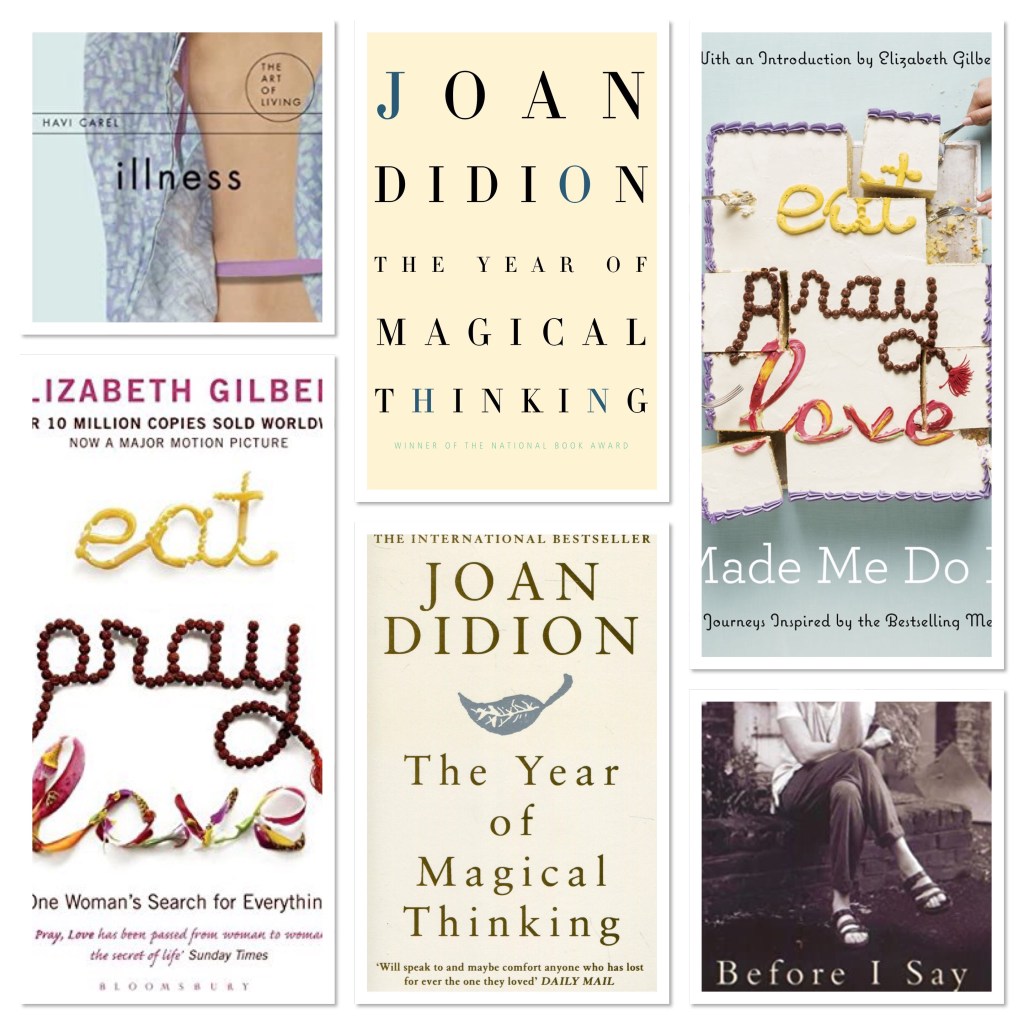
I’m continuing my look at the books that have had a huge effect on me personally or helped me to make a difference in my life. If I’m facing a difficulty, challenge or setback in life I usually look for something to read about it. My late husband used to say that knowledge can’t be taken away from you and that the more knowledge you have, the more options you have too. I’m looking at four books today, all of them memoirs in different forms, but each quite different in how they communicate to the reader. Each one did make me think and I can honestly say I came out of each book feeling changed a little: whether it was energised and inspired; feeling less alone in the world; learning how to face life’s obstacles or reaching an emotional catharsis.

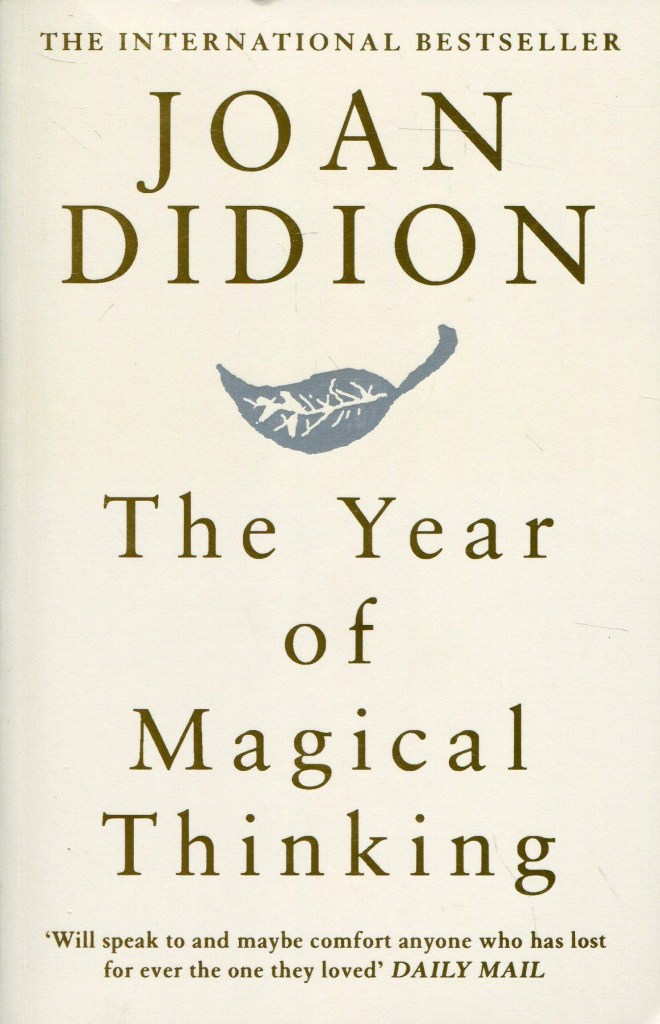
The Year of Magical Thinking by Joan Didion.

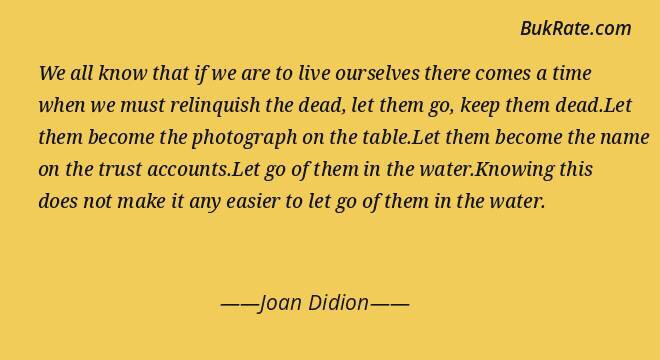
Joan Didion’s memoir is award winning for a reason. I found it a dense read in parts, but then my intelligence is probably far below Ms Didion’s level. However, there’s no denying the power of her opening chapter as she and her husband are preparing the table for dinner. Joan and her husband John had already been given the terrible news that their daughter had been placed on life support. Quintana had been suffering with flu symptoms, that became pneumonia and eventually septic shock. In the throes of grief, they are preparing for dinner when with no warning John collapses. John died from a heart attack instantly. In the maelstrom of emotions surrounding his death, Joan writes to make sense of what she’s thinking and feeling.

I found her writing raw and painful. I read this in my own grief and I recognised so much of the past year of my life in her descriptions. The way mind and body become disconnected; one carrying out the duties and routines of everyday life while the other is in another place. I felt like the bit that’s me, my ‘self’ had hunkered down deep inside the shell of my body, unable to cope with the shock of what happened. We were now in a world without my husband, where he didn’t exist. I think my ‘self’ was still in the one where he did. With her beautiful choice of words, Didion articulated a grief I didn’t have words for yet.

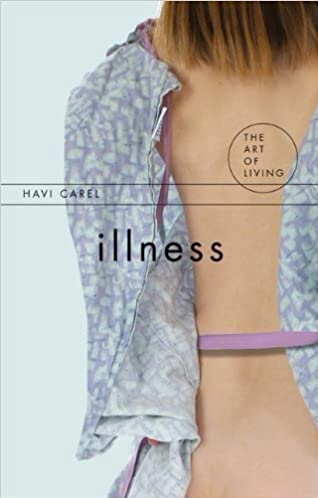
Illness by Havi Carel.

I came across this lesser known book when I was researching for a PhD. I was interested in the gap between a person’s perspective of their illness and the self presented in disability memoirs. My argument being that people write about their disability using certain tropes and archetypes – such as Christopher Reeve still presenting himself as superman. There is often a narrative of redemption or triumph that doesn’t relate to someone whose illness or disability is lifelong. I didn’t know whether these tropes were so ingrained in our society, there was only one acceptable way of writing about disability experience, or whether the truth simply doesn’t sell so publishers pressure writers to frame their disability this way. My supervisor suggested I needed to read Havi Carel’s book, because not only was she a professor in philosophy, she also had a long term illness that affects her lung function. What I was floundering around trying to describe was the phenomenology of illness – the ‘lived experience’ to you and me.

In some ways this is a text book, as Carel looks into what is illness? Is it a physiological dysfunction, a social label, or a way of experiencing the world? How do the physical, social, and emotional worlds of a person change when they become ill? Can there be well-being within illness?Carel explores these questions by weaving together the personal story of her own illness with insights and reflections drawn from her work as a philosopher. Carel’s fresh approach to illness raises some uncomfortable questions about how we all – whether healthcare professionals or not – view the ill, challenging us to become more thoughtful. A scene where Carel is devastated during a test of her lung function, because the result shows a decline, is so much worse because of the cold, unfeeling, practitioner. I had tears in my eyes reading it. Illness unravels the tension between the universality of illness and its intensely private, often lonely, nature. It offers a new way of looking at a matter that affects every one of us, because every one of us can become ill or disabled in our lifetime.

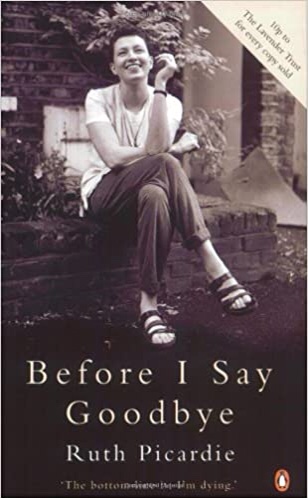
Before I Say Goodbye by Ruth Picardie.

Back in 1998, way before Dame Deborah James and You,Me and the Big C, there was Ruth Picardie. Her column in The Observer was read by millions and it was the cancer experience laid bare. Searingly honest and raw about her illness one minute and the next the day to day routine of being a Mum to two small babies. I loved how Picardie debunked those myths and archetypes of illness. How people still associate being ill with the old Victorian consumptive idea of wasting away. Those who are ill should at least be thin. However, as a result of steroid treatment for a secondary brain tumour, Picardie gains weight and has the characteristic ‘moon face’ that I remember from my own steroid days. She is angry with herself for being shallow, especially when she has to dress up for a wedding and nothing fits. She expected that being faced with death, she might be able to let go of the small stuff that doesn’t matter. It does matter though and she goes to Ghost to buy one of their flowy maxi dresses to make herself feel beautiful. She documents the progress of her cancer without holding back and when she can no longer do so, around two days before she died, her husband and sister Justine conclude.and put a frame around this collection of diary events from The Observer. This is a tough one, because I know the context is needed, but losing her narrative voice and hearing her sister Justine’s still chokes me up today. Ruth died from complications following the misdiagnosis of breast cancer in September 1997, leaving a young husband and two-year-old twins.

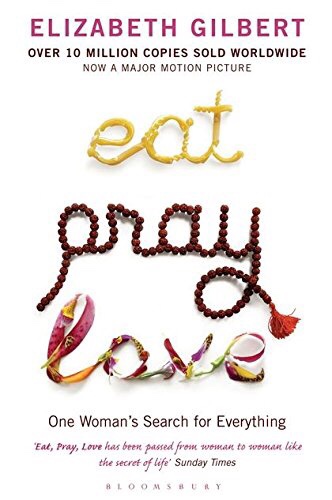
Eat, Pray, Love by Elizabeth Gilbert

I read Gilbert’s book before all the hype and the film version. I’d been on holiday and picked it up as an easy read and I was hooked by page one. Liz Gilbert has a way of writing that makes the reader feel like it’s just you and her, two friends having a catch up after a long time apart. It’s an intimate and honest account of how she found herself again after a marriage breakdown and a long term relationship that wasn’t healthy. She decided to take a long trip and broke it into sections, each one to feed part of her: body, spirit and heart. First she went to Italy for the eating part, then India for spirituality, then Bali which sounds like an absolute paradise and the perfect place to conclude a healing journey. If you read this as a simple travelogue you won’t be disappointed. Her descriptions of the food in Rome and Naples made me want to book a plane and the warmth in the friends she made there were really heartwarming. I found the discipline and struggle of ashram inspiring, it was her time to really go inside and work things out. She needed to confront what had happened in her marriage, forgive her husband and herself, then remember the parts that were good.

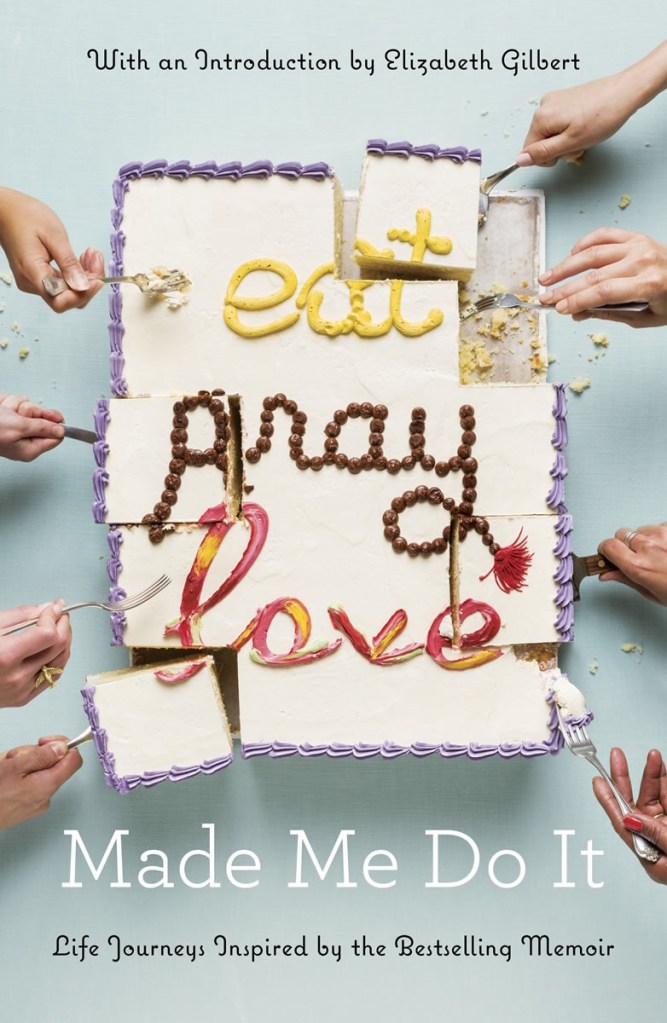
Bali is a like a warm place to land after all that mental work, where the people are welcoming and Liz finds work with a holy man transcribing his prayers and wisdom to make a book. Here she learns to love again and there was something that really chimed with me, when Liz meets a man at a party and they have a connection, she’s absolutely terrified about what it might lead to. She has worked hard and found her equilibrium and now her emotions are stirred up and unpredictable. She felt safe and grounded before, so she doesn’t want to lose it. I’d spent six years on my own, after the death of my husband I’d ended up in an abusive relationship and it had taken me a long time to recover. Then I met my current partner and I remembered back to this book and the wise friend who advised Liz to think of her life as a whole, it could only be balanced if it has periods of imbalance. Sometimes we have to throw ourselves into life. I used meditation a lot to keep grounded and it has changed my life in terms of improving mood and helping me cope with life’s difficulties. However, we can’t avoid life and stay in neutral all the time. When I read this with my book club there were mixed responses, the most negative being ‘it’s okay for some, able to swan off round the old and get paid for it’. It’s a valid point, but I never felt that. I thought she was in need of something drastic to get her life back on track and I didn’t begrudge her a moment of it. You might also like to try Eat, Pray, Love Made Me Do It. A series of stories about women’s journeys inspired by the book.

Posted in Squad Pod

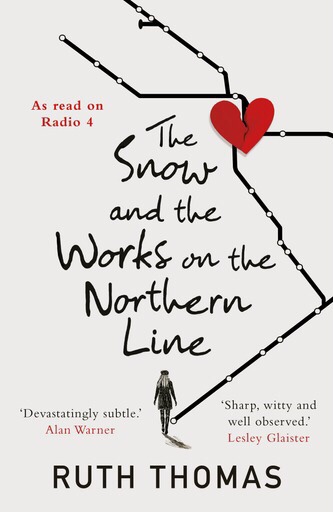
The Snow and the Works on the Northern Line by Ruth Thomas

This novel was a wonderful surprise when Sandstone Press kindly granted me a copy. We were only three weeks into January and I’d fallen immediately in love with a new literary heroine. I absolutely adored Sybil and felt so at home in her company I just kept reading all day. I then finished at 11pm was bereft because I wouldn’t be with Sybil any more. Yes, this is what happens to avid readers. We fall head over heels with a character, can’t put the book down, then suffer from book withdrawal. All day I was grumpy and reluctant to start a new book.

Sybil’s life is puttering along nicely. She has a job she enjoys at a London museum – Royal Institute of Prehistoric Studies (RIPS). There she produces learning materials, proof reads and indexes archaeological publications. She also helps people with research enquiries. She has a great boyfriend, Simon, who is a chef and likes to make her bread with obscure grains. Her quiet, settled life is turned upside down when she, quite literally, bumps into an old nemesis from her university days. Sybil and Simon have gone ice skating, where they spot Helene Hanson, Sybil’s old university lecturer. Sybil doesn’t want to say hello, after all Helene did steal some ideas from Sybil’s dissertation to further her own research into the Beaker people. They try to make their way over, very unsteadily, and end up careering into Helene’s group. In Sybil’s case she’s only stopped by the wall of the rink. She has a nasty bang on the head, and from there her life seems to change path completely. Only weeks later, Helene has stolen Sybil’s boyfriend and in her capacity working for a funding body, she has taken a huge interest in RIPS. Now Sybil’s workplace will be selling Helene’s range of Beakerware (TM) in the gift shop and they even welcome her onto their committee as chair of trustees. Sybil’s mum suggests a mature exchange of views, but Sybil can’t do that. Nothing but all out revenge will satisfy how Sybil feels. She’s just got to think of a way to expose that Helene Hanson as a fraud.

First of all I want to talk about the structure of the novel. As Sybil’s life starts to unravel, so does her narration. A suggestion from a friend leads Sybil to a poetry class at her local library, so prose is broken up with poetry and very minimal notes of what Sybil has seen that she hopes to turn into haiku. Haiku is a Japanese form of poetry with a set structure of thirteen syllables over three lines in the order of 5, then 3, and then 5 syllables. Having lived next to a Japanese meditation garden for several years I started to write and teach haiku as a form of meditation. It’s a form linked to nature and is very much about capturing small moments. So if Sybil sees something that might inspire her, it makes its way into her narration. I loved this, because I enjoy poetry, but also because it broke up the prose and showed those quiet still moments where Sybil was just observing. She works with found objects – most notably a little teacup, left on a wall, that has ‘ a cup of cheer’ written on the side. There’s a very important reason for the fragmentary narration, that I won’t reveal, but I loved it and thought it was so clever. Many of my regular readers will know why I connected with this narrative voice. It could be that this is the only visible symptom of the chaos in Sybil’s mind as she goes through a massive shift – physically from one flat to another – but also a mental shift towards living alone, to coping with her nemesis constantly popping up and to the heartbreak she’s gone through. We’ve all had to start new chapters in life so her situation is easy to relate to.

Helene’s organisation brings much needed funding to the museum, but with it come obligations. As chair of the trustees, she wants to change the very structure of the building and some of the precious display spaces might be sacrificed. Her commercial enterprise, recreating Beakerware (TM) for the museum gift shop, means the shop expanding into other areas. Exhibits that have been on display for years will be moved into storage to make room and Sybil dreads Helene using Simon as the face of the range, imagining giant posters of her ex greeting her every morning at work. To add insult to injury Helene even inserts herself into Sybil’s everyday job by adding a section into her boss Raglan’s upcoming book meaning that Sybil has to index Helene’s writing. Could there be a chance here, for Sybil to gain some satisfaction? However, as Sybil’s mum hints, revenge can be more damaging to the person seeking it. This book is character driven and they’re brilliantly drawn, funny, eccentric and human. Sybil’s boss Raglan Beveridge – who she observes sounds like a cross between a knitted jumper and a hot drink – is such a lovely man, easily swayed but kind and tries to ensure that Sybil is ok. I enjoyed Bill who she meets several times across the book, in different situations. He’s calm, funny, thoughtful and shows himself to be a good friend to Sybil, even while she’s barely noticing him! Helene seems to hang over everything Sybil does, like an intimidating black cloud promising rain to come. She is a glorious villain in that she has very few redeeming features, and tramples all over Sybil’s world at home and at work. The author cleverly represents this in the very structure of RIPS. Sybil likes her slightly fusty, behind the times little museum. There’s a sense in which it is precious, that the spaces within shelter some eccentric and fragile people. They’re like little orchids, who might not thrive anywhere else. They’re introverts, so need familiarity and quiet. How will they survive Helen’s onslaught?

On the whole this was a quiet book. As I was reading it, I was totally. engrossed and the outside world was muffled for a while. It reminded me of those mornings after snowfall, when the outside world is silenced. I felt a deep connection with Sybil. She’s offbeat, quirky and has a dark sense of humour. We meet her at her lowest point and while we’ve all been heartbroken, this was much more than that. I’ve been broken by life just once, but I was a like a vase, smashed into so many pieces I didn’t know if I could pull them all back together. Even if I did, I knew I would never be the same person. This is the process Sybil is working through and her grief is central to the novel. My loss felt so huge that it affected my actions – I left doors unlocked when I went out, forgot to pay bills, and started to make mistakes at work. I had always prided myself on being very ‘together’ and here I was falling apart. I discovered Japanese art that healed me in some way – it’s called Kintsugi and it’s the art of repairing broken ceramics with liquid gold or other contrasting metal. It shows the cracks, the evidence that this piece has been through something, but it’s still whole and it’s still beautiful. I feel this is Sybil’s journey and what she needed to hear was broken things can still be beautiful. This was a thoughtful novel, with serious themes but a lovely hint of humour running through. I still love it now, a couple of years later and my finished copy has pride of place on my bookshelves.

Q & A with Ruth Thomas.

1. The Snow and the Works on the Northern Line is very character driven – did the idea for the story or Sybil come first?

The setting came first, in fact. I wanted to write about a fusty old institute, and that’s how the Royal Institute for Prehistorical Studies (RIPS) began. I also wanted to write about Greenwich Park. It’s an early memory from childhood. I remember it being a beautiful but rather melancholy place.

2. The RIPS is a wonderful setting! Could you tell us a bit about it, and why you set The Snow and the Works on the Northern Line in a museum?

I love museums, especially small old-fashioned ones. They have so much character and lend themselves to description. I also wanted to tell the story of a museum artefact – how it fitted into someone’s life in the 21st century as much as the time when it was made.

3. Sybil’s voice is brilliantly handled – did you do anything in particular to pin that down when you started working on the novel, or to get in the zone each time you sat down to write?

I don’t think too much about voice before I begin – I just start with my own take on things, and after a while a character and voice shapes itself around those observations. I think the mood your character’s in has a big effect on the way they tell their story.

4. Quite early on in the book, Sybil joins ‘Poetry for the Terrified!’ at North Brixton Library – could you tell us a bit about that?

I love poetry but am a bit rubbish at writing it! I thought I’d harness that inability for Sybil too. At school, we were always supposed to find poetry profound. It can be fantastic and moving, of course, but sometimes you have to discover that in your own time.

5. One of the themes that stood out while reading The Snow and the Works on the Northern Line was grief – we’d love to hear about how you explored different aspects of grief.

I wanted Sybil’s grief to be reflected elsewhere in the book too. She thinks she’s alone with her heartbreak, but that’s one of the qualities of grief – you don’t necessarily know others are going through something similar. I also wanted to explore sorrow without writing a very sad book!

6. Was any of the office politics/social etiquette inspired by real life?

I love office politics! It’s one of the things I really missed during lockdown. Small-scale conversations and seemingly trivial things are what make me tick as a writer. At the momentI’m just having to focus a bit more on remembering the details.

Thank you so much to Sandstone Press and the SquadPod Collective for inviting me to share this lovely book with you again and thank you to Ruth Thomas for her contribution to this post.

Posted in Throwback Thursday

Throwback Thursday! The Man Who Didn’t Call by Rosie Walsh.

I’ve been putting together a list of all the summer releases I’m looking forward to and one of my most anticipated books is Rosie Walsh’s The Love of My Life. So I thought it was a great time to look back on her last novel which I absolutely loved.

I read this in two long bursts – one of which started at 3am. It’s a book I couldn’t put it down because all I wanted was these two people back together. The harsh realities of grief and lifelong family rifts are well drawn and believable. All of these people are trying to move forward despite their lives missing a beat one day on a country road, where a split second decision has lifelong consequences. This book explores grief, loss, loyalty, loneliness and the incredible ability the human heart has to heal.

Sarah has a 7 day whirlwind romance with Eddie. They meet by chance on a country road while Sarah is visiting her parents. She thinks Eddie just might be the one. But, Eddie goes away on holiday and she never hears from him again. Is Eddie a heartless playboy who never intended to call? Did Sarah do something wrong? Or has something terrible happened to him? Instead of listening to friends and writing this off as a one night stand, Sarah begins to obsess and is determined to find the answer. Every clue she has comes to a dead end and she is in danger of completely losing her dignity. As her time back home in the UK starts to run out, Sarah looks for clues to track Eddie down. What she hears is confusing her further. His friend doesn’t give the simple answer, that Eddie has moved on, but gives her a warning; if she knows what’s best for her, she needs to stop looking for Eddie

I quickly became invested in Sarah and Eddie’s story. I think we’ve all been subjected to the watched phone that never rings and how crazy it can make us. It could have made me dislike Eddie early on, but for some reason I never did. I’m definitely a hopeless romantic so I seemed to accept Sarah’s hope that this could still work out. The other characters in the novel are also well-written and compelling. I’m a therapist so I was particularly interested in Eddie’s mother and her mental ill health. I think her symptoms and the way she manipulated Eddie showed a streak of narcissism. She finds it impossible to see this situation from his point of view, only how it affects her. Anything that threatens their dynamic as carer and patient is a huge threat to her and she responds with emotional blackmail and hostility. Eddie is as much a prisoner of her mental ill health as she is. I also had empathy for Sarah’s friend Jenny who is struggling to conceive and undergoes IVF treatment to the point of financial ruin. Her character probably leapt out at me because I’m also not able to have children, and know how difficult it can be to come to terms with. Her stoicism and determination to support her friend in the face of her own loss is very moving.

I stayed up late to finish the book, because I had everything crossed that the mystery would be explained and these two people could move forward together. To different degrees, all the novels characters are imprisoned by the past and losses they can’t accept. My husband died when he was 42 and I was 35. It’s like a chasm opened up and I had to choose between staying on one side forever, with the past and my feelings of loss and fear. Or I could choose to jump over that chasm into a new future. I never forget what happened or the love I have for Jerzy, but twelve years later I have a wonderful partner and two beautiful stepdaughters. Thankfully, I had the bravery to move forward knowing I can’t lose my memories of the past but I still have a future full of possibilities I never imagined. That’s what the characters in the novel are trying to do. Grief is different for everyone and there are always tensions between those who are trying to heal and those who can’t imagine healing because it feels like a betrayal. Rosie Walsh draws these different threads together beautifully, creating a bittersweet novel that captures that moment of choice – to draw on our reserves of resilience, jump over the chasm and live again.

Meet the Author

Rosie Walsh is the internationally bestselling author of two novels, the global smash hit THE MAN WHO DIDN’T CALL, and – new for 2022 – THE LOVE OF MY LIFE, a heart-wrenching, keep-you-up-all-night emotional thriller, which was an instant New York Times bestseller and stayed in the German top ten for several weeks. 

Rosie Walsh lives on a medieval farm in Devon, UK, with her partner and two young children, after years living and travelling all over the world as a documentary producer and writer. 

The Man Who Didn’t Call (UK) / Ghosted (US) was her first book under her own name, and was published around the world in 2018, going on to be a multimillion bestseller. 

Prior to writing under her own name she wrote four romantic comedies under the pseudonym Lucy Robinson. When she isn’t parenting or writing, Rosie can be found walking on Dartmoor, growing vegetables and throwing raves for adults and children in leaking barns.

Posted in Random Things Tours

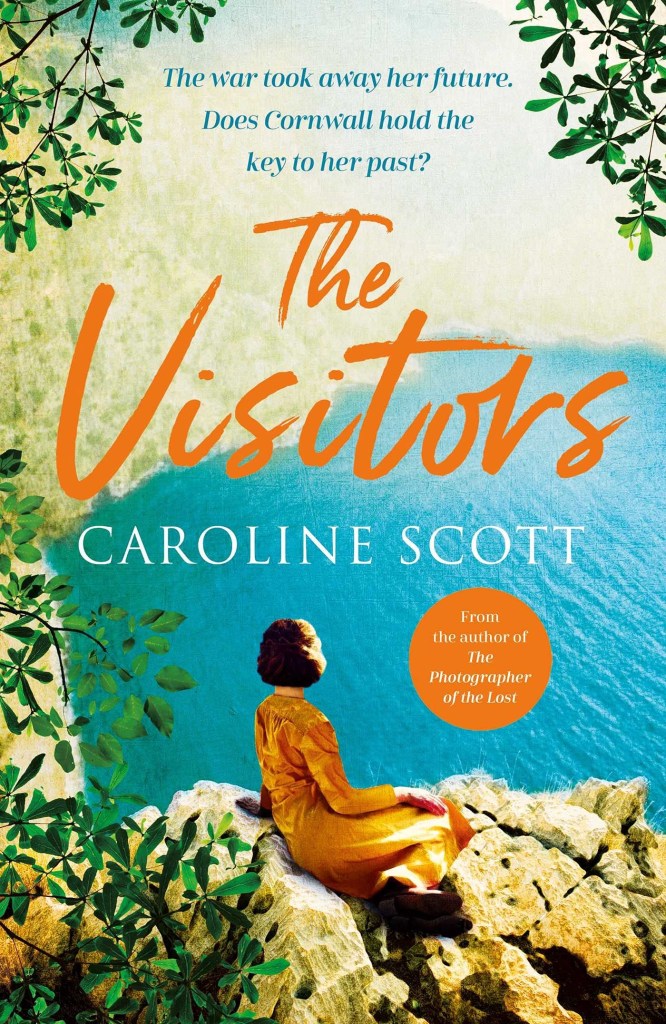
The Visitors by Caroline Scott.

I’ve been a huge fan of Caroline Scott’s last two novels and share an interest with her in the historical period following WW1. This novel touches upon some of the most important issues of the period, while telling a story that touches the heart strings and holds some surprises for the reader. It shows just how chaotic relationships can become during and post wartime, as well as how much people change when faced with terrible and traumatic experiences. We follow one young war widow called Esme whose whole life changed after she received news that her husband Alec had been killed. No longer able to afford to live in their marital home and needing to find work, Esme finds herself in the employment of Mrs Pickering as companion and helper, while also writing nature columns for her local newspaper. As the summer of 1923 approaches Esme is packing her employer’s clothes for a trip down to Cornwall. Mrs Pickering’s brother Gilbert, has established an artist’s residence in his large country house, and the artists have all served together in the war. As Esme meets Gilbert, Rory and the others she hopes to get an insight into what Alec might have experienced and maybe feel closer to him. What she finds there is certainly transformative, but in a very different way.

Esme is a very likeable character. She’s intelligent, resourceful and has really struggled to pick herself up again from nothing. She’s had no support system to help in her grief or her financial difficulties, in fact this is something she and Alec had in common, they were each other’s family. The author tells us this story in three separate narratives and each gives us a new perspective on the characters. Alongside the main narrative in which we follow Esme to Cornwall, we read the nature column she writes and it’s sublime in its descriptions of this place she’s visiting for the first time. We can see what a talented writer Esme is and how much nature means to her. I kept thinking how lovely these passages will sound on audiobook, almost like poetry. The observations she makes made me feel Cornwall again and in quite an emotional way considering I first visited there almost fifteen years ago when I was newly widowed. I felt like Esme’s Cornwall and mine were the same. I remember consciously walking round thinking that this was the first new memory I was making without my husband and Cornwall’s beauty seemed to make that even more poignant. The third narrative is a book written by Rory, one of Gilbert’s residents and close friend, in which he describes his experience of fighting in France. I was interested in the way he also describes nature as a blighted landscape, ruined by the ravages of warfare. There are vivid descriptions that will stay with me, such as the corruption of the very soil from constantly being churned up, contaminated by mustard gas and almost viscous in it’s consistency. Rory ponders whether this land would recover and how long it would take nature to return. It shows us the utter destruction caused and creates a link between the land the war was fought on and the men who fought it; how long might it take them to recover from the terrible things they have seen and done?

The author depicts PTSD in all of the men who live together in Cornwall, they are each affected by their experiences, but show that in different ways. There’s a vulnerability to them and a need to be with others who have shared their experiences. How else can they be understood and allowed to heal without the pressures of having to find work and cope with the demands of returning to a family? They are each very lucky to have Gilbert and this idyllic setting to slowly recover in. Although each must have another life, one that they belonged to pre-war, potentially leaving behind people who needed or might have asked something of them. It places them in a slightly privileged position over those who had returned straight into full-time work or job seeking by necessity, either because they belong to a different class or have a family to support. The excerpts of Rory’s book are also beautifully written, but don’t hold back from the horrors these men have seen. His descriptions are both vivid and visceral, and through reading his book Esme gains more understanding of these men than perhaps a lot of women would have at the time. How many times do we hear of war veterans who have kept all of this bottled-up inside with family member’s noting they didn’t like to talk about it much? At least here the men have a therapeutic outlet, whether by painting or writing, through which to understand or process these memories, but also communicate them to others without having to say them outright.

All of this would have been enough for a great novel, but the author also places a huge surprise part way through that I hadn’t expected. Through this we see the strength and restraint of Esme, the way she thinks things through before acting and never puts her own needs first. She needs a therapeutic outlet too, showing how the initial effect of war on the person who served ripples outwards to effect their loved ones and even future generations. Just as the land needs time to recover from the physical effects of warfare, there is a shockwave created that blasts through society as a whole. We are shown: how rigid Edwardian class structures are broken down; how marriage as an institution and way of constructing society is outdated and broken; how gender roles become more fluid allowing women more freedom and choice. I really did enjoy seeing how Esme negotiates this new world and makes bold choices for her life moving forwards. This book is another triumph for the author, because it’s a beautiful piece of historical fiction that tries to capture a moment in time where everything’s in flux. These constantly shifting sands of time show us the formation of our 20th Century and the resilience of the human spirit. It gave this reader hope that, just as nature found a way and those battlefields are now meadows and farmland, humans do have the capacity to heal and be reborn.

Meet The Author.

Caroline completed a PhD in History at the University of Durham. She developed a particular interest in the impact of the First World War on thelandscape of Belgium and France, and in the experience of women during the conflict – fascinations that she was able to pursue while she spent several years working as a researcher for a Belgian company. Caroline is originally from Lancashire, but now lives in southwest France. The Photographer of the Lost was a BBC Radio 2 Book Club pick.

Posted in Random Things Tours

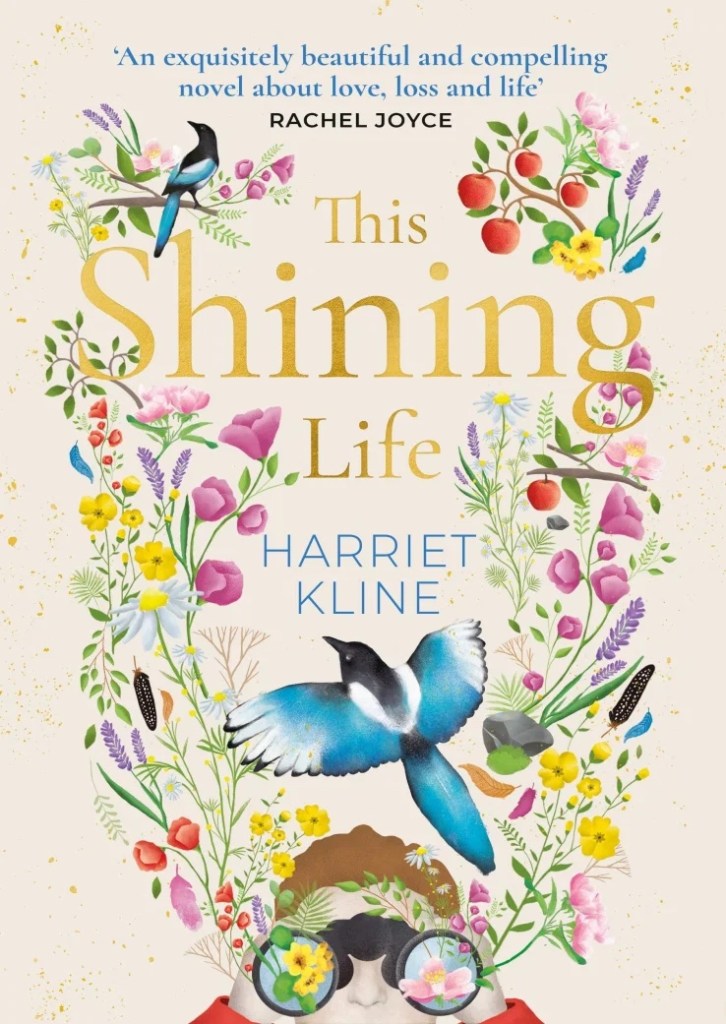
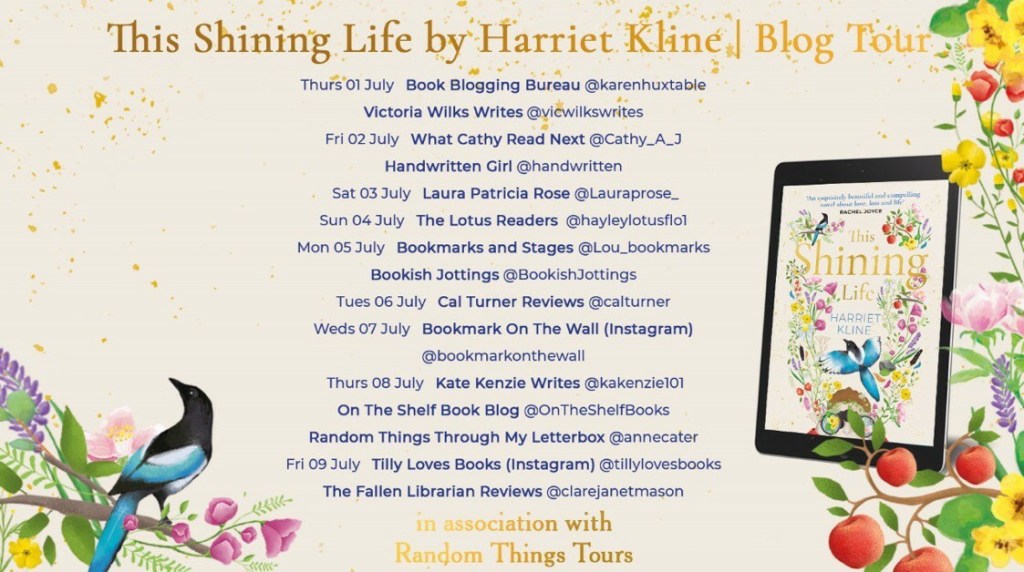
This Shining Life by Harriet Klein

Wow, this is heartbreakingly sad, but so beautiful too. Rich is dying. Funny, charming, Rich has a love of cheese and throwing parties. He has a son called Ollie who is neuro-diverse and a wife called Ruth who is coping with so much anyway, how will she cope with his death? The book covers Rich’s attempts to live, while dying. There’s also the aftermath of his death where Ruth and Ollie have to learn how to cope without the most important person in their life. Ruth finds it very hard to accept that her time with Rich is now limited and she has no idea when he will die. As time passes, Ollie finds it harder too. He doesn’t understand what it means to die. So, Rich devises a plan and involves his son in choosing gifts for those he loves, as something to remember him by. Ollie loves puzzles and he sees the presents as clues – he thinks each gift has a hidden meaning that his Dad chose to teach him the meaning of life.

The story is told through the important people in Rich’s life and it begins with Ollie. Ollie has realised that the gifts went to the wrong people and he must rectify the mistakes, because otherwise he’ll never understand life or death. He is starting to come apart at the seams but has anyone noticed? Ruth is struggling to cope with his obsessive rituals and her grief is all encompassing. In counselling we refer to ‘complicated grief’ – this can happen when a death is: unexpected with things unresolved or left unsaid, a sudden decline or an accident, the result of a crime, long-term health related with caring roles attached, complicated by circumstances such as being out of touch or at odds with each other, or where a disease is hereditary. Here, Ruth and Ollie haven’t really had time to prepare and their lives have had to adapt very quickly. Ruth can’t fall apart because she has to be there for Ollie, but it is wearing her down and she needs to deal with her own feelings too. I liked the way the author brought in other voices, from Ruth’s family to Rich’s own mother and father, each with their own grief and needs.

The author is a great observer of human behaviour and family dynamics. We can see how grief passes through this family, less like ripples on a pond and more like a shockwave passing through everyone in the vicinity. I talk with clients about the circle of grief – this is a series of concentric circles with the person experiencing the bereavement in the centre, next their spouse or partner, then in layers outwards until we get to the wider community. This is a simple tool that works well in the context of working with an individual because in that space, they are the afflicted person. We show how grief is expressed outward – with people in the outer circles expressing grief outward to family, friends, then they go to workmates or the wider community. Then comfort is expressed inwards, with those in outer circle ‘shoring up’ those further in, giving them the strength to support those in the inner circle. People in the outer circles should not be expecting comfort from those in the centre. Yet, grief is rarely so neatly expressed and the circles are often breached. This could be because of narcissism or lack of boundaries. However, more likely, what happens is shown very clearly in this book. Everyone is at the centre of their own circle. Ruth has to show comfort outward to Ollie and to Rich’s parents who are both struggling with their own grief and the added complication of dementia. Some people simply can’t put another’s needs in front of their own.

When we face a huge upheaval or loss in our lives, we experience it through our own filter. Made up of our own experiences, the emotions we find it easy or difficult to express, our own bias or prejudice. The author has written such an authentic story of loss by exploring each character’s filters, their earlier life experiences and the unique relationship they had with Rich. We each grieve in a unique way because of the unique way we connected with that person. In dying, Rich has given them all the secret, of the meaning of life. It’s in the connections we have with another person and in a way Ollie is right – the gifts do hold the secret. Rich has bought each person something he thinks will remind them of him, in the context of the relationship they had. Knowing each person will miss him in a different way. His life was all about encouraging other’s to enjoy everything life offers and all its variety. I thought the book was emotionally intelligent, full of complex and interesting characters and explored beautifully what happens when such a big personality is taken from a family. A final mention must go to that beautiful cover, with Ollie using his binoculars to focus on the beautiful variety of life in the world. Simply stunning.

Meet The Author

Harriet Kline works part time registering births, deaths and marriages and writes for the rest of the week. Her story Ghost won the Hissac Short Story Competition and Chest of Drawers won The London Magazine Short Story Competition. Other short stories have been published online with Litro, For Books’ Sake, and ShortStorySunday, and on BBC Radio 4. She lives in Bristol with her partner and two teenage sons.

Posted in Random Things Tours

Everything Happens For a Reason by Katie Allen.

Mum-to-be Rachel did everything right, but it all went wrong. Her son, Luke, was stillborn and she finds herself on maternity leave without a baby, trying to make sense of her loss.

When a misguided well-wisher tells her that “everything happens for a reason”, she becomes obsessed with finding that reason, driven by grief and convinced that she is somehow to blame. She remembers that on the day she discovered her pregnancy, she’d stopped a man from jumping in front of a train, and she’s now certain that saving his life cost her the life of her son.

Desperate to find him, she enlists an unlikely ally in Lola, an Underground worker, and Lola’s seven-year-old daughter, Josephine, and eventually tracks him down, with completely unexpected results…

Both a heart-wrenchingly poignant portrait of grief and a gloriously uplifting and disarmingly funny story of a young woman’s determination, Everything Happens for a Reason is a bittersweet, life- affirming read and, quite simply, unforgettable.

When I first talked to Karen Sullivan at Orenda about this incredible book – part of the Jubilant June publishing event – she told me I would cry but I would love it. She was right. I did cry. I cried buckets. I did love it too. This novel reminded me so much about my own loss. I cried for Rachel, I cried for the author, and I cried for anyone who has suffered this terrible loss. Mostly, and selfishly, I cried for myself. I do know the profound sense of loss Rachel goes through, because I lost three pregnancies, one with twins, when I was in my twenties. Of course these were miscarriages, not full term pregnancies, and as someone once tactfully told me ‘better to lose them earlier, than to actually have to give birth, or to have your baby die after a few days’ as if we were playing some sort of ‘Grief Top Trumps’. I was told many things in the months after each miscarriage: there was probably something wrong with the baby; we don’t always understand God’s plans; maybe it wasn’t meant to be. People don’t say these things because they’re malicious. They say these things because they don’t know what to say and silence seems unacceptable. The most useful thing anyone said was from the nurse who discharged me the first time. I was so traumatised by the past 24 hours I was staring ahead, not really seeing and not really listening. She touched my hand and said ‘it isn’t your fault, remember that’.

However, as it happened again and again, I did feel guilty and wracked my brain looking for things I might have done wrong. Rationally I knew it was not my fault, but I wasn’t always rational. Was this to do with my MS? Did I take a tablet I shouldn’t? Should I have helped in the charity shop sorting and labelling clothes, moving boxes? I wasn’t trying for a baby so was it the lack of vitamins? No folic acid? My body felt like such an inhospitable place. It was already attacking itself, now it was attacking my babies. Is it because I shouldn’t be a mum? Did I have a right to bring a baby into my already imperfect world, with my imperfect body? My brain switched off. My heart broke. I was told I had incomplete miscarriages, the baby dies but doesn’t ‘come away’. I then had to read and sign a clinical form that referred to my baby as the ‘products of conception’ and was headed ‘Consent for Termination’. My guilt clicked in again. What if they were wrong and I was killing my baby? To really complete the trauma I contracted an infection after my third miscarriage, and the doctor who had to examine and admit me to hospital actually slapped me on my bare leg because I wasn’t moving fast enough. I felt like my body wasn’t mine anymore. It broke my relationship. It took me on a long, painful journey of finding out that becoming a Mum was going to be more difficult for me because I had Hughes Syndrome, a clotting abnormality. It would be so difficult that I had to choose my own mental health over becoming a mother. I couldn’t make sense of what I’d done wrong to deserve this, on top of my other disabilities.

This is all our central character, Rachel, is trying to do. She wants to make sense of why her baby, Luke, died. She latches onto a platitude and weaves a story around it. If everything does happen for a reason, what could that reason be? Then she thinks of that fateful day when she stopped a stranger from jumping in front of a train, the same day she found out she was pregnant. What if he’d been meant to die? Then, because he was saved, someone else had to die in his place. It’s not clear if she truly believes this, or whether she has to think a greater purpose is at play, because if Luke’s death is without a reason she will fall into the abyss. So, we follow her search for the man she saved. Maybe if she sees him making the most of his second chance at life, she can accept her loss. There is, of course, sadness and grief on the journey, but there’s also humour and the hope that Rachel will work through the worst of her loss and find some peace and acceptance in this awful situation.

The writer is incredibly courageous to take her experiences and lend them to Rachel for the purposes of the novel. As we follow her ‘non-maternity leave’ she tells her story with such a frank, raw, and brutal honesty. This could be a difficult read for someone only just going through the same experience, but for me, I felt like someone had finally seen the pain I was carrying. I would no longer have to stand in the Post Office queue, watching people going about their business, with a terrible inner urge to scream ‘my baby died’. Rachel’s story is told through a series of emails addressed to the son she’s lost. In this private correspondence she can express her worst fears and nothing is left unsaid. There is also a sense for her, that she can send them somewhere; that somehow, Luke can see them. The authenticity of this stream of consciousness can only be achieved by letting us delve deeply into Rachel’s feelings and state of mind. It seems so authentic, because it is. Katie has delved into her very soul for this novel and welcomed us in. I can’t thank her enough. I admire her enormously. It inspires me to keep going, to keep writing my own story.

The fact that this is Rachel’s world means that everyone we meet, we can only see through her eyes. I really enjoyed some of these characters and they do bring balance to a tough story by creating some of the lighter, more humorous moments. Josephine, the daughter of a woman who helps Rachel in her search, has an offbeat humour that I really enjoyed. She really doesn’t have the ability to filter her thoughts before they come out of her mouth, and while that’s always funny, it can also be very insightful in a quirky way. The author has a unique ability to affect the reader’s emotions in one way and then switch them round again very quickly. Rachel’s family mean well when they help and hope she can ‘move on’ from her grief. Some don’t fully understand her quest and want the very best for her. I found myself understanding their confusion and agreeing with their wish that she heals emotionally. The next second I’d be furious, because something has been said that’s so glaringly insensitive. I’d want to turn the air blue with a few ‘F’ words.

I know I have rambled about my own experiences here and maybe I haven’t said enough about why you should read the book. However, I can honestly say this is the book about the loss of a baby, and the chance to be a mother, that is the most authentic I have ever read. I felt represented by this story and by this talented debut author. It’s unique structure, it’s rawness and ability to plumb the depths of despair, while still making you laugh and dare to hope, is simply extraordinary. It is beautifully written and captures our human need to make sense of something that is senseless. No one should be told how to grieve. Each person, and each individual loss is different. We humans find it difficult to accept that some life-experiences have no explanations or answers. When we can’t find meaning, we create it. So, we tell each other stories.

I’d like to say a big thank you to Karen at Orenda for putting this book in front of me months ago, then waiting patiently for my response. I’d also like to thank Anne Cater for letting me ramble like this on the blog tour.

Meet The Author

Everything Happens for a Reason is Katie’s first novel. She used to be a journalist and columnist at the Guardian and Observer, and started her career as a Reuters correspondent in Berlin and London. The events in Everything Happens for a Reason are fiction, but the premise is loosely autobiographical. Katie’s son, Finn, was stillborn in 2010, and her character’s experience of grief and being on maternity leave without a baby is based on her own. And yes, someone did say to her ‘Everything happens for a reason’.
Katie grew up in Warwickshire and now lives in South London with her husband, children, dog, cat and stick insects. When she’s not writing or walking children and dogs, Katie loves baking, playing the piano, reading news and wishing she had written other people’s brilliant novels.