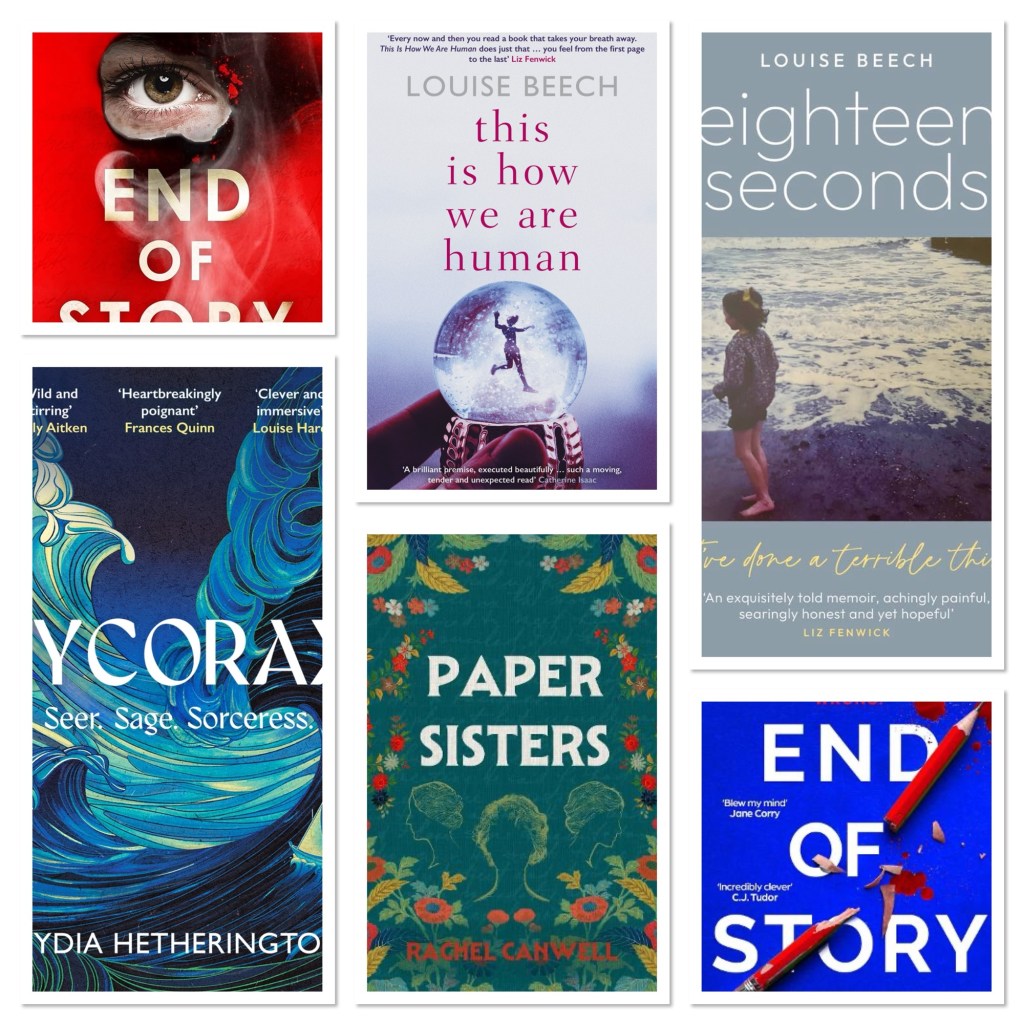
My blog is a little different today because it is inspired by Monday’s WordPress prompt – who inspires you? Like many bloggers and readers I am an aspiring writer. Ever since I was a little girl I’ve wanted to be able to walk into a library and see my book on the shelf. I used to make little books, sewn into colourful covers, my writing is definitely better than my drawing. One particular book about a family of chickens is in a box in the attic, but remains infamous in my family because when my mum read it she was anxious the school would think this was my home life. Mr and Mrs Cockadoodledo were very volatile and he was fond of telling his wife she was a nag and stomping off to the pub while she watched Coronation Street. So far, the closest I’ve come to writing a book as an adult was writing the story of me and my late husband, killed by complications with primary progressive MS. I managed to finish it and then format it (goodness knows how) to go on Kindle around 15 years ago. I think it probably sold half a dozen copies. Everyone was very kind about it, but let’s be honest it’s hard to be critical to a recent widow. When it came to reformatting it I was finishing my counselling training so I let it go. So that’s where I am. I do have a work in progress, but it’s all fragments at the moment. I struggle with flow, a very negative inner voice and my health limitations. So today I thought I’d share people whose writing I really admired recently and how they’ve inspired me to keep writing.
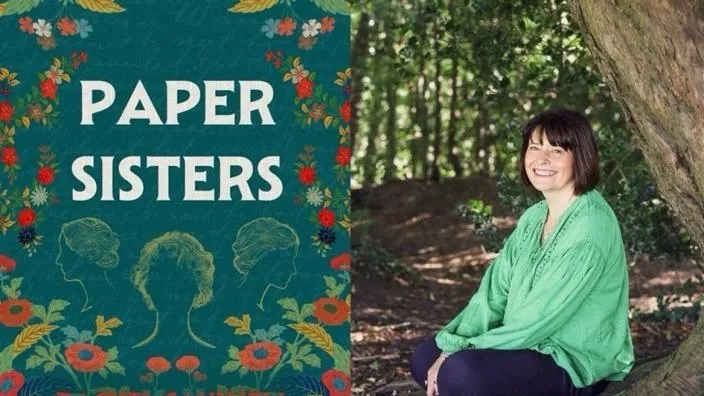
Rachel Canwell – Canwell’s debut novel Paper Sisters was brilliant and made me realise that any setting is fascinating if the writer makes it so. Set in my home county of Lincolnshire, in an area that suffers many jokes about Fen Folk and endless fields filled with mist and cabbage, Rachel still managed to draw me in. In fact she took the isolation of the area and made her characters grow from that, with their house, sited across the river from Sutton Bridge and accessed via a swing bridge. The abandoned hospital next door is primed, ready for patients that will never come creating an eerie and abandoned feeling. She uses the peculiar Lincolnshire mist to great effect in her opening scene as the family are woken by a rumbling noise coming from the small port area being built across the river. As they emerge into the darkness, the mist rises above the river and obscures their view but they can hear crashes and objects falling into the water. The mist also obscures the rescue of workers, leading to the terrible drowning of one of the brothers. I recognised that mist from years of living next to the River Trent, and eerie nights back in the 1990s driving home in my little Mini from working late at a local pub. Because the area is so flat, the mist seems to hang in mid air, with everything below and above still visible and it was exactly the height of my windscreen. I had to drive very slowly which at a late hour in the middle of nowhere was very creepy indeed. For Rachel’s characters WW1 comes and the fact that it’s reach extends to such an insignificant place somehow magnifies its impact – you imagine areas where people were carrying on as normal but this reminds us everyone was touched by it, rather like our recent experiences through COVID. Her female characters are two sisters Eleanor and Lily and Eleanor’s childhood friend Clara who is married to their brother Frank. Lily has rarely left the house since her brother died on the night of the port collapse, but for an apparent invalid she has a lot of control over Eleanor. She’s determined that her sister will never leave her. Eleanor wants to leave, she has fallen in love with the new blacksmith. Her day to day maintenance of Lily and the abandoned hospital her father created to treat the port workers is draining. The tension between the sisters builds and then there’s Clara and Frank. Clara wants to help her sister-in-law escape Lily’s control and Frank, an unreasonable and violent man at the best of times, returns from war struggling with a brain injury and PTSD. These two women only have each other and the strength of their loyalty is incredible. My main take away from a writing perspective is to remember that I have a unique voice. No one else has had my experiences or my way of dealing with them. Yes, they seem mundane to me because they’re mine, but to a reader they are completely new.
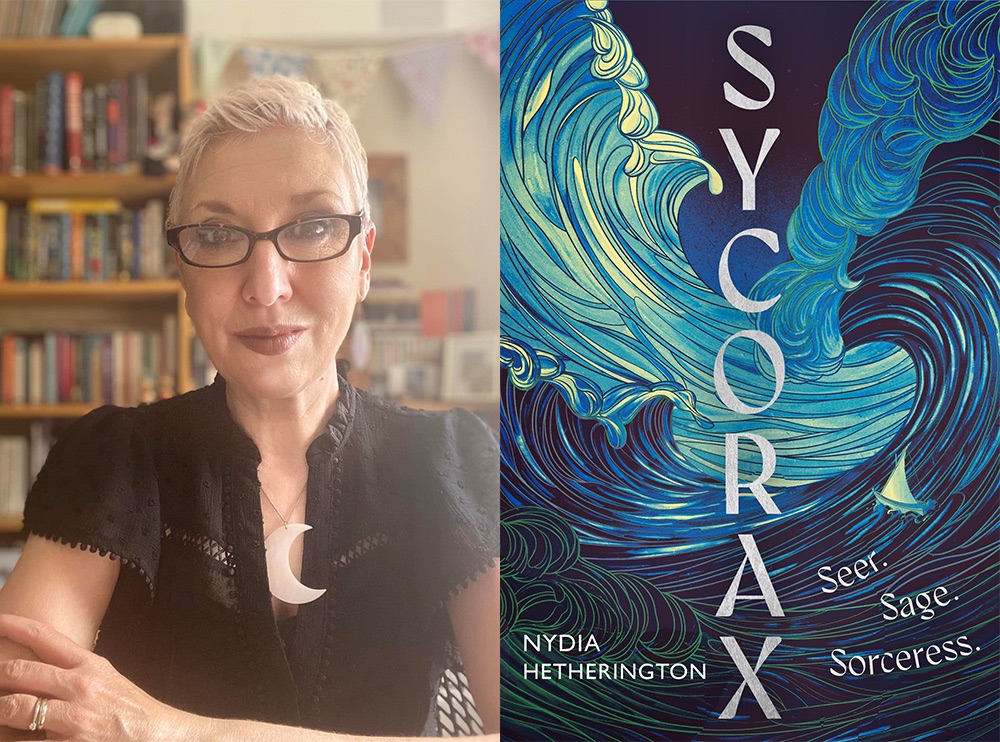
Nydia Hetherington – last year I was blown away by Nydia’s novel Sycorax a book I was drawn to thanks to chatting with Nydia on social media after reading her debut novel but also because it features Shakespeare’s The Tempest. The Tempest is my favourite play of Shakespeare’s especially since studying it at university and becoming obsessed with Caliban, the play’s ‘monster’. It crossed over beautifully with my Post-Colonial Lit module because there we’d looked at Jonathon Miller’s 1970 production at the Mermaid Theatre. This production leaned heavily on post-colonial themes with two West Indian actors, Norman Beaton as Ariel and Rudolph Walker as Caliban. It depicted Ariel as a house slave who was plotting to take over the island when the colonialists left, by contrast Caliban was a field slave in a much lowlier position. With my specialism in disability literature, Caliban’s description as a ‘savage and deformed slave’ jumped out to me. In disability theory a deformity is used as a ‘narrative prosthesis’, Caliban’s deformity is a crutch, used to show his moral and intellectual inferiority and justifying his enslavement by Prospero. We have to think about the time Shakespeare is writing in and the treatment of people with disabilities, where they were used for entertainment and spectacle or hidden away because they deviate from the white European and abled-bodied ideal. I can’t believe that in this research I didn’t touch on Sycorax. Prospero often speaks of her as a sorcerer he banished from the island and his descriptions of her appearance as monstrous and a hag are there to justify his treatment of her and negates her own power. I was interested in how Nydia used her own experience of rheumatoid arthritis to flesh out this character and give her the story that Prospero denies her in the play. She weaves her own illness into the life of this young girl suffering bouts of extreme joint pain and malaise, gradually becoming bent over as she ages and having to use a stick to walk with. She also has a hand disfigured by fire, but she also has a beauty that men are drawn to and powers they’d like to possess. The juxtaposition of great supernatural power but physical weakness is a powerful one and it creates a fascinating woman who can’t be ignored, as much as she would sometimes like to be. She takes periods of solitude, living very simply and using periods of recuperation to commune with nature and deepen her connection to the earth. She gains wisdom and resilience from battling against the elements in order to survive. I have a chronic illness too and experienced long periods of solitude, particularly during the pandemic. Currently, there is a harmful rhetoric around long term illness and disability that ‘others’ disabled people and blames them for societal problems and I did feel a kinship with this character facing both ableism and the misogyny of men like Prospero. Nydia’s book reminded me that personal experience is a great place to start and that woven with research and imagination it can create something magical and meaningful.
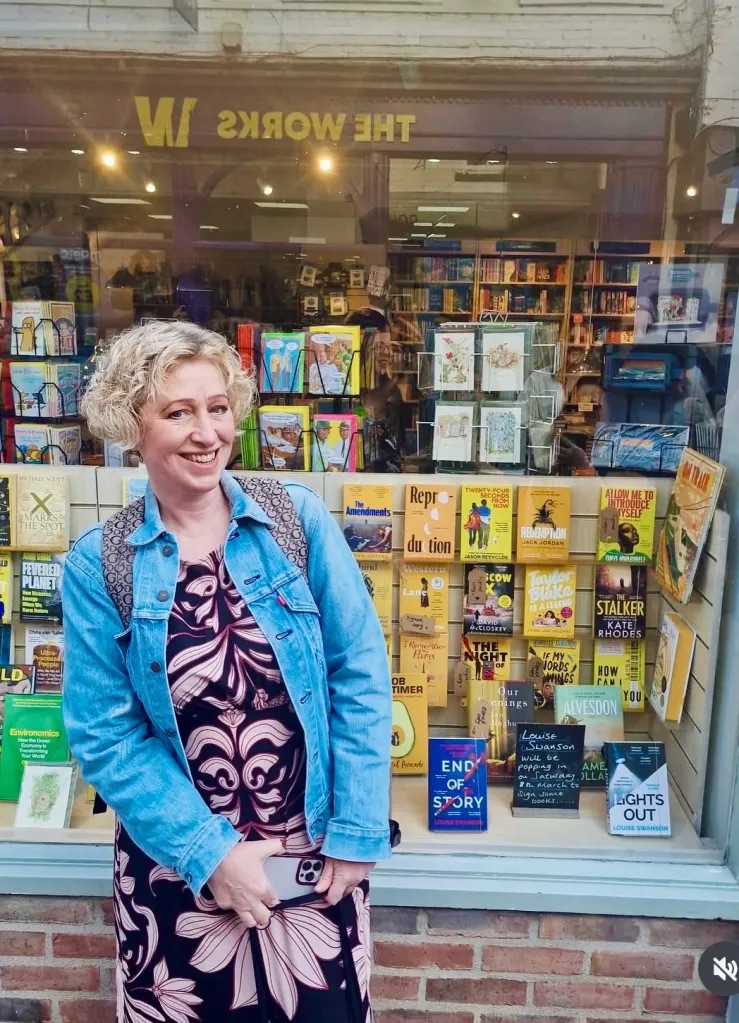
Louise Beech/ Swanson – Louise is a writer who is local to me and I’ve admired her novels for many years now. The first book of hers I absolutely loved was This Is How We Are Human where she writes about a woman caring for her adult son who has autism and other learning difficulties. She is used to providing everything he needs according to a strict daily routine, but one day he comes up with something that stumps her. He wants to experience sex. She’s unsure how to approach this, realising that the world of dating might be too stressful and involves a second person’s feelings and challenges. In the end she takes an unusual decision and hires an escort for her son – it’s interesting to add here that sex is a recognised human need when it comes to assessing a disabled person’s care in some areas of Europe and escort services can be used as part of a care package. I find we’re a lot more squeamish here about sex and disability, although very curious too judging by the amount of people who questioned me when I married a man with physical disabilities. I admired Louise’s bravery in choosing what many see as a taboo subject and managing it with dignity and with a surprising outcome that shows we all make assumptions about people with disabilities. She reminded me that it’s good to write about subjects many people never experience or might be shocked by. Then I read her novel End of Story, a dystopian thriller where fiction novels are banned and writer Fern is suddenly unable to tell stories. She’s followed by grey men in suits who want to be sure she isn’t writing, but joins a resistance movement of women who tell banned bedtime stories to children over the phone. The strangeness of this world is incredibly chilling and she draws us in completely, but something kept nagging at the back of my mind. Something else was going on here. I won’t ruin what this book is about but the twist is incredible and I will admit I cried. This book taught me that we can write about the depths of any human experience, by presenting it in a different place, time or genre and somehow give it even more power.
Finally there’s her memoir Eighteen Seconds that I devoured and loved for its brutal honesty, bravery and dark sense of humour – something I definitely recognised from my own family. One morning Louise received an awful phone call. Her mother had jumped from the Humber Bridge and despite falling onto a path underneath the bridge, rather than the river, she was alive but very badly injured. Through the lens of this experience Louise tells the story of her childhood and what it is like to be the eldest child of a mother who struggles with her mental health and copes with alcohol. Louise balances this book beautifully. She remembers the experiences she faced as the eldest child of a single mother who couldn’t care for her children and often met men who placed them in genuine danger. Louise was a mum to her younger siblings when she still needed a mother herself. Then there’s the present problem of her mum’s long recovery from her suicide attempt and the difficult balance of being there, but not being dragged back into parenting your own parent. Then there’s the incredible humour the family share in their WhatsApp messages were made me laugh out loud and reminded me of times when my family were sat around my husband’s bed just before he died – at one point watching a crucial Liverpool match. Gallows humour helps and it was inspiring to see personal experiences written in that way. It’s a truth many people don’t realise, that when someone is terminally ill or very badly injured, eventually life carries on. We have to live through the period of loss and still get up every day. It made me think back to the wake we had after my husband’s funeral where everyone had a drink and blew off steam after months of pain and stress. I found my mum down in the garden after midnight throwing smoked salmon from the buffet into the garden pond in order to ‘free the fish’. It was a terrible day but my abiding memory will always be my mum trying to revive a plate of smoked salmon. Louise reinforced the belief in my original memoir, reminding me that my experiences have worth and to tell them exactly as they were, despite fear of judgement and with nothing held back.

