Posted in Uncategorized

My Sister, the Serial Killer by Oyinkan Braithwaite

I bet you didn’t know that bleach masks the smell of blood’.

What an explosive opening to a novel. My partner had picked this up when we were in a bookshop collecting an order. ‘You have to buy this’ he said ‘it’s right up your street’. That man knows me so well! This is a black hearted comic novel, the type you laugh at but feel as if you shouldn’t. The heroine is smart, feisty and fiercely loyal. The action moves at a breakneck pace. It’s whip smart, sarcastic and totally unique. I can’t believe it took me so long to find it.

Korede is eating dinner when she receives a panicked call from her sister Ayoola. She was on a date with a poet called Femi, but now she’s asking her sister to come to his house. ‘Korede, I killed him’ she admits in the opening sentence. Korede’s reply tells us everything we need to know about this relationship.

I had hoped i would never hear those words again’.

In a split second we know that Ayoola has killed before and Korede, the big sister, has cleaned away the evidence. It’s not long before Korede is using her cleaning skills to tidy away Ayoola’s latest mistake. The girls live in Nigeria with their mother and one house maid. Korede is a nurse at the local hospital and Ayoola is a fashion designer who uses Instagram to sell her designs and runs them up on a sewing machine in her bedroom at home. Korede tells us they look very alike, down to the same beauty spot on the top lip. Yet somehow, Ayoola’s features have come together to create something harmonious and desirable. She has curves and is altogether the perfect example of beauty. Whereas Korede is tall and slim like a pencil. She has no curves and for some reason her features are not as appealing. We soon see that Ayoola is very aware of her charms and uses them to get what she wants. Even if that means treading over someone else to get it. Even if that someone else is her sister.

For a long time Korede has secretly been in love with Tade, a doctor within the hospital she works at. They are friends and he finds her indispensable as a work colleague. Korede feels they have a special connection and hopes that one day it will grow into something more. One day Ayoola turns up at the hospital to take Korede to lunch, and as soon as she has seen Tade she turns on the charm. Korede has done everything to keep them apart, but hopes that Tade’s integrity and intelligence will help him see past the surface. Sadly, Tade proves himself to be like every other man. Once she sees them together Korede knows all is lost and within hours he has sent a gift of orchids to express his interest. Ayoola tells him she prefers roses and within hours a second bouquet arrives. Korede looks on with her heart breaking. The only person she can talk to, honestly, is the one who can’t answer her. A patient in a coma has been Korede’s priest and she’s sat by his bedside confessing to everything, including the fear that Ayoola could kill Tade.

Korede gives us some background on the girl’s father and his abusive behaviour: beating Ayoola; trying to gain business advantages by giving his daughters to chiefs; bringing other women back to the family home and beating their mother. Their mother is largely passive, but Korede is in no doubt who the favourite daughter is. If Ayoola were to kill her friend Tade, it would still be Korede’s fault for introducing them. Korede jokes about this, but there is hurt and resentment underneath the gallows humour. Mum would never believe her precious baby girl is a killer. All of this tension builds beautifully. The short chapters speed the story along and my heart was racing, wondering what would happen to expose Ayoola’s murderous ways. How far will Korede go to save Tade? Or will she naturally choose covering up for her sister instead?

I read this brilliant novel in an afternoon and evening. It does race along at a cracking pace and it’s very hard to put it aside without reading one more chapter. I felt so sad for Korede that she isn’t valued by her parents and she constantly feels like the inferior sister. When she loses Tade to her sister my heart broke for her. Although what I really wanted was for her to find someone who cared only about her, who she could form a relationship with based on honesty. Although that could only happen if she is taken away from her family or she chooses to let the law catch up with her sister. I did find myself laughing and smiling inappropriately, mainly at Korede’s narrative voice and her sardonic turn of phrase. There were parts that shocked me, because a character behaved differently to how I expected. I found myself hating Ayoola, not because she was a murderer, but because she was so narcissistic. She expected her sister to continue covering up her crimes, but also disrespected her by pursuing Tade in front of her. The ending didn’t disappoint and actually found myself rooting for the girls not to get caught! A brilliantly transgressive and entertaining novel.

Posted in Uncategorized

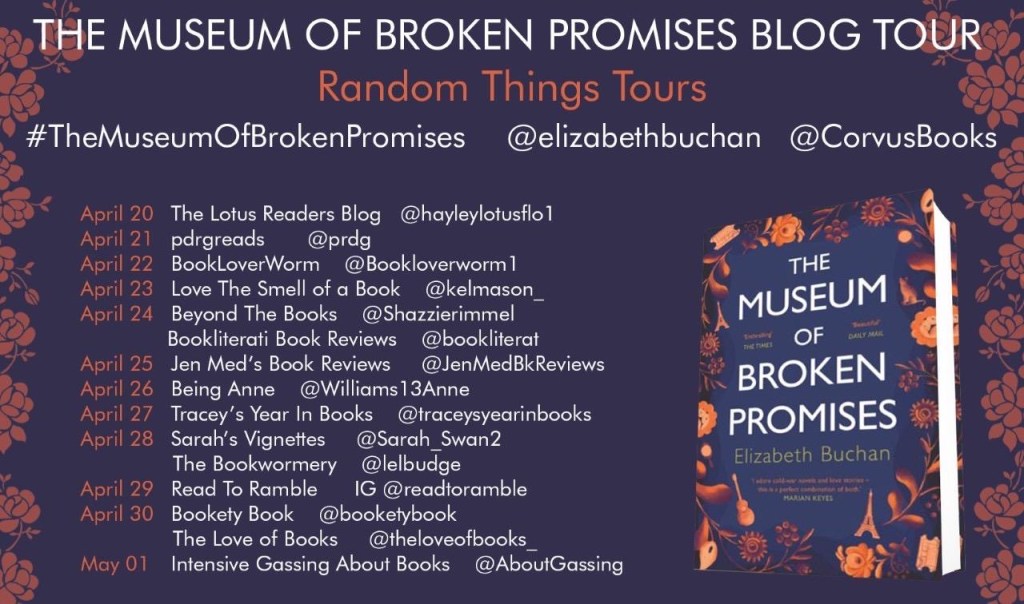
The Museum of Broken Promises by Elizabeth Buchan. #RandomThingsTours #blogtour #TheMuseumOfBrokenPromises #CorvusBooks


Imagine walking into a museum. A quiet murmur as people move between the glass display cases. A woman next to you gasps and clutches her hand to her heart. A friend puts an arm round her. It’s hard to tell which of the exhibits has moved her. The old passport? The pearl ring? The children’s shoes, barely worn? Yes, that’s it. As they move on, you take your place in front of the shoes. The label reads:

‘You promised you would watch her’.

Even though these are not your shoes and you have no idea who it refers to, the feelings that come over you are overwhelming. The resentment, the anger, but underneath, the agony of loss. It almost takes your breath away. You can see a school uniform hung on the wardrobe door. Shiny new shoes underneath, ready for the first day back at school tomorrow. You can see a mother running around organising school bags. Her daughter in a bubble bath, looking forward to being clean and tidy for the next morning. Dad watching tv. Mum needs to bring washing from the dryer in the garage. She asks if he’ll keep an eye on her. Dad promises he’ll watch her, but his phone rings. Distracted, he is drawn into conversation. He is still on the phone and Mum is in the garage, when their daughter shouts for a towel. She waits. Then, she stands and putting her arms out to steady her, she tries to get out. She slips, hits her head on the tap and unconscious, she slips under the water. You think of your daughter, your niece, your goddaughter. If this was her….

This is the power of The Museum of Broken Promises. Situated in Paris and run by Laure, the museum is slightly different in that all of its exhibits are donated by the owner and each one represents a different promise broken. The most innocuous object could represent a life utterly changed. Each contributor is interviewed personally by Laure and she makes the decision to exhibit or not. In amongst all the exhibits Laure secretly displays items from her past, including a Czechoslovakian train ticket. She is tight lipped about her past, even with those closest to her. Even her stylish clothes and her tiny apartment are unobtrusive and indistinctive. Nothing stands out or gives her away. However, two things seem to be encroaching on her anonymity. The first is a tiny feral cat she finds on the street and decides to help, accidentally naming her Kotchka. This is against all her rules about remaining unattached. The second is a persistent freelance journalist called May who wants to write a piece on the museum in the hope of selling it to Vanity Fair. Against her better judgement and to appease her staff, who think it would be good for the museum, she agrees to let the girl shadow her. Laure soon finds that May is ruthless, despite assurances to the contrary, as she starts to ask questions about Laure’s past. A past that Laure would rather remained buried.

The author uses two other narrative strands to tell us Laure’s story. The first is Prague in 1985. After the death of her father, Laure has taken a job as nanny to a family spending summer in Czechoslovakia behind the Iron Curtain. She enjoys her work with the children, but has concerns about their mother Eva who has periods of depression. Their father, Petr, appreciates Laure’s work with the children, and occasionally goes out with them all for tea. He is a member of ‘the party’ and is possibly more important than he seems. It is only when Laure takes the children to a puppet show that her eyes start to be opened to the dangers of the country she’s living in. The marionettes act out stories far more political than she understands. When she visits the show by herself at night, she finds a rock band playing and sees Tomas for the first time. He is the lead singer and she feels a connection with him from the stage. The band are dangerously subversive with lyrics that speak of freedom and a right to choose. As Laure gets to know Tomas she soon realises she is walking a dangerous tightrope between worlds. Ten years later in Berlin, an older Petr is visiting the reunified city when he encounters Laure at a drinks party. Working as cultural attaché at the British Embassy, Laure is both repelled and drawn to her former employer. He may have answers to questions she has been holding inside for ten years, but does she truly want to know all that happened in Prague? Petr is drawn to Laure, but can he explain his actions in being part of the Communist regime and can he ever be forgiven for its abuses of power?

This is a powerful and moving story that I will be thinking about long after I’ve put it back on the shelf. The sense of each place is exquisite, especially the strange haunted quality of Prague. It is a city of ghosts, of people ‘disappeared’ by the regime and of hopes and dreams trodden underfoot. It is haunted by a girl in a beautiful black dress with pink flowers going to meet her lover on a summer’s evening. A girl who expects life to be simple and love to be enough. The same girl Petr finds beaten in a cell as the true brutality of the regime makes itself felt. I like the complexity of character’s motivations, such as in Petr’s chapters in Berlin where we see how his membership to the communist party cane about. His mother’s wish was for her son to be part of the communist ideal where each citizen is of equal value and wealth is shared. Her actions becomes understandable as a response to Fascism and her experience of seeing her mother beaten to death by Nazi soldiers. Her idea of communism is as naive as Laure’s idea of love. The author creates an uneasy sense of being watched across the whole novel. From the grey, ghostlike spies of Prague to the observant journalist May, who’ s so used to being a shadow, she appears to sink into the wall. Even Laure becomes accustomed to invisibility. She blends seamlessly into Paris, ever watchful and determined to never let anything breach her defences. Determined to never love another. Determined to never feel aching void of loss.

I believe this is the author’s best work to date. The historical detail anchors the story and made me think more about the context around global movements and political allegiances. I felt I learned a little more about what it would be like living and loving under oppressive regimes. It made me think about the promises we make in life, not just the big ‘official’ promises like our marriage vows but those small everyday promises we make and what happens when they go wrong. Sometimes the most insignificant promises we make to ourselves, our lovers, and our family can become life changing. That promise to watch the cake in the oven, when we’re not really listening and are distracted by the TV, results in a burnt cake and a smoke alarm beeping 99.9% of the time. But if you’re the 0.01% whose negligence results in the house burning down the result is life changing.

I loved the descriptions of exhibits in the museum and the stories behind them. I also grew attached to Laure, deeply affected by the losses she’s endured and desperately trying to keep control over her emotions. Yet, finding her defences breached by a small, scruffy cat. As an avid gatherer of ticket stubs, photos, drawings and handwritten letters I understand the power of an object to unlock memories and move us, especially where words are not enough. I understand how we use objects to contain our emotions where our bodies might allow them to overspill and become known. This novel is special, and just like the objects in Laure’s museum, it will be treasured as such.

Posted in Uncategorized

My Year of Saying No by Maxine Morrey

In this romantic novel we meet two people who seem to be so perfect for each other it must have been very difficult for the writer to manufacture enough obstacles to keep them apart. Lottie Wentworth is ringing in the New Year with a little more gusto than normal. This is because she is so relieved to be rid of the ‘year of saying yes’, a scheme dreamed up by her friend Jess to jolt her out of the blues following a break-up. Lottie admits she has enjoyed some of the wild escapades they’ve been on, but now she’s ready for a different challenge. She’s used to being kind, doing favours for others and spending most of her time on her new business as a virtual assistant. Lottie thinks that it is now time for a year of saying no.

The first step has been to get herself a dog, a little scruff she has called Humphrey. When reclining on the sofa in her PJs with Humphrey next to her, she feels safe and comfortable. Apart from regular meet ups with Jess and the obligatory Sunday lunch round at her Mum and Dad’s, she is enjoying a quiet social life. She has fallen into the habit of daily FaceTime calls with her main client Seb. She is the virtual assistant for his charity which helps injured veterans adjust to life outside the army. Seb was injured by an IED and lost one of his legs as well as his best friend. They’ve become close friends, despite never meeting in person. Lottie is happy to tell him anything and they often speak when she’s still got bed hair. Unfortunately, more and more, Lottie has been feeling a little more than friendship and has developed a crush. She loves his work on the charity, his kindness and integrity, plus she has to admit to herself he is very attractive. So when he suggests that she accompany him to the theatre one evening, she agrees to go. Lottie is then on tenterhooks wondering how Seb sees this outing. Is this just friends meeting up, or does he want more? If he doesn’t want more, how will she cope with her crush in person? If he feels the same way, how will it affect her fledgling business if she becomes involved with a client?

There were times in the novel when I wanted to bang Seb and Lottie’s heads together. Lottie’s inability to say no and her inability to see that Seb might be interested in her, show quite low self-esteem. She doesn’t seem to realise she’s attractive, despite men hitting on her when she’s at parties. Seb clearly enjoys her company, and despite her family and Jess seeing they’re perfect for each other, Lottie still doesn’t see it. Her Mum seems rather amused when Lottie calls to ask if they can look after Humphrey a little longer. We get the feeling that Mum isn’t surprised at all. The family dynamic is an interesting one, especially when it comes to Lottie’s sister. Often those closest to us are the ones we need to say no to and Helen definitely needs to hear it. She assumes Lottie will host her monthly book club because she’s been asked to work. Helen is a stewardess, immaculately groomed and well put together. At Sunday lunch Lottie notices her sister’s self control when she only takes one roast potato. Lottie looks down at her own plate, very full and swimming with gravy, and feels inferior to her sister. She has hated hosting the book club in the past because the guests barely notice her, treat her more like a waitress and insists she shut Humphrey away in her bedroom. When Lottie says no, her sister can’t believe it and becomes angry, but Lottie stands her ground. She has to go outside afterwards to cool down. She even apologises to her parents for causing a scene, they are kind and in Helen’s absence agree that she shouldn’t be expected to do it. I found in interesting though that they don’t say anything to, or in front of, Helen. It could be that this is the root of Lottie’s low self-esteem; perhaps she has never felt good enough next to her sister.

This critical moment with her sister seems to give Lottie the courage to be more forthright and assert herself. When Jess and Harry have an engagement party, she has to deal with an entitled ‘posh boy’ who isn’t used to women saying no because of his money and status. Lottie says no very clearly and when he suggests Seb isn’t a real man due to his injury she flies to his defence. I get the feeling that Lottie finds it easier to stand up for those she loves, than she does for herself. In fact she might have a tendency to try and fix things, which doesn’t go too well when she’s invited for dinner with Seb’s family. These family dynamics are a real strength to this novel because they add depth to the characters and we understand them more in the context of their place in those families, I would have liked more of this. This is a good lockdown read because it is not taxing to read and is genuinely uplifting. We like these characters and want them to be together, happily curled up on a sofa with both their dogs.

Posted in Uncategorized

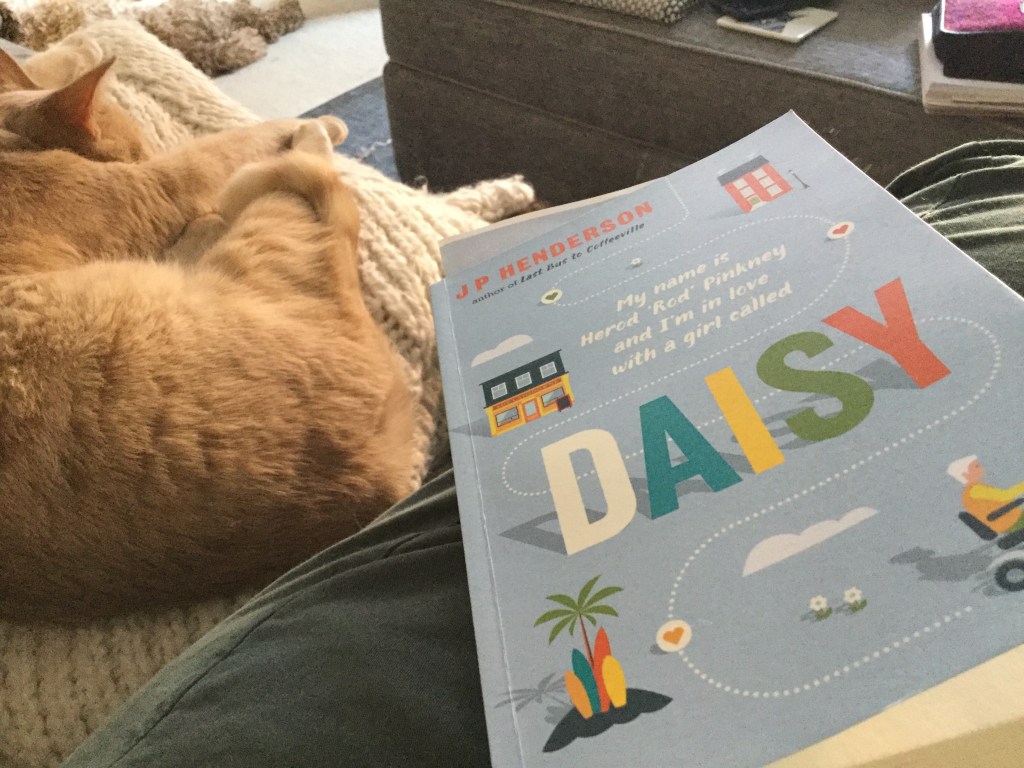
Daisy by J.P Henderson #DaisyBook #BlogTour #NoExit #RandomThingsTours

I was so happy, with the world seemingly going mad outside, to read this humorous and charming book with such a distinctive lead character. This is the first time that Herod ‘Rod’ Pinkney has fallen in love with someone he’s seen on television, apart from that passing crush on the late-night presenter of Sky News. This is definitely the first time he’s flown across the Atlantic to find them, but he’s very sure this is love and he’s destined to marry Daisy, who he saw on a ten year old episode of Judge Judy. This is Rod’s story, in his own words, guided by a man who collects glasses in the local pub. Rod is an unlikely hero, starting out as a ‘disappointment’ to his late parents, whose deaths left him a millionaire. He lives comfortably in London with a basement extension that houses his large collection of books as well as a man from next door called Donald who looks like Charles Manson. Donald fought in tunnels during the Vietnam War and now has a purpose built tunnel into Rod’s basement so he can breakfast on the grapefruit banned by his wife. Just occasionally, he also uses the basement to practice his trombone. On Thursday nights he forms a duo with Rod’s Peruvian friend Edmundo who plays pan pipes. However, to start their evening the three friends always open a bottle of wine and watch Judge Judy, which is how Rod first sets eyes on Daisy Lamprich.

If all this sounds a little eccentric to you, you’d be right. This is a gloriously eccentric book, filled with interesting characters and all narrated with Rod’s deadpan delivery and unique logic. There are so many laugh out loud moments, where Rod has no idea that he’s given anything but the logical answer. He worries about bringing his friends Donald and Edmundo together because one fought vehemently against communism in Vietnam whereas the other fought for communists in Peru. As it happens they get on famously, because they’re both musicians, both veterans and have mellowed with age. Until they met, Rod observed that that the only thing they have in common is being married to large women. Aside from the basement extension Rod’s home is kitted out with every conceivable disability aid. There are stairlifts to each level, bathrooms with grab rails, a wheel-in shower and a bath lift. He even invests in a mobility scooter to get around town, which gives him an eight mile radius. He doesn’t however, have a disability. He’s simply thinking ahead, to him it seems perfectly logical to conserve his energy now so his body doesn’t wear out. In fact once he’d had the stairlift idea he was a salesman’s dream, simply agreeing to every new modification suggested.

In these scenes we see he’s actually very vulnerable. I think underneath the light as air writing style and gentle humour the book does have something important to say. Rod’s money takes away any constraints on what he can do and spend, but given different economic circumstances I can imagine him getting into real trouble. He’s very trusting and therefore very lucky in the friends he meets. Although, that does work both ways – there probably aren’t many people who would make friends with a stranger they find tunnelling into their basement. Rod doesn’t judge, and his reward is an eclectic, but incredibly loyal group of friends. They form a supportive community that felt quite poignant at a time when we’re creating new connections and trying to support our neighbours. I loved being inside Rod’s head and seeing the world as he does, his narration reminded me of Eleanor Oliphant or The Rosie Project. I was totally immersed in his world and I was frequently chuckling to myself. It was the perfect antidote to the lockdown for me and I heartily recommend spending some time with Rod Pinkney, who was far from a disappointment to me.

Posted in Uncategorized

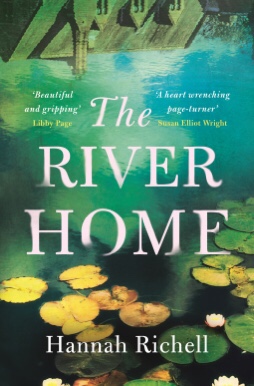
The River Home by Hannah Richell #Orion #TheRiverHome #NetGalley

It’s something she learned years ago -the hard wayand that she knows she will never forget: even the sweetest fruit will rot and fall into the earth, eventually. No matter how deep you bury the pain, the bones of it will rise up to haunt you ….like the echoes of a summer’s night, like the river flowing relentlessly on its course’.

I truly enjoyed this beautiful, haunting and heart rending book. Margot Sorrell couldn’t stand the idea of going home. She believed in moving forward, not looking back. But she receives a text from her sister Lucy in Somerset, saying simply ‘I need you’. So Margot, Lucy and the oldest sister Eve, congregate in the house they grew up in, beside the river. In such close proximity, it becomes difficult to keep the secrets they have been hiding, from themselves as much as each other. A wedding has brought the sisters together but the past may well tear this family apart. This gathering will change them all forever. They will have to confront terrible sorrow before a healing can begin, but only if they are open and tell the truth.

The author tells the story of the Sorrell siblings through different perspectives. Current events are happening in the brief ten day period of Lucy’s sudden wedding, so there’s tension straight away in the tight time period – these three have a lot of past hurt to get through. We also visit events in the past, in longer chapters that really evoke their time periods of the late 1980s, 2005 and finally 2009-10. These chapters provide a forensic analysis of the family and how they’ve suffered, with so little closure that there is still simmering hurt just under the surface. We see how the girls parents, Kit and Ted, met each other and came to be at the house. Their usual roles reversed when Kit’s career grew and suddenly she didn’t have the same time for the girls as before. She would forget things she’d promised and couldn’t be relied upon. This affected the girls badly, it stopped them bringing friends home and when their parent’s relationship finally broke down it was Margot, the youngest sister, who was stuck at home with grieving Kit while her sisters went to college. These strands are woven together very skilfully by the author to show that the emotions stirred up by the family unit being back together are hard to manage.

I loved how the sisters fall back into their long defined family roles as soon as they were within the family home. The atmosphere at Windfalls is darkly evocative and nostalgic. Like any family home, it is the space of our best memories, but also our greatest sorrows. The description is densely layered so I felt I was there in the room with these characters, feeling their emotions. There is duplicity, uncertainty, yearning and regret between these family members and all of it just under the surface. Cleverly, the author chooses to keep Margot’s secrets for the end of the novel and that creates another layer of tension as the time is whiled away and yet there are still so many things left unanswered. Once we get to the pivotal moments that still affect Margot to this day, it’s so painful and distressing. The family have always put her behaviour before she left home down to the family upheaval, but there is so much more than that and we really understand why she becomes the woman she is now. The shock of this is compounded by another event, this time in the present.

Margot changed deeply. What happens starts a long held resentment towards the family and her estrangement from her sisters, but also begins a cycle of self loathing and destruction. It’s not just the pain of the incident itself, it’s the fact that no one noticed. No one delves deeper or offers to help, and in these circumstances the family member turns their anger inward – how can someone develop self-worth when they’re so overlooked? Any attempt to help would now be too late and suddenly Margot’s actions make more sense. I shed tears for Margot, but also felt very deeply for Lucy. There are many dysfunctional family novels out there, but I felt that the author was psychologically astute and insightful. The characters are so well drawn and I felt completely swept away with their story and how this homecoming feels for them. My parents moved out of our childhood home a few years ago and it was strangely painful. I still haven’t been able to go back because it would feel odd to see strangers playing in the garden, where so much family drama played out. I would feel like a ghost, haunting the place I couldn’t leave behind. Where we grow up has seen so much; the full ebb and flow of family life. The energy of these events is somehow imprinted on the atmosphere like an emotional photograph. Sometimes, we have to to go back and confront these events, before we can truly understand them, to process them as a family and finally move forward with some sense of healing and acceptance.

Posted in Uncategorized

The Treatment by Michael Nath #The Treatment #QuercusBooks

This is a really unusual novel and probably one I wouldn’t have found in the course of my usual reading choices. I’m really glad I chose to give it a try. Written almost completely like a stream of consciousness, this is a novel that feels very relevant. The events feel entirely real, probably because they echo the murder of teenager Stephen Lawrence. Young, black teenager Eldine Matthews is murdered at a South London bus stop. The racist gang, L Troop, who are responsible for the killing, escape justice. Now, twenty years later, the leaders of the gang are untouchable by the law. Through years of police corruption and intimidating witnesses, they have carried on with their violence. However, even twenty years later, Eldine’s murder is not forgotten. His story is once again moving through the communities of south London. The blurb describes L Troop’s characters as ‘rambunctious dandies and enchanting thugs’ and there is something very interesting about them. Journalist Carl Hyatt wants to get to the truth, but knows that it will mean challenging Mulhall, the secret kingpin of L Troop and defender of Eldine’s killers. This will put everything and everyone he loves on the line.

Hyatt is a washed up journalist, disgraced after being prosecuted for libelling Mulhall. He is now working for the local free paper The Chronicle, which is a career dead-end. As whispers start to reach him of corruption, and the disappearance of a key witness, possibly orchestrated by Michael Mulhall. He pulls together an unlikely band of brothers: Victor Hanley, a criminal defence lawyer; the lawyer’s minder; a one-eyed comic; and a rent boy he happened to interview for the paper. They bounce off each other well and seem determined to achieve what the Criminal Justice System failed to do twenty years ago; get justice for Eldine Matthews and his family. Their enthusiasm and energy carry them forwards, but the closer they get, the less distance there is between their loved ones and a ruthless gangster.

I loved Nath’s depiction of London. It is edgy, vibrant and full of unusual characters and colour. It gave me a sense of 18th Century novels like Moll Flanders, because there’s a bawdy element to the language and a similarity in the various settings of bars, brothels and other disreputable establishments. The language of the characters is unusual too, they are unexpectedly erudite and articulate. Nath explores the issue of race, breaking it into three strands; individual, institutionalised and societal. He also tackles weighty subjects like justice, revenge, homophobia and religion, but it never feels worthy. These subjects are simply introduced through characters interacting with each other. The most compelling characters for me being Mulhall with his darkly magnetic personality and terrible hold on the community, and rent boy Donna Juan who could easily be the central character of his own book. Despite the dark subject matter there’s a strange exuberance about the novel, and it’s those contradictions, both in character and tone that kept me reading. The best thing we can say about a book is that it will stay with us and make us think. With this book Michael Nath has managed to do both.

Thank you to Quercus and NetGalley for my ARC of this novel.

Posted in Uncategorized

The Long Call by Ann Cleeves #TheLongCall #MinotaurBooks

I’ve been a fan of Ann Cleeves’s Shetland series for many years now and the TV adaptation is a viewing must for me. I love the sense of place she creates, the history of the islands woven into the stories and of course Jimmy Perez, the tragic widower wedded to his work. I also love his relationship with Duncan, and the two dads working together to bring up their daughter. I watched Vera on TV before reading any of the novels so now she is inextricably linked with Brenda Blethyn. Yet again, on reading, it is the landscape that’s the star of the show. I think, after reading this first novel in her new series, North Devon will always be the territory of Matthew Venn.

The long call is part of a seagull’s repertoire and is usually associated with warning and aggression; ‘the sound naturalists named the long call, the cry which always sounded to him like an inarticulate howl of pain’. DI Matthew Venn is a local boy, now working for Barnstaple CID. He picks up his first murder enquiry when a body is found on the sands. The man, who looks to be in his forties, has been stabbed. There is nothing to identify him, except a tattoo of an albatross on his neck. Immediately, my mind went to Coleridge and the Ancient Mariner, a man who is cursed after he kills an albatross. The tattoo hints at a heavy burden and the need for a constant reminder. The victim turns out to be a man called Simon Walden, who once killed a child when drunk driving, and lost everything in his life. Depressed and suffering from alcoholism, Simon had been working as a seasonal chef in a local hotel. As Matthew starts to investigate, the links between the case and his personal life start to emerge. At what point should he step back from the case?

Venn is an interesting character. He is very quiet and thoughtful. His upbringing was in the strict religious environment of the Barum Brethren. Having rejected this strict evangelical faith, he found himself ostracised by both the congregation and his parents. We meet him just as he’s grieving for his father, filled with guilt and regret for not being able to see him before he died. His husband Jonathon is supportive though and has settled with him in the area after finding a job as head of the The Woodyard – a community venture focused on the arts for people with learning disabilities and their families. Unfortunately, connections between The Woodyard and the murder case start to surface. Walden was living with two workers from the hub, Caroline Preece, charity worker and daughter of the local vicar rents out rooms in her home. Along with current lodger and art therapist, Gaby Henry, Chrissie decides to take a chance on Walden when she finds out he is homeless. Another connection comes in the form of a young woman with learning disabilities who talked to Walden on the bus each morning on her way to The Woodyard. Her father is alarmed to find out this stranger has befriended his daughter, and suspects an ulterior motive. What could possibly be the connection between them?

Venn is constantly treading a fine line ethically with this case. His local knowledge and insider information on the Brethren are making a big difference to the case. However, his personal links to the day centre, and particularly his husband’s role as Manager could jeopardise any future legal case should it come to court. He is ably assisted by DS Jen Rafferty though, who works very instinctively and with great empathy. She has left an abusive relationship in Liverpool to lose herself somewhere more rural and I think her own troubles have given her great empathy and insight. I felt this book was very much about establishing these characters for the future, and that created a relatively slower pace to the novel. I enjoyed how the variety of characters allowed Cleeves to explore societal assumptions and prejudices people have about same sex relationships and people with learning disabilities.

The location, as always, is a character in its own right. The community is nestled where two rivers, the Taw and Torridge, meet at the coast. It’s the perfect place for people who want to escape the rat race, for artists attracted by local scenery and wildlife, for tourists and for those wanting to disappear. Towards the end of the novel, as the suspense begins to build and those threads start to come together, the pace picks up and I found myself more engaged. I think this bodes well for the future novels in the series now these characters are established. I’m looking forward to seeing more of the complicated, but intelligent Matthew Venn (although I will always love Jimmy Perez). I also look forward to seeing more of his relationship with Jonathon because I think their differences – Matthew always smart in a suit and Jonathon in shorts and sandals whatever the weather – could create opportunities for the both drama and humour. Cleeves has another hit on her hands and since it’s already been optioned for a TV series I’m already mentally trying to cast the characters.

Posted in Uncategorized

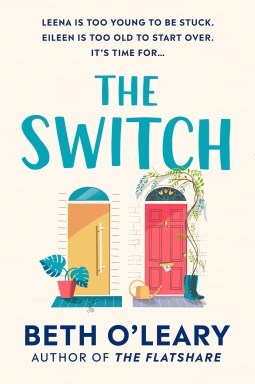
The Switch by Beth O’Leary

Well, I seem to have been well and truly ‘Eileened’. This was the perfect lockdown read for me. Funny, moving, romantic and uplifting all at once. One year on from the death of her sister Carla, Leena is treading water. She’s still living down in London, still doing the same job and is still with the same boyfriend, Ethan. She lives in the same flatshare in Shoreditch with her friends Fitz and Martha. She and her best friend Bee have talked about setting up her own business, but she’s still waiting for the right time. She’s still not talking to her mother either; since Carla died their relationship has been very strained. In fact, the best relationship Leena has is with her namesake, her grandmother Eileen. Eileen still lives in Leena’s home village and is a force to be reckoned with; she organises village events, coordinates the Neighbourhood Watch scheme and knows everything going on in the surrounding Dales villages. So, when Leena makes mistakes at work and is asked to take a sabbatical, Bee thinks Eileen is the best person to get her back on track and she is packed off to stay for a few days.

Despite being incredibly busy, Eileen also needs a change. She has been supporting her daughter who has had several breakdowns since Carla’s death. They call them ‘wobbles’ but it has been a far more serious depression than Leena knows. Eileen feels a bit jaded and would like to meet a man and have an adventure. They come up with the idea of a switch. Leena could move back to the Dales and take over her grandmother’s life, while Eileen moves in with Martha and Fitz down in London. Leena will be able to use her organisational skills to manage the annual village festival. Meanwhile, Fitz will help Eileen set up a dating profile online and she will get to feel the excitement of living in a city. What could possibly go wrong?

I fell in love with Eileen straight away, she’s ballsy and packed full of energy. She’s also incredibly loving and generous. Despite going through her own grieving process she has been supporting her daughter and granddaughter, as well as trying to cope with the tension between them. Eileen is a ‘fixer’ at heart too, she won’t let anyone go unnoticed or be ignored. Not only does she make friends with Fitz and Martha, she also wants to meet and befriend Bee. Here she really does start meddling in order to help Bee out with her own dating dilemmas. She wants to make use of the communal space in the block of flats and comes up with the idea of social club for Shoreditch’s elderly residents. She soon gets everyone on board, except for one resident who is worried about strangers coming in and out. Eileen visits her in person and answers each of her concerns, eventually getting her involved too. She befriends Letitia, whose flat is full of incredible antiques, and won’t let her be a recluse. I love how Eileen never judges anyone. Despite what I might have expected of someone her age, she accepts everyone’s different way of living. When she meets a man who offers her a no-strings affair while she’s in London, she doesn’t dismiss it. She accepts his offer and sees it as an adventure. The group help Eileen too, by advising on some wardrobe updates (culottes are back) and giving her an insight into a younger generation. Despite all this excitement, she surprises herself by chatting to Arnold, her neighbour back home who also has an online dating profile. She’s always seen him as a grumpy old man, and they’ve always had a prickly relationship. Will they get on any better online?

Leena also starts a tentative truce with Arnold. He’s typically grumpy at first but she perseveres and finds herself popping over for mid-morning coffee. The many committees Leena has to attend on Eileen’s behalf don’t go according to plan at first, not helped by a first impression of her losing one member’s dog. Leena remembers Jackson from school and he is now a primary school teacher with a rather unruly dog. When Leena loses him the whole village is on the alert and he’s found wrecking a neighbour’s garden. Not everyone is as forgiving as Jackson. They’re also not keen on new ideas, however well researched and organised. Leena finds that her event planning skills need something extra, local knowledge and know-how. Leena’s relationship with her Mum is at best frostily polite, but things take a bad turn when they have a screaming match in the street. It seems that Marian supported Carla’s choice to stop treatment, whereas Leena felt there were more options and tried to push her sister into fighting on. For Leena, this is the first time she has met an obstacle she can’t climb over. In her eyes, Marian failed Carla, then failed Leena by being so caught up in her own grief she stopped being a Mum. Eileen worries that instead of their proximity forcing them to work through their differences, it has made things even worse. It becomes clear that Marian has been so fragile, Eileen has feared she might commit suicide. Can they get past this, or are they destined to remain estranged forever?

It was interesting that Eileen and Leena are both similar in their approach to life, but by switching have still made differences to those around them. Leena thinks she has been spending time with Arnold and her Gran’s best friend Betty, because they’re isolated and lonely. There’s a point in the novel where she realises that they’re becoming friends in their own right and she looks forward to spending time with them. I particularly enjoyed how she realises that Betty’s husband might be abusive and controlling. Betty is very nervous when her husband phones to ask about his tea and when Leena pops round unexpectedly. It’s something all the friends have been aware of, but they’ve been too scared to tackle it. Leena has nothing to lose, she’s only there for a short time, so she tells Betty that she doesn’t have to live like this. She also offers a bed, if ever she should need it day or night. In London, Eileen talks to Martha about her relationship with Yaz and worries that she’s still over in the US, rather than with her pregnant partner. However, she is quick to accept that this generation does things differently. She’s not so hands off with Bee though, taking her on a blind date with a young man from Yorkshire who she thinks will fit the bill. Both learn how important their support networks are, despite having generational differences, the bonds run just as deep.

Eileen learns that as an independent woman she can choose whether a romantic relationship is for life, as it would have been when she was young, or just for a season. She most definitely has an adventure, but will it be so transformative that she makes long term changes to her life? For Leena the experience shows her she could choose to live at a different pace. In this small village, where she and Carla grew up, people talk about her sister quite naturally and it helps. Here she can’t avoid her grief and has to slowly work through it, alongside others who loved and miss Carla too. If she were to stay, there are so many things to think about: her relationship with Ethan; her friendship and possible business plans with Bee; whether to go back to her flat and her job. Could a tall, handsome primary school teacher feature in those plans? This book is light and uplifting, despite visiting some tough themes with Betty’s story and the loss of Carla. I found myself wondering what life changes I could make and Inexplicably ended up clearing out the wardrobe! The characters are eccentric but very lovable, especially grandmother and granddaughter. It gives a great message for these trying times – life is short, and if you’re not happy, you have the power to make changes. Happiness and peace can be found whether you’re in Thailand on a yoga retreat, in Shoreditch or in a picturesque little village in the Yorkshire Dales. It’s within all of us to choose it.

Thank you to NetGalley for an advanced copy of the book in exchange for an honest review.

Posted in Uncategorized

Magpie Lane by Lucy Atkins


I have enjoyed Lucy Atkins other novels and it seems they get better and better. I love the character of Dee and became drawn in by her straight away. There is a sense that she doesn’t really belong anywhere but she is curiously at ease with who she is. Some thing of an outsider in Oxford, she doesn’t belong to any of the colleges but is one of those invisible people who provides services to those who do belong. Dee is a nanny and makes a very disturbing observation about the academics who use her services – when desperate, people will let a near stranger look after their child. The new master and his wife, Nick and Mariah, hire her after a chance meeting on a bridge early one morning and one hasty conversation. They do not ask for references or do a police check. If they had, they would have found that Dee has a criminal record.

It is no coincidence that Mariah restores old wallpaper. She is adept at papering over cracks. She tells Dee that Felicity is selectively mute, that she met Nick after his wife died from a longstanding illness and that they both did everything to get Felicity talking again. There us a stifling atmosphere in the lodgings and the author carefully links the house with the people in it – with both there is a long history being erased and retold through renovation or retelling. Is the start of this couple’s relationship as simple as they portray? Mariah’s chirpy and wholesome exterior might, just like the new decor, might hint at a darker, more murky interior world. The house’s history is slowly being unearthed by Linklater, a social historian hired by Nick. It shows how out of step these two characters might really be. Nick wants to disturb and discover the chequered past of their new home, while Mariah is whitewashing it. Linklater discovers family dramas, haunted occupants and a possible answer for the ‘priest’s hole’ in Felicity bedroom that may be even more malign than the poisonous Victorian wallpaper.

Felicity isn’t just mute. She is a very distressed child, seemingly obedient but full of simmering anger and confusion. She roams the house while still asleep, makes patterns on the floor with her collection of bones and artefacts, and seems to be drawn by the ‘priest’s hole’ in the middle of the night. She slowly starts to speak to Dee, but also makes a surprising connection to Linklater when the three of them start to take tea together after school. They are a group of misfits, finding each other and developing trust. There seems to be a distinction made between those who appear genuinely themselves, however odd they may seem, and those who are putting on an act; a natural family forming where there is a forced family unit at home. It has to be significant that the one person Felicity never speaks to at all is Mariah. Dee becomes more than a passing childcare worker, she is deeply involved with this little girl. I like the way the author foreshadows this relationship as Dee sees Felicity for the first time and notices her curls, just like those of another child she once knew. Is this another nanny’s role or is she giving hints of a past we don’t know about? If Dee once had a family what happened to them? We have to question Dee’s role as narrator and whether she is not as candid with us as she seems.

I kept waiting for a terrible secret to emerge and for Dee’s reaction to being exposed. The tension is ratcheted up when we learn that Felicity has gone missing and the narrative passes back and forth between the present day and what has happened in these character’s pasts. I enjoyed the ending, although I raced there a little too quickly. I was desperately hoping for a happy ending for both Felicity and Dee. Watching Mariah and Nick’s ‘perfect’ life completely implode was oddly satisfying. With her perfectly calm exterior ravaged by the birth of her first child Mariah struggles to function normally and seems haunted by Felicity’s mother Ana. She starts to spend days in pyjamas, coping with a colicky baby and this break in her usually ordered world threatens to break her.

I was left feeling that Nick and Mariah didn’t deserve Felicity, but was that what the narrator wanted me to feel? I was left wondering whether I’d been manipulated all along. As the police wondered and questioned, the reader does the same. Is Felicity as disturbed as Dee would have us believe? Or was Nick right in his assessment that it was Dee’s presence, her inability to sleep, her encouragement in discovering something supernatural and the constant buckets left in the kitchen to bleach animal skulls that are to blame? Finally, I liked the way maths was used as a theme in their interactions; Dee’s proof is an example of how something seemingly factual and definite can still be manipulated. A maths problem can have two correct answers. It simply has to be worked out differently. Which version do we trust? This is an intelligent, psychological, thriller that keeps you guessing long after reading, Lucy Atkins has done it again! A great read.

Posted in Uncategorized

The Silent Treatment by Abbie Greaves


This interesting novel grabbed me right from the start, as Maggie calmly swallows a handful of tablets, then gets up to make dinner for her husband. It takes till half way through prepping the green beans and she has collapsed suddenly, so suddenly there is no time to break her own fall. Frank is so engrossed in his study that the smoke alarm is the first sign of the tragedy that has unfolded in their kitchen. He finds their tea on fire in the oven and a little way away, Maggie is unconscious on the floor. Frank’s voice is hoarse and he’s unused to the sound as he calls the emergency services. This is when The reader first finds out that Frank hasn’t spoken to anyone, even his beloved wife, for the past six months.When I requested the novel from Netgalley it was this premise that first drew me in. Probably because, as my long-suffering partner will tell you, I never stop talking. I imagine that not chatting to the person you live with takes concerted effort. Greaves came across the premise for her novel when she read an article about a Japanese boy who had never seen his parents speak to one another. It’s intriguing and does ensure that you keep reading; I kept wondering why and how this situation could have started.

I hadn’t realised that the book was about pregnancy loss and infertility. Greaves writes about the grief and helplessness of this experience with real insight. Having been through the same experience, it was important to me that Maggie’s response feel genuine. We see the ups and downs of a long term relationship as Frank starts to reminisce, and the romantic beginnings of building their home together. As Maggie lies in a coma at the hospital, her nurse Daisy encourages Frank to talk, to say everything he can to her because the time they have left together may be limited. This Is where Frank’s secret is revealed and we know why he hasn’t spoken for six months.

I enjoyed the novel, even though there were parts I didn’t fully connect with. Although Frank’s narration is emotional I found him difficult to understand. It’s a if there is a barrier between the reader and Maggie, both because she’s in a coma and because we only see her through Frank’s eyes at first until the narrative voice changes. I found myself waiting for a contrasting chapter from Maggie’s point of view early on, then with Maggie’s letters we start to see her inner life. I found this a moving and honest portrayal of pregnancy loss and parenthood. It’s hard to imagine a relationship where all the usual day to day things happen like eating together, sleeping together and sex, without a word passing between them. I guess it shows the strength of love, that Maggie can continue to give while receiving silence. I won’t spoil the ending, but it is emotional and I can see it staying with readers. This is an intriguing debut and I would definitely look out for future novels from this author.