Posted in Uncategorized

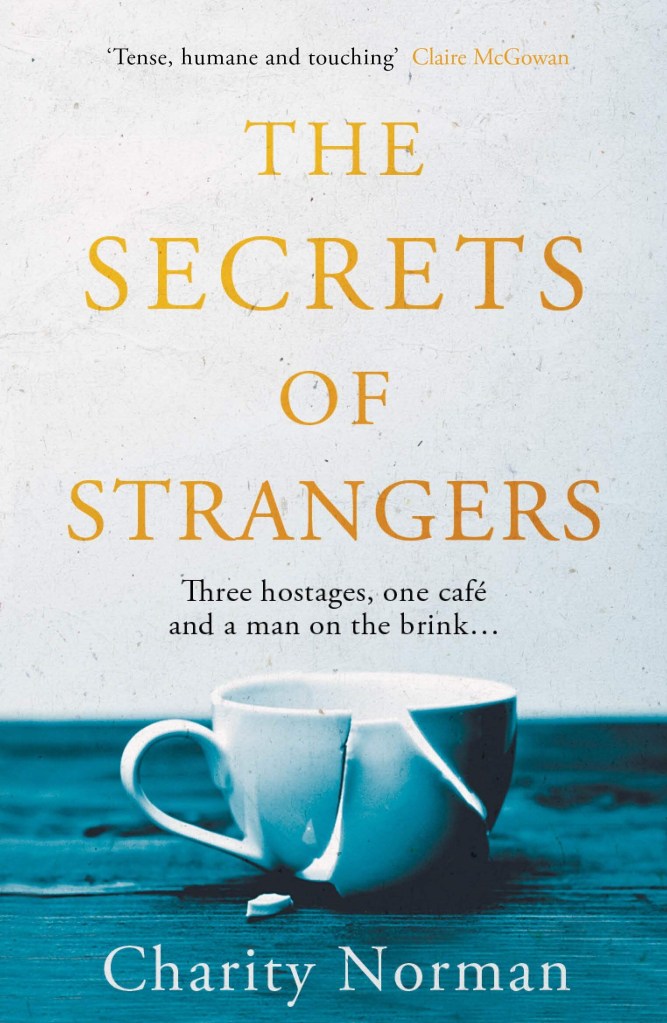
The Secrets of Strangers by Charity Norman #TheSecretsofStrangers #blogtour #RandomThingsTours #NetGalley

I discovered Charity Norman’s writing a few years ago and devoured her back catalogue over a couple of weeks that summer. I jumped at the chance to review her latest novel and I read it in a day, because it was impossible to stay away from the characters and the incredible sense of tension created by the author. Set around one day in London, the author takes a handful of strangers and places them together in an intense situation. Abi is a solicitor, who decides to pop to a Balham cafe called Tuckbox because the station cafe is crowded and she only has four minutes till her train. Mutesi has come from a night shift and is meeting her daughter -in -law in Tuckbox to collect her grandson, Emmanuel. Neil is homeless, and has been given some money so he opts to visit Tuckbox and sit by the radiator for a while. Inside is a waitress and cafe owner, Robert. Into this everyday scene walks Sam and each of their lives is about to change beyond recognition.

After a brief argument with Robert, Sam returns to his nearby Land Rover and comes back with a shotgun. It’s not long before Robert is lying, bleeding in Neil’s arms and despite Mutesi’s nursing efforts he dies. What follows is a tense stand off between the police and Sam who is holding a small group of people hostage. His constant demands are to see his daughter, Julia and speak to his ex-girlfriend Nicola. Everything has gone wrong in his life and he wants some answers from her about their relationship and whether she was really having a relationship with Robert, who was his stepfather. The chapters then swap between different viewpoints, from each of the people in the cafe to Eliza, who works as a negotiator for the police.

The first thing that struck me about the book was how this group of people work together. From a psychological perspective, they worked very like one of my therapy groups. They become accustomed to each other, listen to each other’s stories and through the sharing of secrets come to understand themselves and each other a little better. There’s a strange catharsis in being part of this group. As each member tells their story a weight is lifted, because they no longer hold a guilty or painful secret. Furthermore, by hearing other people’s stories some kind of healing takes place. From infertility, addiction, and even genocide the book teaches us that everyone has struggled. It seems that perspective can be gained by hearing what other people have done or experienced.

In another way, it can be a relief to be simply heard and accepted. For Sam this is a huge gift because he is the aggressor in the situation, but the group still hear him. His story is one of loss and coercive control. His father dies suddenly and traumatically, leaving Sam, his mother and the farm at the mercy of Robert. He was a friend of the family and although he has a great public face, in private he’s a monster. The terrible way he reduces Sam’s mother from the curvy, wild-haired, laughing woman she is at the beginning to a thin, nervy, controlled wreck is hard to read. The worst part for me was the loss of Sam’s dogs, probably because mine mean the world to me. Robert seems like a parasite as he leaches all the resources from the family and the farm, until there’s nothing left. Sam can see him for what he really is and as he tells the story the group simply accept his lived experience. No one questions, or disagrees with him and although they’ve seen him commit an act of violence, there is empathy for his experience.

From behind the police cordon we watch Eliza, the negotiator, and the skilled way she works to bring resolution. She is calm, non-judgemental and totally focused on Sam. We see the responsibility of the role and how much it takes out of her. The tension is kept up by the knowledge that this is only going to last a few hours, depending on Sam giving up, Eliza succeeding in resolving the situation or the waiting armed response officers going in. The author creates flash points within the story where something is discovered or concealed. This means the reader is constantly on edge, waiting for each ‘reveal’. Every character has their role. Abi is blunt, but very knowledgeable about the law. Neil is possibly at the rock bottom of his life, probably giving him the humanity he shows for someone else’s pain. Mutesi touched me so deeply. I was amazed by her strength. She wanders in the background making sure there’s tea and cake, tending to Sam’s wounded head and safely holding the space for everyone to talk. Without her the group wouldn’t work, but she says little about herself until it’s necessary. When it comes, her story is quietly devastating.

The book’s ending broke me. I was genuinely in tears for these characters which shows the skill of this particular writer. I believe in each one of them. Novels are at their best when they teach us something about what it is to be human. This one shows that if we all just shut up and listened, we have so much more in common than we think at first sight. We should be kind to each other, because we never know what the other person is going through. I am always amazed by people who have gone through the worst experiences life can throw at them, but can still find the strength to help others. Although Sam takes a life, he is the catalyst for this small group to make changes in how they live. I could see parallels with our current lockdown situation. For those of us not directly affected, by loss or by working on the frontline, this is a time out of time. Time to reflect, take stock, and instead of bouncing straight back into our old routine we could find ways to make our lives better. To help more, to work less, to spend more time with those we miss, and rebalance our lives. These characters take a terrifying situation and choose to grown and connect. It was moving, compassionate and a story for these times.

Posted in Uncategorized

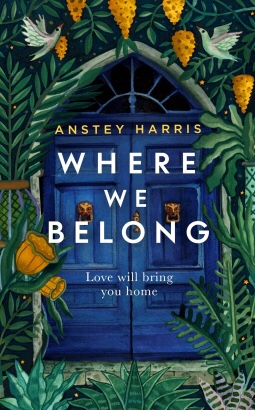
Where We Belong by Anstey Harris #NetGalley #WhereWeBelong #SimonandSchuster

Amazingly, this is the first Anstey Harris novel I have read. I am now rushing back to read the others. This novel is magical, emotional and written with such sophistication and class. Cate and her son Leo are in a difficult situation. In the aftermath of her husband’s death, they are having to leave the home they can no longer afford to rent in London. As an emergency measure Cate has been granted permission to live in an apartment that’s part of her late husband’s ancestral home. The house is a museum with living quarters above, but it will be the first time Cate and Leo have ever been there. Due to a family disagreement between grandfather and grandson, Cate has never even visited Crouch-On-Sea or the museum that will be their home. Hugo, Leo’s great-grandfather, was an explorer and collector and in a way that would be totally unethical now, he brought back many species of animal to create incredible displays of the natural world. In a time when people couldn’t travel to far flung places, unless they were rich, he felt he was allowing them to know and understand the world better. In an odd piece of logic he felt he was preserving these varied species for the future.

We learn that Cate fell in love with Richard at first sight, and the instant connection was mutual. Cate was already going out with Richard’s best friend Simon and he had arranged to introduce them at a local pub. The connection was so strong that Cate explained to Simon straight away and he remained a loyal friend. The author very carefully places these reminiscences inbetween the here and now, so we follow Cate and Leo into their new lives, but continue to find out so much about what brought them there. Every now and again, the revelation makes us totally rethink the present. When the pair first arrive at the house and meet the faithful family retainer Araminta, she shows them to their rooms in the top of the house. The next morning she is there to show them the family kitchen downstairs. As the pair try not to break the priceless porcelain they must use, and Leo sneaks a second bowl of his sugary cereal, Cate relates to him in a way that makes me think he’s around ten years old. Then an extra chromosome is mentioned and I realised Leo is actually much older. This made me think about my own bias and how much we assume. As Cate remembers her pregnancy and Leo’s birth, it becomes clear that this was actually nineteen years ago. It also transpires that it is four years since Richard committed suicide after a long period of clinical depression. Before he died, in the Edwardian house that he and Cate renovated together, Simon and Cate fund hundreds of letters from banks and debt collection agencies. Richard owes hundreds of thousands and it is like this, on Christmas Eve, that Cate finds out they have lost the roof over their heads.

The book is a clever mix of these complex relationships and raw human emotions, with the fantastical and magical world of the museum. The author’s detailed and beautiful descriptions of the collections, particularly the animal galleries, are so vivid I can actually see them. By the end I started to imagine this was a real life place I might be able to visit. It reminded me of a visit to New Walk Museum in Leicester when I was six and an entrance hall full of stuffed animals so much bigger than me. The description of these displays had the same effect as I read them with the complete wonder of a child. There is also an incredible dream sequence that I had to read twice it was so beautifully done. The netsuke in the oriental gallery and the statues skating across the pond also have that magical feel. I love the slow unveiling of family secrets and the relationships that are being built, particularly between Araminta and Cate. The writing of Leo’s character is so sensitive and his development into a young man is shown to be as much about Cate starting to treat him this way, as it is about the new lease of life he gets from the museum. I loved reading about the friendships he forms, the art group and his relationship with Sophie, who is a wonderfully feisty creation.

We see Cate come alive again as she battles to relaunch and save the museum from imminent closure. There is even a touch of romance in the air as she meets a local artist, but this is mainly about Cate finding out who she is now. She’s deciding which parts to leave behind as experience and which to carry with her into the future. The most heartbreaking truths don’t come out till the very end, one of which I expected, but the other is a sucker punch moment. It is so profoundly sad and borne out of such a great love, it could never be lost. Cate comes to realise that there will never be another relationship like the one she had with Richard. They were soulmates and that is rare. For now she has family, friends and a new home and Richard is part of everything that surrounds her, exactly where he should be.

Thank to Simon and SchusterUk and NetGalley for the chance to read an I corrected proof of this novel.

Posted in Uncategorized

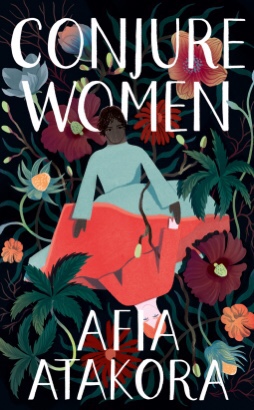
Conjure Women by Afia Atakora #Fourth Estate #ConjureWomen #NetGalley

This wonderful debut novel was an unexpected, but very welcome, surprise. Set in a tumultuous period of history, before and after the American Civil War, this book is different because it focuses on the female perspective of these events. Miss May Belle and her daughter Rue live at Manse Charles’s plantation in the Deep South. In the slave quarter’s the women share a hut to themselves which is seen as a great privilege. Miss May is valuable because she is a midwife and healer, as well as a conjuror of curses. If asked whether her daughter shares her abilities, Miss May tells them that her knowledge:

Keeps my child in his ownership and makes her worth the owning’.

Miss May’s story takes place pre-war, then we follow Rue into the post-war period where she carries on her mother’s work. Before this she was often found playing alongside Miss Varnia, Manse Charles’s daughter. Rue takes over from Miss May after her man is hanged and she can no longer partake in the joy of the mothers and their babies. Even though the plantation slaves were freed after the war, Rue is at the mercy of her incredible gift.

She was born to healing and stuck to it for life …a secret curse of her own making’. It really is a curse when Rue helps in the birth of a baby born with startling black eyes seen as a sign of evil.

The author delves into an unexpected result of the Civil War, some people brought up in slavery struggled with their freedom. Rue is one of these people, finding that freedom has a weight and responsibility she didn’t expect. May’s chapters are titled ‘Slaverytime’ and Rue’s are ‘Freedomtime’ to make the distinction and show the huge shift. The change was often not as positive as we imagine. It brought to mind The Long Song by Andrea Levy where the slave rebellion happens and they move into employment. However, the pay was so low and masters created rents so high that most families were worse off than before when they had free lodgings and food. It’s clear this book is drawn from a huge amount of primary source material of the period, such as diaries or autobiographies written from oral accounts. The author really captures the oral tradition, with a narration that’s quite hazy and long winded. At first I thought the haziness was meant to echo the heat filled haze in the air, but on reading the background it was meant to give me the sense of old fashioned storytelling. The author managed to take me straight to a sense of time and place. The inclusion of minister Bruh Abel also shows how a mix of people’s Christian beliefs, animistic traditions and folk practices came together to create a complex culture. The split time frame creates tension as discoveries unfold and time period informs the other. This is a masterful piece of storytelling, with complex characterisation and a time brought vividly to life.

Posted in Uncategorized

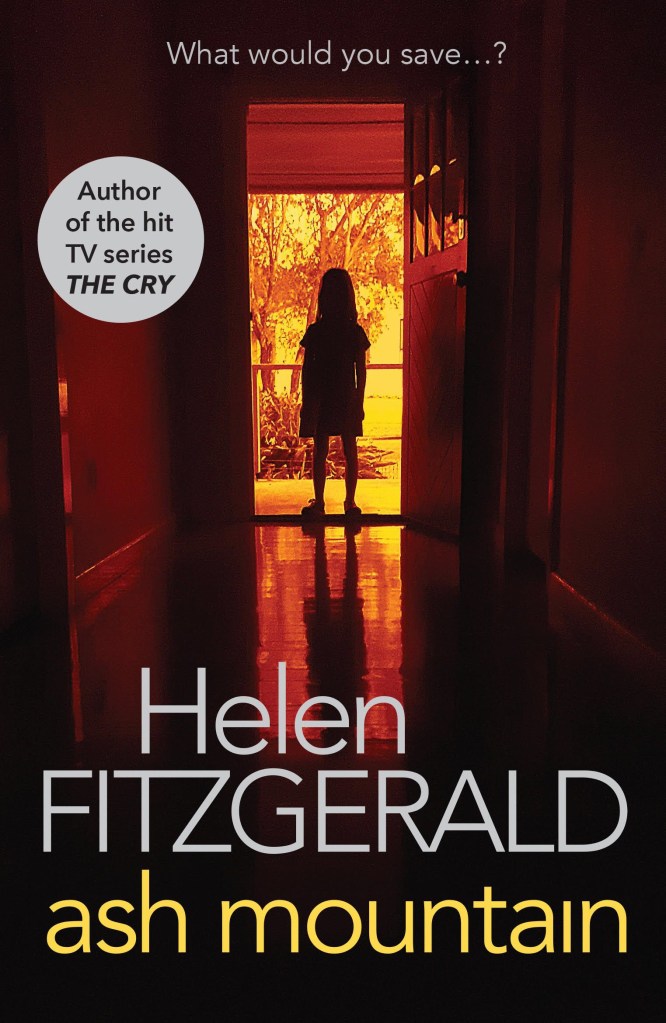
Ash Mountain by Helen Fitzgerald

Fran grew up in the small town of Ash Mountain and vowed never to go back, when she left for the big city. But, when her relationship ends and her father becomes terminally ill, she decides to leave her job and return to nurse him. In the intense heat of an Australian summer Fran will nurse her father, connect with her children, and fall in love. Yet all the time, there is the mounting tension of past secrets bubbling up to the surface and as the temperature soars ever higher, the threat of a catastrophic weather event that will change lives forever.

I hadn’t read any of Helen Fitzgerald’s work before, although I was familiar with the BBC adaptation of her novel The Cry which I found both disturbing and compelling at the same time. Ash Mountain is an unusual mix; part small town comedy, part family drama, part disaster movie. Yet it all works together perfectly. Fran is an immediately accessible character, in fact I’d have been happy to have her over for a bottle of wine. She’s a no bullshit, practical and funny woman. I imagine in the city she was formidable, but her home town is forcing her to be more open and vulnerable. In a small town everyone knows you and remembers every heartache and mistake of growing up. Fran’s growing up was harder than most since she had her first child, Dante, at fifteen after a brief first sexual encounter with one of the boarders at the Catholic school. The insult ‘Mountain Slut’ still rings in her ears. To make things worse,The Boarder is holding his wedding in town this weekend. The same parish priest, is still in residence and will remember Fran’s mortifying confession from all those years ago. Plus, there’s Brian Ryan (The Captain) who she likes in spite of herself, but their future rests on the small matter of whether his daughter Rosie and Fran’s daughter Vonny are starting a relationship of their own. That’s if they don’t fall out over who gets to wear a pair of red Dr Marten boots first.

As the days creep towards the wedding, the mercury rises and the locals are mindful of the weather getting out of hand. The story is told in short chapters that move back and forth in time. We’re aware of what is coming, but somehow instead of relieving the tension it seems to make it worse. We’re constantly aware that these characters have a finite amount of time, before disaster hits. That just as we’re getting to know them, their lives could be in real danger. It gives an immediacy to the novel. However, the thread of a mystery emerges from within the school, when Fran’s daughter Vonny is searching in a store room when she finds a series of boxes. Each box is covered in a collage and she finds one with Fran’s name on. Compelled to look inside, she sees photographs of a teenage Fran in her underwear. She takes one home and when Fran sees them it awakens something. A long lost memory of Sister, the sick room, and something about the blinds? Fran asks Vonny, how many other boxes she saw. She’s horrified to learn that there were dozens.

These characters felt so real, that it was almost like dropping in to someone’s life half way through. It felt that abrupt. I had the sense that they were living this life long before I happened upon them. The complexities of small town life were very well observed – having grown up in a village I know only too well how awkward it is to be around people that remember all your teenage escapades, however embarrassing. For Fran, being that pregnant teenager, with all its shame and humiliation, is something she has to remember every time she pops out for milk. Her tentative feelings for Brian are captured beautifully, but as their girls meet and hit it off straight away they’re unsure about being able to move forward. If Dante is well known as her teenage indiscretion, Fran is very proud of the way she parents Vonny with her friend Vincent. The author shows us how mixed race Aussies are still perceived by some people. When Vonny and Rosie ignore the sexual advances of a few male boarders by the pool, it gets ugly very quickly, The boys become even more interested when the girls begin kissing each other, thinking its a show put on for them. When they realise the girls are genuinely interested in each other they become abusive. They throw a few insults about the girl’s looks but when one of them calls Vonny an ‘abo’, Rosie’s fists start to fly. In the boarder’s eyes it seems the girls are the lowest of the low – local, small town, poor, not interested in them sexually and to top it all one is mixed race. It shows the complex hierarchical structures in Australian society of class, gender and race.

I didn’t know what a ‘fire storm’ was before I read the book, so it was a totally new and horrifying possibility. The term refers to a fire so strong that it generates its own weather system. This can occur as a result of a fierce bombing campaign, such as the one carried out on Hamburg in WW2. More commonly though it’s the result of a bush fire and combines intense heat and flames with storm force winds. The book was completed prior to the recent summer wild fires so wasn’t directly inspired by those events, but the thought of what people and animals went through is devastating. The incredible cover photo was taken at the time of bush fires and really brings home how terrifying it must be to see a sky full of fire. It had an immediate resonance for me with a famous scene from the movie Close Encounters of the Third Kind. Where a fascinated little boy crawls out of the dog door to see the lights in the sky. In some ways that’s what reading this felt like. While, the Catholic Irish background was familiar to me, Australia felt a bit like an alien landscape. Reading this novel was an insight into that landscape, but also the unique culture. Every so often the odd touch of the familiar appeared – like an ostrich called Ronnie Corbett. Yes, the fire is expected, but despite all the measures taken to avoid it, its speed and power is relentless. The fear as it passes through town, taking some characters and leaving others, had my heart racing. However, it also delivers an incredible moment of retribution for one resident which is particularly satisfying. This is a rollercoaster ride of a novel, that rushes you towards an ending, then leaves you breathless.

Posted in Uncategorized

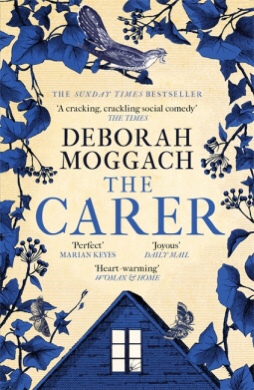
The Carer by Deborah Moggach #TheCarer #BlogTour #TinderPress #RandomThingsTours

In this novel, Deborah Moggach brings a unique perspective to the experience of being in the ‘middle’ of life. Robert and Phoebe are juggling work, relationships, children and an ailing father who needs full time care since the death of their mother, Anna. Thankfully, Mandy the carer, comes into their lives and seems like the answer to their prayers. They hire her on the spot and she moves into the sibling’s childhood home, leaving Phoebe and Robert to get on with their own lives. Robert lives in London, with his wife Farida who is a famous breakfast newsreader. He spends his time in their garden shed writing a novel about rural Wales where they spent some of the happiest times of their childhood. Phoebe still lives in Wales and paints hares and badgers to sell in the local tourist shops. She’s unmarried, but is having secret trysts with an ageing hippy who looks like Iggy Pop. Their parents, James and Anna had a long, happy marriage signified by the love seat in the back garden. Their two children feel their own relationships suffer by comparison. James was a science professor, a very intelligent man who is given to reciting poetry. Robert feels inferior by comparison and Phoebe wonders whether there is any point to her art, or whether she’s just painting what sells. Meanwhile, James and Mandy seem to be getting on famously, often popping for days out together, usually to the garden centre which they both love.

Phoebe and Robert go back to their daily lives and visit James and Mandy at weekends. They’re both surprised at how well the pair are getting on. Mandy wears very odd clothing combinations, and expresses views about immigrants that James would usually find objectionable. Phoebe notices the pet names and in-jokes, whereas Robert notices that Mandy has been upstairs in their Dad’s room. When he investigates further, he finds that James’s papers and photos are spread out on the floor. Robert has always felt a distance between him and his father, remembering times when he wasn’t present for sports days. Phoebe remembers that he always seemed to be away at conferences. They’ve never been particularly close with each other, but their father’s relationship with Mandy brings them together. They’re suspicious, but wonder if it’s simply jealousy over Mandy’s seemingly easy relationship with him. At lunch one Sunday, when all four are together, Mandy mentions a visit to the solicitor and their suspicions deepen. Why didn’t they check her references properly? They know the answer. They were desperate and she seemed like a godsend. Now they are terrified that they’ve invited a cuckoo into the nest. What if Mandy coerces elderly people into giving her their money?

I expected the novel to follow the mystery set up in the first half, but then the author took the story in a completely different direction. I love being wrong footed like this by a book, and the story really takes off from here. The story becomes one of two marriages, with all their complications, peaks and troughs. Every single character is so believable and has a rich inner life that draws you in. Through these flawed and complicated characters the author gives real insight into the state of marriage and how the behaviour of parents impacts on their children. Mandy is particularly memorable with her odd dress sense, politically incorrect opinions and love of biscuits. The book is written with such a lightness of touch and is incredibly easy to read.. I loved how the book ended with yet another twist to the tale I didn’t expect. However, there is finally some resolution for the characters who find a state of peace and acceptance. As a therapist, the place we leave Robert and Phoebe feels like the aftermath of therapy, where the hard work is done and the client has reached a new understanding of themselves. The author brings them through a life-changing ordeal, but somehow we leave them in a happier place than they were before. This is a meaningful, insightful, and often comical novel, but with all the addictive twists and turns of a thriller

Posted in Uncategorized

Dreamland by Nancy Bilyeau. #Dreamland

This book was an absolute joy to read and exactly my sort of novel. In 1922, Peggy Battenburg is a member of one of the wealthiest families in America. However, alongside money and status comes scrutiny and Peggy doesn’t always behave the way a young lady, of her social standing, should. She bucks against the traditional respectability expected of her and the idea that she should be told how to behave by the male members of the family. This rebellious streak means she doesn’t really fit, whether it be in high or low society. People of her family’s class are scandalised by her and the ordinary people of Coney Island mistrust her because of this rich background. She really can’t win.

Peggy’s family bring her back home for the summer. She’s been working in a bookshop, but now she needs to be back in high society. They hope to secure a prestigious marriage proposal for Peggy’s sister, to a groom who will ensure the financial security of their family going forward. They have someone in mind, but Peggy hates the potential husband and desperately wants to escape the claustrophobic atmosphere. This is where she decides to set out for Dreamland and meets Stefan, an artist working at the amusement park just a short distance from where the family are staying at the Oriental Hotel. Dreamland is a pleasure palace and a real juxtaposition to the hotels where the wealthy elite are staying. Hotel residents might stroll to the amusements for an afternoon’s diversion, but police are stationed along the route so that identification can be checked when walking back towards the hotels. The haves and have-nots are quite separate.

By contrast Peggy becomes immersed in the life of artists, dancers, food vendors and acrobats. She finds that despite their lack of money and status they have a lot of freedom whereas, for all her money, Peggy is kept in a cage, albeit a gilded one. I love the setting of Coney Island and enjoyed Alice Hoffman’s Museum of Extraordinary Things set within a freak show. This book was equally well researched and Bilyeau’s description of period clothing and the sounds and smells of the park really set the scene and helped me disappear from 2020 into this exciting other world. We learn about the manners and behaviour of the time and how it differs between classes. Peggy learns more about her family too, and many secrets are revealed. Added to the excellent characterisation and immersive world created by the author, is the fact that bodies of young girls start turning up on the beach. While this plot line is not the strongest part of the novel it does pose certain questions for Peggy, not least about her own family. How much are the Battenburg’s willing to lie and cover up?

I liked Peggy. She is a thoroughly modern young woman who, despite family riches, has her own job in a bookshop. She is intelligent and inquisitive. I can see why she would want to experience more than the stifling role of ‘rich daughter’ allows. Added to this rebellious nature are simmering tensions within the family and a menacing air of control from the fiancé and his brother. Reading this felt like being thrust into a technicolour world of sun, sea, and scandal. I absolutely loved it.

Posted in Uncategorized

The Tainted by Cauvery Madhavan #The Tainted #blogtour #RandomThingsTours #HopeRoad

When I agreed to read Cauvery Madhavan’s book for this blog tour it was a bit of a gamble. I’d never read the author before and although I read some historical fiction, I recognised I might be reading outside my comfort zone. This novel proves it’s good to do that once in a while. This is clearly a labour of love for the author. An epic story spanning sixty years of 20th Century India, the book is painstakingly researched and through the story of two central characters shows a complex web of tension between the British occupiers, Anglo-Indians (Eurasian), and the native Indian population. Underneath this, tensions also arise between English and Irish regiments of the British Army, over heavy handed English governance of Ireland. The book is situated at a point of great change, so the central love story is at the mercy of local attitudes and prejudices, but also international events beyond the couple’s control, with potentially tragic consequences.

Nandagiri, 1920. Michael Flaherty is posted to India with his regiment the Kildare Rangers. In his first day, the Regimental Chaplain Father Jerome ropes him into volunteering in the church. On Sunday, before Mass he will prepare the altar cloths and candles while Father Jerome prays. It is here he first meets Rose Twomey; he is mesmerised by her eyes which appear green in some lights but in others flecked with brown and amber. Her father is known as the ‘Bacon-wallah’ in Nandagiri. An Irishman who has settled in India, he supplies bacon and sausages to the regiment and their families. Michael is soon taken aside and warned about any association with Rose. Father Jerome explains that, although Rose looks like a fair-skinned Irish girl she is in fact Anglo-Indian. He has been asked to find Rose a position with the commanding officers family, The Aylmers, although he doubts he will be successful with Mrs Aylmer:

Like every self-respecting Mem in India, she would rather have a native ayah than a chee-chee girl’.

Rose is simply too high born to be a servant but probably wouldn’t be accepted by the Indian staff. She is too low born to ever be a lady in the eyes of the British settlers. She belongs nowhere and unless Michael wants to suffer the same fate he should steer clear. However, as Rose takes on a job with Aylmer’s children she is often in the same household as Michael, who is Aylmer’s Batman. They fall into a habit of sitting on the verandah in the evenings and talk soon turns towards Rose’s dream of going to Ireland and settling there. As love blossoms Michael confides in his friend Tom Nolan about his feelings for Rose and the regret that he is not free to marry her for seven years. Nolan is quite clear on the obstacles to their union:

Think of it man – your children could turn out to be darkies. When bloods diluted the colour will always come through. It wouldn’t be fair on the poor things- what would they do back in Ardclough? You’ll have to pick the ones to take and the ones to leave behind. Ask Rose why her mother was in an orphanage: I’ll bet you she wasn’t white enough to take back home’.

The only real respite the young couple have is on a visit to Rose’s aunt and uncle in Madras. They accept the couple, possibly because her aunt is also mixed race and from the same orphanage as Rose’s mother. However, on a day trip Michael and Rose are caught up in a riot and because it’s safer than travelling home, have to spend the night together. A kind doctor loans them his room and here passion spills over, with Michael telling himself he will overcome the obstacles and marry her. Unfortunately, events thousands of miles away now control their fate. At the barracks, mail arrives from Ireland detailing the atrocities of the Black and Tans regiment against the Irish people. Huddled together the men read of their sisters having their heads shaved by soldiers. Brothers and fathers humiliated and beaten. Animals killed and whole livelihoods burned to the ground. All in the name of the very same King the Kildare Rangers are serving in India. The group discuss mutiny on Michael’s return, but the penalty for mutiny is execution by firing squad. Soon, Rose realises she is pregnant and is sure Michael will do the right thing, but he is away, carrying out the wishes of his fellow soldiers. Will he return and if he does will he face the ultimate penalty?

The second part of the novel jumps to 1980s India when Richard Aylmer visits Nandagiri, where his grandfather was stationed as Colonel. He is a photographer and would like to find the landscapes that inspired his grandfather’s paintings. He is keen to photograph the same areas and curate a joint exhibition. He is put in touch with Gerald Twomey, the District Forestry Officer and the best guide in the area. He will drive Richard out to different places where his grandfather painted, but he is warned that Gerry is an oddball. Described as brusque, and having a ‘big chip on his shoulder, even a whole tree’, Gerry is Anglo-Indian with a surname as Irish as they come. This visit brings together two men whose ancestors walked the land before them. Can what went wrong all those years ago, ever be put right?

This novel sits perfectly within the canon of post-colonial fiction. Through Rose and Michael’s story, the author shows the mistrust and prejudice of the British ruling class towards Indian people. Mrs Aylmer and her children accompany a tiger hunt when they come across a forest tribe. James asks his mother whether the savages are cannibals, and points in their direction. Mrs Aylmer reminds him not to point:

‘It’s our good manners that separate us from the nativesthat and cleanliness and honesty of course (…) you’ve to be afraid of them too or you could get careless, and they love it when you’re careless. A little here and a little there, and before you know it you’ve been cheated.’

Yet 60 years later, the attitudes of that time still prevail to some extent. When describing Gerry Twomey as Anglo-Indian, Richard’s host Mohan Kumar explains their ‘otherness’ and status in society by asking ‘can you imagine what it’s like to have both a superiority and an inferiority complex on the go at the same time?’ In discussion with Mohan, Richard Aylmer uses his knowledge of English rule in Ireland to debunk some of the old myths about Indian people. Mohan talks about the days of loyal servants and enthuses about the Indian tendency to be ‘biddable and faithful’. Aylmer points out that they were not so biddable when finally breaking away from colonial rule. He points out that obedience is ‘what colonised people do, self- preservation it’s called’. Mohan argues that many Indians still haven’t moved past the ‘colonial mentality’ and still meekly accept higher authorities with deference.

The legacy of colonialism is stamped on the landscape even where the names of landmarks have reverted to their Indian origins. Lake Victoria is now named after a dead politician, but no one uses the new name. May Twomey explains that politicians seek to erase the past by changing a name or taking down statues, but it can’t change history or the mixed inheritance of who they are. In a 1920s scene of the novel, that manages to be both comical and horrifying at the same time, Tom Nolan takes Michael for his first visit to Mumtaz Bibi’s brothel situated in the Raj Bazaar. Here, Michael sits in a courtyard, overwhelmed by the heat, spices and a foul -mouthed parrot who shouts encouragement to the young soldiers getting their pleasure behind a series of curtains. Years later in the same building is an NGO funded health centre known for its efficiency and cleanliness, but still, everyone remembers the space as a thriving brothel. However, it is easy to see why the lush natural landscape inspired Richard’s grandfather to paint. Mohan’s bungalow is surrounded by beautiful grounds on a steep slope down to a stream where orchids grow between ancient trees. Even here though, we can see English touches like a well watered lawn and wide rose beds, both protected fiercely by the gardener.

The author made me feel fully immersed in India with all it’s beauty and controversial history. Some scenes are difficult to read, particularly the behaviour of Rose’s father and how he treats her when her condition becomes apparent. It seems that there is a hierarchy, not only of race and colour, but of gender; as an Anglo-Indian woman Rose appears to have less value than a man of similar background. I think the awkward position of the Irish soldiers as an occupying force abroad but an occupied country at home is depicted really well. This is a novel of the inbetween, for both people and places, and shows what happens when you don’t fit anywhere or challenge the status quo. The heartbreaking central love story, is a love out of time. The only place they can truly come together with no obstacles is a liminal space – the stranger’s flat as a riot forms outside. Michael and Rose’s love is also form of protest, showing that human connections can exist outside these boundaries, but it can’t survive. I’m taken back to that fateful night in Madras as the doctor gave them shelter. He comments on their present situation, but unknowingly and sadly speaks of their fate, when he says:

‘Sir, you and your good wife are most unfortunate to be in the wrong place at the wrong time’.

Posted in Uncategorized

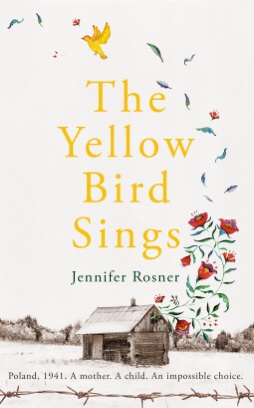
The Yellow Bird Sings by Jennifer Rosner #TheYellowBirdSings #Picador #PanMacmillan #NetGalley

Jennifer Rosner’s novel is focused on Roza and her daughter Shira, who are hiding from the Germans in a confined space, in the loft of an old barn. This is Poland 1941 and stories have spread about what happens to any Jews found in town. Roza has already lost her husband and her parents were killed in front of her. She is determined that she will stay with and protect her 5 year old daughter. She also knows what can happen to people found to be concealing Jews, and out in the country there have been barn burnings and arrests. They must learn to be quiet, which is very difficult with a 5 year old, especially one as musical as Shira. Her grandfather made violins, her father played violin and Roza is a cellist. She thinks Shira may have a gift, because she’s always singing. In this confined space though, they must remain quiet. To keep her occupied, Roza encourages Shira’s pretence that they have a little yellow bird. The bird sits in Shira’s palm and sings, and they play at feeding it. It seems to keep Shira’s mind away from the hunger and cold, and when necessary it appears to keep the little girl calm.

Early in the novel, Roza devises a system of gestures so that she and her daughter can communicate, when it becomes too dangerous even for whispers. A hand clutched to the chest as if holding a gun, means soldiers. A brush of the fingers across the eyelids means to rest. I was interested to read that the author’s family are affected by hearing loss so this could possibly be the inspiration behind this moving detail of survival. The farmer is a neighbour and while he is performing an act of kindness, he also has ulterior motives. His wife enjoys taking the little girl for short walks round the farm, and introducing her to the animals. He takes advantage of his position to abuse Roza, who does whatever it takes to keep her daughter safe. The events of the book occupy only this small space and short time between the years 1941-44. Even though we don’t move away from this one space, until right at the end of the novel, it is clear that the atrocities of the Nazis are never far from Roza’s mind. We are told the story of a violin maker who is handed a violin for rebuild and repair, with the ashes of its owner still present inside it.

It’s hard to find a way to write a review that truly honours the terrible things people in Poland suffered during WW2. I had in-laws, both gone now, who came through terrifying ordeals to settle in this country after the war. My mother-in-law was not much older than Shira when she was transported out of the Warsaw Ghetto through the sewers of the city by herself. I can’t imagine what her parents went through just making that decision, never mind the sleepless nights worrying whether she would make it. The enormity of this choice hit me while reading about Roza’s eventual decision to leave Shira at the Catholic convent. It is the hardest choice to make, to completely focus on the survival of the child and not the mental anguish it will cause. To ignore your own needs to keep them with you. To know that separation might give them a better chance of survival than staying by your side. For Roza, it is the safest choice for her daughter, plus she will always have music in her life. I defy anyone to read this book and not be moved by this beautiful story. Despite the horrors of the war and their confinement and fear, this mother and daughter have carved out a small space of beauty, safety and trust. This is a bond that will never be broken no matter where in the world they both are. However, I have no doubt in my mind that Roza would do everything in her power to return to her daughter.

Posted in Uncategorized

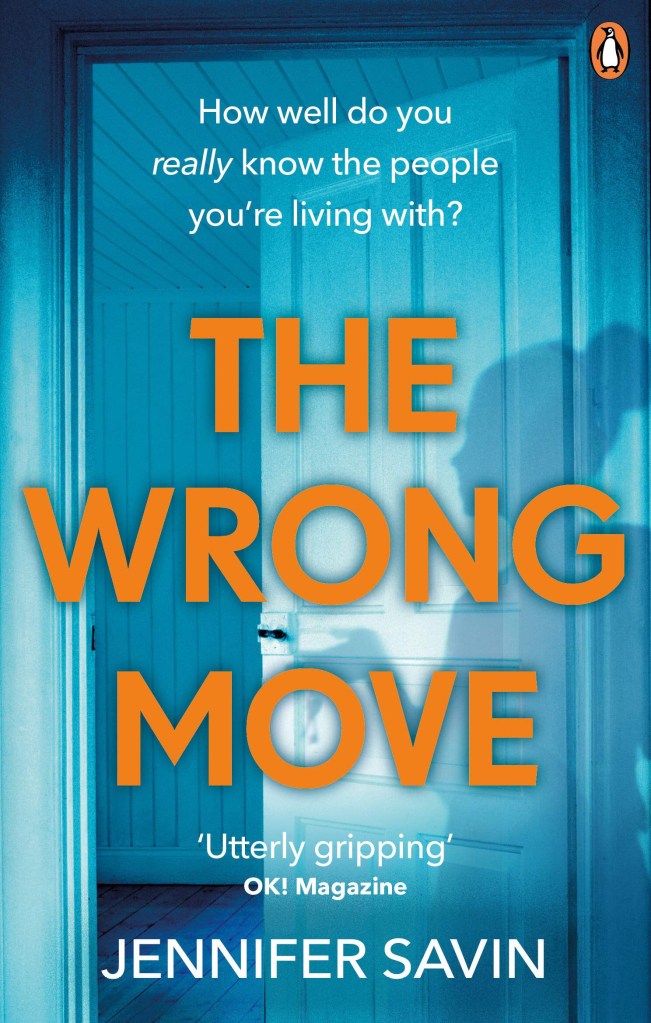
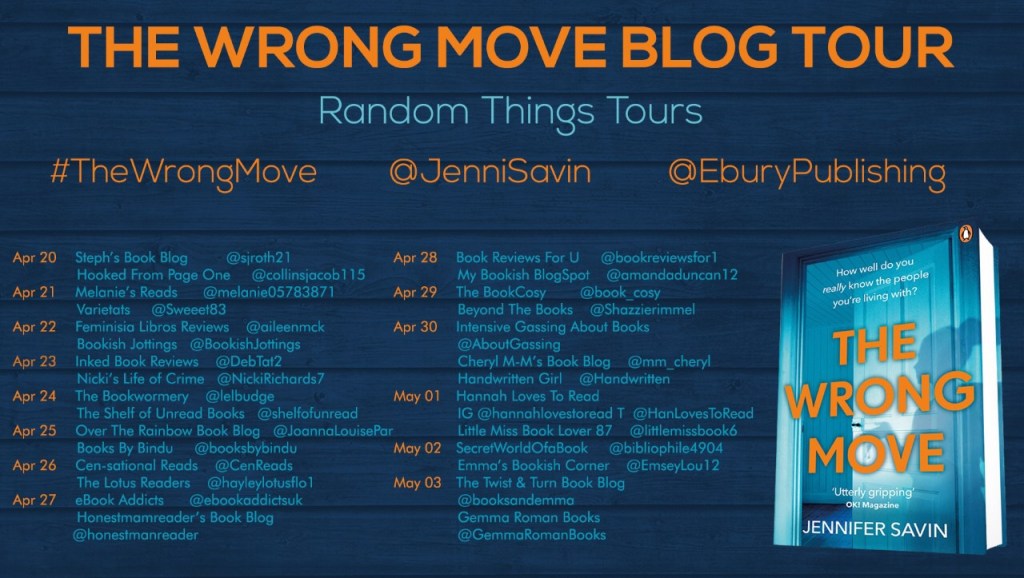
The Wrong Move by Jennifer Savin #TheWrongMove #BlogTour #RandomThingsTours #EburyPublishing

Jessie has made a very bold move in deciding to move to the city of Brighton. Since fleeing an abusive relationship she’s been living with her parents. Now, she feels it’s time to move forward with her life and she always enjoyed the vibrancy of the city. Her best friend Priya would also be nearby for support. So, she starts to look for a house share and through Ian at a letting agency she finds Maver Place. The house is a little bit shabby, but the room is a good size for her limited budget and she decides to go ahead. She is immediately drawn to housemate Lauren, who is friendly and offers to cook a meal to welcome her to the house. Marcus lives in the downstairs room and seems to keep to himself. Sofie is mainly at her boyfriend Henry’s house. This leaves Lauren and Jessie to bond.

The author cleverly builds the unease right from the start with very small incidents that could have innocent explanations: Marcus suddenly appearing behind her in the bathroom mirror; her laptop not being where she left it; a favourite bracelet missing. I found myself suspecting every one of the housemates at this stage, but for very different reasons. Sofie, who is usually bohemian, pink haired, and pierced suddenly starts copying Jessie’s look. She dyes her hair and cuts a fringe, then turns up in a polo neck that looks very like one of Jessie’s. I wondered if there was a ‘single, white, female’ vibe going on. On the other hand her boyfriend Henry is quite well-to-do and his mother definitely doesn’t approve of his choice in girlfriends. Maybe Sofie simply feels that Jessie’s style might be more acceptable? Marcus appears to skulk in his room mostly, doesn’t eat with the others and has strange, noisy nocturnal habits. It’s hard to know whether he’s a threat or is simply troubled. Added to these suspicions, Jessie finds a locket with an M on the front, lodged down the radiator. Lauren says it must belong to Magda the previous tenant of that room, and that she left in a hurry in the middle of the night. She left them in the lurch by not paying their share of the bills. Jessie wonders why someone would leave something so precious behind, but looking at the piles of post with many different names it seems Magda isn’t the only one.

Then the messages start, adding yet another layer of tension. There’s a What’sApp message here and there, and an email all seemingly from her ex, Matthew. Lauren ignores them at first, but as the pressure builds she starts to become paranoid. Could Matthew be causing these other strange occurrences and if so, how? Lauren sometimes thinks she’s seen him on the street, but she’s probably mistaken. When convinced by Lauren to go on a night out, Jessie feels uncomfortable. People can hide in crowds and anyone could be in a club. Strangely, they do run into Magda and her friends. Jessie can sense that Magda is very uncomfortable about meeting her old housemates, but it could be because she owes them money? Yet, she seems to be more fearful than guilty. Jessie tells Magda that she left a Facebook message about her missing locket, before her friends pull her away. Hopefully, they’ll be able to meet up and talk about her experience of living at Maver Place. Later, Jessie is feeling drunk and simply wants to get home to sleep. She can’t find the others so walks home alone, it’s isn’t too late, and not that far. As she’s passing Brighton Pavillion and thinking about how much she loves the building, she’s suddenly struck from behind. After several blows, Jessie is left unconscious at the edge of the grounds. Is it something to do with the coincidence of seeing Magda, could Matthew have been following her, or is this the work of someone closer to home?

If it sounds like my mind was working overtime, it really was. There was a point in the book where I felt completely disoriented with everything that was going on. I guess that’s how the author wanted us to feel, to understand Jessie’s experience. There were points where I was mentally screaming at her to pack a bag and get out of town! Even minor characters behaved in ways that aroused my suspicions. Quick chapters kept me reading and each one turned the mystery in a different direction. I was so confused with who was imitating who. The last few chapters had to be devoured all at once, just so I could find out who did it and get some sleep. It made me wonder whether we truly know the people we live with. When my stepdaughter goes off to university I’ll be using my counselling skills to vet any of her future housemates too. This is the sort of thriller that’s great to read over a weekend, with plenty of twists and turns to keep you guessing.

Posted in Uncategorized

The Butchers by Ruth Gilligan. #TheButchers #blogtour #RandomThingsTours #AtlanticBooks

‘Even now; twenty-two years since he took the photograph, he still cannot quite believe the lack of blood’.

From the first line of this unusual novel I was ‘hooked’. Sorry, I couldn’t resist. It is true though. When I received the book I opened it and read the first paragraph. I wanted to drop everything there and then, never mind the TBR pile, and read this book. It really does grab you. The book starts in 2018 with a photograph of a man skewered through the feet by a meat hook and hanging in a cold store. The Butcher is still fully clothed, only his feet are bare and it is his feet that give the truth away. The wounds there are the only clue that he ‘isn’t just sleeping the wrong way up like a bat.’ This photograph will be displayed on a New York gallery wall for the very first time since it was taken twenty-two years ago.

The story goes back to 1996 and to a group of families surrounding The Butchers – eight men who travel to Irish farms slaughtering the cattle of those who still follow the old ways. The tradition is based on Irish folklore and a curse laid on Ireland by a widow who decreed that eight men must have a hand on the animal when it is killed:

And since the war had claimed all eight of her men. She decreed, henceforth, no man could slaughter alone; Instead, seven others had to be by his side. To stop the memory of her grief dying too’.

In rural Ireland in 1996 there is a sense of change in the air. There are less farmers who believe in the old ways and the BSE – mad cow disease – outbreak is on the horizon. The Butchers are setting out after the Christmas break at home with their families. Una’s father is getting ready to leave and her mother Gra is struggling with the separation. It’s a lonely life being a wife to a Butcher and this year Una’s father makes a promise; when they are slaughtering nearby around midsummer, he will try to spend a couple of nights at home. Gra’s sister Lena is married to Fionn and the families have lost touch with each other. Fionn is coping with his Lena’s diagnosis of a brain tumour by trying to raise money for experimental treatment. To raise the funds needed he has been pulled into illegal activities. His son Davey has heard a lot about the folklore surrounding The Butchers from his mother, but he has his sights set on life in the big city. Una has always wanted to follow in her father’s footsteps even though the ancient order is closed to girls. Her ambition could be thwarted when one of the eight Butchers is found hanging from a meat hook in the cold store. The remaining seven feel that now is the time for the tradition to die with him. Then twenty-two years later, the photograph appears in an exhibition. Can Una finally solve the case and find a killer?

I thought the author’s characterisation was detailed and believable. I bought into their stories straight away, but I was particularly moved by Fionn. His desperation shows as he’s awake in the depths of night stamping new labels on packs of beef. He has been sharp enough to see a chance to make money on Irish beef while buyers are avoiding British suppliers. He also has demons in his past, like a dependency on alcohol and he even admits assaulting his wife and son on occasions. In some way, his determination to get treatment for his wife, could come from guilt and feeling he could never atone for his mistakes. He treads a fine line between keeping his sobriety and helping his wife, but appearing to be ‘one of the boys’ when dealing with the smugglers taking his meat across the border. Una’s coming of age was also compelling and her sense of being an outsider as a child, because of her family’s beliefs struck a chord with me. I also identified with the way she sees her father as a ‘giant’ of a man, somehow interchangeable with the mountainous landscape. The changes between points of view worked really well and kept the narrative interesting. Each character shows how this moment in history heralded change for different groups in society; for young women like Una, for rural farmers, for Davey who is discovering his sexuality.

Although I wouldn’t class this as historical fiction – possibly because it feels like yesterday to me – I really enjoyed the subtle reminders of the mid 1990s. The author managed to signal time and place without going overboard into outright nostalgia. The story is always the most important thing. I think this accounts for the unusual mix of genres too; it is part crime novel, part coming of age story, and a mix of historical fact and folklore. I like the fact it’s difficult to pigeon-hole, because that’s what makes it unique. I think the author has cleverly matched a time of growth in Ireland’s history with the younger character’s development into adulthood. This is a time that I was moving from my teenage years into adulthood, leaving home and moving into a flat with a boyfriend for the first time. It was post-Brit Pop and wild nights out, morphing into cosy nights on the sofa watching Sex and the City. For Una it’s a time of challenging a strictly patriarchal society and tradition. Davey is forging his identity and coming to terms with his sexuality. For their parents this is a time of reckoning, of mulling over the decisions they made and wondering whether they were the right ones. For Ireland, these are the years that built towards the huge global banking crisis. There was an influx of money into the country and a more capitalist culture emerged, where development and consumption became the norm. Old superstitions had no place and even traditional values were being replaced with new laws on divorce and homosexuality. Yet whatever the changes, there is a steadfastness about the landscape that will always remain. I have never read the author before, so had no preconceptions about what the novel might or should be. I have loved the opportunity to read this unique, atmospheric and bittersweet novel.