Posted in Throwback Thursday

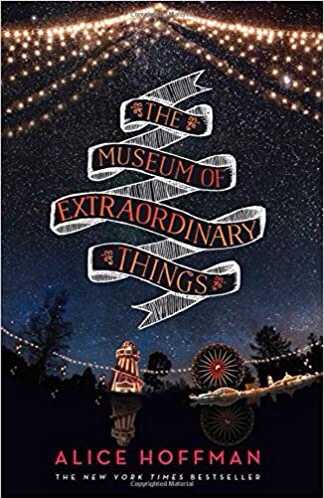
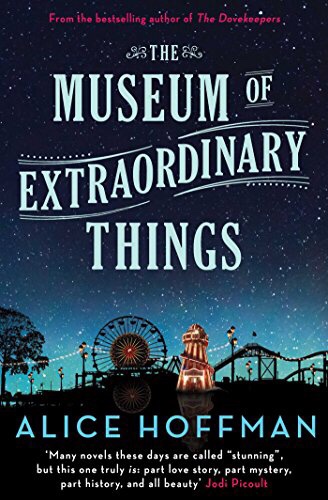
Throwback Thursday! The Museum of Extraordinary Things by Alice Hoffman.

From the bestselling author of The Dovekeepers comes a spectacularly imaginative and moving new novel in the vein of The Night Circus that has been acclaimed by Jodi Picoult as ‘truly stunning: part love story, part mystery, part history, and all beauy’.

New York City, 1911. Meet Coralie Sardie, circus girl, web-fingered mermaid, shy only daughter of Professor Sardie and raised in the bizarre surroundings of his Museum of Extraordinary Things. 

And meet Eddie Cohen, a handsome young immigrant who has run away from his painful past and his Orthodox family to become a photographer, documenting life on the teeming city streets. One night by the freezing waters of the Hudson River, Coralie stumbles across Eddie, who has become enmeshed in the case of a missing girl, and the fates of these two hopeful outcasts collide as they search for truth, beauty, love and freedom in tumultuous times.
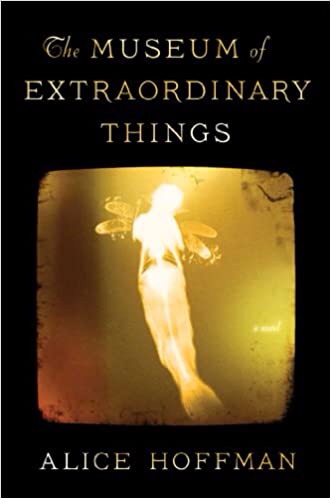
I was inspired to revisit this novel after reading and reviewing Elizabeth MacNeal’s Circus of Wonders at the weekend. Regular readers will know how much I love Alice Hoffman and that The Night Circus is one of my favourite books of all time. What you might not know is that I love the age of La Belle Époque, Art Nouveau, New York City, and anything to do with the circus and freak shows. So, it stands to reason that I would fall madly in love with this incredible novel. Tucked within this wealth of aesthetic and historical details is the story of what it really means to be ‘other’ and how that difference affects us politically, culturally and psychologically. However, it also shows that, when people labelled as different come together, a powerful subculture can emerge. A subculture that rejects everyday societal norms, turning them upside down and creating different rules and markers of status? There’s also the interesting and complex issues around freak shows. Now, they horrify us. They are associated with thoughts of the Elephant Man and years of disability awareness training has left people viewing them as exploitative and cruel. However it could be that the issue is more complex and there are other ways to look at them?

The novel takes us to turn of the century NYC and we really meet the city in its formative years. While there are residential buildings, factories and the beginnings of what will be Manhattan, there are areas where it is still wilderness and it is here that Hoffman takes us to meet Eddie. He is a photographer, living in a friend’s shack in what will eventually become Queens. While out with his camera, early one morning, he sees what he thinks is a mermaid slipping through the grey and choppy dawn waters of the Hudson. She’s a strong swimmer too. Cutting through the swell with ease. However, when he sees her properly, he can see she’s a girl. What he doesn’t know is that Coralie Sardie does have a physical impairment – she has webs between her fingers and toes. This slight difference inspires her father to exploit her, keeping her separate from other children so she never questions him. She grows up uncomfortable with others, shy and ashamed of her physical difference. Her father, self-proclaimed man of science and keeper of curiosities, has an idea for Coralie. He aims to be the only showman with a real live mermaid.

Eddie is a Jewish immigrant, also brought to NYC by his father. The trauma of this journey and of losing his mother, leaves Eddie struggling to adjust. His father however, completely falls apart, making Eddie feel responsible for his parent rather than being a child. They are estranged from each other and as a result Eddie has become dislocated from his religion and culture too. The novel follows these two characters, Eddie and Coralie, as they make their way towards each other and pursue the feelings that seemed to hit them both at first sight. He’s also pursuing his own path as a photographer, rather than studying towards a profession like medicine as his father would have wanted. The work he does, particularly his photos of a fire in a sweat shop and the attractions of Coney Island, is fascinating and compelling.

Eddie’s work contributes to the historical setting and the sense of place Hoffman creates here. New York City in its infancy, already has the pull that still sends countless tourists there every year. It becomes a character in its own right, achieved by Hoffman’s historical research and the richly layered descriptions she constructs. The sights and smells of Coney Island and its fairgrounds are intoxicating and the account of a fire in a clothing sweat shop is particularly memorable. This was based on the real Triangle Shirtwaist factory fire, where girls living above the workshops were trapped and jumped from the windows to their death rather than burn. This sets Eddie down the road of investigative journalism and photography, rather than art photography. What will he make of Coney Island? More importantly, what will he make of Sardie’s museum and it’s main attraction?
Coralie knows she has been groomed for her father’s museum her whole life. The webbing she has on her hands is usually hidden by gloves, but at the age of 10 she is given a birthday gift that seals her future.

It stood in place of honour; a large tank of water. On the bottom of the tank were shells from all over the world. From the Indian Oceans to the China Sea. Beneath that title was carved one word alone, my name, Coralie. I did not need further instructions. I understood that all of my life was mere practice for this very moment. Without being asked, I slipped off my shoes, I knew how to swim.’

Her cruel father, only seemed to see Coralie in terms of ownership and monetary value. He has been making her take freezing cold baths, and practice staying under he water as long as she could. He gives her a breathing tube for the tank, but she barely needs it since her swims in the Hudson in winter. She will now be exhibited as a mermaid, alongside other ‘freaks‘ such as a woman without arms who has been given silk butterfly wings by Sardie. There’s a ‘beast’, completely covered in hair and a woman so pale she seems translucent. After looking at freak shows as part of my undergraduate degree, my feelings about them became more complicated. Yes, of course there is an element of exploitation in a figure like Sardie and his real life counterpart, Barnum. Yet, for a lot of the exhibits, this is the first sense of freedom they’ve had and their only chance to live independently. Often locked away in their towns and villages, by parents who either didn’t want others to see them, or felt like they were protecting their child. Parents might sell their child to a man like Sardie, feeling like they would be looked after or just to make money for the rest of the family. This might be the first time they encountered a community of people with differences like them. While we might think it barbaric to ‘show’ people with disabilities, it might be the only job open to them and give them a more comfortable living than they ever imagined. Real life ‘exhibit’ Prince Randian was brought to the USA by Barnum, and was known as The Human Torso amongst other names. He was born without arms and legs, and was usually dressed in a one piece, tight fitting garment. He appeared in the controversial Tod Browning film Freaks and had a party piece of rolling and smoking a cigar. His take was that he was being paid handsomely for simply doing normal everyday activities. We have to ask the question – who is exploiting who? There is also kudos in being the most transgressive as the disability subculture turns expectations upside down.
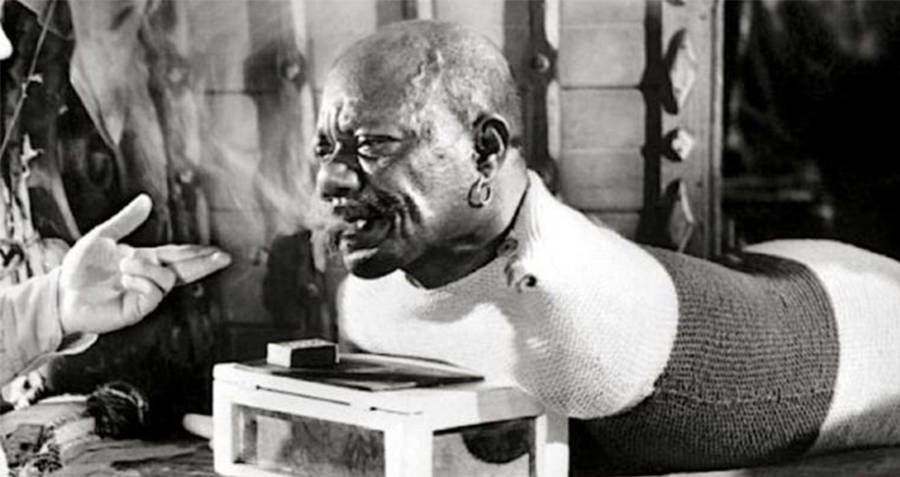
Prince Randian

I love this book. I enjoyed the character of Maureen – the Sardie’s housekeeper – and her love story with the wolf man. She has so much loyalty, and love for Coralie, that she stays despite Sardie’s insults and unreasonable behaviour. Being at the centre of these unusual people, we realise they have the same hopes and dreams as anyone else. Being in a group seems to give confidence to the individual characters and I loved seeing them grow into their authentic selves. There’s an acceptance of their differences, which maybe wasn’t present in their small villages and towns, where they stood out or even became a target. The performers have a complex relationship with what they do. It elevates them, thousands of people flock to see them, they are well paid and the thing that’s always been a negative part of their life, has become their meal ticket. Coralie and Eddie have had the same yearning in their childhoodthey want to be free, not held to account by their fathers, their religion or their obligations. Most of all though, this is a love story and they want to be together just like any other couple.

Further Reading:

Fiction:

Circus of Wonders by Elizabeth MacNeal.

Miss Peregrine’s Home For Peculiar Children by Ransom Riggs.

Non-Fiction:

The Body and Physical Difference by David T. Mitchell and Darren L. Snyder.

Freakery: Cultural Spectacles of the Extraordinary Body by Rosemary Garland Thomson.

Posted in Throwback Thursday

Throwback Thursday! The King’s General by Daphne du Maurier.

The King’s General is not usually people’s first choice when they start to read Du Maurier’s novels. Most read her more famous novels: Rebecca, My Cousin Rachel or Jamaica Inn. Yet this piece of historical fiction was my first Du Maurier novel and I first read it when I was a girl. To understand why you probably need to know something about my childhood. For the most part I’d been an active and lively tomboy, out climbing trees, riding ponies and gallivanting round the countryside with my younger brother. Then, when I was 11 years old I had an accident while somersaulting at school and ended up with two fractured vertebrae and a crushed disc in my spine. I was very lucky. The fractures were mid-thoracic and because they broke down and away from the spine my spinal cord was undamaged. I was centimetres away from becoming paraplegic. I missed the last few months of primary school, instead going up to the local grammar school in the autumn. The accident did cause long term problems though. A lack of proper rehabilitation meant the muscles around the break seized up affecting my ability to use my shoulder and arm. Even now, repetitive movements like typing or painting can seize up my whole right side. I have a chiropractor for regular acupuncture and manipulation to free up that side.

The Kings General was the first time I encountered an adult character with a disability. Of course before my accident I’d read Pollyanna, a rather saintly little girl who can’t walk after a fall and is still looking for things to be glad about. I’d also read the What Katy Did series where the spirited and tomboyish Katy has a fall from the yard swing and can’t walk. She spends a year as an ‘invalid’ and the experience quietens her and she learns to run a household from her bed, becoming a more tamed and acceptable version of femininity. The King’s General tells the story of Honor, a lively young woman who in 1653 decides to write her life story, based around the love she had for the charismatic soldier Richard Grenville. She then takes us back 30 years to when she was 10 years old and her brother Kit brings his bride Gartred back to the family home of Lanrest. Gartred is from the very important Grenville family and doesn’t make a great impression on the slightly more humble Harris family. She has a sharp tongue and Kit thought she flirted with other men, especially his brother Robin. For Honor their marriage is an eye opener and she learns a lesson about marriage:

“For the first time I realized, with something of a shock, that marriage was not the romantic fairy legend I had imagined it to be, but a great institution, a bargain between important families, with the tying-up of property.”

The marriage is short-lived as Kit dies from smallpox, and when Gartred leaves, Honor hopes to never see another Grenville again. Fate has something different in store as she encounters a dashing young soldier on her 18th birthday. She visits Plymouth Sound with her brother and sister to watch His Majesty’s Fleet sail into Plymouth Sound, followed by a banquet held by the Duke of Buckingham. Richard Grenville is quite sarcastic, even rude, and Honor has some barbed and witty exchanges with him. They immediately have a rapport and he actually shows his kinder side when Honor has to leave early. They meet in secret after this, often meeting in an apple tree at the bottom of the orchard where Honor likes to climb up and read. They’re clearly very compatible and start to fall in love with each other. Honor might just get the fairy tale after all as Richard decides to speak to her family and proposes marriage. However, their happiness comes to an abrupt end the day before their wedding when Honor has a terrible accident when they’re out hunting with falcons. Honor’s horse is spooked, becomes disoriented and falls into a ravine. Sadly, Honor’s injuries are serious as her legs and spine are shattered and she can no longer walk. Realising she will probably never walk or have children, she calls off the engagement and tells Richard to be happy with another woman. They don’t see each other until civil war breaks out and Honor must leave Lanrest where she was living alone to go to her sister’s house Menabilly. It is here where Honor will encounter Richard again. Will things have changed between them?

From this point in the story we start to get Du Maurier’s trademark mystery elements and as usual she is very adept at creating tension and suspicion. I really enjoyed the way that her two main characters are so linked to the land around them. Their emotions are often mirrored by the weather and landscape in a rather Brontë way. Her strength here though is in these characters, who love each other despite being able to see their flaws. Honor finds the older Richard bitter, proud and arrogant, but just as attractive as ever. However, he’s quite gentle and tender with Honor and there’s a scene where she even shows him her damaged legs. There’s a feel of Heathcliff about him in these war years, as he’s quite cruel. Honor observes that war seems to make beasts of men. I enjoyed this book because it showed me that an accident doesn’t have to stop you being you. Yes, experience changes us in some ways but her accident doesn’t stop Honor being adventurous or taking on a challenge. It also doesn’t mean she has to become quiet and ladylike. Most of all, Honor is still loved. Despite what happened Richard still loves her, and this was the first book that showed me life doesn’t stop because you have a disability.

Posted in Throwback Thursday

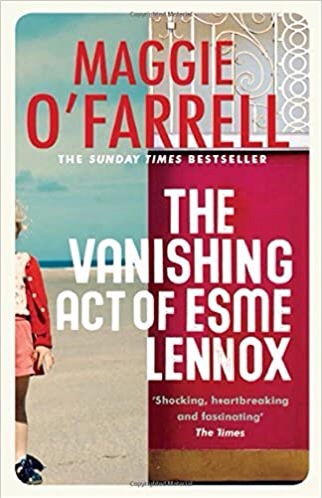
Throwback Thursday! The Vanishing Act of Esme Lennox by Maggie O’Farrell.

Edinburgh in the 1930s. The Lennox family is having trouble with its youngest daughter. Esme is outspoken, unconventional, and repeatedly embarrasses them in polite society. Something will have to be done.

Years later, a young woman named Iris Lockhart receives a letter informing her that she has a great-aunt in a psychiatric unit who is about to be released.

Iris has never heard of Esme Lennox and the one person who should know more, her grandmother Kitty, seems unable to answer Iris’s questions. What could Esme have done to warrant a lifetime in an institution? And how is it possible for a person to be so completely erased from a family’s history?

This book was the first Maggie O’Farrell I ever read, and it really is a little gem. I fell head over heels for the confused and bewildered Esme, discharged from the mental health unit she’s been in for almost sixty years. Great niece Iris, is contacted out of the blue, to be told that the unit is closing and patients are ok to be looked after in the community. Iris had no idea she even existed. In a dual timeline we learn how she and Iris get on, but also how this family managed to remove Esme from their tree so completely. Where does it begin?

Let us begin with two girls at a dance… Or perhaps not. Perhaps it begins earlier, before the party. Before they dressed in their new finery, before the candles were lit, before the sand was sprinkled on the boards, before the years whose end they were celebrating first began. Who knows? Either way it ends at a grille covering a window, with each square exactly two thumbnails wide.

The beauty of Maggie O’Farrell’s description here is typical. A layering of small details captured in the narrator’s mind, that takes us to the preparations for the party towards the end of the book, but also how it appears in our narrator’s field of vision. We drift across three narrators: Esme, her sister Kitty and their great-niece Iris. They stumble across each other sometimes, one pushing in before the other’s quite finished as families tend to do. Esme was a feisty, wild little girl in a time when there were rules about how little girls should behave. In a household overseen by their rather austere grandmother, with her mother and father struggling to control her. This is the 1930s, so their methods are cruel, tying her to a chair for example and forgetting about her. One day they leave her home while they go on a trip out, not wanting to deal with her behaviour. While she and her baby brother Hugo are alone, something terrible happens and from then on, their mother will barely look at her.

We hear through Kitty’s narrative, how differently the family treats her. Now in a nursing home, suffering from dementia, Kitty has always told her great niece that she was an only child, but Esme’s papers prove she is Kitty’s sister. Kitty remembers in fits and starts, disjointed scenes that come to her, then drift away again. This is beautifully managed by the author, who creates a fragile lace work of memories, that shed further light on the sister’s relationship. Kitty was the conforming child, moulded to the will of the family. Esme was more inventive, creative and has constant questions. Finally there’s Iris’s narrative and she really had enough on her plate already, without having a great-aunt with psychiatric problems dropped on her without warning. She has a vintage shop, a married lover who won’t make a decision and a grandmother with dementia to visit. Now she’s fascinated with what she’s discovered, while trying to understand what happened to Esme. She trawls the records at the old Cauldstone Hospital, discovering a list of women and the reason for their admittance to the asylum. She reads with horror, that within these walls, were women who had wandered from the house at night, another who had taken too many long walks, refused too many offers of marriage or had eloped with a legal clerk. All of these reasons deemed enough to commit a woman to time in the asylum, often forgotten about.

What slowly emerges is a heartbreaking secret, so terrible it stuns Esme to silence. I love the way that the author understands how psychological trauma can affect someone. In Esme’s case a build-up of traumatic incidents and abusive behaviour slowly breaks her down. It’s distressing to see a girl with such spirit, slowly being broken like a wild horse. After sixty years inside she has turned into this mute, biddable old lady. Having worked in mental health for over twenty years, I understand the dilemma of what to do with people who are so institutionalised they can’t cope outside the walls of their prison. I looked after some of these people in the 1990s as homes closed and terrified people were being pushed out into the community. Perhaps because of them, Esme is one of those characters I fell in love with. What she experiences is so hard to overcome and I found myself at turns furious and devastated for her. The ending was perhaps inevitable, but still took me aback. This book has stayed with me for years and I think it always will.

Meet The Author


Maggie O’Farrell is the author of the Sunday Times no. 1 bestselling memoir I AM, I AM, I AM, and eight novels: AFTER YOU’D GONE, MY LOVER’S LOVER, THE DISTANCE BETWEEN US, which won a Somerset Maugham Award, THE VANISHING ACT OF ESME LENNOX, THE HAND THAT FIRST HELD MINE, which won the 2010 Costa Novel Award, INSTRUCTIONS FOR A HEATWAVE, which was shortlisted for the 2013 Costa Novel Award, THIS MUST BE THE PLACE, which was shortlisted for the 2016 Costa Novel Award, and HAMNET which readers will know was my favourite book of last year. She lives in Edinburgh.

Posted in Throwback Thursday

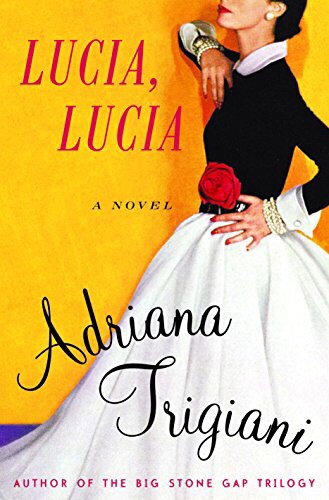
Throwback Thursday! Lucia Lucia by Adriana Trigiani.

Lucia Sartori is the beautiful twenty-five-year-old daughter of a fine Italian immigrant family in Greenwich Village, New York, in 1950. Fuelled by the post-war boom, in which talented girls with ambition are encouraged to follow their dreams, Lucia becomes an apprentice for a made-to-wear clothing designer at a chic department store on Fifth Avenue. Though she is sought after as a potential wife by the best Italian families, Lucia stays her course and works hard, determined to have a career. She juggles the roles of dutiful daughter and ambitious working girl perfectly. When a handsome stranger comes to the story and catches her eye, it is love at first sight for both of them. In order to win Lucia’s hand, he must first win over her traditional family and make the proper offer of marriage. Their love affair takes an unexpected turn as secrets are revealed, Lucia’s family honour is tested, and her own reputation becomes the centre of a sizzling scandal. Set in a time of possibility and change for women in America, in a city that celebrates its energy with style and elegance, LUCIA, LUCIA is the story of a girl who risks everything for the belief that a woman could – and should – be able to have it all.

When I want something to read that isn’t challenging, but is heartwarming, funny and emotional I turn for an Adriana Trigiani novel. Her stories, often based within Italian American culture, have feisty heroines, epic love stories, and wondrous descriptions of either food, clothes and shoe making, decorating or the music business. Lucia, Lucia begins as we meet Kit Zanetti, a playwright waiting to be discovered, who meets her upstairs neighbour. Lucia Sartori offers Kit some tea, and this evolves into a museum or gallery visit as Lucia shows Kit just some of the treasures she has accumulated over her life. Astounded by some of Lucia’s possessions, Kit asks for her story. So Lucia begins to tell a story that starts in 1950s New York when she was the most beautiful girl in The Village. She and her four brothers are brought up in NYC within a close knit Italian community and she is engaged to a lovely Italian boy, Dante. She also has a career she loves as a seamstress in a big department store. Worried that her marriage would mean giving up the job she loves, she decides to end her relationship. She is fighting against the very role her society expects of her – to become a wife and mother, with all of her energy focused on the home.

Then, John Talbot arrives on the scene. John is a businessman who appears wealthy and could take Lucia away from the ‘little life’ she was promised by Dante. She imagines a more upscale lifestyle where she can continue her work designing and creating on Fifth Avenue, plus have all the trimmings of an affluent home life. I kept thinking that this was a pipe dream and everything was going to go wrong. I understood Lucia. It wasn’t just about having money, but having choices. She wants the cushioning afforded by John’s money to pursue her own dreams without it being such a struggle. Yet, John has drawbacks too. He isn’t Italian for a start, but also he’s secretive and quite tight lipped about where his money is from. I worried that Lucia was being conned and that choosing John would be a harder path than she expects.

In-between this love story, Lucia has a wonderfully described trip to Italy with her family. Here Lucia discovers art and culture, swaps incredible recipes with her sister-in-law and even has a job offer from her co-employer. This is where Lucia could make choices that give her true independence, but is she now too entwined with John? Will she find herself choosing between marriage and a career after all? She may have to face more serious revelations about this man than she ever expected. It’s clear to me that John is a bad choice very early on, but I’m older and have made poor choices in relationships when I was young. Lucia doesn’t have that hindsight or experience. It’s easy to think she could have stayed with Dante and still worked as a seamstress, but we forget that before the contraceptive pill, marriage automatically meant children. Once children came along it would have been very hard to pursue a career as a designer, she may have been able to take in sewing, but not pursue a career.

There’s so much to like about this book. I loved the portrayal of the Italian American community and Lucia’s relationships with her family. The author gives us just enough information up front, but we don’t find out how Lucia’s life moved on until the final section when she finishes relaying her story to Kit. It keeps the reader engaged, because we’re dying to know how things worked out for her. This is a bittersweet novel that reminds us we can’t have everything in life. Many choices, no matter how hopeful and happy they seem, can come with a sacrifice in the long term. The sort of romance we see in the movies, all hearts, flowers and candlelit baths, is rare in real long term relationships. Living together, especially within a family, can be anything but romantic. However, if we prefer the hearts and flowers, we can miss out on the closeness and support in those tougher times. Lucia gives us the benefit of her hindsight as she evaluates her life, perhaps hoping to pass on this wisdom.

Meet The Author

Beloved by millions of readers around the world for her “dazzling” novels (USA Today), Adriana Trigiani is “a master of palpable and visual detail” (Washington Post) and “a comedy writer with a heart of gold” (New York Times). She is the New York Times bestselling author of eighteen books in fiction and nonfiction, published in 38 languages around the world, making her one of the most sought after speakers in the world of books today. 

Adriana is also an award-winning film director and screenwriter, playwright, and television writer and producer. She wrote and directed the award-winning major motion picture Big Stone Gap, based on her debut novel, filmed entirely on location in her Virginia hometown. Big Stone Gap spent 11 weeks in theatres in the fall of 2015 and was the #2 top-grossing romantic comedy of the year. She wrote and directed the documentary film Queens of the Big Time, winner of the Audience Award at the Hamptons and Palm Springs International Film Festivals. Her screen adaptation of her bestselling novel Very Valentine premiered on Lifetime television in June 2019, launching their National Book Club. She directed the feature film Then Came You, starring Craig Ferguson and Kathie Lee Gifford, filmed on location in Scotland. Adriana co-founded The Origin Project, an in-school writing program which serves over 1,700 students in the Appalachian Mountains of Virginia. Adriana is at work on her next novel for Dutton at Penguin Random House for release in 2021, and a children’s picture book for Viking at Penguin Random House for release in 2021. She lives in New York City with her family. 

Follow Adriana on Facebook and Instagram @AdrianaTrigiani or visit her website: AdrianaTrigiani.com.
Join Adriana on Facebook for Adriana Ink every Tuesday at 6 PM EST!

Posted in Throwback Thursday, Uncategorized

Throwback Thursday! Engleby by Sebastian Faulks.

‘My name is Mike Engleby and I’m in my second year at an ancient university’.

In this book Faulks creates one of the best unreliable narrators in fiction. His voice is mesmerising, intelligent and strangely compelling. I found myself strangely drawn in by him. In fact he’s very funny, in a darkly humorous way. We’re restricted to his first person narrative and his tale of a working class upbringing, affected by poverty and physically abusive treatment from his stepfather. Despite his disadvantages, he wins a place at a Cambridge college. Although he’s intellectually capable of fitting in, socially he’s a misfit, struggling on the edges of college society. Then he sees a girl in the tearoom of the University Library and an obsession starts. He observes Jennifer to a degree that’s detailed and creepy.

‘She was smoking a cigarette and trying not to laugh, but her eyes looked concerned and vulnerable as Robin’s low voice went urgently on. She is alive, Godammit she is alive. She looks so poised, with that womanly concern, beginning to override the girlish humour. I will always remember that balanced woman/girl expression on her face.’

This is the detail of someone who is watching constantly. He seems to have very little empathy for others, apart from Jennifer. So when she disappears, we are left in conflict. Where should our sympathies lie? Has Engleby lost someone he truly cared for or is something more sinister going on? Now I can’t claim that Faulks created the unreliable narrator, but this is the first time I truly had the rug swept from under me by a book. It’s not so much a twist, as a seismic shift that makes me question absolutely everything I’d read up to this point. The next books that surprised me this much was Atonement and We Need To Talk About Kevin so the book is in great company.

The build up is very slow, but the tension soon becomes unbearable. We’re waiting for something to snap! I felt myself weirdly torn between compassion and contempt for this boy who has been subjected to cruelty and possibly developed this faux intellectual and pretentious personality to survive. Or, has simply been lying to us all along? Faulks is questioning the way writers construct identity on the page and the reader’s tendency to believe the person presented to them, often without question. Is identity as fluid as he presents, or are some of our characteristics set in a permanent ‘self’ as most of us would like to believe. It’s an uncomfortable read, not just because we might feel confused with our own fixed and fluid selves, but because we feel complicit with a narrator we’ve enjoyed. Even more uncomfortable, could it be because there might be a little bit of Engleby in all of us.

Meet the Author


Sebastian Faulks was born in April 1953. Before becoming a full-time writer in 1991, he worked as a journalist. Sebastian Faulks’s books include A Possible Life, Human Traces, On Green Dolphin Street, Engleby, Birdsong, A Week in December and Where My Heart Used to Beat.

Posted in Throwback Thursday

Throwback Thursday! The Miniaturist and Meeting Jessie Burton.


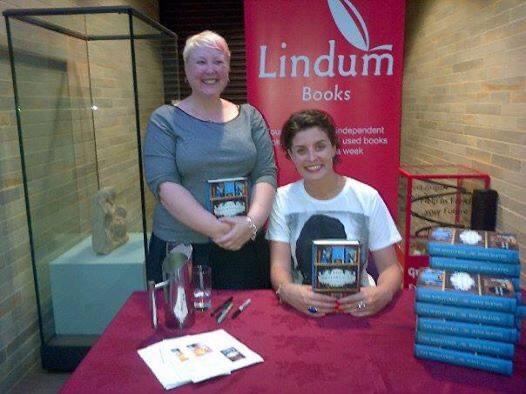
Me and Jessie Burton! I never imagined I would meet the author of a book I picked up at my local indie bookshop Lindum Books. They run regular evenings with authors at The Collection in the city of Lincoln – I can’t wait to attend them again in the future. This was a great evening listening to Jessie Burton talk about her exciting debut novel The Miniaturist. Admittedly the book was displayed well, but I picked it up because it looked so intriguing. There was an element of mystery as well as a historical setting, plus a cover with a vintage bird cage and since I have a bird cage tattoo I am attracted to them all the time. I had read the book before the evening and loved it, so I was very eager to hear about how it was written and as a very amateur writer I am always interested in a writer’s inspiration and the writing process.

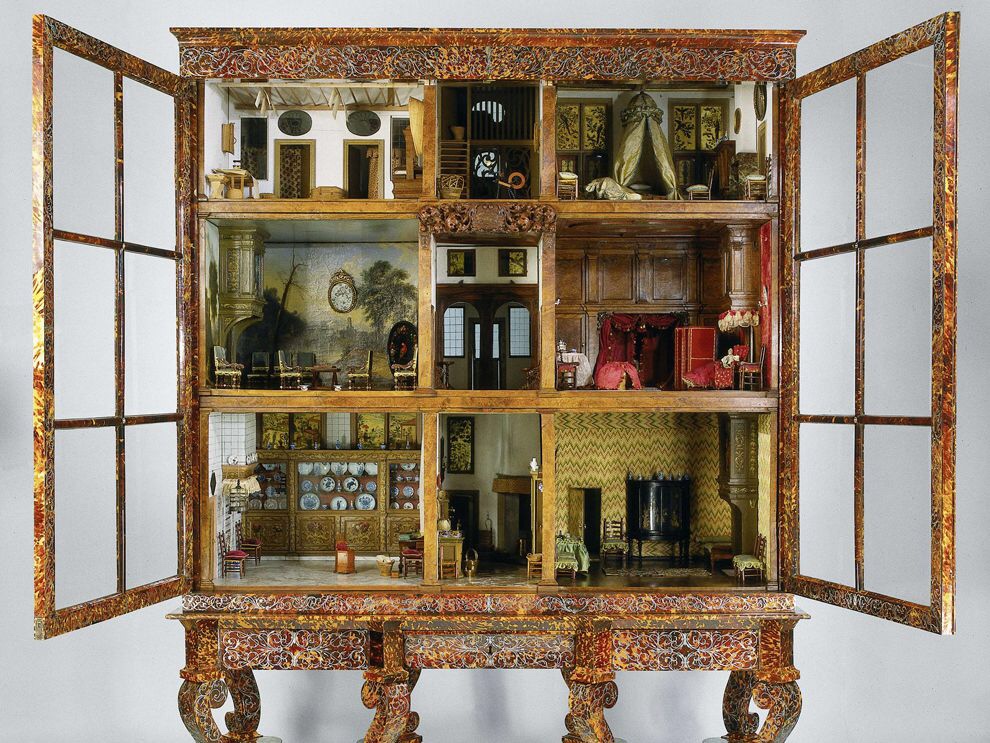
Jessie’s ability to tell stories means she is immediately engaging and natural with an audience. In her potted biography we learned she had a drama background and that definitely came across in her reading of the novel and during a humorous and lovely question and answer session. Jessie’s inspiration was a beautiful cabinet house in The Riijksmuseum, Amsterdam belonging to Petronella Oortman. The house is made up of 9 rooms that are so ornate and richly furnished that it cost as much as a real house. This fact and the sheer beauty of the piece piqued Jessie’s interest so much that she built her novel around it. Spending only ten days in Amsterdam but doing plenty of reading and researching, writing started using the name of Petronella Oortman but reimagining her as a new young wife entering Amsterdam for the first time. Nella needs to make a good marriage to support her family and marries business man Johannes Brandt who owns an incredible house in the wealthiest district of Amsterdam. However, when Nella arrives she is greeted by an open door and Johannes Brandt’s sharp tongued sister and housekeeper, Marin. Johannes buys Nella a cabinet house, an exact replica of the grand house they live in and its appearance in the novel is based on the one in the Riijksmuseum. Jessie did a reading of an early chapter entitled The Gift where Nella, disturbed by the fact she rarely sees Johannes in the day or at night, explores the house and starts to ask questions of Marin. It is a chapter where we see the beginning of an interesting tension between the two very different women and as Nella explores the house we start to see a major theme of the novel developing too; the conflict between interior and exterior worlds.


The questions began with one about research and how Jessie had gained her expertise in 17th Century Dutch culture. The audience also wanted to know how long the research process had been before she started writing. Jessie did most of her research the old fashioned way, by reading and writing in a piecemeal way (This amateur was pleased to know that writing while researching is ok). She shone some light into the publishing process too, it’s not as simple as getting an agent and then getting a publishing deal. There were 17 edits and 3 different drafts of the whole novel during the process and several different endings including one where every character had a happy outcome that was vetoed by her friends. One of the terms she used was to ‘write out’ something I was very interested in as a writing therapist where I am constantly using exercises to write out emotions and past experiences. She was referring to it as her writing process of working things out as she went along; there was no single moment where she sat down to write and it was all worked out with plot, characters and ending.

Petronella Oortman’s cabinet house.


I learned an enormous amount about the culture the novel was set in and there were some interesting parallels with Lincolnshire. Jessie felt that the people of Amsterdam were in the strange position of having built their own land by draining the area using canals and dykes. This was very pertinent to me because my ancestors on my father’s side were Dutch and came over to implement the same system of land drainage here in Lincolnshire. Jessie talked about the tension between the immense wealth of the city and the people’s Calvinist principles as well as the interesting roles of women in the city who often married later than their European counterparts and worked in business with their husbands. She was also interested in their liberality in that area but their barbarity in others, such as the practice of drowning homosexuals with a millstone round their necks. The African character, Otto, was discussed in his historical context; apparently wealthy merchant’s coats of arms were decorated with black faces as well as buildings in Amsterdam -probably a nod towards the city’s involvement with the slave trade. Otto would never have received the magnanimity he enjoys in the Brandt household anywhere outside. One of the most interesting ideas to me was the exploration of interior and exterior decor and architecture. The grand house has rooms that are lavishly decorated, but they are mainly to the front of the house where they can be seen from the street or where they are seen by visitors. Similarly, Nella’s cabinet house is a condensed version of the home but only contains the best rooms and it takes the miniaturist’s pieces to highlight the similar difference between what the character’s show and what remains hidden. The revelations of these character’s private rooms and their private lives is what makes the novel so compelling.


I still can’t recommend this novel enough. It combines intelligent research and just the type of relationship tensions, secrets and surprises to keep you reading. There will be a certain character that will grab you and Jessie admitted to having a soft spot for Marin who comes across as abrupt and harsh, but does have incredible depths beneath the icy exterior. The miniaturist of the title is a shadowy figure who has more insight into the characters than anyone else but only ever appears in glimpses despite Nella’s efforts to find her. This was intentional and although Jessie was asked whether she was planning to write a sequel there are none at present. Jessie is writing a second novel and is finding that a completely different experience because she has less time and is under more scrutiny since The Miniaturist ended up in an 11 publisher auction and there are rumours of film rights being obtained. The new novel is provisionally titled Belonging and is set across two times; the Spanish Civil War and 1960s London. Even now, years later, I am intrigued by the mystical and spiritual character of the miniaturist who knows all but cannot be seen, and has an ending that’s very much unfinished.

Published by Picador 3rd July 2014.

I have remained a huge fan of Jesse and loved the BBC adaptation of The Miniaturist in 2017. I have also built up a signed collection of her novels The Muse and The Confession and of the children’s book, The Restless Girls. Her novels have been translated into 38 languages, and she is a regular essay writer for newspapers and magazines. The Miniaturist ended up being a Sunday Times number 1 bestseller in both hardback and paperback, and a New York Times bestseller. It sold over a million copies in its first year of publication, and was awarded the Waterstones Book of the Year, and Book of the Year at the National Book Awards. The Muse was also a Sunday Times number 1 bestseller in both hardback and paperback, and has sold more than 500,000 copies. The Confession is Jessie’s third novel, and became an immediate bestseller too.

Visit her website at https://www.jessieburton.com, and follow her on Instagram at https://www.instagram.com/jessieburton

Posted in Throwback Thursday

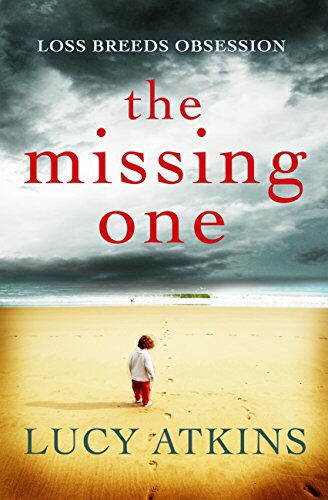
Throwback Thursday! The Missing One by Lucy Atkins

When this book first came out, I raced through it over a couple of days, because I was dying to find out what happened back in the 1970s to Elena and Susannah. A terrifying and traumatic event links these two women until the present day and it can’t stay a secret for ever. In the present is Elena’s daughter Kali, who has just lost her mother to breast cancer – a mother she could never make sense of or bond with as she wanted. In the aftermath of Elena’s death, Kali is trying to make sense of this difficult relationship, when she finds a pile of postcards from a woman called Susannah in her mother’s belongings. Thinking she has found the clue to her mother’s past, Kali pursues this woman to find out about events leading up to her birth and hints of a family history that has resolutely stayed hidden. Driven forward by grief and the worry that her husband is having an affair, Kali takes her son Finn on an odyssey to find the mother she never really knew and herself. She has many theories about what she might find: maybe her father had an affair; maybe Susannah was his lover or her mother’s? Yet, what she finds is something she never suspected.

Set against the backdrop of wild North America and Canada, we learn about a woman’s quest to understand the Orca. Distressed by witnessing the killer whales at Seaworld in California while doing her PhD, a young Elena leaves everything to record killer whale pods in the ocean. The Seaworld orca gave birth to a calf that was so disorientated by his tiny tank he kept banging himself against the glass trying to navigate through echolocation. His desperate mother keeps pushing him away from the sides to protect him from damage, but in her efforts to protect she forgets to nurture and the calf dies because she has forgotten to feed him. Kali was similarly starved of nurturing by her mother. Is it because Elena was so intent instead on protecting her from this awful secret?


The novel is an incredible insight into relations between mothers and daughters. Kali’s sister Alice has a great relationship with her mother that seems easy, whereas Kali and Elena clash over everything. Kali sees that her mother finds her hard to nurture and believes it is her fault. It takes putting herself in danger to find out why and in finding out she also discovers that essential piece of the jigsaw that tells her who she is and grounds her in a history. The novel shows how when you become a mother it becomes more important than ever to know where you are from and how you belong. It also shows how the secrets of one generation have a huge impact on the next, even if the secret is kept with the best of intentions. The book cleverly shows the difference between generations since we have now moved into a world where we put our own lives on show for fun. In a world where counselling and therapy are becoming the norm it is no longer seen as acceptable to keep such huge secrets and we know as post-Freudians what effect those early years of parenting have on the adult we become.


Aside from the complex human relationships are the family ties within the Orca families. We see how there are resident pods and transient pods with different feeding habits and rules to abide by. It is also clear that parallels can be drawn between the whale relationships and the human ones. Elena is so moved by their mothering instincts and the possibilities to map their language and understand their emotions. She gives up everything to spend as much time with them as she possibly can even going to sleep on her floathouse with the sounds of whales drifting up from a microphone in the water. I learned so much about these incredible creatures without losing the majesty of them and the awe a human being feels when a huge tail rises up out of the water next to their boat.

The novel can be read in many different ways: as a dissection of family relationships, a thriller, a study of whales and a study of grief. Grief causes Elena to suffer with depression throughout her life, grief traumatises Susannah to the extent that she is unbalanced by the things she has witnessed and it is grief that compels Kali to jump on a plane to Vancouver with nothing but a few postcards and the internet to go on. I struggled to put the novel down because of the thriller element. Like a good crime novel, you desperately want to know the truth of who- dunnit. Yet it is those final chapters I like best, after everything is resolved and each character is living in the aftermath of exposed secrets and recovery from physical and mental injury. The novel could have ended there and I am glad that it went further, back into Elena’s past so that we can see her happy on her floathouse making coffee and then hearing those whales come to greet her. As a widow of eight years I found those final words of Elena’s deeply moving:


She would go back to that throughout her life, right to the very end. But the last time, when the world had shrunken to the contours of her skin and she leaned over the railings, it wasn’t the whales that she saw in the water. And so she jumped.

It made me very hopeful for whoever might greet me when my time comes.

Meet The Author

Lucy Atkins is an award-winning British author and journalist. Her most recent novel, Magpie Lane, is a literary thriller set in an Oxford college. Her other novels are The Night Visitor (which has been optioned for TV), The Missing One, and The Other Child. 

Lucy is a book critic for The Sunday Times and has written features for UK newspapers including The Guardian, The Telegraph, The Times, and many magazines. She was a Costa Novel Award judge in 2017, and teaches creative writing to Masters students at Oxford University. 

She is mother of three and has also written several non-fiction books including the Amazon #1 parenting guide, First Time Parent (Collins). She has lived in Philadelphia, Boston and Seattle and now lives in Oxford, UK. 

For news, events and offers see http://www.lucyatkins.com

Follow Lucy on Twitter @lucyatkins

Posted in Throwback Thursday

Throwback Thursday! The Illusionists and Daughter of the House by Rosie Thomas.


My experience of finding these two novels by Rosie Thomas shows that the old cliché ‘never judge a book by its’ cover’ does sometimes apply. I was browsing on my kindle (a lethal pastime) and looking through my recommendations when I came across Daughter of the House. The cover had a magical, ‘circus’ feel that I loved so I had to discover more. It had an historical setting pre- WWI onward; a period I’d been drawn to that year. It also promised a brave, enlightened woman at the centre of the story about growing up in an unconventional musical hall family. I bought it based on cover alone, then realised it was the second in a series of books.The first was The Illusionists and I knew from the cover of top hats, decks of cards and magic wands that this was the series for me. It’s rare for me to find a magical novel set in the late Victorian period that I haven’t read. The title seemed familiar though and it was only the next morning that I found (among the many piles of books that litter the corners of my house) I had a hardback copy of the same novel, but had never picked it up to read. The cover was very different, depicting a bridge over an almost impressionistic river scene, that told me nothing about the contents inside. A friend had bought me the book when it first came out, but due to that cover and the lack of a synopsis on the back it kept being recycled to the bottom of the TBR pile. It showed me a difference between buying physical books and kindle copies. I am often alerted to unusual and highly enjoyable novels via kindle store or apps like Goodreads that I wouldn’t necessarily pick up in a book shop due to the cover. Of course the bonus was that I now had two great novels to read back to back and I was not disappointed by either of them.

Set in 1885 the first novel follows the story of Eliza who is a young woman limited by lack of money whose only choices for the future seem to be the domesticity of an advantageous marriage (an idea she finds suffocating) or a degrading downward spiral towards life on the streets. Despite the massive social changes happening in fin de siècle London, women have less chance of making their fortune and living life on their own terms. Then she meets the charismatic and ambitious illusionist Devil Wix. Devil is haunted by traumatic events in his childhood, but is determined to become a household name and successful entrepreneur in the theatre world. We follow Devil’s mission as he puts together a band of quirky misfits to put on the greatest show London has ever seen in the run down Palmyra Theatre. During the 12 years covered by the novel Devil is by turns alluring, brilliant and often comical. However, from his friend’s and Eliza’s point of view he can be elusive, maddening and deceptive when he wants to be. Somehow though, the reader is able to forgive him anything. Perhaps this is because we are charmed by him in the same way Eliza is. Two friends work alongside Devil. His magician friend Carlos and set/props designer Jasper. Carlos is a dwarf in stature, but has mighty magical ambitions of his own and with Devil creates new and memorable illusions to stun audiences. Jasper is more of a scientist who tinkers away in his workshop creating the props for the illusions, but has also designed an automaton he names Lucy. As soon as Eliza comes into their world it is as if the circle of friends is complete and they work together to create a magical show. Although it seems inevitable that they will be together, Devil and Eliza’s courtship is a slow dance. Their budding relationship sees Eliza step outside what is thought to be respectable for a Victorian woman and embark upon an alternative life she never thought possible. For Devil the relationship brings him the stability he has never had and a partner in work and life who can match him for determination, ambition and creativity.

The magical and more supernatural elements of the novel are balanced beautifully with the historical period detail. Eliza chooses to live in a women’s hostel and work for a living even before she becomes involved with the theatre crowd. This is a bold, modern choice that tells us a lot about her character. The author uses Eliza’s sister as the contrasting Victorian ideal of ‘The Angel in the House’. Eliza’s visits to her sister’s home show us that traditional Victorian domestic life, but while Eliza loves her nieces and nephews she doesn’t envy her sister’s position in society and often seems relieved to return to her unconventional life. She treads a very fine line between what is and isn’t respectable by socialising in bars with Devil, Carlos and Jasper, staying alone with Devil in his flat, becoming a life model at the art school and performing on the stage. She is confounded by her need for Devil to be faithful and exclusive to her.


We also see economic change and social mobility throughout the novel. Devil promotes his shows in a way that has never been done before. First he utilises Eliza’s art student friends to create mysterious adverts across the city, that develop a buzz about his show. He then creates street illusions that are easy to transport and perform, then performs these ‘pop-up’ illusions in the street, handing out leaflets to stunned onlookers. By choosing his streets carefully he attracts wealthy audiences who are happy to spend money and this ensures the theatre is packed night after night. Due to this method of promoting his theatre, and the different audience he attracts, Devil changes what is acceptable as entertainment in upper class circles. Whereas music hall was thought to be low culture and only for the working classes, Devil exploits the human need to ‘keep up with the Joneses’ and makes his theatre the place to be seen.. His entrepreneurial skills result in an upward mobility for his family so they can live in a beautiful area of London and have more opportunities that he had. This is where the story develops into the second novel and into a background of even more turbulent times in the early 20th Century.

Daughter of the House centres on Devil and Eliza’s daughter Zenobia (known to the family as Nancy) against the backdrop of WWI, the Suffragette movement and the decline of music hall. The novel opens as the family embark upon a boat trip and tragedy strikes when the captain decides they must return to port because of a storm. The boat crashes into the marina and it is a fight for survival for Devil and Eliza and all of their children. Thomas creates a beautiful metaphor here in Nancy’s fight to stay above the water as her large Victorian skirts and petticoat become water-logged and start dragging her under. This foreshadows Nancy need to live a different life and break free of Victorian expectations of women, perhaps even more radically than her mother did. In the struggle Nancy not only saves herself, but her brother too and it is here we see the beginnings of her resilience and determination. It is also here that we see the first glimpse of what she calls her ‘Uncanny’ – the ability to see beyond the physical world. Nancy fights against this unique gift and doesn’t want anyone to know about her ability. Yet it is because of this accident that family friend Mr Feather does become aware of her abilities. As his beloved sister is lost in the accident, he begs Nancy to foresee where she is and this episode sets off an obsession that never goes away.


The Palmyra theatre is struggling and Devil has been hiding the true extent of their financial difficulties from his family. Eliza’s growing role as a mother has meant taking time away from managing the theatre and Devil does not have her administrative or financial skills. Eliza loves her children, but is frustrated in the very role she never really wanted. Meanwhile Devil flounders in his management of the Palmyra, making bad financial decisions and failing to provide what modern audiences want to see. As the crisis deepens Nancy becomes aware that her gift, hidden until now, might be the only answer to her family’s problems. The late Victorian appetite for mesmerism, hypnosis and spiritualism has continued into the 20th Century and Nancy’s gift soon begins to fill the theatre. So, as WWI draws to a close, the Palmyra is once again playing to packed houses as grieving families in their thousands want to find their lost sons, fathers and husbands still lying unfound in the battlefields of France. Thomas shows the social and historical change of three difficult decades so cleverly especially the wake of WWI as women become more in control of their lives and a country grieves a generation lost. For those who survived, the need for to forget the horrors of war can be seen at the raucous country house parties of Nancy’s theatre friends. The breakdown of class barriers becomes apparent as Nancy’s brother transcends his family’s social class, becoming an officer in the army and attracting a wife from an aristocratic family. Alternative ways of living are explored as the author shows us more women living alone, and Nancy’s gay best friends who have openly set up home together. Yet, we also see what post-war living could be like for the lower classes who acquired injuries, but can’t afford adequate care or rehabilitation. Nancy’s brother returns home with shell-shock and finds coping with the outside world beyond his capabilities, instead finding solace in his garden.

The book explores Nancy’s struggle with a rare and beautiful gift that can also be terrifying and unexpected. Her rivalry with Mr Feather highlights the darker side of clairvoyance and ultimately ends in unwanted confrontation. We see the need in people who desperately want to hear from their lost loved one only to be disappointed. A disappointment that can develop into an obsession and an inability to move forward in the grieving process. Nancy wrestles to maintain the purity and honesty of her gift; never pretending or creating hope where there is none. Audiences fail to realise that she is unable to control her gift. It isn’t like picking up a telephone, she doesn’t know who or what will come through. However, audiences want the reassurance that they were seeking, or the guarantee their loved one lives on somewhere in the afterlife and is waiting for them. Nancy tries to give no promises and does not want to offer false reassurance, if forced to give the exact promise they seek, she feels she has betrayed herself and her gift. This is the difference between true clairvoyance and show business and for Nancy they are uneasy bedfellows. What she sees is not always spectacular nor the happy ending an audience might be hoping for. This dilemma rang true for me as something all people with these gifts might face and it shows that making money from her ‘Uncanny’ is not as going to be as easy as her father’s magic tricks; if she is going to do it with integrity.


I would recommend reading both of these books, but they do stand-alone too. The Wix family are entertaining and intriguing, the historical backdrop is well researched, and even the smaller characters are well written and memorable. Carlos’s determination to overcome his disability is inspiring and his friendship with Devil, like all showbiz partnerships, is full of ups and downs. Eliza’s sister and brother-in-law are there to provide a contrast to the Wix’s unconventional relationship, but their characters are still well-rounded and the relationship between the sisters feels real. Eliza’s realisation that having children is all consuming and life-changing creates an unexpected affinity with her sister. She recognises that even if you want an alternative way of life, children always create a need for a strong family network and support around you. In the early 20th Century women’s lives are changing, but not that much. Eliza’s daughter, Nancy, realises that even though she is more accepted as a strong independent woman she is still hampered by her class and bohemian background. Despite feeling free to pursue her love for a married man, she finds that this freedom is not all she imagined it would be and yearns for more. If you want page turning story-telling with a supernatural and magical twist then these are the books for you.

Posted in Throwback Thursday

Throwback Thursday! Blue Diary by Alice Hoffman.

When Ethan Ford fails to show up for work on a brilliant summer morning, none of his neighbors would guess that for more than thirteen years, he has been running from his past. His true nature has been locked away, as hidden as his real identity. But sometimes locks spring open, and the devastating truths of Ethan Ford’s history shatter the small-town peace of Monroe, affecting family and friends alike.

As regular readers know, Alice Hoffman is one of my favourite authors and while Blue Diary isn’t the first of her books I read, it’s definitely one of the best. Ethan and Jorie are one of those golden couples that probably annoy the hell out of everyone around them. They are a beautiful pair, with a lovely son, Collie. Jorie is the girl next door, the girl you’d ring if you needed advice or a shoulder to cry on, and the parent to ring if you need muffins baking for the school’s Christmas fair. Ethan is the neighbour you ring if you need help putting up a shelf, or if you wake up in the night and think someone is prowling in your garden. They are the cornerstone of this community.

Now, the police are at the door. Ethan Ford’s life as an irreproachable family man and heroic volunteer fireman has come to an end—and Jorie Ford’s life is coming apart. Some of the residents of Monroe are rallying behind Ethan. But others, including his wife and son, are wondering what remains true when so much is shown to be false—and how capable we really are of change.

Hoffman writes small towns and the dynamics of the people in them, so well. If Jorie and Ethan were in the Instagram age every photo would have #relationshipgoals in the replies underneath. Jorie’s world falls apart when Ethan is arrested and she is sure it must be a mistake. She knows this man, down to his bones. Surely she would know if he was hiding a dark secret? The novel invites us to ask the question: how well can we really know the person who’s head is on the pillow next to ours at night? Another thing that occurred to me as I was re-reading the novel, was how much the internet has changed our daily lives, into something we use like a daily diary. Originally published in 2001, when many people I knew didn’t have an internet connection in their home, my re-read of the book made me think about cancel culture and how much of people’s lives are now documented for all to see. Now, a long forgotten tasteless joke, inappropriate comment, or photographed drunken escapade, can be found years after the fact and be commented upon and criticised by millions. Applying the standards of today’s society, no matter how important and hard won they may be, to yesterday’s behaviour can be devastating for the individual involved. Even if their own views have now changed for the better, an individual can lose their livelihood, relationships, and potentially their whole life over one incident. It is an incredible power we hold in our hands when joining an internet ‘pile-on’.

Jorie only experiences this on a small town scale, but it’s effect is no less devastating. As it becomes known that Ethan has been arrested, to be interviewed on charges of the rape and murder of a young girl, neighbours and friends are shocked, but have to consider their response. Obviously the first question on everyone’s lips is whether Ethan is guilty or not, but beyond that: did Jorie know about this? Is she guilty by association? Is this his only crime? Can they still be friends with Jorie? Jorie has so many questions for Ethan, but other issues are swirling around in her mind. How will they cope financially? Will she lose her support network? Most importantly she wonders how to protect Collie from knowing about the accusations. This doesn’t just affect her and Ethan, this could blight Collie’s whole life too. With all this in mind, as well as needing to hear the truth, Jorie is wondering whether her marriage can survive this? Should it? When Ethan confesses to the crime, her world and her trust in her husband is shattered.

Ethan’s only defence is that he had no intention to rape or kill the young girl. His claim is that during consensual sex, he accidentally choked her and then decided to run, worrying that no one would believe his innocence. I wasn’t sure I did. He packed up and set up a new life for himself in Massachusetts where he met Jorie. Even if we believe his story, the injustice that he could choose to rebuild his life while his victim couldn’t really stayed with me. He had covered his tracks very well, until Collie’s 13 year old friend Kat, sees an e-fit of a suspect on television and rings the hotline to turn Ethan in. On one hand she feels it’s the right thing to do, but is sad about the effect this will have on Collie. I found it very surprising how many townsfolk were still willing to support and help Ethan, even after his confession. Jorie becomes more and more conflicted, then makes a decision to gain more information in an attempt to make peace with what has happened. She asks the victim’s brother if she can visit with him in Maryland. She needs to hear the context of the crime and the impact it had on the family involved.

There, Jorie gets a feel for the town and how this terrible act of violence was felt by all the residents. The victim’s name is Rachael and James takes Jorie up to Rachael’s room which has never been changed since her death. With Jorie the reader takes in the cuddly toys, the posters, and the framed photos of Rachael riding and with friends. This is a little girl’s room and when James talks about trying to scrub the bloodstain from the wall behind the bed, Ethan’s crime really comes home to the reader and to Jorie. The break also gives her some much needed breathing space, away from the pressure of the court case and the well-meaning supporters of Ethan, but also from Ethan himself. When she’s near him the love she has felt for him this past 13 years threatens to overwhelm her and the reality of Ethan’s crime. Here she has time to think clearly about what it is she has to forgive, before deciding whether she can. It isn’t just the crime itself, but the years of lies, as well as committing his life to her and starting a family knowing this was lurking in his past. He chose to have Collie with her, knowing that, if exposed, his crime would alter Collie’s life irreparably and leave him without a father. I found myself seeing a selfishness in these acts, but also in accepting help from the town seeking his acquittal and expecting Jorie to stand by him. Could the same selfishness, the wanting something and simply taking it, signal the real motive for his crime?

This is not a book about Ethan, nor is it a crime novel in the sense that we’re waiting for a murderer to be unmasked. This is more about the aftermath of violent crime for the family of the victim and the perpetrator. I think Hoffman does this very well. Her use of the victim’s diary as our way into her character is clever. We feel, alongside Jorie, for this sensitive girl falling in love for the first time. Her innocence in how she thinks of a relationship with Ethan is heartbreaking since we know the outcome. I loved the way Hoffman aligns her innocence with nature and gives us layers of description using flowers, trees, seasons and food to help us understand these characters and embed them within a place. We root for these people, drawn into a web of lies that is still being spun to protect Ethan. When we finally reach the section where the rape and murder takes place, it has a huge impact and made me cry on first reading, for all the victims of this crime. Ultimately, our ending hinges on Jorie’s ability to forgive and even if does, does forgiving mean we have to forget?

Meet The Author


Alice Hoffman is the author of thirty works of fiction, including Practical Magic, The Red Garden, The Dovekeepers and, most recently,The Museum of Extraordinary Things. She lives in Boston. Her latest novel The Book of Magic will be the fourth in the Practical Magic series abs will be released on 5th October 2021. Visit her website: http://www.alicehoffman.com

Posted in Throwback Thursday

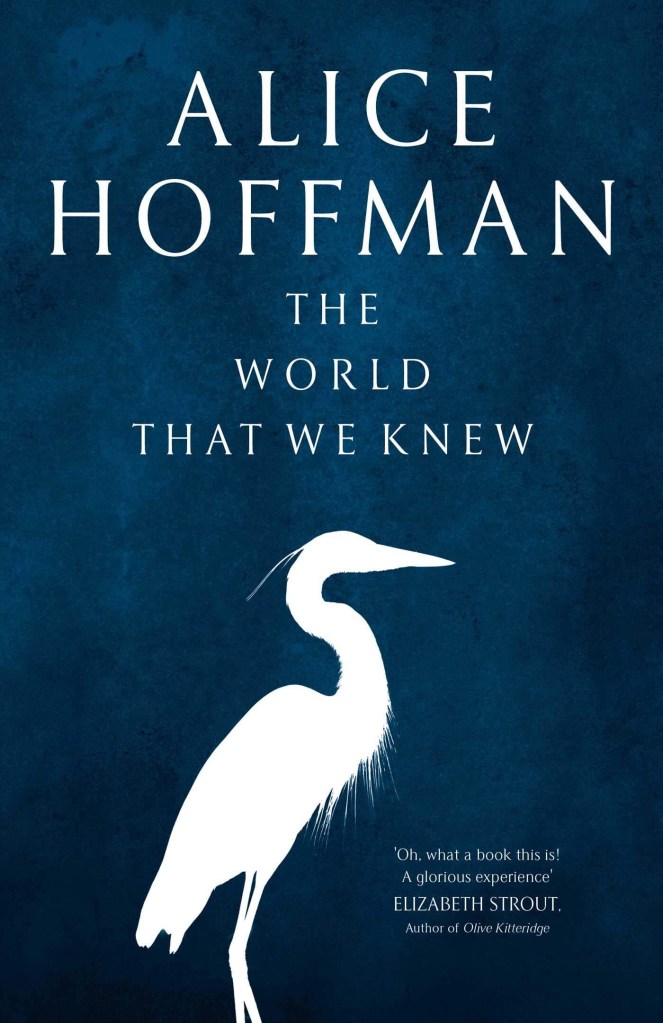
The World That We Knew by Alice Hoffman

This was a much anticipated read for me as Alice Hoffman is probably my favourite writer. Most people know her for Practical Magic, but I think her more recent novels have been remarkable. The World That We Knew stands with them. It was sad, unflinchingly honest and strangely magical.


We join Hanni Kohn and her daughter Lea in Berlin at the beginning of WWII.The verbal propaganda against German Jews is now turning into action and after Lea is attacked by a soldier on her way home, Hanni intervenes with terrible consequences. Now Hanni knows she must get Lea out of Berlin, but how can they both leave when Hanni is looking after her elderly mother. Desperately looking for some way of protecting Lea, Hanni falls on the idea of a Golem – a mythical Jewish creature animated from clay. First she approaches the rabbi, who turns her down, but the rabbi’s daughter Ettie is listening and spies a chance to escape home. She assures Hanni she has the necessary power and learning to create such a creature, programmed to protect Lea, but only on the basis that Ettie and her sister can travel with them. They gather river clay, water and blood to create Ava, a strong woman with dark eyes and hair, who will travel as Lea’s cousin. However, all Golems must be destroyed once their purpose is done, so Hanni leaves instructions in Lea’s locket to ensure she can carry this out. Hoffman’s story blends historical fact, outlining the fate of Jews in Berlin and France while the world claimed ignorance, with the fictional story of the four girls. One is lost before they leave the country leaving behind a loved one intent on getting their revenge.

There are other characters in the novel bringing their own story and perspective to the story. Despite having their own narrative Hoffman cleverly weaves their stories together so that they encounter each other at some time during the war. On Lea and Ava’s travels in France we meet Julien, his brother Victor and their parents. As a Jewish family resident in Paris their parents imagine themselves safe from the fate of Jewish refugees like Lea and Ava. At huge personal risk they let Lea and Ava join the household, because their servant Marianne has left that morning. Ava takes to kitchen work while Lea forms a friendship with Juliet. Victor has been mourning for Marianne as we follow her home to her father’s farm in the mountains bordering Switzerland. Victor decides to leave soon after, but his travels take him into the Resistance first where he meets a certain young woman hellbent on revenge. Julien is left behind, when Ava and Lea leave, and he watches as his parent’s assumptions are all proved wrong and they are lead to a stadium in burning heat. They are stripped of their jewellery and other valuables and kept without sanitation or food until they can be transported to the death camps, bewildered and broken. Julien hatches a last minute plan and manages to slip out of the stadium and into the labyrinth of streets until a special messenger gives him an idea of where Lea might be.

We follow these various characters through Germany, to Paris, to a convent where silver roses bloom, and a farm in the mountains where over three thousand Jews are walked to the mountains and freedom. In between the many horrors of war sits the beauty of nature, strangely incongruous and almost mystical in that it carries on without or even in spite of us. I love the audacity of Hoffman’s magic realism in juxtaposing the Holocaust with a mysterious heron who dances in the moonlight, at the river’s edge, with a very unusual woman.
This beautiful novel weaves together the realities of a terrible war, with an element of ancient magic. Hoffman creates a story about the lengths people will go to in order to survive, protect those they love and fight for what they believe in. We also see the amazing healing power of love and forgiveness. Most of all, against a backdrop of the most evil and inhumane act of the 20th century, Hoffman uses the character of Ava to make us truly think about what qualities make us human.

Meet The Author.

Alice Hoffman is the author of thirty works of fiction, including Practical Magic, The Dovekeepers, Magic Lessons, and, most recently, The Book of Magic. She lives in Boston. Visit her website: http://www.alicehoffman.com

The Bookstore Sisters

I usually expect a new Alice Hoffman novel in the autumn as she’s so prolific, but this year it’s a short story to keep us ticking over until her new novel arrives.

Isabel Gibson has all but perfected the art of forgetting. She’s a New Yorker now, with nothing left to tie her to Brinkley’s Island, Maine. Her parents are gone, the family bookstore is all but bankrupt, and her sister, Sophie, will probably never speak to her again. But when a mysterious letter arrives in her mailbox, Isabel feels herself drawn to the past. After years of fighting for her independence, she dreads the thought of going back to the island. What she finds there may forever alter her path—and change everything she thought she knew about her family, her home, and herself. I’m a lover of books about books, and since the words I keep hearing are ‘relationships, charm and magic’ I’m really looking forward to a long bath with this story.

Published by Amazon Original Stories on 1st Nov 2022.