Posted in Throwback Thursday

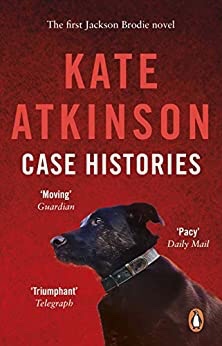
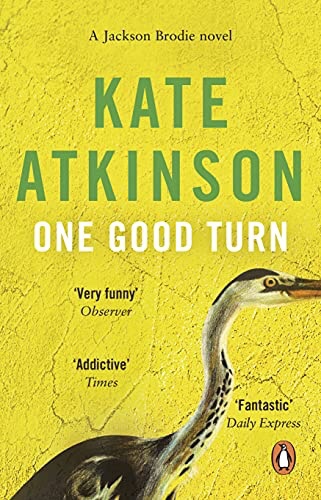
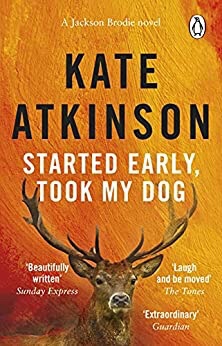
The Jackson Brodie Series by Kate Atkinson.

‘An astonishingly complex and moving literary detective story that made me sob but also snort with laughter. It’s the sort of novel you have to start rereading the minute you’ve finished it’ Guardian

In Case Histories we’re in a Cambridge that’s sweltering, during an unusually hot summer. To Jackson Brodie, former police inspector turned private investigator, the world consists of one accounting sheet – Lost on the left, Found on the right – and the two never seem to balance. Surrounded by death, intrigue and misfortune, his own life haunted by a family tragedy, Jackson attempts to unravel three disparate case histories and begins to realise that in spite of apparent diversity, everything is connected…

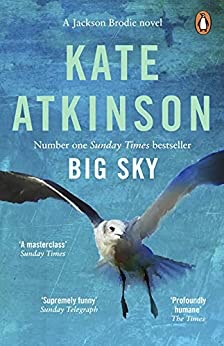
The Jackson Brodie novels were the first Kate Atkinson books I bought, one at a time as they were published. I was in love straight away. From the first novel Case Histories to her long awaited fifth in the series Big Sky, we are let into the world of this slightly world weary PI. Each time he collects cases that seem so disparate, but eventually overlap and connect. Atkinson has a unique way of blending very dark subject matter – missing persons, sex trafficking, modern slavery – with a sarcastic sense of humour and love of literature. Of course the investigations are serious and their subject matter is treated with care and diligence. However, some of the scrapes Jackson gets into and his frustrations with the women in his life are funny, acting as light relief. Atkinson has a very clever way of ending her novels without all the loose ends tied up – an issue that mentioned in a negative light in a lot of her reviews. I prefer that. Life isn’t tied up all neatly with a bow on top and I would imagine it’s quite rare when investigating crime. Often what we want to know, and rarely do, is why someone carries out a crime.
It’s maybe in an attempt to answer this question, that the author takes us deeply into the lives of all the characters involved, including their inner worlds. There’s an empathy and humanity to the writing that isn’t always present in crime fiction, in fact it does remind me a little of J.K. Rowling writing as Robert Galbraith for the Cormoran Strike series. There are critics of this style, with reviews commenting that there’s a focus on character above plot. I like that. I want to be invested in a character, otherwise I’m unmoved when things start happening to them. Atkinson also delves into areas of life that I’m interested in. Jackson has a penchant for finding life’s underdogs and more often than not, trying to rescue them. He finds those struggling after divorce, or with massive changes in life, the homeless and the destitute. They’re inbetween people who need help. It could be Jackson’s training as a police officer or his just in his DNA, but he wants to help people.

So If I’m asked what it is that grabbed me at the first novel and still hasn’t let go all these years later? I’d have to say it’s Jackson himself – and that’s before Jason Isaacs was on board for the TV series. Jackson is one of those men that could have the house burning down around him and I’d still feel safe. There’s an honour code about him, almost like a charter of correct behaviour. Yet on the other hand, there are rules he’s willing to break. He almost always gets too close to the client or a witness, showing a dedication to them that might explain his divorced state when we first meet him. There are times when he struggles to let go too, ending up with a dog to mention just one incident. If there’s a rule, such as keeping work and home separate, Jackson will break it for clients. As a result he doesn’t protect his own space, time or even safety. It is that dedication that endears him to me. I understand it, because I’m not great with boundaries myself. I read the book imagining an abrupt manner with a gruff Yorkshire accent. There’s something a bit Sean Bean in his manner. He has an undefinable something, that draws women to him.
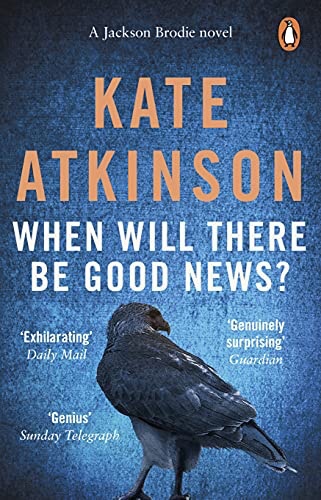
The settings are interesting too, with the second novel set during the Edinburgh Festival, the third in Devon and the fourth and fifth in his home county of Yorkshire. Jackson is settled in North Yorkshire in the final novel Big Sky, divorced again but in a routine seeing his teenage son Nathan and their shared Labrador when his ex-wife Julia allows. This is the most settled Jackson has ever been and it’s nice to see him grounded in life. We waited a long time for a continuation in the series and Atkinson didn’t disappoint. In her inimitable style she presents several, seemingly disconnected, characters with various different problems. Jackson meets a man on a cliff top that leads him to a sinister network. He gains a client who claims she’s being watched and followed, which Jackson is starting to think is a paranoid delusion, until he follows her and witnesses her children being abducted. Only Atkinson can bring these strands together, not in a tidy way, but like a rough tapestry overlapping strands to make a beautiful whole.

It was great to see returning characters, like the sparky protégée Reggie who is now a police officer investigating a paedophile ring. I was hoping for DI Louise Munro because I know she and Jackson have unfinished business and lots of chemistry. The whole tale is bookended by a personal mission; Jackson helping his daughter be a runaway bride. It’s good to see a slightly more responsible Jackson, forging relationships with both of his children and staying in one place. I would recommend this series to readers who enjoy a combination of dark secrets and crimes, a wonderfully sardonic sense of humour and characters that get under your skin. I don’t know if there will be another novel in the series, but I do love the existing stories and re-read them from time to time. Atkinson is an incredibly skilled writer and if you pick up her Jackson Brodie series you won’t be disappointed.
Meet the Author
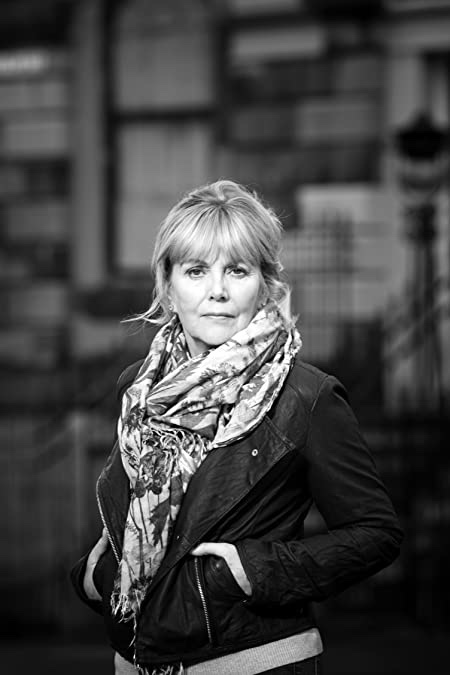
Kate Atkinson is one of the world’s foremost novelists. She won the Costa Book of the Year prize with her first novel, Behind the Scenes at the Museum. Her three critically lauded and prizewinning novels set around World War II are Life After Life, A God in Ruins (both winners of the Costa Novel Award), and Transcription. She was appointed MBE for services to literature in 2011.

Her bestselling literary crime novels featuring former detective Jackson Brodie, Case Histories, One Good Turn, When Will There Be Good News? and Started Early, Took My Dog became a BBC television series starring Jason Isaacs. Jackson Brodie returns in her new novel Big Sky.
Posted in Throwback Thursday

Festive Throwback Thursday! Little Women by Louisa May Alcott

Little Women is one of my all time favourite books and the films, whether the old version Katherine Hepburn or the latest one with Saiorse Ronan, are essential viewing for me and my girls at Christmas. For my throwback posts this month I’m focusing on older books that truly give me those Christmas ‘feels’. That could be because they’re set at Christmas or they might have a special meaning associated with Christmas, such as something we would watch as a family or that I just happened to read at that time of year. As soon as it gets close to Christmas I think of Little Women, and it’s not just that first line of Jo’s; ‘Christmas won’t be Christmas without any presents’. The book begins and ends at Christmas and it highlights the way the family has changed in that time, who is lost and who has joined the March family. I think the fact that most of the film adaptations have that snowy New England appeal and the contrasting warmth of the March family’s home with it’s handmade decorations and open fire. It’s also the way the family celebrate and their values that really shine out to me. They have traditions, like the play they all prepare for in the evening, having so much fun that the lonely boy living next door with only an old Uncle for company yearns to join them. I see so many parallels with my own family in the Marches, even the love and support they offer to people who are struggling reminds me of the values my parents have instilled in me and my brother.

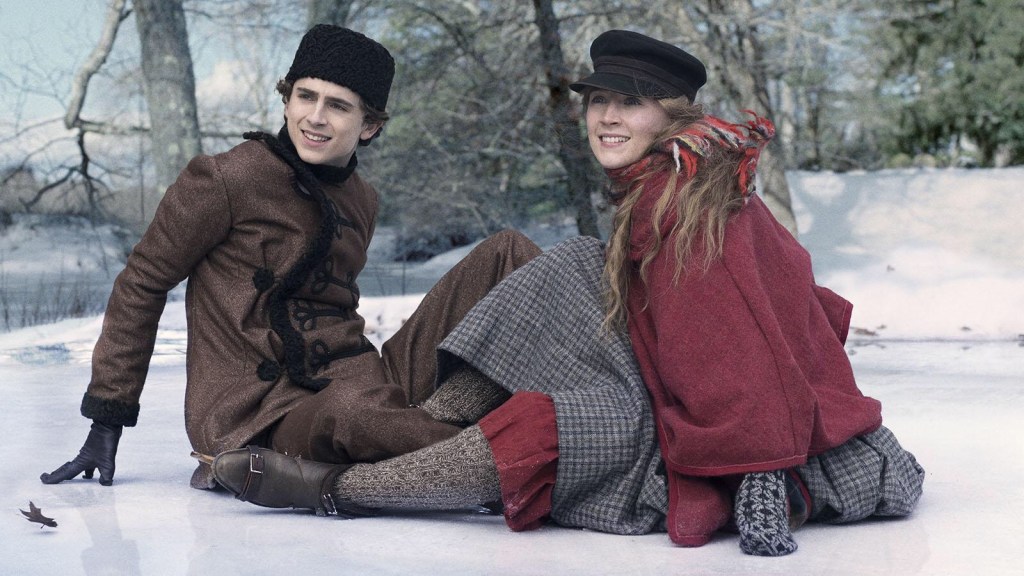
The recent adaptation of Little Women starring Saoirse Ronan and Timothy Chalumet.

Our family traditions are smaller, but important and poignant to us, especially as the years pass and people are missing from those celebrations or new members of the family have come along. Back in the late 1970’s when I was around seven years old, my Mum had a beautiful set of nativity figures and my dad made her a tiny stable complete with wood shavings for straw and a single light over the roof to represent the star. Every year we loved to put the crib up and it was the tradition that the youngest member of the family would place baby Jesus in the manger on Christmas Eve. That was my younger brother Terry and I remember him having to be lifted to reach the crib and my mum would steady his small hand to place him in safely. Now my brother is in his forties and is a grandad too, so his grandson Harvey places Jesus in the crib and soon it might be his younger brother Oakley who helps him. To have so many generations in one family is so lucky, but it’s also poignant when I notice that my dad can’t pick up his great-grandson and his hand isn’t so steady. Similarly, for the Marches there’s that bittersweet feeling within the celebration, the acknowledgement that someone is missing from the table. It’s a feeling I share when we have our Polish Christmas Eve tradition that remembers my late husband’s family, something we do alongside my sister-in-law and nephews over in New Zealand, now that she too is a widow. It gives us an opportunity to raise a glass and talk about our loved ones, to have that Christmas phone call and remember them together.

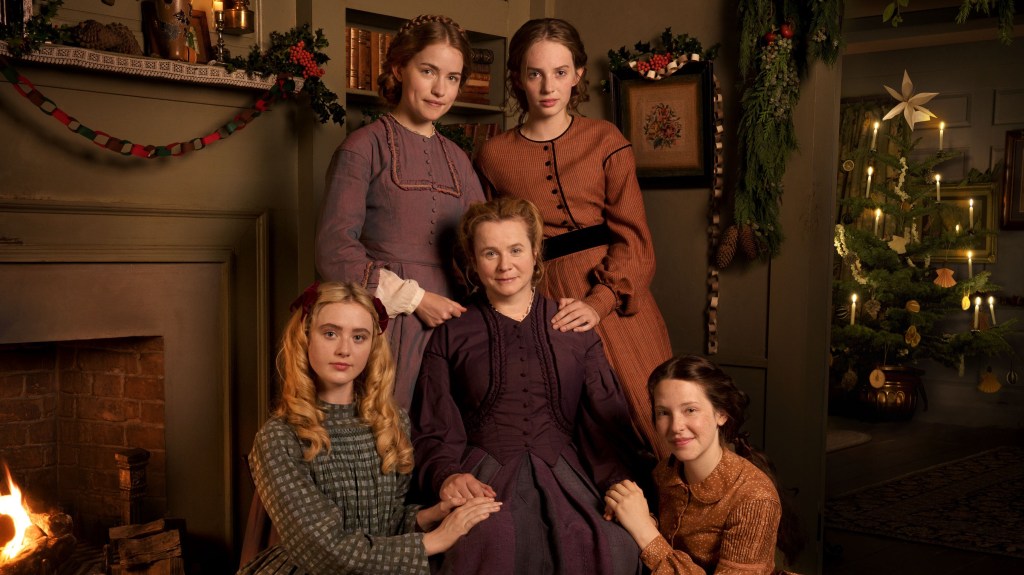
The March girl’s Christmas Supper from Mr Lawrence.

Charles Dickens set the standard for the typical Victorian Christmas, setting in stone some of the traditions we still keep today. In the same way, Louisa May Alcott defines the ideal New England Christmas of the 1800’s. The Civil War rumbles on quietly in the background, but Marmee and Hannah keep the home fires burning despite having little money, but what little they have they are willing to share. There is a glow of nostalgia around their plans that makes me feel welcomed into their world, but also inspires me to have a more simple Christmas where we make the presents and the emphasis is on time together, rather than money spent. In the end it’s the feelings that make the Christmases of the Little Women so appealing. It’s their simplicity when we look at them against the current onslaught of adverts, consumption and pressure to have the perfect Christmas- especially this year, when we had such a quiet one in 2020. There’s an urge to really overspend that’s all about rescuing the economy rather than true Christmas spirit. We could really learn from the March girls’s generosity in using the one dollar they each receive from Aunt March to make Marmee’s Christmas better. There’s a thoughtfulness in the gifts they give, even Amy who has a last minute change of heart and uses her whole dollar for Marmee’s cologne rather than buying the smaller bottle to save money for some drawing pencils. I like to think about the gifts I send, and I do make when I’m able – I’ve made my step-daughters zombie dolls in the past and this year I’m embroidering denim jackets. I also make Christmas Cakes and biscuits for neighbours, sloe gin and jams, because it feels good to put myself into he gifts and it’s lovely to make them with a friend, listening to Christmas music and enjoying the moment. This year we’re having a biscuit and truffle making day together with my carer’s children. It’s this effort to spend time with people that makes Christmas, because it creates memories. This is no different from the March girls practicing their Christmas play together or singing carols at Beth’s piano. My immediate family are not buying presents this year, because we can’t all afford to do it, so instead we’re having a meal together which we’ll enjoy so much more than stuff. To have a March Christmas we need to adopt a simpler approach, guided by values of generosity, kindness, thankfulness and love.

The March girls listen to a letter from their Father on Christmas Eve.

A poor, bare, miserable room it was, with broken windows, no fire, ragged bedclothes, a sick mother, wailing baby, and a group of pale, hungry children cuddled under one old quilt, trying to keep warm. How the big eyes stared and the blue lips smiled as the girls went in. “Ach, mein Gott! It is good angels come to us!” said the poor woman, crying for joy. “Funny angels in hoods and mittens,” said Jo, and set them to laughing. In a few minutes it really did seem as if kind spirits had been at work there. Hannah, who had carried wood, made a fire, and stopped up the broken panes with old hats and her own cloak. Mrs. March gave the mother the children round the fire, and fed them like so many hungry birds, laughing, talking, and trying to understand the funny broken English. “Das ist gut!” “Die Engel-kinder!” cried the poor things as they ate and warmed their purple hands at the comfortable blaze. The girls had never been called angel children before, and thought it very agreeable, especially Jo, who had been considered a “Sancho” ever since she was born. That was a very happy breakfast, though they didn’t get any of it. And when they went away, leaving comfort behind, I think there were not in all the city four merrier people than the hungry little girls who gave away their breakfasts and contented themselves with bread and milk on Christmas morning. “That’s loving our neighbor better than ourselves, and I like it,” said Meg, as they set out their presents while their mother was upstairs collecting clothes for the poor Hummels. Not a very splendid show, but there was a great deal of love done up in the few little bundles, and the tall vase of red roses, white chrysanthemums, and trailing vines, which stood in the middle, gave quite an elegant air to the table. “She’s coming! Strike up, Beth! Open the door, Amy! Three cheers for Marmee!” cried Jo, prancing about while Meg went to conduct Mother to the seat of honor.

Beth played her gayest march, Amy threw open the door, and Meg enacted escort with great dignity. Mrs. March was both surprised and touched, and smiled with her eyes full as she examined her presents and read the little notes which accompanied them. The slippers went on at once, a new handkerchief was slipped into her pocket, well scented with Amy’s cologne, the rose was fastened in her bosom, and the nice gloves were pronounced a perfect fit. There was a good deal of laughing and kissing and explaining, in the simple, loving fashion which makes these home festivals so pleasant at the time, so sweet to remember long afterward.

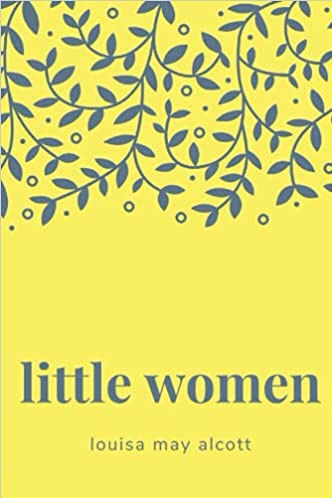
Little Women. Louisa May Alcott. Amazon Classics. 29th August 2017.

Posted in Throwback Thursday

Throwback Thursday! Like Water for Chocolate by Laura Esquivel.

Recently I’ve begun to realise that one of the literary devices I love most is magic realism. For those who’ve never come across it before, or didn’t know they had, magic realism is a 20th Century style or genre where a novel’s story is mostly realistic but with magical elements that can sometimes feel out of place in the narrative. I think I became interested in this style of writing, from my favourite teenage author Fay Weldon. The Life and Loves of a She-Devil was dramatised at this point and was widely talked about in the media and at school – where any chance to see clips that would titillate were applauded. How innocent we were that, without the internet, we were reduced to TV dramas for our fix of nudity – now we can see six naked people being visually assessed in their pods at any time of day. Back in the 1990s we had to commit to storyline for a whole episode, just for a glimpse of side boob! I read all Fay Weldon’s back catalogue and became fascinated with the skilful way she mixed realistic settings with sudden supernatural, astrological or magical elements. There was an audacity to it that I loved. So, when I came to reading Like Water for Chocolate I was charmed straight away by the love story and the magical powers that Tita has, especially her ability to bake her emotions into her food.

Movie poster for the 1992 adaptation of the novel

Set in early 20th Century Mexico, we meet Tita, the youngest daughter of the family who is hopelessly in love with Pedro. Sadly, Mexican tradition dictates that older siblings marry to carry on the family name, make connections and ensure their financial future. Younger siblings are destined to be the caregiver in the family, remaining single and close to home to help their parents in their old age. Tita and Pedro are in love and Tita’s mother knows this, so what happens next seems unusually cruel. She leaves older sister Rosauro open to marriage and then schemes behind the scenes, as a result and feeling like he has no realistic chance with Tita, he marries Rosauro because then at least he will be able to stay close to his real love. It is their wedding day where we see the full structure of the novel unfold. Tita’s mother forces her to bake the wedding cake, but as she does Tita begins to cry and somehow her sadness leaches into the cake batter. As they serve the cake at the wedding, much to Tita’s surprise, the guests start to experience their own memories of lost loves. Soon the whole room is reminiscing and weeping. From the extraordinary event onwards the novel is split so that a recipe forms each chapter. We are always waiting to see what emotion will get baked or fried into each incredible Mexican recipe as Pedro and Tita circle each other, forever in unrequited love. Would they ever get a chance to be together?

Cover for the movie tie-in edition

I first read this novel when I was an impressionable twenty year old, still in love with the idea of romantic love. Now if I was asked to give advice to Tita, I’d probably say that life is way too short to spend it in such a torturous situation. Pack a bag and get a bus out of there. Build your own life. It’s not just the idea of her sister marrying Pedro, it’s watching the milestones of their life together. If Rosauro had children with him, Tita would be hurt all over again. Every day there would be a new reason to mourn what she could have had. Her reward for this sacrifice? Looking after a mother who’s becoming more infirm by the day knowing that she was the one who took away Tita’s chance of happiness and gave it to her sister. I remember reading and hoping that Pedro’s love for Tita would remain. I couldn’t bear the thought that Pedro might grow to love Rosauro over the years. I won’t ruin the ending for those who haven’t read this extraordinary book, but I will say that it’s one of the most unusual endings I have ever read. I have been known to recreate a recipe from a book, especially where recipes are an important part of the story. I’ve often done it for my book club, where we’ve eaten: chocolate cream pie while reading Kathryn Stockett’s The Help and honesty cake while reading Alice Hoffman’s The Story Sisters. Yet, I’ve never attempted one of Tita’s family recipes – perhaps because they seem so uniquely hers and enchanted by her particular brand of magic. This is a beautiful novel for those hopeless romantics or if you love to be immersed in the culture of the characters from old customs, to celebrations and their chosen foods for those occasions. This has been a book that has endured for me and still feels uniquely magical.

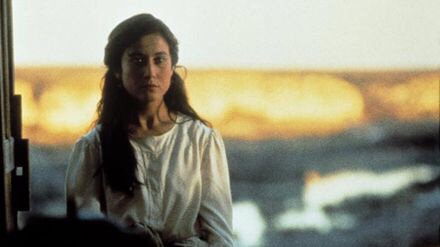
Lumi Cavazos as Tita in the 1992 film

Meet The Author.

Laura Esquivel is the award-winning author of Like Water for Chocolate, which has sold over four and a half million copies around the world in 35 languages, The Law of Love, and most recently, Between Two Fires. She lives in Mexico City.

Posted in Throwback Thursday

Throwback Thursday! The New Woman by Charity Norman.

I’ve been reading Charity Norman for several years and I never tire of the way she builds her characters, full of depth and complexity. She excels at revealing characters slowly, one layer at a time, and putting them in complicated emotional situations. This is one such example and despite being published in 2017 it seems very timely as debate rages about transgender rights on social media and in the news. This is a family drama, where we are brought into the seemingly idyllic life of Luke Livingstone. As we meet Luke, he’s seen as the perfect family man with a beautiful home in rural Oxfordshire and a solid career as a solicitor. He is respected as a pillar of the local community with a long standing marriage, as well as being a good father and grandfather. However, Luke has spent his whole life hiding a secret about who he is and he’s not sure he can keep it under wraps much longer. He has been hiding a truth about his identity and it’s such a fundamental truth that he knows disclosure will rock his business, his standing in the local community and will shock his family. He might become an outcast. Yet, he might have to destroy his image and the way others see him, if he’s to stop the slow destruction of his inner self. He has to become the person, the woman, he knows he truly is, whatever the cost. Luke is focusing on his eventual rise from the ashes and the rebuilding of his life, but first he must face the flames.

As the novel opens, Luke is so desperately unhappy he is considering suicide. Luckily, someone intervenes and sends him on a different path – the possibility of becoming the woman he is inside. He has always kept this feeling under wraps because of his parents and has now followed a very conventional path with his marriage to Eilish, fatherhood and now a grandparent to Nico. Now his parents are gone, he feels more free to pursue his own happiness, but that’s made harder when you know your own happiness will impact on your family. My heart went out to him, but also to Eilish who has loved and lived with this man for most of her life. Luke is a wonderfully sympathetic character and I can’t agree with some reviewers who have referred to him as ‘selfish’ for pursuing his own happiness. Luke was born in a different time, with more pressure to conform to society’s norms and values, as well as parents who were more traditional. As a young teenager, his feelings about his gender were only just growing and without transgender role models, either locally or on television, there’s no template for where to go and who to confide in. It would seem that he genuinely fell in love with his wife, rather than chose her specifically to conceal his true identity, and he still loves her, despite wanting to change gender.

The central dilemma is that in order to successfully birth his female identity, his male identity – the husband and father his family know and love – has to die. This is a slow bereavement process as they hear the news, then see their family member begin to dress as a woman, to take that identity into the world to be seen by work colleagues, family friends and his children’s friends. Just as this process is hard for Luke, it’s equally hard for the family – I loved the inclusion of a politically aware daughter, full of support for causes like equal rights for the LGBTQ+ community, but finding it a very different prospect when the person involved is her own father. She acknowledges her father’s rights in principle, but that doesn’t stop the feelings of hurt and loss she’s suffering. Similarly, I felt deeply for Eilish who is losing the man she loves, but has to ask herself the question of whether she has to lose the person she loves too. I’m not sure about the conclusion to their relationship, and I’d be interested in knowing how common it is in real life.

I thought this book was a fascinating read and really started me thinking about how it must feel to be in the wrong body, in a society that still expects us to conform to the established norm. It really did show what transgender people go through, just to be who they are. For me, Norman’s book avoided all the controversy and cancel culture we see going on in society today, by focusing in on Luke and his family. This is one character’s experience and doesn’t make assumptions or create a stereotypical experience. It isn’t negative about Luke’s experience either, the viewpoints belong to him or his family members and while they may be upset or shocked by his news as individuals, the overall narrative remains positive and non-judgemental which I loved. I know some will ask whether a fictionalised account is appropriate, because such controversial and complex stories are often best told by ‘own voice’ writers. However, I felt that the author had insight, whether that’s through personal experience or research. It is a book that started many conversations at home about the distinction between gender and sexuality, how it would feel to be Luke and the overwhelming fear that has kept him in his male identity in so long, and how it would feel if it was our Mum or Dad. Luke deserves to be who he truly is and in order to keep his family, he must continue to be a parent and grandparent as Lucia. It’s a book that challenges the reader’s own preconceptions and I love it when a book makes me think like this, plus it makes it a great book club choice. This was informative, absorbing, deeply moving and is a story that has stayed with me over the last four years.

Meet The Author.

Charity is the author of six novels. She was born in Uganda, brought up in draughty vicarages in the North of England and met her husband under a truck in the Sahara desert. She worked for some years as a family and criminal barrister in York Chambers, until, realising that her three children barely knew her, she moved with her family to New Zealand where she began to write.

After the Fall was a Richard & Judy and World Book Night title, The New Woman a BBC Radio 2 Book Club choice. See You in September (2017) was shortlisted for best crime novel in the Ngaio Marsh Awards. Her sixth, The Secrets of Strangers, was released on 7th May 2020 and is also a Radio 2 Book Club choice. 

Charity loves hearing from readers. Please visit her on facebook.com/charitynormanauthor or Twitter: @charitynorman1

Posted in Throwback Thursday

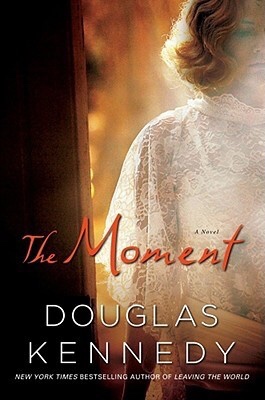
Throwback Thursday! The Moment by Douglas Kennedy.

A secret from the past can change your life for ever. The Moment is a heart-breaking love story set in Cold War Berlin by the author of The Pursuit of Happiness and Five Days.

Thomas Nesbitt is a divorced American writer living a very private life in Maine. Until, one wintry morning, his solitude is disrupted by the arrival of a package postmarked Berlin.

But what is more unsettling is the name accompanying the return address on the package: Petra Dussmann. For she is the woman with whom Thomas had an intense love affair twenty-five years before in a divided Berlin, where people lived fearfully under the shadows of the Cold War.

And so Thomas is forced to grapple with a past he has always kept hidden. For Petra Dussman was a refugee from the police state of East Germany. And her tragic secrets were to re-write both their destinies.

I found myself strangely captivated by this tale of lost love in a divided Germany. I worked my way through all of Douglas Kennedy’s books around five years ago after enjoying A Special Relationship and while they’re all great reads something about this one stayed with me. Perhaps because I’ve lost someone I loved. Or because I once had a short, intense love affair that, given different timing, could have blossomed into a something beautiful. We have probably all had similar experiences, where the timing was just wrong. However, when added to this restrictive Cold War environment, love becomes so precious by contrast. Like a flower blooming through the cracks in a pavement.

This story unfolds like a set of Russian dolls. When the package arrives with Petra’s return address it sends Thomas back to the account he wrote of his time in West Germany. We read his narrative and are drawn into this impossible love story that left him with so many unanswered questions. When he opens the package, he finds Petra’s account of that time and we are lost in the same story, but from a different viewpoint. What he discovers is shocking and illuminating, but will it answer his questions? More importantly, will it confirm and deepen the love he felt for Petra and how will that change his life moving forward? There are so many things I love about Kennedy’s writing and this book showcases them beautifully. The historical research and detail feel genuine. He takes a period of history beyond the facts, to show how this world affected the people who lived through it’s events – not just physically, but emotionally too. The stark, grey, concrete world of East Germany and it’s citizen’s fear of the Stasi, become real through Petra’s story. There is so little to look forward to and an absence of joy here. I remembered back to my younger years and the pictures on the news as the Berlin Wall came down. Now I understood their euphoria and their need to physically take hold of this symbol of oppression and dash it to the ground with their bare hands.

Kennedy also has the uncanny ability to write convincingly from the viewpoint of both men and women. This was a skill first seen in his novel A Special Relationship, where he wrote from the viewpoint of a new mother whose husband thought she was suffering from post-natal depression. Here again he writes from the viewpoint of a woman and mother, torn between romantic and motherly love. Even, as we wonder which of these loves will win out in the end, we realise neither choice can ever truly fulfil Petra without the other. There are no winners, whichever choice is made. The only outcome here is betrayal.

As we come back to Thomas’s current circumstances, further enlightened by the stories we have experienced, we see how the psychological damage of childhood and our youth can colour the rest of our lives. It seems we spend the latter part of our adult lives trying to untangle, then heal these wounds, as we recognise how much damage these traumatic experiences have had on our choices – in Thomas’s case, during his failed relationship with his wife. I also think Kennedy is telling us something very important about stories. Thomas’s story would have made a novel all on it’s own, but by adding Petra’s version we start to see something of the ‘whole’ story. Our version of events, even factual ones, are just that; our version. It’s just one piece of a patchwork quilt of perspectives. Even our own version can change as we get older, gain experience and develop new ways of understanding. This novel is unusual, because it’s a love story for people who don’t read love stories. Or a novel about Cold War Germany, for people who understand the importance of love. For me, it’s that unusual, niche, mixture that made it stay with me.

Meet The Author

Douglas Kennedy is the author of ten novels, including the international bestseller Leaving the World and The Moment. His work has been translated into 22 languages, and in 2007 he received the French decoration of Chevalier de l’Ordre des Arts et des Lettres. Born in Manhattan, he now has homes in London, Paris, and Maine, and has two children.

Posted in Throwback Thursday

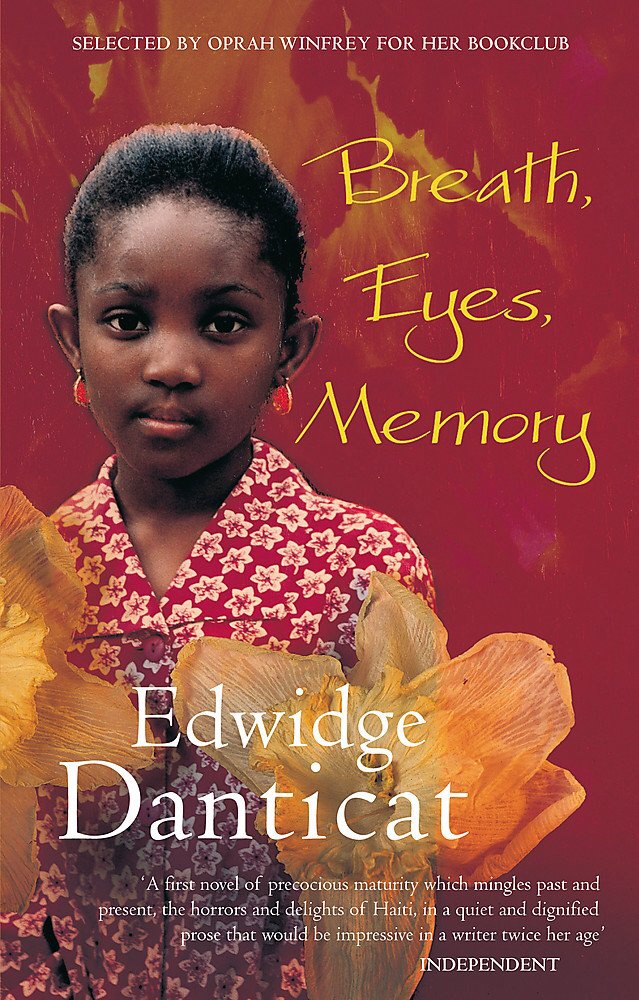
Throwback Thursday! Breath, Eyes, Memory by Edwidge Danticat.

I come from a place where breath, eyes and memory are one, a place from which you carry your past like the hair on your head.

I was first introduced to Danticat’s writing by the tutor of my American Literature module at university. This was her debut novel and it sparked a fascination with Haiti, somewhere that always seemed tragic, but also strangely magical. This book took those childhood impressions and put flesh on their bones. It showed the human cost of such a chequered history, particularly for women and it’s characters have stayed with me for a long time. I think it’s also a wonderful depiction of generational trauma, emotional healing and counselling’s place in that difficult process.

We follow a young woman called Sophie Caco, who lives in Haiti as a child with her Tante Attie. Then at the age of twelve is relocated to New York to live with her mother, with whom she needs to forge a relationship. Sophie doesn’t want to go, but has no choice. Up till this point Tante Attie has been the only mother she knows. Her mother left Haiti long ago with the ghosts of the past at her heels. Sophie doesn’t know what life will be like when she gets there, but she is anxious about the journey, immigration and what it will be like going to school with children who speak a different language. Sophie will need to think on her feet and adapt to the new way of life quickly. What she finds though, is that it’s hard to escape Haiti. It does not let go of its daughters and her mother suffers mood swings and nightmares linked to her past there. Generational pain and trauma are played out in this relationship until Sophie realises they must face Haiti together -aunts, mothers and daughters – if they are ever to break the cycle .

I loved Danticat’s way of comparing these two very different places and their contrast with what’s going on deep inside these characters. Haiti is a place of deep sadness, particularly for Sophie’s mum. For those who don’t know it’s political and social history, Haiti covers half of the island it shares with the Dominican Republic. For many years both countries were colonised by the Spanish, but in 1697 after disputing territory the Western side of the island was ceded to the French. However, unlike the Dominican, Haiti was stripped of all it’s natural resources, even down to the island’s trees which were cut down for logging and to make way for planting sugar cane, leaving the island prone to landslides and unprotected against tropical storms. All this left a rather bare country, peopled by slaves, harvesting the cane that would ship to Britain as the final part of the ‘slave triangle’. During the French Revolution, the slaves revolted under the leadership of Toussaint Louverture, and freed themselves. They were the first of the colonies to successfully liberate themselves and become a state on 1st January 1804. Whilst it was always politically turbulent, Haiti entered a reign of terror in 1956 under the autocratic government of Papa ‘Doc’ Duvalier and then his son until 1986; the period was characterized by state-sanctioned violence against the opposition and civilians, corruption, and economic stagnation. After 1986, Haiti began attempting to establish a more democratic political system. Yet the violence of the past thirty years left a legacy of pain in the people of Haiti, especially it’s women, for whom a history of sexual violence carried out by Papa Doc’s henchmen the ‘tonton macoutes’ had left them controlled and terrified.

Such a history leaves a legacy of rage and deep, deep sadness in the people. Yet Danticat depicts a vibrant culture filled colour, music, and incredible food. Tante Attie is an absolute rock of a woman. She’s a storyteller, passing down women’s stories and history to other woman. When we are without power, education and means we have to find other ways of recording our history – in the clothes we wear, the food we cook and the songs we sing. Attie is the keeper of her family’s history, but there are secrets she has kept, only because it is not her story to tell. It takes a departure from all that she knows for Sophie to truly know her family history and a practice past down through the generations which is horrifying to read. When women are mere commodities, to be owned by men, there are certain things that affect their value. Controlling the ways women behave is always set out by men, but often policed by other women.

True healing can only begin when we stop running from our past, instead we must confront it and begin to process any trauma we have experienced. Sophie’s mum must return to Haiti to do this. Meanwhile Sophie’s demons come calling when she gives birth to her daughter and actively chooses change. She must confide in her husband and seeks therapy to come to terms with her trauma. Only then can mother and daughter truly get to know one another. Despite it’s difficult subject matter I always feel that it’s a hopeful book. It seems to explore a psychological outlook I have held for a long time; anyone can create change in their life. Think how powerful and freeing that statement is. It’s up to us. This is a powerful look at a country that’s often seen as unlucky. Here we can see why and how that history has been constructed, largely by men and colonisers. Through this family of women we see a different Haiti. The violence and pain are real, but so is the beauty, the healing and the love.

There is always a place where, if you listen closely in the night, you will hear a mother telling a story and at the end of the tale she will ask you this question: “Ou libéré? Are you free my daughter?” My grandmother quickly pressed her fingers over my lips, “Now” she said “you will know how to answer.”

Meet The Author.

Edwidge Danticat is the author of several books, including Breath, Eyes, Memory, an Oprah Book Club selection, Krik? Krak!, a National Book Award finalist, The Farming of Bones, The Dew Breaker, Create Dangerously, Claire of the Sea Light, and Everything Inside. She is also the editor of The Butterfly’s Way: Voices from the Haitian Dyaspora in the United States, Best American Essays 2011, Haiti Noir and Haiti Noir 2. She has written seven books for children and young adults, Anacaona, Behind the Mountains, Eight Days, The Last Mapou, Mama’s Nightingale, Untwine, My Mommy Medicine, as well as a travel narrative, After the Dance. Her memoir, Brother, I’m Dying, was a 2007 finalist for the National Book Award and a 2008 winner of the National Book Critics Circle Award for autobiography. She is a 2009 MacArthur fellow, a 2018 Ford Foundation “The Art of Change” fellow, and the winner of the 2018 Neustadt International Prize and the 2019 St. Louis Literary Award.

Posted in Throwback Thursday

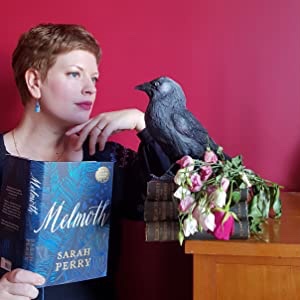
Throwback Thursday! Melmoth by Sarah Perry.

‘Oh my friend, won’t you take my hand – I’ve been so lonely!’

This week for Throwback Thursday – which has rolled onto Friday since I’m in a remote part of Wales with poor internet access – I’m going to take a spooky turn and tell you about one of the most terrifying and gloriously gothic novels I have ever read. Melmoth the Witness is a figure from mythology, or is she? Known as one of the woman who witnessed the tomb on the morning that Christ resurrected, she is now an eternal traveller. Wandering the centuries she lures people into following her, whereupon they too become damned to an eternity of itinerant, solitary wandering.

Set in the beautifully, atmospheric city of Prague we meet a woman called Helen who finds a manuscript. It tells of a winter in Prague, with all the darkly gothic details of cobbled streets, shadowy corners, and jackdaws patrolling the city walls. One winter night in Prague, Helen Franklin meets her friend Karel on the street. Agitated and enthralled, he tells her he has come into possession of a mysterious old manuscript, filled with personal testimonies that take them from 17th-century England to wartime Czechoslovakia, the tropical streets of Manila, and 1920s Turkey. All of them tell of being followed by a tall, silent woman in black, bearing an unforgettable message. Helen reads its contents with intrigue and some scepticism, but everything in her life is about to change. We follow Helen’s story, but within it are all the other stories and lives, creating a Russian doll style tale, but where each incarnation has the same sense of menace and impending doom.

This is based on an 1820 novel by Charles Robert Maturin called Melmoth the Wanderer, that very few people will have read. I studied a wonderful module at university entitled The Gothic, Grotesque and the Monstrous and I know from experience that early gothic novels can be long winded and difficult to read. What was found terrifying in 1820 does not necessarily translate today. In the original novel, Melmoth is a man who makes an almost Faustian pact, in this version she is one of the women who visits Christ’s tomb. She could have borne witness to the resurrection, but lied and is now damned to wander the world forever. She’s like a Sybil, heralding evil and disastrous events, but never listened to and doomed to witness the worst humans can do to each other over and over. I love the ambiguity of her pleas to ‘take her hand and follow her’ because she’s lonely, is she friend or foe? Her pleas are all the more tempting because she’s a woman and we associate that with gentleness, nurturing and perhaps even needing protection. There’s also the element of seduction and persuasion that might make a gentleman take her lonely hand. I think Sarah Perry made this choice because of those qualities. How much more effective could a woman be in gathering souls?

I love how Prague is turned into a haunted city and it’s history certainly might have drawn the wanderer to it’s cobbles. The city is the book’s second biggest character, dark and mysterious with magical landmarks like the astronomical clock. Perry’s descriptions of night in the city are haunting, and if I ever visit the capital I might well look over my shoulder when out in the evening in the same way I do in Venice. It is the perfect backdrop for the modern section of the novel, with every inch of the city steeped in history and the endless pull between light and darkness. Perry brings to life fears we have all had, as Helen draws the curtains at night, because she fears looking up at the window and seeing that lonely, beseeching face. The most terrifying thought is that Melmoth bears witness to anything we have ever done, including those awful things we hope no one witnessed or found out about.

I think an important aspect of the novel for me is something any sort of ‘listener’ has to think about. It’s the toll witnessing takes on a person. This book is brief compared to the original novel, but still takes in the breadth of the horrors experienced in Prague throughout the 20th Century. It made me imagine being present to witness the trenches of WW1, the Holocaust, and so many other atrocities and personal tragedies. I’ve worked in mental health for twenty years and I’m taking a break at the moment to study. I know the emotional toll that listening to people’s stories can take on the listener or observer. For Melmoth, this would be so much worse because she has to sit back and witness all of humanity’s horrors. Even worse, she has no power to change anything, but is doomed merely to witness. No wonder she wants other souls to witness with her, she must feel the weight of the horrors yet to come.

Posted in Throwback Thursday

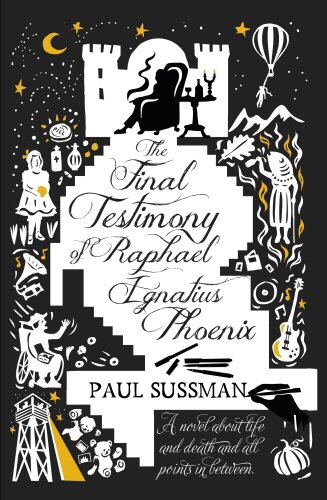
Throwback Thursday! The Final Testimony of Raphael Ignatius Phoenix by Paul Sussman.

Something very strange happened while I was reading Paul Sussman’s book. I was up at night feeling unwell and made it half way without even taking a break. I had never read any of his books so as far as I knew this could have been a debut novel or one of hundreds. I launch straight into books without reading introductions, forewords or acknowledgements because I don’t like to be swayed by them. I don’t want someone else to tell me how to read a book, or in what context; I like to make up my own mind and read them later. I must admit on this occasion I was drawn in by the cover, but beyond that and the back cover blurb I knew nothing.


I realised half way through that I was reading with a smile on my face, despite feeling physically grotty! It made me smile because of the dark subject matter, the humour and sheer ingenuity of Raphael. I put it to one side and thought ‘I really wish my husband Jez had been around so I could read this to him’. He died 7 years before I found this novel and prior to his death he couldn’t read himself. He couldn’t hold a book and couldn’t see to read for himself. He could get listening books but there were certain, funny, books that we liked to share so we could fall about laughing together. They would usually be ingenious, darkly comic and just a little bit bad – rather like this. This was definitely one of those books. I then turned to the foreword and noticed it was written by Paul Sussman’s wife Alicky. I was so sad to read that she had been through the same loss I had, but amazed by the parallel. I contacted her and she was lovely, sharing about her loss and listening to mine.

The character of Raphael Phoenix is irresistible. A cantankerous old pensioner, living alone in a castle, he decides that 100 years of living is enough. He has a plan and he also has a pill. He has had the pill his whole life since his birthday party with his childhood friend Emily. Emily’s father is a chemist and in his poison cupboard, among the ribbed glass bottles, is an innocuous white pill with a simple nick in one side. It has very particular ingredients that ensure an almost instant and painless death and it is the only thing he wants for his birthday so the pair replace the pill with mint of the very same size, with a nick from the edge to match. Raphael keeps the pill with him through his incredible life either in his pocket, in a gold ring or in more difficult circumstances, sellotaped under his armpit. He trusts his pill and knows that it will deliver the death he wants as he sits in his observatory, with an expensive glass of red wine (over £30 a bottle) watching the millennium fireworks. However, before then he has a story to tell us, several stories in fact, which take us through some of the most important periods of the 20th Century and he has a very peculiar way of splitting these stories into sections. Raphael has had some very singular life experiences, and has a talent for getting into scrapes and challenges. Even more surprising are his ways of getting out of them.

I had no idea what to expect and so I was surprised and charmed by this magical piece of work. It manages to be both, earthy and funny, but also incredibly poignant. The only two things he can depend on through his life are the pill and his friend Emily. Emily isn’t always by his side, but just manages to be there at the right times and seems to set his various destinies in motion. Raphael works backwards with his tales until the reader is desperate to know how all of these incredible twists and turns are set in motion and also whether his trusty pill will work so he gets the end he has been working so hard towards. I would read this if you enjoy dark humour and tall tales and like your narrators to be, ever so slightly, morally ambiguous. It is darkly enchanting and I fell in love with it.

Published by Doubleday 22nd March 2014.

Posted in Throwback Thursday

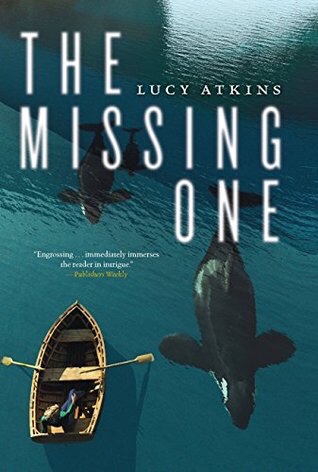
Throwback Thursday! The Missing One by Lucy Atkins.

This was the book that first started my love affair with Lucy Atkins’s writing. I remember when I first read this novel for my book club, I was so impatient to find out what happened back in the 1970s to Elena and Susannah. A terrifying and traumatic event has linked these two women for over 30 years and it can’t stay a secret for ever. In the present is Elena’s daughter Kali, who has just lost her mother to breast cancer, a mother she could never make sense of or bond with as she wanted. In the aftermath of Elena’s death, Kali is trying to make sense of that difficult relationship when she finds a hidden pile of postcards from a woman called Susannah in her mother’s things. Thinking she has found the clue to her mother’s past she pursues this woman to find out about events leading up to her birth and a family history that has resolutely stayed hidden.

Driven forward by grief, and the constant worry that her husband is having an affair, Kali takes her son Finn on an odyssey to unearth her mother’s secrets and to find herself. She has many theories about what she might find: maybe her father had an affair; could Susannah have been his lover or her mother’s? Yet, what she finds is something she never suspected. Set against the backdrop of wild North America and Canada we learn about a woman’s quest to understand the Orca. Distressed by witnessing the killer whales at Seaworld in California while doing her PhD, a young Elena leaves everything to record killer whale pods in the, ocean. The Seaworld orca gave birth to a calf that was so disorientated by his tiny tank he kept banging himself against the glass trying to navigate through echolocation. His desperate mother keeps pushing him away from the sides to protect him from damage, but in her efforts to protect she forgets to nurture and the calf dies because she has forgotten to feed him. Kali was similarly starved of nurturing by her mother because she was so intent instead on protecting her from this awful secret.


The novel is an incredible insight into relations between mothers and daughters. Kali’s sister Alice has a great relationship with her mother that seems easy, whereas Kali and Elena clash over everything. Kali sees that her mother finds her hard to nurture and believes it is her fault. It takes putting herself in danger to find out why and in finding out she also discovers that essential piece of the jigsaw that tells her who she is and grounds her in a history. The novel shows how when you become a mother it becomes more importantu cc than ever to know where you are from and how you belong. It also shows how the secrets of one generation have a huge impact on the next, even if the secret is kept with the best of intentions. The book cleverly shows the difference between generations since we have now moved into a world where we put our own lives on show for fun. In a world where counselling and therapy are becoming the norm it is no longer seen as acceptable to keep such huge secrets and we know as post-Freudians what effect those early years of parenting have on the adult we become.


Aside from the complex human relationships are the family ties within the Orca families. We see how there are resident pods and transient pods with different feeding habits and rules to abide by. It is also clear that parallels can be drawn between the whale relationships and the human ones. Elena is so moved by their mothering instincts and the possibilities to map their language and understand their emotions. She gives up everything to spend as much time with them as she possibly can even going to sleep on her floathouse with the sounds of whales drifting up from a microphone in the water. I learned so much about these incredible creatures without losing the majesty of them and the awe a human being feels when a huge tail rises up out of the water next to their boat.


The book reads as a dissection of family relationships, a thriller, a study of whales and a study of grief. Grief causes Elena to suffer with depression throughout her life, grief traumatises Susannah to the extent that she is unbalanced by the things she has witnessed and it is grief that compels Kali to jump on a plane to Vancouver with nothing but a few postcards and the internet to go on. I struggled to put the novel down because of the thriller element. Like a good crime novel, you desperately want to know the truth of who- dunnit. Yet it is those final chapters I like best, after everything is resolved and each character is living in the aftermath of exposed secrets and recovery from physical and mental injury. The novel could have ended there and I am glad that it went further, back into Elena’s past so that we can see her happy on her floathouse making coffee and then hearing those whales come to greet her.


She would go back to that throughout her life, right to the very end. But the last time, when the world had shrunken to the contours of her skin and she leaned over the railings, it wasn’t the whales that she saw in the water. And so she jumped.

Meet The Author

Lucy Atkins is an award-winning British author and journalist. Her most recent novel, Magpie Lane, is a literary thriller set in an Oxford college. Her other novels are The Night Visitor (which has been optioned for TV), The Missing One, and The Other Child. 

Lucy is a book critic for The Sunday Times and has written features for UK newspapers including The Guardian, The Telegraph, The Times, and many magazines. She was a Costa Novel Award judge in 2017, and teaches creative writing to Masters students at Oxford University. 

She is mother of three and has also written several non-fiction books including the Amazon #1 parenting guide, First Time Parent (Collins). She has lived in Philadelphia, Boston and Seattle and now lives in Oxford, UK. 

For news, events and offers see http://www.lucyatkins.com

Follow Lucy on Twitter @lucyatkins

Posted in Throwback Thursday, Uncategorized

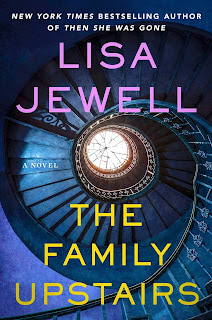
The Family Upstairs by Lisa Jewell.

As some of you may know, reviews can get very personal for me. Probably because I’m a therapist and used to lots of self-reflection. When a book hits me emotionally I really think about why and this book had me scurrying to my journal. Lisa Jewell is a master of these domestic thrillers and the psychological suspense created when groups of people are in conflict. Here the conflict is controlled within one house 16 Cheyne Walk in Chelsea, overlooking the river. That is until it’s secrets explode and the truth of the mystery is scattered across the world.


Three narratives weave in and out of each other to tell the story. We meet twenty five year old Libby with her little garden flat and her job at the kitchen design company where she’s worked for five years. Everything about Libby says organised, professional and quiet. That is until a bombshell is dropped on her life. Woven with this is the story of Lucy – if that is her real name. She is living in France but at the moment we meet her is homeless along with her two children and the dog. The family are reduced to sneaking in to the beach club to get showered but that doesn’t happen everyday. Lucy is at rock bottom. She can’t husk for money but needs money to collect her violin. They have nothing left to sell. Does she go and ask her violent but rich ex-husband for help? Or does she let the children stay with their grandparents? Either way she needs her violin and once she sees the date, she develops an urgent need to make her way back to London and a certain house in Chelsea.

Our third narrator is Henry, relating what happened at the house back in the early 1990s. Henry just about remembers family life when things were normal and it was just the four of them: mum, dad, Henry and his sister. He has vivid memories of going to private school in his brown knickerbockers and sitting drinking lemonade while his Dad read the newspaper at his club. The house was filled with curiosities such as animal heads, ceremonial swords and red thrones. It’s so distinctive in style that when the money starts to run out the house is scouted as a location for a music video. The fiddle player in the band is Birdie and she loves the house. So much so that when she needs a roof over their head, she and her partner, Justin, come to stay in the upstairs room. Henry’s father has had a stroke and doesn’t have the same strength and power he used to have. He seems to sit by and watch as Birdie and Justin take up residence.
Later another couple join the group. David Thomsen is a man Henry dislikes almost instantly because he seems to sense what his Dad and Justin fail to see. David has charisma and seems to have an effect on every woman in the house. His wife Sally and two children, Phin and Clemency, also join them. It starts to feel like they’re living in a commune but the only consolation is Phin. To Henry, Phin is beautiful with floppy hair, cheekbones and a distinctive style. When Phin takes him shopping, Henry develops a crush and trails after him, wanting to be like him. When it is suddenly announced at the dinner table that David and Birdie are now a couple Henry senses this is the start of something evil. They bring out the worst elements of each other and start to assume a power in the house that goes unchallenged by his parents or the other adults. They are told what they will eat, do and even wear. Henry knows this is out of control and this is only the beginning of the damage this man will inflict in the house.
Libby has been set a letter by a group of solicitors telling her she has been left a house. When the solicitor walks her round to the house she realises she is rich. The house is abandoned, but huge and in prime position. It could be worth millions. The solicitor also gives her a newspaper cutting describing the strange events that took place there exactly twenty five years before. Libby has always known she was adopted, but this tells her she was the lone survivor in the house, tucked in her cot with a lucky rabbits foot under the mattress. Downstairs were three people, dressed all in black and dead from poisoning themselves with belladonna. One was David Thomsen. The news story talks of a cult forming within the house and aside from Libby, whose real name is Serenity, all the children living at the house were missing. Libby feels there is more to this story and wants to meet the journalist who wrote the article. What is the answer to how this happened? And who is sneaking in and out of the attic space at the house?


There are so many questions that I won’t answer for fear of ruining the book, but I will tell you about the effect it had on me. When I was 12, the same age as Henry, my parents joined an evangelical church that became all-consuming and took over our lives for a few years. Up until then we’d been part-time Catholic’s and I’d gone to Catholic school for a while through my first confession and communion. These new people felt weird. They were so fervent and all that speaking in tongues was odd. But it got worse. My parents started to have no other social life from church. We were forced into church activities for kids. My dad lit a bonfire and they burned their secular music and all of my mum’s ‘inappropriate ‘ books like the Judith Krantz and Jackie Collins novels. I was scared by this. I started to wonder who my parents were as I was more restricted on what I wore, listened to and read. I couldn’t go to anything where there was a sniff of boys and from what I could see there was a lot of coercive control over women and girls particularly. I felt Henry’s fear when reading this book. I know what it feels to be a kid, looking at your parents and thinking they’ve been taken in by something dangerous. That beliefs are being forced on you and you can’t live like other kids. To feel like all of your security is being taken away.


Of course my solution wasn’t as dramatic as Henry’s but I did have to create coping mechanisms. There are times now when we can laugh about it, because as my brother and I have grown older we have become one of those families that openly discuss everything. However, I still occasionally have dreams where my parents can’t see or hear me and I think it has also bred a lifelong mistrust of authority. So I can understand the seismic effect the arrival of Dave Thomsen had on these children, with repercussions way into adult life. Whether it’s changing who you are to escape, or bouncing from one failed relationship to another or being unable to move on, even geographically, they are all responses to trauma. With a brief nod to the future at the end of the book the author does leave a tiny seed of hope that in future generations a type of healing can be reached. This is a dark, disturbing, look at how sometimes home is the most dangerous place to be.