Posted in Throwback Thursday

Exit, Pursued by Death. Tib Street Ballroom 2. By Keira Willis.

Unusual police departments have been a bit of a theme this month, with this being the third unusual investigation I read in February. This was a very spooky second visit to the unusual police department, housed in Manchester’s Tib Street Ballroom. We follow DI Andy Joyce, his team and their consultant Peggy who has some otherworldly skills and expertise. We’re at the Palace Theatre, where the cast are struggling to rehearse their play thanks to a dark, swirling and angry spirit. For some reason it wants them dead or the play cancelled at the very least. Lady Bancroft’s Rose has been performed only three times since 1922, but there has been a mysterious death each time. Particularly affected is Lavinia, a blonde actress who has taken over the play’s main role, since the original actress is now too traumatised to continue. Lavinia seems to be the focus of most of the spooky activity and she’s quite happy to cast Andy in the role of her rescuer – cue a few eye rolls from Peggy. More disturbing than the theatre is Andy’s home, the same cottage he grew up in with mum Agatha and brother Rob. While he knows Rob is there, he’s never been a difficult or angry ghost. Now strange things have started happening that make him think the ghost is angry, leading his guilt over Rob’s death to go into overdrive. With Andy and Peggy at odds with each other, will he ever found out what’s going on?

Similar confusion was happening at the theatre as more of the spirit’s angry tricks come to light, including an attack on Lavinia and another on her dressing room where words are written in black all over the mirror and the ceiling. Nothing adds up. No one has had time to create this effect and the only person who’s been inside is Lavinia. Peggy makes contact with a rather dapper ghost called Alistair, who tells her that thanks to the theatre’s busy past there’s more than one ghost haunting various parts of the building. He identifies Jock as the swirling shadow ghost who’s causing problems, but what the team need to work out is why this theatre and this specific play? Despite being in shadow form Jock seems capable of manipulating objects and attacking those he isn’t happy with. Or is there a human element to to this mystery? This could explain Higson’s insistence that the team stay at the theatre even though no crime has been committed. Either way it is a bonus for Andy, who can’t bear to go home and sets up a camp in the empty ballroom. For Peggy, family is also a problem. Charlie is his usual self, popping in and out when he feels like it and drinking with Higson. When it becomes clear that the play is being staged for charity her worst fears are realised. It’s the charity run by her mother and her partner Edgar, previously Peggy’s fiancé. How will she cope in the same room as them?

I thought the author managed to combine all the elements of her story well, although it wasnt the theatre case that caught my attention most. It was the terrifying scenes at Andy’s house and the ‘will they, won’t they” of him and Peggy. I love the humour laced through the action, especially the North West tone. I love that female characters are in the thick of the action and Marnie is honestly the ghost that keeps on giving. We’re no further forwards in knowing how she flits from place to place and person to person, but her entertainment value is unrivalled. From a psychological perspective we can see certain characters setting their boundaries in life, especially where parents are concerned whether they are alive or dead. It was interesting to learn more about Andy and his childhood which sounds bewildering. Once his father is gone and mum disappears into her church, the boys are almost abandoned – especially if they don’t fall in line with her new rigid religion. I know the third book is on it’s way and I’m looking forward to it already. I’d love to know more about how Higson set up the unit and what happened to Andy’s predecessor who still haunts the ballroom and chips in at briefings. I’m also looking forward to more of Peggy and Andy’s story too.

Meet the Author

Keira Willis was born in Manchester in 1986. and grew up irresistibly drawn to mystery novels and ghost stories.

Her captivating 1980s-set ‘Tib Street Ballroom’ is a thrilling crime and mystery novel with a ghostly twist, following DI Andrew Joyce’s transfer to an obscure police department in Manchester. Joyce must put aside his inherent scepticism and confront the impossible if he has any chance of solving Marnie Driscoll’s murder, working alongside reluctant ‘consultant’ Peggy Swan, who just so happens to be able to speak to the dead.

Book two of the Tib Street Ballroom series – ‘Exit, Pursued by Death’ – was published to acclaim in October 2024, and follows the Tib Street team as they investigate the dark history of a play, while trying to prevent another death from occurring on opening night.

With a belief that adults deserve their own share of action-packed, thrilling, and humour-infused adventures, Keira tells stories that blend intrigue with spirited storytelling and memorable characters, inviting adults to rediscover the exhilarating action-packed adventures that they immersed themselves in as children.

Posted in Throwback Thursday

Throwback Thursday! This Lovely City by Louise Hare

This first of Louise Hare’s novels really stayed with me, it grabbed me early and never let go. When a writer whisks you so convincingly to another time and place it’s such an incredible skill. I found myself in post-Windrush London where new people are making the capital their home and the huge social change is causing friction. As one mixed race character observed ‘she was no longer the odd one out’ as she went to the market. More immigrants are arriving, wandering the streets, weighed down by layers thrown on haphazardly as the reality of a British winter starts to bite. However, as those first pioneers answered the call from the motherland, they’d found London not at all what they were expecting. The British government had put that call out to its colonies. They needed workers, to replace those men lost in WW2 and to rebuild cities recovering from the Blitz. Yet no one seemed grateful, no one said thank you and the living was far from easy.

We follow two main characters: Lawrie and Evie. They are courting in the old fashioned sense. Lawrie sees in Evie a nice girl, a girl who has been well brought up even though she has never known her father. He wants to do things properly, do right by her. So he calls and they go to the cinema or for a walk. Lawrie has come over from Jamaica and works part time as a musician in a local band and full time as a postman, with a sideline in the odd special black market delivery too. Evie has lived in London her whole life with her mother Agnes. They have been Lawrie’s neighbours ever since a rented room opened up at the house next door. The two women understand prejudice, because they too have been victims of it, and live a life kept very much to themselves. Evie is mixed race and Agnes, who is white, has been the subject of gossip and judgement ever since she Evie was born. So, although what transpires in the book may be shocking to us, it barely surprises them, because they know how people feel about any sort of difference from the white British norm. 

The story splits into two time frames approximately one year apart. In one, Lawrie is cutting across Clapham Common at the end of his postal route when he hears a woman shouting. She has found a baby in the pond. Lawrie rushes to help, but they are both too late. The baby becomes the book’s central mystery and because she has black skin, suspicion falls upon the already beleaguered Jamaican community. Rathbone, is the police officer assigned to the case and he relishes causing problems for the community. His suspicions fall on Lawrie, as the first man on the scene, but Rathbone doesn’t just investigate, he sets out to ruin Lawrie’s life. However, there is a secret to this baby’s background that is closer to home than Lawrie imagines.

I found myself rooting for Lawrie and Evie. I wanted them to be able to make marriage plans and live the simple, quiet life they dreamed about. Her mother Agnes has had to be very strong, being an unmarried mother of a mixed race child meant being ostracised. Evie has a childhood memory of her mother having the neighbours for tea when, against her instructions, Evie was caught looking down through the banisters. They never had tea for the neighbours again. It takes Evie several years to make the link; she is the reason her mum has no friends or visitors. This same hostility is now experienced by the men who arrived on the Windrush and it must have been bewildering. To be asked to this country, to fill a shortage of labour and pull a country out of difficulty, then meet nothing but hostility and suspicion from its people seems so unjust. 

A lot of the tension in the novel is around sex and relationships. When the band are booked to play a wedding, the British host is immediately taken aback but decides they can play. All is well until a woman stumbles on the dance floor and one of the band rushes to help. Her husband doesn’t appreciate his wife being touched by a black man and a brawl breaks out causing the band to run for their lives. Provocative women, like the character Rose, stir up tension even more. The men refer to her as Rita Hayworth, the red-haired Hollywood bombshell. When the men first arrive she helps with getting them settled. Then she offers to take Lawrie and his friend to the Lido, dazzling them in her bikini and flirting with Lawrie. She makes it very clear that she wants him with no thought to the consequences if her husband finds out. Interracial relationships are simply not accepted. As Agnes points out, her daughter Evie is far better off in a long term relationship with Lawrie, because although they come from very different places, society will view them as the same due to their skin colour. 

I felt immersed in this world the author has created. From the cold mornings on Lawrie’s postal round, to the smoky nightclubs the band plays into the early hours. This is my grandparents generation so I could also imagine the homes, the struggle of still being on rations and for the women, trying to look nice on a tight budget. It reminded me of stories my grandma and great- aunts told me about going out dancing in post-war Liverpool. I felt so much for Evie, especiallywhen her whole story unfolded towards the end of the novel. There is a whole cast of interesting characters, but Evie and Lawrie are this novel’s heart and I desperately wanted life to work out for them. Louise Hare has written a vibrant book with an incredible sense of place and time, and interesting characters. I loved it. In fact it’s a mark of how much I now love this author that I pre-ordered her next book due in 2026.

Meet the Author

Louise Hare is a London-based writer and has an MA in Creative Writing from Birkbeck, University of London. Originally from Warrington, she has found inspiration in the capital for much of her work, including This Lovely City and Miss Aldridge Regrets.

This Lovely City was featured on the inaugural BBC Two TV book club show, Between the Covers, shortlisted for the RSL Ondaatje Prize, and longlisted for the HWA Debut Crown Award. Louise was selected for the Observer Top 10 Best Debut Novelists list in 2020, securing her place as an author to watch.

Posted in Throwback Thursday

Rules for Ghosting by Shelley Jay Shore

There are three rules about ghosts. Rule #1: They can’t speak. | Rule #2: They can’t move. | Rule #3: They can’t hurt you.

Ezra Friedman grew up in the family funeral home which is complicated for someone who can see ghosts. Worst of all was his grandfather’s ghost and his disapproving looks at every choice Ezra made, from his taste in boys to his HRT-induced second puberty. It’s no wonder that since moving out, he’s stayed as far away from the family business as possible.

However, when his dream job doesn’t work out, his mother invites him to Passover Seder and announces she’s running away with the rabbi’s wife! Now Ezra finds himself back at the funeral home to help out and is soon in the thick of it. He has to deal with his loved ones and his crush on Jonathon, one of their volunteers. Jonathon is their neighbour so Ezra is trying to keep the crush under wraps while also dealing with Jonathon’s relative, a spectre who’s keen on breaking all the rules. Ezra must keep his family together and avoid heartbreak, but is starting to realise there’s more than one way to be haunted. 

This book came totally out of left field and I didn’t know what to expect at all, but I fell in love with it. I do connect to books about grief and loss as it’s something I’ve gone through but I also loved it’s emphasis on family, culture and tradition. Yes the book is about grief, but it’s also about love. Ezra is a Jewish trans man so it’s also firmly based in the queer community and I enjoyed that too. The romance is quiet and more of a slow burn than the heat of passion, tempered by Jonathon’s recent loss of his father. It depicts the chaos and disruption of death beautifully, especially in how it affects family members differently and can come between them. Ezra and the funeral staff treat deceased persons with respect; they’re both gentle and caring in their work with them and their grieving families. The author takes us deeply into the customs and rituals surrounding a death in a Jewish family and I find this so interesting because we can all learn from each other’s ceremonies and traditions. I felt that their attention to detail and the respect they had for the people brought to their funeral home was ultimately life affirming. Their deference shows how precious life is and that our relationships with family are the most important thing of all. 

I also loved the author’s focus on something that I think is the secret to a happy and contented life – being your authentic self. We can see how Ezra’s connection to his communities – family, religion and the queer community – grounds him and reminds him of who he is. When we’re not true to who we are we start to feel dislocated and uncomfortable. Through Ezra’s story we explore how to find yourself again and hopefully be your authentic self. The book felt so much more than a romance, because it’s really a family story too. With a delicate touch the author also brings a light humour to the story, softening the grief and loss without being disrespectful which is a difficult balance to find. It surprised me that this was a debut novel because she’s managed that balance perfectly. My only criticism is that I was hoping for more ghosts. They were more of a background feature than relevant to the plot and from the blurb and title I expected more. Having said that it’s still a great story and I’d love to read more from this writer. 

Published Aug 2024 from Trapeze.

Meet the Author

Shelly Jay Shore (she/they) is a writer, digital strategist, and nonprofit fundraiser. She writes for anxious queer millennials, sufferers of Eldest Daughter Syndrome, recovering summer camp counselors, and anyone struggling with the enormity of being a person trying to make the world kinder, softer, and more tender. Her work on queer Jewish identity has been published by Autostraddle, Hey Alma, and the Bisexual Resource Center.

Posted in Throwback Thursday

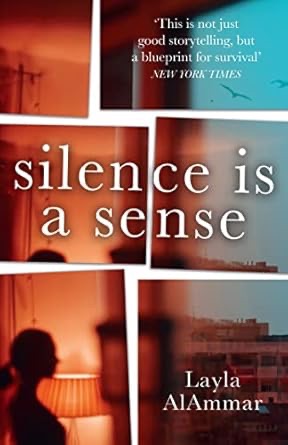
Silence Is A Sense by Layla AlAammar

Even though I’m so late reading this book, in a way I’m glad. For the past two years we have been embroiled in the aftermath of the previous government’s decision to house asylum seekers at the the now closed RAF base close by. While many of the community were worried about the issue, our reasons for concern were very different. When a local meeting descended into a heated exchange, it became clear that despite our concerns for the asylum seekers, we couldn’t voice them because of the sheer weight of people strongly opposing the plan for other reasons. Local concerns became lost in the wider debate on refugees. The campaign was targeted by far right organisations that didn’t really care about reasonable concerns, they just wanted to use the opportunity for their own political gain. Known fascists became interested and the gate to the base became a makeshift camp festooned with flags, stop the boats banners and others claiming asylum seekers were paedophiles. It became really hard to drive past and see all this racism and misinformation on the gates of such an iconic base, ironically known for it’s fighting against a fascist regime taking over Europe. We became part of an organisation set up to support the asylum seekers as they arrived into this hostile environment. When the new government changed course with the policy, we were relieved to know that there no longer fascist organisations camping out up the road. This book gave me more insight into a refugee’s journey.

The writer cleverly chooses a fragmented structure to tell her heroine’s story. Named ‘The Voiceless’ she writes about her experience as a way of processing her story and communicating it to other people as far as she can. Her memory comes in snippets, so her narrative moves back and forth in time and might seem a bit sketchy. Imagine everything you have is taken away from you. Your home is rubble, everything you owned that said something about who you are is gone with it. You have no documents to prove your identity or your education. Everyone you have known is either dead or scattered to the wind. She has escaped Aleppo with nothing. If you think about how your belongings, choices of clothing and your photographs say something about who you are, now imagine it gone. How do you keep a sense of self? Especially when you’re seeing or subjected to atrocities like killing, abuse and rape. Your psyche becomes shattered. Our narrator is trying to record those fragments, to bear witness and also to put the bits of herself back together. It might feel strange, even jarring at first but it’s supposed to be. It’s meant to confront and make you think.

The author shows us how she tries to embark on a future and make connections. She’s starting a journey of self-discovery, rebuilding herself in this new environment. She writes from home and watches her neighbours, keeping her eye on them. It’s called hyper-vigilance and it’s hard for her to drop these habits even though she’s now safe. Her muteness isolates her from others, in fact many people assume she’s deaf as well. She takes small steps outside, using the shop and going to the mosque and starts to meet people. Her observations of her neighbours are quite humorous as she gives them names that reflect their behaviour – the Juicer and No Light Man. Her insight into us is brilliant. She has that outsider’s gaze and because she doesn’t want to reveal too much about herself at first, she can use these observations. She writes about the people she sees, the strange way of life she can observe with so much scrutiny because it’s alien to her.

Slowly she starts to process and share her own story. She once had a somewhat privileged upbringing, she was well-educated too but war has left her with nothing. Then there’s the war, loss and the terror of trying to get to a place of refuge; a refuge that isn’t always the safe place it seems. She slowly makes space for new people in her life. I felt like her writing and sharing was helping her heal, remembering the trauma and processing it fully helps make room for growth. As someone who advocates writing therapy I found this so moving. The author has captured this process so beautifully as the writing becomes less fragmented and less about the past. This is such an important story and I’ll be buying the book for a few friends who I know will want to read it and maybe a few who wouldn’t. The sections of her time in Syria and travelling to the UK is so evocative, I defy people not to be moved by the raw truth of her experience.

Posted in Back of the Shelf, Throwback Thursday

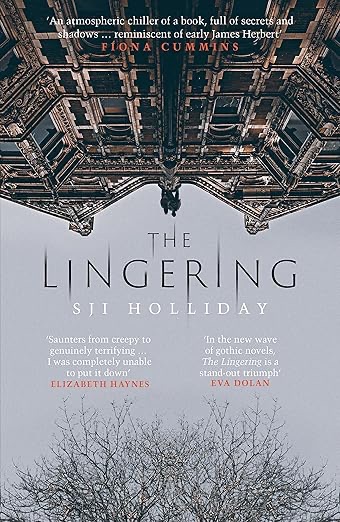
The Lingering by S.J. Holliday

In the free reading time I have towards the end of the year I’ve chosen to read the back catalogue of a few authors and S.J.Holliday happened to be someone I was really interested in. I love most of Orenda Books’s authors and I first came into contact with them through S.J. Holiday’s book Violet, which was one of my first ever blog tours. I loved the psychological aspects of the book and the way the author saw women as they really are – the heroes of their own stories, making autonomous decisions with the potential to be just as violent and chaotic as a male character. I’ve had The Lingering on the shelf for a while, but something made me take it down last week to read while soaking in the bath. Ali and her husband have made a huge decision. They’ve sold up almost everything they own and joined a commune of people living in what was an old psychiatric unit. At first they’re unsure of the group and their surroundings, but as her husband starts to settle in, his wife Ali seems less able to. Is it the strange house, with it’s abandoned wing full of old psychiatric equipment? Is it the sceptical locals? Or do Ali and husband Jack have dark secrets of their own?

The setting of this story is so gothic and atmospheric, with a dark history that slowly reveals itself both through local’s stories and the things left behind – physical and paranormal. Angela, the other narrator in our story, is the keeper of these stories and an amateur investigator of the paranormal. She has the house wired with sound equipment and cameras, particularly those areas where her sixth sense starts tingling. One of those areas is the bathroom adjoining Ali and Jack’s new bedroom, but also in the attic room above. I was slightly alarmed by the way she was watching the new couple, in a detached way almost like they were animals in an experiment. She seems like a new age, tree hugging, ethereal type of woman who has really bought into the ethos of the community. Ali notices her reverence in the rituals they share as a group and in the meditation sessions. Her name outlines her role within the group, she is the angelic and slightly naïve little sister to the others. Yet there is another side to her, the side that enjoys the stories told by locals like Mary in the shop about the house’s witches and the later rumours surrounding the asylum. She seems to enjoy the intrigue and proves to be quite the detective when it comes to Ali and Jack, showing a sneakier and unpleasant part to her character. The house itself is a labyrinth, with secret rooms and endless corridors. That strange juxtaposition of the natural and the man made felt wrong. All the hospital equipment and furniture just sitting there as if still being used, whilst the outside elements and nature are starting to encroach inside left me feeling uneasy. I felt as if any moment Ali or Angela might look in the mirror and see a busy ward behind them, like a glimpse through time.

In my closest city of Lincoln there is an old Victorian asylum on the outskirts, now slowly being developed into residential spaces. For years it remained deserted and derelict, with a strange aura around it. I wouldn’t have been surprised to see a 19th Century nurse at one of the broken windows, because it was untouched all that energy still seemed present. Local explorers did search around inside and take pictures of the iron bedsteads and old medical equipment just lying around as if someone had only just left the room. The mould, piles of rotted leaves, cobwebs and dirt added to the sense of abandonment. You certainly wouldn’t have found me in the there at night! This was exactly what was running through my mind as I was reading and it set me on edge. This house felt as if some parts were inhabited by the living and others by the dead. I won’t spoil the scary moments for other readers, but Ali’s first experience as she climbs into the bath after their long journey would have sent me running back up the drive. It has double impact because not only is it inexplicable, it’s an echo back to events that really happened in the house’s past, events that are haunting even without their ghostly context.

I didn’t trust anyone after a few chapters, despite at first happily reading Ali’s experience and trusting her account. As a reader I’m used to fictional communities like this being sinister under their surface mantras of love and light. Yet Angela makes discoveries that put the couple’s story in doubt and I began to wonder about Jack. What had forced these people to leave behind two respected professions and could it have something to do with a box of hidden news cuttings? One of the most tense sections of the book had nothing to do with the paranormal and involved some of the villagers. Late night Ali notices a 4X4 vehicle coming up the drive with a large lantern on the roof and several men inside, most of them holding a gun. As she goes outside to confront them they explain that they’re merely ‘lamping’ nearby and have an agreement to flash their late at the community leader’s bedroom window so he knows they’re nearby. Much as it seems ridiculous to flash a light in someone’s window so you don’t disturb them, their excuse is a plausible one and it’s something I often see in the fields surrounding us. Yet there is an undercurrent in their conversation with Ali and when explaining what happened she does reference Straw Dogs, a violent 1970’s film where an academic and his wife move to the country and are terrorised by the villagers. However, her reaction is excessive and made me wonder what had happened in the past to trigger her that way. The author flips us between Angela and Ali, building the tension towards some sort of confrontation. Will Ali find out that Angela has been watching them and explode or will Angela’s snooping reveal something dreadful about the new recruits? I loved the hauntings, especially the emotive little child’s wet footprints that dot around the place. Do these apparitions have a malign purpose or are they simply trapped in a place where traumatic events play over and over like a continuous cinema reel? This is a brilliantly tense and spooky read that seems perfect for autumnal evenings, but might put you off baths for a little while.

Out now from Orenda Books

Meet the Author

Susi (S.J.I.) Holliday is the bestselling Scottish author of 11 novels, a novella and many short stories. By day she works in pharmaceuticals. She lives in London (except when she’s in Edinburgh) and she loves to travel the world.

Posted in Throwback Thursday

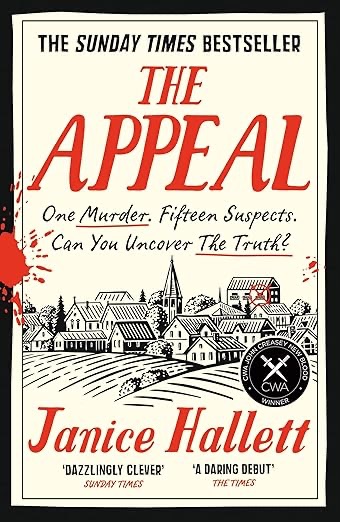
The Appeal by Janice Hallett

I came late to Janice Hallett with her novel The Alperton Angels so it’s taken a hiatus from blog tours to finally catch up with her debut novel The Appeal. If you’ve been wondering whether it lives up to the hype? It definitely does. We’re taken to the world of the Fairway Player, an am dram group in an affluent village. It’s time for the players to put on a production of Arthur Miller’s All My Sons and the usual suspects are readying themselves for auditions. Two events will affect the run: founder members Martin and Helen Hayward find out their granddaughter Poppy has a brain tumour and a new couple move into the village. Sam and Kel Greenwood are nurses and have completed years of aid work in Africa. As fundraising begins for Poppy to have experimental treatment in the USA everyone in the friendship group commits themselves to helping. All except one villager, who is suspicious and starts to make enquiries about the Hayward family. Someone within the players loses their life and another is already in prison on remand. QC Roderick Turner assigns law students Charlotte and Femi to the case. As they review the evidence they start to wonder if the right person is in prison and if even darker secrets lurk beneath? 

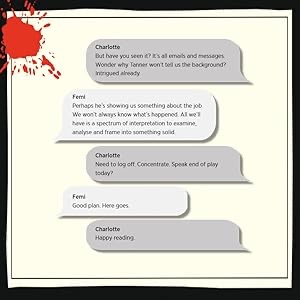
The first thing that’s different about this book is the structure. We’re told the story through the WhatsApp messages of Femi and Charlotte as they review the evidence in the form of texts, emails, letters and other documents. At first it’s a bit disorienting because there are so many characters and it’s hard to remember how they’re all related. Luckily there’s a good glossary of characters and they do simply ‘click’ after a while. It’s a bit like dropping into a conversation half way through but Femi and Charlotte act as a pit stop where the case so far is reviewed and the relationships clarified. There are two main strands to the story and they concern the alpha family, the rich and established Haywards and new recruits the Greenwoods. The Haywards own The Grange, a venue for events and health treatments and their family home. Sam and Kel are the latest Fairway recruits, championed by Isabel Beck who they know from work and is a rather lowly member of the group. They are an unknown quantity and could easily upset the dynamic, especially since they’ve been used to a very different and dangerous environment.

Isabel felt to me like the character who holds everything together. Not only does she link old and new residents, she is the most prolific email and text writer. While her output suggests she is a very popular resident who’s at the centre of everything that happens in the village, there doesn’t seem to be much correspondence the other way. In fact other residents ignore Isabel, bitch about her behind her back or are directly snappish and rude. She’s fascinating because the relationships you’d expect her to have from her constant communication don’t seem to exist. She pays court to Sam Greenwood who works alongside her on the geriatric ward, but there’s no real evidence that they’re friends. She feels like a child in the playground that no one wants to play with. She’s on the periphery of groups, desperately laughing at their jokes and joining their events, but is never the focus of their interest. She doesn’t seem to have a solid sense of who she is, bending to the whims of whoever she’s with desperately wanting to be liked. It’s painful to read about her planning to do things with people who have no intention of doing them – she mentions her and Sam going out to Africa but theres no correspondence to show this was ever a shared plan. She reads like a borderline personality and while I felt sorry for her she also made my skin crawl a little. She’s desperate for any sort of attention and people who are desperate do desperate things. I was also a little suspicious of Poppy’s oncologist, especially when a potential donor turns up who’s happy to give 100k to the appeal but wants assurances, such as the actual supplier of the drugs? Also he doesn’t understand why he’s paying the doctor in the UK when the treatment is in the US. The doctor’s replies are vague and I wondered who was trying to benefit – the doctor, the Haywards? 

Just as we settle into the community the author throws in a new variable, such as Kel and Sam’s friend who’s arrived on a break from his own work in Africa. He creates a disturbance at the yoga fundraiser giving Poppy an African doll that he claims has curative properties. He seems drunk and is possibly a drug user too. Could he have committed the murder? We really don’t know who the murderer is, even if we can work out a few of the reasons why. The most fascinating part to me is the psychological make-up of the characters and the dynamics between them. Aside from Isabel’s potential personality disorder, there’s the Greenwood’s PTSD from their aid work and the sad fact that the Haywards lost a child years before. The dynamics are clever with Alpha family The Haywards at the centre of the community, backed up by those who police the community and make their ideas happen. A new couple changes and disrupts the group dynamics where existing people know their place and dutifully follow the group rules. Then there’s those who think they’re in the community, but aren’t. Once you’ve started this novel you won’t be able to put it down. Im laid up in bed or the couch at the moment, so I read this straight through and loved every minute. 

Out Now from Viper Books

Meet the Author

Janice Hallett is the author of five best-selling novels. Her debut, The Appeal, was awarded the CWA Debut Dagger of 2021 and was a Sunday Times’ Bestseller, Waterstones’ Thriller of the Month and Sunday Times’ Crime Book of the Month. Her second novel The Twyford Code was named Crime & Thriller Book of the Year in the British Book Awards 2023. It was also a Sunday Times’ Bestseller and a Financial Times book of the year. The Mysterious Case of the Alperton Angels was an instant Times and Sunday Times bestseller on its launch in January 2023 and a Richard & Judy Book Club pick.

The Christmas Appeal, a fast, fun and festive novella, was launched in October 2023. It was a Times and Sunday Times bestseller.

Her latest novel The Examiner, was an instant Times and Sunday Times bestseller on its launch and is out now.

Her first novel for children aged 8-12 is A Box Full of Murders, out in June 2025.

Janice is a former magazine editor, award-winning journalist, and government communications writer. As a playwright and screenwriter, she penned the feminist Shakespearean stage comedy NetherBard and co-wrote the feature film Retreat.

Posted in Throwback Thursday

Just Between Us by Adele Parks

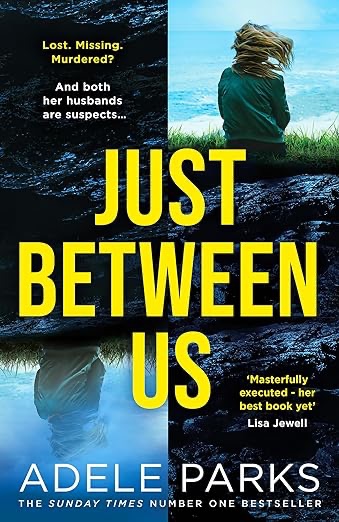
For some reason, I wasn’t fully engaged with Adele Parks’s last novel Both of You and I wasn’t expecting a sequel. I didn’t really like any of the characters involved. Kylie has two pseudonyms and two lives: half the time she’s Leigh, wife to Mark and stepmum to Oli and Seb; the rest of the time she’s Kai, wife to Dutch banker Daan Jaanssen and lives in an upmarket apartment with luxury clothes, cosmetics and holidays. The two seem to balance Kylie’s complicated needs, she’s equally at home having dinner in a Michelin starred restaurant as she is eating sand filled butties on a cold beach with the kids. Kylie’s other important relationship is Fiona, her friend of many years who has become part of the family and unofficial aunty to the boys. There isn’t a single person in Kylie’s world who knows about her double life, until one day she disappears. Now the whole world knows about Kylie’s bigamous marriages and the husbands and children are dragged into a police operation and a media frenzy. This sequel picks up after the first, when we’ve just found out who has been keeping Kylie prisoner. Just when we think it’s all over, we’re only halfway there.

I won’t ruin any of the twists and turns of either book, because this is one of those you need to start without any idea what’s going on. We have the original characters including the rather wise and interesting DCI and we have small chapters from every point of you. However, there are some newbies too and it was here where the book really took off for me. I was so eager to know what the hell was going on and where these people fit into the original story. We are in the depths of lockdown and Kenneth has been shielding alongside his grown-up daughter Stacie. Stacie is in the early stages of recovery from cancer treatment and she has fought hard to keep living. She deliberately doesn’t look at herself but knows she looks a little beaten up with her shorn hair and the scarring. Sadly, she has the added complication of amnesia after falling so dangerously ill so she doesn’t even remember treatment or anything before that. Thankfully she has Kenneth to fill in the blanks and he seems like such a caring and loving dad, luckily he’s also a retired GP so he’s perfectly placed to reassure Stacie and support her recovery. They have a quiet routine of daily dog walks, cooking and board games. They’re in the town of Lyme Regis and Stacie does feel like she knows the place and her dad has told her about her engagement to local lad Giles. She called the wedding off two weeks before the date and moved to Paris. Then something odd happens. Stacie is on the beach when she feels a sensation of being watched. Up on the promenade there is a woman staring at her with a fierce intent. She wonders if this is someone who knew her from before. So, she makes her way over, keeping a safe social distance and introduces herself, explaining that she might look a little different, because she’s had cancer. No, the woman says, you’re not Stacie. This is a moment where the hairs go up on the back of the neck, but we don’t know who the woman is or how well she knows Stacie and Kenneth. What possible reason could she have to confuse a woman who’s had cancer treatment and lost her memory?

I enjoyed having more input from the husbands and Kylie’s two stepsons this time around. The boys are incredibly loyal to her, despite being hurt by finding out about her second husband and let’s not forget, all of them are grieving. Daan Jaanssen also shows an incredible amount of loyalty and concern, especially considering he’s being charged with Kylie’s kidnap and murder. Does this mean he didn’t do it or is he putting up a smokescreen in the hope of walking free? Mark is angry and bitter, perhaps because he’s was her husband first. He is on the verge of making mistakes because of that anger. Seb and Ollie show maturity and enormous love beyond their years and put their own Dad to shame. The short, sharp chapters keep the momentum going and definitely have that ‘one more chapter’ addictive quality. Be prepared to set aside a day to finish it when you can’t put it down. This is definitely one of those sequels where you need to read the first novel, there’s a little bit of exposition about Kylie’s ordeal but not too much. The main question is what happened to her afterwards? Is she dead as the police think? This is a great thriller from Adele Parks and it made me feel back on track with loving her writing.

Meet the Author

Adele Parks MBE is the author of twenty-three bestselling novels including the recent Sunday Times hit Just Between Us and the audible Number One sensation One Last Secret. Over 5 million English editions of her work have been sold and she is translated into 31 different languages.

Her number one bestsellers Lies Lies Lies and Just My Luck were both shortlisted for the British Book Awards and have been optioned for development for film & TV.

41,000+ 5 star reviews have kindly been written by her fans on Amazon 🙂

She is an ambassador of the National Literacy Trust and the Reading Agency: two charities that promote literacy in the UK.

Adele was born in North Yorkshire and has lived in Botswana, Italy and London and is now settled in Guildford, Surrey.

In 2022 she was awarded an MBE by King Charles III for services to literature.

Connect with Adele Parks on Twitter @adeleparks, Instagram @adele_parks and Facebook @OfficialAdeleParks or visit her website for more information.

Posted in Throwback Thursday

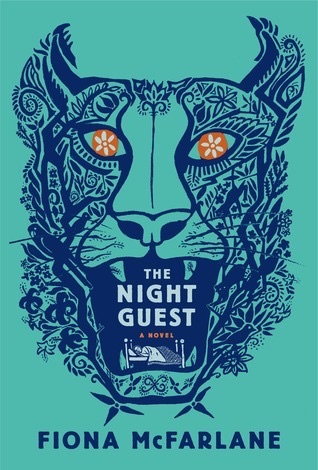
The Night Guest by Fiona McFarlane

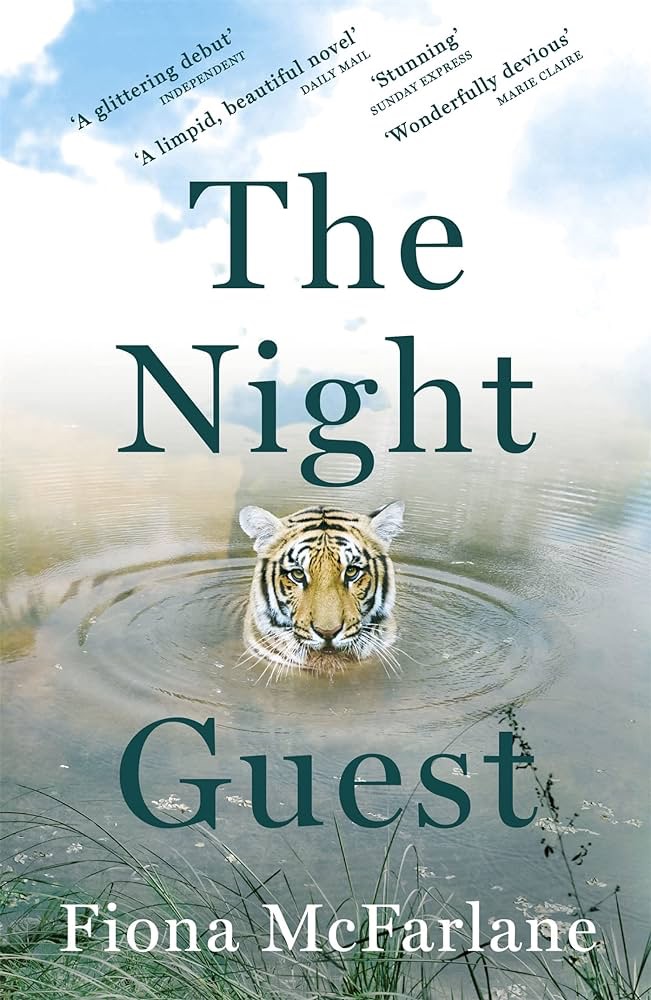
Booksellers often joke about customers who come into their shop and ask for help finding a book: they either don’t have the title but vaguely remember the author; they don’t know the author but know there was a bird on it or the book was blue; they saw the book on that programme, the one with Sara Cox but don’t know which episode or even the series it was from; it’s an old book, they read it at school; they think it was set in China, or maybe South America. On it goes and more often than not, once the mystery is solved, they ask the bookseller to write it all down on a slip of paper then go home and order it from Amazon. I was having that sort of experience with this unusual novel, in fact nobody I asked had ever heard of it. Possibly not helped by my description – ‘ it had an old lady in it and a tiger came to visit her at night.’ Inevitably most people heard ‘tiger’ in the story or on the cover and I’d be answered with Life of Pi or The Tiger Who Came To Tea, excellent books but not the one I was looking for. Then finally one day the title sort of came to me. I say sort of, because I kept calling it The Night Visitor which sounds like a creepy name for incontinence or night sweats! I’d taken the book out from the library originally and when funds allowed I wanted to have a copy on my shelves. It is there on Amazon, but maybe pop it on your charity shop list because it is a little gem.

The book tells the story of Ruth, an elderly lady who lives alone in a remote house on the coast of Australia. She has family but her son has relocated for work, meaning that day to day help isn’t something he can provide. Her son phones regularly, but he’s busy with work, kids and a home of his own. However, he does start to worry when she rings to tell them she’s had a night guest; a large tiger came to visit in the night. At first she woke up scared there might be an intruder, but it was a handsome tiger instead. Her son suggests that perhaps she was dreaming? Ruth is adamant, the tiger woke her and she wasn’t asleep. Her son and his wife confer and decide they’re worried. What if their mother’s mind is going? How will they manage to get her the help she needs? Their mother can be low in mood at times, mainly because she’s spending so much time alone and that leads to ruminating on the past such as her girlhood in Fiji. One of my favourite tropes is the unreliable narrator and that’s what we have in Ruth. Her story is so implausible she must be losing her marbles. What unfolds is an unusual psychological thriller with a side order of magic realism, which I love. 

The book tells the story of Ruth, an elderly lady who lives alone in a remote house on the coast of Australia. She has family but her son has relocated for work, meaning that day to day help isn’t something he can provide. Her sonphones regularly, but he’s busy with work, kids and a home of his own. However, he does start to worry when she rings to tell them she’s had a night guest; a large tiger came to visit in the night. At first she woke up scared there might be an intruder, but it was a handsome tiger instead. Her son suggests that perhaps she was dreaming? Ruth is adamant, the tiger woke her and she wasn’t asleep. Her son and his wife confer and decide they’re worried. What if their mother’s mind is going? How will they manage to get her the help she needs? Their mother can be low in mood at times, mainly because she’s spending so much time alone and that leads to ruminating on the past such as her girlhood in Fiji. One of my favourite tropes is the unreliable narrator and that’s what we have in Ruth. Her story is so implausible she must be losing her marbles. What unfolds is an unusual psychological thriller with a side order of magic realism, which I love.  morning after the tiger visits a woman knocks on Ruth’s door. She introduces herself as Frieda and claims to have been sent by the government to help Ruth clean the house and stay on top of things. She’s also from Fiji, so Ruth can talk to her about the past and those memories and regrets that occupy her mind. It would seem that Frieda awakens something in Ruth that’s lain dormant till now. Her memories of Fiji become even more intense and flourish under Friedan’s gaze. In the back of my mind I was a little suspicious that much like the tiger, Frieda might not be everything she seems. Alternatively, she might be everything she seems and more. Ruth is more vulnerable than she cares to admit, a woman whose memory and understanding of events may not be accurate. Her mind wanders, but is she knowingly lapsing into daydreams or does she believe the fantasy? I felt concerned that while Ruth was narrating the more fantastical aspects of her daily life, like her visiting tiger, underneath there might be something more dangerous going on. Elderly people who have altered consciousness are so vulnerable to manipulation and abuse, whether it be sexual, physical, emotional, spiritual or financial. As changes were revealed, baby step by baby step, they were going unnoticed by Ruth. I was desperate for her to sit up and realise something odd was going on, before the results became permanent.

There are things in life that we choose not to see. We erect a wall to shield ourselves and never look over it so we can say ‘I didn’t know…’ This is often the case when someone we love is in deteriorating health, especially if they’re our parents who used to look after and support us. I think this is what Ruth’s son is doing, closing his eyes to the fact that their situations have reversed and now mum needs him. Ruth’s vulnerability is sad, because she’s so open to exploitation. It’s not just that her mind might be affected cognitively, but that she’s so lonely she craves someone to be interested in her. If someone enjoys spending time with her, they could quickly form a bond and shut everyone else out. As Frieda starts to infiltrate all parts of Ruth’s life, taking on more and more responsibility for her affairs, Ruth’s determination and independent spirit become worn down and she starts to depend on Frieda. In contrast with Frieda, Ruth does come across as mentally frail. Whereas the carer is the life and soul of the party. Ruth’s worsening nightmares of being stalked in her own home by a striped predator could be pure imagination, allegorical, magical or a manifestation of a sixth sense telling Ruth she’s in danger. This is a brilliantly complex debut, with layers of manipulation and deception that extend to the reader. All the way through I kept thinking I didn’t want my life to end up like this. Despite this, I was compelled to keep reading and I’ve never forgotten it. Now, thankfully, I have my own copy so I can re-read whenever I like.

Posted in Throwback Thursday

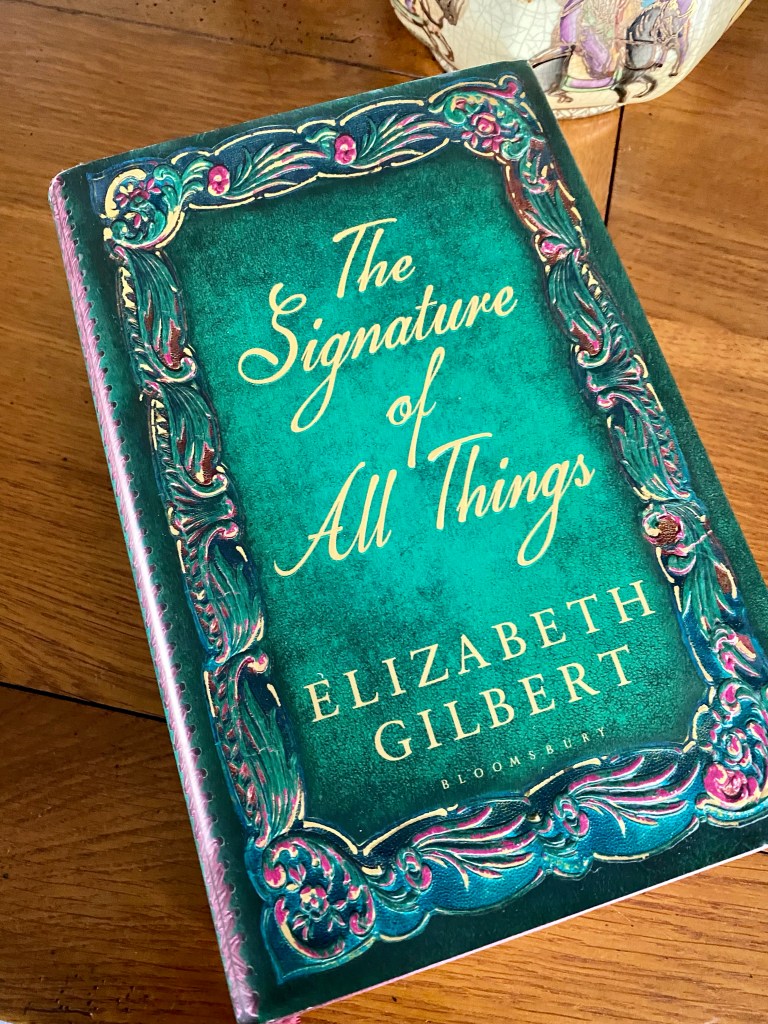
The Signature of All Things by Elizabeth Gilbert

‘Holding her robust infant, Beatrix murmured a prayer in her native Dutch. She prayed that her daughter would grow up to be healthy and sensible and intelligent, and would never form associations with overly powdered girls, or laugh at vulgar stories, or sit at gaming tables with careless men, or read French novels, or behave in a manner suited only to a savage Indian, or in any way whatsoever become the worst sort of discredit to a good family; namely, that she not grow up to be een onnozelaar, a simpleton. Thus concluded her blessing — or what constitutes a blessing, from so austere a woman as Beatrix Whittaker.’

Some people didn’t know Liz Gilbert until the film ‘Eat, Pray, Love’ came out, in fact I was surprised to learn how many people hadn’t known about or read the book. I’d really enjoyed the book and found the film ok, but thought it didn’t dwell enough on the psychological and spiritual aspects of her journey. It had a mixed reception at my book club where some really identified with her character, but others were screaming how lucky she was to have a publisher willing to fund her trip of a lifetime during her divorce as many have to continue getting the kids to school, going to work and only having the millisecond before sleep hit them to have anything resembling a spiritual or self-aware thought. I’d not expected the anger and jealousy that it evoked in some readers. So it was with trepidation that I approached her novel The Signature of all Things. If I’m honest I probably wouldn’t have sought it out, but I was in one of my favourite bookshops while on holiday in Wales and I saw it in the second hand section. It was such a beautiful book that I had to buy it and I flicked through it back at the holiday cottage, then was sucked in very quickly and all my planned reading went out of the window. I was stunned to be sailed around the globe from London to Amsterdam, Peru and Tahiti. Even more exciting was the heroine, Alma Whittaker, daughter of a famous explorer, plant hunter and botanist. I was drawn to her intelligence, her busy mind, her assertion that she is the equal of any man and the depths of her feelings.

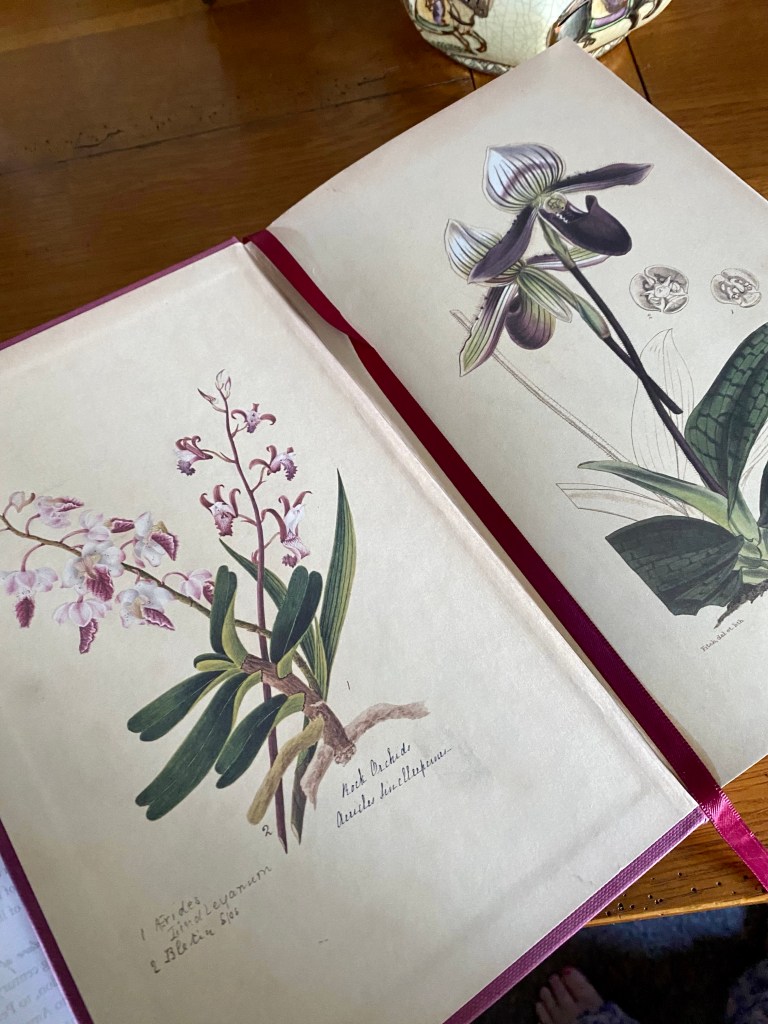
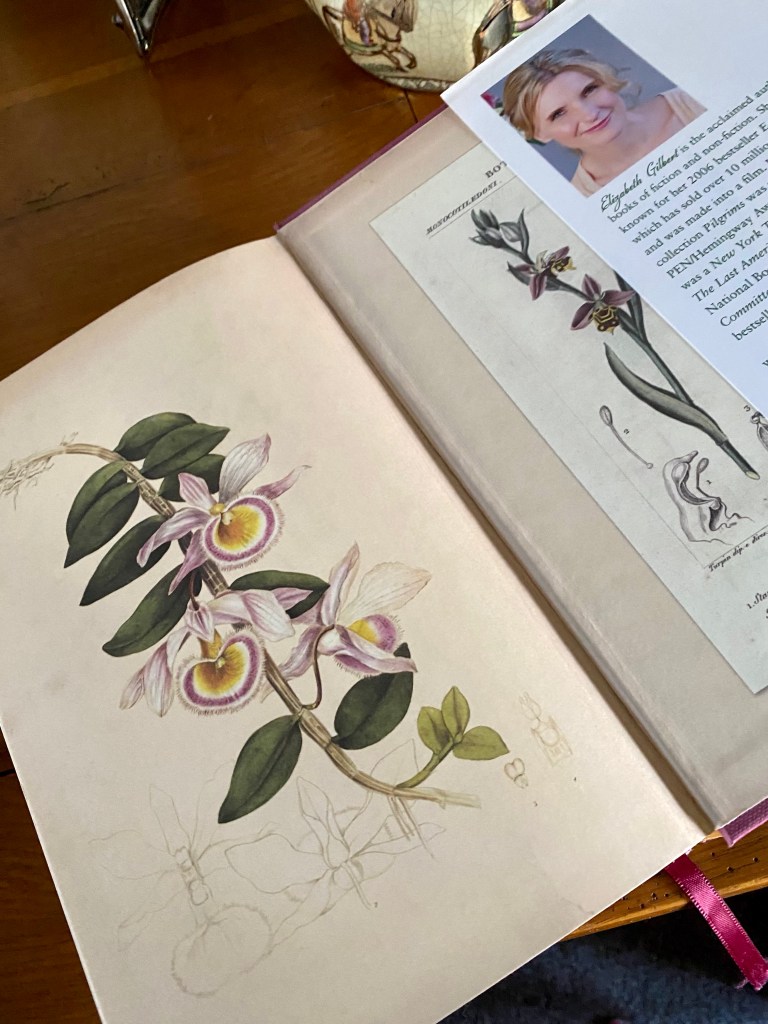
The book begins be setting up Alma’s early life and family situation, so we meet her father and his beginnings in botany as a boy apprentice to a plant hunter- actually a punishment for some very sneaky thefts from Kew Gardens. His incredibly enterprising ideas mean that by the time Alma is born he is a very rich man, with a mansion in Philadelphia. His fortune has been made in the quinine trade, a medicine extracted from the Cinchona tree found in Peru then traded and grown around the world to produce a drug for malaria. At his home, White Acre, he and his wife have two daughters: Prudence their adopted daughter who follows an extraordinary path into abolitionism and Alma. Alma is a tall, large-boned girl who is described as ‘homely’, but is intelligent, determined and secretly contains well pools of sexual curiosity, all qualities that seem unusual for her gender in this time period. Her father’s belief that all people should be given the opportunities that enable them to manage others and excel in their own chosen field governs the household. ‘All’ really does mean all in William’s case and his daughters are given a thorough education at home, rivalling any man. Both he and his Dutch born wife are clearly progressives and Alma flourishes with the opportunities they give her to become a very accomplished botanist in her own right and perfectly able to develop her own projects and command the voyages necessary to hunt for the plant she has set her heart on. Unexpectedly, at an age when scholarly spinsterhood is expected to be her path, a painter visits White Acre and Alma falls deeply in love. This painter believes Joseph Boehme’s philosophy that all of nature contains a divine code, every flower and every creature – such as the Fibonacci sequence. Their two interests combine and while Ambrose is a utopian artist, often found to be painting orchids rather than studying them in a lab, they do have the same passion for nature. Where he saw life as divine and a guardian angel watching over him, Alma saw a life as a struggle where only the fittest survived, something she found out for herself when exploring:

“Then — in the seconds that remained before it would have been too late to reverse course at all — Alma suddenly knew something. She knew it with every scrap of her being, and it was not a negotiable bit of information: she knew that she, the daughter of Henry and Beatrix Whittaker, had not been put on this earth to drown in five feet of water. She also knew this: if she had to kill somebody in order to save her own life, she would do so unhesitatingly. Lastly, she knew one other thing, and this was the most important realization of all: she knew that the world was plainly divided into those who fought an unrelenting battle to live, and those who surrendered and died.“

Of course, this love is not the end of Alma’s story. Liz Gilbert isn’t going to let a man eclipse Alma or create a sappy rom-com ending to such a strong, feminist story. Alma and Ambrose represent two great schools of thought in the 19th Century, that of the spiritual and the scientific. These two schools of thought had equal status and often intermingled to this point, but as the century progressed a complete separation occurred where spirituality became a belief without reason and science became fact without a divine sense of wonder. Could the common ground that Ambrose and Alma thrive upon at first, survive the divide between their two disciplines? Make no mistake though, Alma is the protagonist here and she’s one of my favourite characters ever. I loved her drive (sadly lacking in this writer) and her preservation of it, no matter what. She can speak five languages at five years old! Oh and two dead ones. Her educational achievements aside, it was her confidence and self-belief that stood out to me. Yet here we are two centuries later in a crisis of confidence, with an epidemic of imposter syndrome and doubts about how to be women. Alma is wholly herself, even when at times that might seem steely, reserved and abrupt. She believes that everyone is the master of their own self, including women. It is sad that the introduction of Prudence to their family is the catalyst for Alma experiencing negative self- thoughts. She wishes to keep Prudence, who has been staying with the Whittakers since a family tragedy, but her presence is an opportunity for comparison – the ultimate thief of joy. Alma realises for the first time that she is not beautiful. She retreats into her work at moments of doubt or unhappiness, even extreme heartbreak and loss. It is her refuge and the one area of life that she can control and that she continues to be confident in. I truly admire her ability to continue. To live.

The research that Liz Gilbert must have undertaken for the verisimilitude of this novel is colossal. She writes with a 19th Century sensibility, keeping Alma completely grounded in her place and time. The first rule of creative writing – show, don’t tell – is so strongly in place that I felt like I was with Alma, only seeing or hearing things at the same moment she does. This brings such an immediacy to the novel that it gallops on at quite a right, especially considering this is the story of a 19th Century dowdy and academic spinster. It’s a book that a lot of people might not consider reading from the blurb, which is why it needs to be highlighted in this way. It ranges across biology, exploring, business, philosophy, science, the mystical and yes, the sexual. There are secrets kept all the way to the end that I really didn’t expect at all. I have to say that my favourite review of this book is a negative one. Mainly because it made me laugh out loud, but also because it unwittingly makes you want to read it.

“I was actually enjoying this and then at 49% a spinster has a spontaneous orgasm from holding hands with a dude in a closet.”

left by Goodreads Member, Sylvia, October 2nd 2015

I don’t know about you, but I’d want to read that book!

Meet the Author

Elizabeth Gilbert is the #1 New York Times bestselling author of Eat, Pray, Love, as well as the short story collection, Pilgrims—a finalist for the PEN/Hemingway Award, and winner of the 1999 John C. Zacharis First Book Award from Ploughshares. A Pushcart Prize winner and National Magazine Award-nominated journalist, she works as writer-at-large for GQ. Her journalism has been published in Harper’s Bazaar, Spin, and The New York Times Magazine, and her stories have appeared in Esquire, Story, and the Paris Review.

Posted in Throwback Thursday

Throwback Thursday: Fiction About the Tudors

I’ve had this fascination with Henry’s wives and the whole Tudor dynasty since primary school, as I wrote about earlier in the week. It was my introduction to Philippa Gregory when I was in my twenties that really started the ball rolling. I started to learn about the women’s perspective behind these historical facts we all learn. I’d never known that Henry VIII had an affair with Anne Boleyn’s younger sister Mary or that it’s possible she had the King’s children just like Bessie Blount. I learned more about the political and religious machinations that hide behind the six marriages and their tragic ends. I hadn’t known about the uneasiness within Henry’s aristocratic courtiers and advisors about the commoners he was bringing in to advise him, such as Cardinal Wolsey and Thomas Cromwell. There were aspects of the Queen’s roles in events that opened up to me, such as their religious allegiances and how the marriages cemented Henry’s beliefs at the time and signalled his intentions to the rest of the world. I’d never known about how ladies in waiting were chosen or trained, often shipped to grand houses with aristocratic women overseeing their education. I’d also become fascinated about women on the periphery like Jane Rochford, who’d been married to Thomas Boleyn and had to give evidence against her own husband, then years later oversee the young Queen Katherine Howard only to be drawn into treachery yet again. I’d become interested in Bess of Hardwick after buying a book about her at Chatsworth House then going to an exhibition about her, including the household accounts written in her own hand. I knew that Chatsworth had been one of the houses where Mary, Queen of Scots was held, but not what her captivity did to her marriage and her reputation with Elizabeth I. There is such a rich seam of Tudor fiction in these areas, but I’m going to recommend some of my favourites that you will probably know, then some you might not as well as those still sitting on my TBR.

Great for Beginners

This is a great beginning because it’s outside the Queen’s series and deals with characters outside the actual court. Set in 1568, Elizabeth I has been on the throne for ten years, but hasn’t married and won’t choose a successor. Mary Queen of Scots has been forced to flee her own lands, due to rebellions and rash actions in her choice of husband. Her enemies have used her weaknesses and their perceptions of women to unseat her, leaving her on the mercy of her cousin, Elizabeth I. However, Mary is Catholic and advisors to the Queen don’t want to risk their already weak position against Catholic France and Spain. They also worry about her infant son James, another threat to the throne. Elizabeth’s advisor and spy master William Cecil comes up with a plan, Mary will be kept under house arrest, living with all the luxury a Queen should expect but unable to leave. He has to find a suitable couple to house Mary and decides upon Bess of Hardwick and her new husband George Talbot, who reside at Chatsworth House. Mary does not accept her house arrest though, bringing George Talbot under her spell and plotting to regain her throne in Scotland. Bess sees her husband’s deference to the young Queen and knows that if they are linked to her plotting, William Cecil will make sure they face the Tower or even the block. This is an interesting angle on Mary as we see her through the eyes of another woman, a very shrewd and intelligent woman who has managed to amass her own fortune along with estates and land left to her by her previous husband. I felt pulled into Mary’s story and despite feeling very sympathetic towards her I also felt angry on Bess’s behalf. Neither woman wanted to be in this position and I felt that frustration.

Set in 1539. It’s time for Henry to find a fourth wife after the tragic death of Jane Seymour. He has the heir and now he needs to have a spare. Since he is head of the church in England, it seems wise to take a Protestant Queen and Anne of Cleves fits the bill. Chosen from the painted likeness on the book’s cover and organised by Thomas Cromwell. The marriage falters immediately, when Henry dresses as a commoner to surprise his newly arrived wife to be she doesn’t even recognise him. Aggrieved, Henry tells Cromwell he finds her undesirable because she has too much flesh and smells unpleasant. His advisors are asked to pay court to the teenage Katherine Howard while a divorce agreement is reached. Anne Boleyn’s sister-in-law Jane Rochford returns to court and becomes close to the new Queen, desperately trying to cope with a young naïve and rather silly girl on one hand and the tyrannical Henry on the other. When Katherine starts to play dangerous games with Henry’s servant Thomas Culpepper, will Jane be able to avoid the block a second time? I love this period of the wives’s story because I think Anne of Cleves is the shrewdest of his wives, accepting his terms to live alone like his sister immediately and setting up home in palaces vacated by Wolsey and the Boleyn family. In fact the King got along very well with Anne and often joined her for dinner or to play chess in the evening. By contrast Katherine Howard’s tale is tragic and her eventual death is desperately sad as her courage fails her and she begs for her life.

Wider Reading

I have so much sympathy for this poor girl who is caught in a power play between political and religious factions. Jane Grey was the great niece of Henry VIII, a descendent of his closest friend Charles Brandon, Duke of Suffolk and Princess Mary – Brandon didn’t seek permission to marry Henry’s sister and their friendship faltered. Jane was actually the cousin of Edward IV, Mary I and Elizabeth I. At only 16 years old she is forced to marry into a powerful family – the Dudleys – as part of a plan to usurp the throne. When Edward IV dies, they decide to install Jane and her husband Guildford Dudley on the throne before Edward’s sister Mary can travel to London. The book is fascinating even if you do know the story of this nine day Queen and adds that human element behind the facts. Weir presents Jane as manipulated and physically abused by the powerful men who were desperate for her to take power on their behalf. There was the religious concern about having a Catholic queen on the throne and her allegiances with Spain. Would Mary return England to the Catholic faith? Might she seek a Catholic marriage with one of her European allies? Jane was a devout Protestant to the end, in fact it sustained and strengthened her when held in the Tower of London. I felt her dread towards the end and I felt so sad for her because she had so little control or peace in her short life.

The woman who outlived Henry VIII still had a tragic end. Her true love was Thomas Seymour and she expected after her first husband had died that she would have a husband of her choosing. Unfortunately Henry got there first with a surprise proposal and no one is allowed to refuse the King. Clever and sensible, she is known for being able to appease an increasingly cantankerous Henry. However, there is so much more to Katherine Parr than being a nursemaid to elderly husband. She published a religious text and proved a great stepmother to all of Henry’s children who joined them at court. It seemed as if love and motherhood had passed this woman by. After Henry’s death Thomas Seymour does jump in, determined not to miss the moment but with almost unseemly haste. Katherine thinks that finally she can have a husband of her choosing and love is on the cards. However, does Thomas have other plans? Could it be that Katherine’s house guest, the very young and spirited Elizabeth, is the reason he’s so keen on a quick marriage? As they marry and live together, Katherine soon becomes pregnant but her age and health are against her. With a wife on bed rest, Thomas has plenty of time on his hands and too little to do. Will Katherine know the happy family she always wanted? This book sticks closely to historical fact and is a fascinating read about one woman’s hopes and dreams dashed by duty.

The Tudors in Context

Hilary Mantel’s incredible Tudor trilogy starts with this introduction to Thomas Cromwell, set in the 1520’s when he was clerk to Cardinal Wolsey. His rise from lowly blacksmith’s son is a fascinating one and his eventual succession to Wolsey’s role as chief advisor to Henry VIII was not liked by aristocratic courtiers. Usually appointments like this were filled by dukes or earls, often from very specific families who traditionally held senior roles at court such as the Seymours. Wolsey is removed from office for failing to secure an answer to the King’s ‘Great Matter’, his divorce from Katherine of Aragon based on a biblical verse that states if a man should marry his late brother’s wife they will be childless. Henry did receive a special dispensation to marry Katherine when she was his heart’s desire, but several miscarriages later and only one daughter to succeed him, Henry is desperate for a male heir. Thomas is ambitious. He’s also a bully, with the ability to charm and manipulate to get the result he wants. He handles the King’s vacillations between romantic desire and murderous rage. He is pursuing Anne Boleyn who is not succumbing to his offer to be his exclusive mistress. She’s seen many women discarded by Henry, including her own sister and she’s playing a different game. Thomas is keen to install Anne as Henry’s wife because she shares his Protestant leanings and has a reformer’s agenda. Can Thomas secure Henry’s divorce and set in motion the English reformation? This is a different viewpoint on Henry and the turbulent moods that are starting to control both him and the court.

Elizabeth is a fascinating woman who grows up in the most tumultuous period in royal history: the Wars of the Roses or the Cousin’s War as it’s also known. She was the daughter of Edward IV and his wife Elizabeth Woodville, sister of the two lost princes in the tower, courted by her own uncle Richard III, but eventual wife of Henry VII and mother of Henry VIII. As Henry VII takes the throne from Richard III in battle, Elizabeth and her family are in a very precarious position. Her father’s death left the family fleeing to sanctuary as allegiances changed all around them. There are rumours she has been the mistress of Richard III. There is still no sign of her two younger brothers, Edward IV’s rightful heirs who were placed in the tower by her uncle and thought to be dead. As the Lancaster side take the throne she expects to live in sanctuary again, but her mother Elizabeth Woodville is a survivor and is in correspondence with the new King’s mother, the formidable Margaret Beaufort. She knows that her son’s reign is controversial and he needs to create a more peaceful England in order to secure the throne for his successors. Lancaster and York need to unite and Elizabeth is the last York princess. Their marriage is a symbol of peace an to represent that the white rose and the red rose are combined to create the symbolic Tudor rose, visible in many Royal palaces and historic buildings. Elizabeth presents a united front to the country, but their union was difficult. Henry was a paranoid man who dreaded Elizabeth’s brothers being found and was often suspicious of her mother too. This novel takes us into that marriage and sets the scene for Henry VIII’s unexpected reign, after the death of his brother Arthur, Prince of Wales. See also Philippa Gregory’s novel The White Princess.

My Tudor TBR

This is the third and final book in Hilary Mantel’s trilogy on Thomas Cromwell and takes us into his final years as Henry’s advisor. The book starts in 1536 when Anne Boleyn is decapitated with a french sword when Cromwell’s fortunes may be at their peak. Henry is settled with Jane Seymour who is expecting a baby. Calm reigns at court. Behind the scenes, Cromwell still has much to think about: rebellion, traitors and spies both at home and abroad. Can the nation shake off it’s Catholic past and move on? Or do the dead continually return to haunt us? The execution of Thomas More is playing on Henry’s mind particularly at this time. For Cromwell, the Spanish ambassador whispered something in his ear. A though that will not go away. Henry will turn on him too. As he always does in the end. With no family, title or private army behind him, Thomas has no one to defend him. It’s a lonely place to be, reliant solely on your own cunning to survive. This thought comes to life as the Queen dies and the lives of predator and prey move to their inevitable end. I know what happened to Thomas Cromwell, in fact I had to close my eyes when watching The Tudors and seeing his fate. That doesn’t stop me from wanting to read this book though, because Mantel’s research is extensive and she has an almost spooky ability to get inside a character’s mind and portray what those dry historical facts felt like. I must admit to being a little daunted by the size of this, so I think I’m going to separate it into readable sections and make it a daily reading goal.

I have this on the pile of books by the bedside, mainly paperbacks I’ve picked up from charity shops and second hand bookshops. It seems to provide or imagine a back story for Henry’s fifth wife that makes her plight even more tragic. Katherine is only twelve when she is sent to the home of the Duchess of Norfolk, a place where girls from aristocratic families go to train as ladies in waiting. As a member of the Boleyn family, this is a normal placement but she must have been aware of the terrible end her cousin met at Henry’s hands. Cat Tilney, another girl living in the house, is suspicious of Katherine. She thinks she’s only interested in clothes and boys, but is eventually drawn in by the young girl and they become close confidantes. When Katherine is called to court and drawn into the King’s orbit, Cat becomes her lady-in-waiting. Henry has set aside Anne of Cleves and despite Katherine only being 17 his advisors present the young girl as a possible successor. Henry is charmed by this charming young girl and at first married life is enjoyable on his side. However, Katherine is married to a much older man who is now in ill health and has a permanent leg ulcer that smells terrible. A rumours start to filter through the ladies-in-waiting that Henry can’t perform in the marital bed, whispers start to reach courtier’s ears about Katherine’s conduct. Girls that came from the Duchess of Norfolk’s home may have been entertaining much older men. In fact her present conduct is worse, because she’s already having an affair with King’s manservant Thomas Culpepper. Katherine is terrified and implicates others, including her childhood sweetheart Francis. Unknown to her though, Francis is now in a serious relationship with Cat Tilney. With Francis in the tower, Cat could save him, but but only by implicating the Queen and ensuring her death. I’m fascinated in reading this take on Katherine’s early life, which seems to show how vulnerable young women were at court and how they were always blamed for men’s actions.

I hope this gives you some ideas about where to start with historical fiction about The Tudors. It isn’t an exhaustive list and there’s plenty of non-fiction from various historical that’s equally fascinating, not to mention the debate on how male and female historicans often interpret material very differently and with potential bias. I do think Henry is more understandable when put in the context of his father’s reign. Henry wasn’t meant to be King and was allowed to spend time carousing with friends like Charles Brandon rather than learning about the constitutional obligations of the crown. Henry was an intelligent young man in terms of history, philosophy and religion, but wasn’t schooled in duty and service in the same way as his brother Arthur. He was also left at court with women: his mother, both grandmothers and his sisters were said to have spoiled him. His relationship with his father was complex considering he was the spare, but he was at court to see his father’s paranoia, his alleged affairs and his vacillating over whether Henry could marry Katherine of Aragon.

I’m interested in research that looks at the Tudor’s medical history. Henry’s jousting accident during his relationship with Anne Boleyn was a bad one, with Henry knocked out for some time afterwards. It is very possible he sustained a head injury at that time, not to mention the leg injury which became ulcerated and impossible to heal. The pain and restrictions of this ulcer certainly contributed to his obesity and terrible mood swings in later years. It is likely he was also impotent after his marriage to Jane Seymour, providing more insight into his comments on Anne of Cleves’s desirability; there was nothing wrong with him, she was too unattractive. I have also read about possible chromosomal abnormalities that might explain why both his first wives were unable to produce a male heir, with all male babies being miscarried or dying within a few days or weeks of their birth. Edward IV was a sickly child and died very young too, while his sisters Mary and Elizabeth lived into adulthood. All of this adds to our understanding of the Tudor’s reigns, but can’t fully excuse a man who was cruel and tyrannical. It does however give us insight into the experiences of the Tudor Queens and their daughters, most of whom met tragic ends either wholly or in part caused by men.