Posted in Throwback Thursday

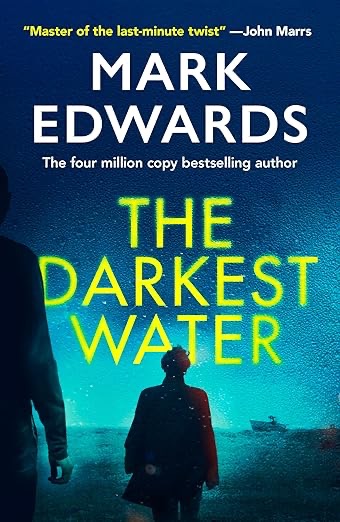
The Darkest Water by Mark Edwards

Calvin owns Therapy, the bakery of his dreams in an idyllic village in the Lake District, but business is a little quiet. He’s reluctant when wife Vicky suggests social media but it’s not long before assistant Tara has filmed and posted a reel of him making brownies. Suddenly he’s a local celebrity. It seems everyone wants a piece of Chef Calvin and creepy little DMs start to arrive, including some from a stranger claiming to be his biggest fan. At the same time a local recluse has been found dead on a nearby beach, buried up to the neck in sand and left for the tide to come in. Detective Imogen Edwards is under pressure to solve the case, but who would plan such a long, drawn out murder and did they stay to watch the man’s fate? Calvin’s admirer turns up at Therapy, just as Tara is injured and unable to work. Much to his wife Vicky’s horror, new girl Mel ends up standing in and Calvin offers her a job. At least until Tara returns. Then events seem to start spiralling out of control and Calvin doesn’t know who to trust or what to do. Perhaps these wheels were put in motion a long time before, putting those Calvin loves in terrible danger. 

This is such a page turning thriller that I swept through it in an afternoon and evening. Seemingly unrelated events start to make potentially intriguing patterns. Mark Edwards has a way of sending your mind down a dozen different paths before getting to the truth. He also has the skill of leaving horrifying images in your head. This time it was the sight of Leo James’s head sticking out of the sand as the tide went out. I have a fascination with Anthony Gormley’s Another Place also known as the Iron Men of Crosby Beach in Liverpool. There is something slightly macabre and even profound about watching the tide come in, slowly submerging some figures underwater completely. This was a terrible human version and I couldn’t help musing on how it must have felt to be left waiting for the tide and what sort of man could watch it unfold. I enjoyed the internet element of the story and how reluctant Calvin is to put himself and his bakery out there – something which makes more sense later in the novel. I could understand his reticence. While Book Twitter was once a benign space, there are now arguments and attempts to police what other people are reading. It seems it’s no longer acceptable to separate art and the artist and I definitely spend less time there. When Tara creates her video, the baker starts to gain customers very quickly and this is definitely welcome. However, it comes with a side order of relative fame and that means teenagers want to take a look as well as a certain amount of women. Mel is one of these and the timing of her arrival in the bakery seems very suspect. Both Tara and Vicky are suspicious and my radar for emotionally damaged women was definitely going off. She seems to establish herself as someone who needs to be rescued, something that is Calvin’s kryptonite. She drops hints about a group of teenagers making a nuisance of themselves on the beach near her cottage and trying to intimidate or frighten her. 

It soon becomes clear that Calvin is a rescuer. He has lived in the Lakes all his life and has an experience when he was a teenager that makes him susceptible to women needing him to be the hero. His teenage sister died in a car accident and in flashbacks we go back to that summer and the lead up to this awful event, it’s clear that Calvin carries a lot of guilt around her death but this is only half the story. Our other narrative is that of the murder and the police investigation. Imogen’s first port of call is the dead man’s home which isn’t easy to find, tucked away in the woods and completely off grid. Inside they find the most hideous paintings, possibly created by Leo himself. They show visions of torment and retribution in hell and seem to be inspired by Heironymus Bosch. The house is spartan and gloomy, suggesting that Leo leads a lonely and possibly depressed lifestyle. The paintings point towards his state of mind, but does he believe someone else should receive this punishments or himself? If himself, it seems like at least one other person agreed with him. When Imogen finds a young local girl called Billie lurking nearby she’s determined to find her link to this unusual man. In fact Imogen and Calvin’s wife Vicky seem the most level-headed of the characters. Imogen is a good police officer, methodical and not easily swayed by one thread of the investigation. She lets it reveal itself, but is still only minutes behind the culprit at times. Everything is linked and she just has to find that one person who holds the key. She does come under pressure from above but stays focused.

Vicky is perceptive and there were times I was mentally screaming at Calvin to listen to his wife. She senses someone has been in their house early on and is adamant she didn’t close their bedroom door and shut their cat Jarvis inside. She also wants rid of Mel, not specifically because she has feelings for Calvin, but because she simply doesn’t trust her. Where has she sprung from and why does she seem so keen to please? She thinks the story about teenagers is a deliberate ploy. The tension in each of the narratives is heightened and when Vicky disappears, Imogen has to work out whether this a choice to take time for herself after a row, or something more serious. Although when she speaks to Calvin and finds out that Vicky owns an animal rescue centre, it does seem unlikely for her to leave without warning leaving everything to her assistant Louise. As Imogen starts to join the dots I was praying she wouldn’t be too late for Vicky. How would Calvin cope if he lost Vicky after losing his sister, especially if Mel is involved? As Mel lures him into accompanying her home I was on tenterhooks over whether she would proposition him or whether something more disturbing was going on? The author takes us through some serious twists and turns, just when I thought my suspicions about a character were mistaken they were back on the hook again. I didn’t get to the truth before Imogen though and I managed to do that really annoying thing of rushing through to the end, then wishing I’d taken it slower. This is a first class thriller and has whetted my appetite beautifully for his latest book, The Wasp Trap. 

Meet the Author

I write books in which scary things happen to ordinary people, the best known of which are Follow You Home, The Magpies, and Here To Stay. My novels have sold over 5 million copies and topped the bestseller lists numerous times. I pride myself on writing fast-paced page-turners with lots of twists and turns, relatable characters and dark humour. My next novel is The Wasp Trap, which will be published in July in the UK/Australia and September in the US/Canada. 

I live in the West Midlands, England, with my wife, our three children, two cats and a golden retriever.

Posted in Throwback Thursday

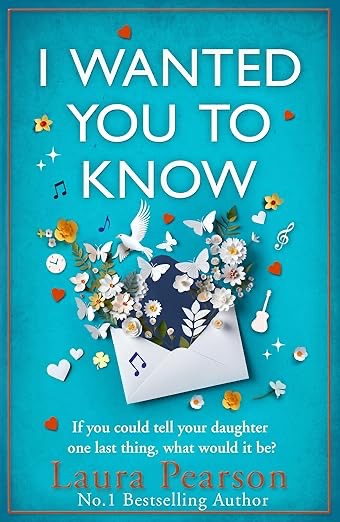
Throwback Thursday: I Wanted You to Know by Laura Pearson.

Dear Edie, I wanted you to know so many things. I wanted to tell you them in person, as you grew. But it wasn’t to be.


This wonderful book left me uplifted and sad all at the same time. This is the bittersweet story of Jessica, a young single mum who finds out she has cancer. As the novel opens, Jess and her baby daughter Edie, have recently moved back home with her Mum. Jess had left home for university, but circumstances have forced her back to her home town. This main narrative, set in Jess’s present, is interspersed with letters written by Jess to her baby. Each letter starts with ‘ I wanted you to know’ and through them we learn about the life she had at university, her relationship with Jake and the unexpected pregnancy that changes everything. The timing of this baby is all wrong, falling just as Jess’s boyfriend Jake is offered a tour with his band. Determined that Jake should follow his dream, the couple had decided to separate, but Jess’s own father left when she was young and she doesn’t want the same for her daughter. So she continues to keep him up to date with baby news until Jake’s contact with slowly fizzles out and Jess comes to the conclusion he is not interested in the pregnancy or having a relationship with daughter Edie. By the time Edie is born, the couple are no longer in regular contact and Jess has to face up to the fact she will be a single mother. Jess approaches her post-natal check up feeling daunted and then receives the news that changes everything. Jess has breast cancer. Now, a new beginning that’s daunting but joyous and filled with hope for the future, is overshadowed by weighty decisions, difficult conversations and the horrible fear that she may have to leave Edie facing life without her.


The narrative gave me a very real sense that the time Jess has left is ebbing away like the sands of an hourglass. As treatment options fail, Jess has so much left undone. Jess’s devastation that she won’t be able to be go through all the milestones that mothers and daughter enjoy together is palpable. So in order to be sure she’s there for these moments Jess begins the letters that will let her daughter know where she comes from and how much her mum loved her. This is even more vital when we realise that Jess’s past relationship with her own mum is far from perfect. However, despite some rough patches, her mum is stepping up and we never doubt that she loves her daughter and wants to help. Even if she does make some terrible mistakes in the way she handles things and on one occasion does one of the worst things you can do to someone with a terminal or life-limiting illness; she takes Jess’s power away. I was genuinely worried whether Jess would be strong enough to take it back.


The way Jess copes with Jake made me long for her to find her voice, even if just for her baby’s sake. She is so worried about ruining Jake’s tour that she doesn’t keep him informed. His contact with her simply dries up and although she is hurt and shouldering her fears about becoming a mum by herself, she doesn’t contact him. Then as the shock of the cancer diagnosis hits she is even more paralysed. If she does let him know, and he cuts his dream short, will he always resent her and his daughter. She doesn’t even know how he feels any more, but knows she wouldn’t want him to return to her because of the cancer. Realistically though, she needs to let him meet his daughter. They have to forge a relationship, especially if she does not respond to treatment.
The most compelling relationship for me was the friendship between Jess and Gemma. This novel is a love letter to female friendship and I liked that this relationship felt the most ‘fleshed out’ in the whole story. Right from the start Gemma is backing Jess up while juggling a job and babysitting Edie when she’s not working. Where the other relationships throw up complications, Gemma seems to know what Jess needs before anyone else. She counteracts Jess’s mum’s tendency to judge and make decisions that don’t include her. Instead she is quietly there all the time, and has an ability to sink into the background when Jess needs time alone or with Edie. Most importantly she encourages Jess but doesn’t take her choices away. She makes it clear that Jess needs to speak to Jake, but stays out of their relationship. When Jess’s mum oversteps the mark, Gemma gives her friend encouragement to speak and permission to be angry. Their relationship shows that our friends are often more supportive than family. It teaches us that our female friendships are often the long term relationships in our lives and that the best friends sustain each other, even in the most difficult situations.


I like that the last words In the book are Jess’s own in the form of her final letter to her daughter. I did have a lump in my throat reading some parts of this and at different points I thought how authentic the voice was, especially in Jess’s letters because they are unfiltered. Often, when reading or watching fictional accounts of illness I become frustrated by inaccuracies or events that are totally impossible. This comes from the life experiences I bring when reading a book. When reading this I felt it was well researched or that someone had used their own experiences to tell Jess’s story. I wasn’t surprised to read that Laura Pearson had a similar diagnosis of breast cancer because her experience shone through. The bewilderment and fear of those closest to Jess felt true to my experience; I lost my husband to the complications of multiple sclerosis when he was only 42 and I was 35. I remember two strong and very contrary feelings. On one hand I was constantly busy and overwhelmed with the paraphernalia of caring for someone who’s dying. I was panicked that time was slipping away from us and I resented it being spent dealing with feeding tubes, chest physiotherapy and the constant fear of infection. While other days felt like a nightmare, living a parallel life where the same routine was replayed over and over while everyone else was getting on with the real business of life. We became a small, committed unit with only one focus and as I read the novel I could see Jess’s loved ones doing the same. They drop out of normal everyday life to focus on their loved one and as I was reading I was aware of the devastation they would feel if they lost Jess anyway. When the person you love becomes terminally ill, and you become their carer, the sense of loss after their death seems compounded by suddenly having no purpose. I went from caring for my husband 70+ hours a week to waking up with nothing to do all day. It complicates the grief. The loss becomes multiple; the person you love, your role as spouse, your job and purpose, structure and status are all gone. The final chapters of Laura’s novel brought this back to me.


I was also heavily invested in Jess’s emotions, she becomes a young, single Mum knowing this new life may be cut brutally short. Jess barely has time to enjoy Edie, before she has to worry about leaving her. She has come to terms with her choice to postpone university and encourage Jake to follow his dream because she assumes, like we all do, that she has all the time in the world. She might not have time to pick up these parts of her life and she may not have time to settle into being a Mum. Questions constantly flash through her mind. If Jake returns, does he love her or is he only there because she’s so ill? How will he cope becoming a single Dad and who might he form relationships with in the future? Most heartbreaking of all; what if Edie doesn’t remember her? This is what prompts her to start writing. She wants to write down everything she thought or felt about her new baby and also pass on those bits of motherly wisdom that would be otherwise lost. Even if Edie does lose her Mum, she will have a constant sense of her through those letters and the pieces of advice she gives. Most importantly, she will know that at this crucial moment of her Mum’s life, she was so glad of her decision to have Edie and that Edie’s loss is uppermost in her mind.

The author delivers weighty subject matter with a real lightness of touch. At times I was reading with a lump in my throat, but I always looked forward to picking up Jess’s story and spending time in her world. The reader always brings something to the book and in this case, my reading experience was more poignant because of my own loss and possibly because of the limitations due to my own long term health problems. I think the author has been so clever to write about a life-changing experience, but never let it become too heavy to read. Despite the heartbreak, there are moments of every day humour and I felt genuinely uplifted by the depiction of female friendship. In difficult times I have found that even whether I’ve had a committed partner or not, it is my female friends who are always constant and hold me up when I can’t do it for myself. Jess and Gemma embody this and I found myself hoping that the author had a Gemma during her own illness. Mostly, I am very grateful that Laura Pearson had the bravery to write about something so close to her own experience, and to write about it with humour, honesty and raw emotion.

Meet the Author

Thanks so much for taking a look at my books. I write what some people call emotional women’s fiction and others call book club fiction. It doesn’t really matter what it’s called – I mostly write about women living ordinary lives and the extraordinary things that sometimes happen to them. I set my novels in places I’ve lived – London, Leicestershire, Cheshire, Southampton – and I people them (mostly) with the kind of women I’d like to meet. 

Some themes I find myself returning to again and again are sibling relationships, enduring friendships, women supporting women, and the tiny decisions that can alter the course of a life. I hope you find something here you’d like to read. 

When I’m not writing or reading, I’m usually hanging out on Twitter (@laurapauthor), so I might see you there, too. 

With love, 

Laura

Taken from Laura’s Amazon author page,

Posted in Throwback Thursday

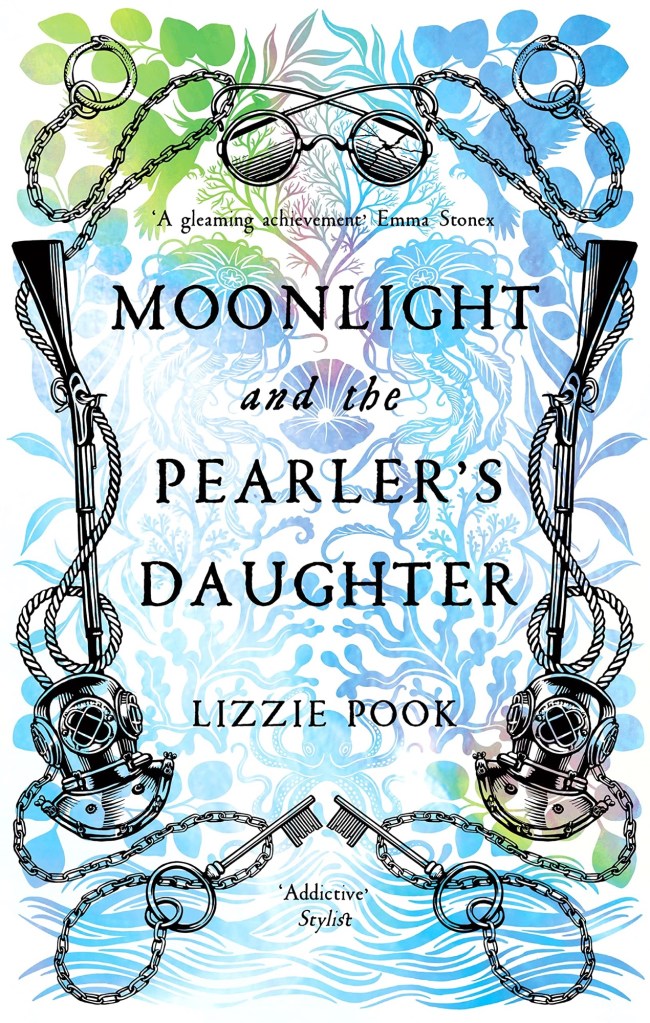
Throwback Thursday: Moonlight and the Pearler’s Daughter by Lizzie Pook


Fortune favours the brave . . .

It is 1886 and the Brightwell family has sailed from England to make their new home in Western Australia. Ten-year-old Eliza knows little of what awaits them in Bannin Bay beyond stories of shimmering pearls and shells the size of soup plates – the very things her father has promised will make their fortune. Ten years later, as the pearling ships return after months at sea, Eliza waits impatiently for her father to return with them. When his lugger finally arrives however, Charles Brightwell, master pearler, is declared missing. Whispers from the townsfolk point to mutiny or murder, but Eliza knows her father and, convinced there is more to the story, sets out to uncover the truth. She soon learns that in a town teeming with corruption, prejudice and blackmail, answers can cost more than pearls, and must decide just how much she is willing to pay, and how far she is willing to go, to find them.

Since this week’s Sunday Spotlight takes us on holiday Down Under, I thought I’d re-share my review of Lizzie Pook’s debut novel set in Australia. This incredible debut is richly atmospheric from the get go, throwing us straight into the strangeness of 19th Century Western Australia as if it is an alien landscape. In fact that’s exactly what it is for the Brightwell family, particularly Eliza whose childhood eyes we see it through for the the first time and in a particularly disgusting parody of baptism she is reborn as an Aussie when a bucket of fish guts is launched in their direction. Of course the fisherman apologises for the accident, but we’re left wondering if it’s anything but as he says the words ‘welcome to Bannin Bay’. It foreshadows an immediate imbalance between those who do the work and those who aim to make the money. Eliza’s father has been full of dreams, not just of pearls but the pearl shells to be turned into buttons, hat pins and pistol handles. Yet their unsuitability for this rough and ready environment can be seen as soon as they arrive in their fine clothing they must lift up from the red earth compared to the stevedores dirty vests and cut off trousers. Eliza describes her mother as ‘a dragonfly, once resplendent, marooned in a bucket of old slop water.’ Delicate Victorian ladies are not built for this environment that stinks of sweat, fish guts and the mineral tang of sea kelp. With this totally alien landscape the author creates a vivid backdrop for the incredible historical detail of her story, but also brings a mythic, almost fairy tale quality.

Only ten years after the prologue we meet an older Eliza, wiser to the ways of the Bay and she has developed into a interesting character. Women are either categorised as society women -‘white glove wearers’ – or harlots and it’s a source of irritation to the women in the community that she refuses to be either. Eliza is ploughing her own furrow, and whereas her friend Min’s childhood dreams developed from adventure on the high seas to the type of sailor she might marry, Eliza still craves adventure. She can see no use for a husband, although she doesn’t deny an interest in men which is quite a scandalous notion, even if her main interest is the contents of his library. Eliza’s knowledge of sailing and pearl diving is forensic in its detail and through exploring with her father she has developed a keen interest in the areas flora and fauna too. She is quite unlike the respectable women who still look like wedding cakes in the impossible heat. Her father has been on a voyage for the past three months and a lonely Eliza has been looking forward to his return, but as she sits and waits doubt starts to set in about whether the ship is returning. The light is fading as his lugger appears on the horizon, but her stomach fills with dread when she realises something is wrong. The ship’s flag is at half-mast. When her brother Thomas emerges she learns that her father is gone. While Thomas rushes to secure the business Eliza is left to find out the truth and while she’s told he went overboard, there are also tales of mutiny and murder. Eliza has to visit the sergeant to convince him that she suspects their father’s death was not an accident. Sergeant Archibald Parker is an unpleasant racist and his immediate action is to arrest aboriginal man Billy Balaari, but Eliza is told that Billy wasn’t even on the boat. When Billy escapes, the sergeant is completely focused on finding him, leaving Eliza to do the detective work herself. She finds her father’s diary and eventually sets sail on Father McVeigh’s lugger Moonlight with Axel Kramer and an aboriginal boy called Knife, determined to find the truth of what happened.  

I wasn’t surprised to know there was a very seedy underbelly to the trade where Eliza’s father hoped the build the family fortune. Where incomers make large amounts of money, there is always exploitation and in this case the workers have a very tough working life. Of course it’s the naive Australians who are exploited the most and the author doesn’t pull her punches when it comes to portraying the terrible treatment they receive. Families are torn apart as the strong are enslaved for labour on the Pearler’s boats, usually as pearl divers, the most dangerous job on board. The sheer weight of their gear is terrifying as they don lead boots and copper chest plates. It felt so claustrophobic to imagine them sinking slowly to the bottom of the sea, with only a line connecting them to the ship above. The imagined relief of being winched back to the surface was tempered by the danger of the bends, the pressure of resurfacing quickly forcing organs upward in the body leading to suffocation or leaving the diver ‘agonisingly crippled’. It made me feel a little bit anxious as I was reading their potential fates. If this wasn’t enough, aboriginals were treated as worthless, beaten and even killed without consequence. Eliza has to negotiate her way through the community’s corruption, violence, blackmail and the criminal elements of the pearling business. All the while reading her father’s diary for clues and guiding us to some fascinating characters, some of which are based on historical figures. I loved Eliza’s early feminist stance and her sense of adventure, and the twists and turns her journey takes are gripping and pull you deep into the story. This is a fantastic debut, full of life and death, just like it’s setting. The richness and depth in her storytelling marks Lizzie Pook out as a writer I’ll be watching out for in the future. 

Meet the Author

Lizzie is an award-winning writer and journalist. She has written for the  GuardianThe TelegraphThe TimesThe Evening Standard and Stylist. She is the author of Moonlight and the Pearler’s Daughter, a STYLIST and WOMAN & HOME ‘Best Books of 2022’ pick.

Lizzie began her career in women’s magazines, covering everything from feminist motorcycle gangs to conspiracy theorists, before moving into travel writing, contributing to publications including Condé Nast Traveller, Lonely Planet and the Sunday Times.

Her assignments have taken her to some of the most remote parts of the world, from the uninhabited east coast of Greenland in search of polar bears, to the trans-Himalayas to track snow leopards. She was inspired to write Moonlight and the Pearler’s Daughter, her debut, after taking a road trip through Australia with her twin sister after the death of their father. A chance visit to the Maritime Museum in Fremantle led her to an exhibition about a family of British settlers involved in the early pearl diving industry. Thus began an obsession and a research journey that would take Lizzie from the corridors of the British Library to isolated pearl farms in the farthest reaches of northwest Australia.

Posted in Netgalley, Throwback Thursday

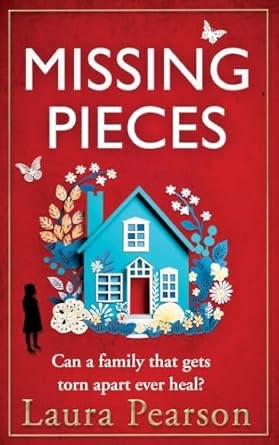
Missing Pieces by Laura Pearson

I’ve read a little bit of Laura Pearson before, so I did come to this expecting a moving and powerful story. It didn’t disappoint. When Bea is born it should have been a healing, new chapter for the family – mum, dad and older sister Esme. However, Bea was born to a family struggling in the aftermath of a tragedy. Esme was only seven years old when her sister Phoebe died suddenly and unexpectedly. It hits Esme hard because she was supposed to be looking after her sister. Their dad Tom feels an immense weight of guilt because he shouldn’t have stayed out later than expected. Esme’s mother is also wrestling with guilt and blame, she’d briefly popped next door to help a neighbour knowing that Tom would be home imminently. This is a story of a family, years later, struggling with unimaginable loss. How can they learn to forgive each other, or themselves?

Laura splits the story into two sections: the first months after Phoebe’s death interspersed with a narrative where Bea is trying to understand what happened to her family a couple of decades later. These feelings are coming to the surface because she herself is pregnant. I really enjoyed the section in the present day as Bea searches for the truth when her parents won’t ever talk about it. It reminded me of something my mum has recently done. Her first sister, Teresa, died on Bonfire Night 1959 and although she doesn’t remember everything she does have a memory of a tiny coffin that my grandad was carrying and putting in a black car. Mum tracked down a community group who were looking for the resting place of their stillborn babies in the same area where she grew up. Back then, if there was no money for a funeral or a grave plot then a baby might have been buried in a coffin with someone else or in a grave for several bodies. Three years ago she was able to take my grandma to a ceremony at the graveyard in Liverpool where a memorial was finally in place for babies lost and buried in a pauper’s grave on the site. It’s easy to underestimate how much the death of a baby affects other children in the house and i think we all underestimated how it still affected my grandma who is now 91. 

Bea feels like she’s lost part of her identity. This loss is part of their joint family history and no one is addressing or memorialising it. Of course this is tough for other family members, all of whom blame themselves. The loss for Bea and her older sister Esme is threefold: they lost a sister, they lost the relationships and life experiences they would have had as three sisters and they lost the happy family life they might have had if their parents hadn’t been carrying the weight of all that grief and guilt. As for the other characters in the book, I did find Linda a bit of a struggle. It’s clear she’s never fully connected with Bea and when we go back in time we can see her conflicting emotions over being heavily pregnant. She is buried by her grief for Phoebe and feels bad for being pregnant again. She doesn’t want to replace Phoebe and sometimes wishes she wasn’t pregnant. A combination of fear, guilt, sadness and anger take over and she really wasn’t there for Esme or Bea, once she’s born. In the past sections there’s an oppressive atmosphere that hasn’t fully lifted, even in the girl’s adulthood. Esme can’t talk with her father so Bea doesn’t stand a chance when wanting to ask questions. It would mean delving back into the pain and communicating honestly, but no one wants to go back into the raw grief and horror of that day. Bea wonders how she can be a good mother when she has no relationship with her own. Will the family be able to rally around her, find a way to talk and become a united family again?

It’s a trademark of Laura’s books that characters are forced to talk about difficult and frightening experiences or situations they find themselves in. I love the openness and honesty these issues need and it is like a counselling process if people can start sharing and healing. I did shed some tears at times. I thought the author’s depiction of the parent’s grief was realistic and raw. We’re let into every aspect of a characters mind, no matter what their thoughts might be. I could genuinely feel these character’s emotions and pain. Yes, this is intense. Somehow through, this isn’t off-putting. We’re given just enough glimpses of hope to lift the story, personified by the new start Bea’s baby brings to the family. I found myself gripped, willing these people to give themselves a break and stop being angry with themselves and each other. This is an emotional but satisfying novel that shows healing is possible, if we’re willing to do the work. Beautifully written, emotional and ultimately hopeful. 

Out now from Boldwood Books

Meet the Author

Laura Pearson is the author of five novels. The Last List of Mabel Beaumont was a Kindle number one bestseller in the UK and a top ten bestseller in the US. Laura lives in Leicestershire, England, with her husband, their two children, and a cat who likes to lie on her keyboard while she tries to write.

Posted in Throwback Thursday

The Thin Place by C.D.Major 

I have a fascination for the idea of ‘thin places’ – where there’s only a thin veil between our world and the spirit world, or possibly passages to another time or dimension. I am swayed towards the idea that it’s where something traumatic happened and left an imprint on a place, so that however much time passes, the events of that day can break through and be replayed almost like an echo of the original event through time. Ava Brent is a journalist who is investigating one such place. The Overtoun Estate is a strange and looming presence over town and no one seems to know it’s specific history, but it’s rumoured to be a thin place, steeped in myth. The legend is about a bridge where it’s claimed many dogs have thrown themselves to their deaths. The locals steer clear and when Ava begins to ask questions the warm welcome she received at first becomes a cold shoulder. When she discovers that a sick young girl lived there, the sadness that surrounds the building starts to make sense. Ava is expecting her first child so is maybe susceptible to this tale, but a message scratched into a windowsill  fills her with horror. What happened here and is she really prepared for what she may discover? What might her fascination with this place cost? As her life begins to unravel, she knows she should cut her losses and walk away. Then threats start to arise, but Ava can’t deny that despite the fear she is compelled to return. 

This was an excellent slow burn gothic novel from an author that was completely new to me. I am interested in tales of motherhood and the paranormal, brought to my attention at university where I was influenced by Frankenstein and Rosemary’s Baby on my Gothic, Grotesque and Monstrous course. There’s something about the extraordinary changes in the body and the idea of another person growing inside you that’s open to the world of monsters; rather like a human set of Russian nesting dolls. I think it’s also horrifying when a horror exploits that moment when both mother and baby are at their most vulnerable. Ava is drawn to the specific bridge on the property, despite the strange and eerie feelings that congregate there. Ava is taken in by it’s ’otherworldliness’ and slowly it takes over her life. The author lets us into Ava’s inner world by devoting some of the narrative to her journal entries where page after page is devoted to her ramblings about the place. Her home life starts to become disrupted, self-care goes out of the window and even her pregnancy can’t compete with her drive to discover the truth. 

In between Ava’s story we’re taken back to the historic occupants of the house. In the 1920s it’s Marion who lives there, a newly wed who feels lonely as her husband is away a lot for work. Then twenty years later it’s Constance, the sick little girl who is almost a prisoner, kept inside by her over anxious mother. Is she really the sick one in her family? Or is there some other motivation keeping her life so limited? We never know during these narratives whether what we’re being told is the truth. Are the women seeing events truthfully or skewed through the filter of their own experience? We all the view the world through our own learning, experience and emotional state so we have to question whether Ava’s state of mind is colouring her judgement? Is Marion’s loneliness affecting how she views the house? Could Constance’s illness and solitary existence have left her vulnerable to suggestion? All three could be unreliable narrators and the atmosphere can’t help, a sense of unease that settles over them and us. The darkness and mood seem to follow Ava like a miasma, created by every bad thing that’s happened there. It’s this that envelops her and draws her back again. Some historic events are appalling and I was affected by the scenes of animal abuse, as well as pregnancy trauma that’s also depicted. The scenes detailing pregnancy complications left me needing a few deep breaths and a cup of tea. That just underlines how well written the book is. I swear that as the book went on my blood pressure was climbing along with Ava’s. I was also left with a disoriented feeling sometimes and I think it’s a clever writer who can echo the character’s experiences with the feelings she evokes in the reader. 

The supernatural elements were very subtly and gently done, with the mere suggestion of the paranormal being enough. The way I felt while reading proved that this was the type of gothic horror I really enjoy. It felt like a classic horror that creeps up on you woven in with the sort of historical background that really grounds the characters in their time. The author uses the supernatural elements and the terrible story of the dogs, to tell us something about mothers and daughters – daughters being an echo of every woman who has come before them in the family line. It’s also about how the women fit into their world and I loved how the author explored the expectations on women and pressure placed on them by others and society in general. The author’s notes at the end are so interesting too, especially the elements of the book based on a true story. Overall this was a great combination of gothic storytelling and a compelling historical thriller. 

Out Now from Thomas and Mercer

Meet the Author

C. D. Major writes suspenseful books inspired by strange true stories. Alongside her thrillers she writes big love stories as Cesca Major, rom coms under the pseudonym Rosie Blake and emotional women’s fiction as Ruby Hummingbird. All information about her books, Book Club Questions and more are over on her website http://www.cescamajor.com. Cesca lives in Berkshire with her husband, son and twin daughters. She can be found on Twitter, Facebook and Instagram and enjoys connecting with readers.

Posted in Throwback Thursday

Death in a Lonely Place by Stig Abell

Jake Jackson is becoming settled two years after his Uncle Arthur died and left him his home at Little Sky. It’s also two years since the subsequent murder case that threatened everything he’d built there. Now he splits his time between Little Sky and the cottage shared by his partner Livia and her daughter Diana. His quiet routine is disrupted by the abduction of a little girl and local detective Watson, asks for his help. When they recover her in an isolated empty house, it almost feels too easy. The abduction seems to linked to a shadowy organisation whose calling card says ‘No Taboo’. Their business is providing experiences for bored rich people, where no request is refused. Using his contacts, analyst and retired detective Martha and investigator Aletheia, can Jake uncover the people behind the organisation? Then Livia receives a job offer from a new businessman in the area and she’s excited to view his stables and the horses. His offer seems to come with unusual conditions, including Jake and Livia’s presence at his mansion, Purple Prose, for a weekend of entertainment. Is it possible these two things are linked? Jake has never trusted coincidences and he isn’t going to start now.

This is a hard case for Jake, not just a small step up from his first case at Little Sky, but a whole staircase. He’s gone from local cold case murder to an international conspiracy run by people with seemingly endless means and reach. I wondered how on earth Jake’s small team would crack this one – it’s a real David and Goliath situation. There’s also a sense of something wholesome up against something unremittingly evil; the desire to have extreme experiences is one thing, but this is debauched. No sexual desire, bloodlust or act of cruelty is too much – as long as you can pay for it. Of course that leaves wealthy customers open to blackmail, especially those with responsible jobs or famous faces. I could understand Livia’s concerns about her safety and Diana’s. As Jake’s case starts to warm up, he is warned off. He’s attacked and also has a rather horrifying home delivery at Little Sky. There’s a part of Jake that can’t resist the investigative world, but it does put those he loves in huge danger. I don’t think I would be as patient as Livia. 

I have to say how much I loved Martha. She’s intelligent, shrewd and absolutely no nonsense. She was medically retired from the police after a shoot out left her so badly injured she had to have both legs amputated. I loved her calls with Jake and their crime writer sign offs. She proves herself a strong investigator without leaving her desk. There are great strong women in these novels and she’s definitely my favourite. I do have a soft spot for Sarah at The Nook, the local shop with a downstairs drinking establishment. She’s almost a mother figure to Jake, shaking her head at his more eccentric ways and making sure he has a warm drink and slice of cake. In turn he lifts and stacks her heavy produce. It’s interesting to consider that apart from Rose, Jake surrounds himself with women. Could this possibly be a response to the loss of his mother? We haven’t met Jake’s ex-wife Faye, but it would be interesting to look at their difficulties conceiving and whether never seeing her maternal side contributed to the breakdown of their marriage. He certainly appreciates Livia’s nurturing characteristics with Diana. 

This is much tougher and more brutal case for Jake than the last. I was surprised at his survival instinct, he seems like such a gentle person at home, but can mete out some serious violence where necessary. I wasn’t sure how I felt about this latent side to him, but he really takes some punishment too and suffers one ordeal that genuinely made my breathing a little panicky. I’m no good with small spaces. His judgement is impeccable though and when he’s asked to make a choice that tests the loyalty of those around him, he does make it, sending me tearing back through the pages for the clues. It’s a very tense ending and you will be on the edge of your seat through to the finale. I’m always so pleased that Jake, Livia and Diana have the peace of Little Sky to retire to when it’s all over. 

Stig Abell

Posted in Throwback Thursday

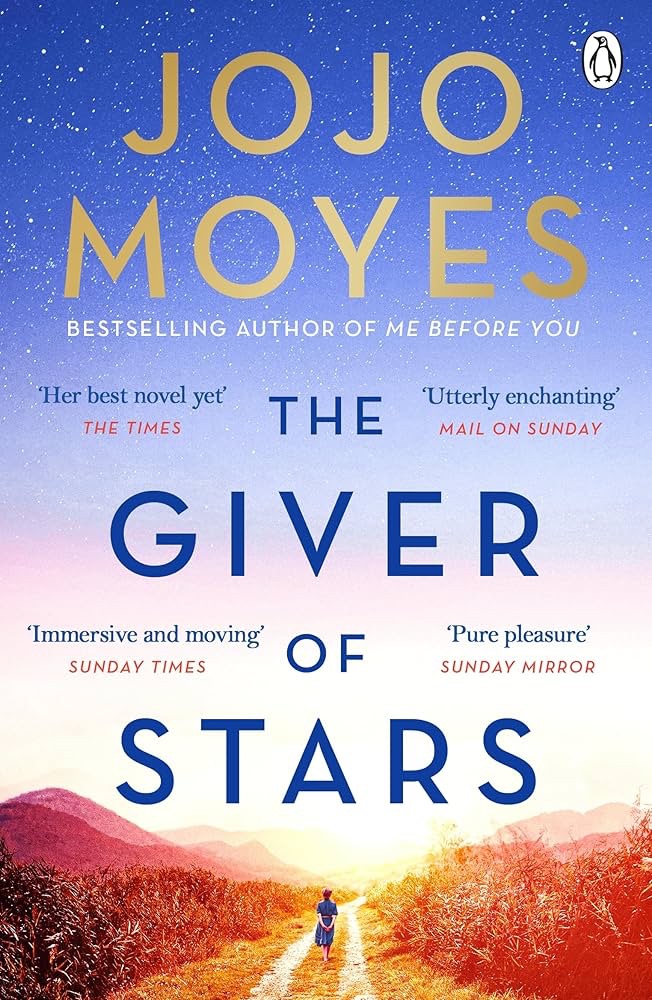
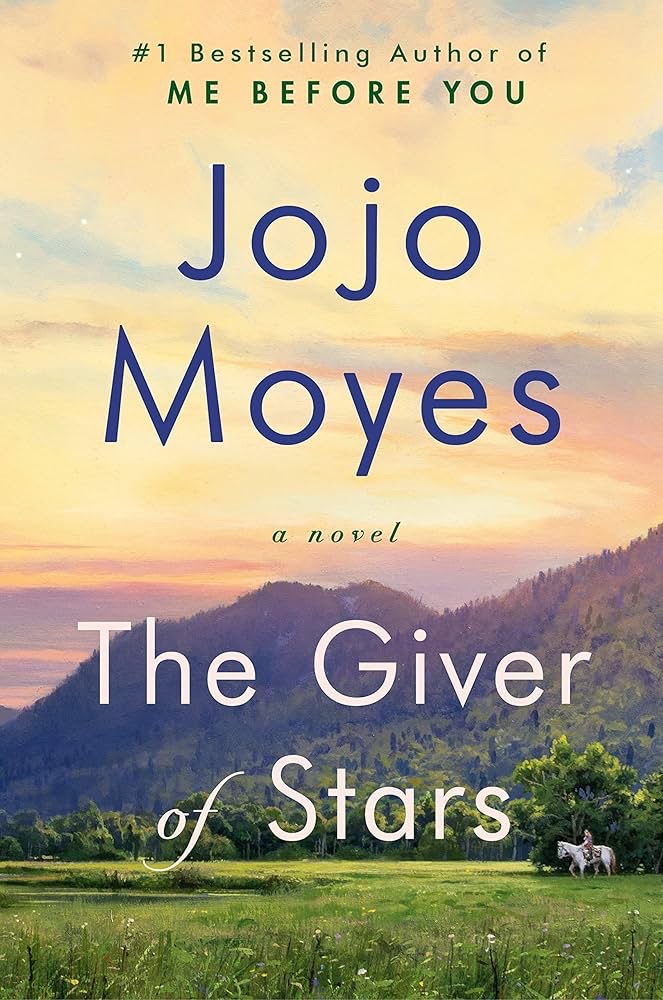
The Giver of Stars by Jojo Moyes.

When I first read The Giver of Stars I felt it was a totally different type of Jojo Moyes novel. Using the historical setting of the Great Depression, she takes us to a town in rural Kentucky., where most people work in the Van Cleeve family’s mines and levels of rural poverty are high. In Kentucky, African-Americans are still subject to segregation and middle class women are expected to stay home and know their place. Women in poorer families are working hard while trying their best to feed and look after ever-growing families. Into this setting comes Alice, the English bride of the heir to the mining fortune, Bennet Van Cleeve. Bennet is handsome and considerate, and their marriage seems to start well but once they reach the family home things change. Bennet has lived with his father, following the death of his mother and the house is still being run to her exacting standards. Alice finds she has little to do, with a house is full of her late mother-in-laws ornaments and china dolls, especially since Mr Van Cleeve doesn’t like anything to be out of it’s normal place. More worrying is the change in Bennet now they are home. Despite showing some desire at the beginning, the proximity to his father is affecting their sex life. Several months down the line their marriage is still unconsummated and Mr Van Cleeve keeps hinting about grandchildren, adding to the pressure.

When a town meeting is called to discuss President Roosevelt’s initiative to get the rural poor reading, Alice senses an outlet for her energy. Margery O’Hare will head up the initiative, a wonderfully outspoken and self-sufficient women who doesn’t listen to the opinion of anyone else, particularly men. She opens a door for Alice, out of the claustrophobic Van Cleeve household and into the wild forests of Kentucky. Alice learns to ride a mule, and along with Margery and two other local women she sets out as a librarian for the Packhorse Library. At first, rural locals are suspicious of an Englishwoman coming to the door offering them books, but soon Alice finds a way in and starts to be trusted. She also finds she likes the open air, the smells of the forest and singing of the birds. There is also the freedom to be in more casual dress and the camaraderie she is building up with her fellow librarians. She is close to Margery and when she confides about her marriage, Margery loans her a book she has been sneaking out with the novels and recipes. It is an instruction book on married love and Margery has been loaning it to poor women on her rounds who are inundated with children and need educating about sex. Alice takes the book home and a series of events are set in motion that will change not only the Van Cleeve household, but the whole town.

Mr Van Cleeve is determined to deal with Margery O’Hare once and for all, as he vows to destroy the Packhorse Library altogether. Margery is sure that a devastating flood had more behind it than high rainfall and suspects the mines. She has left herself vulnerable though, with what Van Cleeve sees as transgressive behaviour: she is exposed as having a relationship out of wedlock, she has hired an African-American woman who used to run the coloured library and she is encouraging townswomen to take control of their own lives. She seems impervious to other people’s disapproval so what lengths will he have to go to in order to stop her?

This was a beautifully written book and was on holiday when reading. I encouraged my other half to go fishing so I could stay in the holiday cottage to read it. It is so well researched, with real and authentic characters I fell in love with. Moyes manages to capture the tensions and societal changes of the Depression, depicting rural poverty, domestic abuse, and the rise of feminine power. We can see new attitudes towards race and feminism particularly where marriage and sex are concerned. Progressive attitudes come up against old money and old values in a tragic way. It was interesting to re-read it with the backdrop of Trump’s America where such traditional values are being forced on women in many states. I found myself desperate for the progressive characters and attitudes to prevail and it was this that built the tension and kept me reading till 2am! This was real, romantic and simply great storytelling. It’s an absolute must read and one of her best novels to date.

Posted in Throwback Thursday

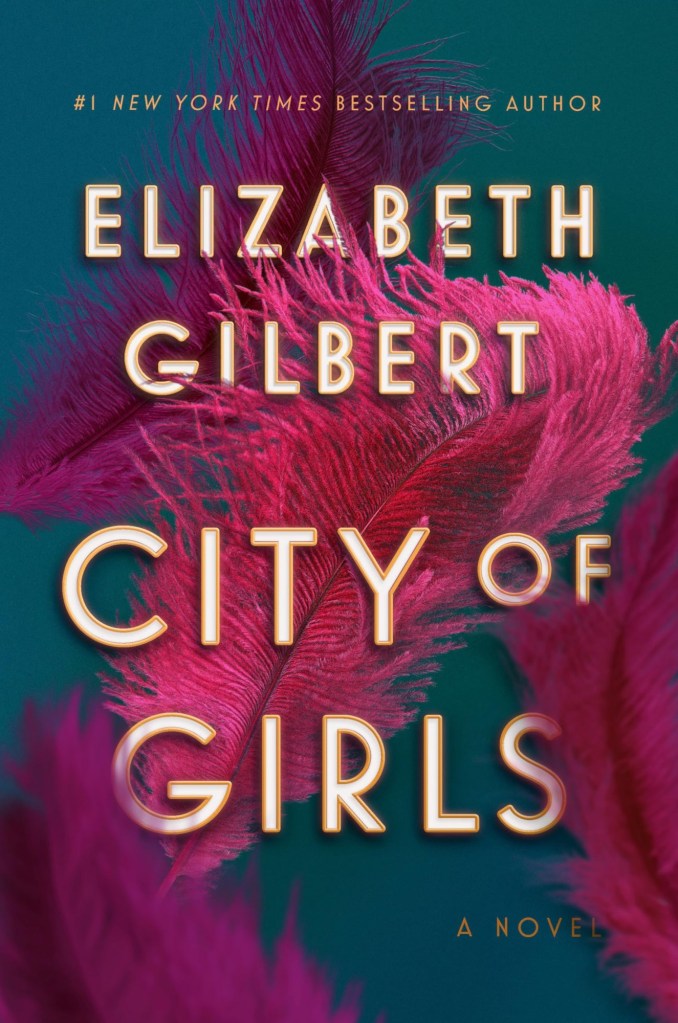
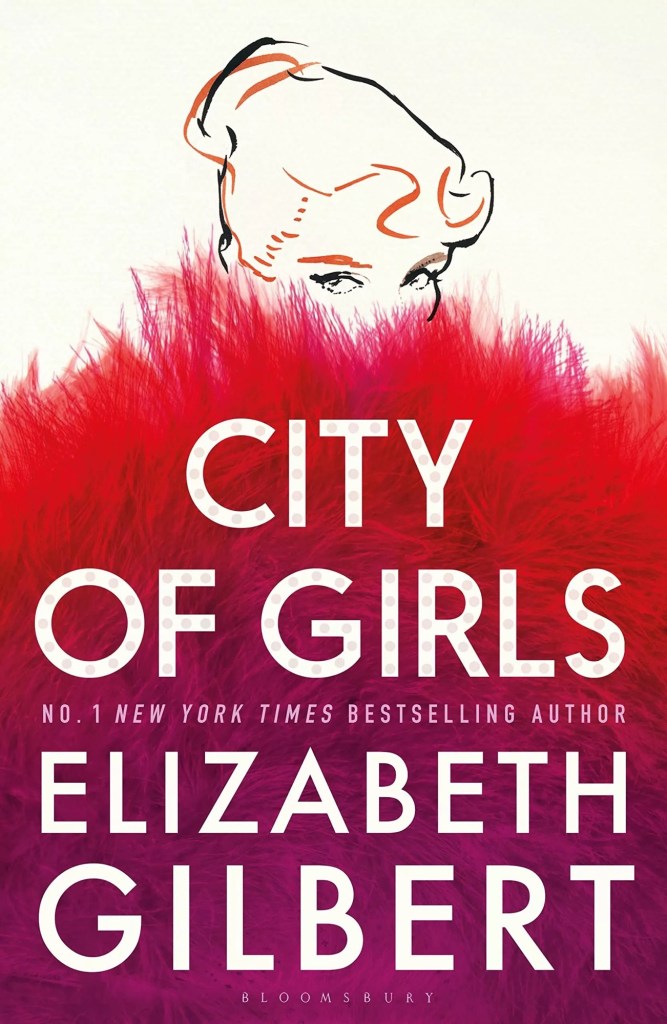
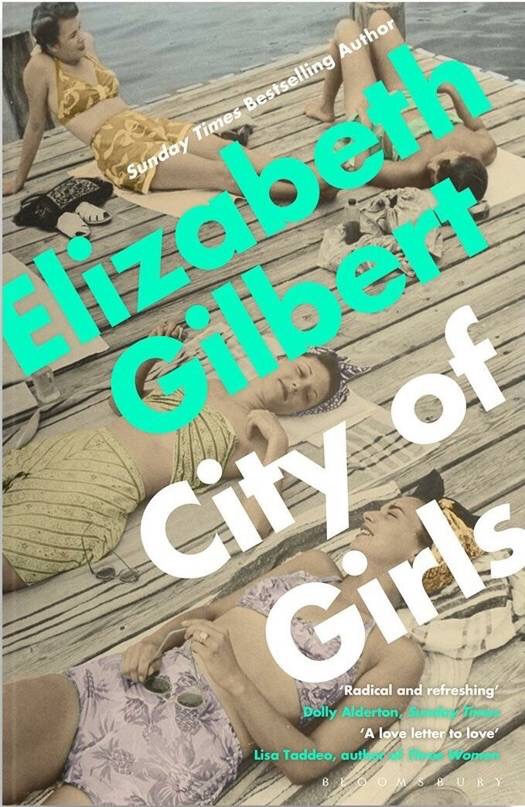
Throwback Thursday! City of Girls by Elizabeth Gilbert.

When one of my favourite authors writes a new book I always experience a confusing mix of emotions. Excitement and anticipation mix with fear; will I love it as much as I love their last book? I don’t want to be disappointed. Since there’s a new Liz Gilbert out this year I thought I’d share my review of her last novel, City of Girls. Like a lot of readers my first encounter with Gilbert’s writing was Eat, Pray, Love; a book that was nothing short of a cultural phenomenon, not to mention the following hit film. For me, it was her novel The Signature of All Things that caught the imagination. The combination of a sparky and intelligent heroine, the feminist theme and the historical detail came together in a beautifully woven story. So as the publication date approached for this new novel I desperately wanted it to live up to her first.

I shouldn’t have worried. City of Girls is a joyous, exhilarating riot of a book. Our narrator, Vivian, plunges us into 1940s Manhattan where she is sent by her parents after expulsion from Vassar. There she is placed in the care of her Aunt Peg who runs the, slightly ramshackle, Lily Theatre. I was suddenly immersed in the bohemian world of theatre people where Vivian soon finds her niche. At Vassar she made friends by creating outfits for the other girls on her trusty sewing machine. So, in her new rooms above the theatre she is soon surrounded by showgirls wanting costumes. I have an interest in fashion and sewing, so I really enjoyed the descriptions of Vivian’s creations, made on a shoestring with a lot of help from Lowtsky’s vintage clothing store downtown. Yet not everything is as it seems on the surface. Is her friendship with showgirl Celia as mutual as it appears? What influence does the matronly and doom laden Olive have over Aunt Peg? Where is Uncle Billy, whose rooms Vivian has been using since her arrival?

 Some of these questions are answered during the production of the brand new play City of Girls. Aunt Peg’s friend Edna Parker Watson comes to stay after losing her London home during the Blitz. Edna is a talented theatre actress who is petite, beautiful and impeccably dressed. She arrives at the Lily with her huge wardrobe and her very famous and much younger husband, Arthur. Every member of the theatre company does their very best to get this musical off the ground and make it a success. Vivian works hard on her costume designs, but also finds herself becoming an unofficial PA and friend to Edna. Determined to put on the best show they can to turn the Lily Theatre’s fortunes around, Aunt Peg agrees to audition for new actors. When Vivian meets Anthony, the new leading man, she falls in love for the very first time. But alongside the awakening of first love, Vivian will also have her eyes opened to how cruel showbiz and the wider world can be. Several revelations teach her that not everyone can be trusted, the most unexpected people can come to your aid, and Vivian realises she has been walking around with her eyes closed. As the Second World War moves ever closer to their shores Vivian is left with a reckoning of her own. Does she want the respectable, quiet life her family expects or does she want to make her own way in a city and a career that is anything but quiet?  

You will fall in love with Vivian as she takes you into her past and candidly shares her exploits in 1940s NYC. She takes you from theatre, to nightclub to a dingy apartment in Hell’s Kitchen where she conducts her first love affair. She holds nothing back and I felt her delight at encountering the bohemian characters of the theatre, her passion and ingenuity for costume work and her discovery of a city laid out before her like a playground. She allows us to experience her growing up with every triumph and mistake she makes along the way. Such an engaging central character is well matched with other beautifully drawn female characters from the dowdy killjoy Olive who has surprising depths, the enigmatic Edna Parker Watson, the brisk and sometimes foolhardy Aunt Peg to the glamorous showgirl Celia who leads our narrator into a world of nightclubs, make-up and disposable men. The women in this novel are strong, surprising and all teach Vivian something about the kind of woman she wants to be. The novel emphasises the importance of strong female role models or mentors in both our personal and working life. I found myself torn between bingeing on this book or savouring it slowly: I wanted to know what happened next but I didn’t want my adventures with Vivian to come to an end. 

Meet the Author


Elizabeth Gilbert is an award-winning writer of both fiction and non-fiction. Her short story collection Pilgrims was a finalist for the PEN/Hemingway award, and her novel Stern Men was a New York Times notable book. In 2002, she published The Last American Man, which was a finalist for both the National Book Award and the National Book Critics’ Circle Award. She is best known for her 2006 memoir Eat, Pray, Love, which was published in over thirty languages and sold more than seven million copies worldwide. The film, released in 2010, stars Julia Roberts and Javier Bardem. Committed: A Sceptic Makes Peace with Marriage, a follow-up to Eat, Pray, Love, was published in 2010. Elizabeth Gilbert lives in New Jersey, USA.

Posted in Throwback Thursday

A Girl Made of Air by Nydia Hetherington

This is the story of The Greatest Funambulist Who Ever Lived…

Born into a post-war circus family, our nameless star was unwanted and forgotten, abandoned in the shadows of the big top. Until the bright light of Serendipity Wilson threw her into focus. 

Now an adult, haunted by an incident in which a child was lost from the circus, our narrator, a tightrope artiste, weaves together her spellbinding tales of circus legends, earthy magic and folklore, all in the hope of finding the child… But will her story be enough to bring the pair together again? 

I’ve recently read Nydia’s incredible new novel Sycorax, in fact today is her publication day. So I thought it might be time to revisit her debut novel, also a real favourite of mine.

Sometimes all you can say when you finish a book is ‘Wow’. When that happens I close the book and have a moment of reverence. I need a few moments, in silence, to take in what I’ve read. I often need overnight before I can start a new book. I suppose you could describe it as being haunted – the thought of a scene or a letter in a book that invaded your thoughts when you least expect it. It stays there, sometimes forever, to become a part of you. In the same way a particular aria or love song might forever float through your head. Some books lie on the surface, they pass the time, they amuse, and I do enjoy them but they don’t stay. Others get into your brain, like a complex puzzle you have to keep fiddling with, this way and that, until you find a solution. Some books enter your soul, they make you feel real physical emotions, they make you wonder in the same way you did as a child when a book took you away on a marvellous adventure. They touch you soul deep. This is one of those books. 

Nydia Hetherington is a sorceress. She has conjured up this box of terrors and delights from the depths of her imagination and it is incredible. We follow Mouse as she crawls, peeps, stumbles and walks around the incredible show that is a circus. Billed as a tale about the Greatest Funambulist Who Ever Lived I was expecting glitz and glamour, the front of house show. However, the author cleverly goes deeper than that, far behind the curtain. Incredible descriptive passages draw us in to Mouse’s world from the smell near the big cats enclosure, the feel of a llama’s fur against your skin, the cramped but colourful quarters of the circus folk and the volatile relationship between her mother Marina and father Manu. So focussed on each other, her parents seem barely aware of her existence as she watches the drab and grubby circus folk become stars of the ring with their make-up, sequins and feathers. Her freedom gives us access to every part of this wondrous world, but freedom has its dark side and for Mouse this is really a tale of parental neglect. She is brought up by the circus, by the mother of the company Big Gen and her husband Fausto and eventually by Serendipity Wilson, the flame haired high wire artists who takes Mouse under her wing. Under her tuition Mouse becomes an incredible tightrope walker, able to take her place under the spotlight like her parents. 

Serendipity with her flaming hair that glows like amber is from the Isle of Man and brings with her all the mythology of the islands. She weaves incredible stories for Mouse, who now sleeps in her wigwam, in much the same way as mystical fog weaves around her according to her mood. She thinks that Manu and Marina barely notice she’s gone, but Manu enlists her help to get Marina performing again. They coax her into the tank to perform as a mermaid for the crowd. Even so, there is no discernible warmth between Mouse and her mother, Marina’s focus is always inward to her own problems. It is after her mother’s death that Mouse is handed a letter from her mother, in which she admits to never feeling love for her child and explains why. For me this was the most powerful part of the book, and brought me to tears. The author has cleverly placed this moment of stark reality within the magic and it gives the letter huge emotional impact. It hits home the idea that all freedom has a price. Mouse has never had a mother, except the warmth and care she’s had from Serendipity and never questions whether that will change. 

Book ending these stories is an elderly Mouse, recounting these stories to a journalist. Living in New York, she recalls her arrival in the city and her expectations of Coney Island. She is older and recounts her past from a distance, but what comes across is terrible regret and sorrow around the disappearance of a child from the circus family. She is haunted by a flame haired Serendipity Wilson who, like all mothers, lives on as a voice in Mouse’s head; her inner critic commenting on all she does, only silent when Mouse truly lives in the moment. It’s in these sections that we see what the book is truly about. I expected a book about the spectacle of the circus, the showmanship and all that glitters. Instead this is a meditation on what it is to be human. The journalist asks the questions that go beneath Mouse’s surface and see the gritty truth; we are all flawed and we all make mistakes. This is a beguiling mix of myth, magic and human frailty. Truly brilliant.

Meet the Author

From Leeds — although born on Merseyside and spending the first few years of life on the Isle of Man — Nydia Hetherington moved to London in her early twenties to embark on an acting career. Later she moved to Paris where she created her own theatre company. When she returned to London a decade later, she completed a creative writing degree graduating with first class honours.

Posted in Throwback Thursday

Exit, Pursued by Death. Tib Street Ballroom 2. By Keira Willis.

Unusual police departments have been a bit of a theme this month, with this being the third unusual investigation I read in February. This was a very spooky second visit to the unusual police department, housed in Manchester’s Tib Street Ballroom. We follow DI Andy Joyce, his team and their consultant Peggy who has some otherworldly skills and expertise. We’re at the Palace Theatre, where the cast are struggling to rehearse their play thanks to a dark, swirling and angry spirit. For some reason it wants them dead or the play cancelled at the very least. Lady Bancroft’s Rose has been performed only three times since 1922, but there has been a mysterious death each time. Particularly affected is Lavinia, a blonde actress who has taken over the play’s main role, since the original actress is now too traumatised to continue. Lavinia seems to be the focus of most of the spooky activity and she’s quite happy to cast Andy in the role of her rescuer – cue a few eye rolls from Peggy. More disturbing than the theatre is Andy’s home, the same cottage he grew up in with mum Agatha and brother Rob. While he knows Rob is there, he’s never been a difficult or angry ghost. Now strange things have started happening that make him think the ghost is angry, leading his guilt over Rob’s death to go into overdrive. With Andy and Peggy at odds with each other, will he ever found out what’s going on?

Similar confusion was happening at the theatre as more of the spirit’s angry tricks come to light, including an attack on Lavinia and another on her dressing room where words are written in black all over the mirror and the ceiling. Nothing adds up. No one has had time to create this effect and the only person who’s been inside is Lavinia. Peggy makes contact with a rather dapper ghost called Alistair, who tells her that thanks to the theatre’s busy past there’s more than one ghost haunting various parts of the building. He identifies Jock as the swirling shadow ghost who’s causing problems, but what the team need to work out is why this theatre and this specific play? Despite being in shadow form Jock seems capable of manipulating objects and attacking those he isn’t happy with. Or is there a human element to to this mystery? This could explain Higson’s insistence that the team stay at the theatre even though no crime has been committed. Either way it is a bonus for Andy, who can’t bear to go home and sets up a camp in the empty ballroom. For Peggy, family is also a problem. Charlie is his usual self, popping in and out when he feels like it and drinking with Higson. When it becomes clear that the play is being staged for charity her worst fears are realised. It’s the charity run by her mother and her partner Edgar, previously Peggy’s fiancé. How will she cope in the same room as them?

I thought the author managed to combine all the elements of her story well, although it wasnt the theatre case that caught my attention most. It was the terrifying scenes at Andy’s house and the ‘will they, won’t they” of him and Peggy. I love the humour laced through the action, especially the North West tone. I love that female characters are in the thick of the action and Marnie is honestly the ghost that keeps on giving. We’re no further forwards in knowing how she flits from place to place and person to person, but her entertainment value is unrivalled. From a psychological perspective we can see certain characters setting their boundaries in life, especially where parents are concerned whether they are alive or dead. It was interesting to learn more about Andy and his childhood which sounds bewildering. Once his father is gone and mum disappears into her church, the boys are almost abandoned – especially if they don’t fall in line with her new rigid religion. I know the third book is on it’s way and I’m looking forward to it already. I’d love to know more about how Higson set up the unit and what happened to Andy’s predecessor who still haunts the ballroom and chips in at briefings. I’m also looking forward to more of Peggy and Andy’s story too.

Meet the Author

Keira Willis was born in Manchester in 1986. and grew up irresistibly drawn to mystery novels and ghost stories.

Her captivating 1980s-set ‘Tib Street Ballroom’ is a thrilling crime and mystery novel with a ghostly twist, following DI Andrew Joyce’s transfer to an obscure police department in Manchester. Joyce must put aside his inherent scepticism and confront the impossible if he has any chance of solving Marnie Driscoll’s murder, working alongside reluctant ‘consultant’ Peggy Swan, who just so happens to be able to speak to the dead.

Book two of the Tib Street Ballroom series – ‘Exit, Pursued by Death’ – was published to acclaim in October 2024, and follows the Tib Street team as they investigate the dark history of a play, while trying to prevent another death from occurring on opening night.

With a belief that adults deserve their own share of action-packed, thrilling, and humour-infused adventures, Keira tells stories that blend intrigue with spirited storytelling and memorable characters, inviting adults to rediscover the exhilarating action-packed adventures that they immersed themselves in as children.