Posted in Throwback Thursday

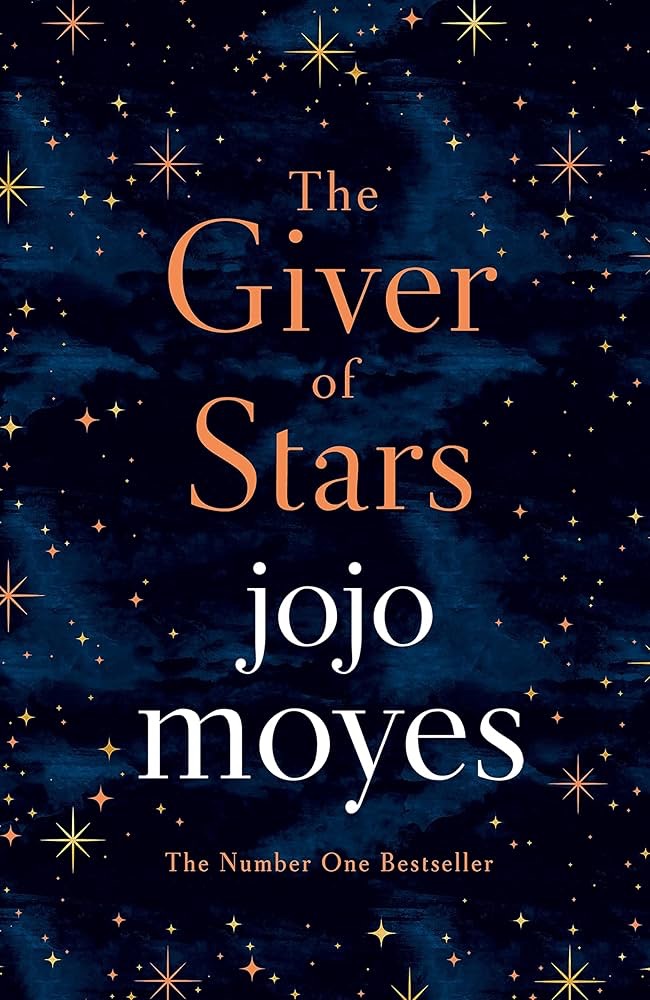
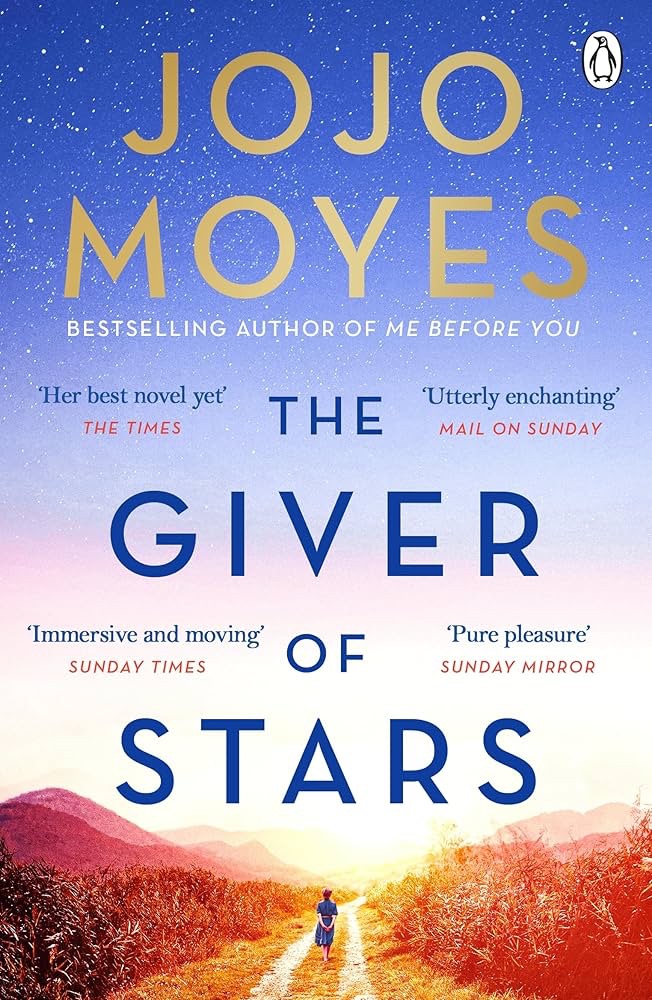
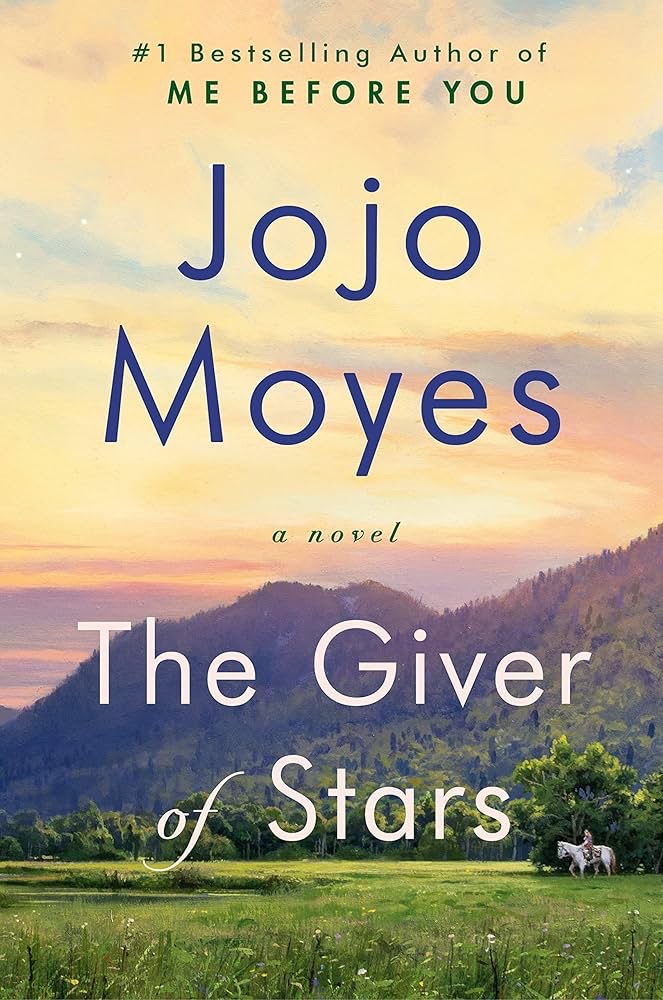
The Giver of Stars by Jojo Moyes.

When I first read The Giver of Stars I felt it was a totally different type of Jojo Moyes novel. Using the historical setting of the Great Depression, she takes us to a town in rural Kentucky., where most people work in the Van Cleeve family’s mines and levels of rural poverty are high. In Kentucky, African-Americans are still subject to segregation and middle class women are expected to stay home and know their place. Women in poorer families are working hard while trying their best to feed and look after ever-growing families. Into this setting comes Alice, the English bride of the heir to the mining fortune, Bennet Van Cleeve. Bennet is handsome and considerate, and their marriage seems to start well but once they reach the family home things change. Bennet has lived with his father, following the death of his mother and the house is still being run to her exacting standards. Alice finds she has little to do, with a house is full of her late mother-in-laws ornaments and china dolls, especially since Mr Van Cleeve doesn’t like anything to be out of it’s normal place. More worrying is the change in Bennet now they are home. Despite showing some desire at the beginning, the proximity to his father is affecting their sex life. Several months down the line their marriage is still unconsummated and Mr Van Cleeve keeps hinting about grandchildren, adding to the pressure.

When a town meeting is called to discuss President Roosevelt’s initiative to get the rural poor reading, Alice senses an outlet for her energy. Margery O’Hare will head up the initiative, a wonderfully outspoken and self-sufficient women who doesn’t listen to the opinion of anyone else, particularly men. She opens a door for Alice, out of the claustrophobic Van Cleeve household and into the wild forests of Kentucky. Alice learns to ride a mule, and along with Margery and two other local women she sets out as a librarian for the Packhorse Library. At first, rural locals are suspicious of an Englishwoman coming to the door offering them books, but soon Alice finds a way in and starts to be trusted. She also finds she likes the open air, the smells of the forest and singing of the birds. There is also the freedom to be in more casual dress and the camaraderie she is building up with her fellow librarians. She is close to Margery and when she confides about her marriage, Margery loans her a book she has been sneaking out with the novels and recipes. It is an instruction book on married love and Margery has been loaning it to poor women on her rounds who are inundated with children and need educating about sex. Alice takes the book home and a series of events are set in motion that will change not only the Van Cleeve household, but the whole town.

Mr Van Cleeve is determined to deal with Margery O’Hare once and for all, as he vows to destroy the Packhorse Library altogether. Margery is sure that a devastating flood had more behind it than high rainfall and suspects the mines. She has left herself vulnerable though, with what Van Cleeve sees as transgressive behaviour: she is exposed as having a relationship out of wedlock, she has hired an African-American woman who used to run the coloured library and she is encouraging townswomen to take control of their own lives. She seems impervious to other people’s disapproval so what lengths will he have to go to in order to stop her?

This was a beautifully written book and was on holiday when reading. I encouraged my other half to go fishing so I could stay in the holiday cottage to read it. It is so well researched, with real and authentic characters I fell in love with. Moyes manages to capture the tensions and societal changes of the Depression, depicting rural poverty, domestic abuse, and the rise of feminine power. We can see new attitudes towards race and feminism particularly where marriage and sex are concerned. Progressive attitudes come up against old money and old values in a tragic way. It was interesting to re-read it with the backdrop of Trump’s America where such traditional values are being forced on women in many states. I found myself desperate for the progressive characters and attitudes to prevail and it was this that built the tension and kept me reading till 2am! This was real, romantic and simply great storytelling. It’s an absolute must read and one of her best novels to date.

Posted in Throwback Thursday

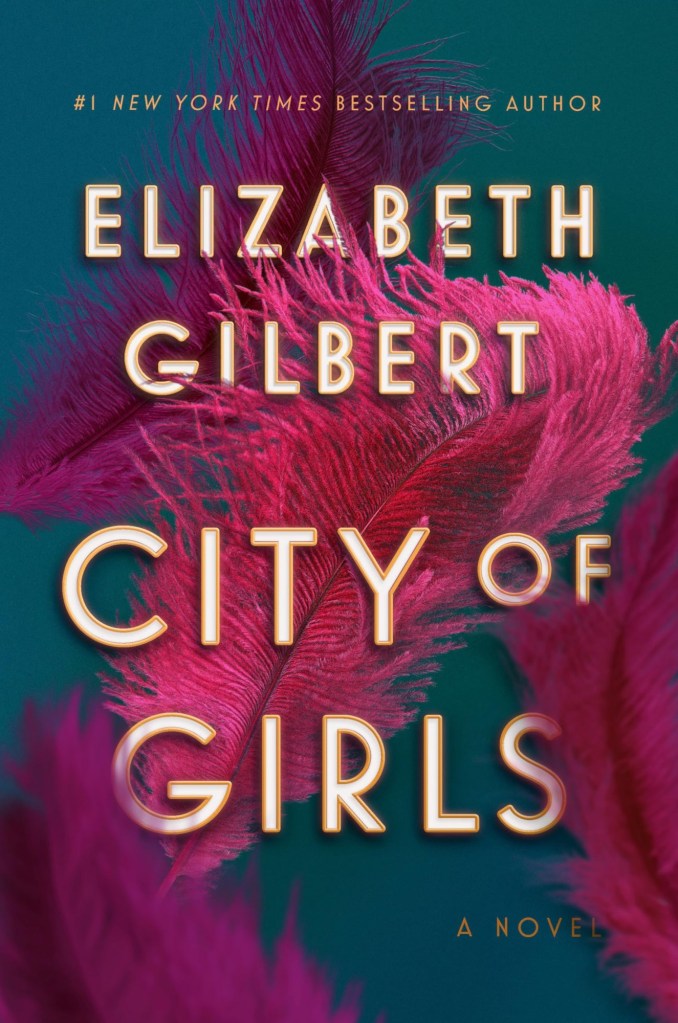
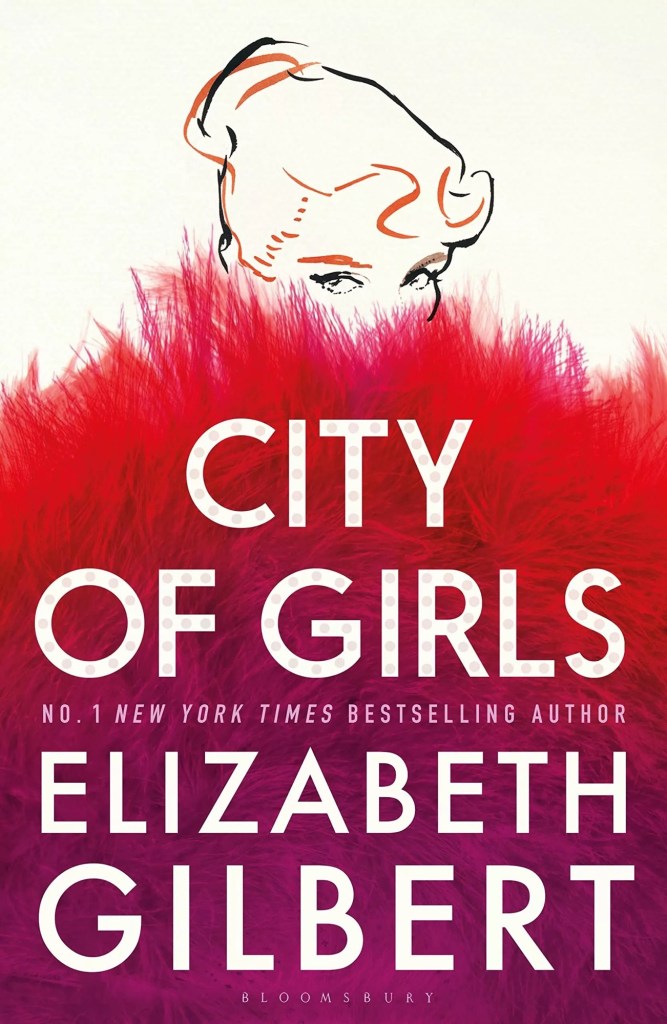
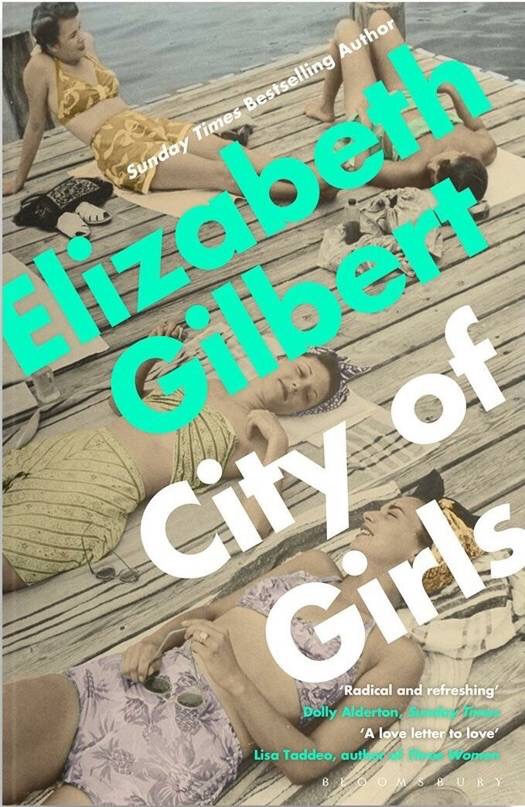
Throwback Thursday! City of Girls by Elizabeth Gilbert.

When one of my favourite authors writes a new book I always experience a confusing mix of emotions. Excitement and anticipation mix with fear; will I love it as much as I love their last book? I don’t want to be disappointed. Since there’s a new Liz Gilbert out this year I thought I’d share my review of her last novel, City of Girls. Like a lot of readers my first encounter with Gilbert’s writing was Eat, Pray, Love; a book that was nothing short of a cultural phenomenon, not to mention the following hit film. For me, it was her novel The Signature of All Things that caught the imagination. The combination of a sparky and intelligent heroine, the feminist theme and the historical detail came together in a beautifully woven story. So as the publication date approached for this new novel I desperately wanted it to live up to her first.

I shouldn’t have worried. City of Girls is a joyous, exhilarating riot of a book. Our narrator, Vivian, plunges us into 1940s Manhattan where she is sent by her parents after expulsion from Vassar. There she is placed in the care of her Aunt Peg who runs the, slightly ramshackle, Lily Theatre. I was suddenly immersed in the bohemian world of theatre people where Vivian soon finds her niche. At Vassar she made friends by creating outfits for the other girls on her trusty sewing machine. So, in her new rooms above the theatre she is soon surrounded by showgirls wanting costumes. I have an interest in fashion and sewing, so I really enjoyed the descriptions of Vivian’s creations, made on a shoestring with a lot of help from Lowtsky’s vintage clothing store downtown. Yet not everything is as it seems on the surface. Is her friendship with showgirl Celia as mutual as it appears? What influence does the matronly and doom laden Olive have over Aunt Peg? Where is Uncle Billy, whose rooms Vivian has been using since her arrival?

 Some of these questions are answered during the production of the brand new play City of Girls. Aunt Peg’s friend Edna Parker Watson comes to stay after losing her London home during the Blitz. Edna is a talented theatre actress who is petite, beautiful and impeccably dressed. She arrives at the Lily with her huge wardrobe and her very famous and much younger husband, Arthur. Every member of the theatre company does their very best to get this musical off the ground and make it a success. Vivian works hard on her costume designs, but also finds herself becoming an unofficial PA and friend to Edna. Determined to put on the best show they can to turn the Lily Theatre’s fortunes around, Aunt Peg agrees to audition for new actors. When Vivian meets Anthony, the new leading man, she falls in love for the very first time. But alongside the awakening of first love, Vivian will also have her eyes opened to how cruel showbiz and the wider world can be. Several revelations teach her that not everyone can be trusted, the most unexpected people can come to your aid, and Vivian realises she has been walking around with her eyes closed. As the Second World War moves ever closer to their shores Vivian is left with a reckoning of her own. Does she want the respectable, quiet life her family expects or does she want to make her own way in a city and a career that is anything but quiet?  

You will fall in love with Vivian as she takes you into her past and candidly shares her exploits in 1940s NYC. She takes you from theatre, to nightclub to a dingy apartment in Hell’s Kitchen where she conducts her first love affair. She holds nothing back and I felt her delight at encountering the bohemian characters of the theatre, her passion and ingenuity for costume work and her discovery of a city laid out before her like a playground. She allows us to experience her growing up with every triumph and mistake she makes along the way. Such an engaging central character is well matched with other beautifully drawn female characters from the dowdy killjoy Olive who has surprising depths, the enigmatic Edna Parker Watson, the brisk and sometimes foolhardy Aunt Peg to the glamorous showgirl Celia who leads our narrator into a world of nightclubs, make-up and disposable men. The women in this novel are strong, surprising and all teach Vivian something about the kind of woman she wants to be. The novel emphasises the importance of strong female role models or mentors in both our personal and working life. I found myself torn between bingeing on this book or savouring it slowly: I wanted to know what happened next but I didn’t want my adventures with Vivian to come to an end. 

Meet the Author


Elizabeth Gilbert is an award-winning writer of both fiction and non-fiction. Her short story collection Pilgrims was a finalist for the PEN/Hemingway award, and her novel Stern Men was a New York Times notable book. In 2002, she published The Last American Man, which was a finalist for both the National Book Award and the National Book Critics’ Circle Award. She is best known for her 2006 memoir Eat, Pray, Love, which was published in over thirty languages and sold more than seven million copies worldwide. The film, released in 2010, stars Julia Roberts and Javier Bardem. Committed: A Sceptic Makes Peace with Marriage, a follow-up to Eat, Pray, Love, was published in 2010. Elizabeth Gilbert lives in New Jersey, USA.

Posted in Throwback Thursday

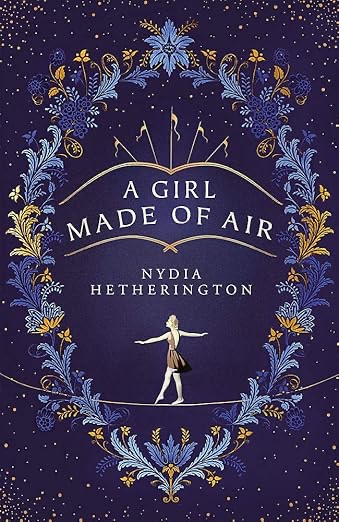
A Girl Made of Air by Nydia Hetherington

This is the story of The Greatest Funambulist Who Ever Lived…

Born into a post-war circus family, our nameless star was unwanted and forgotten, abandoned in the shadows of the big top. Until the bright light of Serendipity Wilson threw her into focus. 

Now an adult, haunted by an incident in which a child was lost from the circus, our narrator, a tightrope artiste, weaves together her spellbinding tales of circus legends, earthy magic and folklore, all in the hope of finding the child… But will her story be enough to bring the pair together again? 

I’ve recently read Nydia’s incredible new novel Sycorax, in fact today is her publication day. So I thought it might be time to revisit her debut novel, also a real favourite of mine.

Sometimes all you can say when you finish a book is ‘Wow’. When that happens I close the book and have a moment of reverence. I need a few moments, in silence, to take in what I’ve read. I often need overnight before I can start a new book. I suppose you could describe it as being haunted – the thought of a scene or a letter in a book that invaded your thoughts when you least expect it. It stays there, sometimes forever, to become a part of you. In the same way a particular aria or love song might forever float through your head. Some books lie on the surface, they pass the time, they amuse, and I do enjoy them but they don’t stay. Others get into your brain, like a complex puzzle you have to keep fiddling with, this way and that, until you find a solution. Some books enter your soul, they make you feel real physical emotions, they make you wonder in the same way you did as a child when a book took you away on a marvellous adventure. They touch you soul deep. This is one of those books. 

Nydia Hetherington is a sorceress. She has conjured up this box of terrors and delights from the depths of her imagination and it is incredible. We follow Mouse as she crawls, peeps, stumbles and walks around the incredible show that is a circus. Billed as a tale about the Greatest Funambulist Who Ever Lived I was expecting glitz and glamour, the front of house show. However, the author cleverly goes deeper than that, far behind the curtain. Incredible descriptive passages draw us in to Mouse’s world from the smell near the big cats enclosure, the feel of a llama’s fur against your skin, the cramped but colourful quarters of the circus folk and the volatile relationship between her mother Marina and father Manu. So focussed on each other, her parents seem barely aware of her existence as she watches the drab and grubby circus folk become stars of the ring with their make-up, sequins and feathers. Her freedom gives us access to every part of this wondrous world, but freedom has its dark side and for Mouse this is really a tale of parental neglect. She is brought up by the circus, by the mother of the company Big Gen and her husband Fausto and eventually by Serendipity Wilson, the flame haired high wire artists who takes Mouse under her wing. Under her tuition Mouse becomes an incredible tightrope walker, able to take her place under the spotlight like her parents. 

Serendipity with her flaming hair that glows like amber is from the Isle of Man and brings with her all the mythology of the islands. She weaves incredible stories for Mouse, who now sleeps in her wigwam, in much the same way as mystical fog weaves around her according to her mood. She thinks that Manu and Marina barely notice she’s gone, but Manu enlists her help to get Marina performing again. They coax her into the tank to perform as a mermaid for the crowd. Even so, there is no discernible warmth between Mouse and her mother, Marina’s focus is always inward to her own problems. It is after her mother’s death that Mouse is handed a letter from her mother, in which she admits to never feeling love for her child and explains why. For me this was the most powerful part of the book, and brought me to tears. The author has cleverly placed this moment of stark reality within the magic and it gives the letter huge emotional impact. It hits home the idea that all freedom has a price. Mouse has never had a mother, except the warmth and care she’s had from Serendipity and never questions whether that will change. 

Book ending these stories is an elderly Mouse, recounting these stories to a journalist. Living in New York, she recalls her arrival in the city and her expectations of Coney Island. She is older and recounts her past from a distance, but what comes across is terrible regret and sorrow around the disappearance of a child from the circus family. She is haunted by a flame haired Serendipity Wilson who, like all mothers, lives on as a voice in Mouse’s head; her inner critic commenting on all she does, only silent when Mouse truly lives in the moment. It’s in these sections that we see what the book is truly about. I expected a book about the spectacle of the circus, the showmanship and all that glitters. Instead this is a meditation on what it is to be human. The journalist asks the questions that go beneath Mouse’s surface and see the gritty truth; we are all flawed and we all make mistakes. This is a beguiling mix of myth, magic and human frailty. Truly brilliant.

Meet the Author

From Leeds — although born on Merseyside and spending the first few years of life on the Isle of Man — Nydia Hetherington moved to London in her early twenties to embark on an acting career. Later she moved to Paris where she created her own theatre company. When she returned to London a decade later, she completed a creative writing degree graduating with first class honours.

Posted in Throwback Thursday

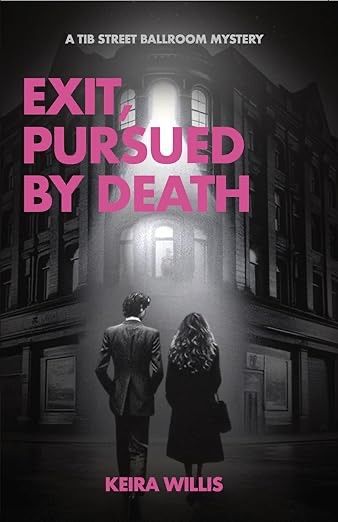
Exit, Pursued by Death. Tib Street Ballroom 2. By Keira Willis.

Unusual police departments have been a bit of a theme this month, with this being the third unusual investigation I read in February. This was a very spooky second visit to the unusual police department, housed in Manchester’s Tib Street Ballroom. We follow DI Andy Joyce, his team and their consultant Peggy who has some otherworldly skills and expertise. We’re at the Palace Theatre, where the cast are struggling to rehearse their play thanks to a dark, swirling and angry spirit. For some reason it wants them dead or the play cancelled at the very least. Lady Bancroft’s Rose has been performed only three times since 1922, but there has been a mysterious death each time. Particularly affected is Lavinia, a blonde actress who has taken over the play’s main role, since the original actress is now too traumatised to continue. Lavinia seems to be the focus of most of the spooky activity and she’s quite happy to cast Andy in the role of her rescuer – cue a few eye rolls from Peggy. More disturbing than the theatre is Andy’s home, the same cottage he grew up in with mum Agatha and brother Rob. While he knows Rob is there, he’s never been a difficult or angry ghost. Now strange things have started happening that make him think the ghost is angry, leading his guilt over Rob’s death to go into overdrive. With Andy and Peggy at odds with each other, will he ever found out what’s going on?

Similar confusion was happening at the theatre as more of the spirit’s angry tricks come to light, including an attack on Lavinia and another on her dressing room where words are written in black all over the mirror and the ceiling. Nothing adds up. No one has had time to create this effect and the only person who’s been inside is Lavinia. Peggy makes contact with a rather dapper ghost called Alistair, who tells her that thanks to the theatre’s busy past there’s more than one ghost haunting various parts of the building. He identifies Jock as the swirling shadow ghost who’s causing problems, but what the team need to work out is why this theatre and this specific play? Despite being in shadow form Jock seems capable of manipulating objects and attacking those he isn’t happy with. Or is there a human element to to this mystery? This could explain Higson’s insistence that the team stay at the theatre even though no crime has been committed. Either way it is a bonus for Andy, who can’t bear to go home and sets up a camp in the empty ballroom. For Peggy, family is also a problem. Charlie is his usual self, popping in and out when he feels like it and drinking with Higson. When it becomes clear that the play is being staged for charity her worst fears are realised. It’s the charity run by her mother and her partner Edgar, previously Peggy’s fiancé. How will she cope in the same room as them?

I thought the author managed to combine all the elements of her story well, although it wasnt the theatre case that caught my attention most. It was the terrifying scenes at Andy’s house and the ‘will they, won’t they” of him and Peggy. I love the humour laced through the action, especially the North West tone. I love that female characters are in the thick of the action and Marnie is honestly the ghost that keeps on giving. We’re no further forwards in knowing how she flits from place to place and person to person, but her entertainment value is unrivalled. From a psychological perspective we can see certain characters setting their boundaries in life, especially where parents are concerned whether they are alive or dead. It was interesting to learn more about Andy and his childhood which sounds bewildering. Once his father is gone and mum disappears into her church, the boys are almost abandoned – especially if they don’t fall in line with her new rigid religion. I know the third book is on it’s way and I’m looking forward to it already. I’d love to know more about how Higson set up the unit and what happened to Andy’s predecessor who still haunts the ballroom and chips in at briefings. I’m also looking forward to more of Peggy and Andy’s story too.

Meet the Author

Keira Willis was born in Manchester in 1986. and grew up irresistibly drawn to mystery novels and ghost stories.

Her captivating 1980s-set ‘Tib Street Ballroom’ is a thrilling crime and mystery novel with a ghostly twist, following DI Andrew Joyce’s transfer to an obscure police department in Manchester. Joyce must put aside his inherent scepticism and confront the impossible if he has any chance of solving Marnie Driscoll’s murder, working alongside reluctant ‘consultant’ Peggy Swan, who just so happens to be able to speak to the dead.

Book two of the Tib Street Ballroom series – ‘Exit, Pursued by Death’ – was published to acclaim in October 2024, and follows the Tib Street team as they investigate the dark history of a play, while trying to prevent another death from occurring on opening night.

With a belief that adults deserve their own share of action-packed, thrilling, and humour-infused adventures, Keira tells stories that blend intrigue with spirited storytelling and memorable characters, inviting adults to rediscover the exhilarating action-packed adventures that they immersed themselves in as children.

Posted in Throwback Thursday

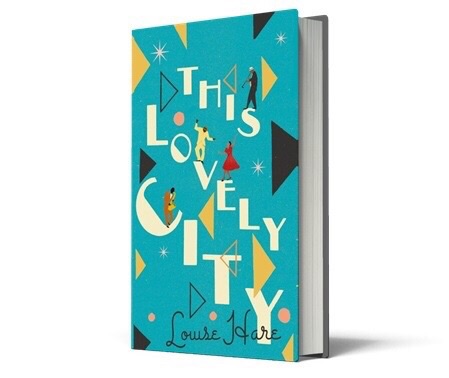
Throwback Thursday! This Lovely City by Louise Hare

This first of Louise Hare’s novels really stayed with me, it grabbed me early and never let go. When a writer whisks you so convincingly to another time and place it’s such an incredible skill. I found myself in post-Windrush London where new people are making the capital their home and the huge social change is causing friction. As one mixed race character observed ‘she was no longer the odd one out’ as she went to the market. More immigrants are arriving, wandering the streets, weighed down by layers thrown on haphazardly as the reality of a British winter starts to bite. However, as those first pioneers answered the call from the motherland, they’d found London not at all what they were expecting. The British government had put that call out to its colonies. They needed workers, to replace those men lost in WW2 and to rebuild cities recovering from the Blitz. Yet no one seemed grateful, no one said thank you and the living was far from easy.

We follow two main characters: Lawrie and Evie. They are courting in the old fashioned sense. Lawrie sees in Evie a nice girl, a girl who has been well brought up even though she has never known her father. He wants to do things properly, do right by her. So he calls and they go to the cinema or for a walk. Lawrie has come over from Jamaica and works part time as a musician in a local band and full time as a postman, with a sideline in the odd special black market delivery too. Evie has lived in London her whole life with her mother Agnes. They have been Lawrie’s neighbours ever since a rented room opened up at the house next door. The two women understand prejudice, because they too have been victims of it, and live a life kept very much to themselves. Evie is mixed race and Agnes, who is white, has been the subject of gossip and judgement ever since she Evie was born. So, although what transpires in the book may be shocking to us, it barely surprises them, because they know how people feel about any sort of difference from the white British norm. 

The story splits into two time frames approximately one year apart. In one, Lawrie is cutting across Clapham Common at the end of his postal route when he hears a woman shouting. She has found a baby in the pond. Lawrie rushes to help, but they are both too late. The baby becomes the book’s central mystery and because she has black skin, suspicion falls upon the already beleaguered Jamaican community. Rathbone, is the police officer assigned to the case and he relishes causing problems for the community. His suspicions fall on Lawrie, as the first man on the scene, but Rathbone doesn’t just investigate, he sets out to ruin Lawrie’s life. However, there is a secret to this baby’s background that is closer to home than Lawrie imagines.

I found myself rooting for Lawrie and Evie. I wanted them to be able to make marriage plans and live the simple, quiet life they dreamed about. Her mother Agnes has had to be very strong, being an unmarried mother of a mixed race child meant being ostracised. Evie has a childhood memory of her mother having the neighbours for tea when, against her instructions, Evie was caught looking down through the banisters. They never had tea for the neighbours again. It takes Evie several years to make the link; she is the reason her mum has no friends or visitors. This same hostility is now experienced by the men who arrived on the Windrush and it must have been bewildering. To be asked to this country, to fill a shortage of labour and pull a country out of difficulty, then meet nothing but hostility and suspicion from its people seems so unjust. 

A lot of the tension in the novel is around sex and relationships. When the band are booked to play a wedding, the British host is immediately taken aback but decides they can play. All is well until a woman stumbles on the dance floor and one of the band rushes to help. Her husband doesn’t appreciate his wife being touched by a black man and a brawl breaks out causing the band to run for their lives. Provocative women, like the character Rose, stir up tension even more. The men refer to her as Rita Hayworth, the red-haired Hollywood bombshell. When the men first arrive she helps with getting them settled. Then she offers to take Lawrie and his friend to the Lido, dazzling them in her bikini and flirting with Lawrie. She makes it very clear that she wants him with no thought to the consequences if her husband finds out. Interracial relationships are simply not accepted. As Agnes points out, her daughter Evie is far better off in a long term relationship with Lawrie, because although they come from very different places, society will view them as the same due to their skin colour. 

I felt immersed in this world the author has created. From the cold mornings on Lawrie’s postal round, to the smoky nightclubs the band plays into the early hours. This is my grandparents generation so I could also imagine the homes, the struggle of still being on rations and for the women, trying to look nice on a tight budget. It reminded me of stories my grandma and great- aunts told me about going out dancing in post-war Liverpool. I felt so much for Evie, especiallywhen her whole story unfolded towards the end of the novel. There is a whole cast of interesting characters, but Evie and Lawrie are this novel’s heart and I desperately wanted life to work out for them. Louise Hare has written a vibrant book with an incredible sense of place and time, and interesting characters. I loved it. In fact it’s a mark of how much I now love this author that I pre-ordered her next book due in 2026.

Meet the Author

Louise Hare is a London-based writer and has an MA in Creative Writing from Birkbeck, University of London. Originally from Warrington, she has found inspiration in the capital for much of her work, including This Lovely City and Miss Aldridge Regrets.

This Lovely City was featured on the inaugural BBC Two TV book club show, Between the Covers, shortlisted for the RSL Ondaatje Prize, and longlisted for the HWA Debut Crown Award. Louise was selected for the Observer Top 10 Best Debut Novelists list in 2020, securing her place as an author to watch.

Posted in Throwback Thursday

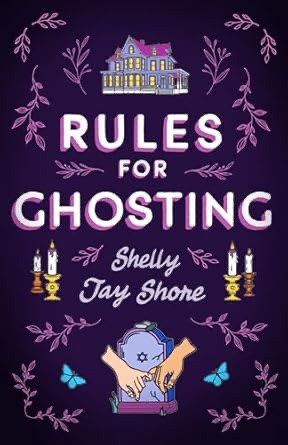
Rules for Ghosting by Shelley Jay Shore

There are three rules about ghosts. Rule #1: They can’t speak. | Rule #2: They can’t move. | Rule #3: They can’t hurt you.

Ezra Friedman grew up in the family funeral home which is complicated for someone who can see ghosts. Worst of all was his grandfather’s ghost and his disapproving looks at every choice Ezra made, from his taste in boys to his HRT-induced second puberty. It’s no wonder that since moving out, he’s stayed as far away from the family business as possible.

However, when his dream job doesn’t work out, his mother invites him to Passover Seder and announces she’s running away with the rabbi’s wife! Now Ezra finds himself back at the funeral home to help out and is soon in the thick of it. He has to deal with his loved ones and his crush on Jonathon, one of their volunteers. Jonathon is their neighbour so Ezra is trying to keep the crush under wraps while also dealing with Jonathon’s relative, a spectre who’s keen on breaking all the rules. Ezra must keep his family together and avoid heartbreak, but is starting to realise there’s more than one way to be haunted. 

This book came totally out of left field and I didn’t know what to expect at all, but I fell in love with it. I do connect to books about grief and loss as it’s something I’ve gone through but I also loved it’s emphasis on family, culture and tradition. Yes the book is about grief, but it’s also about love. Ezra is a Jewish trans man so it’s also firmly based in the queer community and I enjoyed that too. The romance is quiet and more of a slow burn than the heat of passion, tempered by Jonathon’s recent loss of his father. It depicts the chaos and disruption of death beautifully, especially in how it affects family members differently and can come between them. Ezra and the funeral staff treat deceased persons with respect; they’re both gentle and caring in their work with them and their grieving families. The author takes us deeply into the customs and rituals surrounding a death in a Jewish family and I find this so interesting because we can all learn from each other’s ceremonies and traditions. I felt that their attention to detail and the respect they had for the people brought to their funeral home was ultimately life affirming. Their deference shows how precious life is and that our relationships with family are the most important thing of all. 

I also loved the author’s focus on something that I think is the secret to a happy and contented life – being your authentic self. We can see how Ezra’s connection to his communities – family, religion and the queer community – grounds him and reminds him of who he is. When we’re not true to who we are we start to feel dislocated and uncomfortable. Through Ezra’s story we explore how to find yourself again and hopefully be your authentic self. The book felt so much more than a romance, because it’s really a family story too. With a delicate touch the author also brings a light humour to the story, softening the grief and loss without being disrespectful which is a difficult balance to find. It surprised me that this was a debut novel because she’s managed that balance perfectly. My only criticism is that I was hoping for more ghosts. They were more of a background feature than relevant to the plot and from the blurb and title I expected more. Having said that it’s still a great story and I’d love to read more from this writer. 

Published Aug 2024 from Trapeze.

Meet the Author

Shelly Jay Shore (she/they) is a writer, digital strategist, and nonprofit fundraiser. She writes for anxious queer millennials, sufferers of Eldest Daughter Syndrome, recovering summer camp counselors, and anyone struggling with the enormity of being a person trying to make the world kinder, softer, and more tender. Her work on queer Jewish identity has been published by Autostraddle, Hey Alma, and the Bisexual Resource Center.

Posted in Throwback Thursday

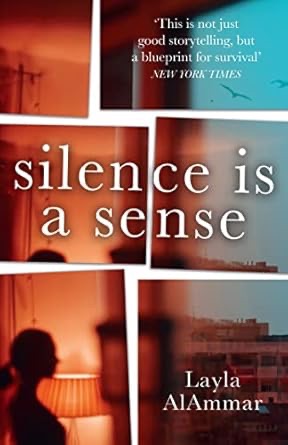
Silence Is A Sense by Layla AlAammar

Even though I’m so late reading this book, in a way I’m glad. For the past two years we have been embroiled in the aftermath of the previous government’s decision to house asylum seekers at the the now closed RAF base close by. While many of the community were worried about the issue, our reasons for concern were very different. When a local meeting descended into a heated exchange, it became clear that despite our concerns for the asylum seekers, we couldn’t voice them because of the sheer weight of people strongly opposing the plan for other reasons. Local concerns became lost in the wider debate on refugees. The campaign was targeted by far right organisations that didn’t really care about reasonable concerns, they just wanted to use the opportunity for their own political gain. Known fascists became interested and the gate to the base became a makeshift camp festooned with flags, stop the boats banners and others claiming asylum seekers were paedophiles. It became really hard to drive past and see all this racism and misinformation on the gates of such an iconic base, ironically known for it’s fighting against a fascist regime taking over Europe. We became part of an organisation set up to support the asylum seekers as they arrived into this hostile environment. When the new government changed course with the policy, we were relieved to know that there no longer fascist organisations camping out up the road. This book gave me more insight into a refugee’s journey.

The writer cleverly chooses a fragmented structure to tell her heroine’s story. Named ‘The Voiceless’ she writes about her experience as a way of processing her story and communicating it to other people as far as she can. Her memory comes in snippets, so her narrative moves back and forth in time and might seem a bit sketchy. Imagine everything you have is taken away from you. Your home is rubble, everything you owned that said something about who you are is gone with it. You have no documents to prove your identity or your education. Everyone you have known is either dead or scattered to the wind. She has escaped Aleppo with nothing. If you think about how your belongings, choices of clothing and your photographs say something about who you are, now imagine it gone. How do you keep a sense of self? Especially when you’re seeing or subjected to atrocities like killing, abuse and rape. Your psyche becomes shattered. Our narrator is trying to record those fragments, to bear witness and also to put the bits of herself back together. It might feel strange, even jarring at first but it’s supposed to be. It’s meant to confront and make you think.

The author shows us how she tries to embark on a future and make connections. She’s starting a journey of self-discovery, rebuilding herself in this new environment. She writes from home and watches her neighbours, keeping her eye on them. It’s called hyper-vigilance and it’s hard for her to drop these habits even though she’s now safe. Her muteness isolates her from others, in fact many people assume she’s deaf as well. She takes small steps outside, using the shop and going to the mosque and starts to meet people. Her observations of her neighbours are quite humorous as she gives them names that reflect their behaviour – the Juicer and No Light Man. Her insight into us is brilliant. She has that outsider’s gaze and because she doesn’t want to reveal too much about herself at first, she can use these observations. She writes about the people she sees, the strange way of life she can observe with so much scrutiny because it’s alien to her.

Slowly she starts to process and share her own story. She once had a somewhat privileged upbringing, she was well-educated too but war has left her with nothing. Then there’s the war, loss and the terror of trying to get to a place of refuge; a refuge that isn’t always the safe place it seems. She slowly makes space for new people in her life. I felt like her writing and sharing was helping her heal, remembering the trauma and processing it fully helps make room for growth. As someone who advocates writing therapy I found this so moving. The author has captured this process so beautifully as the writing becomes less fragmented and less about the past. This is such an important story and I’ll be buying the book for a few friends who I know will want to read it and maybe a few who wouldn’t. The sections of her time in Syria and travelling to the UK is so evocative, I defy people not to be moved by the raw truth of her experience.

Posted in Back of the Shelf, Throwback Thursday

The Lingering by S.J. Holliday

In the free reading time I have towards the end of the year I’ve chosen to read the back catalogue of a few authors and S.J.Holliday happened to be someone I was really interested in. I love most of Orenda Books’s authors and I first came into contact with them through S.J. Holiday’s book Violet, which was one of my first ever blog tours. I loved the psychological aspects of the book and the way the author saw women as they really are – the heroes of their own stories, making autonomous decisions with the potential to be just as violent and chaotic as a male character. I’ve had The Lingering on the shelf for a while, but something made me take it down last week to read while soaking in the bath. Ali and her husband have made a huge decision. They’ve sold up almost everything they own and joined a commune of people living in what was an old psychiatric unit. At first they’re unsure of the group and their surroundings, but as her husband starts to settle in, his wife Ali seems less able to. Is it the strange house, with it’s abandoned wing full of old psychiatric equipment? Is it the sceptical locals? Or do Ali and husband Jack have dark secrets of their own?

The setting of this story is so gothic and atmospheric, with a dark history that slowly reveals itself both through local’s stories and the things left behind – physical and paranormal. Angela, the other narrator in our story, is the keeper of these stories and an amateur investigator of the paranormal. She has the house wired with sound equipment and cameras, particularly those areas where her sixth sense starts tingling. One of those areas is the bathroom adjoining Ali and Jack’s new bedroom, but also in the attic room above. I was slightly alarmed by the way she was watching the new couple, in a detached way almost like they were animals in an experiment. She seems like a new age, tree hugging, ethereal type of woman who has really bought into the ethos of the community. Ali notices her reverence in the rituals they share as a group and in the meditation sessions. Her name outlines her role within the group, she is the angelic and slightly naïve little sister to the others. Yet there is another side to her, the side that enjoys the stories told by locals like Mary in the shop about the house’s witches and the later rumours surrounding the asylum. She seems to enjoy the intrigue and proves to be quite the detective when it comes to Ali and Jack, showing a sneakier and unpleasant part to her character. The house itself is a labyrinth, with secret rooms and endless corridors. That strange juxtaposition of the natural and the man made felt wrong. All the hospital equipment and furniture just sitting there as if still being used, whilst the outside elements and nature are starting to encroach inside left me feeling uneasy. I felt as if any moment Ali or Angela might look in the mirror and see a busy ward behind them, like a glimpse through time.

In my closest city of Lincoln there is an old Victorian asylum on the outskirts, now slowly being developed into residential spaces. For years it remained deserted and derelict, with a strange aura around it. I wouldn’t have been surprised to see a 19th Century nurse at one of the broken windows, because it was untouched all that energy still seemed present. Local explorers did search around inside and take pictures of the iron bedsteads and old medical equipment just lying around as if someone had only just left the room. The mould, piles of rotted leaves, cobwebs and dirt added to the sense of abandonment. You certainly wouldn’t have found me in the there at night! This was exactly what was running through my mind as I was reading and it set me on edge. This house felt as if some parts were inhabited by the living and others by the dead. I won’t spoil the scary moments for other readers, but Ali’s first experience as she climbs into the bath after their long journey would have sent me running back up the drive. It has double impact because not only is it inexplicable, it’s an echo back to events that really happened in the house’s past, events that are haunting even without their ghostly context.

I didn’t trust anyone after a few chapters, despite at first happily reading Ali’s experience and trusting her account. As a reader I’m used to fictional communities like this being sinister under their surface mantras of love and light. Yet Angela makes discoveries that put the couple’s story in doubt and I began to wonder about Jack. What had forced these people to leave behind two respected professions and could it have something to do with a box of hidden news cuttings? One of the most tense sections of the book had nothing to do with the paranormal and involved some of the villagers. Late night Ali notices a 4X4 vehicle coming up the drive with a large lantern on the roof and several men inside, most of them holding a gun. As she goes outside to confront them they explain that they’re merely ‘lamping’ nearby and have an agreement to flash their late at the community leader’s bedroom window so he knows they’re nearby. Much as it seems ridiculous to flash a light in someone’s window so you don’t disturb them, their excuse is a plausible one and it’s something I often see in the fields surrounding us. Yet there is an undercurrent in their conversation with Ali and when explaining what happened she does reference Straw Dogs, a violent 1970’s film where an academic and his wife move to the country and are terrorised by the villagers. However, her reaction is excessive and made me wonder what had happened in the past to trigger her that way. The author flips us between Angela and Ali, building the tension towards some sort of confrontation. Will Ali find out that Angela has been watching them and explode or will Angela’s snooping reveal something dreadful about the new recruits? I loved the hauntings, especially the emotive little child’s wet footprints that dot around the place. Do these apparitions have a malign purpose or are they simply trapped in a place where traumatic events play over and over like a continuous cinema reel? This is a brilliantly tense and spooky read that seems perfect for autumnal evenings, but might put you off baths for a little while.

Out now from Orenda Books

Meet the Author

Susi (S.J.I.) Holliday is the bestselling Scottish author of 11 novels, a novella and many short stories. By day she works in pharmaceuticals. She lives in London (except when she’s in Edinburgh) and she loves to travel the world.

Posted in Throwback Thursday

The Appeal by Janice Hallett

I came late to Janice Hallett with her novel The Alperton Angels so it’s taken a hiatus from blog tours to finally catch up with her debut novel The Appeal. If you’ve been wondering whether it lives up to the hype? It definitely does. We’re taken to the world of the Fairway Player, an am dram group in an affluent village. It’s time for the players to put on a production of Arthur Miller’s All My Sons and the usual suspects are readying themselves for auditions. Two events will affect the run: founder members Martin and Helen Hayward find out their granddaughter Poppy has a brain tumour and a new couple move into the village. Sam and Kel Greenwood are nurses and have completed years of aid work in Africa. As fundraising begins for Poppy to have experimental treatment in the USA everyone in the friendship group commits themselves to helping. All except one villager, who is suspicious and starts to make enquiries about the Hayward family. Someone within the players loses their life and another is already in prison on remand. QC Roderick Turner assigns law students Charlotte and Femi to the case. As they review the evidence they start to wonder if the right person is in prison and if even darker secrets lurk beneath? 

The first thing that’s different about this book is the structure. We’re told the story through the WhatsApp messages of Femi and Charlotte as they review the evidence in the form of texts, emails, letters and other documents. At first it’s a bit disorienting because there are so many characters and it’s hard to remember how they’re all related. Luckily there’s a good glossary of characters and they do simply ‘click’ after a while. It’s a bit like dropping into a conversation half way through but Femi and Charlotte act as a pit stop where the case so far is reviewed and the relationships clarified. There are two main strands to the story and they concern the alpha family, the rich and established Haywards and new recruits the Greenwoods. The Haywards own The Grange, a venue for events and health treatments and their family home. Sam and Kel are the latest Fairway recruits, championed by Isabel Beck who they know from work and is a rather lowly member of the group. They are an unknown quantity and could easily upset the dynamic, especially since they’ve been used to a very different and dangerous environment.

Isabel felt to me like the character who holds everything together. Not only does she link old and new residents, she is the most prolific email and text writer. While her output suggests she is a very popular resident who’s at the centre of everything that happens in the village, there doesn’t seem to be much correspondence the other way. In fact other residents ignore Isabel, bitch about her behind her back or are directly snappish and rude. She’s fascinating because the relationships you’d expect her to have from her constant communication don’t seem to exist. She pays court to Sam Greenwood who works alongside her on the geriatric ward, but there’s no real evidence that they’re friends. She feels like a child in the playground that no one wants to play with. She’s on the periphery of groups, desperately laughing at their jokes and joining their events, but is never the focus of their interest. She doesn’t seem to have a solid sense of who she is, bending to the whims of whoever she’s with desperately wanting to be liked. It’s painful to read about her planning to do things with people who have no intention of doing them – she mentions her and Sam going out to Africa but theres no correspondence to show this was ever a shared plan. She reads like a borderline personality and while I felt sorry for her she also made my skin crawl a little. She’s desperate for any sort of attention and people who are desperate do desperate things. I was also a little suspicious of Poppy’s oncologist, especially when a potential donor turns up who’s happy to give 100k to the appeal but wants assurances, such as the actual supplier of the drugs? Also he doesn’t understand why he’s paying the doctor in the UK when the treatment is in the US. The doctor’s replies are vague and I wondered who was trying to benefit – the doctor, the Haywards? 

Just as we settle into the community the author throws in a new variable, such as Kel and Sam’s friend who’s arrived on a break from his own work in Africa. He creates a disturbance at the yoga fundraiser giving Poppy an African doll that he claims has curative properties. He seems drunk and is possibly a drug user too. Could he have committed the murder? We really don’t know who the murderer is, even if we can work out a few of the reasons why. The most fascinating part to me is the psychological make-up of the characters and the dynamics between them. Aside from Isabel’s potential personality disorder, there’s the Greenwood’s PTSD from their aid work and the sad fact that the Haywards lost a child years before. The dynamics are clever with Alpha family The Haywards at the centre of the community, backed up by those who police the community and make their ideas happen. A new couple changes and disrupts the group dynamics where existing people know their place and dutifully follow the group rules. Then there’s those who think they’re in the community, but aren’t. Once you’ve started this novel you won’t be able to put it down. Im laid up in bed or the couch at the moment, so I read this straight through and loved every minute. 

Out Now from Viper Books

Meet the Author

Janice Hallett is the author of five best-selling novels. Her debut, The Appeal, was awarded the CWA Debut Dagger of 2021 and was a Sunday Times’ Bestseller, Waterstones’ Thriller of the Month and Sunday Times’ Crime Book of the Month. Her second novel The Twyford Code was named Crime & Thriller Book of the Year in the British Book Awards 2023. It was also a Sunday Times’ Bestseller and a Financial Times book of the year. The Mysterious Case of the Alperton Angels was an instant Times and Sunday Times bestseller on its launch in January 2023 and a Richard & Judy Book Club pick.

The Christmas Appeal, a fast, fun and festive novella, was launched in October 2023. It was a Times and Sunday Times bestseller.

Her latest novel The Examiner, was an instant Times and Sunday Times bestseller on its launch and is out now.

Her first novel for children aged 8-12 is A Box Full of Murders, out in June 2025.

Janice is a former magazine editor, award-winning journalist, and government communications writer. As a playwright and screenwriter, she penned the feminist Shakespearean stage comedy NetherBard and co-wrote the feature film Retreat.

Posted in Personal Purchase

The Undoing of Violet Claybourne by Emily Critchley 

This was my read for over Christmas week and having started a couple of novels only to put them down again, I was beginning to think I’d lost my reading mojo. I was crying out for something that would draw me in quickly so I went for a tried and tested genre. A genre that maybe has a title, but I don’t know it. A preference I blame on reading Jane Eyre as a very imaginative ten year old. The formula is: huge rambling country house; time period from Victorian – 1930’s; young unsure girl/woman; aristocratic families with huge secrets. This fantastic novel from Emily Critchley fit the bill perfectly and was the only thing that drew me away from watching Black Doves all in one go! Our heroine is Gillian Larking, a rather invisible girl at boarding school who does her best to fit in but has no real friends. Gillian has lost her mother and with her dad working in Egypt feels very much alone. However, when she gets a new roommate that feeling starts to change. Violet is a bright, lively girl whose first goal is to break school rules and sneak up onto the school roof to check out the view. Despite her mischievous and seemingly confident nature, Violet is anxious and has a series of rituals to perform that help her cope: 

“She had to do certain things at certain times, like twirl around on the spot before she flushed the lavatory or touch a door handle twice before she opened a door. I often caught her whispering certain words to herself three times or counting to fifty on her fingers. When I asked her why she had to do these things, she struggled to tell me. For protection, was all she would say, or so that nothing bad will happen.”

She is also prone to emotional outbursts when things become overwhelming. Gillian is seemingly more aware that as young ladies of the middle and upper classes they must manage their emotions. She herself has had moments of despair and loneliness but has kept her tears for under the covers late at night. She also aware that girls in packs tend to sniff out weakness or odd behaviour and worries whether Violet’s rituals or ‘undoings’ as she calls them, could affect both their positions at school. Yet the other girls don’t seem to bother Violet and Gillian wonders whether that’s because she’s from a wealthy family. As Christmas approaches Gillian is delighted to receive an invitation from Violet to spend the holidays with her family at Thornleigh Hall. There she is dazzled by their slightly shabby country home, being waited on by the servants and Violet’s rather beautiful older sisters. Emmeline, the oldest and definitely in charge, wafts around in old Edwardian gowns whereas Laura is a rather more modern and fragile beauty. Both girls accept Gillian as one of their own, but their new friendship is tested by an incident on Boxing Day that will reverberate through the years. 

I have a soft spot for books set between the two World Wars and this had a lot of the themes pertinent to aristocratic families of the time. Thornleigh Hall is badly in need of repair but has a faded grandeur that is still impressive to Gillian. They’re a family living a way of life that ended twenty years before. They clearly don’t have the funds to maintain their estate, but Gillian notices the lavish breakfasts laid out every morning under silver dishes. Emmeline, the eldest sister, is the family’s great hope. She must find a suitor with money and secure the family’s fortunes with a sensible marriage. She has a candidate in mind, much older than her but definitely of the right class and enough money to save the hall for another generation. Gillian is enthralled by the sister’s unique style and confidence and realises that to some extent her friend Violet is the odd one out. Her nervous rituals, like her need to read Peter Pan over and over, suggest a deep insecurity in her character and even a fear of growing up. She warns Gillian that her sisters are not all they seem to be, but Gillian feels accepted for the first time in her life. There was an element of L.P. Hartley’s The Go-Between in her relationship with the sisters because she is naive and doesn’t realise when she’s being manipulated. On that fateful Boxing Day, Emmeline takes charge as always, instructing Gillian and Laura to lie or even pass blame onto a man who lives in the lodge house. Gillian feels obliged to go along with the plan because they’ve been kind to her. Again there are shades of another book here, Ian McEwan’s Atonement, where naivety and misunderstanding could lead to a terrible end for an innocent man of a lower social status. The full implications of these lies are utterly life changing for Violet, but almost no one escapes unscathed.

The novel is structured into four parts, taking us to different points in the life of Gillian and her relationship to the events of that Christmas in 1938. I’ve already mentioned L.P.Hartley’s The Go-Between and the first section has echoes of it’s opening page, from the naivety and social position of Gillian to the sense of delving into a past that’s long dead with it’s own social codes; “the past is a foreign country – they do things differently there’. We start the novel in 1999 when Gillian visits Thornleigh Hall, now under the guardianship of the National Trust. Over a slice of lemon and poppy seed cake, she ponders life from her time as a guest here to the recent death of her husband and the diary from 1938 that she’s come across while clearing out cupboards. This 1999 visit to Thornleigh is like travelling into the past as she strolls the rooms now on show and sees Lord and Lady Claybourne in the dining room complaining about their eggs and Laura in her stockinged feet reading a book on the library sofa. There is so much about this first chapter that draws us in: the suggested tragic circumstances of some members of the family; the emotional state of Gillian as a young girl who has lost her mother and is desperate for a role model; there’s also the hint of darker secrets lurking underneath the surface of this beautiful stately home. In the other three parts we’re taken to the aftermath of that fateful day in 1938 and then to London in 1942 where Gillian bumps into Laura’s husband Charlie. 

Finally part four brings us to the 1990s when Gillian and the Claybourne sisters are old women, taking us full circle to the beginning of the book. In each part there shocking revelations that leave Gillian in no doubt that the secrets from all those years ago are still having their effect. She has received a letter from Henry Cadwallander who has written to Gillian at his Aunt Violet’s request. Will she meet Violet and let her know that with the wisdom of experience she now understands her warning about the older sisters? I wondered if there would be closure or whether Gillian is always fated to be a horrified observer of the Claybourne’s family dynamics? This was an enthralling and fascinating look at a tumultuous time in history and it’s effects on one aristocratic family, observed through the eyes of a naive visitor. The author has created an incredible atmosphere that drew me in so strongly I felt like I was there. This is an amazing debut from Emily Critchley and I look forward to reading more of her work. 

Out now from Zaffre Books

Meet the Author

Emily Critchley has an MA in Creative Writing from Birkbeck, University of London. She currently lives in Hertfordshire in the UK.