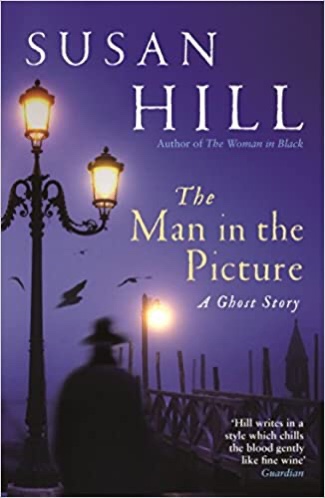
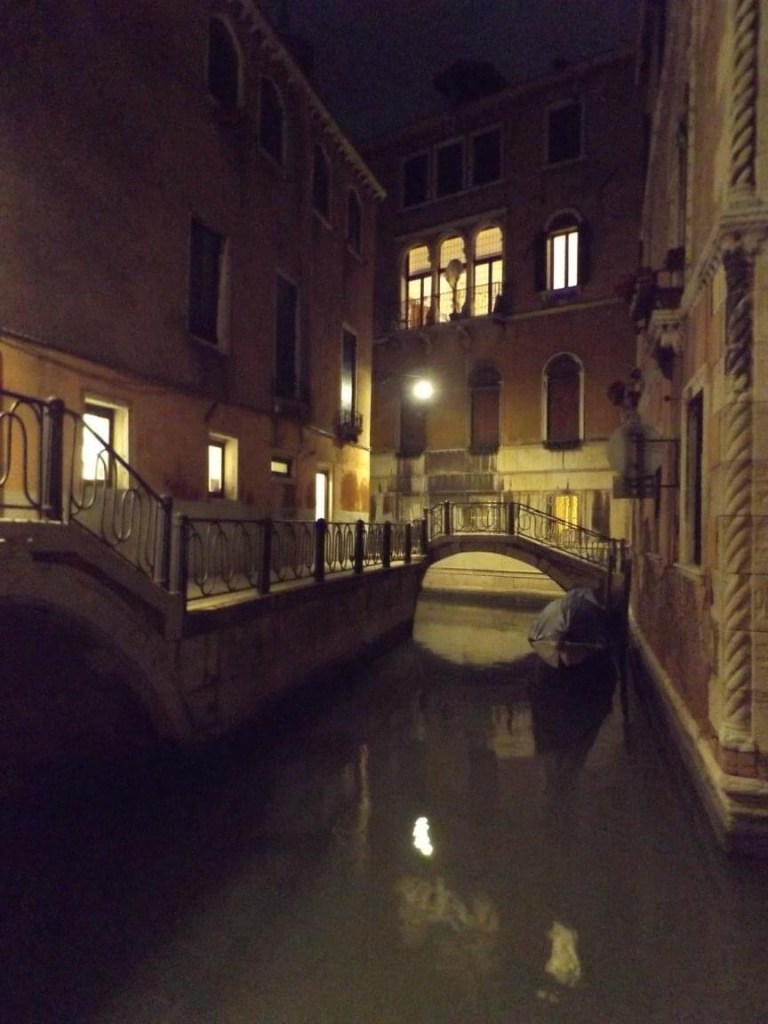
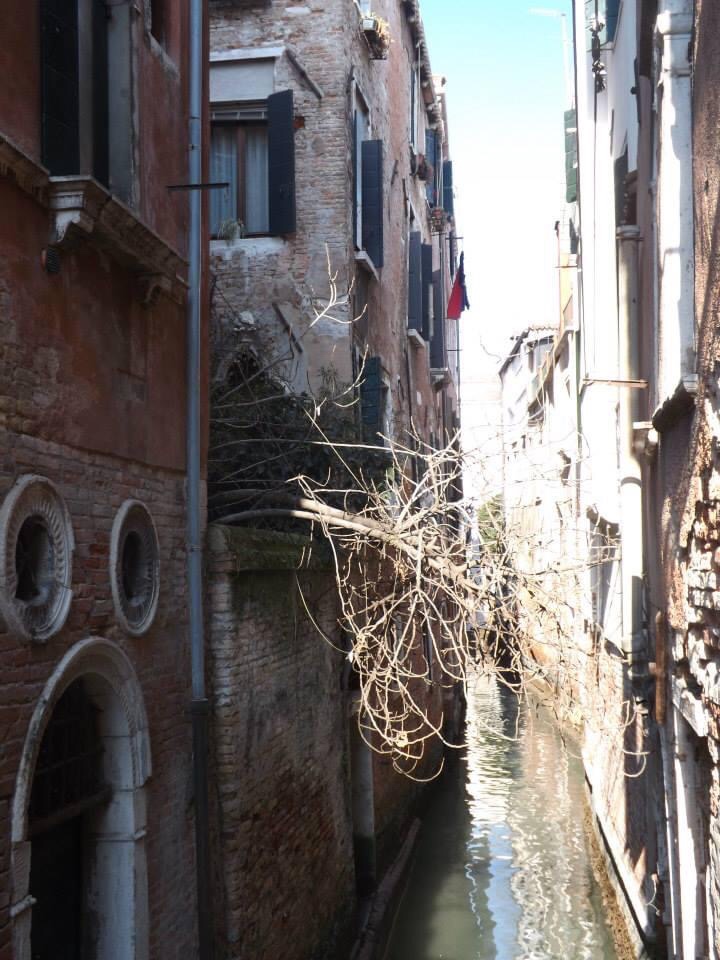
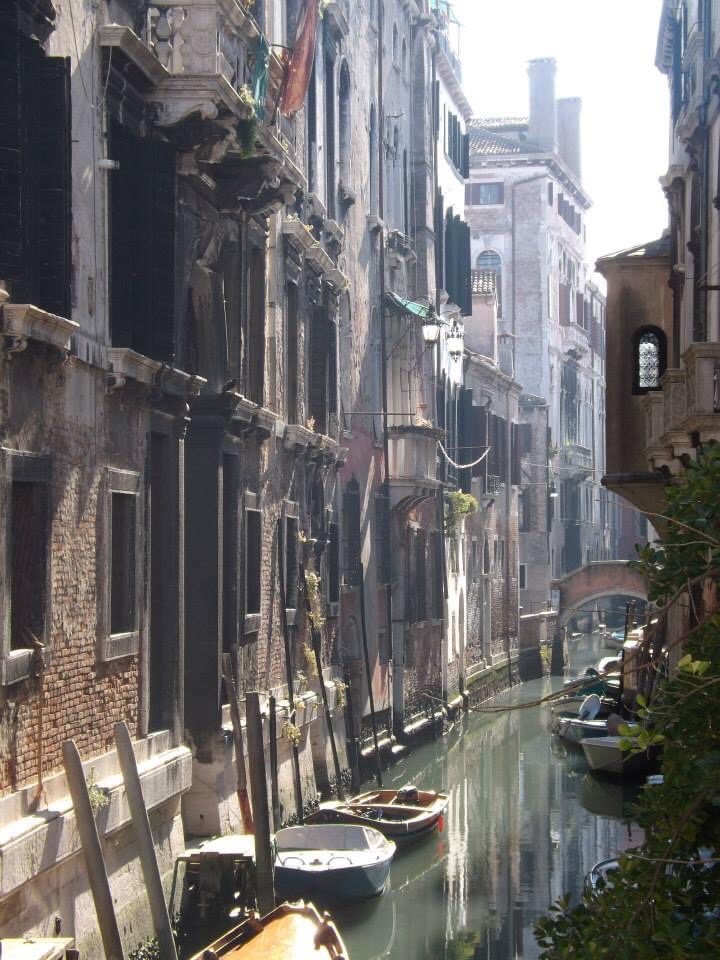
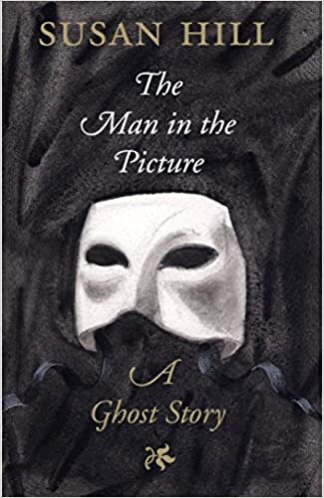
There are two reasons I was drawn to Susan Hill’s book The Man in the Picture. Firstly it was set in Venice, a place I love with all my heart and a great setting for spooky stories such as Daphne Du Maurier’s Don’t Look Now. I’m cheekily sharing some of those spooky corners I captured in photographs when I was last there. Secondly, when I started reading and our hero is in the rooms of his professor it reminded me so much of my friend Nigel, whose home was festooned with art, Venetian chandeliers and antique clocks. I feel that with all of Susan Hill’s books she raises the tension so slowly that you barely notice rather like the proverbial frog placed in a pan of cold water – the temperature changes so subtly the frog doesn’t jump out and is boiled to death. I often find myself reading one of her novellas thinking it isn’t really scary until I hear an unexpected noise and jump out of my skin! That’s a real skill.
Behind La Fenice is a very creepy spot indeed!
Our hero visits his professor on a cold winter’s night and notices a beautiful painting of the Venice carnival. For the first time he is told a macabre story about the painting. It doesn’t just imitate a Venetian scene, it can entrap someone within it. Whoever stares into the painting finds it exerts a power over their life and as Theo talks to others who’ve crossed paths with it, he unearths a profound sense of foreboding and unease. Within the painting is a young man, watching the festivities but instead of happiness there’s a look of horror on his face. Everyone else is masked, covering their identity. The professor is so attached to the painting that he has turned down lucrative offers for it. The narrator becomes interested in tracing the man in the picture, but finds much more than he bargains for as his professor dies and the painting passes into his hands. This obsession is compounded when his he gets married and his new wife Anne wants a honeymoon in Venice. Will they go and if they do what will happen to the picture?
A derelict corner in Santa Croce
This is a great novella that’s easy to read in an evening or afternoon. Best read in front of a roaring fire on a wintry night. Having been to Venice, I can vouch for how creepy it can be at night. There’s a creeping fog over the canals and many areas that become deserted at night leaving only the sound of water and boats creaking at their moorings. If you get lost at night, it can feel like an endless maze where you wouldn’t be surprised to see a masked and cloaked figure on a balcony. Hill brings that menace and mystery to the book, as well as a sense of evil. It made me think twice about buying any paintings when I was in Venice.
My favourite spot in San Polo
Meet The Author
Susan Hill has been a professional writer for over fifty years. Her books have won awards and prizes including the Whitbread, the John Llewellyn Rhys and the Somerset Maugham; and have been shortlisted for the Booker. She was awarded a CBE in the Queen’s Diamond Jubilee Honours. Her novels include Strange Meeting, I’m the King of the Castle, In the Springtime of the Year and A Kind Man. She has also published autobiographical works and collections of short stories as well as the Simon Serrailler series of crime novels. The play of her ghost story The Woman in Black has been running in London’s West End since 1988. She has two adult daughters and lives in North Norfolk.
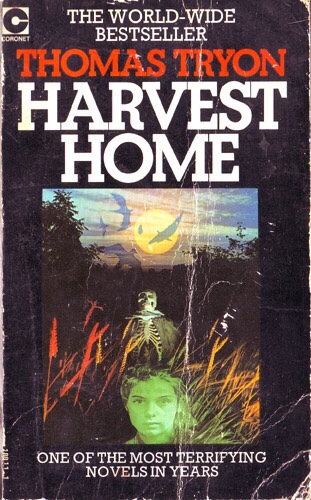
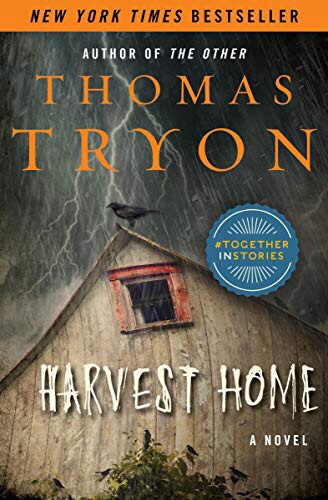
Harvest Home was one of the first books I sneaked off my mum’s bookshelf when I was a teenager. It was a TV series back in the 1970s when I was at primary school, but I remembered it as one of the scariest books I’d ever read. For some reason it has always stayed with me, possibly because of the set-up which is now so common in TV and film, there are shades of The Wicker Man, Midsommar and even the parody horror film Hot Fuzz. Theodore and his wife Beth have been watching their daughter struggle with severe asthma, not helped by New York’s air. This and the rising crime rates in Manhattan inspire the couple to the relocate upstate.
When searching New England the couple stumble across an idyllic village setting. Cornwall Coombe has the perfect nineteenth century farmhouse with attentive and friendly neighbours. Theo is sure that here they will lead a simpler life, closer to nature and closer to each other. However, what they find will be ultimately more terrifying than any alley in Manhattan! I remember loving the creeping sense of doom in the book and that wonderful contrast between the purity of nature around them and the cancer at the heart of the village. Our protagonist is the only one who sees the worrying signs at first, and I liked that friction between him and Beth. The women in the family seem to settle in quickly and never see anything out of the ordinary. There’s also the frisson of sex, as Tamar the village postmistress is openly flirty with Theo. She gives off definite sexy witch vibes as she smoulders at her male customers. However, Theo’s horrifying encounter with her young daughter could potentially scare him away. Will Tamar get to have what she wants?
The tension builds as the village’s harvest celebrations are planned. Theo suspects this is more than the average harvest festival and there is some dark secret to the ceremonies. Even worse his wife and daughter are now becoming involved. There is one other man in the village who Theo thinks might have unearthed the secret, but he is now blind and doesn’t get out very much. Is this the result of an illness, or has he been punished for what he has seen? The women definitely rule this village, running the festival and potentially some sort of coven, with the postmistress presiding over all. Theo has to ask himself whether he really wants to know the secrets of harvest home. The final reveal is deliciously dark, twisted and holds its biggest shock to the end. On rereading this still stands up well. Since the 1970s this genre is quite a well trodden path, it has the tension and menace of Straw Dogs and the surface charm of a wholesome village that does things for ‘the greater good’. This is a little known horror that has definitely stood the test of time.
If it hadn’t been for libraries this blog wouldn’t exist and I would be a very different person. I have my mum, another avid reader, to thank for this. Every Saturday morning my father would drop us in Scunthorpe and go off to play football. We would do some shopping in the market, pay Radio Rentals for the telly and then best bit – we would go to the library and change our books.
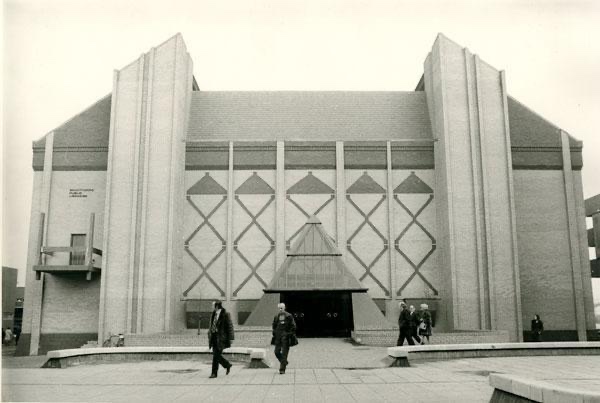
Scunthorpe Library
In the 70s/80s the library was a very odd looking building that visitors entered through a glass pyramid. A type of working class Louvre, usually covered in poo from all the pigeons in the square! However, it was the magic gateway to culture for me. A place where the message board advertised local gigs and theatre productions and downstairs housed an art house cinema, where Mum famously fainted after being overcome by Kevin Costner on the wide screen. We were a low income family, living in the middle of nowhere in Lincolnshire. Dad’s basic wage from the drainage board had to keep all four of us and the pets. Books were loved but not a priority in the budget, so I had to wait for Christmas and birthdays to get book tokens. This building was my holy grail of reading and I read classics, comedies, books about growing up. This was my window on the world and it didn’t matter if I didn’t like one, I could just put it to one side and take it back the following week. Mum would go upstairs to choose her books and I was left to browse on my own and I could take all the time I wanted.
After the library we would grab a sandwich and get the 336 bus to Ashby where my grandma and grandad lived. We would stay there until Dad picked us up at teatime. In spring and summer I might sit out in the garden or in Grandad’s shed which always smelled of shallots and had a pair of curtains at the window. While he pottered doing jobs and I would read my book. Or in the colder months we’d be inside, with the gas fire on so high it gave me a headache, and my Grandad in his red all-in-one (he was ahead of his time when it came to onesies). He’d watch rugby league or an old black and white film, while I read or we would read together. Grandad was very fond of pioneer stories, adventure novels and Wilbur Smith.
These are just a few of my book choices from those earliest days of picking my own books and cultivating a love of reading:
Little Women: This was the first book I read after completing the reading scheme at school. School had the first book, but I went to Scunthorpe Library to read the next stage of Meg, Jo, Beth and Amy growing up in civil war America. I borrowed this series so many times that I still know each girl’s story off by heart. Of course Jo is my favourite. I wanted to be a writer and have a room to work in with lots of books. However, I also grew to love Amy despite her haughty character and snobbish tendencies. These early attempts to seem genteel were affected and often satirised by her older sisters. Yet, Amy grows from there. She keeps a certain steeliness and determination to succeed, but becomes kinder, softer and more vulnerable. Her interest in the finer things though give her a certain polish, she is cultured and this gives her opportunities. Good Wives shows this growth. I love how this series seems to stay relevant for every generation, with the latest film taking an interesting, more feminist slant than before. I love this Puffin ‘In Bloom’ edition of the book.
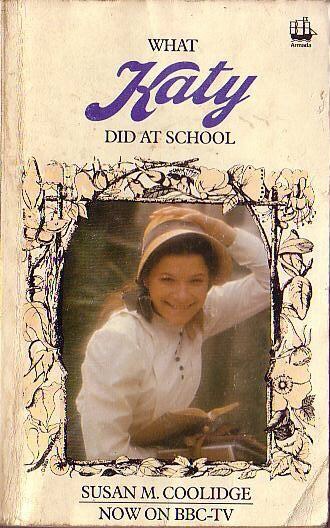
What Katy Did: I chose to read about more 19th Century growing up with Katy Carr and her house full of brothers and sisters. Katy’s mother had died and her father worked long hours as a local doctor, leaving the siblings to run a bit wild. Until her father’s sister, Aunt Izzy takes over as housekeeper. The strangest thing about reading this series was Katy’s accident on the garden swing that leaves her paralysed. I had an accident and broke my back at a similar age and was temporarily stuck in bed. I remember wanting to be like Katy or her mentor Cousin Helen who was always cheerful and helpful, even though she was in constant pain and a wheelchair user. In later years I wrote about the illness of Katy and other 19th Century heroines such as Beth March and Pollyanna. They all learn to be well behaved and Christian young ladies through suffering, if you read them from a feminist viewpoint. Back then though I just loved the sequels to Katy’s story – the secret societies at school, the trunks of goodies sent from home, Katy’s travels across Europe, particularly the Venice carnival. I’m sure it was this book that made me determined to visit Venice when I was older.
The Bagthorpes Saga: For humour I always enjoyed James Herriot’s stories, and later the Adrian Mole diaries, but the Bagthorpes were in a league of their own when it came to comedy. The four siblings William, Tess, Rosie and Jack were the children of writers – capable Agony Aunt Mrs Bagthorpe and the stressed out and highly strung scriptwriter Mr Bagthorpe. The whole family are always getting into scrapes with Grandma and their psychopathic four year old cousin Daisy behind all sorts of nefarious schemes. The siblings are all busy with accomplishments that Mrs Bagthorpe calls ‘strings to their bow’. All except Jack. Jack is the ordinary sibling, who enjoys walking his dog Zero and doesn’t really excel at anything. Aided by a hedgehog like housekeeper, Mrs Thorndyke, the Bagthorpe family lurch from one disaster to another; fires, floods, hauntings and kleptomaniac four year olds! I read these books over and over.
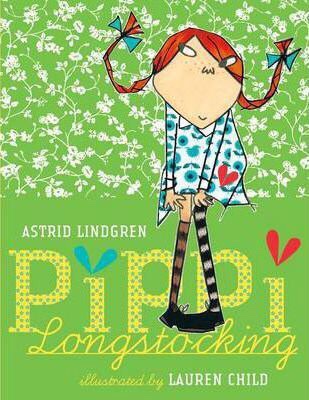
Pippi Longstocking: Pippi was one of those marvellous heroines who is an orphan so has no restrictions to her imagine or what she can get up to. Pippi Longstocking is only nine years old and lives all by herself with a horse, a monkey, a suitcase full of gold, and no grown-ups to tell her what to do. She’s wild and funny and her crazy ideas are always getting her into trouble! She devises adventures for her new found friends Tommy and Annika. Pippi performs at the circus, is reunited with her long-lost father, and takes her friends Tommy and Annika on a trip to the Canny Canny Islands. She also finds a squeazle, gives a shark a good telling-off, and turns 43 somersaults in the air. I loved her sense of adventure and wanted to feel as free as she did. I love the new gift editions illustrated by Lauren Child, they seem to capture the spirit of Pippi perfectly.
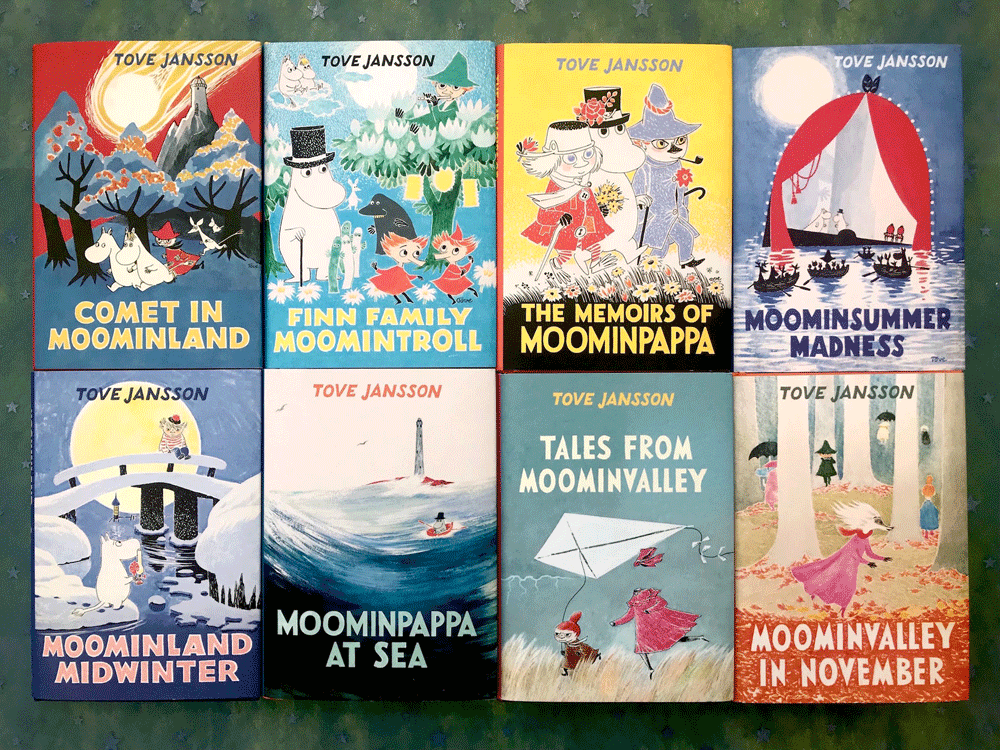
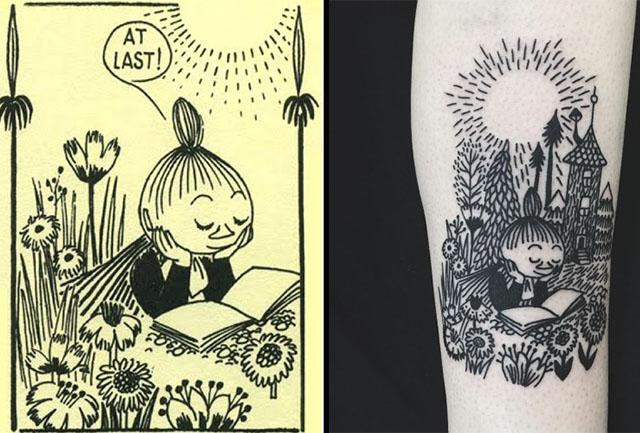
The Moomin Sagas: Oh how I love the Moomins! Today I have a Moomin dress, light box, mug collection and many other reminders of Tove Jansens eclectic characters. The Moomintroll family live in a tall blue house in Finland and are peaceful, happy creatures. Moominmamma is an earth mother type, always willing to feed another at her table and often taking in other creatures to help, such as the Hemulen – a tall, cross dressing botanist with depressive tendencies. Moominpapa likes nothing better than a quiet day fishing and smoking his pipe. Moomintroll is their son and has various friends such as Snufkin, a green clad, flute playing traveller who often wanders off to have adventures. Moomintroll’s love interest is the Snork Maiden, a Moomin with curly eyelashes, blond hair and a few cuddly extra pounds that she worries about (I feel a great affinity with her). There are adventures with eclipses, hobgoblins and comets, but it is the characterisation of these varied creatures that has always stuck with me and their philosophical musings on life. I’m considering a Moomin tattoo, perhaps Little My?
I’m thinking of a combi Moomin and reading tattoo to represent this childhood love of reading, all started with a library card.
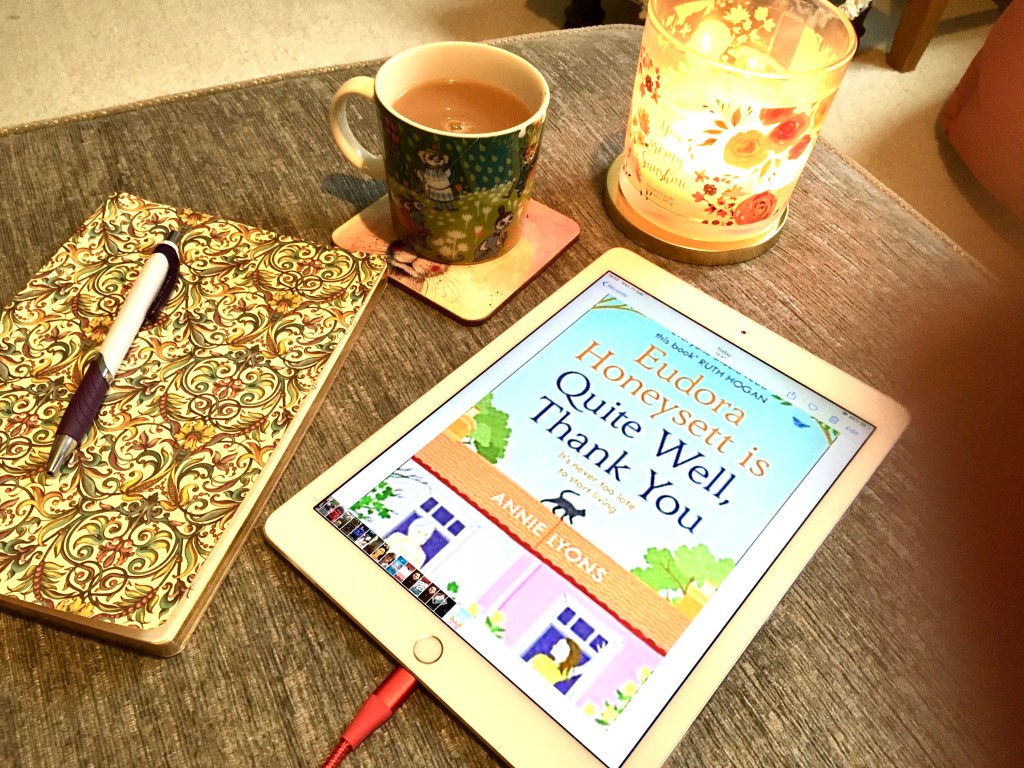
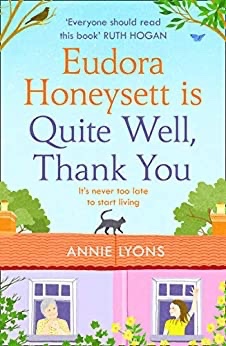
Synopsis | Eudora Honeysett is getting tired of life. If She can choose how to live her own life, why can’t she choose how to die her own death?
Eudora Honeysett is done – with all of it. Having seen first-hand what a prolonged illness can create, the eighty-five-year-old has no intention of leaving things to chance. With one call to a clinic in Switzerland she takes her life into her own hands.
But then ten-year-old Rose arrives in a riot of colour on her doorstep. Now, as precocious Rose takes Eudora on adventures she’d never imagined she reflects on the trying times of her past and soon finds herself wondering – is she ready for death when she’s only just experienced what it’s like to truly live?
Being offered this book was a real gift, because now I’ve discovered a new author I love. I can go back and read her other work and wonder why I’ve never come across Annie Lyons before. Thanks to Harper Collins and One More Chapter for bringing this writer and a beautiful character like Eudora to my attention. Eudora is 85 and lives alone in Cornwall with her cat Montgomery. She has sent what a lengthy illness and old age can do and doesn’t want a prolonged end to her life. Very decisively, she makes a call to Switzerland so she can organise an end to life on her terms, quickly, painlessly and without fuss. She’s quite sure no one will miss her. Her family are gone and the only people she knows are passing acquaintances, not friends.
Then a new family move in next door, with a little girl called Rosa. When the family introduce themselves to Eudora, she is mesmerised by this bright, bubbly little girl. She is like a whirlwind of love and fairy dust. Eudora has never had children so this is her first experience of spending time with one. Every experience they have together is brand new and Rosa has all the wonder and enthusiasm that has been .”missing from Eudora’s life. When she looks at life through Rosa’s eyes it becomes new, shiny and filled with hope. As they embark on adventures together, Rosa’s attitude to life starts to rub off on Eudora. She is enjoying life for the first time, trying new things and meeting new people. One of these new friends is Stanley and Eudora experiences making a new friend, with all the excitement and joy that brings. When the call comes from Switzerland will she be ready?
I think this book is an important lesson – to keep trying new experiences in life, no matter what your age and ability. Never assume you’ve done all the learning you’re going to do. When we throw ourselves into life, we get so much back. Eudora had backed away from life, possibly due to her past experiences, and as a consequence every day was the same isolated and limited existence. Together Rosa and Eudora throw the doors wide open and welcome life in. As a reader we bring our own experiences to books and I seem to be reading a lot of books lately that touch on my own life. I have a life limiting condition called multiple sclerosis, and when well enough, I work as a counsellor with people who have this condition and other disabilities. The ‘Switzerland option’ comes up a lot and many years ago someone I knew in my personal life did this. He threw a huge party for his final birthday, then flew to Dignitas and ended his life; MND was limiting him more each day and he was at the point where he was unable to swallow. When your life is limited, small pleasures can be so important. For him, the ability to enjoy and experience food was too much to lose. My own husband sometimes wished he’d taken this option towards the end of his life, but when we talked about those moments we had experienced together right up to the end, he agreed that he was glad not to have missed them.
It’s vital to continue to live, try new things and meet new people because all of those things enrich our lives. For me, I’m living something similar to Eudora’s experience. I found out many years ago that I would find it difficult to have children. After a third miscarriage, I made the decision that I couldn’t keep putting myself through this for the sake of my mental health. I have always felt that children are a gift, not a right, so I accepted that my life would follow a different path. When I met my partner after six years of living alone, I was aware he had two girls but got to know them very slowly. I didn’t want them to feel their relationship to their Dad had changed, or that I was trying to be their Mum, because they have a perfectly good one already. I was around but made sure they had plenty of alone time with Dad too. I was so worried about my effect on them that I underestimated the change they’d bring to my life. One afternoon when we’d all been living together a while, our fourteen year old came rushing in from a day out shouting for me and panicking; she’d spilled chocolate ice-cream down her white crop top and would I be able to get the stain out. I realised I was the ‘fixer’ of things, that she trusted me to be able to fix this for her. My partner found me in the downstairs bathroom crying into the Vanish stain remover! It was the moment I knew I was accepted and I was part of this family. They both bring such joy and fun into my life, and the experience of parenting I never expected to have and I love it, even though it’s not always easy.
I guess what I’m trying to say, is the book’s message really resonated with me. That we never really know when our life is over or when something new is going to come along and change everything. To make us see the mundane everyday in a totally different way. That’s what this novel does, and what makes it so uplifting. In a year that’s increasingly beginning to feel like Groundhog Day, this novel manages to lift the spirits and bring hope – quite an amazing feat when the central subject is death! This is the right time for a novel like this, if ever we needed an uplifting, joyous tale like this, it is now. This shows what an incredible writer Annie Lyons is, because she has taken a deep, difficult subject and yet left the reader feeling hopeful for the future. Eudora is such a great character, developing from a curmudgeonly old lady to someone full of life and love. I enjoyed the flashbacks to her past where we see how she came to be a lonely, isolated woman who doesn’t want to live. She goes on a huge journey emotionally, and the dual timeline shows us this – one journey leading to hopelessness and the current journey towards joy and re-engaging with all that life has to offer.
The portrayal of Rosa was brilliant, because of her innocence, especially where it is highlighted against Eudora’s character. Rosa doesn’t see age or grumpiness. Eudora, and Stanley from down the road, are simply two friends she can play with and create and create adventures for. She doesn’t see their potential limitations and I think that says something about the way we treat older people – is it society’s tendency to avoid ageing? Do we see their lives as over and assume they have nothing to contribute? Is it when society stops seeing them as worthwhile, that they become isolated and dissatisfied with life? We need to stop seeing ages, and other potential differences, and instead see people with so much to offer us. This is one of those books that has arrived without hype or fanfare, but has bloggers shouting from the rooftops. This book is emotionally intelligent, has multi-layered and well written characters, with a storyline that will draw you in and enrich your life. If you need a lockdown lift or the impetus to start living again then this wonderful book is for you.
Meet The Author | After a career in bookselling and publishing, Annie Lyons published five books including the best-selling, Not Quite Perfect. When not working on her novels, she teaches creative writing. She lives in south-east London with her husband and two children.
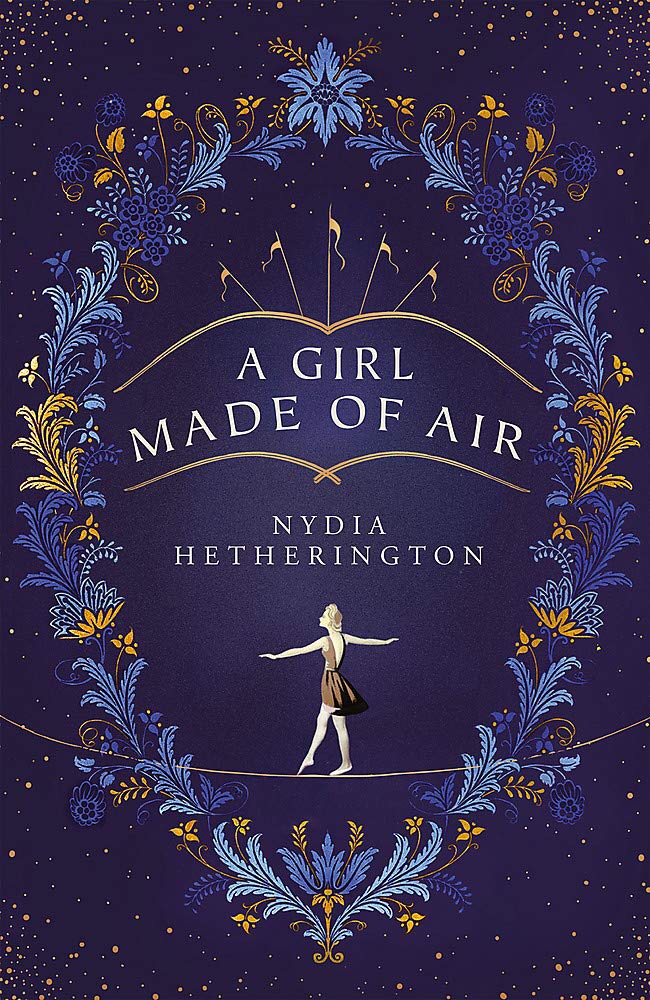
Sometimes all you can say when you finish a book is ‘Wow’. When that happens I close the book and have a moment of reverence. I need a few moments, in silence, to take in what I’ve read. I often need overnight before I can start a new book. I suppose you could describe it as being haunted – the thought of a scene or a letter in a book that invades your thoughts when you least expect it. It stays there, sometimes forever, to become a part of you. In the same way a particular aria or love song might forever float through your head. Some books lie on the surface, they pass the time, they amuse, and I do enjoy them but they don’t stay. Others get into your brain, like a complex puzzle you have to keep fiddling with, this way and that, until you find a solution. Some books enter your soul, they make you feel real physical emotions, they make you wonder in the same way you did as a child when a book took you away on a marvellous adventure. They touch you soul deep. This is one of those books.
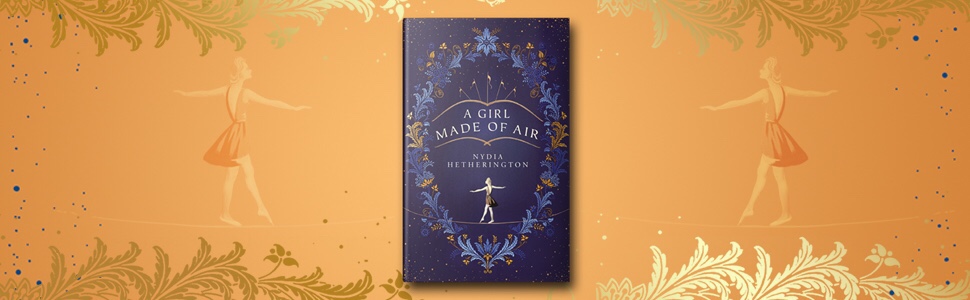
Nydia Hetherington is a sorceress. She has conjured up this box of terrors and delights from the depths of her imagination and it is incredible. We follow Mouse as she crawls, peeps, stumbles and walks around the incredible show that is a circus. Billed as a tale about the Greatest Funambulist Who Ever Lived I was expecting glitz and glamour, the front of house show. However, the author cleverly goes deeper than that, far behind the curtain. Incredible descriptive passages draw us in to Mouse’s world from the smell near the big cats enclosure, the feel of a llama’s fur against your skin, the cramped but colourful quarters of the circus folk and the volatile relationship between her mother Marina and father Manu. So focussed on each other, her parents seem barely aware of her existence as she watches the drab and grubby circus folk become stars of the ring with their make-up, sequins and feathers. Her freedom gives us access to every part of this wondrous world, but freedom has its dark side and for Mouse this is really a tale of parental neglect. She is brought up by the circus, by the mother of the company Big Gen and her husband Fausto and eventually by Serendipity Wilson, the flame haired high wire artists who takes Mouse under her wing. Under her tuition Mouse becomes an incredible tightrope walker, able to take her place under the spotlight like her parents.
Serendipity with her flaming hair that glows like amber is from the Isle of Man and brings with her all the mythology of the islands. She weaves incredible stories for Mouse, who now sleeps in her wigwam, in much the same way as mystical fog weaves around her according to her mood. She thinks that Manu and Marina barely notice she’s gone, but Manu enlists her help to get Marina performing again. They coax her into the tank to perform as a mermaid for the crowd. Even so, there is no discernible warmth between Mouse and her mother, Marina’s focus is always inward to her own problems. It is after her mother’s death that Mouse is handed a letter from her mother, in which she admits to never feeling love for her child and explains why. For me this was the most powerful part of the book, and brought me to tears. The author has cleverly placed this moment of stark reality within the magic and it gives the letter huge emotional impact. It hits home the idea that all freedom has a price. Mouse has never had a mother, except the warmth and care she’s had from Serendipity and never questions whether that will change.
Bookending these stories is an elderly Mouse, recounting her life to a journalist. Living in New York, she recalls her arrival in the city and her expectations of Coney Island. She is older and recounts her past from a distance, but what comes across is terrible regret and sorrow around the disappearance of a child from the circus family. She is haunted by a flame haired Serendipity Wilson who, like all mothers, lives on as a voice in Mouse’s head; her inner critic commenting on all she does, only silent when Mouse truly lives in the moment. It’s in these sections that we see what the book is truly about. I expected a book about the spectacle of the circus, the showmanship and all that glitters. Instead this is a meditation on what it is to be human. The journalist asks the questions that go beneath Mouse’s surface and see the gritty truth; we are all flawed and we all make mistakes. This is a beguiling mix of myth, magic and human frailty. Truly brilliant.
You may also enjoy:
The Museum of Extraordinary Things by Alice Hoffman
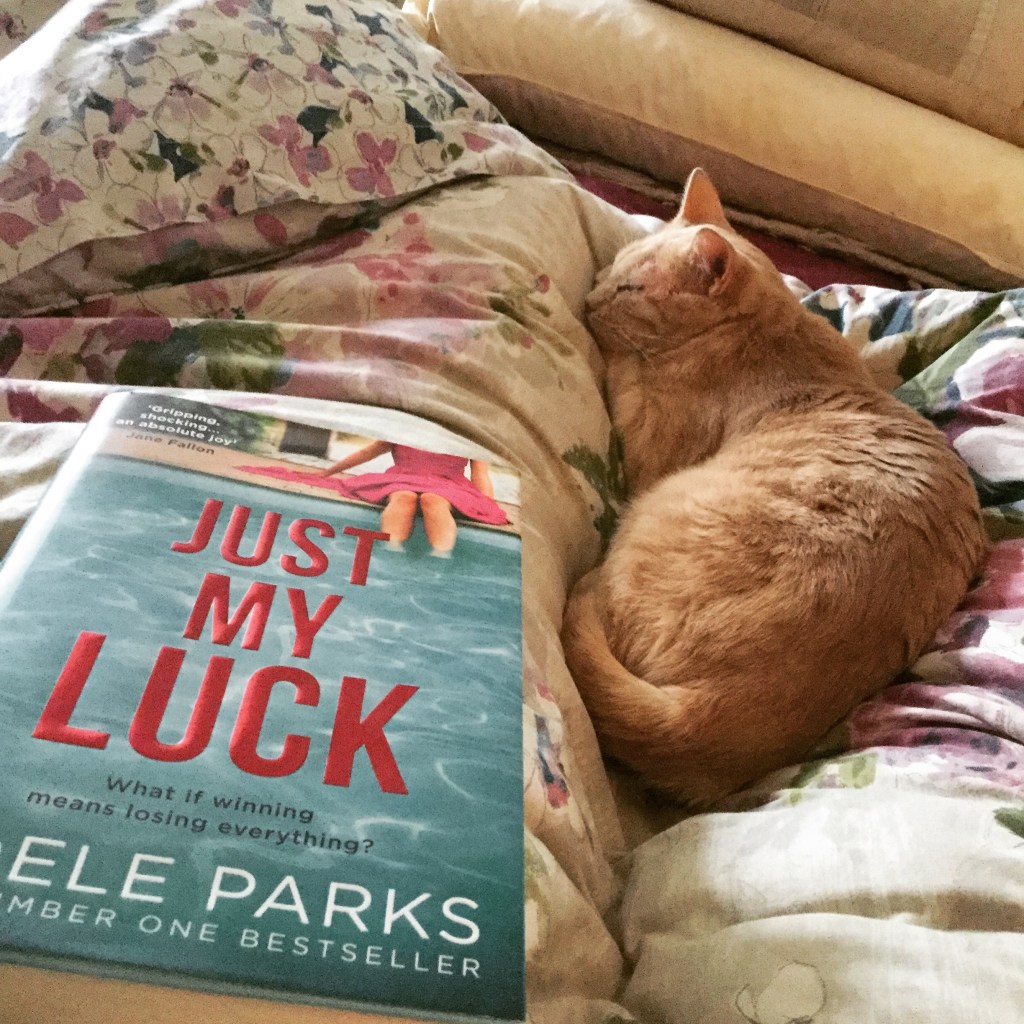
Lexi and Jake have been in the same friendship circle for fifteen years, with the Pearsons and the Heathcotes. They’ve been pregnant at the same time and have gone through parenting, moving house, changing jobs and sharing the highs and lows of life together. Every Saturday they try to get together for takeaway and during the evening check their syndicate’s numbers on the lottery. Every week they’ve drowned their sorrows and laughed off disappointment when they didn’t win. Then one Saturday night the unthinkable happens and Lexi feels something has changed in the friendship. Words are exchanged over the lottery tradition, someone calls it ‘common’ and tempers flare. The Pearson’s and Heathcotes pull out leaving Lexi and Jake the sole members. So, what happens when those numbers come up and Lexi and Jake possess a ticket worth 18 million?
Very rarely I come across a character I really can’t stand and that was the case with Jake in this novel. At best he’s like a well meaning, but clumsy, puppy and at worst he’s crass, wasteful, impulsive and deceitful. It was a wonder that he and Lexi had made it so far in their marriage, because they seem so totally opposed to each other. It could be that’s because we see his actions through Lexi’s eyes, but I think these differences have always been there. However, their shared struggle to bring up two children, work full time and pay the bills has forced them to work together – mainly for the good of Logan and Emily. Once the money arrives all of those problems fade away, leaving them free to act based on want rather than need. Their usual power balance, in which Jake is the naughty child and Lexi is the parent, has shifted. Money has made them equally powerful and in Jake’s case all of his usual checks and balances are gone. Lexi is still cautious and sensible, it’s just that now they have money, Jake doesn’t have to be. Even if he blows a million, there are seventeen more in the bank. They make a decision to avoid publicity, in consultation with their lottery advisor, and in theory they can carry on as normal. So Lexi gets up and goes to work in her advisor role at the Citizen’s Advice Bureau.
One morning she meets Toma Albu outside the bureau, a homeless man from Eastern Europe who is barely coping since the death of his wife and child. Lexi sends him to a day centre for a shower, clean clothes and something to eat while she looks into his story. The family were renting a property from a private landlord who has neglected to do proper boiler checks. Over the course of a day, before Christmas, his wife and son succumb to the effects of carbon monoxide and are dead when he returns home. Despite being taken to court the landlord evades the charge because he has used a letting agent to maintain the property. The agent is sentenced, leaving the landlord free to rent many other properties in his portfolio. Toma needs to find lodgings and a job, and Lexi manages to organise both, but it’s not his only request. He asks if Lexi will help him look through the agents, shell companies and offshore accounts to find out the name of the landlord. Lexi is scared, if she looks for this man what will she find and what will Toma do if she tells him?
Meanwhile, in the space of a day Jake has quit his latest job, allowed the kids to stay home and bought a bright yellow Ferrari that he’s parked on the drive. If they were trying to avoid publicity, this is the worst thing to do. He might as well have put a billboard on the lawn. Over the next few days the town is buzzing with gossip about the local lottery winner. Even worse a huge crowd turns up at the CAB to beg for money and Lexi has to take a leave of absence from work. There are paparazzi outside their home and more people demanding money from them. Lexi feels overwhelmed, she’s feeling all of the consequences but none of the excitement her family are feeling as they have an internet shopping splurge. Jake doesn’t even seem to be checking price tags, unless he’s deliberately buying the most expensive things he can find. Lexi has her own shopping list but it comprises of people whose lives she could change with their win, by relieving debt, or paying for them to receive legal help. Imagine the difference just a small proportion of this money could make to each life. I’ve worked in mental health and welfare advice posts for years and I was sometimes forced to break rules to get something done. Just as Lexi describes giving away baby clothes to people I have helped with donations, or even paid for something to be done out of my own pocket if it was the barrier in a person’s life. I think I have a similar ‘rescue’ tendency to Lexi so I understood her character and motivation, more than Jake’s reckless consumerism.
When Lexi and Jake agree to accept publicity, just to help control the story, their advisor organises a press conference. This was one of the most tense scenes in the book as the Heathcotes and Pearsons arrive to stake their claim on the winnings. As an investigation ensues everyone has a different story, with very confusing motivations. This is where the novel really gripped me and I started to become suspicious of everyone’s story – why does Jennifer suddenly claim she went to the toilet at the crucial moment so the others might have left the syndicate without her knowing? Cleverly, over the rest of the novel, Adele Parks has us always referring back to these accounts as new revelations leave the reader questioning what they believed so far. However, due to my own bias there were people whose account I never questioned. Parks though keeps us twisting and turning, even when you think everything is settled the last pages hold their own surprises. This is the dark side of winning such a life changing amount of money. It makes people behave very differently towards you and leaves you vulnerable to blackmail, begging, and desperate people who don’t mind who they hurt to get what they want. I felt so bad for Emily whose first love goes completely wrong in the aftermath; I think she loses just as much as the adults, if not more. The old adage that when something goes wrong you know who your friends are is very apt here. In fact it goes to show that it’s not just when life goes wrong. Any change, even a seemingly positive one, can cause stress and even depression; a wedding sits as high on the stress index, as being fired or suffering significant illness or injury.
As soon as Lexi starts to help Toma early in the book, I could see they had an affinity and I hoped they might become closer with time. I thought he made Lexi feel safe and able to be vulnerable; there is no need to parent him like she does with Jake. Toma has been through the worst experience Lexi can imagine, yet with a small amount of help he has started rebuilding his life. They agree on the amount of good her lottery win could do and it’s great for her to have someone thinking on her wavelength. Her need for his reassurance is so strong that she makes choices to be with him one important evening, rather than with her family. She finds she feels more at home with his friends who talk about books or films they’ve seen, and are from many different parts of the world. It surprises Lexi how much she’s changed, but I wondered how long she’d been out of touch with her own feelings.
Parks is very adept at using multiple narrative voices, in short chapters, that rush you towards a conclusion. There are twists and turns in the final chapters that I had no idea were coming. It sheds light, and even doubt, on other character’s motivations. Due to our own experience and biases there are always characters we take to or strongly dislike in a book, when an author makes me question those assumptions I really enjoy the challenge. It makes the book stay with you. It’s sparked discussion in our house over what we would do, who would be in charge of the funds and who’s life we could change. This is an excellent read, with believable characters in a position we’ve probably all imagined ourselves in at some point. However, it makes us think twice about the reality of it and whether we really would want to be a lottery millionaires.
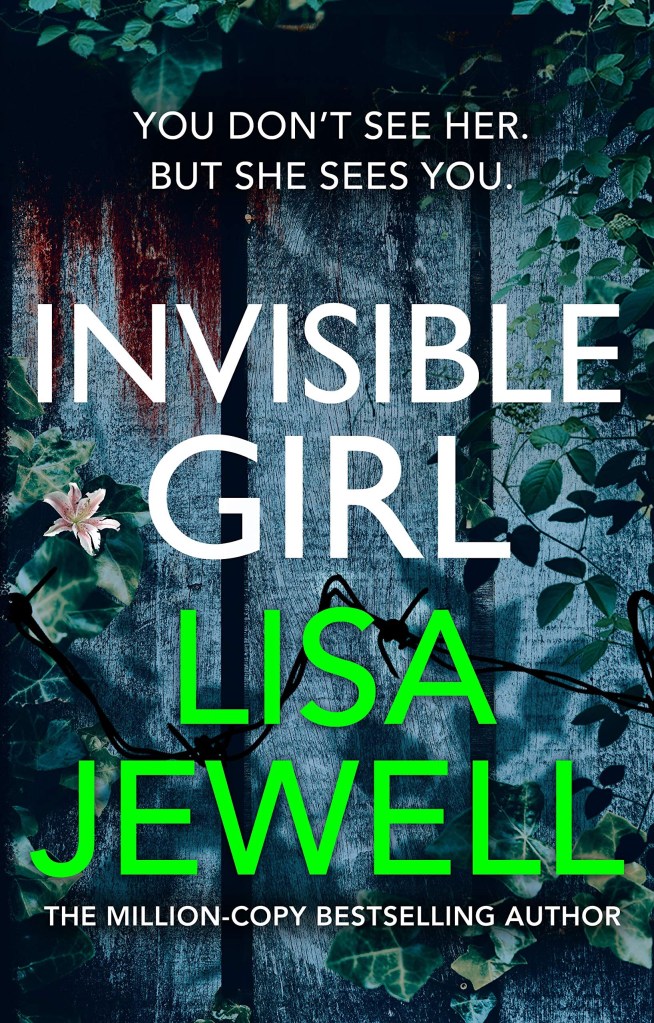
Lisa Jewell is another favourite thriller writer of mine. I know with her books I’m going to get that addictive, dark and ‘unputdownable’ novel I’ve been craving for solid weekend of reading. In actuality I finished this in five hours straight. I don’t know if it’s because I am a counsellor, but I love it when psychological professionals are depicted in novels – I instantly know I’m getting one of two things; a great counsellor with a messy personal life or a creepy manipulator who isn’t what they seem. In this case I got both, plus plenty of other complex characters to get my teeth into it.
The central relationship of this novel is that between child psychologist Roan Fore and his previous patient Saffyre Maddox. Saffyre has lost both parents and lives in a London tower block with her uncle Aaron. They spend three years as doctor and patient until she’s made so much progress it’s time for Roan to discharge her. Yet Saffyre doesn’t feel fixed. She has simply learned to wear masks. She’s studied the girls at school and now knows how to be an ordinary girl, she has a bunch of friends and at home seems the content family member. Once her grandfather dies, it soon becomes clear that no one knows or sees the true Saffyre. She’s become invisible.
Another narrator is physiotherapist and mother Cate. Cate probably appears to have everything. A long marriage to a fellow professional, two teenage children and an apartment in a huge mansion house until the renovations are completed on the family home in Kilburn. For now she’s getting used to her new flat, and life in Hampstead village. However, it’s not long before the novelty of life in this new neighbourhood wears off, when one of her daughter’s friends is sexually assaulted on her way home. This is not the first incident either. Could it be that the attacker is hiding on the building plot next door, which has seen very little activity apart from one JCB placed on site. The foxes are more active and can be heard screaming at night. Cate wants to keep her children safe, asking her teenage daughter Georgia to be careful coming home, especially at dusk onwards. Her son, Josh, is younger but is becoming increasingly difficult to pin down. She doesn’t always know where he’s been and who with, but can’t bring herself to imagine her kind, tender boy doing any harm. Cate’s husband is running, at all different hours and sometimes for whole afternoons. Should she be worried about where he is? That is aside from the affair she’d convinced herself was happening this time last year.
Our last narrator is Owen, a young, single man lodging with his aunt Tess down the road. Cate hates to generalise but he is the archetypal sexual predator. In his thirties, but with no relationship and seems like a bit of a loner. In fact the truth is even more worrying as we learn that Owen works at the local college and has been suspended for sexual harassment. Having turned down a course on creating a safer workplace, Owen decides to quit but now he has even more time on his hands. He finds himself drawn into the murky world of ‘incel’ websites – a group of men who are termed involuntary celibates because women won’t sleep with them. He makes contact with one charismatic leader within the movement and they meet for a drink, but Owen finds his extreme ideas frightening. He believes in enforced impregnation, to get past this conspiracy barring men like them from having a sex life or their own families. Worryingly, and without being asked, he gives Owen a bottle of rohypnol. Mortified, Owen takes them but hides them in his drawers at home. Put off by the incel extremists, Owen decides instead to join Tinder and ends up on a date with a woman on Valentine’s Day. Little does he know that the events of that evening will become very important and may impact the rest of his life.
I liked the way Lisa Jewell takes us inside these characters while also letting us know how others see them. Cate sees Owen as an odd character who seems to stare and appears awkward around women. Saffyre sees Cate as the blonde skinny wife, with a life that revolves around her husband and children. Owen notices Saffyre hanging around the building plot and watching Cate’s family. All these disparate threads come together when Saffyre is reported missing. The author makes points about our biases in the case of Owen. When questioned by the police Cate mentions him as someone who’s odd, who watches people and suggests they question him. It made me think of the case of the 2010 case of Joanna Yeates who went missing in her home town of Bristol. The police took her landlord, Christopher Jeffries, in for questioning and his face was plastered all over the nation’s press. Even when released from questioning there were those that still found Jeffries suspicious. His only crime it seemed was to look a bit odd and unkempt and be described as a loner. Jeffries won substantial libel damages. On the other hand, is someone has the air of respectability through their profession or financial position they can get away with murder under our noses.
Saffyre is an interesting character and although I didn’t fully understand the reasons for her choice to live outdoors – I like my comforts – I can see how the flat becomes claustrophobic for her. Eight storeys up and the heat from all the surrounding flats becomes stifling. I wondered if it was a type of grounding she was seeking? I understand that. I have a need to feel the earth with my bare feet, particularly one specific piece of earth have almost always lived next to since I born. I was born on a farm across the road from the River Trent, and although I’m moving further south on that river as the years go by, I still take off my shoes and stand bare foot on the river bank. It’s like a communion with the river and it’s boundaries – a way of letting it and me know I am home. For Saffyre it’s the stars, the being able to wrap up warm while feeling cold nip your face, the quiet communion with a visiting fox, the feeling that perhaps, like the fox, she is wild. Inside there are many things she has to face, like the loss that surrounds her, the self harm, and the terrible thing a boy at school did when she was much younger. Outside she’s free from these things and it is no coincidence that outside is where she first trusts someone enough to share those painful experiences. She’s incredibly perceptive for her age and is the only one to realise that Cate’s life is largely dependent on one man, and Saffyre is perfectly placed to see the potential for future pain in that choice.
Lisa Jewell is great at throwing red herrings into the plot and I didn’t recognise all of them, happy to go where the story took me rather than furiously trying to work it all out. I knew which way I wanted the plot to go and I was largely rewarded, with just one surprise for good measure. I always want to ask authors whether they know how their novels will resolve, which way each character will go and who will take the blame. I’m sure I’d get a variety of different answers. I do give my heart away to characters and I was desperately hoping Joshua wasn’t involved the sex attacks in the area, because I wanted him to be the sweet, kind boy I had built him up to be. What a story like this one tells us is that we are all a couple of decisions away from a completely different life. Georgia could walk out one night and meet the attacker. Owen could take his date rape drugs on his Valentine’s date. Cate could have left Roan years before when he cheated on her and promised to never do the same again. It made me think of the parallel lives we could have, if we just changed our minds. From a therapist’s standpoint it made me think a lot about fitness to practice and how we make the choice to see or not see a client. How we decide when to end therapy. Mainly, I wondered how we can be expected to help other people find their broken pieces if our own life is falling apart, and what impact that knowledge has on a young client like Saffyre. The novel felt timely, thoughtful and a great weekend read.
‘You fit into me like a hook into an eye, a fish hook an open eye’. Margaret Atwood
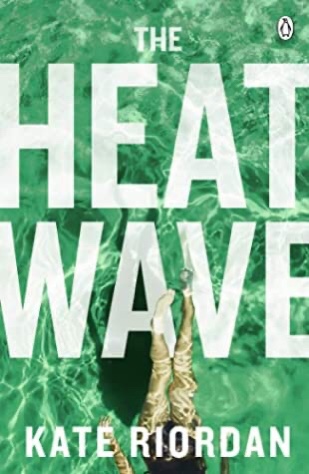
That opening quote really set the scene for me as a reader. It’s a shocking image. You read the first part and imagine the joining of two things meant to be together, made for each other in fact. The second part is visceral, violent and brings up images of the tussle between an angler and a fish; opposing forces, locked together in battle. Our narrator is Sylvie, born in France but now living in London with her daughter Emma. She’s divorced from Emma’s father Guy, who now lives in Paris with his second wife and young sons. It’s summer and Sylvie receives a message about their french home La Revieres. This is where Sylvie and her sister Camille grew up, but the family haven’t been there for ten years and vandals have started a small fire in one of the outbuildings. Sylvie decides its time to sell and plans for her and Emma to drive over to France for a small holiday, in order to tidy the house and put it on the market. As soon as they arrive, an unease starts to build in Sylvie and Emma, a sense that someone is watching them. What is the secret at the heart of this family and why is La Revieres so significant they haven’t been able to go back till now?
The book moves into three main time lines as Sylvie’s tale moves back and forth. The author builds a tense, oppressive atmosphere slowly. There’s the oppression of the heat, a window banging in the night in an unused room, and the menace of boys on mopeds driving up to the house at night. We realise Sylvie has a horrible unease about the unused room that belonged to ‘her’, where she still feels her presence. The novel takes us back to the early years of Sylvie and Guy’s marriage, when after an experience of loss, they have a little girl, but this is not Emma, this is Elodie. Sylvie describes an immediate, fierce love that she feels for her daughter. Elodie is perfect, with a little heart shaped face and eyes that develop into two distinct colours. One eye is almost amber and full of life, whereas the other remains blue with a deadness to it that is disconcerting. Her eyes are an outward signal of a duality in Elodie’s personality, part of her is loving and engaged with life but Sylvie also sees a side that is disobedient, manipulative and out of step with other people’s emotions.
I was so infuriated for Sylvie that Greg simply doesn’t see the same things she does, at times it feels like he’s being deliberately obtuse. He’s away so much with work and only seems to see the cute side of Elodie as she nestles in his lap. He sees her as an overwhelmed Mum, seeing something that isn’t there or overreacting to normal childhood naughtiness. Elodie’s outbursts do seem personal. She takes an inlaid wood jewellery box given to Sylvie by her father and carves an E deep into the lid. One day Sylvie finds her intent on something in the garden and finds she has eviscerated a small lizard. Finally, she visits a specialist who mentions the word I was already thinking – psychopathy. He explains that some children are born with a difference to the amygdala in the brain which leaves them unable to comprehend or recognise emotion. They need extra stimulus in order to feel. His assessment is that Elodie is one of those people, some grow out of the behaviour, whereas others remain unable to connect and display violent behaviour. Sylvie is devastated. This is her little girl, she would die for her, but has just had to admit that she’s afraid of her too. In the meantime, my tension is rising, because as I’m reading this devastating diagnosis I’m also wondering what Elodie’s reaction was when Emma was born.
The relationship between Sylvie and her daughter is so intense that it’s no wonder she still feels her presence in the family home. Emma wants information about her older sister and remonstrates with Sylvie; ‘
‘she was my sister, but I know barely anything about her, she died, you and Dad split up. We came to London. That’s it.’
It seems inevitable now they’re here that they will have to address the past. In the day Emma is finding Elodie’s old clothes, is wearing her turquoise necklace, but at night she’s on edge and scared there’s someone in the garden. Sylvie feels her too, almost as if she’s there, but has flitted just out of sight. Even their conversation about her hangs in the air like a spectre, wearing the glowing white sundress Emma has found.
‘Do you think her ghost might be here at La Reverie? The loosed words swirl in the gloom, bright and unearthly, like phosphorescence’.
Then, after a day out with their friend Olivier, and with the sulphurous smell of forest fires hanging in the air, they arrive back at La Reverie and Emma’s eyes suddenly come alive as a figure appears on the drive. Expecting her to blow away with the smoke, Sylvie’s thoughts race as her past and present collides into each other. It’s her. Could it be Elodie?
When I finished this novel I found I’d been holding my jaw really tight. Waiting for the past to reveal itself and others to see what Sylvie can is gripping. As the second part of the book begins we have another game of cat and mouse unfolding. It made me think about the lengths we would go to in order to protect our child and what it would take to change or override that instinct. How can we continue that protection, if it is at the expense of our other children? There are ghosts at La Reverie, not just the ghost of the Elodie who disappeared, but the Elodie that Sylvie and Greg expected when she first came into the world. Perhaps even before that, to the hope they had when that first flicker of life was felt after so much sadness.




 The Lotus Readers