Posted in Personal Purchase

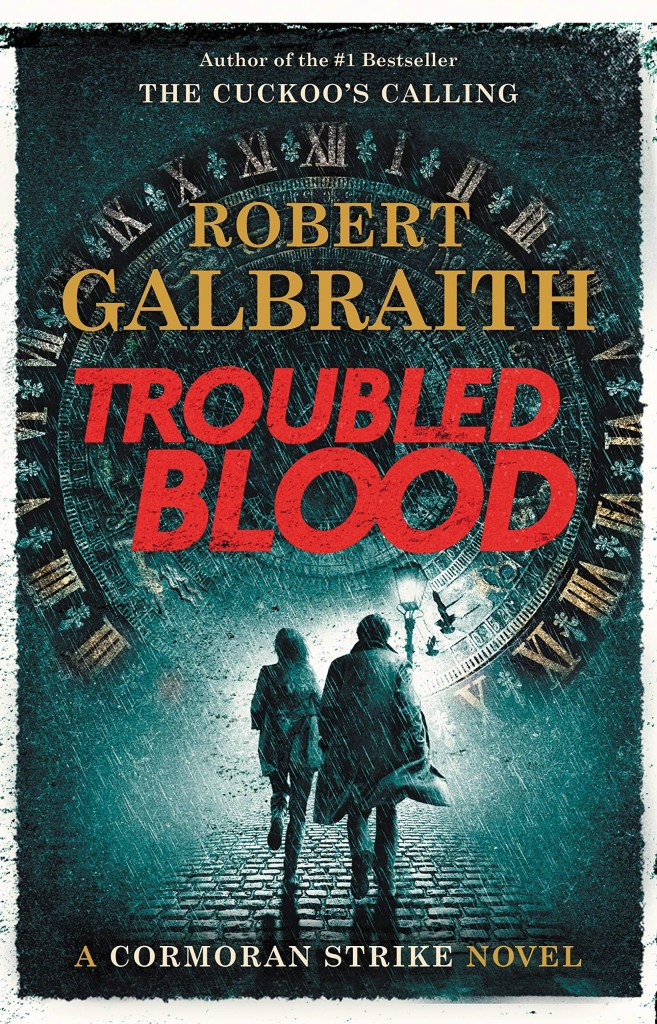
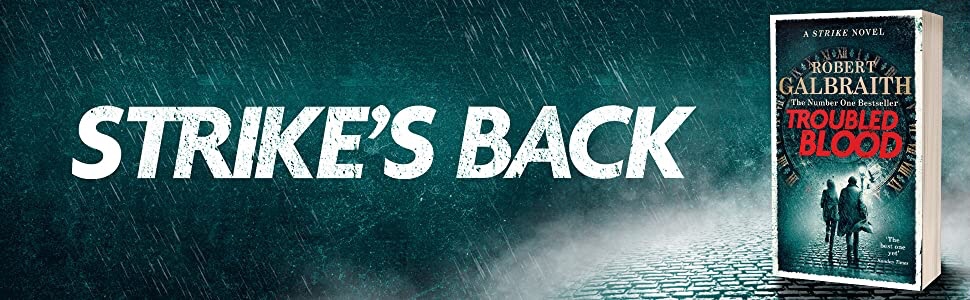
Troubled Blood (Strike No 5) by Robert Galbraith.

While I’ve been taking time to deal with some family issues, I’ve been reading my own personal choices rather than to a schedule. This has given me the chance to pick up this rather weighty hardback from J.K. Rowling writing as Robert Galbraith. In fact this book was so weighty that my chiropractor had to put my thumb back into place this afternoon. I’d resorted to nestling the book into a soft cushion on my lap so I could finish it. My partner has never seen me so quiet, as I shunned TV and conversation because I was totally engrossed in this novel. Troubled Blood is the fifth book in the Cormoran Strike series and I must admit to being a little in love with the tall, dark, private investigator. I love the author’s slightly shabby descriptions of him with his unkempt curly hair, awkward gait from his prosthetic leg and his broken nose. However. I’m also incredibly fond of his business partner Robin and the obvious love that flows between them, despite both of them denying it, even to themselves.

We meet the pair with Strike’s agency in a good place – there’s a waiting list for clients, three new members of staff and Robin is now a full partner in the business. Some things stay the same though -Robin still drives the Land Rover, Strike is still smoking and living in the attic above the office, and there is still that unresolved tension around how Robin and Strike really feel about each other. Strike is in Cornwall, visiting his aunt and uncle, the closest people he has to parents. Strike’s father is Johnny Rokeby, rock musician and tabloid fodder. Strike’s mother was a beautiful, bohemian groupie who never had an idea of how to be a mum and abandoned Strike to his Aunt Joan in his primary school years. Joan is possibly, after Robin, the most important person in his world and she’s had a diagnosis of terminal cancer. While drinking with best mate Davey at the local pub, Strike is approached by two women. Anna tells Strike the story of her mother’s disappearance over forty years ago. She was working as a GP in London and saw a last minute patient, before leaving to meet a friend in a nearby pub. She never arrived. Despite extensive investigations she appears to have vanished into thin air. They make an agreement with Strike that he will look into it for a year. With several investigations ongoing and a long waiting list, this looks like the busiest the agency has ever been, but how will Strike manage his workload and spend time with Joan when he needs to?

Robin is happy to pick up some of Strike’s workload in London, such as the staff rota and catch up meetings. However, she does struggle to get one of the new staff members to take her seriously as an equal partner in the agency. She’s balancing this problem, her increasingly contentious divorce, important news about ex-husband Matthew, and supporting Strike as much as she can. This means pulling long shifts of surveillance after a day in the office. She loves her job as much as she did at the beginning but she is struggling with panic attacks related to an incident at university and a case where she was attacked with a knife. Anyone trying to push their way into her space, whether by sending inappropriate pictures or brushing up against her in the office, will come off worst from the encounter. She is doing a lot of soul searching in this instalment of the series, as her friendship with Strike deepens she asks herself a lot of questions.

The main case was very satisfying, with lots of clues, red herrings and bizarre twists and turns. The investigating officer at the time of Margaret’s disappearance appears to have had an obsession with Aleister Crowley and astrology. His notebook is a very odd mix of drawings, notes on the main people suspected and the record of a gradual descent into madness. He was sectioned after seeing a horned goat demon. Robin finds more meaning in it than Strike, and it does yield some clues, but it’s clear the original investigation was inadequate. By chance, a serial killer was prowling the very same area and the police’s official line is that she was possibly taken by him but it can’t be proved. I found the case mentally challenging and full of fascinating characters too. The psychological aspects of the interviews was really intriguing, showing that even in a small 1960s doctors surgery there can be a lot of secrets buried. It was interesting to see more of Robin working on her own and how far she’s come since the first book. As the case gathered momentum I found myself gripped and I kept wanting to pick the book up again to read more, even though it was looking likely that the author was going to keep the case unresolved.

Make no mistake, this book was huge. I always reserve the right to DNF a book if I’m not feeling it by a certain point in the story. Like Bradley Cooper’s character in Silver Linings Playbook, I’ll happily throw a book out of the window if it’s not grabbing me or is overlong. I never felt that with this novel, besides I wouldn’t have dared throw this out of the window for fear of killing someone! I never felt a lull in the story, so it kept me engaged all the way through. This wasn’t just down to the cases, in fact I’d worked out one of them almost immediately – men visiting a woman’s house for a period of time where there are large deliveries of nappies – for which I blame a misspent youth watching every fetish going on C4’s Eurotrash. It was the themes running through the novel that kept me reading too. Absent parents loomed large: for their client Anna who having lost her Mum, had to watch her Dad marry the nanny; for Strike whose half-siblings are pestering him moook for a catch up with their rock star Dad, much to his disgust; even Robin feels dislocated from her family, who can’t understand her choice of career brought into stark relief as her ex-husband is about to become a father. We can see what a beautiful, but absent mother has done to Strike as he keeps Robin as his very best friend and struggles to keep ex-girlfriend Charlotte at a distance. Charlotte is the beautiful damsel in distress who will always pull him towards her when she’s vulnerable, only to withdraw as soon as she is back on her feet. It will take Strike to cut their line of communication but will he be able to do it. The stress of losing his aunt, Charlotte’s pestering and his father applying pressure, results in Strike choosing to drink too much and pushing those who love him most away.

I also enjoyed the ongoing development of Robin and the themes around female power and agency. Being Strike’s partner and his absences in Cornwall, mean she’s the boss. Trying to get all of their staff to accept that is difficult for one of their contractors who tries flirting and sexting, goes around her to get Strike’s approval and doesn’t take her seriously at all. She has to really assert her authority, it isn’t comfortable for her but she’s scared of enough in life without having to be wary at work. When she fights back and Strike finds out the true extent of the matter, his instinct is to physically defend her, but Robin doesn’t want to be rescued. She knows logically that her size and strength leave her slightly vulnerable while working in the same environment as the men. However, in terms of management and investigation skills she really does want to be Strike’s equal. I loved the way these themes were echoed in the case, with the missing woman being assertive, well-informed and educated around women’s rights and health. Some of the possible suspects are in the frame, because she was seen to interfere, to get mixed up in domestic violence cases or unwanted pregnancies and find solutions for those women.
I’m aware of there being controversy around the representation of a possible transgender character. I think this aspect of the book could have been handled better. An emergency patient turned up at the surgery just as Margaret was going to leave, and she agreed to see her. In all the accounts of witnesses they describe a woman with some very masculine characteristics and jump to the conclusion that it’s a man dressed as a woman. This then becomes confused with the passing serial killer who is thought to dress as a woman when approaching victims so they are less wary. One character even makes a comment about other serial killers who liked to dress in women’s clothing. I felt this was quite sloppily done and seems to be saying there’s a link between criminality, violence and men who wear women’s clothes or who are transgender. There should have been more emphasis placed on the fact that these men are not transgender, but are dressing as women for the purpose of disarming victims and luring them into a van or an alleyway. It’s purely a disguise for the purposes of murder, rather than a sign that transgender people are all deviant. This is something editors should be more aware of in the 21st Century and it was a shame to see it in a book I otherwise loved.

This latest instalment in the Strike series is a cracking read and keeps you gripped, despite the fact it’s huge! Every case is interesting, but the main story is such a puzzle and each time there’s a revelation it’s like peeling another layer off an onion. I never suspected the person responsible and that says a lot about my prejudices and bias, as well as societal expectations. There’s a real streak of social justice running through this novel with certain characters and from my work within the mental health system I did recognise the worry that people are falling through the net and being let down as government funding is withdrawn due to austerity. I recognised the practice of ‘cuckooing’ where a vulnerable person’s home is taken over for criminal purposes such as storing stolen goods, dealing drugs, or hiding body parts. I find it amazing that the author can bring so many strands together, while fully occupying her characters and showing us their inner worlds. I loved my time with Strike and Robin, and I thought the ending was lovely. This was a gripping, multi-layered and intelligent thriller with a simmering attraction between our two main characters that will have you rooting for them.
Posted in Throwback Thursday

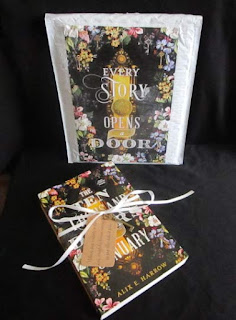
The Ten Thousand Doors of January by Alix E. Harrow.

January is a young girl with a great imagination. She lives with her guardian Mr Locke and her nurse/governess Mrs Wilde, while her father travels the world. Her father is an adventurer, travelling far and wide to find treasures for Mr. Locke’s collection. She misses him and sits in her room wrapped in the pink and gold bedspread he sent her from India. January is just becoming a teenager and starts to learn that her freedom and imagination are a threat. One day she writes about a door to another world and soon after she discovers the very door she has written. Stepping through, she sees a different land with a white shimmering city in the distance. She now sees she can have her own adventures without ever leaving the hall and the protection of Mr Locke. But her creativity is not seemly for young ladies and Mr Locke determines she is overstimulated and needs the rest cure. This involves lying in a plain room with nothing to occupy her mind. At first she runs wild and tears the curtains and bedspread in defiance, but then realises this simply plays into Mr Locke’s hands. Instead she chooses to comply on the surface and become the nice young lady he wants. Yet, all the time a sense of adventures grows within and we realise January is not going to be a nice young lady for long.


Harrow intersperses January’s story with a different narrative from a book that comes from her father. The story tells of a young girl named Adelaide or Ade to her family and the age old tale of a haunted house that all the local children stay away from because of the ‘boo hags’. Ade is more curious than she is scared, but in the cornfield outside meets a type of boy she has never seen before, called Yule Ian.We don’t know where these people fit into January’s story but their story hints at worlds as yet unseen and legends from every country in the world. It’s as if January’s restrictions of Victorian womanhood is the smallest Russian doll in a set, she is enclosed by bigger worlds than her own. Her existence is restricted by our modern standards, but what if our own existence is similarly restricted? I started to think of other worlds beyond this one where the rules of existence are totally different or without limit.


I truly loved this wonderful book. It took a few chapters for everything to click into place, but I was intrigued enough to keep going till the story made sense. January is a great central character and her need to break free from the constraints placed upon her by Mr Locke would be understood by every teenage girl. I think this is partly the novels success – Harrow has taken a familiar feeling from any teenage girl, but placed it within a magical world where there are no limits to existence. When January realises she can write doors into other worlds and follow them, more freedom than she ever imagined is hers for the taking. However, this freedom depends entirely on pleasing Mr. Locke and we learn later in the book that his guardianship of January is even more far reaching than even she thought. He has schooled and packaged January in a way that is acceptable to Victorian society. He has polished and locked her away like one of the many treasures in his collection.


The novel is full of characters who move beyond their bounds in one world, while finding themselves completely at home in another. Jane is sent as a companion for January, paid for by her traveller father who comes and goes plundering worlds for Mr Locke’s collections. Jane finds that in one world her fearlessness and hunting skills are integral to her culture and survival, but in January’s world she is expected to keep her eyes down and not challenge people who are her betters. In this world Jane is problematic because she is a woman with no breeding or class and because she is black. January’s friend Samuel has slightly more freedom than Jane because he is a man even though his class and skin colour are the same. Just as Locke categorises and catalogues his collections, it seems there is an unspoken taxonomy of people. January has side-stepped disapproval, despite being poor and mixed race, thanks to Locke’s fortune which keeps her in dresses, pearls and first- class travel. January is kept in a gilded cage, but it is still a cage.
I couldn’t see at first where Ade and Yule Ian fit into the narrative, but soon I realised how crucial they both are to January and the world she sees as she discovers her writing power. It takes huge courage to use that power, but increasingly January finds it is the only way she can protect herself and the freedoms she believes in. She wants to find her father or at least the last place connected to him and she will keep wrenching doors open until she finds the right one. A shadowy organisation is not far behind her though, run by The Founder. They want this world to stay on one course; a rigid world following a set pattern of Empire, industrial revolution and exploitation of other country’s resources. The magical worlds January visits are too unpredictable, because they signify endless change. What will The Founder do to keep the doors closed and how can January throw them wide open again in order to see her family?


For me this novel is so successful because even when we are in the most alien of worlds the author never forgets this is a human story. The family bonds and the aching loss of bereavement feel real and honest. These may be extraordinary characters but their emotions are very human and relatable. I found myself aching for January to be reconciled with her father and for his heartbreak to heal. The novel also has something important to say about love: it’s many forms from familial to friendship and romantic love; the compromises of successful relationships and the need to give the one we love freedom and space to grow. I was so sad to finish this story and almost resented the next book I picked up. It is inventive, extraordinary and touching in equal measure. It is my book of the year so far and I’m now ordering my hardback copy to keep.

Meet The Author

Alix E. Harrow has been a student and a teacher, a farm-worker and a cashier, an ice-cream-scooper and a 9-to-5 office-dweller. She’s lived in tents and cars, cramped city apartments and lonely cabins, and spent a summer in a really sweet ’79 VW Vanagon. She has library cards in at least five states.

Now she’s a full-time writer living in with her husband and two semi-feral kids in Kentucky. Her short fiction has appeared in Shimmer, Strange Horizons, Tor.com, Apex, and other venues, and The Ten Thousand Doors of January is her debut novel. Find her wasting time and having opinions at @AlixEHarrow on Twitter.

Posted in Throwback Thursday

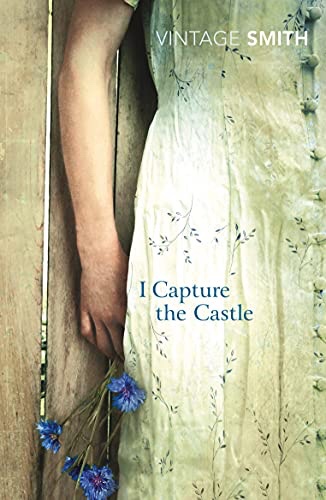
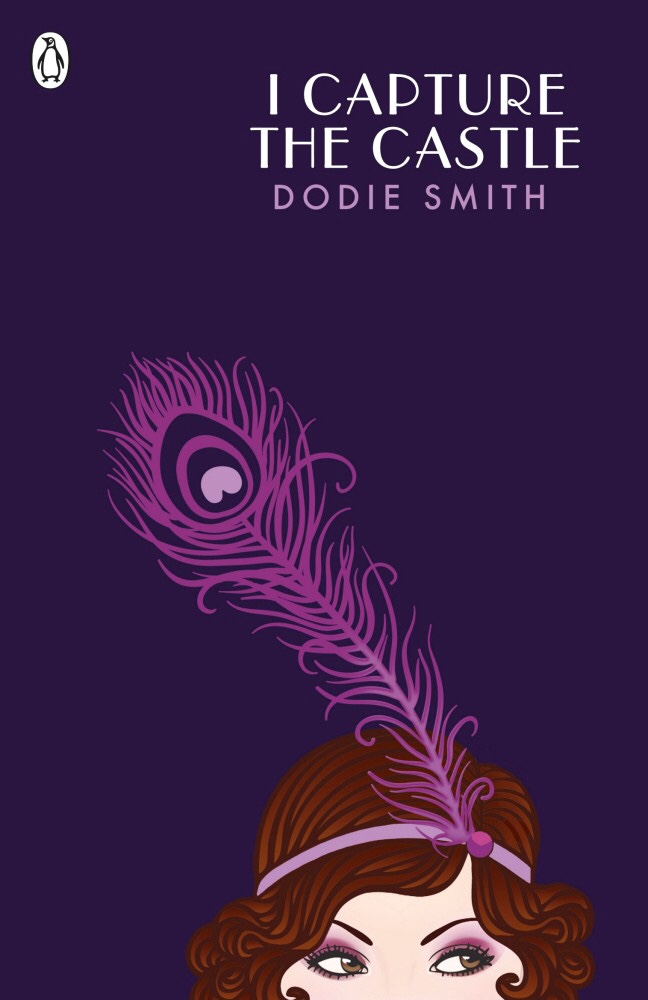
Throwback Thursday! I Capture the Castle by Dodie Smith.

“I write this sitting in the kitchen sink. That is, my feet are in it. The rest of me is on the draining board, which I have padded with our dog’s blanket and the tea-cosy.”

I’m going a long way back in time for Throwback Thursday this week. I read this book in my early teens, but still hold it close to my heart. I’d read 101 Dalmations much earlier and hadn’t realised that the author had written anything other than children’s books. The truth is I’d been waiting my whole life for a heroine like Cassandra Mortmain. There are a lot of different influences to blame for turning me into the adolescent I was. Years trawling round stately homes had given me a yearning for a house I could hide in. We lived in a 1960’s bungalow with just enough rooms to live in, but I longed to hear lines like ‘ Hayley? No I haven’t seen her since breakfast. Could she be in the pink drawing room?’ Period dramas, particularly 1970s productions of D.H. Lawrence novels and L.P. Hartley’s The Go-Between , both loved by my mum, had left me hankering after a wardrobe of full, floaty skirts and the sort of accessories that looked out of place. Like tramping down to the village shop wearing a feather boa, ten layers of petticoats, whilst dragging a grumpy spaniel. I would constantly imagine I was in a book or a film, walking the poor dog’s legs off while hoping to meet a man who looked like Mr. Rochester and lived in a Gothic mansion, minus the mad wife.

I also developed a fascination with Edith Holden thanks to the TV series of Country Diary of an Edwardian Lady and I even wrote off for a pack about the series. We already had the book, so I bought a sketchbook and some watercolour pencils with my pocket money. My brother and I would go out early, him with his fishing gear, and me with my books and paints. There was an old track down to the woods with a drainage dyke running alongside. About halfway down there were two willow trees that had bent so far over the water it was possible to climb up and lay down along the trunk. My brother would fish from his tree, and in mine I would paint flowers and butterflies and read my book. It was the closest thing I had to room of my own. So, in finding Cassandra Mortmain I felt like I’d found exactly who I was supposed to be. I wasn’t meant to be Hayley Baxter, lives in a sixties bungalow, with a working class family and no money. I was meant to be the broken down castle, bohemian sort of poor. Where parents were trying to make money from art, roof leaks dripped into buckets instead of being fixed and they were invited to tea by the landed gentry or their new American millionaire estate owners.

I loved Cassandra Mortmain’s confidence. She was determined she was going to be a writer and nobody told her she couldn’t be, so she was always curled up in some unlikely place, writing in her journal. If I said I wanted to write novels, my close family were supportive – my mum had always wanted to write. Wider family and friends would say ‘well, as long as you do well at school and have something to fall back on.’ There were aunts and uncles who would have been bemused if I walked constantly around with a journal and pen. Writing was seen as something you had to do – you wrote a letter, or a postcard – but not something pleasurable that you devote time to. That came much later, when I had my own home and my own wardrobe of floaty skirts. When I first read her story I was much like Cassandra herself, there were parts of life that she was recording without really knowing their importance or meaning. Although she narrates her own story, as an older reader there were things I understood that Cassandra didn’t as yet. This is a story of growing up and leaving some of that innocence of youth behind.

I thought on first reading that her sister Rose was incredibly beautiful, but grumpy and not very nice to be around. However, reading her years later I could see that because Rose was older, she understood more about the realities of life. For her, the broken roof and the lack of income were not romantic, but a real problem that needed fixing. Their father’s only published book can’t keep them forever and his writer’s block makes him a very difficult man to live with. Rather comically the women lock him in his study, in the hope that inspiration will strike when he’s forced to stare at his typewriter. It’s very clear to Rose that they are in dire financial straits. This is where the book takes on some Austen-like romantic tropes, as the Cotton family come to visit the estate where they are the rightful heirs and the Mortmains are their tenants. Mrs Cotton brings her two sons, the eldest Simon being the rightful heir, and Neil, the younger son. Simon is ‘detestably bearded’ but the most eligible and able to rescue the Mortmains from their current circumstances. Cassandra’s father and stepmother Topaz are seen as delightfully eccentric by the Cottons and the whole family are invited for dinner. This is where the romantic problems begin, as Simon is besotted with the beautiful Rose, and as Cassandra develops a crush on Simon, she is in turn adored by the Mortmain’s servant and helper, Stephen. Stephen is incredible handsome, but the Mortmain girls are about to find out that the heart is an unruly organ and wants what it wants. Despite this, it isn’t long before Rose announces her engagement to Simon. This solves so many of the Mortmain’s problems – it’s as if one of the Bennett sisters actually accepted Mr Collins. As the preparations for the wedding gather pace, Rose and Cassandra spend more time with the Cotton brothers.

Simon finds that he gets on well with Cassandra. He is the more cerebral of the brothers and while Rose is beautiful, she is not blessed with brains. Yet, Cassandra is too young for romance, and a very touching friendship starts to develop. The younger brother, Neil, is more stereotypically American, loud, brash and very active. He and Rose are usually swimming or messing around in boats, with Neil often play fighting or indulging in horse play. Cassandra has never seen her sister so lively, actually forgetting to be lady like and being in the moment. Everyone is touched to see Rose so happy, and assume it is her approaching wedding. To an adult reader the attraction between these two beautiful people is obvious, but Cassandra is stunned to find out they have run away together. If we hark back to Austen, her sister has turned out to be more of a Lydia than a Jane. How can the Mortmain’s fortunes be improved by their daughter’s marriage to the second son?

This is a novel drenched in charm and nostalgia. Interestingly, it was written by Smith when she was living in America, and that may explain it’s rose-spectacled view of England. There is something slightly melancholy in that we’re watching a young girl lose the charming innocence that makes her narration a delight to read. She falls in love, but not with the person who adores her and sees the devastation that can be caused by betrayal and jealousy. We realise, as Cassandra grows up in front of us, the chaos of a household run by adults who have no money and no rules, the embarrassment of having a stepmother who will happily walk around in the nude and that moment when you find your own sister inexplicable, because you understand storybook romance, but not adult desire. Cassandra is mostly in love with life. One character describes her as ‘the insidious type–Jane Eyre with of touch of Becky Sharp. A thoroughly dangerous girl.” Her narration makes even minor characters jump off the page and straight into your heart. Finally, I loved how Cassandra leaves us with an open ending. We shouldn’t be surprised that some loose ends are left dangling, because she has told us how much she hates ‘a brick wall happy ending.’ I think it’s true to say that in me, she found a reader as romantic about life as she is. This is one of those books I’ll re-read again and again, so I’m on the look-out for a very special copy to put on my forever shelves.

Posted in Netgalley, Personal Purchase

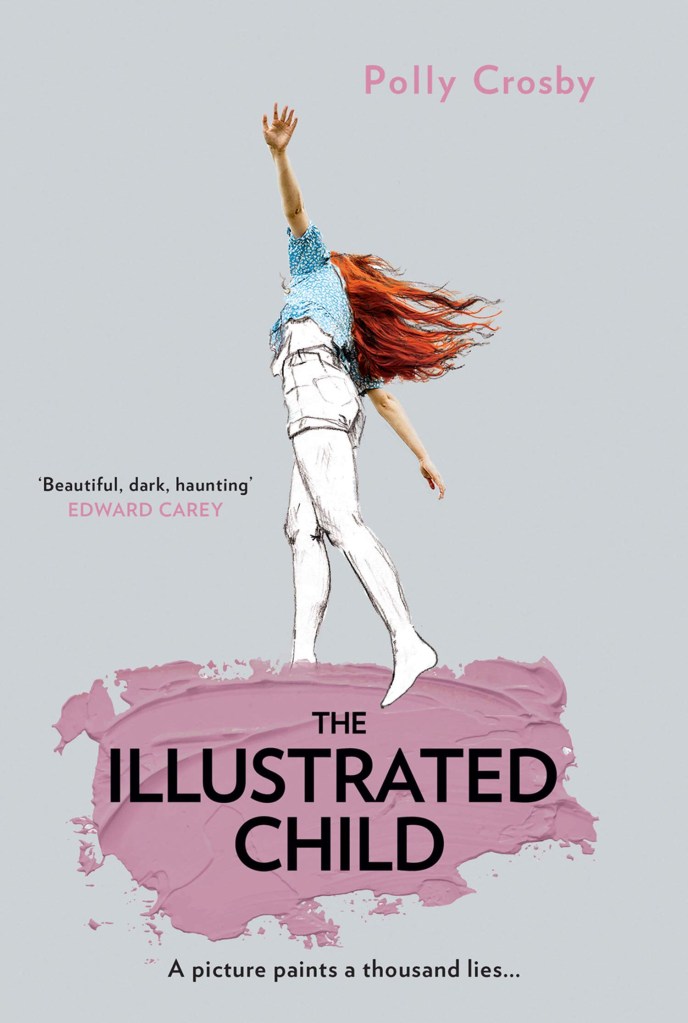
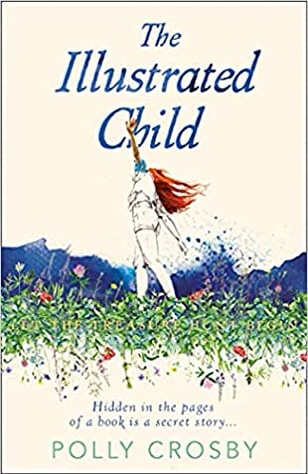
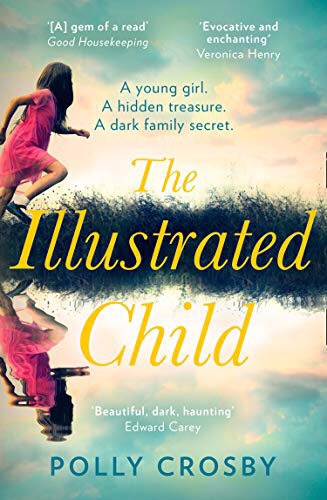
The Illustrated Child by Polly Crosby.

This beautiful and original book hit me straight in the heart and I was reading the last few pages with a massive lump in my throat. Romilly Kemp lives in the run down Bräer House with her father Tobias, an artist who is both inventive and eccentric in equal measure. This situation reminded me of a classic favourite I Capture the Castle, but Romilly’s story is much more than a coming of age tale. Romilly and her father live alone and are struggling for money, when Tobias has an idea for a children’s book based on his daughter. Featuring his original illustrations, the books follow Romilly and her Siamese cat Monty through a series of adventures at the circus, in a windmill and at Christmas. She is preserved forever as a 9 year old in her patchwork dress and her red hair flying behind her. Romilly loves looking for the tiny little additions to his main illustrations – a tiny mouse holding a forget-me- not, two miniature hares boxing, and sometimes Romilly herself being chased by a animal. The public fall in love with the books and the idea grows that there is some sort of treasure hunt contained in the pages leading to trespassers at Bräer and some horrible encounters with reporters and photographers.

Romilly can see secrets of a different kind in the pages her father has drawn, but she’s used to secrets. She hasn’t seen her mum for so long she’s largely forgotten her and they have no other family. Where does her friend Stacey go when she is missing for weeks? Who is the beautiful, pink costumed circus lady she meets who knows her father? She notices differences in the way she’s drawn in the book and also a very faintly painted lady in the background often with her head in her hands. Her dad gives her a puzzle box he’s made, which starts to tick when it’s her birthday releasing a memento or object that’s important to her – Monty’s silver bell, a pink feather. When her dad’s memory starts to fail, Romilly wonders if all these clues are for her, or are they triggers for her dad’s memory? More importantly, I was starting to wonder who would look after Romilly and what had torn this close family apart?

is meant to be home schooled, but has no real curriculum or structure. There are times when heat and food are scarce, and set mealtimes never seem to happen unless someone is visiting. As Tobias declines, Romilly is having to cope alone with no family to help. I wanted to swoop in and look after her and Monty. There’s no doubt that she’s independent, resourceful and intelligent, but is that innate or something she’s had to develop having been left to fend for herself so often? There’s a deep understanding of the psychology of a child in this position underlying Romilly’s story. Even her name means ‘strength’ and she has so much, using it to defend her tiny family and her home.

Underlying all of this is an understanding of trauma and how grief can tear apart the strongest families. In one part of the book Tobias explains to his daughter that people grieve in different ways and sometimes that means doing it apart. I know grief well, and at different stages in my journey I’ve done things differently, avoided certain places and people. At first I struggled to talk to anyone who was as shattered by my husband’s death as I was. I couldn’t deal with anyone else’s needs, only my own. I was very angry with people who turned out for the funeral claiming a relationship with my husband, who I had never met in the seven years we’d been married, the last four of I’d been caring for him 24/7. Later I wanted to seek out people who grieved as strongly as I did because we could reminisce and understand each other’s profound sadness. When reading the book I found myself both very angry with Romilly’s mother because I felt she was selfish, but I also sympathised and understood her decision that she shouldn’t be a parent. There were parts of the novel where I felt nobody understood or fully cared how much their decisions impacted on this little girl. I was so profoundly sad for her and at that point where she realised she needed help, she allowed herself to be vulnerable which must have been so difficult for her.

This is a beautiful book: it’s invocation of childhood and play; the magical atmosphere of Bräer and it’s surroundings; the stunning artworks done by Tobias and the complex history he’s trying to convey. I loved how the author showed objects sparking memories, for Romilly, but also for Tobias who, befuddled by dementia, recognises his daughter through Monty’s silver bell. I hadn’t unravelled the mystery so I could sit back and enjoy it as it played out and when the truth was finally revealed everything made sense, even if I did think Tobias could have handled it so differently. I have a particular affinity with hares, so his drawing under the book’s dust jacket of the two hares was particularly moving. What I loved most was the way the author showed a difficult childhood still being magical and full of memories. I think we can probably all look back and remember times that feel golden to us, but might be very different from our parent’s perspective. Romilly’s freedom, her ability to invent and imagine, to follow her own interests when mixed in with the magical circus, the panther stalking the area round the village and buried treasure seem magical. How much of this would she be willing to trade for security, routine and someone to care for her? This book will stay with me for a long time and is a definite candidate for my ‘forever shelves’.

Meet The Author


Polly Crosby grew up on the Suffolk coast, and now lives with her husband and son in the heart of Norfolk.

Her debut novel, The Illustrated Child (The Book of Hidden Wonders in the US and Australia) is out now.

In 2018, Polly won Curtis Brown Creative’s Yesterday Scholarship, which enabled her to finish her novel. Later the same year, The Illustrated Child was awarded runner-up in the Bridport Prize’s Peggy Chapman Andrews Award for a First Novel. Polly received the Annabel Abbs Creative Writing Scholarship at the University of East Anglia, and is currently working on her second novel.

Twitter: @WriterPolly
Instagram: @polly_crosby
Website: pollycrosby.com

Posted in Throwback Thursday

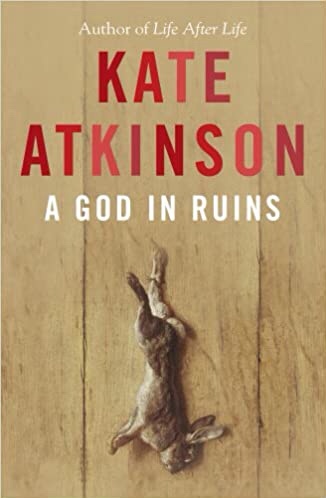
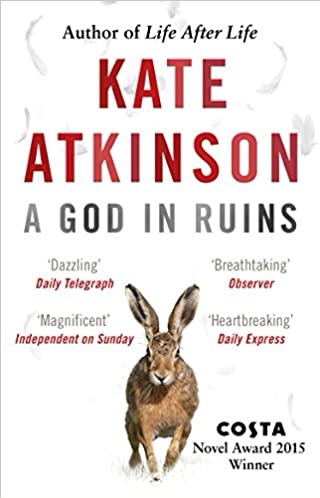
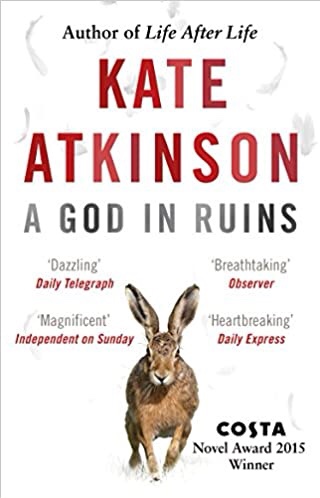
Throwback Thursday! A God In Ruins by Kate Atkinson.

Following on from last week, I wanted to feature this novel which is one of my favourites from the last twenty years and shows that Kate Atkinson is truly one of our best British novelists. It follows another wonderful novel about the Todd family, Life after Life, which focused on the many possible lives of Ted’s older sister Ursula. This is written as a standalone novel, rather than a sequel and has the honour of being one of the few books that genuinely made me cry towards the end. We meet Ted as he’s a pensioner, living in York, and dealing with living his life alone after the death of his wife. However, we don’t stay there, because as with Life After Life, Atkinson mixes past, present and future with great impact. The novel is also told from Teddy’s point of view, although he does seem slightly omniscient at times, knowing things he wasn’t present for. It is such a poignant history of a man who has lived through a world war, and it feels so authentic. In true Atkinson style, it cleverly manages to be a book about fiction itself.

In Life After Life when the focus was on Ursula, Teddy seemed to be set on course to marry childhood sweetheart Nancy and their life was portrayed as idyllic. Yet in this novel we see that their relationship was far from perfect. Despite this we do follow the lives of their daughter and granddaughter too, to great effect, because it opens up all the changes Ted has seen over his long life. Teddy’s mind often wanders back to his time as part of Bomber Command – something I’ve grown up with because I live in Lincolnshire which is known as Bomber County. In fact in the course of his work as a land drainage engineer, my Dad has accidentally dug up a whole Lancaster Bomber, probably trying to limp home to RAF Blyton, only a mile and a half away. Here the bomber raids were described so authentically, they were harrowing in parts and I could imagine the anxiety of waiting back at base to count the planes back in, knowing some would be missing.

Atkinson manages to combine the personal story of Teddy’s family, with societal shifts that occurred between the wartime generation and those who came of age in the second half of the 20th Century. Teddy is an old school gentleman, often showing acts of kindness and chivalry that make him very loveable. His values are challenged by his daughter Viola, the voice of her generation, who is always looking for the next cause to adopt. She campaigned for nuclear disarmament and supported the women protesting at Greenham Common. She’s a feminist and a vegan, something very unusual until fairly recently in the 21st Century. We are shown how the generation gap creates arguments in a family, where one generation fought in a war and later generations don’t appreciate or fully comprehend the sacrifices that were made for them. Viola could be seen as an unsympathetic character, especially when compared with Teddy’s service. However I wondered if her character developed as a reaction against Teddy’s courage and heroism. Such perfection is hard to live up to. In fact, when Viola tries to reconnect with friends from her travelling days she finds one of them has died and one works in finance – far from the ideals they held before. Unlike Teddy’s generation they have had a chance to regret behaviour and change outlook. Teddy’s friends will always be the same age.

I enjoyed the interesting structure of the novel where we float back and forth in time, between characters and settings. At times Atkinson lets slip a future plot, while still in the past. All of this felt very Virginia Woolf-esque and it suited the narrative. She is such a skilled writer that this never feels overtly literary or highbrow, it remains a light easy read. There is a huge twist at the end that has a bearing on everything you’ve read so far, but it’s not there just for the sake of it. Yes, it’s an excellent example of the post-modern novel, in a similar vein to Ian McEwan’s Atonement, but that’s not all. It’s impact of the twist was devastating to me and this is where tears emerged. This unexpected direction is truly a tribute to the men of Bomber Command, especially those who didn’t come home, like the men in the Lancaster my Dad dug up who were only a couple of miles from safety. This novel is simply one way Teddy’s life could have played out and it’s all the more powerful for it. This was an intelligent, well-researched and poignant novel that I think should be viewed as a modern classic.

Meet The Author

Kate Atkinson won the Whitbread (now Costa) Book of the Year prize with her first novel, Behind the Scenes at the Museum.

Her four bestselling novels featuring former detective Jackson Brodie became the BBC television series Case Histories, starring Jason Isaacs.Her 2013 novel Life After Life won the South Bank Sky Arts Literature Prize, was shortlisted for the Women’s Prize, and voted Book of the Year for the independent booksellers associations on both sides of the Atlantic. It also won the Costa Novel Award, as did her subsequent novel A God in Ruins (2015).

Posted in Personal Purchase

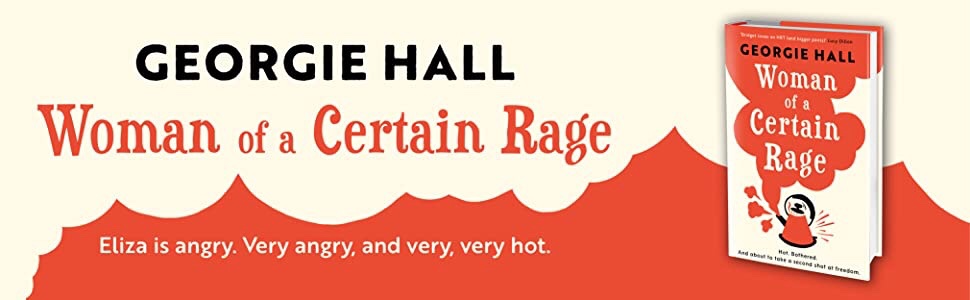
Woman of a Certain Rage by Georgie Hall.

Recently life had a started to get on top of me a little bit. I felt overwhelmed; with my partner being unwell, my MS not coping with the heat, and several things in the house going wrong. The dishwasher flooded the kitchen, then two weeks later the washing machine did the same, but lifted the entire floor too. Finally, I emptied my bath water and came downstairs to find it had christened the kitchen island and we had a lovely new hole in the ceiling. I’m immune-compromised so I’m still avoiding crowds and wearing masks. Finally, there’s the effect of the menopause when dealing with all those things. I’m far more likely to burst into tears these days. Masks mean I sweat more – not just a little glow, I can look like I’ve just got out of the shower in ‘tropical moments’. Then my reading glasses steam up, but I can’t take them off because I can’t read anything. I’ve taken a short break from blog tours and deadlines to deal with some of this and spending some time reading exactly what I want. So, I’m on the couch, a cold flannel on my neck, with two fans pointing at me, as few clothes as I dare to wear, and an ice cold can of coke in my hand. I was browsing my NetGalley shelf when this title jumped out at me. It could not have been more apt.

Eliza feels like she’s going crazy. She’s emotional, keeps forgetting things, feels angry and she’s hot, oh so hot.

This is a smart and funny novel about love, life and a second shot at freedom for rebellious women of a certain age. Late for work and dodging traffic, Eliza is still reeling from the latest row with husband Paddy. Twenty-something years ago, their eyes met over the class divide in oh-so-cool Britpop London, but while Paddy now seems content filling his downtime with canal boats and cricket, Eliza craves the freedom and excitement of her youth. Fifty sounds dangerously close to pensionable: her woke children want to cancel her, a male motorist has just called her a ‘mad old bat’ and to cap it all her hormones are on the run. Who knew menopause was puberty’s evil older sister? But then a moment of heroism draws an unexpected admirer, and Eliza sets out to discover whether the second half of life can be a glass half full after all. She might suffer mental fog and night sweats – and have temporarily mislaid her waist – but this is her renaissance.

I bonded with Eliza immediately and not just because of the menopause. We’re a similar age, so I could identify with growing up in the Britpop era – I fell totally in love with Damon Albarn, a love which has lasted a lifetime. All of our references points were the same, and having inherited two beautiful stepdaughters in their tweens and teens I could really appreciate Eliza’s relationship with her daughter. I also have a strong relationship with an elderly dog. Menopause is causing tension in Eliza’s marriage, particularly annoying for her is the loss of libido. That deep connection she and Paddy once had seems to have gone, lost in the logistics of family life and life stresses around their finances. Eliza’s realisation that she’s becoming invisible has extended into her working life too. She has always wanted to be a stage actress, but her career has never really taken off. Now she’s getting less and less work, and aside from one Japanese tourist who thinks she’s Emma Thompson, she feels very under appreciated. She’s doing voice work, reading audiobooks mainly, plus has a side job showing people around properties for a local estate agent. All of the everyday stresses in her life – marriage, family tensions mixed with financial concerns, having ‘woke’ children, her youngest son who is on the spectrum – leave her feeling exhausted. Into this low point steps a handsome Italian restauranteur, who happens to have taken over her family’s favourite bistro from his uncle. Exuding charm from every pore, he flatters Eliza and makes her feel desirable when of late she’s felt men’s eyes pass over her and to her teenage daughter. It’s like one big ‘hormotional’ perfect storm and I wondered whether anyone would come out of it unscathed.

It’s easy to love Eliza; she’s loving, caring, vivacious and witty. However, her husband Paddy grew on me too and I felt a great deal of empathy for his own middle aged struggles. There is growing evidence of male menopause, despite society being largely dismissive and calling it a ‘midlife crisis’. Jokes about middle-aged men trying to recapture their youth with hair transplants, sports cars and unwise affairs with younger women are still commonplace. Yet the NHS recognises a group of symptoms similar to those experienced by women – irritability, insomnia, weight gain, loss of muscle mass, erectile dysfunction, loss of libido and memory problems. Some doctors have questioned whether these are symptoms of a loss of testosterone, but the NHS classify it as a psychological syndrome characterised by increased levels of depression and raised anxiety amongst men in their late forties and fifties. Paddy is definitely going through something like this, but he has had a lot to contend with. His father’s death and the loss of the narrow boat they worked on together hit him hard. Eliza’s family bought the boat so he could still work on it, but that brings its own guilt and shame because Paddy could not afford to do this himself and run it. His wife earns more than he does and she’s starting acting like a crazy person. He thinks her loss of libido is down to him being a failure as a man. This book hinges on the fact that problems occur when couples stop communicating.

The author really pitched this book perfectly, balanced between the serious issues and the comic moments. Her other characters were well rounded, with interesting quirks to their personalities or hidden depths. I thought her sister was an infuriating superwoman who could juggle everything perfectly, but when she cooked Sunday dinner she was in a complaining, sweaty, heap like I am on Sundays! Her mum had depths of hidden wisdom and despite never seeming to ask, had a pretty accurate idea of what was going on. I found Eliza’s daughter infuriating though. She was very preachy and deeply committed to social justice and women’s rights. Despite agreeing with her in some cases I found her speeches annoying and the long Shakespeare quotes pretentious. I think this is how the author intended her though. She was an exaggeration of my stepdaughter’s generation and I could see a lot of our 15 year old in Summer’s causes and the way she spoke. I think the youngest son’s autism was handled well too. When she found out the real reason he wouldn’t use his allocated transport to get to school I was heartbroken for him. All anyone wants is for someone to understand them and listen to how it feels, rather than dismissing them with a lazy stereotype or the ableism on show here. The final adventure was both funny and poignant, and I left the book feeling like I’d been seen and acknowledged. I also had a huge smile on my face, because it had really lifted my spirits, so much so that I would really love another instalment of Eliza and her family in the future.

Posted in Personal Purchase

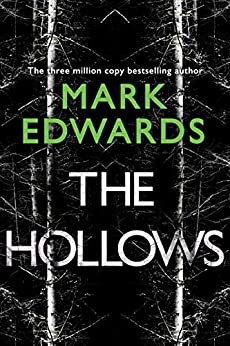
The Hollows by Mark Edwards.

Mark Edwards has become one of my favourite authors over the last few years. His books are fascinating, addictive thrillers where an ordinary domestic situation is subverted or even blown wide open. There’s maybe a new person brought into the situation who upsets the dynamic or a massive life change that makes a character question their life. This was a slightly different premise, but still based around a modern family, with more than a nod to another of my favourite authors – Stephen King. The title reminded me of the wooded area where the kids would meet in King’s novel It, there are allusions to burying a live cat that brought to mind Pet Semetary, the backwater town has the feel of Salem’s Lot and the passing drunk who helps Tom at the end has the feel of the janitor at the Overlook Hotel. As soon as Tom arrived at the cabins it reminded me of the secluded cabin in Bag of Bones. This gave me the sense we might be getting a supernatural element to this thriller and there’s definitely a pagan or Wiccan aspect to the tale.

With his marriage over and his career in freefall, journalist Tom decides to reconnect with his fourteen-year-old daughter, Frankie. Desperate to spend precious time together now that they live an ocean apart, he brings her to Hollow Falls, a cabin resort deep in the woods of Maine.

From the outset there’s something a little eerie about the place—strange whispers in the trees, windchimes echoing through the forest—but when Tom meets true-crime podcasters David and Connie, he receives a chilling warning. Hollow Falls has a gruesome history: twenty years ago this week, a double slaying shut down the resort. The crime was never solved, and now the woods are overrun with murder-obsessed tourists looking to mark the grim anniversary.

It’s clear that there’s something deeply disturbing going on at Hollow Falls. And as Tom’s dream trip turns into a nightmare, he and Frankie are faced with a choice: uncover the truth, or get out while they still can. There were times in the book when I was screaming at Tom to just pack the car up and leave without looking back! The killing from twenty years ago is a heavy influence on the story. Two teachers on a field trip with their students, sneak away at night to a clearing in the forest and start an illicit affair. Both are married and it is a double shock to their spouses to find out they’ve been cheating and murdered. The bodies are posed in a symbolic way with Wiccan symbols painted in their blood. The suspect is a local teenager with an interest in death metal and all things pagan. He disappeared at the same time as the murders, and Tom’s daughter Frankie is spooked by tales of him still living wild in the woods to this day. She forms a friendship with Ryan, son of the true crime enthusiasts David and Connie. They take a walk into the local town, Penance, which is a real backwater with locals who are openly hostile to those at the holiday village. The teenagers run into some other kids, but they’re not friendly. The way the author describes brother and sister duo Buddy and Darlene, standing together, arms by their sides and completely motionless – is creepy and reminiscent of the twin girls from The Shining. Ryan takes pictures and lampoons the locals on Instagram using hashtags they’re going to find, putting himself and Frankie in danger.

The author really ramps up the tension to great effect. Little creepy incidents like a dead rabbit at the cabin door, Tom thinking he’s seen a horned goat man, as well as Connie’s hints about a big surprise for her true crime followers on barbecue night, keep camp residents on edge. Then more serious incidents start to occur – Frankie and Ryan are pelted with rocks, an unlucky guest with a heart condition sees what she thinks is Satan. The stakes are getting higher, building towards the Saturday event. Tom makes friends with local bookshop owner Nikki, there’s an instant charge between them, but can he trust her? As he starts to look into the murders and myths surrounding the Hollows, using his investigative skills, he realises that Nikki was about the same age as suspected murderer Everett. Everybody seems to know each other in such a small town so did she know him? Suspicions reach boiling point, and when Frankie and Ryan go missing in the midst of the party preparations Tom has no idea who to trust and how to find his daughter.

Mark Edwards never lets me down. His thrillers are always well thought out, psychologically unsettling and paced beautifully. I didn’t work out the whole mystery, and the eventual reveal developed in an unexpected and rather grisly way. There was something slightly comical, as well as horrifying, about people wandering the woods in animal masks – particularly when the horned goat happens upon a very religious woman with a very weak heart. I must admit to a rather dark sense of humour because that made me laugh. I enjoyed the friction between locals and holiday makers, because it’s true of many beautiful places. The locals need tourists, but it’s an uneasy partnership. The pagan backstory to the forest being sacred ground, that should remain wild, linked in to this and felt very apt in a time when humans have ruined their habitat. I think the prurience of true crime fans was also timely with many of my friends glued to crime documentaries on Netflix. I’m also a Stephen King fan so I enjoyed the nods to his creations and the whole ‘townie versus country locals’ vibe that permeates a lot of his work. I devoured this so quickly that I’m already thinking about thr next book from this ‘must buy’ author.

Meet The Author

Mark Edwards writes psychological thrillers in which scary things happen to ordinary people.

He loves hearing from readers and always responds. Mark can be contacted in the following ways:
Email: mark@markedwardsauthor.com
Twitter @mredwards
Facebook/Instagram: @markedwardsauthor

You can download a free box set of ‘Short Sharp Shockers’ by visiting http://www.markedwardsauthor.com/free

Mark has sold over 3.5 million books since his first solo novel, The Magpies, was published in 2013 and has topped the bestseller lists numerous times. His other novels include Follow You Home, Here To Stay and The House Guest. He has also published six books co-authored with Louise Voss. His latest book is The Hollows, published in July 2021.

Mark lives in the West Midlands, England, with his wife, their three children and two cats.

Posted in Throwback Thursday

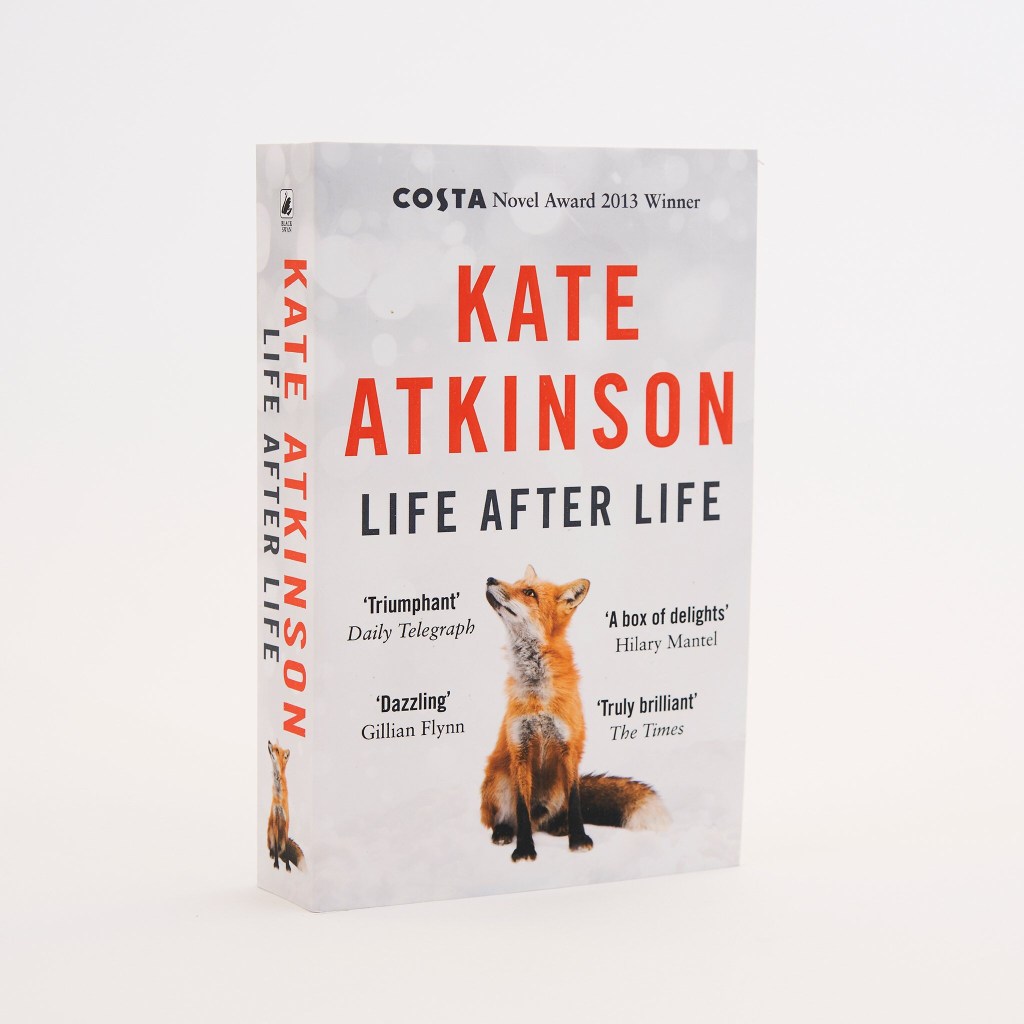
Throwback Thursday! Life After Life by Kate Atkinson.

Have you ever wished that you had a chance to do something all over again? To iron out the mistakes or maybe create a different outcome. To maybe get a second chance at life, right from the start; a life with a blank slate again. What if you had the chance to live your life again and again, until you finally got it right? What if there were second chances? And third chances? In fact an infinite number of chances to live your life? Would you eventually be able to save the world from its own inevitable destiny? And would you even want to?

Life After Life is one of my favourite novels of all time, alongside its sequel A God in Ruins. I loved her Jackson Brodie novels and Behind the Scenes at the Museum, but this novel is something extra special. I’d never read anything like it outside of sci-fi novels.

During a snowstorm in England in 1910, a baby is born and dies before she can take her first breath.

During a snowstorm in England in 1910, the same baby is born and lives to tell the tale.

Life After Life follows Ursula Todd as she lives through the turbulent events of the last century again and again. With wit and compassion, Kate Atkinson finds warmth even in life’s bleakest moments, and shows an extraordinary ability to evoke the past. Here she is at her most profound and inventive, in a novel that celebrates the best and worst of ourselves.

Atkinson does something profoundly special with this novel. It could have been a perfectly acceptable novel if it simply explored this baby girl’s lives from a personal and family perspective. However, Atkinson weaves Ursula’s personal story in with the state of flux in the early Twentieth Century. She takes in the demise of such upper middle class family’s like the Todd’s, from changes to social mobility, women’s roles becoming more prominent, and the loss of male members of the family due to WW1 and WW2. She explores the descent into WW2 and women’s roles in places like the war office and the secret services. In the multiple lives Ursula lives she can explore whether or not war could have been avoided, and what role she could have played in that mission. There’s so much going on that I can understand some reviewers finding it complicated to follow. The trick is to simply go with it. Eventually Ursula has longer lives where these issues can be explored in depth.

I fell in love with the Todd family and their genteel English way of life that can be summed up in a single phrase; ‘one does as one must, and then has tea’. All the female characters, including Sylvie and Pamela, are well fleshed out and it’s interesting to see what different paths their own lives took because of Ursula. I also had an incredible soft spot for Teddy – and loved that he got his own story in her follow up novel A God In Ruins. However, it is Ursula who holds our attention most and the endlessly inventive ways she dies in childbirth, from Spanish Flu, from drowning or by murder. She always has very strong perceptions, and experiences strong episodes of déja vu – although she doesn’t know she’s been here before, it seems she has gained some gifts from her other lives. There must be some residual wisdom from times when she’s been a mother or not, a wife or a mistress, someone who leads a quiet life in the country or goes to Germany and changes the course of history.

Atkinson’s sense of place is incredible. There are the lazy summers at the Todd family home, lounging in the garden or the kids exploring freely, climbing trees in the idyllic countryside. Her scenes in London are incredibly evocative, especially her descriptions based in historical fact. In one section their maid goes to a huge gathering in the capital to celebrate the end of WW1 and brings Spanish Flu back to the house. Her description of the London Blitz brings home how devastating and terrifying it must have been. We have a unique perspective as readers, we have an overview of every life Ursula lives, while she only knows the one she’s living in. Of course there are some events that repeat in every life – her birthday in 1910 is replayed twelve times – but these are important moments, where even the most subtle difference can send Ursula hurtling towards a different path in life. The novel evoked several other novels for me. The scenes at home with family in the early Twentieth Century reminded me of the long, languid summer of L.P.Hartley’s The Go-Between. Scenes in London during WW2, and the concept of written lives versus the truth, reminded me of Atonement by Ian McEwan. I never became bored of going back to the beginning, but the other characters in Ursula’s life are so strong and well-written, it seems odd that once she dies, they no longer exist either. The author explores the dynamics of family, class, and how that changes so much at this point in history. There’s also grief – for other people, a way of life, a loss of innocence – and how that affects characters differently. I think this is an astonishing novel, beautifully written and managing to be both playful in structure but profoundly moving at the same time.

Next week for Throwback Thursday I will be looking at Kate Atkinson’s sequel to Life After Life. A God in Ruins overlaps with Ursula’s story in places, but is more focused on her little brother Teddy.

Meet The Author

Kate Atkinson won the Whitbread (now Costa) Book of the Year prize with her first novel, Behind the Scenes at the Museum.

Her four bestselling novels featuring former detective Jackson Brodie became the BBC television series Case Histories, starring Jason Isaacs.Her 2013 novel Life After Life won the South Bank Sky Arts Literature Prize, was shortlisted for the Women’s Prize, and voted Book of the Year for the independent booksellers associations on both sides of the Atlantic. It also won the Costa Novel Award, as did her subsequent novel A God in Ruins (2015).

Posted in Throwback Thursday

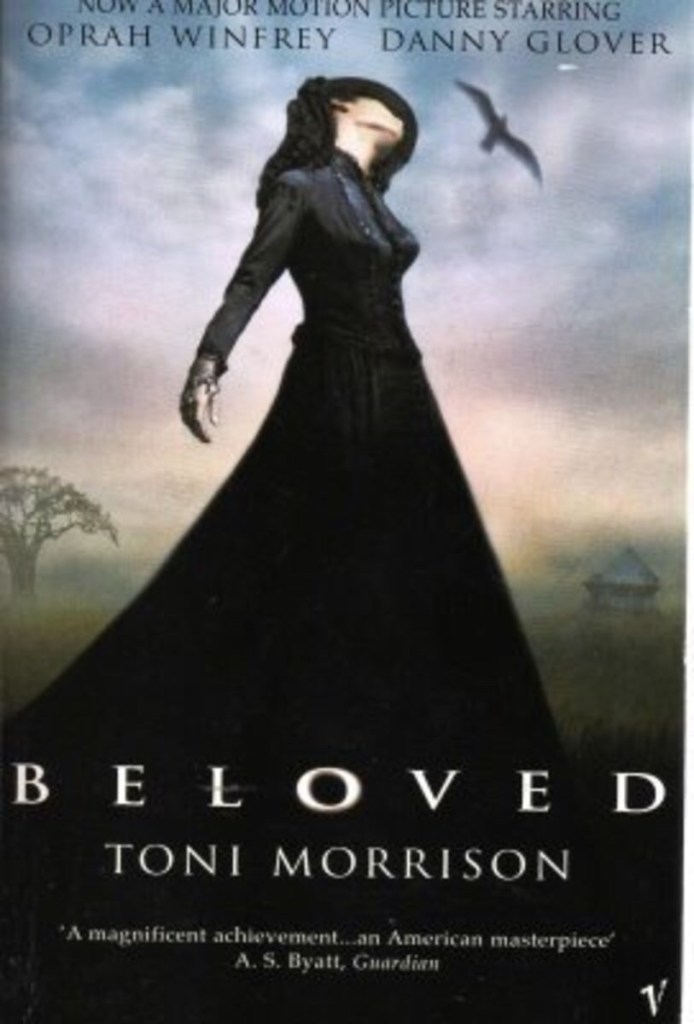
Throwback Thursday! Beloved by Toni Morrison.

Film tie-in paperback.

‘124 was spiteful. Full of a baby’s venom. The women in the house knew it and so did the children. For years each put up with the spite in his own way, but by 1873 Sethe and her daughter Denver were its only victims. The grandmother, Baby Suggs, was dead, and the sons, Howard and Buglar, had run away by the time they were thirteen years old — as soon as merely looking in a mirror shattered it (that was the signal for Buglar); as soon as two tiny hand prints appeared in the cake (that was it for Howard) […] leaving their grandmother, Baby Suggs; Sethe, their mother; and their little sister, Denver, all by themselves in the gray and white house on Bluestone Road’.

Beloved is one of those books that seeps into your soul and never really leaves. In that powerful opening paragraph we see a house full of supernatural activity. A house that men leave. Where only women have the strength to live alongside the demons of the past. The baby ghost who haunts Sethe is full of rage and throws tantrums like a toddler, yet instead of throwing her bottle on the floor she has the power to fling furniture at the wall, even the dog doesn’t escape unscathed. Sethe escaped Sweet Home, the farm where she was enslaved, over eighteen years ago. She has borne such terrible suffering and yet has survived, whole in body and mind. There is just this one thing, the possession of the house by her first daughter, who died when she was a baby. All it says on her grave stone is one word, Beloved. So when a teenage girl turns up at the house claiming to be her daughter, Sethe wants to believe it’s true. If it’s true, maybe what happened back at the farm was just a terrible dream. When Paul D arrives – a freed slave from the same place – his remembrances and ability to look forward instead of over his shoulder, will clash with Sethe who is stuck.

“To Sethe, the future was a matter of keeping the past at bay. The ‘better life’ she believed she and Denver were living was simply not that other one.” […] Yet the morning she woke up next to Paul D, the word her daughter had used a few years ago did cross her mind and she thought… Would it be all right to go ahead and feel? Go ahead and count on something?”

Until now, being in this liminal space is the only way she can be with her other daughter. Neither fully in the past, nor creating a new future, Sethe can’t move on without acknowledging the cost of slavery. At No 124, the ghost of slavery is literal and inescapable. Sethe may no longer be enslaved as the novel opens, but she can never forget what slavery as an institution did to her as a person. When a young woman claiming to be the now-adult Beloved comes to Sethe’s house, Sethe begins to believe that she might avoid facing the truth. Instead she might at last be able to forget: if Beloved is truly alive, then her terrible fate never happened, and so slavery may also be erased, forgotten, papered over. But it rapidly and inexorably becomes clear that forgetting is impossible. This incredible book has the feel of the supernatural, but it’s haunting is one of traumatic memory. Sometimes things happen to us that have to be pushed to the back of our minds. It’s as if we’ve accidentally forgotten, but really it’s a conscious choice to build a mental wall between our psychological ‘self’ and the trauma.

However, Sethe’s trauma is now embodied twice. The scar that covers her back looks like a tree. The lash has broken up and knotted the skin leaving a texture like bark. When Paul D sees her back for the first time, he does not flinch. Instead he traces the lines and kisses the branches, framing the mark of what she’s gone through as a positive thing. The tree could symbolise Sethe’s growth. She stands, a mighty oak of a woman, who doesn’t have to be cowed by her experience. Then Beloved arrives – an angry, spiteful young woman who seems to be very sweet at first, and only wants to be near the mother she’s never had. Denver and Paul D can also see Beloved so she’s not an apparition or figment of Sethe’s imagination. She’s a real woman. In the film, Beloved is played beautifully by Thandie Newton – full of languid grace and always fixing huge pleading eyes on Sethe whether she wants more sugar, more attention, more love. In fact her needs are like those of a baby and must be satisfied. There’s a baby’s narcissism in Beloved and she wants her newly found mother all to herself, trying every means possible to drive a wedge between Sethe and Paul D or her baby sister Denver. She’s not above lying, pleading or even seduction to get her mother to herself.

As Denver and Paul D leave, Beloved is satisfied. However, Sethe is slowly being drained by the girl. She loses energy and isn’t seen in her garden so much. She stops visiting the market for food. The women in the neighbourhood notice and share the strange stories they’ve heard: about a young woman suddenly living at number 124; that Sethe has lost her man; that her daughter Denver left for work in the city; and that Sethe grows thin waiting on her house guest hand and foot, while Beloved grows fatter. The women gather outside 124 in a prayer circle and began to ask God to take back this demon inhabiting Sethe and her home. They don’t believe Beloved exists, not as an actual flesh and blood girl. Can they give Sethe the strength needed to recognise this? Can she own and confront a crucial part of her past?

She will need all of her will for this embodiment of Beloved to leave. She has to recognise that she no longer needs a physical reminder, because instead she needs to integrate a terrible, horrifying act she committed into her psyche. She starts to accept that Beloved’s death was caused by slavery. The descriptions of what happened to Sethe at Sweet Home are truly harrowing and they need to be, so that we as readers understand her actions. Sethe remembers: the lashing that tore her back open; the awful scene in the barn where her husband, hiding in the rafters, is forced to see Sethe pinned down as their master’s sons suckle her baby’s milk away; the horrifying sight of Paul D wearing the ‘bit’ – a terrible metalwork mask that prevents him from speaking. The remarkable thing is that these experiences are not recounted with buckets of emotion. They are merely factual and all the more devastating in their quiet retelling.

In the aftermath of Beloved’s disappearance, Sethe starts to grieve. She acknowledges the beautiful little girl she held in her arms that day. The day that her love for her children was so great, she could not bear to see them taken back to the horror she’d fled. As Paul D tries to comfort her she keeps repeating ‘she was my best thing’.

“He leans over and takes her hand. With the other he touches her face. ‘You your best thing, Sethe. You are.’ His holding fingers are holding hers.”

Now Sethe must learn to put herself first. Not to forget Beloved, her first born who liked to eat the burned edges of bread, but to forgive herself. To place the blame at slavery’s door, rather than her own. Paul D has returned to something for the first time in a life where he’s done nothing but run. He can’t articulate his feelings for Sethe, but when he’s with her he can let the horrors that slavery inflicted on him melt into the background. She has shared his experience and this removes any shame he feels for being collared and yoked like an animal. His memories no longer remove his manhood from him. He encourages Sethe to move forward with him, to start experiencing less yesterdays and more tomorrows. Beloved, in hindsight, becomes an embodiment of their past. Resurrecting the past is always painful, and Beloved is painful, difficult and confusing to encounter. In Beloved, a traumatic history is restored and rescued from years of buried memories and enforced silence.

Posted in Throwback Thursday

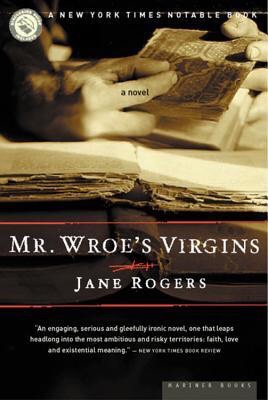
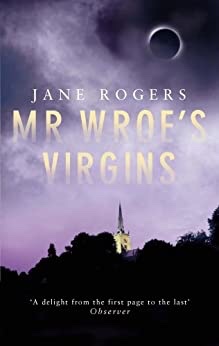
Throwback Thursday! Mr Wroe’s Virgins by Jane Rogers.

‘The Lord has instructed me to take of your number, seven virgins for comfort and succour.

In 1830, as he thought the end of the world approached, the charismatic, hunchbacked prophet of a religious sect settled in Lancashire heeds the biblical injunction and chooses seven virgins ‘for comfort and succour’. Basing her novel on the life of the real John Wroe, a leader of a group called the Christian Israelite Church, Rogers crafts an impeccable narrative, interweaving the diverse mindsets of some of the chosen women and the prophet during the nine months of complex interaction. Part morality tale, part history, packed with accurate details of early 19th century life, the stories of Leah, Joanna, Hannah and Martha unfold as they cope with the hypocrisy, blind beliefs and idealism of the sexually threatening prophet.
Told with humour, irony and a generosity that embraces even the sinister Wroe, this is a compelling story of astonishing depth, elucidating religious idealism, the beginnings of socialism and the ubiquitous position of women as unpaid labourers.

I came across this novel, even before the BBC TV series of the same name. Having seen/read both, I can recommend them equally, although I think the novel is slightly more successful in a few different ways. The way the book is structured into four different narratives allows the women’s characters to develop fully, as over nine months, the story of their lives unfold. Through them we come to experience all seven women: a pious believer; two sisters, still too young to understand their place in the world; a disabled woman; a beautiful, but egotistical woman; a mute and badly beaten woman; a girl donated by her aunt and uncle, who doesn’t believe in the prophet or his religion. It is only through the women that we experience the prophet, a clever reversal of power. In fact these narratives are the only power the women have at first, these are their only words free from restriction or religious dogma. This power shift is especially interesting when it comes to Martha, who is mute. When I first encountered her narrative I thought I’d bought a book with pages missing. However, it’s just Martha trying to express herself the only way she knows – depicted in staccato monosyllabic language, Martha writes about what she knows, eating and sleeping in the first instance. Yet instead of cutting off her narrative, Rogers leaves a blank page. This is the space into which Martha can develop and come to know herself. One of the most powerful parts of the book is watching this transformation.

We hear that Mr Wroe is a powerful speaker, and we can hear his preaching and religious teaching. However, we don’t fully come to know and understand the man. He doesn’t get to construct himself through language. So, we know something of his belief system and his interpretation of the Bible, but nothing personal. This could be because he is a conduit of God, simply meant to deliver God’s teaching. It also leaves him as something of an enigma. Why and when did he become the person he is today? The belief system he has is very selective, patriarchal and seems to benefit him more than his congregation. He sees no problem in allowing Leah to bring her illegitimate child to live with them. He accepts Hannah into the fold despite her lack of faith, and her doubts allow him to admit his own. He uses all the women as unpaid domestic servants and the exploitation doesn’t end there. He seduces the pious Joanna by convincing her that they will beget the new Messiah. For each woman his approach is different, but it works. I found his exploitation of Martha particularly difficult to read and his ability to take Joanna’s faith and use it against her in such a manipulative way is despicable. I don’t want to ruin the ending, so I’ll reserve any more detail, but such an arrangement can’t last and I kept reading hoping for the women’s emancipation.

I have always enjoyed this book and further reading shows it has stood the test of time. The historical detail is so accurate and the scene she sets is vivid – Martha’s time in the pig sty with the animals really sticks in my memory. It may seem hard to believe that any parent would willingly give up their daughters to this man. However, I understand how religious fervour can sweep through a community. Having family on my Dad’s side from the Isle of Axeholme, I know my ancestors would have experienced the Methodist revival started by John Wesley who hailed from Epworth. The real life Mr Wroe’s congregation firmly believed he was a holy man. Maybe they felt that God would look favourably upon them if they supported his vision. There were of course monetary reasons too; offloading a disabled or mute woman who would never earn money or marry could have helped a family who were stretched financially. Also, the stigma of having a disabled daughter, an old maid still living at home or a a girl who has a child out of wedlock could be wiped out by their inclusion in the prophet’s household, This can be a challenging read in parts, but worth the work as you become pulled in by the voices of these women. Little is known about the real ‘virgins’, but here Rogers gives them a voice and a power they clearly didn’t have in life.

Meet The Author

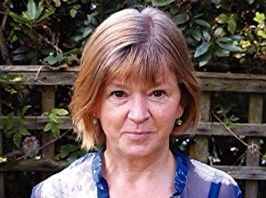
Jane Rogers has written 10 novels ranging from historical to contemporary to sci fi. Books include Mr Wroe’s Virgins (which she dramatised as an award-winning BBC drama serial), Island, and The Testament of Jessie Lamb (ManBooker longlisted, winner of the Arthur C Clarke Award 2012). Her short story collection Hitting Trees with Sticks was shortlisted for the Edgehill Award.
She also writes radio drama and Classic serial adaptations (most recently of John Wyndham and R.L. Stevenson).
Jane has taught writing to a wide variety of students, and is Professor Emerita at Sheffield Hallam University. She’s a Fellow of the Royal Society of Literature. Her latest novel, Body Tourists, is a dystopia set in 2040.