Posted in Netgalley

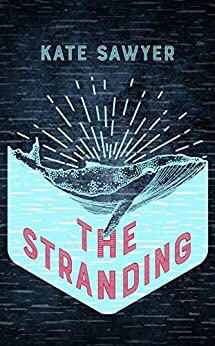
The Stranding by Kate Sawyer.

I know that a book is extraordinary when I finish it and feel changed in some way. I’m never sure what has happened, but there’s a tiny, imperceptible change, to the air around me, how I feel and even the way I perceive the world. The Stranding left me feeling calm, thoughtful and as if a lot of the small things worrying me didn’t really matter in the big scheme of things. I cared deeply for the characters and their grief, and strangely proud of them for what they managed to achieve. The author created an incredible sense of New Zealand and the whale that becomes Ruth’s saviour, and mother – birthing her and Nik into their new world and sustaining them. Her detailed descriptions left me fully immersed in this world, so much so that when I finished reading, it took a while to adjust back to being in Ruth’s ‘before’ and my 21st Century world.

Ruth is an endearing character and someone I could relate to enormously, especially when thinking back to my younger self. She makes mistakes and doesn’t fully know herself yet. She’s a primary school teacher and serial monogamist living in London. She has a best friend called Fran and really supportive parents who live a train journey away. However, her love life is complicated with even Fran saying that she needs to spend some time alone between relationships. So, Ruth has kept her current relationship under wraps. She loves Alex, and she’s sure the way she feels is different from her previous relationships, but he comes with complications. He’s married, with two small children. There’s a restlessness about Ruth, something she thinks will disappear if Alex makes a commitment. Then he does and he’s there in her small flat all the time, she’s a ready made step mum and as time goes on, she wonders whether she really wants this version of her life? She struggles to cope with someone so physically close to her, sharing her space.

‘Ruth had noticed a new loo brush beside the toilet. She reddened to realise that Alex had felt the necessity to purchase such an item, and her cheeks burnt even more when she wondered whether it was her or him who had made that requirement apparent. It wasn’t the only scatological matter that raised the colour in Ruth’s cheeks. Alex was opposed to the use of any chemical or aerosol-propelled household products. Over the past week, on several occasions, Ruth had found herself wafting pungent air out of the window and running the tap to foam soap in the hope of masking the smell of her natural functions. Though it was worse when she had walked in and been greeted with air almost warm with the memory of Alex’s recent visit’.

The book is split into before and after – it’s not explicit exactly what has created this apocalyptic world Ruth eventually finds herself in, but it is catastrophic, wiping out Europe before it reaches where she has travelled in New Zealand. The placement of these sections is incredibly clever. Before takes us back to the world as we know it and follows Ruth to the beach and the stranded whale. After starts at the stranded whale and tells the story into the future. So we are brought full circle and can marvel at the change in Ruth and discover whether she has finally found satisfaction in a life stripped of everything. Nik is, quite literally, the last man on earth. The difference in their characters is shown in the way they cope with the stranded whale. Ruth is immediately desperate to do something. To do anything. She rips through her rucksack for a container to hold water, then pours it over the huge creature. She must know rationally that this tiny amount of water will make no difference. She has been interested in whales since being a small girl so she must know this is a losing battle, but the activity is not for the whale. Ruth chooses activity because she can’t accept the inevitable. Nik is straightforward. He reminds her that her efforts are futile. They can’t save the whale, all they can do is be there in it’s final moments. They are forced into an intimacy that Ruth would normally avoid. Every day they choose to be a team, to use their individual skills to support each other and stay alive. Her father once advised her that love, real lasting love, is quiet and surprising. It’s not Anna Karenina or Wuthering Heights. It’s not drama and heartbreak and flowery exclamations. He tells her that it’s just going about your day and having a realisation that you can’t live without the other person. There’s telling someone you love them, and there’s showing them.

I loved how the author emphasised the importance of stories in the afterward sections. She realises that children in this new world will never know what it was truly like to live in the before. This wild world of survival is their normal. She tells them stories of how she survived the end of the world. She knows they will never know her joy of reading and she thinks of all the children’s classics she could be reading to them:

‘She watches Frankie exploring every stone and shell she comes across and feels a physical ache in her heart that she will never read a book: the words that constructed the worlds Ruth’s imagination inhabited as a child. Instead Ruth tells her those stories herself. She tells her of the Lion and the Witch that lived through the Wardrobe, and great adventures of princesses and princes. Without the books to restrict her, she often switches the genders of the protagonists, waking sleeping princes from their slumbers and sending young women on adventures in mythical lands. Nik watches as Ruth talks softly to the child on her lap in the light of the fire, retelling the stories they know so well; he raises an eyebrow and forms his crooked smile as he hears her adaptations.’

This is a return to oral storytelling, where the story can change according to the storyteller. I also loved Ruth’s changing of the narratives, creating a more feminist type of fairy tale and shaping girls to be powerful, confident and be the ones doing the rescuing.

I was blown away by the author’s own storytelling, from the beautiful and detailed, such as her incredible description of the skin of the whale.

‘The hide of the animal looks like cracked, varnished wood. Like an old piano. A giant grand piano from the ballroom of a wrecked ocean-liner, washed up on the shore. The long white underside of its belly is ridged, like bricks of pale plasticine. The shell-like white, beige, cream skin is flecked with grey, black, coral-orange markings. Around its mouth and eyes the same orange spreads like rust: clumsy make-up that has smudged in the water.’

Yet, it can also be brutal, such as when she’s describing Ruth’s skin in the first few days afterwards. It made me think about the extremes of the world she’s living in, from the quietness and the gradual return of nature to the brutality of the wild dogs and the animalistic aspects of birth. What I was left with though, was something I’ve been thinking about during the pandemic where I’ve been shielding – only seeing my partner and step-daughters. With the pause button pressed on my life, I was able to think about it more clearly. I realised we needed to move house and we are now out in the country, with a garden I can sit in easily and chat to the neighbours over the fence. It made me realise who was important in my life and who wasn’t. I re-evaluated what I wanted to do with my time and decided that now is my time to write. It also made me realise who I am, without people to bounce off, or rushing to different places, or having endless mental stimulation through social media. I was able to apply something I have previously taught in art and writing therapy workshops – the art of being myself. This is Ruth’s journey. With everything removed from her, who exactly is she? There is a time in her life where she would avoid self-examination by jumping to the next thing, the next entertainment, scrolling social media, the next outing, the next man. Afterwards, she is forced to contemplate and to be with the only other person who survived. It is fascinating to watch whether she copes in this situation and whether she can find a way to be happy that eluded her before. This book was incredible, moving, disturbing and deeply philosophical. This is an extraordinary debut and I loved it.

The Stranding is published by Coronet on 24th June 2021

Posted in Netgalley

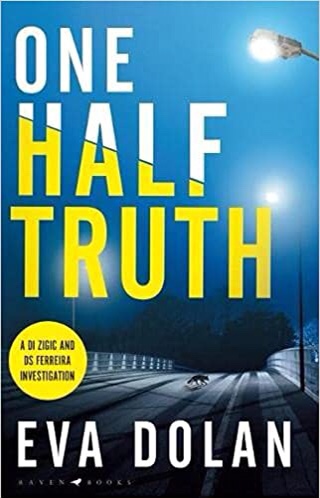
One Half Truth by Eve Dolan

I really enjoyed this police procedural set in Peterborough which is part of a series I’ve often read before. Zigic and Ferreira are the detectives looking for a killer when young student Jordan is shot dead walking home from watching football at a club. The club is for men who worked at Greenaway’s factory, but the factory is long gone and so are the jobs. This left skilled engineers consigned to the scrap heap in their fifties – an age where getting new employment is very difficult. The club lingers on as a reminder and is still frequented by a group of men bonded together due to their shared experience, with a lot of bitterness and anger remaining. So what was a young man like Jordan doing there and how had he ended up shot in the back of the head, execution style, close to the Parkway on his shortcut home?

The story line grabbed me straight away, possibly because my family are working class enough to have experienced what these men have gone through, but in the mining and steel manufacturing industries. I’ve seen what it does to a man to leave him unemployed near retirement age. Jordan really stood out as one of the good guys in life, using his writing to stand up to big business and expose corruption. Of course we only experience him through his deeds and other people’s impressions of him, but that’s enough for me to feel he was ambitious to be a journalist, but also had some integrity. He wanted to do the job to write the big stories, not doorstep celebrities or cover fun days for the local paper. He’d already been published in the Big Issue, the piece that told the stories of the men at the club and the reason he knew and bonded with them. He’d shown how their mental health suffered after redundancy, that many had lost their wives and families too, some had even lost the roof over their heads. The fact that he’d stayed in contact with these men, tells the detectives that the club is the best place to start investigating.

There are three stories that Jordan was working on with the potential to ruffle important feathers. One is about a social care company attached to a woman called Sheila Yule, but she is very wary of even speaking to the police and appears scared. Then there’s the death of the owner of Greenaway’s, in a helicopter crash. It had been ruled an accident but could Jordan have found out otherwise? Finally, he was looking into a housing development on the outskirts of the city, where Ferreira had almost bought a flat. Any one of these stories would have made this an interesting book, so to give us all three was generous and created a few red herrings along the way. There were so many leads to follow that the pace never let up and the story never flagged. All three stories were right up my street politically, so I really enjoyed delving into the detail and the thinking Jordan would have gone through when researching. All the undercurrents of deprivation, corruption, the collusion of big business and local politics couldn’t have been more timely and they fit perfectly with how I see the world.

There were some great bits of character revealed in Ferreira and Zigic’s home lives. Ferreira’s competitive streak comes out when her partner, and fellow police officer, wants to have his hunch on the case confirmed. The next minute they’re bantering about paint colours and wallpaper. The comical scene of Zigic and his wife clearing out his wardrobe was eerily familiar and very funny. These are the lives they go back to after working long hours and it was enjoyable to see those glimpses of their home selves. Both Zigic and Ferreira have a conviction to see justice done and hate being told what they can and can’t investigate from higher up. In this case, high ranking police officers being too cosy with local councillors and big business in the area. Ferreira is slightly more reckless and I love how she takes things into her own hands at the end. I like her fire and her need to get to the truth – whoever is involved. There are twists I didn’t expect, but I was glad of them, because they changed an outcome I was struggling to accept. This was solid, intelligent, crime writing with a lot of heart and a social conscience so I enjoyed it immensely.

Meet The Author


Eva Dolan was shortlisted for the CWA Dagger for unpublished authors when only a teenager. The four novels in her Zigic and Ferreira series have been published to widespread critical acclaim: Tell No Tales and After You Die were shortlisted for the Theakston’s Crime Novel of the Year Award and After You Die was also longlisted for the CWA Gold Dagger. She lives in Cambridge.

Posted in Netgalley

Circus of Wonders by Elizabeth MacNeal.

From the cover..

The spellbinding novel from the author of the Sunday Times bestselling The Doll Factory. 1866. In a coastal village in southern England, Nell picks violets for a living. Set apart by her community because of the birthmarks that speckle her skin, Nell’s world is her beloved brother and devotion to the sea. But when Jasper Jupiter’s Circus of Wonders arrives in the village, Nell is kidnapped. Her father has sold her, promising Jasper Jupiter his very own leopard girl. It is the greatest betrayal of Nell’s life, but as her fame grows, and she finds friendship with the other performers and Jasper’s gentle brother Toby, she begins to wonder if joining the show is the best thing that has ever happened to her. In London, newspapers describe Nell as the eighth wonder of the world. Figurines are cast in her image, and crowds rush to watch her soar through the air. But who gets to tell Nell’s story? What happens when her fame threatens to eclipse that of the showman who bought her? And as she falls in love with Toby, can he detach himself from his past and the terrible secret that binds him to his brother? Moving from the pleasure gardens of Victorian London to the battle-scarred plains of the Crimea, Circus of Wonders is an astonishing story about power and ownership, fame and the threat of invisibility.

‘Do you like stories?’ Nell asks, and the child nods. She picks up the book of Fairy Tales, weighs it in her hand. She remembers Charlie’s wafting hands, trying to fix her, to make her ordinary. She puts it back, takes a breath. Instead, she tells Pearl about a mermaid with a blue-scaled tail. ‘Her tail was so beautiful,’ she whispers, ‘that if men caught her, they’d dry her out and place her behind a sheet of glass, and thousands of strangers would pay to see her.’ She tells her how the mermaid swam in the deep waters where nobody could find her. ‘A little like you in this wagon,’ she says. Pearl smiles, and Nell carries on, explains how a prince’s ship was blown off course and he fell in love with her. He longed for his own tail so much that he visited a witch who ripped his legs from his body and stitched on fish scales with a sharp needle’.

Those of us who loved Elizabeth MacNeal’s first book The Doll Factory have been waiting impatiently for the next novel to spring from her imagination. The wait was worth it. I am always drawn to books about circuses and freak shows – it follows on from research I did at university in my Gothic, Grotesque and Monstrous module and for my dissertation on disability. However, not all works that feature freak shows, in whatever form, have their research based in disability studies and culture. While The Greatest Showman has Hugh Jackman (swoon) and some incredible songs, it doesn’t really tackle the ethics of such an enterprise as Barnum’s. Yes, the freaks had a great song about being their authentic selves and not being hidden away, but it never tackled that deep inequality in their relationship as showman and exhibit. The act of singing This Is Me, led by the bearded lady, shows their strength and character when Barnum doesn’t allow them to attend the party with dignitaries. However, it doesn’t address the fact that they are getting paid to display themselves as different and whether or not this is a choice. MacNeal uses Barnum as the inspiration to her showman, Jasper Jupiter, but she does see the problems inherent in a concern that displays ‘other’ bodies for entertainment. She then explores the concept of difference using the circus performers, fairy tales and concepts of monstrousness. She manages to do this while writing a story that is thrilling, full of strong characters and told with such vivid description.

Our heroine, and eventual Queen of the Moon and Stars, is Nell. As Jasper Jupiter’s troupe visit the small village where her family farms violets for confectionery, he notices Nell’s wild abandon as she dances with her brother. This is an after show party for the performers, but there are locals too, enjoying the atmosphere and partaking in a lot of alcohol. Nell is usually shy, covered in birth marks head to foot, she tends to stay where she isn’t seen. However, the alcohol she tries removes all the inhibitions she usually hides behind in public. Jasper sees her as a leopard girl, covered in spots, and imagines how she would look in his circus. Eventually though, he settles on Queen of the Moon and Stars; Nellie Moon, with a skin covered in constellations. He approaches Nell’s drunkard of a father and offers him twenty pounds for her. He creates a caravan for her, beautifully decorated and with three well chosen books for her to read. Then with her father’s help, he kidnaps her, locks her in the caravan and trundles off with the rest of the circus into the night. His plan is to make her fly, constructing huge feather wings on a harness and a system of ropes and pulleys to give the impression she is soaring above the crowd. His troupe are ‘performers’ not just exhibits to be wheeled out, poked and prodded. Jasper believes that with Nellie Moon he might start to earn the sort of money that would make a trip to London viable. Maybe in a show tent in one of the pleasure gardens? Most of all he’d like to entice Queen Victoria to see his show, because she is a famous ‘freak fancier’ and what a coup it would be if Jasper’s Circus of Wonders was her first choice of entertainment since Albert died.

I loved the way the author used the books in Nell’s caravan to bring in the idea of fairy tales and how they victimise people who are different. When Nell is reading to Pearl, an albino little girl that Jasper buys, she manages some retelling worthy of Angela Carter – including The Little Mermaid quoted at the beginning of my review. Nell thinks about the book of Hans Christian Andersen tales she would read with her brother Charlie:

‘They read about Hans My Hedgehog, half-boy, half-beast; about the Maiden without Hands; about Beast and his elephant trunk and his body glittering with fish scales. It was the stories’ endings which always silenced her, that made her pull her dress over her fingers. Love altered each character – Hans shucked his hedgehog spines like a suit, the maiden’s hands grew back, Beast became a man – and Nell pored over the woodcuts so carefully, staring at those plain, healed bodies. Would her birthmarks disappear if somebody loved her?’

The thought would make her tearful even then, but she didn’t know why. Stella, the bearded lady, tells Nell that she will find her strength in performing. It’s a way of taking up space in a world that doesn’t see them. She gives voice to the dilemma at the heart of the ‘freak show’; instinctively, it feels wrong to exhibit someone for their difference, but where else would they earn so much money and live so well? Of course in reality there were horror stories and the author does name check some of them in the book. Sara Baartman, a slave from South Africa, known as The Hottentot Venus was exhibited all over the world until her death. She was then bought by naturalist George Cuvier who dissected her, then pickled her genitals and kept them in a jar. Barnum was known to treat animals appallingly, but he also exhibited a freed slave called Joice Heth after removing all her teeth! He did this so he could name her the Oldest Woman in the World. However, for every horror story there were famous ‘freaks’ such as Siamese Twins Chang and Eng who earned so much from being exhibited that they bought a plantation for themselves, and their families. It isn’t just the money though, as Stella explains:

‘There’s power in it,’ Stella says, twisting a curl of her beard around her finger. ‘In what?’ ‘Performing. You control it. How they see you. You choose to be different. Nobody else looks like me, and I’m glad […] I was a hungry gutterling, not worth a gentleman’s spit. And because of this, the source of all my powers—’ she smiles and pulls on her beard – ‘I’ve been to Vienna and Paris and Moscow, and done as I please. I’ve made enough money to make my mother turn in her grave. I could give you a thousand names of wonders whose lives are richer, bigger, brighter, because of shows like this.’

Nell can’t imagine feeling like this. She has always kept her body covered and stayed in the background. She’s used to being called ‘leopard girl’ or being asked if her mother was startled by a leopard during her confinement. She is used to being whispered about and pitied. How will she feel about her body being displayed, flying high above the audience? Being pointed at and talked about, her body on posters, matchboxes and as figurines. Yet, when she gets there, she does feel what Stella is talking about.

‘Someone throws flowers into the sky. A bouquet dips and falls. She watches these people, grown fat on wonder. They have seen a giant juggle, a bearded woman chirrup like a blackbird, a dwarf ride a miniature pony, tumblers and contortionists, fire-eaters and dancing poodles, and she is the finale. They admire her, want to be her. All her life, she has held herself like a bud, so small and tight and voiceless. She has not realised the potential that lies within her, the possibility that she might unfurl, arms thrown wide, and take up space in the world.’

I loved the stance the author takes and I loved this awakening in Nell too, but there’s so much more to the book. The luscious descriptions of costumes and performers made me feel I was there. The heat of the lights, the smell of the animals and gaudy caravans.The sounds and smells of the pleasure gardens were also really vivid, especially the morning after. The flashbacks of Jasper and his brother Toby’s time in the Crimean War were horrific and I loved the interplay of the brother’s roles as watcher and doer. The author plays with the idea that appearances never lie, through Toby’s photography, how he chooses his images and for which audience. Toby was an interesting character who never truly fits anywhere, not even in his natural place as Jasper’s brother. His difference doesn’t show, so when he tries to make his otherness visual will the other performers accept him? Jasper himself is mercurial, full of ideas and with a lot of success, but always reaching for more, to his detriment. I found his relationships to women interesting, he has no lovers and his ties with his friend Dash were the strongest he’s had with another person. He seems to see women as things to display, to possess and assert power over, but not as allies or equals. Yet, in his troupe, he has some of the strongest women you could imagine. There are some parts of the ending that were inevitable and others that were unexpected and left undone, which was perfect. I loved this book so much, I’m going to buy a very special copy of it and keep it forever.

Meet The Author


Elizabeth Macneal was born in Scotland and now lives in East London. She is a writer and potter and works from a small studio at the bottom of her garden. The Doll Factory, Elizabeth’s debut novel, was a Sunday Times bestseller, has been translated into twenty-nine languages and has been optioned for a major television series. It won the Caledonia Novel Award 2018. Circus of Wonders is her second novel.

Posted in Netgalley, Publisher Proof

The Perfect Lie by Jo Spain

This thriller kept me guessing and a couple of times, even had me going back to previous chapters so I could be sure of what I’d read! Our heroine is Erin Kennedy, an Irish girl working in publishing in NYC and living with her husband of three years out on Long Island. She narrates her story across two timelines: one is the present and Erin is on trial for murdering her husband, and the other is a year earlier around the third anniversary of her marriage to Danny, a detective from Long Island. Our second narrator is a younger woman called Ally, a PhD student and proctor at Harvard University. My confusion arose from how these characters related to each other and the author is clearly a master of telling her readers just enough to keep us reading, but not enough to ruin the later revelations, twists and turns – and there are plenty of them!

The Erin from a year before is a very different person and early on in a shock scene, Erin and Danny are starting their day at their sea front apartment when his partner turns up at the door. Ben has two uniformed cops with him and when Erin answers the door he is not his usual self. He apologises but tells her they are there to arrest Danny. Erin thinks this is some elaborate joke, but her confusion gives way to horror as she realises Ben is serious. However, instead of being confused, Danny looks guilty and scared as hell. Before Erin’s eyes Danny runs to their fourth floor balcony, apologises to her, and throws himself from the edge. Ben doesn’t let her see, and she stands a little distance away, watching with disbelief as a small crowd gathers and paramedics work on her husband. Although Ben spares her the final image of Danny, broken on the sidewalk, she already knows he’s head. Through shock, and that awful first numb state of grief, she forgets to ask why Ben turned up that morning to arrest his own partner, why they take away papers and his laptop, and exactly what Danny is supposed to have done.

Those questions do come later though, especially when Erin has that realisation, that she isn’t being afforded the same support she’s seen other police widows receive from the precinct and the other wives. It’s almost as if she’s been cut off and they’re embarrassed by her, most notably not turning up for the funeral. It doesn’t take long for her to realise she’s going to need a lawyer. The police’s attitude tells her that Danny must have been suspected of corruption, and she needs someone who knows the system. Firstly they need to find out whether she’s still entitled to a widow’s pension, but next she wants them to do some digging into exactly what Danny was being investigated for. Her journey has her asking so many questions and she starts to wonder whether she knew her husband at all. With a small trusted group of friends and her sister Tanya, she starts to piece together the truth.

By now you’ve probably noticed the glaring big question mark in this story; if Danny committed suicide, how is Erin on trial for murdering her husband? I’m not going to ruin the story for you all so I’m not going to reveal any more. This question, and many others do get answered eventually. The author’s timing, in choosing what to conceal, what to reveal and when, is absolute perfection.

It takes a while for Ally and Erin’s stories to intersect, so after every one of Ally’s chapters I was racking my brains to work out where they fit. Ally is writing her PhD on crime novels and as proctor she is charged with taking care of one student hall of residence on the campus. It’s an unusual role that seems to cover mentoring, mothering, but also showing students how to have a good time. In fact, Ally’s hall parties have become so renowned that girls from other blocks want to get in on the guest list – so many that they’ve had to place a restriction on the amount of invites they can have per girl. We meet her as she tries to support a girl called Lauren, an undergraduate, who has been the victim of a crime. Luckily, Ally knows someone who may be able to help, and she offers to bring her boyfriend in to help with results neither of them expect.

I did struggle to understand Erin at times and her decision making. Of course she’s in shock and shouldn’t be making decisions anyway, but there were times when I was screaming at her not to do something. There was an element of her drifting along, rather than making well thought out decisions. Her grief is complicated by the manner of Danny’s death, but also because she’s angry he made this choice to lie to her, leave her behind and leave her haunted by that final image of him disappearing over their balcony. I think her confusion over where to be and who to spend time with was well done. To be with his family is difficult because their grief is different and not complicated by betrayal. She is shunned by the other detective’s wives so seeing them makes her angry. She feels abandoned in a country that isn’t her own, and she gathers a disparate group of new friends who offer support. There’s Bud, the owner of their local bar, her new firecracker of a lawyer, Karla, Danny’s psychotherapist and a man called Cal who knew Danny. These people seem to keep her afloat, but I didn’t trust anyone and treated all of them with suspicion. In feeling angry and betrayed with the one man she thought she knew, and his police colleagues, is she in danger of trusting all the wrong people? I found her story entertaining, compelling and the author paced it well. This would be a great read by the pool this summer and you’ll probably find yourself reading it in a couple of sittings, because like me, you’ll want to know exactly what’s going on. This book is a rollicking good thriller, that I’m sure you’re going to enjoy this summer.

Posted in Netgalley, Random Things Tours

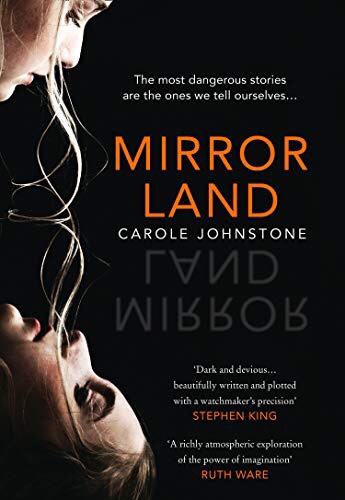
Mirrorland by Carole Johnstone

This is an extraordinary debut by Carole Johnstone full of psychological suspense, supernatural and imaginary worlds, and sibling rivalries. Cat and El are identical twins to most people who see them, but actually they’re mirror twins. This means that not only are they the same sex and blood type, they have identical, but asymmetric physical features. For example, if one is left handed the other is right handed. Yet they’ve spent twelve years definitively apart. On separate continents. Cat has been living and working in L.A. In the meantime El has been married to their childhood friend Ross and is even living in the girl’s childhood home. No 36 Westeryk Road is a large Gothic house that becomes a central character in the story. When Cat gets the news that El has gone missing while out sailing, she travels back to Edinburgh; towards her past.

The facts are that El has gone missing and there have been no sightings of her or her boat. Ross, who is now a psychologist, meets Cat and takes her back to the house. She’s shocked to find that a lot of the original furniture is still at Westeryk Road, and she’s been put in a guest room instead of their childhood room. It takes a while for her to get her bearings because in their childhood world all the rooms had names: Clown Cafe, The Kakadu Jungle, The Donkshop. The clown cafe was a candy stripe American diner. The Kakadu Jungle was richly wallpapered with a rainforest. The only room without a name was Bedroom 3. There is an old-fashioned servants bell pull with a bell for each room, but Cat doesn’t want to investigate when the bell rings from No 3. The world of imagination doesn’t end there, because tucked away under the pantry was another world called Mirrorland populated by clowns, witches and pirates. My therapist’s mind was whirling round at this point – why would someone want to live exactly as they had when they were children? Are these real or imaginary spaces? Is the imagery of mirrors significant? Which sister is a reflection of the other?

Back in the real world we meet DI Kate Rafik and DS Logan who are heading up the search for El, and seem confused by Cat’s reaction to her disappearance. Cat doesn’t trust her sister, she thinks she’s alive and possibly playing a game with them. It seems that the sisters have a symbiotic but unhealthy relationship, where El could be spiteful and play tricks on her sister. There’s also the relationship with Ross – Cat loved him first, but El couldn’t stand to be left out, taking drastic measures to be noticed. Underneath this tale I had to keep reminding myself that this was Cat’s version of events. Was she an unreliable narrator? There’s also the issue of notes being left for El just before her disappearance, but the sender hasn’t been uncovered. It doesn’t take long before Cat starts to receive similar emails, but are they from El? If so are they real warnings or a game? Or could someone else know what’s really going on at Westeryk Road?

I did find the combination of real life and flights of fancy a little difficult at times, it was as if my head was being bombarded with different information: visual, aural, imaginary, factual. I was in sensory overload a lot of time and struggled to take in the detail that might unravel this strange mystery. I also didn’t like or connect with any of the characters, so couldn’t get behind any of them. I instantly felt suspicious of Ross, because I’m used to psychologists being untrustworthy characters in fiction. This being said, the skill it has taken to create these worlds – imaginary and real – is incredible. The way Johnstone creates such a strong sense of place is by layering so much detail and I became drawn in by real life details like their grandfather having the football results on so loud everyone in the house knew who’d won. Probably because I used to check off Grandad’s pools result with him every Saturday. These pieces of the twins early life ground them in reality, just when you think everything at No 36 is imaginary. Cat describes the house as a mausoleum, a preservation of something long buried. Yet the house is alive. The description of the kitchen where there are still wonky units, but a sapphire blue Smeg fridge tells us things have changed. Time has passed here, but is that just superficial?

This book is an epic reading experience from a masterful writer, and I defy anyone to have guessed what’s really going on. I had to stop myself reading it at night because it kept my brain whirring so much I’d struggle to sleep. It wasn’t that I was scared, I was just intrigued as to what would happen next. Well, that and I don’t trust clowns much either! This was a fascinating mix of mystery, magic realism and psychological theory. You have to read it to the very end for it all to make sense, and once you do you’ll want to go back and find the clues you missed. I’ll need something restful to read next because this one well and truly worked my grey cells and my imagination to the limit.

Meet The Author

Scottish writer Carole Johnstone’s debut novel, Mirrorland, will be published in spring 2021 by Borough Press/HarperCollins in the UK and Commonwealth and by Scribner/Simon & Schuster in North America. Her award-winning short fiction has been reprinted in many annual ‘Best Of’ anthologies in the UK and the US. She has been published by Titan Books, Tor Macmillan, Simon & Schuster, and PS Publishing, and has written Sherlock Holmes stories for Constable & Robinson and Running Press. Carole is represented by Hellie Ogden at Janklow & Nesbit UK and Allison Hunter at Janklow & Nesbit (US).

More information on the author can be found at carolejohnstone.com

Posted in Netgalley

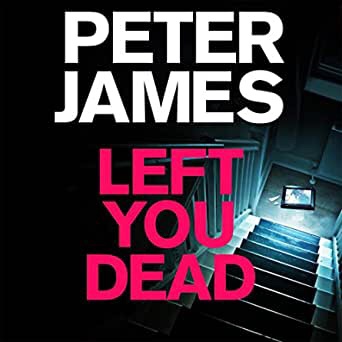
Left You Dead by Peter James.

I have long been a fan of Peter James’s Roy Grace series so I felt very lucky to get a sneak peek at his latest. I discovered the books when in hospital around six years ago and I spent a great ten days whipping through the novels one after another. Then came that horrible moment of regret that every bookworm experiences after a binge on one author – reaching the latest in the series then having to wait for them to come out! Luckily, we’re now getting the TV adaptation with the wonderful John Simm as Grace so I can dive into those now I’m up to date again.

We meet Grace at a settled point in life. He and Cleo living out in the country together with their son Noah and Grace’s son Bruno, dog Humphrey and even some chickens. That’s not to say there isn’t the usual everyday dramas, at work and at home. The novel opens as Grace has passed on evidence of police corruption to his friend and colleague from the MET, Alison Vosper. The evidence, if it checks out, should be enough to have his hated boss arrested, never to return. If it doesn’t check out, he will have trusted the word of a criminal to topple a man who isn’t shy about showing his animosity towards Grace. This could end his career in the Sussex force. On the home front Noah is entering the ‘terrible twos’ and both Grace and Cleo are juggling home life with two very demanding jobs. Grace’s most pressing worry though is his older son, who doesn’t seem to be settling and is morbidly curious about such things as Egyptian death rituals. Bruno is his son from his first marriage to Sandy, who disappeared without a trace several years ago leaving Grace facing a possible murder charge. She was hiding out in Munich, after living in several cults and having concealed the fact she’d had a son after leaving him. It’s no surprise that Bruno is mixed-up, but what is the best way to support him?

Our case is equally puzzling. Niall Paternoster reports his wife missing, claiming not to have seen her since the day before when he dropped her at Tesco to buy cat litter. On their way back from visiting a stately home, Eden had reminded him he’d forgotten the previous day. They bickered their way back to Brighton, but finding the car part overrun she suggested he stay in the car and she would pop in. However, she never returned and as the store closed a search failed to find her. Knowing that his wife had stayed with friends after an argument in the past, he hadn’t been worried until 24 hours later. Yet, the usual police enquiries fail to find Eden, she’s not captured on CCTV and in fact there’s no proof she was alive after the Thursday before their stately home day trip. Has Roy Grace found himself landed with the trickiest type of crime to investigate and prosecute – a so called ‘no-body murder’?

One of Peter James’s greatest strengths in this whole series is being able to write about the personal as well as the professional, whether it’s the minutiae of daily living or the deepest tragedies we can face. It’s quite shock when it happens in this novel and the author handles it beautifully, capturing that bewildering mix of emotions from shock, to the rawness of grief as well as the regrets and fears. As always Grace faces this with a copper’s brain – his first response is to think, rather than feel. He questions everything about the circumstances, how it could have happened, then the inevitable why and could he have changed anything? He also deals with it by throwing himself into his work. His grief is so enormous he can’t sit in it for too long, he needs a distraction and luckily Cleo understands this behaviour and lets him cope the way he knows best.

The case becomes more and more intriguing, as surveillance picks up a possible extra-marital relationship on the part of the husband. As well they discover a shallow grave with blood stained clothing and the neighbours describing a terrible argument between the couple. However, something just doesn’t smell right for Grace as they identify the woman having an affair with Eden’s husband is her boss. There’s also the matter of an easily discovered knife, seemingly left in haste. Is this one of those infamous small mistakes that catch a killer or is someone trying to set Niall up? The characters in this triangle are hard to like. Niall is mercenary, abusive and seemingly finds women with money who can support him. Eden’s boss is cold and unfeeling at best, but appears increasingly manipulative and suspicious. We don’t know Eden well, until a staggering twist part way through gives us more background on her character. Luckily we don’t need them to be likeable to be fascinated and compelled by Eden’s disappearance. It felt like being caught in a spider’s web, but not knowing who is the spider.

As always, it’s Grace who is the beating heart of this novel and it’s conscience. If the difficulties he’s facing just coping with his grief aren’t enough, there’s the constant tension surrounding his relationship with the Chief Constable. There are the petty everyday differences they have over the investigation (the CC would have scaled it back) and resources (taking away his surveillance team at a critical point in the investigation). Then, underlying it all, what if Grace has taken the word of a criminal to unmask the CC’s corruption, to find he’s been lied to? Every day that goes by with no news, Grace can see his career disappearing. Once he uncovers some vital paperwork that throws a new light on the Paternoster case, Grace is all business. The build up of tension towards the end of the novel is almost unbearable. The author puts his hero in terrible danger, as on a stormy night in a remote place the whole mystery is uncovered and the real mastermind is revealed. By this point I noticed I was holding my breath! It takes a great writer to make the reader feel real emotions alongside a character. Whether it’s the professional or the personal, I find myself willing him on and hoping that, not only does he solve the case, but that he gets home to Noah and Cleo safe and sound. I felt this, so deeply in this novel, especially as Grace himself ponders how he would cope if he lost anyone else important to him. I raced to the end of the novel, not just to see the case solved, but to see him safely home. Roy Grace is one of those rare characters who has burrowed his way into my heart. I look forward to whatever comes next for him.

Published 13th May 2021.

Meet The Author

Known for his fast-paced and gripping stories that thrust regular people into extraordinary situations, Peter James has proven himself to be one of the world’s most successful writers, delivering number one bestsellers time and time again. His Superintendent Roy Grace books have been translated into 37 languages with worldwide sales of over 21 million copies and 17 number one Sunday Times Bestsellers. His latest Roy Grace novel, Find Them Dead spent seven weeks at number one in 2020. The first two novels in the Roy Grace series, Dead Simple and Looking Good Dead, have been adapted for television by Endeavour’s Russell Lewis and the first episode aired on 14th March 2021.

Posted in Netgalley

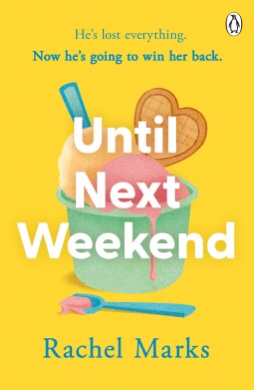
Until Next Weekend by Rachel Marks.

I love that when I pick up a Rachel Marks book, I’m straight into someone’s life and character. It’s an immediate feeling of kinship with our main character, we trust them and the story they’re telling us. In this case, our storyteller is Noah, a primary school teacher in this thirties, divorced with two small boys he sees every other weekend. Noah loves his job, loves his boys and is still in love with ex-wife Kate. Kate now lives with Jerry and Noah can’t believe that she’s in love with this ordinary, boring bloke. Kate and Noah were together forever, from friends to a very young husband and wife, then parents. So what went wrong? Kate probably knows Noah better than anyone and still loves and cares for him, but felt she had to save herself and leave the relationship. The truth is there are times when Noah checks out, he would need to take a break or sometimes disappear with no indication of when he was coming back. Just as Noah is concerned with giving children a good start in life, as a father and a teacher, he knows that his own start in life plays a large part in who he is and how he behaves. Can he continue to be a good teacher, father and partner without confronting that past and coming to terms with it?

As in her last novel, Rachel Marks has a good grasp of how our minds work and how we often self-medicate the pain of trauma. For Noah, this is often alcohol just as it was for his mother all those years ago. He is often propping up the bar of his local, chatting up women and indulging in a few one night stands, watched with some frustration by barmaid Mimi. His journey is mirrored in the experiences of one of his pupils, Harvey. Harvey’s having problems with his behaviour at school, often lashing out or unable to stop himself interrupting with excitement. He says his Mum sleeps a lot, but the reasons for that are unclear at first. It takes something drastic for Noah to see the extent of what is going on in Harvey’s world, but it also awakens a trauma from long ago. Noah is a character who knows all the reasons for the way he is, but doesn’t know the next step – to free himself from the past. He is full of confusion and does some really stupid things, but he is always loveable and I found myself rooting for him. Mimi was also a great character, sassy and whip smart, she can see through Noah’s bullshit but also genuinely cares about him. She tries to teach him that we all have our ‘stuff’ to come to terms with, we just have to find our way of doing it.

I loved his relationship with Kate too. She knows him inside out and I could sense the great regret and frustration within her that she had to break up their family. She knows Jerry isn’t going to be full of excitement and surprises, but that’s exactly why they’re together. She wants that stability for herself and for her boys. She’s still full of sadness and thinks she wasn’t enough for Noah, but the truth is that no one would have been able to cope with his behaviour and a young family. She wanted her love to heal the scars of the past, but only Noah can do that. The wonderful way she respects him as the father of her children, holds parties for him and still has family outings is the very model of what we hope our blended families could be like. Sadly, I think it’s very rare for ex-husbands and wives to be able to work together as well as this. Noah doesn’t really see the love that Kate has for Jerry, but it’s definitely there. There’s the sense of exhaustion I get from her life with Noah, and the way that Jerry conducts himself with grace and dignity and it’s clear what a strong and equal relationship they have.

This is a gorgeous, uplifting book, that has its hard moments but is ultimately full of love. I loved the children in the book, their personalities so perfectly evoked and full of humour. There are difficult memories and moments, but Noah is surrounded by love to call on once he can admit what’s wrong. I loved how Marks shows that there may often be reasons behind a character’s behaviour – Noah struggles to get along with his sister-in-law Claudia, but Mimi immediately sees that there’s a lack of confidence underneath the polished exterior and perfectionism. It made me come away thinking about how to appreciate those around me more, even if we do clash or have different ways of living. The book had the message to love and be kind all the way through it, like a stick of well-being rock.

Out 29th April 2021 from Penguin Books

Meet The Author

Rachel lives in Gloucestershire with her husband and two young sons. When she’s not writing, she loves travelling, snowboarding and photography.
If you would like updates on upcoming books, offers etc you can follow me on Twitter @Rache1Marks and Instagram rachelmarksauthor.

Posted in Netgalley

The Metal Heart by Caroline Lea.

The sky is clear, star-stamped and silvered by the waxing gibbous moon.

No planes have flown over the islands tonight; no bombs have fallen for over a year.

___________

Orkney, 1940.

Five hundred Italian prisoners-of-war arrive to fortify these remote and windswept islands. Resentful islanders are fearful of the enemy in their midst, but not orphaned twin sisters Dorothy and Constance. Already outcasts, they volunteer to nurse all prisoners who are injured or fall sick. Soon Dorothy befriends Cesare, an artist swept up by the machine of war and almost broken by the horrors he has witnessed. She is entranced by his plan to build an Italian chapel from war scrap and sea debris, and something beautiful begins to blossom. But Con, scarred from a betrayal in her past, is afraid for her sister; she knows that people are not always what they seem.

Soon, trust frays between the islanders and outsiders, and between the sisters – their hearts torn by rival claims of duty and desire.

A storm is coming . . .

In the tradition of Captain Corelli’s Mandolin, The Metal Heart is a hauntingly rich Second World War love story about courage, freedom and the essence of what makes us human during the darkest of times.

This book is stunningly beautiful, so much so that I had to sit and think in the quiet when I’d finished it. It’s so rich in folklore, historical detail, the trauma of war and bereavement that I know I could pick it up to read again and still find something new. I immediately ordered a signed copy for my forever shelf, because it is so special. What did I love about it? The Scottish folklore, the incredible landscape, the community, the dignity of people facing the hardest times of their lives. Then amidst the chaos, violence and confinement, beauty emerges in the shape of a deep, immediate, connection and growing love between two people who can’t even speak the same language. The counterpart to this human story is the Italian Chapel, built out of the scraps of metal huts and concrete the prisoners are allowed. Yet from these humble materials a building of true beauty emerges, that still stands today. It made me emotional to think about the lovers, but also the patience and faith of these incredible men who needed a place to worship, a piece of home.

Dorothy and Constance live on Selkie Holm, a small island close to Orkney. They are isolated outcasts, strange simply because of their doubling, but also because they’re thought to have bad luck. There are myths about the island and the selkie women that might lure a man into the water. People go missing there and the old fishermen who gather in the tavern love to swap old stories about the strange shapes seen in the water. It’s said that if you live there you might go mad. Besides, the girls have had bad luck enough with the drowning of their parents as they tried to row to Kirkwall hospital in a storm. People mutter that it isn’t right for two young girls to live there alone. Surely they must need other people? Yet, that’s exactly what Con doesn’t need. They live in the bothy because of a traumatic event that happened in Kirkwall and now she’s frightened of people, particularly men. So when it’s announced at a town meeting that Italian prisoners will be housed on Selkie Holm, Con is terrified. Their protests fall on deaf ears, since the sinking of the Royal Elm, Churchill has decided barriers must be built to prevent invasion. The prisoners will build the barricades and soon there are huts and barbed wire and men with boots all in Con’s place of safety. Worst of all, Angus McLeod has been given a job as a guard on the island and the girls want to avoid him most of all.

This is a story about freedom for all three main characters. Of course Cesare is the one literally behind a wire fence, but Dot and Con’s bothy is a prison of their own making. Watching each of them try to inch towards freedom in their own ways is moving and upholds my belief as a therapist that everyone is capable of change and even in the most straitened circumstances we still have choices. Cesare finds freedom in the infirmary where he is cared for, in the Major’s office helping with correspondence, in the building of the beautiful chapel and the first time he sets eyes on Dorothy or Dorotea in Italian. His utter joy at finding something so precious amongst the dirt, the heavy labour, the biting wind and the regular beatings, is hopeful and bittersweet. Just like the unexpectedly beautiful chapel, treasures are often found in the dirt.

‘Up on the hill, the chapel gleams in the sun. I imagine the light pouring in through the window. The pictures on the walls will gleam with life. And, on the ceiling above the altar, a white dove soars through a bright blue sky. How does something so beautiful come from such darkness? The tears are flowing freely now, as I turn back to the people watching me and I force myself to say, ‘Thank you.’

‘‘Up on the hill, the chapel gleams in the sun. I imagine the light pouring in through the window. The pictures on the walls will gleam with life. And, on the ceiling above the altar, a white dove soars through a bright blue sky. How does something so beautiful come from such darkness? The tears are flowing freely now, as I turn back to the people watching me and I force myself to say, ‘Thank you.’Up on the hill, the chapel gleams in the sun. I imagine the light pouring in through the window. The pictures on the walls will gleam with life. And, on the ceiling above the altar, a white dove soars through a bright blue sky. How does something so beautiful come from such darkness? The tears are flowing freely now, as I turn back to the people watching me and I force myself to say, ‘Thank you.’

Dot finds her instant love for Cesare overwhelming, but she never questions or doubts her feelings or his. Con often reminds her what men are capable of, that she can’t trust someone she doesn’t know. Yet, for the first time, Dot places a boundary between herself and her sister, simply saying ‘I am not you’. This isn’t a criticism of her twin, but just an assertion that she is different, separate, and so is her life. She also makes a point of going to work in the infirmary, leaving Dot at the bothy. This is the first time where Con can see Dot moving into a life beyond her, their psychic or spiritual link can never be broken, but to wake up and live without her physical presence must be terrifying.

For Dot freedom means the ability to live a life separate from her sister’s, but also beyond the shadow of Angus McLeod. Dot’s trauma affected both girls and when she couldn’t go out, neither girl did. They have spent every day and night together since. This wasn’t Dot’s trauma, but she stopped living just the same. Now she dreams of sitting in the warmth of Italy, with Cesare and his family eating wonderful food. The image is a mile away from the dark, cold and stormy reality. Con sees the changes in Dot, and recognises she’s drifting away from her. Fiercely protective of her twin, it takes her a while to realise that in Cesare, Dot has found a man who is gentle and won’t hurt her. She knows she can’t hold her back, but it’s a huge wrench, like giving away part of herself when so much has been taken from her already. Watching Con’s realisations about her trauma and the potential for healing was one of the most moving parts of the novel.

The historical detail in the novel is incredible. Caroline Lea writes in her acknowledgments:

‘I wanted the love affair between my characters to be constrained by time and intensified by the precipitous and perilous nature of war, so I took many liberties with timings and action. This was a very conscious decision: I’m painfully aware of the difficulties in fictionalizing real historical events and people and selling them as ‘fact’, especially when this involves taking on the voices of ‘real’ people: I was very certain that I didn’t want to do that.’

This explains her decision to change certain things: some of the history and geography is changed; the construction of the barriers was started by Irish workers; the sinking of a ship by German u-boat features the Royal Elm, not the Royal Oak. Yet the chapel, situated on Lamb Holm, is still standing and can be visited. Even the metal heart truly exists, created by metal worker Giuseppe Palumbi for an Orcadian woman he fell in love with. He had to return home to his wife and family in Italy and left the heart behind. By doing this she has made sure that no one’s real life experiences are encroached upon. This is definitely a work of fiction, although the amount of research and love for her subject is clear to see. The descriptions of the islands are simply stunning and the relentless sea is mercurial; one moment soothing and the next a punishing, vengeful god. The inhabitants of the islands intrigued me too, in the way they slowly integrated with these prisoners of war. Even the two girls, shrouded in grief and superstition, are gently supported by this generous community. Now the chapel is part of this community’s history, with the metal heart at its centre. It shows us that light can shine into the darkest corners and choosing to love, despite the pain and grief, can be the bravest stand we can take.

‘All across Europe, bodies are falling from the sky or into the sea, or are being blown high into the air. Every explosion is a name. Every lost life is carved on someone else’s heart. Every death takes more than a single life. It takes memories and longing and hope. But not the love. The love remains’.

Published by Penguin, 29th April 2021.

Meet The Author

Caroline Lea grew up in Jersey and gained a First in English Literature and Creative Writing from the University of Warwick, where she now teaches on the Creative Writing degree. Her fiction and poetry have been shortlisted for the Bridport Prize, the Fish Short Story Competition and various flash fiction prizes. She currently lives in Warwick with her two young children and is writing her next novel. Her work often explores the pressure of small communities and fractured relationships, as well as the way our history shapes our beliefs and behaviour.

Posted in Netgalley

Madame Burova by Ruth Hogan.

I absolutely love Ruth Hogan’s novels, because they have interesting, quirky characters that I always want to know more about and stories that are ultimately uplifting. I was immediately fascinated by Imelda Burova, with her Russian-Romany background and her gorgeous borzoi Dasha. Imelda has inherited her mother’s fortune telling booth on the seafront in Brighton. Not that Shunty-Mae has gone anywhere. She comes to help when the booth is busy in the summer season and has a disconcerting habit of sitting behind the curtain at the back then interjecting the odd comment when least expected! Imelda is invited to read for people as part of the entertainment staff at the holiday park and this introduces her to a whole new group of people. There’s the three mermaid sisters, a contortionist, Jeanie who has the voice of an angel and the dark, handsome wall of death rider Cillian. Imelda feels an immediate spark with Cillian, but Jeannie’s femme fatale friend Vivien makes it clear that Cillian is off limits. Book ending this tale of 1970s Brighton is our other heroine Billie, who is in a vulnerable place having lost her university job, her marriage and her mum. She receives some life changing news from her Dad, that sends her on a trip to Brighton to meet a mysterious woman who holds two brown envelopes. These will give Billie some clues to a mystery that has spanned forty years, and a love story that has lasted through time.

I really felt for Billie, who has reached a point in life where everything is changing, but she’s willing to take on the challenges she faces. She finds her seventy year old benefactress inspiring and starts to be drawn into the world of Brighton. She meets a family named after precious stones who run the cafe next door to the fortune tellers booth. She has help getting a new project off the ground with a lovely man called Treasure. Then there’s a man she meets on the train who travels all the way to St Pancras once a week just to play the piano. Plus a man who seems to be just a passing eccentric, using his elastic bands to send colour messages to the CIA or MI5, but who witnesses a crucial event that answers so many questions. In the time she spends in Brighton, Billy starts to feel at home. What could fate have in store for her here and is she brave enough to follow the path?

The earlier sections, told by Madame Burova with a heavy dose of hindsight, are so evocative of the 1970s. There’s an incredible bohemian feel to the interiors, such as the decor of the booth, the stunning gypsy caravan that sits in the garden for occasional sleepovers, not to mention Madame Burova’s wardrobe. Lush fabrics and vintage clothes float my boat so I was in heaven here. The central love story is brief, but all encompassing. Cillian is the perfect hero – I was thinking Peaky Blinders as I was reading him so it was hilarious to find ‘Cillian Murphy’ left on a page in the NetGalley copy! It shows that Ruth Hogan and I are on the same page when it comes to passionate love interests. He and Imelda are clearly made for each other, so watching Vivien try to come between them is infuriating. Not that Cillian helps, his taciturn nature and avoidance of fuss can lead to misunderstandings. Imelda isn’t sure whether he’s playing the field, but his eyes are firmly trained on her all the time. I was transfixed by the love story and hoping against hope that Imelda wouldn’t have her heart broken.

This is such a charming and whimsical novel, with a a huge side helping of nostalgia for the time of the seaside holiday heyday. A time when people did take their families to a holiday park and take part in all the entertainments on offer. I love the way Brighton fits Billy perfectly, with her vintage style, bowler hat and the opportunity she gets to potentially bring that retro vibe to the seafront seems perfect. Will she take the chance? More importantly, will the quest that brought her to Brighton and to meet Madame Burova, come to a happy end? I was satisfied with the end, despite the heartache along the way and came away with a real feeling of joy. Along with the apple blossom coming in and birds nesting in the garden, this book has been like a little breath of spring.

Meet The Author

A car accident led to Ruth Hogan taking her wish to be a writer more seriously and the result was THE KEEPER OF LOST THINGS – a Richard and Judy Book Club pick. Since then she has had two further novels published, THE WISDOM OF SALLY RED SHOES and QUEENIE MALONE’S PARADISE HOTEL and for her fourth, MADAME BUROVA, she learned to read Tarot cards and developed a hankering for a traditional vardo and pony.

‘I live in a chaotic Victorian house with an assortment of rescue dogs and my long-suffering husband. I am a magpie; always collecting treasures (or ‘junk’ depending on your point of view), a huge John Betjeman fan and I would very much like a full-size galloping horses carousel in my back garden. As a full-time author I am living the dream, and I’m so grateful to all my readers for making that possible. I love hearing from you, so please feel free to drop me a line on Twitter, Instagram or Facebook.’ From Ruth’s author page on Amazon.com

Posted in Netgalley, Random Things Tours

The Lost Hours by Susan Lewis.

The latest Susan Lewis is a little different, in that it has all the usual family drama, but with the added element of a police procedural. The Crayce family live down in the south west of the country, on the moors in Devon and come across as a very privileged family. The land they own encompasses three houses, two lots of stables, a farm, a ménage and a shooting school. The family businesses allow eldest brother David and his wife Annabelle to send their children to private school, holiday abroad every year and be the envy of the locals. David and his brother Henry grew up in the main house, and were the basis of a local social group ‘The Moorauders’. Good looking and well off, this pair were the catch of the county. It raised eyebrows, and tempers, when David married an outsider, Annabelle- known as Annie. However, she is now part of the furniture and an irreplaceable part of the family’s business empire looking after the admin for the shooting school, farm and Julia’s horse and donkey sanctuary. Julia is Henry’s second wife and is probably Annie’s best friend, often popping across for coffee or to ‘cocktail me up’ at the end of a hard day. From a distance this family has it all, but is everything as perfect as it seems? When David and Annie’s daughter Sienna is picked up by the police for shoplifting a teddy bear, an ugly truth at the centre of the Crayce family comes to the fore.

Twenty years before, when David was engaged to Annie, the two brothers and their father went on an alcohol fuelled bender that ended in a party at the farmhouse. A few weeks later, local teenager Karen Lomax is found dead in an old railway carriage. A precocious teenager, who displayed a wild streak, died of a blow to the head and her murderer has never been found. Now that police have Sienna’s DNA sample, they are shocked to find a link to this old, unsolved case. One of the Crayce men left a trace of themselves behind, a sample of semen from Karen’s clothing shows a familial match to the Crayce’s. This puts David, Henry, and their father Dickie in the spotlight as suspects. Until their DNA is compared to the sample, the family will have to wait and in those two weeks, secrets and lies are revealed.

I found the novel a little slow at first, and having little patience with the champagne and pearls set, I found it hard to warm to the characters or their situation. So it really is down to the skill of this writer that I started to warm to Annie. I felt like she had gone through an awful lot with David, especially in the early years before the children. There were hints of psychological issues linked to David’s military service, which would have been around the time of the Balkan War. Annie describes sudden mood changes, a tendency to drink too much, nightmares and rages. While he had never physically hit her, she did worry about being in the wrong place when he had a nightmare. These episodes were the lost hours of the novel’s title. She had also struggled with his behaviour when drunk and there were even hints of his infidelity on these occasions. At the time of the farmhouse party they were very close to getting married, and there was a consensus in both families that if he messed up again she would call off the wedding. I felt like Annie was very used to listening to others, and making sure their needs were met, from the children and family to friends. Even her relationship with sister-in-law Julia is based very much on her arriving to have a drink and have her problems with Henry listened to. I kept waiting for her to have an epiphany and recognise her own needs in this nightmare, especially when the police’s focus starts to narrow.

My main concern was the voice that felt absent from the tale and I felt that was a deliberate choice on the part of the author. Murder victims don’t get to have a voice anymore and that’s what Lewis was trying to portray. The one person who had all the answers, couldn’t give them and had to rely on doctors and forensic experts to let us know what happened and at whose hands. However, we would never have her account or thought process and I really felt that absence, especially when old wine bar customers are saying she dressed provocatively or had fantasies that weren’t appropriate. Yet, there isn’t the same disapproval of the much older men who recognised and took advantage of her open nature and strong sex drive. There’s a deeply sad moment when her father says that they still loved her anyway, despite her wild side. I wanted to take him aside and say ‘of course you did and you shouldn’t have to apologise for that’. There was an obvious comparison between Annie and David’s daughter who was a similar age to Karen when she made her shoplifting mistake. The local police allowed Sienna to apologise to the shopkeeper and make financial recompense. Her family connections seemed to let her off lightly. Would Karen have been offered the same way out, if she had made a similar mistake? Karen paid for her teenage mistakes with her life. I think Lewis was pointing out the gender differences and the class differences in these areas. David and Henry, and to some extent their father, were living a teenage life full of parties, alcohol and risky sex, but they weren’t censured by those around them. Their women tended to forgive them and they didn’t lose their social or financial standing locally. It isn’t just a question of gender, but highlights the difference between land and property owners, and those who live in the suburbs or the council estates.

Our other ‘outsider’ is DS Natalie Rundle, new to the area and having to hit the ground running with this unexpected cold case, suddenly becoming red hot. She isn’t local so she doesn’t have the same preconceptions or the same loyalties. Without her, this case might never be solved, because she asks the difficult questions and never rules anyone out. In fact I didn’t expect the outcome, so the author was able to surprise me. Though when I thought about the themes I’d pulled out of the narrative, such as class, difference and wanting to belong, it did seem to fit. I found this novel successful because it was the usual ‘Aga saga’ we expect from Lewis, but with some edge. It questions whether these perfect lifestyles can ever be that perfect behind the scenes. It shows that where there is an ‘in’ crowd, there are those longing to join or feeling they just don’t make the cut. She also identifies an exploitation of young women from outside the posh clique. I think this is why the chapters beyond the murderer being unmasked are so important. They’re about different elements in this community coming together, creating equality and for a teenager like Sienna to remember and honour a young girl who went before her. Yes, these conversations are uncomfortable, but there’s an element of owning past behaviour and trying to make amends. Forcing themselves to be uncomfortable is the only way change will happen. This element of justice having to be served in the community as well as court, was an interesting one and really gave this novel the edge for me.

Meet The Author

Susan Lewis is the internationally bestselling author of over forty books across the genres of family drama, thriller, suspense and crime. She is also the author of Just One More Day and One Day at a Time, the moving memoirs of her childhood in Bristol during the 1960s. Following periods of living in Los Angeles and the South of France, she currently lives in Gloucestershire with her husband, James and mischievous dogs, Coco and Lulu.
To find out more about Susan Lewis:
http://www.susanlewis.com
http://www.facebook.com/SusanLewisBooks
@susanlewisbooks