Blog Feed

Posted in Personal Purchase

My Ramblings on the Reading Year 2021

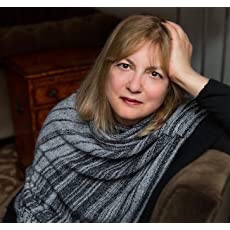
Hello Subscribers and Visitors. This is me. The person behind The Lotus Readers. This is last August, on the beach at Beadnell with my dog Rafferty, during a brief relaxation of lockdown rules. This first year of my blog has been a tough one and this space, where I write about books is an oasis from the worries and concerns of the world out there. I’m lucky that I’ve not been touched by COVID personally. I have barely left the house since this shot was taken and it was my first time outside home since February 2020. I have multiple sclerosis, but I was having recurring problems with my breathing prior to the virus. I was waiting for an asthma assessment, then lockdown happened and of course there are more urgent priorities. This has made me more careful than perhaps I would have been, about who comes in and out of my space. I’m also lucky to have my partner and stepdaughters here, but I do spend a lot of time alone. I can’t do my job as a counsellor for MS patients inside my home because I’m at risk and many clients are too vulnerable to come out anyway. I quietly set my work aside last summer, hoping I will be able to start up again in the future. So, now I study from home, and last year I decided to start talking about books again – something I’d started and failed to keep up a few years ago. I truly believe that this blog, you readers, as well as the wonderful people I meet on book Twitter and other social media, have kept me going mentally. It’s been a huge positive in my life. So, in this first week of a new year and only weeks until my first blog birthday, what do I feel about book blogging in 2021?

I’ve seen many pronouncements on book Twitter over the last few days, about how people want to approach their new reading year. There’s been a lot of re-evaluation over several months on how we live our lives in general and I guess that’s bound to filter through to how we read. The added push of New Year marketing towards change and resolutions also affects us. It seems a few people want to scale back their reading – perhaps turning it back into something they do purely for pleasure and at their own pace. Going hand in hand with this has been talk of giving up blog tours. I know I’m not the only reader who has overcommitted at times, or felt the strain of a deadline and a book we simply haven’t clicked with. I can understand this approach, and I think it’s a genuine response to the pandemic. As our day to day choices are reduced by the government, it can feel too much to be obligated to read. We want to have choice in our personal activities and it’s natural to want to sit back and read solely for pleasure, especially for those who are still battling on in full time work or child care. My illness means I’m not working and I’m lucky that my stepdaughters are brilliant with helping out around the home. My time does have limits – my eyesight can be affected, fatigue and pain can prevent me from being active – but I do have a lot of time to devote to my love of books.
I don’t believe in New Year’s resolutions. If we think about it logically: the house is full of Christmas food and indulgent gifts; it’s usually cold and miserable outside; we’re all skint after Christmas shopping; we’re trudging back to work. It really is the most inhospitable environment for making changes, especially if those changes are to reduce, give up and take away things we enjoy. When we add a pandemic to the mix, it’s likely that we’re even more reliant on our indulgences just to get through – of course we know that drinking and eating have gone up since the first lockdown. The more natural times to start anew are spring and autumn. Spring aligns us with nature, everything is growing and bursting into life. We feel more optimistic as nights become lighter and we can be outdoors more. The other more obvious time is autumn and this is a learned feeling from our school days and the new academic year. Remember that first day back at school in new uniform, squeaky new shoes and looking forward to seeing friends again? Often adults still feel that tingle of excitement as days are crisper and signal the year is coming to an end. If you’re one of these people then this is a great time to make changes. My partner laughs because I’ve been really cranky towards companies telling me I’m obese exactly 24 hours after their advertising has been telling me to indulge!

My vices are books (and shoes) and I’ve spent a small fortune on mail orders to several different bookshops this year. It’s been those packages coming from time to time that have made my day. It’s been lovely to get unexpected ARCs or gifts from authors too, they lift me up. A great comment from an author or publisher on your review can mean everything on a day when you’ve seen no one, you’re still in yesterday’s pyjamas and you’re worried. I’m worried about my stepdaughter’s GCSE’s, my best friend having to shield again, being in the midst of buying and selling a house and my niece who’s having a baby amongst all of this. There are massive changes happening all around us and often it’s hard enough to take one day at a time and face what’s in front of me. I can’t make restrictive changes now and I’m not going to. Why restrain something that keeps me motivated and sane. Of course not all books on blog tours turn out to be my cup of tea, but I’m glad I stretch myself by reading them. Also, it helps out my bookish friends who are blog tour organisers. In turn some of the best books I read last year were on blog tours. I’m not going to restrict my amount of reading either; reading is my escape to different worlds, my travel, my meeting new people and my favourite way of passing time.
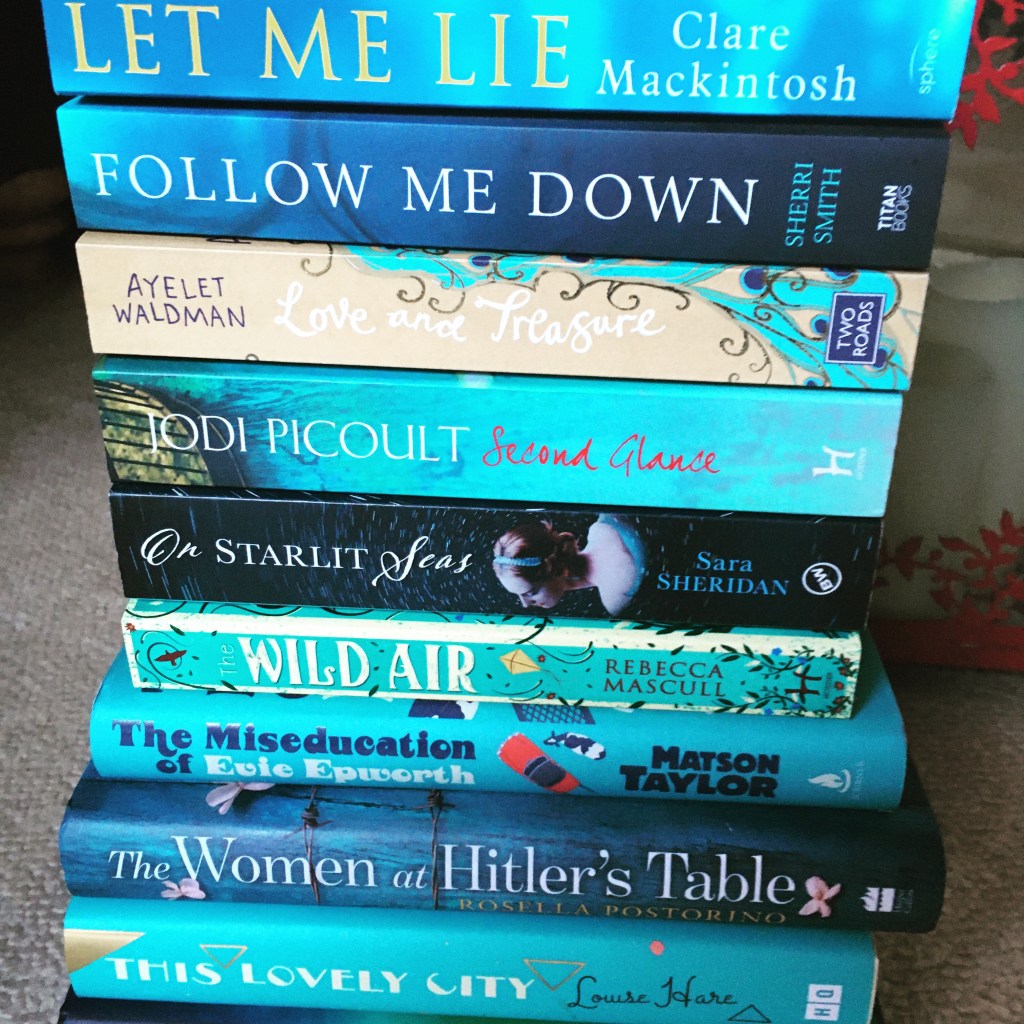
So what do I think about this new reading year? I’d like to remain part of a welcoming online community who’ve given me a home and help me with the technological stuff I’m not so good with. I think I could be better organised with a reading planner so that tours don’t spring up and surprise me. I’d like to add to my usual blogs with a ‘Throwback Thursday’ feature where I write about a book from my existing collection. Sometimes I can feel the pressure to get the latest ARC, and while that’s exciting, I’d like to focus once a week on the brilliant collection of books I have – maybe some that have passed others by. I’d also like to share my favourite writers with you in feature posts where I can explore and compare their work as well as looking at their life. Finally, I’d like to give back to all of you and my supportive fellow bloggers. So I’ll be hosting more book giveaways this year as I reach new milestones. As for my fellow bloggers, I want to make them feel their hard work is important. It’s all too easy to quickly like a post on Twitter or Instagram, and while likes are good, I have sometimes felt I’m writing into a void. Does anyone read this? Or the even less confident ‘ who would want to read this?’ We all have doubts about our blogging abilities so I’m going to make more effort to read my fellow bloggers work and leave more comments on the actual blog rather than on social media. It shows you’ve engaged with the piece of work someone has sweated over at 4am. It can spark conversation, but more importantly it lets the writer know you’re reading and enjoying what they have to say. So I look forward to spending 2021 with you all and wish you all a Happy Reading Year!

Posted in Random Things Tours

Winterkill by Ragnar Jonasson (Dark Iceland Book 6).

Publisher: Orenda Books (21 Jan. 2021)

ISBN:1913193446

When given the opportunity to read an Orenda book I rarely pass it up. My only misgiving with this one, was that it was the sixth in a series I didn’t know whether I’d ever be able to catch up and fully understand what was going on. Once I’d done my research and read a few reviews of the Dark Iceland series, I was in! Described as ‘creepy, chilling and perceptive’ by Ian Rankin and full of ‘poetic beauty’ by Peter James, this instalment comes highly recommended. The New York Times review blew me away and made this a must read.

Jónasson’s true gift is for describing the daunting beauty of the fierce setting, lashed by blinding snowstorms that smother the village in a thick, white darkness that is strangely comforting’ New York Times

That image of the setting grabbed me because I’ve lived in some isolated locations here in the U.K. and have written myself about that strange sense of safety a huge snow fall brings. All falls quiet and you are safe, sheltered and warm. The world becomes muffled as you are slowly cut off from civilisation, under a think blanket. I knew I would connect with the setting at least. Of course, I shouldn’t have worried, because this was a great read in its own right and I managed perfectly well without the reading the others first – obviously as soon as I finished this one I ordered them all since so I could have an Orenda Christmas!

The hero of the Dark Iceland series is Ari Thor Arason, the police inspector of a small town in Iceland called Siglufjörður. He is recently separated from his girlfriend, who now lives in Sweden with their three year old son. As Easter approaches Ari Thor is looking forward to spending some time with them both when they come to stay for the weekend. However his plans are thrown into disarray when the body of a young girl turns up to claim his attention. A nineteen year old girl appears to have jumped from the balcony of a building, but seems to have no connection to anyone who lives there. Why would she travel to this particular building to commit suicide? Ari can’t help wondering and his wondering leads him to dig a little deeper and find out whether she was pushed. His suspicions are aroused further when an old flame, now working in a local nursing home, gives him a call because she’s concerned about an elderly resident. She shows Ari the old man’s room, and he’s shocked to see the words ‘she was murdered’ written over and over again. As a huge storm heads towards Siglufjörður, Ari is left pondering whether these two events are connected and also whether he can salvage his family or even reconcile any sort of private life with his job.

Ari Thor isn’t an ‘action man’ type hero, he’s thoughtful, perceptive and investigates gently. The awkwardness of his Easter plans are really painful; he books his ex-partner and son in at the hotel, but is excited when they want to stay at the house. Ari misunderstands and thinks they might all stay together, but he ends up in the hotel. He feels excluded, but also awkward as other guests and staff know him well (this is a small remote town after all). He wonders what they will be thinking about their local detective. He knows that the job he loves has to command all his attention, when an important case comes in and so does his estranged partner. However, there is a large gap between knowing this and the reality of living it. Can he ever promise his family what they need? This conflict becomes ever clearer over the weekend when he is pulled from one place to another as new evidence comes to light.

I loved the atmosphere of this small town, where everyone knows each other. Yet there’s also the uneasy thought that many residents could be in this remote place to disappear and keep secrets. There’s so much going on under that polite layer of familiarity, even where Ari thinks he knows someone well. In one sense Siglufjörður has changed enormously, new road links have made it more accessible so even tourists have started to visit for ski-ing and to stay in new luxury holiday chalets. However, once the blizzard descends it becomes bleak, remote and strangely more beautiful. Ari’s investigation takes him into the even more rural area of Siglunes, where two men live in a small wood cabin inaccessible by road. I found Siglunes quite sinister, but Siglufjörður feels remote too and even claustrophobic as the weather pulls in. The author skilfully ratchets the tension up a notch, just at the same time as the community becomes more isolated. Yet we never feel rushed, Ari Thor does not panic or hurry the investigation- every move is well thought out and measured and he shows great compassion to the bereaved and those involved.

I thought it was so clever that, without knowing it at first, Ari is slowly uncovering more than one crime. We are forced to learn the lesson that people are not always what they seem, as the manager of the nursing home is called on for questioning. Ari Thor would say he knows him, likes him even and there has been no indication that he has been doing anything but noble, humanitarian work for the elderly of the town. However, just under the surface are financial worries, difficulties gaining government funding and enough residents to make the venture pay. If you’re looking for high octane action, or the endless twists and turns of a convoluted plot then this is the wrong book for you. The pace is gentle, the motive uncomplicated, and our detective is a contemplative sort rather than an action hero. What compels here (as it should) is the human tragedy – the loss of a girl on the brink of adult life and full of promise, for her family and the whole town. There is even an element of humanity and complex, conflicting, motives within our criminals too, when they are unmasked. This doesn’t take away from the chilling nature of their crimes though – in fact I find the thought that killers walk among us, with the same worries and preoccupations that we have, even more disturbing than some of the more obvious monsters we see in crime fiction. I would recommend this book and the whole series, as a fabulous introduction to Nordic Noir, and I could easily imagine sitting with my feet up, a glass of whiskey in hand, being compelled by these stories on BBC4. This book was beautifully written, has an evocative setting and a detective I truly enjoyed spending my Christmas with.

Meet The Author

Ragnar Jónasson was born in Reykjavík, Iceland, where he works as a writer and a lawyer and teaches copyright law at Reykjavík University. He has previously worked on radio and television, including as a TV news reporter for the Icelandic National Broadcasting Service, and, from the age of seventeen, has translated fourteen of Agatha Christie’s novels. He is an international Number One bestseller

Posted in Throwback Thursday

Throwback Thursday! Blue Diary by Alice Hoffman.

When Ethan Ford fails to show up for work on a brilliant summer morning, none of his neighbors would guess that for more than thirteen years, he has been running from his past. His true nature has been locked away, as hidden as his real identity. But sometimes locks spring open, and the devastating truths of Ethan Ford’s history shatter the small-town peace of Monroe, affecting family and friends alike.

As regular readers know, Alice Hoffman is one of my favourite authors and while Blue Diary isn’t the first of her books I read, it’s definitely one of the best. Ethan and Jorie are one of those golden couples that probably annoy the hell out of everyone around them. They are a beautiful pair, with a lovely son, Collie. Jorie is the girl next door, the girl you’d ring if you needed advice or a shoulder to cry on, and the parent to ring if you need muffins baking for the school’s Christmas fair. Ethan is the neighbour you ring if you need help putting up a shelf, or if you wake up in the night and think someone is prowling in your garden. They are the cornerstone of this community.

Now, the police are at the door. Ethan Ford’s life as an irreproachable family man and heroic volunteer fireman has come to an end—and Jorie Ford’s life is coming apart. Some of the residents of Monroe are rallying behind Ethan. But others, including his wife and son, are wondering what remains true when so much is shown to be false—and how capable we really are of change.

Hoffman writes small towns and the dynamics of the people in them, so well. If Jorie and Ethan were in the Instagram age every photo would have #relationshipgoals in the replies underneath. Jorie’s world falls apart when Ethan is arrested and she is sure it must be a mistake. She knows this man, down to his bones. Surely she would know if he was hiding a dark secret? The novel invites us to ask the question: how well can we really know the person who’s head is on the pillow next to ours at night? Another thing that occurred to me as I was re-reading the novel, was how much the internet has changed our daily lives, into something we use like a daily diary. Originally published in 2001, when many people I knew didn’t have an internet connection in their home, my re-read of the book made me think about cancel culture and how much of people’s lives are now documented for all to see. Now, a long forgotten tasteless joke, inappropriate comment, or photographed drunken escapade, can be found years after the fact and be commented upon and criticised by millions. Applying the standards of today’s society, no matter how important and hard won they may be, to yesterday’s behaviour can be devastating for the individual involved. Even if their own views have now changed for the better, an individual can lose their livelihood, relationships, and potentially their whole life over one incident. It is an incredible power we hold in our hands when joining an internet ‘pile-on’.

Jorie only experiences this on a small town scale, but it’s effect is no less devastating. As it becomes known that Ethan has been arrested, to be interviewed on charges of the rape and murder of a young girl, neighbours and friends are shocked, but have to consider their response. Obviously the first question on everyone’s lips is whether Ethan is guilty or not, but beyond that: did Jorie know about this? Is she guilty by association? Is this his only crime? Can they still be friends with Jorie? Jorie has so many questions for Ethan, but other issues are swirling around in her mind. How will they cope financially? Will she lose her support network? Most importantly she wonders how to protect Collie from knowing about the accusations. This doesn’t just affect her and Ethan, this could blight Collie’s whole life too. With all this in mind, as well as needing to hear the truth, Jorie is wondering whether her marriage can survive this? Should it? When Ethan confesses to the crime, her world and her trust in her husband is shattered.

Ethan’s only defence is that he had no intention to rape or kill the young girl. His claim is that during consensual sex, he accidentally choked her and then decided to run, worrying that no one would believe his innocence. I wasn’t sure I did. He packed up and set up a new life for himself in Massachusetts where he met Jorie. Even if we believe his story, the injustice that he could choose to rebuild his life while his victim couldn’t really stayed with me. He had covered his tracks very well, until Collie’s 13 year old friend Kat, sees an e-fit of a suspect on television and rings the hotline to turn Ethan in. On one hand she feels it’s the right thing to do, but is sad about the effect this will have on Collie. I found it very surprising how many townsfolk were still willing to support and help Ethan, even after his confession. Jorie becomes more and more conflicted, then makes a decision to gain more information in an attempt to make peace with what has happened. She asks the victim’s brother if she can visit with him in Maryland. She needs to hear the context of the crime and the impact it had on the family involved.

There, Jorie gets a feel for the town and how this terrible act of violence was felt by all the residents. The victim’s name is Rachael and James takes Jorie up to Rachael’s room which has never been changed since her death. With Jorie the reader takes in the cuddly toys, the posters, and the framed photos of Rachael riding and with friends. This is a little girl’s room and when James talks about trying to scrub the bloodstain from the wall behind the bed, Ethan’s crime really comes home to the reader and to Jorie. The break also gives her some much needed breathing space, away from the pressure of the court case and the well-meaning supporters of Ethan, but also from Ethan himself. When she’s near him the love she has felt for him this past 13 years threatens to overwhelm her and the reality of Ethan’s crime. Here she has time to think clearly about what it is she has to forgive, before deciding whether she can. It isn’t just the crime itself, but the years of lies, as well as committing his life to her and starting a family knowing this was lurking in his past. He chose to have Collie with her, knowing that, if exposed, his crime would alter Collie’s life irreparably and leave him without a father. I found myself seeing a selfishness in these acts, but also in accepting help from the town seeking his acquittal and expecting Jorie to stand by him. Could the same selfishness, the wanting something and simply taking it, signal the real motive for his crime?

This is not a book about Ethan, nor is it a crime novel in the sense that we’re waiting for a murderer to be unmasked. This is more about the aftermath of violent crime for the family of the victim and the perpetrator. I think Hoffman does this very well. Her use of the victim’s diary as our way into her character is clever. We feel, alongside Jorie, for this sensitive girl falling in love for the first time. Her innocence in how she thinks of a relationship with Ethan is heartbreaking since we know the outcome. I loved the way Hoffman aligns her innocence with nature and gives us layers of description using flowers, trees, seasons and food to help us understand these characters and embed them within a place. We root for these people, drawn into a web of lies that is still being spun to protect Ethan. When we finally reach the section where the rape and murder takes place, it has a huge impact and made me cry on first reading, for all the victims of this crime. Ultimately, our ending hinges on Jorie’s ability to forgive and even if does, does forgiving mean we have to forget?

Meet The Author


Alice Hoffman is the author of thirty works of fiction, including Practical Magic, The Red Garden, The Dovekeepers and, most recently,The Museum of Extraordinary Things. She lives in Boston. Her latest novel The Book of Magic will be the fourth in the Practical Magic series abs will be released on 5th October 2021. Visit her website: http://www.alicehoffman.com

Posted in Netgalley

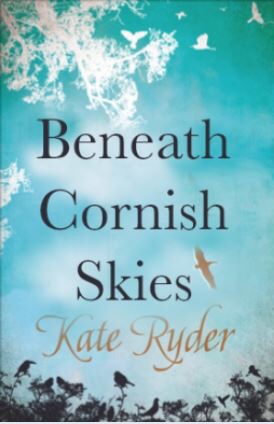
Beneath Cornish Skies by Kate Ryder.

Published: 7th Jan 2021 Aria and Aries ISBN: 978-1800245983

I felt like I’d stepped into a little oasis when I picked up this ARC. I had been reading a very bloody crime novel just before so this was like a balm for the soul! Cassandra appears to have everything she could want in life. She lives in an incredible refurbished farmhouse on the South Downs with attached stables. Her long term partner, David, is a successful businessman who just happens to be charming and good looking. They have money and she can spend her time schooling horses then dressing for dinner from her beautiful walk-in wardrobe. David calls her Sandie and they’ve been together over ten years – in fact ever since she was involved in a car crash that killed both of her parents. David was first on scene and helped her out of the wreckage. They’ve never been apart since. He was attentive in the days following the accident, there for her therapies and as she was wheeled out of the hospital it seemed only sensible to stay with him – there being nowhere else to go. So why is she feeling dissatisfied and as if she’s drifting?

He catalyst comes as she’s out riding one morning and stops for a breather in one of the top fields behind the house. As she looks down to the farmhouse she sees David, who is working from home, and their cleaner Melanie coming to sit outside with a cup of coffee. She wonders to herself about the last time David paused his day to have a moment with her. Then she sees Melanie rest her hand on his arm, in a familiar way and she starts to sense that there’s more going on she realised. The incident brings to the forefront of her mind many things about her life that she’s unhappy with. David is all about appearances, so the house must be kept tidy at all times. She’s almost trained to wash a cup or plate immediately after she’s used it. He likes to come in and find the house immaculate. He calls her Sandie or Sandra when her full name is Cassandra and he likes her to dress well especially if they’re going to a party or function for work. Even then she can’t let loose, no dancing or drinking excessively, nothing that might show him or the business in a bad light. Yet, that very evening at a barbecue, she sees him exiting a private bit of the house, again with Melanie in tow. When she finds an earring in their bedroom, she can’t ignore things any longer. It’s not just the obvious infidelity. She needs something different.

On impulse she picks up The Lady magazine, drawn in by the cover photo of a man walking from a tunnel of trees. The man is a writer, Hunter Harcourt, and his article about ancient byways and the magic they possess. Within the adverts though she finds an advert that catches her eye; a family in a Manor House in Cornwall need help with the stable yard and a growing family for six months. This might be just the breathing space she needs. With David seemingly unrepentant about his affair, Cassandra finally asks him the one thing she has always wanted to know – will he ever be willing to have the children she has always wanted? David is adamant, children are not in his future. So, early one morning Cass hitches the horse box to her Range Rover and takes a leap of faith. She drives to Cornwall, only stopping at Melanie’s home to return the earring. What she finds in Cornwall is space enough to think, but activity enough not to dwell on what has happened. She falls in with the Kinsman family and their gorgeous children very easily. The Manor House and grounds are beautiful and Caspian soon finds his feet with the other horses. Cass finds solace in the rugged Atlantic coastline and the time spent with the children. She is shocked when, on her day off, she is looking for something to fill the hours when she happens on a talk on local history by a local author, Hunter Harcourt, otherwise known as Luke. Their meeting begins a friendship that seems so natural, almost as if they’d met before.

There was so much to like about this book. I love Cornwall and I felt as though I was there, with the descriptions of the villages, the beaches and those ancient places that seem to hold magic. I loved watching Cass unfurl in her new environment as she fits in so beautifully with the Kinsman family, the landscape and the new friends she makes such as surfer Robin. This is about someone awakening and finding their authentic self, something she’s never been able to do before, having been so busy fitting around David’s standards and timetable. Cass went straight from her parent’s household to David’s with no gap between. This is the first time she has stood on her own two feet and her confidence grows. The relationship with Luke seems so predestined that it was a huge disappointment to find out he’s married to the feisty Amanda. We soon see the cracks in their marriage though, not just her infidelity, but their differing views on where to live seem insurmountable. The natural way Luke and Cass seem to fit together seems to be pre-ordained – this is where I felt more could have been made of the supernatural aspect of the story.

Soon after arriving Cass finds that the manor is haunted by several ghosts, but the one she seems to see most is the young girl who had fallen in love with the gamekeeper. Cass feels that, just like the ancient byways, there are spaces within the fabric of time at the manor, where ghosts may appear. Cass has an affinity with the the young woman in her peacock blue dress, but could it be more than that. It felt like the author was flirting with the idea of Cass and Luke being a reincarnation of the couple – the references to her gypsy soul, the sense they have of meeting before, the apparition Cass sees and hears. I think this could have been explored even more than it was. Cass clearly has some psychic ability; she experiences the ghost of a maid, has vivid dreams about places and people from another time, and at one point hears a ghost ship. I found myself wanting more of this and would have loved to know more about the daughter of the house and the gamekeeper, possibly in another time frame. Luke is a dream of a man, gentle, intelligent, loves the outdoors and animals and seems to know himself very well. His marriage seems to be one made when young, when differences in outlook seem to matter less and we think love can overcome anything. Sadly, Luke finds as he gets older, the more he needs the pace of life in the country whereas Amanda is a city girl who needs the bustle and the noise.

Of course I wanted David to get some sort of comeuppance for his awful behaviour. Even in absence he tries to push Cass’s buttons by ordering her home, then pleading that he loves and misses her while mentioning someone he’s having casual sex with in the next breath. He is arrogant, fussy and I couldn’t think of a single reason Cass should return to him at the end – other than habit and conditioning. I won’t ruin the end, but it does keep you hooked to the final pages when a terrible secret emerges. This was a gentle romance, set in a beautiful part of the world and is as much about Cass falling back in love with herself as it is anyone else. It’s a voyage of self-discovery, where slowly she heals and finds her authentic self. I found it thoroughly enjoyable and a little oasis of calm in a busy month.

Meet The Author

Kate Ryder

Kate Ryder is an Amazon Kindle international best seller who writes timeslip and romantic suspense in a ‘true to life’ narrative. On leaving school she studied drama but soon discovered her preference for writing rather than performing. Since then, she has worked in the publishing, tour operating and property industries, and has travelled widely.

A member of the Romantic Novelists’ Association and The Society of Authors, in 2017 Kate signed a 4-book contract with Aria (digital imprint of award-winning independent publisher, Head of Zeus). Originally from the South East of England, today Kate lives on the Cornish side of the beautiful Tamar Valley with her husband and a collection of animals.

Keep in touch with Kate:
http://www.kateryder.me
Twitter: https://twitter.com/KateRyder_Books
Facebook: https://www.facebook.com/kateryder.author
Instagram: @kateryder_author

Posted in Personal Purchase

Books I’m Looking Forward To In 2021 Part 2

The Paris Library by Janet Skeslion Charles. John Murray Press 9th Feb 2021.

IN THE DARKNESS OF WAR, THE LIGHT OF BOOKS

I’ve had a particular interest in WW2 fiction more recently, because it’s a subject I’m using for my MA portfolio in Writing and Well-being. PARIS, 1939
Odile Souchet is obsessed with books, and her new job at the American Library in Paris – with its thriving community of students, writers and book lovers – is a dream come true. When war is declared, the Library is determined to remain open. But then the Nazis invade Paris, and everything changes. In Occupied Paris, choices as black and white as the words on a page become a murky shade of grey – choices that will put many on the wrong side of history, and the consequences of which will echo for decades to come.

MONTANA, 1983
Lily is a lonely teenage desperate to escape small-town Montana. She grows close to her neighbour Odile, discovering they share the same love of language, the same longings. But as Lily uncovers more about Odile’s mysterious past, she discovers a dark secret, closely guarded and long hidden. Based on the true Second World War story of the heroic librarians at the American Library in Paris, this is an unforgettable novel of romance, friendship, family, and of heroism found in the quietest of places. I have my pre-order in already! Watch out for my review in February.

Daughters of Night by Laura Shepherd-Robinson. Pan Macmillan. 18th February 2021.

Murder awaits in the illuminated night of Vauxhall Pleasure Gardens …

I love reading about the seedy underbelly of society, or different groups in society that aren’t usually represented in historical fiction. I love the work of Sarah Waters and one of my favourite books ever is Michael Faber’s The Crimson Petal and the White, where we follow the prostitute Sugar into an underclass of women trying to survive in a man’s world. These books change our one dimensional perceptions of a particular society or historical period. From an award-winning new star of historical fiction, Daughters of Night reveals the dangerous underbelly of Georgian London – giving a voice to the female victims history so often forgets, and the women who remembered them. Set in London, 1782. Caro Corsham finds a woman mortally wounded in the bowers of Vauxhall Pleasure Gardens. When the constables discover that the deceased woman was a high-society lady of the night, they stop searching for her killer – and it’s up to Caro to seek justice. But the hidden corners of Georgian society are filled with artifice, deception and secrets, and finding the killer will be harder, and more treacherous, than she can know … I’ve been lucky enough to have an ARC of this one and you won’t be disappointed.

Greenwich Park by Katherine Faulkner. Bloomsbury Publishing. 15th April 2021.

This novel is coming in early spring and I’m so looking forward to getting lost in the psyche of these two characters, Rachel and Helen. It fascinates me to see how the author has constructed these difficult selves and how they interact with each other. The overuse of the word ‘perfect’ in the blurb tells me that all in Helen’s world is maybe not as good as it appears.

Helen has it all… Daniel is the perfect husband. Rory is the perfect brother. Serena is the perfect sister-in-law. And Rachel? Rachel is the perfect nightmare. When Helen, finally pregnant after years of tragedy, attends her first antenatal class, she is expecting her loving architect husband to arrive soon after, along with her confident, charming brother Rory and his pregnant wife, the effortlessly beautiful Serena. What she is not expecting is Rachel. Extroverted, brash, unsettling single mother-to-be Rachel, who just wants to be Helen’s friend. Who just wants to get know Helen and her friends and her family. Who just wants to know everything about them. Every little secret… I can tell already that this is the book I won’t be able to put me down.

The Silk House by Katye Nunn. Orion. 21st January 2021.

This is a book I’m going to find myself completely immersed in. It has that combination of an old house filled with a weight of secrets, and a present day resident feeling the weight of that past, sucked into the mystery. An enchanting mystery kept hidden for hundreds of years…

1700s Rowan Caswell leaves her village to work at the home of an English silk merchant. Very soon, she finds herself thrust into a dangerous world, where her talent for herbs and healing starts to attract unwanted attention. Mary-LouiseStephenson dreams of becoming a silk designer, a path that has remained largely forbidden to women. A length of fabric she weaves with a pattern of deadly flowers will have shocking consequences for all who dwell at the Silk House. In the Present Day, Thea Rust arrives at an exclusive boarding school in the British countryside to look after the first intake of girls in its history. She is to stay with them in the Silk House, a converted silk factory from the 18th century, where the shadows hide secrets waiting to be discovered… I can’t wait to discover them with her.

The Summer Job by Lizzy Dent. Viking. 15th April 2021

Have you ever imagined running away from your life?

Well Birdy Finch didn’t just imagine it. She did it. Which might’ve been an error. And the life she’s run into? Her best friend, Heather’s. The only problem is, she hasn’t told Heather. Actually there are a few other problems… Can Birdy carry off a summer at a luxury Scottish hotel pretending to be her best friend (who incidentally is a world-class wine expert)? And can she stop herself from falling for the first man she’s ever actually liked (but who thinks she’s someone else)?

WANT TO ESCAPE REAL LIFE FOR A WHILE? RUN AWAY WITH BIRDY FINCH, A MESSY HEROINE WITH A HEART OF GOLD. THE SUMMER JOB IS THE HOTTEST DEBUT TO LOSE YOURSELF IN THIS YEAR.

‘Fresh, funny and oh so relatable – the perfect tonic’ — ABBIE GREAVES

‘Fun with a capital F . . . If you’ve ever felt you’re getting left behind in life, or don’t have everything worked out quite yet, this is the book for you’ — SOPHIE COUSENS

‘I fell for Birdy on the very first page and inhaled the rest of her story . . . A brilliantly original plot paired with fabulously funny writing – a pure joy to read!’ — HELLY ACTON

I’ve been lucky enough to receive a proof of this, with my very own lobster bookmark! When I watched a documentary on Helen Fielding and the phenomenon of Bridget Jones’s Diary I was thinking about how ready we are for a new heroine to fall in love with. This is going to be an indulgent weekend read for me, and I’m sure I will fall in love with Birdy too.

The World at my Feet by Catherine Isaac. Simon and Schuster U.K. Publication Date TBC

The dazzling new novel from Richard & Judy book club author Catherine Isaac, The World at my Feet is a story about the transforming power of love, as one woman journeys to uncover the past and reshape her future.

1990. Harriet is a journalist. Her job takes her to dangerous places, where she asks questions and tries to make a difference. But when she is sent to Romania, to the state orphanages the world is only just learning about, she is forced to rethink her most important rule. 2018. Ellie is a gardener. Her garden is her sanctuary, her pride and joy. But, though she spends long days outdoors, she hasn’t set foot beyond her gate for far too long. Now someone enters her life who could finally be the reason she needs to overcome her fears. From post-revolution Romania to the idyllic English countryside, The World at My Feet is the story of two women, two worlds, and a journey of self-discovery that spans a lifetime. I wanted to read this because I was a teenager when the news of the Romanian orphanages first came to light. I was deeply affected by the pictures of babies and toddlers, in rows of cots, rocking to comfort themselves. It was the silence that scared me most, the fact that they knew it was pointless to cry because no one would come. It was my first sense of wanting to do something, to get involved in some way and help. I am looking forward to reading about someone who was there on the ground and did just that.

The Last One At The Party by Bethany Clift. Hodder and Stoughton. 4th Feb 2021

THE END OF EVERYTHING WAS HER BEGINNING

It’s December 2023 and the world as we know it has ended. I’m not sure how I feel about reading this book at this height of this second wave, but I know that I’m intrigued by the premise. The human race has been wiped out by a virus called 6DM (‘Six Days Maximum’ – the longest you’ve got before your body destroys itself). But somehow, in London, one woman is still alive. A woman who has spent her whole life compromising what she wants, hiding how she feels and desperately trying to fit in. A woman who is entirely unprepared to face a future on her own. Now, with only an abandoned golden retriever for company, she must travel through burning cities, avoiding rotting corpses and ravenous rats on a final journey to discover if she really is the last surviving person on earth. And with no one else to live for, who will she become now that she’s completely alone? I’m prepared for a few nightmares when I delve into this next week.

Tall Bones by Anna Bailey. Random House U.K. 1st April 2021.

I know that when I start this book, it’s going to be one of those I can’t put down! When I’m like that I tell my other half to clear the weekend. I’ve been known to be still awake at 3am because I can’t stop. The blurb is so enticing. When seventeen-year-old Emma leaves her best friend Abi at a party in the woods, she believes, like most girls her age, that their lives are just beginning. Many things will happen that night, but Emma will never see her friend again. Abi’s disappearance cracks open the façade of the small town of Whistling Ridge, its intimate history of long-held grudges and resentment. Even within Abi’s family, there are questions to be asked – of Noah, the older brother whom Abi betrayed, of Jude, the shining younger sibling who hides his battle scars, of Dolly, her mother and Samuel, her father – both in thrall to the fire and brimstone preacher who holds the entire town in his grasp. Then there is Rat, the outsider, whose presence in the town both unsettles and excites those around him. Anything could happen in Whistling Ridge, this tinder box of small-town rage, and all it will take is just one spark – the truth of what really happened that night out at the Tall Bones….

The Shape of Darkness by Laura Purcell. Raven Books. 21st Jan 2021

Wicked deeds require the cover of darkness…

Victorian Gothic novels are like cat nip to me and Laura Purcell has become one of my go-to authors. That means she’s one of the privileged few writers whose books I will buy without reading a single review, Silhouette artist Agnes is struggling to keep her business afloat. Still recovering from a serious illness herself, making enough money to support her elderly mother and her orphaned nephew Cedric has never been easy, but then one of her clients is murdered shortly after sitting for Agnes, and then another, and another… Desperately seeking an answer, Agnes approaches Pearl, a child spirit medium lodging in Bath with her older half-sister and her ailing father, hoping that if Pearl can make contact with those who died, they might reveal who killed them. But Agnes and Pearl quickly discover that instead they may have opened the door to something that they can never put back…

What secrets lie hidden in the darkness? I can’t wait to find out.

Posted in Personal Purchase

Books I’m Looking Forward To In 2021 Part 1

The Lamplighters by Emma Stonex. Pan Macmillan. 4th March 2021

They say we’ll never know what happened to those men. They say the sea keeps its secrets . . .

Cornwall, 1972. Three keepers vanish from a remote lighthouse, miles from the shore. The entrance door is locked from the inside. The clocks have stopped. The Principal Keeper’s weather log describes a mighty storm, but the skies have been clear all week. What happened to those three men, out on the tower? The heavy sea whispers their names. The tide shifts beneath the swell, drowning ghosts. Can their secrets ever be recovered from the waves? Twenty years later, the women they left behind are still struggling to move on. Helen, Jenny and Michelle should have been united by the tragedy, but instead it drove them apart. And then a writer approaches them. He wants to give them a chance to tell their side of the story. But only in confronting their darkest fears can the truth begin to surface. Inspired by real events, The Lamplighters is an intoxicating and suspenseful mystery, an unforgettable story of love and grief that explores the way our fears blur the line between the real and the imagined.

See my full review of The Lamplighters here:

https://lotuswritingtherapy.com/2021/01/03/the-lamplighters-by-emma-stonex/

Madam by Phoebe Wynne. Quercus. 18th Feb 2021.

For 150 years, Caldonbrae Hall has loomed high above the Scottish cliffs as a beacon of excellence in the ancestral castle of Lord William Hope. A boarding school for girls, it promises that its pupils will emerge ‘resilient and ready to serve society’.
Into its illustrious midst steps Rose Christie, a 26-year-old Classics teacher and new head of department. Rose is overwhelmed by the institution: its arcane traditions, unrivalled prestige, and terrifyingly cool, vindictive students. Her classroom becomes her haven, where the stories of fearless women from ancient Greek and Roman history ignite the curiosity of the girls she teaches and, unknowingly, the suspicions of the powers that be.
But as Rose uncovers the darkness that beats at the very heart of Caldonbrae, the lines between myth and reality grow ever more blurred. It will be up to Rose – and the fierce young women she has come to love – to find a way to escape the fate the school has in store for them, before it is too late.

See my full review of Madam here:

https://lotuswritingtherapy.com/2020/12/19/madam-by-phoebe-wynne/

The Split by Laura Kaye. Quercus. 18th March 2021.

Brutally dumped by her girlfriend, Ally is homeless, friendless and jobless… but at least she has Malcolm. Wounded and betrayed, Ally has made off with the one thing she thinks might soothe the pain: Emily’s cat. 

After a long train journey she arrives home to her dad in Sheffield, ready to fold herself up in her duvet and remain on the sofa for the foreseeable. Her dad has other ideas. A phone call later, and Ally is reunited with her first ever beard and friend of old, Jeremy. He too is broken-hearted and living at home again. In an inspired effort to hold each other up, the pair decide to sign up for the local half marathon in a bid to impress their exes with their commitment and athleticism. Given neither of them can run, they enlist the support of athletic, not to mention beautiful, Jo. But will she have them running for the hills… or will their ridiculous plan pay off…? I’ve seen this described as ‘humour, kindness, cake and a cat’ – sounds like the perfect day to me. My full review will be out soon.

Everything Happens For A Reason by Katie Allen. Orenda Books. 10th June 2021.

Mum-to-be Rachel did everything right, but it all went wrong. Her son, Luke, was stillborn and she finds herself on maternity leave without a baby, trying to make sense of her loss. When a misguided well-wisher tells her that ‘everything happens for a reason’, she becomes obsessed with finding that reason, driven by grief and convinced that she is somehow to blame. She remembers that on the day she discovered her pregnancy, she’d stopped a man from jumping in front of a train, and she s now certain that saving his life cost her the life of her son. Desperate to find him, she enlists an unlikely ally in Lola, an Underground worker, and Lola’s seven-year-old daughter, Josephine, and eventually tracks him down, with completely unexpected results… Both a heart-wrenchingly poignant portrait of grief and a gloriously uplifting and disarmingly funny story of a young woman’s determination, Everything Happens for a Reasonis a bittersweet, life- affirming read and, quite simply, unforgettable.

While Paris Slept by Ruth Druart. Headline. 4th March 2021.

On a platform in occupied Paris, a mother whispers goodbye.
It is the end.
But also the beginning.

Paris 1944
A young woman’s future is torn away in a heartbeat. Herded on to a train bound for Auschwitz, in an act of desperation she entrusts her most precious possession to a stranger. All she has left now is hope.

Santa Cruz 1953
Jean-Luc thought he had left it all behind. The scar on his face a small price to pay for surviving the horrors of Nazi Occupation. Now, he has a new life in California, a family. He never expected the past to come knocking on his door. On a darkened platform, two destinies become entangled. Their choice will change the future in ways neither could have imagined.

Unwell Women by Elinor Cleghorn. Weidenfeld and Nicholson. 10th June 2021.

See my very personal preview of this exciting book here:

https://lotuswritingtherapy.com/2020/12/31/most-anticipated-2021-unwell-women-by-elinor-cleghorn/

The Last House on Needless Street by Catriona Ward. Serpent’s Tail/Viper. 18th March 2021.

I have been excited about this book for months now and was so excited to receive an ARC on NetGalley! It’s now at the top of my TBR pile and I’m looking forward to getting started this week. Why so excited? When I read that Stephen King had said ‘I haven’t read anything this exciting since Gone Girl’ I started to take notice. Another favourite author of mine, Joanne Harris, agreed that ‘Books like this don’t come around too often’ . This is the story of a murderer. A stolen child. Revenge. This is the story of Ted, who lives with his daughter Lauren and his cat Olivia in an ordinary house at the end of an ordinary street. All these things are true. And yet some of them are lies. You think you know what’s inside the last house on Needless Street. You think you’ve read this story before. In the dark forest at the end of Needless Street, something lies buried. But it’s not what you think… Based on the reviews I’ve read, I would pre- order now ( I’ve already got my hardback on order because this is one of those ARC’s I need a real copy of). Review coming soon.

The One Hundred Years of Lenni and Margot by Marianne Cronin. Doubleday/ Random House UK. 18th Feb 2021.

Everything I’ve read about this novel tells me it’s made for me. I’ve had a pending request for it on NetGalley for a while, but not long to wait until I can pop to the local bookshop for it. We all need something to keep our hopes alive, especially at the moment and this book seems to uplift people. It’s about an extraordinary friendship. A lifetime of stories. Their last one begins here. Life is short – no one knows that better than seventeen year-old Lenni Petterssen. On the Terminal Ward, the nurses are offering their condolences already, but Lenni still has plenty of living to do. When she meets 83-year-old Margot Macrae, a fellow patient offering new friendship and enviable artistic skills, Lenni’s life begins to soar in ways she’d never imagined. As their bond deepens, a world of stories opens up: of wartime love and loss, of misunderstanding and reconciliation, of courage, kindness and joy. Stories that have led Lenni and Margot to the end of their days.

The One Hundred Years is a celebration of life, hope and kindness. The perfect read to shine a light on dark days.

The Kingdoms by Natasha Pulley. Bloomsbury. 27th May 2021.

Such are the problems of a book bloggers world – I’ve had this proof for a couple of months but have such a pile of proofs I need to wait till we’re a bit closer to publication. It’s calling to me though, because I became a die-hard fan of Natasha Pulley’s writing in 2016 when I fell in love with a clockwork octopus and a lonely Japanese watchmaker. This promises to be another imaginative mash-up of history and fantasy.

Come home, if you remember.

The postcard has been held at the sorting office for ninety-one years, waiting to be delivered to Joe Tournier. On the front is a lighthouse – Eilean Mor, in the Outer Hebrides. Joe has never left England, never even left London. He is a British slave, one of thousands throughout the French Empire. He has a job, a wife, a baby daughter. But he also has flashes of a life he cannot remember and of a world that never existed – a world where English is spoken in England, and not French. And now he has a postcard of a lighthouse built just six months ago, that was first written nearly one hundred years ago, by a stranger who seems to know him very well. Joe’s journey to unravel the truth will take him from French-occupied London to a remote Scottish island, and back through time itself as he battles for his life – and for a very different future.

These are just a few of the releases I’m looking forward to in the first part of this year. Look out for part 2 later in the week, but be prepared for your wish list to grow even longer. Happy Reading!

Posted in Netgalley

The Lamplighters by Emma Stonex.

Published: 4th March 2021 Pan Macmillan (Picador)

I loved this book so much that I went to bed early two nights running so I could finish it uninterrupted. I was so drawn in by the isolation of this lighthouse, that it was just standing directly in the sea and no one could come on or off until the relief boat came. Inspired by true events, the story is set in two time frames. In one we learn that a writer is researching a book on a famous disappearance of three lighthouse keepers. In 1972, miles off the coast of Cornwall a relief boat arrives at the Maiden, to find the door locked from the inside, the clocks stopped and no sign of the Principle Keeper or his two assistants. He contacts the women left behind by these men: Helen, wife of the Principle Keeper, Arthur; Jenny, wife of Bill his deputy; Michelle, girlfriend of the new recruit Vince. They have all received money from Trident, the company who employ the keepers, but with that came a directive, not to talk about the events surrounding the mystery. At the time, Vince came under the most suspicion. New to the area and with a criminal past, he seems the likely candidate to have harmed the others. Yet, why would Arthur write of a huge storm in the log, when seas had been calm all week? What became of the small boat rumoured to have sailed near the Maiden? There were also whispers about a mechanic sent to carry out repairs at the Principle Keeper’s request. It’s hard, years later, to distinguish between rumour and truth. Will any of the women speak to the writer and will they finally solve the mystery of what happened to the men?

This felt like an intriguing mix of mystery and love story, with a hint of the supernatural. There was a real difference between the sections on land and those at sea. As we meet the women, there is a grounded reality about their stories and their lives. Whereas the sections out in the sea are surprising, although there’s routine in the keeping of a lighthouse, it still feels like an escape, cut off from the real world. As they look out surrounded by waves they could be in any time and the struggles of the world can’t reach them. The sea narrative has a disjointed feel at times, they shift and turn, we’re sometimes unsure what is reality and what is fantasy. The women’s recollections feel more based in fact, they’re relating their own history whereas the keepers seem firmly in their present- only reacting and dealing with what is in front of them. This shows the huge disparity in how these couples were living their lives back in 1972. I could really imagine that jolt of having the person you spend your life with leave for several weeks, then just as you’re used to their absence they return again. It made me think of military marriages that often flounder because of this. Just as the home has a routine, it’s disrupted by someone returning again, changing the dynamic and wanted to do things differently. I felt particularly for Jenny, who has children to cope with in this remote area with little support and I could see how resentment might build.

These have not been easy relationships and living with the uncertainty of what happened to their men has affected them differently. Helen has experienced so much loss, losing Arthur after losing her only child who drowned when he was a toddler. The sea has claimed everything she loved and while she is matter of fact in stating the men must be dead, her certainty is brittle and she hasn’t fully let go of the events at Maiden. Helen feels that even when Arthur was home, he wasn’t fully present. Something of him always stays out on the sea – in fact perhaps, it’s the only place he truly makes sense. The Maiden is always there, towering between them like a mistress. Arthur does love to be out there, but for reasons Helen hasn’t realised. There is a sense that this couple have stopped talking and just below the surface there are secrets, some that perhaps explain Jenny’s animosity toward her. Jenny can’t seem to accept that her husband Bill has gone and welcomes someone trying to find out the truth. There is a hatred of Helen that runs deep, but it takes some time to find out whether she has reason to resent her so much. Michelle has moved on and is now married with children. She is very pragmatic about her life choices, she knows she doesn’t love her husband as she loved Vince but it can work and they have a family. Although there were so many rumours, Michelle is adamant in her defence of her first love. Yes, he had committed a crime and had often mixed with the wrong people. She could believe the rumour of the mechanic, despite Trident claiming they didn’t send anyone. Perhaps this was Vince’s past catching up with him, dressed in a mechanic’s overalls?

I loved the descriptions of the sea, and how it was a character in its own right. Sometimes calm, deceptively so, until a sudden swell could catch you by surprise. There are storms where waves batter the tower almost all the way up to the light itself. The sea is capricious, relentless and must be respected. The little touches of the supernatural add to the puzzle and intrigue the reader. Arthur’s sighting of something glinting silver in the sea or the little sail boat that passes by. Bill’s strange story of seeing the same man twice as he’s driving along and has to stop for him to cross – somehow he knows this isn’t a lookalike, it is exactly the same man. Is there a link between this strange story and the mechanic who turns up and seems to know all about them? This is where I started to wonder what was real? I wasn’t sure whether one of the keepers was having a mental health crisis and we were privy to his inner thoughts and delusions. Bill also has a strange attachment to Helen and I wasn’t sure whether his affections were returned or whether he was obsessed. Just enough little creaks, bangs and noises about the place are also making Vince jumpy. Could the isolation have proved too much for him?

The author weaves an unsettling tale and I wasn’t sure we would ever know what really happened. I was surprised, but incredibly satisfied by the ending. I thought the depiction of complicated grief in all the women felt real and honest. The glimmer of hope for their future was very welcome. I was left though, with an eerie feeling and a sense that the lighthouse might still be holding some secrets. That perhaps if you sailed nearby on a clear day you might see a father and his small boy looking out to sea, together forever in this one place outside of time.

Meet The Author


Emma Stonex is a novelist who has written several books under a pseudonym. THE LAMPLIGHTERS is her debut under her own name and has been translated into more than twenty languages. Before becoming a writer, she worked as an editor at a major publishing house. She lives in the Southwest with her family.

Posted in Uncategorized

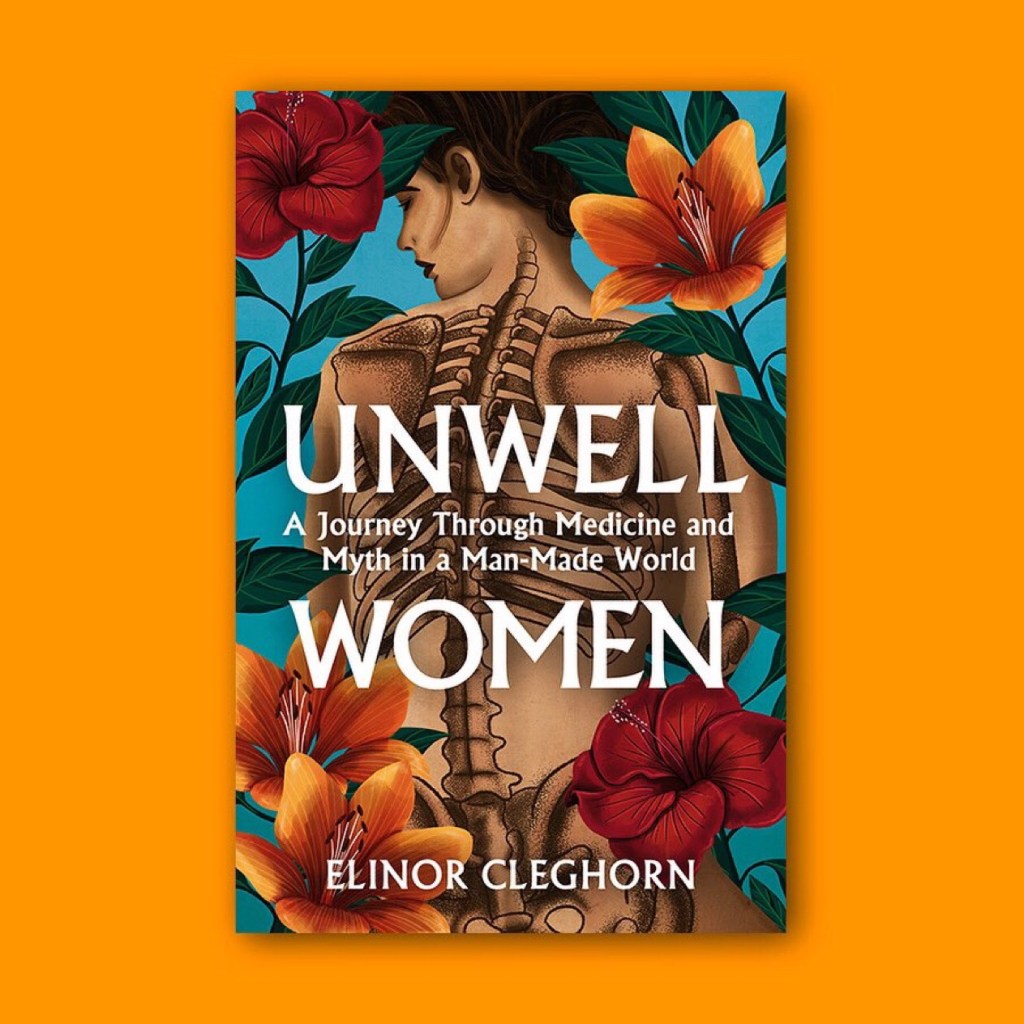
Most Anticipated 2021! Unwell Women by Elinor Cleghorn.

Publisher : Weidenfeld & Nicolson (10 Jun. 2021)

ASIN: B08HMN732X ( Kindle Edition)

My interest in this book is twofold: first the cover made me stop and look because it reminded me of the art of Frida Kahlo, and secondly, I am an unwell woman. I have been diagnosed with relapsing remitting Multiple Sclerosis for the past 25 years – ooh my silver anniversary, what do I get for that? Since then my health has deteriorated, mainly due to a back injury I sustained when I was 11. I did a somersault and landed awkwardly, causing two fractures to my spine. I was very lucky to be upright and walking, but scar tissue, muscle damage and deteriorating discs have caused so much stiffness and instability. This is managed with injections in my spine for pain and a regular procedure my compressed nerves are severed to stop nerve pain radiating into my pelvis and legs. It’s a lot to deal with, and I truly don’t know how I’m going to wake up every morning. I just wake up, take the medication and see what I can manage that day. I’ve just had a week where even looking at this screen would be impossible because of optic neuritis.

In my many years in the ‘kingdom of the sick’ and working as a counsellor for people with chronic ill health, I’ve noticed a major difference in how men and women, with exactly the same ailments, are treated. This book traces a history of women’s ill health and the treatment of it, for many years solely by a male medical profession. To quote the blurb:


‘In Unwell Women Elinor Cleghorn unpacks the roots of the perpetual misunderstanding, mystification and misdiagnosis of women’s bodies, and traces the journey from the ‘wandering womb’ of ancient Greece, the rise of witch trials in Medieval Europe, through the dawn of Hysteria, to modern day understandings of autoimmune diseases, the menopause and conditions like endometriosis. Packed with character studies of women who have suffered, challenged and rewritten medical orthodoxy – and drawing on her own experience of un-diagnosed Lupus disease – this is a ground-breaking and timely exposé of the medical world and woman’s place within it.’

‘We are taught that medicine is the art of solving our body’s mysteries. And as a science, we expect medicine to uphold the principles of evidence and impartiality. We want our doctors to listen to us and care for us as people, but we also need their assessments of our pain and fevers, aches and exhaustion to be free of any prejudice about who we are, our gender, or the colour of our skin. But medicine carries the burden of its own troubling history. The history of medicine, of illness, is a history of people, of their bodies and their lives, not just physicians, surgeons, clinicians and researchers. And medical progress has always reflected the realities of a changing world, and the meanings of being human.

In my own experience, I have found the world of neurology, clinical, abrupt and sexist. My diagnosis is old now and I have had new neurologists interrogate me on who diagnosed me, why and where – almost as if I’ve made it up out of thin air. I’ve been patronisingly asked whether I might ‘weep’ a lot, or have fatigue and pain due to being depressed. I asked if they’d send me to psychiatry if they felt it was all in my head – I didn’t care whether it was a mental illness, I just wanted to be treated and helped to get better. Once I asked for a referral the consultant backed down and said it’s definitely physical, because we have clinical evidence. I remember thinking that this was a complete ‘mindfuck.’ I started to question my own sanity, if I had a symptom I would wonder if it was real or in my head. Was I making myself ill and for what reason? A change of neurologist and several years of therapy helped me to see that the previous team had been quite abusive and manipulative. My rehabilitation consultant admitted that there was an old trend in neurology of not telling people with early MS about their diagnosis – the thought being that if you didn’t know you had an illness, you wouldn’t act as if you have an illness. Apparently, according to my old team ‘some women give up if they’re told they have a disability’.

I trained over many years in mental health work, and have worked as an advice worker, advocate and now a counsellor for people with disabilities. I have heard the same story told by so many women: being told they need to get a hobby or go out more; that they need anti-depressants when they don’t feel depressed; that maybe they need to have children (?); or that maybe, like the Victorian hysterics, this is all in their heads. My own favourite is being told to get rid of my cats so I could have children, when I have a diagnosis of Hughes Syndrome which causes recurrent miscarriage. My main area of work is reprogramming women who have all eventually been diagnosed with serious health conditions like Lupus, MS, Lyme Disease, Degenerative Disc Disease. All of them once told they were hypochondriacs and hysterical about their normal everyday aches and pains.

One of the ladies from my ‘Authentic Self’ workshop, was so scared of making a fuss about her pain that when she injured her leg on holiday she carried on. She walked on a fracture for four weeks because she’d been made to feel she made too much fuss about the pain she suffered from fibromyalgia and degenerative discs. Women should not be made to feel this way by the medical profession. Not once has a male come to me with the same story. Not one. In a BBC article ( link below) the same stories come up in relation to heart and gynaecological conditions. Women who reported to emergency rooms in acute pain were less likely to be prescribed pain relief, and where it was prescribed it took much longer to reach the patient.

‘This can have lethal consequences. In May 2018 in France, a 22-year old woman called emergency services saying her abdominal pain was so acute she felt she was “going to die.” “You’ll definitely die one day, like everyone else,” the operator replied. When the woman was taken to hospital after a five-hour wait, she had a stroke and died of multiple organ failure.’

I’m looking forward to reading about where these ideas about women’s health come from. I’d hoped once to write this book, but sadly my health meant PhD work on disability being put to one side. I feel this will demystify why women are treated this way and I hope to buy several copies to give to my friends and clients in the future. This book is not just anticipated, it is needed.

Links and Further Reading

https://www.bbc.com/future/article/20180518-the-inequality-in-how-women-are-treated-for-pain

Havi Carel. Illness. Routledge; 1st edition (20 Aug. 2008) – this a brilliant look at the ‘lived experience’ of chronic illness, the philosophical background to how we view illness, and the author’s own experiences as a woman and a patient. Utterly brilliant.

Posted in Netgalley

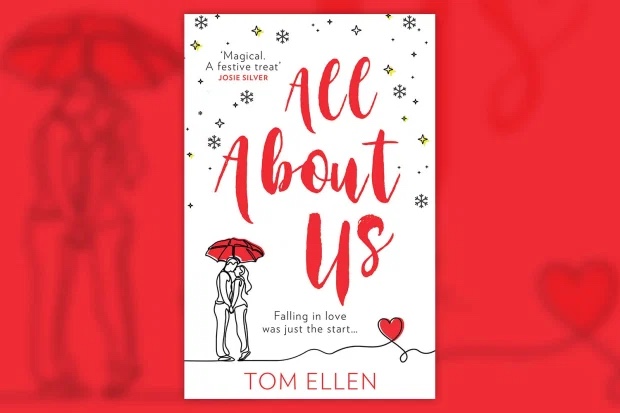
All About Us by Tom Ellen.

This is a great Christmas read and a few friends will be getting this as part of their Christmas parcel this year! I’m a little glad that illness has set me back a few months and I ended up reading this just before Christmas. It’s made me feel fuzzy and full of warmth. This is a sort of Christmas Carol meets One Day type premise. We follow Ben and Daphne who meet at university in an amateur dramatics production and are now married after fifteen years together. From love at first sight this couple’s relationship is fading fast. Ben feels he is at a crossroads and we see their life from his point of view. He feels unsuccessful after several fruitless attempts at a novel, whereas Daphne goes from strength to strength as a literary agent. We start in Christmas 2020 as Daphne goes to her work ‘do’ alone, while Ben is set to put up the Christmas decorations at home. Instead, Ben is at the pub lamenting his lot over a few pints and musing on his marriage, They seem to argue all the time and Ben can’t see a way forward. However, he does find a way back.

In the pub he meets a watch seller, an elderly man who reminds Ben of his Grandad. Although he tries not to engage, he somehow ends up with a wristwatch, that seems stuck a few minutes to midnight. This is the device the author uses to send Ben through time to strategic points that will hopefully be revelatory, in time to realise the right path. For some reason I hadn’t expected this magical element and that really elevated it above the ordinary for me. It made me think of the film About Time where life lessons are learned through the ability to time travel (and I always dissolve into a sobbing heap while watching). Ben’s been feeling dissatisfied for a while. He hasn’t fulfilled his potential as a writer, made worse by the fact that his absent father is so successful. He still isn’t over his mother’s death a few years before. He’s been with his wife, Daphne, since university and he really isn’t sure if they should still be together. They’ve struggled over the last couple of years, and he feels Daphne has changed from the girl he married into a bitter and angry woman, always snapping at him. When he thinks back to the pivotal moment they met, at a university play, he wonders whether he made the right choice that night. He and his friend Alice had spent so much time together that term, there’d been mild flirting as this performance drew near and he felt there was an unspoken agreement that the party after this performance might be the time for things to go further. Then Daphne had come through the door and the attraction was instant. Lately though, he’s been in touch with Alice again and they are making plans to meet. He’s now wondering if he chose the wrong girl all those years, that Daphne was merely a distraction, and he’d be happier with Alice. At this pivotal moment he’s offered the watch, that seems to be stuck at five minutes to midnight. Ben thinks it’s worthless, but this watch will propel him through Christmases past and future to answer the questions he’s asking himself.

There’s a reason people reuse Dickens’s Christmas Carol as a narrative structure, and that’s because it works. It shows us how our hero has become the man we meet at the beginning. It shows him how he got here, but gives him perspective and balance by showing the other person’s viewpoint. Finally, the watch takes him forward into the future he was wishing for himself, so he can see if it’s really better than the one he already has. There are many revelations along the way for us and for Ben. In one section we see how Daphne wins an award at work, but blows off the ceremony in order to commiserate with Ben who is feeling down about his work being rejected. Ben had never known about the award and it triggers him thinking about all the little things she’s done that he hadn’t noticed. A meet up with his Dad at his mum’s funeral opens his eyes to his dad’s failures in other areas of his life compared to his career. Ben had envied his Dad’s success as a writer, but does he have success as a father and as a husband? Ben goes into these encounters with all the knowledge he has in the here and now, so he knows how he responded in the past. He wonders whether changing those responses will impact the future? He’s still unsure about his marriage, but the more he sees of Daphne in the past the more he starts to really appreciate his wife. She’s thoughtful, she listens to him, she’s kind to others and has great friendships. She had a great relationship with his Mum and he realises he never once asked how she felt when his mother died. He sat in his grief alone instead of sharing their loss and missing her together.

I love the psychoanalytical aspect to these travels – he’s faced with the truth of himself and past events: is the image he has of his absent father a true one, what upsets him so much about the discussion he had before his mother died, and why does he now believe that it was his friend Alice, not Daphne, who he should have fallen in love with that night long ago? Is he thinking about Alice because he truly feels she’s the one or is it simply that he has idealised her when compared to the complexity and hard work of living with someone long term? If he only thinks about his father as a great playwright could he be excusing his absence as a Dad, as well as imagining he has passed on an inheritance of genius writing talent – as yet unseen in himself. These questions are answered in a series of self-revelations, as each trip back is like a self-contained therapy session. He realises that he’s been looking back on events as if he’s had no control over them, but some events that ‘just happened’ were choices. Daphne didn’t just happen to him that night at the play, like a quirk of fate, he chose to kiss her. Similarly, the events on a break in Paris, were active choices he made. He has to accept there’s a lot of self-pity in his outlook on life and he can’t abdicate his responsibilities for bad choices. I had to keep reading because I was waiting for him to realise that the angry, bitter woman he describes at the beginning of the book is partly his creation. The culmination of all this comes as he sees Christmas future, the changes he thinks he wants in the present come to pass, and he lives a totally different Christmas Day. This is the catalyst for his decision on what future he really does want, but he isn’t sure whether the watch will ever bring him back to the present. Then, if he does reach the present, can he move forward never talking about the revelations he’s had or admitting the things he’s done wrong? Will he have to risk everything he has, to win it back again?

This is a beautifully written book, with a clever premise and a really interesting character at the centre. As with all versions of this Christmas story, the magic happens to someone whose lost all their hope and optimism in life – partly because of events that have shaped them, but largely due to their own character flaws and outlook. Once they are shown other people’s point of view, a different perspective and where their self-destructive path is leading them, it can hopefully bring about change. I did hope all the way through that Ben would find his way back to Daphne, despite some of the things he’s done. I also wanted him to have consequences, to work a little for the love and support she has shown him over the years that has gone largely unacknowledged. With one magic watch, the old man from the pub manages what I try to achieve with clients in therapy. Self-awareness, clarity about their part in their life choices, responsibility for their actions, then a way of reconciling with all of they have learned and planning a pathway forward. It’s just that Ben does it all in one night! Each time hop has helped him come a little closer to the truths of his life. I didn’t always like him, but then I’m not sure we’re meant to. He needs to be a little flawed, in order for the revelations that come his way to have an effect. It’s a simple lesson – that none of us are perfect, that all relationships involve an element of taking the other person for granted even without meaning to, and that we have to accept our own flaws and mistakes as well as the flaws of our loved ones. Love, acceptance, time travel and Christmas – it’s a magical combination.

Meet The Author

Tom is an author and journalist from London, England. He is the co-writer of three critically acclaimed Young Adult novels: LOBSTERS (which was shortlisted for The Bookseller’s inaugural YA Book Prize), NEVER EVERS and FRESHERS. His solo adult debut novel is the romantic comedy ALL ABOUT US (HQ/HarperCollins, published October 2020). His books have been widely translated and are published in 20 countries. He is a regular contributor to Viz magazine, and has also written for Cosmopolitan, Empire, Evening Standard Magazine, The Daily Mash, Glamour, NME, ESPN, ShortList, Time Out London, Vice, Stylist and many more.

Posted in Netgalley, Uncategorized

Madam by Phoebe Wynne

Publisher: Quercus (18 Feb. 2021) ISBN: 978-1529408720

Why is it always so hard to write a review when the book is so good? It’s as if I have to wrestle with it for ages, in the hope of doing it justice! All I can do is try and put across all of the reasons I liked it. In fact, I loved everything about this feminist gothic novel from start to finish. First the setting – the eerie, almost otherworldly atmosphere around Caldonbrae School, the strange weather conditions suggesting it’s own micro-climate, and the school’s position as an English outpost (or invader) in Scotland. It’s appearance is like a hulking beast on the coastline, something that shouldn’t be disturbed lest it swallow you up. Secondly, there’s our main character Rose, addressed at all times as ‘Madam’ and finally the dark secret her predecessor tried to uncover at the heart of Caldonbrae, before it was Rose’s turn to fight it’s terrible tradition.

For 150 years, Caldonbrae Hall has sat as a beacon of excellence in the ancestral castle of Lord William Hope. A boarding school for girls, it promises a future where its pupils will emerge ‘resilient and ready to serve society’. Rose Christie, a 26-year-old Classics teacher, is the first new hire for the school in over a decade. At first, Rose feels overwhelmed in the face of this elite establishment, but soon after her arrival she begins to understand that she may have more to fear than her own imposter syndrome. When Rose stumbles across the secret circumstances surrounding the abrupt departure of her predecessor – a woman whose ghost lingers over everything and who no one will discuss – she realises that there is much more to this institution than she has been led to believe. As she uncovers the darkness that beats at the heart of Caldonbrae, Rose becomes embroiled in a battle that will threaten her sanity as well as her safety.

This novel was incredible from start to finish. I loved it. Straight away I noticed echoes of two of my favourite books; Jane Eyre by Charlotte Bronte and Rebecca by Daphne Du Maurier. The younger girls school uniforms reminded me of the aprons of Lowood School. The constant references to the previous classics teacher, and the mystery surrounding what happened to her had definite echoes of Rochester’s wife – hidden from view in the attic for being other than the perfect, meek and gentle wife he wanted. What exactly does this school expect of the teachers and how did Madam fall from grace so spectacularly? The training at the school starts to feel more sinister as time goes on. It begins to feel as if they’re trying to shape young women in a very old fashioned image; teaching them how to stay it in their place and be the 19th Century ideal of the ‘Angel in the House’. Although there’s something a lot more knowing about these girls, they put on this ideal as if its a disguise, designed to please but very aware it’s a conceit sure to reap the rewards of wealth and privilege. The previous ‘Madam’, whose name is Jane, is like the ghostly presence of Rebecca, still holding sway over the girls – especially Bethany who seems to have developed an obsession with her teacher. Jane seems to be everywhere Rose turns, but tantalisingly just out of reach. The author creates an edgy and eerie atmosphere where you feel she might be just ahead of Rose, her gown swishing round the corner.

Rose tries to understand the place she’s come to teach. There is a sense in which this school is a complete culture shock – like a child affected by poverty or a tough inner city environment being expected to thrive at Oxford or Cambridge where there’s an etiquette and language that’s alien to most outsiders. She has to muddle through this aspect of life at Caldonbrae and it makes sense to her if the purpose is to educate and prepare the girls for further education and professions like the law and politics. Yet, alongside this traditional, classical education there are hints of the old ‘finishing school’ where attributes like poise, social etiquette and deportment are deemed equally important. What exactly is she preparing these girls for?

As the secret starts to come to the surface so the tension of the novel rises. Is Rose being trained too? An outsider brought in to see if new teachers can be moulded to the school’s purpose. As Bethany’s attachment to Madam becomes clearer she seems to stalk Rose. and the reader isn’t sure whether she resents Rose being in the place of her former favourite or whether she has simply transferred her affections. When she makes allegations about Rose she threatens her whole future at the school, but is Bethany trying to harm her or warn her? A strange hierarchy operates amongst the girls who know themselves to be the elite performers and those who don’t make the grade are offered inducements to improve, but these inducements can be threats as well as rewards. The horror of a young woman having her head shaved for performing badly is enshrined in patriarchal systems and is designed both to shame the woman and act as a warning to others. Rose guesses what might be happening, before the secret is fully revealed but it’s such an alien and deviant concept in modern society that she can’t believe it could be true. Could she ever be complicit in such a scheme? I found myself wondering how far the girls are ‘groomed’ into accepting this future or how many are knowingly acquiescing to it for the rewards of wealth, status and family honour. Rose is backed into a corner, by fear of what may have happened to her predecessor certainly, but also the knowledge that the school can reward her far beyond what she’s imagined. Her mother, severely disabled by multiple sclerosis, is placed within a state of the art care facility. Can Rose be bought, or will she try and walk away? However, does anyone walk away from Caldonbrae unscathed? Could Rose, as quiet as she seems, finds a way to walk away, but also bring down the whole system in her wake. This was an incredible, unputdownable, novel full of gothic atmosphere, and dark, patriarchal, purpose. However, there is also a feminist heroine ready to shine a light on long held secrets, even at the risk of that light becoming a burning flame.