Blog Feed

Posted in Netgalley

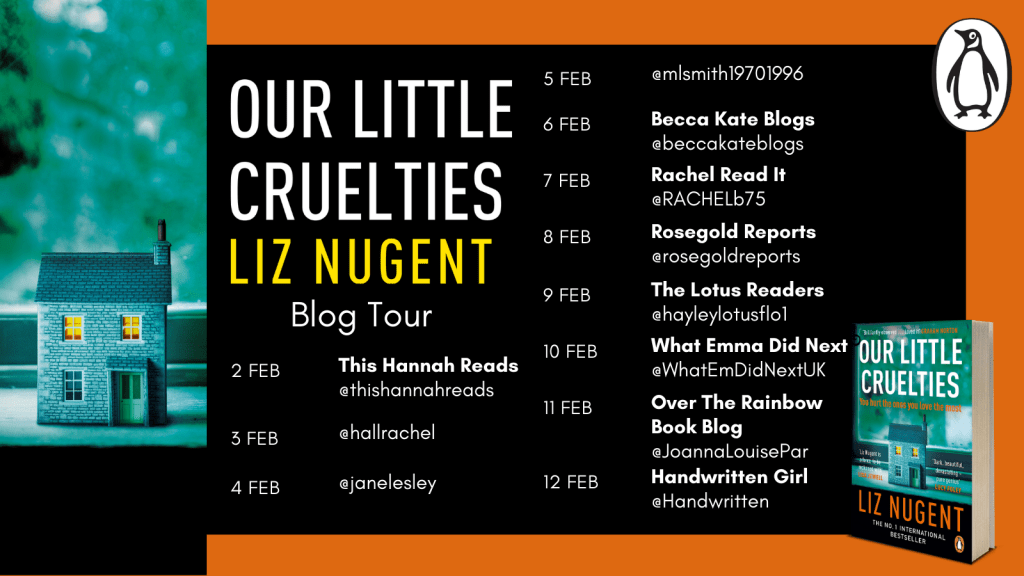
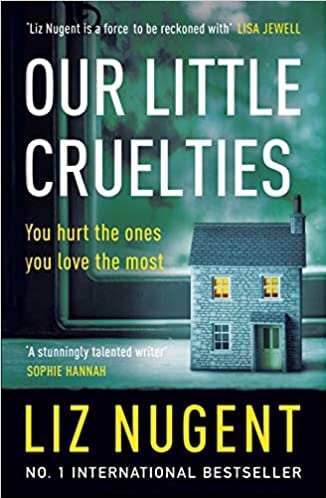
Our Little Cruelties by Liz Nugent

Published: Penguin Paperback Edition 21st Jan 2021

Never have the famous words of Phillip Larkin – ‘they fuck you up your Mum and Dad’ – been so apt. Reading this book was a very interesting experience and patience definitely paid off. Had I given in to my impulses and thrown the book down in frustration during the first part, I would have missed out on a great read. The story of three brothers over their lifetimes is compelling, interesting and a great study in how mental health difficulties can be passed on from one generation to the next.

The structure of the novel is what I had difficulty with at first. The first section was narrated by the eldest brother, Will. Written in short chapters, slipping between decades, we see aspects of his childhood through to the present day where he is a successful movie producer. He meets his wife Kate through his brother Brian,when she’s brought to a family dinner. They have a little girl called Daisy, but Will is much more focused on work than he is his family. We get the sense that Kate is a long suffering woman who gets more support from Brian, who is now Daisy’s godfather as well as her uncle. Brian is there for the birthdays and school concerts and has a great rapport with Daisy. Will is dismissive of Brian and his lack of ambition. He is also dismissive of Luke, despite Luke’s success as a pop star in his late teens. This section was difficult to read because I disliked him from page one. I didn’t think I could stand to listen to his perspective for a whole book. This made me think about my own bias and prejudice – what would I have done if he was a client and I was his counsellor? My main interest was in how close Will was to his Mum and through flashbacks we see she favours him, quite openly.

Luke, by contrast, really gets the brunt of their mother’s moods. He is the youngest, the weakest perhaps, but he is attractive and in his teenage years soon finds real success as a pop star. However, in the later fragments of his life he has times of struggle, where his mental health is poor and he turns to drink or experiments with drugs. He is an unusual child with a religious fixation to the extent where the family priest thinks he has a vocation! The other boys use his goodness against him, he is manipulated by them and by blaming him, they get extra food and attention. Only his Dad seemed wise to this, and just how poisonous the brothers, particularly Will, can be. There are moments where it seems his life is on track and he could be happy, but others where I wondered if he was just not meant for this world.

Finally, there’s Brian the middle brother. If Will is his Mum’s favourite and Luke is doted on by his Dad, who is left for Brian? He does seem mentally torn between both parents, but is without a champion in the same sense his brothers have one. Will is very dismissive of him, even though Brian does so much for his niece. He’s not grateful when Brian stands in for him, but instead is scornful that Brian has nothing more important to do. Will only recognises material success, not the strength or reward of happy relationships. Brian is the one who looks after Luke when his mental health deteriorates, but Will never recognises or appreciates this. In fact Brian’s relationship with Will becomes so destructive that other family members get caught in the crossfire.

The genius of this book is in the knowledge of family dynamics and how destructive they can be, but also in it’s clever structure. As mentioned, during the first part, narrated by Will, I was ready to put the book down. I couldn’t stand him. He was arrogant, self-centred and treats women appallingly. If the whole book had been his viewpoint I might have thrown it out of the window. Just when I was at the point of giving up, I saw Luke’s name across the next section and it was such a relief. As the tale goes back and forth in time and perspective we see a tiny bit more of the whole. At a Bob Dylan concert at a local castle, Will ends up in a fight and is taken to hospital with Dad and Luke following behind. Mum is left behind at the castle and doesn’t arrive at the hospital till late. We think that maybe she’s been caught out here, or that she simply cares more about enjoying herself than her son. But, this is Will’s perspective, for once his Mum has let him down. However, through Luke’s narrative we learn the truth, that something terrible happened to her, something that explains so much about how she behaves. When we finally get Brian’s section we see what a lifetime of being in the middle feels like; he feels overlooked, unconsidered and brushed aside. We find out things we already suspected and other things that surprise and enlighten us. Every single strand of this novel teaches us that we are only ever a small part of the picture and we must step back to see the whole.

This brings me to the second line of Larkin’s poem This Must Be The Verse and easily the best; – ‘they do not mean to but they do’. There are parts of this novel, particularly the way Dad behaves, where genuine mistakes are made and misunderstandings occur in the same way they do with any family. No parent, however hard they try, will get it completely right. However, there are other situations where the mental damage seems deliberate, especially in their mother’s attitude to Luke. Will’s intervention in Luke’s relationship, and the treatment of Will’s daughter Daisy towards the end of the novel are not mistakes. These acts are more than little cruelties. They are deliberately causing lifelong psychological disturbance. This is a complex and interesting novel that deftly moves from one narrow perspective to another, finally giving us all the pieces of the emotional jigsaw puzzle that makes up this family.

Meet The Author
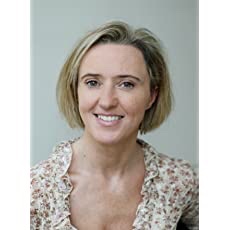
Before becoming a full-time writer, Liz Nugent worked in Irish film, theatre and television. Her three novels – Unravelling Oliver, Lying in Wait and Skin Deep have each been Number One bestsellers in Ireland and she has won four Irish Book Awards (two for Skin Deep). She lives in Dublin with her husband.

Posted in Uncategorized

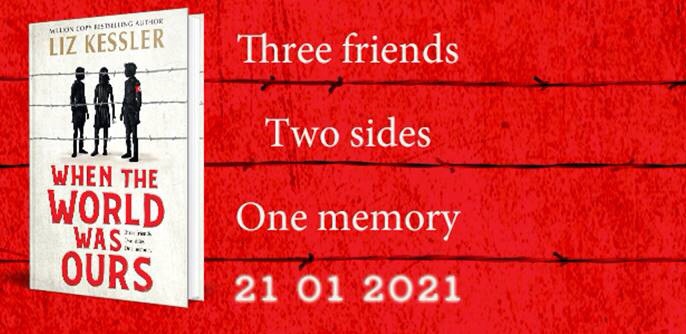
When The World Was Ours by Liz Kessler.

1936, Vienna

Leo, Elsa and Max have been best friends for years. Since the day they met they’ve been a team of three. But then the Nazis come, and their lives, once so tightly woven together, take very different paths.

LEO must rely on the kindness of strangers to escape the rising threat to the Jewish people.

ELSA, like Leo, is hated for simply being who she is. To be safe, she must run.

MAX suddenly finds that he is the danger his friends are trying to desperately escape as his father rise through the Nazi ranks.

Inspired by a true story, When The World Was Ours is as life-affirming as it is heartbreaking, and shows how the bonds of love, family and friendship allow glimmer of hope to flourish, even in the most hopeless of times

This novel is beautifully constructed and forces us to experience the events of WW2 in Europe, but through the eyes of three children – Leo, Max and Elsa. Written in alternate chapters, the voice of each child comes through loud and clear. From the fun, adventure of Leo’s birthday at the fairground in the first chapter, to the whispers and silences at home and the friendship broken apart by propaganda, hate and fear. There’s such an innocence about these three children, sharing their hopes and dreams for the future. It’s so hard to read when we, as readers, know what’s coming. The cracks are showing, for the adults in Vienna. For these friends it’s still tag in the park and through them we see the beauty of Vienna, the cherry blossom of spring and the view over the city from the top of a Ferris wheel.

In Elsa and Leo’s narratives we can see the confusion when their parents start acting differently and uncertainty creeps into their existence. The author paces the rise in tension so well, from those first whispers to open acts of violence. The children are at the age where their parents are solid, safe and stable. Everyone has a moment when they realise their parents aren’t infallible, they’re just human beings who feel fear and make mistakes. In the aftermath of the Anschluss, neighbours have become potential enemies and with Elsa’s family fleeing to Czechoslovakia, Max and Leo bewilderingly find themselves on opposite sides. I felt so deeply for Max, watching an innocent child groomed into hating others was really hard to take. My late husband was Polish and I have listened to their incredible stories of escape, loss, and dislocation from their home land. There’s a lot in Leo and Elsa’s stories that’s shocking and distressing, but familiar.

I remember being confronted with the reality of a child living within the Nazi regime in The Boy in the Striped Pyjamas, but he was kept largely separate from the truth of his father’s ‘work’. Here, Max has an authoritarian father anyway, constantly telling him to be a man, to be strong and definitely not to cry. Now his Dad tells him not to play with his best friends, tells him Jews are dirty and sly and even worse, forces him to repeat these things he doesn’t believe. It’s totally heartbreaking to read, especially when Max’s father’s rise in the party puts him in direct confrontation with Leo’s father, something he’s wanted for a long time. We can see how this is a manufactured rift has been created. It takes strong individuals to stand against the tide, something Leo realises when Jewish children are separated from the rest of the school. Max instinctively steps away from Leo, then has to apologise. The author depicts the innocence of these friendships, torn apart by hatred and adult choices. They are exactly the same people they were yesterday, how can they see each other as different?

Yet amongst all this hate, there are these little moments of courage and hope. Leo gains confidence by becoming the man of the house and helping to get him and his mother out of danger. Elsa meets a new friend at school in Czechoslovakia, their friendship is different because they’re both girls. There’s more talking than playing, but she’s found a little bit of happiness within the maelstrom surrounding them. Max is finding confidence and structure as a member of the Hitler Youth. He talks about being a cog in the wheel of this huge organisation and finds pride as part of this young army, not party to the bigger picture and truth of their purpose. These young characters are a brilliant way in for younger readers to connect with history and the long term lessons of the Holocaust. I can see it being an important text for schools in the future. That’s not to say it’s only for young readers – adults can also take a lot from this book. Often, young people are the best way to enlighten and teach adults and these three characters will get under your skin and make you think about their reality and part in this history. After all, the most frightening thing is that we don’t learn from books like this. As adults we should think about Elsa’s answer to the question we often ask about the Holocaust – how did this get that far? How did this happen? is that for these children, the bewildering changes they’re experiencing today could become the norm.

‘How rapidly something unthinkable can become commonplace. How easily we let the inconceivable become a new normal. How quickly we learn to stop questioning these things…’

Meet The Author

In a note at the beginning of the novel Liz Kessler writes about her father’s flight from Czechoslovakia when he was eight years old. Their chance of escape came from a British couple they’d happened to meet several years before. Just like the first chapter, when Leo and his friends are taken to the fairground for his birthday, and he literally bumps into a couple in the carriage of the Ferris wheel. Kessler has used her fathers story as the basis for this novel. She explains that it’s not just about honouring her heritage, but about helping young people come to informed decisions about social justice for the future.

She was first published in 2003 and her debut was the first in a series of books for 8-12 year olds about a half- mermaid girl. She has sold over five million copies worldwide and been published in 25 countries. She has written 23 books in total for both young adults and early readers. Liz lives in Cornwall where her hobbies and her inspiration come from the sea.

Posted in Random Things Tours

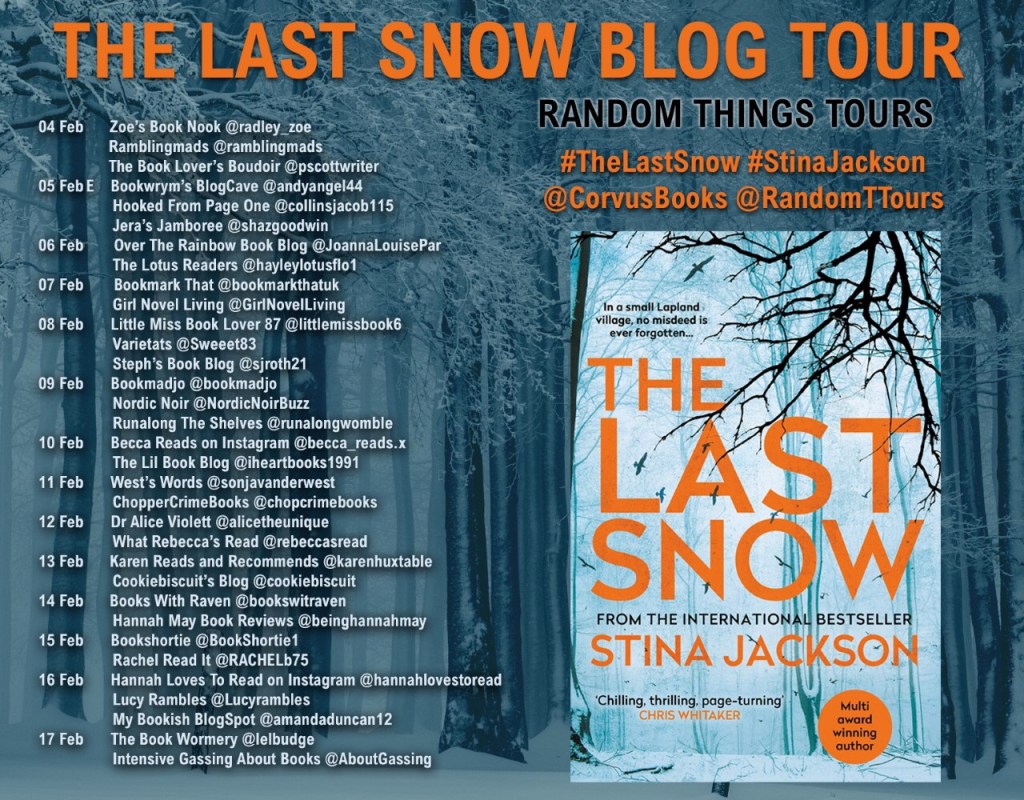
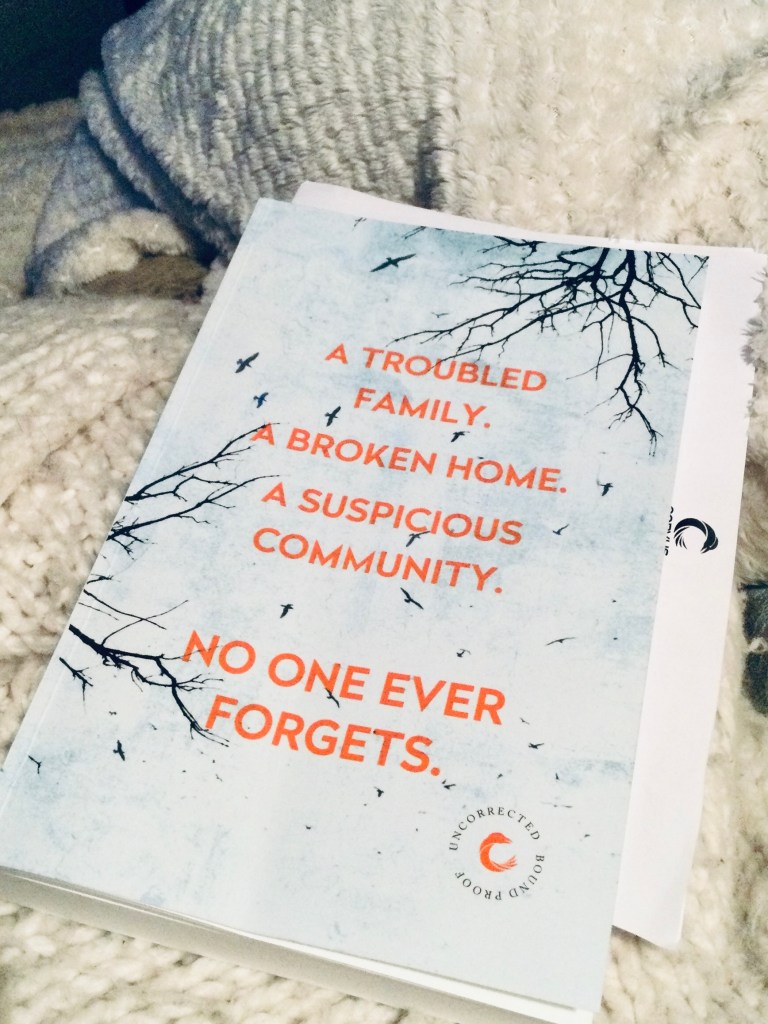
The Last Snow by Stina Jackson.

What secrets are hidden within the walls of a desolate farmhouse in a forgotten corner of Lapland?

I was chilled by this novel from the first page, as a young girl flits through the woods, only visible in flashes of a pale, frosty moon. She is making her way towards an all-night garage and truck stop, one of those places that feel weirdly outside of time. I could already sense the isolation of this part of Sweden, so far north it’s in the region of Lapland. I could also imagine the boredom and recklessness this teenage girl feels, then I worried about the home she is from.

Then we jump to the present day. Early spring has its icy grip on Ödesmark, a small village in northernmost Sweden, abandoned by many of its inhabitants. But Liv Björnlund never left. She lives in a derelict house together with her teenage son, Simon, and her ageing father, Vidar. They make for a peculiar family, and Liv knows that they are cause for gossip among their few remaining neighbours.

Just why has Liv stayed by her domineering father’s side all these years? And is it true that Vidar is sitting on a small fortune? His questionable business decisions have made him many enemies over the years, and in Ödesmark everyone knows everyone, and no one ever forgets.

Now someone wants back what is rightfully theirs. And they will stop at nothing to get it, no matter who stands in their way…

Usually when writing about a thriller I’m talking about the build up of tension, the breakneck pace of the writing as we reach each reveal. Here Stina Jackson has done completely the opposite and it’s so effective. The pace is glacial, quiet and even contemplative. The result is that you become so lost in the pages that you forget you’re supposed to be breathing. The dreamlike quality of those first lines stays as you are introduced to Liv, working her job in a filling station. There’s a sense that time has stood still. As her father draws up in his old car to pick her up, she could still be a teenager at her Saturday job. Then we find out she has a teenage son and realise she’s older, but very little has changed for Liv. I felt that sense of suffocation, as they return to the house that’s barely standing, with no neighbours in sight, and her father ruling the roost. There’s inertia here; Liv hates being here but can’t summon up the energy to leave. She’s beaten down mentally by privation and the harshness of her father and the landscape. This isn’t a formulaic crime novel, this is also about families and all the emotions encompassed in these relationships. There’s jealousy here, hate and resentment, but also love. Yet over all of that there’s that suffocating sense of paralysis. As if nothing will ever change here.

Liv does have an escape. It’s a tried and tested escape she’s used since she was a teenager. At night she makes her way to an old cabin on their land, takes off her clothes and climbs into bed with the tenant. There’s a calm and matter of fact feel to her liaison, she’s clearly been here many times before. Maybe this is the closest she can get to a relationship. It’s a step up from her midnight travels to the truck stop and the cab of any trucker she can find. At least now she’s a woman, her father Vidar doesn’t track her down and drag her home. Vidar is harsh, cold, mean and according to local gossip, sitting on a fortune. They needn’t live the way they do. Our other perspective in the novel is that of local drug dealer, Liam and his brother Gabriel. Liam feels like Liv’s counterpoint in the novel. He wants to change his life, but is controlled by his brother who has heard of Vidar’s supposed fortune. These two families will come together in a violent and brutal way. All of these characters are so well drawn and they come to the reader in the same way people do in life. Some are open from the beginning, like Vidar who doesn’t hide his cruelty and unpleasantness. Others are more quiet and sly, we have to work to get to know them. Between all of these characters though, there’s a volatile mix of bad blood, greed and so much suppressed rage. When this spills over we are left thinking we know who’s to blame, but we don’t.

The story does slip back and forth in time from the opening scenes in 1998 to a later point as the past informs the future and vice versa. It’s important to concentrate in the past sections, because it really does inform people’s motivations and character. It’s a slow burn, but still kept me gripped throughout. Then the ending comes and while it was shocking, it made sense. This felt like some of the best Scandi Noir series I’ve watched – heavy on atmosphere and character, but takes it time unfolding the narrative and showing us where everyone fits, till the final revealing scene.

Meet The Author


Stina Jackson (b. 1983) hails from the northern town of Skellefteå in Sweden. Just over a decade ago she relocated to Denver, Colorado, where she penned her debut novel, the acclaimed The Silver Road. A runaway bestseller, the novel established Jackson as a rising new star within Nordic suspense.

Posted in Netgalley

The Night Hawks by Elly Griffiths.

It was lovely to be back in the world of one of my favourite literary heroines, the archaeologist and academic Ruth Galloway. I always feel at home in this space Elly Griffiths has created, with an evocative feeling of Norfolk at its centre. She presents the wide skies, marshlands and seascapes and their flora and fauna so clearly I feel like I know it. Yet there’s always that sprinkling of the mystical, the pagan, and the long buried beliefs of a Norfolk long ago. This mix of the earthy, real and scientific as opposed to the mystery and magic is something also echoed in her characters: the craggy, straightforward, Nelson; the Druid Cathbad with his cloak, sayings and pronouncements; Ruth somewhere in-between – appreciating the science and procedure of her work, but not fully dismissing the beliefs and mysticism that surrounds the burials she visits and excavates.

The Night Hawks of the title are a local metal detecting group, who stumble upon a burial site out on the marshes towards the sea. Ruth has been here before, excavating a ‘henge site’ with her then professor, Eric – a man whose conflict between mysticism and science still hangs over this place. The group finds a hoard of Bronze Age weapons, but nearby they also find a body. Nelson thinks it might be an asylum seeker, desperately trying to cross the channel in tiny boats and fallen overboard. He rings Ruth anyway, because he knows she’ll be able to date the weapon find and know if there’s any link. The body turns out to be a local boy, Jem Taylor, who has just been released from prison and has a distinctive tattoo of a snake on his neck. Cathbad suggests this may be a nod to the local legend of the Norfolk Serpent. This could be an accidental drowning, but the second body suggests murder. There are no real clues to who might have wanted Jem dead.

The second case Nelson is called to investigate is that of a couple who seem to have died in a murder-suicide at a local farm. Black Dog Farm is linked to another local legend, that of the Black Shuck, a large black ghostly dog that is said to appear to people before they die. Nelson is sceptical of course, but since the suicide note ends with the ominous ‘he’s buried in the garden’ he asks Ruth to excavate. Ruth has already had a strange encounter with a large animal on a country lane, so her mind starts whirring when she finds large animal bones. Maybe Cathbad has more wisdom than they give him credit for. As Nelson and Judy talk to the couple’s children and Ruth thinks about the farm, it seems clear that there’s something very wrong about Black Dog Farm, something that might signal serious danger for all concerned.

I never stop talking about how much I love Ruth Galloway and here she’s back to herself after a period of time living with her partner Frank in Cambridge. Norfolk is in Ruth’s bones it seems. She and Kate seem to belong in the small cottage that looks out to the coastline, with their cat. Ruth seems to be still recovering and I love how Griffiths writes Ruth’s inner thoughts as she contemplates the choice she made: to be true to her love for someone unavailable, leaving her alone at times. As we’re all a bit battered by love and relationships as we hit our forties, I found her contemplation of loneliness within and without relationships truthful and moving. What I love most about this character is her authenticity. She doesn’t dumb down her intelligence, she doesn’t change her style and when absorbed in a really mucky dig can be decorated with mud from head to foot but doesn’t care. She is resigned to live on the fringes of Nelson’s life and knows his loyalty must be with his wife Michelle, but this case is a tricky one and may bring them close to danger once again. If one of of their lives is at risk, what will happen to those loyalties?

This was a great addition to the Galloway series and has all the ingredients I enjoy: a potentially sinister group of men, the appearance of a mystical creature, the mix of hard science, history and pagan ritual. All my favourite characters are present – I’m always intrigued with the attraction between Judy and Cathbad. There are new people too. There’s a new man in Ruth’s department at the university, a researcher whose very keen to take charge of the Bronze Age site and seems to be everywhere they turn on this case. Could he be a threat to Ruth’s settled life, her accord with Nelson, her academic prowess or something even more sinister? I found myself suspicious of him throughout. I was recently having a chat on Twitter, including Elly Griffiths, and we discussed casting for a potential TV series ( come on BBC what are you waiting for?). Ruth Jones seemed to be the choice for Ruth, David Tennant for Cathbad and either Debra Stephenson or Leanne Best as Michelle. Nobody had a good idea for Nelson. We all agreed he needed to be older, a bit craggy but somehow attractive, with a twinkle in the eye. I’m putting forward either David Morrissey or Phillip Glenister – both would have the necessary Northern bluntness I think. Till then I’ll wait patiently for the next instalment, when I expect big changes for my favourite archaeologist.

Meet The Author

I’m the author of two crime series, the Dr Ruth Galloway books and the Brighton Mysteries. Last year I also published a stand-alone, The Stranger Diaries, and a children’s book, A Girl Called Justice. I have previously written books under my real name, Domenica de Rosa (I know it sounds made up).

The Ruth books are set in Norfolk, a place I know well from childhood. It was a chance remark of my husband’s that gave me the idea for the first in the series, The Crossing Places. We were crossing Titchwell Marsh in North Norfolk when Andy (an archaeologist) mentioned that prehistoric people thought that marshland was sacred ground. Because it’s neither land nor sea, but something in-between, they saw it as a bridge to the afterlife; neither land nor sea, neither life nor death. In that moment, I saw Dr Ruth Galloway walking towards me out of the mist…

I live near Brighton with Andy. We have two grown-up children. I write in a garden shed accompanied by my cat, Gus.

Posted in Uncategorized

Books of the Month January 2021

It’s been a fantastic start to the reading year, with so many great books and a lot of time on my hands to read them. January is one of those months where I tend to hibernate anyway, but this year even more so. I can’t go anywhere, because I don’t want to risk catching COVID on top of my MS. So it’s been a cosy month where, aside from walking the dog, I’m mainly indoors with a blanket, slowly becoming a human cat bed. So I’m passing the time by reading some great books and telling people all about them. For my best reads this month I couldn’t single out one book. I loved these three so much!

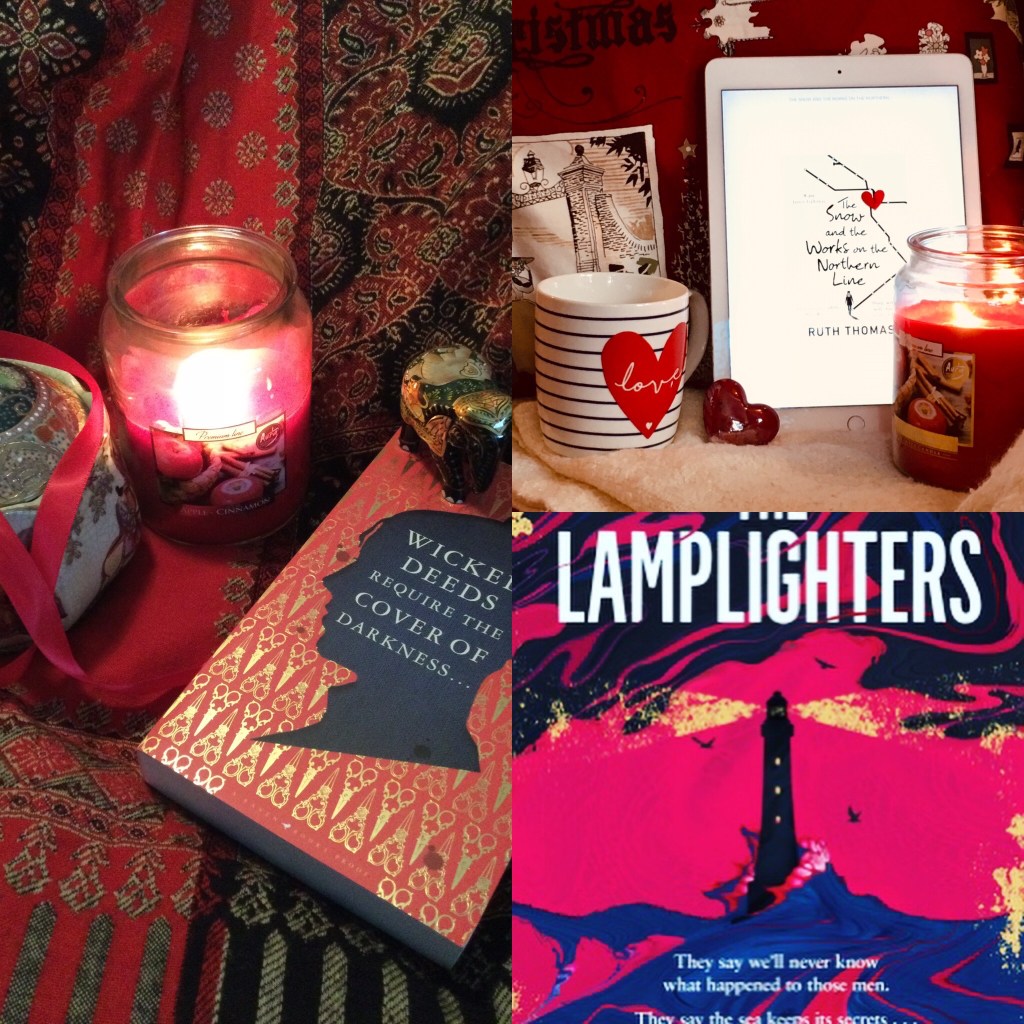
The Lamplighters by Emma Stonex – was my first read of the year and was an ARC courtesy of NetGalley. Inspired by true events, and set in Cornwall, 1972. This is a story of three lighthouse keepers who go missing while on duty in a lighthouse miles from shore and only accessible by the boat that brings supplies and the next shift. The lighthouse is locked from the inside, all the clocks have stopped and the principle keeper has recorded a huge storm in the log, when the skies have been clear all week. The story is stirred up again years later, by a writer who wants to solve the mystery. He visits the lighthouse keeper’s women – Helen, Jenny and Michelle – stirring up memories, secrets and emotions. The story itself will keep you hooked, but the author also explores ideas about truth and fiction, and who gets to write history. I was also fascinated by the authors take on effects of trauma – how far they radiate out like ripples on a pond, but also how deep they go through several generations. Quite simply, this is a stunning read. This is available for pre-order. Out on 4th March 2021 from Picador.

The Shape of Darkness by Laura Purcell – I’m a big fan of Laura Purcell and I was lucky enough to be on the Random Things blog tour for her latest book this month. Our heroine is Agnes Darken, a silhouette cutter who lives with her mother and her nephew Cedric. The mystery begins as one of Agnes’s sitters is found beaten to death, she was the last appointment in his diary. When another sitter turns up in the river, Agnes needs answers and turns to a spirit medium called The White Sylph who lodges in Bath with her sister and father. Her hope is that the murder victims will materialise and tell them who their murderer is. Instead they unleash something they never imagined. As usual, Purcell creates a dark and disturbing atmosphere, with just a sprinkling of the supernatural. As the bodies start to rack up, the tension starts building and it kept me guessing all the way to the last page. Out Now. Published by Raven Books.

Finally, I loved this beautiful novel kindly sent from Sandstone Press via NetGalley. Ruth Thomas has created a heroine to fall in love with. Sybil is a museum assistant at RIPS, where prehistoric exhibits and research have their home. Life is good for Sybil until her old university lecturer comes back into her life, thanks to an unfortunate skating accident where Sybil gets a bump on the head. Sybil has a long held resentment of Helene Hanson because she took part of Sybil’s dissertation and used it as her own theory. Now Helene seems determined to muscle in on Sybil’s life, at work and at home. She starts by stealing Sybil’s boyfriend Simon. Then attaches herself to the museum as a trustee, and starts making changes. Sybil starts to feel strange and not really in control of her life anymore, she takes risks, procrastinates and starts collecting lost things to inspire haikus for her poetry class. She also wants revenge. This is a book of quiet beauty, with a mix of haiku and stream of consciousness. You will fall in love with Sybil. I was rooting for her journey, through this tough time in her life and loved the unexpected ending. Published in paperback on 7th January 2021 by Sandstone Press.

So they’re my favourites for January and I hope you find something for your TBR or wish list. Below is everything else I read in January.

My current read is The Last Snow by Stina Jackson: Published by Corvus 4th February 2021

Posted in Netgalley

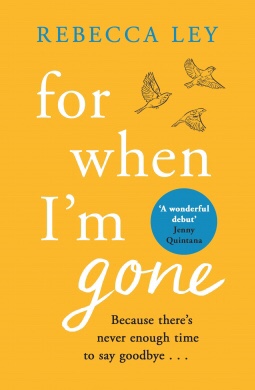
For When I’m Gone by Rebecca Ley.

Publisher: Orion. 3rd September 2020.

There is never enough time. Even when a loved one has been ill for so long and the prognosis is terminal, that moment when they’re gone is seismic. Everything in your world shakes up and resettles around you, but in a totally different shape. When my husband died it had been coming for a long time. He was also suffering. His MS had affected his ability to swallow so he was PEG fed and kept hydrated with a tube directly set into his stomach. He would aspirate saliva, then develop pneumonia in an endless cycle till he decided not to treat it anymore. He’d spent months in hospital, before I received the call from the hospital. Listening to him struggling for breath for 12 hours was torturous. Yet when he took his last breath at 5.15 am, my first thought was ‘no, I wasn’t ready.’

Rebecca Ley’s novel is about a life cut short in this way. Sylvie is given a terminal cancer diagnosis at the age of 38. She and Paul have a marriage that seems perfect. He is a doting husband and father, and loves Sylvie’s intelligence and beauty. There is a certain prickliness to her character, which could make her difficult, but they seem to compliment each other and are great parents to their children Megan and Jude. When Sylvie receives her diagnosis she knows she must help Paul with the aftermath. He needs a manual that helps him deal with a domestic life that’s more complicated than he realises. She also needs to disclose a secret that she’s been keeping for the whole of their married life. As Paul uses her manual to try and negotiate life after Sylvie, he begins to realise just how much she did for them, and how much more indebted he is than he realised. Ley writes about reconciling a life only half lived, but also those compromises made in a marriage and as a mother. This is where he truly gets to know his wife in a way he couldn’t when she was alive.

The book is divided into past and present chapters, so we can be let into Sylvie’s life, but also to form a contrast with after she’s gone. The manual is confessional and written in the first person. Then we have the third person viewpoints of both Paul and Sylvie. Through this we see the beginning of their relationship where everything is romantic to the trickier aspects of their shared life together. I liked that Sylvie isn’t perfect, it’s easy to make a lost loved one into a saint, but Ley avoids that here and it’s all the better for that. Throughout we see that same spiky element to her nature, it’s attractive in a way, but could be seen as hardness or being difficult. As we read through the manual though, after she’s gone, we see a reason for that hardness – Sylvie is this family’s structure, their backbone, and without it what do they have to keep them upright and together?

There is the constant tension of what Sylvie’s long held secret may be, but it wasn’t the thing that kept me reading. It was the slow revelation of her character that held my attention. In Sylvie, Ley has written a truly modern female character who has flaws and makes mistakes, but isn’t cast as a bad person. Often in books about cancer patients, or mothers, there is that temptation to turn them into saints and martyrs. I love that the author made a conscious choice not to do that. Through Sylvie’s choices and her inner monologue as she makes them, we see the complexity of being a woman, a mother and a wife. Sylvie is complicated, sometimes she hurts people and I didn’t always like, or understand her. She is so ‘real’ that I started to think about her in terms of my own friends and family; we don’t always like what they say or do, but we still love them. I felt like I’d got to know a real person and this only added to the devastation when she was gone. I would like to see more women like this in fiction.

The supporting characters were also well written, three dimensional people. I felt particularly for Megan who withdraws as the book goes on. There was also a great contrast between Sylvie and Paul’s mothers, with one very traditional Mum and the other very far from conventional. Ley shows us the chaotic, random and difficult nature of life. This brings home the fact that we never know what’s going to happen next, something people who’ve experienced loss and illness know only too well. I always make sure I tell my new partner and stepdaughters that they should take care and I love them, every time they leave the house. I never want them to wonder how I feel about them, or for something to happen when I haven’t reminded them how much they mean to me. I felt deeply for the family at the heart of this heart-breaking story and it will stay with me for a long time. This extraordinary book is Rebecca Ley’s debut, so I will be following her writing closely to see what’s next.

Meet The Author

I am new to being an author, but the idea that people might read my work and want to connect with me about it is honestly my biggest dream. I would love to hear what you think of For When I’m Gone. You can find click the ‘follow’ button on Amazon, or find me on Twitter or Instagram, where I share fragments of my life raising three children in Hackney, east London. I grew up by the sea in Cornwall and never expected to be raising a family in the inner city, but here we are! I have spent the last sixteen years working as a journalist. I’ve worked on staff at The Times, Sun and Daily Mail, as well as writing a column in The Guardian about my father’s dementia. I’ve also freelanced for a variety of other papers and magazines, including The Telegraph, Psychologies, Mother and Baby and Grazia. And I write scripts for an animation company too.

Posted in Uncategorized

Why Do We Blog About Books?

Over the last year on Book Twitter and Bookstagram I’ve seen a lot of questions about being a book blogger and also a lot of assumptions. So I thought I’d write about how I ended up book blogging and why.

Ever since I was small I’ve loved reading and by the age of eight had finished the whole reading scheme at school and had started borrowing books out of the school library – Jane Eyre, Little Women, What Katy Did and Pippi Longstocking. I loved getting my work finished early so I could curl up in the beanbag, with the smell of books all around me, reading my latest find. I was also a pretty active little thing – I loved walking the family dog, playing netball and going on walking holidays with my family. Then, when I was ten, I broke bones in my back during a P.E class when I somersaulted and landed awkwardly. I took a long while to rehabilitate and it was mismanaged, leaving a long term disability that I still struggle with today. I had to adjust to a less active life so reading became even more important to me. When I was diagnosed with MS I had another period of rehabilitation in order to get back some of the function I’d lost in my first relapse – my dexterity and grip, the function of my left leg – and trying to improve my energy levels. I read an enormous amount and started to revive a dream I’d had since I was a little girl. I’d always wanted to write a book of my own.

In 2019 I made a decision to get some professional help with my writing. I’d seen an MA in Creative Writing and Well-being and thought it would force me to work on my own writing whilst also gaining a qualification I could use with my counselling clients. I trained as a counsellor to help others with MS and other long term disabilities and I started running journaling and creative writing courses to help people come to terms with the change in their lives in 2007. But I was scared and very under confident about my writing, so I thought I’d start a blog to build up my confidence and the thing I felt most comfortable writing about was books. I started on blogspot but then moved to WordPress just under a year ago ( blogiversary coming soon) with my blog The Lotus Readers. The name is a play on the Tennyson poem The Lotus Eaters – a group of mariners, who feed on the lotus leaves. The leaves put them into an altered state where nothing matters but the now, consequently they just lounge around and eat all day. It seemed perfect because I do nothing but lounge around and read all day!

One of the most common misunderstandings I come across is people assuming book bloggers get paid. I can’t speak for everyone but me, and the bloggers I know, don’t get paid for reviews or blog tours. I might get sent the book as either a digital ARC ( advanced reader’s copy) or a real proof posted out by the publisher. Quite often, if I’ve really enjoyed a book and would like a copy on my shelves I will buy the final edition when it’s published anyway. I have time to blog a lot because of my disabilities. I only work part-time if at all and I can spend a day here or there working on my blog. I started by reviewing books I’d read and enjoyed, then learned about NetGalley where publishers offer digital copies of upcoming books to generate early reviews. So I chose a couple of books on there and started reviewing those too. I was then introduced to the blog tour. This is where the publishers or a blog tour organiser asks bloggers to read a book then write a review on a specific date and publicise it on social media. This keeps the book visible on social media for anything from a few days (blog blitz) to a month. I was lucky enough to happen upon Anne Cater from Random Things Tours and she took me under her wing. I did a couple of book tours and a bit of networking with publicity editors and blog tour organisers and over the year things really have grown.

Another misunderstanding is about book post – you’ll have seen these photographs of people’s book mail and wondered how a blogger ends up with so many books for free. In truth most of the people you’ll see with piles of book mail have been blogging for ten years plus. It’s rare for a new blogger to be sent that many. I now have a good TBR pile, but it’s the result of a year of networking, doing blog tours, getting to know publishers, publicity assistants and other bloggers. I’m now signed up with a handful of blog tour organisers and I’m on the blogger lists with a few favourite publishers. I check Twitter for publishers offering proofs and competitions. This means I do get book mail most weeks but it can be counted on one hand. I’ve now reviewed over 200 titles on NetGalley too so I’ve got a better chance of being accepted for proofs digitally. Putting all of that together I have more than enough to be getting on with. What I’m trying to say is that, yes sometimes there are free books, but there’s a lot of work being done behind the scenes to be known by publishing houses and blog organisers, in order to be sent proofs and then I have to read them and write about them. I always try to keep in mind that there’s no point taking more books than I can physically read. Plus, it’s important to remind myself that these book do get published and then they’re available to everyone. A great way to keep your blog growing and developing, is to make links with other bloggers. In my experience, they are friendly and very knowledgeable so you can make great friends who love books as much as you do and share tips and ideas with each other. I have a little ‘book squad‘ who are great at sharing when proofs are being offered and are a great personal support too. It’s a win win.

Of course there are downsides to blogging, as with any hobby that takes place online. You meet the odd strange person and there’s an element of book envy and friction about blogging versus Booktube or Bookstagram. In some ways detailed reviews are seen as the old age pensioner of the online book world. Personally, I think there’s room for all of us. People will gravitate to whatever suits them best. I hope people will always want detailed and enthusiastic reviews from someone who knows their literature. These downsides are by far outweighed by the positives. These positives are the reason I blog. I know a lot of people wonder why I would bother to spend a couple of hours everyday writing and then a few more hours reading the books I’m sent and the networking on social media. To some people it might seem like a lot of work for the odd free book. Firstly, I do it because I love reading and I love writing. I’m writing memoir in my MA and I do put a lot of myself into my reviews, especially when I’ve felt that special connection with a book or character. So it gives me practice in writing my story, seeing what parts of the story people respond to and gaining confidence in the art of life writing. When an author loves your review it’s the best feeling, and great friendships can come from these connections. Being approached by the publisher to quote your review on publicity material is pretty exciting too. I’ve even had offers of mentoring my creative work from authors which is so kind and shows a faith in me that I wasn’t even sure I had! Book Twitter is a lovely place to be most of the time. Mainly it’s the satisfaction of letting people know how special a certain book is. There’s no better feeling than recommending a book and people loving it. I can’t talk for other bloggers, but that’s why I do this. The joy of reading, the joy of writing and bringing that joy to others.

Posted in Uncategorized

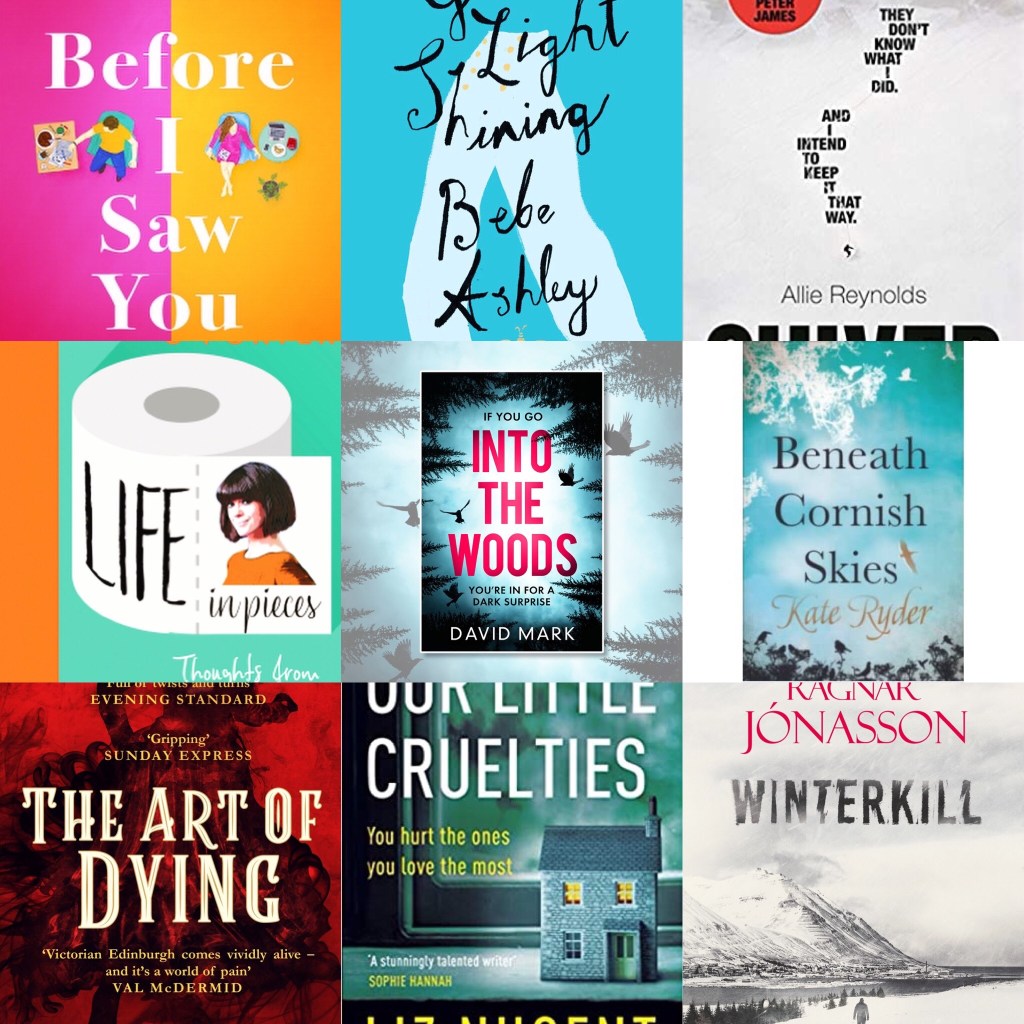
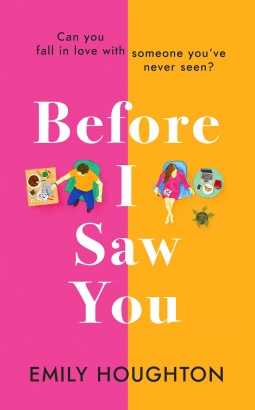
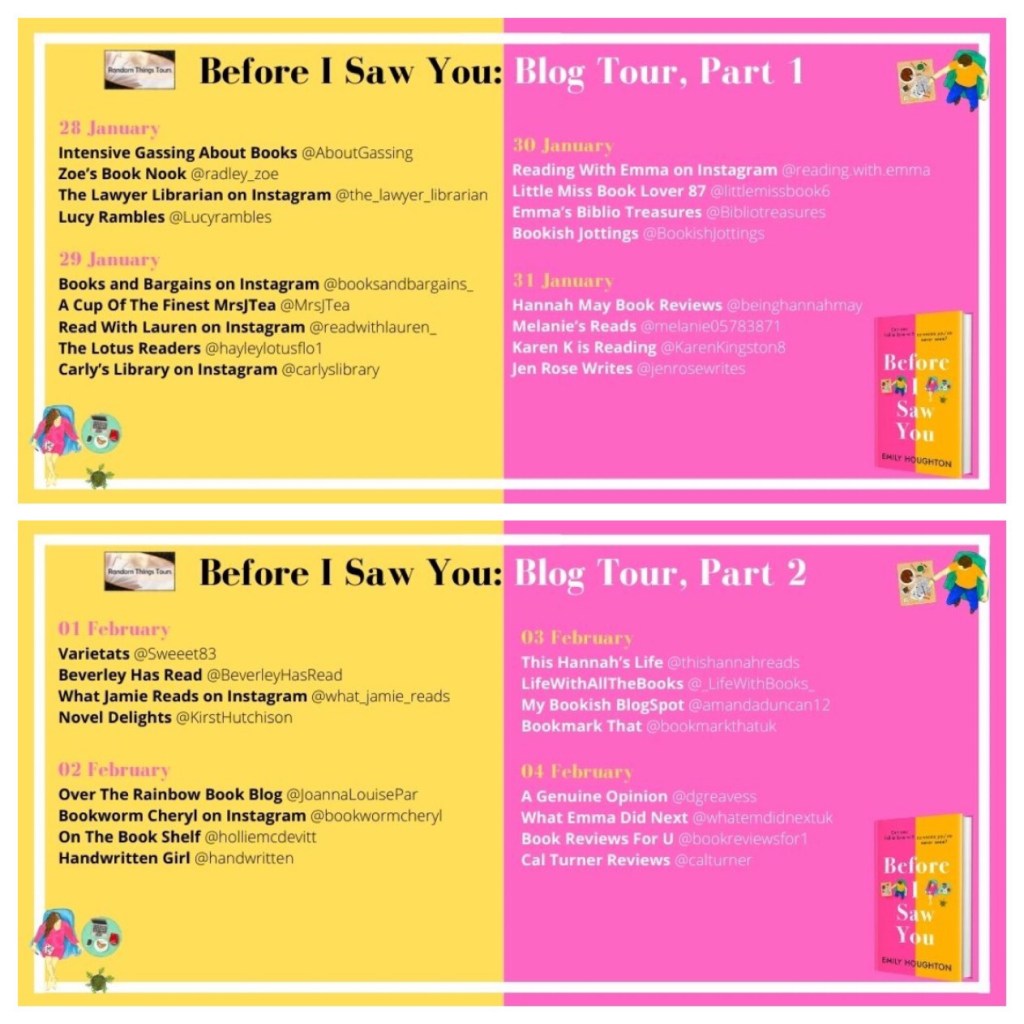
Before I Saw You by Emily Houghton.

CAN YOU FALL IN LOVE WITH SOMEONE YOU’VE NEVER SEEN?

Alice and Alfie are strangers. But they sleep next to each other every night.

Alfie Mack has been in hospital for months recovering from an accident. A new face on the ward is about as exciting as life gets for him right now, so when someone moves into the bed next to him he’s eager to make friends. But it quickly becomes clear that seeing his neighbour’s face won’t happen any time soon.

Alice Gunnersley has been badly burned and can’t even look at herself yet, let alone allow anyone else to see her. She keeps the curtain around her bed firmly closed, but it doesn’t stop Alfie trying to get to know her. And gradually, as he slowly brings Alice out of her shell, might there even be potential for more?

This book has some wonderful characters that it’s very easy to fall in love with. Alfie, who is recovering from an amputation is delighted to be getting a new neighbour in his hospital bay. The bay has a happy, friendly, atmosphere with a close knit group of patients convalescing over a long stay in the unit. On Sundays Alfie’s mum and dad come in with a Sunday dinner for everyone! However, a happy and chatty bay is exactly what Alice dreads. She doesn’t want to socialise or have a natter with other people. They’d have to see her and she doesn’t want that. In fact the ward sister, Nurse Angles, has to make a promise in order to get her moved into the ward. When she has to go down to physiotherapy, everyone else in the ward will have their curtains closed. Not everyone is happy about it, but they all promise Nurse Angles because she’s so hard to refuse. Alfie is undeterred though, he has always been a cheerful little soul and makes it his mission to get Alice talking.

The thing I enjoyed most about this was that the author didn’t just concentrate on the physical damage done by their accidents. She makes it clear that the emotional scars are potentially even more damaging and more difficult to manage because they can’t be seen. Alfie wakes up screaming some nights and sweating, hoping he hasn’t woken the whole ward. For him there’s the addition of survivor’s guilt, because he wasn’t the only one in the accident where he lost his leg. She describes his journey thus far to make it clear that it isn’t as easy as strapping on a prosthetic and becoming a Paralympian! That meant a lot to me as someone with a disability who works as a counsellor with people who have a chronic illness or disability. Many people don’t realise the healing that has to happen, that getting used to a prosthetic means chafing to the skin, possible skin breakdown, and pain in the leg, but also the rest of the body as it gets used to moving in a different way. Mentally, he will have to get used to a change in how others see him, how he sees himself and his masculinity. We all have an image of what we look like in our head. When you acquire a disability, as opposed to being born with one, that self-image remains the same until you catch sight of yourself in a mirror or window. That’s a pivotal moment, because the new reality of how you look can be a shock. Alfie has had to let go of that image, and is building up a new sense of self that includes his disability.

Alice has to take the same psychological journey, arguably more difficult because she’s a woman. Once Alfie gets used to his prosthetic, and improves his mobility, people may not realise he has a disability. Alice’s burns are on her face and hands. There’s nothing she can do to cover them up completely and this affects everything – not just dealing with the change herself but dealing with how others now see her. It will change how she feels as a woman, and she will worry about whether men will see her as desirable. We hear a lot of Alice’s inner monologue so we really do get the enormity if what has happened to her. I felt choked up for Alice. It’s a really big deal if Alfie can get her talking. There’s a point when he needs comfort and Alice gives him her hand under the curtain. This us Alice trusting him, her hands are damaged and she’s openly giving them to him, which shows an enormous amount of trust. She seems all alone in the world. She hasn’t even let her best friend know because she’s living so far away. Her mother eventually arrives though, and shows within seconds why Alice wouldn’t want her to visit. When Sarah does find out she arrives like a whirlwind of love and care for her best friend.

I’ve had long stays on hospital rehabilitation wards and I’ve never experienced one like this. There are some aspects of hospital life that would never happen on any of the rehab wards I’ve stayed on recently, such as the Sunday dinner. Although, one I stayed on in the late 1990s let my parents bring my dog to the day room for cuddles once a week. I did recognise Nurse Angles though – she seems formidable but really she cares deeply for her patients. I’ve come across the odd matron or ward sister who is like this – one particularly fierce German night nurse, during a long stay in 1995, used to bark at everyone and seem very strict, but would let my hospital friend Tony and me, stay up late to watch the rugby World Cup. She even brought us illicit toast and tea when it was quiet! I think the strength of this novel is in its characters. I enjoyed Alfie’s mum, who is a force of nature albeit a kind one. Alfie is like a big puppy, playful and clumsy but ultimately good and kind. Alice is more complicated and it’s interesting peeling away each layer like an onion. Her accident and subsequent injuries are transformative and I kept thinking how lucky she was to have ended up in a bed next to Alfie, who seems to spread happiness, despite the difficulties he faces physically and mentally. These characters kept me reading. They felt real to me. I also really appreciated the author’s obvious understanding of the psychology of acquired disability. Despite heavy subject matter the author managed to keep a light, easy feel to the novel and that’s a difficult thing to achieve. I found myself rooting for both of them and sorry when their story ended.

Meet The Author

Emily Houghton was a digital specialist, but is now a full-time creative writer. She originally comes from Essex but now lives in London. Emily is a trained yoga and spin teacher, completely obsessed with dogs and has dreamt of being an author ever since she could hold a pen.

Posted in Publisher Proof

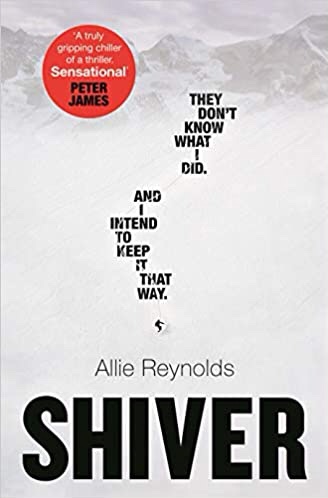
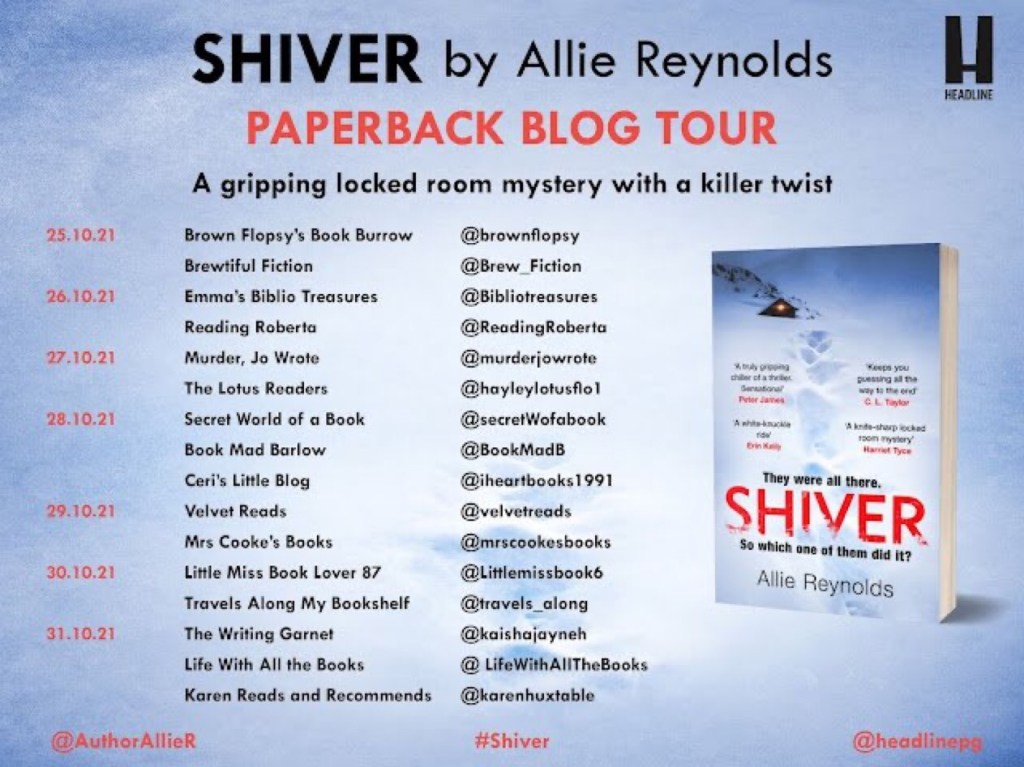
Shiver by Allie Reynolds.

It’s that time of year again. The time the glacier gives up bodies.

The ‘shiver’ in the title of this novel doesn’t just refer to the icy cold, French Alps where it’s set, but also to the uneasy feeling you get while reading it. The author creates an isolated and claustrophobic atmosphere almost immediately as the group arrive to a deserted ski chalet. There’s no one operating the cable car or to greet them as they enter, but there is a warm casserole pot in the kitchen – someone has cooked their dinner. From that evening, everything conspires to keep them there, including the worst weather they have experienced on the glacier. This is off season and the five are stuck together, once the closest friends, but keeping so many secrets from each other. The ‘icebreaker’ exercise waiting for them in the function room, ratchets up the tension by partially exposing these secrets – more than one of them slept with Heather, one of them knows what happened to Saskia and one of them killed her. The group goes from reunion chums to suspicious and paranoid immediately. Milla, our narrator, suspects Curtis as the instigator of the weekend, in a last ditch attempt to find out what happened to his little sister. Yet, there’s also a tiny part of her that thinks the worst – that this is Saskia, still alive and ready to wreak revenge.

In a second timeline Milla takes us back to the peak of her snowboarding career. Firstly, to the season where she met her friends for the first time, and realises she is very definitely the underdog. Milla isn’t from the sort of family who put their kids on skis as soon as they can walk. She’s from a humble background and has to work hard to afford to compete. She only has one board. Saskia is the competition, and she first visited this glacier at the age of three with her two snowboarding parents. She’s unmistakable on the course, her white blonde hair flying behind her as she practises tricks in the half pipe. Milla really needs to land a top three position, if she’s going to carry on competing. If you want sponsorships you have to be visible. The author develops their rivalry straight away, when Saskia invites Milla on a night out. Milla finds out how far Saskia is willing to go in order to win. In the club they join Odette – a French snowboarder – and some of the other athletes. Milla is surprised they’re drinking, but doesn’t want to be a killjoy. However, when she buys a round at the bar it’s really cheap. She’s confused, until Heather the barmaid tells her that only one of the drinks is alcohol. This nasty trick sets in motion a chain of revenge and counter attack, that continues until Saskia disappears.

This group have held on to their secrets and their tormentor seems to know how far they will have to be pushed to give them up. People grow more paranoid, suspecting allegiances and rehashing what happened in the past. Milla has found Curtis the most difficult one to let go of and she’s torn between her old feelings and suspecting him as the organiser of this strange reunion. She has to decide whether to trust him or not. Back then there was an immediate chemistry between them, but Milla was scared of it. He was always very close to his sister and she could never work out whether he was being protective of Saskia or the victims of her tricks and games. As Milla explains, athletes have lots of excess energy, and both Brent and Curtis make an offer to Milla, She can knock on the door, and either of them would be happy to have her as a bedfellow. Despite wanting Curtis more, she chooses to sleep with Brent, because she can’t afford the distraction of a full blown love affair. Now she wonders if Curtis still feels the same way about her as he used to, because now she’s close to him again, she knows her feelings haven’t changed.

I love how the chalet gives up small secrets to set the group on edge. Their phones disappear, items go missing from their bags, but strange things appear too, such as Saskia’s ski pass for the final season and a lock of ice blonde hair. The ice axe goes missing from the wall in the dining area and Milla notices that the eyes of a stag’s head mounted on the wall don’t match; it’s one of many cameras watching their every move. Curtis breaks down some of the locked doors determined to find a control room and hopefully get some clues about their culprit. The author skilfully controls what is revealed until you’re so determined to find out what’s going on you stay up reading till 3am! When it’s people that start to go missing, I realised that their tormentor is looking for the ultimate revenge.

I have to say this tale did keep me guessing, not just about who was responsible, but about the psyche of highly competitive people. There’s a level of narcissism and ruthlessness that’s perfect ground for a thriller like this. I didn’t like Saskia because she comes across as spoilt and amoral, unable to empathise with others or share the limelight – even with those she loves. However, she does leap off the page as a fascinating and ruthless young woman. I found myself wanting to know more about her, her upbringing and the environment that had made her so single minded and dangerous. There’s more than one surprise with this turbulent group and in two different timelines. The author has a skill for writing tense scenes that play on certain phobias. I had suspicions about everyone, even our narrator, who does turn out to have a few secrets of her own. The ‘prank’ that really freaked me out, was when Milla is buried alive. I actually found myself unable to catch a breath, because it is one of my worst fears. When the groups tormentor is finally revealed it was the last person I expected and it did seem a little bit improbable, but that doesn’t detract from the enjoyment of the novel. This is a taut, well-plotted thriller and a great debut for the author. I look forward to seeing what she writes next.

Meet The Author

Born and raised in Lincoln, England, Allie moved to Australia in 2004. She lives on the Gold Coast with her two young boys and a cat who thinks he’s a dog. Many years ago she competed at snowboard halfpipe. She spent five winters in the mountains of France, Switzerland, Austria and Canada. These days she sticks to surfing – water doesn’t hurt as much as ice when you fall on it. Her first ever job was a Saturday job in a bookstore, at age 14. She taught English for many years and became a full-time writer in 2018.

You can find her on:
http://www.twitter.com/AuthorAllieR
http://www.instagram.com/authorallier

Posted in Publisher Proof

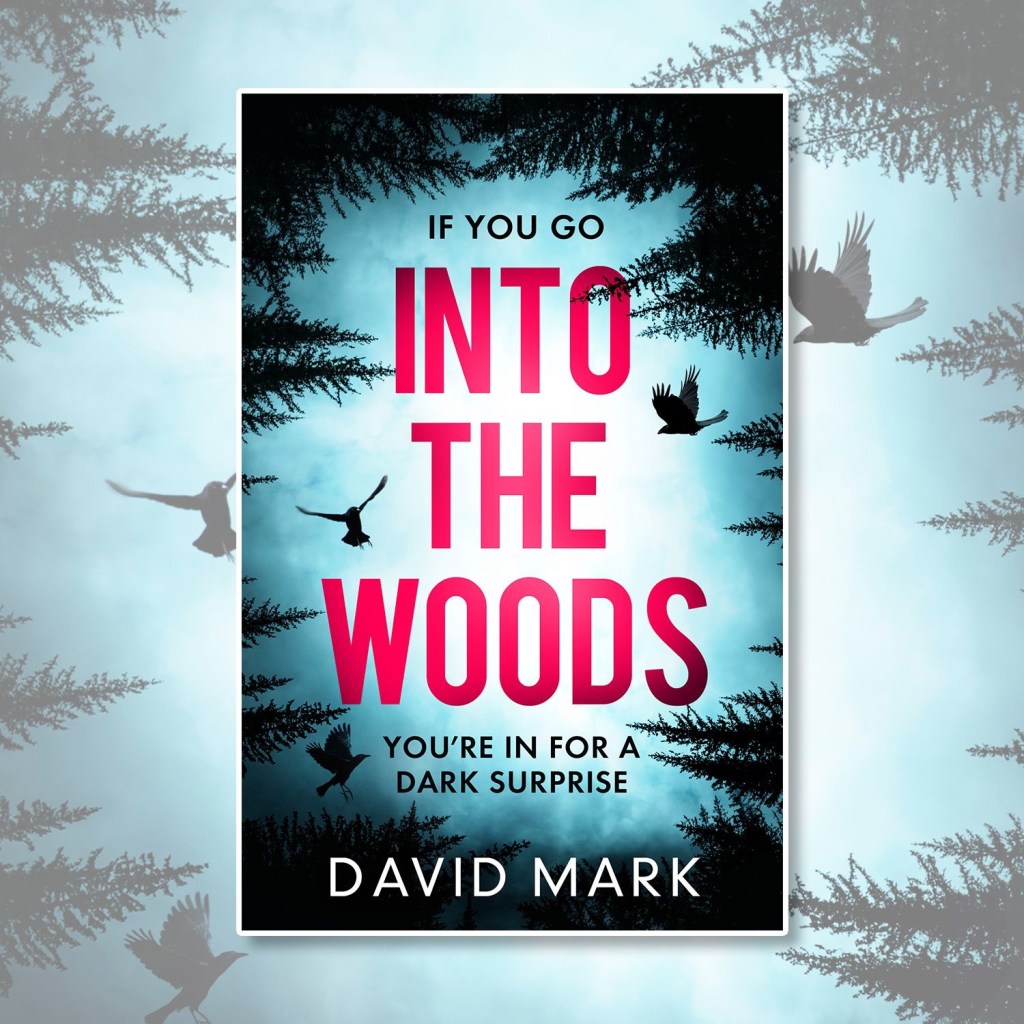
Into The Woods by David Marks.

The Wasdale Valley is the beautiful setting for this unusual crime novel from David Marks, the first in a trilogy set in the Lakes. It is unusual, mainly in its use of language and the mix of crime, social commentary and a touch of the supernatural. My first impression as I started to read was that it reminded me of Tana French’s Dublin Murder Squad novels. The opening is almost hallucinatory as a young girl comes to consciousness:

‘There had been a drink. A cold, brown soup slopped from an earthen bowl. It had plants in. Some wormy tuber had touched her lip as she lapped at the brew like a cat with a saucer. Memory again. Music. A guitar on a strap.’

I had an almost visceral reaction to this first passage, a feeling of disgust. The girl comes to realise her consciousness is inside this meat body described as a ‘pig-fat candle’. The sentences are stilted, only growing longer as she wakes more. It sets the reader on edge because it’s synaesthesic – she can taste and feel the heavy air, see her thoughts, and experiences her body through pain and unpleasant sensations. I had to read this opening a few times to fully understand what was happening, but the horror of the earthy face rushing towards her smelling of bad meat definitely stayed with me.

This is a story of a thirty year old mystery as three girls followed a stranger into the woods and only two returned. There were local whispers of drugs, cults and strange rituals but no one really knows what happened and the two who returned remembered nothing. Their memories are shattered into pieces and thy still suffer traumatic flashbacks and hallucinations. This is just the type of story that investigative journalist Rowan Blake needs to revive his career. He has retreated to the Lake District in order to write. Whatever he unearths in the woods will have stayed buried for thirty years, but when he chooses this mystery is he prepared for the evil that awaits him? Rowan is our narrator in the present day timeline and he starts his investigations by using his local contacts, his sister Serendipity and her daughter Snowdrop. All three girls were at the same private school, the Silver Birch Academy, and there are local stories about the school’s unorthodox teaching methods. The girls are rumoured to have followed a stranger into the woods to visit a Shaman, which could explain the strange hallucinatory drink and amnesia.

Our narrator in the past is Violet, explaining her experiences in such detail with layers and layers of disturbing description. Despite Rowan being our protagonist I did find myself waiting for Violet’s chapters. I was both disgusted and fascinated in equal measure and I felt compelled to keep reading to find out what happened. Violet isn’t the easiest person to empathise with; she’s an angry, tempestuous teenager with a tendency to bully others. The fact that she’s not in the present day narrative, due to being away travelling, is a clever choice. It concentrates the reader on her teenage self, but also reinforces the tension as the reader becomes even more determined to find out her fate. Violet has reportedly been trying to come to terms with her experience of late, whereas best friend Catherine is more reticent. I didn’t feel a bond with Rowan and he too has obvious faults. He’s quite selfish, and isn’t really grateful for the help of his sister, even though she’s bailed him out before. It’s a brave thing to have two narrators without any sympathetic qualities, because it could easily turn the reader off, but here it works. As Rowan uncovers more he starts to worry about Violet. Is she really travelling or has she gone missing again?

This is not the sort of thriller you bolt your way through in an afternoon. It needs a longer time, so you can actually savour the language and the horror of what has happened here. It’s complex and black as night. It’s a reading experience that bears a second or third glance; like viewing a large painting, at first we only see the main subject, but as we look closer there is so much more to take in. Here there are quirky secondary characters to enjoy, a wonderful sense of place and very ominous weather that foreshadows Rowan’s findings. It all adds to the conclusion that nothing good happened here.

If you go into the woods, you’re in for a dark surprise….

Meet The Author

David spent more than fifteen years as a journalist, including seven years as a crime reporter with the Yorkshire Post – walking the Hull streets that would later become the setting for the Detective Sergeant Aector McAvoy novels. His writing is heavily influenced by real life and have been universally praised for their originality, authenticity and heart. Industry bible Kirkus Reviews said that ‘to call David Mark’s novels police procedurals is like calling the Mona Lisa a pretty painting’. He has been championed by such industry luminaries as Val McDermid, Peter James, Mick Herron and Martina Cole. He has written eight novels in the McAvoy series: Dark Winter, Original Skin, Sorrow Bound, Taking Pity, Dead Pretty, Cruel Mercy, Scorched Earth and Cold Bones as well as two McAvoy novellas, A Bad Death and Fire of Lies, which are available as ebooks. His first historical thriller, The Zealot’s Bones, was a Sunday Times Book of the Year. With publishers Severn House, he has written the critically-acclaimed The Mausoleum, A Rush of Blood, Borrowed Time and Suspicious Minds.

Dark Winter was selected for the Harrogate New Blood panel (where he was Reader in Residence) and was a Richard & Judy pick and a Sunday Times bestseller. Dead Pretty was long-listed for the Crime Writers Association Gold Dagger in 2016, as was Cold Bones in 2019. David’s Radio 4 drama, A Marriage of Inconvenience, aired last year. His first novel was adapted for the stage and was twice a sell-out smash in Hull. He has also written for the stage and has contributed articles and reviews to several national and international publications. He is a regular performer at literary festivals and is a sought-after public speaker. He also teaches creative writing.