Blog Feed

Posted in Damp Pebbles Tour

A Mirror Murder by Helen Hollick.

Today, as part of the Damp Pebbles blog tour, I’m sharing an extract from A Mirror Murder by Helen Hollick.

CHAPTER ONE

Life After School

Murder, when I was a naïve sixteen-year-old, was very firmly in my uncle and guardian, DCI Toby Christopher’s domain, not mine. But two years after leaving school, in the summer of 1971, a brutal murder was to change my life. For a second time.

    It is not the amount of blood pooling over the black and white linoleum, nor its copper-tang smell that clings, these many years later, to my mind or occasionally haunts a restless dream. The other smells are also there – but I’ll not dwell on those for the sake of the victim’s dignity. It is the hollow emptiness of the house that I remember. That stilled quietness, as if the place was suspended on pause, holding its breath – waiting. Waiting for the lonely coldness of death to be discovered, for the stunned silence to be disturbed by those who, by necessity, must intrude…

* * *

As a shy schoolgirl, I knew little of the world, my priority being to not make a fool of myself. Insecurities matter when you are an awkward teenager about to be let loose from the sanctimonious boredom of a girls’ school into the unknown of the grown-up world. My careers talk, in that final term of 1969, did little to boost my fragile confidence:

“What do you want to do when you leave school, January?” 

I had sat, staring blankly at the two prim schoolmistresses. No one except those in ‘authority’, or girls who didn’t like me (the feeling was mutual), called me ‘January’. To my family and friends I was Jan. Jan Christopher. I frequently cursed the day I was born because that was why I had been lumbered with such a stupid Christian name. My identical twin and I came several weeks too early, on the last day of January 1953, so we were named for the months we were conceived and born. I got January because I arrived first, my twin got June. I guess it could have been worse: hard to shorten February into a respectable-sounding nickname. 

June had died when we were three years old. I can only remember hearing incessant crying in a darkened room. She – we – had been ill. I don’t know what with, we never talked about it. I survived. She didn’t.

So, there I was, a gawky lass who hid behind her curtain of long, non-descript brown hair, trying my best not to be noticed by the girls who had confidence (the bullies), being asked by two teachers what I wanted to do with my life after I finally escaped the long, tortuous, horrid, lonely, hell years at school. (I’m paraphrasing.) I had no idea. My only ambition was to write. I was always writing, but real authors, I thought, were clever, intellectual people who went to university and got degrees and things. I had three minor exam credits: even obtaining those had been a miracle.

Reading was my other passion. Characters in books were more reliable than so-called friends who sashayed arm-in-arm with you around the playground one day, then stabbed you in the back the next. I preferred to retreat into fictional worlds. Even the ‘baddies’ of fiction were better friends than the spiteful two-faced trash of the ‘frilly-knicker brigade’.

As for that unhelpful careers talk: “I want to write,” I had mumbled to the two teachers.

“But you like reading, don’t you, January? I think a library is the best place for you.”

Which is why I found myself shelving books at the Branch Library in South Chingford, a north London suburb on the edge of Essex, where I was born and raised. And two years after leaving school I was still there, shelving books at the same library. (Although I had soon discovered not to be quite so quick about it.)

“Old Mrs Norris is in again, I see.” I said as I gave the empty book trolley a shove with my hip to roll it into its parking bay behind the counter. “I wonder what coupons she’ll cut from the paper today?”

Mrs Norris was a regular. She tottered in on the dot of a quarter past six every evening that we were open, a faded pink beret perched atop her grey hair, a red, string shopping bag always containing a small packet of McVitie’s digestive biscuits in her left hand, and an old black, plastic handbag, that was meant to look like leather, dangling from the crook of her right elbow. She looked about ninety, but from her library registration card, was only in her early seventies. She would heave her way through the wood and glass entrance door – a wretched thing on the inside of a small, square, lobby. Even us younger ones had a job to push that monster open and get through without it snapping at our heels as it swung back.

The old dear would smile at us, wave hello, and shuffle off to the carpeted reading area over in the upper left-hand corner of the single storey library. There, she would settle herself on one of the comfortable armchairs, nibble at her biscuits, (Caretaker Bert always moaned, because they left crumbs everywhere), and peruse the newspapers. She always left again at five minutes to eight, just before closing. The only thing different to when she had arrived, the packet of biscuits would be empty and all the supermarket discount food coupons would be neatly cut from the tabloid papers.

We knew that Mrs Norris was pilfering the coupons, but did it matter? She was obviously poor, and came into the library each evening to eat her biscuits in the warm, using our lighting and heating rather than her own. 

Approaching closing time was often a strain, depending on how busy we were. Inevitably, someone rushed in during the last ten minutes, determined to choose the right book to read, and taking ages about it. 

I glanced again at the clock. Was it moving? It didn’t look like it! 

Seven-forty. I heaved a few more returned books on to the trolley and looked up to see Mrs Norris leaving in a flustered hurry. How odd. She never left early. 

“Are you all right?” I called, but I don’t think she heard, because she merely muttered, “Oh dear, oh dear,” as she hauled her way through the equally as obnoxious ‘Out’ door. I noticed that she still had the packet of biscuits in her bag, along with the entire Daily Mirror newspaper, which annoyed me a little as it had an article about one of the ex-Beatles, which I’d wanted to read all day, but hadn’t found the chance.

It was Friday evening, looked like it was about to pour with rain, and I had a twenty-five-minute walk home, or a wait, equally as long, for the bus. But tomorrow was Saturday, my one-in-three weekends off. A whole two days to myself. 

Or so I thought.

A Mirror Murder © Helen Hollick

Helen Hollick.
Posted in Random Things Tours

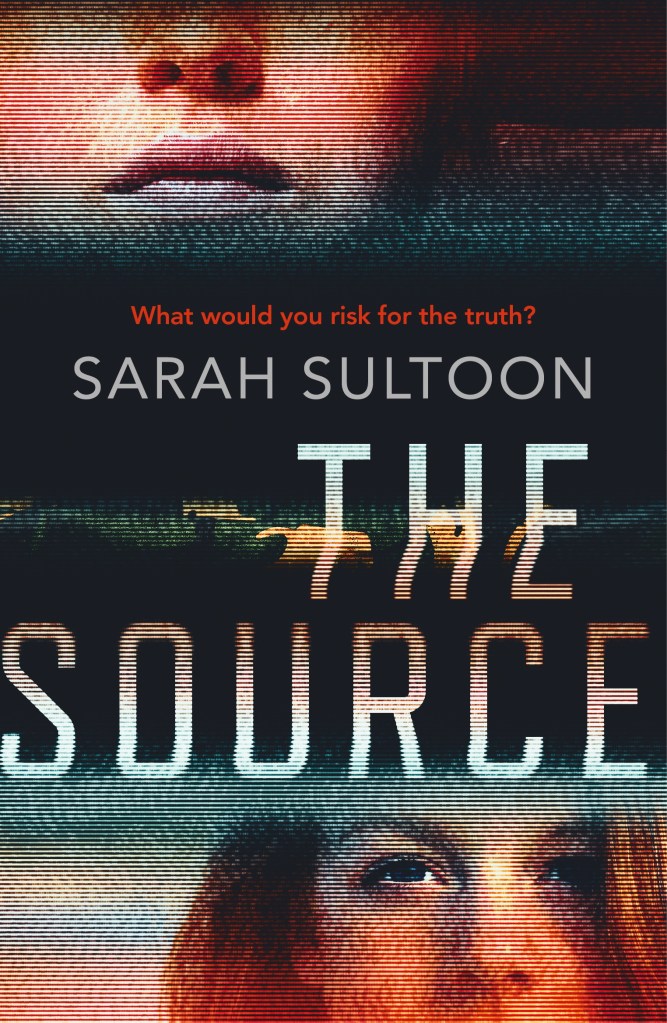
The Source by Sarah Sultoon.

This was one of those books. The ones that make me stay up till 3am because I simply have to see the story through. Sarah Sultoon’s novel takes us straight into the action, starting in 2006 with a very tense scene where a group of men are discussing the terms for the exchange of a trafficked girl. Once outside and in their van, there’s a huge sigh of relief from everyone – the man is a journalist and he is deep undercover trying to expose the horrifying trade in young girls for sexual exploitation. In my head as I continued reading, was the author’s harrowing description of the girl in question. She’s shown off as if at a market, stunned by the terrible experiences she’s gone through so far. A young girl called Marie is working with the team and she has found the sight of the girl deeply upsetting, but is committed to bringing these people to justice and sometimes that means confronting awful practices or seeming complicit in acts that make them sick to their stomach. This time though, they’re sure they’ve got them.

We’re then taken back to our second narrator, a 15 year old called Carly living in an Army town called Warchester. The barracks loom large in town, the pubs are full of squaddies and even the roads have lanes specifically for Army vehicles. The Army has loomed large in Carly’s life too. Her dad is dead, killed in action. She and her brother Jason have never met him, but Jason followed his dad into the family business and is now stationed at the barracks. Carly lives in army accommodation with her mum and half-sister Kayleigh, who is still a baby. They live off her Dad’s pension, but it doesn’t always go far when Mum drinks. Carly is used to coming home to a mum who’s insensible, slumped in front of the TV and Kayleigh screaming her lungs out because she hasn’t been changed or fed all day. Carly is just about holding it together so that social services aren’t on their backs, but it isn’t easy. That’s why she needs time to blow off steam and just be a 15 year old, so when her friend Rachel invites her to a party at the barracks she is tempted. Rachel has a contact, and a secret way in where they won’t be seen. However, I could sense something ominous in Rachel’s reassurances to Carly – to just go along with what they want to do. Her instructions could be construed as grooming and I was worried about exactly what type of party this was going to be.

Our narrative flits between the two different women. Marie has clawed her way up into journalism the hard way, but is a diligent junior member of the term. That is until some news comes through that derails their trafficking expose and seems to shock Marie to her core. A press conference is suddenly called about a previous investigation called Operation Andromeda and the commissioner herself will be making the announcement. Every media outlet needs to be down at New Scotland Yard now, and when the announcement comes the room falls silent. The commissioner recaps for the press that Andromeda was an investigation into the sexual exploitation of young girls by those in the Army, followed by prosecutions. What happened to Carly all those years ago, happened to others too. The commissioner talks about failed victims, up to and beyond the dates they originally investigated. Girls who were let down and soldiers left to commit more crimes on further generations of girls. The news team know that there were potentially two girls exploited and abused in Warchester: Girl A who gave evidence in the original court case, but also Baby Girl A, removed from her parent after the abuse and taken into the care system. Both were given new identities.

This is a complex story in terms of who knew what was happening, who is part of the cover up and who is working on the inside to expose what happened. Although it adds to the tension and rapid pace of the novel it isn’t what grabbed hold of me. It was the human stories that really moved me and its easy in a case this big and a conspiracy so complex to forget what has happened to the individuals involved. By including Carly’s narrative we can see how this happened on a human level. In a town where kids are brought up to revere the army and its men, with few other opportunities and insidious grooming technique at play, it was easy. Rachel is the girl on the inside, recruiting her friends just as she was once recruited – this type of abuse is generational. She coaches Carly in what to do, how to please and slowly ratchets up the pressure for her to do more extreme things until it becomes Carly’s normal too. Generations of Warchester men have joined up and done their service. She’s doing what generations of Warchester girls have done, they do their service too. Yet, because Rachel is over 16 when the original investigation happens she could be tried as an adult for grooming the younger girls, despite having also been groomed into this behaviour when she was a child. The author shows us what happens when abuse is institutional, when safeguarding fails and a community is complicit. It’s a very hard read in parts – the neglect as upsetting as the sexual abuse – but it should be hard and people should be shocked by it. I felt the author had done her research and depicted the psychological effects of abuse thoroughly, showing how they persist into adulthood. She showed the effect of being let down, by family, friends, community and the agencies that are meant to help. However, Carly shows us how one person’s persistence and courage can force justice, of a kind. I love that this author was brave enough to write this novel and that she found a publishing house to share her vision.

Meet The Author

Sarah Sultoon is a journalist and writer, whose work as an international news executive at CNN has taken her all over the world, from the seats of power in both Westminster and Washington to the frontlines of Iraq and Afghanistan. She has extensive experience in conflict zones, winning three Peabody awards for her work on the war in Syria, an Emmy for her contribution to the coverage of Europe’s migrant crisis in 2015, and a number of Royal Television Society gongs. As passionate about fiction as nonfiction, she recently completed a Masters of Studies in Creative Writing at the University of Cambridge, adding to an undergraduate language degree in French and Spanish, and Masters of Philosophy in History, Film and Television. When not reading or writing she can usually be found somewhere outside, either running, swimming or throwing a ball for her three children and dog while she imagines what might happen if…..

Posted in Throwback Thursday

Throwback Thursday! The Miniaturist and Meeting Jessie Burton.


Me and Jessie Burton! I never imagined I would meet the author of a book I picked up at my local indie bookshop Lindum Books. They run regular evenings with authors at The Collection in the city of Lincoln – I can’t wait to attend them again in the future. This was a great evening listening to Jessie Burton talk about her exciting debut novel The Miniaturist. Admittedly the book was displayed well, but I picked it up because it looked so intriguing. There was an element of mystery as well as a historical setting, plus a cover with a vintage bird cage and since I have a bird cage tattoo I am attracted to them all the time. I had read the book before the evening and loved it, so I was very eager to hear about how it was written and as a very amateur writer I am always interested in a writer’s inspiration and the writing process.

Jessie’s ability to tell stories means she is immediately engaging and natural with an audience. In her potted biography we learned she had a drama background and that definitely came across in her reading of the novel and during a humorous and lovely question and answer session. Jessie’s inspiration was a beautiful cabinet house in The Riijksmuseum, Amsterdam belonging to Petronella Oortman. The house is made up of 9 rooms that are so ornate and richly furnished that it cost as much as a real house. This fact and the sheer beauty of the piece piqued Jessie’s interest so much that she built her novel around it. Spending only ten days in Amsterdam but doing plenty of reading and researching, writing started using the name of Petronella Oortman but reimagining her as a new young wife entering Amsterdam for the first time. Nella needs to make a good marriage to support her family and marries business man Johannes Brandt who owns an incredible house in the wealthiest district of Amsterdam. However, when Nella arrives she is greeted by an open door and Johannes Brandt’s sharp tongued sister and housekeeper, Marin. Johannes buys Nella a cabinet house, an exact replica of the grand house they live in and its appearance in the novel is based on the one in the Riijksmuseum. Jessie did a reading of an early chapter entitled The Gift where Nella, disturbed by the fact she rarely sees Johannes in the day or at night, explores the house and starts to ask questions of Marin. It is a chapter where we see the beginning of an interesting tension between the two very different women and as Nella explores the house we start to see a major theme of the novel developing too; the conflict between interior and exterior worlds.


The questions began with one about research and how Jessie had gained her expertise in 17th Century Dutch culture. The audience also wanted to know how long the research process had been before she started writing. Jessie did most of her research the old fashioned way, by reading and writing in a piecemeal way (This amateur was pleased to know that writing while researching is ok). She shone some light into the publishing process too, it’s not as simple as getting an agent and then getting a publishing deal. There were 17 edits and 3 different drafts of the whole novel during the process and several different endings including one where every character had a happy outcome that was vetoed by her friends. One of the terms she used was to ‘write out’ something I was very interested in as a writing therapist where I am constantly using exercises to write out emotions and past experiences. She was referring to it as her writing process of working things out as she went along; there was no single moment where she sat down to write and it was all worked out with plot, characters and ending.

Petronella Oortman’s cabinet house.


I learned an enormous amount about the culture the novel was set in and there were some interesting parallels with Lincolnshire. Jessie felt that the people of Amsterdam were in the strange position of having built their own land by draining the area using canals and dykes. This was very pertinent to me because my ancestors on my father’s side were Dutch and came over to implement the same system of land drainage here in Lincolnshire. Jessie talked about the tension between the immense wealth of the city and the people’s Calvinist principles as well as the interesting roles of women in the city who often married later than their European counterparts and worked in business with their husbands. She was also interested in their liberality in that area but their barbarity in others, such as the practice of drowning homosexuals with a millstone round their necks. The African character, Otto, was discussed in his historical context; apparently wealthy merchant’s coats of arms were decorated with black faces as well as buildings in Amsterdam -probably a nod towards the city’s involvement with the slave trade. Otto would never have received the magnanimity he enjoys in the Brandt household anywhere outside. One of the most interesting ideas to me was the exploration of interior and exterior decor and architecture. The grand house has rooms that are lavishly decorated, but they are mainly to the front of the house where they can be seen from the street or where they are seen by visitors. Similarly, Nella’s cabinet house is a condensed version of the home but only contains the best rooms and it takes the miniaturist’s pieces to highlight the similar difference between what the character’s show and what remains hidden. The revelations of these character’s private rooms and their private lives is what makes the novel so compelling.


I still can’t recommend this novel enough. It combines intelligent research and just the type of relationship tensions, secrets and surprises to keep you reading. There will be a certain character that will grab you and Jessie admitted to having a soft spot for Marin who comes across as abrupt and harsh, but does have incredible depths beneath the icy exterior. The miniaturist of the title is a shadowy figure who has more insight into the characters than anyone else but only ever appears in glimpses despite Nella’s efforts to find her. This was intentional and although Jessie was asked whether she was planning to write a sequel there are none at present. Jessie is writing a second novel and is finding that a completely different experience because she has less time and is under more scrutiny since The Miniaturist ended up in an 11 publisher auction and there are rumours of film rights being obtained. The new novel is provisionally titled Belonging and is set across two times; the Spanish Civil War and 1960s London. Even now, years later, I am intrigued by the mystical and spiritual character of the miniaturist who knows all but cannot be seen, and has an ending that’s very much unfinished.

Published by Picador 3rd July 2014.

I have remained a huge fan of Jesse and loved the BBC adaptation of The Miniaturist in 2017. I have also built up a signed collection of her novels The Muse and The Confession and of the children’s book, The Restless Girls. Her novels have been translated into 38 languages, and she is a regular essay writer for newspapers and magazines. The Miniaturist ended up being a Sunday Times number 1 bestseller in both hardback and paperback, and a New York Times bestseller. It sold over a million copies in its first year of publication, and was awarded the Waterstones Book of the Year, and Book of the Year at the National Book Awards. The Muse was also a Sunday Times number 1 bestseller in both hardback and paperback, and has sold more than 500,000 copies. The Confession is Jessie’s third novel, and became an immediate bestseller too.

Visit her website at https://www.jessieburton.com, and follow her on Instagram at https://www.instagram.com/jessieburton

Posted in Netgalley

The Memory by Judith Barrow.

A common phrase I use in therapy is that ‘no two children have the same parent’ and that phrase kept popping in my head during this novel. This is said because of different circumstances into which each sibling is born. Parents can: be more anxious with a first child, than with younger siblings; or react to a practical change such as a child being ill; or experience post-natal depression; might be going back to work with one child, then stay home with another; be responding to a life event such as a death in the wider family; have different financial circumstances with each child. All of these can change the amount of time, patience, ability to bond that the parent has and affect the relationship between parent and child, as well as the child’s personality going forward.

In this novel we follow dual timelines as Judith Barrow lets the story of a mother/daughter relationship slowly play out. We uncover a singular moment in time that shapes the whole family, especially daughter Irene. We begin in the early 2000s when Irene is caring for her mother who is dying. She is going through all those emotions familiar to the caring role; she’s exhausted and veers between feeling it’s the right thing to do and a deep resentment, that we sense has a root way back in the past. Irene is experiencing a feeling she’s had before, a feeling that her mother has possibly experienced too. The contradictory feeling of hating someone, whilst also loving them fiercely. We go back to 1963 and the birth of Irene’s baby sister Rose. Rose had Down’s Syndrome, and her birth signalled massive changes to Irene’s life, not just in 1963 but for many years to come. As her parent’s fragile marriage truly begins to fall apart, Irene has to turn to her grandmother for support in coping with the dysfunction at home. She feels compelled to protect her little sister from the worst of it and feels an intense love for Rose. Yet, she’s also missing out. Her home life and responsibilities aren’t like other girls of her age and she becomes isolated but for Sam, her friend who eventually becomes her husband. When her father leaves, she is effectively separate from him and despite his weakness, she loves him very much. Her mother is eaten up by resentment and the cares of bringing up two children alone. Then, just as Irene could be making choices about what to do with her life and preparing for her future, her beloved grandmother becomes ill. So, everything that Irene could have dreamed for her life is sacrificed for the care of her family, This made me so angry and I felt deeply for Irene who never gets to fulfil her dreams or shape her own future. Essentially, her own life is sacrificed for the needs of her family.

When our two timelines meet we can see a full picture of what impact Rose’s life and death has had on this family, and particularly her older sister. Rose, Irene and their mother are trapped in a constant whirl of love, care and resentment. Still in the childhood home she can’t leave because she feels her sister’s memory there. At the centre of these feelings is a specific event, but one she doesn’t fully understand because she was a child. The only thing she can do is stay close to the places of her childhood and of her little sister. She’s haunted, but only because she can’t let Rose go. As our narrator, Irene is beautifully constructed – from the sparse and minimal understanding she has of the adult world at eight years old, all the way to a grown woman who doesn’t know who she is without someone to care for. Anyone who has cared for someone long term knows how much it takes from you physically, but also emotionally. You are stripped of your identity until your only reason for being alive is to keep someone else alive. Then, what comes after? How does the carer get themselves back?

It’s not that Irene is without love. No, there has been a lot of love in her life from the love between her and her husband Sam. Her love for her grandmother. Her fiercely protective love for Rose. Will she finally be able to navigate this difficult path and unearth that memory she’s never fully understood? Then, if she does find the truth, will she able to live with its consequences? This is a brilliant study of one woman’s psyche and shows how ordinary lives are often extraordinary.

Meet The Author

Judith Barrow, is originally from Saddleworth, a group of villages on the edge of the Pennines, but has lived in Pembrokeshire, Wales, for over forty years.


She has an MA in Creative Writing with the University of Wales Trinity St David’s College, Carmarthen. BA (Hons) in Literature with the Open University, a Diploma in Drama from Swansea University. She is a Creative Writing tutor for Pembrokeshire County Council and holds private one to one workshops on all genres.

Her next book, The Heart Stone, is due to be published by https://www.honno.co.uk/ in February 2021.

Posted in Netgalley

The Butterfly House by Katrine Engberg

In the coronary care unit at one of Copenhagen’s leading medical centres, a nurse fills a syringe with an overdose of heart medication and stealthily enters the room of an older male patient.

Six days earlier, a paperboy on his route in the centre of the city stumbles upon a macabre find: the body of a dead woman, lying in a fountain, her arms marked with small incisions. Cause of death? Exsanguination – the draining of all the blood in her body. Clearly, this is no ordinary murder.

Jeppe Kørner, recovering from a painful divorce and in the throes of a new relationship, takes on the investigation. His partner, Anette Werner, now on leave after an unexpected pregnancy, is restless at home. While Jeppe leads the official search, Anette can’t stop herself from doing a little detective work as well. But operating on her own exposes her to dangers she can’t even begin to realise.

As the investigation ventures into dark and dangerous corners, it uncovers an ambition and greed festering beneath the surface of caregiving institutions, all leading back to the mysterious Butterfly House . . .

I hadn’t come across the first novel in this series, but was intrigued by this pair of detectives. They seemed to bring something different to the role and life of a detective. The murders in the novel are particularly disturbing given that they take place within a hospital – usually a place of healing. An elderly patient in the coronary unit is killed by a syringe drawn up with an overdose of his heart medication. Six days earlier, a boy on his paper round found a dead woman in a fountain in the town centre. She died due to exsanguination, blood letting from thousands of tiny cuts, and her final moments must have been excruciating. Are the two cases linked and will Detectives Korner and Werner be able to find the killer?

I loved that Werner was home on maternity leave, bored and itching to join in on the investigation. I think, very realistically, she’s struggling with feeling powerless and dealing with the fact her pregnancy was unplanned. She didn’t expect it and can’t stop herself doing some detective work from home. However the problem with snooping alone is that she’s exposed to dangers she wouldn’t normally have to consider. Will she put herself in in harms way? Her partner, Korner, is coping with the aftermath of a painful divorce and now a new relationship. Will his mind be on the job? Together, this investigation will lead them into a dark corner of public institutions – their equivalent in this country would be social services and the NHS. Corruption and exploitation within these institutions seems likely as they continue their investigations.

The characterisation is brilliant. I really connected with Werner. Her husband has adapted well to unexpected fatherhood and can’t really relate to her struggle. Werner is 44 and feels the body she’s been connected to all her life, doesn’t belong to her anymore. The baby cries endlessly and she feels complete indifference. Her head’s still at work and she feels exhausted. Intrigued by what’s happening in her absence, she has a police scanner and makes fake runs for nappies in order to keep up with the case. The strength of her partnership with Jeppe shows in how much he’s missing her presence in the investigation, even for the qualities that really irritated him usually. I warmed to him too as he struggles on with a partner he can’t connect with and who can’t keep up with him. These people felt so real to me and the authors description of their worlds is just as immersive. I could imagine myself in this city, in the autumn air that the author describes. I found the medical histories of the victims fascinating and became really involved with the mental health and psychiatric aspects. The pace of the narrative was just right, fast enough to keep me reading while providing enough detail to pull me into the case. Often with thrillers I can feel short changed or rushed into a conclusion, but here the twists felt real and the conclusion was satisfying. This novel had everything I enjoy about the Nordic Noir genre and I will be following this series with great interest.

Published 14th Jan 2021 by Hodder and Stoughton.

Meet The Author

A former dancer and choreographer with a background in television and theater, Katrine Engberg launched a groundbreaking career as a novelist with the publication of her fiction debut, The Tenant. She is now one of the most widely read and beloved crime authors in Denmark, and her work has been sold in over twenty-five countries. She lives with her family in Copenhagen.

Posted in Netgalley

People Like Us by Louise Fein.

I was deeply affected by this novel about the rise of the Nazi Party in 1930s Germany, told from the perspective of a young girl living in Leipzig. The story opens as a young Herta is rescued from drowning by her brother Karl’s friend, Walter. It’s a powerful opener and a metaphor for the coming years, as Herta is slowly drowned by the tidal wave of nationalism, and fascism that overwhelms her country and changes her life altogether. Fein was inspired to write the novel after researching her family’s Jewish roots and eventual flight to London. During her research, she started to wonder how a country and it’s people could go from being a reasonable and tolerant society, to committing such atrocities against their fellow human beings. So, to explore that idea, she decided to write her novel from the perspective of an ordinary German child, slowly becoming brainwashed by the evil ideology. It’s the childhood innocence of Herta that makes this book work so well and allows us to have empathy, despite her allegiances.

Herta’s father has recently taken control of the city newspaper and his reward is their beautiful new family home, their servants and improved status in Leipzig society. He came from humble beginnings to marry Herta’s elegant French mother, but is now quickly rising through the SS ranks. Her elder brother Karl is in the Hitler-Jugend and she really wants to do her bit to make for Vati and Mutti proud of her too. So she pledges her life to the Fuhrer, to serve him and his purpose, totally unaware of its evil extent. Fein slowly shows us his plans, and along with some of our characters we’re like the proverbial frog in tepid water. Without our luxury of hindsight, we too wouldn’t have recognised how much danger we were in, until it was far too late and we boiled to death. There are those characters who truly embrace Hitler’s philosophy and purpose like Herta’s Vati, and below that are various levels of denial, collaboration and fear. Even Vati, has a jumbled mix of motivations: feelings of inferiority from his background and in his marriage; relishing the status and power; a certain amount of brainwashing.

Hitler’s propaganda machine was in full swing within Germany, aided by the country’s financial struggle since the Great War. The Weimar Republic, the post WWI government, signed the Treaty of Versailles in 1919. The treaty stated that Germany would take responsibility for the war, relinquish parts of its territory and pay reparations to the Allies. These policies caused huge social and economic hardship, a situation that the Nazis blamed on Jewish people and communists. A myth was even started that blamed the Jews for the signing of the treaty. Called the ‘stab-in-the-back’ legend, this story blamed Jewish infiltrators in government for the difficulties the German people were facing, despite the fact that many German Jews had served faithfully in the war. Now, the German people were worn down by hardship and poverty and were looking for someone to blame. Hitler exploited these conditions to devastating effect and ordinary Germans were taken in by it. So, when Jewish neighbours and friends started being restricted or sent to work camps, only very rare, brave individuals stood up for them.

The scene when Herta first realises something is very wrong is at school, and her teachers call on Jewish children to stand up in assembly. The shock is seeing her brother’s childhood friend Walter, singled out for abuse and ridicule. Walter can’t be a Jew. He’s the Aryan ideal, blonde and blue-eyed. Besides which, when she was very small Walter saved her from drowning. He had been a constant presence at the house when they were younger. Now here he was being called terrible names and sneered at by their new teacher. Herta is terribly confused, she has been told that Jews look a certain way, and act in a different way to her, but she feels that she and Walter are both the same. Bravely, she runs after him when he is expelled from school and triggers a friendship of her own. A friendship that as she grows-up, develops into love. What possible future can this relationship have under Nazi rule? Then, as it becomes ever clearer that Hitler will not rest until Germany is cleared of Jews, both Herta and Walter will have to make sacrifices and the legacy of these decisions will last until they are both very old.

I don’t want to say any more for fear of ruining the story, but there were many points where I was moved to tears by the situation these childhood friends and young lovers, found themselves in. The displacement of families during WW2 was extensive and with no way of tracing each other, there would have been people who never saw each other again. I married into a Polish family, my husband died several years ago and my father and brother-in-law more recently. My mother-in-law got out of Warsaw as a little girl, escaping through the sewers. Her mother stayed. Her father ended up in America. The family never reunited fully, with Hana finding out her father had ended up in the Boston area of the USA. He had searched but never found either of them. He assumed they had died and later remarried, never knowing that his wife and child did survive and were now in England together. Luckily when Hana found her other family, she embraced them and they in turn remained close to their English family. I felt that the author had really done her background research, possibly with families like mine. I believed in her world and characters immediately.

The background of Leipzig felt homely and friendly, but then developed into this menacing place where you didn’t speak or even spat at the old couple across the street. The night where Herta looks for Walter, knowing that violent confrontations will be taking place in the Jewish quarter, is so frightening and made me feel physically sick. It’s where the threats and rhetoric become real and deadly. Herta is only ever truly free in nature, walking her dog on a Sunday morning and sometimes seeing Walter. It’s harder for someone to conceal anything themselves in open fields and usually Herta can walk freely, enjoying the air and the birdsong. This place represents normality whereas the city is madness, chaos and murder. The ending broke my heart, as we contemplate with Herta on what the world will be like to a new generation. Will it be peaceful with the effects of war far behind, or will the ripples of this hatred and violence be felt for several generations more? I was so moved by this and the epilogue. Some books stay with you for life and I think this will be one of mine.

Published by Head of Zeus 7th May 2020.

Posted in Throwback Thursday

Throwback Thursday! The Missing One by Lucy Atkins

When this book first came out, I raced through it over a couple of days, because I was dying to find out what happened back in the 1970s to Elena and Susannah. A terrifying and traumatic event links these two women until the present day and it can’t stay a secret for ever. In the present is Elena’s daughter Kali, who has just lost her mother to breast cancer – a mother she could never make sense of or bond with as she wanted. In the aftermath of Elena’s death, Kali is trying to make sense of this difficult relationship, when she finds a pile of postcards from a woman called Susannah in her mother’s belongings. Thinking she has found the clue to her mother’s past, Kali pursues this woman to find out about events leading up to her birth and hints of a family history that has resolutely stayed hidden. Driven forward by grief and the worry that her husband is having an affair, Kali takes her son Finn on an odyssey to find the mother she never really knew and herself. She has many theories about what she might find: maybe her father had an affair; maybe Susannah was his lover or her mother’s? Yet, what she finds is something she never suspected.

Set against the backdrop of wild North America and Canada, we learn about a woman’s quest to understand the Orca. Distressed by witnessing the killer whales at Seaworld in California while doing her PhD, a young Elena leaves everything to record killer whale pods in the ocean. The Seaworld orca gave birth to a calf that was so disorientated by his tiny tank he kept banging himself against the glass trying to navigate through echolocation. His desperate mother keeps pushing him away from the sides to protect him from damage, but in her efforts to protect she forgets to nurture and the calf dies because she has forgotten to feed him. Kali was similarly starved of nurturing by her mother. Is it because Elena was so intent instead on protecting her from this awful secret?


The novel is an incredible insight into relations between mothers and daughters. Kali’s sister Alice has a great relationship with her mother that seems easy, whereas Kali and Elena clash over everything. Kali sees that her mother finds her hard to nurture and believes it is her fault. It takes putting herself in danger to find out why and in finding out she also discovers that essential piece of the jigsaw that tells her who she is and grounds her in a history. The novel shows how when you become a mother it becomes more important than ever to know where you are from and how you belong. It also shows how the secrets of one generation have a huge impact on the next, even if the secret is kept with the best of intentions. The book cleverly shows the difference between generations since we have now moved into a world where we put our own lives on show for fun. In a world where counselling and therapy are becoming the norm it is no longer seen as acceptable to keep such huge secrets and we know as post-Freudians what effect those early years of parenting have on the adult we become.


Aside from the complex human relationships are the family ties within the Orca families. We see how there are resident pods and transient pods with different feeding habits and rules to abide by. It is also clear that parallels can be drawn between the whale relationships and the human ones. Elena is so moved by their mothering instincts and the possibilities to map their language and understand their emotions. She gives up everything to spend as much time with them as she possibly can even going to sleep on her floathouse with the sounds of whales drifting up from a microphone in the water. I learned so much about these incredible creatures without losing the majesty of them and the awe a human being feels when a huge tail rises up out of the water next to their boat.

The novel can be read in many different ways: as a dissection of family relationships, a thriller, a study of whales and a study of grief. Grief causes Elena to suffer with depression throughout her life, grief traumatises Susannah to the extent that she is unbalanced by the things she has witnessed and it is grief that compels Kali to jump on a plane to Vancouver with nothing but a few postcards and the internet to go on. I struggled to put the novel down because of the thriller element. Like a good crime novel, you desperately want to know the truth of who- dunnit. Yet it is those final chapters I like best, after everything is resolved and each character is living in the aftermath of exposed secrets and recovery from physical and mental injury. The novel could have ended there and I am glad that it went further, back into Elena’s past so that we can see her happy on her floathouse making coffee and then hearing those whales come to greet her. As a widow of eight years I found those final words of Elena’s deeply moving:


She would go back to that throughout her life, right to the very end. But the last time, when the world had shrunken to the contours of her skin and she leaned over the railings, it wasn’t the whales that she saw in the water. And so she jumped.

It made me very hopeful for whoever might greet me when my time comes.

Meet The Author

Lucy Atkins is an award-winning British author and journalist. Her most recent novel, Magpie Lane, is a literary thriller set in an Oxford college. Her other novels are The Night Visitor (which has been optioned for TV), The Missing One, and The Other Child. 

Lucy is a book critic for The Sunday Times and has written features for UK newspapers including The Guardian, The Telegraph, The Times, and many magazines. She was a Costa Novel Award judge in 2017, and teaches creative writing to Masters students at Oxford University. 

She is mother of three and has also written several non-fiction books including the Amazon #1 parenting guide, First Time Parent (Collins). She has lived in Philadelphia, Boston and Seattle and now lives in Oxford, UK. 

For news, events and offers see http://www.lucyatkins.com

Follow Lucy on Twitter @lucyatkins

Posted in Uncategorized

Backstories by Simon Van Der Velde.

These are people you know, but not as you know them. Peel back the mask and see. 

CAN YOU FIND THE FAMOUS PERSON HIDDEN IN EVERY STORY?

Today I’m bringing you something a little bit different – a preview of a book of short stories, not my usual genre. However, these stories are a little bit different because each one attempts to get behind the image of a famous face, someone we think we know, or do we?

Dreamers, singers, heroes and killers, they can dazzle with their beauty or their talent or their unmitigated evil, yet inside themselves, they are as frail and desperate as the rest of us. But can you see them? Can you unravel the truth?  

‘Oh, how I enjoyed these stories. A highly original and beautifully crafted collection that explodes into the reader’s consciousness like fireworks’ – Kate Horsley, award-winning author of The American Girl.

‘Tightly written, technically accomplished, light-footed, wryly ironic and genuinely affecting. Excellent stuff’ – Professor Graham Mort, Director of The Centre for Transcultural Writing and Research and winner of both the Bridport Prize and The Edge Hill Prize.

This book is dedicated to the victims of violent crime, the struggle against discrimination in all its forms and making the world a better place for our children. That is why 30% of all profits will be shared between Stop Hate UK, The North East Autism Society and Friends of the Earth.
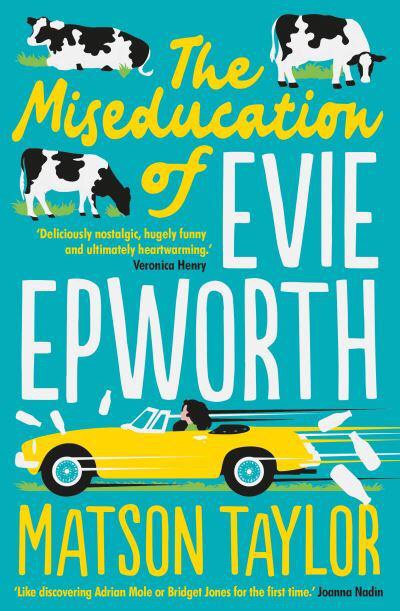
Backstories is published by Smoke & Mirrors Press.

MY BACKSTORIES QUEST 

“Whatever happened to, all of the heroes?”  The Stranglers 1977  

I was twelve years old when I first heard this song and although there was something in the feral tone that grabbed me, I didn’t really understand it. I do now. I get the angst and the loss and the emptiness, which is why, in Backstories, I aim to answer the question.

I’m not interested in simplistic tabloid truths. They clung on too long, drank too much, lost their looks and their charm and generally reminded us that we’re all getting older. That’s not what I want from my heroes.  

What I want is to find the spark, to dig down into their pain, their passions and their imperfections, and show you our heroes as they truly are.  

So join me on my quest. Let’s bypass the obvious, the tedious,and the dull. Brave the deeper, darker paths where the treasures can be found, and together we’ll uncover the fears and doubts that made our heroes what they were and perhaps catch a glimpse of ourselves along the way.

Whatever happened to all of the heroes?

They turned out to be human beings, in all their diverse glory

Look out for my review coming soon…

LINKS

http://bit.ly/Goodreads-Backstories

http://bit.ly/Amazon-Backstories

http://bit.ly/Amazon-Backstories

http://bit.ly/BookBub-Backstories

 AUDIBLE

https://adbl.co/3rw4boT

Posted in Random Things Tours

Bound by Vanda Symon.

When the official investigation into the murder of a respectable local businessman fails to add up, and personal problems start to play havoc with her state of mind, New Zealand’s favourite young detective Sam Shephard turns vigilante..

The New Zealand city of Dunedin is rocked when a wealthy and apparently respectable businessman is murdered in his luxurious home while his wife is bound and gagged, and forced to watch. But when Detective Sam Shephard and her team start investigating the case, they discover that the victim had links with some dubious characters.

The case seems cut and dried, but Sam has other ideas. Weighed down by her dad’s terminal cancer diagnosis, and by complications in her relationship with Paul, she needs a distraction, and launches her own investigation.

And when another murder throws the official case into chaos, it’s up to Sam to prove that the killer is someone no one could ever suspect.

I really enjoyed this crime novel with an interesting lead character, a case with so many twists and turns, and an array of background issues to get my teeth into. Our detective Sam Shephard is a strong woman, adept at her job and extremely dedicated too. She lives with a friend, but is in a relationship with Paul, another detective in the squad. When they get the job investigating the murder of reputable local businessman John Henderson, they soon find a link to a previous case. Two well-known criminals are implicated in the brutal shooting, both of them suspected in the murder of their fellow officer Reihana, and attempted murder of Smithy, who is still struggling physically despite being back at work. They need to find the link between regular business and the less ethically sound dealings that has brought the business into the criminal underworld. However, they also need to make sure that all of their dealings with the case, including forensics and other evidence collecting, are squeaky clean. Smithy, and to some extent Sam, will have to be seen to take a back seat on this one. Besides, once the link is found, between the gangsters and Henderson, it should be cut and dried, but is it? Why did they leave his wife Jill bound to a chair, alive? It is possible that someone else in Henderson’s life have reason to kill him?

Sam finds herself impressed by their teenage son, who has had the presence of mind to film the crime scene on his phone before freeing his mother. She creates a good rapport with him and manages to get important evidence about their potential suspects and their business dealings with his father. Sam works with a lot of integrity and will not accept the easy answer, until she’s uncovered everything. She would love to find their suspects guilty, but has her own idea about the motive for this crime that goes against what they know so far. This puts her in contention with the DI and he is not happy, they’ve been butting heads a lot and he’s not going to back her theory. Sam may have to go it alone here and do enough to prove her theory, without him.

I really enjoyed Symon’s mix of the professional and personal in Sam’s life, it felt like a good balance between the two. Sam is trying to keep her relationship with Paul on the down low, but circumstances may be taking that decision out of her control. There was also an interesting family dynamic, as Sam’s father is brought to the hospital and will be discharged to a hospice. These are possibly the final weeks of his life, but it’s clear that her unpleasant boss DI Johns will be less than sympathetic. Even sending her out of state on an errand. Her Mum seems less than impressed with her dedication to her job. There’s clearly history between Sam and her Mum, who accuses her of not being there for her Dad. Sam protests that she will, but her Mum rejects her promise. Sam manages not to snap back knowing that her Mum is angry and scared about her husband and the future, it how long will she able to stay silent. The moment when she sits quietly with her father and whispers to him the one secret she hasn’t told anyone, was so moving.

The pace of the novel is great – one of those where the short chapters create that ‘I can fit in one more chapter before bed’ feeling. Developments come at us thick and fast, both in the case and in her personal life. What I loved is Sam’s absolute dedication to her job, and determination to uphold New Zealand’s laws. Often when female characters have struggles in their personal life, things start to fall apart at work. Not so for Sam, she is good at separating her work life from home life, despite her mother’s digs about her loyalties. I felt I was getting a fully rounded character, not the usual stereotype about strong, working, women who have a messy love life, divorces, a drinking habit. Although we get personal with her, I came out of the novel admiring a good detective, with a full professional and personal life. The fact that this stood out to me is worrying and says a lot about how professional women are still portrayed in fiction. The story kept my attention because it was full of small surprises, such as Henderson’s assistant Astrid, whose previous CV was unexpected. This led me to expect bigger twists and I kept on reading. The author left us a few loose ends too, and I’m a sucker for the unresolved bits. Plus now I’m already hooked into the next book!

Meet The Author

Vanda Symon is a crime writer, TV presenter and radio host from Dunedin, New Zealand, and the chair of the Otago Southland branch of the New Zealand Society of Authors. The Sam Shephard series has climbed to number one on the New Zealand bestseller list, and also been shortlisted for the Ngaio Marsh Award for best crime novel. She currently lives in Dunedin, with her husband and two sons. –This text refers to an alternate kindle_edition edition.

Posted in Publisher Proof

The Existence of Amy by Lana Grace Riva

This book is a great insight into something a lot of readers will relate to, especially at the current time when we’re in the middle of the third lockdown of this pandemic. Mental health referrals are soaring, particularly for anxiety, OCD and depression, and although I’m not counselling at the moment I know there are clients who would really benefit from reading this book. It definitely helped me too. Some people expect counsellors to have their mental health in tip top condition, but often we’re ‘wounded healers’ who have experienced mental ill health. I’ve had bouts of depression and anxiety in the past, and so do others in my family, which lead me to a career in mental health. I encourage clients to read books like this one. There’s a great sense of solidarity in knowing you are not alone, gaining an insight into what someone else’s inner thoughts are like, and how they affect their day to day lives.

Amy is the narrator of the novel and despite functioning well on the surface, she has all three of the conditions I’ve already mentioned. Amy works full time, has a home to maintain and manages to keep up with friends. On the outside she is coping. Inside though, she is battling against a constant, exhausting, barrage of intrusive and dark thoughts. I thought the author did an incredible job of creating this relatable and loveable character, because it helps the reader empathise with her daily difficulties and journey moving forwards. It’s a very difficult balancing act to show the reader how it feels to be in Amy’s shoes while creating an easy and engaging read that never felt too heavy. The writer shows us how simply daily living, like going on a bus journey. Amy has to somehow negotiate paying, balancing while the bus is moving, and getting the bus to stop while all the time her brain is screaming ‘Don’t touch that handrail’ or ‘don’t press the button’. Then the hardest part of all is keeping a serene, swan-like surface so that nobody around her notices anything different. Followed by the constant worry about whether people noticed or thought she was weird.

I felt Amy was in a position a lot of people with these mental health conditions face; she could identify her anxieties and concerns as ‘wrong thinking’ but she needed coping strategies for day to day. At lot of readers might identify this as a time when they were part way through therapy, or when facing a flare-up of their symptoms and needing to update or refresh their coping skills.

I found Amy very difficult to leave within the pages of the book when finished. She played on my mind for a few days as I thought about her struggle and what insights I’d gained from the novel. Therapists read case studies all the time, but it was impactful to experience Amy in the format of a novel. Clients bring to therapy their frame of reference. The therapist sees events through their eyes and accepts their account as their ‘lived experience’ without judgement. There are times when we might sense another version of events, and this is what the novel gave me. I felt more immersed in her life, could see how she functioned with family and friends, and in her work situation. The author stripped away all the medicalised jargon and the impersonal language of a case study and instead gave me a fully-fledged person to know inside and out. I did find myself running through how I would help and support Amy.

The novel emphasised something I’ve always thought vital for someone experiencing these conditions; the existence of a strong, support network. In fact, Amy hits her lowest point when her closest friend announces she’s moving overseas. When we’re feeling mentally unwell we don’t always recognise or feel able to accept offers of help. Being honest with friends and family about how we feel and allowing them to support and help us as we move on is so important I felt a lot of hope for Amy going forward, and for the clients I will be able to help more fully after reading her journey.

Meet The Author

Lana Grace Riva has written two books, one nonfiction the other fiction, both based on her experiences of mental health. Her first book ‘Happier Thinking’ is a short collection of tips and exercises to maintain a healthy mind. Her second book ‘The Existence Of Amy’ is a fictional story based on a very real depiction of mental illness. 

Website: https://lanagraceriva.com/
Instagram: @lanagraceriva
Twitter: @lanagraceriva

If you enjoyed this I would also recommend the memoir Pure by Rose Cartwright for an insight into Pure OCD.