Blog Feed

Posted in Publisher Proof

Diamonds at the Lost and Found by Sarah Aspinall.

This memoir sounded so intriguing and had such a great write up from other authors who I love, so I was very keen to read it. This is the story of a woman who didn’t live life by society’s rules. Even with a child in tow, she lived life on a knife edge in the hope of fulfilling the childhood belief she was destined for greater things than the poverty she was born into in 1930s Liverpool. My mum’s side of our family are from Liverpool and this was my grandmother’s era so I had a real sense of the sort of poverty the author’s mother might have experienced. As one of five in an Irish Catholic family with a father who was a miner, it can’t have been an easy life. I had thought my Great-Aunt Connie must have lived an interesting life having become pregnant as a teenager, yet managing to keep her daughter and bring her up as single mum. It would have been brave of my great-grandfather and ‘Mother’ (as she was known) to accept the stigma from neighbours and their church community. Connie had earrings that looked like mint imperials and was incredibly glamorous, always ready with a laugh or a joke and always had an admiring gentleman in tow, right up into her seventies. I thought she was fabulous. However, this author’s mother was in another league altogether and I loved hearing these incredible and mysterious escapades.

The best word I can think of to describe Sarah Aspinall’s mother Audrey is incorrigible. Our opening chapter takes us to a Hong Kong hotel bar in 1965 when Sally (now Sarah) is eight years old. The opening conversation between mother and daughter really sets the tone for the type of woman Audrey is. A piano player is softly running through his repertoire of Frank Sinatra tunes. Sally knows them all, she’s heard them in every piano bar she’s been to, but something about this song makes her ask her mother:

‘Why is she a tramp? I ask.

‘ She wants to be free to do her own thing’ she says, ‘you know’, then she croons about having the wind in our hair and being without a care’.

This small conversation opens a window onto a life that is far from conventional and often, shocking, like what transpires next. Audrey calmly identifies a lone man at the bar to her little apprentice who lets her Mum know she’s going to the bar for a Coke. Sally then wedges herself onto a bar stool next to the man and calmly asks him if he will ‘look after’ her Mummy when she goes to bed. When she’s pointed out, Audrey pretends to be bemused, but in a heartbeat turns herself into a fascinating femme fatale. She apologises for her bothersome daughter and says she must get her settled in bed. The man is hooked – could they possibly have a nightcap? Back in their room, Sally watches her mother refresh her smokey eye make-up and step into a mist of perfume, then she departs. Sally knows she won’t be back till morning, so settles to read herself a book, wondering what scent she will wear when she is older. Books are Sally’s only education and she is fascinated with love, currently studying the love story in Somerset Maugham’s Of Human Bondage.

I didn’t want to ask my mother, as she didn’t like to talk about things in books, but […] why didn’t one of those men who my mother met ever love her, when she was so beautiful and could sing and dance and tell funny stories and make the room light up? It must have been a run of terrible luck.

The author is brilliant at occupying the mind of a child, who is by turns naïve and innocent, but also knowing and wise beyond her years. Often she can see when an ‘opportunity’ is going sour before her mother. She is definitely a willing accomplice, but is that down to her mother’s training or simply a family trait? The pair flee from one country (and prospect) to another, via luxury travel and the best hotels if lucky, or on a wing and a prayer if not. It is glamorous, exciting and full of adventure, as Sally mostly presents it. However, it must have been destabilising and possibly even scary at times, especially in her youngest years. For me there was something touching about this little girl, taking herself to bed in a strange hotel while her mother works on their chosen ‘mark’ down in the bar. Sally treads a very careful line; this is no misery memoir, as she makes clear in the afterword. She writes truthfully, but stops short of outright criticism of her mother. Nevertheless, I sensed loneliness in a little girl who only has adults to converse with and is reading books she manages to find left in hotels, some of which are way beyond her years and understanding. This is how she gets an education of sorts. Although the book really does celebrate the glamorous and irrepressible Audrey, there is a hint of anger and resentment too.

Even back in Southport, Audrey isn’t the settling down, cosy type of woman at first. She’s something of a local celebrity. What she doesn’t seem to recognise is the void opening up in her daughter – that need to know who you are and where you’re from – coming from the lack of knowledge around her father and his death. She doesn’t remember him, but has enough skill at reading people to know that just under the surface of her mother’s party personality, is a deep sadness and even perhaps, depression that surfaces from time to time. This keen sense of perception is what drives Sally forward, into completing the jigsaw puzzle that is her mother’s life, for herself and for the reader. I was deeply engaged at this point, eager to understand both of these incredible women. When, finally, Audrey does find some contentment in life and Sarah has the settled family she has always craved, the anger and resentment does start to surface. Audrey appears none the worse for her escapades, but Sarah has paid a heavy price including her lack of education and structure. Now she rebels against rules that are being imposed for the first time. Yet, this is such a generous book. Although she tells the story honestly, Aspinall never judges and shows incredible compassion towards her mother. Yes, this is a very unorthodox mother and daughter relationship, but she didn’t want her memoir to be a grenade lobbed backwards, detonating the past. She allows Audrey to shine out of the pages as the beautiful, dazzling and vivacious woman she was. Meanwhile she shows herself at peace with the past and her mother, by becoming a smart, capable woman with a beguiling set of storytelling skills.

Meet The Author

Sarah Aspinall is a producer and documentary maker. She has four children and lives with her partner in London and on the South coast.

Posted in Netgalley

Waiting for the Miracle by Anna McPartlin

I loved The Last Days of Rabbit Hayes and it’s sequel, both written by this talented author, so I looked forward to starting her new one as soon as NetGalley granted it. As usual for this author it was full of big emotive issues, mixed with the funniest dialogue, strong female characters and an interesting set up. In the narrative from 2010, our four characters meet at an infertility support group. There is a second narrative from 1976 where we meet Catherine, a young girl from Ireland who becomes pregnant as a teenager and is sent to one of the now infamous homes for young mothers, run by the Roman Catholic Church. Coming from a Catholic family myself and finding out I would find it hard to conceive at the age of 25, I was concerned the storyline might be too close to home. I remember being given a list of telephone numbers at the hospital, of women who volunteered for a charity supporting those who had miscarried. I only called one number. Next to the names on the list was a little warning that some of these women had gone on to have healthy pregnancies and there might be children in the house when I called. I knew my outcome would be different by this point. I didn’t have the mental or physical strength to keep getting pregnant, then lose the baby multiple times. I had decided after losing my fourth child that I couldn’t keep going. It was a very hard choice, but the right one for me. I can remember ringing that number for support, only to hear a baby crying in the background. I put the phone down and locked myself in the bathroom so I could grieve in peace. As I read though, I found a kinship with these characters and wished I’d had a group like this to belong to, at a time when my family and friends were supportive, but really didn’t know what it felt like.

Within the group there are women at different stages of this difficult journey. There are so many different reasons for infertility and the author covers most situations within the group: those pursuing IVF; some going through the adoption process; some using donor sperm to have a baby with their same sex partner; women with medical conditions like endometriosis. One has anti-phospho lipid syndrome (often named Hughes Syndrome after the doctor who discovered it) which is my diagnosis and means that it’s possible for patients to get pregnant, but difficult to sustain a pregnancy. Patients with Hughes have sticky blood, making it very difficult to for blood flow to go through the placenta and to the baby. Pregnancies usually fail within the first trimester, my latest miscarriage was at just 12 weeks with twins. As the character in the book relates to the others, often it isn’t detected until the first scan and then an operation must be performed to ‘to remove the products of conception’. As she points out, the medical language may create a distance for the doctor, but for the patient it feels very wrong to see the words ‘termination’ on the consent forms and even harder to sign away the baby you have wanted for so long. The interactions with the NHS were so true to life it felt like the author had popped inside my head and rifled around in my memories. However, there was comfort in knowing this was a shared experience and that other women had been through this feeling exactly the same as I did.

Four women with very different reasons for their fertility problems are drawn together in the group and slowly develop a very strong friendship. A new face in the group sessions seems to bring them together. Ronnie is challenging at first. She seems super confident, asks uncomfortable questions, and invites the others to the pub. She has a strange ability to pull uncomfortable truths and intimate details from those around her, but never seems to disclose much of herself. I found myself starting to question why she was there in the group. Yet as time went on I warmed to her, she seemed feisty and frequently made me smile. Caroline is just about to hit rock bottom in her fertility journey. They have spent a lot of money on medical bills and rounds of IVF, but have never conceived. After discussion with her husband some time ago, they are meant to be never going through it again. Yet Caroline can’t stop yearning for a baby of her own and in her desperation she’s driving her husband away. To make things worse her beloved dog has just died. In a very fragile state she starts to consider just one more round of fertility treatment but her husband isn’t on board. She has to face a very hard decision; is her desire to be a mother, stronger than her love for him? Natalie and her girlfriend have decided to have children using a donor who is very close to home – her girlfriend’s brother. Her girlfriend thinks that if the baby is a blood relative to her, she might be more invested in the idea of becoming parents. Janet’s husband may be having an affair with one of the receptionists from his work place. How can she find out what’s going on? The women are very much a team and support each other, even if one of them is doing something crazy.

Between the present day sections there is the story of a girl called Catherine, back in 1976. Catherine finds herself pregnant after her very first sexual experience with a boy from school. He claims to love her, but she is about to be let down very badly. Catherine’s family are poor, whereas her boyfriend’s family are wealthy and well known in the area. His father is a local magistrate. So when Catherine tells her religious parents what has happened they immediately summon the parish priest and before she knows it Catherine is sitting at the back of his back being shipped off to the nuns at a mother and baby home. We already know the terrible way young girls were treated in these places from films like The Magdalene Laundries and Philomena, but I must admit there were parts of Catherine’s story that genuinely made me cry. I couldn’t believe the casual brutality of these nuns, who are supposed to be women of God. They really made my blood boil. I found it was Catherine’s story that drove the book for me, her plight kept me reading and there were a couple of moments in her story where I was so involved I forgot everything going on around me! The heartbreak, betrayal and psychological abuse this girl goes through is horrendous and her ability to keep going and survive is incredible.

I think that this author enjoys writing about women’s issues and their friendships. She has an awareness, that although we love our partners in life, it is often our female friends that hold us up and keep us going through the worst times. I refer to my best friends as my non-sexual life partners! I had an inkling about the mystery at the centre of the story. What did happen to the baby Catherine had stolen from her at the mother and baby home? I read this in a day, because I was so drawn in by the story and these women who felt completely real to me. Anna McPartlin has such a storytelling skill. She has a way of mining your emotions until you’re sobbing over someone who isn’t even real. For those who’ve been through any of the experiences featured, it might be a difficult read in parts, but I promise you won’t feel let down or misrepresented by the way she depicts your experience. This was sad, funny, warm and poignant. A little bit like life.

Meet The Author.

From Anna’s Amazon Author Page.

Hello reader, 

I’m an Irish novelist and a TV scriptwriter. Currently with 7 fiction titles available to buy online and one children’s title under the name Bannie McPartlin. As of August 2019 I’ve just finished writing ‘Under The Big Blue Sky,’ the follow up to international best selling title ‘The Last Days of Rabbit Hayes.’ This title will be published by Bonnier Zaffer and will be available UK &I IRE and amazon Summer 2020. 

My previous short incarnation as a stand-up comedian left an indelible mark. I’m described by all who know me as a slave to the joke and my work focuses on humour and humanity in even the darkness situations.

So if you’d like to take a trip to the dark side and if you are a fan of big, bold characters check out my titles and I hope you enjoy.

PS

If you are not a fan of moderate to severe cursing, best to move on. Either way good luck to you. 

PPS

I dabble in twitter but often forget it’s there (@annamcpartlin). I’m better on Facebook but not brilliant Anna McPartlin and I really giving it a good old go on instagram #Trying (mcpartlin.anna) and my website is annamcpartlin.com.

Anna McP XXX

Posted in Netgalley

Two Women in Rome by Elizabeth Buchan.

Regular readers may remember how much I loved Elizabeth Buchan’s last novel The Museum of Broken Promises, in fact it was one of my top twenty of the year. So, I was very excited to be approved to read this via NetGalley. The story is split into two timelines and follows the lives of two British women who spend some time living in Rome. Lottie Archer arrives at the Eternal City as a new wife and with a new job as an archivist at the Archivo Espatriati. Her very first task is to archive the papers and journal of a woman called Nina Lawrence who worked as a gardener in Rome in the late 1970s. This was a difficult time for the country socially and politically, known as the ‘Years of Lead’ – a period which stretched from the 1960s to the 1980s and resulted in many incidents of far right and far left terrorism. Nina’s task was to redesign gardens that still lay devastated by WW2, something she was passionate about and very talented. Within her papers, is a large leather journal, rather worse for wear and full of drawings and pressed plants. However, Lottie also finds a painting of the Annunciation – the moment where the Virgin Mary is visited by the angel Gabriel to tell her she will be the mother of Jesus, the son of God. Lottie thinks it may be medieval, due to the colours used and the iconography. This piques her interest and she is disturbed to learn that Nina was murdered in Rome, and that very few people attended her funeral in the Protestant cemetery. Interestingly though, one mourner was a Catholic priest, which strokes Lottie as very unusual. She wants to find out more about the painting, but she also finds herself sucked into the mystery of what happened to Nina, who murdered her and why did she seem so friendless in this beautiful city?

I found the novel a little slow at first. I didn’t click with Lottie straight away, the detail and discussion of medieval art was quite dense (or I was) and the complexity of the political situation wasn’t always easy to follow. I also thought the intricacies and machinations of the Catholic Church might be a little difficult to penetrate for those who don’t know much about Catholicism – luckily I am one, with convent teaching under my belt, so this was not so difficult for me. However, I did like that the author didn’t simplify these areas of the book because in a way they added to the mystery of a city that has an incredibly complicated history. I was drawn in most by the story of Nina, just like Lottie is. I could understand why her story would get under your skin as someone interested in the past and trying to make sense of it. There is a kinship between the two women, even though they can never meet. Lottie is unsure of her position in Rome for several reasons. Firstly, when she arrives to work at the archive, her new role hasn’t quite been vacated. She moves into the apartment that her husband Tom shared with his previous partner Clare, and all around her are memories that don’t belong to her (including an ugly lamp, that should be kept because it works perfectly well, according to their formidable housekeeper). All of this is compounded by an underlying sense of abandonment, formed because she was left by her birth mother. There’s something lost about Nina that she latches onto and the more she finds out, the more she wonders whether Nina was more than a gardener?

Nina is a rather fascinating woman, who shares Lottie’s sense of rootlessness and lack of ties. There is definitely a deeply woven reason for Nina’s death, involving politics, security services, the church and a rather unwise, but beautiful love affair that unfolds in her journal. It is this aspect of her character that really humanises her for me, she becomes a real, living and breathing person and it is then even more tragic when the end comes. One thing both narratives capture beautifully is the city itself. Just like the narrative structure of the book, we get a sense of Rome as place where the past is very closely layered under the present. I thought about the tunnels and cave structures that run under the city’s streets, some still populated with WW2 vehicles, as an embodiment of this feeling. The present is full of tourists, rushing around on their itineraries getting a sense of the past and present city, but not necessarily the world underneath their feet. The author evokes the sights and smells beautifully: describing the less followed paths, the street fountains carved with dolphins and maidens, the detail of the plants so precious to Nina, the smells and sight of the deli counters full of salami, olives and beautifully ripe tomatoes. I found myself craving a trip to Italy all the time while reading!

However, she also shows its impenetrability to outsiders who know nothing of Catholicism, Roman etiquette or it’s slightly corrupt ways of getting business done. This is captured most beautifully in Lottie’s burgeoning relationship with their housekeeper. I also enjoyed her friendship with the book binder, who she asks to authenticate the painting she finds without understanding his significance. The background on medieval painting is vital here, not just to understand the symbolism within the traditional aspects, but to identify those that are far more transgressive and intensely personal. This is a complicated mystery/thriller, mixed with a travelogue of Rome and an intense love story. It asks questions about where we belong and whether our final destinations have been reached by choice, accident or a deep sense of duty to our family, our religion and our country. By the end I realised I’d become so enthralled, I was very sad to leave Rome behind.

Thank you to Atlantic Books for my digital copy via NetGalley.

Posted in Random Things Tours

This Is How We Are Human by Louise Beech.

I absolutely loved this incredible book about love, disability, sex and the secrets we keep from each other. Veronica and her son Sebastian live together in Hull. Veronica wants the best for her son and just like all parents, she wants him to grow up and have a full life. However, Veronica isn’t like other parents, because despite Sebastian being twenty years, six months and two days old, he’s struggling with the love and relationships part of his life. Seb is autistic and he is lonely. Seb loves swimming, his fish, fried eggs and Billy Ocean, he’d also love to have sex but no one will have sex with him. He’s already been in trouble after the girl next door convinced him to write an explicit letter to her underage sister. When their lives collide with Violetta, Veronica thinks she can see a way forward. She’s thought of paying someone before, but has stopped herself. Here though, is someone they’ve met before and who was natural with Seb. Veronica couldn’t have known she was leading a double life as a high class escort, in order to earn enough money to keep her seriously ill father at home. These three lives come together and change each other in unexpected ways.

There were scenes in this that made me laugh and some that made me cry. His need for sexual release is having a huge impact on his carefully ordered life. His swimming sessions have continued at the same time and day of the week, all the way from childhood, but his inability to see why his nakedness is different to the children’s has meant they must stop. When Veronica takes Seb to the sexual health clinic, because she’s desperate for advice, their lack of help and understanding infuriated me. The nurse seemed more concerned about whether Seb might hurt someone, or how Veronica’s thoughts about paying for it would be harming him. She even threatens to report her to social services. There’s no compassion or admission that they really don’t know what to do. It’s an issue I’ve thought about for a long time, having supported people with learning difficulties or autistic spectrum disorders in an advocacy role. Sadly, the figures for sexual violence against women with learning disabilities are terrifyingly high. While young people are often infantilised by parents who don’t want to accept their child is an adult. I read many years ago about an initiative in Holland very like our Direct Payments/Personal Budget system for care if you have a disability. However, social workers could add a component that would pay for the disabled person (physical disabilities) to hire a sex worker if they needed that for an sexual outlet. As Seb himself says:

‘People seem to get dead upset about it. But it’s just like paying for swimming lessons. You want to learn to do it and someone who knows how to will show you for an agreed fee’.

He sees it as a simple business transaction. Offsetting the worry, sadness and anger I felt in their behalf it’s Seb’s frankness that brings the humour. His mother greets him in the morning with a cheery ‘what do you want to do today?’ and his reply is ‘I want to have sex’. He goes on to explain that he might pay for sex:

‘If I was rich. But I’m not. I’ll just have to find someone who appreciates me before I die. I hope it’s this week. I’m feeling very sexual today.’

Seb is such a loveable and interesting character. He’s also handsome, so does draw attention from women when out and about, but Veronica knows that as soon as he speaks they will start to lose interest. She meets with Violetta and proposes her plan. However, there are real ethical concerns here and everyone is keeping secrets. Veronica isn’t planning on telling Seb the truth about his ‘sessions’ with Violetta, but she isn’t planning on telling Seb she’s been hired or why she needs the money. Seb has his own secrets and there is an ending to this that neither woman envisaged, showing a prejudice they didn’t know they had. They’ve discussed concerns that Seb may become attached to his tutor, but they didn’t imagine that she might become compromised in some way or that Seb might transfer his affections to someone new.

This is brave new ground in fiction. I have a physical disability, and I can count on one hand books that have a disabled character who openly discusses or explores their sexuality. This is almost society’s last taboo – the sexual disabled body is not to be looked at or mentioned. This is partly about the infantilisation of people with disabilities, they need care and are therefore vulnerable and untouchable. It’s partly to do with an innate reflex to reject what is different – often the fear of urine bags, colostomy bags, and other paraphernalia is so great, that the person becomes neutral to other people and they close their minds to the fact that this person is a sexual being. We saw this prejudice in action with the controversy around Marc Quinn’s statue of Alison Lapper. Not only was this a disabled woman who was naked, she was also pregnant. People rejected her body strongly, calling it ugly and disgusting. However, I think a large part of the furore was down to people being uncomfortable that Lapper’s pregnancy was a visual clue of a healthy sex life. Most of the same people would probably be uncomfortable with this book, but I was so excited to see the issue out in the open. We need to talk about it more. People with disabilities are having sex, often more adventurous and inventive sex, because they have to communicate more and find a way round their disability. It’s only by talking about it that we start to break down these prejudices and accept that a healthy sex life is a normal part of life for all adults able to consent. This was a difficult subject, handled with frankness, but also the greatest care and sensitivity. I’m so grateful that this talented writer turned her hand to this subject, writing characters that felt utterly real and incredibly relatable. It was funny, moving, and full of love, of every kind.

Meet The Author

Louise Beech is an exceptional literary talent, whose debut novel How To Be Brave was a Guardian Readers’ Choice for 2015. The follow-up, The Mountain in My Shoe was shortlisted for Not the Booker Prize. Both of her previous books Maria in the Moon and The Lion Tamer Who Lost were widely reviewed, critically acclaimed and number-one bestsellers on Kindle. The Lion Tamer Who Lost was shortlisted for the RNA Most Popular Romantic Novel Award in 2019. Her 2019 novel Call Me Star Girl won Best magazine Book of the Year, and was followed by I Am Dust.

Posted in Throwback Thursday

Throwback Thursday! The Hours by Michael Cunningham.

I came across The Hours in my university bookshop, as a companion piece to Virginia Woolf’s Mrs Dalloway. We were studying it for our Twentieth Century Literature module. I had read Woolf’s book very quickly, surprised by how modern it was in the way it was told. I did a disappointing essay based around the whether there were recognisable differences between Modernism and Postmodernism or whether it was simply a continuation of the same ideas. In hindsight I was arguing the wrong side, but the books stayed with me and I did enjoy the film adaptation of The Hours where Nicole Kidman won her Oscar playing Woolf. Arguably, it was Julianne Moore who really deserved an award, playing the second of Cunningham’s women who was sinking under the weight of motherhood and expectations in 1940’s Los Angeles. In the book I felt the same narrative was very strong, but I also enjoyed the Woolf sections – perhaps because she seemed to exist more strongly in the written word than in the flesh. The third narrative was a modern day meditation on Mrs Dalloway, as our character does the same things in one day that Woolf’s character does, but brought to a post- millennium New York City.

Our three women are Virginia Woolf, Laura Brown and Clarissa Vaughan – who is affectionately nicknamed Mrs Dalloway, by her terminally ill friend. The three timelines give us a glimpse into societal changes for women across the Twentieth Century. Yet it also shows us that there are experiences and struggles that are universal and echo down the centuries. For such a slim volume, the depth the author writes into his characters is extraordinary. I feel like I know these women, deep down to their soul. They’re going through some tough things here, with themes of illness, suicide and depression somehow explored sensitively despite the books brevity. Those who’ve read Mrs Dalloway know that it explores similar themes, despite feeling light and almost insubstantial. This is similar, as Clarissa goes out to buy flowers and Virginia takes tea with her sister Vita. These things are slight, but behind them is a turmoil of finding identity, moving beyond the tiny restricted role society expects, finding a way through tragedy and deep troughs of sadness. All three are searching for those elusive things we all want – love, happiness and a sense of who we truly are. Can we ever find these things or keep them? Are we doomed to live out our lives and others expect, rather than being our authentic selves. Most of us have to make do with one of these, or maybe all three for brief, elusive moments. How do we get through life without them? Or are we doomed to lurch desperately from one moment of happiness to another? When we are in those depths of depression or grief, how do we keep going and what would force us to take that final drastic action?

The answer is in those hours of the title. These are those happy, golden hours that we remember always. The memories we wish we could bottle and keep forever. These precious hours are the beauty of life and they illuminate all those dark moments. They are what keep us going, they hold within them the hope that things can change. That we will feel that way again and that they will warm our heart enough to get us through.

‘There’s just this consolation; an hour here or there where our lives seem, against all odds and expectations, to burst open and give us everything we ever imagined, though everyone but children (and perhaps even they) knows these hours will inevitably be followed by others, far darker and more difficult. Still, we cherish the city, the morning; we hope, more than anything for more.’

Posted in Random Things Tours

Heatstroke by Hazel Barkworth.

Do I really see what’s in her mind, Each time i think I’m close to knowing She keeps on growing, Slipping through my fingers all the time. ABBA

Years ago, when Mamma Mia first came out at the cinema, I went to see it with my Mum. When it came to the wedding day and Meryl Streep helping her daughter get ready for the ceremony, I saw so much emotion flow through my Mum’s face. I didn’t want to make a fuss, because I knew that if I touched her or asked if she was ok it would make things worse. It threw me a little bit because I couldn’t remember my mum ever being sentimental about me. I’d always been someone, she thought, could took care of herself. On our drive home I asked her what about the scene made her emotional, and she said it wasn’t the scene it was the song ‘Slipping Through My Fingers’. It talks about a mother who never seems able to fully capture a moment with her daughter, because she moves just out of reach all the time. Away to school, on to grammar school, to new friends, boyfriends, university and into a fully grown woman. I’m not sure I fully understood what she felt, I don’t have children, but more recently I became a stepmum to two teenage girls. I can see now, with my eldest, how girls grow so quick and out of your influence. How friends become the people who understand them, how they’re constantly making plans to get away, to visit other places, to move on, to study in another city. It’s as if the woman they’re becoming wipes away the trace of that little girl you once did everything for. This book is about that point between mother and daughter; Rachel sees her daughter Mia slipping through her fingers.

The backdrop to this mother -daughter story is a heatwave and a scandal. The nightmare begins when Mia’s school friend Lily disappears one night when she’s supposed to be at a sleep over with her friends. Mia socialises in a group of five girls, and in parallel Rachel keeps a What’s App group of their mothers aimed at keeping in touch with their daughter’s plans and keeping them safe. Lily disappears in the midst of the heatwave and the author very cleverly uses it to ratchet up the tension. At home and at Mia’s school, where Rachel works as a teacher, the heat is relentless. Rachel notices the girls in class lifting their long curtains of hair, and twisting it into a top knot just to feel some air on the back of their neck. Everyone is somehow more aware of each other’s bodies: the smells, the damp as you stand up from a sitting position, or on your back as you stop driving and get out of the car. Rachel’s also aware of so much young flesh on show. The girls and their golden legs, without a trace of hair. They’re perfection and by comparison Rachel is aware of her own flesh as less taut, just a millimetre too saggy at the jawline.

At night it’s impossible to sleep. In between the oppressive heat and worry about Lilly, there are short chapters detailing an illicit relationship. It feels obsessive and dangerous. There are no names used. Could it be Lily or is someone else keeping a secret? Then police find that Lily took something with her. A piece of lingerie belonging to her mother. That means she chose to go and for a moment everyone breathes, until they realise that means she didn’t go alone, but with a person is possibly older and might still mean her harm. Rachel asks Lily’s parents if she can look over her bedroom, just in case there is something the police have overlooked. Something that might only have meaning to those who know the girls well. She finds, on Lily’s notice board, some song lyrics and straight away she knows, she knows who Lily is with. The shock reverberates through her. She should tell the police straight away, but she can’t, she needs to process it first. To think it through before the police do find out, because that could bring even worse trouble. Yet, if it’s ever found out that she knew and kept it to herself, she could be in trouble with the police or even lose her job.

I enjoyed the author’s depiction of how Rachel copes with growing older, made especially difficult by her past and Mia’s growing beauty, Rachel has placed a photo outside the downstairs loo. It shows her at her peak of youth and beauty as the singer in a band. In skimpy clothes and torn tights I imagined her look like Courtney Love, the lead singer in Hole back in the 1990s. Rachel seems to be embarrassed when people recognise her, but it seems likely that people will see it, because of where it’s placed. It’s as if she wants to show she was once cool and beautiful. It’s an ego boost for her. There’s a disturbing scene later, when she takes Mia’s prom dress and tries it on. She’s pleased to be able to fit into it, but what seemed harmless turns into something else when Mia comes home. In another scene she has thoughts about Lily, and her first time sharing a living space with a man. Rachel imagines her worrying about how to do all the things that make her beautiful: the shaving, plucking and preening are no longer private and mysterious I l if these concerns were really for Lily or whether they were about her own beauty rituals. Would she ever be able to accept her ageing process and know she can be attractive at any age?

The mysterious man at the centre of Lily’s disappearance exerts a strange hold over the women involved with him. The author doesn’t ever give us his thoughts or feelings. We just get snippets of musical taste, but it’s clear he is either beguiling or emotionally/psychologically abusive. One disturbing scene shows him and his unnamed lover enter a freezing cold river in their underwear. He goes in first as if to give her the motivation and even though he says very little, it’s clear the female feels compelled to move in deeper and deeper until she feels the current trying to carry her away. I sensed that he wants her to feel powerless without him. I wasn’t surprised to learn who the anonymous lovers are in these sections, but the ending did surprise me. As everything comes to a head towards the Prom, Rachel gets a chance to see her daughter anew. Rachel learns so much about herself and how wrong she has been about any things. As she rushes to support her daughter it’s as if that stifling heat has been affecting her ability to think straight. As the rain starts to come down outside, leaving it’s own unique smell rising from the boiling pavements, Rachel’s eyes clear to see that within the beautiful woman in front of her, there is still a glimmer of the little girl inside again.

Meet The Author

HAZEL BARKWORTH grew up in Stirlingshire and North Yorkshire before studying English at Oxford. She then moved to London where she spent her days working as a cultural consultant, and her nights dancing in a pop band at glam rock clubs. Hazel is a graduate of both the Oxford University MSt in Creative Writing and the Curtis Brown Creative Novel-Writing course. She now works in Oxford, where she lives with her partner. HEATSTROKE is her first novel.

Why not check out these other book bloggers on the tour?

Posted in Monthly Wrap Up

Books Of The Month! May 2021

May has been a very busy blog month and had me almost at the edge of my reading limit. I found myself having to take breaks from reading because my eyes were so sore. However, I’ve still managed to read some fantastic novels. All the novelists above are new to me, except for one.

I had read Elizabeth’s MacNeal’s first novel The Doll Factory, so I knew I would love this one. The story of a young girl with birthmarks on her face and body, catches the eye of a passing showman. Jasper Jupiter has seen her dancing round the camp fire with her brother. She has the sort of wild abandon that’s rare in one so shy and reserved. He can see her now, in his circus, perhaps even performing before the Queen if she could be tempted away from mourning Prince Albert. The book flits between the circus and back to Jasper and his brother Toby’s time in the Crimea. We follow Nell as she leaves her village behind to become Queen of the Moon and Stars. However, could Jasper’s eagerness to expand and show in London be their undoing? There are some very interesting disability issues here, including a look at the ethical concerns around freak shows.

This novel was a great surprise. I read this for a blog tour and I really couldn’t stop reading, so had to cope with a couple of regrettable late nights! For the first chapter I expected a bit of an ‘aga saga’. Cass lives a very comfortable life in the country with her husband and daughter. She is a gardener and is very involved in her local community, including a friendship group of very close women friends. Ellie turns up at a Sunday barbecue and makes quite an entrance. Where the other women are in shirts and jeans, Ellie is fully made up, wearing a stunning 1950’s style dress and a pair of towering red high heels. She’s an author and has moved close to Cass, hoping for some quiet to write her novel. Cass wonders whether she’s met a new friend, and Ellie does seem to slot into the group very easily. However, over the coming weeks Cass finds little things going wrong, she’s confused and feels alienated from her friends, but has no idea why. This is a great thriller that will keep you guessing.

This was an incredible debut from this author and a feminist rewrite of the Greek myth Theseus and the Minotaur. Ariadne is the eldest daughter of King Minos of Crete and his wife Pasiphae. She has a sister called Phaedra, but has very mixed feelings about her younger brother Asterion. Asterion was the result of a prank played by Poseidon on King Minos. To embarrass the King, Poseidon placed an enchantment on Pasiphae so she fell in love with a bull. Asterion was the result of their union and at first Ariadne has very positive memories of her baby brother and his little horn buds above huge eyelashes. Yet before long Minos has renamed him the Minotaur, and instructs Daedalus to build a labyrinth to keep him in. Once a year, Minos demands the sacrifice of young men and women from Athens, who are placed in the labyrinth and chased down by the Minotaur. Then, one year, Theseus arrives with the sacrificial group. Ariadne is dazzled by this young man and agrees to help him by placing his weapons inside the labyrinth, enabling him to kill her brother. He promises to take Ariadne with him, when he returns to Athens. So how come she wakes up a day later, on a different island, alone. The author retells this well known story from the point of view of the women and I really enjoyed reviewing it from a disability perspective too.

This was my first Faith Hogan novel and I’ll definitely be buying more. Again, women are front and centre in this story based in a small village in Ireland. Elizabeth is the doctor’s wife and lives in the big house, but her marriage has been far from happy and after the death of her husband she finds they were drowning in debt. Luckily she has a good friend to turn to. Jo lives in a little cottage at the bottom of the village and she has a brainwave to help her friend. Jo’s daughter Lucy is a doctor, taking a break from working in a hospital after her marriage broke down. She brings her teenage and stays at her mother’s, agreeing to keep the GP surgery ticking over until Elizabeth knows what she wants to do. Then Jo receives shocking news that will change life for them all. The women dispel their worries by meeting at night and going wild swimming in the Irish Sea. When they’re laid back in the waves looking up at the stars, life looks different and their worries seem smaller. It also gives them the idea for a fundraiser for their local hospice. I loved this story of female friendship and the support we can give each other.

Finally, there’s this disturbing read, which was an uncomfortable experience since we’re still living in a pandemic. This is another clever debut, set in 2025, where a Glasgow doctor reports a worrying pattern of illness she’s detected. Dr Andrea McLean is horrified when a young man presents with a fever and dies within three hours. It spreads through the hospital with frightening speed, but the powers that be don’t want to acknowledge the problem at first. By the time they do, it will be too late. A pandemic is underway, and strangely this virus seems to only affect men. This book made me think really deeply about what such a pandemic would mean to society. There are all the roles that men usually fill, but also some terrible choices for individual women to make. If your partner was ill, would you leave to protect your male children? Could you leave your elderly father to die, to keep your husband safe? Although this was an uncomfortable read, it was thought-provoking and incredibly clever too.

Looking Forward To in June

Posted in Netgalley

The Stranding by Kate Sawyer.

I know that a book is extraordinary when I finish it and feel changed in some way. I’m never sure what has happened, but there’s a tiny, imperceptible change, to the air around me, how I feel and even the way I perceive the world. The Stranding left me feeling calm, thoughtful and as if a lot of the small things worrying me didn’t really matter in the big scheme of things. I cared deeply for the characters and their grief, and strangely proud of them for what they managed to achieve. The author created an incredible sense of New Zealand and the whale that becomes Ruth’s saviour, and mother – birthing her and Nik into their new world and sustaining them. Her detailed descriptions left me fully immersed in this world, so much so that when I finished reading, it took a while to adjust back to being in Ruth’s ‘before’ and my 21st Century world.
Ruth is an endearing character and someone I could relate to enormously, especially when thinking back to my younger self. She makes mistakes and doesn’t fully know herself yet. She’s a primary school teacher and serial monogamist living in London. She has a best friend called Fran and really supportive parents who live a train journey away. However, her love life is complicated with even Fran saying that she needs to spend some time alone between relationships. So, Ruth has kept her current relationship under wraps. She loves Alex, and she’s sure the way she feels is different from her previous relationships, but he comes with complications. He’s married, with two small children. There’s a restlessness about Ruth, something she thinks will disappear if Alex makes a commitment. Then he does and he’s there in her small flat all the time, she’s a ready made step mum and as time goes on, she wonders whether she really wants this version of her life? She struggles to cope with someone so physically close to her, sharing her space.

‘Ruth had noticed a new loo brush beside the toilet. She reddened to realise that Alex had felt the necessity to purchase such an item, and her cheeks burnt even more when she wondered whether it was her or him who had made that requirement apparent. It wasn’t the only scatological matter that raised the colour in Ruth’s cheeks. Alex was opposed to the use of any chemical or aerosol-propelled household products. Over the past week, on several occasions, Ruth had found herself wafting pungent air out of the window and running the tap to foam soap in the hope of masking the smell of her natural functions. Though it was worse when she had walked in and been greeted with air almost warm with the memory of Alex’s recent visit’.

The book is split into before and after – it’s not explicit exactly what has created this apocalyptic world Ruth eventually finds herself in, but it is catastrophic, wiping out Europe before it reaches where she has travelled in New Zealand. The placement of these sections is incredibly clever. Before takes us back to the world as we know it and follows Ruth to the beach and the stranded whale. After starts at the stranded whale and tells the story into the future. So we are brought full circle and can marvel at the change in Ruth and discover whether she has finally found satisfaction in a life stripped of everything. Nik is, quite literally, the last man on earth. The difference in their characters is shown in the way they cope with the stranded whale. Ruth is immediately desperate to do something. To do anything. She rips through her rucksack for a container to hold water, then pours it over the huge creature. She must know rationally that this tiny amount of water will make no difference. She has been interested in whales since being a small girl so she must know this is a losing battle, but the activity is not for the whale. Ruth chooses activity because she can’t accept the inevitable. Nik is straightforward. He reminds her that her efforts are futile. They can’t save the whale, all they can do is be there in it’s final moments. They are forced into an intimacy that Ruth would normally avoid. Every day they choose to be a team, to use their individual skills to support each other and stay alive. Her father once advised her that love, real lasting love, is quiet and surprising. It’s not Anna Karenina or Wuthering Heights. It’s not drama and heartbreak and flowery exclamations. He tells her that it’s just going about your day and having a realisation that you can’t live without the other person. There’s telling someone you love them, and there’s showing them.

I loved how the author emphasised the importance of stories in the afterward sections. She realises that children in this new world will never know what it was truly like to live in the before. This wild world of survival is their normal. She tells them stories of how she survived the end of the world. She knows they will never know her joy of reading and she thinks of all the children’s classics she could be reading to them:
‘She watches Frankie exploring every stone and shell she comes across and feels a physical ache in her heart that she will never read a book: the words that constructed the worlds Ruth’s imagination inhabited as a child. Instead Ruth tells her those stories herself. She tells her of the Lion and the Witch that lived through the Wardrobe, and great adventures of princesses and princes. Without the books to restrict her, she often switches the genders of the protagonists, waking sleeping princes from their slumbers and sending young women on adventures in mythical lands. Nik watches as Ruth talks softly to the child on her lap in the light of the fire, retelling the stories they know so well; he raises an eyebrow and forms his crooked smile as he hears her adaptations.’

This is a return to oral storytelling, where the story can change according to the storyteller. I also loved Ruth’s changing of the narratives, creating a more feminist type of fairy tale and shaping girls to be powerful, confident and be the ones doing the rescuing.

I was blown away by the author’s own storytelling, from the beautiful and detailed, such as her incredible description of the skin of the whale.

‘The hide of the animal looks like cracked, varnished wood. Like an old piano. A giant grand piano from the ballroom of a wrecked ocean-liner, washed up on the shore. The long white underside of its belly is ridged, like bricks of pale plasticine. The shell-like white, beige, cream skin is flecked with grey, black, coral-orange markings. Around its mouth and eyes the same orange spreads like rust: clumsy make-up that has smudged in the water.’

Yet, it can also be brutal, such as when she’s describing Ruth’s skin in the first few days afterwards. It made me think about the extremes of the world she’s living in, from the quietness and the gradual return of nature to the brutality of the wild dogs and the animalistic aspects of birth. What I was left with though, was something I’ve been thinking about during the pandemic where I’ve been shielding – only seeing my partner and step-daughters. With the pause button pressed on my life, I was able to think about it more clearly. I realised we needed to move house and we are now out in the country, with a garden I can sit in easily and chat to the neighbours over the fence. It made me realise who was important in my life and who wasn’t. I re-evaluated what I wanted to do with my time and decided that now is my time to write. It also made me realise who I am, without people to bounce off, or rushing to different places, or having endless mental stimulation through social media. I was able to apply something I have previously taught in art and writing therapy workshops – the art of being myself. This is Ruth’s journey. With everything removed from her, who exactly is she? There is a time in her life where she would avoid self-examination by jumping to the next thing, the next entertainment, scrolling social media, the next outing, the next man. Afterwards, she is forced to contemplate and to be with the only other person who survived. It is fascinating to watch whether she copes in this situation and whether she can find a way to be happy that eluded her before. This book was incredible, moving, disturbing and deeply philosophical. This is an extraordinary debut and I loved it.

The Stranding is published by Coronet on 24th June 2021

Posted in Uncategorized

Quick Reads 15 Year Anniversary.

Today on the blog I’m supporting the Quick Reads initiative which is celebrating it’s 15 year anniversary. I have personal reasons for supporting this brilliant idea and the short reads published each year. As regulars know I have MS and I’m lucky enough to still manage to read as well as I do. However, when I am in relapse, my eyes are painful and I can find it very difficult to follow a long novel because of fatigue and the loss of concentration. I know there are other MS patients who struggle to hold a full length book or have the concentration to keep up with its many narrative strands. These short books by some great writers are perfect for this – small and easy to manage, shorter stories and less likely to overwhelm those who are struggling. It’s brilliant to have them written by such great writers too. Just because people with disabilities might struggle to read, doesn’t mean they should have to compromise on the quality of the writing. These are brilliant for people in regular treatment, smaller to carry and something to get lost in while waiting for and having treatment. Check out the books in more detail below and keep watching this space for a review of Wish You Were Dead, a short Roy Grace story by Peter James.

One in six adults in the UK – approximately 9 million people – find reading difficult, and one in three people do not regularly read for pleasure. Quick Reads, which celebrates its 15th anniversary this year, plays a vital role in addressing these shocking statistics by inspiring emergent readers, as well as those with little time or who have fallen out of the reading habit, with entertaining and accessible writing from the very best contemporary authors. 

This year’s short books include:

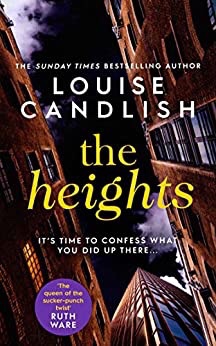
  • a dark domestic thriller from British Book Award winner Louise Candlish (The Skylight), who thanks reading for setting her on the right path when she was ‘young and adrift’
  • an uplifting romance by the much-loved Katie Fforde (Saving the Day), who never thought she would be able to be an author because of her struggle with dyslexia
  • the holiday from hell for Detective Roy Grace courtesy of long-time literacy campaigner and crime fiction maestro Peter James (Wish You Were Dead)
  • a specially abridged version of the feminist manifesto (How to Be a Woman) by Caitlin Moran: ‘everyone deserves to have the concept of female equality in a book they can turn to as a chatty friend.’
  • an introduction to Khurrum Rahman’s dope dealer Javid Qasim (The Motive), who previously found the idea of reading a book overwhelming and so started reading late in life, to find ‘joy, comfort and an escape’
  • Oyinkan Braithwaite’s follow-up to her Booker nominated debut sensationMy Sister, the Serial Killer – a family drama set in lockdown Lagos (The Baby is Mine)

Over 5 million Quick Reads have been distributed since the life-changing programme launched in 2006. From 2020 – 2022, the initiative is supported by a philanthropic gift from bestselling author Jojo Moyes. This year, for every book bought until 31 July 2021, another copy will be gifted to help someone discover the joy of reading. ‘Buy one, gift one’ will see thousands of free books given to organisations across the UK to reach less confident readers and those with limited access to books – bring the joy and transformative benefits of reading to new audiences.


Oyinkan Braithwaite, The Baby is Mine (Atlantic)

When his girlfriend throws him out during the pandemic, Bambi has to go to his Uncle’s house in lock-down Lagos. He arrives during a blackout and is surprised to find his Aunty Bidemi sitting in a candlelit room with another woman. They are fighting because both claim to be the mother of the baby boy, fast asleep in his crib. At night Bambi is kept awake by the baby’s cries, and during the days he is disturbed by a cockerel that stalks the garden. There is sand in the rice. A blood stain appears on the wall. Someone scores tribal markings into the baby’s cheeks. Who is lying and who is telling the truth?

Oyinkan Braithwaite gained a degree in Creative Writing and Law at Kingston University. Her first book, My Sister, the Serial Killer, was a number one bestseller. It was shortlisted for the 2019 Women’s Prize and was on the long list for the 2019 Booker Prize.

Oyinkan Braithwaite, author of The Baby is Mine (Atlantic) said: “When I am writing, I don’t know what my readers will look like or what challenges they may be facing. So it was an interesting experience creating work with the understanding that the reader might need a story that was easy to digest, and who might not have more than a few hours in a week to commit to reading. It was daunting – simpler does not necessarily mean easier – I may have pulled out a couple of my hairs; but I would do it again in a heartbeat. Quick Reads tapped into my desire to create fiction that would be an avenue for relief and escape for all who came across it.”

Louise Candlish, The Skylight (Simon & Schuster)

They can’t see her, but she can see them… Simone has a secret. She likes to stand at her bathroom window and spy on the couple downstairs through their kitchen skylight. She knows what they eat for breakfast and who they’ve got over for dinner. She knows what mood they’re in before they even step out the door. There’s nothing wrong with looking, is there? Until one day Simone sees something through the skylight she is not expecting. Something that upsets her so much she begins to plot a terrible crime…

Louise Candlish is the Sunday Times bestselling author of The Other Passenger and thirteen other novels. Our House won the Crime & Thriller Book of the Year at the 2019 British Book Awards. It is now in development for a major TV series. Louise lives in London with her husband and daughter.

Louise Candlish, author of The Skylight (Simon & Schuster) said: It’s an honour to be involved in this [next] year’s Quick Reads. Reading set me on the right path when I was young and adrift and it means such a lot to me to be a part of literacy campaign that really does change lives.”

Katie Fforde, Saving the Day (Arrow, Penguin Random House)

Allie is bored with her job and starting to wonder whether she even likes her boyfriend, Ryan. The high point in her day is passing a café on her walk home from work. It is the sort of place where she’d really like to work. Then one day she sees as advert on the door: assistant wanted. But before she can land her dream job, Allie knows she must achieve two things: 1. Learn to cook; 2. End her relationship with Ryan, especially as through the window of the café, she spies a waiter who looks much more like her type of man. And when she learns that the café is in danger of closing, Allie knows she must do her very best to save the day …

Katie Fforde lives in the beautiful Cotswold countryside with her family and is a true country girl at heart. Each of her books explores a different job and her research has helped her bring these to life. To find out more about Katie Fforde step into her world at www.katiefforde.com, visit her on Facebook and follow her on Twitter @KatieFforde.

Katie Fforde, author of Saving the Day (Arrow, Penguin Random House) said: “As a dyslexic person who even now can remember the struggle to read, I was delighted to be asked to take part in the scheme. Anything that might help someone who doesn’t find reading easy is such a worthwhile thing to do.”


Peter James, Wish You Were Dead (Macmillan)

Roy Grace and his family have left Sussex behind for a week’s holiday in France. The website promised a grand house, but when they arrive the place is very different from the pictures. And it soon becomes clear that their holiday nightmare is only just beginning. An old enemy of Roy, a lowlife criminal he had put behind bars, is now out of jail – and out for revenge. He knows where Roy and his family have gone on holiday. Of course he does. He’s been hacking their emails – and they are in the perfect spot for him to pay Roy back…

Peter James is a UK number one bestselling author, best known for his crime and thriller novels. He is the creator of the much-loved detective Roy Grace. His books have been translated into thirty-seven languages. He has won over forty awards for his work, including the WHSmith Best Crime Author of All Time Award. Many of his books have been adapted for film, TV and stage.

Peter James, author of Wish You Were Dead (Macmillan) said: “The most treasured moments of my career have been when someone tells me they hadn’t read anything for years, often since their school days, but are back into reading via my books. What more could an author hope for? Reading helps us tackle big challenges, transports us into new worlds, takes us on adventures, allows us to experience many different lives and open us up to aspects of our world we never knew existed. So I’m delighted to be supporting Quick Reads again – I hope it will help more people get started on their reading journeys and be the beginning of a life-long love of books.”

Caitlin Moran, How to Be a Woman (abridged) (Ebury)

It’s a good time to be a woman: we have the vote and the Pill, and we haven’t been burnt as witches since 1727.  But a few nagging questions remain… Why are we supposed to get Brazilians? Should we use Botox? Do men secretly hate us? And why does everyone ask you when you’re going to have a baby? Part memoir, part protest, Caitlin answers the questions that every modern woman is asking.

Caitlin Moran became a columnist at The Times at eighteen and has gone on to be named Columnist of the Year six times. She is the author of many award-winning books and her bestseller How to Be a Woman has been published in 28 countries and won the British Book Awards’ Book of the Year 2011. Her first novel, How to Build a Girl, is now a major feature film. Find out more at her website www.caitlinmoran.co.uk and follow her on Twitter @caitlinmoran

Caitlin Moran, author of How to Be a Woman (abridged) (Ebury) said: “I wrote How To Be A Woman because I felt that feminism is such a beautiful, brilliant, urgent and necessary invention that it should not be hidden away in academic debates, or in books which most women and men found dull, and unreadable. Having a Quick Reads edition of it, therefore, makes me happier than I can begin to describe – everyone deserves to have the concept of female equality in a book they can turn to as a chatty friend, on hand to help them through the often bewildering ass-hattery of Being A Woman. There’s no such thing as a book being too quick, too easy, or too fun. A book is a treat – a delicious pudding for your brain. I’m so happy Quick Reads have allowed me to pour extra cream and cherries on How To Be A Woman.”

Khurrum Rahman, The Motive (HQ)


Business has been slow for Hounslow’s small time dope-dealer, Jay Qasim. A student house party means quick easy cash, but it also means breaking his own rules. But desperate times lead him there – and Jay finds himself in the middle of a crime scene. Idris Zaidi, a police constable and Jay’s best friend, is having a quiet night when he gets a call out following a noise complaint at a house party. Fed up with the lack of excitement in his job, he visits the scene and quickly realises that people are in danger after a stabbing. Someone will stop at nothing to get revenge…

Born in Karachi, Pakistan in 1975, Khurrum moved to England when he was one. He is a west London boy and now lives in Berkshire with his wife and two sons. Khurrum is currently working as a Senior IT Officer but his real love is writing. His first two books in the Jay Qasim series, East of Hounslow and Homegrown Hero, have been shortlisted for the Theakstons Old Peculier Crime Novel of the Year and CWA John Creasey Debut Dagger.

Khurrum Rahman, author of The Motive (HQ) said: “I started reading late in life, as the idea of reading a book always seemed overwhelming. I hesitantly began a book a friend had recommended and quickly became totally immersed in the story. I found joy and comfort and most importantly, an escape. It’s for this very reason that I am so proud to be involved with Quick Reads. This initiative is so important for people, like I once was, to engage in stories that may mirror their own lives or to read experiences far beyond their imagination. Just like a friend once did for me, I hope I am able to play a small part in encouraging somebody to pick up a book.”

About The Reading Agency & Quick Reads

The Reading Agency is a national charity that tackles life’s big challenges through the proven power of reading. We work closely with partners to develop and deliver programmes for people of all ages and backgrounds. The Reading Agency is funded by Arts Council England.  www.readingagency.org.uk


Quick Reads, a programme by The Reading Agency, aims to bring the pleasures and benefits of reading to everyone, including the one in three adults in the UK who do not regularly read for pleasure, and the one in six adults in the UK who find reading difficult. The scheme changes lives and plays a vital role in addressing the national crisis around adult literacy in the UK. Each year, Quick Reads commissioning editor Fanny Blake works with UK publishers to commission high profile authors to write short, engaging books that are specifically designed to be easy to read. Since 2006, over 5 million books have been distributed through the initiative, 5 million library loans (PLR) have been registered and through outreach work hundreds of thousands of new readers each year have been introduced to the joys and benefits of reading. From 2020 – 2022, the initiative is supported by a philanthropic gift from bestselling author Jojo Moyes.

Posted in Publisher Proof

Songs in Ursa Major by Emma Brodie.

Today I’m spotlighting a wonderful book from author Emma Brodie, the perfect antidote to the Glastonbury blues. This is one of a few proofs I’ve received recently that are based in the world of music. It had me thinking about the best gigs I’ve gone to and how much I’ve missed seeing live music. My last gig before lockdown was Manic Street Preachers in Manchester. I hadn’t seen them since the nineties so it was like revisiting my teenage years and they were just as incredible. However, the gig I remember most as one of those ‘where were you when…’ moments was in 1994 at Alexandra Palace. The main act was my favourite nineties band, Blur and just around the same time as the big Blur V Oasis battle. Just as exciting, the support act was Pulp, only months before they released Common People and became huge. This really was a zeitgeist moment in Britpop and I was there.

The Blurb

THE SUMMER OF 1969

From the moment Jane Quinn steps barefoot onto the main stage at Island Folk festival, her golden hair glinting, her voice soaring into the summer dusk, a star is born – and so is a passionate love story.

Jane’s band hits the road with none other than Jesse Reid, the musician whose bright blue eyes are setting hearts alight everywhere. And as the summer streaks by in a haze of crowds, wild nights and magenta sunsets, Jane is pulled into the orbit of Jesse’s star.
 
But Jesse’s rise could mean Jane’s fall. And when she discovers a dark secret beneath his music, she picks up her guitar and writes her heartache into the album that could make or break her: Songs in Ursa Major.

Set against the heady haze of the 70s and alive with music, sex and sun-soaked hedonism, SONGS IN URSA MAJOR is an unforgettable debut and the soundtrack to a love story like no other.

I would like to thank Zaffre and Bonnier Books for my proof copy and I look forward to telling you all about it.