Blog Feed

Posted in Netgalley

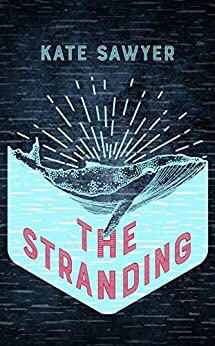
The Stranding by Kate Sawyer.

I know that a book is extraordinary when I finish it and feel changed in some way. I’m never sure what has happened, but there’s a tiny, imperceptible change, to the air around me, how I feel and even the way I perceive the world. The Stranding left me feeling calm, thoughtful and as if a lot of the small things worrying me didn’t really matter in the big scheme of things. I cared deeply for the characters and their grief, and strangely proud of them for what they managed to achieve. The author created an incredible sense of New Zealand and the whale that becomes Ruth’s saviour, and mother – birthing her and Nik into their new world and sustaining them. Her detailed descriptions left me fully immersed in this world, so much so that when I finished reading, it took a while to adjust back to being in Ruth’s ‘before’ and my 21st Century world.

Ruth is an endearing character and someone I could relate to enormously, especially when thinking back to my younger self. She makes mistakes and doesn’t fully know herself yet. She’s a primary school teacher and serial monogamist living in London. She has a best friend called Fran and really supportive parents who live a train journey away. However, her love life is complicated with even Fran saying that she needs to spend some time alone between relationships. So, Ruth has kept her current relationship under wraps. She loves Alex, and she’s sure the way she feels is different from her previous relationships, but he comes with complications. He’s married, with two small children. There’s a restlessness about Ruth, something she thinks will disappear if Alex makes a commitment. Then he does and he’s there in her small flat all the time, she’s a ready made step mum and as time goes on, she wonders whether she really wants this version of her life? She struggles to cope with someone so physically close to her, sharing her space.

‘Ruth had noticed a new loo brush beside the toilet. She reddened to realise that Alex had felt the necessity to purchase such an item, and her cheeks burnt even more when she wondered whether it was her or him who had made that requirement apparent. It wasn’t the only scatological matter that raised the colour in Ruth’s cheeks. Alex was opposed to the use of any chemical or aerosol-propelled household products. Over the past week, on several occasions, Ruth had found herself wafting pungent air out of the window and running the tap to foam soap in the hope of masking the smell of her natural functions. Though it was worse when she had walked in and been greeted with air almost warm with the memory of Alex’s recent visit’.

The book is split into before and after – it’s not explicit exactly what has created this apocalyptic world Ruth eventually finds herself in, but it is catastrophic, wiping out Europe before it reaches where she has travelled in New Zealand. The placement of these sections is incredibly clever. Before takes us back to the world as we know it and follows Ruth to the beach and the stranded whale. After starts at the stranded whale and tells the story into the future. So we are brought full circle and can marvel at the change in Ruth and discover whether she has finally found satisfaction in a life stripped of everything. Nik is, quite literally, the last man on earth. The difference in their characters is shown in the way they cope with the stranded whale. Ruth is immediately desperate to do something. To do anything. She rips through her rucksack for a container to hold water, then pours it over the huge creature. She must know rationally that this tiny amount of water will make no difference. She has been interested in whales since being a small girl so she must know this is a losing battle, but the activity is not for the whale. Ruth chooses activity because she can’t accept the inevitable. Nik is straightforward. He reminds her that her efforts are futile. They can’t save the whale, all they can do is be there in it’s final moments. They are forced into an intimacy that Ruth would normally avoid. Every day they choose to be a team, to use their individual skills to support each other and stay alive. Her father once advised her that love, real lasting love, is quiet and surprising. It’s not Anna Karenina or Wuthering Heights. It’s not drama and heartbreak and flowery exclamations. He tells her that it’s just going about your day and having a realisation that you can’t live without the other person. There’s telling someone you love them, and there’s showing them.

I loved how the author emphasised the importance of stories in the afterward sections. She realises that children in this new world will never know what it was truly like to live in the before. This wild world of survival is their normal. She tells them stories of how she survived the end of the world. She knows they will never know her joy of reading and she thinks of all the children’s classics she could be reading to them:

‘She watches Frankie exploring every stone and shell she comes across and feels a physical ache in her heart that she will never read a book: the words that constructed the worlds Ruth’s imagination inhabited as a child. Instead Ruth tells her those stories herself. She tells her of the Lion and the Witch that lived through the Wardrobe, and great adventures of princesses and princes. Without the books to restrict her, she often switches the genders of the protagonists, waking sleeping princes from their slumbers and sending young women on adventures in mythical lands. Nik watches as Ruth talks softly to the child on her lap in the light of the fire, retelling the stories they know so well; he raises an eyebrow and forms his crooked smile as he hears her adaptations.’

This is a return to oral storytelling, where the story can change according to the storyteller. I also loved Ruth’s changing of the narratives, creating a more feminist type of fairy tale and shaping girls to be powerful, confident and be the ones doing the rescuing.

I was blown away by the author’s own storytelling, from the beautiful and detailed, such as her incredible description of the skin of the whale.

‘The hide of the animal looks like cracked, varnished wood. Like an old piano. A giant grand piano from the ballroom of a wrecked ocean-liner, washed up on the shore. The long white underside of its belly is ridged, like bricks of pale plasticine. The shell-like white, beige, cream skin is flecked with grey, black, coral-orange markings. Around its mouth and eyes the same orange spreads like rust: clumsy make-up that has smudged in the water.’

Yet, it can also be brutal, such as when she’s describing Ruth’s skin in the first few days afterwards. It made me think about the extremes of the world she’s living in, from the quietness and the gradual return of nature to the brutality of the wild dogs and the animalistic aspects of birth. What I was left with though, was something I’ve been thinking about during the pandemic where I’ve been shielding – only seeing my partner and step-daughters. With the pause button pressed on my life, I was able to think about it more clearly. I realised we needed to move house and we are now out in the country, with a garden I can sit in easily and chat to the neighbours over the fence. It made me realise who was important in my life and who wasn’t. I re-evaluated what I wanted to do with my time and decided that now is my time to write. It also made me realise who I am, without people to bounce off, or rushing to different places, or having endless mental stimulation through social media. I was able to apply something I have previously taught in art and writing therapy workshops – the art of being myself. This is Ruth’s journey. With everything removed from her, who exactly is she? There is a time in her life where she would avoid self-examination by jumping to the next thing, the next entertainment, scrolling social media, the next outing, the next man. Afterwards, she is forced to contemplate and to be with the only other person who survived. It is fascinating to watch whether she copes in this situation and whether she can find a way to be happy that eluded her before. This book was incredible, moving, disturbing and deeply philosophical. This is an extraordinary debut and I loved it.

The Stranding is published by Coronet on 24th June 2021

Posted in Uncategorized

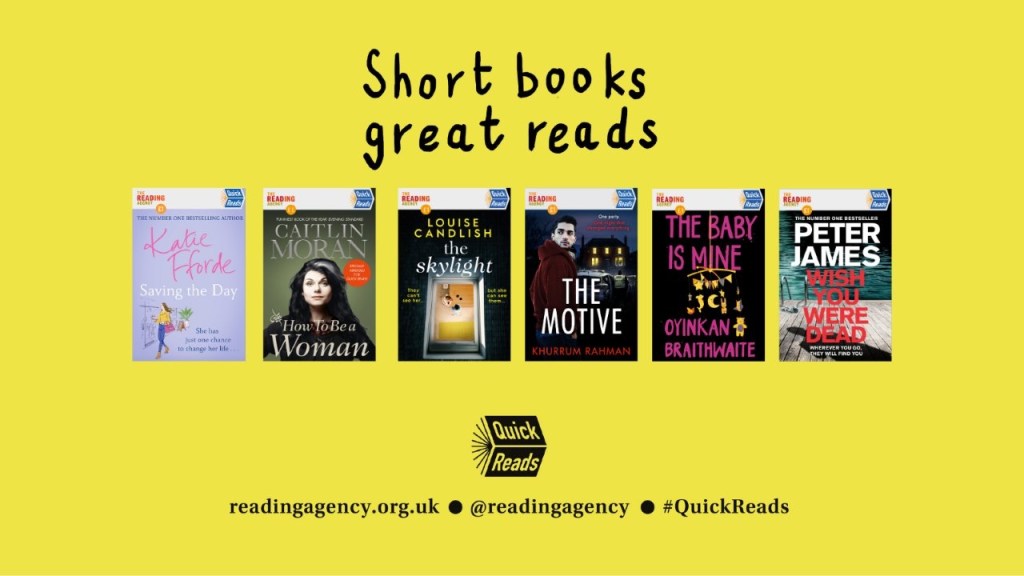
Quick Reads 15 Year Anniversary.

Today on the blog I’m supporting the Quick Reads initiative which is celebrating it’s 15 year anniversary. I have personal reasons for supporting this brilliant idea and the short reads published each year. As regulars know I have MS and I’m lucky enough to still manage to read as well as I do. However, when I am in relapse, my eyes are painful and I can find it very difficult to follow a long novel because of fatigue and the loss of concentration. I know there are other MS patients who struggle to hold a full length book or have the concentration to keep up with its many narrative strands. These short books by some great writers are perfect for this – small and easy to manage, shorter stories and less likely to overwhelm those who are struggling. It’s brilliant to have them written by such great writers too. Just because people with disabilities might struggle to read, doesn’t mean they should have to compromise on the quality of the writing. These are brilliant for people in regular treatment, smaller to carry and something to get lost in while waiting for and having treatment. Check out the books in more detail below and keep watching this space for a review of Wish You Were Dead, a short Roy Grace story by Peter James.

One in six adults in the UK – approximately 9 million people – find reading difficult, and one in three people do not regularly read for pleasure. Quick Reads, which celebrates its 15th anniversary this year, plays a vital role in addressing these shocking statistics by inspiring emergent readers, as well as those with little time or who have fallen out of the reading habit, with entertaining and accessible writing from the very best contemporary authors. 

This year’s short books include:

  • a dark domestic thriller from British Book Award winner Louise Candlish (The Skylight), who thanks reading for setting her on the right path when she was ‘young and adrift’
  • an uplifting romance by the much-loved Katie Fforde (Saving the Day), who never thought she would be able to be an author because of her struggle with dyslexia
  • the holiday from hell for Detective Roy Grace courtesy of long-time literacy campaigner and crime fiction maestro Peter James (Wish You Were Dead)
  • a specially abridged version of the feminist manifesto (How to Be a Woman) by Caitlin Moran: ‘everyone deserves to have the concept of female equality in a book they can turn to as a chatty friend.’
  • an introduction to Khurrum Rahman’s dope dealer Javid Qasim (The Motive), who previously found the idea of reading a book overwhelming and so started reading late in life, to find ‘joy, comfort and an escape’
  • Oyinkan Braithwaite’s follow-up to her Booker nominated debut sensationMy Sister, the Serial Killer – a family drama set in lockdown Lagos (The Baby is Mine)

Over 5 million Quick Reads have been distributed since the life-changing programme launched in 2006. From 2020 – 2022, the initiative is supported by a philanthropic gift from bestselling author Jojo Moyes. This year, for every book bought until 31 July 2021, another copy will be gifted to help someone discover the joy of reading. ‘Buy one, gift one’ will see thousands of free books given to organisations across the UK to reach less confident readers and those with limited access to books – bring the joy and transformative benefits of reading to new audiences.


Oyinkan Braithwaite, The Baby is Mine (Atlantic)

When his girlfriend throws him out during the pandemic, Bambi has to go to his Uncle’s house in lock-down Lagos. He arrives during a blackout and is surprised to find his Aunty Bidemi sitting in a candlelit room with another woman. They are fighting because both claim to be the mother of the baby boy, fast asleep in his crib. At night Bambi is kept awake by the baby’s cries, and during the days he is disturbed by a cockerel that stalks the garden. There is sand in the rice. A blood stain appears on the wall. Someone scores tribal markings into the baby’s cheeks. Who is lying and who is telling the truth?

Oyinkan Braithwaite gained a degree in Creative Writing and Law at Kingston University. Her first book, My Sister, the Serial Killer, was a number one bestseller. It was shortlisted for the 2019 Women’s Prize and was on the long list for the 2019 Booker Prize.

Oyinkan Braithwaite, author of The Baby is Mine (Atlantic) said: “When I am writing, I don’t know what my readers will look like or what challenges they may be facing. So it was an interesting experience creating work with the understanding that the reader might need a story that was easy to digest, and who might not have more than a few hours in a week to commit to reading. It was daunting – simpler does not necessarily mean easier – I may have pulled out a couple of my hairs; but I would do it again in a heartbeat. Quick Reads tapped into my desire to create fiction that would be an avenue for relief and escape for all who came across it.”

Louise Candlish, The Skylight (Simon & Schuster)

They can’t see her, but she can see them… Simone has a secret. She likes to stand at her bathroom window and spy on the couple downstairs through their kitchen skylight. She knows what they eat for breakfast and who they’ve got over for dinner. She knows what mood they’re in before they even step out the door. There’s nothing wrong with looking, is there? Until one day Simone sees something through the skylight she is not expecting. Something that upsets her so much she begins to plot a terrible crime…

Louise Candlish is the Sunday Times bestselling author of The Other Passenger and thirteen other novels. Our House won the Crime & Thriller Book of the Year at the 2019 British Book Awards. It is now in development for a major TV series. Louise lives in London with her husband and daughter.

Louise Candlish, author of The Skylight (Simon & Schuster) said: It’s an honour to be involved in this [next] year’s Quick Reads. Reading set me on the right path when I was young and adrift and it means such a lot to me to be a part of literacy campaign that really does change lives.”

Katie Fforde, Saving the Day (Arrow, Penguin Random House)

Allie is bored with her job and starting to wonder whether she even likes her boyfriend, Ryan. The high point in her day is passing a café on her walk home from work. It is the sort of place where she’d really like to work. Then one day she sees as advert on the door: assistant wanted. But before she can land her dream job, Allie knows she must achieve two things: 1. Learn to cook; 2. End her relationship with Ryan, especially as through the window of the café, she spies a waiter who looks much more like her type of man. And when she learns that the café is in danger of closing, Allie knows she must do her very best to save the day …

Katie Fforde lives in the beautiful Cotswold countryside with her family and is a true country girl at heart. Each of her books explores a different job and her research has helped her bring these to life. To find out more about Katie Fforde step into her world at www.katiefforde.com, visit her on Facebook and follow her on Twitter @KatieFforde.

Katie Fforde, author of Saving the Day (Arrow, Penguin Random House) said: “As a dyslexic person who even now can remember the struggle to read, I was delighted to be asked to take part in the scheme. Anything that might help someone who doesn’t find reading easy is such a worthwhile thing to do.”


Peter James, Wish You Were Dead (Macmillan)

Roy Grace and his family have left Sussex behind for a week’s holiday in France. The website promised a grand house, but when they arrive the place is very different from the pictures. And it soon becomes clear that their holiday nightmare is only just beginning. An old enemy of Roy, a lowlife criminal he had put behind bars, is now out of jail – and out for revenge. He knows where Roy and his family have gone on holiday. Of course he does. He’s been hacking their emails – and they are in the perfect spot for him to pay Roy back…

Peter James is a UK number one bestselling author, best known for his crime and thriller novels. He is the creator of the much-loved detective Roy Grace. His books have been translated into thirty-seven languages. He has won over forty awards for his work, including the WHSmith Best Crime Author of All Time Award. Many of his books have been adapted for film, TV and stage.

Peter James, author of Wish You Were Dead (Macmillan) said: “The most treasured moments of my career have been when someone tells me they hadn’t read anything for years, often since their school days, but are back into reading via my books. What more could an author hope for? Reading helps us tackle big challenges, transports us into new worlds, takes us on adventures, allows us to experience many different lives and open us up to aspects of our world we never knew existed. So I’m delighted to be supporting Quick Reads again – I hope it will help more people get started on their reading journeys and be the beginning of a life-long love of books.”

Caitlin Moran, How to Be a Woman (abridged) (Ebury)

It’s a good time to be a woman: we have the vote and the Pill, and we haven’t been burnt as witches since 1727.  But a few nagging questions remain… Why are we supposed to get Brazilians? Should we use Botox? Do men secretly hate us? And why does everyone ask you when you’re going to have a baby? Part memoir, part protest, Caitlin answers the questions that every modern woman is asking.

Caitlin Moran became a columnist at The Times at eighteen and has gone on to be named Columnist of the Year six times. She is the author of many award-winning books and her bestseller How to Be a Woman has been published in 28 countries and won the British Book Awards’ Book of the Year 2011. Her first novel, How to Build a Girl, is now a major feature film. Find out more at her website www.caitlinmoran.co.uk and follow her on Twitter @caitlinmoran

Caitlin Moran, author of How to Be a Woman (abridged) (Ebury) said: “I wrote How To Be A Woman because I felt that feminism is such a beautiful, brilliant, urgent and necessary invention that it should not be hidden away in academic debates, or in books which most women and men found dull, and unreadable. Having a Quick Reads edition of it, therefore, makes me happier than I can begin to describe – everyone deserves to have the concept of female equality in a book they can turn to as a chatty friend, on hand to help them through the often bewildering ass-hattery of Being A Woman. There’s no such thing as a book being too quick, too easy, or too fun. A book is a treat – a delicious pudding for your brain. I’m so happy Quick Reads have allowed me to pour extra cream and cherries on How To Be A Woman.”

Khurrum Rahman, The Motive (HQ)


Business has been slow for Hounslow’s small time dope-dealer, Jay Qasim. A student house party means quick easy cash, but it also means breaking his own rules. But desperate times lead him there – and Jay finds himself in the middle of a crime scene. Idris Zaidi, a police constable and Jay’s best friend, is having a quiet night when he gets a call out following a noise complaint at a house party. Fed up with the lack of excitement in his job, he visits the scene and quickly realises that people are in danger after a stabbing. Someone will stop at nothing to get revenge…

Born in Karachi, Pakistan in 1975, Khurrum moved to England when he was one. He is a west London boy and now lives in Berkshire with his wife and two sons. Khurrum is currently working as a Senior IT Officer but his real love is writing. His first two books in the Jay Qasim series, East of Hounslow and Homegrown Hero, have been shortlisted for the Theakstons Old Peculier Crime Novel of the Year and CWA John Creasey Debut Dagger.

Khurrum Rahman, author of The Motive (HQ) said: “I started reading late in life, as the idea of reading a book always seemed overwhelming. I hesitantly began a book a friend had recommended and quickly became totally immersed in the story. I found joy and comfort and most importantly, an escape. It’s for this very reason that I am so proud to be involved with Quick Reads. This initiative is so important for people, like I once was, to engage in stories that may mirror their own lives or to read experiences far beyond their imagination. Just like a friend once did for me, I hope I am able to play a small part in encouraging somebody to pick up a book.”

About The Reading Agency & Quick Reads

The Reading Agency is a national charity that tackles life’s big challenges through the proven power of reading. We work closely with partners to develop and deliver programmes for people of all ages and backgrounds. The Reading Agency is funded by Arts Council England.  www.readingagency.org.uk


Quick Reads, a programme by The Reading Agency, aims to bring the pleasures and benefits of reading to everyone, including the one in three adults in the UK who do not regularly read for pleasure, and the one in six adults in the UK who find reading difficult. The scheme changes lives and plays a vital role in addressing the national crisis around adult literacy in the UK. Each year, Quick Reads commissioning editor Fanny Blake works with UK publishers to commission high profile authors to write short, engaging books that are specifically designed to be easy to read. Since 2006, over 5 million books have been distributed through the initiative, 5 million library loans (PLR) have been registered and through outreach work hundreds of thousands of new readers each year have been introduced to the joys and benefits of reading. From 2020 – 2022, the initiative is supported by a philanthropic gift from bestselling author Jojo Moyes.

Posted in Publisher Proof

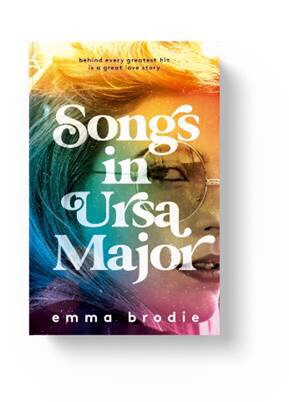
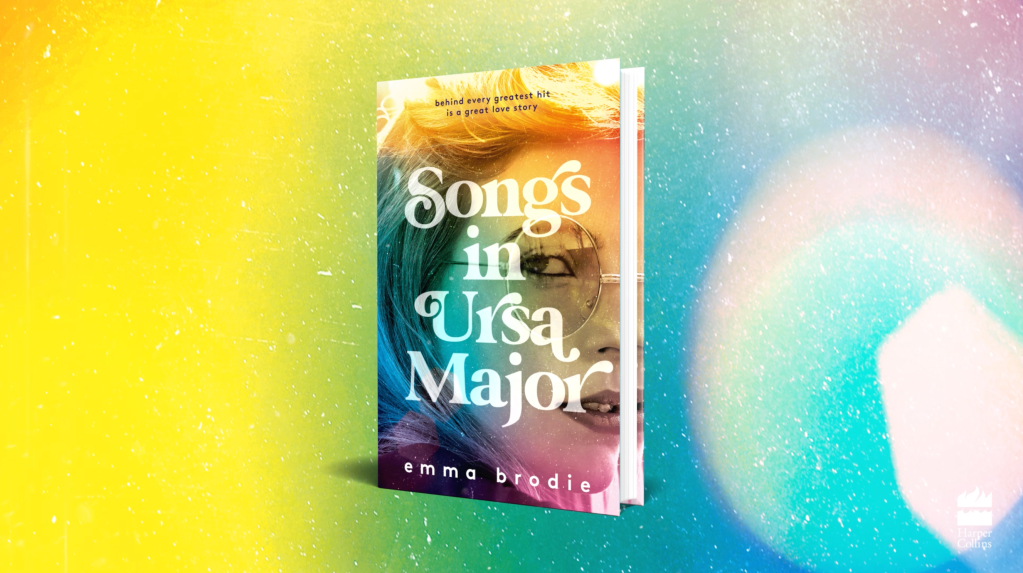
Songs in Ursa Major by Emma Brodie.

Today I’m spotlighting a wonderful book from author Emma Brodie, the perfect antidote to the Glastonbury blues. This is one of a few proofs I’ve received recently that are based in the world of music. It had me thinking about the best gigs I’ve gone to and how much I’ve missed seeing live music. My last gig before lockdown was Manic Street Preachers in Manchester. I hadn’t seen them since the nineties so it was like revisiting my teenage years and they were just as incredible. However, the gig I remember most as one of those ‘where were you when…’ moments was in 1994 at Alexandra Palace. The main act was my favourite nineties band, Blur and just around the same time as the big Blur V Oasis battle. Just as exciting, the support act was Pulp, only months before they released Common People and became huge. This really was a zeitgeist moment in Britpop and I was there.

The Blurb

THE SUMMER OF 1969

From the moment Jane Quinn steps barefoot onto the main stage at Island Folk festival, her golden hair glinting, her voice soaring into the summer dusk, a star is born – and so is a passionate love story.

Jane’s band hits the road with none other than Jesse Reid, the musician whose bright blue eyes are setting hearts alight everywhere. And as the summer streaks by in a haze of crowds, wild nights and magenta sunsets, Jane is pulled into the orbit of Jesse’s star.
 
But Jesse’s rise could mean Jane’s fall. And when she discovers a dark secret beneath his music, she picks up her guitar and writes her heartache into the album that could make or break her: Songs in Ursa Major.

Set against the heady haze of the 70s and alive with music, sex and sun-soaked hedonism, SONGS IN URSA MAJOR is an unforgettable debut and the soundtrack to a love story like no other.

I would like to thank Zaffre and Bonnier Books for my proof copy and I look forward to telling you all about it.

Posted in Uncategorized

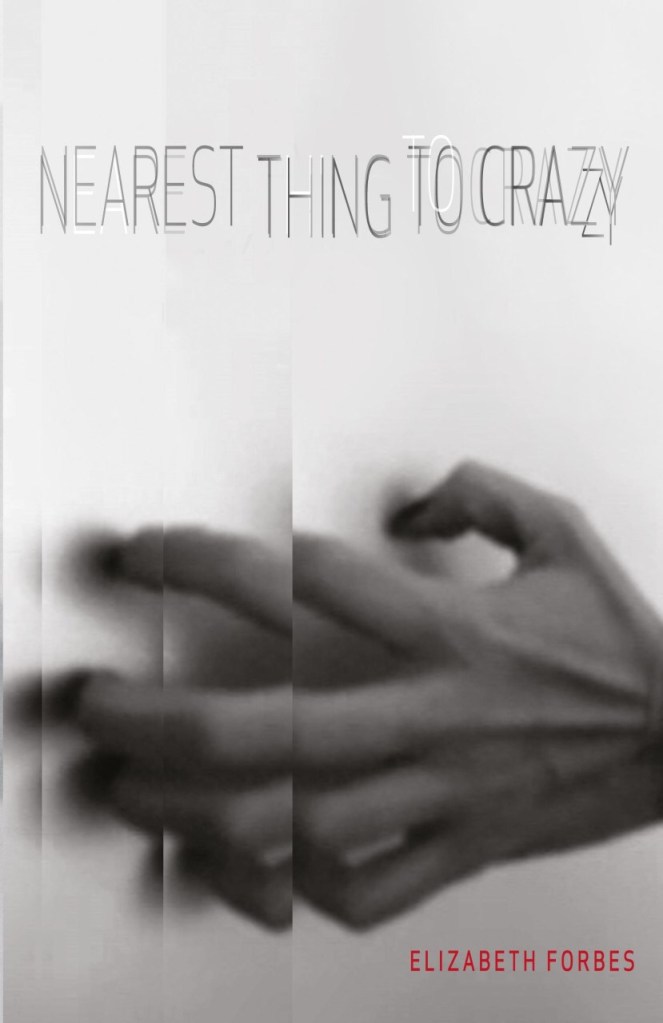
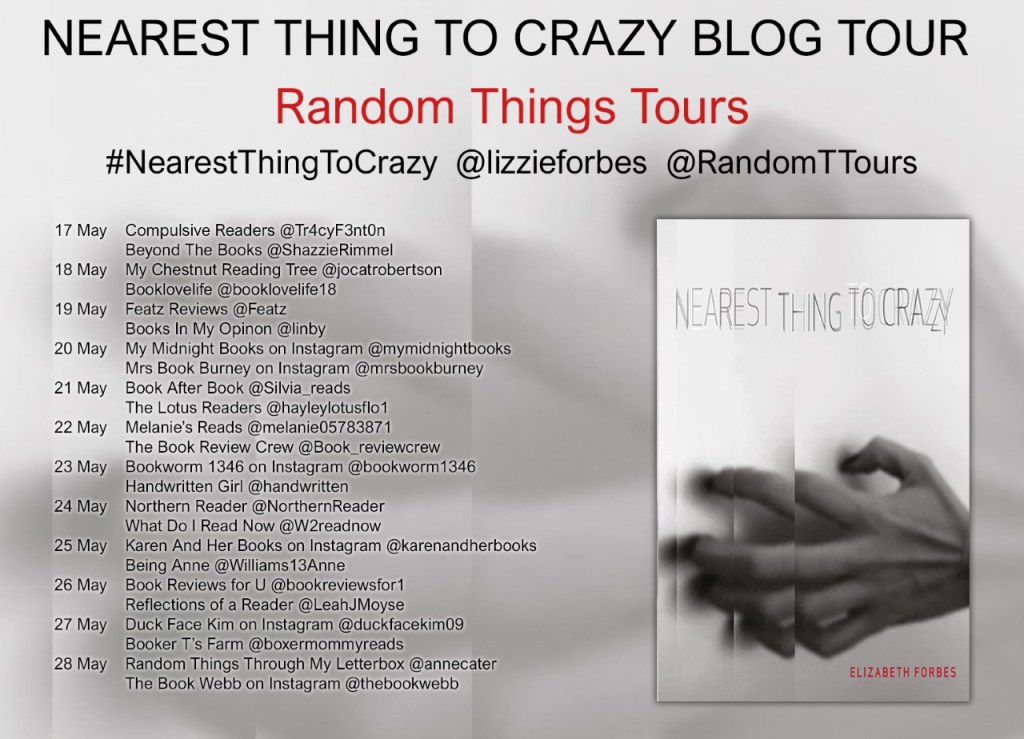
Nearest Thing to Crazy by Elizabeth Forbes.

By the time I reached the final pages of this book I realised my face ached and I’d had my teeth clenched! I was so invested in the truth coming out that I was scared to read the end in case it wasn’t what I wanted! I had the book lover’s nightmare of devouring the story like a crazy person to find out, but then holding back because I didn’t want the book to finish. Our heroine is Cass and she has a very comfortable life in her country cottage, with husband Dan. She is very much the home making type, with a comfortable and cozy house and a talent for gardening. She is part of a large circle of friends, active on local committees and very well known. Her friends see her and her and her husband Dan as the couple most likely to stay together. Their daughter Laura is away at university in Birmingham and only comes back home occasionally. Into this situation comes Ellie and what an arrival! At a friend’s informal barbecue, where most are in jeans, Ellie arrives like a femme fatale – red heels, fifties dress and red lipstick. Despite this, she spends a long time chatting with Cass who seems like her polar opposite. Their difference is highlighted when Cass sees Ellie has been reading Rebecca by Daphne du Maurier. Cass seems to be more aligned with the second Mrs de Winter, but Ellie is very clear that she would prefer to be Rebecca – the adulteress, the seductress:

‘I adored Rebecca, not giving a damn what anyone thought of her, attacking life, taking what she wanted, all that sexual power…’

I was drawn in by a couple of the author’s references, because they’re very familiar to me. As mentioned above the first was Rebecca, which has fascinated me since I was a little girl and my mum first showed me the Hitchcock film with Laurence Olivier as the mercurial Maxim de Winter, on holiday in the South of France trying to get over the death of his wife Rebecca. Of course it wasn’t till I was older that I fully understood the film, especially the relationship between Max and his new, young wife. As an adult, his treatment of the new Mrs de Winter started to bother me, especially after my own marriage to a man fifteen years my senior. Scenes like the one in Monte Carlo where she says she wishes she was a woman of 36 with a black evening dress and pearls. Max’s response is that if she was, she certainly wouldn’t be there with him. If she says something to displease him he becomes silent, driving faster or recklessly while she apologises, even begs for his forgiveness. She can’t imagine that her gauche, unsophisticated ways would be attractive to him after the dazzling Rebecca. In reality, another Rebecca is the last thing he would want. However, even though Max wants this shy, young girl, he calls her a ‘silly little fool’ as he’s proposing. He is no romantic hero, he’s a classic mental abuser and one of his weapons is gaslighting – the very sort of behaviour that Elizabeth Forbes is highlighting in this book. However, here we’re caught between several characters. We’re never quite sure who is manipulating who?

Gaslight is another excellent black and white film from 1940, where a young heiress is targeted by her new husband. In order to gain control of her money, he subjects her to a campaign of psychological abuse. I remember a gift of jewellery that he surprises her with, he then hides it and asks her to wear it when they’re going out. When she can’t find it he starts a row over her carelessness, but then puts it back where she left it. One of his other tricks is to have the gaslights in the house flicker, but then deny seeing it. Slowly, this poor woman is convinced she’s losing her mind. This is where the term comes from and Forbes writes in her afterword about how common this form of abuse is. Every time you’ve been told you must have imagined it, you’re being hysterical, he didn’t say that, or you’re asked where your sense of humour is? This is gaslighting and as a victim of domestic abuse I’ve been where Cass is in this book – bewildered, frustrated and confused. I think this is why I had such a bodily and visceral reaction to the book. The fact that Forbes has written about this issue with such knowledge and depth contributed to my gritted teeth and mounting frustration.

There are more than a few surprises before readers get to the end of the book and in a sense we are being gaslighted too. At least in the films mentioned, the audience is in on the abuse and know who’s in the wrong. Here we’re never sure if it is even happening, or who’s truth to believe. While Cass is our main narrator, there are anonymous snippets from another character that cast doubt on her version of events. I won’t be revealing any more here, because I want you to experience it as I did. This is one of those books where the reader’s bias and life experience will lead to them seeing it differently. It will be a great book club choice because there is so much to discuss and opinions will change at different points in the novel. For me, this was a fascinating and intelligent read that will keep you up at night, not from fear, but from wanting to know what happens next. Be prepared to lose sleep, and experience a run of emotions from slight concern to suspicion, paranoia and rage. This is dark, twisted and beautifully written. An absolutely brilliant read that comes highly recommended.

Posted in Throwback Thursday

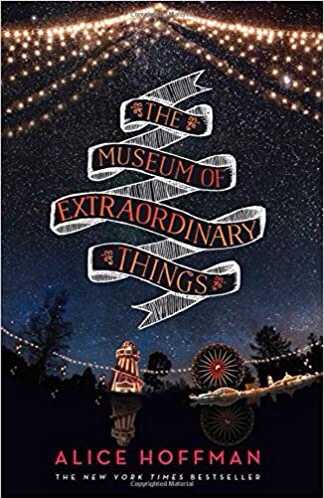
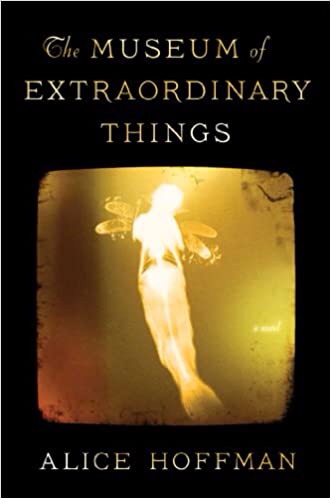
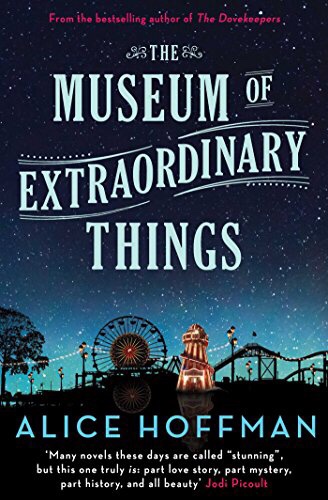
Throwback Thursday! The Museum of Extraordinary Things by Alice Hoffman.

From the bestselling author of The Dovekeepers comes a spectacularly imaginative and moving new novel in the vein of The Night Circus that has been acclaimed by Jodi Picoult as ‘truly stunning: part love story, part mystery, part history, and all beauy’.

New York City, 1911. Meet Coralie Sardie, circus girl, web-fingered mermaid, shy only daughter of Professor Sardie and raised in the bizarre surroundings of his Museum of Extraordinary Things. 

And meet Eddie Cohen, a handsome young immigrant who has run away from his painful past and his Orthodox family to become a photographer, documenting life on the teeming city streets. One night by the freezing waters of the Hudson River, Coralie stumbles across Eddie, who has become enmeshed in the case of a missing girl, and the fates of these two hopeful outcasts collide as they search for truth, beauty, love and freedom in tumultuous times.

I was inspired to revisit this novel after reading and reviewing Elizabeth MacNeal’s Circus of Wonders at the weekend. Regular readers will know how much I love Alice Hoffman and that The Night Circus is one of my favourite books of all time. What you might not know is that I love the age of La Belle Époque, Art Nouveau, New York City, and anything to do with the circus and freak shows. So, it stands to reason that I would fall madly in love with this incredible novel. Tucked within this wealth of aesthetic and historical details is the story of what it really means to be ‘other’ and how that difference affects us politically, culturally and psychologically. However, it also shows that, when people labelled as different come together, a powerful subculture can emerge. A subculture that rejects everyday societal norms, turning them upside down and creating different rules and markers of status? There’s also the interesting and complex issues around freak shows. Now, they horrify us. They are associated with thoughts of the Elephant Man and years of disability awareness training has left people viewing them as exploitative and cruel. However it could be that the issue is more complex and there are other ways to look at them?

The novel takes us to turn of the century NYC and we really meet the city in its formative years. While there are residential buildings, factories and the beginnings of what will be Manhattan, there are areas where it is still wilderness and it is here that Hoffman takes us to meet Eddie. He is a photographer, living in a friend’s shack in what will eventually become Queens. While out with his camera, early one morning, he sees what he thinks is a mermaid slipping through the grey and choppy dawn waters of the Hudson. She’s a strong swimmer too. Cutting through the swell with ease. However, when he sees her properly, he can see she’s a girl. What he doesn’t know is that Coralie Sardie does have a physical impairment – she has webs between her fingers and toes. This slight difference inspires her father to exploit her, keeping her separate from other children so she never questions him. She grows up uncomfortable with others, shy and ashamed of her physical difference. Her father, self-proclaimed man of science and keeper of curiosities, has an idea for Coralie. He aims to be the only showman with a real live mermaid.

Eddie is a Jewish immigrant, also brought to NYC by his father. The trauma of this journey and of losing his mother, leaves Eddie struggling to adjust. His father however, completely falls apart, making Eddie feel responsible for his parent rather than being a child. They are estranged from each other and as a result Eddie has become dislocated from his religion and culture too. The novel follows these two characters, Eddie and Coralie, as they make their way towards each other and pursue the feelings that seemed to hit them both at first sight. He’s also pursuing his own path as a photographer, rather than studying towards a profession like medicine as his father would have wanted. The work he does, particularly his photos of a fire in a sweat shop and the attractions of Coney Island, is fascinating and compelling.

Eddie’s work contributes to the historical setting and the sense of place Hoffman creates here. New York City in its infancy, already has the pull that still sends countless tourists there every year. It becomes a character in its own right, achieved by Hoffman’s historical research and the richly layered descriptions she constructs. The sights and smells of Coney Island and its fairgrounds are intoxicating and the account of a fire in a clothing sweat shop is particularly memorable. This was based on the real Triangle Shirtwaist factory fire, where girls living above the workshops were trapped and jumped from the windows to their death rather than burn. This sets Eddie down the road of investigative journalism and photography, rather than art photography. What will he make of Coney Island? More importantly, what will he make of Sardie’s museum and it’s main attraction?

Coralie knows she has been groomed for her father’s museum her whole life. The webbing she has on her hands is usually hidden by gloves, but at the age of 10 she is given a birthday gift that seals her future.

It stood in place of honour; a large tank of water. On the bottom of the tank were shells from all over the world. From the Indian Oceans to the China Sea. Beneath that title was carved one word alone, my name, Coralie. I did not need further instructions. I understood that all of my life was mere practice for this very moment. Without being asked, I slipped off my shoes, I knew how to swim.’

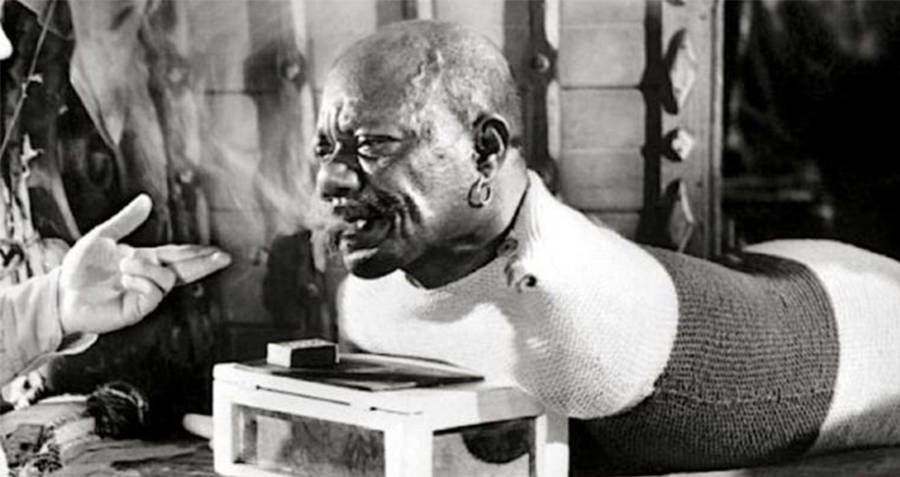
Her cruel father, only seemed to see Coralie in terms of ownership and monetary value. He has been making her take freezing cold baths, and practice staying under he water as long as she could. He gives her a breathing tube for the tank, but she barely needs it since her swims in the Hudson in winter. She will now be exhibited as a mermaid, alongside other ‘freaks‘ such as a woman without arms who has been given silk butterfly wings by Sardie. There’s a ‘beast’, completely covered in hair and a woman so pale she seems translucent. After looking at freak shows as part of my undergraduate degree, my feelings about them became more complicated. Yes, of course there is an element of exploitation in a figure like Sardie and his real life counterpart, Barnum. Yet, for a lot of the exhibits, this is the first sense of freedom they’ve had and their only chance to live independently. Often locked away in their towns and villages, by parents who either didn’t want others to see them, or felt like they were protecting their child. Parents might sell their child to a man like Sardie, feeling like they would be looked after or just to make money for the rest of the family. This might be the first time they encountered a community of people with differences like them. While we might think it barbaric to ‘show’ people with disabilities, it might be the only job open to them and give them a more comfortable living than they ever imagined. Real life ‘exhibit’ Prince Randian was brought to the USA by Barnum, and was known as The Human Torso amongst other names. He was born without arms and legs, and was usually dressed in a one piece, tight fitting garment. He appeared in the controversial Tod Browning film Freaks and had a party piece of rolling and smoking a cigar. His take was that he was being paid handsomely for simply doing normal everyday activities. We have to ask the question – who is exploiting who? There is also kudos in being the most transgressive as the disability subculture turns expectations upside down.

Prince Randian

I love this book. I enjoyed the character of Maureen – the Sardie’s housekeeper – and her love story with the wolf man. She has so much loyalty, and love for Coralie, that she stays despite Sardie’s insults and unreasonable behaviour. Being at the centre of these unusual people, we realise they have the same hopes and dreams as anyone else. Being in a group seems to give confidence to the individual characters and I loved seeing them grow into their authentic selves. There’s an acceptance of their differences, which maybe wasn’t present in their small villages and towns, where they stood out or even became a target. The performers have a complex relationship with what they do. It elevates them, thousands of people flock to see them, they are well paid and the thing that’s always been a negative part of their life, has become their meal ticket. Coralie and Eddie have had the same yearning in their childhoodthey want to be free, not held to account by their fathers, their religion or their obligations. Most of all though, this is a love story and they want to be together just like any other couple.

Further Reading:

Fiction:

Circus of Wonders by Elizabeth MacNeal.

Miss Peregrine’s Home For Peculiar Children by Ransom Riggs.

Non-Fiction:

The Body and Physical Difference by David T. Mitchell and Darren L. Snyder.

Freakery: Cultural Spectacles of the Extraordinary Body by Rosemary Garland Thomson.

Posted in Random Things Tours

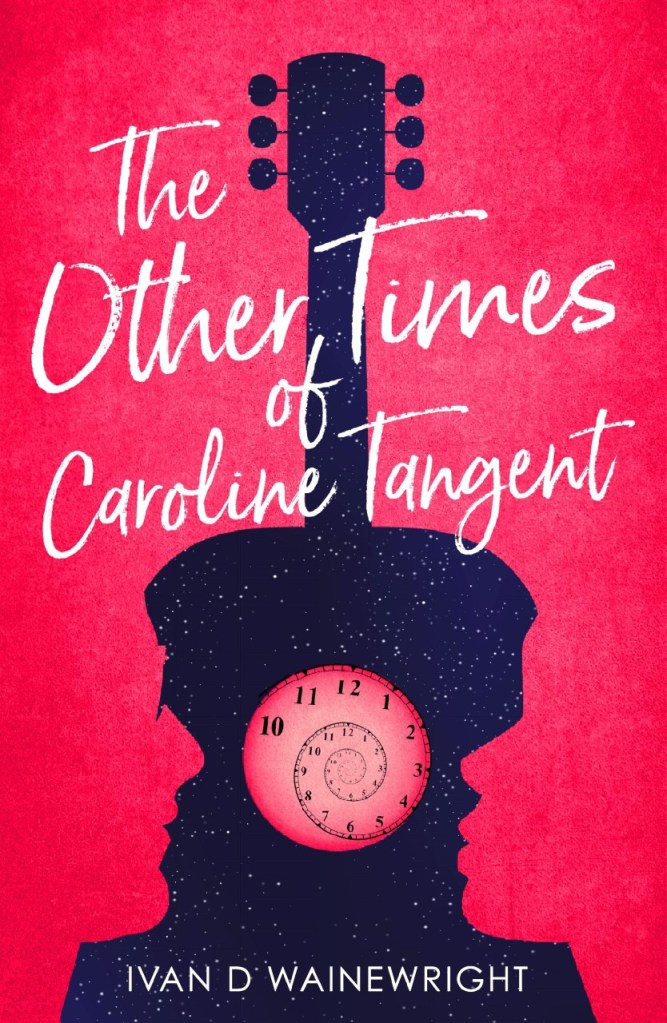
The Other Times of Caroline Tangent by Ivan D. Wainewright.

This book had a premise that was so attractive for someone like me who loves going to gigs and has missed it so much over the last eighteen months. My gig-going best friend and me often talk about which were our favourites, those breakthrough gigs that made your favourite band or those gigs that just captured the zeitgeist. The gig I went to that was a real cultural moment was at Alexandra Palace in 1994; Blur with Pulp as supporting artists. It was a real Britpop landmark and during Song 2, being pummelled and pushed about in the pit at the front I fainted and had to be carried out of the crowd. I’ve been lucky enough to see most of my favourites – Muse, Manic Street Preachers, The Killers, Depeche Mode, U2, Florence and the Machine- but if I did invent a time machine and could go back in time to any gig, it would be The Stone Roses 1989/90. They’re my band that got away. Everyone has one and sometimes we only see their importance in hindsight and simply wish we could have been there.

This is what happens to Caroline Tangent. Her music loving husband Jon, builds a time machine in his basement workshop. One surprising day he whisks her away to a controversial music performance – Kanye West at Glastonbury, 2015. She has on her gardening clothes, so luckily she’s pretty much dressed for a muddy field in Somerset. He didn’t choose the gig because they were huge fans of Kanye, but because it’s an important moment in music history, when there was an outcry over the direction Glastonbury was taking, considering it had always been dominated by more rock or indie groups than anything else. Their second trip is more complicated. Greenwich Village NYC, 1966. The preparation almost heightens their anticipation for the gig. Jon keeps the artist a secret, but they have to scour eBay for vintage clothing and work out how to get round the need for 1960s currency. Although, as Jon jokes, the exchange rate is pretty good. As they settle in a café, Caroline doesn’t recognise the musician playing, but they soon finish their set and on walks a young man with a guitar. It takes a moment because his name is different, but as soon as she realises who it is her excitement bubbles over. That’s Jimi Hendrix!

I found the way the writer created Jon and Caroline’s world really different for such a sci-fi concept. He didn’t treat it like sci-fi, but more like an exploration of long term relationships, friendship and all human life. We get to know their long term friends who they meet for dinner once a month. These people are relatable, and not perfect by any means. He creates tension between Jon and Andrew, who were producing copies of old concert tickets and posters to sell online as the real thing. They’re three dimensional and we see all their good and bad points. Caroline and Jon have managed to keep their time travel a secret so far. She wanted to tell their friends and share his incredible invention, but Jon is adamant it has to be just the two of them. He explains that the secret is just too big, look at how much trouble Caroline is having keeping it to herself? He knows their friends and one of them would be bound to tell someone outside their circle. However adamant he is, there are moments when they’re all together that he sails close to the wind.

I felt unsure about Jon early on, the fact that he’s in this seemingly fractious relationship with Andrew and has produced false memorabilia before made me question his character. I thought their reasons for continuing to visit the past might be different and I didn’t always like the way he treated Caroline. At first I just thought he was very controlled – I know my other half and if he’d developed the capability to build a time machine in his workshop he wouldn’t have been able to keep it to himself. Jon seemed to like having the secret, being superior and even where there were clashes he’d caused, holding himself above the argument. As time went on I noted he was gaslighting Caroline too, letting things go wrong and insinuating she was to blame, or that something she knew had happened, hadn’t happened at all. I was so glad she had such a strong friendship with Bree for support. I felt sad for her, because although she is an emotionally intelligent woman, her love for her husband has made her blind to who he really is.

Of course we all know that the cardinal rule of time travel is not to change anything. Jon goes into great detail about the about chaos theory – the idea that events are interlinked so intricately that it might only take a butterfly flapping its wings on one side of the world to cause a tsunami somewhere else. No matter how small the change in the past, it could have a seismic effect on their future. As much as they want it to be fun and all about the music, past traumas do start to haunt them. Their world could be about to turn upside down because one of them makes a terrible decision. I don’t want to reveal any more, just that this is a time travel novel that is more about the emotional journey of the people involved, than it is about the destinations. I did love the destinations though, and how the author made me feel I was there in 1960s NYC, or 1930s Paris. I think it would be great to create a Spotify playlist alongside the book so readers can fully immerse themselves in the music. The best way I can describe the novel is to say it’s sci-fi with a very big heart. Sometimes the most important and life changing places we travel are within ourselves.

Meet The Author

Ivan D Wainewright lives in Kent (England) with his partner, Sarah and their slightly neurotic rescue Staffie, Remi. Before moving to Kent, he lived in North London, Leeds and Singapore. When not writing, he can be found watching (and occasionally) playing football, running, listening to music from Chumbawamba to Led Zeppelin, arguing over politics and trying to cook. He has been an independent IT consultant for many years, working solely with charities and not-for-profit organisations.

For more on this novel check out these other bloggers on the tour.

Posted in Netgalley

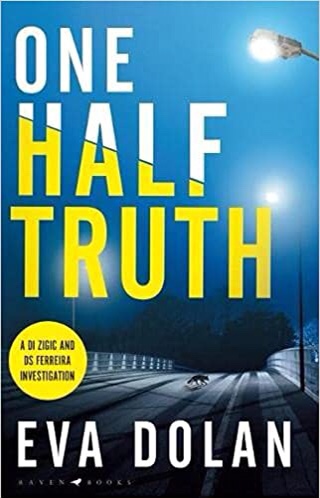
One Half Truth by Eve Dolan

I really enjoyed this police procedural set in Peterborough which is part of a series I’ve often read before. Zigic and Ferreira are the detectives looking for a killer when young student Jordan is shot dead walking home from watching football at a club. The club is for men who worked at Greenaway’s factory, but the factory is long gone and so are the jobs. This left skilled engineers consigned to the scrap heap in their fifties – an age where getting new employment is very difficult. The club lingers on as a reminder and is still frequented by a group of men bonded together due to their shared experience, with a lot of bitterness and anger remaining. So what was a young man like Jordan doing there and how had he ended up shot in the back of the head, execution style, close to the Parkway on his shortcut home?

The story line grabbed me straight away, possibly because my family are working class enough to have experienced what these men have gone through, but in the mining and steel manufacturing industries. I’ve seen what it does to a man to leave him unemployed near retirement age. Jordan really stood out as one of the good guys in life, using his writing to stand up to big business and expose corruption. Of course we only experience him through his deeds and other people’s impressions of him, but that’s enough for me to feel he was ambitious to be a journalist, but also had some integrity. He wanted to do the job to write the big stories, not doorstep celebrities or cover fun days for the local paper. He’d already been published in the Big Issue, the piece that told the stories of the men at the club and the reason he knew and bonded with them. He’d shown how their mental health suffered after redundancy, that many had lost their wives and families too, some had even lost the roof over their heads. The fact that he’d stayed in contact with these men, tells the detectives that the club is the best place to start investigating.

There are three stories that Jordan was working on with the potential to ruffle important feathers. One is about a social care company attached to a woman called Sheila Yule, but she is very wary of even speaking to the police and appears scared. Then there’s the death of the owner of Greenaway’s, in a helicopter crash. It had been ruled an accident but could Jordan have found out otherwise? Finally, he was looking into a housing development on the outskirts of the city, where Ferreira had almost bought a flat. Any one of these stories would have made this an interesting book, so to give us all three was generous and created a few red herrings along the way. There were so many leads to follow that the pace never let up and the story never flagged. All three stories were right up my street politically, so I really enjoyed delving into the detail and the thinking Jordan would have gone through when researching. All the undercurrents of deprivation, corruption, the collusion of big business and local politics couldn’t have been more timely and they fit perfectly with how I see the world.

There were some great bits of character revealed in Ferreira and Zigic’s home lives. Ferreira’s competitive streak comes out when her partner, and fellow police officer, wants to have his hunch on the case confirmed. The next minute they’re bantering about paint colours and wallpaper. The comical scene of Zigic and his wife clearing out his wardrobe was eerily familiar and very funny. These are the lives they go back to after working long hours and it was enjoyable to see those glimpses of their home selves. Both Zigic and Ferreira have a conviction to see justice done and hate being told what they can and can’t investigate from higher up. In this case, high ranking police officers being too cosy with local councillors and big business in the area. Ferreira is slightly more reckless and I love how she takes things into her own hands at the end. I like her fire and her need to get to the truth – whoever is involved. There are twists I didn’t expect, but I was glad of them, because they changed an outcome I was struggling to accept. This was solid, intelligent, crime writing with a lot of heart and a social conscience so I enjoyed it immensely.

Meet The Author


Eva Dolan was shortlisted for the CWA Dagger for unpublished authors when only a teenager. The four novels in her Zigic and Ferreira series have been published to widespread critical acclaim: Tell No Tales and After You Die were shortlisted for the Theakston’s Crime Novel of the Year Award and After You Die was also longlisted for the CWA Gold Dagger. She lives in Cambridge.

Posted in Publisher Proof

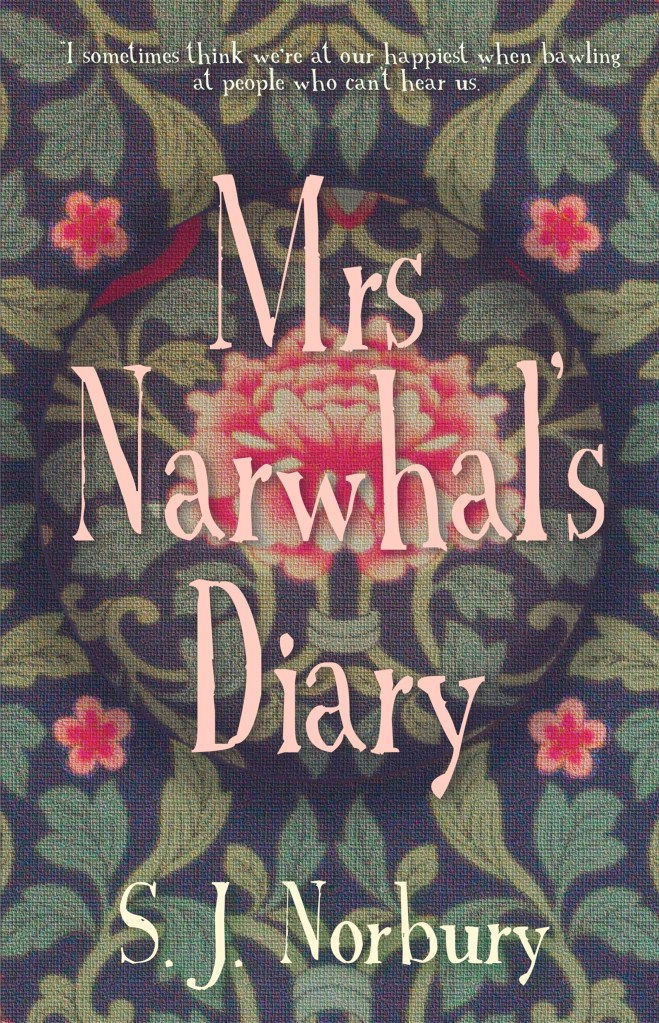
Mrs Narwhal’s Diary by S.J. Norbury.

“It was Woman’s Hour who suggested I keep a diary. They said it was good for mental health, and I must say I did feel much less frazzled after writing everything down yesterday. The frustrations were all still there, but somehow smoothed out – as if by a really good steam iron.”

Mrs Narwhal is overwhelmed. Her husband, Hugh, is unkind and unhappy – working every hour at a job he hates to save the ancestral home he never wanted. Then there’s Hugh’s sister, Rose, who’s spurned her one true love, and ricochets from crisis to crisis; and not to mention two small boys to bring up safely in a house that could crumble around their ears at any moment…

When Hugh’s pride receives a fatal blow, and he walks out, Mrs Narwhal is plunged into a crisis of both heart and home. With help from Rose she sets out to save the house her husband couldn’t. But can she save her marriage? And does she really want Hugh back?

Funny, charming, and moving, Mrs Narwhal’s Diary is an irresistible story which will enchant and delight its readers.

I always romp really quickly through books that are in diary format. Then regret I didn’t take my time. I think it’s because they’re in short chronological chunks so the brain keeps thinking – ‘just one more can’t hurt’. It’s also something to do with the solitary narrator letting us inside their head and view their world from that perspective. We’re not confused by other perspectives and we can trust that this is their truth. We get to know them deeply, and I certainly loved getting to know Mrs Narwhal. Yes, I was initially attracted by the unlikely and eccentric sounding name. These are the faded upper classes, living in their crumbling mansions, and going about their business while the house falls down around their ears. People like this make up some of my favourite bookish characters. I think it comes from a childhood of reading I Capture the Castle by Dodie Smith and Helen Cresswell’s Bagthorpe Series. This novel had all the character, charm, and humour of those books along with a dollop of romance and a very big heart.

The eccentric Narwhal family were once very wealthy, but their fortunes have diminished over the centuries. However, the traditions, expectations and responsibilities of the family remain. Hugh, current head of the Narwhal family, is at a complete loss as to how they can change their fortunes. He remembers a childhood of coming home and seeing a dark outline where a picture used to be, but that was when they still had things worth selling. He wants to respect the past, but previous Narwhals have committed terrible sins against the house: sixties wallpaper; a prop holding the ceiling up in the hall; a laundry basket for a bedside table; plumbing pipes sprawling across wood panels. One poor and exasperated ancestor simply tore half the house down to cut costs! Hugh Narwhal lives in this relative chaos, with his wife (our narrator) and their two young sons Billy and Peter. Hugh’s sister Rose, a walking tumult of emotions, drifts through from time to time. There’s Ian, who seems to be a faithful retainer from better times, and still hangs around the place guarding Narwhal treasures and the house’s long history. There’s also a rather formidable cleaner, who’s schedule can’t be changed or diverted for anyone.

The narrator lets us into the day to day chaos of living in an historic building where nothing works, but nor can it be thrown away. There’s a treehouse and bell – integral to a Narwhal bell ringing ceremony, but becoming too dangerous to hold its participants, a lake full of weeds, and various experiments at gardening. Every Narwhal has taken on the mantle with their own ideas and improvements, but no overall vision. The result is rather like a patchwork quilt coming apart at the seams. Hugh was working for a furniture makers in London, when he became head of the family. He promptly moved back to the family home on the Welsh Borders, with the idea of creating his own furniture and upholstery business in a workshop in the grounds. It takes a lot of upholstery to pay the bills, but Hugh feels the responsibility of his inheritance. He doesn’t know what to do with the place, but he doesn’t want anyone else to do it either. Every day the responsibility and his own pride begin to depress him. Mrs Narwhal knows their relationship is suffering, but can’t seem to reach him.

I really enjoyed the narrator, but as I started to write this blog I realised I couldn’t remember her first name. This is how invisible she has become. She’s always there, just a part of the furniture. She is a fixer, but has spent so long going from one disaster to another, she’s forgotten about the bigger picture. When she meets with Rose’s ex-husband we start to see a bit of a support group forming. The pair address each other with a warmth that only two outsiders within a family can. She’s actually very capable, witty, and intelligent but feels like Hugh has stopped seeing her that way. It was so sad, when she dashes to London on a ‘Rose rescue’ mission, that she sees a young couple in a bar and thinks they look familiar. As she’s sat wracking her brain to work out who they look like, she realises that this was her and Hugh before they inherited the hall. Young, vibrant and so interested in each other. She has been worried about whether Hugh loves her anymore, when the truth is he’s just stopped seeing her. More worryingly, as her mind becomes clearer, she starts asking herself the right questions. ‘Do I still love Hugh and is this enough for me?’ This is when change starts to happen.

Change does come to the family, but by different methods for everyone involved and with varying results. It comes about from each character knowing who they are in an authentic way and being honest about what they want. The results are by turns startling (the new tree house for example), creative and exactly right for this family to move forwards. For example, instead of constantly worrying about the mysterious, but stubborn, Ian and his constant disapproval of change. Someone needed to become head of the house and simply tell him what was going to happen. Ultimately, this is how every generation of Narwhal copes – by stating they are now head of the Narwhals and this is what’s going to happen. It takes a formidable character to bring about change in such an institution, although I did retain a small hope that they would reinstate the polar bears either side of the staircase – one holding drinks and one holding canapés. This was a charming, funny, story that touched on some serious issues, but ever so lightly. The ending was uplifting and I loved being in Mrs Narwhal’s company.

Meet The Author

S J Norbury lives in Herefordshire with her family. Mrs Narwhal’s Diary is her first novel.

Posted in Netgalley

Circus of Wonders by Elizabeth MacNeal.

From the cover..

The spellbinding novel from the author of the Sunday Times bestselling The Doll Factory. 1866. In a coastal village in southern England, Nell picks violets for a living. Set apart by her community because of the birthmarks that speckle her skin, Nell’s world is her beloved brother and devotion to the sea. But when Jasper Jupiter’s Circus of Wonders arrives in the village, Nell is kidnapped. Her father has sold her, promising Jasper Jupiter his very own leopard girl. It is the greatest betrayal of Nell’s life, but as her fame grows, and she finds friendship with the other performers and Jasper’s gentle brother Toby, she begins to wonder if joining the show is the best thing that has ever happened to her. In London, newspapers describe Nell as the eighth wonder of the world. Figurines are cast in her image, and crowds rush to watch her soar through the air. But who gets to tell Nell’s story? What happens when her fame threatens to eclipse that of the showman who bought her? And as she falls in love with Toby, can he detach himself from his past and the terrible secret that binds him to his brother? Moving from the pleasure gardens of Victorian London to the battle-scarred plains of the Crimea, Circus of Wonders is an astonishing story about power and ownership, fame and the threat of invisibility.

‘Do you like stories?’ Nell asks, and the child nods. She picks up the book of Fairy Tales, weighs it in her hand. She remembers Charlie’s wafting hands, trying to fix her, to make her ordinary. She puts it back, takes a breath. Instead, she tells Pearl about a mermaid with a blue-scaled tail. ‘Her tail was so beautiful,’ she whispers, ‘that if men caught her, they’d dry her out and place her behind a sheet of glass, and thousands of strangers would pay to see her.’ She tells her how the mermaid swam in the deep waters where nobody could find her. ‘A little like you in this wagon,’ she says. Pearl smiles, and Nell carries on, explains how a prince’s ship was blown off course and he fell in love with her. He longed for his own tail so much that he visited a witch who ripped his legs from his body and stitched on fish scales with a sharp needle’.

Those of us who loved Elizabeth MacNeal’s first book The Doll Factory have been waiting impatiently for the next novel to spring from her imagination. The wait was worth it. I am always drawn to books about circuses and freak shows – it follows on from research I did at university in my Gothic, Grotesque and Monstrous module and for my dissertation on disability. However, not all works that feature freak shows, in whatever form, have their research based in disability studies and culture. While The Greatest Showman has Hugh Jackman (swoon) and some incredible songs, it doesn’t really tackle the ethics of such an enterprise as Barnum’s. Yes, the freaks had a great song about being their authentic selves and not being hidden away, but it never tackled that deep inequality in their relationship as showman and exhibit. The act of singing This Is Me, led by the bearded lady, shows their strength and character when Barnum doesn’t allow them to attend the party with dignitaries. However, it doesn’t address the fact that they are getting paid to display themselves as different and whether or not this is a choice. MacNeal uses Barnum as the inspiration to her showman, Jasper Jupiter, but she does see the problems inherent in a concern that displays ‘other’ bodies for entertainment. She then explores the concept of difference using the circus performers, fairy tales and concepts of monstrousness. She manages to do this while writing a story that is thrilling, full of strong characters and told with such vivid description.

Our heroine, and eventual Queen of the Moon and Stars, is Nell. As Jasper Jupiter’s troupe visit the small village where her family farms violets for confectionery, he notices Nell’s wild abandon as she dances with her brother. This is an after show party for the performers, but there are locals too, enjoying the atmosphere and partaking in a lot of alcohol. Nell is usually shy, covered in birth marks head to foot, she tends to stay where she isn’t seen. However, the alcohol she tries removes all the inhibitions she usually hides behind in public. Jasper sees her as a leopard girl, covered in spots, and imagines how she would look in his circus. Eventually though, he settles on Queen of the Moon and Stars; Nellie Moon, with a skin covered in constellations. He approaches Nell’s drunkard of a father and offers him twenty pounds for her. He creates a caravan for her, beautifully decorated and with three well chosen books for her to read. Then with her father’s help, he kidnaps her, locks her in the caravan and trundles off with the rest of the circus into the night. His plan is to make her fly, constructing huge feather wings on a harness and a system of ropes and pulleys to give the impression she is soaring above the crowd. His troupe are ‘performers’ not just exhibits to be wheeled out, poked and prodded. Jasper believes that with Nellie Moon he might start to earn the sort of money that would make a trip to London viable. Maybe in a show tent in one of the pleasure gardens? Most of all he’d like to entice Queen Victoria to see his show, because she is a famous ‘freak fancier’ and what a coup it would be if Jasper’s Circus of Wonders was her first choice of entertainment since Albert died.

I loved the way the author used the books in Nell’s caravan to bring in the idea of fairy tales and how they victimise people who are different. When Nell is reading to Pearl, an albino little girl that Jasper buys, she manages some retelling worthy of Angela Carter – including The Little Mermaid quoted at the beginning of my review. Nell thinks about the book of Hans Christian Andersen tales she would read with her brother Charlie:

‘They read about Hans My Hedgehog, half-boy, half-beast; about the Maiden without Hands; about Beast and his elephant trunk and his body glittering with fish scales. It was the stories’ endings which always silenced her, that made her pull her dress over her fingers. Love altered each character – Hans shucked his hedgehog spines like a suit, the maiden’s hands grew back, Beast became a man – and Nell pored over the woodcuts so carefully, staring at those plain, healed bodies. Would her birthmarks disappear if somebody loved her?’

The thought would make her tearful even then, but she didn’t know why. Stella, the bearded lady, tells Nell that she will find her strength in performing. It’s a way of taking up space in a world that doesn’t see them. She gives voice to the dilemma at the heart of the ‘freak show’; instinctively, it feels wrong to exhibit someone for their difference, but where else would they earn so much money and live so well? Of course in reality there were horror stories and the author does name check some of them in the book. Sara Baartman, a slave from South Africa, known as The Hottentot Venus was exhibited all over the world until her death. She was then bought by naturalist George Cuvier who dissected her, then pickled her genitals and kept them in a jar. Barnum was known to treat animals appallingly, but he also exhibited a freed slave called Joice Heth after removing all her teeth! He did this so he could name her the Oldest Woman in the World. However, for every horror story there were famous ‘freaks’ such as Siamese Twins Chang and Eng who earned so much from being exhibited that they bought a plantation for themselves, and their families. It isn’t just the money though, as Stella explains:

‘There’s power in it,’ Stella says, twisting a curl of her beard around her finger. ‘In what?’ ‘Performing. You control it. How they see you. You choose to be different. Nobody else looks like me, and I’m glad […] I was a hungry gutterling, not worth a gentleman’s spit. And because of this, the source of all my powers—’ she smiles and pulls on her beard – ‘I’ve been to Vienna and Paris and Moscow, and done as I please. I’ve made enough money to make my mother turn in her grave. I could give you a thousand names of wonders whose lives are richer, bigger, brighter, because of shows like this.’

Nell can’t imagine feeling like this. She has always kept her body covered and stayed in the background. She’s used to being called ‘leopard girl’ or being asked if her mother was startled by a leopard during her confinement. She is used to being whispered about and pitied. How will she feel about her body being displayed, flying high above the audience? Being pointed at and talked about, her body on posters, matchboxes and as figurines. Yet, when she gets there, she does feel what Stella is talking about.

‘Someone throws flowers into the sky. A bouquet dips and falls. She watches these people, grown fat on wonder. They have seen a giant juggle, a bearded woman chirrup like a blackbird, a dwarf ride a miniature pony, tumblers and contortionists, fire-eaters and dancing poodles, and she is the finale. They admire her, want to be her. All her life, she has held herself like a bud, so small and tight and voiceless. She has not realised the potential that lies within her, the possibility that she might unfurl, arms thrown wide, and take up space in the world.’

I loved the stance the author takes and I loved this awakening in Nell too, but there’s so much more to the book. The luscious descriptions of costumes and performers made me feel I was there. The heat of the lights, the smell of the animals and gaudy caravans.The sounds and smells of the pleasure gardens were also really vivid, especially the morning after. The flashbacks of Jasper and his brother Toby’s time in the Crimean War were horrific and I loved the interplay of the brother’s roles as watcher and doer. The author plays with the idea that appearances never lie, through Toby’s photography, how he chooses his images and for which audience. Toby was an interesting character who never truly fits anywhere, not even in his natural place as Jasper’s brother. His difference doesn’t show, so when he tries to make his otherness visual will the other performers accept him? Jasper himself is mercurial, full of ideas and with a lot of success, but always reaching for more, to his detriment. I found his relationships to women interesting, he has no lovers and his ties with his friend Dash were the strongest he’s had with another person. He seems to see women as things to display, to possess and assert power over, but not as allies or equals. Yet, in his troupe, he has some of the strongest women you could imagine. There are some parts of the ending that were inevitable and others that were unexpected and left undone, which was perfect. I loved this book so much, I’m going to buy a very special copy of it and keep it forever.

Meet The Author


Elizabeth Macneal was born in Scotland and now lives in East London. She is a writer and potter and works from a small studio at the bottom of her garden. The Doll Factory, Elizabeth’s debut novel, was a Sunday Times bestseller, has been translated into twenty-nine languages and has been optioned for a major television series. It won the Caledonia Novel Award 2018. Circus of Wonders is her second novel.

Posted in Publisher Proof

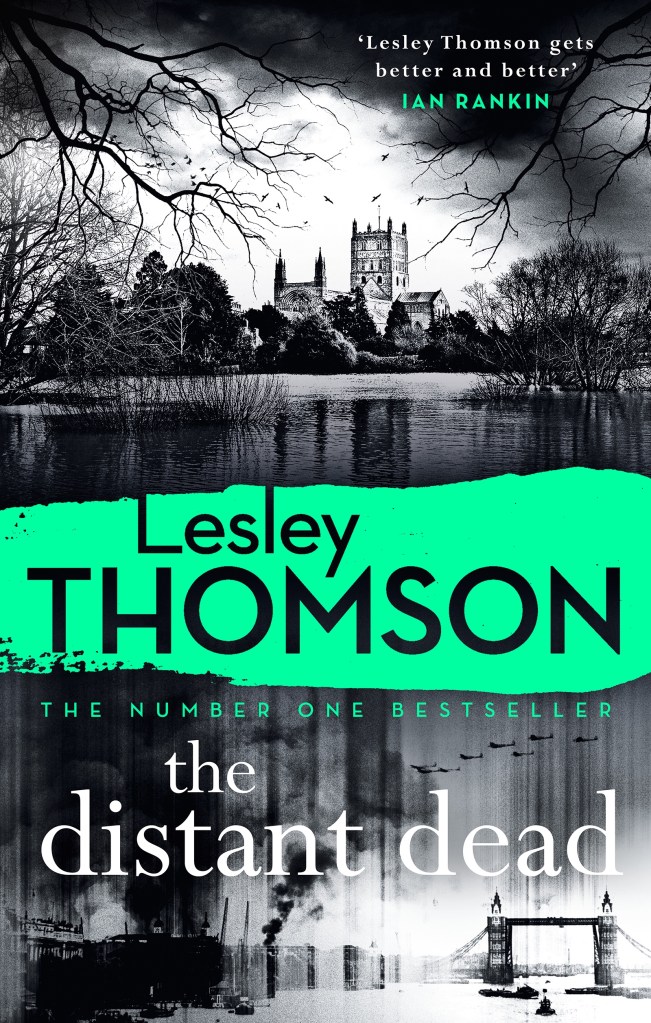
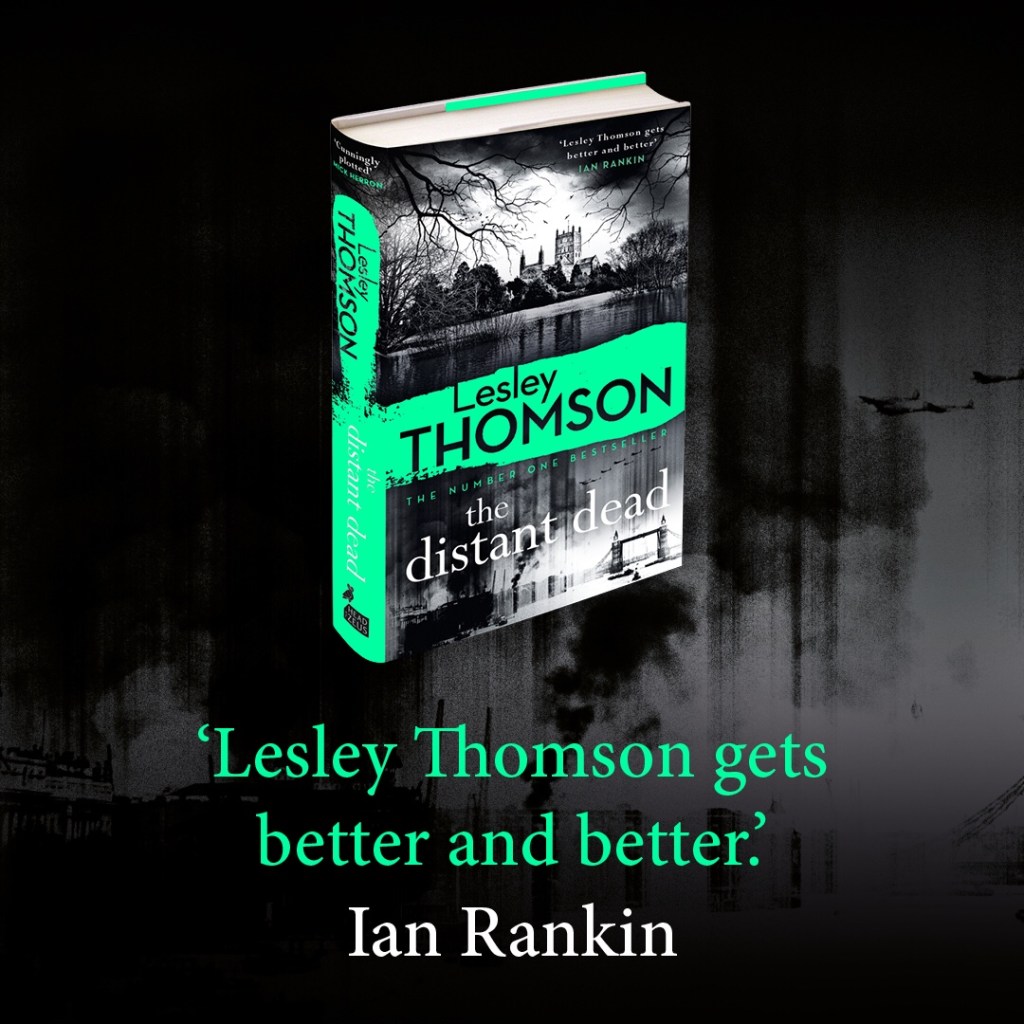
The Distant Dead by Lesley Thomson.

A woman lies dead in a bombed-out house. A tragic casualty of the Blitz? Or something more sinister? Sixty years later, the detective’s daughter unearths the truth… From the number 1 bestselling author of The Detective’s Daughter.

LONDON, 1940

Several neighbours heard the scream of the woman in the bombed-out house. One told the detective she thought the lady had seen a mouse. Another said it wasn’t his business what went on behind closed doors. None of them imagined that a trusting young woman was being strangled by her lover.

TEWKESBURY, 2020

Beneath the vast stone arches of Tewkesbury Abbey, a man lies bleeding, close to death. He is the creator of a true-crime podcast which now will never air. He was investigating the murder of a 1940s police pathologist – had he come closer to the truth than he realised?

This is the first time I’ve read Lesley Thomson and her Detective’s Daughter series, of which this is the eighth novel. At first it felt a little like coming into the room in the middle of a conversation, but once the second timeline began I’d been drawn into the atmosphere of an interesting story, full of character and historical detail. In the now section of the novel, Stella is settling in Tewkesbury and trying to finally come to terms with the death of her father in a place where she isn’t reminded of him at every turn. It was a tough choice to completely uproot herself, leaving behind her business Clean Slate and a long term relationship with Jack. She has moved with journalist Lucie, who also loved her father, and the women are dealing with their grief in their own ways. Stella has started visiting The Death Cafe, run by pathologist Felicity Branscombe. It’s a space to meet others struggling with grief and they discuss their experiences of death. While on one of her cleaning jobs – at Tewkesbury Abbey – she meets a man called Roddy Marsh and they pass the time of day as he asks her questions about how she keeps a place like this clean. However, she then meets him again at her second visit to the Death Cafe group. Is this a coincidence, or did Roddy want to meet Stella? Straight after the group meeting, Stella returns to the Abbey only to find poor Roddy, dying from a stab wound in his back. He has something important to say to her, but sadly Stella can’t catch his words.

In our past storyline we are taken to the London Blitz and the murder of young mother Maple Greenham. For some reason, my connection to Maple was instant and I really enjoyed her part in the story. We meet her as she is getting ready for a night out and we sense her parent’s trepidation that she’s stepping out with a man who doesn’t pick her up or even walk her home. They’ve never met him at all. After an evening of dancing, her beau produces a key for a friend’s house and they have a tryst. I loved the small details Thomson evokes in these glimpses of the past. Here, Maple has a moment of irritation as she notices a snag in the toe of her silk stocking and mentally tots up how much time she’s had to spend working to afford them. This told me that the man she’s with wouldn’t understand that sort of concern, because he’s from a different class to her. Maple’s scream is dismissed by those who do hear it. No one imagined it was the sound of this young woman being strangled by her lover. DI George Cotton is the investigating officer and finds incontrovertible evidence of her killer’s identity, but finds his case and his career shelved. This is a man too important to the war effort to be hauled up on a murder charge. Put simply, it’s decided his life and the potential lives his work will save, are more important than Maple. The link between cases is a podcast, titled The Distant Dead, featuring murder cases where the real culprits were never caught. The presenter of this true crime series was Roddy Marsh and he was featuring the death of a 1940s police pathologist. Is there someone in the present day who wants these truths to stay buried?

Now, the Clean Slate staff alongside Stella, Lucie and Jack decide to investigate past and present murder cases. This is not without it’s dangers and leads us to an interesting cast of characters, none of which are exactly what we expect. Stella realises again, that it seems impossible for her to leave her father’s world behind. There’s even a connection to the SIO on Roddy’s murder, a WPC who worked with Stella’s dad. I enjoyed tracing the links between past and present cases and watching how Stella works – no matter that she doesn’t want to fall into her father’s work and habits, she does seem to have a talent for it. I loved the historical detail from the 1940 case too. This was an atmospheric tale, full of the twists and turns a modern reader expects. However, there’s also a feel of a much earlier mystery novel, possibly a 1930s/40s cozy murder mystery. It has elements like the eccentric characters, gatherings in tea rooms and unusual methods of murder. Some aspects are spooky, such as the cathedral or the dark and narrow country lanes. Others, such as the dialogue, are almost comical. There’s also Stanley the dog’s antics too of course. It is an enjoyable read, slightly slow in some parts, but with a great sense of place and characterisation.

Meet The Author.

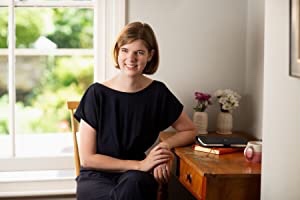
Lesley Thomson is the author of the Detective’s Daughter series of West London-set mysteries featuring private investigators Stella, a cleaner, and Jack, a tube driver. The first novel, The Detective’s Daughter, became an ebook phenomenon in 2013, staying at number 1 in the digital charts for 3 months. Since then, the series has gone on to sell 800,000 copies worldwide. Lesley is an active member of the UK crimewriting community, and appeared at several crime festivals in 2019, including CrimeFest, Harrogate, Morecambe & Vice and Capital Crime. She lives in Lewes with her partner and her dog

Follow Lesley:

Facebook: @LesleyThomsonNovelist

Twitter: @LesleyjmThomson

Website: lesleythomson.co.uk

Buy links:

Amazon: https://amzn.to/3eCVO6O

iBooks: https://apple.co/3y3A8Zf

Kobo: https://bit.ly/3hmq47F

Google Play: https://bit.ly/3uMuAjS

Waterstones: https://bit.ly/3y7IRtC

Bookshop.org: https://bit.ly/3y3O6dN

Follow Head of Zeus

Website: www.headofzeus.com

Twitter: @HoZ_Fiction

Facebook: @headofzeus

Instagram: @headofzeus