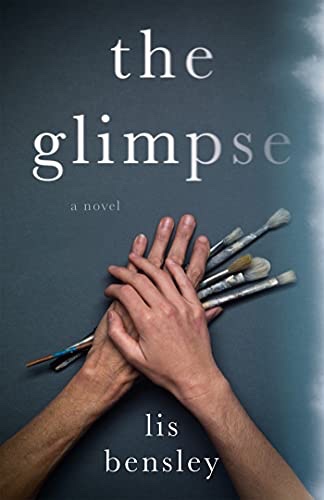
This was a complicated and fascinating book about art, but also how difficult the relationship can be between mothers and daughters.. I really believed in this story and it’s portrayal of the difficulties in making art. I was not surprised to read that the author had been an art writer, because of the detail and truth in the process of creating. Set in the art world of NYC, Lisa is a painter in the Abstract Expressionist era of the 1950s. She starts to be sidelined when she becomes pregnant, but truly believes she can be a mother and still create great art. Studying in NYC is a dream and I think she really felt she’d found her people, her tribe. Fellow artist and lover Hank, goes up against her for an exhibition and is surprised when it’s Lisa’s work that really gets noticed. We then jump to 1966.
When her daughter Rouge was born, Lisa found herself butting up against the male dominated art world, surprised to find it quite conventional after all. I loved the feminist take on what we imagine to be a fairly free and bohemian world. It was an area of life that I’d imagined had less barriers. I really felt for Lisa and understood her disillusionment when her ex-lover is suddenly a new darling of the movement. Especially considering how similar their work is. The psychological effects of this realisation include resentment building between mother and daughter. The resentment is felt, even where it isn’t knowingly expressed or acknowledged. Lisa ends up teaching in college to pay the bills, she also starts to drink more heavily and take risks. Years later, when her daughter Rouge takes an interest in art she chooses photography as her medium. She looks for a mentor and finds Ben Fuller, who happens to be one of Lisa’s old lovers. This acknowledgment, and from a male member of the art world, adds another layer of resentment between mother and daughter. If Rouge’s photography is going to be noticed, how will Lisa cope and what lengths will she go to in order to deal with these negative feelings? Would she consider sabotage?
When she was pregnant Lisa could have chosen another road, she could have walked through a door of her choosing and be living a different life. She hasn’t intentionally made Rouge feel unwanted, but the choice to stop creating art held within it so much self-sacrifice, that it’s some unconscious negativity and even anger has come through to her daughter. Now her daughter is going to take the acclaim that Lisa feels is rightfully hers. However, Rouge is also angry, about the drinking and the revolving door of lovers who come in and out. She is so dismissive of her mother’s choices that she’s very surprised to find one of these lovers had anything useful to teach her. If her photography is good enough, she can imagine doors opening for her. It could be an escape from home and her mother.
I loved that all those elements and difficulties of a woman creating are expressed through Lisa’s world and it’s likely the author has felt similar constraints herself – they haven’t really gone away half a century later. I still feel guilty if I’m writing instead of doing the housework, or doing something for the family. I even find it hard to tell friends I can’t see them because I’m writing. Writing isn’t seen as real work until you’re published, but if you can’t write that never happens. Everyone thinks it can just be moved to tomorrow, and I know I’m not alone in putting it off. Some of that could be imposter syndrome, but it’s also saying it out loud. If I tell people I’m writing, then it’s real with all it’s chance of failure. However, the difference between the 1950s and the 1960s is a huge one culturally, There’s the pill for a start, leaving women in developed countries in charge of their own fertility. Between that and the more permissive attitudes in society it’s clear to see why Lisa would feel there is a huge gap between her generation and her daughter’s. Rouge is free to network and really sell herself. She can curate her own image as an artist, whereas mothers already have one. The author depicts the artistic journey so well – that imposter syndrome, the dreams, the crushing reality and self-sabotage are all seen in these two women. The author shows, quite beautifully, how mothers and daughters misunderstand each other: not knowing the cultural differences between their generations; not even understanding, never mind appreciating, the sacrifices made and the love behind them. This book is about that distance between mothers and daughters, a distance that can only be bridged through openness and honesty, as well as space and time. This was a fascinating and psychologically complex read.
Meet The Author.
Lis Bensley is a writer living in Santa Cruz, CA. She has worked as a journalist at The New York Times and The International Herald Tribune, when she lived in Paris and studied cooking at the Cordon Bleu. Subsequently she wrote The Women’s Health Cookbook. To entertain her children, she wrote The Adventures of Milo & Flea about the antics of their cat and dog. She is currently hoping to publish her novel The Glimpse and is working on sequels to the Milo and Flea story.
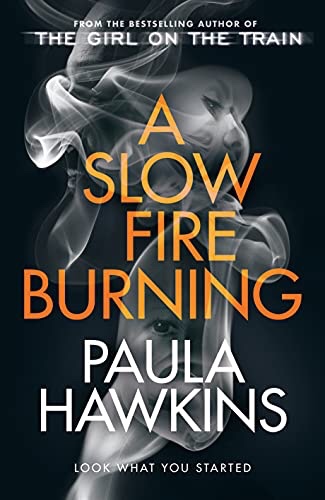
I’m a big fan of this author’s previous novels Into The Water and TheGirl on the Train. Incidentally, I didn’t like the latter’s film relocation to upstate New York, because I didn’t feel it had the necessary grit of the book’s London location and lost something in translation. I’ve been looking forward to her new novel and I spent the weekend on my chaise longue reading it with a bar of Green and Blacks Sea Salt. Pure bliss! The novel is set in London, on a stretch of the Regent’s Canal between Bethnal Green and Islington. We open with a body being found on one of the canals, the deceased is a young man his neighbour only knows as Daniel. When she boards his boat and finds his body covered in blood she knows she must ring the police. However, in typical Hawkins fashion, the author wishes to unsettle the reader and leave them unsure of who to trust. So, although his neighbour Miriam looks like a run of the mill, middle aged and overweight woman, used to being ignored, she does something unexpected. She notices a key next to the body, and as it doesn’t belong to the boat she picks it up and pockets it.
Our other characters are members of Daniel’s family, who live within walking distance of each other in this area. Daniel’s mother Angela is an alcoholic, in a very strained relationship with her only child until his death. Then there’s his Aunty Carla and Uncle Theo who live near the boat. Daniel appears to have a closer relationship with his Aunty Carla, than he did with his mother, but is it really what it seems? Miriam has noticed some odd comings and goings from the boat next door. This is a family with secrets, both old ones and current ones. Miriam noticed that the girl who works in the local launderette, Laura, was with Daniel on the night in question and they had a row. Laura could have killed him, but Miriam doesn’t think so. Then there’s Irene, an elderly lady who lives next door to Angela and has also noticed some strange behaviour next door too. She knows the family well although Angela has often been too distracted by her own life to form a friendship. Irene does have a soft spot for Laura who helps her out from time to time, by going shopping or running errands. Like Miriam, Irene is also wondering if everything is what it seems with this murder. Lonely people observe a lot and although the family won’t realise this, she’s in possession of a lot of information. Something seismic happened to this family years before, something that changed the lives of everyone involved. Might that have a bearing on their current loss? Could that be the small flame, burning slowly for many years, before erupting into life and destroying everything?
I absolutely fell in love with Laura. She has a disability that affects her mobility and, along with many other symptoms, she has problems keeping her temper. Her hot-headed temperament has led to a list of dealings with the police. This isn’t her normal character though, this rage seems to come from the accident she had as a child. She was knocked down by a car on a country road while riding her bike and broke her legs, as well as sustaining a head injury which has affected her ability to regulate her emotions. Further psychological trauma was caused when she found out the man who hit her, was not just driving along a country round, but driving quickly away from an illicit encounter. Who told him to drive away and why? Laura feels very betrayed and now when she feels threatened, or let down, that rage bubbles to the surface. She’s her own worst enemy, unable to stop her mouth running away with her, even with the police. She has a heart of gold, but very light fingers. She’s shown deftly whipping a tote bag from the hallway of Angela’s house, but in the next moment trying to help Irene when she can’t get out. I found myself rooting for her, probably because she’s an underdog, like Miriam. Miriam feels that because of her age, looks and influence she is completely invisible. She has been passed over in life so many times, it’s become the norm. However, there is one thing she is still angry about. She wrote a memoir several years ago and showed it to a writer; she believes he stole her story for his next book and she can’t let that go.
I love how the author writes her characters and how we learn a little bit different about them, depending on who they’re interacting with. They’re all interlinked in some way, and their relationships become more complex with time. As with her huge hit The Girl on the Train, the author plays with our perceptions and biases. She doesn’t just plump for one unreliable narrator, every character is flawed in some way and every character is misunderstood. We see that Miriam is not the stereotypical middle-aged woman others might think she is, as soon as she pockets that piece of evidence at the crime scene. Others take longer to unmask themselves, but when they do there’s something strangely satisfying about it. We even slip into the past to deepen our understanding of this complicated group of people, letting us into all their dirty little secrets, even those of our victim Daniel. When I’m counselling, something I’m aware of is that I’m only hearing one person’s perspective of an event. Sometimes, that’s all it needs, some good listening skills and letting the client hear it themselves. Yet, it is only one part of a much bigger story. Occasionally, I do get an inkling of what the other person in the story might have felt and I might ask ‘do you think your wife heard it like that or like this?’ If I say ‘if my partner did or said what you did, I might feel….’ it makes the client think and asks that they communicate more in their relationship. Sometimes the intention behind what we say becomes lost in the telling. That’s how it was reading this book, because we do hear nearly every perspective on an event, but also how each event or interaction affects the others. The tension rises and it was another late night as I had to keep reading to the end. Paula Hawkins has become one of those authors whose book I would pre-order unseen, knowing I’m going to enjoy it. In my eyes this book cements her position as the Duchess of Domestic Noir.
Meet The Author.
PAULA HAWKINS worked as a journalist for fifteen years before turning her hand to fiction. Born and brought up in Zimbabwe, Paula moved to London in 1989 and has lived there ever since. Her first thriller, The Girl on the Train, has been a global phenomenon, selling 23 million copies worldwide. Published in over forty languages, it has been a No.1 bestseller around the world and was a No.1 box office hit film starring Emily Blunt.
Into the Water, her second stand-alone thriller, has also been a global No.1 bestseller, spending twenty weeks in the Sunday Times hardback fiction Top 10 bestseller list, and six weeks at No.1.
A Slow Fire Burning was published on 31st August by Doubleday.
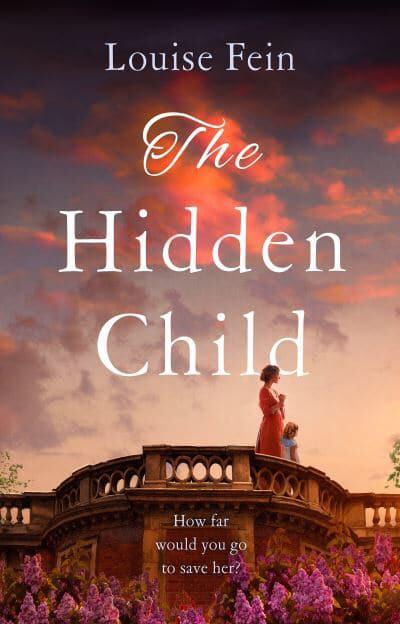
I was so blown away by Fein’s beautiful novel People Like Us earlier this year, that I immediately jumped at the chance to read her new novel early. I was ready to be immersed in her incredible characters, historical background and unique perspective. At first glance this novel seemed different to her last novel. Set in England in the 1920s we meet a pair of sisters, Eleanor and Rose. Their parents died young, and as a result of supporting each other from then on, they have been inseparable. The book opens as Eleanor and her daughter Mabel set off on their pony and cart to meet Rose at the railway station. She is returning from a period of time in Paris, to live with Eleanor and her husband Edward. However, before Rose arrives something very strange happens to Mabel, as she sits quietly on the grass outside the station. One of the train guards notices first and alerts Eleanor, who rushes over to sit by her daughter. Mabel is making repetitive jerky movements, her eyes have rolled back and she is oblivious to Eleanor’s attempts to rouse her. Once it’s passed, Mabel seems exhausted and she travels back to the house, wrapped in a blanket and looking very sleepy. Eleanor’s concern is twofold: firstly, will Mabel be ok? Secondly, how will husband Edward respond if it happens again, considering he’s one of the leading lights of the eugenicist movement?
Eugenics was a movement that emerged in the aftermath of Charles Darwin’s Origin of the Species. The idea was to improve the human species by actively encouraging breeding between people with certain desirable traits. Of course that also meant actively ‘breeding out’ invisible disabilities like epilepsy, as well as people thought to be the wrong colour, of low intelligence or mentally unwell. Even criminal tendencies and poverty were thought to be undesirable traits that could be ‘bred out’ of society. In the early 20th Century, eugenics was a legitimate area of scientific enquiry here in the U.K. but it was even more popular in the USA where it made its way into marriage legislation in Connecticut as early as 1896. It became illegal for those who were ‘feeble-minded’ or epileptic to marry. The Eugenics Record Office was then set up to track families and their genetic traits, concluding that those deemed unfit were a victim of negative genes not racism, economics or other social issues. This is the type of study that Eleanor’s husband Edward is undertaking. As a psychology professor he’s using eugenics to shape education policy. He’s studying children from poorer families to test their intelligence against those from middle-class families. He’s expecting the theory to hold and the poorer children to be genetically predisposed to be less intelligent. This will be the basis for streaming children into different educational programs and is the basis for our real life grammar school system; the top 25% of children are determined by the 11 plus exam and streamed into grammar school education, something that still happens in my home county of Lincolnshire. Yet eugenics took a very dark turn in America where there were thousands of forced sterilisations in mental institutions and for the Native American population right up till the 1970’s. So contrary to most people’s understanding, Germany were not the only proponents of eugenics theory, but their use of the theory to murder six million Jewish people, as well as members of the Roma community and disabled people, is the most horrific act of genocide the world has ever seen.
Edward isn’t just dabbling with eugenics. He’s a true believer. Eleanor changes considerably throughout the novel. At first she sees Edward as a saviour, looking after her and her sister Rose. We first see tension in the novel when Rose returns from Paris and announces she is in love with an artist. It feels as if Edward takes a more fatherly role, or saw his role as a old-fashioned protector of the sisters, especially since they have no parents. Eleanor agrees with her husband that Rose could make a far better match, someone with more money and prospects would be the ideal. As Edward denies Rose’s request to see Max or perhaps bring him to dinner, Eleanor is torn between them but trusts her husband’s judgement for now. She even allows him the final decision over Mabel’s care. These were the most difficult sections of the novel for me. They have to be there so that we understand the reality of epilepsy in the early 20th Century, but the treatments feel brutal and my heart broke for this little girl who is having all the spirit drained out of her. There’s some very impressive research behind this part of the story, not just into treatments, but into the theories and the superstition surrounding the illness. In my head I was screaming at Eleanor to follow her instincts and intervene, although even if she had, would she be listened to? I found the pompous and arrogant attitude of the doctors in the novel, sadly true to life. Neurology is a discipline I’m very used to and to some extent there is still a difference in the way some neurologists treat men and women. In fact, apart from Max, all the men in the novel are caught up in their own ego, and seem to want public credit for everything they’ve done, along with deference and respect from women and those lower than them on the social scale. They have full belief in their skills and methods, and will not be questioned on their decisions.
I wanted Eleanor to stand up and fight for her daughter, with both the institution and Edward. I was shocked at the lengths he was willing to go to, in order to prove his theories right. There needed to be a shift in his relationship with Eleanor where she starts to see him more as an equal, a fallible human being rather than a saviour. Only then could she decide whether she was willing to work on their relationship, where it felt to me he needed to be a husband rather than a father-figure. I felt so tense as we moved towards the ending, and I found it satisfying for these characters, but there was still that concern inside me, about how eugenics developed in horrifying ways. I knew I would be thinking about the novel for some time afterwards. I wondered what would Edward feel about eugenics a few years later with Nazism on the rise and Hitler’s dream of creating a master race in its first stages. I’d also thought of Max, Rose’s artist, and whether he stayed in England to be with Rose and missed out on the fate of many other Parisian Jews, who wrongly expected to be safe in France. As a person with a disability, the eugenics movement both terrifies and angers me. The thought of the suffering endured by people with disabilities, at the hands of scientists, fills me with rage. Even before WW2 the Nazi Party we’re starting their crusade for a master race. On July 14, 1933, the Germany passed the “Law for the Prevention of Progeny with Hereditary Diseases.” The law called for the sterilisation of all people with diseases considered hereditary, including mental illness, learning disabilities, physical deformity, epilepsy, blindness, deafness, and severe alcoholism.
When the law passed the Third Reich also stepped up its propaganda against the disabled, regularly labeling them “life unworthy of life” or “useless eaters” and highlighting their burden upon society. Many people in the disabled community feel there is a similarity to 21st Century rhetoric around benefit claimants and fraud, framing disabled people as dependent on the state and drains on resources. I must admit that it drifted into my mind as I was reading. There is a claim that the withdrawal of benefits and support from the disabled community since 2006, has led to a genocide of disabled people. The figure often quoted is 120,000 additional deaths caused by austerity. Even before the the Final Solution, the Nazis were using the term ‘’euthanasia” for the systematic killing of the institutionalized mentally and physically disabled, even children. Using the term euthanasia made it sound as if death was a kindness for those who were really suffering or terminally ill, but this was not the case. The secret operation, code-named T4, in reference to the street address (Tiergartenstrasse 4) of the program’s coordinating office in Berlin, followed systematic sterilisation of groups in society they wanted to reduce or eradicate. I studied eugenics as part of my dissertation on disability in fiction in 2004 and it is an insidious theory that still hasn’t fully lost it’s influence on the world.
This book stirred up so many thoughts and feelings for me as a disabled reader. Knowing you are one of those people who would have been eradicated is unsettling and leaves me feeling very sensitive to the language used by governments and their attitude towards the disabled community. If people with disabilities are veterans or Paralympians they are acceptable, but otherwise their existence is problematic and I often wonder what it would take for the tide to turn and history to repeat itself. So, I appreciated the depth of the author’s research and the care she took in telling Mabel’s story. The First World War veterans struggling to adjust and live back in society, were a really interesting thread too. Edward is supporting one of his men financially, for reasons that extend all the way back to the battlefield. I enjoyed the adjustment that has to take place in Eleanor and Edward’s marriage once all the secrets he’s been keeping are out in the open. If they stay together they will have to start from a basis of honesty with each other. If Edward is not a war hero or an academic with integrity, who is he? Can Eleanor love the real Edward, especially now that she’s grown up and become a stronger, more independent woman? I loved the way Louise Fein takes this volatile part of history and creates a story that is both personal to these characters, but global in it’s reach and influence. It affected me profoundly, not just because of the disability issues, but because of Mabel who I fell completely in love with. I kept reading because I wanted the best resolution for her, safe and looked after with her family around her.
Meet The Author.
Louise Fein was born and brought up in London. She harboured a secret love of writing from a young age, preferring to live in her imagination than the real world. After a law degree, Louise worked in Hong Kong and Australia, travelling for a while through Asia and North America before settling back to a working life in London. She finally gave in to the urge to write, taking an MA in creative writing, and embarking on her first novel, Daughter of the Reich (named People Like Us in the UK and Commonwealth edition). The novel was inspired by the experience of her father’s family, who escaped from the Nazis and arrived in England as refugees in the 1930’s. Daughter of the Reich/People Like Us is being translated into 11 foreign languages, has been shortlisted for the 2021 RNA Historical Novel of the year Award, and has been long listed for the Not The Booker Prize.
Louise’s second novel, The Hidden Child, will be published in the Autumn of 2021. Louise lives in the beautiful English countryside with her husband, three children, two cats, small dog and the local wildlife who like to make an occasional appearance in the house. Louise is currently working on her third novel.
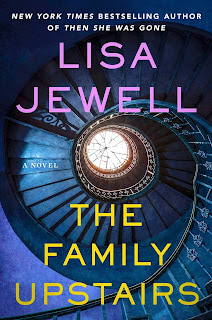
As some of you may know, reviews can get very personal for me. Probably because I’m a therapist and used to lots of self-reflection. When a book hits me emotionally I really think about why and this book had me scurrying to my journal. Lisa Jewell is a master of these domestic thrillers and the psychological suspense created when groups of people are in conflict. Here the conflict is controlled within one house 16 Cheyne Walk in Chelsea, overlooking the river. That is until it’s secrets explode and the truth of the mystery is scattered across the world.
Three narratives weave in and out of each other to tell the story. We meet twenty five year old Libby with her little garden flat and her job at the kitchen design company where she’s worked for five years. Everything about Libby says organised, professional and quiet. That is until a bombshell is dropped on her life. Woven with this is the story of Lucy – if that is her real name. She is living in France but at the moment we meet her is homeless along with her two children and the dog. The family are reduced to sneaking in to the beach club to get showered but that doesn’t happen everyday. Lucy is at rock bottom. She can’t husk for money but needs money to collect her violin. They have nothing left to sell. Does she go and ask her violent but rich ex-husband for help? Or does she let the children stay with their grandparents? Either way she needs her violin and once she sees the date, she develops an urgent need to make her way back to London and a certain house in Chelsea.
Our third narrator is Henry, relating what happened at the house back in the early 1990s. Henry just about remembers family life when things were normal and it was just the four of them: mum, dad, Henry and his sister. He has vivid memories of going to private school in his brown knickerbockers and sitting drinking lemonade while his Dad read the newspaper at his club. The house was filled with curiosities such as animal heads, ceremonial swords and red thrones. It’s so distinctive in style that when the money starts to run out the house is scouted as a location for a music video. The fiddle player in the band is Birdie and she loves the house. So much so that when she needs a roof over their head, she and her partner, Justin, come to stay in the upstairs room. Henry’s father has had a stroke and doesn’t have the same strength and power he used to have. He seems to sit by and watch as Birdie and Justin take up residence. Later another couple join the group. David Thomsen is a man Henry dislikes almost instantly because he seems to sense what his Dad and Justin fail to see. David has charisma and seems to have an effect on every woman in the house. His wife Sally and two children, Phin and Clemency, also join them. It starts to feel like they’re living in a commune but the only consolation is Phin. To Henry, Phin is beautiful with floppy hair, cheekbones and a distinctive style. When Phin takes him shopping, Henry develops a crush and trails after him, wanting to be like him. When it is suddenly announced at the dinner table that David and Birdie are now a couple Henry senses this is the start of something evil. They bring out the worst elements of each other and start to assume a power in the house that goes unchallenged by his parents or the other adults. They are told what they will eat, do and even wear. Henry knows this is out of control and this is only the beginning of the damage this man will inflict in the house. Libby has been set a letter by a group of solicitors telling her she has been left a house. When the solicitor walks her round to the house she realises she is rich. The house is abandoned, but huge and in prime position. It could be worth millions. The solicitor also gives her a newspaper cutting describing the strange events that took place there exactly twenty five years before. Libby has always known she was adopted, but this tells her she was the lone survivor in the house, tucked in her cot with a lucky rabbits foot under the mattress. Downstairs were three people, dressed all in black and dead from poisoning themselves with belladonna. One was David Thomsen. The news story talks of a cult forming within the house and aside from Libby, whose real name is Serenity, all the children living at the house were missing. Libby feels there is more to this story and wants to meet the journalist who wrote the article. What is the answer to how this happened? And who is sneaking in and out of the attic space at the house?
There are so many questions that I won’t answer for fear of ruining the book, but I will tell you about the effect it had on me. When I was 12, the same age as Henry, my parents joined an evangelical church that became all-consuming and took over our lives for a few years. Up until then we’d been part-time Catholic’s and I’d gone to Catholic school for a while through my first confession and communion. These new people felt weird. They were so fervent and all that speaking in tongues was odd. But it got worse. My parents started to have no other social life from church. We were forced into church activities for kids. My dad lit a bonfire and they burned their secular music and all of my mum’s ‘inappropriate ‘ books like the Judith Krantz and Jackie Collins novels. I was scared by this. I started to wonder who my parents were as I was more restricted on what I wore, listened to and read. I couldn’t go to anything where there was a sniff of boys and from what I could see there was a lot of coercive control over women and girls particularly. I felt Henry’s fear when reading this book. I know what it feels to be a kid, looking at your parents and thinking they’ve been taken in by something dangerous. That beliefs are being forced on you and you can’t live like other kids. To feel like all of your security is being taken away.
Of course my solution wasn’t as dramatic as Henry’s but I did have to create coping mechanisms. There are times now when we can laugh about it, because as my brother and I have grown older we have become one of those families that openly discuss everything. However, I still occasionally have dreams where my parents can’t see or hear me and I think it has also bred a lifelong mistrust of authority. So I can understand the seismic effect the arrival of Dave Thomsen had on these children, with repercussions way into adult life. Whether it’s changing who you are to escape, or bouncing from one failed relationship to another or being unable to move on, even geographically, they are all responses to trauma. With a brief nod to the future at the end of the book the author does leave a tiny seed of hope that in future generations a type of healing can be reached. This is a dark, disturbing, look at how sometimes home is the most dangerous place to be.
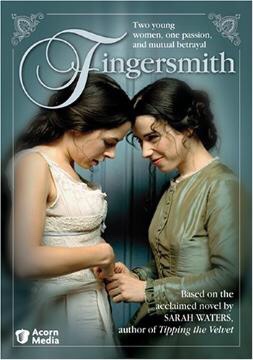
Sarah Waters is one of my favourite writers. Anything she writes is a pre-order in my house, so there may be some bias in my next statement. For me, she is one of the best writers of the 20th Century with, hopefully, more to come. More recently, she has dabbled into the early 20th Century and even WW2 for her novels The Night Watch and The Little Stranger, but she started back in the 19th Century and this is my favourite from that series. Amazon calls her genre Lesbian Victoriana, which made me giggle a little, but I think Waters is doing more than that; she is chronicling women’s experience. She includes lesbian encounters and women falling in love with women, but in this book that’s an aside rather than the main focus of the plot. I think to term these novels as lesbian novels is reductive and has a sense of prurience. I remember the fuss and excitement when Tipping the Velvet was serialised at the BBC, and male journalists practically salivating over Rachel Stirling and Keeley Hawes. I think they’re intended to be read as women’s experiences of living in Victorian England, with the women’s sexual relationships as part of an unspoken subculture only just emerging into the open. She is using the device of ‘writing back’ to the historical period and bringing a group into the limelight who were hidden at the time and never portrayed in fiction. It’s about seeing the Victorian era and women’s lives in totally new eyes, and accepting that the literary canon only shows us a small part of a vibrant and varied world. As with history being written by the victor, literature of the early to mid 19th Century tends to be written by white, straight, middle-class males. Waters is trying to redress the balance and give us a minority viewpoint which I love.
Orphan, Sue Trinder, lives in a family of petty thieves and is trained to become a ‘Fingersmith’. Based in London, the den is run by a motherly woman who has a hard and ruthless side. All the thieves congregate and bring their wares to ready them for sale, while a baby farm is run on the side. It is here that a man called ‘Gentleman’ recruits Sue for a scam to defraud a wealthy heiress. We also meet a young woman called Maud Lily, she’s an orphan too, but with a home in a gloomy mansion as the ward of an odd Uncle. She has a very comfortable life, helping him with his work as some sort of secretary, but his subject matter might raise an eyebrow or two. He is an avid collector of Victorian pornography. This makes Maud very uncomfortable, but it seems an unspoken agreement that her help is in return for his protection. This strange upbringing makes Maud very sheltered and naïve in one respect, but also strangely knowing in others. Gentleman has devised a long con that starts when Sue is placed within the mansion as Maud’s lady’s maid. She will then encounter the Gentleman who will try to court Maud. They hope, that with Sue’s encouragement, Lily will fall for his charms. His long term aim is to marry her, because according to 19th Century marriage law, all of her fortune will then become his property. Then it’s a simple case of claiming she’s mad, and as long as a doctor agrees, a man could sign his wife into an asylum leaving him free to use her money. If she helps, Sue will be entitled to some of the ‘shine’.
As always with Sarah Waters books, the depth of research is obvious and this feels so real. The sense of place is so strong, in the filthy detail of the London terrace streets and the silent unease in the mansion. These two places feel entirely opposite. Where Sue grew up there’s constant noise, people running in and out, babies wailing upstairs and other people’s belongings being appraised and sold on. There’s squalor and poverty, so for her, the change to being a lady’s maid is a massive leap. By contrast the mansion is quiet with the sound of ticking clocks, days without seeing another soul. There’s a feeling of being imprisoned somehow, it’s stifling and the scene where she works in the library with her Uncle feel so uncomfortable. The tension as the con slowly starts to work is terrible. Then, in what is probably my favourite twist in fiction, the pace picks up and the reader is left reeling as everything changes.
In the second section of the book we go back in time a little to Maud’s story, some of this overlaps with the first part and some of it is her history and how she ended up closed away with only a perverted Uncle for company. We follow Sue’s journey as Maud’s lady’s maid and see how a friendship develops between the two young women. Maud is living like a prisoner and has experienced years of coercive control leaving her timid and unsure. The con would only work if Sue stays focused and doesn’t get involved with her new mistress, but their friendship is deepening and Sue is starting to have doubts about the plan. There is an attraction between the two women that was unexpected, but is there anyway to back out of the plan or is it too late? There is something hypnotic about this book. It is a long read, but unlike the Victorian novels it emulates, it didn’t feel long-winded or become boring. I was engaged at every point of the story, absolutely fascinated with the twists and turns of the plot and never quite sure who is telling the truth. I was desperate to find out who has really been conned in the end. This is one book where BBC adaptation is very good too, with great casting and a definite feel of the book.
However, the novel is perfection. It’s a historical thriller, told through unexpected heroines and delving into the more deviant side of Victorian life: pornography, pick-pocketing, theft, fraud, confidence tricksters, and baby selling. Not to mention the lesbian aspects of the storyline that would have been unthinkable in fiction of the time. In fact I clearly remember a tutor at university telling me that all the focus on deviant sexual behaviour was focused on gay men and prostitution – intimating that the thought of two women having a relationship was so taboo that it didn’t even exist in most Victorian minds. I loved that we were seeing a totally different section of Victorian society and it had a voice. There is a feel of Dickens in the poverty and living conditions, and of course he had his own wife detained in an asylum. However, there’s none of that Victorian moralising that comes with fiction of the period. This is the underclass speaking for itself and the character of Maud’s Uncle hits home the idea that even the middle classes were not necessarily as respectable and God-fearing as they seemed. I would recommend this to anyone who enjoys Victorian fiction whether in the form of historical novels or of the period. It’s also a great thriller with enough double-crossing and revelations to keep any reader satisfied. This really is Sarah Waters at the height of her writing powers and should be on your TBR list immediately.
Meet The Author.
Sarah Waters OBE, was born in Wales. She is the author of six novels, Tipping the Velvet, Affinity, Fingersmith, The Night Watch and The Little Stranger, which have been adapted for stage, television and feature film in the UK and US. Her novels have been shortlisted for the Man Booker Prize and the Women’s Prize for Fiction and she has won the Betty Trask Award; the Somerset Maugham Award; The Sunday Times Young Writer of the Year Award; the South Bank Show Award for Literature and the CWA Historical Dagger. Sarah has been named Author of the Year four times: by the British Book Awards, the Booksellers’ Association, Waterstones Booksellers; Stonewall’s Writer of the Decade in 2015; Diva Magazine Author of the Year Award and The Sunday Times Award for Literary Excellence in 2017, which is given in recognition of a writer’s entire body of work. Sarah was awarded an OBE in 2019 for services to literature in the Queen’s Birthday Honours. Sarah Waters lives in London.
This is the first novel I’ve ever read by Lesley Glaister and when I finished, I couldn’t believe I’d never heard of her before. Set in one of my favourite historical periods, during and after WW1, this novel was evocative and moving. The author clearly has a deep understanding of the period and the rapidly shifting society her characters are living in. Her characters are fully rounded, with depths to get lost in and the effects of trauma to unravel and understand. This is an exploration of the effects of war and loss on our two main characters, Vincent and Clementine. The scars are both physical and mental, halting their progress as they try to move forward and making it very difficult to be who they truly are. When they, quite literally, bump into each other a strange relationship emerges that will have a haunting resolution. I could see these two people in my mind’s eye and I found myself thinking about them, even when the book was closed.
Clementine was a hands on during the war, volunteering as a Red Cross nurse close to the front. Her boyfriend Dennis had proposed and he didn’t want her to interrupt their lives. He didn’t fight, being a doctor he could claim to be needed by the patients in his area, so he wanted their lives together to start. Clem wanted to be part of the war effort, so along with her friend Gwen she ‘ran away’ (Dennis’s words) and became part of a medical unit. She wasn’t just taking temperatures either, her stomach is strong enough to be in the operating tent, helping to hold patients down during amputations and disposing of mangled limbs. The author’s depiction of working in the medical tents is vivid and gritty. I was able to imagine the struggle to keep wounds clean in the squalor and sick men comfortable on camp beds crawling with lice. The description of Clem’s hair stayed with me, tied up out of the way, but greasy and alive with lice. I could feel her desperate need to wash it, and the shock she feels when the doctor, Powell, finds hot water and washes it for her. I found that image so romantic, because he’d realised what she most wanted at that moment and provided it for her. He washes her hair with such kindness and a gentle touch, I almost fell in love with him myself. They have a deep and immediate connection, so Clem knows she must write to Dennis and explain what has happened.
However, before Clem can write two things happen. She realises she is pregnant and tragedy strikes, when the unit is bombed both Clem and Powell are injured in the blast. Clem has a picture in her brain, like a flashback, of a stove pipe from the boiler embedded in Powell’s back. She knows in that first second that she has lost him. Only days later she miscarries alone in the toilets, and this scene was so real and so emotive I cried. She’s lost the love of her life and now the last part of him has gone too. Numb and shocked she returns home and seems to sleepwalk into the same situation she left behind. In the next section of the book she is married to Dennis, who doesn’t know about her wartime experiences. They live above his doctor’s surgery and they have a child together, a little boy, but she grieves Powell and their little girl. I felt she was living behind a mask, being who she thinks she has to be rather than who she is. The ambivalence she feels towards her son is well represented, because she still grieves for that first child. There are physical signs, written on the body, that she has Edgar. The silvery stretch-marks mark the time she was pregnant, yet there are no signs of her daughter. It’s like she never existed.
Vincent meets Clem when she’s visiting her sister-in-law Harri. Feeling stifled, Clem goes out for some air and keeps walking, until she’s miles away and not sure of how to get back. She takes a quick breather at a bridge and steps into the road, just as a biker comes along. As he swerves to miss the crazy lady stood in the middle of the road, he loses control of his bike and crashes. Clem strangely sees something of Powell in him at that first glimpse. Actually, Vincent is a product of the same terrible war that left Clem bereft. For Vincent it left him wounded physically and emotionally. He has a facial disfigurement that means he wears a mask, literally and figuratively. Vincent has been left in a very reduced position by the war. His marriage has failed and the job he was assured would still be his when he returned from the front, has been taken away from him. How can a man who looks like him, be the face of an insurance company? He has nowhere to live, so he’s latched onto a woman called Doll, who runs a local pub. She’s easy with her favours, and Vincent takes advantage of this to lodge upstairs. He can’t cope with how much he’s lost and wants to replace it, with visions of marriage to Doll and being the welcoming host from behind the bar. He doesn’t love Doll, but they get on and there are worse places to be. Similarly, he notices how well dressed Clem is and thinks she might be manipulated into paying for his bike’s repairs. In the end, she visits him at the hospital and offers to pay, leaving her details and the possibility of a connection between them. They are both suffering the effects of trauma and might sense that shared perspective on the world. If Vincent is willing to settle with Doll, might this be another opportunity for him? What exactly can their relationship be?
I was worried for Clem, who is vulnerable. However, I was worried for Vincent too, he has lost so much and is vulnerable in his own way. He’s not one of the ‘glorious fallen’ heroes, and unlike Clem’s husband doesn’t have any status here at home either. He’s a reminder of exactly how ugly and terrible war can be, and nobody wants to remember. Dennis certainly doesn’t want to hear his wife’s tales of war. The author pitches him perfectly, a man who chose not to fight, but likes to remind everybody that he was fighting to keep the families of those soldiers fit and healthy. He represents the old order of things, with class barriers and men as head of the home. His need for control extends to his sister as well as his wife; there’s one right and respectable way to be in the world. When her friend Gwen visits for tea, he makes it quite clear that she’s not the right company. Not only did she get Clem to run away to war, but now she’s clearly having a lesbian relationship. His way of dealing with the world is on the wane though and he felt to me like a dinosaur that doesn’t know it’s extinct. He hasn’t been through the seismic change the others have and can’t identify with them. War has changed a whole generation of people around the world. I felt for Clem, who is part of this changed generation. She knows the future is different, but she’s chained herself to the past. Is it too late?
This was so beautifully written, with well-chosen words that create rhythm and take the reader on a journey through their senses. This explosion of sights, sounds and sensations bring an immediacy to the prose. This is not some long winded description of what a battlefield was like, it is the sounds and smells as they happen. I felt like I was there:
‘Where was the fear? She searched herself as she listened: sometimes the rat-tat-tat of gunfire, rapid and snippy like the keys of two vast, duelling typewriters battering out threats to each other on a paper sky; crumpings like oil drums being crushed by massive fists; a whistling followed by the soft whoomph of a missile striking, then virtual silence, then the battering of the typewriters again’.
The author truly does show us what’s happening and the contrast of passages like the one above and the quiet, clock-ticking, stillness of Clem’s home is so effective. No wonder Clem takes to walks; she needs to breathe. Every character is flawed, but no one is irredeemable. Through Clem she shows how women were restricted by society and I love that Gwen and her girlfriend had chosen a different path. Most poignantly, she shows how war interrupts lives and takes away people’s livelihoods, opportunities and in Clem’s case, even her creativity. I think this is one of the best books I’ve read on the aftermath of trauma. The author has so much compassion and empathy for her characters and because of that, so does the reader. I didn’t want this book to end and that’s the biggest compliment a reader can give.
Meet The Author.
Lesley Glaister is a fiction writer, poet, playwright and teacher of writing. She has published fourteen adult novels, the first of a YA trilogy and numerous short stories. She received both a Somerset Maugham and a Betty Trask award for Honour Thy Father (1990), and has won or been listed for several literary prizes for her other work. She has three adult sons and lives in Edinburgh (with frequent sojourns to Orkney) with husband Andrew Greig. She teaches creative writing at the University of St Andrews and is a Fellow of the Royal Society of Literature.
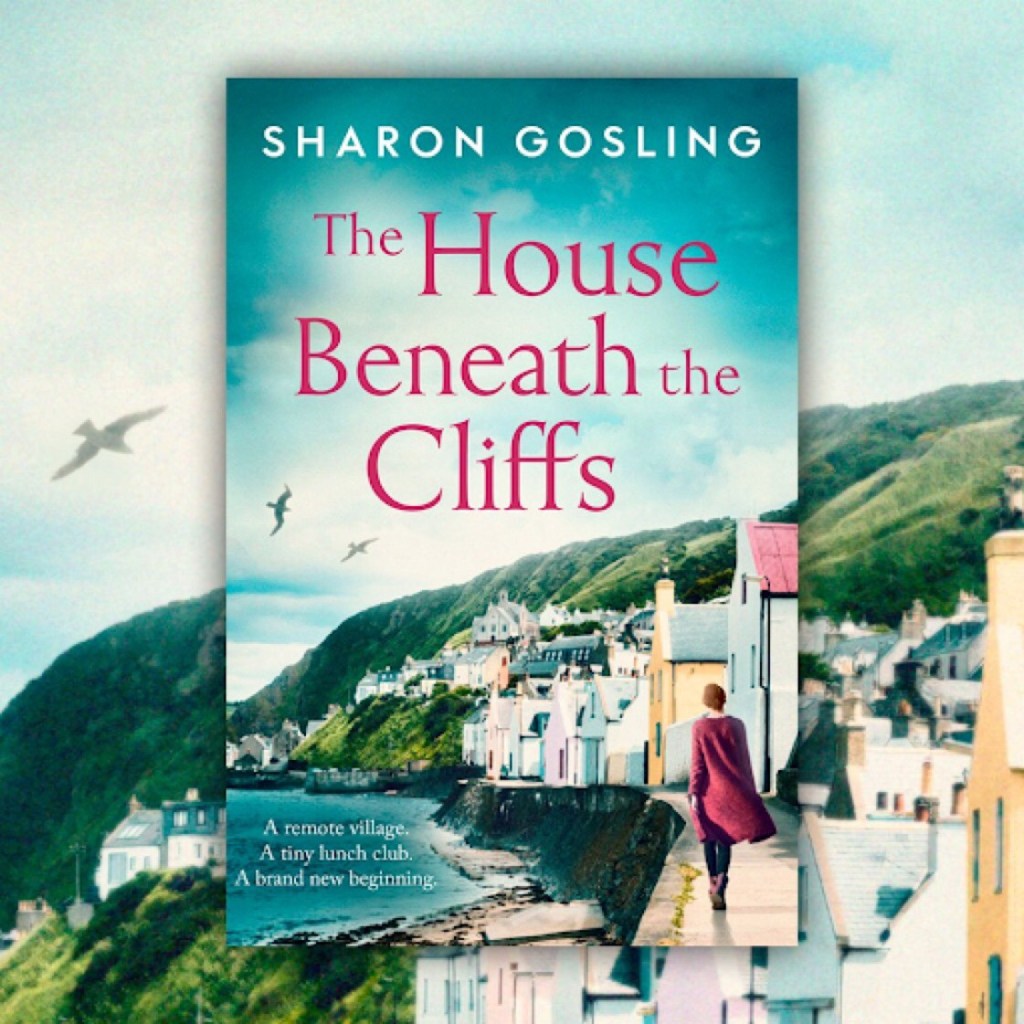
I was drawn to this novel by Sharon Gosling as soon as I read the blurb on NetGalley. I enjoy novels where a character has the bravery to start over, especially if the ‘before’ meant overcoming some sort of adversity. For Anna, a talented chef who decides to move to a tiny village on the coast of Scotland, it’s overcoming years of psychological abuse from her boss and partner, Jeff. They met at catering college and ever since Anna has been working under him in London, helping him to earn several Michelin stars over the years. However, Anna has never really acknowledged or even felt entitled to that success, because Jeff has always told her she needs a strong leader, she’s best in a supporting role; she hasn’t the talent to survive on her own. So, after their split, she moves to the other end of the country and to a bothy in a tiny fishing village on the Moray Firth. Crovie is a village that survives despite everything the sea can throw at it. Under a huge cliff, it has survived storms and landslides in the past. It has the remoteness that Anna is looking for, but as she first sets foot in her new home ‘Fishergirl’s Luck’ she wonders if she can really live in a place like this? However, whether it’s the sea air, the villagers or a blessing from a previous single woman who lived there, Anna soon feels inspired. Could this be the perfect place for a foodie to start a new venture?
The setting was so beautifully rendered throughout the novel. There’s something forbidding about the position of the village, wedged between the cliff and the roaring sea. It’s so vividly portrayed I could almost feel the salt spray on my cheeks and the wind whipping my hair around. Anna’s connection with nature is unexpected and deeply inspiring. She clambers over the rocks, goes out on the boat to see dolphins and collects purslane and razor clams. The sea is both friend and foe, bringer of food and providing work for the fishermen, but also the force that batters the cliffs and erodes the very soil under Crovie. Then in complete contrast we have ‘The Fishergirl’s Luck’ and the way it feels so inhospitable at first, way too small to live in, let alone cook in. Yet, as soon as Anna starts to clean and turn it into a home, something warm and cozy emerges from the dust and grime. Just like the village seems almost pitted against nature, Anna has had to pit herself against the bothy. Now it feels like a shelter, somewhere that will keep her safe.
When she finds previous tenant Brenda’s recipe book and makes her hazelnut and raspberry shortbread, something connects the two women across time. This aspect was interesting because it seems as if Brenda used to receive the similar treatment from the local fishermen, that Anna has received from Jeff. Especially from the irascible Doug McKean who seems to think he was cheated out of the bothy by Brenda and intends to keep the grudge going through Anna’s time there. Brenda wanted to fish in her own right, something the men found ridiculous. She found and fished her own boat, maintained the cottage and named it. Something of Bren’s spirit gets into Anna and it’s like nothing can hold her back – even Jeff turning up all the way to life-changing surprises, she takes them in her stride. She also takes strength from wonderful neighbours like Pat and John, local potter Rhona, fisherman Liam and both young and old Robbie. She meets Liam while looking for fresh fish in hope of reviving her a lunch she’s planning. He brings her a table and bench for the garden that sparks an idea – what if she started a lunch club outside for the summer? Although she thought she’d bought the cottage from an elderly man, Auld Robbie, he turns out to be younger than she expected and a widower with an adorable son. Young Robbie is obsessed with a pod of dolphins in the bay and their welfare is all important to him. Every day he checks them, and asks Anna to join them.
I loved watching her circle widen and her confidence beginning to return. Bren’s notebook is the re-birth of Anna’s love of food and it is her food. Away from any other influence she is now free to experiment and do things her way. I really enjoyed the foraging for ingredients and descriptions of her dishes, which sound delicious rather than fussy or refined. However, I was interested to find out whether she kept her confidence, particularly when old pressures and influences surfaced? There are a lot of books around where a woman makes a new start and often they’re too saccharin or unbelievable. This had it’s predictable moments, but every so often there was enough of a curve ball to to make it feel fresh. The author wasn’t above giving her heroine some mountains to climb here and there, both positive and negative. Anna is a brave woman though and not above taking risks – she’s bought a house without viewing it, started a lunch club in the open air in Scotland, taken on the local misanthrope and accepted the more unexpected surprises life has thrown at her. As a big summer storm approached I wondered whether the luck of the cottage would hold? If not, would Anna take the easy option and leave Crovie or will she keep fighting for what she wants? Blessed with charming locals, stunning scenery and an interesting history, Crovie was a lovely place to spend a few hours.
Meet The Author.
Sharon Gosling lives with her husband in a very remote village in northern Cumbia, where they moved to run a second-hand bookshop, Withnail Books in Penrith. She began her career in entertainment journalism, writing for magazines in the science fiction and fantasy genre, before moving on to write tie-in books for TV shows such as Stargate and the ‘re-imagined’ Battlestar Galactica. She has also written, produced, and directed audio dramas based in the same genre. When she’s not writing, she creates beautiful linocut artwork and is the author of multiple children’s books. The House Beneath the Cliffs is her first adult novel. Follow her at @sharongosling.
I’ve been reading Hill’s Simon Serrailler novels for many years now. I read the very first one, The Various Haunts of Men, when it first came out and every one since. In this 11th outing for the detective he’s investigating a death above a Chinese Medicine shop in the distinctly hippy village of Starly. A strange anomaly in the area, Starly seems to attract shop owners selling incense, tarot cards, and new age paraphernalia. The young man in front of Simon has been dead a few hours and has a needle in the vein of his arm. It seems to be a run of the mill overdose – sadly all too common now that county lines operators had been plying their trade locally for a while. County lines drug dealing bothers Simon and he wants to eradicate it, but catching the person distributing in the village won’t yield any further results. The local man rarely knows the men above him, he just picks up a packet from a given location and gets his on foot distributors to do the next stage. Sadly, those at the bottom of the ladder are often children coerced or groomed into helping out, whether or not they even know what’s in the package they’re carrying. However there’s something about this overdose that doesn’t add up and it is going eat away at Simon until he solves the puzzle.
There are always family issues in Hill’s novels because they are as much about the family as they are the case. I’ve still after all these years, not got to grips with Simon as a character. I know him, but don’t necessarily understand him. I find it easier to understand his sister Cat, and bonded with the character when she lost her husband at a similar time to me. Here Hill concentrates on Cat’s youngest son Sam, who has unexpectedly turned up at home from university. Cat has suspected there have been some issues in his long relationship with girlfriend Rosie, but hasn’t wanted to interfere. Sam was fairly ambivalent about university anyway, so Cat isn’t too surprised when he says he doesn’t want to carry on. He quickly gets his old job back, portering at the hospital, until he decides on something more permanent. Rosie is training to be a doctor and they’re now likely to pass each other every day, but when he first sees her outside the hospital she’s with another man – was this just a hug after a long shift or was there more to it? Other family threads felt a little odd. Kieron is both Cat’s second husband and Simon’s boss, but there’s a strangely detached feeling to his presence. At the farmhouse he disappears into his study to watch TV without interruption, while Simon and Cat share a drink and talk. He doesn’t interact much with the children, particularly Sam. Any interactions he and Simon have at work, are left at work so they don’t chat over old cases or just the difficulties of policing the area. It’s as if he’s absent in his own life and if he walked away he would leave no impression behind.
The chapters that focus on the family or the police station seem to recede into the background, while the intervening chapters are full of life. A young lad called Brookie is the subject of one thread. One of four boys, brought up by Dad, their house is depicted as chaotic and noisy, but seems to be more demonstrative and affectionate than the Serrailler family. Brookie only has a plastic bag for his school books and is the subject of bullying by other kids. One day, as he’s gathering his stuff after it being emptied into a puddle, a stranger appears and starts to help him. They chat and Brookie never expects to see him again, but he drops by the following week with a new rucksack for him. Is this just a Good Samaritan or is something more sinister going on? With Dad working nights as door security on a nightclub the boys have plenty of time on their own and could be easy prey. We also meet a young girl called Olivia, from a more affluent background but her parents have recently divorced. Her father had an affair with a much younger woman and while Olivia’s mum knows that he’s become a dad again in his fifties, she hasn’t told her daughter. So, when Olivia rings her dad for some help, it is a huge shock to be told she has twin half-brothers screaming in the background. Now is not a good time to ask for help. Once a month, a man called Fats gets her to deposit an envelope to a derelict farm while pretending to be out for a run. She hates what she’s doing and it’s only shame and fear of her family finding out that keeps her going. Scared and emotionally manipulated, Olivia is looking for a way out. If her Dad won’t help she’s running out of options.
You always know you are in the hands of a great storyteller here, as it always feels as if the threads come together effortlessly. Of course that takes skill and hard work, but Hill makes it look easy. This is the first time in a while that I’ve felt a restlessness in Serrailler. Usually his large modern flat soothes him, it has the proximity to the cathedral so he also has the incredible views of its architecture. His job can be all encompassing, barely leaving room for other thoughts, never mind people. For some reason he finds himself viewing a large cottage in need of renovating, deep in the countryside. With this case he can feel his patch changing, the tendrils of drugs creeping into smaller towns with criminals who are willing to kill to keep their line of supply running. His behaviour with women has always kept me from truly liking him; he’s a ‘commitmentphobe’ who either never tells the object of his affections what he feels, or who carries on dating someone he has no future with for far too long. It may be something to do with his father’s lack of emotion or the way he has treated women in the past; his second wife had to ask Cat for help when Richard had physically attacked her. However, as a face from the past crosses his path, I did wonder whether this restlessness might mean he’s ready for change? This had that strangely comforting feeling that comes when you know your characters well and can settle into the story. It’s often the same with crime series, that even if your characters are in the midst of a bloody murder investigation, you feel happy to be amongst friends again.
Susan Hill‘s novels and short stories have won the Whitbread Book, Somerset Maugham, and John Llewellyn Rhys awards, received the Yorkshire Post Book of the Year, and have been shortlisted for the Man Booker Prize. The play adapted from her famous ghost novel, The Woman in Black, has been running in the West End since 1989. The eleven books in her Simon Serrailer series are all available from Overlook.
She misses him. Fraser. Here in the shrunken hours of the night. She misses him still so much. Who is there to share her thoughts with? They wither inside her. She cannot even write them to him as she used to, can’t take a cup of tea back to bed and sit with a candle in the blackoutand think of him, trying to imagine where he is, what he sees. She cannot imagine where he is, because he is nowhere, he is nothing. All of the many tiny things that he was – the way he turned his head towards her, the slow breaking of his smile, the laughter in him, the roll of his voice; the way that he eased her, eased her – these are all gone. These are all dead.
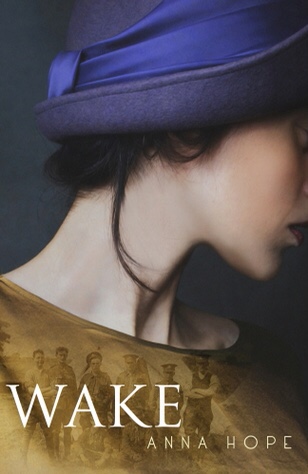
Last year I couldn’t move on Twitter without seeing that someone was reviewing and reading Anna Hope’s Expectation. I’ve had such a ridiculous TBR that my copy is still languishing on the pile, but I wasn’t surprised to see the book become a runaway hit. I’d already fallen in love with her writing in 2014, when I read her novel covering the aftermath of WW1. Wake is a brilliant piece of historical fiction based around the real historical event, the creation of the Tomb of the Unknown Soldier. As he is taken from the fields of France, on his journey towards London, three women are linked by a mystery that is starting to unravel. As the Unknown Soldier is meant to provide closure to the war for the British people, these three women can’t look into the future while they are still inextricably linked to the past. Hetty’s wounded brother won’t speak, Evelyn grieves for her lost lover and Ada waits for confirmation of her son’s death, every day that she doesn’t get a telegram is another day he feels alive. We follow these three women over five days, while the selection of the Unknown Soldier is made and his journey towards Westminster Abbey begins. Slowly, a tragic tale of war’s aftermath emerges and links them all.
Hetty lives with her mother still, and her mute, shell-shocked brother. He can no longer work so Hetty has taken a job as a dance instructor at the Palais. It is there she meets an educated, wealthy, man who she quickly falls for. Every indication she has, makes her think he feels the same. However, there’s something she can’t put her finger on, a distance or sense of being unreachable that he has. Where does he go in his mind, when he seems distracted? Evelyn comes from a wealthier background, but feels equally lost. She’s working at the Pensions Exchange, where men returning from the front pass through, claiming benefit for their physical or mental wounds. Evelyn’s own loss is still raw and she feels detached from her parents who can’t understand her experience. She starts to become closer to her brother instead, because he is of her generation, also altered forever by his experience at the front. Ada is haunted by visions of the son she’s lost. She still sees him on the street and for a few moments she’s convinced he is alive. She also feels like she’s struggling alone, because her husband is grieving in his own way, becoming increasingly withdrawn. A door to door salesman attracts her attention and it’s so clear he has suffered from his war experiences and has struggled to find work. He exhibits some worrying symptoms but Ada recognises shell-shock. During one of his disturbed episodes he says the name of Ada’s son. Can she find out what happened to him? The tension really builds as the public spectacle comes closer, the ceremonial internment of this unknown young man can be a catalyst, allowing people to grieve for those whose bodies are lost forever on the fields of France or Belgium.
This is a very interesting part of history for me, because of the tumultuous social change that took place, especially for women. This period is where we saw huge adjustments and change within the aristocratic class. Some families had lost two generations, father and son or the ‘heir and spare’. This led to an estate crippled by death duties and having to be sold, or the new heir forced into reducing costs and servants, or searching for a more advantageous match – marrying American heiresses was sometimes the answer. These changes often brought less formality to the family. Women had worked throughout the war, in jobs usually done by men. There was tension on their return to the workforce, some women didn’t want to return to the home and men who couldn’t find work were reduced to begging or selling door to door. Crime was on the up and families were coming apart at the seams. There was a sense of the old order being overturned and old values like manners, morality and knowing your place being lost.
Finally I loved the significance of the title ‘Wake’ and it’s several meanings: to rouse from sleep; a ritual for the dead; the consequence or aftermath. All of these meanings are apt to the women in the book and their circumstances. This is the moment that the 20th Century finally dawned on people, and society woke from the Victorian era. Victoria’s reign had been so long that some people had never known another monarch, now there would be change from that Victorian order. The ritual refers to the Unknown Soldier, a representative of every man lost, but also representative of that death of the old order, and it’s sensibilities. The consequences of WWI were seismic, we had just fought the first mechanised war and it was hell on earth. Society did not know how to cope with the wounded who returned, whether the ranks of the physically disabled using wooden legs or metal masks to cover burns, or the shell-shocked, constantly trembling and lashing out when feeling threatened. Many ended up in institutions, because they were constant reminders of something younger people wanted to forget. The following few generations would be changed, with the war hanging over them like a giant monolith casting a long shadow. Why couldn’t people be allowed to forget? As the Unknown Soldier passes by someone comments ‘is this supposed to make it all okay?’ This is such a moving read and captures it’s era so perfectly it felt like being there, which isn’t an easy thing to achieve. I felt for each woman, but Evelyn particularly moved me. This is an exceptional piece of writing and a great introduction to this author’s work.
‘I’ll remember you he thinks, and as the gun carriage with it’s coffin and it’s dented helmet passes him by, he closes his eyes. Nothing will bring them back. Not the words of comfortable men. Not the words of politicians. Or the platitudes of paid poets.’
Meet The Author.
ANNA HOPE studied at Oxford University and RADA. She is the internationally prizewinning and bestselling author of Wake and The Ballroom. Her contemporary fiction debut, Expectation, explores themes of love, lust, motherhood, and feminism, while asking the greater question of what defines a generation. She lives in Sussex with her husband and young daughter.
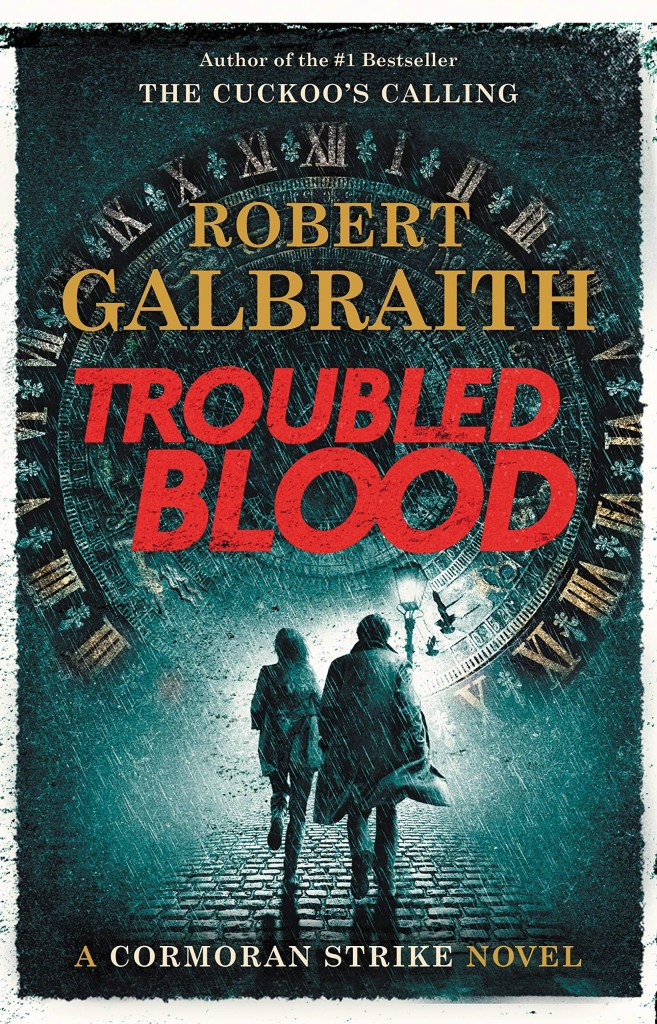
While I’ve been taking time to deal with some family issues, I’ve been reading my own personal choices rather than to a schedule. This has given me the chance to pick up this rather weighty hardback from J.K. Rowling writing as Robert Galbraith. In fact this book was so weighty that my chiropractor had to put my thumb back into place this afternoon. I’d resorted to nestling the book into a soft cushion on my lap so I could finish it. My partner has never seen me so quiet, as I shunned TV and conversation because I was totally engrossed in this novel. Troubled Blood is the fifth book in the Cormoran Strike series and I must admit to being a little in love with the tall, dark, private investigator. I love the author’s slightly shabby descriptions of him with his unkempt curly hair, awkward gait from his prosthetic leg and his broken nose. However. I’m also incredibly fond of his business partner Robin and the obvious love that flows between them, despite both of them denying it, even to themselves.
We meet the pair with Strike’s agency in a good place – there’s a waiting list for clients, three new members of staff and Robin is now a full partner in the business. Some things stay the same though -Robin still drives the Land Rover, Strike is still smoking and living in the attic above the office, and there is still that unresolved tension around how Robin and Strike really feel about each other. Strike is in Cornwall, visiting his aunt and uncle, the closest people he has to parents. Strike’s father is Johnny Rokeby, rock musician and tabloid fodder. Strike’s mother was a beautiful, bohemian groupie who never had an idea of how to be a mum and abandoned Strike to his Aunt Joan in his primary school years. Joan is possibly, after Robin, the most important person in his world and she’s had a diagnosis of terminal cancer. While drinking with best mate Davey at the local pub, Strike is approached by two women. Anna tells Strike the story of her mother’s disappearance over forty years ago. She was working as a GP in London and saw a last minute patient, before leaving to meet a friend in a nearby pub. She never arrived. Despite extensive investigations she appears to have vanished into thin air. They make an agreement with Strike that he will look into it for a year. With several investigations ongoing and a long waiting list, this looks like the busiest the agency has ever been, but how will Strike manage his workload and spend time with Joan when he needs to?
Robin is happy to pick up some of Strike’s workload in London, such as the staff rota and catch up meetings. However, she does struggle to get one of the new staff members to take her seriously as an equal partner in the agency. She’s balancing this problem, her increasingly contentious divorce, important news about ex-husband Matthew, and supporting Strike as much as she can. This means pulling long shifts of surveillance after a day in the office. She loves her job as much as she did at the beginning but she is struggling with panic attacks related to an incident at university and a case where she was attacked with a knife. Anyone trying to push their way into her space, whether by sending inappropriate pictures or brushing up against her in the office, will come off worst from the encounter. She is doing a lot of soul searching in this instalment of the series, as her friendship with Strike deepens she asks herself a lot of questions.
The main case was very satisfying, with lots of clues, red herrings and bizarre twists and turns. The investigating officer at the time of Margaret’s disappearance appears to have had an obsession with Aleister Crowley and astrology. His notebook is a very odd mix of drawings, notes on the main people suspected and the record of a gradual descent into madness. He was sectioned after seeing a horned goat demon. Robin finds more meaning in it than Strike, and it does yield some clues, but it’s clear the original investigation was inadequate. By chance, a serial killer was prowling the very same area and the police’s official line is that she was possibly taken by him but it can’t be proved. I found the case mentally challenging and full of fascinating characters too. The psychological aspects of the interviews was really intriguing, showing that even in a small 1960s doctors surgery there can be a lot of secrets buried. It was interesting to see more of Robin working on her own and how far she’s come since the first book. As the case gathered momentum I found myself gripped and I kept wanting to pick the book up again to read more, even though it was looking likely that the author was going to keep the case unresolved.
Make no mistake, this book was huge. I always reserve the right to DNF a book if I’m not feeling it by a certain point in the story. Like Bradley Cooper’s character in Silver Linings Playbook, I’ll happily throw a book out of the window if it’s not grabbing me or is overlong. I never felt that with this novel, besides I wouldn’t have dared throw this out of the window for fear of killing someone! I never felt a lull in the story, so it kept me engaged all the way through. This wasn’t just down to the cases, in fact I’d worked out one of them almost immediately – men visiting a woman’s house for a period of time where there are large deliveries of nappies – for which I blame a misspent youth watching every fetish going on C4’s Eurotrash. It was the themes running through the novel that kept me reading too. Absent parents loomed large: for their client Anna who having lost her Mum, had to watch her Dad marry the nanny; for Strike whose half-siblings are pestering him moook for a catch up with their rock star Dad, much to his disgust; even Robin feels dislocated from her family, who can’t understand her choice of career brought into stark relief as her ex-husband is about to become a father. We can see what a beautiful, but absent mother has done to Strike as he keeps Robin as his very best friend and struggles to keep ex-girlfriend Charlotte at a distance. Charlotte is the beautiful damsel in distress who will always pull him towards her when she’s vulnerable, only to withdraw as soon as she is back on her feet. It will take Strike to cut their line of communication but will he be able to do it. The stress of losing his aunt, Charlotte’s pestering and his father applying pressure, results in Strike choosing to drink too much and pushing those who love him most away.
I also enjoyed the ongoing development of Robin and the themes around female power and agency. Being Strike’s partner and his absences in Cornwall, mean she’s the boss. Trying to get all of their staff to accept that is difficult for one of their contractors who tries flirting and sexting, goes around her to get Strike’s approval and doesn’t take her seriously at all. She has to really assert her authority, it isn’t comfortable for her but she’s scared of enough in life without having to be wary at work. When she fights back and Strike finds out the true extent of the matter, his instinct is to physically defend her, but Robin doesn’t want to be rescued. She knows logically that her size and strength leave her slightly vulnerable while working in the same environment as the men. However, in terms of management and investigation skills she really does want to be Strike’s equal. I loved the way these themes were echoed in the case, with the missing woman being assertive, well-informed and educated around women’s rights and health. Some of the possible suspects are in the frame, because she was seen to interfere, to get mixed up in domestic violence cases or unwanted pregnancies and find solutions for those women.
I’m aware of there being controversy around the representation of a possible transgender character. I think this aspect of the book could have been handled better. An emergency patient turned up at the surgery just as Margaret was going to leave, and she agreed to see her. In all the accounts of witnesses they describe a woman with some very masculine characteristics and jump to the conclusion that it’s a man dressed as a woman. This then becomes confused with the passing serial killer who is thought to dress as a woman when approaching victims so they are less wary. One character even makes a comment about other serial killers who liked to dress in women’s clothing. I felt this was quite sloppily done and seems to be saying there’s a link between criminality, violence and men who wear women’s clothes or who are transgender. There should have been more emphasis placed on the fact that these men are not transgender, but are dressing as women for the purpose of disarming victims and luring them into a van or an alleyway. It’s purely a disguise for the purposes of murder, rather than a sign that transgender people are all deviant. This is something editors should be more aware of in the 21st Century and it was a shame to see it in a book I otherwise loved.
This latest instalment in the Strike series is a cracking read and keeps you gripped, despite the fact it’s huge! Every case is interesting, but the main story is such a puzzle and each time there’s a revelation it’s like peeling another layer off an onion. I never suspected the person responsible and that says a lot about my prejudices and bias, as well as societal expectations. There’s a real streak of social justice running through this novel with certain characters and from my work within the mental health system I did recognise the worry that people are falling through the net and being let down as government funding is withdrawn due to austerity. I recognised the practice of ‘cuckooing’ where a vulnerable person’s home is taken over for criminal purposes such as storing stolen goods, dealing drugs, or hiding body parts. I find it amazing that the author can bring so many strands together, while fully occupying her characters and showing us their inner worlds. I loved my time with Strike and Robin, and I thought the ending was lovely. This was a gripping, multi-layered and intelligent thriller with a simmering attraction between our two main characters that will have you rooting for them.
















 The Lotus Readers