Blog Feed

Posted in Throwback Thursday

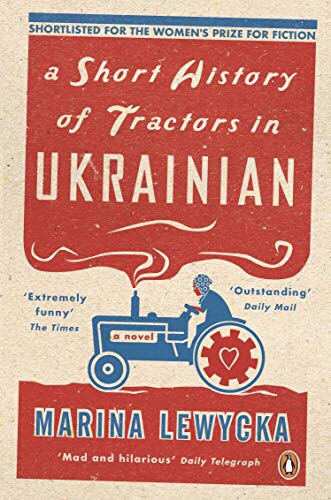
A Short History of Tractors in Ukrainian by Marina Lewycka.

Synopsis

‘Two years after my mother died, my father fell in love with a glamorous blonde Ukrainian divorcee. He was eighty-four and she was thirty-six. She exploded into our lives like a fluffy pink grenade, churning up the murky water, bringing to the surface a sludge of sloughed-off memories, giving the family ghosts a kick up the backside.’ 


Sisters Vera and Nadezhda must aside a lifetime of feuding to save their émigré engineer father from voluptuous gold-digger Valentina. With her proclivity for green satin underwear and boil-in-the-bag cuisine, she will stop at nothing in her pursuit of Western wealth. But the sisters’ campaign to oust Valentina unearths family secrets, uncovers fifty years of Europe’s darkest history and sends them back to roots they’d much rather forget . .

My Thoughts

The second phone call came a few days after the first. ‘Tell me, Nadezhda, do you think it would be possible for a man of eighty-four to father a child?’

I love this unexpected question early on in the novel, coming from Nadezhda’s elderly father out of the blue. It’s not the sort of question I’d expect from my father, but as our narrator Nadezhda points out, her father is always straight to the point and when he’s in the grip of a big idea never bothers with small talk or enquiries about her health. My mum read this first and told me I needed to read it. Within a couple of pages I knew why, Nadezha’s father was an elderly Ukrainian engineer, widowed for several years, with a penchant for tractors and straight talking. I was laughing out loud within pages, I couldn’t believe Marina Lewycka had conjured this man out of her imagination, especially since he was sitting on my sofa reading his daily paper.

My father-in-law came to live with us in Spring 2004. The plan was that he would spend summers with us and winters in New Zealand with his other son and family. My husband’s family were from Poland, relocated as children from Poland to England, his father escaped from a labour camp in Siberia. So, not exactly the same story as Nadezhda’s father, but his speech, mannerisms and preoccupations were eerily similar. I should just say that my father-in-law would have been horrified to be propositioned by a woman thirty years his junior. He wore his wedding ring until the day he died, at least twenty years after his wife was killed in a car accident. We didn’t always see eye to eye. However, some of the things that drove me insane when we lived together, became rather endearing and even downright hilarious with time. Blunt speech was a trademark of his, to the point of seeming rude in some cases. Yet, when told someone was offended by his comment, he would say ‘but it was correct, yes?’

One favourite lunch party dissolved into disbelief and giggles when he addressed his godson’s wife and suggested she might be more comfortable sitting on his chair than the kitchen stool since she had a ‘much larger’ bottom than him. He was bewildered by the reaction, believing he was being chivalrous by offering her the dining chair and because she did, in fact, have a much larger bottom. I realised this was a preoccupation of his when he came to visit us proffering a carefully cut out article from his daily paper for me. The subject was scientific research that found women with larger bottoms had longer lives than apple shaped women who stored fat round their middle. He was very happy with his discovery, humming away to himself in the kitchen, as my father and I shut ourselves in the bathroom laughing uncontrollably so we didn’t offend him. I hadn’t realised he was very appreciative of this body type until he asked me to look up the journalist Victoria Derbyshire. He had been listening to her on the radio for some time, but had never seen her in person and despite his son being the director of the media lab at a university he wasn’t up to speed with using the internet yet. I showed him her photograph and he shrugged his shoulders mournfully saying he’d expected her to be a much rounder woman in general but specifically with a ‘much bigger bottom.’ It dawned on me that he felt this was a compliment, something he thought was vital to his idea of female beauty.

He also had a way of making even the most positive things sound like a problem. At a fancy dress party my husband and I threw at home, he watched me working all day to put together a buffet for the guests. Finally, just before people started arriving, he asked if he could take a picture of the buffet table. My husband seemed to think he was impressed by the spread, but his face seem to suggest he was inwardly struggling with what to say. Finally he sighed deeply and said ‘but so much food, how can one possibly choose?’ Later, I received in the post a printed copy of his photograph of the food, showing me that it was important to him. After learning more about his family struggles during the war, and the death of his brother as they were hiding in the Siberian forests, I understood more deeply his utter disbelief at so much choice when weighed against the constant hunger he remembered feeling. Nadezhda tells us about her father’s specialty of ‘Toshiba’ apples – chopped Bramley apples nuked so thoroughly in the microwave they became apple sauce. This was a speciality of my father-in-law with apples that were so hot, they were still cooking in the desert bowl half an hour later. If he wanted to cool food he had a brilliant idea. My brother-in-law had been living. with his father for many years. He was a tree surgeon and had built what they called ‘the cage’ attached to the back of the house. This was a dog run, padlocked and used as a store for chainsaws and other equipment. Any food that needed to cool was placed in the cage on an upturned tree stump, open to the elements on all sides, but sheltered by a roof and away from foraging animals. This made perfect sense in practice, but always caused questions at the dinner table from guests baffled by the instruction ‘fetch the pie from the cage’.

Nadezhda’s father is proud of his late wife’s ability to forage and preserve food to last into the winter season. There is a pantry of store bought supplies, boxes of preserves and fermenting alcohol under the bed, plus a deep freeze full of vegetables and individually portioned meals. Everything labelled and rotated by date.

The only way to outwit hunger is to save and accumulate, so that there is always something tucked away. […] What she couldn’t make had to be bought second hand. If you had to get it new, it had to be the cheapest money could buy, preferably reduced or a bargain. Fruit that was on the turn, tins that were dented, patterns that were out of date, last year’s style. It didn’t matter, we weren’t proud, we weren’t some foolish types who wasted money for the sake of appearance, Mother said, when every cultured person knows what really matters is what’s inside.’

It took three visits for me to work out that what I thought was a kitchen island, in Aleks’s kitchen, was actually a deep freeze with a loose work top laid over it. When he was out we looked in it to find portioned meals labelled by Jez’s mother who had died ten years previously. I thought it was grief that kept the freezer lid closed and it was in part. It was also a survival instinct of someone who had known hunger and that those closest to you, the people you depend on, could be taken from you without warning. All starting with a terrifying knock on the door. Aleks’s father was in the Polish military, shot by the Russians and his family marched to a Siberian labour camp. By the time they escaped and joined the Resistance in a forest camp there was only Aleks and his mother left alive. Behind the comic elements of her book, the author is telling a similar story of political fanaticism, social upheaval, hunger, displacement and terrible loss. I was more understanding when I he told me about his conversation with my sister -in-law who had just bought a property in New Zealand. Apparently, he was most impressed by how quickly his son had ploughed up the tennis courts and planted potatoes.

The part I find most sad, both in the book and for my father-in-law, is that the homeland they crave and hold in their hearts and minds no longer exists. Alek would have been ten when he left Poland, but the Poland he left isn’t there waiting for him. Nadezhda’s father talks at length about a Ukraine that was forty or even fifty years ago. He wants to save one person from the tyranny of communism and give them the freedom of a life in this country. In his head he imagines tyrannical politicians controlling the people, but also the Pastoral beauty of his home country. He will rescue Valentina and in return she will bring to him the Ukraine of his youth with golden wheat fields, lush forests and flowing rivers. Nadezhda who has visited more recently remembers concrete tower blocks and polluted rivers full of dead fish. She tries to tell him that the people are no longer noble peasants, they are consumers longing for Western designer goods. Within weeks of them marrying Valentina has insisted on her own car – ‘not just any old car either. Must be good car. Must be Mercedes or Jaguar at least.’ She also wants second car, for when she’s in the Ukraine. Then it’s the cooker, three rings are not working, but ‘it must be prestigious cooker, must be gas. Must be brown.’ When Nikolai objects because the brown one isn’t on offer, she won’t let it go. He wants her to have ‘crap cooker’ because he is ‘no good meanie’. In the meantime Nadezhda starts to ask for legal advice on her father’s behalf, because there must be a divorce and they can’t bear the thought of this woman owning half of their mother’s things.

I thank the Lord we never had a Valentina to contend with. We sometimes hoped he would find someone, to ease the loneliness and take his head out of the past. The wardrobes full of his mother’s furs and Hanna’s side of the bed, left as if she’d be coming back any moment. We simply didn’t understand each other. If my friends came round it was my welcome break from the care routine – my husband had MS and he was on palliative care – a space to unload a bit, but I couldn’t do that if my father-in-law was also pulling up a chair and joining in. Although I did have it easier than my sister-in-law who found he was in the room when she was on all fours in labour. We had long conversations on the phone where we would both complain that he found us too loud, too opinionated and in my case, a bit too Northern. She would complain that he never shared any praise or positive thoughts about her and I felt exactly the same. I did realise though that he was telling other people – I would tell Jenny that he was proud of her mothering skills and the way she was bringing up his grandsons. She would tell me that he was amazed at the strength I had to keep going, to look after Jerzy every day and not panic if things went wrong. I found that Alek and I bonded more after my husband died, with a shared grief and on his part an understanding and gratitude for the years I spent nursing ‘his boy’. He would ring me every Sunday morning until his eyesight failed him and I missed those calls so much when they were gone. Even now, when I think of him stroking the back of my head as I told him how his son died, it brings a lump to my throat. Every time I read this book it’s a bittersweet experience. It makes me laugh still. I think of all those funny stories and the times we shared, even the hard parts when we didn’t get along. I would do them all again just to spend time with this incredible man. As for Nadezhda and her father Nikolai, I won’t ruin the ending, but there are more twists and turns along the way. For me, every time I pick this book up, I get to spend a little more time with an incredible man who I miss every day.

Published by Penguin 2nd March 2006.

Posted in Random Things Tours

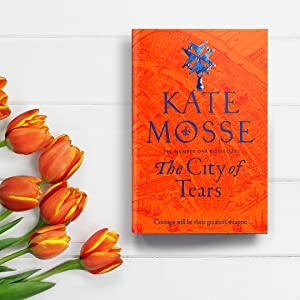
The City of Tears (The Burning Chambers 2) by Kate Mosse.

I’ve been reading Kate Mosse since Labyrinth all those years ago and I’m always impressed by the level of detail and knowledge of French history she weaves into her books. Every detail is considered and you have the impression straight away that you’re in safe hands. In The City of Tears she combines her fictional narrative with fascinating real events focusing on the Catholic and Huguenot conflicts of the 16th Century. This is the second book in the Burning Chambers series and I did choose to go back and read the first book. However, due to Mosse’s ability to immerse you in her world, I think this could be read as a stand alone novel. It continues the adventures of Minou Reydon-Joubert and Piet Reydon, characters caught up in a period beset by complicated religious and political wars. Mosse walks the tightrope between these warring factions carefully, illustrating that there is honour and corruption on both sides, but keeping the focus on the family at the centre of these conflicts.

We return to the Languedoc region of France and the wars have now raged for ten years. It’s May 1572 and Minou and Piet travel with their two children, Marta and Jean Jacques, to Paris for the royal wedding of Charles IX’s sister, Catholic Marguerite de Valois, and Protestant Henry III of Navarre. This wedding has the political and religious benefits of uniting both Catholic and Protestant factions, so could mark the start of peace, but it’s a fragile accord. Piet’s old acquaintance Cardinal Valentin (Vidal) is in Paris too, but he’s now an enemy, unbeknownst to Piet he has a plan to kill all important Huguenots during the celebrations. The terrible violence that follows was known as the St Bartholomew’s Day Massacre and thousands of Huguenots were murdered. Seven year old Marta is separated from her parents in the chaos and goes missing. It’s a parent’s worst fear, but unable to find her, Minou and Piet have to flee the city without her. The pair are devastated as they cross the border and make their way to safety in Amsterdam. I loved the way Mosse depicted the strain this decision places on the couple’s relationship. They have managed to ensure the safety of their two year old son, but are filled with guilt for leaving their daughter behind.

Minou and Piet only return to France twelve years later after hearing of a woman who bears a resemblance to Minou. Could it be Marta? They have to take a chance and search for their daughter, but danger is still everywhere. They don’t know that family enemy Vidal is there, with his collection of fake relics, that he intends to use with the ambition of gaining power and position. He believes Piet is in possession of a stolen relic and is driven by bitterness and revenge. His evil nature and conviction he is carrying out God’s work, is beautifully offset by Minou who is a strong willed and opinionated woman doing the best for her family rather than a religion. Piet is also more logical and open-minded, he’s a Huguenot by religion, but doesn’t believe there is only one way to God, particularly when religious difference is used as an excuse to oppress and murder. The couple’s return has raised the tension and jeopardy for all their friends and family, and Mosse delivers some suspense filled twists and turns where the hunted and hunter just miss each other.

I felt like I was in the hands of a master storyteller here. Mosse is able to bring historical fiction to life, and really makes the reader care about the lives of people long gone. She delivers the drama at such a pace, her characters barely have time to draw breath. The depth of her research is truly impressive, even if sometimes I found myself having to read very carefully so I didn’t become confused – but that’s my failing, not hers. The family are so well drawn I truly cared about their outcome and the dynamics between them are written with emotional intelligence. The character’s emotions feel so real and add depth to an already absorbing story. My heart broke for Minou at the loss of her daughter, and I was so invested in her grief that I couldn’t see how she would adjust to living without her. The strain they were under and the constant danger they’re in added an intensity to Minou and Piet’s relationship that was so romantic. Mosse’s incredible skill is to make the reader care about and feel a connection with people who lived in the 16th Century. They are so different to us in dress, daily life and beliefs but the themes of family, parenthood and loss are so universal that they cross the centuries. It will be interesting to see where these fascinating characters go next.

Check out the other reviews from these great bloggers:

Meet The Author

Kate Mosse is a number one international bestselling novelist, playwright and non-fiction writer. The author of eightnovels and short story collections –including the multimillion-selling Languedoc Trilogy (Labyrinth, Sepulchreand Citadel) and Gothic fiction The Winter Ghosts and The Taxidermist’s Daughter, which she is adapting for the stage –her books have been translated into thirty-eightlanguages and published in more than forty countries. She is the Founder Director of the Women’s Prize for Fiction and a regular interviewer for theatre & fiction events. Kate divides her time between Chichester in West Sussex and Carcassonnen in south-west France.

Posted in Random Things Tours

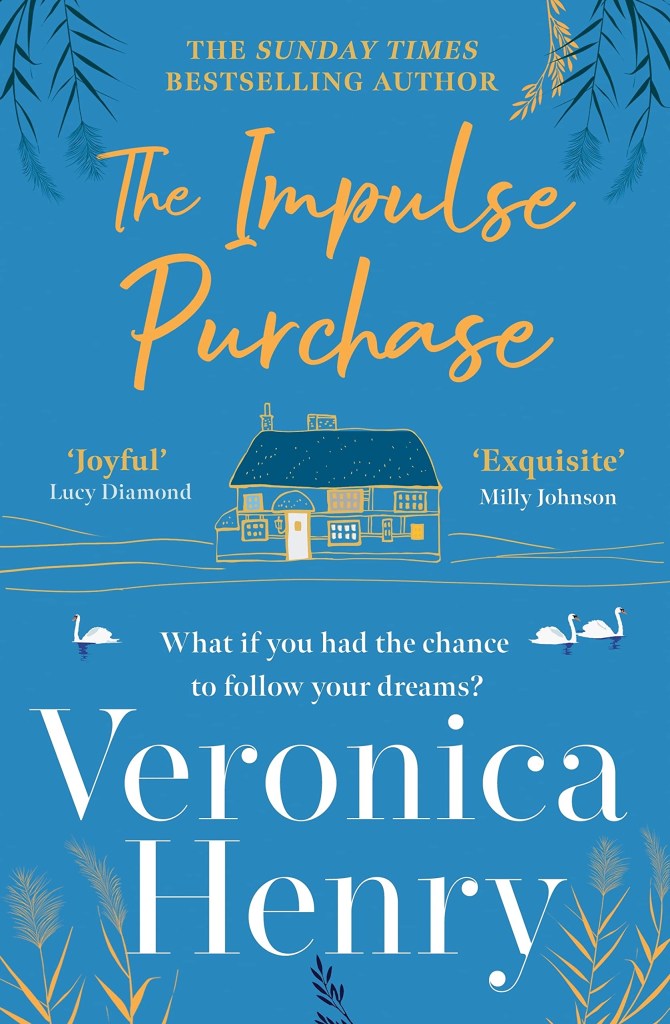
The Impulse Purchase by Veronica Henry

I spent a lovely escapist couple of days reading about this interesting family of women all at a crossroads in life. Julia, great-grandmother and owner of the beautiful Wisteria House in the village of Rushbrook, has died. She has left behind four generations of women: grandmother Cherry who was a model in the 1960’s; mother Maggie, the redoubtable owner of a food PR company; daughter Rose who is a new mum and volunteers at the local homeless charity; finally there’s Gertie, three years old and the apple of everyone’s eye. Aside from great-grandmother Julia’s death and Gertie’s birth, this is a family facing a lot of change. Maggie is still mourning the death of the love of her life, husband Frank. It’s been a couple of years now, but both Maggie and Rose miss him every day. Maggie also faces change at work, as her apprentice has absconded taking some of the business with her. Rose has struggled with grief, but her job is giving her more confidence even though she cares and gets involved more than she should. Cherry is organising a party to celebrate her husband’s retirement, something she’s very good at. Mike is an artist and photographer, retiring from teaching and looking forward to spending more time travelling with Cherry. They just need to finish the sale of Cherry’s childhood home at Wisteria House, but Cherry sees something at the party that changes her mind and sets in place a new plan for all the women of the family.

The Swan is Rushbrook’s public house and has been a family haunt for as long as they can remember, from Cherry’s teens to recent family celebrations with her mother. In fact, even though they live in Avonminster, this village is very important to the women. Rose was particularly close with her great-grandmother and when she’s feeling anxious closes her eyes and imagines the smells of the roses in her garden. In fact Gertie is even named after two of her favourite roses from the garden at Wisteria House. The Swan has become run down since the landlord’s wife has been ill and on an impromptu visit he tells Cherry he’s going to sell The Swan. Cherry has just completed on Wisteria House and partly because of Mike’s party, but also because she wants to take on a project for herself, she buys the pub on impulse. She knows she can make it work, but what will Mike think? Also, how will she do this on her own? With both Maggie and Rose at a crossroads too, they decide to help and all three women uproot themselves and move to the boathouse behind the pub. Soon all three are busy: Cherry with the refurb; Maggie in the kitchens; Rose in the gardens. Can this team of women make The Swan a success?

I found this book a delight from start to finish, so uplifting and full of formidable female characters. Cherry is a ray of sunshine and I enjoyed going back to the 1960’s to her meeting with Mike. They’re a lovely couple who have been devoted to each other for years, but as they both face changes and keep secrets from one another, they might be looking at a different relationship going forward. Maggie is a force of nature, hard working and full of ideas for the menu. She’s also coping with complicated feelings, that pull between missing the person you’ve lost while also becoming excited about moving forward with your life. She’s attractive and dynamic so isn’t short of attention from men, but finds dipping her toe in the water more complicated than she expected. I loved Rose, she has such a big heart and is stronger than she imagines. Her move to Rushbrook is something of an escape from overstepping the boundaries with a homeless client. Rose’s story arc is uplifting and joyful, especially her struggles to understand anxiety and live with her negative inner voice. She also has a tiny hint of romance for good measure.

One of the most powerful aspects of this novel is the inter generational relationships, so it was interesting to read this alongside my Mum. These women are wonderfully open with each other, they give each other support both emotionally and to succeed in life. Their support for Rose as she becomes a young single mum is crucial to Gertie being the carefree little soul she is. I know this because my parents, especially my Mum, did the same for my brother as he became a father at 17. I know that the way my mum helped bring up my niece and nephew, has been the inspiration and example for my niece now that she’s an incredible mum to two small boys. People think it’s instinctive, but I can see both my parents in the way she plays with her boys and encourages their development. We are in the lucky position of having four generation of family and I love seeing my dad playing football with his great-grandsons.

I have a similar, very open relationship with my mum and now I’m older we really are friends. People are often surprised when I say my parents would be the first names I’d put on any party list and my mum comes to my book club, workshops and we go to meditation together. Then I sit back and watch how she nurtures the younger members of these groups, particularly those who struggle with depression or social anxieties. In the same way, I enjoyed reading about the effects these women have on the residents of the village, particularly the lovely Chloe. They provide work for some, start unexpected friendships with others and give the inspiration for some to make changes of their own. They really are a force for good and I was hoping they could make the pub a success, that it would become a community hub for the village and that Cherry and Mike would find a way to assimilate The Swan into their relationship. These relationships are underpinned by an incredibly picturesque village, wonderful descriptions of interior designs and stunning gardens that feed all the senses. This is a gem of a book, full of hope and with a great sense of fun. I loved reading and discussing it with my mum too. I found myself smiling all the way through and at the end I felt like I’d been on a lovely weekend away.

Meet The Author

Veronica Henry has worked as a scriptwriter for
The Archers, Heartbeat and Holby City amongst many others, before turning to fiction. She won the 2014 RNA Novel of the Year Award for A Night on the Orient Express and is a Sunday Times bestselling author of over twenty books. Veronica lives with her family in a village in north Devon and can often be found
cooking up the perfect seaside feast.
Find out more at veronicahenry.co.uk or follow her on social media:
@veronica_henry @veronicahenryauthor @veronicahenryauthor

Posted in Random Things Tours

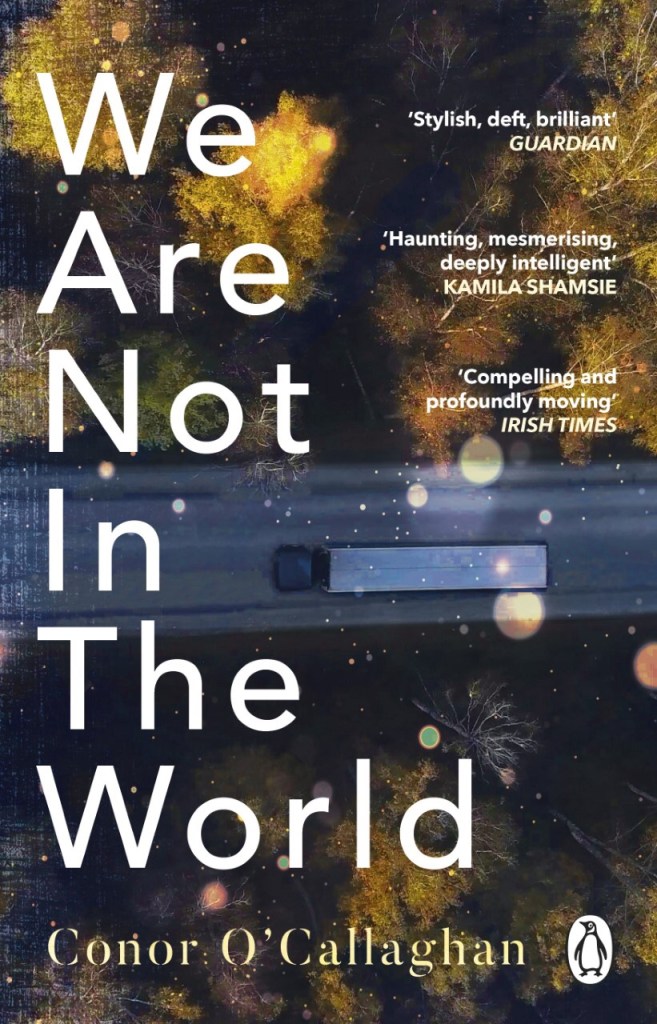
We Are Not In The World by Connor O’Callaghan.

‘The cargo door opens. It opens incrementally. It falls forward, away from us, into foreign day. There are men down there, stevedores in hi-viz and hardhats shouting to one another. I rotate the ignition to halfway, to check for evidence of light. The instrument panel flashes and falls still. There are chains. There is shrieking of iron like gates of hell. Then this fluorescence gradually floods the floor between rows and creeps towards us and feels warm.’

As soon as I read these lines, following Paddy as he and his lorry emerges from the ferry and out into the light, I knew the writing was going to be spectacular and that this was a poet’s novel. Paddy is travelling from England to France, with his stowaway daughter in tow. It’s hard to explain, but this is a book that manages to be both bitter and beautiful. There’s a bleakness to Paddy’s existence, but such a richness in the language used to describe it. It feels bang up to date too, despite the fact no pandemic is mentioned, the author captures a sense of unreality that is all too commonplace these days. The feeling that the world we know and understand has gone, and we are plunged into something other, like Alice down her rabbit hole. We Are Not In The World is an apt title indeed. We follow Paddy on his mundane journey, punctuated by graphic brief encounters and interactions with his daughter Kitty. However, we are also taken into Paddy’s memories of the past and into his relationships, which are largely disastrous. This is an intelligent rendering of psychological damage wrought within families. His marriage is broken, his brother is more successful than he is and there is a complex, almost Oedipal, relationship between him and his mother – also named Kitty. His daughter is wild and rebellious, and in another nod to Paddy’s mother, she wears her gran’s mink coat at all times.

This is not an easy read, but the right readers will love it. Having searched out some of the author’s poetry, it’s clear that the novel touches on some of the same themes. Family and sibling rivalry are represented in Paddy’s relationship with his brother. There’s a jealousy of his apparent successes, but Paddy has still made him the godfather of his daughter. There’s a sense that family is inevitable and no matter how much we wish to escape it we can’t. Separation is explored too – separateness from the land where he grew up, from family and even from his own self. There’s a sense of wanting to be home, but not being able to and the feeling of homesickness that pervades Paddy’s daily existence. He describes it as like a ‘low level virus’ that he permanently lives with. To me it felt like a low-level depression, one that would drop under the radar of most GP’s charts, but is debilitating nonetheless. There’s a numbness in Paddy. He’s on auto-pilot in his daily life, only living in his head until an interaction jolts him out of his memories. The separateness he describes is something I’ve felt when depressed or going through grief. I was physically in the world, but felt no connection to my surroundings or other people. It was like looking at the world through glass.

The only thing Paddy seems to look forward to is some sort of homecoming. He looks at the family home of Tír na nÓg as both a rose-tinted past and a future redemption. Situated on a shingle beach in Ireland, it feels like his chance of happiness or at least a respite from the homesickness that plagues him. Can it be a place of things coming full circle? A completion of this endless mental push and pull between past and future. It feels like a pipe dream, far removed from the reality he’s in and the way he thinks about certain family events, referred to by him and Kitty as ‘the thing we never mention.’ There are times when I wondered if Kitty was real, or whether her birth from the hiding place of his bunk behind the cab was purely metaphorical. I had moments of confusion, moments of being unsure how these fragmented memories and feelings fit together. I was even unsure of what was real and what was imagined occasionally. However, I loved the feelings it induced in me and the sheer beauty of the prose. There’s a haunting quality to the novel that will stay with me. It was a reading experience that I let wash over me, rather like listening to an opera or viewing a beautiful painting. This is for those readers who like their novels to be strange, and bleak, but beautiful at the same time.

Published by Doubleday 18th February 2022

Meet The Author

Conor O’Callaghan is originally from Dundalk, and now divides his time between Dublin and the North of England. His critically acclaimed first novel Nothing on Earth was published by Doubleday Ireland in 2016.
Posted in Monthly Wrap Up

Books of the Month! January 2022

It’s been a busy month in book world and I’ve found my resolution to read more of my own choices and say no to blog tours severely tested. The emails land in my inbox like a siren song and I have to force myself to swipe them into the bin! I’m always scared that I’ll miss a fantastic read, perhaps a book from an small Indie publisher that I haven’t heard about before. I want to be careful I’m not just reading those books that have a huge publicity campaign behind them. It’s lovely to be able to read books that people haven’t heard about and really sing their praises. From everything I’ve read this month these were my favourite reads, some of which I’ve reviewed and some I’ll be reviewing next month, but want to start shouting about now.

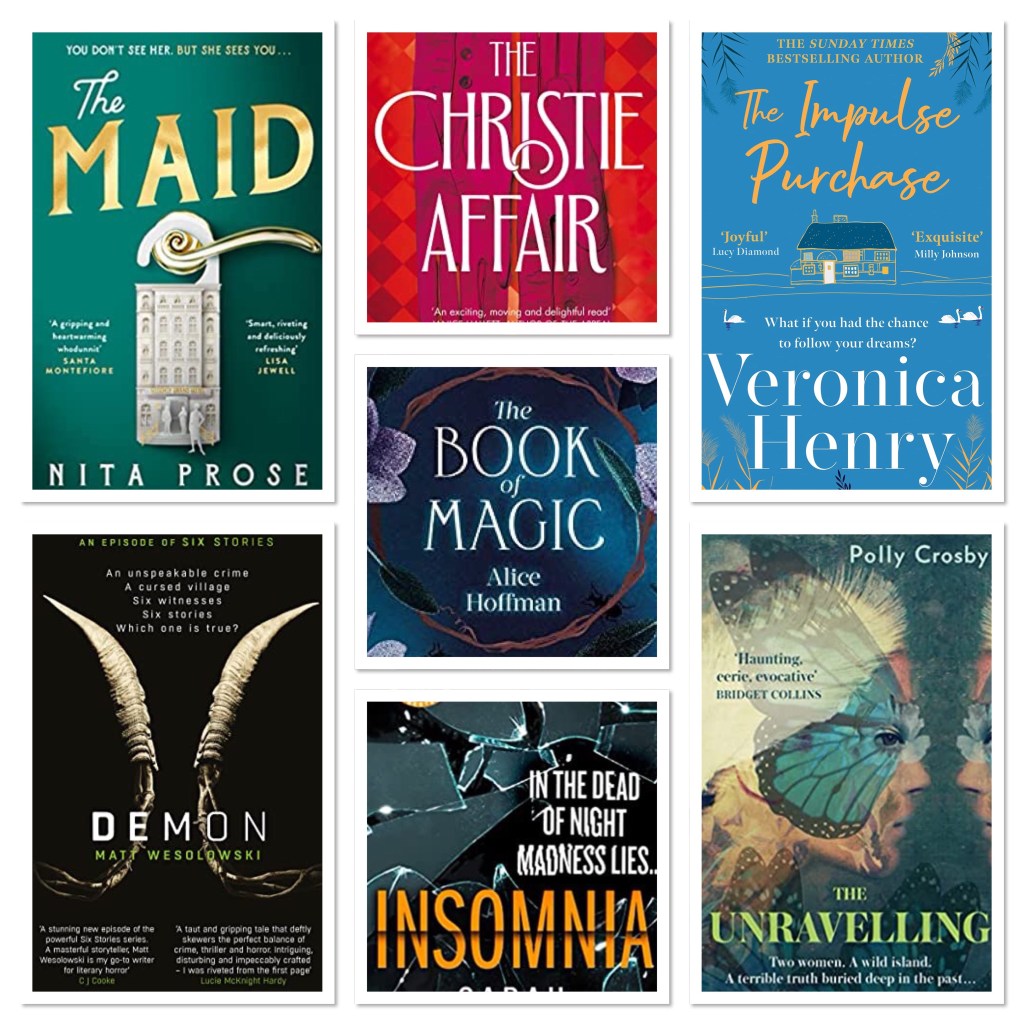
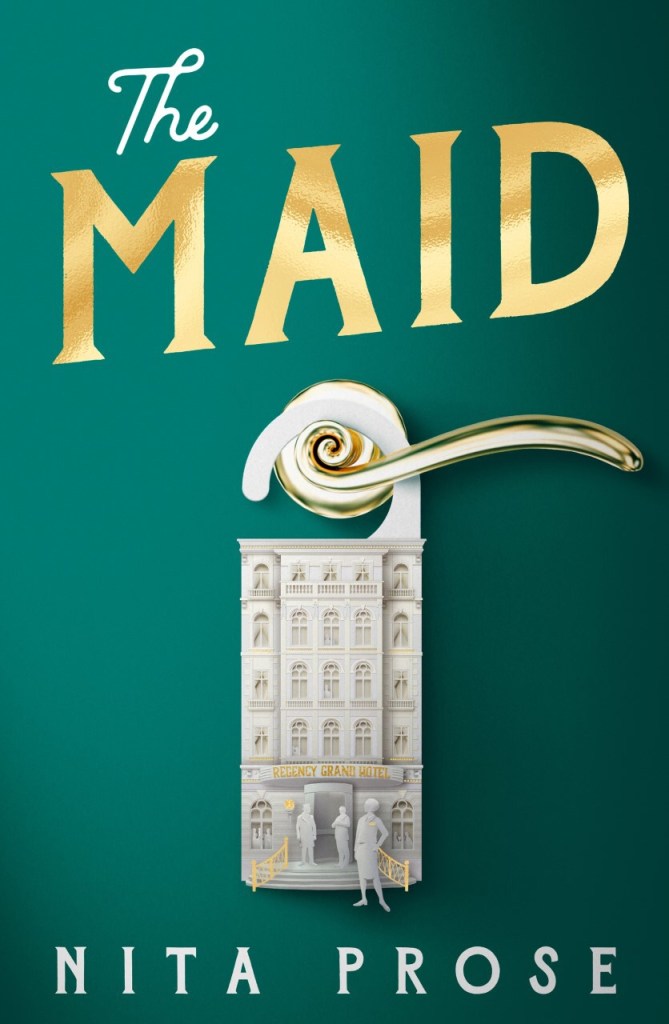
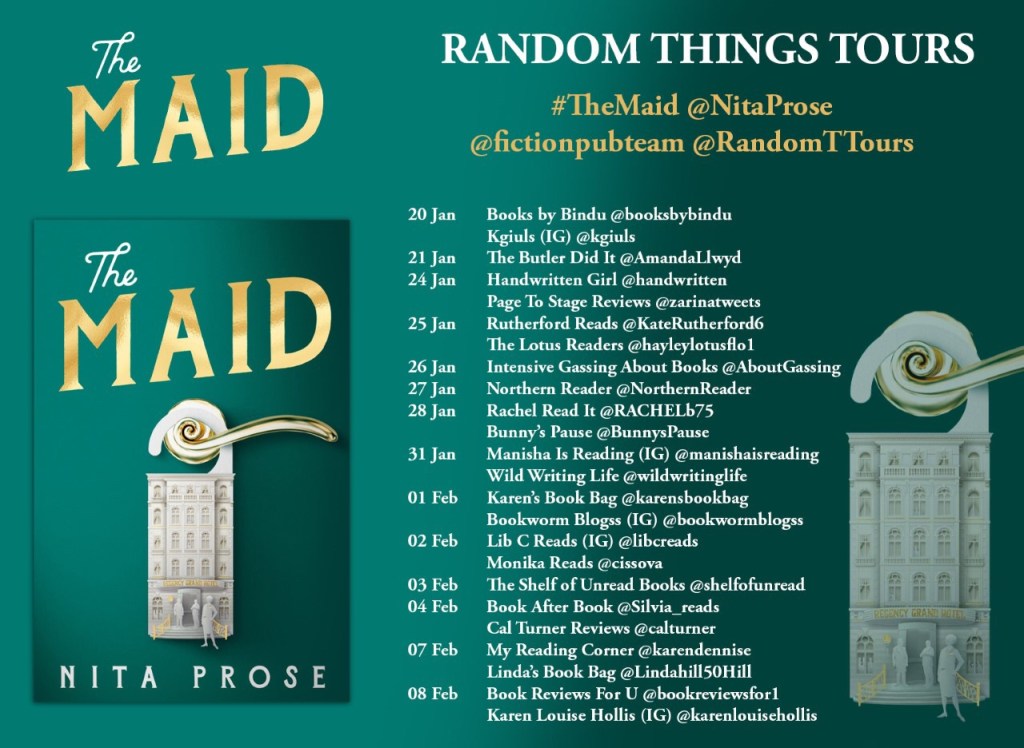
The Maid by Nita Prose

Published by Harper Collins 20th Jan 2022.

I loved The Maid and I think it’s an incredible debut for Nita Prose. It’s a thriller novel, but with a huge heart. Molly is such a loveable character and as the novel begins she is truly alone in the world, after the death of her grandmother. Molly is a maid in the Regency Grand Hotel, someone completely invisible as far as the guests are concerned, but vital to the smooth running of the hotel. When she finds regular guest Mr Black dead in his suite, she becomes embroiled in a murder case. Yet, maybe she has a super power when it comes to investigating crime. When no one notices you and you clear away everyone’s mess, what might you notice that no one else does? I loved Molly as a narrator and her unique way of seeing the world. It’s rare for a thriller to leave you with a warm, fuzzy feeling, but The Maid is definitely the most uplifting thriller I’ve come across.

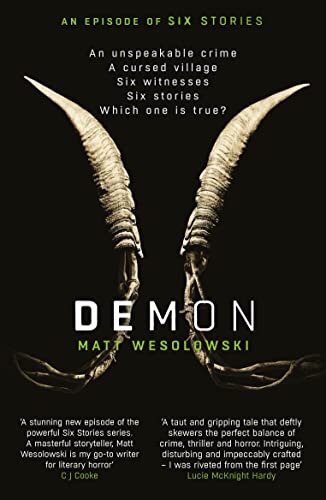
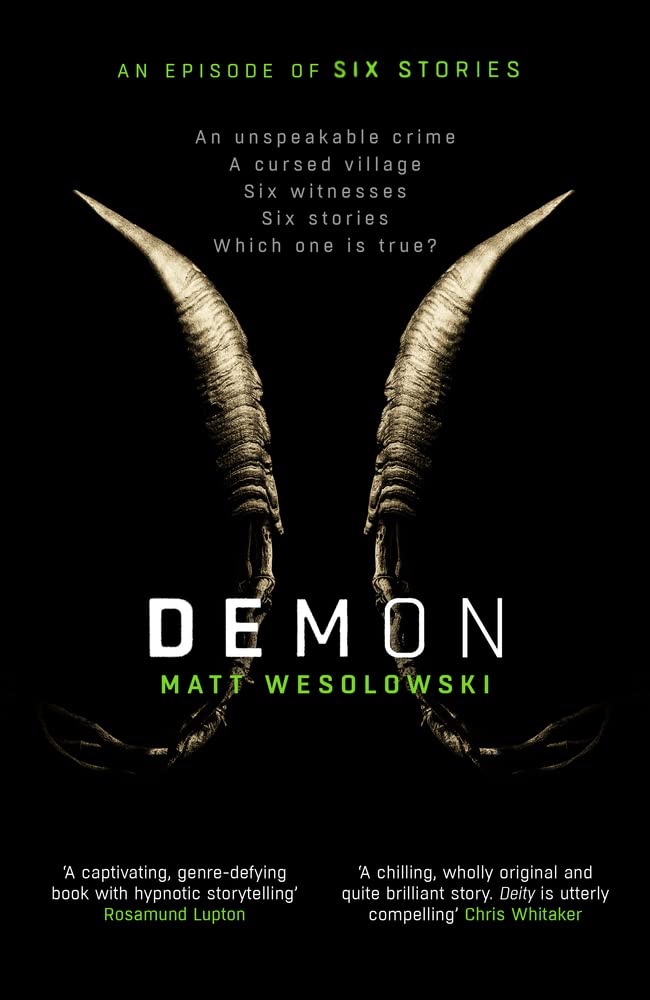
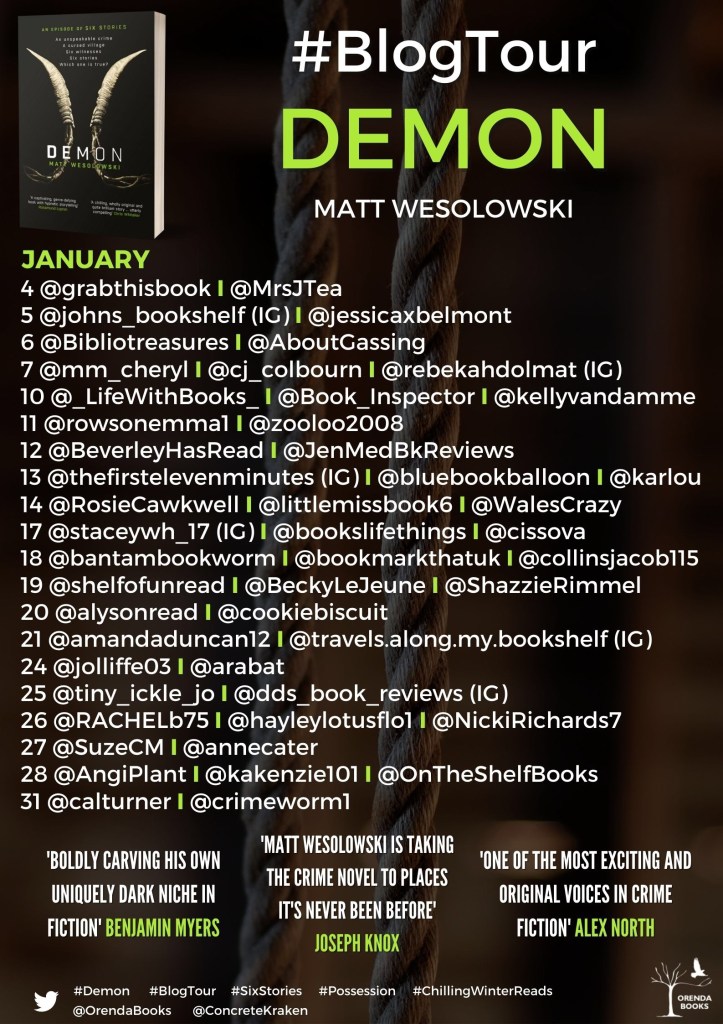
Demon by Matt Wesolowski.

Published by Orenda Books 20th January 2022

Demon is my favourite so far of Matt Wesolowski’s Six Stories series, where Scott King creates a podcast covering an historical crime. This may be an unsolved cold case, a crime where there are unanswered questions or a case so controversial it can still stir up public opinion. This case is the latter, the murder of a young boy called Sidney Parsons by two boys his own age in the village of Usslethwaite in the 1990’s. As with all his podcasts, King gathers six people either related to the crime or who have a new and distinct perspective on the case. The story has parallels with the James Bulger case, something that had huge resonance for me because of my family connections to Liverpool, but also because I was an older teenager in the 1990’s so I remember it vividly. Wesolowski covers some of the same controversies: the brutality of the crime; the age of the perpetrators; balancing justice and rehabilitation. Added to this is the haunting atmosphere of the village, the caves that loom in the landscape and over the crime scene; the first hand accounts of supernatural events around the time of the crime. I found the different perspectives fascinating and the horror elements unnerving, especially when reading late at night. This was a brilliant horror/crime combination.

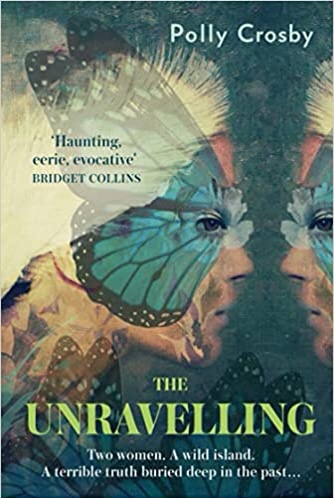
The Unravelling by Polly Crosby

Published by HQ 6th Jan 2022

On the island of Dohallund, Miss Marianne Stourbridge is from a long line of island guardians and lives alone in the family home ardently studying her collections. When she advertises for help in her endeavours she encounters Tartelin Brown and offers her a job hunting butterflies for her research. However, as she travels around the island she discovers something more interesting. There’s the island’s history as a place annexed by the military and uninhabited until recently. There’s the mystery of what happened to the Stourbridge family and how Marianne came to be a wheelchair user. There’s the strange run down or unfinished follies dotted around. Most importantly, there are the strange encounters with the islands fauna, which are not always what they seem. In a dual timeline we explore the island of Marianne’s teenage years, as well as the strange present day, to answer the many questions the reader starts to have about the Stourbridge family and past events. I found this story magical, mysterious and ultimately very moving. Polly Crosby is fast becoming one of my favourite writers.

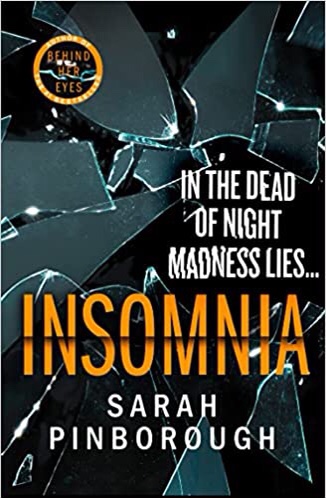
Insomnia by Sarah Pinborough

Published by Harper Collins 30th March 2022

This is an early heads up about a novel being published at the end of March. As Emma approaches her fortieth birthday she can’t sleep. She finds herself lured into obsessive behaviours, a steady nightly routine of checking the children, checking the doors and windows, standing in darkness observing the garden outside for movement. She opens the under stairs cupboard, looking for goodness knows what. Her uneasy behaviour is being noticed by her husband and her children. What keeps going round and round in her mind is that her own mother descended into mental illness just before she was forty. Is the same thing happening to her? I read this over the Christmas and New Year break and it was impossible to put down. It really is a master class in thriller writing. Look out for my review just before publication next month.

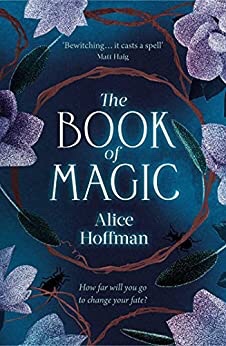
The Book of Magic by Alice Hoffman

Published by Scribner U.K. 6th Jan 2022

I’m sure regular readers will feel like I’ve been banging on about this book for months, mainly because I love Alice Hoffman but also because I had such early access to the novel. Originally pencilled in for publication last autumn, I’d read the book and reviewed it for October only for publication to be moved to early 2022. No matter, because this is a book worth talking about, especially if you love the Practical Magic novels. I have always maintained that Jet is the most interesting of the Owens women and she features prominently in this final novel of the series. Set after the events of Practical Magic we meet three generations of Owens from Jet and Franny, the elderly aunts, to Gillian and Sally, and down to Sally’s daughters. The focus is on the Owens curse, brought to bear on the family by Maria Owens who had been deceived and heart broken. It states that no member of the family can be in love without grave consequences befalling them. Each woman has tried to circumvent the curse in their own way. Sally embraced love but lost her husband only a few years later and is scarred by the experience. Gillian is married, but doesn’t live with her husband. Jet meets her lover in a hotel for interludes and never looks for more. Kylie’s best friend is the most important person in her life, but they have never used the word love. Until now. The curse strikes and as Kylie lies in a hospital bed, deep in a coma, the women and Uncle Vincent must find a way to end the curse for future generations. As Jet hears the death watch beetle ticking away in the timbers of the house, she also knows that time is running out. A fitting and magical end to this much loved series.

The Christie Affair by Nina de Gramont

Published by Mantle 20th Jan 2022

I absolutely loved this novel based around the disappearance of the crime novelist Agatha Christie in 1926. She disappeared for eleven days and nobody knew her whereabouts. Here the author weaves a tale narrated by Nan, the mistress of Agatha’s husband. There is a showdown between husband and wife as he explains he is leaving her for Nan. Then Christie’s car is found abandoned by the side of the road, but there is no sign of Agatha. The author takes us back from Nan’s growing up in Ireland, to her meeting the Christies. Her life has been one of hardships and heartbreak until now and we begin to realise that Nan wants more from Agatha than just her husband. Meanwhile, Agatha is resting at a spa hotel in Harrogate under an assumed name, when a murder occurs. She doesn’t know it, but detectives have been sent out to look for her and one of them may be closer than she thinks. This was a stylish and genre defying novel, being part love story, part crime novel, and historical fiction all at once. It definitely felt like a story of incredible, resilient and resourceful women.

The Impulse Purchase by Veronica Henry

Published by Orion 3rd Feb 2022.

This book was an absolute ray of sunshine and pure escapism at the end of the month after some heavy reads. My full review will appear as part of the blog tour in February but I can tell you a little bit about the story. The author gives us four generations of interesting and intelligent women. Just before her great-grandmother dies, Rose brings a fourth generation into the world. Gertie is the centre of her family’s world and mother Rose is trying to move into work by volunteering at a local charity helping people who are homeless. Maggie is Rose’s mother, she is feisty and intelligent and loves running her food PR business. Grandmother Cherry is a warm and nurturing woman, trying to process the death of her mother and the selling of the large family home that holds so many memories. The village she grew up in is dear to her heart, so when she hears that local pub The Swan is going to be closed down she makes a huge impulse purchase. Another catalyst in this decision was seeing husband Mike’s indiscretion with a beautiful young painter, at the retirement party Cherry meticulously planned for him. Now she’s going to grab something for herself and The Swan is the ultimate project. So three generations of women tackle the pub and settle into village life in a boathouse at the back of the pub. Has this purchase been an expensive folly, or can these women pull off the ideal country pub? This is an uplifting family drama, packed full of wonderful descriptions of decor and food.

Other books I read this month…

The Second Woman by Louise Mey

Bitter Flowers by Gunnar Staalesen

Cut Out by Michèle Roberts

The Secret by Debbie Howells

The Family by Naomi Krupitsky

Daughter of the Sea by Elizabeth J. Hobbes

Posted in Publisher Proof

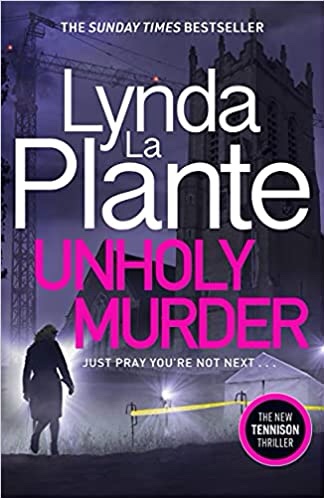
Unholy Murder by Lynda La Plante.

The great thing about having friends who are bloggers is that occasionally they have spare proofs lying around and are very generous in sharing them. I’m very lucky to be a member of the blogger’s group the Squad Pod Collective, they’re a great group of ladies and we all support each other so much. There are often spare, or unwanted, proofs trundling back and forth to each other through the post. However, this time I was lucky enough to receive a bundle of spares from a blogger more local to me and I’ve been sitting on them waiting for the New Year. I planned to take a lot less blog tours and read more by choice in 2022, because I’m back at university and didn’t want to become overwhelmed. Not that I’m finding it easy, especially when the siren song of blog tour organisers drifts into my inbox almost daily. I’m taking half the tours I did last year, which averages at about one a week. The bonus is that when I’m feeling frazzled with my uni reading I can read something really escapist or more gentle to offset the tension. Luckily for me, in my friend’s big box of books, was the latest crime novel featuring one of my all-time favourite fictional characters in books and television – Jane Tennison.

Starting with the eponymous Tennison back in 2015, Unholy Murder is the seventh novel in the Prime Suspect 1973 series. As prolific as ever, Lynda La Plante is delivering one of these novels per year and I’ve found it fascinating to watch the character we’re used to watching as a Detective Inspector, starting out in uniform and learning the ropes. This novel finds Jane as DS Tennison and embroiled in the case of a body found on a building society, in a coffin. The grounds where the developer is digging foundations used to belong to a convent that burned down a couple of decades earlier. The inhabitant of the strange metal coffin is dressed modestly, and her hands are entwined with both a crucifix and a rosary. So it would seem that the victim could be a nun. Who would kill a nun? The investigation will place Jane between developers keen to restart work and get the money rolling and a secretive Catholic diocese, desperate to sweep any evidence under the carpet. Not only is she concerned about finding the killer so many years later, but will she even be able to identify her?

I remember watching Prime Suspect as a very young teenager and I really admired Tennison. She was tough, clever and able to hold her own in a room full of men. I wanted to be a professional too, as good at my job as Tennison is. I even thought of being a police officer, but when it came to it I couldn’t meet the height restriction which was 5 feet and 5 inches back in the early 1990s. I loved her ability to read people, profile them psychologically and question them until they cracked. Of course if you asked my little brother why I used to love watching Prime Suspect he’d say because we were both bossy, but often bossy is a term used to silence ambitious women who are only giving orders. I was interested in the gender politics of the series, the way male officers would deride and try to undermine Tennison was shocking. The old boys network was working overtime, to wrong foot her and get her removed, especially if she had been made their superior. To me she was the first feminist character I’d really noticed in a lead role in a prime time tv series and i was inspired by that. She was also sexy, not afraid of asking for what she wanted in a partner. I couldn’t remember seeing a woman who was open and unapologetic in this way, even about one night stands. It was relationships she struggled with, finding that men wanted to be more important than the job. She was constantly apologising for not working regular hours, for not being available for family events and not being the little woman at home.

The great thing about these prequel novels is that we go back even further, to when a policewoman’s uniform included a matching handbag – useful for filling with stones and hitting criminals I guess. Jane is trying to make her mark, studying for her inspector’s exam and impressing the right people. The problem is that when she tries to impress she often goes off alone, takes unnecessary risks and leaves colleagues feeling that she’s holding out on them, to keep the best information to herself. Here she takes risks by befriending the parish priest and passing on a little more information than she should. She also keeps back something she’s seen because it doesn’t fit the way the investigation is heading, she wants to check it out for herself first. This puts her in considerable danger, as do her dating choices. The story of what has transpired in the old convent is harrowing, but believable and the author explores what happens when an institution cares more about it’s reputation than the truth. This should be scandalous, but seems very realistic, as is the reaction of Jane’s superior officer who has come up against the Catholic Church before. I am a Catholic and there was one detail that confused me. The nun in the coffin is Sister Melissa, but nuns would usually take saints names. I was taught by Sister Joan, Sister Anne and Sister Stephen (which at seven years old was incredibly funny). It’s a small thing, but these things jar in an otherwise well put together tale. I truly enjoyed the plot and spending time with a character I’ve known for a very long time. I would definitely recommend all of the Tennison series, for great storylines and the fascination of watching such a successful woman taking her first steps into the police force.

Meet The Author

Lynda’s latest book, Tennison, was published on 24th September 2015 and is the prequel the highly acclaimed Prime Suspect. The story charts Jane Tennison’s entry into the police force as a 22 year old Probationary Officer at Hackney Police Station in 1973.

Lynda La Plante is published in the UK by Simon & Schuster.

Lynda La Plante is published in the US by HarperCollins Publishers.

Please visit http://www.lyndalaplante.com for further information. You can also follow Lynda on Facebook and Twitter.

Posted in Publisher Proof

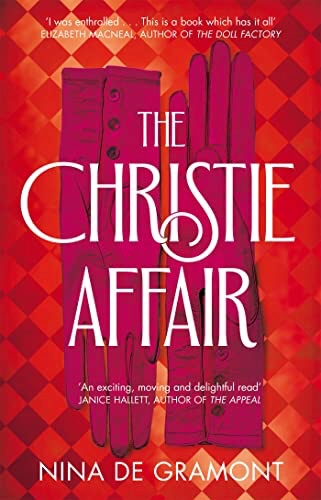
The Christie Affair by Nina de Gramont.

I enjoyed this fascinating novel that fictionalises the famous disappearance of Agatha Christie. On December 3rd 1926, after an argument with her husband Archie, Agatha Christie disappeared. Although there is still some mystery around her movements, it seems she crashed her car while driving down to London. Thousands of police officers and volunteers scoured the countryside near the crash site for Christie, but she was nowhere to be found. It was a huge news story with Arthur Conan Doyle becoming involved and famously hiring a spirit medium to find her whereabouts. She stayed missing for eleven days until she was found in a spa hotel in Harrogate, signed in under the surname of Archie’s lover. Contemporary theories were that this was a publicity stunt, even though Christie appeared to have been in a fugue state. She may have suffered a nervous breakdown after hearing the news that Archie was leaving her. Nina de Gramont weaves a complex tale around this incident, told through the eyes of Nan – Archie Christie’s mistress – an Irish woman whose pursuit of Archie had been so successful he decided to leave Agatha and divorce her, in order to marry Nan. This is only one part of the jigsaw that makes up the full story the author is telling, ranging back and forth and touching on various viewpoints, with the central figure never quite clear and the importance of peripheral figures more vital than I first realised.

We travel back to WW1 and it’s terrible effects on the years that follow. A time when the nation didn’t yet know that the peace they’d achieved was a mere interval of respite where recovery was barely possible. Nan is born of an Irish family, living in London, but is sent back to visit relatives in County Cork in summer since childhood. There she forms a friendship with Finnbarr, a dark Irish boy who has an affinity with animals, particularly his sheepdog Alby. Over the years their friendship grows into love and she is sure they will marry. A chance meeting on Armistice Day is a passionate interlude which leads to Nan being pregnant. Believing their marriage to be only a formality, Nan steals some money, laid aside by her Mum in case one of her daughters gets herself into trouble, and travels to Ireland and the farm. There she finds that Finn is delirious with fever from the Spanish Influenza brought back by returning soldiers. Denied by his family and with Finn thought to be at death’s door, she ends up in a Catholic Home for unmarried mothers. This place is really the genus of the story, because this isn’t Agatha’s tale, despite her being famous and the one who disappeared.

Meanwhile years later, as the Christie’s marriage implodes and Agatha disappears, we’re taken to a hotel in Yorkshire where Nan goes to stay and take a break before the transition of living with Archie. It’s a spa hotel with healing springs, two sets of newly wed couples and an Inspector Chiltern who has been sent to search for Mrs Christie. From these two time frames, the author cleverly weaves her story with the past gradually catching up with the present. I loved the historical detail of the story as the author uses everything from the decor to the women’s clothes to evoke the 1920s setting. There’s a sumptuousness to these descriptions that contrasts strongly with the earlier poverty, with the Magdalene Laundry section being particularly harrowing. I loved how playful the structure was, not quite revealing it’s genre. Is it a love story, an autobiography, or a detective novel? I also loved going back and forth in time, slowly picking up new threads of the story. I had no idea how they would all come together, but loved the way they did.

Meet The Author

Nina de Gramont’s latest novel, The Christie Affair, will be available In February, 2022. She is the author of a collection of short stories, Of Cats and Men, as well as the novels Gossip of the Starlings and The Last September. She has written several YA novels (Every Little Thing in the World, Meet Me at the River, The Boy I Love, and — under the pen name Marina Gessner — The Distance From Me to You). Nina teaches creative writing at the University of North Carolina Wilmington. She lives in coastal North Carolina with her daughter and her husband, the writer David Gessner. 

Learn more about Nina at http://www.ninadegramont.com

Posted in Throwback Thursday

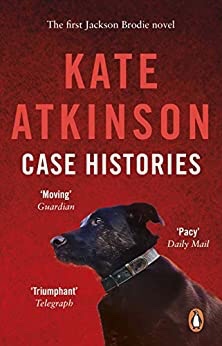
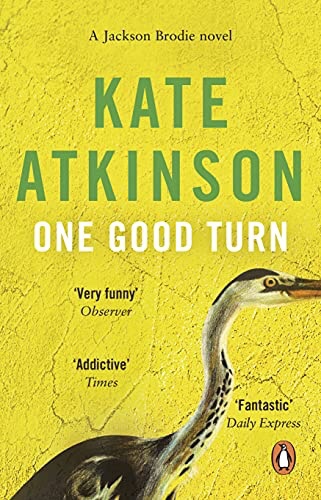
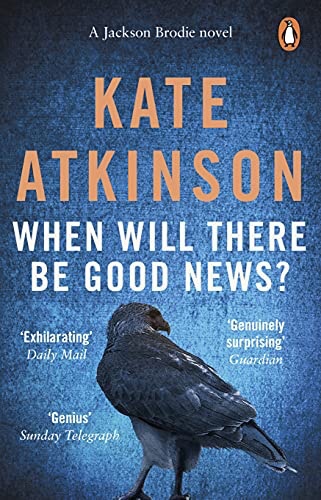
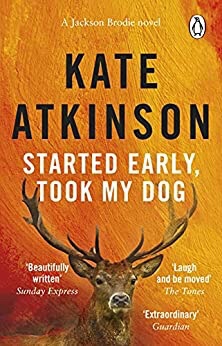
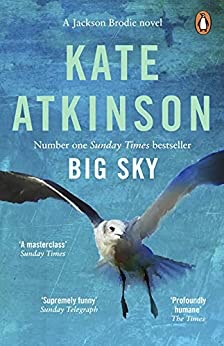
The Jackson Brodie Series by Kate Atkinson.

‘An astonishingly complex and moving literary detective story that made me sob but also snort with laughter. It’s the sort of novel you have to start rereading the minute you’ve finished it’ Guardian

In Case Histories we’re in a Cambridge that’s sweltering, during an unusually hot summer. To Jackson Brodie, former police inspector turned private investigator, the world consists of one accounting sheet – Lost on the left, Found on the right – and the two never seem to balance. Surrounded by death, intrigue and misfortune, his own life haunted by a family tragedy, Jackson attempts to unravel three disparate case histories and begins to realise that in spite of apparent diversity, everything is connected…

The Jackson Brodie novels were the first Kate Atkinson books I bought, one at a time as they were published. I was in love straight away. From the first novel Case Histories to her long awaited fifth in the series Big Sky, we are let into the world of this slightly world weary PI. Each time he collects cases that seem so disparate, but eventually overlap and connect. Atkinson has a unique way of blending very dark subject matter – missing persons, sex trafficking, modern slavery – with a sarcastic sense of humour and love of literature. Of course the investigations are serious and their subject matter is treated with care and diligence. However, some of the scrapes Jackson gets into and his frustrations with the women in his life are funny, acting as light relief. Atkinson has a very clever way of ending her novels without all the loose ends tied up – an issue that mentioned in a negative light in a lot of her reviews. I prefer that. Life isn’t tied up all neatly with a bow on top and I would imagine it’s quite rare when investigating crime. Often what we want to know, and rarely do, is why someone carries out a crime.

It’s maybe in an attempt to answer this question, that the author takes us deeply into the lives of all the characters involved, including their inner worlds. There’s an empathy and humanity to the writing that isn’t always present in crime fiction, in fact it does remind me a little of J.K. Rowling writing as Robert Galbraith for the Cormoran Strike series. There are critics of this style, with reviews commenting that there’s a focus on character above plot. I like that. I want to be invested in a character, otherwise I’m unmoved when things start happening to them. Atkinson also delves into areas of life that I’m interested in. Jackson has a penchant for finding life’s underdogs and more often than not, trying to rescue them. He finds those struggling after divorce, or with massive changes in life, the homeless and the destitute. They’re inbetween people who need help. It could be Jackson’s training as a police officer or his just in his DNA, but he wants to help people.

So If I’m asked what it is that grabbed me at the first novel and still hasn’t let go all these years later? I’d have to say it’s Jackson himself – and that’s before Jason Isaacs was on board for the TV series. Jackson is one of those men that could have the house burning down around him and I’d still feel safe. There’s an honour code about him, almost like a charter of correct behaviour. Yet on the other hand, there are rules he’s willing to break. He almost always gets too close to the client or a witness, showing a dedication to them that might explain his divorced state when we first meet him. There are times when he struggles to let go too, ending up with a dog to mention just one incident. If there’s a rule, such as keeping work and home separate, Jackson will break it for clients. As a result he doesn’t protect his own space, time or even safety. It is that dedication that endears him to me. I understand it, because I’m not great with boundaries myself. I read the book imagining an abrupt manner with a gruff Yorkshire accent. There’s something a bit Sean Bean in his manner. He has an undefinable something, that draws women to him.

The settings are interesting too, with the second novel set during the Edinburgh Festival, the third in Devon and the fourth and fifth in his home county of Yorkshire. Jackson is settled in North Yorkshire in the final novel Big Sky, divorced again but in a routine seeing his teenage son Nathan and their shared Labrador when his ex-wife Julia allows. This is the most settled Jackson has ever been and it’s nice to see him grounded in life. We waited a long time for a continuation in the series and Atkinson didn’t disappoint. In her inimitable style she presents several, seemingly disconnected, characters with various different problems. Jackson meets a man on a cliff top that leads him to a sinister network. He gains a client who claims she’s being watched and followed, which Jackson is starting to think is a paranoid delusion, until he follows her and witnesses her children being abducted. Only Atkinson can bring these strands together, not in a tidy way, but like a rough tapestry overlapping strands to make a beautiful whole.

It was great to see returning characters, like the sparky protégée Reggie who is now a police officer investigating a paedophile ring. I was hoping for DI Louise Munro because I know she and Jackson have unfinished business and lots of chemistry. The whole tale is bookended by a personal mission; Jackson helping his daughter be a runaway bride. It’s good to see a slightly more responsible Jackson, forging relationships with both of his children and staying in one place. I would recommend this series to readers who enjoy a combination of dark secrets and crimes, a wonderfully sardonic sense of humour and characters that get under your skin. I don’t know if there will be another novel in the series, but I do love the existing stories and re-read them from time to time. Atkinson is an incredibly skilled writer and if you pick up her Jackson Brodie series you won’t be disappointed.

Meet the Author

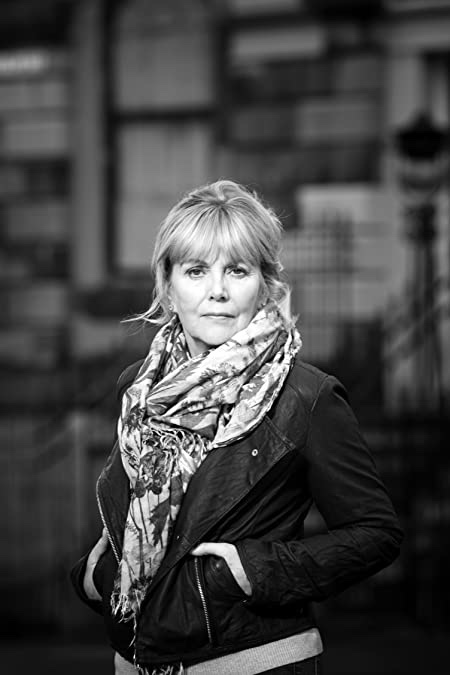
Kate Atkinson is one of the world’s foremost novelists. She won the Costa Book of the Year prize with her first novel, Behind the Scenes at the Museum. Her three critically lauded and prizewinning novels set around World War II are Life After Life, A God in Ruins (both winners of the Costa Novel Award), and Transcription. She was appointed MBE for services to literature in 2011.

Her bestselling literary crime novels featuring former detective Jackson Brodie, Case Histories, One Good Turn, When Will There Be Good News? and Started Early, Took My Dog became a BBC television series starring Jason Isaacs. Jackson Brodie returns in her new novel Big Sky.

Posted in Publisher Proof, Random Things Tours

Demon by Matt Wesolowski

I was fascinated and blown away by this sixth novel in the author’s Six Stories series. As always the novel’s structure is based on a podcast format, where Scott King presents his investigation into a true crime case. Each podcast consists of six stories told by six people associated with the case, with additional emails, news reports and documents on the crime. This time King has chosen a highly emotive crime that reminded me of the James Bulger case. The novel takes us to the old mining village of Usslethwaite in Yorkshire, where a terrible crime was committed, one that shocked the world. In 1995 the murder of twelve year old Sidney Parsons, by two boys his own age, was front page news. The murderers were dubbed the ‘Demonic Duo’ by the press and as well as the usual speculation about both the boy’s upbringing and mental state, there was a whisper of something more sinister. The hills above Usslethwaite were reknowned as a place where witches congregated, all the way back to the 17th Century when witch-hunting was rife. Rumours of something dark and disturbing lurking in the caves near the crime scene had plagued the village for centuries, as well as more contemporary plagues of flies, animal deaths and a strange black shape seen nearby. Is there something supernatural and demonic about this crime? Or are they just hysterical excuses for a crime so savage no one can understand it? Now that the murderers have reached adulthood, they’re quite possibly rehabilitated and living somewhere in the U.K. Maybe now it’s time to hear the truth about what happened when Robbie and Danny formed a friendship and proceeded to commit this unspeakable crime.

I love the originality of this author’s work and his audacity in writing about subjects other writers might avoid. I was 20 years old when Robert Thompson and Jon Venables lured James Bulger away from his mother at a Liverpool shopping centre, then murdered him and left him on the train line in Walton. Everything I remember from that case also comes up in the course of King’s interviews about Usslethwaite. I remember being shocked by the murder, the age of Thompson and Venables, but also the savagery of the press and public towards the accused who were still children. Whilst the anger the crime aroused was understandable, I couldn’t understand grown men gathering outside a court to attack the prisoner transport. I kept wondering what their goal was. What would they do if they actually broke through to those boys? Even now, the mention of either boy, their incarceration or the new lives they now have kicks up a frenzy of controversy and rage. While Demon isn’t based on the Bulger case I did wonder if Wesolowski had it in mind, because he has managed to capture a lot of those conflicting feelings in this novel. Through his podcast guests we can look at different aspects of the Usslethwaite murder, and consider the differing perspectives on what happened. Although there is outrage that Scott King is even featuring this case, I can see that all he is trying to do is answer that universal question: Why? What drove these two boys to kill?

The psychological and paranormal aspects of the case are carefully intertwined here. Robbie is a newcomer to the village, fostered by a lovely, community minded couple who haven’t been able to have children. There is speculation on what Robbie went through before he was taken into care and whether he is the disruptive force behind the crime, with Danny simply taken along for the ride. However, Danny is quite a sad, lonely and disturbed little boy even before Robbie comes along. He found his mother when she had hung herself from the rafters of the barn. Rumours abound about his mother who was a herbalist and reiki healer – something rather frowned upon and misunderstood by some members of the village. In fact she was well regarded by her patients and it could be said that the suspicion was raised due to her occupation and how lucrative it seemed to be, more than anything she did. There were reports of her coming down from the caves with another person, scandalously naked. She was also thought to set fires and dance around them. However, to Danny she was the parent who brought warmth, love and softness to his life. Without her, he is left in the care of his father who is not a bad man, but is absorbed by work and struggles to show affection. Danny visits the caves to speak to his Mum, and thinks he might hear her, but in this dark place it’s hard to know who or what might reply.

The author is incredibly skilled at ratcheting up the tension, whether with more detail of the case or the next eerie happening. I often found myself reading yet another chapter so I could find out what was next. I found the paranormal elements clever, I wasn’t scared at first, but after a while the atmosphere built and I found myself uneasy. One night, my other half asked me to turn the bedside light off since it was late and I found myself unsure whether I wanted to carry on reading in the dark. The strange happenings in Robbie’s room at his foster home were very unsettling, from phantom footsteps to flies and a horrible smell that seems to permeate everything. There’s so much in this village that can’t be explained and is witnessed by lots of different people. Were these boys influenced by demons or was this a case of two very mixed up and lost boys doing something so terrible it would destroy the village, the victim’s family, and the rest of their lives. I loved the varied perspectives, especially those unexpected ones that took our understanding to another level. While never losing sight of the victim and his family’s loss, we get to explore the ideas of rehabilitation and how a perpetrator lives with their crime, especially ones so young. Can they ever make a life for themselves and get over the guilt? Or are they forever doomed to keep moving, constantly looking over their shoulder for fear of being exposed? I was fascinated with the question of whether a demon influenced these boys or whether we could call the boys demons. They are labelled monsters, but are they? Perhaps we just label them this way, because we can’t accept one human being could do this to another, let alone a child. This is another incredible read from this inventive and original author. I devoured it so quickly that I’m buying the whole series with this month’s book budget.

Meet The Author.

Matt Wesolowski is an author from Newcastle-Upon-Tyne in the UK. He is an English tutor for young people in care.

‘Six Stories’ was published by Orenda Books in the spring of 2016 with follow-up ‘Hydra’ published in the winter of 2017, ‘Changeling’ in 2018, ‘Beast’ in 2019 and ‘Deity’ in 2020.

‘Six Stories’ has been optioned by a major Hollywood studio and the third book in the series, ‘Changeling’ was longlisted for the Theakston Old Peculier Crime Novel of the Year, 2019 Amazon Publishing Readers’ Award for Best Thriller and Best Independent Voice.

‘Beast’ won the Amazon publishing award for Best Independent voice in 2020.

Posted in Random Things Tours

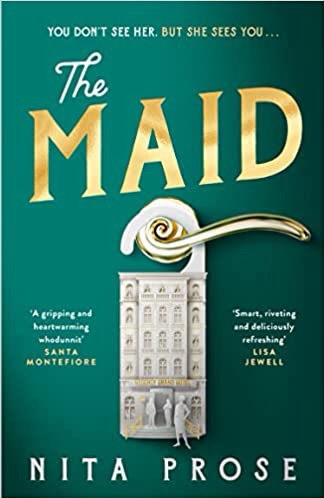
The Maid by Nita Prose.

I’m an absolute sucker for books where the narrator addresses the reader directly. I loved Molly the Maid from the first page and the book was an absolute delight from start to finish. Molly works as a maid at the Regency Grand Hotel and she is very proud of her skills as a cleaner, skills she learned from her grandmother who died a few months ago. Many of her colleagues find Molly a little bit odd – in fact she knows they call her Roomba after a robot hoover – but she thinks they call her Rumba after the dance on Strictly although she doesn’t know why. Molly likes things to follow a routine, things must be in their place and there are ways to clean everything. In fact her Gran said that cleanliness was next to Godliness. Even at home they had a cleaning schedule, something different each night before dinner, and Molly has carried that into her work. She does have some friends, Mr Preston who works on the door, Juan who washes dishes in the kitchens and Rodney who works behind the bar. Her friends are very important to her and if it does good, it’s occasionally okay to bend the rules. So, when Rodney takes her out for a meal and asks for a favour she’s only too happy to help.

Juan has lost his work visa and needs a place to stay, so could she slip him a key each day to an unoccupied room? Rodney gives her a bag, she doesn’t check, but assumes they are Juan’s things and deposits them in the chosen room on her rounds. Her last friend is Giselle, the glamorous second wife of Mr Black, who stays in a suite at the hotel so regularly that Giselle and Molly have interacted a lot. She has all those qualities that Molly values in a person – she acknowledges the little people, she’s polite and treats Molly like a real human being, rather than looking past her. The story begins as one day Molly doubles back on her normal route to clean the Black’s bathroom. She’s done the rest of the suite, but Giselle was in the shower. Molly makes her way through the suite, noticing that cushions are disturbed, the safe is open and Mr Black is taking a nap on the bed. Yet when she looks closer, perhaps he isn’t sleeping? Maybe he’s dead?

This was a clever way of merging a thriller, with a genuinely uplifting story about someone who has gone through an enormous change in her life. I truly felt gripped by the thriller aspects of the story, but also touched by the personal journey that Molly is facing. She has lost someone close to her and is learning to negotiate life as a fully fledged adult. She doesn’t have that ability to read people’s moods and motivations so she’s perhaps an easy mark for people who want to exploit her. I thought the author had a very difficult line to tread with the tone of the novel. We know that Molly thinks in an individual way and there are times when we do understand more than she does about what’s going on at the hotel. Molly refers to this with a jigsaw analogy – she knows she has all the pieces, but hasn’t put them in the right order yet. This could have been disastrous if the reader was superior to Molly, but we never are. The author keeps us firmly with our heroine, even while other characters treat her badly and underestimate her intelligence. The story was gripping and I wanted to know what was really going on at the hotel, and which of Molly’s friends were truly fighting her corner. Molly is a heroine who will stay with me a long time. Even though the goings on at the hotel are sleazy and dangerous, her personal story is touching, charming and ultimately joyful.

Meet The Author.

NITA PROSE is a long-time editor, serving many bestselling authors and their books. She lives in Toronto, Canada, in a house that is only moderately clean.

http://www.nitaprose.com
@NitaProse