Evie Del Rio was the one, as far as Ed Nash was concerned.
Their teenage love was the inspiration for his song ‘Used to Be’ and helped Ed’s indie band, The Mountaineers, to international fame.But when Evie and her family suddenly up sticks and leave their London home without a forwarding address, she leaves a heartbroken Ed behind too.
Over thirty years later, washed up rocker Ed is suddenly back in the limelight when Evie’s love song is used as the theme tune for a new TV drama. Once the song is later featured on TV documentary ‘Musical Muses: The Girl in the Song’ it’s suddenly not just Ed who’s asking…
What happened to Evie Del Rio?
As a child of the 90’s I loved how this book opened with teenager Cassie finding out her mum is the inspiration behind one of the songs of the decade. Thanks to the 90’s becoming all the rage and an inspiration for TV, ‘Mum’s Song’ as Cassie and her brother now call it, is having a resurgence. Written back when her mum and musician Ed Nash were dating in the 1980’s, it wasn’t released until his band The Mountaineers produced their debut album ten years later. Now it’s one of the most downloaded songs of 2018. Cassie thinks the song isn’t bad, but the lyrics that have graced many a wedding become a bit cringe when you realise they’re about your Mum. As a teen I dreamed of meeting Damon Albany, who of course would fall madly in love with me and I would become his muse. So there was an element of nostalgia and wish fulfilment drawing me in from the first page.
Then we see the same situation from Genie’s point of view. Genie is Cassie’s mum and was once Evie Del Rio. Now she’s Genie, mum of two and with ‘a lovely big hunk of a husband’ called Gray. I was intrigued by what had made Evie’s family leave London all those years ago. Along with the change of name, there seemed to be something more going on than avoiding embarrassment over a song and a long ago romance with a rock star. Son Will is really taking the brunt of his mum’s newfound notoriety. Even adults think Genie was some sort of sex kitten and teenage boys don’t hold back. They chant about how many pop stars his mum has shagged on the football field, well they did until he broke someone’s nose. Yet Ed keeps blithely on, talking about his relationship with Evie and the origin of the song. Genie says he’s embellishing, but something about that time clearly gets under her skin. As we travel back and forth to Genie’s teens, when she’s still Evie, we slowly see more of their story revealed and secrets emerge that have been kept for a long time.
I thought this was an interesting idea for a book and as a middle aged stepmum to teenage girls I loved the idea of them getting an insight into the past. Imagine suddenly finding out that the person they see every day was once as exciting and full of promise as they are now. The multiple perspectives kept my interest, because it showed how the situation affects different members of the family. I loved Genie’s husband Gray, a lovely, solid and reliable anchor in a difficult time for his family. There are sensitive issues, but they are handled with care and empathy. I would recommend this nostalgic read, full of endearing characters and with a central mystery that unfolds slowly and with sensitivity.
Published by Cahill Davies 8th July 2022
Meet the Author
I’ve always enjoyed the written word and I have a great passion for music so I decided to put the two together and the result is my debut novel ‘What Happened to Evie Del Rio?’
I like to think I’m enjoying my ‘middle youth’ rather than my ‘middle age’. I’m married and Mum to two sons and a black rescue cat called Hector.
I enjoy going to gigs and discovering new music. I also love reading women’s fiction but I do have a bit of a penchant for crime and psychological thrillers! If I’m not on social media, reading or listening to music then you will probably find me on a football pitch cheering on my youngest son and his team.
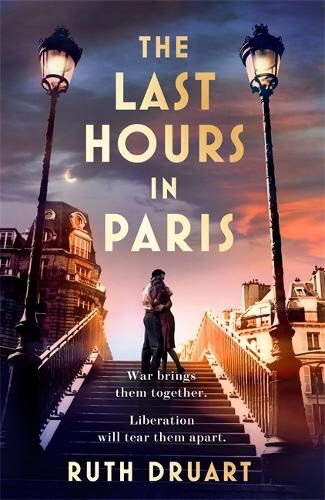
After Ruth Druart’s previous WW2 novel While Paris Slept I’d been so embedded in the story that I felt emotionally drained from the terror and trauma experienced by her characters. While that novel gave us WW2 from the perspective of a French police officer and a Jewish mother, her latest novel comes from a very interesting and possibly less explored voice of the conflict. Our novel centres around young French woman and a German soldier who cross each other’s paths due to a love of books. We roam from Paris to Brittany and to England, hearing the stories of our main characters from both points of view at different times in their lives. However, the novel starts several years later with Joséphine, a young woman who has just finished her baccalaureate and is looking forward to summer. She wants to visit England because it’s where the Beatles are from, but her mum Élise and the woman they lodge with, Soizcic seem very resistant. It’s the usual teenage argument, made all the more dramatic because the women are carrying a huge secret. One that will be uncovered if Joséphine keeps to her plan to find her birth certificate, so she can obtain a passport. She intends to go with or without her mother’s permission. Élise had always promised herself to tell Joséphine the truth she’s been hiding, but the time never seemed right and besides it was easier to keep the illusion. Élise has always told her daughter that her father’s name was Fredéric and he died in the war. The truth is more complex and shrouded in the secrecy and shame of another time. If Joséphine finds out, will she ever forgive her mother?
Our story moves back in time to the 1940’s when Élise is living in an apartment in occupied Paris with her Mum and younger sister Isabelle. She hates ‘the Boche’ who have taken over her beautiful city and filled it with fear and hatred. Jewish families have disappeared and just as hated as the German occupiers are people who collaborate with the enemy, whether they’re bar owners whose tills ring with German money or the women who serve as their mistresses. Élise has noticed them walking with officers in the gardens, wearing perfume and sporting real stockings rather than a painted and often wobbly line drawn down the back of the legs. Élise has a secret, she has been working at an orphanage and helping Jewish children escape across the border. I loved the bravery of this young woman and her ability to see most people as human beings, at a time when the hatred of others due to their race or religion was at it’s devastating worst. She meets a young German soldier in her friend Monsieur Le Bolzec’s bookshop and at first is horrified that the elderly bookseller is finding sympathy for him. Sébastian may sound German, but his mother was French and his fluency in the language means he’s working in an office translating letters. Élise is cool towards him at first, but then he warns her that she’s in danger. She has been helping Jewish children pass from an orphanage and over the boarder. Sébastian translates a letter denouncing the orphanage, he keeps it and warns Élise, even organising a car to remove the remaining children. This act of service and his willingness to put himself in grave danger brings them closer together, but will anyone accept their feelings for each other.
Ironically it’s the danger of war that brings these two characters together, but the liberation of Paris that will tear them apart. The author’s research is impeccable and I learned things I hadn’t realised about the war and particularly it’s aftermath. I had some idea of the treatment meted out by the French on women thought to be collaborators, but Ruth Druart’s vivid description brought out a huge sense of injustice in me. These women made choices due to their situation: if a German soldier approached me to be his mistress, I might do it if my children were starving or I’d lost my home. There was no mercy or insight into why such a choice might be made. I was also surprised at how long the British kept prisoners of war beyond the ceasing of hostilities. The Geneva Convention states that they should be released immediately, but here we see men kept for three years beyond the war ending. I think the author really captured the chaos of an occupying force retreating and how people have become displaced from their homes, their families and their lovers, especially where the relationship is controversial. People lost each other for decades – my mother-in-law was taken out of the Warsaw Ghetto when she was a child and was taken to England, separated from both parents. Her father looked for her and his wife straight after the war with no luck and eventually settled in America and moved on with his life, coming to terms with the fact they had probably been killed. They were still alive though and his wife was finally reunited with their daughter in England and her father’s other family in America. Druart shows how our links to each other can be lost, but for Élise there are particular betrayals that have kept her apart from Sébastian . Betrayals that are hard to forgive. I found this part of the book so poignant and I loved how Paris needed time to heal, both it’s buildings and it’s people. They had adjusted to occupation and now must rebuild their city, bringing back it’s joi de vive. As Élise observes the difference war has made to her beloved city I could almost hear the oppressive sound of jackboots echoing off the buildings and reminding every citizen they are no longer free.
I was drawn to Sébastian and truly understood his feelings of oppression. He was no more free than Élise, forced to join the Hitler Youth, he was trained as a soldier so had no choice but to serve. It was so moving to see him post-war in an English cinema watching film of what the Allies found when they liberated Auschwitz. He his horrified and is filled with guilt for serving a leader who could do this to others. He knows he is different, but to a Frenchman or an Englishman there is no difference between him and the SS; they are all Nazis and are all responsible. He carries that shame with him into all he does. I also felt for Élise and her loneliness, because despite having Joséphine and their friend Soizcic she has a solitary existence. I hoped for a happy ending for her, but I won’t spoil your reading pleasure by revealing what does happen in Joséphine’s timeline. I urge you to read it, because it has real impact. Hearing the voice of the enemy is unusual and impresses upon us that no matter what side we’re compelled to be on we’re all human. We don’t choose who we fall in love with and that love never dies, no matter how much time has passed or how far apart we are.
Published by Headline 7th June 2022.
Meet the Author
Living in Paris for the last thirty years inspired me to write, and my debut novel, While Paris Slept, came out in 2021, followed by The Last Hours in Paris, to be released in July 2022. Both books are set during the occupation of World War II, a time which intrigued me as I imagined the French having to live and work alongside the occupiers.
I love the power of story, and believe that sharing stories from different perspectives and different backgrounds can help us understand the world better. Having studied psychology at Leicester University, I have always been interested in the workings of the mind, and especially in what motivates people. I find people fascinating and love creating my own characters, each one flawed and touching in their own way.
I don’t believe in the single story, and in my books I like to present different perspectives, leaving the reader to make up their own mind as the characters face moral dilemmas and difficult choices. I hope you enjoy reading them.
My other half was worried when he saw my bookmark.
Twelve-year-old Sophie and her mother, Amelia-Rose, move to London from Massachusetts where they meet the charismatic Matty Melgren, who quickly becomes an intrinsic part of their lives. But as the relationship between the two adults fractures, a serial killer begins targeting young women with a striking resemblance to Amelia-Rose.
When Matty is eventually sent down for multiple murder, questions remain as to his guilt — questions which ultimately destroy both women. Nearly twenty years later, Sophie receives a letter from Battlemouth Prison informing her Matty is dying and wants to meet. It looks like Sophie might finally get the answers she craves. But will the truth set her free — or bury her deeper?
I found this a truly compelling read, shot through with moments of fascination and revulsion. I don’t think I’ve ever read a book that looks at serial murder from this perspective. I remember reading one of Sue Townsend’s first Adrian Mole books, set in the early eighties they cover a period when Peter Sutcliffe, the ‘Yorkshire Ripper’, was eventually caught. Adrian observed in his diary that his wife must have known what her husband was. Or did she think ‘Peter home covered in blood, says he was run over by an offal cart’. Humour aside, we often think this when serial killers are caught and it turns out they’ve been a ‘normal family man’ at home. We want our killers to be monsters, strange looking loners, men who have always ‘kept to themself’. It’s unimaginable to think they might have murdered, then gone home and had a family barbecue. This is such rich territory to exploit and Victoria Selman has done it beautifully here in her narrator Sophie and in her creation of Matty Melgren.
I’m going to share a personal response to one of the aspects of the book I found so beautifully constructed that it rang completely true. My ex-partner was emotionally and psychologically abusive. We were together five years and I had therapy for several years afterwards to feel completely myself again. I’d been gaslighted for so long that my sense of self was broken and I didn’t even trust my own judgement anymore. People always ask why you stay with someone like this and the answer is always that they weren’t like this at first. People like this know how to manipulate, to love-bomb you at first and charm everyone around you. The change is subtle, barely noticeable. Then if you do notice, it was a joke or it came out wrong. By the time they really show their true colours you’re so nervous, under confident and broken that you see yourself differently. Maybe you deserve this? Maybe this is just what relationships are like. The author captures this perfectly in Matty Melgren’s relationship with Sophie’s mum, Ams. Told from Sophie’s perspective, Matty dances her mother round the living room and leaves her loving little Post-It notes, surprises her with flowers and takes her breakfast in bed. Sophie describes the change:
“Things started to change; gradually, the way the tide comes in. Inching closer so you don’t notice it until your shorts are wet and your sandcastle’s a shrinking mound.’
We see Ams start to doubt herself. One scene that really unsettled me for being exactly what my ex would do concerned Ams getting dressed for a works drink party. She puts on a red dress that’s off the shoulder and Sophie thinks she looks pretty. Matty agrees, but wonders whether she might want to wear something ‘less showy’ for a party her boss is attending. She has a black tunic, but it’s a bit frumpy. She puts on the black and leaves for her party and once she’s gone Sophie challenges him. She thought her mum looked pretty in the red. ‘Me too’ Matty replied, commenting that she ought to have more confidence in herself. It’s subtle, but it has Ams doubting her judgement and is driving a wedge between her and her daughter. He encourages Sophie in rebellion and cheeky come backs. Sophie’s fear that he will leave like her father, is a easy thing to exploit and he does. He uses Sophie to pile shame on her mother when she’s ‘demanding’ which translates as Ams asking for her needs to be met. I found his manipulation of Sophie uncomfortable reading, but Sophie presents it differently. She blames her burgeoning hormones and admits it might have been an unconscious desire to draw him to her and isolate her mother. It’s perhaps the success of this bonding process that makes Matty think he can push the boundaries; to exploit her age and natural curiosity in an uncomfortable and completely inappropriate way.
In between Sophie’s story, are contemporary opinions of Matty Melgren and those around him. There are also the terrible facts about the murders and the female victims who are otherwise eclipsed by the fascination into how the killer’s mind worked. I loved the way the author would juxtapose events to place a spotlight on the killings. It brought up a feeling of revulsion, even though the two events are really unrelated. What Sophie and Ams were doing while these murders took place has no connection, but somehow we feel it and it’s a technique many newspapers use to push their agenda. Ams is creaming butter and sugar to make a birthday cake, with the radio playing in the background reporting that two more bodies had been found strangled by their underwear and one almost decapitated by a shovel. Sophie connects the timing years later. Matty suggested that they celebrate Sophie’s birthday properly and make a fuss. Ams thinks that she’s creating patterns that weren’t there, but it’s easy to see why. She’s remembering them, obliviously celebrating her birthday, while two women lay brutalised and their killer was sat charming her school friends.
Sophie couldn’t possibly have known, but she’s heard so much criticism over the years that she’s internalised it. Why didn’t she know? They must have been stupid not to see it. She’s still being manipulated and gaslighted, this time by the press and general public. The tension builds, compelling the reader on towards a resolution to Sophie’s musings and to her scheduled prison visit. It’s an insight into how murder destroys two families, that of the victim but also that of the murderer. Being left with all these internal questions and a sort of survivor’s guilt. I wondered whether it is ever possible to go through an experience like this and trust a man again. Would Sophie have been able to live a normal life after this experience in her formative years? Victoria Selman has written a novel that made me feel so many different things and had enough psychological trauma to keep a counsellor like me thinking long after the book was closed. She also deserves congratulations for concluding it in a way I never saw coming.
Published by Quercus 7th July 2022
Meet The Author
Victoria Selman is the author of the critically acclaimed Ziba MacKenzie series. Her debut novel, Blood for Blood, was shortlisted for the prestigious CWA Debut Dagger Award and an Amazon Charts #1 bestseller for five weeks, selling over half a million copies.
Victoria has written for the Independent, co-hosts Crime Time FM with critics, Barry Forshaw and Paul Burke, compiles the Afraid of the Light charity anthology series and was shortlisted for the 2021 CWA Short Story Dagger Award.
Her first standalone thriller, TRULY DARKLY DEEPLY, is being published by Quercus in July 2022.
Having spent a bit of time hanging round Peterborough train station over the years, I thought it seemed an unpromising place to set a novel, but Louise Doughty has proved me wrong. In Platform Seven, she weaves an unmissable whodunnit where Lisa tries to understand why she died.The book opens following security guard Dalmar, a refugee from Somalia, as he carries out his night shift. After midnight the station goes quiet and most people might assume it is closed, but it runs with a skeleton staff and between the hours of 3am and 6am only freight trains rumble through at platform seven. This is the last platform, towards the back of the station and only partially viewable by CCTV. It is the perfect place for homeless people to hide out and try to sneak into the warmth of the waiting room for a few hours. Dalmar has been desperate, so sometimes he doesn’t have the heart to move them on, feigning ignorance so they can grab a few moments of warmth. At first, he mistakes the man walking through the station, for a homeless person and pays no attention. The man, wearing a cap and donkey jacket makes for platform seven and waits. To Dalmar he seemed hunched in the cold and seems to almost be in a trance.
There is only one other witness to his arrival and that is Lisa. Lisa is trapped in the station, she knows all the staff by name but can’t get them to see and hear her. On this occasion she is sure she understands the desperation in this mans eyes and she worries he isn’t just here for the warmth. As a freight train trundles towards the station he steps towards the platform edge and Lisa desperately tries to stop him but he can’t hear her. Dalmar finally sees the man, but is too far away to make a difference. He shouts. But the man keeps going. He steps through Lisa and straight under the train. Doughty explores the effect this man’s suicide has, firstly on the railway staff. PC Ashcroft from the British Transport Police, and his boss face the task together. Ashcroft has never experienced a railway death before and the horrifying detail of gathering body parts, sorting through clothing to look for ID and organising a cleaning team affects him and us at the same time. He doesn’t want to break down but struggles and wants to understand what could make a man die like this? Dalmar, who witnesses the incident with Lisa, is triggered into a flashback of his own. We are transported back to a dinghy on a river and a woman who’s head is the only part up above the water. In reality it’s detached, merely floating on the surface, but screaming at the same time. Lisa wanted to stop the man and is horrified by what she’s seen. She comes to a horrifying realisation.
In the days that follow Lisa becomes fascinated with a distraught young man she sees in the cafe, while PC Ashcroft discovers that a young woman died recently on the same platform. Something about her death piques his interest and makes him wonder whether the events leading up to her apparent suicide were properly investigated. He asks if he can do some digging and gets the go ahead. Lisa also has a breakthrough, she finds that she can follow this young man out of the station and accompanies him on his walk home. This begins her wanderings and the unlocking of her story. Doughty’s description of the romance between Lisa and her doctor boyfriend, Matty, is brilliantly written and shows a real understanding of domestic abuse. Psychological or emotional abuse has only been made a criminal offence more recently, but it is subtle and difficult to pinpoint even for the victim. I was in an emotionally abusive relationship for five years and despite having therapy there are still times when I am confused about how and why I let this happen. Of course I’m not responsible for the abuse, but I was responsible for allowing it to continue. We see how slow and subtle the behaviour begins; a throwaway comment that could be a criticism, a moment of jealousy, an insistence that a hurtful comment was simply a joke and you’re too sensitive. I highlighted a whole passage to use with writing therapy clients: The sad, sobering and undramatic truth is that I made the same mistake that women and girls throughout the ages and across continents have so often made. The one that is so easy, seductive, and most flattering to ourselves. I mistook possessiveness for love. By the time I realised the magnitude of that mistake, I had too much invested in the relationship tosimply undoit. I had to keep on making the mistake in order to justify the fact that I had made it in the first place. It was too large and complex an error to admit and how could I explain I had made a mistake to family and friends when I didn’t even understand how I had made it myself? This section of the book is such a beautiful piece of writing and answers perfectly the question everyone asks; ‘why didn’t you leave?’ When asked by my family why I’d never told them, the answer was the same. My husband had died, I had been broken and this person professed to love me. I was ready for something positive to happen in my life. I glossed over a couple of red flags, because he was stressed at work, or moving house and as well as an excuse he made promises to change. If I admitted that my relationship was a sham I would have to admit there was no happy ending and I would be back where I started: bereaved, broken and alone.
It took me five years to admit to others and myself that I had to leave. I’d had to gather my strength over time and eventually he behaved so badly I couldn’t gloss over it any more. I was aware reading Lisa’s story that things could have been so much worse. Matty breaks her confidence and by using the technique of gaslighting leaves her in a place where she doesn’t even trust her own judgement anymore. The outcome is devastating. I really enjoyed the way Doughty slowly frees Lisa. Firstly, she is liberated from the station, then finds a way to whisper a suggestion to someone, then m finally she travels all over Peterborough and even beyond the city towards the end. She finds others like her: the old man from the station suicide pops up soon after his death; a woman in an orange suit striding towards the station; the weird grey blob at the top of the multi-storey car park who she knows to stay away from. However, there are places she wants to be. Most importantly, an urgent visit to a woman she once saw through a window who seemed to need her help. This is domestic noir at it’s absolute best and has stayed with me ever since.
Meet The Author
Louise Doughty is the author of nine novels, including the soon-to-be-published Platform Seven. She has also written one work of non-fiction and five plays for radio.Her most recent book, Black Water, is out now from Faber & Faber UK and Farrar Straus & Giroux in the US, where it was nominated as one of the New York Times Book Review Top 100 Notable Books of 2016.
Her previous book was the number one bestseller Apple Tree Yard. First published in 2013, it has sold over half a million copies in the UK alone and has been translated in thirty territories worldwide. A four-part TV adaptation with Emily Watson in the lead role was broadcast on Sunday nights on BBC1 in January 2017.
Doughty’s sixth novel, Whatever You Love, was shortlisted for the Costa Novel Award and longlisted for the Orange Prize for Fiction. She has also won awards for radio drama and short stories, along with publishing one work of non-fiction, A Novel in a Year, based on her popular newspaper column. She is a critic and cultural commentator for UK and international newspapers and broadcasts regularly for the BBC and has been the judge for many prizes and awards including the Man Booker Prize and the Costa Novel Award. She lives in London.
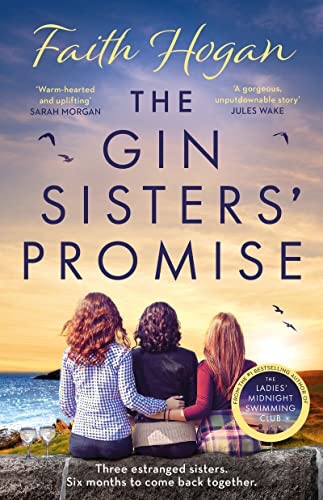
Three estranged sisters. Six months to come back together.
When Georgie, Iris and Nola’s mother died and their father disappeared into his grief, the sisters made a pact: they would always be there for one another, no matter what.
Now, decades later, they haven’t spoken for years and can barely stand to be in the same room. As his health declines, their father comes up with a plan to bring them back to one another. In his will, he states that before they can claim their inheritance, they must spend six months living together in their childhood home in the village of Ballycove, Ireland, and try to repair their broken relationships.
As the months progress, old resentments boil over, new secrets threaten to come out and each sister must decide what matters more: their pride, or their family. Can they overcome their past and find a way to love each other once more?
This is another comforting instalment of what Faith Hogan does best – the charm and quirks of an Irish village, picturesque settings, a pinch of humour, and complicated female relationships. The latter being three sisters with so many differences it might take a lifetime to sort them out, never mind six months. Each has enough endearing qualities that it’s possible to see through the more difficult parts of their personalities. Iris is the oldest sister and, to borrow a phrase from Helen Fielding, the other two see her as ‘the smug married one’. Neither can stand Iris’s husband Miles, who is controlling, unfaithful and created a rift in the family when he was caught stealing from the family distillery. Georgie loathes him for that and the creepy hold he seems to have over their elder sister, a resentment that possibly dates back to Iris’s role as mum to the younger girls when their mother died. I felt for Iris the most. Having stuck her neck out for Miles in their teenage years, he repaid her by stealing when he should have been learning the distillery’s secrets in order to take over from their father. Over the years Iris has become lost, acquiescing to Miles’s wishes even when it came down to something very important to her. She wanted children. He didn’t. Now he has a mistress, a baby on the way and would like to talk Iris into giving him everything they own. Georgie has the balls in the family and was determined to leave Ballycove and make a success of her life. Now in her thirties she’s expecting promotion and a partnership at the marketing firm where she works, but the board have decided against it. It turns out that Georgie is universally disliked by all her co-workers. Her work is exceptional, but her manner is rude and condescending. Unable to take being passed over, Georgie’s summons home comes at just the right time. However, underneath her bullish exterior she is devastated at the loss of her father who she was very close to. The youngest sister, Nola, is the beauty of the family and the baby. She spent her teens desperate for a life beyond Ballycove and moved to London as soon as she could to study acting. Having had a burst of success playing a favourite new addition in a British soap opera, she turned an original two week part into years, but was recently shocked to be told she was being killed off. Unable to admit to failure, after a long time attending auditions which came to nothing, Nola is returning home broke and without an agent.
I loved the way these sister’s personalities rub against each other, often in complete ignorance or misunderstanding of how the other is feeling. They neglect to realise that they need to meet as they are now. They’re making assumptions about each other based on old information, they base it on the way they acted as teenagers because that’s when they were last this close. To place them back in the family home, while grieving and with all these old resentments flying around, is a massive gamble and I enjoyed finding out whether it would pay off. The way that each sister veered towards their own niche within the estate was fun, because it balanced out the arguing and negativity. Here each woman was in their element: Iris loves creating homes and cozy spaces for people to enjoy; Georgie loves a challenge and when that’s matched with a tribute to their mother she’s all fired up; Nola starts to realise that here in Ballycove she’s been successful and can now use that experience to help others follow their dreams. There’s a wisdom that comes with age and the sisters are surprised to meet others who stayed or returned home. It’s Iris who seems to make that connection in her mind, that she can have what she wants and be fulfilled as she is. She doesn’t need a man to help her reach her dreams and she is surprisingly capable. I was desperate for her to send Miles on his way and realise her own worth, to fight her corner, but I had to wait to the very end to find out whether she would. The main focus though is the three sisters and whether they can come together, to use their complimentary skills to keep their childhood home and their parent’s memories alive. This is a cozy but emotionally intelligent read, all set within beautiful countryside and written by an author whose love for rural Ireland is evident throughout.
Meet The Author
Faith Hogan is an award-winning and bestselling author of seven contemporary fiction novels. Her books have featured as Book Club Favorites, Net Galley Hot Reads and Summer Must Reads. She writes grown up women’s fiction which is unashamedly uplifting, feel good and inspiring.
Faith’s Kindle Number 1 bestselling book, The Ladies Midnight Swimming Club is published in May 2021. Your 2022 Faith Hogan fix – The Gin Sisters’ Promise is out now!
She writes twisty contemporary crime fiction as Geraldine Hogan.
She lives in the west of Ireland with her family and a very busy Labrador named Penny. She’s a writer, reader, enthusiastic dog walker and reluctant jogger – except of course when it is raining!
This month I’ve spent a lot of time out in the garden reading some really great books. I have a new bright pink parasol to relax under so I can stay out of the sun. One of the drugs I take for my MS causes photosensitivity so I have to be a little careful. I love sitting in the garden though, with the insects buzzing about and no interruptions or distractions. However, I’m still struggling with nystagmus in my eyes – where the pupil keeps moving left to right constantly – so I’ve missed or posted late on blog tours which I really hate. I did have a couple of wobbly days where I thought of giving up blogging for a while, but I get so much joy from it and sharing my thoughts with other bookish people, particularly my Squad Pod ladies, that I couldn’t do it. So I’ll keep plodding on and hopefully plenty of rest and recuperation in my garden will help. From Regency romance to a dystopian future London, I’m time travelling this month as well as cruising across the Atlantic and sitting in an empty Tokyo apartment for one night only. These are the books I’ve enjoyed most in June and I hope you will too. 📚❤️
This bright and breezy Regency romance followed the fortunes of Kitty Talbot, the eldest in a family of daughters who have lost their parents. Kitty’s engagement is called off and she realises that it is up to her to save the fortunes of the family by making a prudent marriage. To place herself in the way of suitable men she undertakes a mission in London, to make her way into high society with the help of her Aunt Dorothy. I felt the author had the balance just right between humour and frivolity and the darker sides of the story. It gallops along at a jolly pace and it’s very easy to keep on reading well into the night. The novel’s excitement peaks one evening as two very different rescue missions are undertaken; one to save a reputation and the other to save a fortune. These missions are taken at a breakneck pace and it’s impossible to put the book down once you’ve reached this point – you will be compelled to keep reading to the end. The author has written a wonderfully satirical and deceptively light novel, with plenty of intrigue and some darker undertones. I enjoyed the Talbot sisters and wondered whether we’d be seeing more of them in the future, if so they’ll definitely be on my wishlist.
This was an unusual, very spare and quiet novel set over one night and mainly in one empty apartment. It showed me that we don’t always need very much to convey a story and engage the reader. So short that I read it in one afternoon, this is a story of two people moving out of a flat and agreeing to spend their final night of the tenancy together. Aiko and Hiro are our only characters and their relationship has broken down since taking a trip together, trekking in the mountains of northern Japan. During the trek their mountain guide died inexplicably and both believe the other to be a murderer. This night is their last chance to get a confession and finally learn the truth. Who is the murderer and what actually happened on the mountain? A quiet battle of wills is taking place and the shocking events leading up to this night will finally be revealed. This is a really unique psychological thriller, it seems sparse, but actually has so much depth and richness. I found myself completely immersed in this couple’s story, both the visible and the invisible. They play with memory, delving into their childhoods, trying to work out what makes each other tick and discover how they ended up here. One has more memories of their childhood than the other, but can we trust what we remember? Even the things we use to jog our memory can be misleading, such as photographs. Hiro muses on how we’re pushed into smiling for photos, to look like we’re enjoying ourselves and love the people we’re with. If we believe our photo albums, the picture we have of the past is distorted. There are so many things going on behind the scenes that are never captured – we may only see the truth momentarily, such as catching a glimpse of fish swimming in dappled sunlight.
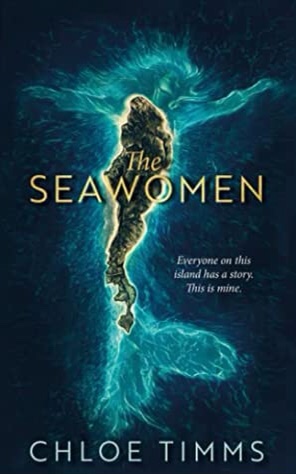
Wow! This book was really evocative both through the island’s landscape and the way of life followed by it’s inhabitants. It felt oppressive, bleak and strangely mystical. On an isolated island with no access to the ‘Otherlands’ beyond, a religious community observes a strict regime policed by male Keepers and female Eldermothers under the guidance of Father Jessop. There were real shades of The Handmaid’s Tale in this community, that polices it’s borders and it’s women. Women must not go near the water, lest they be pulled into the wicked ways of the Seawomen, a species of Mermaids that can breed rebellion in the women and cause bad luck for the islanders. Any woman could be singled out by the Eldermothers, so they must learn to keep their heads down and stay away from the water. Any bad luck – crop failure, poor fishing quotas, storms, pregnancy loss – all can be blamed on disobedient or disloyal women, influenced by the water. Each girl will have their husband picked out for them and once married, the Eldermothers will assign her a year to become a mother. If the woman doesn’t conceive she is considered to be cursed and is put through the ordeal of ‘untethering’ – a ceremonial drowning where she is tethered to the bottom of a boat. Esta is a young girl who lives with her super religious grandmother and has never known her own mother. Her grandmother insists she sees a darkness in Esta and is constantly praying and fasting so that Esta doesn’t go the same way as her mother. The sea does call to Esta and she goes to the beach with her terrified friend Mull, to feel the water. There they see something in the waves, something semi-human, not a seawoman, but a boy. Will Esta submit to what her community has planned for her or will she continue to commune with the water? If I had to pick one book to recommend from this month’s reading, it would be this one.
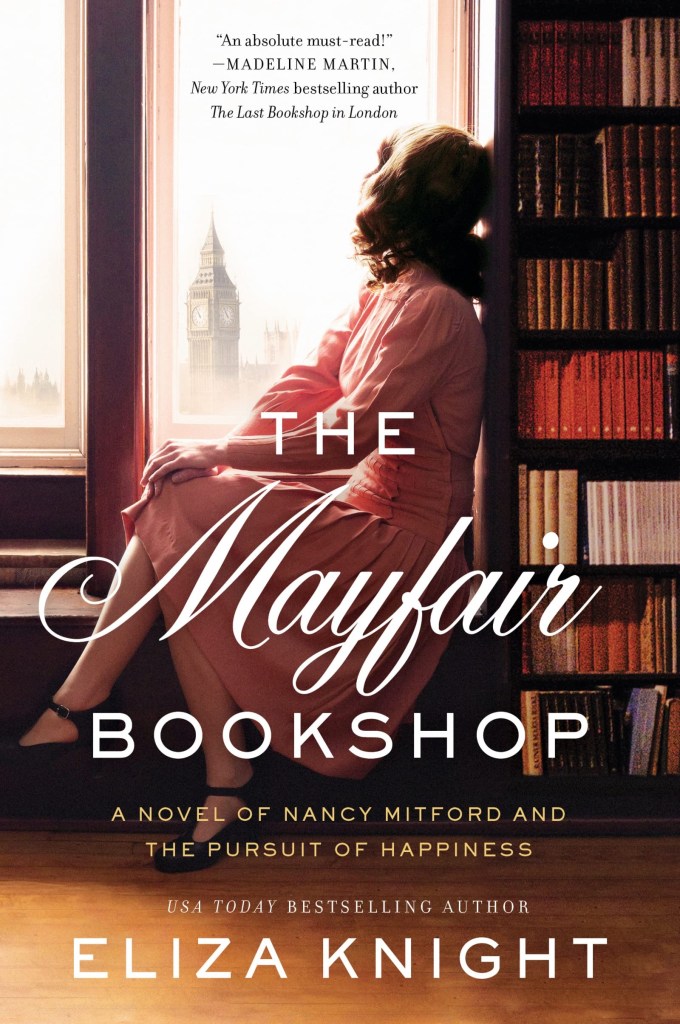
This lovely novel was a dual timeline story about one of society’s ‘Bright Young Things’. In 1938 Nancy Mitford was one of the six sparkling Mitford sisters, known for her stinging quips, stylish dress, and bright green eyes. But Nancy Mitford’s seemingly dazzling life was really one of turmoil: with a perpetually unfaithful and broke husband, two Nazi sympathizer sisters, and her hopes of motherhood dashed forever. With war imminent, Nancy finds respite by taking a job at the Heywood Hill Bookshop in Mayfair, hoping just to make ends meet, but discovering a new life. In the present day, Mitford fan Lucy St. Clair uses Heywood Hill Bookshop as a base after landing a book curator’s role. She’s hoping that coming to England will start the healing process from the loss of her mother, but it’s a dream come true to set foot in the legendary store. Doubly exciting: she brings with her a first edition of Nancy’s work, one with a somewhat mysterious inscription from the author. Soon, she discovers her life and Nancy’s are intertwined, and it all comes back to the little London bookshop—a place that changes the lives of two women from different eras in the most surprising ways. I loved this insight into the Mitford’s lives as I’ve also had a fascination for both the era and this extraordinary family. This covered some serious topics, but was framed by this almost idyllic job that Lucy has purchasing books for wealthy people’s libraries. I loved her foray into the library of Chatsworth House – a long held fantasy of mine. Mainly though it was the relationships between Nancy and her family that held my attention, plus her exploits during the London Blitz. This was a great story for fans of historical fiction but also for bookworms who love books about books.
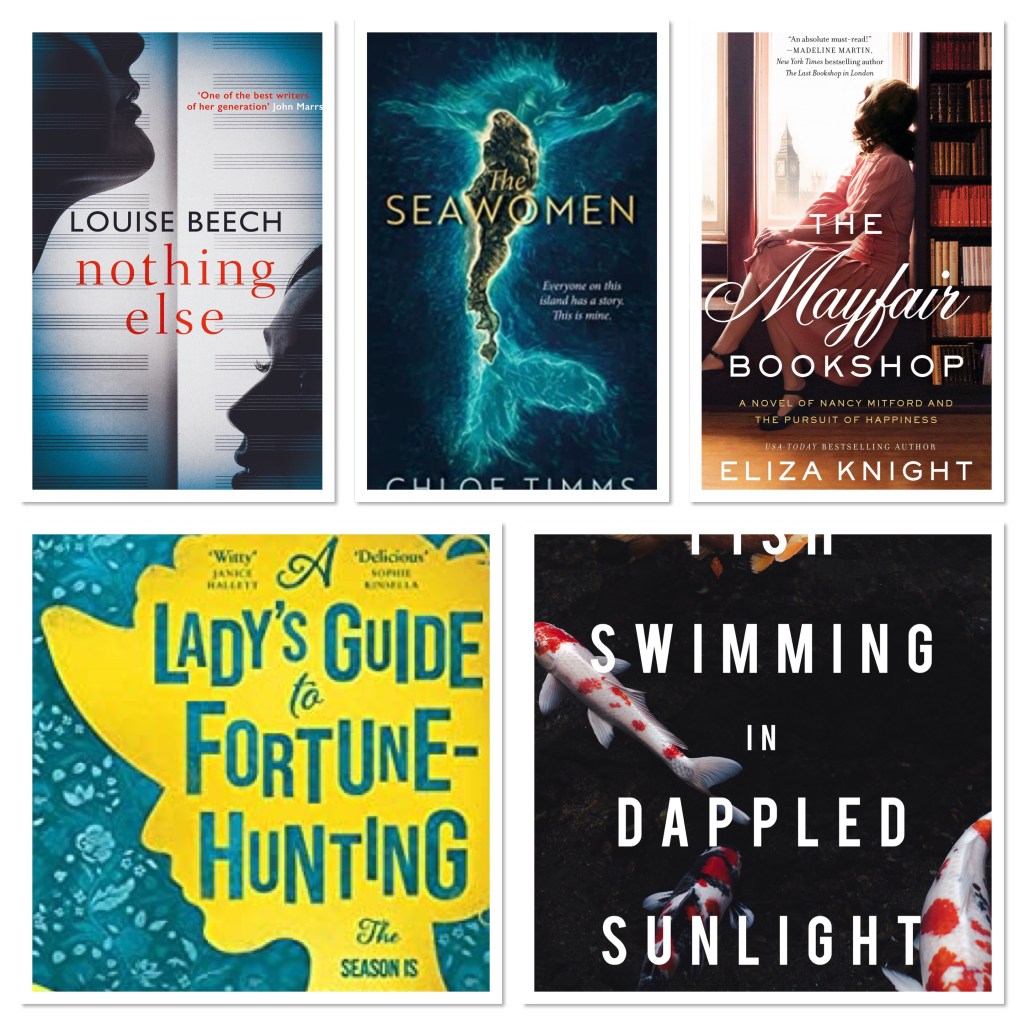
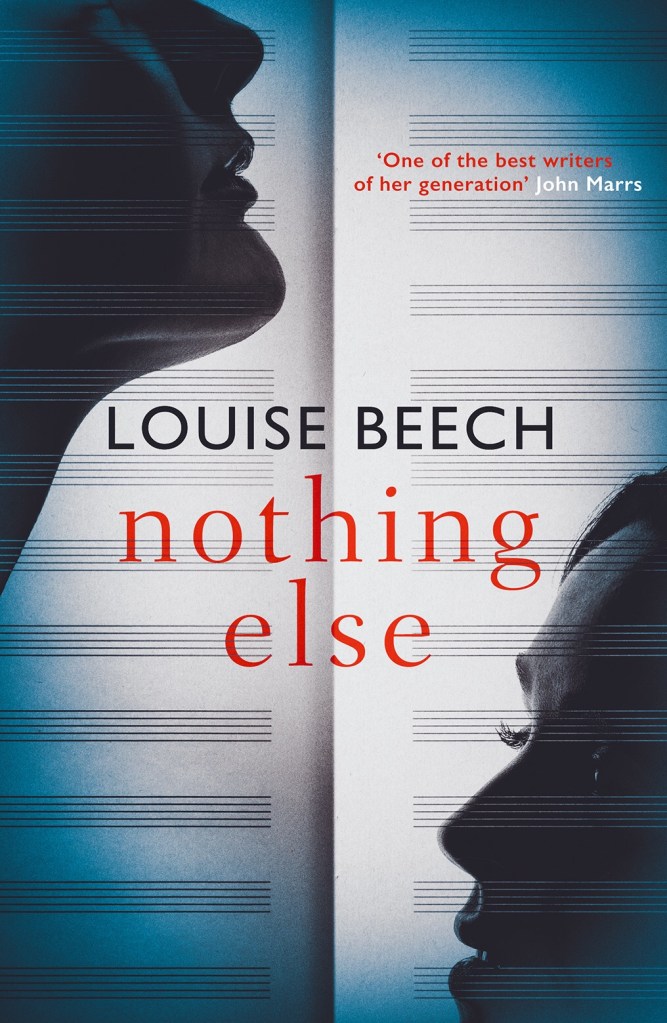
Lastly this month, was a new novel from one of my favourite local writers, Louise Beech. In it we follow Heather, a pianist who teaches and plays in local bars, then relaxes in her harbour front flat looking out to the Humber Estuary and the North Sea. Heather has a quiet life and quite a solitary one too with no family, but strong connections with friends. In fact it is one of them that encourages her to try out for a job on a cruise ship, something she would never have imagined doing. She would be scheduled to play in different bars on the ship through the day, but as her friend says, she can enjoy the facilities and gets to travel. This particular cruise is stopping in New York then on to the Caribbean before doing it all again in reverse. Heather has grown up in the care system, after her parents were killed in a car crash. Prior to that music was the girl’s escape, from the terrible domestic violence in their family home. Heather and her sister Harriet had an aptitude for music, but for Heather its been her salvation, the only place she could fully express her emotions. After their removal to the Children’s Home, Harriet was taken to see the staff in the office one morning and Heather never saw her again. She could only hope that a kind family had adopted Harriet, but for some reason hadn’t been able to take her too. When the girls had needed to express themselves they would play a duet they had composed called Nothing Else and it was this piece that stayed with Heather all her life, instantly taking her back to the piano and her little sister. We read from Heather’s perspective about how her time working on the cruise ship will change her life. This was a moving novel, with a sensitive portrayal of a difficult subjects moving depiction of trauma’s long lasting effects.
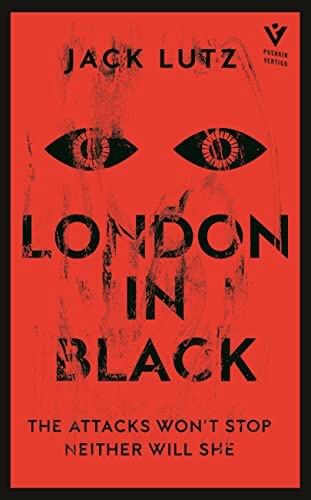
A TENSE, TICKING-BOMB THRILLER SET IN A GRITTY NEAR-FUTURE LONDON
LONDON 2027
Terrorists deploy London Black, a highly sophisticated nerve gas, at Waterloo Station. For ten percent of the population – the ‘Vulnerables’ – exposure means near-certain death. Only a lucky few survive.
LONDON 2029
Copy-cat strikes plague the city, its Vulnerable inhabitants kept safe by regular Boost injections. As the anniversary of the first attacks draws near, DI Lucy Stone, a guilt-ridden Vulnerable herself, is called to investigate a gruesome murder of a scientist. Her investigation soon unearths the possibility that he was working on an antidote – one that Lucy desperately needs, as her Boosts become less and less effective. But is the antidote real? And can Lucy solve the case before her Boosts stop working?
I felt thrust into a post-apocalyptic London in this mix of dystopian thriller and police procedural. I was immediately on board with our narrator Lucy, a super sweary and ballsy detective. A very young DI who’s well known amongst colleagues for not taking any bullshit, but also bringing with her a huge amount of baggage. She has a tough exterior, even using boxing to cope with her mental health, but is constantly treading a fine line between losing her temper and having a panic attack. She is also a ‘super recogniser’ – able to recognise anyone if she has seen them before, even if it was just passing them in the street. It’s quite something to read how her brain works as she almost shuffled through the faces stored in her brain like a game of Guess Who. Her constant medical issues are enough to induce panic as she faces measuring her Boost levels constantly, then worries when they seem low for that time of day. There’s also the event that happened – a terrible trauma that she hates to recall and doesn’t talk about. All of this creates quite a flawed and frustrated character, but I did see past a lot of the guarded behaviour and found her quite endearing. Maybe because she has this huge vulnerability. Flashbacks take us to her life before the Waterloo Station event and the normal life she’s known is suddenly eroded. Her pharmacist boyfriend realises she’s a ‘Vulnerable’, but thinks she’s safe because of all the Boosts they have at the hospital pharmacy. It’s when he realises that there aren’t enough and doses will have to be rationed that the scale of what has happened hits him. They have gone from a world where anything they need is accessible to them to one where their security, health and welfare is in doubt. It’s such a massive shift in their living standards it’s hard to comprehend. When we come back to Lucy’s present and see her psyching herself up to inject, the reality of how reliant she is on these booster injections is visible in her black and bruised abdomen.
I found it hard to believe that this is a debut novel, it’s incredibly well plotted and so imaginative. It’s hard enough to create a dystopian thriller that’s believable, but I think the plausibility was helped by recent terrorist attacks and the pandemic. We know now that these things can happen so the deployment of London Black seems like a possible future event, as scary as that is. I thought it was clever that even society’s language has been changed by the attack, in much the same way that we have new phrases and words in common use since the start of the pandemic. The idea of being a ‘vulnerable’ scared me, so Lucy’s determination to take part in the world and investigate this murder impressed me. The severity of the symptoms is horrifying so I’d be locked in my flat with a food delivery service on speed dial. I really did have a constant low level anxiety throughout. However, the murder case is so intriguing I couldn’t put the book down. Who would kill a man that might have the antidote the world is looking for? It’s Lucy’s only hope for a normal life so her determination to solve the murder is understandable. I really loved her developing relationship with DI King and would love to see more of them both going forward in future novels. The author has plotted a great crime novel on the back of a dystopian thriller. It’s anxiety inducing, compelling and has a complex heroine that I was rooting for throughout.
Published by Pushkin Vertigo April 2022.
Meet The Author
Jack Lutz lives in London with his wife and daughter. He is fascinated by the city he calls home and loves to read about and explore it. The idea for London in Black came to him as he changed trains on the Tube. London in Black is his first novel.
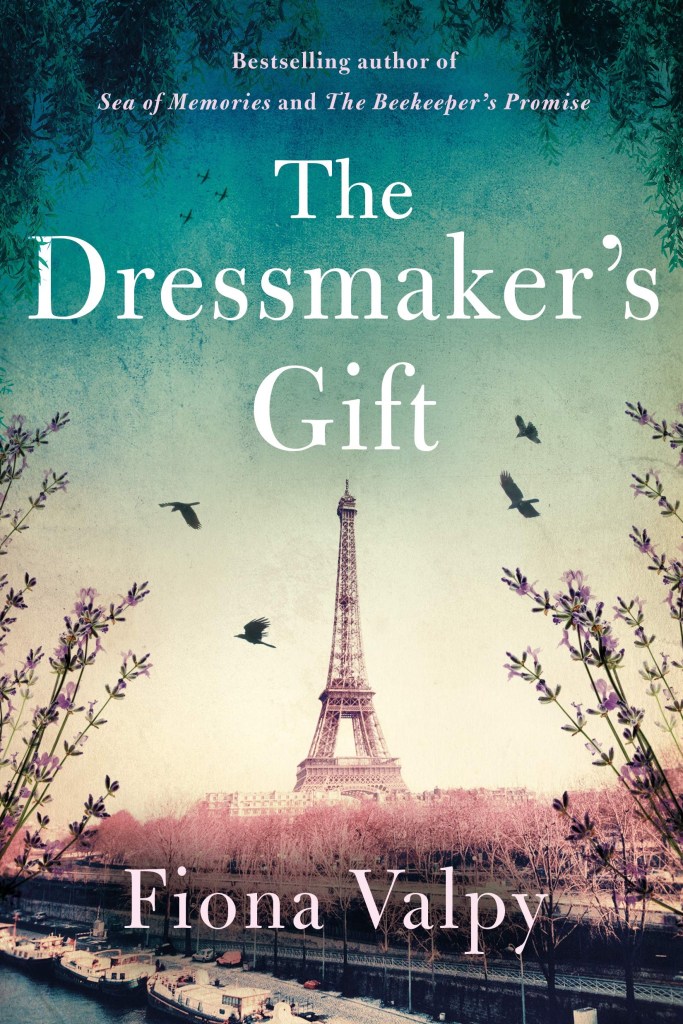
This book was a real hidden gem. I love fashion, so the idea of a dress that can transform the wearer’s through the years – the midnight blue satin, made of many pieces but with such tiny stitches it appears as if one piece of fabric – really appealed to me. Added to this, my in-laws history of escaping the Warsaw ghetto – at 8 years old in one case, and being sent to Siberia in the other – means I am interested in the threads of family history at a time of turmoil. My late husband’s family has its own incredible story with repercussions that echo down the generation , so I understand that lives can be displaced and changed beyond recognition, with the results of that still being felt two generations later,
It is Harriet’s love for fashion and an old photograph that leads her to the door of a Paris fashion PR for a year long internship. She is loaned a room in the apartment above the office alongside another girl. Harriet knows this is the very apartment where her grandmother Clare lived in the 1940s. She has left behind a difficult situation!. Having finished university Harriet has been living with her father and stepmother, where she has never felt welcome. Her father sent Harriet to boarding school when he first lived with her stepmom, following her mums death. Her father seemed to find it difficult to cope with a grieving daughter and a burgeoning relationship. One of Harriet’s most treasured possessions is the photo she has of her grandmother Claire and her two best friends in Paris, Mirreile and Vivi. She also has a charm bracelet given by her grandmother and it’s charms show Harriet a story of who her grandmother was. When we are taken back into the past we learn more about these three women. All work in an atelier for the Paris fashion houses. We find out that Claire and Mirreille lived upstairs first, but are later joined by Vivi. All three are great seamstresses and are quick to become friends.
When the Germans arrive in Paris at first is it easy to carry on as normal. Yes, there are more German voices in the cafes and bars, more German vehicles in the streets, but people still order couture clothes. However, as the war really starts to bite things begin to change. The girls friendship survives Claire’s disastrous dalliance with a German officer, but afterwards she notices a difference in her friends. What mysterious work is Vivi doing in the atelier after hours? Who is the gentleman Mirreille is seen with and why is she often missing after curfew? The girls are about to be involved in the war in ways they didn’t imagined; ways that could mean paying the ultimate price.
Just like the stitches in a beautiful garments the threads of history are so beautifully intertwined with the fictional story of the girls. I read Alice Hoffman’s new novel in the last few weeks and it is also set in 1940s Paris so it was interesting to see the same historic events from a different viewpoint. I could see how much research the author had done and her skill in mentioning actual events without them feeling tacked on to the girls story was brilliant, I slowly came to care about each of the girls and although Vivi seems less accessible than the other two at first, it was interesting to see how central to Harriet’s history she becomes.
The detail is often harrowing to read and the idea that trauma can be passed through generations is one I’m familiar with because I’m a therapist and have read the same research as the author. She uses this beautifully in the novel, illustrating that the German’s horrendous acts of cruelty were on such a scale that it echoes down to the next generation. It is only when someone identifies the trauma in their family and gets professional help to let go of it’s effects, that someone can start to heal. I think I expected this book to be lighter and more focused on fashion from the blurb, but what I got was far superior: an incredible story of friendship and survival. I would definitely recommend it to friends.
Meet The Author
Fiona is an acclaimed number 1 bestselling author, whose books have been translated into more than twenty different languages worldwide.She draws inspiration from the stories of strong women, especially during the years of World War II. Her meticulous historical research enriches her writing with an evocative sense of time and place.
She spent seven years living in France, having moved there from the UK in 2007, before returning to live in Scotland. Her love for both of these countries, their people and their histories, has found its way into the books she’s written. Fiona says, “To be the first to hear about my NEW releases, please visit my website at http://www.fionavalpy.com and subscribe to the mailing list. I promise not to share your e-mail and I’ll only contact you when a new book is out.”
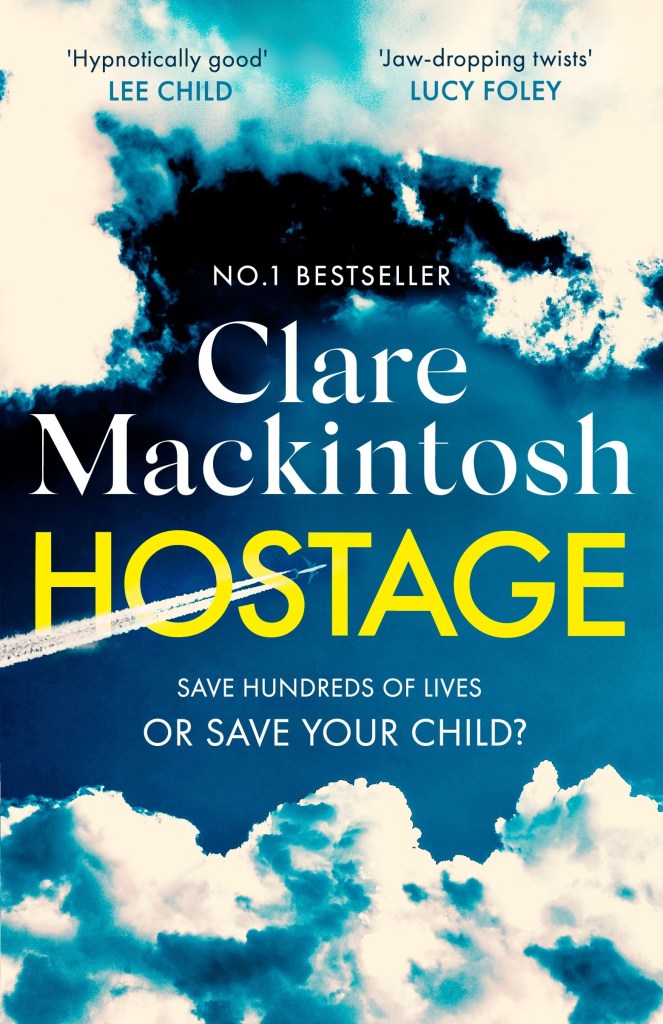
This was an absolutely nail-biting thriller of a novel that never lets up and practically had me biting my own nails. In fact I’d been reading this, then binge watching Ozark with my other half and had to ask for a half hour of comedy before bed, because I couldn’t cope with any more tension! I probably should also be honest and say that planes make me horribly claustrophobic. I’m never scared of crashing. I just hate that I can’t get up and walk out of the door. So my own phobia probably added to the tension of the novel. Mina is a flight attendant and has the honour of working on the first ever direct flight from London to Sydney. Back home, husband Adam is holding the fort while he comes to terms with recent mistakes in his marriage. He is also finding it hard to develop a relationship with his adoptive daughter Sophie. After waiting a long time to adopt a child, they’ve had problems settling Sophie and also connecting with her in the way they expected. However, she does love her most recent babysitter, so Adam is quite relieved when Mina has booked this miracle worker to cover her hours on this historic flight. So, it’s a massive shock when her baby sitter takes them both hostage, citing her membership to a climate change group and explaining that Mina’s plane will now be in the hands of her fellow protestors. Simultaneously, Mina is left with a note and a choice; let one of the protestors onto the flight deck or her daughter’s life is in danger. Mina has already found Sophie’s ‘Epipen’ in the galley, so she knows they mean business. She has also been left in no doubt that one of their associates has been following Sophie and their young babysitter, leading Mina to believe it’s going to be easy for them to get to her. Their plan, if Mina cooperates, could be to fly the plane and all three hundred passengers into the Sydney Opera House. She is left with a terrible dilemma – one life, that of her precious daughter, or the lives of everyone on board.
The book alternates between Mina’s perspective and what’s happening at home for Adam and Sophie. In between are chapters from the perspective of one of the hijackers, each one named after a river. These are an interesting break from the tension, because they explain that person’s reasons for joining a radical climate change group, one that’s willing to consider acts of terrorism to bring their cause to the forefront of the news agenda. I didn’t feel a connection or empathy with these, or any of the main characters really. They’re flawed and therefore very human and believable. Mina’s husband Adam has been deceitful and their marriage is still in a state of repair over his behaviour. This isn’t about character though, this is all about the situation. The pressurised and locked cabin adds to the claustrophobic atmosphere the author has created and the passenger’s isolation from both their loved ones and the safety of their homes. This is all about the rollercoaster thrills of the hostage situation and perhaps the fear many of us have about the heightened terrorism threat and flying in general.
Although I guessed some of what happens, the story definitely entertains and keeps you on edge. In fact I could see a film version doing exactly the same thing. Some aspects were unexpected though, especially the situation Adam and Sophie find themselves in back in London. Due to unforeseen complications, they are in more danger than was planned and certainly more than Mina has expected. I really enjoyed this subplot, because it went somewhere I didn’t expect and I was definitely on tenterhooks wondering whether they would come out alive. It was also clever to have little snippets of information about the passengers and what had made them book this inaugural flight non-stop around the world. Whether they were here by intention or simple chance, none of them expected to become a fireball in the sky. This did induce some emotion in me, because it made the passengers more than a seat number. Sophie became the most interesting character for me as the book progressed. Her behaviour, when seen in detail, could point to her being neuro divergent and I thought this was portrayed well. She is extremely intelligent and I loved how that becomes more obvious as their predicament worsens. Oh and read all the way to the end. The twists don’t stop coming with the tense and very modern take on this common nightmare scenario.
Meet The Author
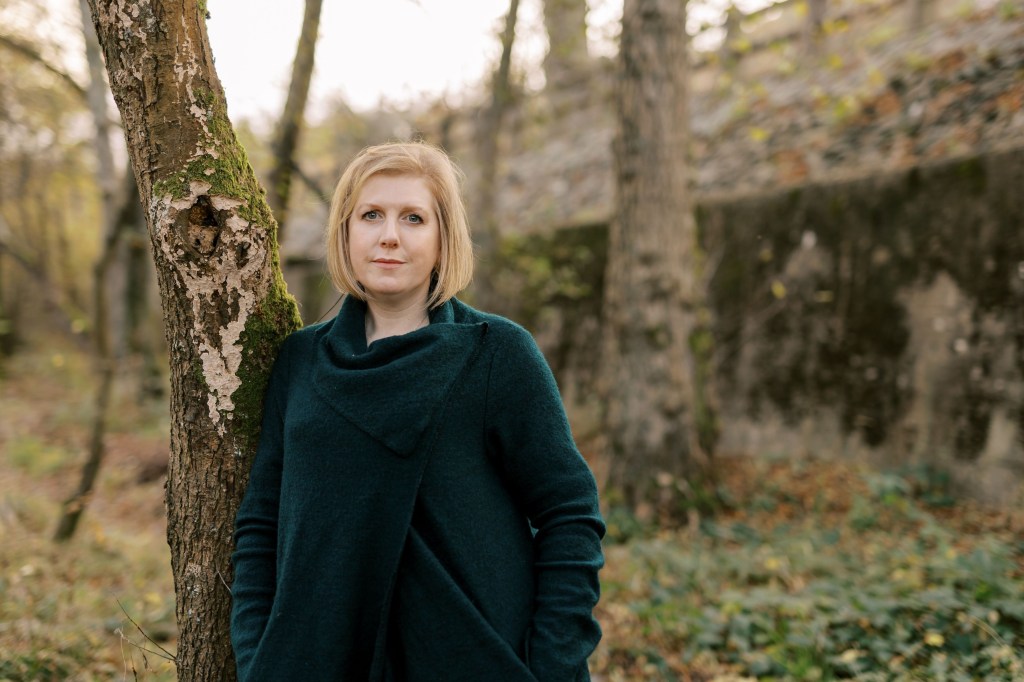
With over 2 million copies of her books sold worldwide, number one bestseller Clare Mackintosh is the multi-award-winning author of I Let You Go, which was a Sunday Times and New York Times bestseller and the fastest-selling title by a new crime writer in 2015. It also won the Theakston Old Peculier Crime Novel of the Year in 2016. Both Clare’s second and third novels, I See You and Let Me Lie, were number one Sunday Times bestsellers. All three of her thrillers were selected for the Richard & Judy Book Club, and together have been translated into forty languages. After the End was published in 2019 and became an instant Sunday Times bestseller, and in 2021 Hostage flew straight into the top ten. Together, her books have spent more than sixty weeks in The Sunday Times bestseller lists.
Clare is patron of the Silver Star Society, a charity based at the John Radcliffe hospital in Oxford, which supports parents experiencing high-risk or difficult pregnancies. She lives in North Wales with her husband and their three children.
Ever since reading Lisa Jewell’s novel The Family Upstairs I’ve been hoping she’d write a sequel. The book was certainly satisfying as a standalone, but the characters were so complex and their situation so traumatic I was certain it would bubble up to the surface sooner or later. Detective Samuel Owusu thinks the same, when human remains are found washed up on the banks of the Thames by a mud lark. When he sends the bones for forensic examination it’s clear that she was murdered; there’s an injury to the skull that could only have come from blunt force trauma. The other clue from the bag is a mulch of leaves, unusual ones for London, taking him to a mansion house in Chelsea. There, thirty years ago, three people were found dead in a kitchen and upstairs was an unharmed baby girl with a rabbit’s foot tucked into her cot. The clues are pointing to two missing teenagers, Henry and Lucy Lamb, belonging to two of the deceased. Yet, neighbours had said they hadn’t seen the children for years. We follow DCI Owusu’s investigation, but also this missing brother and sister who are doing some investigating of their own. They’re looking for a third teenager, Phinneas Thomsen, son of the third deceased adult and also a resident of the Chelsea mansion, hoping he can make sense of their childhood. Why was the Thames body separate from the other three and what was her link to the adults living there? The house has just sold for over seven million pounds and it’s owner is a young woman called Libby, so she must be their first port of call. This is just the first step in untangling a very dark web of trauma, murder and a family who have tried to bury secrets that just won’t stay dead.
Lisa Jewell really is the master of this domestic noir genre. She could have plodded along, unravelling secrets from long ago and it would still have been a very good book. However, she doesn’t take the easy option, she chooses to introduce new characters and storylines that are equally compelling and link into to the Cheyenne Walk mystery. As well as Samuel, Henry and Lucy narrating the story, we have a woman called Rachel narrating a present day storyline too. Rachel is a jeweller, just waiting for a big store to pick up her designs and thrust her work into the limelight. After years of dating and not finding the one, she meets a man called Michael who seems almost perfect for her. He is attractive, attentive, wealthy and seems available emotionally, which makes a change from other men she’s dated. He’s been married before, to a woman he met while she was busking in France and he was staying at his home in Antibes. Rachel doesn’t really pry into his past and all Michael volunteers is that she was musical and ‘a nightmare.’ Her name was Lucy. In a whirlwind, Rachel and Michael get married and she’s of an age where people don’t tend to take you aside and ask if its all moving a bit fast. Perhaps friends are just glad that this has finally happened for her and her father seems happy for her too, believing Michael to be that rare thing – an older, unmarried, great bloke. On honeymoon, amongst the rose petal strewn sheets and days spent reading by the ocean, Rachel thinks she might suggest a bit of fun in the bedroom. She’s happy with vanilla sex, but wonders if some light BDSM games might bring variety. She unpacks some special underwear, some ties and a leather whip and is looking forward to a fun night, but Michael looks embarrassed, then furious. He flies into a rage, accusing her of having no class, sleeping around and ruining their honeymoon. Rachel is bewildered as he storms off to sleep separately and refuses to talk about it. All she can hope is that he calms down, but she is starting to feel like she must apologise, although she doesn’t really know why. How can she return from her honeymoon and tell anyone her husband is disgusted by her?
I loved how these four narratives were interwoven, because they cleverly show us how abuse in all it’s forms leaves it’s legacy. Whether it’s self-hatred and body dysmorphia, a deep seated rage thats ready to boil over, or a desperate need for love and a tendency to repeat the patterns of childhood. I thought Rachel’s story was particularly compelling, because I’ve experienced that pattern of abuse – the love bombing, rejection, gaslighting and fits of rage. I hated Michael and really understood her need to find Lucy and talk to her. It felt like she’d lost the ability to trust her own judgement, so if there was someone else he was abusive to, she could start to accept and own her own truth. Her confidence had sunk so low she was struggling to fight for herself, but as soon as Michael’s behaviour affected someone else she loved she was able to stand up to him. Henry is also struggling with what happened in childhood, his twisted and confused emotions surrounding Phinn were complex. Phinn was held up as an example of what a boy should be, with Henry receiving punishments and neglect for not being more like him. We might expect Henry to feel hatred and even harbour harmful thoughts about Phinn, and to an extent he does feel these things. There’s a part of him that never wants to see Phinn again. However, there is a part of him that is still the little boy who wants to please, so he has changed the way he looks and now looks at Phinn in the mirror every morning. There’s definitely an element of hero worship and sexual desire too. I was actually scared of what Henry might do if he ever found Phinn, who is thought to be working on a game reserve in Africa. Lucy is living with her brother at the start of the book, along with her two children. Henry’s upmarket flat with it’s high thread count sheets and all the right TV packages is the height of luxury to her two children. They have slept in some terrible places while homeless and they don’t want to be on the run again. Lucy is scared and not just about the events in her childhood, because she’s been replicating the pattern of abuse she learned to endure at Cheyne Walk, into her adult relationships. She’s also used to running from people she owes money to. She hopes that now the house is sold, she can find a secure and happy home for her children close enough to keep in touch with her brother. She knows that Henry is more fragile than he seems, but also that there’s a darkness at his centre and she doesn’t know what might happen if he ever lets it come to the surface.
The pace of the novel is pretty fast and I almost read it in one sitting. Short chapters mean it’s very easy to get caught by that little voice that goes ‘just one more chapter won’t hurt’ when it’s gone midnight and you have to be up in the morning. The tension is builds, then decreases, then builds again by using clever tactics like finding something out at the end of a chapter, then the next chapter going back in time or dismissing what you’ve just found out. Although the storyline seems clear she throws in little curveballs like a spot of blackmail here or an unexpected murder there, to take us off the main track. I found some dark humour in two people turning up to murder the same person. I thought that the author also managed to inject some hope for the future too, in what has been a very dark and painful story. If you’ve been through childhood abuse, domestic violence and sexual violence there are some tough paragraphs here and there. I must admit I found some of the coercive control and verbal abuse difficult, and I found myself holding my breath in parts, but that’s how I knew the author had got it absolutely right. This was a fantastic sequel, that I would say needs to be read after the first novel and not as a stand-alone. It really stands up to the power of the first novel with it’s tension, darkness and psychological game playing but also offers some measure of healing too. A fantastic sequel from an author at the top of her game.
Meet The Author
Lisa Jewell has written and published another sixteen books, since her debut Ralph’s Party, from the ‘curry and flatmates’ novels of the nineties and noughties like Thirtynothing, One Hit Wonder, A Friend of the Family and Vince & Joy, to more family-themed novels like After The Party, The Making of Us and The House We Grew Up In and more recently, psychological thrillers such as I Found You, Then She Was Gone, Watching You and The Family Upstairs, which charted in the summer of 2019 at number one in the hardback charts.
Lisa lives in London with her husband, two daughters, two hairy cats, two nervous guinea pigs and a lovely auburn dog. She writes every day, a minimum of one thousand words, in a cafe, with no access to the internet, in two to three hour sessions


















 The Lotus Readers