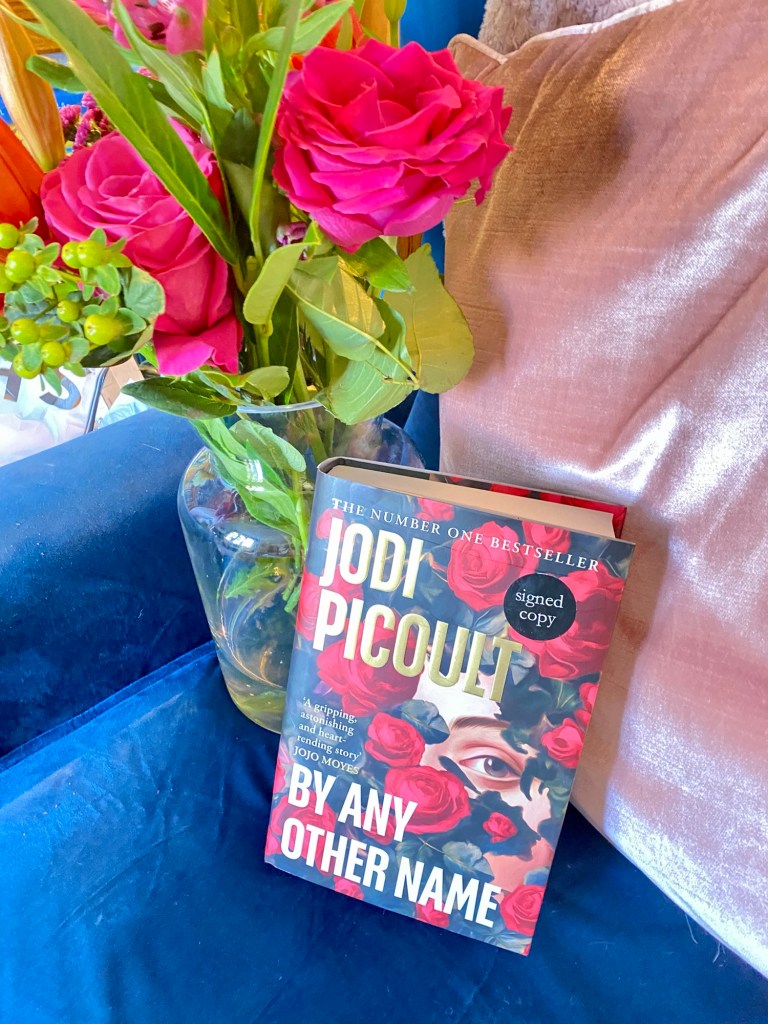
In Manhattan, Melina Green finds out that women’s voices are worth less than a man’s. Theatre critic Jasper Tolle eviscerates a play she has entered into a competition and it knocks her confidence so badly she finds it difficult to get her theatre career off the ground. Years later, her best friend Andre encourages her to write about her ancestor, 16th Century poet Emilia Bassano. Emilia has been described as the ‘dark lady’ of Shakespeare’s sonnets. Melina is inspired, furiously researching Emilia’s life and the possibility that she might have written for the stage, despite it being banned in Elizabethan England. She then wonders if she used a pseudonym or submitted her work under another playwright. Melina starts to read about the Shakespeare conspiracy – what if the bard didn’t write all those incredible plays after all? There are many theories out there about who could have written them, but what if the playwright was Emilia? Melina is inspired, ferociously writing her play. Andre is also inspired, after they celebrate her finishing the play and Melina sleeps, he decides to enter the play into a festival taking place ‘off off Broadway’. Cleverly deleting the last few letters of her name he enters it with the more ambiguous Mel Green. Could this be her big break and her chance to prove that women writers are still sidelined, even in the 21st Century?
I’m a huge fan of Jodi Picoult and I met her when she was in the UK promoting her book Sing You Home. Her books usually follow a pattern of presenting controversial issues -abortion, racism, the Holocaust – then testing them through the legal process. The first book that really caught the UK imagination was My Sister’s Keeper where a young girl takes her parents to court for medical autonomy, after she has donated blood and bone marrow to her sister with leukaemia. She’s had no say in these medical procedures and feels like she’s spare parts for her sister. This new novel is a complete departure from this tradition and it reads like a labour of love. I collected my copy from The Rabbit Hole Bookshop in Brigg and had read several chapters while we drove to Liverpool. Picoult has a brilliant way of drawing you straight into the character’s world and this book is no exception, despite it spanning several centuries. Picoult’s best novels are the ones where she can touch on her Jewish heritage such as one of my favourites, The Storyteller. This has definitely played a part here and the passion with which she tells Emilia’s story makes everything come alive.
Emilia is the sort of character I fall in love with. She’s determined, intelligent and dreams of being much more than women are allowed to be. Life deals her a terrible hand at times, but she tries to make the best of it. Sometimes she’s desperately struggling to survive and other times she’s living in the lap of luxury. Historically we only know fragments of Emilia’s life but she is mentioned in an article written by Elizabeth Winkler entitled ‘Was Shakespeare a Woman?’ We know that Emilia was from a Jewish family who kept up a pretence of Christianity outside their home. They were court musicians under Elizabeth I which dragged Emilia into the fringes of court life. Most information on her comes from the diary of Simon Forman who was an astrologer/doctor and he describes her as a woman who is sexually progressive and has one illegitimate child. He describes her as the paramour of Lord Hunsdon until she became pregnant and was then married off to a minstrel. Hunsdon was Lord Chamberlain with responsibility for entertainment and the theatre. Foreman describes her as beautiful and intelligent, but gives her the sad news that she will become pregnant again, but will miscarry. Picoult uses these small facts and others she’s found to flesh out this fascinating woman and pose the theory that she could, at least in part, have written the plays attributed to Shakespeare. The page is the only place where Emilia has any power or agency. She was brought up by a countess away from her family, the head of the family then sells her to Hunsdon as a courtesan and then to the minstrel Alphonso who squanders all of the money Hunsdon settled on her. Could this lack of agency have possibly create female characters with the sass of Beatrice, the adventurer in Viola, the manipulative and power hungry Lady MacBeth or the shrewish Katherine?
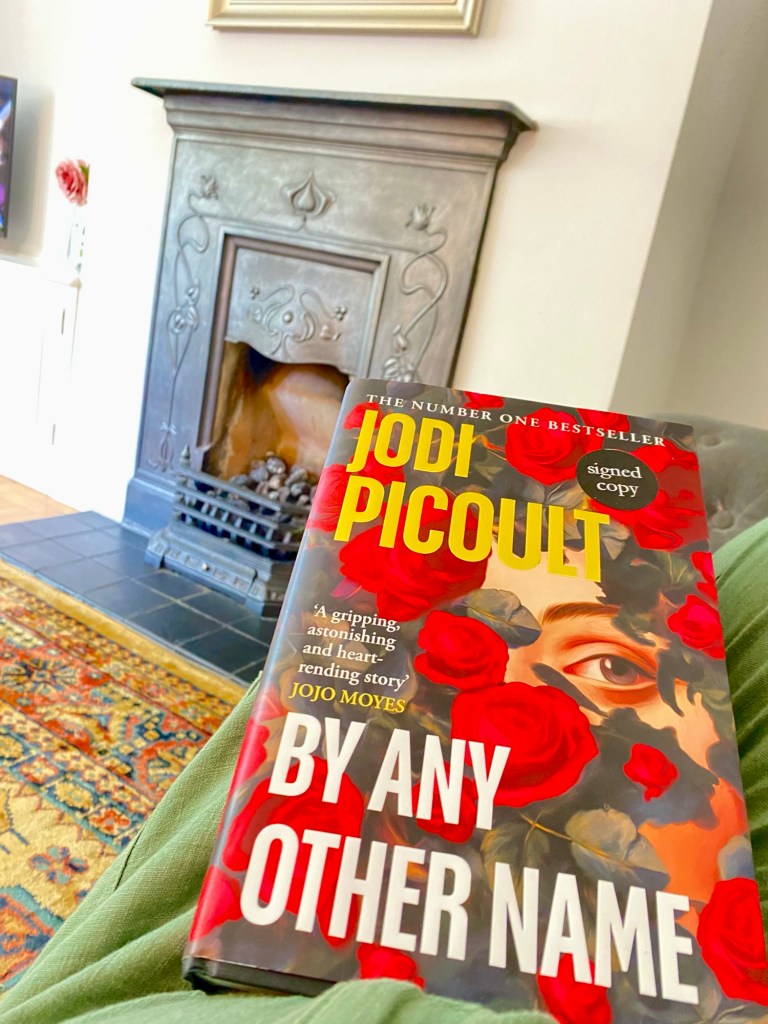
There is so much to love here, from Emilia’s personal story with it’s twists and turns, to the fascinating possibility that Shakespeare is merely a front rather than our greatest ever playwright. I enjoyed the idea of this woman who occupies a liminal space in so many ways: Italian by descent batt living in England; living humbly but entertaining the dazzling heights of Elizabeth’s court; Jewish but masquerading as Christians; living a rich lifestyle with Hunsdon but in the precarious position of a courtesan; a woman hiding her immense talent behind a man. Every single part of her life is a masquerade, in fact there are only two men she is herself with. She lets go with her secret lover Southampton and her great friend Kit Marlow – a friendship that beautifully echoes Melina and Andre’s relationship centuries later. Picoult’s skill in setting a scene takes us directly into Elizabethan London and we see the city at it’s extremes due to Emilia’s huge changes in fortune. The house she grows up in is a far cry from the humble home of her family and Hunsdon’s home is grander still. Then what follows are terrible years of hardship and violence, where she’s little more than a servant. They have very little to eat and we really see the squalor and poverty of the capital in those moments. I enjoyed the idea of literary salons as a space where women can freely share their talent and it’s only her position as Hunsdon’s mistress that gives her access to contemporaries like Spenser, Jonson and Marlow. I felt like even if the reader doesn’t agree with Picoult’s theory on Shakespeare her evidence is compelling and you realise she loves Britain and it’s literary tradition.
The modern day narrative does pose some interesting questions about authorship, especially the opportunities for women. As someone who reads female authors the majority of the time it seems like the opportunities are there at first glance. Yet I took on board all the points made here, how in a commercial space it’s hard as a woman to secure financial backing for their creative ideas. Especially where those who hold the purse strings are men. Although I was interested in Melina’s story I didn’t feel as connected to her as a character in the same way I did with Emilia. When the historical story is so dramatic and heartfelt it can overshadow the present day narrative. Overall though I loved this book and it’s up there with my favourites of the year so far. I felt completely transported to Elizabethan London. As for the premise, it’s an interesting one and the afterword brilliantly backs up her theory with points from her background research. It certainly gave me something to think about where Shakespeare is concerned. I could see why people question his authorship, but I can also see the all the reasons why such claims are rubbished and denied. What I’m taking away though is what an incredible woman Emilia was, with or without the possibility she was a playwright. I’ll definitely enjoy exploring around the subject further and I know this is a book I’ll be re-reading in the future.
Published 10th October by Penguin
Meet the Author

Jodi Picoult is the #1 New York Times bestselling author of twenty-nine novels, including Mad Honey, Wish You Were Here, The Book of Two Ways, A Spark of Light, Small Great Things, Leaving Time, and My Sister’s Keeper, and, with daughter Samantha van Leer, two young adult novels, Between the Lines and Off the Page. Picoult lives in New Hampshire.
Follow Jodi Picoult on Instagram, TikTok, Facebook, and Twitter: @jodipicoult


 The Lotus Readers