Posted in Sunday Spotlight

City Break in a Book: Vienna

I’ve never been to Vienna but it’s very firmly on my list of places I’d like to visit. Firstly I love Klimt with a passion and have been to any and every exhibition of his work, but never in his homeland. I’m also interested in Freud, for obvious reasons. I’d like to eat a piece of Sachertorte there too. For now I’ll have to keep reading books set in the city.
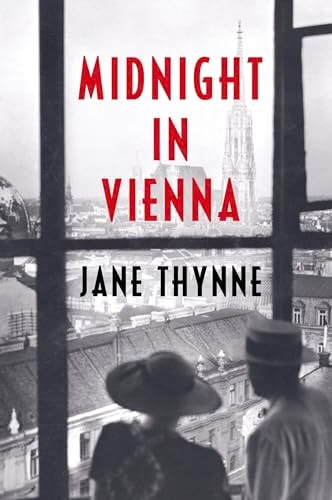
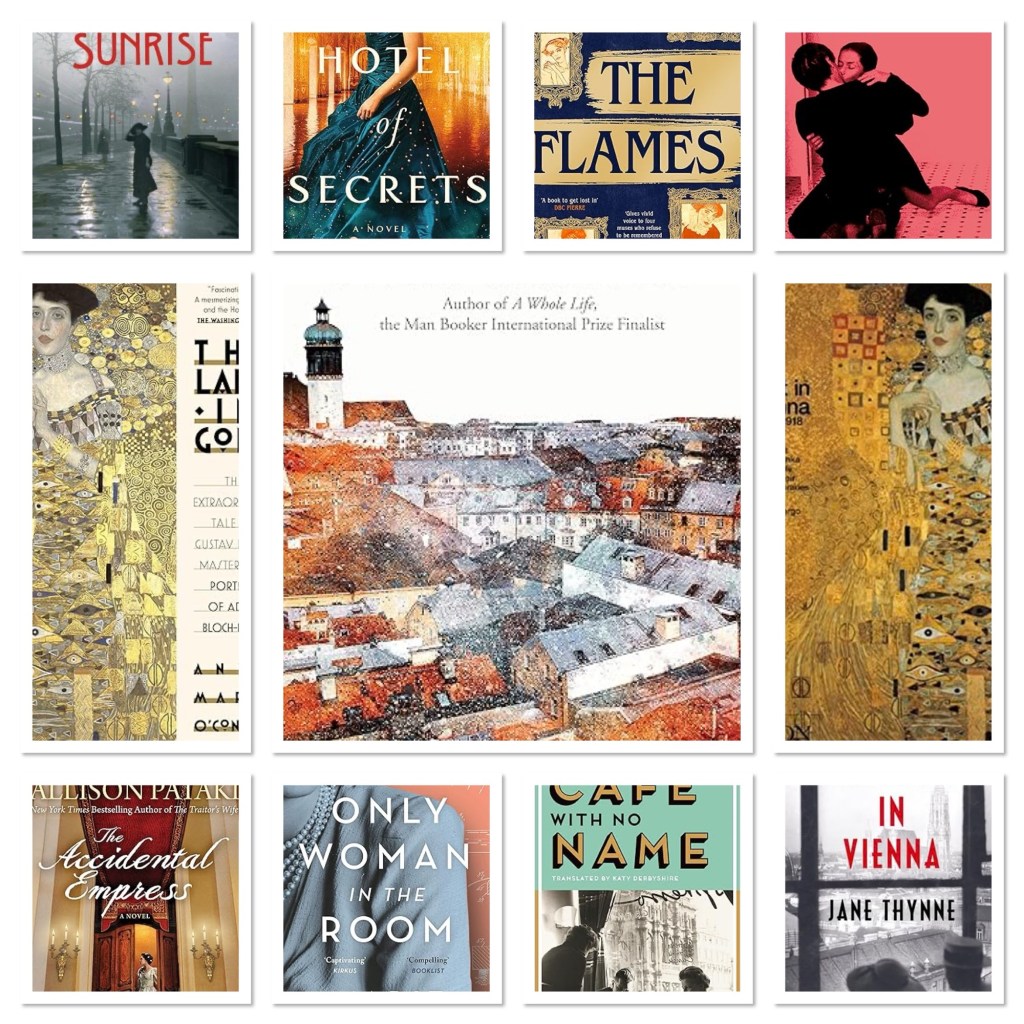
Set in 1938 in London and Vienna, this is a tense and atmospheric thriller told from within a climate of uncertainty and fear as World War Two threatens. As war looms over Britain and there is talk of gas masks and blackout, people are understandably jumpy and anxious. Stella Fry, has been working in Vienna for a Jewish family and returns home with no job and a broken heart. She answers an advertisement from a famous mystery writer, Hubert Newman, who needs a manuscript typed. She takes on the job and is shocked the next day to learn of the writer’s sudden, unexplained death. She is even more surprised when, twenty-four hours later, she receives Newman’s manuscript and reads the Dedication: To Stella, spotter of mistakes. Harry Fox, formerly of Special Branch and brilliant at surveillance, has been suspended for some undisclosed misdemeanor. He has his own reasons for being interested in Hubert Newman. He approaches Stella Fry to share his belief that the writer’s death was no accident. What’s more, since she was the last person to see Newman, she could be in danger herself.
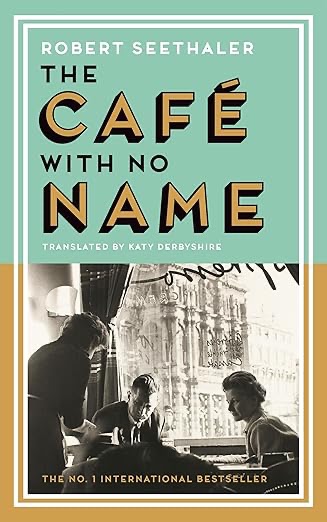
It is 1966, and Robert Simon has just fulfilled his dream by taking over a café on the corner of a bustling Vienna market. He recruits a barmaid, Mila, and soon the customers flock in. Factory workers, market traders, elderly ladies, a wrestler, a painter, an unemployed seamstress in search of a job, each bring their stories and their plans for the future. As Robert listens and Mila refills their glasses, romances bloom, friendships are made and fortunes change. And change is coming to the city around them, to the little café, and to Robert’s dream. 

A story of the hopes, kindnesses and everyday heroism of one community, The Café with No Name has charmed millions of European readers. It is an unforgettable novel about how we carry each other through good and bad times, and how even the most ordinary life is, in its own way, quite extraordinary.
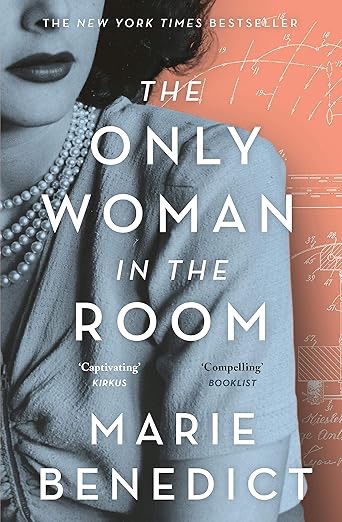
Hedy Lamarr possessed a stunning beauty. She also possessed a stunning mind. Could the world handle both?

Her beauty almost certainly saved her from the rising Nazi party and led to marriage with an Austrian arms dealer. Underestimated in everything else, she overheard the Third Reich’s plans while at her husband’s side, understanding more than anyone would guess. She devised a plan to flee in disguise from their castle, and the whirlwind escape landed her in Hollywood. She became Hedy Lamarr, screen star.

But she kept a secret more shocking than her heritage or her marriage: she was a scientist. And she knew a few secrets about the enemy. She had an idea that might help the country fight the Nazis…if anyone would listen to her.

A powerful novel based on the incredible true story of the glamour icon and scientist whose groundbreaking invention revolutionised modern communication, The Only Woman in the Room is a masterpiece.
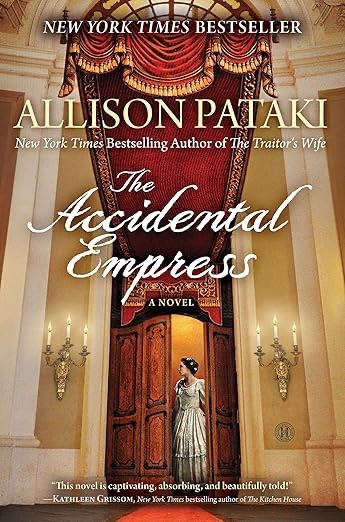
The year is 1853, and the Habsburgs are Europe’s most powerful ruling family. With his empire stretching from Austria to Russia, from Germany to Italy, Emperor Franz Joseph is young, rich, and ready to marry.

Fifteen-year-old Elisabeth, “Sisi,” Duchess of Bavaria, travels to the Habsburg Court with her older sister, who is betrothed to the young emperor. But shortly after her arrival at court, Sisi finds herself in an unexpected dilemma: she has inadvertently fallen for and won the heart of her sister’s groom. Franz Joseph reneges on his earlier proposal and declares his intention to marry Sisi instead.

Thrust onto the throne of Europe’s most treacherous imperial court, Sisi upsets political and familial loyalties in her quest to win, and keep, the love of her emperor, her people, and of the world.

With Pataki’s rich period detail and cast of complex, bewitching characters, The Accidental Empress offers a glimpse into one of history’s most intriguing royal families, shedding new light on the glittering Hapsburg Empire and its most mesmerizing, most beloved “Fairy Queen.”
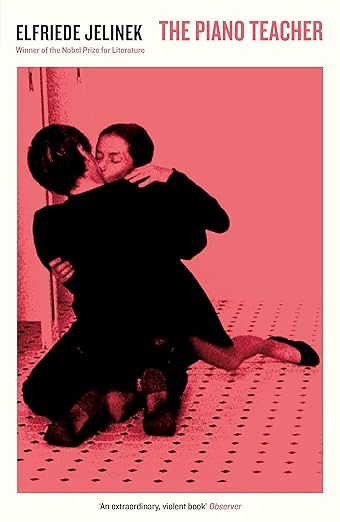
Erika Kohut teaches piano at the Vienna Conservatory by day. By night she trawls the city’s porn shows while her mother, whom she loves and hates in equal measure, waits up for her. Into this emotional pressure-cooker bounds music student and ladies’ man Walter Klemmer.

With Walter as her student, Erika spirals out of control, consumed by the ecstasy of self-destruction. A haunting tale of morbid voyeurism and masochism, The Piano Teacher, first published in 1983, is Elfreide Jelinek’s Masterpiece.

Jelinek was awarded the Nobel Prize For Literature in 2004 for her ‘musical flow of voices and counter-voices in novels and plays that, with extraordinary linguistic zeal, reveal the absurdity of society’s clichés and their subjugating power.

The Piano Teacher was adapted into an internationally successful film by Michael Haneke, which won three major prizes at Cannes, including the Grand Prize and Best Actress for Isabelle Huppert.
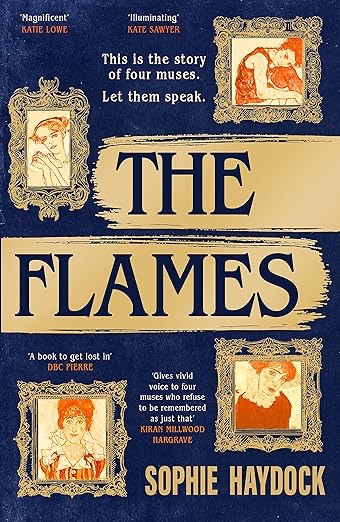
Vienna at the dawn of the 20th century. An opulent, extravagant city teeming with art, music and radical ideas. A place where the social elite attend glamorous balls in the city’s palaces whilst young intellectuals decry the empire across the tables of crowded cafes. It is a city where anything seems possible – if you are a man. 

Edith and Adele are sisters, the daughters of a wealthy bourgeois industrialist. They are expected to follow the rules, to marry well, and produce children. Gertrude is in thrall to her flamboyant older brother. Marked by a traumatic childhood, she envies the freedom he so readily commands. Vally was born into poverty but is making her way in the world as a model for the eminent artist Gustav Klimt. 

None of these women is quite what they seem. Fierce, passionate and determined, they want to defy convention and forge their own path. But their lives are set on a collision course when they become entangled with the controversial young artist Egon Schiele whose work – and private life – are sending shockwaves through Vienna’s elite. All it will take is a single act of betrayal to change everything for them all. Because just as a flame has the power to mesmerize, it can also destroy everything in its path…
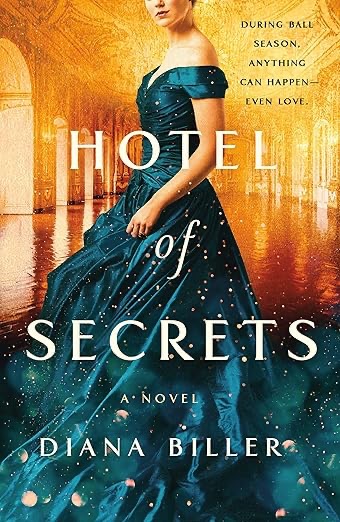
It’s Ball Season in Vienna, and Maria Wallner only wants one thing: to restore her family’s hotel, the Hotel Wallner, to its former glory. She’s not going to let anything get in her way – not her parents’ three-decade-long affair; not seemingly-random attacks by masked assassins; and especially not the broad-shouldered American foreign agent who’s saved her life two times already. No matter how luscious his mouth is. Eli Whittaker also only wants one thing: to find out who is selling American secret codes across Europe, arrest them, and go home to his sensible life in Washington, DC. He has one lead – a letter the culprit sent from a Viennese hotel. But when he arrives in Vienna, he is immediately swept up into a chaotic whirlwind of balls, spies, waltzes, and beautiful hotelkeepers who seem to constantly find themselves in danger. He disapproves of all of it! But his disapproval is tested as he slowly falls deeper into the chaos – and as his attraction to said hotelkeeper grows. Diana Biller’s The Hotel of Secrets is chock full of banter-filled shenanigans, must-have-you kisses, and romance certain to light a fire in the hearts of readers everywhere.
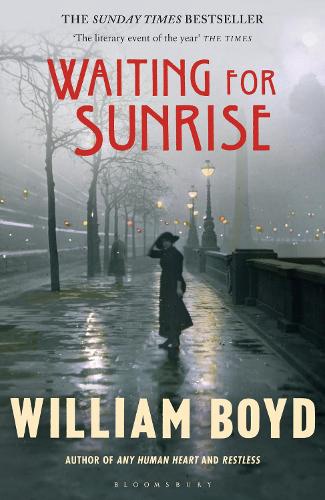
Vienna, 1913. It is a fine day in August when Lysander Rief, a young English actor, walks through the city to his first appointment with the eminent psychiatrist Dr Bensimon. Sitting in the waiting room he is anxiously pondering the particularly intimate nature of his neurosis when a young woman enters. She is clearly in distress, but Lysander is immediately drawn to her strange, hazel eyes and her unusual, intense beauty. Her name is Hettie Bull. They begin a passionate love affair and life in Vienna becomes tinged with a powerful frisson of excitement for Lysander. He meets Sigmund Freud in a café, begins to write a journal, enjoys secret trysts with Hettie and appears – miraculously – to have been cured. Back in London, 1914. War is imminent, and events in Vienna have caught up with Lysander in the most damaging way. Unable to live an ordinary life, he is plunged into the dangerous theatre of wartime intelligence – a world of sex, scandal and spies, where lines of truth and deception blur with every waking day. Lysander must now discover the key to a secret code which is threatening Britain’s safety, and use all his skills to keep the murky world of suspicion and betrayal from invading every corner of his life. Moving from Vienna to London’s West End, from the battlefields of France to hotel rooms in Geneva, Waiting for Sunrise is a feverish and mesmerising journey into the human psyche, a beautifully observed portrait of wartime Europe, a plot-twisting thriller and a literary tour de force from the bestselling author of Any Human Heart, Restless and Ordinary Thunderstorms.
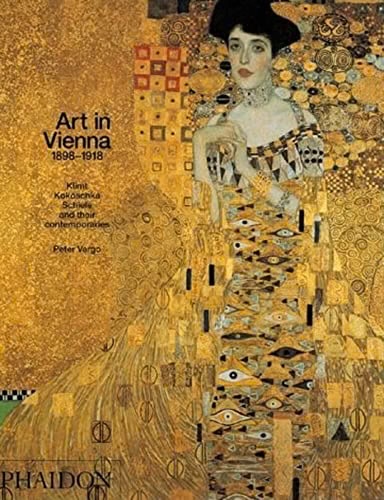
The artistic stagnation of Vienna at the end of the nineteenth century was rudely shaken by the artists of the Secession. Their works at first shocked a conservative public, but their successive exhibitions, their magazine Ver Sacrum and their dedication to the applied arts and architecture soon brought them an enthusiastic following and wealthy patronage. With 60 new colour illustrations, this classic book, now in its third edition, brilliantly traces the course of this development, of the Wiener Werkstätte that followed, and the individual works of the artists concerned. The result is a fascinating documentary study of the successes and failures, hopes and fears of the members of an artistic movement that is so much admired today.
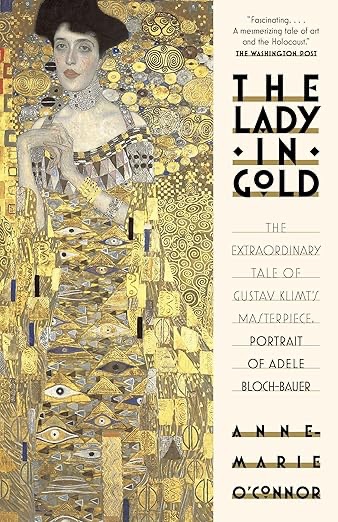
This is the true story that inspired the movie “Woman in Gold” starring Helen Mirren and Ryan Reynolds. Anne-Marie O Connor brilliantly regales us with the galvanizing story of Gustav Klimt’s 1907 masterpiece, the breathtaking portrait of a Viennese Jewish socialite, Adele Bloch-Bauer. The celebrated painting, stolen by Nazis during World War II, subsequently became the subject of a decade-long dispute between her heirs and the Austrian government.When the U.S. Supreme Court became involved in the case, its decision had profound ramifications in the art world. Expertly researched, masterfully told, “The Lady in Gold” is at once a stunning depiction of fin-de siecle Vienna, a riveting tale of Nazi war crimes, and a fascinating glimpse into the high-stakes workings of the contemporary art world.
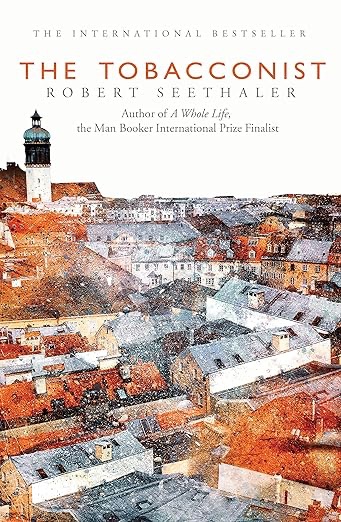
Seventeen-year-old Franz Huchel journeys to Vienna to apprentice at a tobacco shop. There he meets Sigmund Freud, a regular customer, and over time the two very different men form a singular friendship. When Franz falls desperately in love with the music hall dancer Anezka, he seeks advice from the renowned psychoanalyst, who admits that the female sex is as big a mystery to him as it is to Franz.

As political and social conditions in Austria dramatically worsen with the Nazis’ arrival in Vienna, Franz, Freud, and Anezka are swept into the maelstrom of events. Each has a big decision to make: to stay or to flee?
Posted in Random Things Tours

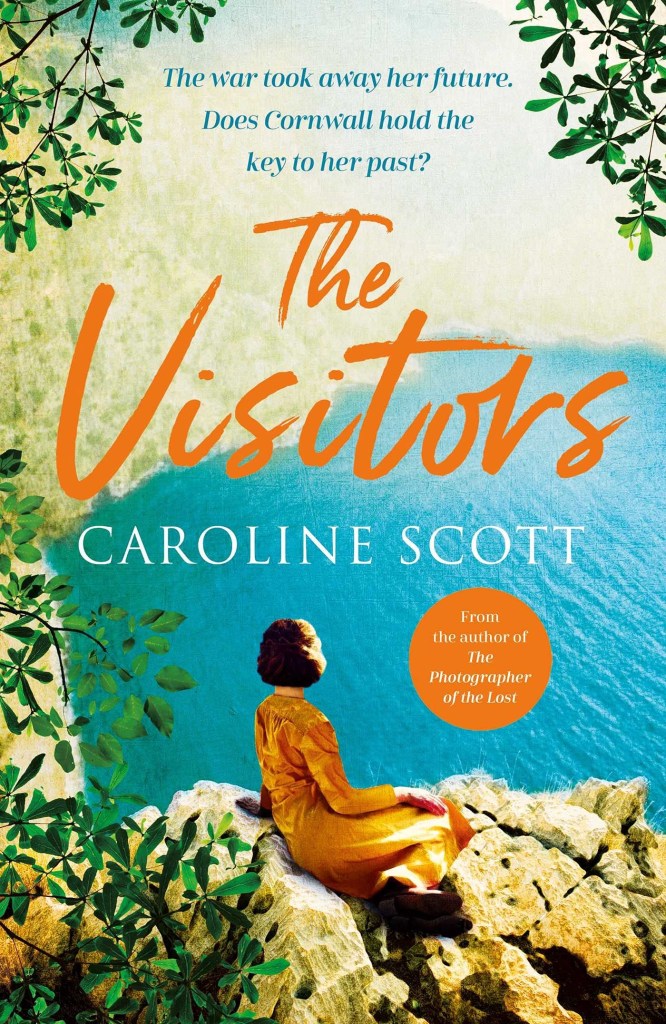
The Visitors by Caroline Scott.

I’ve been a huge fan of Caroline Scott’s last two novels and share an interest with her in the historical period following WW1. This novel touches upon some of the most important issues of the period, while telling a story that touches the heart strings and holds some surprises for the reader. It shows just how chaotic relationships can become during and post wartime, as well as how much people change when faced with terrible and traumatic experiences. We follow one young war widow called Esme whose whole life changed after she received news that her husband Alec had been killed. No longer able to afford to live in their marital home and needing to find work, Esme finds herself in the employment of Mrs Pickering as companion and helper, while also writing nature columns for her local newspaper. As the summer of 1923 approaches Esme is packing her employer’s clothes for a trip down to Cornwall. Mrs Pickering’s brother Gilbert, has established an artist’s residence in his large country house, and the artists have all served together in the war. As Esme meets Gilbert, Rory and the others she hopes to get an insight into what Alec might have experienced and maybe feel closer to him. What she finds there is certainly transformative, but in a very different way.

Esme is a very likeable character. She’s intelligent, resourceful and has really struggled to pick herself up again from nothing. She’s had no support system to help in her grief or her financial difficulties, in fact this is something she and Alec had in common, they were each other’s family. The author tells us this story in three separate narratives and each gives us a new perspective on the characters. Alongside the main narrative in which we follow Esme to Cornwall, we read the nature column she writes and it’s sublime in its descriptions of this place she’s visiting for the first time. We can see what a talented writer Esme is and how much nature means to her. I kept thinking how lovely these passages will sound on audiobook, almost like poetry. The observations she makes made me feel Cornwall again and in quite an emotional way considering I first visited there almost fifteen years ago when I was newly widowed. I felt like Esme’s Cornwall and mine were the same. I remember consciously walking round thinking that this was the first new memory I was making without my husband and Cornwall’s beauty seemed to make that even more poignant. The third narrative is a book written by Rory, one of Gilbert’s residents and close friend, in which he describes his experience of fighting in France. I was interested in the way he also describes nature as a blighted landscape, ruined by the ravages of warfare. There are vivid descriptions that will stay with me, such as the corruption of the very soil from constantly being churned up, contaminated by mustard gas and almost viscous in it’s consistency. Rory ponders whether this land would recover and how long it would take nature to return. It shows us the utter destruction caused and creates a link between the land the war was fought on and the men who fought it; how long might it take them to recover from the terrible things they have seen and done?

The author depicts PTSD in all of the men who live together in Cornwall, they are each affected by their experiences, but show that in different ways. There’s a vulnerability to them and a need to be with others who have shared their experiences. How else can they be understood and allowed to heal without the pressures of having to find work and cope with the demands of returning to a family? They are each very lucky to have Gilbert and this idyllic setting to slowly recover in. Although each must have another life, one that they belonged to pre-war, potentially leaving behind people who needed or might have asked something of them. It places them in a slightly privileged position over those who had returned straight into full-time work or job seeking by necessity, either because they belong to a different class or have a family to support. The excerpts of Rory’s book are also beautifully written, but don’t hold back from the horrors these men have seen. His descriptions are both vivid and visceral, and through reading his book Esme gains more understanding of these men than perhaps a lot of women would have at the time. How many times do we hear of war veterans who have kept all of this bottled-up inside with family member’s noting they didn’t like to talk about it much? At least here the men have a therapeutic outlet, whether by painting or writing, through which to understand or process these memories, but also communicate them to others without having to say them outright.

All of this would have been enough for a great novel, but the author also places a huge surprise part way through that I hadn’t expected. Through this we see the strength and restraint of Esme, the way she thinks things through before acting and never puts her own needs first. She needs a therapeutic outlet too, showing how the initial effect of war on the person who served ripples outwards to effect their loved ones and even future generations. Just as the land needs time to recover from the physical effects of warfare, there is a shockwave created that blasts through society as a whole. We are shown: how rigid Edwardian class structures are broken down; how marriage as an institution and way of constructing society is outdated and broken; how gender roles become more fluid allowing women more freedom and choice. I really did enjoy seeing how Esme negotiates this new world and makes bold choices for her life moving forwards. This book is another triumph for the author, because it’s a beautiful piece of historical fiction that tries to capture a moment in time where everything’s in flux. These constantly shifting sands of time show us the formation of our 20th Century and the resilience of the human spirit. It gave this reader hope that, just as nature found a way and those battlefields are now meadows and farmland, humans do have the capacity to heal and be reborn.

Meet The Author.

Caroline completed a PhD in History at the University of Durham. She developed a particular interest in the impact of the First World War on thelandscape of Belgium and France, and in the experience of women during the conflict – fascinations that she was able to pursue while she spent several years working as a researcher for a Belgian company. Caroline is originally from Lancashire, but now lives in southwest France. The Photographer of the Lost was a BBC Radio 2 Book Club pick.

Posted in Publisher Proof

Blasted Things by Lesley Glaister.

This is the first novel I’ve ever read by Lesley Glaister and when I finished, I couldn’t believe I’d never heard of her before. Set in one of my favourite historical periods, during and after WW1, this novel was evocative and moving. The author clearly has a deep understanding of the period and the rapidly shifting society her characters are living in. Her characters are fully rounded, with depths to get lost in and the effects of trauma to unravel and understand. This is an exploration of the effects of war and loss on our two main characters, Vincent and Clementine. The scars are both physical and mental, halting their progress as they try to move forward and making it very difficult to be who they truly are. When they, quite literally, bump into each other a strange relationship emerges that will have a haunting resolution. I could see these two people in my mind’s eye and I found myself thinking about them, even when the book was closed.

Clementine was a hands on during the war, volunteering as a Red Cross nurse close to the front. Her boyfriend Dennis had proposed and he didn’t want her to interrupt their lives. He didn’t fight, being a doctor he could claim to be needed by the patients in his area, so he wanted their lives together to start. Clem wanted to be part of the war effort, so along with her friend Gwen she ‘ran away’ (Dennis’s words) and became part of a medical unit. She wasn’t just taking temperatures either, her stomach is strong enough to be in the operating tent, helping to hold patients down during amputations and disposing of mangled limbs. The author’s depiction of working in the medical tents is vivid and gritty. I was able to imagine the struggle to keep wounds clean in the squalor and sick men comfortable on camp beds crawling with lice. The description of Clem’s hair stayed with me, tied up out of the way, but greasy and alive with lice. I could feel her desperate need to wash it, and the shock she feels when the doctor, Powell, finds hot water and washes it for her. I found that image so romantic, because he’d realised what she most wanted at that moment and provided it for her. He washes her hair with such kindness and a gentle touch, I almost fell in love with him myself. They have a deep and immediate connection, so Clem knows she must write to Dennis and explain what has happened.

However, before Clem can write two things happen. She realises she is pregnant and tragedy strikes, when the unit is bombed both Clem and Powell are injured in the blast. Clem has a picture in her brain, like a flashback, of a stove pipe from the boiler embedded in Powell’s back. She knows in that first second that she has lost him. Only days later she miscarries alone in the toilets, and this scene was so real and so emotive I cried. She’s lost the love of her life and now the last part of him has gone too. Numb and shocked she returns home and seems to sleepwalk into the same situation she left behind. In the next section of the book she is married to Dennis, who doesn’t know about her wartime experiences. They live above his doctor’s surgery and they have a child together, a little boy, but she grieves Powell and their little girl. I felt she was living behind a mask, being who she thinks she has to be rather than who she is. The ambivalence she feels towards her son is well represented, because she still grieves for that first child. There are physical signs, written on the body, that she has Edgar. The silvery stretch-marks mark the time she was pregnant, yet there are no signs of her daughter. It’s like she never existed.

Vincent meets Clem when she’s visiting her sister-in-law Harri. Feeling stifled, Clem goes out for some air and keeps walking, until she’s miles away and not sure of how to get back. She takes a quick breather at a bridge and steps into the road, just as a biker comes along. As he swerves to miss the crazy lady stood in the middle of the road, he loses control of his bike and crashes. Clem strangely sees something of Powell in him at that first glimpse. Actually, Vincent is a product of the same terrible war that left Clem bereft. For Vincent it left him wounded physically and emotionally. He has a facial disfigurement that means he wears a mask, literally and figuratively. Vincent has been left in a very reduced position by the war. His marriage has failed and the job he was assured would still be his when he returned from the front, has been taken away from him. How can a man who looks like him, be the face of an insurance company? He has nowhere to live, so he’s latched onto a woman called Doll, who runs a local pub. She’s easy with her favours, and Vincent takes advantage of this to lodge upstairs. He can’t cope with how much he’s lost and wants to replace it, with visions of marriage to Doll and being the welcoming host from behind the bar. He doesn’t love Doll, but they get on and there are worse places to be. Similarly, he notices how well dressed Clem is and thinks she might be manipulated into paying for his bike’s repairs. In the end, she visits him at the hospital and offers to pay, leaving her details and the possibility of a connection between them. They are both suffering the effects of trauma and might sense that shared perspective on the world. If Vincent is willing to settle with Doll, might this be another opportunity for him? What exactly can their relationship be?

I was worried for Clem, who is vulnerable. However, I was worried for Vincent too, he has lost so much and is vulnerable in his own way. He’s not one of the ‘glorious fallen’ heroes, and unlike Clem’s husband doesn’t have any status here at home either. He’s a reminder of exactly how ugly and terrible war can be, and nobody wants to remember. Dennis certainly doesn’t want to hear his wife’s tales of war. The author pitches him perfectly, a man who chose not to fight, but likes to remind everybody that he was fighting to keep the families of those soldiers fit and healthy. He represents the old order of things, with class barriers and men as head of the home. His need for control extends to his sister as well as his wife; there’s one right and respectable way to be in the world. When her friend Gwen visits for tea, he makes it quite clear that she’s not the right company. Not only did she get Clem to run away to war, but now she’s clearly having a lesbian relationship. His way of dealing with the world is on the wane though and he felt to me like a dinosaur that doesn’t know it’s extinct. He hasn’t been through the seismic change the others have and can’t identify with them. War has changed a whole generation of people around the world. I felt for Clem, who is part of this changed generation. She knows the future is different, but she’s chained herself to the past. Is it too late?

This was so beautifully written, with well-chosen words that create rhythm and take the reader on a journey through their senses. This explosion of sights, sounds and sensations bring an immediacy to the prose. This is not some long winded description of what a battlefield was like, it is the sounds and smells as they happen. I felt like I was there:

‘Where was the fear? She searched herself as she listened: sometimes the rat-tat-tat of gunfire, rapid and snippy like the keys of two vast, duelling typewriters battering out threats to each other on a paper sky; crumpings like oil drums being crushed by massive fists; a whistling followed by the soft whoomph of a missile striking, then virtual silence, then the battering of the typewriters again’.

The author truly does show us what’s happening and the contrast of passages like the one above and the quiet, clock-ticking, stillness of Clem’s home is so effective. No wonder Clem takes to walks; she needs to breathe. Every character is flawed, but no one is irredeemable. Through Clem she shows how women were restricted by society and I love that Gwen and her girlfriend had chosen a different path. Most poignantly, she shows how war interrupts lives and takes away people’s livelihoods, opportunities and in Clem’s case, even her creativity. I think this is one of the best books I’ve read on the aftermath of trauma. The author has so much compassion and empathy for her characters and because of that, so does the reader. I didn’t want this book to end and that’s the biggest compliment a reader can give.

Meet The Author.

Lesley Glaister is a fiction writer, poet, playwright and teacher of writing. She has published fourteen adult novels, the first of a YA trilogy and numerous short stories. She received both a Somerset Maugham and a Betty Trask award for Honour Thy Father (1990), and has won or been listed for several literary prizes for her other work. She has three adult sons and lives in Edinburgh (with frequent sojourns to Orkney) with husband Andrew Greig. She teaches creative writing at the University of St Andrews and is a Fellow of the Royal Society of Literature.

Published by Sandstone Press on 7th May 2020

Posted in Throwback Thursday

The Legacy of Elizabeth Pringle by Kirsty Wark.

I’m wary of books written by people in the public eye. There are those who have clearly used a ghost writer. Others have no writing skill, just a big enough name to sell the book anyway. I worry for myself and all those other aspiring writers who won’t be able to get a book deal because the lists are full with celebrity memoirs and books set in Cornwall! However, there are some celebrity authors who get it right, often those who started out as reporters before becoming famous. Jeremy Vine’s debut novel was a pleasant surprise, and my stepdaughters loved David Walliams stories. I knew Dawn French could write well only a few pages into her memoir. I can now add Kirsty Wark to this list, since stumbling on her book second hand in Barter Books, Alnwick. I started to read it while still on holiday and loved it.

The author lets her characters tell the story. Firstly we are told Elizabeth’s story from her journal and we meet her at the beginning of the First World War, a time of big changes for her family. She is moving with her mum from the isolated family farm to the small fishing village of Lamlash on the Isle of Arran. The house they will live in is Holmlea, which has a beautiful sea view out to Holy Isle and the monastery. We are then immersed in Elizabeth’s life: their family friendship with the Duchess of Montrose; an incredible passion for gardening; all the relationships in her life. These relationships ebb and flow, but into her old age she has two men in her life. There is Niall the rather passionate gardener who works as an architect and Saul, a Buddhist monk from Holy Isle. When working in her front garden she notices a young woman, walking past with her baby in a pram. The young woman is Anna, and she is very taken with Holmlea and asks Elizabeth to contact her if she ever decides to sell it.

Our other narrator is Martha, the daughter of Anna Morrison, who is surprised to find her mother has been offered the legacy of a house on the Isle of Arran by a woman she’s never heard of before. Anna is now struggling with dementia, so much so that Martha is now her full time carer and deals with her finances. It is Martha who organises help for her mother and takes a trip up to Arran to see the house. So it is also up to Hannah to uncover Elizabeth’s reasons for leaving the house, but also discover more about her life and secrets. There was once a fiancé in Elizabeth’s life who moved out to Australia to start a sheep farm. Elizabeth was reluctant to go, feeling she needed to be there for her mother. She passes her time walking in the hills and during the war, helped in looking for lost and crashed airmen. Eventually, it is too late to follow her fiancé and at the end, Elizabeth has lived on Arran for 90 years. More recently she’s had friendships with a young man whose sister runs the local hotel and he has worked with her to create her beautiful garden. It is her friend Saul who encourages her to write her story down. He is a struggling Buddhist monk who is staying at Holy Island and meets Elizabeth when she volunteers in the gardens.

The books major strength is in description, creating a strong sense of place. This is a bleak but beautiful place, and she situates Arran and Holy Island as sustaining to the people who live there or come for solace. These islands feel like a cornerstone or anchor for the people who are born there and almost like medicine to those lonely or desperate people who seek them out. Gardens are featured heavily as a source of sustenance for the body and the soul and I truly understand that need to be in nature and feel your senses drink it in. I thought it was a wonderfully calm and quiet novel, but quiet doesn’t mean it’s without impact. I really loved Elizabeth’s story, it shows how quiet and seemingly unassuming people can have hidden depths. We often overlook the elderly, thinking they have lived their lives. I’ve worked in nursing homes and advocacy, and it’s surprising how many elderly people are cared for by people who don’t really know them and never try to. They talk to other carers as if the person they’re helping is deaf or not really there. I created a memory project where I found old photographs of residents and wrote down stories they told me about their lives. I then put up a display outside each bedroom, so that carers could see their residents as individuals with experience and stories to share. This book reminded me of that project and what a difference it made to the resident’s everyday lives.

Meet The Author

Kirsty Wark is a journalist, broadcaster and writer who has presented a wide range of BBC programmes for more than twenty five years, from the ground-breaking LATE SHOW to the weekly arts and cultural review show THE REVIEW SHOW and the nightly current affairs show NEWSNIGHT.

Kirsty has won several major awards for her work, including BAFTA Awards for Outstanding Contribution to Broadcasting, Journalist of the Year and Best Television Presenter. Her debut novel, THE LEGACY OF ELIZABETH PRINGLE, was published in March 2014 by Two Roads and was shortlisted for the Saltire First Book of the Year Award, as well as nominated for the International DUBLIN Literary Award. Her second novel, THE HOUSE BY THE LOCH, was inspired by her childhood memories and family, particularly her father. She is currently working on her third novel, set in Glasgow.

Born in Dumfries and educated in Ayr, Scotland, Kirsty now lives in Glasgow.

Posted in Random Things Tours

When I Come Home Again by Caroline Scott

Published: 29th October 2020

Publisher: Simon and Schuster

ISBN: 978-1471192173

This was an exquisite, slow-paced, historical novel that moved me so much. It was a window on both individual, and collective, grief. It also explores the psychological rehabilitation process which is my day job, as a counsellor. Regular visitors to my blog will know that I am fascinated with this period of history depicted in novels as varied as Emma Donoghue’s recent novel The Pull of The Stars and in the last few years Sarah Water’s The Paying Guests, Adele Park’s Spare Brides and Kate Atkinson’s Life After Life. All deal with a different aspect of this period of huge social change. The nation is grieving, for lost sons, husbands and brothers but also for a time of innocence now lost to them. Young women struggle to find husbands as the policy of neighbours fighting together meant villages losing whole generations of men. Distinctions between the classes come tumbling down as men from all backgrounds fought together for a common purpose. Many estates were crippled by death duties, often for two generations at once, and men who never expected to shoulder the burden of a family estate were suddenly dukes, but without any means. Institutions like the debs ball seemed trivial and outdated, with many new heirs marrying money from abroad bringing Americans and their new money into the ranks. Others lost their estates altogether and had to consider working for the first time ever. Women who had held the fort, while the men went to Europe to fight, did not want to return to the home and wifely duties. Even men who had jobs held for them, faced a fight to get them back. Women were not the same, they’d been stretched and depended upon in wartime and wanted more equality at home, work and in the political system. The upheaval in our class system, in gender roles and working life is unimaginable. When set against the backdrop of national mourning and a worldwide flu pandemic we can perhaps imagine a little the seismic psychological shifts happening. On the plus side it’s a dynamic time, where the old order is overturned, people born in poverty or the wrong gender could change their lives because of the social mobility created.

We see these issues through the characters in Caroline Scott’s book and understand how some want to recover a lost past however unlikely it is, whereas others want to blank out their experiences and start again without memories or baggage. Scott starts her book with an epigraph from the tomb of the unknown soldier in Westminster Abbey. Also used as a focal point for Anna Hope’s wonderful post WWI novel Wake, the burial of this young man is full of symbolism. One man chosen from the many lost in France, to symbolise both those who died and those who would never be recovered or identified. His burial in the abbey would be broadcasted in cinemas and over 100,000 visited his grave to pay their respects in the next few weeks. In Durham, another anonymous young man is found using chalk to write on the flagstones in the cathedral. He is arrested and taken for treatment with Dr James Haworth who aims to slowly help his patient recall who he is and what has brought him to Durham. Named Adam Galilee by the police who found him, he is subject to many different methods, including covering the walls of his room with mirrors. They spend so much time talking and questioning, gently in case they force him into distressing memories. As Haworth observes ‘something strong within him is resisting recalling the pertinent parts’.

As a counsellor and writer I think a lot about the concept of ‘self’ and how it’s constructed, and I loved how Scott explores this in the chapters marked as belonging to Adam. He talks about how they ask him for a first memory and he knows they’re avoiding more recent times, despite there being a complete void where his time as a soldier is concerned. He knows they’re looking for a beginning to who he is and all he does know is that it doesn’t work like that.

‘It isn’t linear. That’s not the way it works. It doesn’t have momentum, or a narrative arc, and he doesn’t know where it starts. It surprises him, if they are doctors of minds, that they can’t understand that’.

I thought this was so clever, because it questions the very nature of the self. Are we ever one fixed set of characteristics or are we fluid and ever changing? If any of us are asked to describe who we are we tend to come up with a list of things we love to eat, listen to, wear and watch. As if the self can somehow be captured and solidified by these objects. When asked who we are, we refer back. So what happens when we cast our minds back and there is nothing there to hang on to. All Adam can do is ‘be’. To exist, try things and see what sticks. Rebuild from now. Maybe this is preferable to remembering before, the trauma and the hell of the battlefield? It was beautiful to see Adam gain a love of nature, whether rediscovered or a new appreciation it has a healing quality. He also has a talent for sketching and he captures the nature around Fellside, as well as the repeating a young woman’s face, which may be a clue to who he is. Supporting him through this self-discovery is James, himself a lost man due to his war experience and very much a wounded healer in these circumstances. His marriage to Caitlin is struggling under the weight of grief, I wanted him to share his war with his wife, but also understood his need to forget.

Just like the unknown soldier, Adam is a cipher for every young man lost in the war. When James puts his picture in a national newspaper, he hopes that someone will recognise him – what he didn’t expect was that three people claim that Adam is theirs; Mark, Robert or Ellis. Caroline weaves the women’s narratives into this tale so we see what war has done to the women left behind. My heart ached for them all and I wanted Adam to belong to each of them in turn; to be Celia’s son, to smooth away the rough edges of Lucy’s tough existence, to absolve Anna and bring resolution to her life. Of course he can’t be all things to all people. This is an intricate balance of viewpoints and Scott weaves a beautiful tapestry from them. Through these people we see a snapshot of post-WWI Britain that is truthful. Art is able to move beyond the patriotism and glory, to see the real cost of war. This is an incredible piece of work. Haunting and complex, a society laid bare emotionally through the tale of a warrior, unknown by name and rank.

Meet The Author


Caroline completed a PhD in History at the University of Durham. She has a particular interest in the experience of women during the First World War, in the challenges faced by the returning soldier, and in the development of tourism and pilgrimage in the former conflict zones. Caroline is originally from Lancashire, but now lives in south-west France.