Posted in Publisher Proof

The Burial Plot by Elizabeth MacNeal

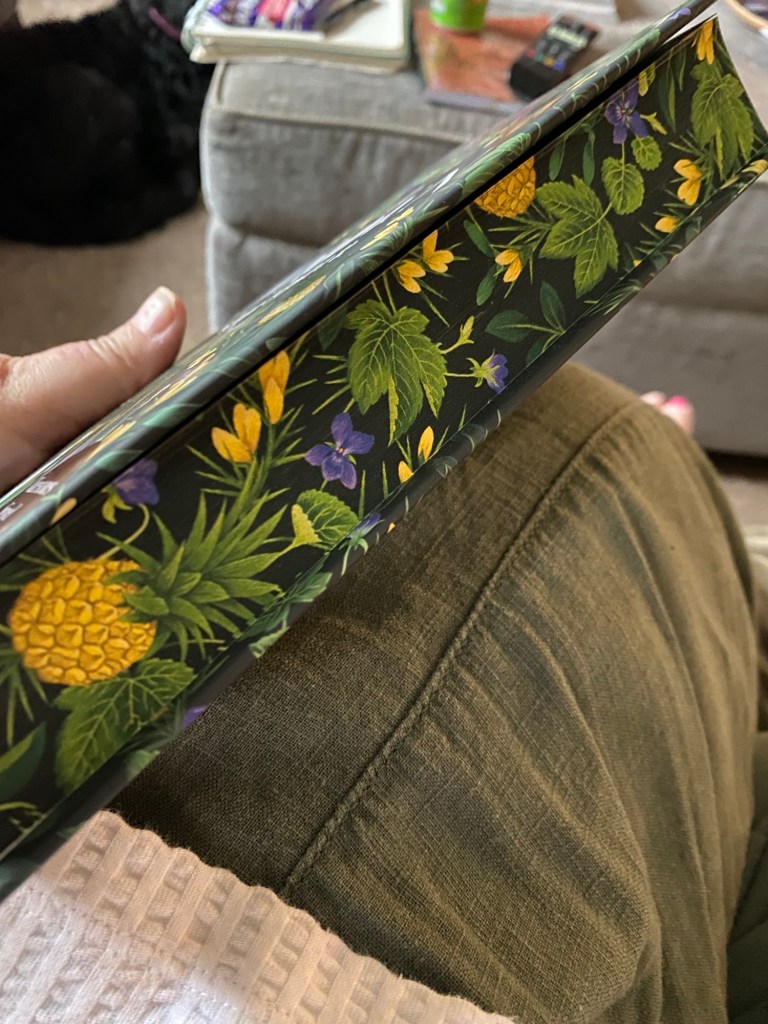
I was so lucky to be offered a proof for this book after waxing lyrical about the author’s work on social media and I loved it so much that I’ve already splurged on the Goldsborough Books special edition with the most gorgeous spredges, for my collector’s cabinet. This novel pulls together so many things I love in one incredible story: the Victorians; a touch of the macabre; a spooky and unique house; a heroine who has her consciousness raised and a simmering tension that builds to a heart hammering conclusion. Bonnie is our heroine, a young woman who resides in St Giles and earns a living running a scam with her lover Crawford and their friend Rex. Crawford is handsome and a bit of a dandy as far as their limited means allow. The trio hang around public houses looking for their latest mark, a man that Bonnie can lure to a quiet alley with the promise of sex, only for Crawford and Rex to appear just in time to rough him up and steal anything they can sell on. However, one night as Bonnie lures a red-headed man to their usual place, Crawford and Rex don’t appear. Pressed up against the wall while the man tries to haul up her skirt, she realises they’re not coming and has to fight him off herself. As the mark falls and hits his head, the men suddenly appear but far too late. Bonnie knew that as soon as head hit brick, he was dead. Crawford tells her to leave and lie low, he and Rex will tidy this away. In the aftermath, Crawford shows her an advert for a lady’s maid at Endellion – a labyrinthine Gothic house on the outskirts of London. Maybe she could apply for this job and stay out of sight for a while? Bonnie goes to meet the owner, a Mr Montcrieffe. He’s a widower with a teenage daughter who desperately misses her mother and spends rather more time alone with her scrapbook than is healthy. To her surprise, Bonnie gets the job and looks forward to working with Cissie. Yet there is so much more to these unrelated events than she knows and so much about Crawford that’s been hidden by her love for him. Now events are set in motion, Bonnie is caught in a spider web of lies, betrayals and the very darkest of intentions.

I’ve already read one book this month that deals with this part of London and a burial ground known as Cross Bones where the prostitutes of the Southwark district were buried. Known as the Winchester Geese, due to being licensed by the Bishop of the parish, upon their deaths they were still banned from a burial in consecrated ground. The burial ground then became a place for the poor of the surrounding area to be buried, but in an area overrun with diseases like typhus and cholera it was soon over subscribed. Half decayed bodies were disinterred to make way for the new, with grave diggers losing their respect for the dead and using their bones as skittles and their skulls as balls! When Bonnie sees Mr Montcrieffe’s sketches of a mausoleum for his late wife, she encourages him to build it on an empty patch of land on the edge of the gardens of Endellion. She knows that the rich would pay to take their eternal rest in such beautiful surroundings and away from the miasma of death and sewage in the city. Between them they sketch out a cemetery, with Bonnie creating a planting scheme for the project. She’s inspired by the old greenhouse where she’s been spending her few hours of leisure potting up abandoned orchids and other cuttings. Bonnie also makes a difference with Cissie, who seems happier to have a mother figure in the house and spends more time outdoors. Her scrapbook of imaginary love letters sent from Lord Duggan are left aside for a time. Bonnie even enjoys her time spent with the kitchen maid Annette, building a female friendship that’s been missing from her life. Then there is news from Mr Montcrieffe that he’s received a letter from a man who worked on the cemetery at Highgate recently. He claims to know all the administrative loopholes and potential investors to benefit their endeavours at Endellion and he’s invited to stay. As soon as Bonnie enters the office she knows who their new guest is and the smell of peppermint and aftershave she knows so well fills the room. Crawford is keen to establish himself in the house, like a cancer at it’s centre. Although he claims to wish for Bonnie back in his life, she knows that isn’t the only reason. He wants Endellion and he doesn’t care about the chaos and pain he might cause to achieve his aim.

Horace Walpole’s Strawberry Hill

The setting is beautifully drawn by the author and modelled on Strawberry Hill, Horace Walpole’s gloriously gothic mansion near Twickenham. It’s a very fitting choice for this story, considering that Horace Walpole was the writer of the very first Gothic novel The Castle of Otranto. With it’s crenellated roof and romanticised interiors Endellion was extended and decorated to the taste of Mr Montcrieffe’s first wife Josephine who drowned in the garden pond. The house is labyrinthine in design with plenty of places to hide out, in fact Bonnie spends a lot of time looking for Crawford and wandering through these rooms following the scent of cigarette smoke or his distinctive aftershave but never quite seeing him. The redecoration of the Montcrieffe’s marital bedroom is done by Cissie but very in her mother’s style with it’s overblown and romantic pink. Only to be expected from a girl who writes imaginary love letters to herself in an ornately decorated scrap book. Bonnie prefers working in the earth, transforming the greenhouse and the cemetery with her more natural planting schemes when compared with Josephine’s fondness for cultivating pineapples. The gardener shows Bonnie the exotic plants grown before, including a Venus fly trap, which he opens up to reveal a partially digested beetle. There’s no more fitting metaphor for the situation Bonnie finds herself in, or for the house itself and it’s ability to draw someone like Crawford in and inspire envy.

Crawford is a classic abuser. He sought out Bonnie, as a girl with no prospects, money or family and using his romantic wiles has love bombed her into depending on him for everything. The death of the man in the alley has allowed him to hold something over her, using her fear of the hangman’s noose and of losing him to manipulate her. The pace of the novel changes when he joins her at Endellion; the fear and excitement of snatching moments together and his desire for her are like a drug. He tells a story of his early years, living in poverty on a barge just down the river from this house and an injustice linked to his parentage. This invokes pity in Bonnie and he hopes it gives him a sentimental Robin Hood feel – he wants to take things that aren’t his legally, but argues that morally he has every right to them. The risky behaviour builds and when Bonnie won’t go along with what he wants he suggests she doesn’t love him, that she’s falling in love with Mr Montcrieffe and when neither of those work he threatens, becoming more menacing than Bonnie has ever seen. He takes the household apart bit by bit, removing those who might oppose him, charming those who are taken in by his looks until his dirty boots are carelessly marking the floors and the furniture as if he owns them.

When he proposes a scheme to Bonnie that will make their situation more permanent and tells her his history with the house she believes that this is the reason he came here and feels obliged to help. However, he reckons on the Bonnie he knows from St Giles not expecting that her time at Endellion might have changed her. I loved Bonnie’s development through the book and Crawford has definitely underestimated her. She has developed self-worth from having the raised status of a steady job, earning honest money and using her skills on the cemetery project with Mr Montcrieffe. His belief in her abilities is touching and improves her self-esteem. She starts to feel a loyalty to him and to Cissie who has brought out strong maternal feelings in Bonnie and mothers always protect their cubs. Yes she feels trapped by Crawford but she’s unhappy with his plans, she wants to remove deceit from her life at Endellion and the constant feeling of being on edge is killing her. I started to wonder whether Crawford didn’t have the same hold over her he once did, she’s questioning his plan and his motives and decides to do some digging of her own. The revelations keep coming in the latter half of the book, some expected and others a complete shock to Bonnie and to us. I felt a physical sensation of holding my breath in parts and I devoured the final three sections in one afternoon, desperate to find out what happened. The scales fall from our eyes at the same time as Bonnie as bit by bit the revelations about Lord Duggan and the scrapbook, Crawford’s nocturnal adventures and even the red- headed man in the alley make us see everything in a new light. Bonnie will have to be super-resourceful to survive and create a better life for herself. I was desperate for her to succeed! This novel is a brilliant thriller with an atmospheric and beautiful backdrop. We also have a resourceful heroine with more strength and intelligence than she realises. This is definitely in my top five books of the year so far and an absolute must read for those who love Gothic and historical fiction.

Out now from Picador

Meet the Author


Elizabeth Macneal is the author of two Sunday Times-bestselling novels: The Doll Factory, which won the 2018 Caledonia Novel Award and has been adapted into a major TV series on Paramount+, and Circus of Wonders. Her work has been translated into twenty-nine languages. Born in Scotland, Elizabeth is also a potter and lives in Twickenham with her family. She can be found on instagram @elizabethmacneal.

Posted in Netgalley

The End of Summer by Charlotte Philby

Judy left England as a teenager and is lived with her aunt In New York City. Looking for ways to survive she starts scamming and stealing. Judy’s mother drummed it into her that it was wise for a woman to have her own money and never rely solely on a man. This lesson was well learned, but without any real qualifications or means of making money Judy has to be more creative. She’s a grifter, stealing here and scamming there. So when she sees a story in a newspaper about a rich resident of Cape Cod becoming a widower, she decides on her next mark. Judy finds her way to a vineyard in the same area, taking a job there and making herself known until the inevitable happens and she meets Rory. She plays it clever, doesn’t ask for anything and is never pushy or monopolises his time. She’s playing the long game because she wants him to fall for her, hook line and sinker. What she didn’t bank on was falling in love with him. When they marry she has access to some of the wealthiest people in the area so she’s easily sneaking the odd item from their home and from other society people to sell on through a fence. Every summer they spend in their chateau in France and one summer Rory’s asked to hold the local Wine Appreciation Society ball. Judy is left with a dilemma. Her fence in London is blackmailing her, asking her to provide details of the ball including exits and entrances of the chateau and a guest list of who’s attending. She doesn’t want to help, but when he threatens to tell husband Rory about her past she has no choice. As the burglary takes place, Judy is locked in a toilet cubicle listening to the melee. She’s devastated to hear shots and when she runs to look for Rory she finds herself in the aftermath with a man bleeding out on the floor who turns out to be one of the robbers. When he dies she laments that a young man has died because of her and she can’t shake it off. Years later, it’s in her French home that Judy receives the phone call, the one she’s dreaded and expected all at the same time. The police are looking into a murder, but is the victim the man in France?

When Judy’s daughter Francesca gets a visit from the police and journalists it’s like a bolt from the blue. She’s a lawyer, in London and is aghast when police inform her that her mother seems to have fled the country and is wanted for murder. Francesca is left bewildered and unsure what to do. Yet she knows she must protect her mother, after all her mother has always protected her. This is a smart thriller, that doesn’t fall into cliché territory. The two women’s narratives are layered over each other, with some in the present and others set in the past, taking us from the 1960s in Cape Cod, the 1980s in the South of France and the 2000s in Kensington, London. The author is very adept at giving out just enough information, drip feeding little clues here and there that keep you reading and keep you guessing. Then, suddenly, she wrong foots you with a different direction. I found Judy so fascinating that Francesca suffered a bit in comparison. Not only is Judy beautiful, she’s a smart cookie. She can think on her feet and gets out of the tightest spots, her adrenaline running so high that my heart raced on occasions. She’s the female equivalent of the ruggedly handsome rogue, with a habit of stealing from the rich like a modern day Robin Hood. I love that the author gives her this free-spirited autonomy. She wears a mask at times, but after several years with Rory has relaxed a bit, only for a person from the past to find her. There is only one woman who suspects Judy might not be all she seems and she won’t let go of her suspicions, even taking them to the grave. I loved the allusions to Lady Audley’s Secret a Victorian ‘sensation’ novel based around the fact that Lady Audley is living a lie and may be found out. It’s a book I read at university and I was so shocked by how easy to read it was. It wasn’t slow and ponderous like other Victorian novels, it had pace and excitement just like a contemporary thriller. This is in that same tradition, but Judy has more freedom and status in today’s society. There’s less to lose, thanks to never relying solely on a man, but I was pretty sure that Judy would try her hardest to find a way out anyway. Is it wrong that the thought of her getting away with it made me smile?

Out on 20th June from The Borough Press

Meet the Author

Charlotte worked as a newspaper reporter and editor for years before moving into magazines, and then turning her hand to fiction after having her third baby. As a journalist, her work varied from undercover investigations to celebrity interviews – but what really interests her is seemingly ordinary people who do extraordinary things. This is definitely the springboard for the ideas in her novels, which she hopes are as pacey and entertaining as they are transportive. She’s inspired by favourite books including Apple Tree Yard by Louise Doughty, Restless by William Boyd, Alys, Always by Harriet Lane, The Secret History by Donna Tartt and The Constant Gardener by John Le Carre, but she’s also inspired by (and unashamedly addicted to) compelling TV drama, with favourite series including The Night Manager, True Detective, and The Honourable Woman. After spending time exploring the legacy of her grandfather, the double agent Kim Philby, she became interested in spy fiction and decided to write the books she longed to read: female-led stories that are twisty, stylish and multi-layered, tying together global espionage with haunting domestic noir.

Posted in Squad Pod

The King’s Witches by Kate Foster

Having only just read her debut The Maiden, I was very keen to get started on this second novel from Kate Foster. This novel is based during the reign of Elizabeth I and James VI of Scotland (James I of England). I knew of James VI’s obsession with witches after studying the Malleus Malificarum at university while writing about disability representation in fiction. I looked at witches while discussing how disfigurement and disability in novels is used as a symbol for evil. The Malleus Maleficarum was the bible for witch finders, describing all the behaviour and characteristics of possible witches and signs to look out for. The book features in this novel as a guide for James VI, who had been alarmed by news of witch hunts in Germany. His proposed bride, Princess Anna of Denmark, set sale for Scotland in 1590 and was driven back by catastrophic storms. The storms were blamed on witches in Denmark and when James travelled to meet her in Norway he heard allegations of witchcraft first hand. Around the same time, in North Berwick, a housemaid called Geillis Duncan was accused of sorcery and when tortured she implicated several other witches, allegedly conspiring with the Earl of Bothwell to take the throne from the King. Kate Foster has taken this history and weaves a story from three women’s points of view, giving a feminist slant on the witch trials that killed thousands over the next two centuries, the majority of them women over forty.

There are three narratives in the book, each one from women who hold different positions in society. Princess Anna of Denmark was a young girl of fourteen when he was betrothed to James VI and attempted to reach Scotland. This has been updated to seventeen in the novel, but at either age there’s an enormous pressure on her shoulders. She has been sent on the basis of a Scottish hand-fasting, if she should please James within the next year he will marry her. If not, she will be ruined for any other marriage and her future looks set to be a life within an abbey. Adding to the pressure, there is a witch burning just before they leave and Anna is compelled to watch, because burnings are a warning to all women. Anna is sickened by what she sees and can’t forget it, convinced as they set sail that the witch is stood on the harbour cursing the voyage and her union with the Scottish king. As it is the sailing does feel cursed because the weather is terrible, sea-sickness is rife and when Anna meets her Scottish tutor Henry every thought of the king is driven from her mind. Anna’s companion and lady-in-waiting is Kristen Sorenson, a pious woman who once lived in Scotland. She is charged with keeping Anna focused on her duty, but she also has her own personal reasons for wanting the royal marriage to be a success. Jura is a housemaid working in the house of the local bailie in North Berwick. Her mother was a cunning woman, treating local women’s ailments with natural ingredients and she passed her knowledge on to Jura. She heals the daughter of the house from a rash and redness on her face using an oatmeal poultice and soon other women in their circle are asking for cures of their own. However, she and the daughter clash over a dalliance with a local farmer’s son and when Baillie Kincaid starts to force his attentions on Jura she decides to flee to Edinburgh. All three women are now caught up in the witchcraft rumours and may have to come together in order to save themselves.

Within a few chapters of the book I felt taken right back to the 16th Century. The witch burning scene in Denmark is see through Anna’s eyes and it is sickening and barbaric to imagine people killed in this way. Before she sees Doritte Olsen burned Anna mentions that even though she is to be betrothed, she doesn’t feel like a woman yet. She doesn’t fully know who she is. She can’t eat and can’t sleep, smelling the smoke on her own hair and knowing that on the beach, Doritte Olsen is still burning down to ash. She starts to see that women have no power in this world and the burning is a lesson – this is what happens if women step outside their role. It left me knowing I was in a different world, where women’s roles are wholly defined by men. Jura senses freedom as she flees to the capital city. Her descriptions of Edinburgh are so vivid as she marvels at houses with four storeys that put the whole street in shadow. She is dazzled by Canongate with it’s gleaming shop fronts, tennis courts and cork-fighting pits. She marvels that her mother never told her such variety existed in one place. The use of Scottish dialect in Jura’s narrative really helps ground the reader in that place and her use of bawdy language made me smile and feel warm towards her.

Here and there, Kate uses letters between the chapters and they had the effect of reminding me that a true story lies behind this novel. After their first night together, she strategically places a letter to the king from his friend Douglas Murray, a fictional character who stands in for a series of lovers the king is known to have had. In a letter that is mainly keeping the king up to date with news from court, he signs off with a curious line:

‘Mostly I await your return […] so that we might embrace each other once more in the manner to which we have become so dearly accustomed’.

The consensus among 21st Century historians is that the king was homosexual or bisexual, but in the context of this story it makes us realise that Anna’s task is a difficult one. She truly will be a wife in duty only and she knows this as she tells Kristen it feels unnatural to be intimate with someone she doesn’t care for in the right way. Her role is to stay quiet and bear children, turning a blind eye to the king’s extra curricular activities. Anna’s description of their intimate relations made me feel sick for her, she senses there is no ‘longing’ in him and I realised that should she become Queen this is her life. She won’t be able to have lovers and her only romance in life would be the way she feels for her tutor Henry. In fact James seems more aroused when torturing potential witches. How I wanted her to run away.

The only women in the novel with a small amount of freedom are those able to earn their own money like Jura and her Aunt Mary who is a healer and cunning woman in Edinburgh. Mary lives alone on what she earns, not in any sort of luxury but at least she has autonomy. The ability to consult a cunning woman is vital for women who might want to stop a pregnancy, boost their fertility or need a charm for love or protection. In this way these autonomous women empower the women around them and accusations of witchcraft subdue not just the woman accused, but every woman in that area. When Jura heals Hazel Kincaid’s facial rash and gets the chance to meet with other local women who gather at the house, she glimpses the chance of a better life:

‘I like healing far better than I like polishing and sweeping and mibbie, one day, soothing grumbling guts and easing flaking skin will help me out of horrible Master Kincaid’s house and away from his prick, and able to rent a dwelling of my own.’

The hypocrisy of the men in the book is infuriating at times. The renowned witch finder Dr Hemmingsen from Copenhagen assures the king that he has a unique way to identify witches, using a bodkin to prick them and find the devil’s mark on their body – the only spot where it won’t hurt. In the same package he has sent the king a golden amulet for protection, carved by a man who knows how to ward off evil. It seems signs and charms are only witchcraft when a man says they are. In fact Anna has never heard so much about the practises of witches as she does from the king, regaling her with tales of baby-killing and orgies with man, woman and beast. Kristen tells Anna that James is becoming a danger to ordinary women and his fervour is a kind of madness, or a licence to abuse and degrade women. Anna has a realisation; a woman’s body is never truly her own, no matter what their position in society. Whether you’re a housemaid whose master decides you’re his property, a witch who can be stripped and examined by men who call themselves god-fearing, or a princess whose family hand-fasted her to James Stuart and didn’t ask her if it was what she wanted. Women must work together if they want to survive. These women are strong, but are they intelligent enough to try and outsmart a king? Kate is brilliant with twists and turns, so I wasn’t surprised to find a few revelations towards the end. I was driven to finish to know what happened to all three women and whether any of them would achieve the freedom they craved. This was a compelling and atmospheric read and cements Kate Foster’s position as a writer of historical fiction at it’s best.

Published on 6th June by Mantle Books

Meet the Author

Kate Foster has been a national newspaper journalist for over twenty years. Growing up in Edinburgh, she became fascinated by its history and often uses it as inspiration for her stories. The Maiden won the Bloody Scotland Pitch Perfect 2020 prize for new writers and is long-listed for the Women’s Prize for Fiction. She lives in Edinburgh with her two children.

Posted in Squad Pod

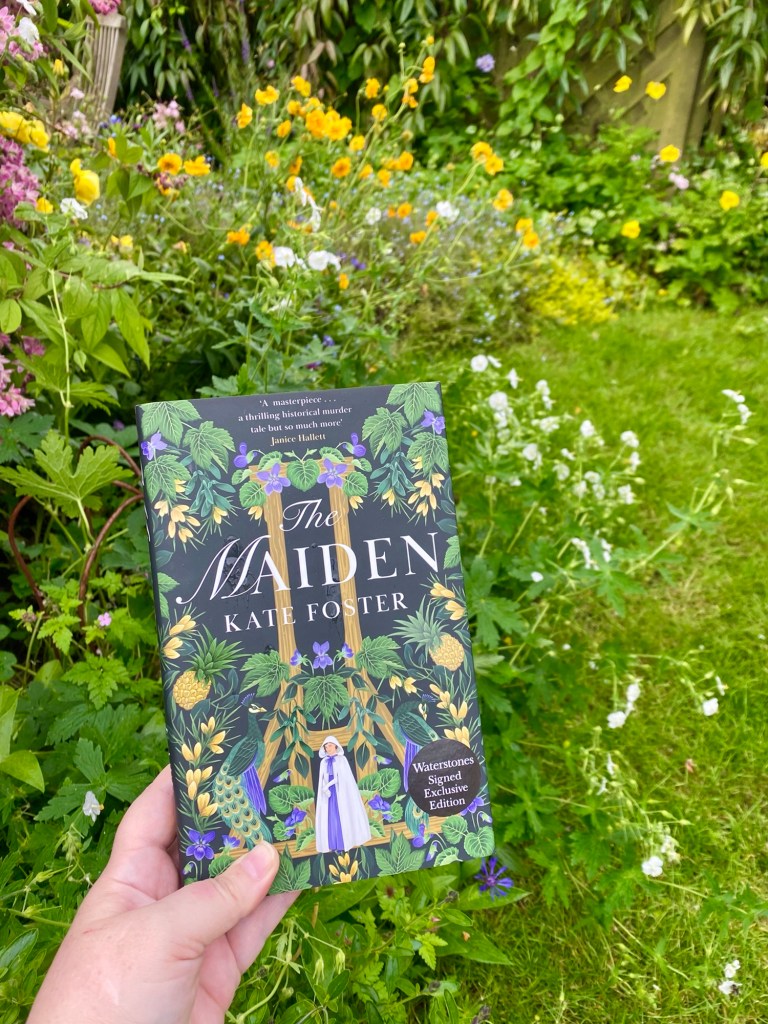
The Maiden by Kate Foster

Kate Foster has taken a real life news report and turned it into an incredible read, full of historical detail and intrigue. It’s the late 17th Century and Lady Christian Nimmo lives with her sister Johanna and her mother at their lavish home in Scotland. Although their home is becoming less lavish by the month because since their father’s death she notices pale spaces where paintings or rugs once lived. Their fortunes are at the mercy of their uncle by marriage. James Forrester is laird of the neighbouring castle where he lives with Christian’s invalid aunt Lillias. James comes for dinner and departs with a little more of their family history packed away for sale. The girls must marry well and it is Johanna with her bubbly personality and pretty face who is proposed to first. For her wedding to Robert Gregory, Christian’s uncle sends her a beautiful brooch to wear and she is pleased at his kindness and the acknowledgement that she might feel left behind that day. Not all of her uncle’s attentions are welcome though and although he keeps pressing her to visit his castle to sketch and paint with her aunt she isn’t sure. However, she does enjoy the attentions of the fabric merchant Andrew Nimmo who brings them new fabric and entertains them with tales of sailing to far off lands and the night sky at sea. Christian daydreams about sailing alongside him and seeing some of these sights. Noticing her enthusiasm he cuts her a piece of silvery fabric that is the colour of a stormy sea. Next time he brings a sample of midnight blue velvet, shot through with an ocean green and she is very charmed. Marriage to him would be interesting and adventurous, all the things that Christian yearns for when she reads novels and poetry. So when he proposes she accepts happily, sharing her sister’s new found marriage advice and looking forward to being mistress of her own house. Yet only months later she is detained for the suspected murder of her Uncle James, killed by his own sword under a sycamore tree in the grounds of his castle. How has it come to this and will Christian have to face the infamous ‘Maiden’, a guillotine where Scotland’s aristocratic condemned meet their fate?

However, this isn’t just Lady Christian’s story. The novel is split into two narrators: Christian and Violet, a prostitute from Mrs Fiddes’s brothel in Edinburgh. For both, there are two timelines; the present after the death of the laird and the events leading up to it. Until finally past and present come together. Violet is a very young girl, and has been resident at the brothel since Mrs Fiddes sold off her virginity. The scenes within the brothel are brilliant; bawdy, coarse and incredibly colourful. Mrs Fiddes knows every customer’s taste and predilection, she’s shrewd and knows that this gives her a certain amount of power. She’s keeping their secrets close until she really needs them. Violet’s friend is fellow resident Ginger, a skinny young girl with red hair who lives on the same corridor. One evening a rather distinctive man comes in to choose a girl, a man who doesn’t wear a wig which is unusual. He looks past Violet and chooses Ginger, but it’s not long before she is also occupied. It’s not long before Violet hears a terrible commotion and she rushes down the corridor, but it’s too late. The man is gone and Ginger is left like a broken doll on the floor. In the aftermath Violet longs for her luck to turn. When she’s out one morning she notices a wedding taking place and lingers to watch because sometimes men who are celebrating and have had a few drinks might look for a girl. She’s in luck when a very wealthy looking man catches her eye. Before long he’s slipped into the parlour and is so pleased with Violet that he makes an offer. He would like to take her back to his castle for the weekend. As he shows her a secret room in one of the castle’s turrets she is amused by the illuminating art work, but amazed by the lavish surroundings she will be staying in and the maid who will bring her meals and make sure she has what she needs.

Like all the servants Oriana knows the laird has his amusements and they are kept quite separate from the lady of the house whose illness usually keeps her tucked away upstairs. Violet could get used to this sort of treatment, but the power lies with the laird. She might have fallen on her feet for now, but what if he loses interest? When he starts to receive visits from a lady of quality, Violet fears it’s the end for their liaison and starts to think up a scheme to get the upper hand. Meanwhile, Lady Christian’s marriage is not what she expected, not only is Andrew often away for long periods leaving her behind, there has been no physical contact between them. She and her sister often read and giggled over the ‘marriage book’ they found in the library at home, especially when Johanna was engaged. However, Andrew has never made an advance to his wife. Christian is still untouched and although she has a wonderful home and wants for nothing, she can’t help but want to be desired. As her uncle invites her to his castle for a visit she can’t help but think about the special attention he has paid her over the years and her pulse quickens. Could she really think about having an affair with her aunt’s husband? I could understand her need to be wanted, why should she be satisfied with simply being the lady of the house. For many the huge house, the money and the security for them and their family would be enough. It’s interesting to see the interplay between the two characters; Violet would probably be happy to settle for the things Christian has, but Christian could be contemplating risking it all for the freedom to express her sexuality. I felt she was chasing just a glimmer of the adoration that her sister Johanna has enjoyed all her life thanks to the luck of being born beautiful.

The author has created two incredible characters in these very different women, both are bravely sexually transgressive but sadly live in a world where men hold all of the power. The settings are wonderfully evocative and range from lavish to squalid, a combination we see clearly in the city of Edinburgh. As Violet observes the wedding, noting the quality of the guest’s clothing she is also aware of watching her footing lest she slip in the contents of a chamber pot flung from a window into the street below. The gap between rich and poor is more of a canyon, best expressed when Violet finds an opportunity to roam the castle and finds a brooch in the shape of a sword. It’s just one of many that the residents have left languishing in a drawer, but Violet sells it she would have enough money to start a new life. The threat of sexual violence is always close by, not just for Violet and Ginger but for Christian too once she has lost the respectability her title and her husband gave her. What the author does that makes this novel sing is combining the time period and story to the structure of a modern crime thriller. Just when we think we know everything, she trips us up with a different perspective or twist we didn’t see coming. Some revelations throw a completely different light on everything that has gone before bringing that excitement and compelling you to keep reading. I genuinely didn’t know how it would be resolved until we arrived there and once we did it was obvious this was the only way for it to end. Utterly brilliant and definitely a debut worthy of it’s accolades.

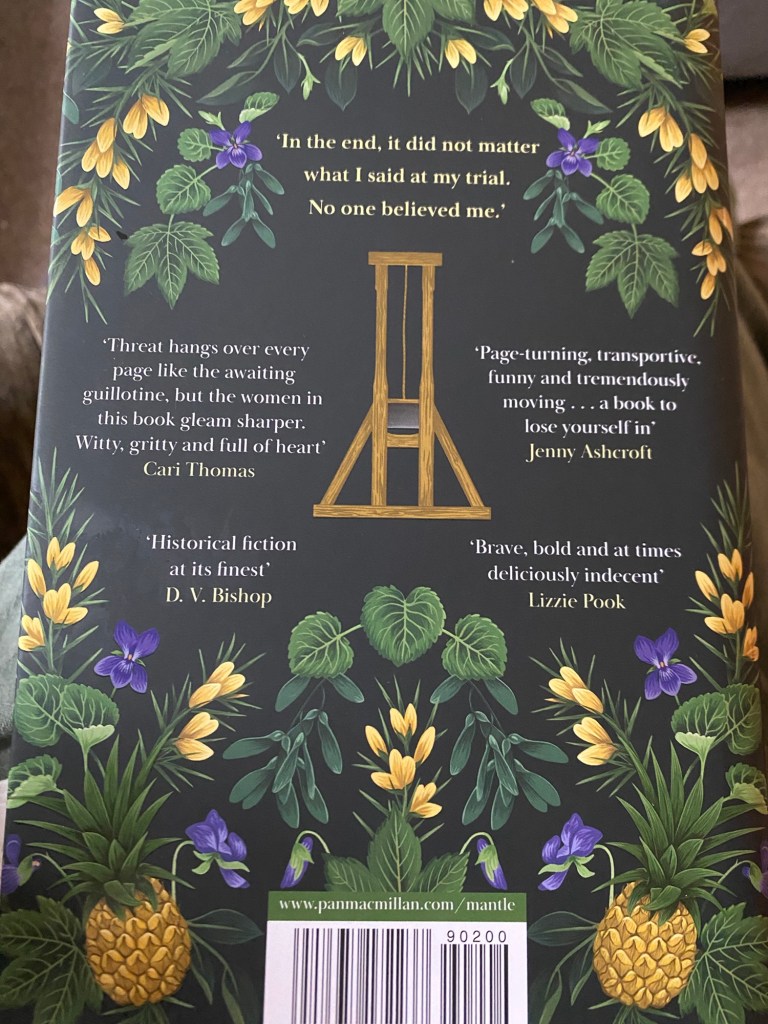
Out now in paperback. Pictured copy is the Waterstones special signed edition.

Meet the Author

Kate Foster has been a national newspaper journalist for over twenty years. Growing up in Edinburgh, she became fascinated by its history and often uses it as inspiration for her stories. The Maiden won the Bloody Scotland Pitch Perfect 2020 prize for new writers. She lives in Edinburgh with her two children.

Kate’s new novel The King’s Watch is out on 6th June and is a Squad POD Collective book club pick for next month.

Posted in Netgalley, Publisher Proof

The Small Museum by Jody Cooksley

A shiver thrilled my spine at the thought of what might be contained in collections to be kept away from ordinary eyes…

London, 1873. Madeleine Brewster’s marriage to Dr Lucius Everley was meant to be the solution to her family’s sullied reputation. After all, Lucius is a well-respected collector of natural curiosities. His ‘Small Museum’ of bones and specimens in jars is his pride and joy, although firmly kept under lock and key. His sister Grace’s philanthropic work with fallen women is also highly laudable.

However, Maddie soon finds herself unwelcome in what is meant to be her new home. The more she learns about both Lucius and Grace, the more she suspects that unimaginable horrors lie behind their polished reputations.

Framed for a crime that would take her to the gallows and leave the Everleys free to continue their dark schemes, Maddie’s only hope is her friend Caroline. She will do anything to prove Maddie’s innocence before the trial reaches its fatal conclusion.

When choosing novels I have two favourite genres, historical and crime fiction. Author Jody Cooksley has combined the two in his compelling novel that was the winner of the Caledonia Novel Award. In Victorian London 1873, Madeleine Brewster, the daughter of a doctor, is courted by Dr. Lucius Everly a man seemingly intent on finding the missing link that will prove the evolutionary step between fish and mammals. He collects fossils and curiosities at his London home, hidden away in his ‘Small Museum’. His sister Grace undertakes work with fallen women at a house called The Evergreens which is held in high regard.

Madeleine accepts his proposal, imagining her life as a doctor’s wife will be similar to that of her mother and father. However, when she reaches her new home, life is very different to what she expected. She feels unwelcome in her new home, with housekeeper and gardener Mr and Mrs Barker seemingly in charge, keeping exactly the same routine from when Lucius’s father was alive. There is no space for her to organise or manage her own house and if it isn’t the Barkers, her sister-in-law Grace drops in unannounced and chooses the drapes or orders tea as if she is the mistress of the house, despite having her own. Having dreaded the wedding night, Lucius begs her forgiveness for his tiredness and departs to his own bedroom. Despite their reputations, Madeleine starts to suspect Lucius and Grace of unimaginable horrors. She hears a baby’s cry in the night, her husband arguing with his sister and items seem to appear and disappear from her room with alarming regularity. Despite trying to help her husband in his work and fitting in with the Barker’s schedule, Madeleine finds herself labelled as ‘nervous’ and then framed for the most terrible of crimes. A crime she did not commit. As she faces a trial Madeleine’s only hope is her friend Caroline, but can she prove her friend’s innocence before she is hanged?

This was an absolute cracker of a gothic mystery with a heroine who is in a terrible catch 22; either shut-up and be complicit in something horrific, or keep asking questions and be labelled mad by her in-laws. She is utterly powerless, but tries everything within her limited options to improve her situation. Madeleine is intelligent and no one could say she hasn’t tried in her marriage. When finally Lucius does come to her room it is a perfunctory act where she might as well have been an inanimate object. She tries to get used to these new couplings but there is certainly no love or even tenderness in it. The outcome is further tragedy for Madeleine and a means for Lucius to control her movements even further and an excuse for their nightly encounters to stop. Once physically recovered, she tries to use the only gift she has, her ability to draw in a style that would work for scientific illustrations. She is then let into Lucius’s small museum, a veritable treasure trove of nature’s oddities and anomalies, but also bleached bones of various different creatures that he hopes will prove his theory that fish developed into birds and mammals. He is gratified that Madeleine has a strong stomach, able to converse freely about the best ways of bleaching bone. He has lost many a servant girl who accidentally discovered the museum or his workshop where he prepares the animals whose bones he uses. They embark on a trip to Dorset together where he is showing his latest finds to his peers and Madeleine hopes they will enjoy combing the beach for fossils and she can do some more sketching. However, she has underestimated Lucius’s fanaticism about his theory and the terrible lengths he will go to in order to prove it.

The author brings all of these strands together beautifully, the glimpses into the past finally catching up with the present and Madeleine’s terrifying predicament. Will she be found guilty of infanticide? Caroline is desperately trying to uncover the truth and proves herself to be an incredibly loyal friend. I had so many questions as the book neared it’s end and the tension was riveting. Was Madeleine really seeing her sister Rebecca in the streets around Evergreens? Were items genuinely disappearing and appearing in her room? Was she sane or had she succumbed to mental illness? What were the noises in the house at night and can she really hear a baby crying? In fact the answers involved new maid Tizzy, a down to earth girl who’d had her baby at Evergreens and she provides an incredible light bulb moment! Everything around me disappeared (including the housework and cooking tea) as the first glimmer of truth came to light. I had to finish this book right now! I loved the elements of feminist thinking that were brought into the text including the use of Christina Rosetti’s poem ‘Goblin Market’ which tells of men who will take away and ruin any young maiden who isn’t on her guard:

‘Dear you should not stay so late, Twilight is not good for maidens; Should not loiter in the glen In the haunts of goblin men.

‘Goblin Market’,Christina Rosetti, 1862

Rossetti worked as a volunteer in a religious house helping ‘fallen women’ for eleven years, women like Tizzy and Madeleine’s sister Rebecca. Although Rebecca is seen as the fallen woman by respectable people, Madeleine realises that her own marriage simply gives her a mask of respectability. It does not mean they are happy, in fact it disguises what is truly going on behind closed doors. She knows it would take irrefutable evidence to save her and this is why she is in utter despair during her trial. She can’t imagine anyone breaking through that polite veneer of respectability to help her, because they risk their own reputation. Yet she needs someone respectable to vouch for her because housemaids and fallen women hold no power. Caroline is a liminal person in this respect, she is accepted in society as the daughter and wife of doctors, but her father and Ambrose are psychiatrists, dismissed as ‘mind benders’ by Lucius and this sets them apart. They’re respectable enough to be believed, but not so restricted by their standing in society that they daren’t speak up. Caroline is well aware of how powerless women are and the fates that can befall them. When she first sees marks on Madeleine’s wrists she knows she’s seen them before, on Ambrose’s recovering patients; ‘they were women too’. I loved Madeleine’s relationship with Tizzy too, they clicked immediately and talked with a freedom Madeleine’s never had before. She is her one friend in a house where the wife’s place is to keep quiet and only appear when necessary. All in all, this is a really well written and researched novel with all the ingredients I love in an historical novel: a fantastic sense of time and place; strong female characters that break through the Victorian ‘Angel in the House’ stereotype; those Gothic elements to bring a sense of mystery. Then added to this are the addictive twists and turns of a crime novel. What an incredible debut this is!

Out now from Allison and Busby.

Meet the Author

Jody Cooksley is an author represented by literary agent Charlotte Seymour at Johnson & Alcock.

In 2023 she won the Caledonia Novel Award with The Small Museum, a chilling Victorian thriller that’s due for publication with Allison&Busby in May 2024. Sequel to follow in 2025.

Previous novels include award-nominated The Glass House, a fictional account of Victorian pioneer photographer, Julia Margaret Cameron (Cinnamon Press, 2020), and How to Keep Well in Wartime (Cinnamon Press, 2022)

She is currently working hard on her next novel, another Victorian gothic set by The Thames. She has previously published essays, short stories and flash fiction.

Jody works in communications and lives in Surrey with her husband, two sons, two forest cats and a dangerous mountain of books.

Posted in Netgalley

The Mysterious Death of Katherine Parr by June Woolerton.

What killed Katherine Parr? She was the ultimate Tudor survivor, the queen who managed to outwit and outlive Henry VIII. Yet just over eighteen months after his passing, Katherine Parr was dead. She had been one of the most powerful people in the country, even ruling England for her royal husband, yet she had died hundreds of miles from court and been quickly buried in a tiny chapel with few royal trappings. Her grave was lost for centuries only for her corpse to be mutilated after it was rediscovered during a tea party. The death of Katherine Parr is one of the strangest of any royals – and one of the most mysterious. The final days of Henry VIII’s last queen included a faithless husband and rumours of a royal affair while the weeks after her funeral swirled with whispers of poison and murder. The Mysterious Death of Katherine Parr dives into the calamitous and tumultuous events leading up to the last hours of a once powerful queen and the bizarre happenings that followed her passing. From the elaborate embalming of her body, that left it in a state of perfect preservation for almost three centuries despite a burial just yards from her place of death, to the still unexplained disappearance, without trace, of her baby, the many questions surrounding the death of Queen Katherine are examined in a new light. This brand new book from royal author and historian June Woolerton brings together, for the first time, all the known accounts of the strange rediscovery of Katherine’s tomb and the even odder decision to leave it open to the elements and graverobbers for decades to ask – how did Katherine Parr really die?

I do have a fascination with the Tudors and the life of Katherine Parr is one of the more interesting out of all Henry VIII’s wives. Most people focus in on the King’s ‘Great Matter’, which is what advisors called his apparent mental and spiritual battle around his marriage to Katherine of Aragon. A cover-up for the fact he wanted to dispense with a wife who would no longer give him heirs, preferably as quickly as possible and move on to his proposed mistress Anne Boleyn. The ‘Great Matter’ was simply an excuse for divorce and if only Katherine had gone quietly. As it was it didn’t take long for Anne to be out of favour too, but sadly Katherine was too ill to enjoy her replacement’s fall from grace. A few years later, Anne of Cleves would go quietly and in doing so received great favour from Henry and Anne Boleyn’s childhood home of Hever Castle. She was the most shrewd of the wives. It is Anne of Cleves and Katherine Parr that most see as escaping Henry’s barbarous habits of killing off his wives, but Katherine’s life after Henry was far from rosy. I always feel desperately sorry for this woman who loved a man from a very young age, but could never have him because of being married off to various old and infirm men who she nursed till their deaths. Katherine’s entire life is often reduced to these marriages, especially the last two; King Henry who she couldn’t refuse and finally, after Henry’s death, the love match she had always wanted with Thomas Seymour. There are various strange aspects to this last marriage, but the men she married are not really the sum of this intelligent and witty woman.

Courtiers saw Katherine’s marriage to Thomas Seymour as proof that the Queen had intelligence but absolutely no common sense, full of passion for a younger man who was certainly not worthy of her. In this book the author intends to uncover more about this interesting woman, by looking at the circumstances of her death and her burial place. The author clearly has a passion for her subject and has written the book like a true crime novel. This makes it compelling and meant I read it in a day when I was unwell in bed. The opening chapter was well written and placed perfectly to grab the reader and lead them into the mystery by looking at several odd events in the last twenty months of her life. I had always assumed that she’d married Seymour so quickly after Henry’s death, because she didn’t want to wait and be proposed to by someone else she couldn’t refuse. It is often mooted that she wanted to finally have some fun after dealing with an ailing Henry and the terrible ulcer that he received in a much earlier jousting match. The ulcer never healed fully and.was often weeping and painful. It is likely that sepsis from this infected leg eventually killed him. However, the author questions these long accepted facts as well as the assumption that her death was due to childbed fever. From my own reading I was aware of some of the information the author presents here. For example, before Henry’s death Katherine was the wife who managed to reunite him with his children. Most sources mention the close relationship she had with Elizabeth, possibly because Elizabeth left court to live with her stepmother in Gloucester after her father’s death. She also wrote regularly to Mary and Edward, convincing the King to invite his children to court and have them around him in his final years. Edward was of course the son of Henry and his third wife Jane Seymour, making Thomas Seymour the King’s uncle as soon as Edward took the throne. This made Thomas powerful, but it was also suggested he wouldn’t want a dowager Queen still of marriageable age interfering with his protectorship of Edward. What better way to take control than to become her husband?

Another rumour I’ve read in several history books and novels is that Thomas Seymour had his eyes on a much greater prize. Eventually, Edward’s reign would pass on to one of his sisters – an event that might come sooner than most expected since the young king was known to be frail. The Protestant Seymour’s would not want the Catholic Mary taking the throne, so if Thomas could get into the orbit of Elizabeth and start to influence her – no better than grooming – he could go from the King’s Uncle to the Queen’s Consort. I’ve read that Katherine Parr had a difficult pregnancy, with bed rest being recommended for many months. This left Thomas Seymour unoccupied and unsatisfied. He struck up a rapport with the Princess who was only a teenager. Elizabeth’s nurse Kat Ashley observed that he might pop into the princess’s bed chamber and was found ticking her when she was still in her night clothes. Kat made sure she didn’t leave Elizabeth alone for too long, but it is possible that the damage was done. Some sources suggest an absence for the princess not long after Katherine’s confinement. Could the teenage Elizabeth have been pregnant?

It’s only recently while watching a programme on Henry’s queens that I found out about that Katherine’s body had laid in a near perfect state for centuries. This was a fascinating part of the book that detailed the elaborate process of embalming and being interred in lead lined sheets before being placed in her coffin. All this was carried out with unseemly haste only 24 hours after her death from puerperal fever. She was buried only yards from her home of Sudeley Castle in the chapel. Over the years the chapel fell into disrepair and was removed, leaving no marker for her grave – a strange state of affairs for a woman who had been Queen. Her resting place forgotten, it was centuries later when Katherine was disinterred and so well preserved that her body was still perfect. At this point the grave was opened and keepsakes taken from her body, including a section of the lead sheet she was wrapped in. This was a terrible mistake and the natural process of decay followed very quickly. The grave was subject to further vandalism and investigation in a terribly undignified succession of events, including being left in the open on a rubbish heap! It took several decades and more indignities before a rector decided to disinter the Queen one last time and bury her where no one could get to the body again. Finally Katherine was at peace. However, for me the most pressing question about those final years of Katherine’s life is what happened to her daughter Mary, still a newborn baby when Katherine died. The author goes some way towards answering this mystery and shedding new light on Katherine’s final days. I thoroughly enjoyed the new light the author shed on why the Queen might have married Seymour, only months after Henry’s death. I found this new perspective speculative with little evidence to back it up, but it was still an interesting and valid theory.

I found some of the book a little disjointed as well as repetitive. The author jumped around from parts of Katherine’s life which was fine if you knew some of her story. However, if you didn’t the it might be harder to keep up. The author uses repetition and reminders about facts already established in other parts of the book, but for those who’ve read a lot of Tudor history or just have a good memory the reminders were a bit wearing and unnecessary. I do think that as a whole the book provides a thorough and well researched biographical introduction to Katherine. It’s also interesting enough to spark some thoughts for any lover of Tudor history. It also poses important questions about the final 20 months of her life and some I’d never considered, such as why she left court and moved to Gloucestershire far away from her allies and courtly circle? Was the description of her marriage to Seymour as a love match really justified? What was the full medical cause of death? Why was her burial so quick with a state funeral not even considered? I thought the author explored these questions well, as well as Katherine’s relationship with Edward and Mary, her other stepchildren who she wrote to regularly. It’s also interesting to read about her Protestant beliefs and how they led to her being the first woman and Queen to publish a book on her faith. I found this book mostly well researched and gave me new insights into her death, although the whereabouts of her daughter still remains a mystery. It is thought that Mary was entrusted to a noble woman and died in infancy, but that isn’t a proven fact. Also Katherine’s Protestant beliefs were more clearly explained, as was her power at the court before her royal marriage. It left me with a healthy respect for Katherine that I hadn’t had before and despite some repetition I learned some new facts about her life. Katherine Parr was certainly much more than the nursemaid Queen we are led to believe and deserves to be more than a footnote in Tudor history.

Published by Pen and Sword History 4th April

Meet the Author

June Woolerton is an author and journalist who’s spent twenty years reporting on and writing about royalty and royal history. She’s the editor of a major royal website and has written extensively for magazines and publications on history’s most famous monarchies and rulers as well as presenting podcasts and radio shows on royalty. In 2022, her book A History of Royal Jubilees was published. After graduating in history, she enjoyed a broadcasting career before moving into print and obtaining a degree in psychology. She lives near London with her husband and young son.

Posted in Netgalley

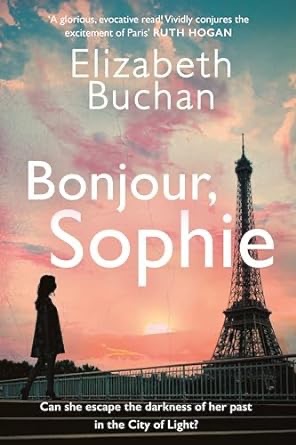
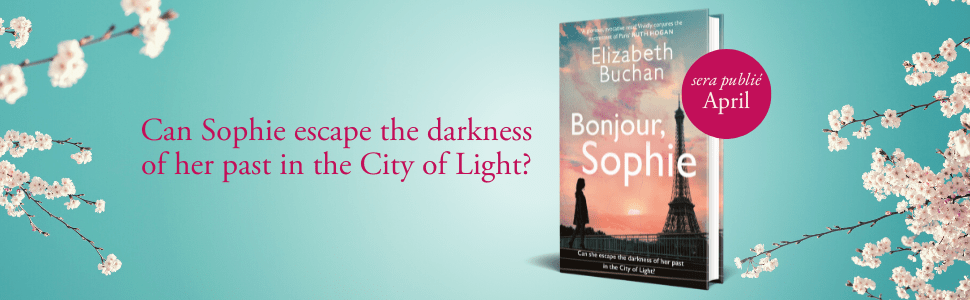
Bonjour Sophie by Elizabeth Buchan

Can she escape the darkness of her past in the City of Light?

It’s 1959 and time for eighteen-year-old Sophie’s real life to start. Her existence in the village of Poynsdean, Sussex, with her austere foster-father, the Reverend Osbert Knox, and his frustrated wife Alice, is stultifying. She finds diversion and excitement in a love affair, but soon realizes that if she wants to live life on a bigger canvas she must take matters into her own hands.

She dreams of escape to Paris, the wartime home her French mother fled before her birth. Getting there will take spirit and ingenuity, but it will be her chance to discover more about her family background, and, perhaps, to find a place where she can finally belong.

When Sophie eventually arrives in the Paris arising from the ashes of the war, it’s both everything she imagined, and not at all what she expected…

Most readers will know I have a fascination for the period directly after WWI, but recently I’ve been looking at books and films that have explored the aftermath of WW2. Originally I watched a film called The Aftermath starring the brilliant Jason Clarke and Alexander Skaarsgaard that followed a British colonel posted out to Nuremberg after the war ends. His job is to help rebuild and I remember being shocked that people were living in homes where their outer walls were missing, almost like looking into a doll’s house. Since then I’ve read novels set in the occupied countries like Poland and France and gaining other viewpoints makes you remember that the majority of people are caught up in a war they don’t want to fight, are tormented with memories of things they’ve done to survive and are still waiting for the return of those they love. I think we imagine that once the war was over, everything went back to normal, but that was far from the truth. Prisoners of war were kept, by us, for several years after the war ended, rationing only ended in 1954 and we were still rebuilding London till the mid 1970’s. It’s in this aftermath that we meet our heroine Sophie, just finishing boarding school in England with her friend Hettie. Sophie has a complicated past and her school years have been a temporary period of fun and friendship. Now she must return to the home and parish of clergyman Osbert Knox, an English village where her French mother ended up in dire straits during the war. Camille was pregnant and had fled Paris during the occupation, leaving behind Sophie’s father who was fighting in the Resistance. Lucky for the Knoxes, Camille had great housekeeping skills and she repaid their kindness in cooking, cleaning and implementing a household system that enabled them to concentrate on their parishioners. Sadly, Camille died and now the Knoxes are expecting Sophie to return from school and pick up where her mother left off, learning to keep house and support the couple. Sophie needs to earn back her keep and education, only then will Osbert return her mother’s precious savings book. This was money that Camille managed to save from her meagre allowance, knowing that Sophie would need something to restart her life with. Sophie dreams of returning to Paris, the home of her parents, but there’s only problem. She is sure that money is being taken from her mother’s savings. So she makes a decision to bring her escape forward, to find the savings book and flee with whatever is left to France and look for her father.

Sophie is a resilient girl, intelligent and able to read people. She doesn’t trust Osbert, but is still horrified to find that he expects her thanks to extend to much more than cooking and cleaning. Now she must escape and sooner rather than later. Sophie wants to build an independent life for herself, full of new experiences. She isn’t afraid about change, she’s quite matter of fact about those experiences she wants to try. She has a friendship with Johnny from the nearby farm and plans to lose her virginity with him, rationalising that it’s something she wants to get out of the way. This ability to single out what she wants and succeed in getting it will stand her in good stead once she gets to Paris. She has a deep yearning to connect with her history, even if her father hasn’t survived, she wants to know what he did during the war. Was he the hero that her mother painted him to be? Sophie knows that the scars of war run deep, that her father might have done terrible things to survive. The author writes about the moral compromises people make in war without judgement, allowing the reader to make their own decisions, but also reinforcing the point that no one knows what they’re capable of until they’re under duress. Finding her father isn’t easy though. She takes work in an art gallery and uses her wage to hire a private investigator. She finds out about the paintings looted from Jewish families during the occupation, removed by the Germans as the owners were transferred to concentration camps. However there were French collectors and gallery owners who collaborated in these deals, using a terrible atrocity as a business opportunity. She also finds that there are so many people looking for someone: husbands who never returned from the battlefield but are not amongst the dead; resistance fighters executed and thrown in a shallow grave; women killed for their collaboration with German soldiers during the war. There are vendettas and grudges still playing out and Sophie is warned that she might not like what she finds. Some secrets should remain buried. The buildings in Paris echo the the trauma still felt by the people, from a distance they look okay but close up it’s clear that there’s been no maintenance. The paintwork is peeling and the stone is damaged, but there is still beauty.

I really enjoyed the friendship between Sophie and Hettie, who has returned home to constraints of her own. She is trapped in within the expectations of her parents and her class. Hattie is expected to be a ‘deb’ and be presented for the London season. If she shines she might attract the right sort of husband. Her only route is marriage and children, no independence or career path. She has to be engaging but not appear too clever and put suitors off. Neither girl has any type of sex education, is not allowed her own bank account or make decisions about her own fertility. It’s scary to me that a lot of these restrictions lasted into my mother’s lifetime! Thankfully Hettie has a belated rebellion. I loved that the girl’s friendship lasts a lifetime and they give each other support and strength. This feel like a transitional period in time, where the world is trying to recover from war and it was a huge realisation to me that it took this long. I remembered reading that it was Ed Balls who, as chancellor, paid the final debts from WW2 and being so shocked. It takes people a lot longer to heal and return to themselves. My own father in law took many years after WW2 moving from the Siberian forest through the Middle East and North Africa and into Europe. He eventually settled in London, but his wartime experience still haunted him when he lived with us in the 2000s. I think Elizabeth Buchan has a way of writing about how we come to terms with generational trauma like this. Here she has mixed a thoughtful and complex historical period with a coming of age story. Just as Sophie is becoming a woman, the country she escapes to is also in the midst of a change. It is by finding out about WW2 and the terrible stories of living in Paris under occupation that she starts to understand her parent’s story and the courageous choices they made. Despite the pain and loss, Sophie’s experiences have a joy about them as she attempts to build herself a life with resilience and happiness. Buchan’s writing always has a melancholic, bittersweet feel. There’s a sense that life and the greater world are imperfect, even dangerous, but we can still live happily within it.

Out now from Corvus Books

Meet the Author

Elizabeth Buchan was a fiction editor at Random House before leaving to write full time. Her novels include the prize-winning Consider the Lily, international bestseller Revenge of the Middle-Aged Woman, The New Mrs Clifton and Two Women in Rome. Buchan’s short stories are broadcast on BBC Radio 4 and published in magazines. She has reviewed for the Sunday Times, The Times and the Daily Mail, and has chaired the Betty Trask and Desmond Elliot literary prizes. She was a judge for the Whitbread First Novel Award and for the 2014 Costa Novel Award. She is a patron of the Guildford Book Festival and co-founder of the Clapham Book Festival.

Posted in Squad Pod

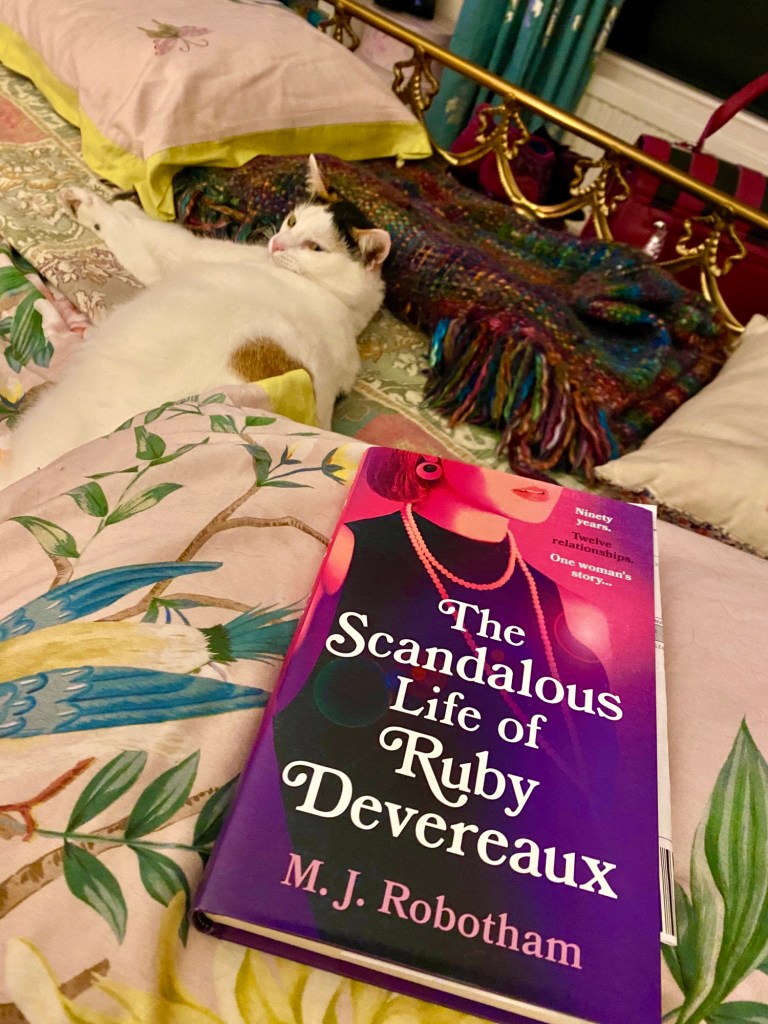
The Scandalous Life of Ruby Devereaux by MJ Robotham

Everyone knows Ruby Devereaux’s books. But no one knows her story… until now.

From a teenager in wartime England to a veteran of modern-day London – via 1950’s New York, the Swinging Sixties, Cold War Berlin, Venice and Vietnam – Ruby Devereaux has lived one hell of a life: parties, scandals and conflict zones, meeting men and adventure along the way. In a writing career spanning seven decades and more than twenty books, she’s distilled everything into her work. Or has she?

There were times during this novel where I wished I was the transcriber in the room, just so I could be the first to hear this lifetime of stories. Ruby Devereaux’s editor is under pressure from above. Ruby is almost 90 years old and the publisher is determined to get the one last book she owes them. So her editor suggests that she closes her illustrious writing career with a memoir. Ruby was on the verge of packing up her typewriter, but she does perhaps have one story left in her, or maybe twelve…

The bulk of the book is Ruby’s memoir as told to her transcriptionist Jude, each chapter named after a man in her life and telling the story of their relationship. Although it’s not as simple as that, through these affairs she takes us through the latter half of the 20th Century and right across the world. It takes us through one woman’s history, but also the ever changing landscape of the world around her, taking in those unforgettable moments and some fascinating social history too. I used to be fascinated with my 90 year old grandmother and the changes she’d seen over a lifetime in the countryside: from horse drawn ploughs to huge tractors; from cycling everywhere to her children owning cars; from handwritten letters to online communication. This has similar vibes, but on a bigger scale as Ruby moves from peacetime to war and across three continents with the world constantly changing beneath her. The author weaves together the social history, world events and Ruby’s growing up with romance and scandal. Ruby has spent seventy years telling her character’s stories, but now it’s time for her own. It’s definitely a life well lived as it’s taken her to the 1950’s New York of the Mad Men, Berlin and Budapest during the Cold War, into Vietnam and into relationships with twelve different men. These are the men who’ve inspired her novels. Make no mistake though, this isn’t really about the men in her life, this is about Ruby. Each relationship captures where Ruby is at that point in her life; a chapter in her personal growth. Ruby easily outshines her male counterparts because she has such a zest for life and breaks society’s rules and expectations about women everywhere she goes. As a young girl in post-war England she’s very matter of fact about her first sexual experience, wanting it out of the way before she leaves home. She’s an incredibly resilient character, despite experiencing loss and heartbreak at a very young age. She makes a promise to herself and the person she’s lost to keep going, grabbing opportunities whenever they arise. Never realising that all along she’s writing the most exciting story she’ll ever tell.

It’s this resilience and insistence on saying yes to experiences that take her across the globe. Starting in London, she lives and falls in love in the romantic city of Venice, via a terrible experience in New York that spawns her second book. She then explores Saigon and Budapest, before finally ending up in Cornwall. She spends time in a commune, dabbles in the world of spying and has assignments in war zones. Just as in her love life, she’s tough and doesn’t dwell on failures or knock backs, she chalks it up to experience and moves on. There is a danger of some of the men in her life becoming a mere backdrop to Ruby and her escapades, it’s very hard to keep up with her energy. However the later sections in England felt a little more detailed and because they’re not as filled with adventures, the men have more room to develop. Their relationships with Ruby feel deeper and more real. Ruby is always at the centre though and I loved following her character development. We can see which experiences have given her strength and a sense of boundaries. I love a scandal so this was definitely a fun romp in parts, whilst also having a sense of reflection and self-awareness as Ruby becomes an older lady. There’s a bravery in her willingness to share her life, particularly her emotions and those difficult parts of her life – relationships that went wrong, the loss, motherhood and her mental health. However, despite this we’re caught up in Ruby’s humour and ability to heal. I think the author has created a brilliant character and blended actual history with her life very well. Ruby is such an incredibly memorable character and I enjoyed spending time in her company.

Published by Aria 11th April 2024

Meet the Author

M J Robotham had wanted to write from a very young age, inspired by the book ‘Harriet the Spy’. However life got in the way and it was journalism and having a family keeping her occupied. She was a midwife for several years, but started to write seriously after completing an MA in Creative Writing. her first novel was A Woman of War followed by The Secret Messenger set in occupied Venice.

Her next two books were set in pre and post war Berlin, then wartime Norway, both are places she loves to visit. In her spare time she visits the gym, to knit unusual things and enjoys the music of Jack Savoretti,

Posted in Netgalley, Publisher Proof

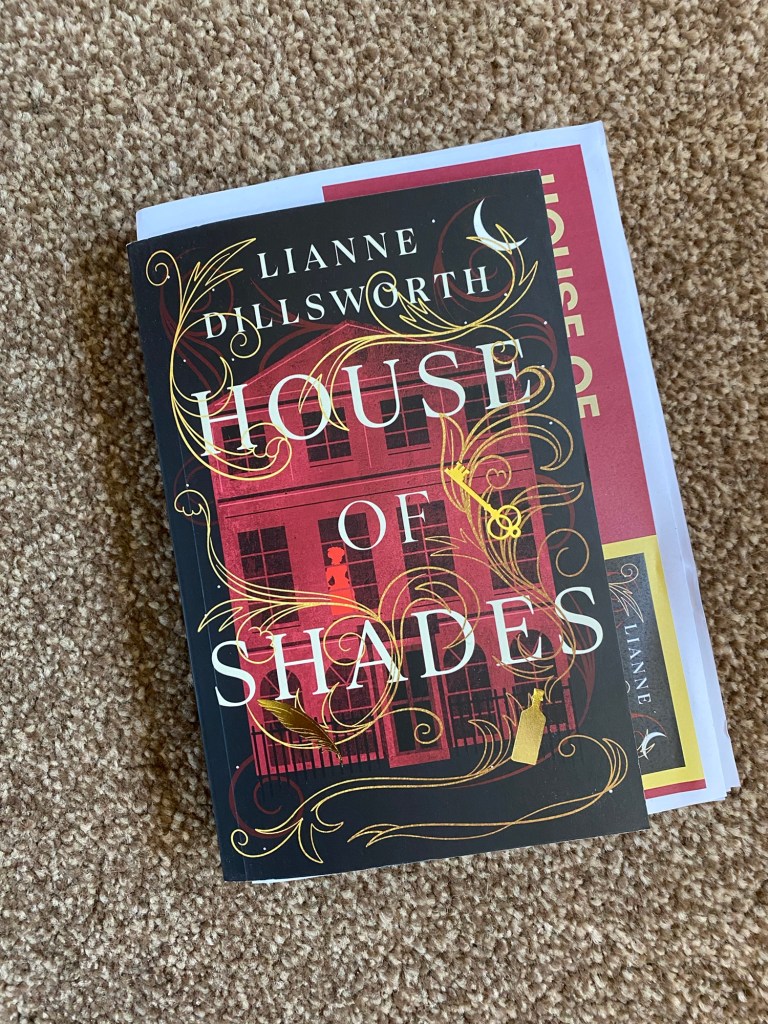
House of Shades by Lianne Dillsworth

Hester is a doctoress, using her mother’s skills and recipes to treat the ladies of the night around her Kings Cross home. She’s offered a commission to work in the Fitzrovia home of Gervaise Cherville, a rich factory owner with declining health.

If Hester can diagnose and treat his illness he will pay her ten pounds, a life changing amount of money in 1833. Thinking that the fee will help them move to a better area of London, she leaves behind husband Jos and slightly wild sister, Willa, to work at Tall Trees the Cherville mansion. However there’s a dark energy in this old house, as if there’s a curse on Cherville and his mansion.He asks if Hester will track down two women who worked in the house – Aphrodite and Artemis. However, they weren’t servants but slaves and Cherville’s treatment of them torments him and keeps him awake at night. If Hester can find the women, allowing him to make reparation before he dies, he will raise her fee to twenty pounds. Hester is torn, twenty pounds would allow them to move to the country, removing Willa from the temptations that keep her out at night. Yet, will these women want to found, especially given Cherville’s abuses of power? Also, can Hester as a black woman, put another black women in danger without the consequences being on her conscience forever?

Inheritance is a huge theme in the novel and especially, the way in which characters receive their portion. Of course an inheritance isn’t always financial and the intentions of the giver play a large part in what it can do. Hester’s mother has given her an incredible inheritance, her doctoress’s bag of herbs and potions that can ease sicknesses of the mind and body. This of course helps her earn a living, tending to the prostitutes around their part of town at night. Kings Cross is known as a red light district and Hester tends to their venereal diseases, but also their bruises when men take what they want without paying. However, she also has the keeping of her younger sister Willa which isn’t easy. Willa is wild, easily led and naive when it comes to the intentions of men. Hester’s husband Jos finds it difficult living with Willa, especially when the sisters are at odds with each other. Willa works at the Cherville’s factory and has been noticed by Gervaise Cherville’s son, Rowland. It’s clear to Hester that his intentions aren’t honourable, but can she convince her headstrong sister that he isn’t as in love with her as he claims? When working at the Cherville’s house can she stop Rowland from recognising who she is, while also taking care that he doesn’t put undue influence on his father. Rowland isn’t happy with Gervaise giving away ‘his money’ in reparations, after all their plantation has hundreds of slaves and where will his charity end?

I loved the double meaning of the title House of Shades; the shades or ghosts of the past play their part here, especially in the mahogany furniture Cherville had made from the trees on the plantation. However, it also refers to shades of skin colour. I loved how the author explored the concept of ‘passing’ and colourism, especially in the light skinned character Lady Raine. Hester herself is very dark skinned, a colour that immediately places her in an unusual category. Her position as a doctoress situates her far higher in a house’s hierarchy than we might expect. There would be darker skinned slaves on Cherville’s plantation who are confined to working in the fields and bear the brunt of the ill treatment meted out, whereas those slaves considered lighter skinned might get to work in the household. Traditionally house slaves were thought to be higher in status than field workers, but whereas field workers get to leave the crops and spend time with their families in the village in he evenings, house slaves are at the beck and call of their master or mistress and even sleep in the house away from their families. They’re also closer to the male family members and therefore very vulnerable. There is a moment where Margaret is startled when she bumps into Hester on the landing, lurking in the darkness. She would only expect to meet servants of her own status on the master’s floor, not a black woman with her herbs and potions. I wondered how light skinned Willa was, to make her ‘palatable’ to Rowland Cherville, who appears to think slaves are expendable. He certainly doesn’t want them taking ‘his’ money.

Reparations are a huge theme in the novel and potentially the cause of Gervaise Cherville’s illness, as he admits the concerns and guilt around his treatment of slaves. Could his disturbing symptoms of insomnia, hallucinations and sleepwalking be put down to the end stage syphillis he’s suffering, or are the women he’s wronged in that house haunting him? When Hester first finds a dark, cold room off the kitchen she feels straight away that this isn’t a cold larder. There’s something about the space that she can feel and isn’t remotely surprised that slaves were sleeping in there, deemed unfit to be housed in the attic rooms with the servants. If all he wants to do is make reparations and apologise would it help the women to hear it? Or will the mention of their former master be so terrifying it disturbs their lives and leads to them fleeing once again? I suspected Gervaise hadn’t told Hester all that transpired between him and the women, in fact I doubted he even fully understood the extent of what he’d done. Yet it was Rowland Cherville who made my blood run cold, not only is he entering into exploitative relationships with young women who work in his factory but he doesn’t appear to have any empathy at all. His entire focus is on his own needs. He refers to his father’s money as his own, even though his father is still alive, and seems to have no feeling for his illness or imminent death. In fact he’d rather his father died, before he’s able to give all his money away. He also cares nothing for any of the slaves on whose backs the factory, Tall Trees and his inheritance have been built. They’re simply incidental to his own plans.

I really enjoyed the way this novel took me into the reality of Victorian England for black women. It gave me a new perspective, after Lianne’s first novel which looked at the rise of freak shows and the display of black women’s bodies. The private showings being another insidious and secret experience like rich men using women as domestic slaves and the objects of their desire behind closed doors, while seeming like a respectable businessman to society. Yet, the freak shows seemed to be freer and more in the control of the individual performer. One of the things I hated most when I visited the Slavery Museum in Liverpool, was the taking away of identity, so the way Cherville gave his slaves the names of goddesses made me shiver. It shows his desire for them on one hand, while keeping them in a cupboard, locked away all night like animals. While Hester is searching for them I was wondering whether they’d found their identity again, reclaimed their names and found a space to be relatively free. I feared that they’d had to adopt yet another identity, to disappear, constantly looking over their shoulder. Hester is a heroine that it’s easy to become involved with and I really sympathised with her feeling of being in-between: torn between being a wife and a sister; between her patient and her fellow women; not a servant, but not entirely free either. There’s even a revelation that draws her further into the history of Tall Trees. I wanted a happy ending for Hester, that she might be able to leave London and live that simpler life she and Jos have been craving. This is another triumph for Lianne Dillsworth and neatly places her on the list of authors whose books I would buy without question in future.

Published on 16th May 2024 from Random House

Meet the Author

Lianne Dillsworth lives and works in London. She has always loved anything and everything to do with books and her earliest memories involve reading and being read to. At school Lianne’s favourite subjects were English and History, so when she started writing, historical fiction was a natural choice. In Theatre of Marvels, her debut novel, Lianne indulges her love for the Victorian period evoking London in all its mid-nineteenth century glory. She is currently working on her second book under the watchful eye of her tiny terrier.

Posted in Random Things Tours

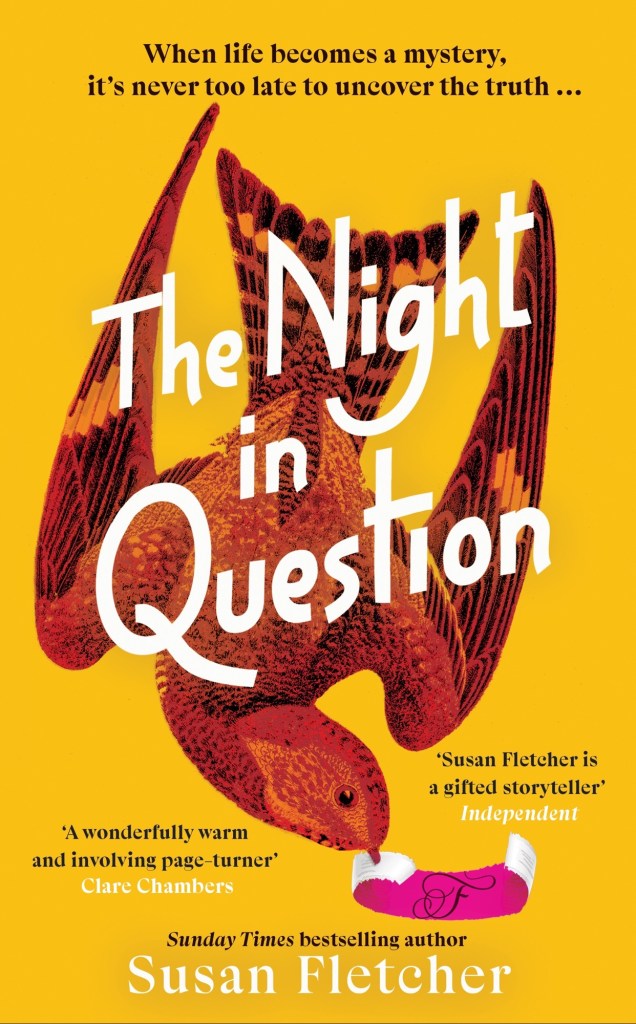
The Night in Question by Susan Fletcher

“Florrie learned, long ago, that society forgets an old person was ever young.”

When I was nineteen I started a summer job in a nursing home and went back to the work on and off for several years, both as a carer and an activities organiser. I was so fond of the first set of ladies I looked after, in fact I still have photos of them all and remember their quirks and their stories. I was deeply fond of Mary, an eighty year old lady with hair she could sit on. Other carers didn’t want to be bothered washing and drying her hair, but I loved it and would plait it for her and arrange it into the topknot she liked that left her looking like Little My from the Moomin books! She was convinced I was a boy, despite the dress that was our uniform. This was the nineties and I think she was confused by the crop I’d had, inspired by Demi Moore in Ghost. Having listened to a lot of stories from all my ladies, when I became an activities organiser I was determined to show carers that the people they looked after had once been young and full of dreams too. So many times I’d watched carers get someone out of bed and talk over them to each other instead of including them in their conversation. I worked with each resident on collecting photos and telling stories about their lives for a display that would hang outside the door on their room. It would give carers and visitors subjects to ask about but also help them see people instead of bodies. This lovely, gentle novel from Susan Fletcher reminded me of these times and some of the stories I uncovered from the residents I worked with – amazing, heart-breaking and life changing stories. Florrie Butterfield is one such resident. At the age of 87 and after losing her leg, she has decided to take charge of her future and move into a rather smart residential home called Babbington Hall, set within the beautiful Oxfordshire countryside with a church nearby. She’s now a wheelchair user, but still wants to keep some independence so chooses a place where she can have a ‘suite’ allowing her to manage for herself as much as possible. Florrie has just settled in to her new home in a converted apple store when one of her new friends, Arthur, is found dead in the gardens.

Suffering a bout of insomnia later that night, Florrie decides to take a look at an advancing thunder storm and makes her way over to the window. As she throws open the window she hears a scream and something falls heavily from the third floor of the hall. When Florrie looks down she realises with horror that it is Renata Green, the home’s young manager. Surely she can’t have survived such a fall? In the ensuing moments Florrie is helped back to bed, with many entreaties from the staff not to stand and wander around. Inside she is cursing her disability, she wants to race up the stairs to Renata’s room immediately and find whoever pushed this lovely young woman to what must surely be her death. As the day goes on, she is interviewed by the police and is confused by their questioning, they seem to be suggesting that Renata was depressed and had nothing to live for in the lead up to her fall. However, Florrie knows different, because that very day Renata had approached for for a discussion about matters of the heart. Renata was in love with someone and had singled out Florrie as a woman who might understand. Their exchange had made Florrie feel hopeful that she might make a friend, that she might be of some use. Renata chose her confidante well because Florrie does indeed have hidden depths. In her room is a box of keepsakes that remind her of the love affairs she’s had with some very different men. Florrie is pleased to be asked, charmed that Renata could see underneath her age and disability to the woman inside. The reader is taken on the journey into Florrie’s past lives and loves, while in the present she works alongside fellow resident Stanhope Jones to uncover the truth about what happened to Renata, treating it as attempted murder. She also hints at an incident in her past that she’s spent a lifetime trying to keep covered up, one night that looms so large in her life it splits it into before and after. Will we find out what happened on the night in question?

Florrie is a fascinating character and I loved that an elderly lady, who are often completely invisible to those younger than themselves, becomes our guide through this journey. She has a kindness and approachability about her that seems to set people at ease, but we shouldn’t let her sunny nature disarm us, because inside is a razor sharp mind. As she investigates the mystery I could see how good it was for her to have such a responsibility in her life again. Alongside the present mystery, we also get to know how Florrie reached this point in her life and I loved reading about her childhood, wondering which events shaped her into the woman she is today. There’s a depth and strength to her character that’s built up of so many layers and for me it was like working with a counselling client – while keeping the presenting issue in mind I delve deeply into the past, drawing out those events that have had the biggest impact and contribute to the client’s current problems. It’s rare to find book characters that are so reflective and self aware. The author also fills the rest of Babbington Hall with some interesting characters, each one detailed and with their own role in the community. While Florrie lives in her own apartment converted from an old apple store, residents with more complex needs are based within the main hall. There are those who are more introverted and keep to their own rooms, while others are the life and soul of the place. The so-called ‘Elwood twins’ keep the gossip mill in action, while simultaneously claiming that they never stick their nose where it isn’t wanted. Stanhope is also one of the more ambulant residents and is a great foil for Florrie, able to investigate parts of the home that Florrie can’t reach. She immediately dispatches him to Renata’s third floor room where she wants him to note the details of the crime scene and any clues to Renata’s last moments before the fall. He is equally unconvinced and confused as to why the police are willing to write the incident off as a fall. Florrie knows that any clues or evidence might be ruined if the staff get to Renata’s room first and start cleaning. However the only clue seems to be a single magenta envelope. It feels like Florrie has sensed a kindred spirit in this quietly spoken, kind woman who has found love in her forties. She wonders if Renata also has keepsakes that might hint at the person beyond her working role. Is she another woman who has lived an interesting life, grabbing hold of chances at love and adventure that might seem unexpected for someone so unassuming.

The pace and structure of the novel are perfectly crafted; the author reveals a little at a time, just enough to move the story along but keeping us waiting for the next clue. Florrie reveals her own story through the six loves of her life, from her diplomat husband of thirty years Victor Plumley, all the way back to her first love Teddy Silversmith. Of course Teddy was involved with ‘the night in question’, the happenings in Hackney that anchor this story and provide it’s title. Only when we know what happened that night and the cause of the scars on Florrie’s knuckles that have silvered with time, can we truly understand her life since. It was interesting to see that her childhood was governed by two very individual women, her mother Prudence who is probably best described as an eccentric and her Aunt Pip. Her father was a policeman, killed on duty when Florrie was very young and Aunt Pip moved in to help look after her and her older brother Bobs who was injured during WW2. It is lovely to read about Florrie’s relationship with her brother and how it changed after his return from war. We also find out that Aunt Pip left an abusive marriage to come live with them, showing a great strength and willingness to forge her own path that possibly brushed off on her niece. In all Florrie can count six loves in her unconventional life, all of whom are very different: the charming Gaston Duplantier who she meets in Paris: Jack Luckett, a very physical, good looking man in Africa; the mysterious sounding Hassan abu Zahra and Dougal Henderson. Through each love we learn about Florrie’s globe trotting life and her freedom of spirit, culminating in a wealth of experience and wisdom that might seem unexpected in the octogenarian lady she is now. It is these very experiences, that would probably go ignored by most younger people, that help Florrie and Stanhope solve the mystery of Renata’s ‘fall’. The author judges perfectly where to reveal the Hackney business, when it has most impact and brings a lump to the throat. It is a gift to be able to bring such depth and feeling to what could have been just another cozy crime novel about charming elderly residents playing detective. This book is so much more than that, revealing a rich and eventful life that could teach us so much about taking chances and not missing out on our potential. It also explores the corrosive nature of secrets, especially for the person holding on to them. I left Florrie the same way I used to feel after looking into the past with a resident – that I’d uncovered a treasure trove of experiences and met their young selves. I felt like I’d met a friend.

Meet the Author

Susan Fletcher was born in Birmingham and studied English Literature at the University of York. 

Whilst taking the MA in Creative Writing at the University of East Anglia, she began her first novel, Eve Green, which won the Whitbread First Novel Award (2004) and Betty Trask Prize (2005). Since then, Susan has written seven novels – whilst also supplementing her writing through various roles, including as a barperson, a cheesemonger and a warden for an archaeological excavation site near Hadrian’s Wall. Most recently, she has been a Royal Literary Fund Fellow at the University of Worcester.

She lives in Warwickshire. 

Thank you to Transworld Publishing, Alison Barrow, Susan Fletcher and Random Things Tours for inviting me to join the blog tour.