Posted in Publisher Proof

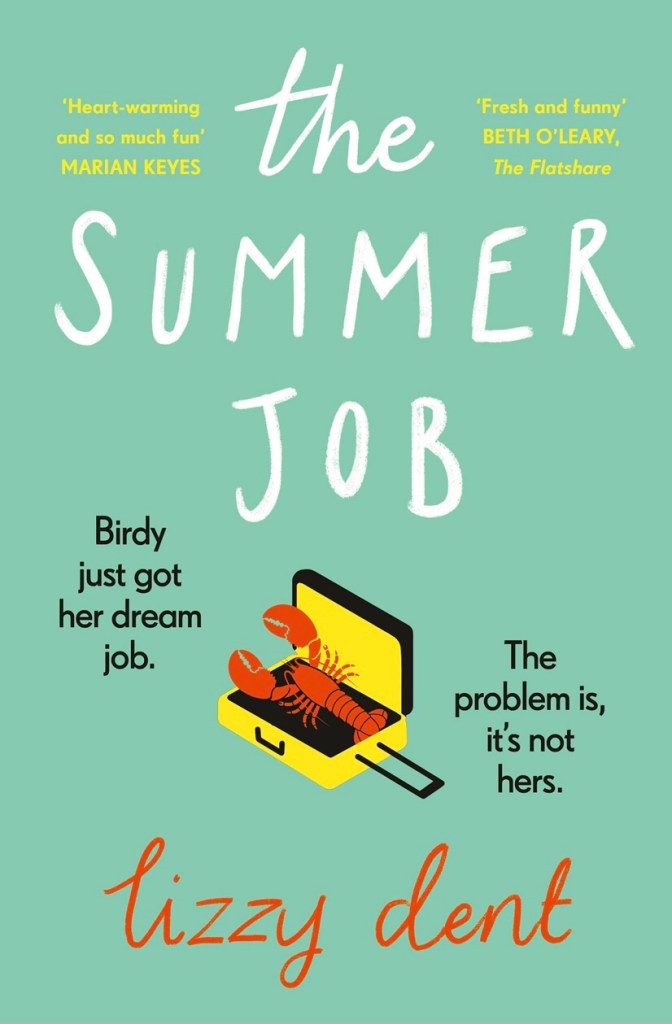
The Summer Job by Lizzy Dent.

I defy anyone to not fall in love with Elizabeth ‘Birdy’ Finch. She’s the fantastic literary creation I was rooting for so hard in this great novel from Lizzy Dent. Having had a tough upbringing in Plymouth, Birdy is pretty much alone in life, except for loyal friend Heather. She and Heather have been friends for life, understanding each other’s difficult family situations and providing undying support for each other. However, Heather’s family were financially better off than Birdy’s, so despite being without the emotional support and presence of her family, Heather has been able to rely on a financial cushion to train as a sommelier or wine expert, working in hospitality. Birdy hasn’t had the same education, so tends to drift from job to job without ever finding a passion of her own. Now, Heather is going to Italy with her current boyfriend and Birdy feels lost. With no sofas left to surf, Birdy may have to do the unthinkable and return to Plymouth, when an idea strikes her. Before the Italy opportunity, Heather had the chance of a summer job at a hotel near Loch Dorne in Scotland. For some reason, she’d been keen to go, then changed her mind. She gives Birdy tickets to the British Wine Awards at the Ritz and Birdy goes with her on/off boyfriend Tim. It’s there, where an idea takes shape. While wearing Heather’s name badge, Birdy runs into Irene – the manager of the Loch Dorne hotel. They get along and Birdy starts to wonder – could she do Heather’s job for the summer? It would take a lot of studying, but maybe she could pull it off and surely anything’s better than going back to Plymouth?

I loved the hotel and the surrounding Scottish scenery. The author describes the area with love and with such detail I could truly imagine it. The way Birdy connects with the place really surprises her. Having always lived in a city, Birdy has never really experienced being in nature and at first turns up in all the wrong clothes. Her first hike, which she undertakes in Converse trainers is a bit of a disaster as she sprains her ankle. Scotland’s beauty has a slow, but remarkable, effect on her mental health, seeming to soothe her anxiety and allow her to ‘be’. For someone with such a busy brain it’s amazing to see how she grows to love walking and travelling to Skye, both on her own at times. Birdy has never really been confident enough to do things on her own, but now she starts to try it, either hiking or going to the coast for fish and chips. It seems to give her the space and quiet she needs to sort things out in her own mind. She even tries foraging, horse riding and fishing! There’s a stillness about her when she’s outdoors that she’s never had before and perhaps a growing sense of belonging to this place.

Of course, her plan doesn’t go without incident and she’s permanently exhausted from studying the wine list in her room. Yet there is a new found confidence about her. She loves being part of this small team who work like a family. Nobody is without their weaknesses but they help each other along and they’re united in their concern about the executive chef Russell and his modern ideas. The pub has been redecorated and the menu changed from the ‘neeps, tatties and whiskey’ destination it was previously. The staff seem so pleased to have Heather there and she quickly makes friends. I could imagine how these people could become a little family for Birdy – if she hadn’t been deceiving them of course. There are just so many hurdles for her to jump, not to mention the little tiny spark of something she can feel with the chef James. Will she succeed and will this spark grow into something more real than Birdy’s used to?

Lizzy Dent is clearly astute when it comes to how a difficult start in life, can affect someone into adulthood. If the people who bring you into the world don’t love and value you it’s very hard to understand how anyone else might. Children whose parents neglect or emotionally abuse them, don’t wonder what’s wrong with their parents, they wonder what’s wrong with themselves. This is Birdy all over. She knows her family aren’t great, but yet she still can’t see the good in herself. Those moments Birdy has, when she’s walking in her new hiking boots or eating fish and chips on the harbour, are moments when she’s discovering her genuine self for the first time. As you read, you will be rooting for those seeds to grow. This book is absolutely joyous. So, if you’re going on holiday this summer, make sure you have this little gem packed in your hand luggage. You won’t regret it.

Meet The Author

Lizzy Dent (mis)spent her early twenties working in Scotland in hospitality, in a hotel not unlike the one in this novel. She somehow ended up in a glamorous job travelling the world creating content for various TV companies, including MTV, Channel 4, Cartoon Network, the BBC and ITV. But she always knew that writing was the thing she wanted to do, if only she could find the confidence. After publishing three young adult novels, she decided to write a novel that reflected the real women she knew, who don’t always know where they’re going in life, but who always have fun doing it. The Summer Job is that novel.

Posted in Throwback Thursday

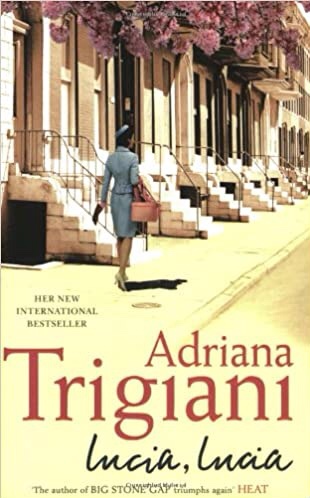
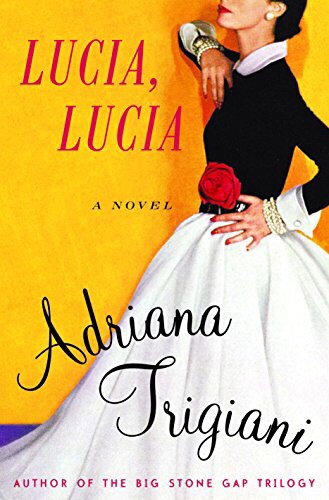
Throwback Thursday! Lucia Lucia by Adriana Trigiani.

Lucia Sartori is the beautiful twenty-five-year-old daughter of a fine Italian immigrant family in Greenwich Village, New York, in 1950. Fuelled by the post-war boom, in which talented girls with ambition are encouraged to follow their dreams, Lucia becomes an apprentice for a made-to-wear clothing designer at a chic department store on Fifth Avenue. Though she is sought after as a potential wife by the best Italian families, Lucia stays her course and works hard, determined to have a career. She juggles the roles of dutiful daughter and ambitious working girl perfectly. When a handsome stranger comes to the story and catches her eye, it is love at first sight for both of them. In order to win Lucia’s hand, he must first win over her traditional family and make the proper offer of marriage. Their love affair takes an unexpected turn as secrets are revealed, Lucia’s family honour is tested, and her own reputation becomes the centre of a sizzling scandal. Set in a time of possibility and change for women in America, in a city that celebrates its energy with style and elegance, LUCIA, LUCIA is the story of a girl who risks everything for the belief that a woman could – and should – be able to have it all.

When I want something to read that isn’t challenging, but is heartwarming, funny and emotional I turn for an Adriana Trigiani novel. Her stories, often based within Italian American culture, have feisty heroines, epic love stories, and wondrous descriptions of either food, clothes and shoe making, decorating or the music business. Lucia, Lucia begins as we meet Kit Zanetti, a playwright waiting to be discovered, who meets her upstairs neighbour. Lucia Sartori offers Kit some tea, and this evolves into a museum or gallery visit as Lucia shows Kit just some of the treasures she has accumulated over her life. Astounded by some of Lucia’s possessions, Kit asks for her story. So Lucia begins to tell a story that starts in 1950s New York when she was the most beautiful girl in The Village. She and her four brothers are brought up in NYC within a close knit Italian community and she is engaged to a lovely Italian boy, Dante. She also has a career she loves as a seamstress in a big department store. Worried that her marriage would mean giving up the job she loves, she decides to end her relationship. She is fighting against the very role her society expects of her – to become a wife and mother, with all of her energy focused on the home.

Then, John Talbot arrives on the scene. John is a businessman who appears wealthy and could take Lucia away from the ‘little life’ she was promised by Dante. She imagines a more upscale lifestyle where she can continue her work designing and creating on Fifth Avenue, plus have all the trimmings of an affluent home life. I kept thinking that this was a pipe dream and everything was going to go wrong. I understood Lucia. It wasn’t just about having money, but having choices. She wants the cushioning afforded by John’s money to pursue her own dreams without it being such a struggle. Yet, John has drawbacks too. He isn’t Italian for a start, but also he’s secretive and quite tight lipped about where his money is from. I worried that Lucia was being conned and that choosing John would be a harder path than she expects.

In-between this love story, Lucia has a wonderfully described trip to Italy with her family. Here Lucia discovers art and culture, swaps incredible recipes with her sister-in-law and even has a job offer from her co-employer. This is where Lucia could make choices that give her true independence, but is she now too entwined with John? Will she find herself choosing between marriage and a career after all? She may have to face more serious revelations about this man than she ever expected. It’s clear to me that John is a bad choice very early on, but I’m older and have made poor choices in relationships when I was young. Lucia doesn’t have that hindsight or experience. It’s easy to think she could have stayed with Dante and still worked as a seamstress, but we forget that before the contraceptive pill, marriage automatically meant children. Once children came along it would have been very hard to pursue a career as a designer, she may have been able to take in sewing, but not pursue a career.

There’s so much to like about this book. I loved the portrayal of the Italian American community and Lucia’s relationships with her family. The author gives us just enough information up front, but we don’t find out how Lucia’s life moved on until the final section when she finishes relaying her story to Kit. It keeps the reader engaged, because we’re dying to know how things worked out for her. This is a bittersweet novel that reminds us we can’t have everything in life. Many choices, no matter how hopeful and happy they seem, can come with a sacrifice in the long term. The sort of romance we see in the movies, all hearts, flowers and candlelit baths, is rare in real long term relationships. Living together, especially within a family, can be anything but romantic. However, if we prefer the hearts and flowers, we can miss out on the closeness and support in those tougher times. Lucia gives us the benefit of her hindsight as she evaluates her life, perhaps hoping to pass on this wisdom.

Meet The Author

Beloved by millions of readers around the world for her “dazzling” novels (USA Today), Adriana Trigiani is “a master of palpable and visual detail” (Washington Post) and “a comedy writer with a heart of gold” (New York Times). She is the New York Times bestselling author of eighteen books in fiction and nonfiction, published in 38 languages around the world, making her one of the most sought after speakers in the world of books today. 

Adriana is also an award-winning film director and screenwriter, playwright, and television writer and producer. She wrote and directed the award-winning major motion picture Big Stone Gap, based on her debut novel, filmed entirely on location in her Virginia hometown. Big Stone Gap spent 11 weeks in theatres in the fall of 2015 and was the #2 top-grossing romantic comedy of the year. She wrote and directed the documentary film Queens of the Big Time, winner of the Audience Award at the Hamptons and Palm Springs International Film Festivals. Her screen adaptation of her bestselling novel Very Valentine premiered on Lifetime television in June 2019, launching their National Book Club. She directed the feature film Then Came You, starring Craig Ferguson and Kathie Lee Gifford, filmed on location in Scotland. Adriana co-founded The Origin Project, an in-school writing program which serves over 1,700 students in the Appalachian Mountains of Virginia. Adriana is at work on her next novel for Dutton at Penguin Random House for release in 2021, and a children’s picture book for Viking at Penguin Random House for release in 2021. She lives in New York City with her family. 

Follow Adriana on Facebook and Instagram @AdrianaTrigiani or visit her website: AdrianaTrigiani.com.
Join Adriana on Facebook for Adriana Ink every Tuesday at 6 PM EST!

Posted in Netgalley

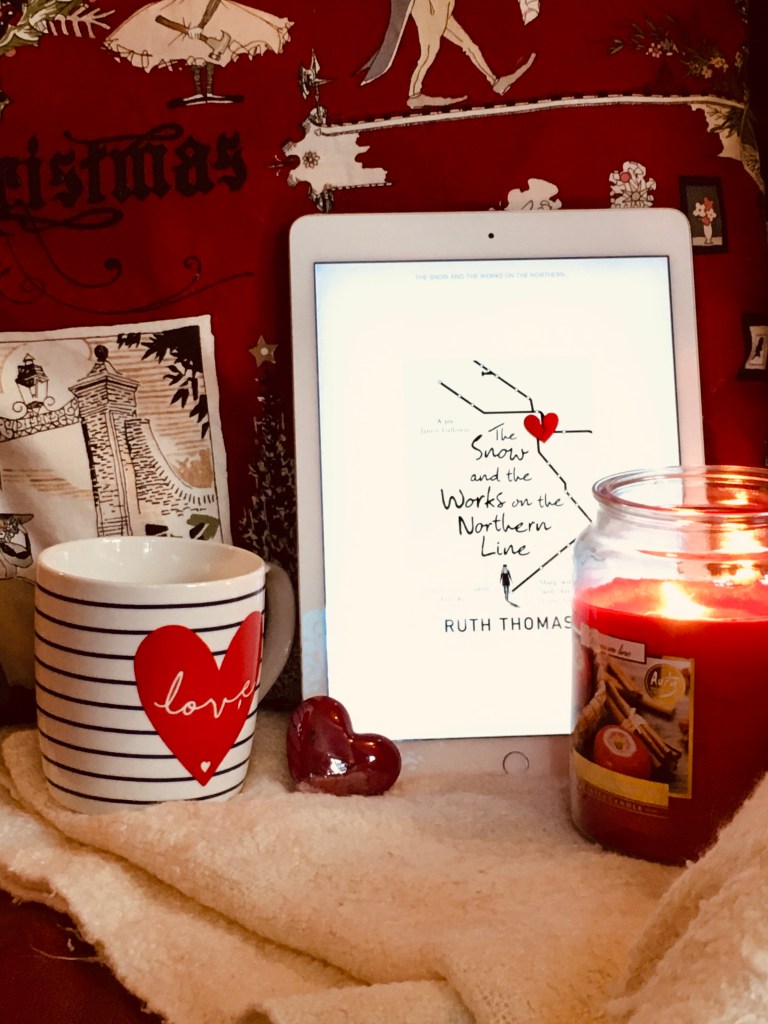
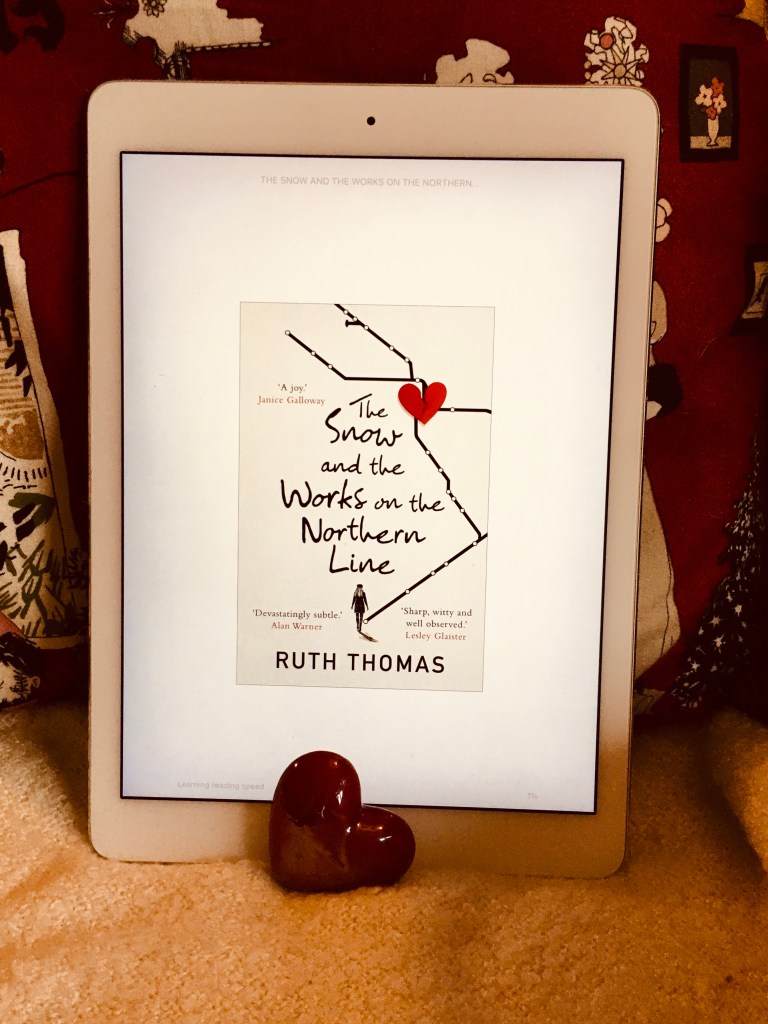
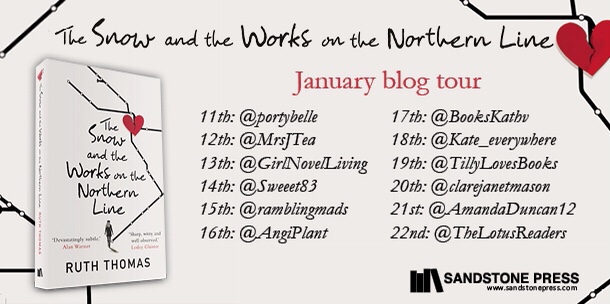
The Snow and the Works on the Northern Line by Ruth Thomas.

What a wonderful surprise this novel was. I’m clearly getting worse, we’re only three weeks into January and I’m already in love with a new literary heroine. I absolutely adored Sybil and felt so at home in her company that I just kept reading all day. I finished at 11pm and was bereft, because I wouldn’t be with Sybil any more. Yes, this is what happens to avid readers. We fall head over heels with a character, can’t put the book down, then suffer from book withdrawal. All day I’ve been grumpy and reluctant to start a new book.

Sybil’s life is puttering along nicely. She has a job she enjoys at a London museum – Royal Institute of Prehistoric Studies (RIPS). There she produces learning materials, proof reads and indexes archaeological publications, and helps people with research enquiries. She has a great boyfriend, Simon, who is a chef and likes to make her bread from obscure grains. Her quiet, settled life is turned upside down when she, quite literally, bumps into an old nemesis from her university days. Sybil and Simon have gone ice skating, where they spot Helene Hanson, Sybil’s old university lecturer. Sybil doesn’t want to say hello, after all Helene stole some ideas from her dissertation and put them into her research on the Beaker people. They make their way over, very unsteadily, and end up careering into Helene’s group and in Sybil’s case banging her head. She has a nasty bang, and from there her life seems to change path completely. Only weeks later, Helene has stolen Sybil’s boyfriend and in her capacity working for a funding body she has taken a huge interest in RIPS who will be selling her Beakerware (TM) in the gift shop and welcome her onto their committee as chair of trustees. Sybil’s mum suggests a mature exchange of views, but Sybil can’t do that. Nothing but all out revenge will satisfy how Sybil feels. She’s just got to think of a way to expose that Helene Hanson is a fraud.

First of all I want to talk about the structure of the novel. As Sybil’s life starts to unravel, so does her narration. A suggestion from a friend leads Sybil to a poetry class at her local library, so prose is broken up with poetry and very minimal notes of what Sybil has seen that she hopes to turn into haiku. This is a Japanese form of poetry with a set structure of thirteen syllables over three lines in the order of 5, then 3, and then 5 syllables. Having lived next to a Japanese meditation garden for several years I started to write and teach haiku as a form of meditation. It’s a form linked to nature and is very much about capturing small moments. So if Sybil sees something that might inspire her, it makes its way into her narration. I loved this, because I enjoy poetry but also because it broke up the prose and showed those quiet still moments where Sybil was just observing. She works with found objects – most notably a little teacup, left on a wall, that has ‘a cup of cheer’ written on the side. There’s a very important reason for the fragmentary narration, that I won’t reveal, but I loved it and thought it was so clever. Many of my regular readers will know why I connected with it though. These changes could just be a visible symptom of the chaos in Sybil’s mind as she goes through a massive shift – physically from one flat to another – but a mental shift towards living alone, to coping with her nemesis constantly popping up at her work space and to experience the heartbreak. We’ve all been there so her situation is easy to relate to.

The characters are brilliantly drawn, funny, eccentric and human. Sybil’s boss Raglan Beveridge – who she observes sounds like a cross between a knitted jumper and a hot drink – is such a lovely man, easily swayed but kind and tries to ensure that Sybil is ok. I enjoyed Bill who she meets several times across the book, in different situations. He’s calm, funny, thoughtful and shows himself to be a good friend to Sybil, even while she’s barely noticing him! Helene seems to hang over everything Sybil does, like an intimidating black cloud promising rain to come. She is a glorious villain in that she has very few redeeming features, and tramples all over Sybil’s world at home and at work. The author cleverly represents this in the very structure of RIPS. Sybil likes her slightly fusty, behind the times little museum. There’s a sense in which it is precious, that the spaces within shelter some eccentric and fragile people. They’re like little orchids, who might not thrive anywhere else.

Helene’s organisation brings much needed funding, but with it comes obligation. As chair of the trustees, she wants to change the structure of the building and all these precious spaces might be sacrificed. Her commercial enterprise, recreating Beakerware (TM) for the museum gift shop, means the shop expanding into other areas. Exhibits that have been on display for years will be moved into storage to make room and Sybil dreads Helene using Simon as the face of the range. Imagine giant posters of your ex greeting you every morning at work. To add insult to injury she inserts herself into Sybil’s everyday job by insisting on adding a section into Raglan’s upcoming book, meaning that Sybil has to index Helene’s writing. Could there be a chance here, for Sybil to gain some satisfaction? As Sybil’s mum hints though, revenge can be more damaging to the person seeking it.

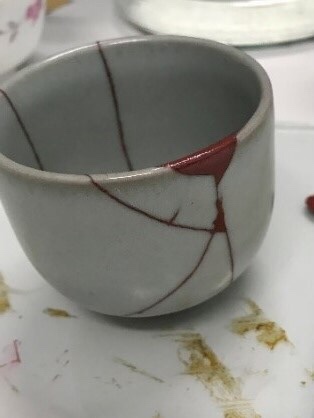
This was a quiet book. As I was reading it, I was engrossed and the outside world was muffled for a while. It reminded me of those mornings after snowfall, when the outside world is silenced. I felt a deep connection with Sybil. She’s offbeat, quirky and has a dark sense of humour. We meet her at her lowest point and we’ve all been heartbroken, but it was much more than that. I’ve been this broken by life, I was a like a vase, smashed into so many pieces I didn’t know if I could pull all those pieces back together. Even if I did, I knew I would never be the same person. My loss felt so huge that it affected my actions – I left doors unlocked when I went out, forgot to pay bills, and started to make mistakes at work. I had always prided myself on being very ‘together’ and here I was falling apart. I discovered Japanese art that healed me in some way – it’s called Kintsugi and it’s the art of repairing broken ceramics with liquid gold or other contrasting metal. It shows the cracks, that the piece has been through something, but it’s still whole. I felt that this applied to Sybil’s journey and the book’s structure too. Sometimes, broken things can be even more beautiful than they were before.

A piece of Japanese kintsugi

Meet The Author


Ruth Thomas is the author of three short story collections and two novels, as well as many short stories anthologised and broadcast on the BBC. Her writing has won and been shortlisted for various prizes, including the John Llewellyn Rhys Award, the Saltire First Book Award, the VS Pritchett Prize and the Frank O’Connor International Short Story Award. She lives in Edinburgh and is currently an Advisory Fellow for the Royal Literary Fund. The Snow and the Works on the Northern Line is her third novel.

Why not go back and check out the other reviews from the blog tour: