Posted in Travel Fiction

Summer Holiday Reads: The Greek Islands

Classics

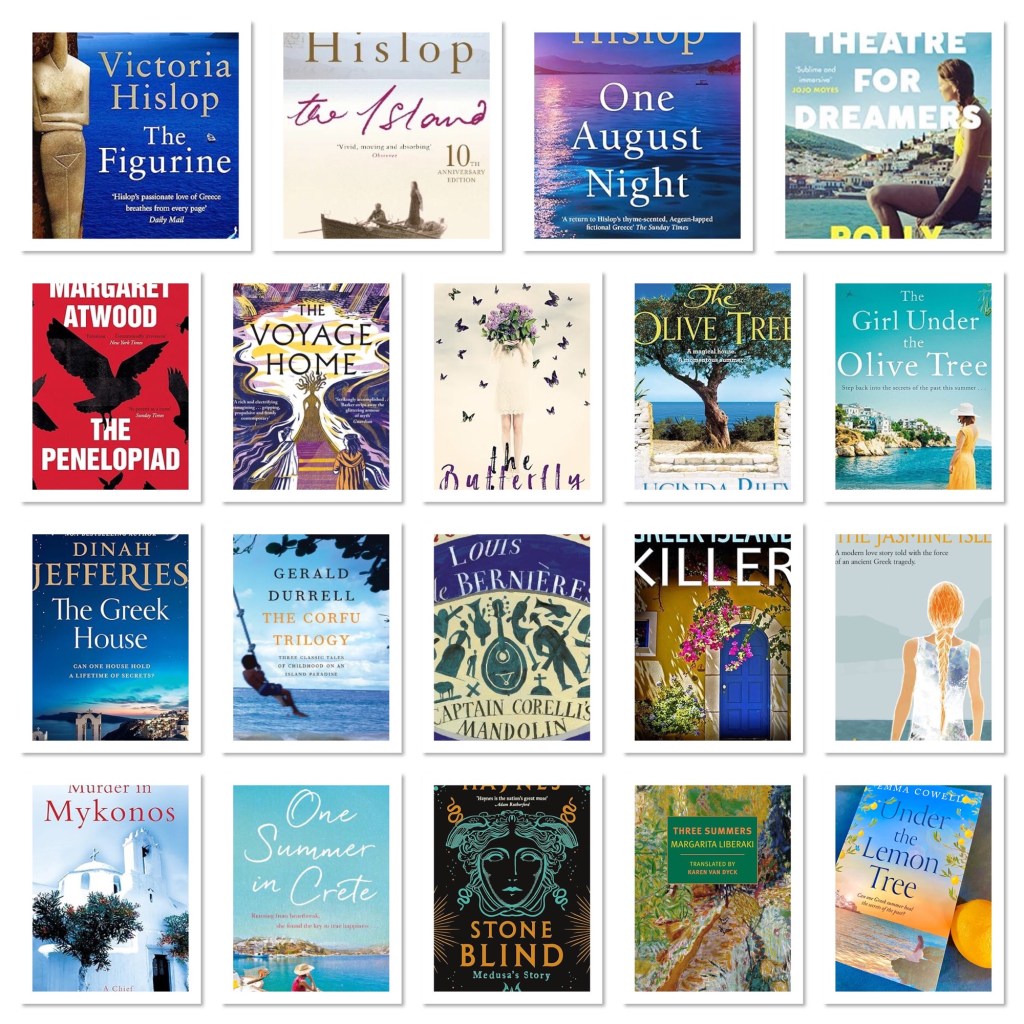
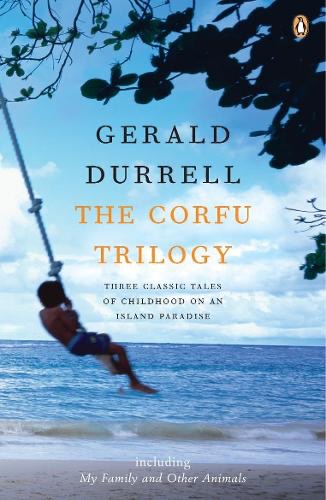
Three classic tales of childhood on an island paradise – My Family and Other Animals, Birds, Beasts and Relatives and The Garden of the Gods by Gerald Durrell – make up The Corfu Trilogy.

Just before the Second World War the Durrell family decamped to the glorious, sun-soaked island of Corfu where the youngest of the four children, ten-year-old Gerald, discovered his passion for animals: toads and tortoises, bats and butterflies, scorpions and octopuses. Through glorious silver-green olive groves and across brilliant-white beaches Gerry pursued his obsession . . . causing hilarity and mayhem in his ever-tolerant family. This book is joyous and has the reputation of being the only book my brother loved. The Durrells are gloriously eccentric and this trilogy transports you to Corfu so well it’s like taking a holiday.

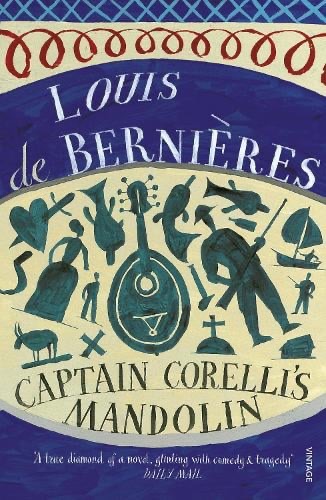
It is 1941 and Captain Antonio Corelli, a young Italian officer, is posted to the Greek island of Cephallonia as part of the occupying forces. At first he is ostracised by the locals but over time he proves himself to be civilised, humorous – and a consummate musician.

When Pelagia, the local doctor’s daughter, finds her letters to her fiancé go unanswered, Antonio and Pelagia draw close and the working of the eternal triangle seems inevitable. But can this fragile love survive as a war of bestial savagery gets closer and the lines are drawn between invader and defender? Forget the awful film, in which barely anyone was Greek, and pick this up if you haven’t already. Not only is it a great chronicle of WW2 in Greece, but it is a touchingly beautiful love story you’ll want to read again.

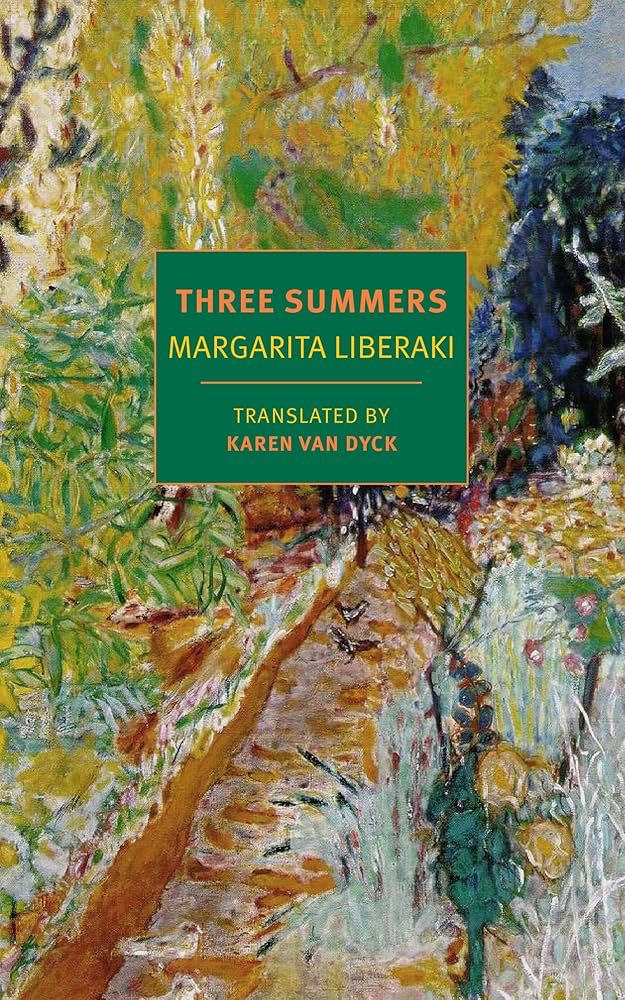
That summer we bought big straw hats. Maria’s had cherries around the rim, Infanta’s had forget-me-nots, and mine had poppies as red as fire. . .’

I read a recent review where Three Summers was touted as a Greek I Capture The Castle and that draws me in straight away. This is a warm and tender tale of three sisters growing up in the countryside near Athens before the Second World War. Living in a ramshackle old house with their divorced mother are flirtatious, hot-headed Maria, beautiful but distant Infanta, and dreamy and rebellious Katerina, through whose eyes the story is mostly observed. Over three summers, the girls share and keep secrets, fall in and out of love, try to understand the strange ways of adults and decide what kind of adults they hope to become. A beautiful story of growing up, sisterhood and first love.

Retold Myths

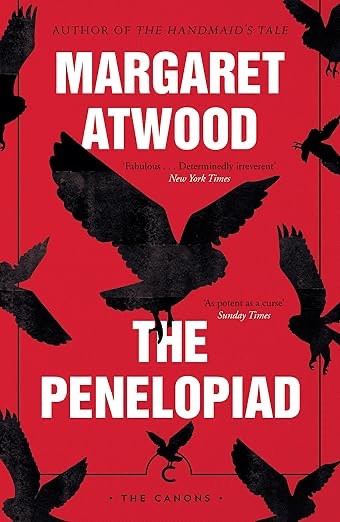
Now that all the others have run out of air, it’s my turn to do a little story-making . . . So I’ll spin my own thread.

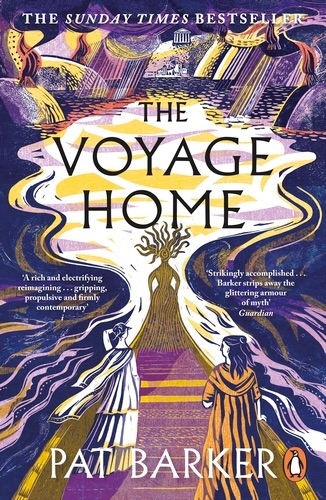
Penelope. Immortalised in legend and Greek myth as the devoted wife of the glorious Odysseus, silently weaving and unpicking and weaving again as she waits for her husband’s return from the Trojan war. 

Now Penelope wanders the underworld, spinning a different kind of thread: her own side of the story – a tale of lust, greed and murder. This is one of the first novels to write back to Greek Myth, to tell the story of a sidelined character in the tale of Odysseus. Atwood tells a tale of the Trojan War from a feminist perspective, looking through the eyes of Penelope who has no action or agency in the original myth, only appearing as the dutiful wife.

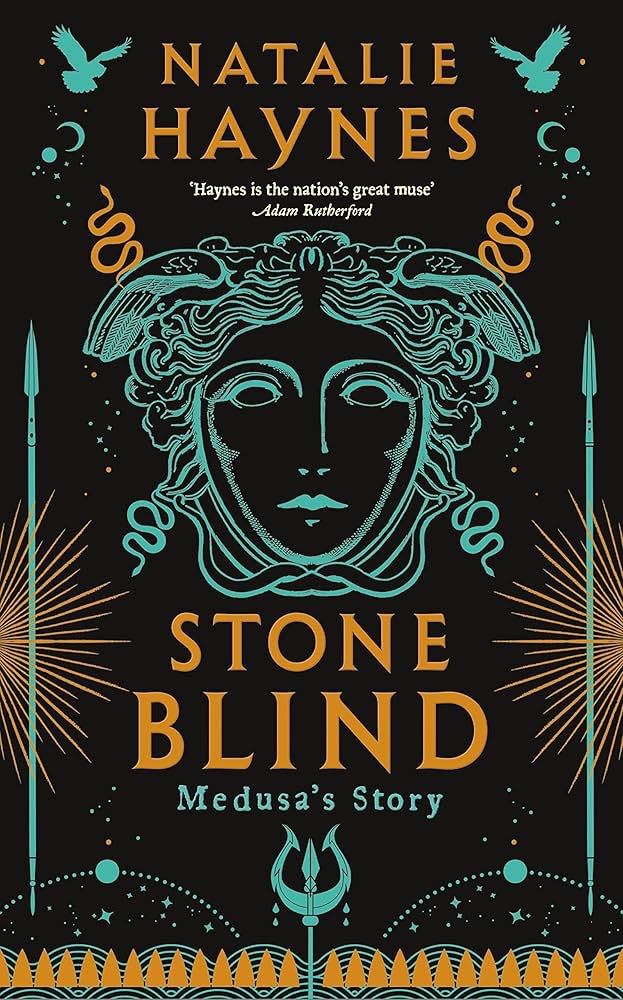
‘So to mortal men, we are monsters. Because of our flight, our strength. They fear us, so they call us monsters’

Medusa is so hard done to who acts like a cautionary tale about the meddling Greek gods. Medusa is the sole mortal in a family of gods. Growing up with her Gorgon sisters, she begins to realize that she is the only one who experiences change, the only one who can be hurt.

When Poseidon commits an unforgiveable act against Medusa in the temple of Athene, the goddess takes her revenge where she can: on his victim. Medusa is changed forever – writhing snakes for hair and her gaze now turns any living creature to stone. She can look at nothing without destroying it.

Desperate to protect her beloved sisters, Medusa condemns herself to a life of shadows. Until Perseus embarks upon a quest to fetch the head of a Gorgon . . .

After ten blood-filled years, the war is over. Troy lies in smoking ruins as the victorious Greeks fill their ships with the spoils of battle.

Alongside the treasures looted are the many Trojan women captured by the Greeks – among them the legendary prophetess Cassandra, and her watchful maid, Ritsa. Enslaved as concubine – war-wife – to King Agamemnon, Cassandra is plagued by visions of his death – and her own – while Ritsa is forced to bear witness to both Cassandra’s frenzies and the horrors to come.

Meanwhile, awaiting the fleet’s return is Queen Clytemnestra, vengeful wife of Agamemnon. Heart-shattered by her husband’s choice to sacrifice their eldest daughter to the gods in exchange for a fair wind to Troy, she has spent this long decade plotting retribution, in a palace haunted by child-ghosts.

As one wife journeys toward the other, united by the vision of Agamemnon’s death, one thing is certain: this long-awaited homecoming will change everyone’s fates forever. This is a brilliant retelling of a myth we know so well and the reality of war from a female perspective.

Crime Fiction

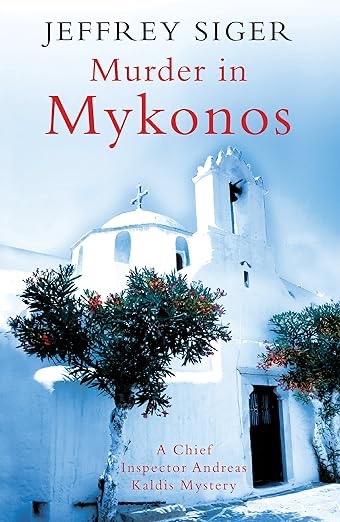
Mykonos had always had a romantic reputation, until the body of a female tourist was found on a pile of bones under the floor of amountain church. The island’s new police chief starts finding bodies, bones and suspects almost everywhere he looks. This thriller has a great atmosphere, is perfect for readers who love a good mystery and also Greek legends, which the author weaves throughout her story. The reader is firmly on the side of the heroine, trying desperately to escape her fate. You will also be rooting for Inspector Kaldis, who was recently demoted from Athens to the isle of Mykonos. He’s trying to avoid the political pitfalls on the island as he pursues the Killer, whose identity is not revealed until the end of the story. This is a fun one for the reader to speculate on as the action builds to a nail-biting climax. Highly enjoyable and addictive.

SOMEONE’S POISONING PARADISE

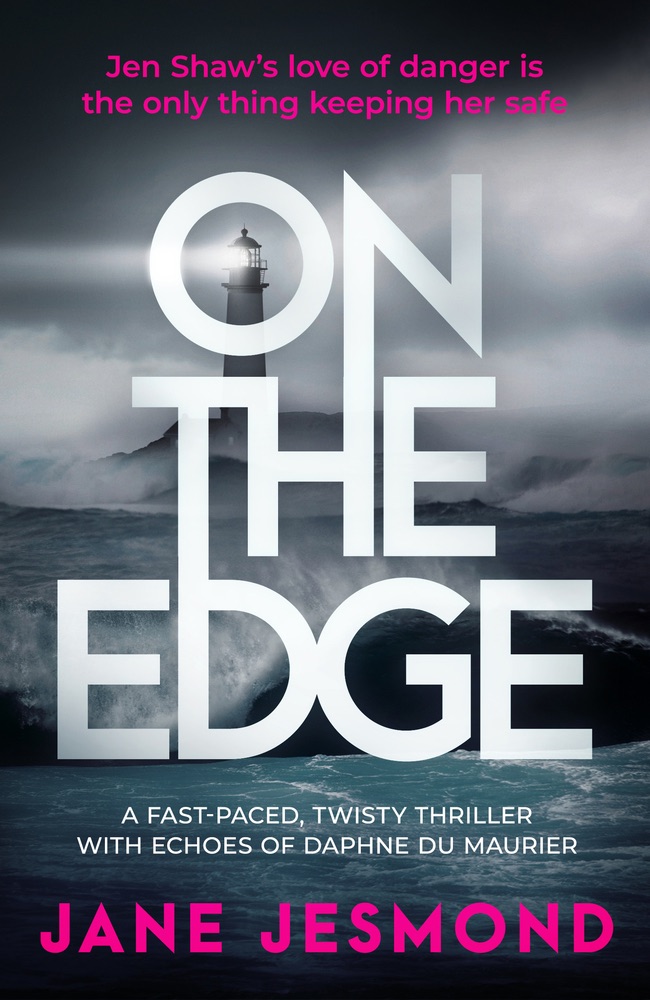
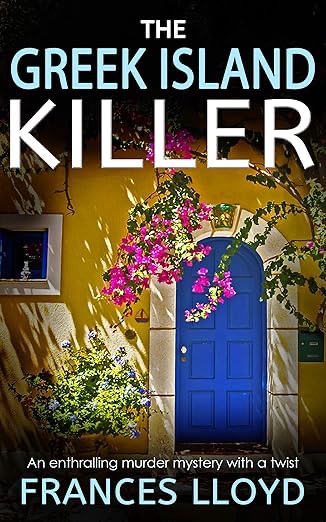
Detective Inspector Jack Dawes is travelling to a tiny Greek island with wife Corinne, ready for a bit of sun, sea and sand.

However, one of their fellow travellers is a ruthless killer.
When a storm destroys the island’s primitive communications, cutting it off from civilisation, people begin to panic. One victim is poisoned, followed swiftly by another. Then a woman is found in a grotto to St Sophia, the island’s patron saint. She is badly beaten. It feels as if the island’s visitors are being picked off one by one. Can Jack uncover the truth before the killer ups the ante?

Who will return home — and who will be sacrificed to the island?

Historical Fiction

It’s May 1941, when the island of Crete is invaded by paratroopers from the air. After a lengthy fight, thousands of British and Commonwealth soldiers are forced to take to the hills or become escaping PoWs, sheltered by the Cretan villagers.

Sixty years later, Lois West and her young son, Alex, invite feisty Great Aunt Pen to a special eighty-fifth birthday celebration on Crete, knowing she has not been back there since the war. Penelope George – formerly Giorgidiou – is reluctant, but is persuaded by the fact it is the 60th anniversary of the Battle. It is time for her to return and make the journey she never thought she’d dare to. On the outward voyage from Athens, she relives her experiences in the city from her early years as a trainee nurse to those last dark days stranded on the island, the last female foreigner.

When word spreads of her visit, and old Cretan friends and family come to greet her, Lois and Alex are caught up in her epic pilgrimage and the journey which leads her to a reunion with the friend she thought she had lost forever – and the truth behind a secret buried deep in the past…

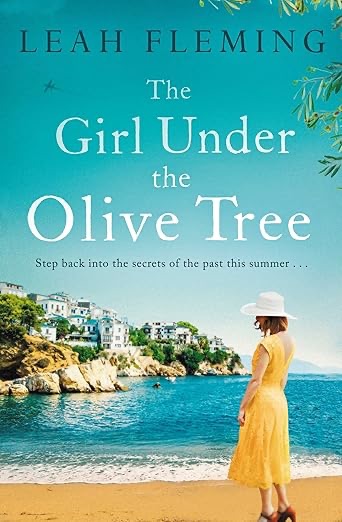
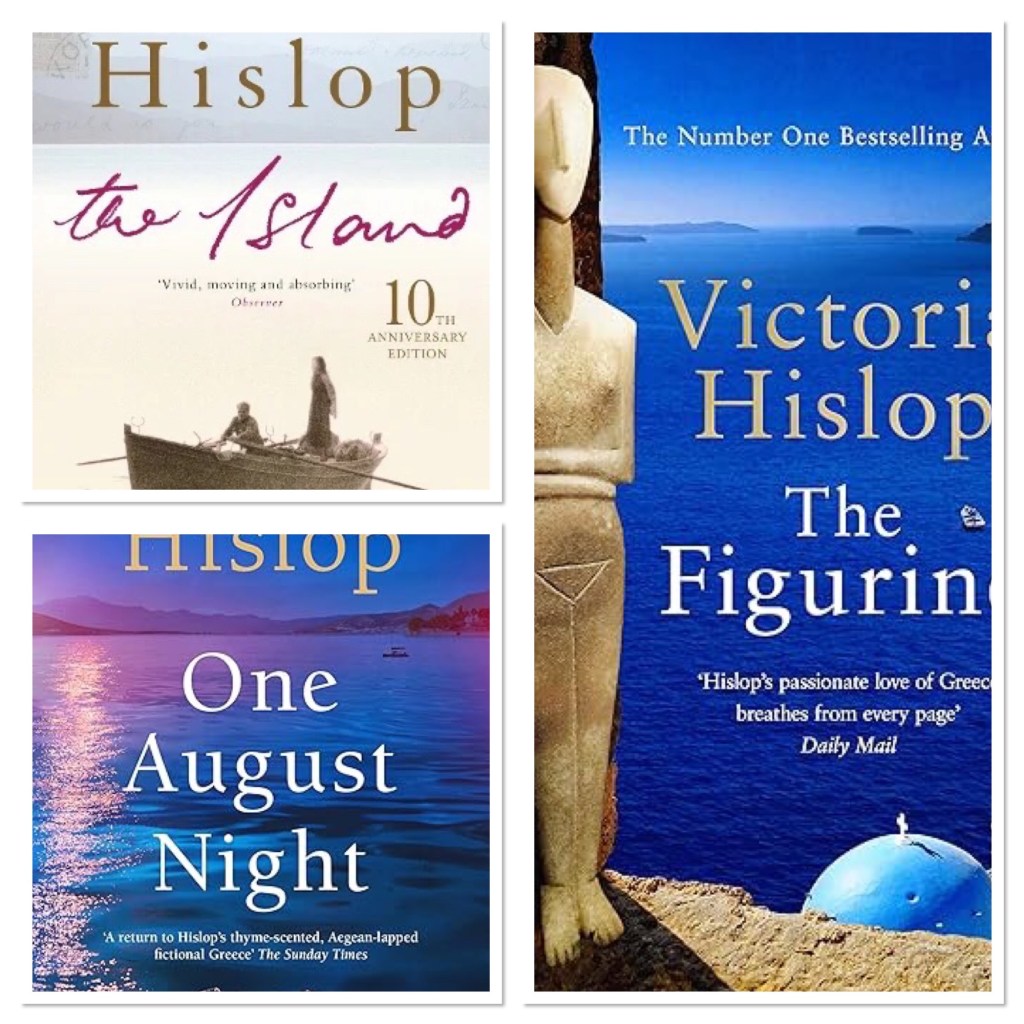
Victoria Hislop is the Queen of fiction set on the Greek Islands, ever since her book The Island

25th August 1957. The island of Spinalonga closes its leper colony. And a moment of violence has devastating consequences.

When time stops dead for Maria Petrakis and her sister, Anna, two families splinter apart and, for the people of Plaka, the closure of Spinalonga is forever coloured with tragedy.

In the aftermath, the question of how to resume life looms large. Stigma and scandal need to be confronted and somehow, for those impacted, a future built from the ruins of the past.

Victoria Hislop returns to the world and characters she created in The Island – the award-winning novel where we first met Anna, Maria, Manolis and Andreas in the weeks leading up to the evacuation of the island… and beyond. Alexis Fielding longs to find out about her mother’s past. But Sofia has never spoken of it. All she admits to is growing up in a small Cretan village before moving to London. When Alexis decides to visit Crete, however, Sofia gives her daughter a letter to take to an old friend, and promises that through her she will learn more. 

Arriving in Plaka, Alexis is astonished to see that it lies a stone’s throw from the tiny, deserted island of Spinalonga – Greece’s former leper colony. Then she finds Fotini, and at last hears the story that Sofia has buried all her life: the tale of her great-grandmother Eleni and her daughters and a family rent by tragedy, war and passion. She discovers how intimately she is connected with the island, and how secrecy holds them all in its powerful grip…

In The Figurine we are taken beneath the dust sheets in the Athens apartment that Helena McCloud has inherited from her grandparents, There she discovers a hidden hoard of rare antiquities, amassed during a dark period in Greek history when the city and its people were gripped by a brutal military dictatorship.

Helena’s fascination for archaeology, ignited by a summer spent on a dig on an Aegean island, tells her that she must return these precious artefacts to their rightful place. Only then will she be able to allay the darkness of the past and find the true meaning of home – for cultural treasures and for herself.

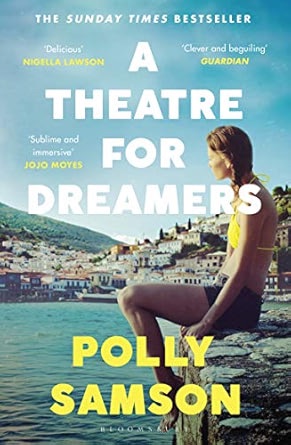
It seems crazy to think of the 1960s as a historical era, but it is now 60 years ago! In this dreamy and bohemian novel, Erica is eighteen and ready for freedom. It’s the summer of 1960 when she lands on the sun-baked Greek island of Hydra and is swept up in a circle of bohemian poets, painters, musicians, writers and artists, living tangled lives. Life on their island paradise is heady, dream-like, a string of seemingly endless summer days. But nothing can last forever.

Romance and Self-Love

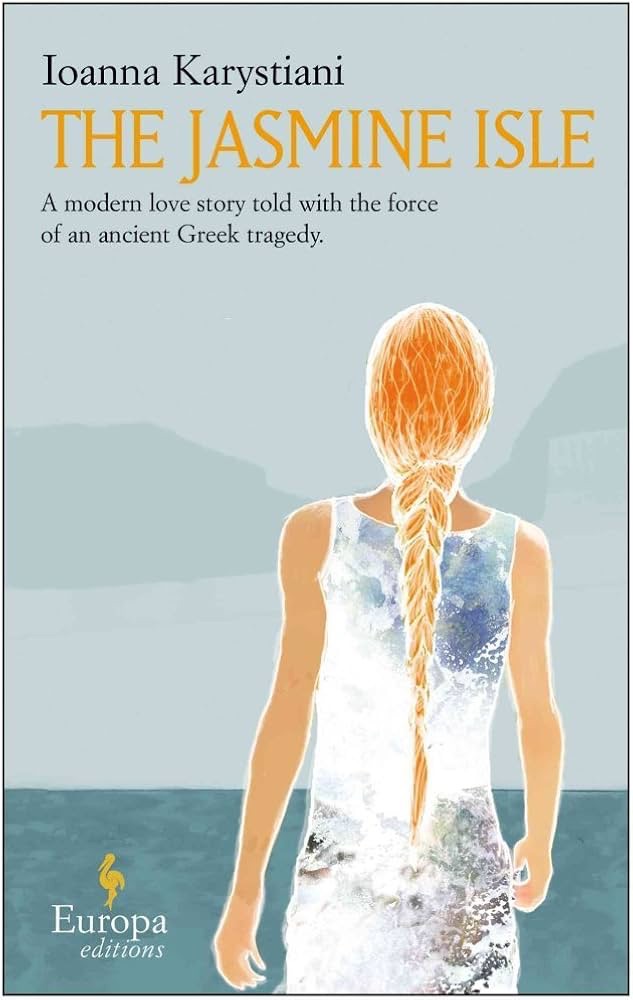
Set on the breathtaking island of Andros, The Jasmine Isle is one of the finest literary achievements in contemporary Greek literature. Mina Saltaferou is the despotic wife of a ship’s captain, Savvas Saltaferos. Her tyrannical influence over her two daughters is unquestionable and unrelenting, like nature itself. Tragedy becomes inevitable when Mina’s beautiful, eldest daughter, Orsa, is sentenced by her mother to marry a man she doesn’t love and watch as the man she does love weds another.

I love a family saga and this one spans half a century in the history of modern Greece, this novel explores the solace and joy women find in each other’s company during the insufferably long absences of their husbands, sons, and lovers. The story alternates between descriptions of domestic life and evocations of the world’s seas and ports, as it follows both the men who embark on voyages lasting months and the lives of the women who remain behind

Calli’s world has fallen apart – her relationship is suddenly over and her chances of starting a family are gone. So when she’s sent to write a magazine article about the Greek island of Ikaria, it seems the perfect escape.

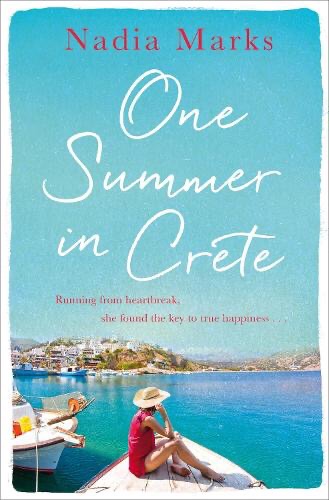
Travelling to Crete, where her family is from, Calli soon realizes there is more to discover than paradise beaches and friendly locals. When her aunt Froso begins to share the story of her own teenage heartache, will the love, betrayal and revenge she reveals change Calli’s life forever?

As a young woman, Helena spent a magical holiday at Pandora, a beautiful house in Cyprus – and fell in love for the first time. Now, twenty-four years later and following the loss of her godfather, she has inherited Pandora. And, though it is a crumbling shadow of its former self, Helena returns with her family to spend the summer there.

When, by chance, Helena meets her childhood sweetheart, her past threatens to collide with her present. She knows that the idyllic beauty of Pandora masks a web of secrets that she has kept from her husband and thirteen-year-old son. And that, once its secrets have been revealed, their lives will never be the same . . .

Sophie Keech has it all. A new life in Greece with a handsome man enables Sophie to leave her mundane job and her estranged mum. But four years on, a domineering mother-in-law to be and the reality of living in Greece not being what Sophie imagined, strains her relationship with Alekos. 

When her mum is involved in an accident, Sophie jumps at the chance to escape. Time to reassess her life and make amends is sorely needed. Yet an attraction to a good looking and newly divorced man, and a shock discovery, complicates things.

Can Sophie and Alekos’ love survive the distance?

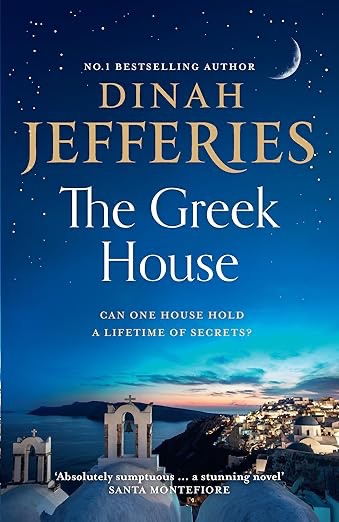
Can one house hold a lifetime of secrets?

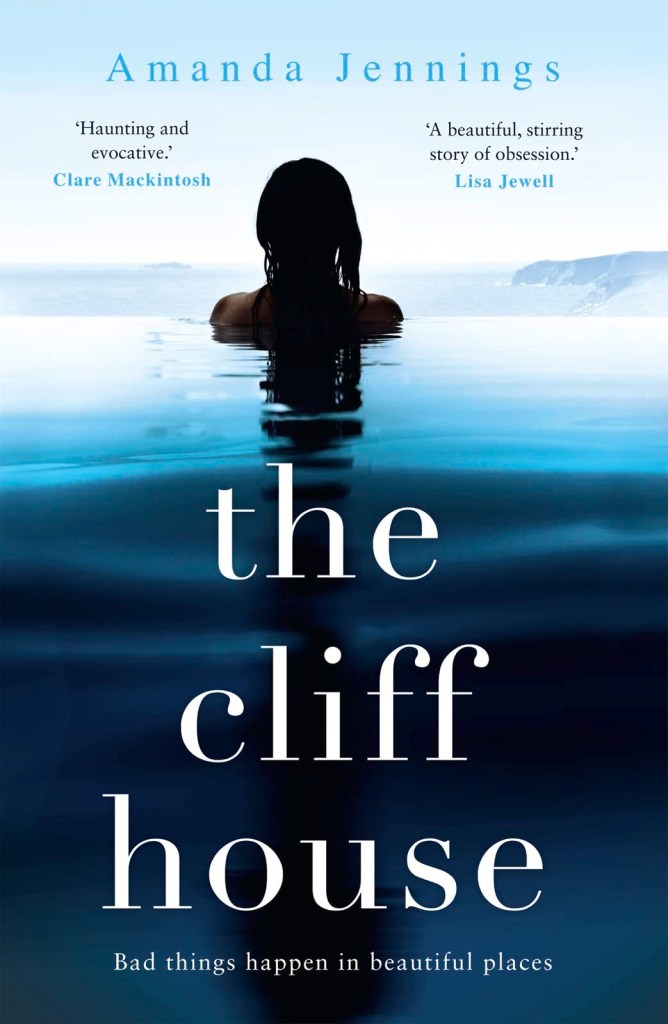
Corfu, 1930, the moment Thirza Caruthers sets foot on Corfu, memories flood back: the scent of jasmine, the green shutters of her family’s home ― and her brother Billy’s tragic disappearance years before. Returning to the Greek house, high above clear blue waters, Thirza tries to escape by immersing herself in painting ― and a passionate affair. But as webs of love, envy, and betrayal tighten around the family, buried secrets surface, is it finally time to uncover the truth about Billy’s vanishing?

New To Look Forward To.

Could discovering a family secret encourage Kat to follow her heart?

Shattered by the sudden loss of her twin, Nik, Kat is lost in grief. The comfort of family feels both soothing and suffocating, but everything changes when she inherits a house on the breathtaking Greek island of Agistri from a mysterious uncle she’s never met.

Arriving on Agistri, Kat is mesmerized by its crystalline waters, lush pine forests, and the citrus-scented air. Among the white-washed houses and warm, welcoming locals, she begins to feel her heart heal. The island offers more than solace, sparking courage in Kat to face her loss — and maybe even embrace the spark of unexpected love…

But as she unearths her family’s buried past, Kat must also confront her own fears of belonging, forgiveness — and the possibility of rediscovering happiness in the shadow of heartbreak…

Posted in Random Things Tours

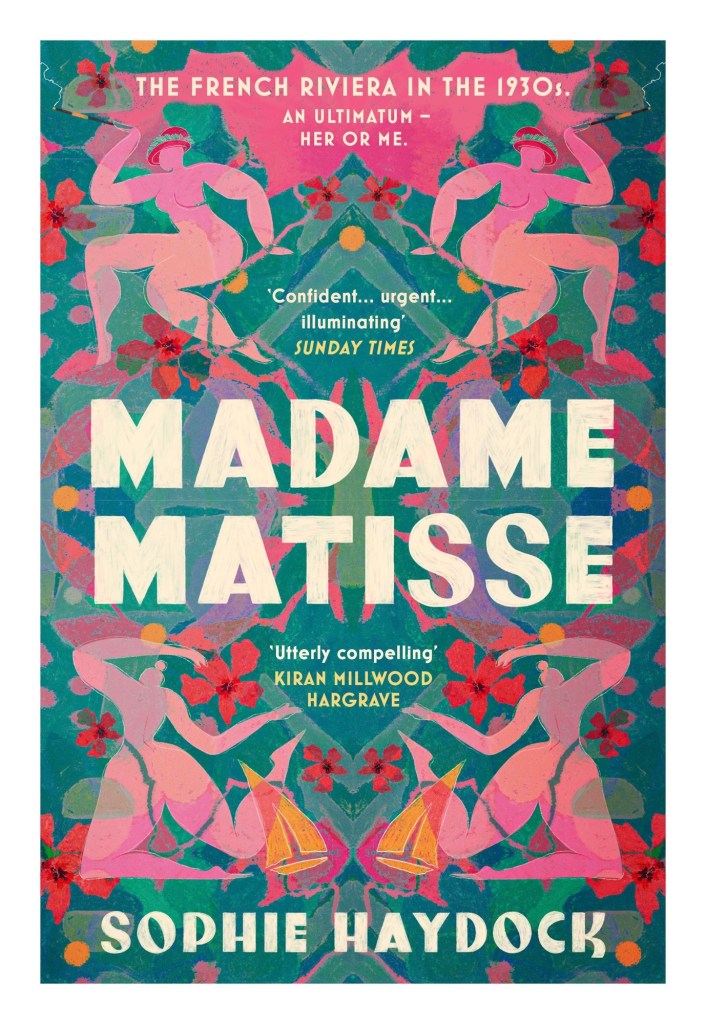
Madame Matisse by Sophie Haydock 

This is the story of three women – one an orphan and refugee who finds a place in the studio of a famous French artist, the other a wife and mother who has stood by her husband for nearly forty years. The third is his daughter, caught in the crossfire between her mother and a father she adores.

Amelie is first drawn to Henri Matisse as a way of escaping the conventional life expected of her. A free spirit, she sees in this budding young artist a glorious future for them both. Ambitious and driven, she gives everything for her husband’s art, ploughing her own desires, her time, her money into sustaining them both, even through years of struggle and disappointment.

Lydia Delectorskaya is a young Russian emigree, who fled her homeland following the death of her mother. After a fractured childhood, she is trying to make a place for herself on France’s golden Riviera, amid the artists, film stars and dazzling elite. Eventually she finds employment with the Matisse family. From this point on, their lives are set on a collision course….

Marguerite is Matisse’s eldest daughter. When the life of her family implodes, she must find her own way to make her mark and to navigate divided loyalties.

Based on a true story, Madame Matisse is a stunning novel about drama and betrayal; emotion and sex; glamour and tragedy, all set in the hotbed of the 1930s art movement in France. In art, as in life, this a time when the rules were made to be broken…

Almost eleven years ago my lovely arty friend Mandy wanted to visit the Matisse exhibit at Tate Britain. I really hope I didn’t ruin it for her. I probably did. I confess I’m not a lover of modernist art. We went to the Guggenheim in New York and I proclaimed it disappointing. We had to go across to the MET and see their collection of Impressionists to cheer me up. My loves are the Pre-Raphaelites and the Art Nouveau/ Arts and Crafts period so we’re a long way away from each other in preference. Art is her subject so I’m happy to own that she certainly knows a lot more than me. I was interested to read in her afterword that the author has always had an interest in Matisse, with a black and white postcard of him on her notice board for several years. I have one of Gustav Klimt wearing an artist’s smock and clutching a cat, with a look of devilment on his face. It makes me smile whenever I see it so I understand how a particular artist can inspire your imagination. Sophie’s first novel, The Flames, was about a protégé of Klimt. It was narrated by the women in the life of Egon Schiele, the subjects of four of his paintings. Here she takes a similar look at the women who surrounded Henri Matisse, showing how they advised, supported and sustained him in his endeavours, but remained completely in the background to his talent. 

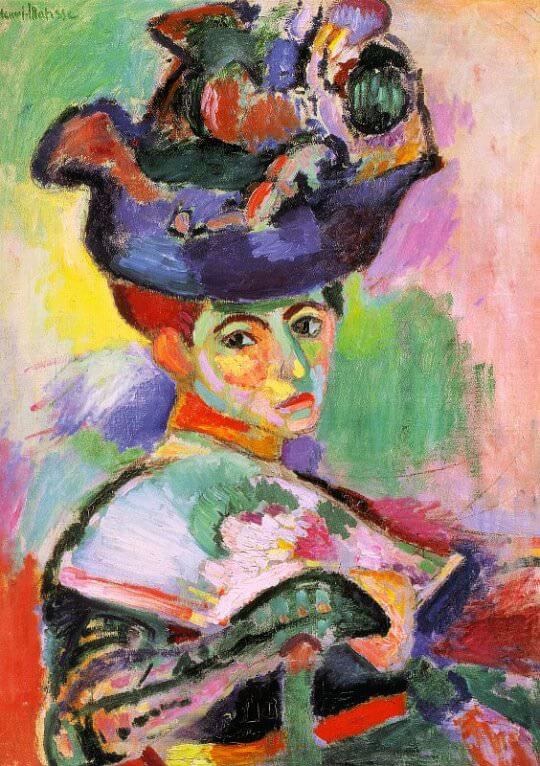
The story starts with Amélie, an incredibly brave young woman who takes a chance on marrying an artist rather than a more conventionally acceptable partner. She sees something in Matisse’s paintings, recognising the way his work could be at the forefront of modernism. Previously his colourful style has been rejected for exhibition in Paris, but Amélie knows that innovative artists often take a while to break through. In fact it is a painting of Amélie that is the catalyst for Henri’s career to take off. Woman in a Hat is exhibited in Paris and bought by siblings Gertrude and Leo Stein, a bohemian pair central to the art world throughout the early 20th Century. This is where Amélie makes the bravest and most important decision of her husband’s career. The Stein’s offered only two thirds of the asking price. Eager to make a sale to the influential pair, Henri is willing to give the discount but Amélie advises him to wait and hold out for the asking price. He takes her counsel and they go and meet the Steins, convincing them that Henri is central to the next great artistic movement. The Steins pay the full price. The couple are a great team with Amélie making all the household and business decisions, freeing Henri to paint and become a famous member of the Fauvist Movement. She also brings Henri’s daughter Marguerite into their growing family, when her own mother is struggling to care for her. Yet, not everything about their relationship runs smoothly. Once they are able to afford a family home with a garden and studio for Henri, Amélie’s help is no longer needed. Henri takes on a series of young assistants and Amélie has the more traditional wife’s role which doesn’t suit her. It’s fascinating to read about the changes, once their joint struggle is over they cease to become a team and the problems begin. 

Woman in a Hat

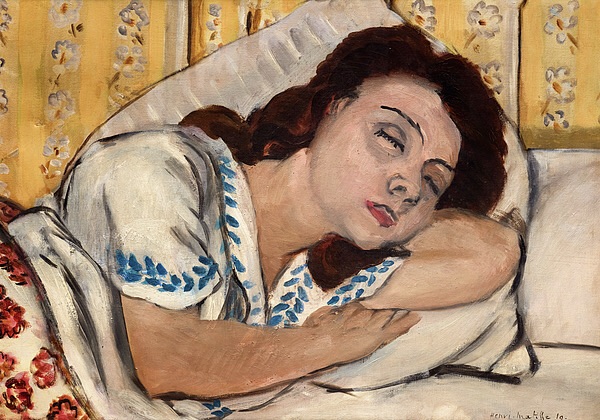
Another section of the novel is devoted to Marguerite, Henri’s illegitimate daughter. Once Amélie has brought her to live within their family, Marguerite seems to blossom under the care of her stepmother. She also makes herself useful to her father, tidying his studio and anticipating his needs. It is interesting to hear about Amélie and Henri’s relationship from her perspective and her anxieties that the family she’s been brought into, stays together. She shares a lot of Amélie’s suspicions about some of the assistants who breeze in and out of their lives. She’s also a strong advocate for her stepmother, even into her parent’s old age. Yet there were times when I felt she was taken advantage of by Amélie and her father. There’s a sense in which, despite seeming kind, loyal and trustworthy, Matisse does use the women around him. The household was entirely groomed to anticipate his needs and the women are sacrifices for his artistic genius. 

Most interesting to me was Lydia Delektorskaya, born in Tomsk, Russia, in the tumultuous period after the revolution. After the murders of the Royal family, Lydia has just lost her mother when her father decides she must leave the country. He gives her a gun with three bullets left in their chambers and sends her to China on the Trans-Siberian Express with her Aunt Berthe. After building a life there Lydia must make a choice between the Sorbonne in Paris or to marry her lifelong friend and stay. Lydia takes neither choice and instead aims for the South of France, a place that couldn’t be more different to the place she was born. She spends time working in a bar but when she sees a job with the Matisse family she decides to apply. The job is to look after Henri’s wife Amélie who has a chronic illness and is confined to their apartment. Lydia has experience of working with her mum and her aunt and felt fulfilled by her caring role. Once she starts work though, some of her duties are to assist Henri in his studio, eventually sitting for portraits and sketches. Amélie eyes their relationship with suspicion despite there being no evidence of impropriety. This is more than an affair, it’s a meeting of souls and when ultimatums are made they have terrible consequences. 

Marguerite Asleep

I loved reading about these fascinating women, all of which step outside the traditional role of most women of the time. Sophie beautifully situates Matisse within his peer group, especially his great rival Picasso. She situates each woman perfectly within their history, the most in depth being Lydia’s Russian background and Marguerite’s incredible bravery in WW2. Both are fascinating to read and show us the extreme cruelty and playbook of totalitarian regimes. She also shows us how incredibly brave and resourceful each woman is, more involved in the world and bigger risk takers than Matisse. Lydia’s realisation of what her father truly sacrificed to stay in Russia happens when she is older. First they came for the royal family and aristocracy, then those with intelligence and  the ability to challenge them, just as the Nazis did in Poland. This perhaps has more resonance thanks to current world events. I thoroughly enjoyed looking up the paintings mentioned and seeing Matisse’s representation of the three women who were closest to him and I found myself reading articles about him and Picasso. It left me with a sense of anger and empathy for how much women sacrifice so that men can excel at what they do, realising their ambitions while their wive’s ambitions are forgotten or buried under a suffocating mental load – still the thing women in my group talk about most. These women never take the limelight away from Matisse, even while stripped bare for people to view. The focus is always on the painter, their brush strokes, choice of colour and artistic decisions. I love that in this novel they are more than body parts, they’re shown as the vital, brave, complex and generous women they clearly were.  

Lydia Delectorskaya

Meet the Author


Sophie Haydock is an author, editor and journalist (Sunday Times, Financial Times, Guardian), based in Folkestone, Kent, where she is curator of Folkestone Book Festival. Her debut, The Flames – about the women who posed for the scandalous artist Egon Schiele in Vienna a century ago – was named by the Times as one of the Best Historical Fiction Books of 2022. It was longlisted for the HWA Debut Crown Award, and the Italian translation, Le Fiamme, won the Premio Letterario Edoardo Kihlgren for debut novels. She worked for the Sunday Times Short Story Award and is associate director of the Word Factory. Her Instagram @egonschieleswomen has 110,000 followers. Visit: sophie-haydock.com

Posted in Throwback Thursday

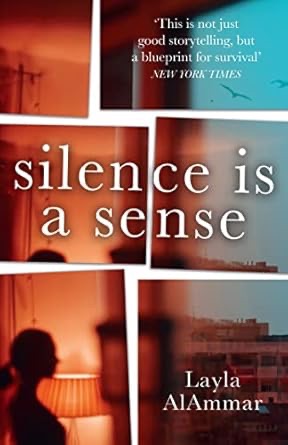
Silence Is A Sense by Layla AlAammar

Even though I’m so late reading this book, in a way I’m glad. For the past two years we have been embroiled in the aftermath of the previous government’s decision to house asylum seekers at the the now closed RAF base close by. While many of the community were worried about the issue, our reasons for concern were very different. When a local meeting descended into a heated exchange, it became clear that despite our concerns for the asylum seekers, we couldn’t voice them because of the sheer weight of people strongly opposing the plan for other reasons. Local concerns became lost in the wider debate on refugees. The campaign was targeted by far right organisations that didn’t really care about reasonable concerns, they just wanted to use the opportunity for their own political gain. Known fascists became interested and the gate to the base became a makeshift camp festooned with flags, stop the boats banners and others claiming asylum seekers were paedophiles. It became really hard to drive past and see all this racism and misinformation on the gates of such an iconic base, ironically known for it’s fighting against a fascist regime taking over Europe. We became part of an organisation set up to support the asylum seekers as they arrived into this hostile environment. When the new government changed course with the policy, we were relieved to know that there no longer fascist organisations camping out up the road. This book gave me more insight into a refugee’s journey.

The writer cleverly chooses a fragmented structure to tell her heroine’s story. Named ‘The Voiceless’ she writes about her experience as a way of processing her story and communicating it to other people as far as she can. Her memory comes in snippets, so her narrative moves back and forth in time and might seem a bit sketchy. Imagine everything you have is taken away from you. Your home is rubble, everything you owned that said something about who you are is gone with it. You have no documents to prove your identity or your education. Everyone you have known is either dead or scattered to the wind. She has escaped Aleppo with nothing. If you think about how your belongings, choices of clothing and your photographs say something about who you are, now imagine it gone. How do you keep a sense of self? Especially when you’re seeing or subjected to atrocities like killing, abuse and rape. Your psyche becomes shattered. Our narrator is trying to record those fragments, to bear witness and also to put the bits of herself back together. It might feel strange, even jarring at first but it’s supposed to be. It’s meant to confront and make you think.

The author shows us how she tries to embark on a future and make connections. She’s starting a journey of self-discovery, rebuilding herself in this new environment. She writes from home and watches her neighbours, keeping her eye on them. It’s called hyper-vigilance and it’s hard for her to drop these habits even though she’s now safe. Her muteness isolates her from others, in fact many people assume she’s deaf as well. She takes small steps outside, using the shop and going to the mosque and starts to meet people. Her observations of her neighbours are quite humorous as she gives them names that reflect their behaviour – the Juicer and No Light Man. Her insight into us is brilliant. She has that outsider’s gaze and because she doesn’t want to reveal too much about herself at first, she can use these observations. She writes about the people she sees, the strange way of life she can observe with so much scrutiny because it’s alien to her.

Slowly she starts to process and share her own story. She once had a somewhat privileged upbringing, she was well-educated too but war has left her with nothing. Then there’s the war, loss and the terror of trying to get to a place of refuge; a refuge that isn’t always the safe place it seems. She slowly makes space for new people in her life. I felt like her writing and sharing was helping her heal, remembering the trauma and processing it fully helps make room for growth. As someone who advocates writing therapy I found this so moving. The author has captured this process so beautifully as the writing becomes less fragmented and less about the past. This is such an important story and I’ll be buying the book for a few friends who I know will want to read it and maybe a few who wouldn’t. The sections of her time in Syria and travelling to the UK is so evocative, I defy people not to be moved by the raw truth of her experience.

Posted in Christmas Posts

The Books I’m Buying For Others This Christmas

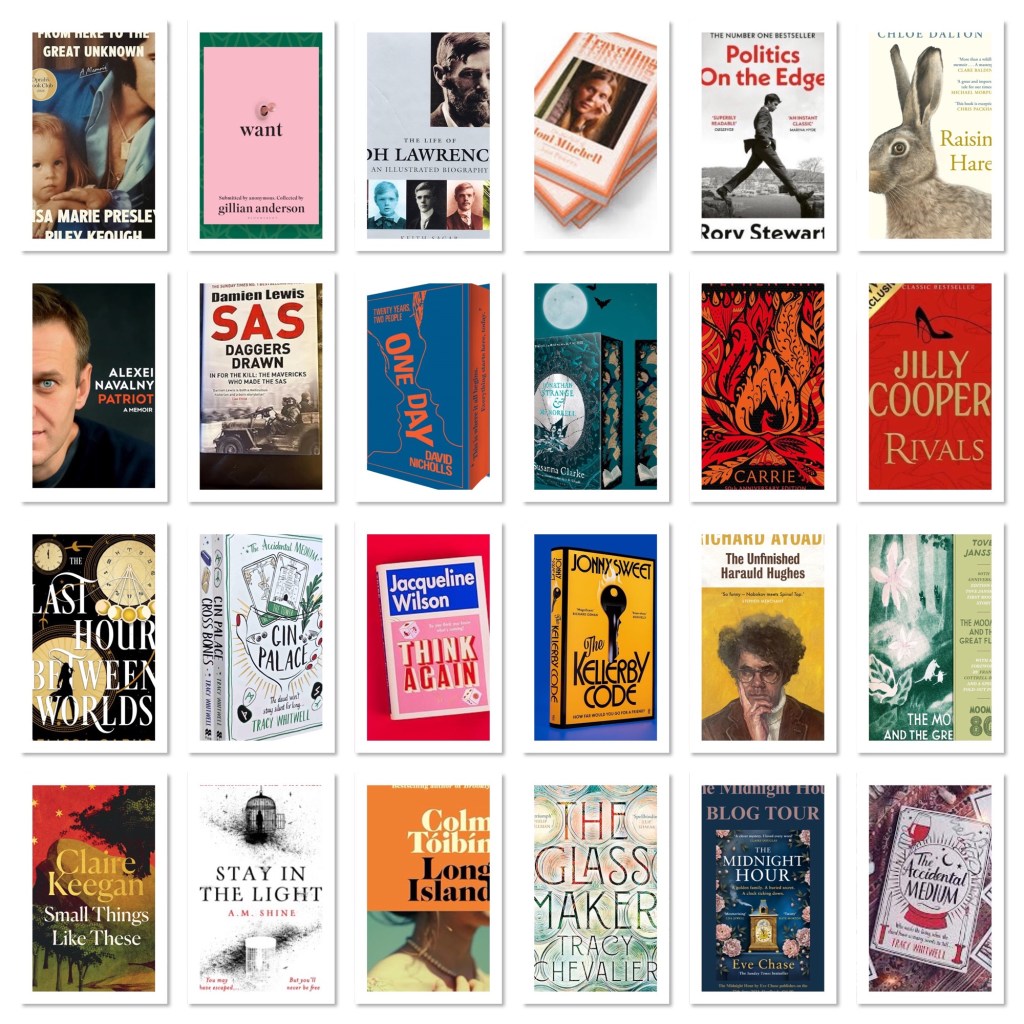
It’s that time of year again, when individual book reviews make way for lists that sum up our reading year and with a little bit of shopping time left I’m letting you know about books I’ll be buying this year and those I’ve popped on my own Christmas list. First we’ll take a look at nonfiction.

From Here to the Great Unknown is the story of Lisa Marie Presley’s extraordinary life. Her daughter Riley Keough was being celebrated for her role in Daisy Jones and the Six and Austin Butler had won an Oscar for playing Elvis in the extraordinary biopic by Baz Lurrhman. This was a time for celebration and Lisa Marie asked her daughter to help her with writing her story. Only a month later Lisa Marie died suddenly. In her grief, Riley listened to the many audiotapes that her mother had recorded. On were stories of growing up at Graceland, the amazing relationship she had with her father and the terrible day she had to be dragged away from his body on the floor of the bathroom. Then there are the life choices and stories that seemed incredible from the outside such as her marriage to Michael Jackson and the lifelong relationship she had with Danny Keough. There’s a story of terrible addiction, motherhood and the ever present sense of loss. Riley has brought her mother’s stories to the page and it is an intimate, raw and painful insight into an incredibly interesting life.

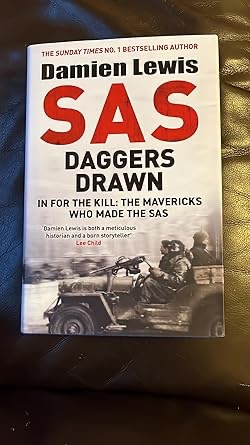
This series of books from Damien Lewis are the perfect answer to those difficult to buy for men in my life, particularly those who have been in the military like my dad and my husband. They’re very well written and usually follow a particular campaign or mission carried out by special forces. This latest book is set in the summer of 1945 and follows the SAS role in the D-Day missions, taking on the might of the Nazi Reich deep behind enemy lines. It focuses on my favourite character from the early formation of the SAS, Blair ‘Paddy’ Mayne. He is definitely the epitome of the maverick thinking and unconventional warfare needed as they faced the fearsome Panzer divisions of Hitler’s army. Known and hunted wherever he went, it’s a fight to survive with only nimble ‘willy’s jeeps’ to help topple the enemy. Lewis has drawn on unseen archive material to bring this story to life and show the incredible effort made by the SAS to bring the war to it’s close.

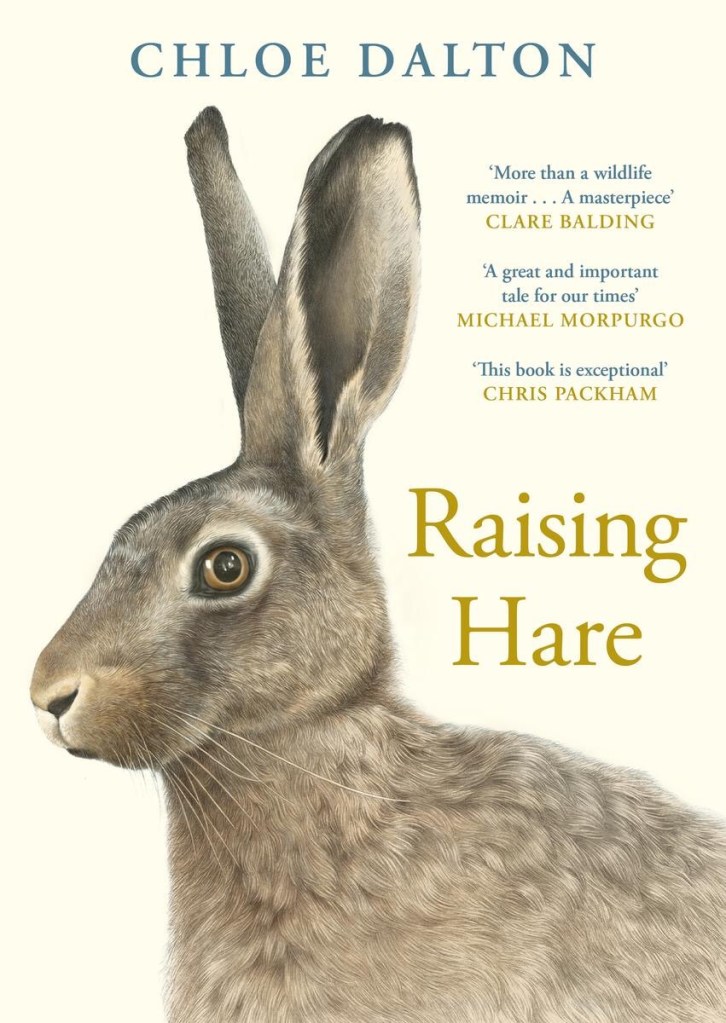
I have a memory from when I was 5 or 6 years old and we lived on a fruit farm in Leicestershire. I was in the bath when my dad came in with something to show me. I remember standing in a towel and seeing a tiny bundle of fluff in my dad’s huge hands. I touched it and it was the softest thing ever. It was a leveret – a tiny baby hare. Ive been fascinated with hares ever since and they’re everywhere in our house. This is the perfect book to give my dad for Christmas to remember that moment. Chloe Dalton left her busy city profession to return to the countryside where she grew up during lockdown. She never expected to become the custodian of a baby hare. When she finds it alone and sure to die, she makes the decision to give it a chance. So she bottle-feeds it, letting it sleep in her bedroom at night and slowly it grows, lollops around the room at night and drums on the duvet cover when it wants attention. She writes about the challenges of caring for the leveret but also preparing for it’s return to the wild. This is an extraordinary kinship between human and animal, one that endures so that she can call it and it will come. It shows how an unexpected experience can change our lives and give us a new direction, perhaps awakening a more authentic way of living.

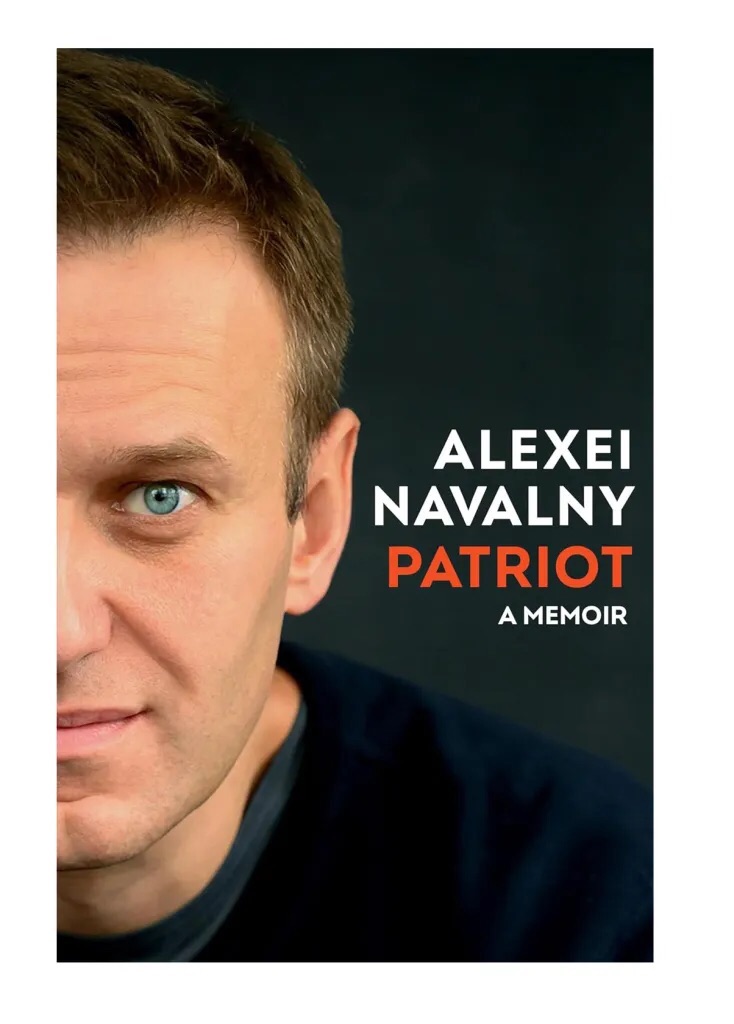
Alexei Navalny became a beacon of hope to millions as the sole political threat to Vladimir Putin. In his own word is the journey from his Soviet childhood, hispolitical awakening, his marriage and beloved family, his total commitment to taking on a corrupt regime and his enduring love of Russia and its people. His 2020 poisoning by the Russian security services was a global news event. In 2024 he died in a brutal Siberian prison. He began writing Patriot whilst recovering from his poisoning and ends with his prison diaries, seen here for the first time.

We witness the growth of his nationwide support. We see his many arrests and harassment and, in stunning detail, the attempt on his life. We understand why he felt he had to return to Russia. In prison, he shows a spirit and a sense of humour that cannot be crushed. Patriot is as dramatic as its author’s life – passionate that good and freedom will prevail. It is Alexei Navalny’s final letter to the world, a rousing call to continue his work, an unforgettably positive account of a life that will inspire every reader.

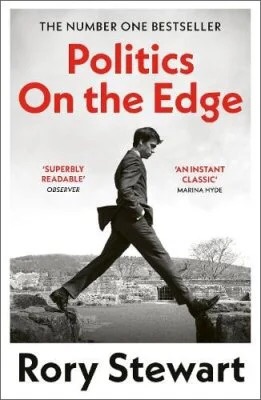
After watching Rory and Alastair Campbell on the election night coverage on C4, debating against Nadine Dorries (delusional) and Kwasi Kwarteng (largely oblivious) I decided to listen to a couple of their podcasts. Despite coming from different sides of the political divide, both are moderate, intelligent and incredibly eloquent, although Campbell has a much shorter fuse than his counterpart. Rory Stewart is a great writer too. Here he takes on the state of politics in Britain, analysing where things started to slide towards the broken state we’re in. Charting the course of a decade, Rory Stewart describes his own journey from went from political outsider to standing for prime minister – before eventually being sacked from a Conservative Party that he had come to barely recognise. Uncompromising, honest and darkly humorous, this is his story of the challenges, absurdities and realities of political life. Instantly praised as a new classic, it is an astonishing portrait of our very turbulent times.

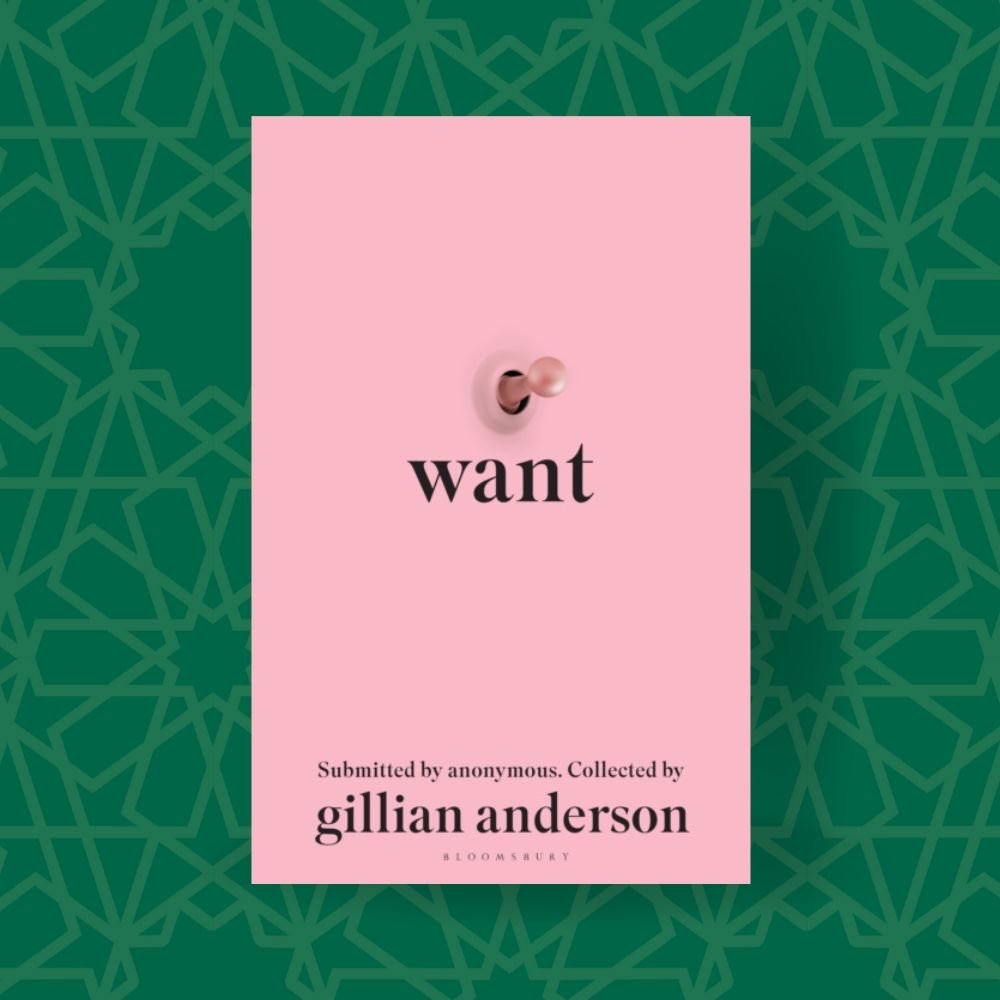
Having read Nancy Friday’s books on female sexual fantasies and desires, most notably My Secret Garden, I’m very interested in this modern collection of anonymous sexual fantasies as collated by Gillian Anderson. I’m a huge fan of Anderson’s from her Agent Scully days to her more recent character actress phase. I love the roles she chooses and her uncompromising feminist stance, both very visible in her role as Jean in Sex Education – the sex therapist mum of socially awkward student Otis. In Want she asks the questions: what do you want when no one is watching? Who do you fantasise about when the lights are off? When you think about sex, what do you really want? 

There’s so much to cover when we talk about sex: womanhood and motherhood, infidelity and exploitation, consent and respect, fairness and egalitarianism, love and hate, pleasure and pain. And yet so many of us don’t talk about it at all. Gillian Anderson collects and introduces the anonymous sexual fantasies of women from around the world (along with her own anonymous submission). They are all extraordinary: full of desire, fear, intimacy, shame, satisfaction and, ultimately, liberation. From dreaming about someone off-limits to conjuring a scene with multiple partners, from sex that is gentle and tender to passionate and playful, from women who have never had sex to women who have had more sex than they can remember, these fantasies provide a window into the most secret part of our minds. 
Want reveals how women feel about sex when they have the freedom to be totally themselves.

Travelling is one of Time’s must read books of 2024 and is a perfect choice for my music loving mum. Celebrated music critic Ann Powers explores the life and career of the legendary Joni Mitchell. However this is not a dry, standard account of her life. The author takes us on a long journey, through a life that changed popular music: of a homesick wanderer forging ahead on routes of her invention. I remember her music as a huge part of the soundtrack to my childhood. She is one of the most celebrated artists of her generation, Joni Mitchell has inspired countless musicians and writers, while always herself.

In this book Ann Powers seeks to understand the paradox of Mitchell – at once both elusive and inviting – through her myriad journeys. Drawing on extensive inter­views with Mitchell’s peers and deep archival research, Powers takes readers to rural Canada, charts the course of Mitchell’s musical evolution, follows the winding road of Mitchell’s collaborations with other greats and explores the loves that fed her songwriting. Kaleidoscopic in scope and intimate in detail, Travelling is a fresh and fascinating addition to the Joni Mitchell corpus – and one that questions whether an artist can ever truly be known to their fans.

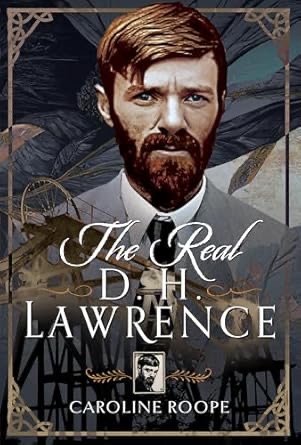
A brand new release in November this year, The Real D H Lawrence is something of a misnomer – for who can ever truly know the real Lawrence? Lawrence himself spent a lifetime roaming the depths of his imagination trying to communicate the essence of who he really was – a quest that ultimately gifted the world twelve full-length novels, eight plays, over eight-hundred poems, enough paintings to form an exhibition, travel essays, novellas and short story collections: and a vast catalogue of non-fiction ranging from topics as diverse as European history to psychoanalysis. In this expertly researched exploration of Lawrence, Caroline Roope offers a captivating re-telling of the enigmatic author’s life, from his humble beginnings in the coal mining districts of Nottinghamshire to his final struggle with censorship and his battle to stay alive. Drawing on Lawrence’s published works, as well as his vast personal correspondence, The Real D. H. Lawrence offers a fresh insight into Lawrence’s creative process; and his stubborn refusal to live anything less than a life that was right for him, in a world he believed had gone terribly wrong. This is the perfect gift for my mum, a lifelong Lawrence fan who showed me the 1970’s film adaptations of his books and shares a love of his much maligned book Lady Chatterley’s Lover.

Check out my next post for books on my own Christmas list this year.

Posted in Netgalley, Publisher Proof

The Paris Muse by Louisa Treger

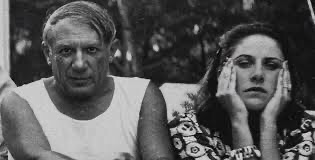
Treger’s latest novel concerns the life, or more accurately the love, of Dora Maar – a photographer and painter who lived in Paris for most of her life and most notably, during the German occupation in WWII. Born Henrietta Theodora Markovitch in 1907, she was known as a surrealist photographer exhibiting alongside Dali and other notable surrealists. She used her photographic art to better represent life through links with ideas, politics and philosophy rather than slavishly photographing what was naturally there. She was exhibited in the Surrealist Exposition in Paris and the International Surrealist Exhibition in London in 1936. In the same year she was exhibited at MOMA in NYC. He first encountered Picasso while taking photos at a film set in 1935, but they were not introduced until a few days later when Paul Elduard introduced them at Cafe des Deux Magots. They met in quite a dramatic way that showed her intent to catch his eye. She sat alone and using a pen knife she drove the blade between her splayed fingers and where she missed blood stained the gloves she wore. The fact that Picasso kept these gloves and packed them away with his treasured mementoes is a metaphor for their entire relationship – he fed from her emotions.

The author allows Dora to tell her own story and we are inside her mind at all times. We could say this is only her viewpoint of their relationship, but in a world where she is most known through her relationship with a man instead of her own work, Treger is simply redressing the balance. Also you’d have to be utterly blind to think there’s any other way of looking at his treatment of her and the other women he was involved with. But the nine years they were together, she was subjected to mental and psychological abuse. She was underestimated as an influence on his work, particularly Guernica and his politics. I feel on reading the book that he was drawn to what he saw as her masochism and drew on the pain he caused her both for his personal satisfaction and his art. He comes across as a narcissist; constantly told he was a genius he believes everything revolves around his needs and his freedom to work. This is seen in The Weeping Woman series of paintings where she’s depicted as a woman who is constantly tortured and distressed.

Picasso ‘The Weeping Woman’.

We can see how their affair had a distinct honeymoon period. The mistake she made was thinking this would be a template for the rest of their affair. She knew he had a wife, Olga, who’d had a nervous breakdown. There was also Marie Therese, who was his mistress and had his son Paulo. It seems Picasso never turned down an offer, having liaisons with many of their friends and group sexual experiences when they were on holiday in the South of France. These encounters caused Dora extreme emotional distress and being in her head was a painful experience. I desperately wanted Dora to walk away, but she wasnt being true to herself in accepting her behaviour. It felt like their relationship moved in a toxic pattern of infidelity, followed by distress and recrimination. The more distressed she became, Picasso would withdraw, telling her theyd made a bargain, that she was free to leave and that her distress was preventing him from working. Consequently we can see her feelings discounted. He gaslights her by saying she doesn’t have to feel the way she does; her feelings were always the problem, never his behaviour. In one scene in the book Dora suspects her mother is unwell after a dropped phone call but it’s after curfew during the German occupation an they can’t leave the house. Although Dora has paper saying she’s Catholic and Aryan, they won’t save her if she’s found out in the middle of the night. I found Picasso terribly cold towards her when they find her mother dead the next day, he doesn’t touch her and seemed more fascinated rigor mortis and the unearthly sheen of her skin, than comforting Dora. There were times when I felt he was doing things to keep Dora in her place, but there were other times when he seemed genuinely unmoved. It was as if once he looked at something with his artist’s eye it became an object.

The Years Lie In Wait For You by Dora Maar

It was no surprise when Dora’s mental health began to decline and being in that space with her felt suffocating and scary. I loved the way the author had missing sections in the text to signify time Dora has lost and where others have to step in. Treger represents Dora’s declining mental health as a direct product of Picasso’s actions. It’s as if he slowly takes her apart until her mind resembles one of his portraits, distorted and unnatural. Dora is a square trying to fit into a round hole. She is in love with Picasso and craves a life with him based on friendship, passion and fidelity. Picasso wants to have everything Dora is offering, but without the fidelity. He can’t understand why she is unhappy at his visits to Marie Therese, because when he’s with Dora he is wholly with her. His assertion that they should both be free almost sounds plausible until you realise that he holds all the power: he sees Dora when it suits him not her; he reserves the right to sleep with her friends even when she’s there; he also gets to decide when she should return to her apartment and let him work. I almost wanted him to have a taste of his own medicine. I wanted Dora to turn him away when she’s working or sleep with one of her male friends while they were on holiday, but she doesn’t get to dictate in the same way. That’s when you realise that his call for freedom in their relationship, means his freedom. I felt sad for Dora, possibly influenced by some of my own experiences. She seemed like a smaller woman at the end with none of her original vitality and flamboyance. I’m so glad to know that her art lives on and is still exhibited as part of the surrealist canon.

Out now from Bloomsbury Publishing

For more on Dora Maar’s work and legacy…

https://www.dazeddigital.com/art-photography/article/46781/1/why-artist-dora-maar-was-much-more-than-picassos-weeping-woman

Meet the Author

Louisa Treger, a classical violinist, studied at the Royal College of Music and the Guildhall School of Music and worked as a freelance orchestral player and teacher.

She subsequently turned to literature, earning a Ph.D. in English at University College London, where she focused on early-twentieth-century women’s writing and was awarded the West Scholarship ‘for distinguished work in the study of English Language and Literature.’

Louisa’s first novel, The Lodger, was published in 2014, and her second novel, The Dragon Lady, was published by Bloomsbury in 2019. She lives in London.

Find out more about Louisa at louisatreger.com or https://www.facebook.com/louisatregerwriter or @louisatreger

Dora and Picasso

With grateful thanks to Louise Treger for my early copy of this novel.
Posted in Netgalley

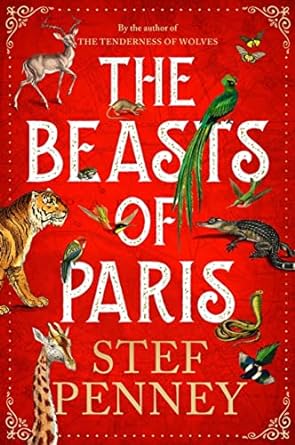
The Beasts of Paris by Stef Penney

Anne is a former patient from a women’s asylum trying to carve out a new life for herself in a world that doesn’t understand her. Newcomer Lawrence is desperate to develop his talent as a photographer and escape the restrictions of his puritanical upbringing. Ellis, an army surgeon, has lived through the trauma of one civil war and will do anything to avoid another bloodbath.

Each keeps company with the restless beasts of Paris’ Menagerie, where they meet, fight their demons, lose their hearts, and rebel in a city under siege.

A dazzling historical epic of love and survival, Stef Penney carries the reader captivated through war-torn Paris.

This was my first Stef Penney novel, but it certainly won’t be my last. I was so happy to get an early ARC through NetGalley and thrilled to receive a beautiful proof copy in the post. I must admit I did that thing of being drawn in by the beautiful and eye-catching cover art. I love animals too, so although I’ve come to this later than I should, it was always hovering around and I yearned to read it and see it live up to the promise of that cover. This historical novel opens in May 1870 within the city of Paris. This isn’t the city of culture and romance, it’s a city on the verge of revolution and war. The three characters are also in transition: Anne Petitjean has been released from a women’s asylum and is now trying hard to begin her new life; Lawrence Harper has moved to the city from Canada, running away from a strict and puritanical upbringing and hoping to become known for his photography; Ellis Butterfield has lofty American connections and is an aspiring poetry, but as an Army medic he’s just escaped one civil war and may be about to get stuck in another. These very different figures met at the Paris Menagerie and feel a connection to the animals there.

Probably due to my mental health background and history of supporting a lot of people at this halfway stage of recovery, Anne’s experience really touched me. She tried to come to terms with her experiences in hospital and I thought the benefits she got from spending time with the animals in the menagerie really rang true. Her relationship with the tigress Marguerite was wonderful. I felt sympathy for Lawrence too, trying to come to terms with his homosexuality in a time when it really wasn’t accepted. There were other background characters too, all revolving around animals, but these two seemed to stay on my mind. The author has chosen this turbulent, transition point in history because it throws our characters into change. It’s a tense and dangerous period of unrest but also so complicated period as the city is placed under siege by Prussian forces, until eventually the French force surrender. Following this, radicals who were ordinary Paris citizens, staged a revolution under the banner of the ‘Paris Commune’. They managed to hold the city for several months and I thought the author weaved the tale of her individual characters into this tense historical background with great skill. She manages to represent the reality of this difficult time for the ordinary people in Paris who just wanted to live their lives. To some extent, their energy would have been taken up with basic survival, but our characters are trying to map out a future too. If you are very sensitive towards animals and our treatment of them, I will say there are some themes you might struggle with. The author has included allusions to the keeper’s struggle to feed the animals during the food shortages. Unfortunately, some would have to be destroyed and there were people who traded their meat on the black market. I love animals so this was hard, but I understood that this is a story of survival for the people as well as the animals. I usually read books set in the aftermath of war, but this made me think about the beginnings and how the calm and routine of everyday life is suddenly ripped apart. I thought the author told the tale well and while I was reading I was completely immersed in the powerful sense of place she created and found it very hard to drag myself away. It’s a book I’ve continued to think about in the weeks since and that’s a testament to the evocative atmosphere and the powerful story the author created.

Out now in paperback from Quercus

Meet the Author

Stef Penney is a screenwriter and the author of three novels: The Tenderness of Wolves (2006), The Invisible Ones (2011), and Under a Pole Star (2016). She has also written extensively for radio, including adaptations of Moby Dick, The Worst Journey in the World, and, mostly recently, a third installment of Peter O’Donnell’s Modesty Blaise series.

The Tenderness of Wolves won Costa Book of the Year, Theakston’s Crime Novel of the Year, and was translated into thirty languages. It has just been re-issued in a 10th anniversary edition.

Posted in Netgalley

The Women by Kristin Hannah

I was completely engrossed by this incredible piece of historical fiction, covering a period of history and viewpoint I’d never read about before. All the Vietnam stories I’ve encountered have fallen into two categories and were made for the big screen; combat movies like Platoon and Full Metal Jacket, or the more domestic based aftermath of war at it’s best in the excellent Coming Home with Jane Fonda and Jon Voigt. I’d never considered that there would be women in Vietnam, which seems crazy since I’d avidly watched MASH when it was rerun in the 1980’s. The series set in a field hospital showed women in the operating theatres, as members of the US Army Medical Corps. Yet, I’ve never encountered anything that showed them in Vietnam, so I was fascinated by Frankie’s story; her personal experiences as well as the politics and societal changes around her tours of duty. What struck me most was how this war ripped the generation gap wide open. Most people my age will remember the Paul Hardcastle single ‘19’ and for me the most stark line in it was ‘none of them received a hero’s welcome’. It struck me how different the government and public response was to these veterans, the majority of whom were no less brave or noble than the WW2 veterans their fathers had been. The author deals with all these themes in a story about the women that served in Vietnam, the women that America forgot.

Frances McGrath is your typical All American teenage girl, living with her family on Coronado Beach. She has memories of growing up on that beach, swimming and surfing with her brother Finley. She is from a good family and expectations are that she will have the ‘right’ marriage and become a mother. However, things change when Finley makes a huge decision. He’s enlisted for Vietnam. It’s no surprise that he might go into military service at some point. Frankie’s dad has a wall in his office called the ‘Hero’s Wall’ where every family member’s military service is celebrated with cuttings, photos and medals. All the men, anyway. Yet not many of their friends and family members have sons who’ve voluntarily enlisted for Vietnam. There are ways of avoiding the draft, depending on who you know. Yet Finley enlists of his own accord, possibly believing the American government’s assertions that they must fight communism in Vietnam, lest it become even more widespread. Within weeks there’s a knock at the door; Finley has been killed in action. In a whirlwind of grief Frankie starts looking into her options. She wants to honour her brother and become a hero worthy of her father’s wall. Both the Air Force and Navy need a nurse to complete a long period of training before they’re posted to work in the field. However, if she enlists in the US Army, they’ll post her out to Vietnam after basic nursing training. Much to her parent’s shock Frankie is soon on her way to Vietnam.

The author creates such an incredible sense of place, I was in Vietnam with Frankie. The all pervading humidity and dampness of everything actually made me feel grubby. There’s a red dust blowing everywhere, that sticks to the constant sheen of sweat on Frankie’s skin and gets into every wrinkle. Frankie’s kitbag and everything she owns takes on the smell of mildew and she never feels dry. At first the bursts of gunfire and explosions in the jungle are surprising and Frankie is anxious, but soon they just become the everyday backdrop to her work. The ‘whump- whump’ of the helicopters arriving with MASCALS (mass casualties) control when she eats, sleeps and relaxes. The first experience of a MASCAL is shocking and Frankie does freeze, but the surgeon she’s working with talks her through it, let’s her know that he trusts her and she can do it. Gradually it becomes easier, although their injuries and the emotions of triaging these men can stay with her. If someone is beyond saving they are left to die, while they operate those they can save. It isn’t just the soldiers though, the unit treats Vietnamese soldiers and locals caught in the crossfire. The use of napalm and the injuries it caused really has stayed with me, the jelly like substance sticking to the casualty’s skin and keeps burning. Frankie is soon a first class combat nurse, that’s not to say these experiences become easy, they just become the norm. When we tuck trauma away in a box without processing it, it sits until we’re ready to open the lid or until a new experience forces that lid open. Usually when we least expect it. Her new relationships keep her going, especially those with her friends and fellow nurses Ethel and Barb. They are the glue that hold each other together and while men may come and go, the bond these women build is lifelong and loyal. That’s not to say there aren’t men. Frankie falls in love with Jamie, the surgeon she works with and the war only intensifies those feelings. There’s also the constant fear of losing them. Later on, a face from the past reignites feelings of first love but brings with it so many complications.

Frankie’s return and adjustment to everyday life on her return from war becomes yet another battle. Now she’s completely safe it’s as if all the feelings she had in Vietnam are bubbling to the service, manifesting in physical and mental symptoms. Her parents are relieved she’s home in one piece, but they don’t seem proud of what she achieved and her accolades don’t make the hero’s wall. She doesn’t seem to fit anywhere. Here Barb and Ethel are worth their weight in gold, taking Frankie in when she needs to get out of California and spending time talking through their experiences. No one else will ever get her like these women. Their lives do move forward though and Frankie just seems stuck. I thought this part of the story was beautifully done and represents so much research and care on the author’s part. She is very aware that although Frankie isn’t real, women did live through these experiences and had to find ways to reconcile their memories of war and their hurtful return to an ungrateful homeland they’d put their lives on the line for. It was as if the world had shifted on it’s axis while they were in the jungle. I was longing for Frankie to have a happy ending, because I thought she deserved it and I thought she still had so much to offer. I learned so much about a conflict I’d only experienced through film and usually from a male perspective. I was completely immersed in Frankie’s world and didn’t want to let it go.

Out now from MacMillan

Meet the Author

Kristin Hannah is the award-winning and bestselling author of more than 20 novels. Her newest novel, The Women, about the nurses who served in the Vietnam war, will be released on February 6, 2024.

The Four Winds was published in February of 2021 and immediately hit #1 on the New York Times, Wall Street Journal, USA Today, and Indie bookstore’s bestseller lists. Additionally, it was selected as a book club pick by the both Today Show and The Book Of the Month club, which named it the best book of 2021.

In 2018, The Great Alone became an instant New York Times #1 bestseller and was named the Best Historical Novel of the Year by Goodreads.

In 2015, The Nightingale became an international blockbuster and was Goodreads Best Historical fiction novel for 2015 and won the coveted People’s Choice award for best fiction in the same year. It was named a Best Book of the Year by Amazon, iTunes, Buzzfeed, the Wall Street Journal, Paste, and The Week.

The Nightingale is currently in pre-production at Tri Star. Firefly Lane, her beloved novel about two best friends, was the #1 Netflix series around the world, in the week it came out. The popular tv show stars Katherine Heigl and Sarah Chalke.

A former attorney, Kristin lives in the Pacific Northwest.

http://www.kristinhannah.com

Posted in Publisher Proof

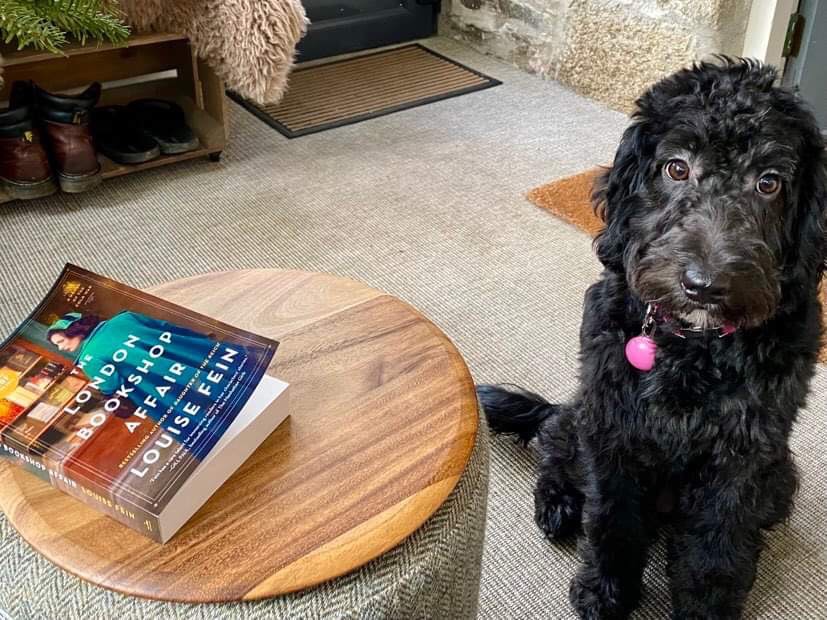
The London Bookshop Affair by Louise Fein

Books and Bramble, the perfect combination.

Historical fiction is one of the genres I enjoy most and I’m drawn to Louise Fein’s novels because she always finds an interesting time period then looks at it from an unexpected viewpoint. It makes you rethink events you thought you knew all about. Here she has chosen post-WW2 London and the dawning of the early 1960’s when Kennedy is president and the Cuban missile crisis is looming. Her heroine is Celia, an ordinary young woman with older parents who are stricter than most and perhaps don’t understand her modern preoccupations and ambitions. I always imagine the ‘swinging sixties’ when I think of London at that time, but progress like that hasn’t quite reached Southwark yet. Celia is working at a second hand bookshop, that specialises in antique and collectible books. Yet her heart yearns for adventure. The world is on the cusp of space travel, women’s liberation and the Beatles. It’s also rather closer to nuclear war than most realised as the USSR and USA start a terrifying game of brinkmanship. Celia wants to protest against the testing and gathering of weapons far more powerful than the Hiroshima bomb. She also chasing her dream career – she’s signed up for classes at Pitmans to gain the secretarial skills that might get her a job at the BBC. The little life her mum leads is not for her and she’s definitely not going to settle for Sam, the boy next door.

The catalyst for change is the bookshop’s new owner Mrs Denton, a dainty well dressed lady who is living alone in the flat above the shop. She seems more interested in shopping than books and offers Celia a raise to manage the shop as she sees fit. Mrs Denton has two regular male visitors: an older man called Mr Humphries who has wandering eyes and a scar down his face and a younger, handsome American called Septimus who Celia is drawn to. Could he be another pathway to a different life. The changes in Celia’s life are interspersed with a different timeline following a young woman called Anya Moreau who is dropped behind enemy lines in 1943. She’s been trained to help the French Resistance disrupt the Germans by sending messages back home via a wireless transmitter. She is betrayed by a double agent and faces torture to divulge her secrets, but she never betrays her cause. Meanwhile Celia finds a connection to this woman and in her desperation to know more she comes across the mysterious Miss Clarke who opens Celia’s eyes to the murky world of espionage running under the surface of everyday life. Possibly even in her own family. I felt for Celia’s parents who have always been protective of their girl, so much so that she sometimes feels suffocated. However their determination to keep Celia away from the past is understandable when we find out the truth.

I throughly enjoyed both timelines and Louise always has a wealth of research underpinning her story making it feel so real. I believed entirely in these two brave young women and their conviction to support their country. I loved seeing Celia’s political awakening as she talks to friend Daphne about the secret nuclear bunkers being dug out in the English countryside and the drastic measures to move works of art out of London – her shock at the immorality of a government that chooses to save art, but keeps it’s ordinary citizens in the dark is a real moment of growth. Her friendship with one of Mrs Denton’s visitors, Septimus, is also a place where she can freely discuss and share ideas about the world. This freedom to debate is new to Celia and you can see her growing all the time. At home her mum turns the tv off when the depressing news is on and Dad never talks about the war. In fact there seems to be a silence between them. I was excited and scared for Celia as her world opens up. The secrets she starts to discover will change her life forever, but will they leave her with the confidence to choose her own path and who will walk it with her? The emotional scenes between mum and daughter are really heart rending as finally everything is brought into the light. The pace of the novel really picked up towards the end as both stories come to their conclusions and different options start to open up before her. I really hoped Celia would choose wisely and not throw away everything about her home while still gaining some of the adventures she’s set her heart on. This was a great read and would make a fantastic film or TV series one day.

Published by William Morrow on Feb 29th 2024

Meet the Author

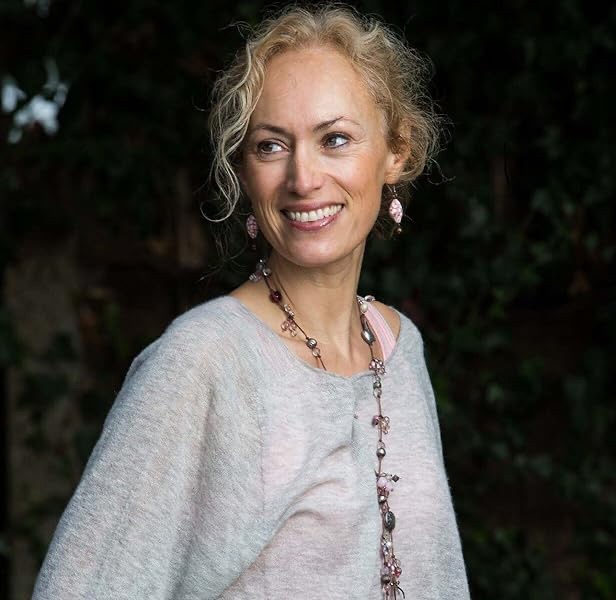
Louise writes historical fiction, focusing on unheard voices or from unusual perspectives. Her debut novel, Daughter of the Reich (entitled People Like Us in the UK edition) was published in 2020 into 13 territories and is set in 1930’s Leipzig. The book was shortlisted for the RSL Christopher Bland Prize 2021 and the RNA Historical Novel of the Year Award, 2021. Louise’s second novel, The Hidden Child, was published in 2021 and is centered around the eugenics movement in 1920’s England and America. It was a Globe & Mail bestseller in Canada. Her third novel, The London Bookshop Affair, about one woman’s journey to uncover secrets of her past, set against a backdrop of espionage and looming nuclear war in 1962 London, will be published in January 2024. 

Louise, previously a lawyer and banker, holds an MA in Creative Writing from St Mary’s University and now writes full time. Equally passionate about historical research and writing, she loves to look for themes which have resonance with today’s world. Louise lives in the Surrey countryside, UK, with her family, and is a slave to the daily demands of her pets.

For more information, go to https://www.louisefein.com and sign up to Louise’s newsletter. She also posts regularly to her blog at

https://www.louisefein.com/blog-and-news, or follow her on Facebook, https://www.facebook.com/louisefeinauthor; Twitter, https://twitter.com/FeinLouise; or Instagram, https://www.instagram.com/louisefeinauthor

Posted in Netgalley, Publisher Proof

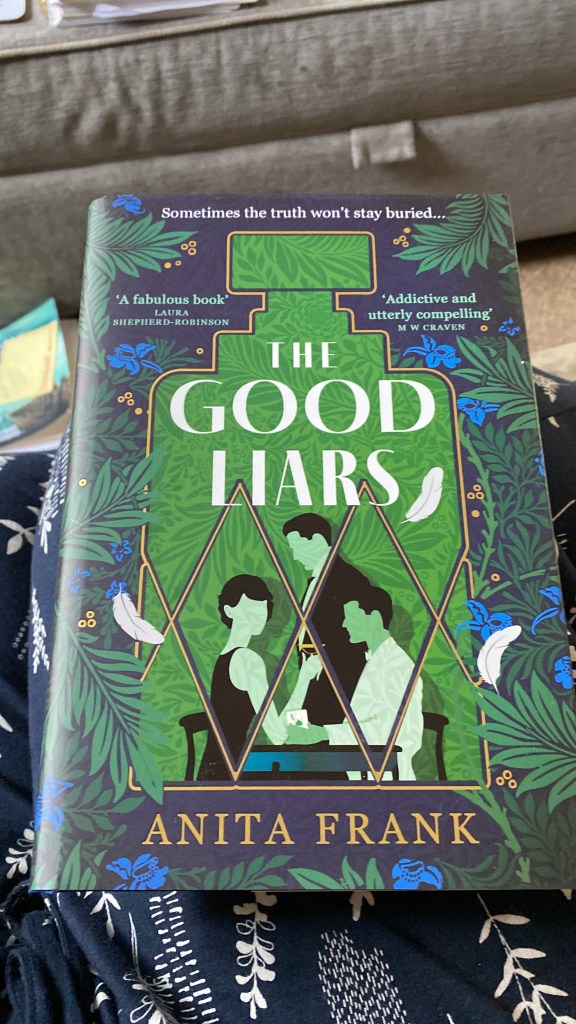
The Good Liars by Anita Frank

This is my favourite of Anita Frank’s novels so far. She’s chosen a fascinating period of history to set this gothic mystery and it adds something a little different to the ‘new servant in a creepy old house’ story. This is time when the country is traumatised, mired in grief and adjusting to the changes wrought by World War One. A time when loss looms large and people are searching for answers. Sarah is the new employee arriving at Darkacre, the family seat of the Stilwells. Like many aristocratic families, WW1 has wreaked havoc on the men in this family. When their father died, the eldest son Hugo became the heir of Darkacre. Yet his time as heir was very short, as he was killed on his return to the front leaving middle brother Maurice as heir to the Stilwell estate. Maurice was not prepared to be the master of the house and with double death duties already crippling the estate, he has learn fast. Unfortunately Maurice has returned from war a changed man, plagued by nightmares, flashbacks and extreme responses to loud noises, he has PTSD or what was then referred to as shell shock. With youngest brother Leonard severely disabled by his war injuries and struggling to come to terms with the loss of his limbs, the family are depleted and barely coping. However, as Leonard so cryptically tells us, perhaps it is no more than they deserve? Sarah’s arrival is the catalyst for this story and it isn’t just the relationship between family members that points to there being issues at Darkacre, soon a series of unexplained happenings start to gnaw away at the nerves of even the most stoic inhabitants.

Darkacre is the perfect gothic setting for the story and to some extent she represents the changes wrought on the aristocracy during this time period. Where before the war the family would have had several house servants, as well as gardeners, land agents, farm managers and so on, there is now just the brothers, Maurice’s wife Ida and Victor, a lifelong friend of Maurice. Due to the way army units were organised, Hugo Stilwell would have found himself the officer to a group of men he knew well, comprised of his brothers, tenants, young men and boys from the village. The losses were astronomical and not a single family in the parish missed out on their share of grief. This also left Maurice facing families of the young men he led to their deaths on a regular basis, including the upcoming ceremonies at the new war memorial. Servants were now in short supply and the tradition of going ‘into service’ had started to decline. We can see how social groupings have become blurred in the way Ida invites Sarah to eat with the family, instead of in the kitchen alone. They converse as equals, often as sitting together after dinner in the parlour. We can see how Ida has been craving female friendship and where it would be unsuitable to be passing confidences on to village women, Ida does start to confide in Sarah. Up till now it has very much been Victor’s role to inject a little levity into the proceedings and to amuse Ida. He confides to Sarah that both he and Maurice fell in love with her on sight, but she was more interested in Maurice and possibly the house and land that have her a title she craved.

On Sarah’s part there are few confidences shared and I found her rather mysterious and enigmatic. I was at first sure this was only a residue of the deference she had always shown employers in the past, but perhaps there is more to it than that. In a therapy situation, silence tends to draw the client forward and share confidences. In fact silence has often been my most powerful skill in terms of growth for the client and Sarah seemed to be using it for good effect. Is she simply trying to forge good relationships with her employers or is there something more sinister going on? The growing closeness between her and Leonard definitely feels genuine and I wondered what it was about their relationship that made Sarah relate to him differently. Was it that she saw him differently due to his disability, or is it a natural affinity? He seems to have different world views to the rest of the group, more compassionate and accepting of human imperfections. This is ironic given the family skeletons hiding out in closets and cupboards all over Darkacre. What was behind the sense of collaboration I felt between Ida and Victor? Why was Maurice so disturbed, not just by flashbacks and dreams, but possibly by his own conscience? Why is Ida unwelcome at the village’s ceremony for the new war memorial and does it have something to do with the disturbing parcel of an animal’s heart covered feathers that she receives?

Since I have a disability it would be remiss of me not to mention the veterans of WW1 left disabled by this horrifying war. Over one million men were killed in combat, but a further two million were left with some form of disability, 40,000 of which were amputees like Leonard Stilwell. He sits alongside such contemporary literary characters as Clifford Chatterley with a lot of the same emotional issues coping with the change of self-identity. Sarah represents a new stage in Leonard’s recovery, one he might resent, but yet they do become friends. On her first morning, Sarah arrives at Leonard’s room to find Victor smoking and Maurice laid across his brother’s bed rather like they’re still in barracks or the hospital. It’s a little glimpse into the institutionalisation of the men, more used to other male company in a military setting than the domestic sphere. Sarah could be seen as a barrier between Leonard and his fellow veterans, whereas before his care was kept within the sphere of the family now it is contracted out for money. Leonard could have felt as if he belonged, that his brother and Victor were still in the trenches with him, sharing the seismic shift his life has taken. His getting up routine was part of family life, whereas now it’s a job. A stranger has to perform the most intimate care for him and they are obliged to do it for money. He is now facing his disability alone. Yet he and Sarah muddle on quite well together, helped in part by Sarah’s training and professionalism, but also because they perhaps share the same anger and disdain for the futility of war.

Early on in the novel we see that Maurice is tormented by the memory of a young soldier who has half his face blown away. He can’t forget the horror of it, so it is perhaps fitting that the visiting Sergeant who arrives in the storm has a facial disfigurement. It’s as if Maurice’s worst nightmare has come knocking on the door. The inspector has only visited the day before and the sergeant seems to be following up, carrying out orders by interviewing the family. His disfigurement is covered by a copper mask, it’s smoothness belying the tangled and complex injuries underneath. For Maurice it almost seems worse that his injury is covered, because he can imagine in detail what’s actually there and imagination is worse than the reality. His mask also gives that element of disguise, it conceals his expression and leaves people wondering what he’s really thinking. There’s a definite Agatha Christie feel as a storm cuts the house off from civilisation and the family are trapped with these two outsiders. One of them a detective, trained to uncover secrets and the other has shown herself to have psychic tendencies. There are twists and turns, more than I expected in fact! I loved the atmosphere and Anita is brilliant at those little creepy happenings, that might have an innocent explanation, but start to unnerve you. The battle scenes are so well written too, perfectly capturing the chaos, the fear and a different kind of horror. This is a great read and Anita goes from strength to strength.

Published 17th August by HQ Stories.

Meet the Author

Born in Shropshire, Anita studied English and American History at the University of East Anglia. She now lives in Berkshire with her husband and three children.

You can connect with Anita via social media:

Twitter – @Ajes74

Instagram – @anitafrankauthor

Posted in Random Things Tours

Ahead of the Shadows by A.B. Kyazze

When a photographer witnesses war crimes, will she have to abandon her calling to save herself?

As Lena and Kojo work in conflicts across East and Central Africa, there is immense psychological pressure, and it’s not certain if their relationship will survive.

Eighteen years later, Bene walks the gritty back streets of Paris for one night in a music festival. He is on his way to meet his father in Kenya, a man he’s never met.

Ahead of the Shadows is about the intense relationships that come from work in war zones, the transmission of trauma from one generation to the next, and how one unconventional boy might be able to break the cycle.

It’s such a pleasure to close the blog tour for this small but powerful book about the dangers and struggles of working in conflict zones. I had a period in my teens where I wanted to be a journalist and was in awe of Kate Adie and Feargal Keane. My life didn’t go that way, but I remember reading Feargal Keane’s memoir and a long piece by Italian correspondent Janine di Giovanni that really impressed upon me the life long effects of being and working surrounded by danger. There are the effects of what they’ve seen such as PTSD and a terrible restlessness left over from living such an adrenaline fuelled existence. Many can’t overcome that restlessness and choose to live a peripatetic existence, endlessly wandering from one crisis to the next, using drink to avoid the worst of their memories. It destroys people and their relationships. So, when I saw the blurb for this novel I was interested to read it.

I think the author really captured how adrenalin fuelled these jobs can be as we follow Lena into the Democratic Republic of Congo. With her group she settles into their temporary accommodation for the night, only to be woken by the sound of a dozen phone alarms going off raised voices and activity. With very quick thinking she pushes a piece of furniture across her door and sits against it, eventually falling asleep on the floor. It shows the reader how alert Lena is to the possibility of violence at a moment’s notice. With no clear sides in the country’s conflict, as well as soldiers for hire, child soldiers and rape regularly used as a weapon, Lena doesn’t know from which side danger might come. There’s no clear wrong or right and danger could come from local bandits, not just men engaged in conflict. The next day, with most of her party having left in the night, Lena rings her lover Kojo for advice on what to do. He advises her to walk to the border and cross to Kigali in Rwanda where he can send someone to meet her. As she walks alone towards to border my heart was in my throat. The author creates so much tension and our own knowledge of corruption and violence in these regions adds to our fears for Lena. It seems to take forever for her to cross the no man’s land between the two countries and she seems so defenceless. Hours later in Kojo arms, she is awake as he sleeps, aware that she feels so much safer with him present, but she still has adrenaline coursing through her body.

When writing about such dramatic events and heightened emotions in one timeline of the book can leave the present day sections feeling flat by comparison. However, as we go to Paris with Bene who is on his way to meet his father for the first time in Kenya, the author doesn’t try to compete. She lets Bene’s world seem almost dreamlike in comparison, at least on the surface. As he wanders in Paris he meets a beautiful young woman called Fatima who takes him on a tour of her city. These sections are like a dream sequence within the harsh realities of Africa from almost two decades before. There’s a sense of going with the flow as Bene goes out with Fatima into the evening. This stop has been a hiatus in his journey out to Kenya to meet his father for the first time. He should be carefree, but here and there we get traces of anxiety. When she takes him to a party at her ex-boyfriend’s place he doesn’t look forward to being with strangers, especially if they’re fakes. Most are out on the apartment balcony, watching a singer in the square below. It’s not his type of party. He goes to find Fatima as he wants to leave and steps onto the heaving balcony and wonders at how easy it would be to throw oneself over the railings and what it would take to turn that urge into a reality? I wondered where these dark thoughts and anxieties came from in such a young man. As if he’s only just running one step ahead of the shadows.

Lena’s time in Sudan is a tough read, but an important one. There was a period of time when family and friends were fed up of hearing me ask why news programs and governments had forgotten what was happening in Sudan. I remember George Clooney funding a satellite to view areas where rumours abounded about the mysterious ‘Janjaweed’. The UN seemed reluctant to use the word genocide but it was happening. The author captures the fear these masked murderers on horseback generated in the villages. They were thought to be mercenaries, appearing with no warning, except for the sound of pounding hooves. They left no time for people to flee and showed no mercy. Men were killed, young boys rounded up and recruited or killed, young girls and women gang raped. Then the survivors rounded up and placed in camps. Lena travels there as an NGO worker, trusted to bring back her clear observations for Kojo’s project.

Kojo has trusted Lena to see exactly what’s happening, she has experience of travelling through conflict regions and knows how to find the truth. Even he is taken aback by her phone call, when she tells him that no other place they’ve travelled to holds the amount of fear expressed by survivors. She tells him there’s something more going on here, that even the workers are scared and the people to scared to speak. They’re petrified. Kojo has never known Lena use hyperbole, so when she suggests people are being rounded up, Kojo suggests they talk in person. The longer Lena spends in Darfur the more she thinks about her friend Stefan, another photographer, the one who killed himself. Kojo notices when they’re reunited, a mental distance, and a physical one too – as if she’s constantly on alert and ready to flee. It takes a catalyst to set, what has only been a feeling up till now, into reality. Something to force her into taking flight. The author brings all these strands together beautifully, a full eighteen years since Lena and Kojo were in Sudan. Will Kojo come to understand her urge to flee and find safety all those years ago? Will he forgive her for keeping secrets? This is a beautiful book about the horrors humanity is capable of and what it means to bear witness to these atrocities. It is about being broken down with no joy in life and a sense of despair that can kill and how those responses to trauma can pass to the next generation. However, it’s also about those things that happen to bring us back to ourselves. The things that help us to see the future again with a sense of joy and hope.

Meet The Author

A.B. Kyazze is a British-American writer and photographer. She spent two decades writing and taking photographs around the world in conflicts and natural disasters – in the Democratic Republic of Congo and Darfur, Sudan, where Ahead of the Shadows takes place, and other parts of Africa, Asia and the Balkans. Her photographs and non-fiction work have been published in travel magazines, The Huffington Post, The Washington Times, The International Review of the Red Cross, and by Oxfam, Save the Children, and the British Red Cross.Into the Mouth of the Lion, A.B. Kyazze’s debut novel, was published in May 2021. She has also published the Humanity in the Landscape photography book series, and a number of short stories, articles and book reviews. Today, she lives in southeast London with her young family. There she writes, mentors other writers, runs a freelance editing business, and facilitates creative writing workshops in schools and libraries. She serves as a Trustee for the Oxford Centre for Fantasy, a creative writing charity. For more information go to http://www.abkyazze.com