Posted in Squad Pod

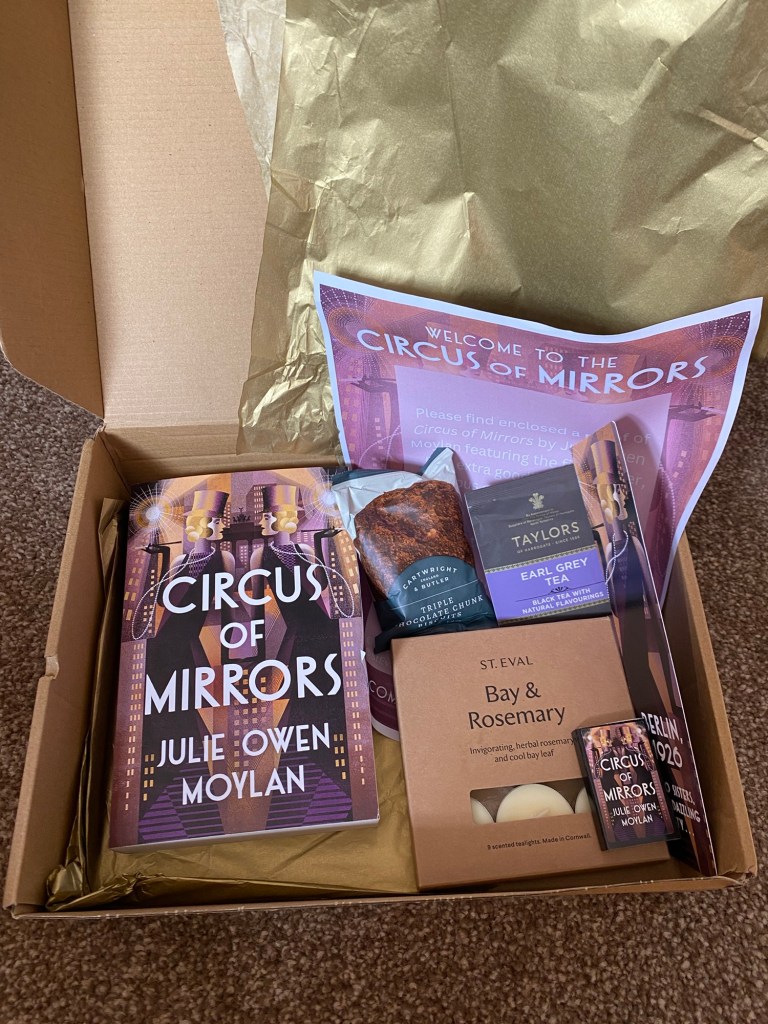
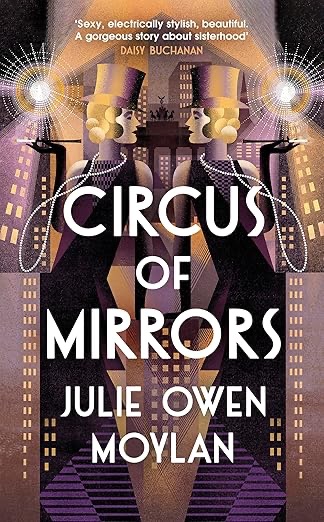
Circus of Mirrors by Julie Owen Moylan

I really have been blown away by this story set just after WW1 and progressing to the mid-twentieth century. Our characters are two German sisters Leni and Annette who live in Berlin and are the last living members of their family. When we first meet them they’re in dire straits, living in a makeshift shelter in an abandoned garden. Thanks to war and the influenza epidemic they’ve lost their family, so are totally reliant on each other. Leni, the older sister, gets a chance to earn some money at a notorious and rather seedy cabaret club called Babylon Circus. There the naive and rather shy Leni becomes a cigarette girl in a second hand and pinned costume that just covers her modesty, but she is at first shocked by what she sees. With shades of the musical Cabaret the author creates a club that is a mirage of clever lighting, fairground mirrors and risqué musical numbers. It’s enchanting by dark and unwelcoming by day, but it doesn’t matter because this is the type of fun that can only be had at night. The girls are shameless on stage and nudity is everyday in the dressing room, but Leni sees something attractive in their boldness, bawdy gossip and loud raucous laughter. They have a freedom she’s never seen before in women, they’re not afraid of taking up space. The illusion extends to the girl’s costumes, covered at first glance but offering a cheeky glimpse here and there. This is what the crowd turn up for, but one girl manages to shock the audience by crouching on the table of a misbehaving customer and pissing in his face. Everything is overseen by owner Dieter, a man with his own disguise. He rarely enters the cabaret room, but sits in his office with it’s resident cat. Having left half his face on a battlefield he wears a tin mask which chafes at his wounds and leaves his expressions slightly lopsided. This gives a certain sense to the fairground mirrors, if everyone is distorted then no one stands out. 

It’s Paul the pianist’s good looks that capture Leni; his talent, his smile and the lock of hair that escapes onto his forehead. When he starts to walk her home she’s evasive, how can she tell him he doesn’t have one? She invents a family, but then has to keep Annette out of her business. Paul’s also in trouble, as his brother has run up debts he can’t repay and the lenders are leaning on him to pay instead. After a warning in the form of a beating he knows he must leave, but what will he do about Leni? Leni and Annette now have rooms, with a landlady who doesn’t mind watching Annette in the evenings while Leni works. I had so many questions. Would Paul ask Leni to go with him? Does he even feel that strongly about her? Where would Annette fit into this? Even after all these questions are answered, jealousy and fate intervene changing everything. 
In our second timeline we’re in the midst of the Cold War and a middle-aged Leni is living in Berlin with her teenage daughter, following the death of her husband. She’s surprised by a sudden visit from her sister Annette who now lives in the USA. She seems agitated and anxious, spending all her time in flat brooding and smoking. Leni’s daughter is in the throes of first love, using the guise of drama rehearsals to meet her boyfriend. With nowhere to go they find solace in a strange old cabaret club where there’s a fairground mirror amongst the ruins. This is the perfect place for secret assignations. Leni is concerned that with her sister here the past seems closer than it’s been for years. So many secrets are being kept between these women and when Leni sees a face from the past, it could all come tumbling down like a pack of cards. 

Julie writes mid-century women like no one else. I feel like I know them. This is my grandmother’s generation and my grandad actually went to Germany after WWII to help rebuild the country. I remember being shocked by the utter devastation of German cities when they were depicted in the film The Aftermath. I was haunted by a woman getting her daughter ready for school, brushing her hair in their normal routine, but with the outer wall blown away. It was like looking into a doll’s house. The author made me feel the contrast of that wild decadence in the 1920’s with the Cold War period where everything feels grey and routine with nothing to look forward to. The bleakness of Leni’s flat really comes across as it seems to echo the desolation of Annette. Even the once rowdy and colourful club is now derelict and abandoned. I love the way the author plays with place and identity in this way, as well as how the characters see themselves. Their internalised sense of how they look forming part of their identity, but is often at odds with how we see them. Dieter and the girls at the club are almost gaudy grotesques, using appearance and performance to mask true feelings. As for Dieter, I kept thinking about his inability to express emotion in his face and how that affected his ability to connect with others. If we can’t express what we feel what effect does that have on our identity? Dieter can’t look at his new face because it doesn’t reflect the image he has of himself in his mind. It’s only once everyone else becomes distorted that he fits in, only the cat accepts him utterly as he is. 

The secrets between the sisters are beautifully constructed. Annette’s adult behaviour is a faint echo of her childhood feelings. Her jealousy and fury when she discovers Leni with Paul is the fear of a child who has almost lost everything and everyone she knows. She only has Leni and what if she leaves her too? As an adult, pulling secrets or feelings from her is almost impossible. She has been holding the past inside herself so tightly and for so many years I was unsure if she would bring it’s truths to the surface without breaking. Towards the end, as another terrible event outside their control looms over Berlin, my heart was in my mouth! Not knowing whether the ending would be what I wanted had my heart racing. I couldn’t bear either sister to suffer any more heartache and this is the beauty of Julie’s writing. She makes you believe in this world and these characters so much, that you’re able to shed real tears for them. This novel is easily one of the best I’ve read this year and I’m in no doubt it will feature in my end of year list too. I’ve loved Julie’s first two novels, but this is certainly Julie’s best novel so far. 

Published by Penguin on 12th September. Thanks to Julie and the Squad POD Collective for including me in this month’s book club.

Meet the Author

Her debut novel That Green Eyed Girl was a Waterstones’ Welsh Book of the Month and the official runner up for the prestigious Paul Torday Memorial Prize. It was also shortlisted for Best Debut at the Fingerprint Awards and featured at the Hay Festival as one of its TEN AT TEN debuts.

73 Dove Street was recently named as a Waterstones’ Book of the Year and Daily Mail Historical Fiction Book of the Year with the paperback still to come in April 2024.

As a filmmaker Julie won the Celtic Media Award for her graduation film “BabyCakes” before going on to win Best Short Film at the Swansea Film Festival.

Her writing and short stories have appeared in a variety of publications including Sunday Express, The Independent, New Welsh Review and Good Housekeeping.

She has a Masters in Filmmaking and an additional qualification in Creative Writing & English Literature. Julie is an alumna of the Faber Academy. Circus of Mirrors is the third novel.
Posted in Orenda, Random Things Tours

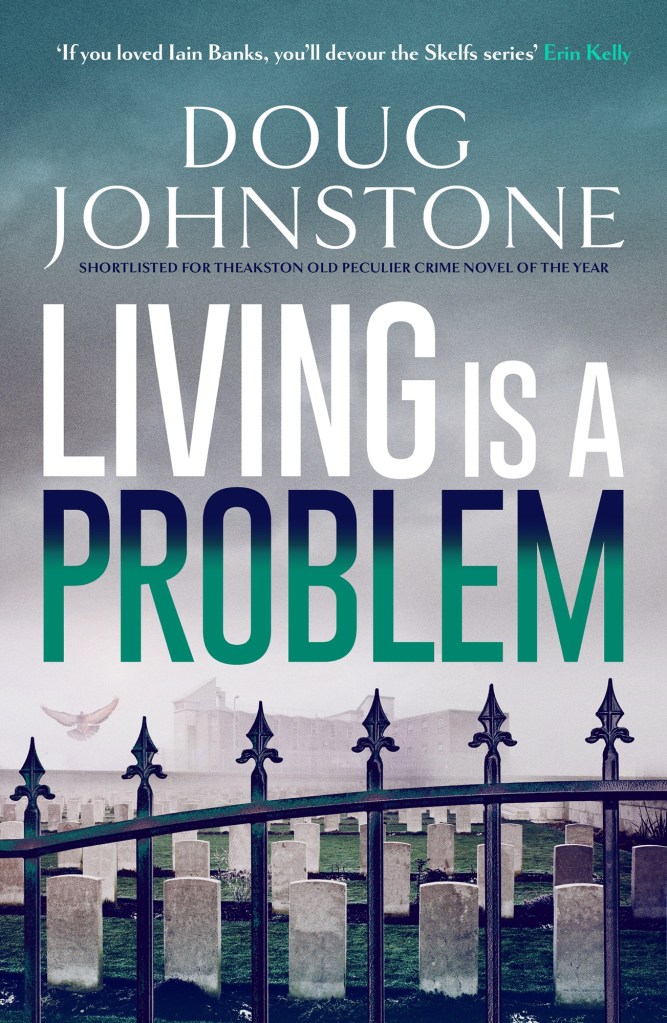
Living is a Problem by Doug Johnstone.

Living is a problem, because everything dies. Biffy Clyro

Every Skelf novel begins with a funeral, but they rarely go off without a hitch. This one is no exception, with a drone buzzing the ceremony. Could it be to do with the deceased or has someone got it in for the Skelfs? Jenny’s following the case from the last book, keeping an eye on the cops they investigating for sexually abusing young girls in the travelling community. Both are inexplicably out on bail and Jenny likes to know where they are, talking to Webster’s wife and setting up surveillance cameras. Hannah’s case also links back to the last book, concerning Brodie the new recruit to the undertaking business. Brodie had been living on the streets since the loss of his baby son broke his world apart. He has found strange scrabbled marks around his son’s grave that don’t look like they’ve been done by an animal. Hannah agrees to set up a camera, but being told that Brodie hears voices she wonders if he might have gone to the grave and acted subconsciously. Dorothy’s case comes from her involvement with a community choir that includes some Ukrainian war widows. One of the women, Yanna, has gone missing. Her husband Fedir was killed over a year ago and now she’s left her two small children with her mother-in-law. Could she have returned to Ukraine to fight, or has something happened to her? Each of the Skelf women feel vulnerable this time and I felt like the author was playing on my emotions a little. I could sense we were on the verge of a huge change and it left me on tenterhooks throughout.  

Hannah’s vulnerability comes from finishing her PhD and feeling a bit lost. While there’s always work in the family businesses she doesn’t know if it’s what she wants to do forever. She’s happily married to Indy but worries about her fascination with powerful older women, such as the astronaut Helen in the last novel and now a professor, Rachel Tanaka who researches into people who hear voices. Is it simply that she’s attracted to their power and position in academia or is it a sexual attraction? I wondered whether it was their competence and their certainty in their career and outlook that she craved. Having Jenny for a mum can’t always have been easy, especially when she was drinking. Then there was her relationship with Hannah’s dad Craig, which was full of fighting and volatility. It could have been scary for her. Maybe these older women feel more stable and dependable and she’s craving what she missed as a child? Jenny felt vulnerable throughout the novel. Part of this was entering into a new relationship, a time when your feelings are on the line and you’re not sure whether it will work out or not. This relationship comes with the extra pressure of knowing him for a long time. She is aware that if it does go wrong, more than her own feelings are at stake. Also Webster and Low, the police officers Jenny is a witness against, are piling on the pressure. They’re facing accusations of sexual assault and the beating of Dorothy and Thomas, but are on bail. Jenny feels unsafe, especially when Webster pulls a knife on her in the street. She petitions the officer in charge to have them dealt with for intimidating a witness. Until they’re remanded everyone is vulnerable. Thomas is not coping and Jenny has started having the odd drink or two. Where will it end? 

Dorothy feels the most vulnerable to me. She’s still working on funerals and investigating, and it’s clear how much her drumming and being part of a band is a solace for her. Usually, Dorothy and Thomas have been a united front. It’s always been a strong relationship, based on friendship, but now she can feel a shift in him. The beating they took from Webster has left them both at a low ebb, but instead of coming together to recover, she feels that their experience has separated them. Thomas seems distant and inward looking, he’s also started the process of Swedish Death Cleaning – sorting through his belongings and giving away what he no longer needs. Even though he explains that it is not just for those who are dying, Dorothy is uneasy that he appears to be putting his affairs in order. She has suggested PTSD and counselling, but he wants to deal with things in his own way. His way started to scare me. What happens when an experience changes your partner beyond recognition? I sensed impending doom and I was on high alert as Dorothy tried to find out what his plans were. I was genuinely scared for her and every time she seemed close to danger my heart skipped a beat. I realised just how fond I was of this badass grandmother. As we moved towards a potentially terrible conclusion I could barely breathe. Could I cope with losing the amazing matriarch of this family? Within her thoughts was a counsellor’s lament: 

‘Sometimes she got it wrong, but she always attempted to have empathy. She tried to see things from the point of view of Yana, Oliver, Veronika and Camilla. She tried to understand Thomas, as well as Griffiths and Webster and Low, their victims Billie and Ruby’. 

Sometimes we have so much empathy for others that we forget about ourselves. Our own anger and sadness gets pushed to the bottom of the pile as we try and try to understand why people do what they do. Each of the Skelf’s cases has a surprising ending and a particularly devastating one for all the women.

As usual the author included his mix of science, philosophy and spirituality. The phone box in the garden is still doing it’s bit, helping the bereaved speak to their loved ones. The funeral business is changing towards being even more sustainable, signified by the new wording on their business information. The Skelfs are now ‘natural undertakers’ rather than funeral directors. It changes the focus and places the dead person and their family at the centre of planning the funeral they want, rather than a stranger dictating what happens. Their resomation rather than cremation system is going well, they’ve stopped embalming altogether and they have mushroom suits that speed up the process of decomposition and improve the soil. They also have their own funeral site for burials and the move towards wicker and cardboard coffins is becoming accepted practice. They are still working with the council on the Communal Funeral Project, providing funerals for people who are homeless or destitute. Hannah is interested in the concept of panpsychism, the idea that everything in the universe has consciousness. Therefore every element is conscious, earth, air, water and fire. Even a rock has an essential spirit. I was also fascinated with the Hearing Voices movement, something I’ve been aware of from working in mental health, but the statistic that one in ten people hear voices or have auditory hallucinations was surprising. I have a medication that causes auditory hallucinations and I only take it at night, so as I’m going to sleep I can hear a constant murmur as if someone is having a conversation downstairs or the radio has been left on. Luckily I know what it is, but for people with direct and often damaging voices it must be so hard to ignore. I loved that there are other cultures where hearing voices is more accepted, normal even. Maybe people who hear voices are simply more in tune with the essential spirit in all things? 

Sometimes, the only thing that keeps the Skelfs (and us) going is hope. There’s usually a wellspring of hope in these novels. A hope for recovery from addiction. Interesting and unusual ways of coping with grief, such as the wind phone. The people these women lift up, like Archie and now Brodie, leaves the reader with a sense that they are on the right side, a glimpse of a more compassionate and inclusive future – something that feels all too distant these days. No other workplace would have employed Archie who has Cotard’s Syndrome, the delusion that he’s dead. Brodie is a risk, he’s been homeless and is in deep grief for his little boy Jack. When his ex, Phoebe, tells Hannah that he hears voices she has to think about this carefully. Could Brodie be mentally unwell? Is this that one time when their trust and nurturing instinct is wrong? I felt there was a little less hope here. Along with the vulnerability comes doubt and there seemed to be a lot of it. Although that’s no surprise when the very people we expect to serve and protect, like Webster and Low, are capable of using that trust and abusing it. Or when the person we share our most intimate moments with can change beyond recognition. Sometimes we have to grieve for those still living. One of the most hopeful things mentioned in the novel was The Future Library Project, which is commissioning new books by writers every year for the next one hundred years. They won’t be read until 2114. This seemed like such an act of hope. The assumption that in a hundred years people will still be hungry for stories, for novels that help them make sense of the world and the people in it. Yet, I kept thinking back to the title of the novel, a quote taken from a Biffy Clyro song that is tattooed on a homeless man whose funeral they’re planning. The full quote is ‘living is a problem, because everything dies’. It felt like an acceptance that life is a series of seasons, or chapters in a book and the story must have ups and downs in order to feel complete. There are beginnings and endings, but some ending arrive before we’re ready. I’m always hoping for one more book in this incredible series and I know whenever the end comes it will be too soon and I’ll miss these incredible women so much. 

Published by Orenda Books on 12th September 2024

Meet the Author

Doug Johnstone is the author of seventeen novels, many of which have been bestsellers. The Space Between Us was chosen for BBC Two’s Between the Covers, while Black Hearts was shortlisted for and The Big Chill was longlisted for Theakston Crime Novel of the Year. Three of his books – A Dark Matter, Breakers and The Jump – have been shortlisted for the McIlvanney Prize. Doug has taught creative writing or been writer in residence at universities, schools, writing retreats, festivals, prisons and a funeral home. He’s also been an arts journalist for 25 years. He is a songwriter and musician with six albums and three EPs released, and he plays drums for the Fun Lovin’ Crime Writers, a band of crime writers. He’s also co-founder of the Scotland Writers Football Club and lives in Edinburgh with his family.

Posted in Paperback Publication

In Bloom by Eve Verde

‘This is my family story. From all I’ve sown together, through all I couldn’t ask. I want to be the bud who makes it.’

In Bloom tells of strength, survival, forgiveness, resilience and determination, and the fierce love and unbreakable bonds between mothers and daughters.

Ever since Sol’s untimely death left her pregnant and alone at twenty-two, Delph’s kept herself small as a form of self-protection. Now, over a decade later, she lives with their daughter Roche and her new partner Itsy, a kind and protective cabbie, on the fourteenth floor of Esplanade Point on the Essex coast.

But Delph’s protective bubble bursts when Roche moves in with her estranged nan, Moon. Feeling on the outside of the bond between her fierce-yet-flaky tarot-reading mother and volatile martial-arts-champion daughter, Delph begins questioning her own freedom. And when Roche’s snooping into her grandmother’s past unearths a familial line of downtrodden women; a worrying pattern emerges. Has keeping small and safe truly been Delph’s choice all these years…?

I’m hosting the paperback blog tour for this wonderful book today and it’s lost none of its charm and power since I read it last year. I don’t believe in trigger warnings, despite their intended purpose to flag up material that may ‘trigger’ difficult emotions in the reader, I feel that they might stop someone experiencing a connection with a text. It might well be a trigger, but that doesn’t always have to mean it’s a negative one. It might be a trigger that starts a healing process. If anyone should have avoided this book it was me, because I was Delphine. I lost the love of my life in my early thirties and then sleepwalked into a coercive and damaging relationship. Yes, it was a hard read at times, but it wasn’t a remotely negative experience. Moon, Delphine and Roche are three generations of a family. Each woman has her own issues, but they all stem from one place. Right back at the beginning.

As the book opens Roche can no longer live with her mother and Itsy, the man she’s been living with for most of Roche’s life. So she decamps to her grandmother Moon’s house. Roche can’t stand Itsy, he dislikes her and wishes she wasn’t there. In fact what he wants is Delphine all to himself, it’s easier to control someone who’s isolated. Delphine has had a glazed over look ever since he arrived in her life and she doesn’t seem like her mum anymore. Delphine has done everything she can to keep Itsy happy. She’s changed how she dressed, made herself less beautiful, stayed at home and stopped going out with friends. Every day she makes herself smaller to make more space for him and Roche can’t watch it anymore. However, things are changing slowly. Delphine has a job she enjoys at B & Q, new connections with her colleagues and today she has made a choice. Delphine is pregnant and she knows deep down in her soul that ‘the thought of more years, more life, tied to him’ is more than she can bear. She goes quietly on her own for an abortion, the quietest but most powerful act of rebellion she can make. Then comes her opportunity, Itsy receives a phone call from Jamaica to tell him his mother is dying. He must jump straight on a flight, so Delphine lets him go alone, knowing that now she has several weeks to herself. She doesn’t stop Roche from moving out and accepts this as her time to heal, time to be the parent that so often Roche has to be for her. However, this isn’t the only recovery needed in the three generations of this family thanks to the actions of men.

I felt at first that I was slowly piecing together the story of a client. Being a person- centred therapist means letting the client choose what they want to talk about. I would use my counselling skills to tease out that story and ask questions where it needs to be clarified or where I might only be getting one perspective. Here the story has it’s own pace and each woman narrates her own section. We flit back and forth, also delving into the past here and there and it’s like doing a jigsaw puzzle but only being handed one piece at a time, then another from a different angle. It takes some time to perceive the whole and that was definitely the case here. Only we the reader can see where they all are in relation to one another. The reality of being a woman in today’s world is explored fully, there is no doubt that these women’s lives would have been immeasurably better had they not encountered men. It takes Roche to articulate this properly with the words and wisdom of her generation.

“Roche knows, remembers, how her life changed at around the time she started secondary, and her bubble of invisibility popped. How, despite the school uniform screaming otherwise, she very suddenly became the inhabitant of a woman’s body, complete with a depressing self-awareness that this was now Roche’s life until one day men deemed her invisible again. In fairness, it’s not her contemporaries who usually do the perving – no, it’s men, grown–ass men who have always done the bulk of the wolf–whistling, the innuendoes and basic compliments that they expect her to ‘smile, love’ and be grateful for.”

As a middle aged woman I now know the power of that invisibility and how, in many ways, it’s a blessing.

I love how carefully the author drew the threads between generations, those behaviours that create a pattern of intergenerational trauma. There are moments in her journey where Delph needs her daughter by her side, but she recognises that it’s a selfish need. Delphi’s lived experience stops her; “is not for a child to fix the parent. Nor is Roche the ointment to Delph’s current troubles”. Then we go back into her mother Moon’s early years, when her grandmother is in hospital, suffering from mental ill health. Her name was still Joy back then and her job is to dispense sunshine to a women who can’t even remember her name. ‘Come on,’ Ma says, in a giddy-up way. ‘You know how happy your little face always makes her.’ This a learned behaviour, people pleasing and exactly what Delph is trying to avoid for her own daughter, three generations later. By sitting with her own pain, Delph is avoiding instilling that behaviour in her own daughter, she’s actively breaking the cycle. Yes, there are traumatic moments in these women’s lives, Moon’s story being particularly harrowing, but we can also see the women’s determination to change. It’s that change and what it means for Roche that brings such an uplifting feeling to the book. For me it’s Delph’s struggle that touched me deeply. The loss of Sol, who’d been there her entire life, is devastating. So moving out of Itsy’s orbit and the mental paralysis she’s been living with means opening up her emotions. That’s all of the emotions including her grief, but it’s a process that needs to happen so that Roche can talk about her father openly and in a joyful way. I found myself more engrossed in the later stages of the book as I had to see whether these women could heal together. This is beautifully written and manages to be funny, moving and hopeful.

Posted in Random Things Tours

This Motherless Land by Nikki May.

This book was an absolute joy to read, which may sound strange considering the subject matter but somehow it awakened my senses, stirred my emotions and kept me reading. In fact I read it so quickly I was finished in an evening that turned into morning before I knew it. Funke lives in Nigeria with her mother, known as Misses Lissie to most people, her father and brother Femi. Mum is a teacher and Dad works at the university. Their entire world is shattered one morning as they make their normal run to school when their mother’s car fails to stop and ploughs directly under a lorry. The drivers side of the car is destroyed but Funke’s side is left completely unscathed. She loses her mother and brother in a moment. In his grief, her father Babatunde is inconsolable and he takes it out on Funke. How did she get out without a scratch? Encouraged by his superstitious mother, he calls Funke a witch and insists she must be protected by some magical being. Seeing how Funke will be treated by her grandmother, her aunties put their heads together and decide she should be sent for a while to her mother’s family in England. Her white family. Funke is ripped away from everything she knows and sent to The Ring, the mansion where her mother and Aunty Margot grew up. There, although she isn’t being hit or accused of evil spells, she feels the resentment of Aunt Margot and her cousin Dominic. They call her Kate, after all it’s easier than pronouncing Funke isn’t it? There’s no colour, bland food and where she was accused of being white in Nigeria, here she is seen as black – with all the racist connotations that come alongside it. Especially in white, upperclass Britain. England’s only saving grace is her cousin Liv. Liv scoops her up and feeds her comfort food. The problem is it’s not the food or the comfort she’s used to.

This is a book about being in between. Funke’s mother was ostracised by her family for marrying a Nigerian man. Aunt Margot sees Lizzie’s relationship with Babatunde as the reason for her own engagement being called off just before the wedding. In her eyes Lizzie was selfish, pursuing her own feelings at the expense of her family. She feels Lizzie had the looks, the charisma and the man she loved, while Margot was left heartbroken and with parents who seemed to miss Lizzie more than they enjoyed Margot’s presence. She sees Funke as her mother’s daughter and a threat to her own children. Her parents seem to love Kate, as they’ve christened her, and Margot doesn’t want her to take all the attention, the love and their eventual inheritance. She’s a bitter woman who is very hard to like. Sadly for Funke, history repeats itself and on the night of their prom a series of events mean they must drive home early. Liv is drunk and high. Yet even Funke, who is teetotal, feels unwell. Dominic throws caution to the wind and decides to drive them home, despite his own drinking, and a terrible accident occurs. Everyone survives but Liv suffers a bad break to her leg. In the aftermath Dominic asks Funke to admit to driving, which she agrees to, not knowing that covering for her cousins will lead to her life being uprooted for the second time.

Funke feels like she belongs nowhere. In Nigeria when her mother was alive they had a wonderful life, even if children would follow her singing a song about her pale skin. That’s nothing to the blatant racism she faces in England, but she faces it down and it fuels her will to succeed. Then she’s back in Nigeria and is again the odd one out. This time she’s in her dad’s new family and their lifestyle in the village is very different to the childhood she remembers on the university compound. His new wife and their children eat and live in ways her dad would have dismissed as ‘bush’ when Funke was a child. Her small brother and sister are black and fascinated with her pale, mixed race skin. Things are familiar, such as the spicy red stew and the heat, but it’s a changed land without her mother in it. At least in England she didn’t expect her mother to be there. Now she faced with the shock of her absence all over again. Will she ever find home? Meanwhile, back in Britain, when Liv finally comes round from the accident she asks for Kate. What will her mother tell her?

I thought the author brilliantly showed how different people cope with mental pain. Funke takes a bottle top from her mother’s hoard (for craft projects) and holds it in her hand so hard that it cuts into her palm. Liv is horrified that she’s hurt herself like this, but for Funke it’s the only thing that distracts her from the grief of losing her and her brother. Liv also deals with motherly absence, but externalises her feelings in a different way. She has a mother who is present, just not for her. Liv starts to drink excessively, uses marijuana and acid tabs to blank out the feelings that she isn’t loved and therefore isn’t worth anything. When we’re children and we’re rejected by a parent, we never assume it’s the parent’s fault and we don’t stop loving them. Instead we internalise their criticism and think we are the problem. Liv has a lot of casual sex because she thinks it sex is all she really has to offer. Meanwhile Funke struggles to give love and truly trust someone. She is in a relationship with a young man who is keeping his true sexuality under wraps, because it’s not accepted in his family or community. The younger people are aware he’s gay and call Funke his ‘beard’, but how far can she take this relationship? What if he suggests a more permanent arrangement and is Funke willing to give her life away so easily? The the same root cause, a loss of the mother figure they so needed, affects both girls, it just manifests in different ways. With them both on opposite continents, how will they ever find each other again? The spaces between can be painful and isolating places to be and the author depicts that with such tenderness and understanding. However, liminal spaces are also freeing. Being in-between gives us the space to choose, to take bits and pieces from each place, each family and make our own identity. I found the end chapter so uplifting and it gave me hope that we can each forge our own identity, once we’ve explored who we truly are. This is a fascinating, touching story about growing up and how we become who we are. It’s vibrant, atmospheric and an absolute must read.

Meet the Author

Born in Bristol, raised in Lagos, I’m proud to be Anglo-Nigerian. I ran a successful ad agency before turning to writing and now live in Dorset with my husband, two standard schnauzers, and way too many books.

My debut novel WAHALA was inspired by a long (and loud) lunch with friends. It was published around the world in January 2022 and is being adapted into a major BBC TV drama. This Motherless Land is my second novel.

Posted in Netgalley

Home Truths by Charity Norman

Charity Norman is one of my must-buy authors, because although you don’t see many people talking about her work I find it really intelligent with a particular insight into difficult and dysfunctional relationships of all kinds. She’s also great at bringing the issues of modern day society to bear on those relationships, exploring whether they get stronger or whether they crack. Livia Denby is a probation officer on trial for attempted murder and the jury have reached a verdict. Everything went wrong two years before, on a particular Saturday morning as Livia and her family are celebrating daughter Heidi’s birthday. Livia and husband Scott have bought her a new bike and she’ll get to try it out on her planned bike ride to a local pub with her dad. Scott has promised to take her for a birthday lunch and she’s really excited to have her dad to herself. Scott is one of those people with lots of responsibilities; he’s a father, an English teacher and cares for his brother who has Down’s Syndrome and diabetes. The phone keeps ringing and Heidi can see their outing slipping away, her uncle has already called twice because he’s confused they’re not going to Tesco as usual. So before the phone can ring again, Heidi takes it and slips it down the back of the armchair. It’s a momentary decision with terrible consequences.

Livia awaits their return with terrible news. Scott’s brother accidentally locked himself out of the house and then had a hypo. Despite help from passers by, the paramedics were unable to revive him. He died before he even reached the hospital. When Scott finally finds his phone there are several missed calls and one plaintive, heartbreaking voice mail that Scott can’t stop listening to. Guilt complicates grief and Scott starts looking for answers. He fixates on something one of the passers by said about the ambulance taking a long time and the paramedics taking a while to make a decision. He starts to research medical negligence, watching videos on YouTube and making links with content creators who talk about ‘Big Pharma.’ I could already see the path he was on because it happened to my husband last year when our local air base was requisitioned by the government for asylum seeker accommodation. He did his basic training there and knew it had been used for refugees before after WW2. Sadly, right-wing racist group from a different part of the country hijacked local protests and turned the camp gates into a protest against all asylum seekers. My husband was so angry they were using images and the legacy of the Dam Busters to peddle hatred. It consumed him so much that he was constantly on social media fighting against their viewpoint and became sucked into a hellish echo chamber of Nazism. He felt like the whole world was racist, but he hadn’t realised that the algorithm behind social media channels is simply to give you more of what you’re viewing. I had to explain using BookTwitter which is mostly a lovely, benign and accepting part of Twitter/X. Thankfully he closed his account and instead is taking positive steps to support the asylum seekers when and if they arrive. As I was reading I could see that Scott was so vulnerable, so desperately sad and ripe for manipulation.

Scott finds a content creator called Dr Jack who claims to work in the NHS but in Scotland. He hides behind a mask, a voice simulator and a cartoon avatar. He talks about Big Pharma, the danger of vaccines and how health fears can be used to control the population. Behind it all is the global conspiracy of the New World Order, a shadowy cabal of billionaires, celebrities and politicians who are the real power in the world. They have the ability to control governments and democracy, both of which give us an illusion of control. It’s not long before he is messaging Scott directly and taking him deeper down the rabbit hole. Heidi is due to have her HPV vaccine at school and after contacting Dr Jack, Scott is keen to take direct action. Without talking to Livia he refuses to sign Heidi’s consent form. Then he uses a video suggested by Dr Jack in his English class, making a link between vaccines and fatal consequences. The video shows a supposedly dead girl in the morgue, a girl with long red hair rather like Heidi. By lunchtime the school is full of terrified teenage girls and the head is inundated with calls from angry parents. Poor Heidi is thrown into the spotlight and the head is left with no option but to suspend Scott. When Livia tries to talk to him she can’t get through and Scott tells her she’s just not listening to him. When she looks into her husband’s eyes all she can see is the fervour of the fanatic.

Meanwhile, Livia is acting slightly out of character too. She’s working with an old con called Charlie who’s about to be released from prison into a hostel, where Livia will act as his probation officer. He’s served most of his sentence with time off for good behaviour. Livia is sure they’ll make a strong team and she’s sure Charlie is reformed from his days as a gangland enforcer called The Garotter. Charlie is a great listener and once he’s in the community they meet at a local cafe for lunch and to check in, so it’s easy to slip into confidences. Something personal is disclosed and she immediately checks herself, she must keep her professional boundaries. However, as Scott’s obsession worsens Livia feels like she’s losing her best friend and the usual person she would talk to. Despite being off work, he isn’t pulling his weight at home. He’s up till the small hours, researching his theories and then haranguing people with them at parties. Livia is lost and embarrassed. She needs somewhere to offload and surely it can’t do any harm to disclose to Charlie now and again? At least Scott has his old university friend nearby, giving him someone to talk to and take him to the pub when it all gets too much for Livia. She is the only one keeping the family on track and the pressure is huge. She’s trying to shield Heidi from Scott’s wilder ideas and managing their son Noah’s asthma. The kids seem ok but it’s hard to know. In the section narrated by Heidi we realise she isn’t ok. She’s pouring herself into making music with her friend Flynn, but the guilt is killing her. She thinks she caused her uncle’s death and finds herself drawn to risky behaviour. There’s no doubt that this is a family in crisis; when will these hairline cracks finally give and begin to break apart? Slowly in the background, we learn about a new coronavirus outbreak in China and it creeps ever closer.

The tension built by the author is too much to bear. She builds her characters so well that they feel authentic and I could feel Livia’s heartbreak that the man she loves is slipping away. I could also feel Scott’s desperation as he tries to make sense of a tragedy that’s so difficult to comprehend there must be a reason. When faced with a tragedy humans have to make sense of what’s happened. We’re hard wired to detect patterns in events, because it’s terrifying to accept that life is random and chaotic. There must be a reason, because how could the King of rock and roll come to an undignified end in a bathroom? How could a politician and new president who’s filled his countrymen with hope have his life ended by one lucky shot from a random man? Surely a beautiful Princess can’t meet her end in a Paris tunnel because of a drunk driver? There must be something behind it, an intent, a missing clue, a conspiracy. I enjoyed the clever inclusion of experts in the field of online grooming and brain washing and that they were there to support Livia. When someone we love is behaving so illogically, it’s easy to wonder whether everything you’ve thought is wrong and maybe there’s actually some truth in what they’re saying. Livia needs people to say ‘it’s not you’. I was desperate for this lovely family to get through this. Yet I couldn’t help but think a further tragedy lay ahead and that Scott would fall so far out of reach, Livia wouldn’t be able to catch him. As we came closer finding out why Livia was on trial I wondered whether I would be able to understand her actions. I did understand and I hope I would have the courage to do the same in these circumstances. The author captures this whirlwind of feelings so well that I felt emotional. I thought she captured the strangeness and dislocation of the pandemic incredibly well too. This is a book that takes the most traditional of institutions, a nuclear family, then shows us how the dangers of modern life can literally tear it apart. This was an incredible read and I recommend it very highly.

Out on August 1st from Allen and Unwin

Meet the Author

Charity is the author of six novels. She was born in Uganda, brought up in draughty vicarages in the North of England and met her husband under a truck in the Sahara desert. She worked for some years as a family and criminal barrister in York Chambers, until, realising that her three children barely knew her, she moved with her family to New Zealand where she began to write.

After the Fall was a Richard & Judy and World Book Night title, The New Woman a BBC Radio 2 Book Club choice. See You in September (2017) was shortlisted for best crime novel in the Ngaio Marsh Awards. Her sixth, The Secrets of Strangers, was released on 7th May 2020 and is also a Radio 2 Book Club choice.

Charity loves hearing from readers. Please visit her on facebook.com/charitynormanauthor or Twitter: @charitynorman1

Posted in Random Things Tours

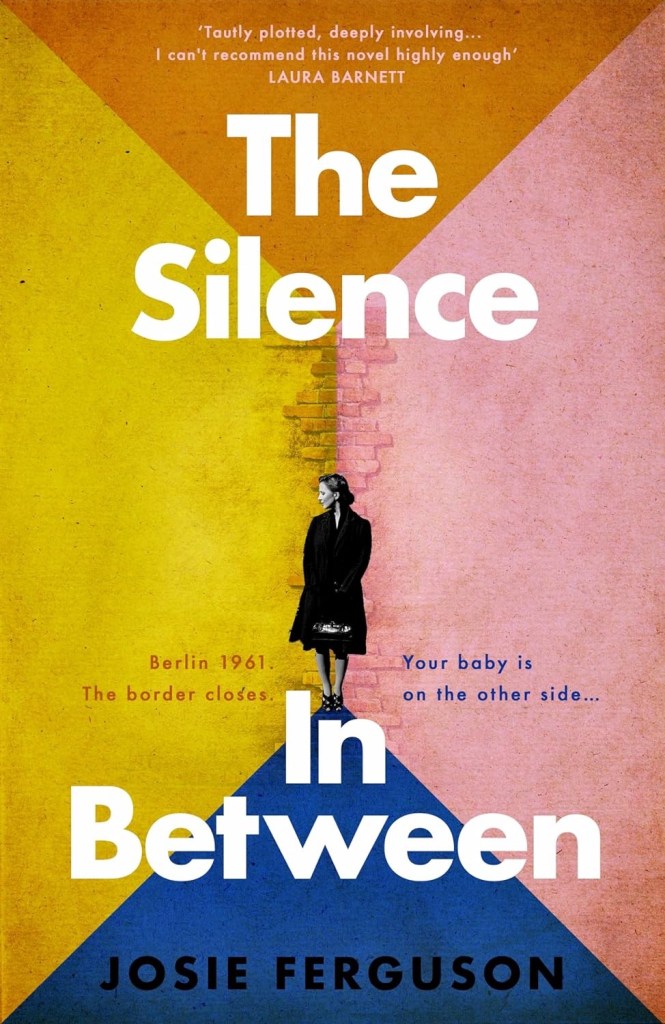
The Silence In Between by Josie Ferguson

‘Evil demanded little of me. It merely asked me to stay silent – to do nothing. And I complied.’

Imagine waking up and a wall has divided your city in two. Imagine that on the other side is your child…

Lisette is in hospital with her baby boy. The doctors tell her to go home and get some rest, that he’ll be fine.

When she awakes, everything has changed. Because overnight, on 13 August 1961, the border between East and West Berlin has closed, slicing the city – and the world – in two.

Lisette is trapped in the east, while her newborn baby is unreachable in the west. With the streets in chaos and armed guards ordered to shoot anyone who tries to cross, her situation is desperate.

Lisette’s teenage daughter, Elly, has always struggled to understand the distance between herself and her mother. Both have lived for music, but while Elly hears notes surrounding every person she meets, for her mother – once a talented pianist – the music has gone silent.

Perhaps Elly can do something to bridge the gap between them. What begins as the flicker of an idea turns into a daring plan to escape East Berlin, find her baby brother, and bring him home….

This book filled me with such complex and difficult emotions I had to put it aside for a couple of weeks and read it when I felt stronger. I don’t know whether it was the theme of baby loss, something I’ve sadly experienced, or whether it was because I felt unwell but the response was visceral. There’s a scene in Friends where Joey finds the emotion of Little Women so upsetting he has to put the book in the freezer, something he’s only done with books that terrify him before. As I clicked out of my digital ARC and snapped the cover of my iPad closed with a snap, I felt like I needed to bury it under a few pillows so it couldn’t reach me. As Lisette realises that she can’t get to her son, I felt that maternal bond stretched to it’s limit. Until it begins to tear. When I started to feel better I restarted it and it really is an exceptional piece of writing. If you love historical fiction and work that really burrows into the human psyche and our complex emotions then this is an absolute must read for you. The quote above really hit home with me because this is something Lisette expresses when she sees Jews being marched out of Berlin to an unknown but terrible fate. In fact the family seem to avoid rumour and talk about them being placed somewhere else, whether that’s another city or country. During the war, when Lisette stumbles across the mass movement of Jewish people from her neighbourhood a woman calls out in desperation, pleading with Lisette to take her baby. Lisette feels so much guilt for looking away, for pretending not to hear, but I put myself in her shoes and couldn’t see what else she could do. If she’d been seen taking the baby she could have been arrested or killed. I thought she was so hard on herself.

The author sets her story across two timelines: one at the end of the WW2 and the other is set in the months following the erection of the Berlin Wall in 1961. She starts her story in the hours between Lisette leaving her sick baby son in the West Berlin hospital and the authorities beginning to build the wall. It really is a matter of hours. The panic when she realises she can’t get back to him is devastating and I felt her grief so deeply. Then we go back Berlin in 1945, when the war is really beginning to bite. The promised victory seems more and more distant: food is scarce; more men are being called up; bombs are starting to fall on Berlin. This is where ordinary German people, at least those who haven’t bought into Hitler’s rhetoric, are starting to realise that victory is a long way away. Maybe, they might even lose. Often in dual timeline novels I am drawn to one story line more than the other, but here the author strikes a perfect balance. Both timelines are compelling, evocative, terrifying and deeply moving.

The depth of research behind these wonderful characters and their devastating story is clear from the outset. It was brilliant to be able to read more in the author’s notes because if you’re like me and only remember the Berlin Wall coming down, there’s a lot to learn here. Firstly I had no idea of the geography. In my brain there was a wall running through the capital because Berlin was fairly central to Germany. That is not the case at all. The county was divided, but Berlin was within the East German side of the country. Previously, people living in East Germany could openly travel to the West of the country. Comparing the two sides, Lisette is aware of her side of Berlin seeming like a monochrome version of the world but they could travel across to the more colourful and vibrant side. This colour wasn’t just to do with Western money, Lisette is aware of living in fear of the Stasi, a network of agents who spy on their own citizens. I had no idea that West Berlin was essentially split amongst the allies so there were distinct areas patrolled by the French, American and British forces. It’s the small horrific details that hit home though – there were streets on the edge of the new barrier that provided an escape route if you passed through one of the houses but as the days go by the windows are slowly bricked up. These facts ground the author’s story in it’s time and place, both timelines showing a city divided. From the rhetoric of 1945 that slowly separates the Jewish residents using derogatory language and propaganda, the targeting of their businesses and homes, forcing them to wear a yellow star and subjecting them to violence before removing them from their neighbourhoods towards the trains that will take them to Belsen and Auschwitz. Then we’re thrust into the paranoia of the 1960’s where even your neighbour might be a Stasi spy and I had my suspicions about their neighbour with her budgie in it’s cage – a metaphor for the new cage they find themselves in. They sell the wall as an ‘anti-fascist barrier’ with strange echoes of Putin’s excuses for the invasion of Ukraine. Elly’s father isn’t the only one who realises that this is not for keeping others out, it’s for keeping them in. The city’s buildings are still peppered with bullet holes and bomb damage, a visual representation of it’s residents who bear the internal scars of war. War is indiscriminate. Once it comes to ordinary people there’s never a bad and good side, every resident is affected by poverty, trauma and loss.

I loved the more unusual aspects of the characters, such as Lisette’s daughter Elly, who has a synaesthetic way of encountering the world. She knows that the people of this city have lost their music. She experiences others in terms of a melody only she can hear that expresses their emotional state. It is the first thing that connects her to the Russian soldier she meets. They don’t speak each other’s language but Elly can feel his music and for the first time it combines with hers creating a beautiful harmonious melody. Along with her mother’s silenced voice, people have lost that unique way of expressing themselves through sound. In East Germany there are many ways to be silenced and the Stasi have instilled a fear in their own people, that they’re always being listened to. I loved reading the notes at the end of the book and it has already inspired me to read further. I knew about the Berlin Wall of course but not where it was situated and how the rest of Germany was divided was totally new to me. I sort of knew one side was communist and the other wasn’t, but that was all. I hadn’t even realised that Berlin was situated inside the East part of the country. I’d imagined just one long dividing wall down the country that also separated Berlin, with a no man’s land between. I hadn’t known that until the 1960’s people could pop easily between East and West Berlin, giving them the possibility of escaping into the west permanently. With the hospital on one side of the wall and their home on the other Lisette starts to fall apart, but not all was rosy in this household to begin with. We get a glimpse into how things have been for all three generations in the flat, there are so many memories weighing these people down, one more haunting than the other. Yet we are given a little hope when one family decides they must get to the other side. Adventurous and thrilling as it is, their life is at stake, something that really hits home when they see someone try to swim across. The author takes us effortlessly back and forth in time to understand this family and my heart kept breaking for them over and over for. While I struggled to read this at first, I’m so happy that I went back to it because it was breathtaking. It was as if someone had bottled both moments in time and simply poured them onto the page, raw and confronting. This is an absolute must read for historical fiction fans and a book I will definitely go back to in the future.

Meet the Author

Born in Sweden, to a family of writers and readers, Josie Ferguson moved to Scotland when she was two. She returned to Sweden in her twenties, where she completed a vocational degree in Clinical Psychology (MSc). Upon graduating, she moved to London to pursue a career in publishing, something she had dreamed about since delving into fictional worlds as a child, hidden under the duvet with a torch.

She later moved to Asia in search of an adventure and a bit more sun. She currently works as a freelance book editor in Singapore, where she lives with her husband and two young children. While training to become a clinical psychologist, Josie learned about the complexity of human nature, something she explores as a writer. She believes books about the past can change the future and she aspires to write as many as possible. The Silence in Between is her debut.

Posted in Netgalley

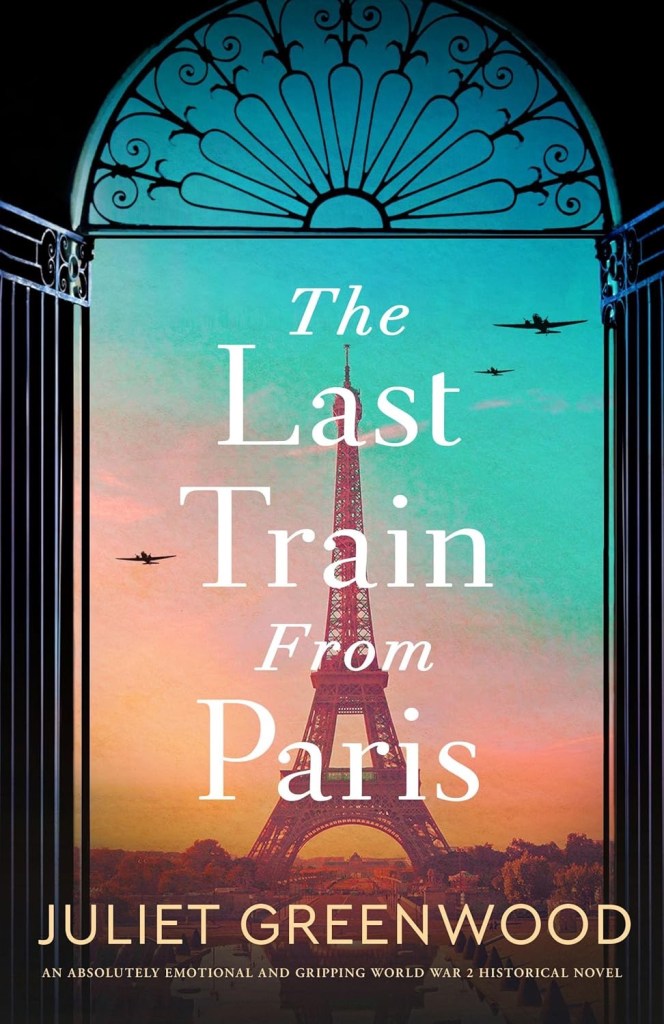
The Last Train from Paris by Julie Greenwood

The year is 1939, and in Paris, France a young woman is about to commit a terrible betrayal…

For Iris, each visit to her mother in St Mabon’s Cove, Cornwall has been the same – a serene escape from the city. But today, as she breaths in the salt air on the doorstep of her beloved childhood home, a heavy weight of anticipation settles over her. Iris knows she’s adopted, but any questions about where she came from have always been shut down by her parents, who can’t bear to revisit the past.

Now, Iris can’t stop thinking about what she’s read on the official paperwork: BABY GIRL, FRANCE, 1939 – the year war was declared with Nazi Germany.

When Iris confronts her mother, she hits the same wall of pain and resistance as whenever she mentions the war. That is, until her mother tearfully hands her an old tin of letters, tucked neatly beside a delicate piece of ivory wool.

Retreating to the loft, Iris steels herself to at last learn the truth, however painful it might be. But, as she peels back each layer of history before her, a sensation of dread grows inside her. The past is calling, and its secrets are more intricate and tangled than Iris could ever have imagined.

I always say that we read books at the right time. Having COVID has left me in bed with very little to do except read between doses of Sudafed! So I’ve been catching up on some of those books still languishing unread on my NetGalley shelf, which is always overstuffed. How strange then that this pick had a link to a blog tour book I’m reading this month, both featuring mothers separated from their children but one set in a Cold War Berlin and this one set in pre-WWII Paris. I love books filled with emotion and those based in pivotal moments of history, especially disability history, so this one would sit perfectly within that Venn diagram. I was drawn in immediately by this gripping story, set across two timelines; one set in 1939 and the other in the 1960s. It didn’t take me long at all to get into ‘The Last Train From Paris’. In fact by the time I got to the end of the first few pages, I knew that I was in for a treat and from then on, I found it increasingly difficult to put the book to one side for any length of time. I was spot on too! I was moved by the story and by the bravery of these remarkable women. Nora and Sabine meet and a form a strong friendship in pre-war Paris, after Nora travels from the UK to join a catering course. In the later timeline, the early 1960s, we meet Iris, a young woman who has questions about the circumstances of her birth.

Juliet is a new author to me and I really enjoyed her style. Her characters feel genuine and show such bravery in turbulent times. She doesn’t stint on the gritty detail of wartime life in Paris and the darkness of occupation. She focuses on an aspect of the Nazi’s eugenicist policies that I think is only just coming to light in fiction. Many families were desperate to escape Europe, as the Nazis plans for the Jewish population start to become clear but Sabine’s little family have a different reason. To give you some background, it’s a lesser known fact that the Nazis targeted those with physical and mental disabilities by inciting a belief that they were a burden to the state. A programme of euthanasia was devised at a Tiergartenstrasse 4, the building giving the name of the plan as T4. In 1933 they passed a piece of legislation called The Law for the Protection of Hereditarily Diseased Offspring pushing forced sterilisation of those regarded as ‘unfit’. Their list ranged from conditions like epilepsy, but also suspected long-term illness and mental illness such as schizophrenia or addictions. They targeted nursing homes, asylums and special schools for their victims and over three years, even before the outbreak of war, had sterilised 360,000 people. Once war broke out they started to kill disabled children and adults, for this book the author has concentrated on the children. Children under three who had illnesses like Down’s Syndrome or Cerebral Palsy (or were thought to have an illness) were forwarded to a panel of medical experts to be assessed and approved for euthanasia. Parents were misled, told their children were receiving expert or enhanced care, then told they had died of illness or natural causes. The truth was they killed at least 200,000 people with disabilities in gas chambers that were also used to kill other marginalised people including, overwhelmingly, Jewish people from across Europe. This truth is deeply moving and horrifying to me as a disabled person and as someone who has spent their working life trying to support people coping with long term illness and disability. It is also why the disabled community fight so hard and shout so loud about any rhetoric from government that denigrates or devalues people with disabilities in today’s society. It is why many disabled people breathed a sigh of relief at the recent change in government as many perceive Conservative austerity measures and rhetoric to have led to the deaths of 180,000 disabled people since 2006. So you can imagine why this subject really spoke to my heart and my values.

If this sounds a little heavy, it really isn’t. The author weaves these historical facts into the story beautifully so we see it through the eyes of one of these horrified parents. Many of whom tried different ways of keeping their child away from the T4 programme, especially those who were developing disabilities. In 1939, as the Nazi march on Paris began, Nora is still in the middle of her chef’s training. This dream she has been realising has come to an end as she realises she has to take a last chance to escape. She really has left it until the last train leaving Paris before enemy arrives. As she gathers her things to leave and says goodbye to Sabine, out of the blue her friend has a last request. Having only just given birth, Sabine knows she must leave Paris too and will be travelling away from the city with her husband. She suspects one of her twins may have a disability and has heard about the T4 programme. She knows what could await her daughter if she’s right. Although it will break her heart, she has to put her daughter’s life first and asks Nora if she will take the baby back to England with her. She knows Nora well enough to be satisfied that her little girl will be safe, loved and well cared for. Nora agrees and takes the heart-wrenching choice to say goodbye to one of her daughters. Iris lives away from home, but often visits her adoptive parents in the the little fishing village in Cornwall where she grew up. She has always known she was adopted, but whenever she asks questions about the circumstances surrounding her birth her parents avoid or shut down the discussion. It has left Iris unsure about her identity and that inner feeling she has that something is missing. I kept thinking about the bond that twins have and how not knowing your other half would affect Iris’s sense of self. I desperately wanted her to find the answers she was looking for, but could understand how Nora might worry about how she would take the truth. I could also empathise with Sabine who must be desperately worried about how her daughter feels and also feel a desperate sense of loss for all those moments she wasn’t there. Would Iris feel betrayed? Would she understand the dangers they believed she was facing under occupation?

This was a story about an evil and previously unimaginable situation, faced by two friends whose trust in each other was absolute even at their most terrified. Most readers would empathise with Sabine’s sacrifice, but I could also see the sacrifice that Nora made. She expected to finish her training in the culinary capital of Europe and become a chef, instead she sacrificed all that out of love for her friend and for a little girl who could perhaps be saved from the fate of so many others. As Iris visits her mother, this time, Nora hands over a box full of letters and mementos, and Iris slowly discovers the true story of her life. She must also face the cruelty of what happened to children with disabilities in those years before the Germans invaded Iris’s origin story is one of bravery and a mother’s desperation, with secrets in store. These young women come alive in this story of a deep commitment made from one mother to another. It’s evocative and moving, reminding those of us who have never been in this position that such young women were capable and willing to make decisions like this that were heart-wrenching and ultimately life-saving. It reminds us that duty, often seen as such a dry word, is sometimes an expression of love and hope for the future.

Out now from Storm Publishing

Meet the Author

Juliet Greenwood is the author of eight historical novels, published by Orion and Storm Publishing. She has been a finalist for The People’s Book Prize, and her books have been top 100 kindle bestsellers in the UK and USA.

She has long been inspired by the histories of the women in her family, and in particular with how strong-minded and independent women have overcome the limitations imposed on them by the constraints of their time, and the way generations of women hold families and communities together in times of crisis, including during WW2.

Juliet now lives in a traditional quarryman’s cottage in Snowdonia, North Wales, set between the mountains and the sea, with an overgrown garden (good for insects!) and a surprisingly successful grapevine. She can be found dog walking in all weathers working on the plot for her next novel, camera to hand.

Posted in Netgalley

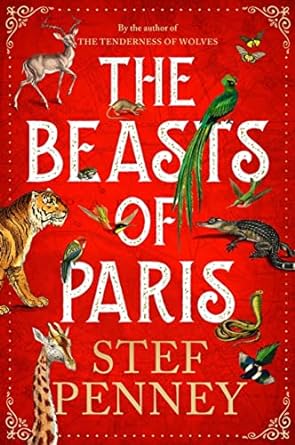
The Beasts of Paris by Stef Penney

Anne is a former patient from a women’s asylum trying to carve out a new life for herself in a world that doesn’t understand her. Newcomer Lawrence is desperate to develop his talent as a photographer and escape the restrictions of his puritanical upbringing. Ellis, an army surgeon, has lived through the trauma of one civil war and will do anything to avoid another bloodbath.

Each keeps company with the restless beasts of Paris’ Menagerie, where they meet, fight their demons, lose their hearts, and rebel in a city under siege.

A dazzling historical epic of love and survival, Stef Penney carries the reader captivated through war-torn Paris.

This was my first Stef Penney novel, but it certainly won’t be my last. I was so happy to get an early ARC through NetGalley and thrilled to receive a beautiful proof copy in the post. I must admit I did that thing of being drawn in by the beautiful and eye-catching cover art. I love animals too, so although I’ve come to this later than I should, it was always hovering around and I yearned to read it and see it live up to the promise of that cover. This historical novel opens in May 1870 within the city of Paris. This isn’t the city of culture and romance, it’s a city on the verge of revolution and war. The three characters are also in transition: Anne Petitjean has been released from a women’s asylum and is now trying hard to begin her new life; Lawrence Harper has moved to the city from Canada, running away from a strict and puritanical upbringing and hoping to become known for his photography; Ellis Butterfield has lofty American connections and is an aspiring poetry, but as an Army medic he’s just escaped one civil war and may be about to get stuck in another. These very different figures met at the Paris Menagerie and feel a connection to the animals there.

Probably due to my mental health background and history of supporting a lot of people at this halfway stage of recovery, Anne’s experience really touched me. She tried to come to terms with her experiences in hospital and I thought the benefits she got from spending time with the animals in the menagerie really rang true. Her relationship with the tigress Marguerite was wonderful. I felt sympathy for Lawrence too, trying to come to terms with his homosexuality in a time when it really wasn’t accepted. There were other background characters too, all revolving around animals, but these two seemed to stay on my mind. The author has chosen this turbulent, transition point in history because it throws our characters into change. It’s a tense and dangerous period of unrest but also so complicated period as the city is placed under siege by Prussian forces, until eventually the French force surrender. Following this, radicals who were ordinary Paris citizens, staged a revolution under the banner of the ‘Paris Commune’. They managed to hold the city for several months and I thought the author weaved the tale of her individual characters into this tense historical background with great skill. She manages to represent the reality of this difficult time for the ordinary people in Paris who just wanted to live their lives. To some extent, their energy would have been taken up with basic survival, but our characters are trying to map out a future too. If you are very sensitive towards animals and our treatment of them, I will say there are some themes you might struggle with. The author has included allusions to the keeper’s struggle to feed the animals during the food shortages. Unfortunately, some would have to be destroyed and there were people who traded their meat on the black market. I love animals so this was hard, but I understood that this is a story of survival for the people as well as the animals. I usually read books set in the aftermath of war, but this made me think about the beginnings and how the calm and routine of everyday life is suddenly ripped apart. I thought the author told the tale well and while I was reading I was completely immersed in the powerful sense of place she created and found it very hard to drag myself away. It’s a book I’ve continued to think about in the weeks since and that’s a testament to the evocative atmosphere and the powerful story the author created.

Out now in paperback from Quercus

Meet the Author

Stef Penney is a screenwriter and the author of three novels: The Tenderness of Wolves (2006), The Invisible Ones (2011), and Under a Pole Star (2016). She has also written extensively for radio, including adaptations of Moby Dick, The Worst Journey in the World, and, mostly recently, a third installment of Peter O’Donnell’s Modesty Blaise series.

The Tenderness of Wolves won Costa Book of the Year, Theakston’s Crime Novel of the Year, and was translated into thirty languages. It has just been re-issued in a 10th anniversary edition.

Posted in Netgalley

The Phoenix Ballroom by Ruth Hogan

Venetia Hamilton-Hargreaves has just lost her husband Hawk and life is now going to be very different. Her son Heron and his wife are moving out to Paris for work and have decided that their son Kite will be attending his school as a boarder from now on. Hawk is worried about his mother and suggests that she employs a companion and home help. Liberty Bell is also grieving. Her mother has recently died after a short illness and a long-standing love affair has ended, but since her lover was also her married boss she has no job either. When she’s summoned to the solicitor she assumes it’s to deal with her mother’s will, but she’s shocked to find her mother’s wishes were not straightforward. She has left a photo album containing pictures of Liberty at different points in her life, alongside a cryptic message. She must commit to meeting with the solicitor every few weeks and when he is sure Liberty has met her mother’s expectations she will receive her inheritance. Yet with no idea of what those expectations are, how can Liberty succeed? Also, having moved in to look after her mother, she has now lost the roof over her head. She applies for the job with Venetia because it is a live-in position but isn’t sure that this vibrant and lively 74 year old actually needs help. Crow has been living in a hostel for some time, but struggles to deal with the chaos and noise. In the evenings he lets himself into a building that houses a spiritualist church and drop-in centre downstairs and an old ballroom upstairs. When the building is put up for sale he worries he may lose his sanctuary, not to mention all the people who receive help and support from the lady called Evangeline downstairs. When Venetia finds out that the old ballroom where she taught dance as a young woman is being sold for luxury flats she decides to take a look. So many of her memories are bound up in this place. It’s where she fell in love, with dance and with a very special man. She met her husband Hawk here and she can see the good work being done downstairs. She decides with the help of assistant Liberty that she will buy the building and restore the ballroom to its former glory, uncovering many secrets and changing lives along the way.

Ruth Hogan’s books are always whimsical, entertaining and uplifting so this book has been the perfect choice while battling COVID. She always creates fascinating and eccentric female characters who are going through a journey of personal growth. Here there was a very specific theme and a rather inspiring one, especially while feeling very unwell. This book was about what fear does to a person, whether that’s fear from a specific event or a long-standing fear of failure. Something I have learned the older I get is that you only fail if you stop trying. Liberty starts the book as quite a cautious person who is thrown totally out of her comfort zone. The job with Venetia gives her a roof over her head, but Venetia’s trust in her abilities really boosts her confidence. Soon she is helping with Kite, making lists for the renovation of the ballroom and supervising the work. However, I believe it is friendship that also makes the difference to Liberty. When Venetia’s eccentric sister-in-law Swan appears at the house Liberty finds her frankness and eccentricity a little startling, but they are soon a regular twosome with Swan even accompanying Liberty to her baffling meetings with the solicitor. I was hoping that some of Swan’s haughty and direct manner would rub off on Liberty and was rewarded with a startling display of assertiveness when Heron appears at the house. I also wanted some of Swan’s colour to inspire Liberty, giving her the courage to stand out and take up space. Venetia is less transparent and there were a few mysteries around her past life that I couldn’t work out. She’d clearly been an accomplished ballroom dancer until meeting her husband Hawk, but there was no real explanation for why she’d given it all up. She was a teacher as well as a competitor and Hawk didn’t seem to be the sort of man who would have insisted on her giving up something she loved. They were also incredibly different people and I didn’t feel that their relationship had been a lightning bolt of passion. There were little hints of a event in the past that changed Venetia and not just emotionally.

I thoroughly enjoyed untangling all these stories, including that of Crow, the homeless man who rescues Kite from bullies and spends his evenings in the quiet of the attic at the church. He’s mysterious and although he’s technically breaking and entering I didn’t get the feeling he was a bad guy, just in dire circumstances. I was interested to see where he would fit in to this group of characters who were very slowly becoming like family. Similarly, Venetia’s son Heron seems pompous and irritating but I sensed good intentions below the surface. He just needed some of these strong women to put him in his place and explain that his mother isn’t in her dotage. I was also fascinated with the mystery of two unknown men who’d appeared at Hawk’s funeral, along with the hidden book with a cryptic inscription. This was a beautiful side story that brought home the main theme of the book – we regret the things we haven’t done more than those we have. This is the sort of book that is perfect for summer holiday reading and which certainly cheered me up as I was stuck in bed with COVID.

Out Now From Corvus

Meet the Author

Ruth Hogan studied English and Drama at Goldsmiths College and went on to work in local government. A car accident and a subsequent run-in with cancer convinced her finally to get her act together and pursue her dream of becoming a writer. The result was her debut novel – The Keeper of Lost Things. She is now living the dream (and occasional nightmare) as a full-time author living with her husband and rescue dogs in a rambling Victorian house stuffed with treasure that inspires her novels. 

Instagram: @ruthmariehogan

Posted in Random Things Tours

The Divorce by Moa Herngren

There are two sides to every story…

This is one of those books that needs to be discussed. A perfect book club choice or book you can foist onto a friend because you will want to discuss it. As the cover suggests this is a marriage and a book that splits into two – one of life’s seismic fault lines that has a very definite before and after. Niklas and Bea have been married for over thirty years with two teenage daughters Alexia and Alma. They have what most people would consider the perfect life. They live in a beautiful and sought after area of Stockholm in an apartment that Bea has spent so much time perfecting. They are currently remodelling the kitchen, but it’s bespoke and at huge cost. Niklas is a doctor and has recently taking a job heading up a maternity department. Historically, Bea stayed home with the girls and more recently took a job with the Red Cross. It doesn’t pay a lot but with Niklas’s new wage they don’t need to worry about it. As we meet the family they are preparing to take their annual summer holiday to Holgreps and the home of Niklas’s parents. They go every year at the same time as his brother Henke because this is the only time the cousins get to be together. Niklas has forgotten to book the ferry tickets and Bea is furious. This means spending an extra week in the sweltering heat of the city with no outside space or a long drive to a different ferry crossing. He only has to do one thing, she does everything else and he’s so wrapped up in his new job he can’t do it.

“Bea is busy emptying the dishwasher in the kitchen, but she stops as he comes in. The look on her face is demanding […] Her jaw seems tense, and he can see her chest rising and falling rapidly beneath her blouse. She is disappointed. No, disappointed probably isn’t the right word. She’s angry. Furious. How the hell could you forget to pay the bill? This means we can’t go to Gotland tomorrow, the tickets are all sold out!”

“Niklas feels like shouting back at her, telling her there are worse things. Like being a single mother who has just found out that her newborn son has Down’s syndrome, for example. Or being the man on the ICU ward, watching over his wife as his stillborn daughter is taken down to a cold storage unit two floors below. He feels like roaring that his head is so full there isn’t room for the damn ferry tickets and all the terrible, exhausting planning she has apparently had to do. Niklas wants to shout, but instead he turns and walks away while she is mid-sentence. He can hear Bea’s agitated voice behind him, but to his surprise, he just keeps on walking […] Each step is a relief.”

Bea narrates the first part of the book and we get the sense she feels badly done too. Niklas wouldn’t be where he is without her and she has made sure he lives up to his potential. She talked him into accepting the new job because left to his own devices he would still be pottering along in his paediatrician role at the small local hospital. It’s the same with the apartment, he couldn’t see the problem with the existing kitchen. He’d have made do with it for years, never thinking about what the room could be. Bea looks forward to Hogreps every year, she never really had much of a family herself especially after her brother Jacob died. In the aftermath Niklas had taken her to stay with his parents and on her first mornings there, his mother Lillias took Bea wild swimming. She credits those mornings with saving her sanity, more effective than counselling. Niklas had been Jacob’s friend so they shared their grief and it brought them together. Bea has always thought that anything they do together becomes fun, even if it’s taking items to the recycling tip. So it comes as a huge surprise to her when Niklas sends her a text message to say he isn’t coming home. There’s no further explanation and she doesn’t know if he means he isn’t coming home that afternoon, till tomorrow or at all. Bea’s texts and voicemails are ignored so she tells him that their daughter was expecting him to take her out in the car and she’s upset. She’s still ignored and infuriatingly, when she checks in with their daughter Alma says it’s okay. Her dad has called her and said he’ll take her another time. As one night seems to be extending, Bea is beside herself. Niklas says he wants space, but what from and how long for? Where is he staying? She’s going through that strange feeling that the person you shared space with; the person you could touch whenever you wanted; the person who you spoke to several times a day, is now off limits. It was clear to me that the balance of power had shifted in this relationship but I couldn’t understand why.

“Bea picks up her phone again, staring at the screen as though she an coax Niklas into sending her another message. An explanation of why he is acting so oddly […] but the only messages in their chat thread are Bea’s own attempts to reach him. A long string of questions and exclamation marks. CAPS. Angry emojis. Furious red faces with slanting eyebrows and bubbling volcano heads. Demands for communication”.

“The condescending pat on the head, talking to him as though his choices are reprehensible. As though it’s him who is in the wrong, who is unhinged, when all he is trying to do is be true to himself. The clear subtext is that his feelings don’t matter, and nor do his choices or wishes.”

Halfway through the novel, as Bea sets off with her girls to Hogreps and their stay with the in-laws, Niklas takes over the narration. I’d got used to my narrator at this point and I was feeling some empathy with Bea who is clearly distraught. Yet now I started to hear her husband’s story and his inner world: the pressure he’s under at work; the diagnosis he feels he should have made that changed someone’s outcome; the responsibility of financially supporting his family and keeping up with Bea’s remodelling ambitions. He’s on the proverbial hamster wheel and feels totally trapped. The author puts across his tension and despair so beautifully and I could feel the panic in his mind. I started to feel that Bea’s needs were seen as more important than his, not just in the marriage but with his family too. This is a problem rooted in the way they became a couple, both were grieving for Bea’s brother Jacob but she had the claim of being his sister. He took her to his family as this lonely, wounded little bird and they all took her under their wing. Niklas was effectively pushed to one side, not only negating his grief for his best friend but piling on the pressure. He now feels held to account, forced to swallow his own needs and look after Bea at all costs. It isn’t until he ends up talking to one of their neighbours at a party that he even realises he has a choice. The sense of freedom he gets from someone listening to him is exhilarating. Everyone assumes he’s having a midlife crisis, but is he? As he and Bea go to couple’s therapy can they save their marriage?

‘She knows exactly what song Lillis means. ‘If You Love Somebody Set Them Free’ by Sting. Bea herself has never even a fan. Surely freedom also involves responsibility? Taking responsibility for those you love? She doesn’t have a problem with giving other people space, but leaving your partner in the lurch? That’s just cowardly.”

“She has liberated his mind somehow. Lifted the hundred-kilo weight from his chest. Sometimes he wonders what might have happened if they’d met earlier. Would he have been able to avoid all this? Would he have forgiven himself sooner? Realised that he isn’t responsible for other people – other than his children, of course – or at least not in a way that makes him a slave.

I loved how the author shows us the difference in communication styles between these two characters. Bea is performative and you are never in doubt about how she’s feeling. He anger and distress leap out immediately, even all the way back to the beginning and Jacob’s death. Niklas seems shell-shocked by Jacob’s death and he internalises all of the feelings he has to look after Bea. However, it starts to become clear there are bigger things hidden deep inside this couple than tears. Grief is complicated and Niklas’s feelings have been discounted from the beginning, by his parents Lillis and Tores, by Bea and by himself. He hasn’t allowed himself to process what happened and this becomes his coping style. So, when he finally does start to express his feelings they come as a surprise to Bea and to him. He can’t blame her for not knowing how he’s felt, because he’s never tried to tell her. Or is it more that there’s never been room for anything but Bea’s feelings. As we go back and forth, especially section three which passes between the two of them, secrets come to surface that I really didn’t expect. It’s also interesting to see how the people around the couple adjust and cope with what’s going on, brought into sharp focus by the illness of Tores. I felt so much for Bea because she has a lot of catching up to do, it’s as if the world has moved on without out her suddenly. Then in Niklas’s sections of the story I could feel how free he is, exploring his likes and dislikes, changing long held traditions and doing things he never expected like having a tattoo. They might look like mistakes from the outside, but it’s his exploration and he’s finally finding his authentic self. This novel is so beautifully written and exquisitely structured to have impact on the reader. Reading this felt like a counselling session and I mean that in the best way possible. We delve deeply into these two characters and their shared history, looking for clues and patterns of behaviour till we can understand why they’ve reached this crisis point. The question of whether they can come together again and be a family I will leave you to find out.

“Maybe things are different for Bea and Niklas because their life together began in tragedy, with Jacob’s death. Because that, strangely enough, is what brought them together. Maybe that’s why she knows they can handle anything: because they fell in love at rock bottom. She wouldn’t have survived without Niklas”.

Out Now in hardback from Manila Press

Meet the Author

Moa Herngren is a journalist, former editor-in-chief of Elle Magazine and a highly sought-after manuscript writer. She is also the co-creator and writer on Netflix hit- show Bonus Family.
Alice Menzies is a freelance translator based in London. Her translations include work by Jonas Hassen Khemiri, Fredrik Backman, Tove Alsterdal and Jens Liljestrand.