Posted in Netgalley, Publisher Proof

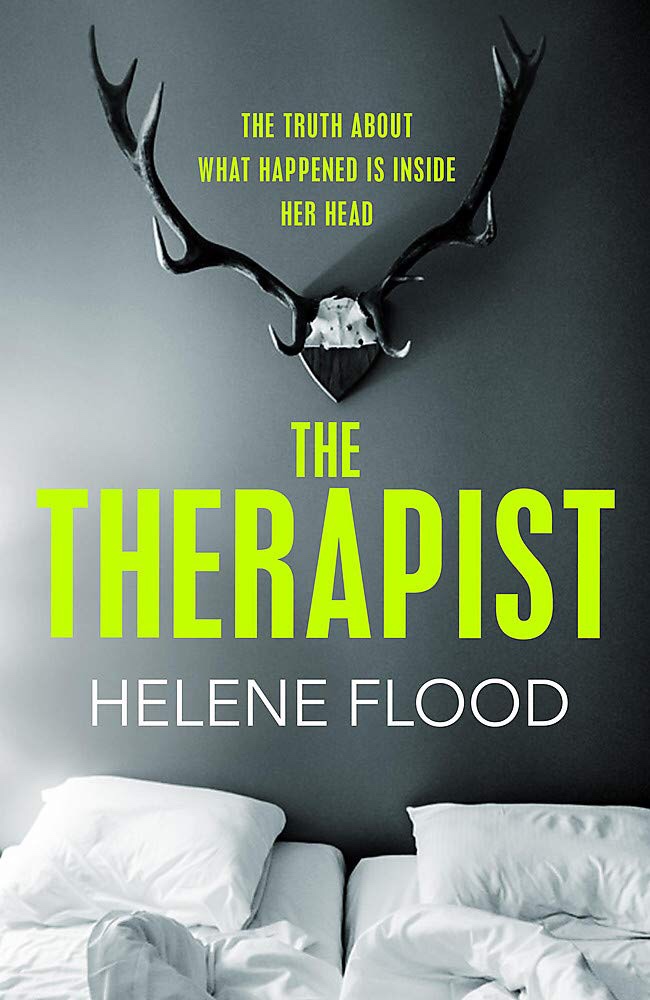
The Therapist by Helene Flood.

Helene Flood has written a fascinating thriller about a therapist, set in Oslo. It’s complexity of character and their motivations probably comes from the fact that the author is a psychologist. Straightaway, I was invested and really excited me to get inside the character’s minds. Sara. and her husband Sigurd live in his family home, a large three storey house they’re currently renovating. Next door is a small addition to the property, housing Sarah’s office and therapy room. On this Friday, Sara is seeing three clients and then settling in for a quiet weekend while Sigurd is on a boy’s weekend away with his best friendS. At lunchtime he leaves Sara a message to say they’ve arrived safely at his family’s cabin and his friend is gathering firewood. She expects to speak to him that evening, so is shocked when one of his friends calls to ask where Sigurd is, as he hasn’t arrived yet. In the days following Sigurd’s disappearance Sara must cope with a very thorough detective searching her house and dissecting her relationship, an intruder breaking into the house, breaking the news to her distracted and narcissistic father, and constantly wondering where Sigurd has gone. On top of everything, she has clients to see.

The story is told in two narratives from Sara’s point of view. In one, we’re in the present day, experiencing the investigation and Sara’s interactions with family and friends in the wake of Sigurd’s disappearance. In the second we meet a very different Sara, as she first meets Sigurd, spends time with friends and makes the decision to move to Oslo. This Sara seems lighter mentally, she’s obviously younger but not by much, so what has changed? The past Sara seems to be enjoying life, despite a stressful clinical post with drug users. Sigurd is also completing his training in architecture and is incredibly busy. The distance between them is something she hadn’t anticipated, she knew they would both be busy, but thought the strength of their feelings would keep them on track. A brief interlude away at a festival with friends sees Sara’s mood lift completely. She starts to relax and enjoy herself. However, there will be secrets kept about this weekend that have huge implications for her future.

Present day Sara seems very controlled and reserved. The author creates this interesting gap between Sara’s interior world and the way she presents herself to the world outside. She is always thinking, analysing and wondering, but her conversation is minimal and gives very little away about how she feels. There’s something called cognitive dissonance going on here, a huge gap between the Sara she presents to others and how she truly feels. There are three core values a therapist should have when seeing clients: authenticity, non-judgement and prizing the client. Sara seems strangely detached from her emotions – still seeing clients even after Sigurd’s disappearance as if nothing’s happened. While this is great for continuity, it isn’t very authentic and I felt that instead of practicing authentically she is wearing her therapist’s role like a mask. Even before she knows about her husband, Sara’s thinking is very ordered. She has the day split into therapy hours, admin time, lunch until she can throw on some pyjamas and chill out. It feels like she’s listing tasks just to get through the day, mentally ticking it off seems like a habit borne out of anxiety or trying to keep motivated when depressed. I wouldn’t say she’s enjoying life much. Their home seems the same, with plans for a beautifully finished house, that are currently a list of tasks they can’t afford. In trying to achieve something ambitious and beautiful, they’ve made their current lives very uncomfortable and messy. The state of the house seems to get Sara down and Sigurd wants her to take on more clients so they have more money to get on with the plans. However, I don’t think Sara is in the mental state to cope with more therapy hours.

I loved the author’s creation of Sara’s narcissistic father, a professor and philosopher with controversial right wing views about crime, family and vigilantism. Sara describes talking to her father, almost like an audience with royalty. It’s so rare to have all his attention on you, it’s difficult just to be his daughter. He seems to give off the sense they should be grateful for his unwavering attention and if either daughter struggles to make use of the time, conversation soon turns to him, his work or one of the many students who seem to loiter round the house like acolytes. In fact Sara is so bewildered by his attention on this occasion she doesn’t tell him her devastating news, but instead debates something totally unrelated with him then goes home again. It’s no surprise that she keeps her vulnerabilities and worries to herself – there’s never been anyone interested in hearing them. Even her sister Annika, although she looks after Sara, drops into her role as lawyer as well as sister. This is partly to remind Sara how she’s being viewed by the police, to remind the police not to take liberties, but also to give herself a professional role to hide behind. It is only when one of Sara’s friends arrives and acts naturally by hugging her, that she even feels like crying.

As Sara starts to undertake her own investigation, secrets start to emerge about the couple’s life together. There has been some distance between them for a while. Her relationship with his family is not a warm one, with Sigurd’s mother resentful that they live in her childhood home – left to Sigurd by his grandfather. They don’t even attempt to look after h er and she foresees a long wrangle over Sigurd’s will. There were arguments at Sigurd’s work with differences in architectural perspectives, and who is the mystery blonde that sometimes wait for Sigurd after work? If his work on the Atkins house was finished long ago, why is it still in his diary and where is he really spending his time. The author keeps us brilliantly on edge with red herrings and reveals galore. We see the police through Sara’s eyes, which might explain why they seem curiously non-committal about everything. We never truly know how they feel about Sara or where the investigation is going. Obviously she is a possible suspect. However, there are points in the investigation, when Sara is sure there is an intruder at the house, where they seem indifferent to her worries and her safety. I was never quite sure whether Sara was the ultimate unreliable narrator and would turn out to be implicated in her husband’s disappearance. She seemed detached from the reality of it, even within the context that their relationship has deteriorated over time. The ending was a surprise and the double reveal was beautifully done, and very satisfying. I stayed up late to finish the last few chapters, because I was so hooked on the story. This was a psychological thriller I would definitely recommend.

Meet The Author

Helene Flood is a psychologist who obtained her doctoral degree on violence, revictimization and trauma-related shame and guilt in 2016. She now works as a psychologist and researcher at the National Centre for Violence and Traumatic Stress. She lives in Oslo with her husband and two children. The Therapist is her first adult novel. It has been sold in 27 counties and film rights have been bought by Anonymous Content. Her second novel, The Lover, will be published in English in 2022.

Posted in Random Things Tours

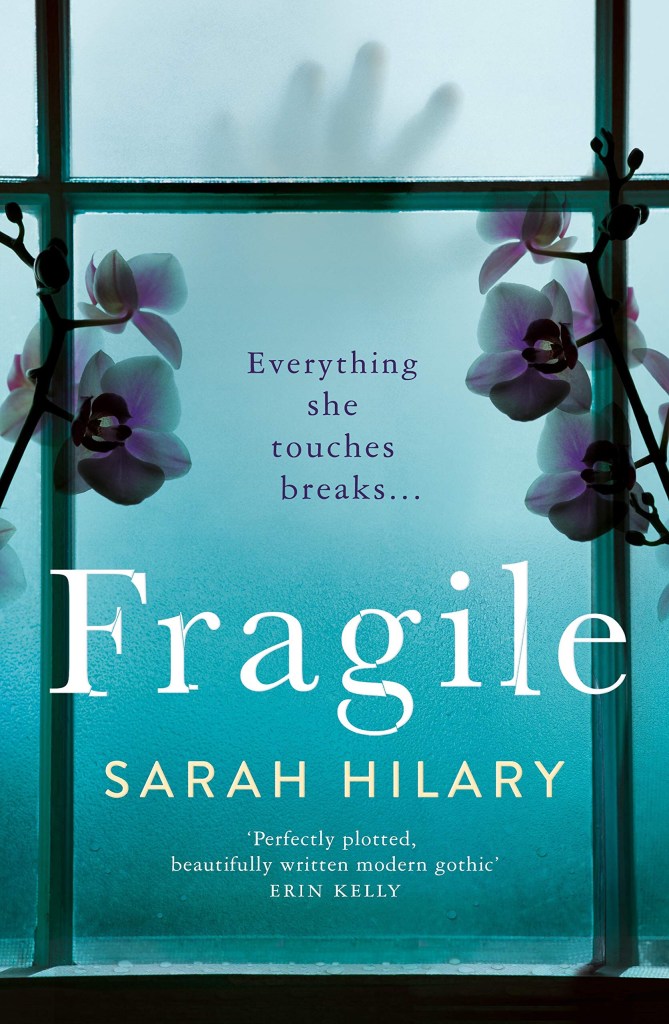
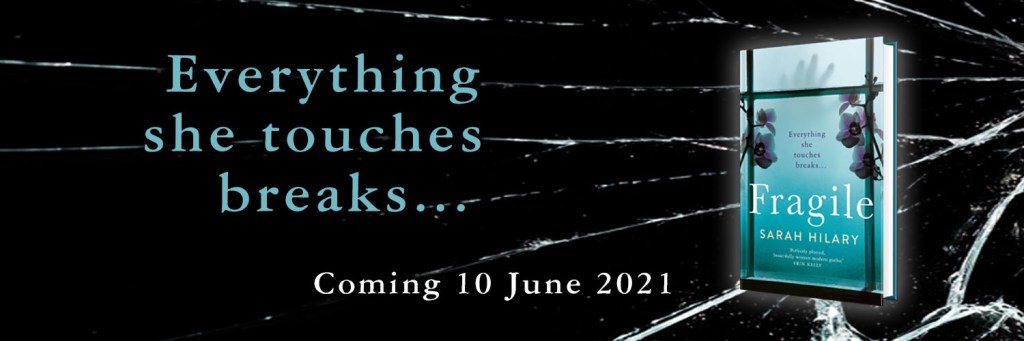
Fragile by Sarah Hilary.

There’s a lot packed into this complex thriller about human relationships, traumatic childhoods, damaged adults, social justice, and the differences between those who are deemed to be respectable and those society deems outcasts. It’s an addicting and sometimes uncomfortable read, but it’s themes pour scorn on those who dismiss genre fiction as having nothing important to say. Across two timelines, one current and one a year in the past, we follow our main character Nell. Currently she’s homeless and her lover, Joe, has disappeared into the night with a well- groomed older woman. Nell tracks them to a tiny house, almost impossibly narrow, and invisible from certain points in the street. It’s a three storey, possibly Victorian town house and must be worth a fortune. Waiting impatiently for Joe to emerge she spends her last handful of change on a cup of tea in order to sit in the warmth of a cafe. The only person who comes out is a young girl with a blonde plait hanging over her shoulder. As she comes in for a drink Nell makes a choice to go over and talk to her and finds out she’s been interviewed for a position as assistant to the house owner – a man. In her desperation to find Joe, Nell decides she needs to get inside that house and comes up with a plan.

In her past, Nell has been in the care system, ending up in a group home in Wales with a foster carer called Megan Flack. She is a career rather than a vocational carer, collecting the money but rarely doing the job. She is neglectful at best, but there’s much more going on under the surface. Nell has learned to look after a home because she was always picking up the slack with housework, cooking and mothering the younger children, particularly the cute 6year old Rosie who clings to Nell. When Joe first arrives at the home Nell is knocked sideways by how beautiful he is. Two teenagers under one roof, with plenty of time to themselves creates the perfect opportunity and they are soon joined at the hip. In the heat of the summer they go bathing at a nearby pool, but Joe doesn’t always want the younger kids there and Nell is having to make hard choices. What has happened to cause the pair to flee their foster home? They end up in London, sleeping on the streets, until one night Joe disappears into Starling Villas.

The book’s structure is clever and works really well to pace the action and build tension. We learn a little bit more about the present, then go back into the past; a past that constantly updates and informs the present again. There was a growing sense of unease, as I got further into the book. I was never sure who was truly playing who. Caroline was unnerving and hard to like, because she never seemed to show any vulnerability. Megan was worse though; cold,manipulative and completely without empathy. The thought that there are people like this looking after children who are already traumatised and suffering from attachment issues. There was a social conscience here. The fact that a magistrate, a man who decides the fate of children like this, can be licentious and exploitative behind closed doors shouldn’t be a surprise, but somehow it was. There was something about Robin that I trusted, despite all the evidence to the contrary. We all know that status is conveyed according to how people appear and what they own. We might automatically assume that the well-read man living at Starling Villas is a fine, upstanding citizen. We also might assume that those brought up in the care system, the homeless and the hopeless, are capable of just about anything. What did drive Nell and Joe to pack and leave Wales, so suddenly? Why is Megan still seeking them out?

Nell is a wonderful character, all tough exterior but marshmallow inside. Her vulnerability is evident in her interactions with Robin, her new employer. She’s a hard worker, trained by a foster mother who seems to have hated some of her charges as much as doing anything that made her break a sweat. Nell’s been a mother figure at an age when she still needed one herself. She’s used to making a home too, making the best of the meagre things she can find to enhance her surroundings and lift her spirits. She’s tough enough to survive most things, even a winter on the streets in the capital, but the things that have happened to her still haunt her mentally. She’s been let down so many times it shouldn’t hurt anymore, but it does, especially when she’s let her guard down and softened slightly. Even though some of her behaviour is morally questionable, she’s so young and has had so few chances in life, I found myself rooting for her. The author’s knowledge about a childhood spent in care and what it can do to the rest of your life shows research, listening to personal accounts and experience. Not everybody survives, some will be institutionalised for the rest of their lives, while those who do survive the system don’t always leave unscathed. I think this was represented so well through the characters in this novel. Thankfully, not all foster parents are like Megan Flack.

This was a great read, compelling and difficult to put down once you’re hooked by the story. Every character has nuance and flaws, meaning in both the past and current narrative, you’re never quite sure who to trust or what to believe. I was haunted by little Rosie, just like Nell is. The author has created an addictive thriller, but given it heart and poignancy too. I was completely drawn in until the very last page and the ending was beautifully written.

Meet The Author

Sarah Hilary’s debut novel, Someone Else’s Skin, won the 2015 Theakston Old Peculier Crime Novel of the Year and was a World Book Night selection. The Observer’s Book of the Month (‘superbly disturbing’) and a Richard and Judy Book Club bestseller, it has been published worldwide. No Other Darkness, the second in the series, was shortlisted for a Barry Award in the U.S. Her D.I. Marnie Rome series continues with Tastes Like Fear, Quieter Than Killing, Come and Find Me, and Never Be Broken. Fragile is her first standalone novel. –This text refers to an out of print or unavailable edition of this title.

Posted in Publisher Proof

Sleepless by Romy Hausmann.

Reading this book was a little like trying to get a knot out of a necklace chain, it seems impossible to unravel, until suddenly one move loosens it and the whole thing unknots very quickly. Our central character, Nadja Kulka, was convicted for a terrible crime in her native Poland, many years ago. Now she’s out of prison she’s looking for the simple everyday things that others have: a job, a nice flat to live in and eventually a few friends. She just wants a ‘normal’ life. She does make one friend. Laura Von Hoven is her boss’s wife and a beautiful woman, who’s very free spirited. When she asks for Nadja’s help, of course she wants to give her friend a hand. However, Laura has killed someone and wants Nadja’s help to conceal the body. Nadja doesn’t feel like she can refuse, showing how her earlier trauma, from the original crime and punishment, has affected her emotionally. She’s full of anxiety, awkward with people and easily talked into bad ideas. Nadja isn’t a likeable character at first, there’s a stand-offish, prickly sort of manner she has that keeps people at a distance. Yet, underneath these defences, she’s vulnerable and naive. When they find the perfect place to hide the crime, an abandoned cabin in the woods, the rest seems easy. However, their seemingly simple plan falls apart and Nadja finds herself in a game of cat and mouse. It’s a deadly game and one that’s stacked against Nadja, because she’s the perfect murderer as well as a perfect victim.

I was very disorientated at first by the disparate strands of this complex thriller. We have three separate narratives, two different narrators plus a set of letters that don’t sound like they belong. I thought there were three different people here, because the author of the letters feels different to the others. Unlike her novel Dear Child, these separate threads feel a long way apart and it’s impossible to make them diverge into one clear narrative. I found the chopping and changing too ‘bitty’. I would pick it up after a break and found I couldn’t pick up the thread without going and re-reading previous pages. It was only when I read a good third of the book that I really started to make sense of the story and these narrative voices clicked into place. However, after sitting back and thinking, I wondered if this confusion wasn’t deliberate? Haussmann doesn’t strike me as a writer who makes mistakes, I think her plotting and structure are very deliberate, so what is she trying to telling the reader with this complicated beginning?

In retrospect, I feel that the author likes to manipulate and control her readers. She was giving us the same experience as her characters, like we’re in the centre of a complicated web waiting for a spider to strike. I was exasperated with certain characters here and there, but I found myself willing Nadja to come out of this okay, despite her past and her faults. My advice is to keep reading; things become clearer and after that prepare to set aside a whole evening to finish the story in one go. The pace quickens, increasing the tension and rushing us towards a conclusion. By this point I was intensely invested in the characters and how this would play out. I wasn’t disappointed and Hausmann kept a few final twists in reserve, that I didn’t expect. This isn’t an easy read at first, but it’s clever and psychologically astute. I loved trying to work out who had the upper hand in the web of lies. So in the end, this book firmly places Hausmann as a must read author for me.

Meet The Author

Romy Hausmann was born in the former GDR in 1981. At the age of twenty-four she became chief editor at a film production company in Munich. Since the birth of her son, Romy has been working as a freelancer in TV. Dear Child is her thriller debut. She lives with her family in a remote house in the woods near Stuttgart.

Posted in Netgalley

The Maidens by Alex Michaelides

There’s probably a word in another language that properly describes the weird combination of trepidation and excitement a bookworm feels when they see a second book coming. You see they loved the first one. It was different. With an incredible twist that no one saw coming! It was like seeing The Sixth Sense for the first time, being blown away, then wondering what M. Night Shymalan could possibly do to follow it? If this is what it likes for the reader, imagine the writer’s fear in following such a smash hit as Alex Michaelides’s The Silent Patient. It must have been incredible. So I approached The Maidens as if it was a piñata filled with bees!

The premise sounded interesting. Psychologist Mariana Andros is summoned to Cambridge University by her niece Zoe. It’s a place filled with memories for Mariana, because it’s where she met her late husband Sebastian. For Zoe it is now the place where her best friend Tara has been murdered. Zoe is very special to her aunt, because they are each other’s only family. They have been closer since the death of Sebastian, who drowned on a romantic holiday in the Greek Islands only a year ago. Mariana knows how desperate Zoe must feel, so cancels her group therapy clients and sets off to meet her in Cambridge, where she stays in university lodgings. Here she meets the charismatic and Byronic Professor Fosca who teaches Classical Philology. Mariana is disturbed by him and his habit of gathering together ‘special scholars’ who receive group tuition from him. They are called The Maidens – although whether this is Fosca’s invention or the girls we are never sure and, of course, each one of them is incredibly beautiful, including their missing member, Tara.

Zoe is convinced Fosca is behind the murder, but with no evidence except a strange feeling and dislike of his odd circle of academic groupies, nothing can be done. I had the feeling that this tutor was perhaps a genius in his field, but was socially awkward and unaware of societal norms. Did he think his maidens gave him an air of eccentricity perhaps? However, he was too obvious to be the real villain of the piece. Yet, no matter how hard I tried, I couldn’t guess the answer. Thankfully the book had a great pace and once it had it me hooked, I just couldn’t leave it alone. I read it in my car on the way to our holiday cottage, in the bath, and in the park. However, I still couldn’t possibly have guessed at the incredibly tense showdown at the end.

For me there were some negatives. I had difficulty connecting to the characters emotionally, especially Mariana who never fully came to life for me. The Greek tragedy element was clever, as quotes on postcards sent to the victims felt like clues to the killer’s identity. However, I was taught classics at school so these references were familiar to me and I wondered how this whole theme would be received for someone without any knowledge of Greek myths. I also felt that how Mariana inserted herself into the investigation was highly unlikely. However, I did enjoy the academic setting and I felt the author captured that sense of importance academics can have about their subject area. I thought the he represented academia well, like being in a bubble, living and breathing your passion. The murders punctured their way through this protective layer, bringing the real world into a rarefied way of life. The passing connection to The Silent Patient wasn’t needed, but did add an interesting aspect to the ending; I now have my own epilogue running in my head, following certain characters into that other fictional world.

I was disturbed by the visitation of a swan, described as having black eyes that bored right through Mariana. I wondered what this represented and thought of the famous Greek myth of Leda and the swan – where Zeus disguises himself as a swan in order to rape/seduce Leda who has no knowledge of the swan’s true identity. For me this conjured up ideas around love or infatuation being blind, loving and trusting someone who isn’t what they seem. What I loved most of all though, was perhaps linked to the swan. The author has created a therapist with all the skills of perception and understanding in her toolbox, but an inability to apply them in her own life. She loves those closest to her blindly, never seeing their true nature just as Leda only sees a swan. Swans are also our analogy for someone very serene on the surface, but masking anxiety or the great effort it takes to be present. Swans look beautifully calm and composed above the water and this reminded me of Mariana; the calm and stability is only skin deep. I thought the novel was part psychological suspense, part crime fiction, and part gothic novel, but it was definitely all thriller.

Meet The Author.


Alex Michaelides was born and raised in Cyprus. He has a MA in English Literature from Trinity College, Cambridge University, and a MA in Screenwriting from the American Film Institute in Los Angeles. The Silent Patient was his first novel. It spent over a year on the New York Times bestseller list and sold in a record-breaking 49 countries. He lives in London.

Posted in Personal Purchase

Both of You by Adele Parks.

Adele Parks is one of those authors whose books I tend to buy without reading any blurb or hype. I always enjoy her books and this was no exception, being addictive and unsettling from the start. Two women go missing in the same week. Leigh, married to Mark Fletcher and step-mum to his two boys, goes missing on Monday. Only days later Kai Janssen is reported missing by her distraught husband Daan, a wealthy Dutch businessman. Leigh Fletcher usually works away for part of the week and then returns to family life. It is as if she dropped the boys at school and vanished into thin air. This is so out of character for Leigh that her friend Fiona is also devastated. She saw how Mark and Leigh met, when she was picnicking in the park with her friend. When Mark’s youngest boy had a fall, a strange instinct seemed to take over Leigh and she made a dash to comfort him and give first aid. The four went to hospital together as if they were a family, and have been one ever since. Mark’s first wife Frances died a year earlier, and Leigh who couldn’t have children had stepped firmly into the step-mum role, fulfilling a part of her that had been crying out to care for someone. She and Fiona were like family, since Leigh didn’t have contact with her own, and she can’t think of any reason she would willingly leave Mark and the boys.

When the police visit Daan, in his large penthouse apartment, he is devastated by his wife’s disappearance. For part of the week, Kai would go back to her hometown and look after her mother who had dementia. Daan had more than enough money to ensure her mother had adequate care, but Kai wouldn’t hear of it and part of him admired her for wanting to look after her mother personally. Their separation each week hadn’t seemed to harm their relationship. They missed each other, but were very independent and their time apart seemed to put fire into their relationship. DC Clements is tasked with investigating both missing person’s cases and she’s concerned for both women. Leigh seemed devoted to her family, but she knows more than anyone, that if anything bad has happened to these women, it is likely to be solved close to home. The chance of two women being abducted by a stranger in the same week seems unlikely. She keeps a close eye on the two husbands. Daan seems a passionate and emotional man, it’s possible he has a quick temper. Mark, on the other hand, has already lost one wife. It seems careless that he should lose another.

The tension between these two investigations is heightened by the chapters in-between, from Leigh’s point of view. She is shackled by the ankle in a room with only a bucket to relieve herself and a small supply of snacks and water. She has no recollection of arriving there and is terrified about what might come next. Who could possibly hate her so much that they would do this to her. The author really captures the fear of the unknown in these passages and the indignity of her situation. Not knowing who has brought her there keeps playing on her mind. Could this be the work of her husband? Surely not. If it is a stranger though, she has no idea what might come next. Her fears are heightened when the snacks change to ones she would like – a very specific tea and her favourite nibbles. This has to be someone who knows her, but who?

I was a little disappointed that I worked out what was going on very early in proceedings, although it was still fascinating to watch it all play out. Themes of jealousy, deceit and greed run throughout. However, from a psychological point of view my interest was caught by the idea of not knowing who we really are and how dangerous that can be. It was also heartbreaking to see how the disappearance of their step-mum affects two boys who have already had the worst happen to them – the loss of their mother. What sort of damage might this cause for them down the line? The husbands are both interesting men with secrets of their own, that come to light through the investigation. Do we ever really know the person we’re sharing a life with? This wasn’t my favourite book from this author, but it was a great thriller all the same and is definitely a diverting holiday read to summer.

Posted in Publisher Proof

The Night She Disappeared by Lisa Jewell

Lisa Jewell has slowly become one of those writers whose books I buy without even reading the synopsis or any reviews. They are always intriguing, well paced and full of interesting characters who may not be who they seem. This book was no exception and I read it over a weekend – TBR be damned – just for sheer enjoyment. I felt so lucky to get a proof that I read it immediately! Crime writer Sophie is moving into a tiny cottage in the country, into the grounds of exclusive private school Maypole House. It has been a hasty decision to move with Shaun to his new place of work, because they haven’t been together very long. They knew they had something special, but since Shaun had already accepted the job and Sophie could write anywhere, they jumped in with both feet. Their cottage is situated on the edge of the woods. Exactly one year ago teenage couple Tallulah and Zach went missing from a mansion situated in the woods. They had gone to the pub for dinner, but were invited to a party at the house, by a girl called Scarlett Jacques who had been a student at Maypole, but now studied art at Tallulah’s college. They left at 3am to get a taxi, but never arrived home. Zach’s mum, Meg, thinks they’ve run away together to escape life. However, Tallulah’s Mum knows that’s not the truth, she knows something bad has happened, because they left their baby son Noah behind and she knows they would never do that.

Just a week or so before Sophie arrived, Kim had organised a vigil for Tallulah and Zach, to keep them in the public consciousness and to remember her daughter. Sophie had seen a picture in the paper, when she was browsing. She can’t seem to find her rhythm to write yet and this year old mystery seems to keep drifting into her mind. She didn’t expect to become so involved, but when a sign saying ‘Dig Here’ turns up on her garden fence with an arrow pointing downwards she finds a trowel and starts digging, bracing herself for what she might find. She is relieved to find a small jewellery box, and inside is a modest diamond ring. She notes down the jeweller and pays the shop a visit on the high street. Luckily, it’s a small local jeweller and he keeps track of every purchase in old fashioned ledgers. The buyer was Zach. So was Tallulah the intended recipient? Did she say no? Sophie knows she must take the information to someone and realises that Kim works in the pub. Within days the case is re-opened and once again the the spotlight is on Scarlett Jacques family home – Dark Place.

The character I connected with most was Tallulah. The structure of the novel is split into before the disappearance and then a year later when Sophie starts to look into the case. In the before sections, I could sense Tallulah feeling overwhelmed. She’s adjusted to becoming a mum so young and her love for Noah can be felt through the pages. There are times when she just wants to be her and Noah, getting home from college and picking him up for a cuddle she feels complete and calm. It’s everything else that unsettles her and there are times when her entire life feels mapped out for her. A life she doesn’t want. She’s in a perfect frame of mind to be enticed by an unusual new friendship with Scarlett from the bus. Scarlett is fascinating, older, rich and with a bohemian lifestyle. She has a charm or allure about her that’s hard to quantify and she clearly enjoys having an adoring entourage. So, what does she want with Tallulah? I’ve been where Tallulah is, feeling trapped by circumstances you can’t change, or even by your own mistakes. It leaves you open to taking drastic action and I wondered if that had happened.

Tallulah’s mother, Kim, is a strong woman who desperately wants to keep her daughter’s disappearance in the public eye. She has weathered the storm of her daughter’s pregnancy and her up and down relationship. The two are incredibly close and I enjoyed those moments when mother and daughter are sharing a moment. Kim knows her daughter so well that she has guessed parts of what happened in the lead up to the disappearance, which is more than I managed. I was hopelessly wrong, looking in the wrong place completely for answers. The author throws in red herrings, suspicious clues and people. I found teaching assistant Liam particularly creepy. The mystery is unravelled slowly as the before storyline hinges on one dreadful night and it’s aftermath. The after sequences are based on how quickly Kim and Sophie can find those involved using social media and follow the clues. The tension was really ramped up here and I was sucked into reading it so quickly, watching the pages reduce and wondering when the answers would come. Then, just when I thought I’d worked it out, the author went in another direction entirely. When I finished and put it down, my other half said ‘oh hello, you’re back in the room’ because I was utterly absorbed and when I wasn’t reading it, I was thinking about it. It was a dark tale of what can happen when people have no moral compass or conscience, and was riveting to the last page.

Posted in Netgalley

Two Women in Rome by Elizabeth Buchan.

Regular readers may remember how much I loved Elizabeth Buchan’s last novel The Museum of Broken Promises, in fact it was one of my top twenty of the year. So, I was very excited to be approved to read this via NetGalley. The story is split into two timelines and follows the lives of two British women who spend some time living in Rome. Lottie Archer arrives at the Eternal City as a new wife and with a new job as an archivist at the Archivo Espatriati. Her very first task is to archive the papers and journal of a woman called Nina Lawrence who worked as a gardener in Rome in the late 1970s. This was a difficult time for the country socially and politically, known as the ‘Years of Lead’ – a period which stretched from the 1960s to the 1980s and resulted in many incidents of far right and far left terrorism. Nina’s task was to redesign gardens that still lay devastated by WW2, something she was passionate about and very talented. Within her papers, is a large leather journal, rather worse for wear and full of drawings and pressed plants. However, Lottie also finds a painting of the Annunciation – the moment where the Virgin Mary is visited by the angel Gabriel to tell her she will be the mother of Jesus, the son of God. Lottie thinks it may be medieval, due to the colours used and the iconography. This piques her interest and she is disturbed to learn that Nina was murdered in Rome, and that very few people attended her funeral in the Protestant cemetery. Interestingly though, one mourner was a Catholic priest, which strokes Lottie as very unusual. She wants to find out more about the painting, but she also finds herself sucked into the mystery of what happened to Nina, who murdered her and why did she seem so friendless in this beautiful city?

I found the novel a little slow at first. I didn’t click with Lottie straight away, the detail and discussion of medieval art was quite dense (or I was) and the complexity of the political situation wasn’t always easy to follow. I also thought the intricacies and machinations of the Catholic Church might be a little difficult to penetrate for those who don’t know much about Catholicism – luckily I am one, with convent teaching under my belt, so this was not so difficult for me. However, I did like that the author didn’t simplify these areas of the book because in a way they added to the mystery of a city that has an incredibly complicated history. I was drawn in most by the story of Nina, just like Lottie is. I could understand why her story would get under your skin as someone interested in the past and trying to make sense of it. There is a kinship between the two women, even though they can never meet. Lottie is unsure of her position in Rome for several reasons. Firstly, when she arrives to work at the archive, her new role hasn’t quite been vacated. She moves into the apartment that her husband Tom shared with his previous partner Clare, and all around her are memories that don’t belong to her (including an ugly lamp, that should be kept because it works perfectly well, according to their formidable housekeeper). All of this is compounded by an underlying sense of abandonment, formed because she was left by her birth mother. There’s something lost about Nina that she latches onto and the more she finds out, the more she wonders whether Nina was more than a gardener?

Nina is a rather fascinating woman, who shares Lottie’s sense of rootlessness and lack of ties. There is definitely a deeply woven reason for Nina’s death, involving politics, security services, the church and a rather unwise, but beautiful love affair that unfolds in her journal. It is this aspect of her character that really humanises her for me, she becomes a real, living and breathing person and it is then even more tragic when the end comes. One thing both narratives capture beautifully is the city itself. Just like the narrative structure of the book, we get a sense of Rome as place where the past is very closely layered under the present. I thought about the tunnels and cave structures that run under the city’s streets, some still populated with WW2 vehicles, as an embodiment of this feeling. The present is full of tourists, rushing around on their itineraries getting a sense of the past and present city, but not necessarily the world underneath their feet. The author evokes the sights and smells beautifully: describing the less followed paths, the street fountains carved with dolphins and maidens, the detail of the plants so precious to Nina, the smells and sight of the deli counters full of salami, olives and beautifully ripe tomatoes. I found myself craving a trip to Italy all the time while reading!

However, she also shows its impenetrability to outsiders who know nothing of Catholicism, Roman etiquette or it’s slightly corrupt ways of getting business done. This is captured most beautifully in Lottie’s burgeoning relationship with their housekeeper. I also enjoyed her friendship with the book binder, who she asks to authenticate the painting she finds without understanding his significance. The background on medieval painting is vital here, not just to understand the symbolism within the traditional aspects, but to identify those that are far more transgressive and intensely personal. This is a complicated mystery/thriller, mixed with a travelogue of Rome and an intense love story. It asks questions about where we belong and whether our final destinations have been reached by choice, accident or a deep sense of duty to our family, our religion and our country. By the end I realised I’d become so enthralled, I was very sad to leave Rome behind.

Thank you to Atlantic Books for my digital copy via NetGalley.

Posted in Netgalley, Publisher Proof

The Perfect Lie by Jo Spain

This thriller kept me guessing and a couple of times, even had me going back to previous chapters so I could be sure of what I’d read! Our heroine is Erin Kennedy, an Irish girl working in publishing in NYC and living with her husband of three years out on Long Island. She narrates her story across two timelines: one is the present and Erin is on trial for murdering her husband, and the other is a year earlier around the third anniversary of her marriage to Danny, a detective from Long Island. Our second narrator is a younger woman called Ally, a PhD student and proctor at Harvard University. My confusion arose from how these characters related to each other and the author is clearly a master of telling her readers just enough to keep us reading, but not enough to ruin the later revelations, twists and turns – and there are plenty of them!

The Erin from a year before is a very different person and early on in a shock scene, Erin and Danny are starting their day at their sea front apartment when his partner turns up at the door. Ben has two uniformed cops with him and when Erin answers the door he is not his usual self. He apologises but tells her they are there to arrest Danny. Erin thinks this is some elaborate joke, but her confusion gives way to horror as she realises Ben is serious. However, instead of being confused, Danny looks guilty and scared as hell. Before Erin’s eyes Danny runs to their fourth floor balcony, apologises to her, and throws himself from the edge. Ben doesn’t let her see, and she stands a little distance away, watching with disbelief as a small crowd gathers and paramedics work on her husband. Although Ben spares her the final image of Danny, broken on the sidewalk, she already knows he’s head. Through shock, and that awful first numb state of grief, she forgets to ask why Ben turned up that morning to arrest his own partner, why they take away papers and his laptop, and exactly what Danny is supposed to have done.

Those questions do come later though, especially when Erin has that realisation, that she isn’t being afforded the same support she’s seen other police widows receive from the precinct and the other wives. It’s almost as if she’s been cut off and they’re embarrassed by her, most notably not turning up for the funeral. It doesn’t take long for her to realise she’s going to need a lawyer. The police’s attitude tells her that Danny must have been suspected of corruption, and she needs someone who knows the system. Firstly they need to find out whether she’s still entitled to a widow’s pension, but next she wants them to do some digging into exactly what Danny was being investigated for. Her journey has her asking so many questions and she starts to wonder whether she knew her husband at all. With a small trusted group of friends and her sister Tanya, she starts to piece together the truth.

By now you’ve probably noticed the glaring big question mark in this story; if Danny committed suicide, how is Erin on trial for murdering her husband? I’m not going to ruin the story for you all so I’m not going to reveal any more. This question, and many others do get answered eventually. The author’s timing, in choosing what to conceal, what to reveal and when, is absolute perfection.

It takes a while for Ally and Erin’s stories to intersect, so after every one of Ally’s chapters I was racking my brains to work out where they fit. Ally is writing her PhD on crime novels and as proctor she is charged with taking care of one student hall of residence on the campus. It’s an unusual role that seems to cover mentoring, mothering, but also showing students how to have a good time. In fact, Ally’s hall parties have become so renowned that girls from other blocks want to get in on the guest list – so many that they’ve had to place a restriction on the amount of invites they can have per girl. We meet her as she tries to support a girl called Lauren, an undergraduate, who has been the victim of a crime. Luckily, Ally knows someone who may be able to help, and she offers to bring her boyfriend in to help with results neither of them expect.

I did struggle to understand Erin at times and her decision making. Of course she’s in shock and shouldn’t be making decisions anyway, but there were times when I was screaming at her not to do something. There was an element of her drifting along, rather than making well thought out decisions. Her grief is complicated by the manner of Danny’s death, but also because she’s angry he made this choice to lie to her, leave her behind and leave her haunted by that final image of him disappearing over their balcony. I think her confusion over where to be and who to spend time with was well done. To be with his family is difficult because their grief is different and not complicated by betrayal. She is shunned by the other detective’s wives so seeing them makes her angry. She feels abandoned in a country that isn’t her own, and she gathers a disparate group of new friends who offer support. There’s Bud, the owner of their local bar, her new firecracker of a lawyer, Karla, Danny’s psychotherapist and a man called Cal who knew Danny. These people seem to keep her afloat, but I didn’t trust anyone and treated all of them with suspicion. In feeling angry and betrayed with the one man she thought she knew, and his police colleagues, is she in danger of trusting all the wrong people? I found her story entertaining, compelling and the author paced it well. This would be a great read by the pool this summer and you’ll probably find yourself reading it in a couple of sittings, because like me, you’ll want to know exactly what’s going on. This book is a rollicking good thriller, that I’m sure you’re going to enjoy this summer.

Posted in Damp Pebbles Tour

Charity by Madeline Dewhurst.

I’m aware that blog tours have been a subject for discussion this month: giving them up; wondering whether they are a true reflection of a book; or might they be disappearing altogether? I enjoy them because I get to read outside my comfort zone, and then bring a great book like this, that might not have been noticed otherwise, to my follower’s attention. This was definitely the case with Charity, because I might not have encountered it in my normal reading life, but now I can tell you just how good it is and hope that some of you love it as much as I did.

Our narrator is Lauren, a teenage girl who is being interviewed as a potential lodger and carer for an elderly lady named Edith. The two get along, bonding over their experiences of Kenya where Lauren’s grandmother was born and where Edith’s husband Forbes was stationed in the 1950s, during what became known as the Mau Mau uprising. This was a war between the colonisers and the Kenya Land and Freedom Army (the KLFA also known as the Mau Mau). This was a bitter fight for independence from the British by the KLFA, made up of Kikuyu, Meru and Embu people, as well as a small proportion of Masai and Kamba tribesmen. There were war crimes on both sides, but at the end of the war there were over 11,000 dead on the Mau Mau side, including over 1000 executions – the largest use of wartime capital punishment in the British Empire’s history. That’s not to mention the atrocities carried out on women, in a conflict where rape was deliberately used as a means to diminish tribal bloodlines with British blood.

Lauren works on a high street make-up counter and had been running out of places to live, since her Mum is getting remarried to someone she doesn’t get on with. She and Edith seems to rub along together nicely. So, Lauren moves into the spare room and starts caring for her. I love how the relationship between these two women works, as they have such diverse views. Edith is a staunch right winger whose views would really raise eyebrows these days. So, in the present day passages, there are a few clashes. There are statements from Edith that many would find offensive.

‘I’m sure I’m the last of their priorities. If you want to get to the top of the queue you have to be a Muslim who doesn’t speak any English, or a gay lesbian woman, then you’ll get seen straightaway.’

‘Oh, Edith, you crack me up, the things you come out with.’ Lauren shook her head and laughed. ‘I don’t think people’s religion or sexuality show up in X-rays.’

When they do talk about Kenya, and eventually Forbes, Lauren listens intently. At turns interested and horrified by the perspective he clearly brought home with him. Edith’s perspective affects Lauren so personally because of her grandmother. When Lauren suggests that Edith’s family were economic migrants, only in Kenya to make a better life for themselves, Edith strongly dismisses it, declaring Kenya had ‘nothing’ before white farmers arrived. Lauren is incensed.

‘There wasn’t ‘nothing’ there. There was people, living differently to how English people lived, but it was still their land – land the English colonists stole off them. I mean, imagine if I suddenly told you this was my house now, that you’re just a squatter and if you want to stay you’ve got to work for me, obey my orders.’ I thought I’d gone too far, but instead of making her angry, what I’d said seemed to excite Edith. She was looking at me weirdly, kind of like she was in awe of me. ‘Have you been talking to Mary?’

It seems that both women have secrets. Mary was Edith’s friend, but she now visits her at night, creeping into the bedroom and up the bed. Edith is sometimes so scared of her she can’t sleep. What could have happened between them? We do travel back in time to find out, following Edith’s childhood in Kenya as well as Forbes’s service in the army, and a young Kenyan woman named Charity. Charity is just a young girl, caught, accidentally out after curfew, and put into a prison camp where she meets a brutal British officer. There is bloodshed and sexual violence in these flashbacks. It’s harrowing at times, but necessary for us to see why this period of Kenyan history and the brutality of the colonisers, still resonates so strongly generations later.

Two other characters are brought into the present day section of the novel: Paul, who is Edith’s lodger in the basement flat and Jo her daughter. Jo is back from running a new age retreat in Europe and is probably the best example of white privilege I’ve seen in a long time. She has no concept of how her life is easier, because she is from financially stable parents, but also because she is white. She assumes that her mother will have her living there, that the house will be hers as soon as Edith has gone, and that she’s automatically prised by her mother above Lauren and Paul, even though she’s never been there for her mother. However, when Edith’s lawyer visits she’s soon disabused, of her assumptions. Paul seems to have watched over Edith for some time, supporting her with financial decisions and stepping in when she needs help. Once all the characters are in play, some very big secrets start to emerge and we begin to see how all of them are linked by one incident sixty years ago.

It’s very hard to believe that this is Madeline Dewhurst’s first novel. It’s a brilliant read and once you’re hooked, it will be so hard to put it down. I couldn’t wait and finished it in the wee small hours of the morning, following every twist and turn. The author has a great understanding of post-colonial cultures and how the atrocities inflicted by the British empire still resonate in those countries we colonised, but also here at home. I studied post-colonial literature over twenty years ago at university. It is stories like these that remind me why I feel sick when crowds at the Albert Hall sing Land of Hope and Glory at the Last Night of the Proms. This isn’t just a harmless song – it extols the virtues of empire, invokes God as being on the coloniser’s side and suggests that the boundaries of empire should spread further still. It calls Great Britain ‘the mother of the free’ but that freedom is only open to the coloniser not the colonised. This novel shows the impact of the British Empire on one family, with it’s malign influence still felt three generations later. I truly enjoyed this as a thriller, where you’re never quite sure who is the spider and who is the fly. I also loved the honest and brutal way the British Army’s rule in Kenya is depicted, tainting the lives of everyone involved across time. Finally, there is a glimmer of hope as to how this trauma can be addressed and resolved for the future.

Meet The Author.

Madeline Dewhurst is an academic in English and Creative Writing at the Open University. Her previous writing includes fiction, journalism and drama. Charity, which was longlisted for the Bath Novel Award, is her first novel.

Posted in Random Things Tours

The Source by Sarah Sultoon.

This was one of those books. The ones that make me stay up till 3am because I simply have to see the story through. Sarah Sultoon’s novel takes us straight into the action, starting in 2006 with a very tense scene where a group of men are discussing the terms for the exchange of a trafficked girl. Once outside and in their van, there’s a huge sigh of relief from everyone – the man is a journalist and he is deep undercover trying to expose the horrifying trade in young girls for sexual exploitation. In my head as I continued reading, was the author’s harrowing description of the girl in question. She’s shown off as if at a market, stunned by the terrible experiences she’s gone through so far. A young girl called Marie is working with the team and she has found the sight of the girl deeply upsetting, but is committed to bringing these people to justice and sometimes that means confronting awful practices or seeming complicit in acts that make them sick to their stomach. This time though, they’re sure they’ve got them.

We’re then taken back to our second narrator, a 15 year old called Carly living in an Army town called Warchester. The barracks loom large in town, the pubs are full of squaddies and even the roads have lanes specifically for Army vehicles. The Army has loomed large in Carly’s life too. Her dad is dead, killed in action. She and her brother Jason have never met him, but Jason followed his dad into the family business and is now stationed at the barracks. Carly lives in army accommodation with her mum and half-sister Kayleigh, who is still a baby. They live off her Dad’s pension, but it doesn’t always go far when Mum drinks. Carly is used to coming home to a mum who’s insensible, slumped in front of the TV and Kayleigh screaming her lungs out because she hasn’t been changed or fed all day. Carly is just about holding it together so that social services aren’t on their backs, but it isn’t easy. That’s why she needs time to blow off steam and just be a 15 year old, so when her friend Rachel invites her to a party at the barracks she is tempted. Rachel has a contact, and a secret way in where they won’t be seen. However, I could sense something ominous in Rachel’s reassurances to Carly – to just go along with what they want to do. Her instructions could be construed as grooming and I was worried about exactly what type of party this was going to be.

Our narrative flits between the two different women. Marie has clawed her way up into journalism the hard way, but is a diligent junior member of the term. That is until some news comes through that derails their trafficking expose and seems to shock Marie to her core. A press conference is suddenly called about a previous investigation called Operation Andromeda and the commissioner herself will be making the announcement. Every media outlet needs to be down at New Scotland Yard now, and when the announcement comes the room falls silent. The commissioner recaps for the press that Andromeda was an investigation into the sexual exploitation of young girls by those in the Army, followed by prosecutions. What happened to Carly all those years ago, happened to others too. The commissioner talks about failed victims, up to and beyond the dates they originally investigated. Girls who were let down and soldiers left to commit more crimes on further generations of girls. The news team know that there were potentially two girls exploited and abused in Warchester: Girl A who gave evidence in the original court case, but also Baby Girl A, removed from her parent after the abuse and taken into the care system. Both were given new identities.

This is a complex story in terms of who knew what was happening, who is part of the cover up and who is working on the inside to expose what happened. Although it adds to the tension and rapid pace of the novel it isn’t what grabbed hold of me. It was the human stories that really moved me and its easy in a case this big and a conspiracy so complex to forget what has happened to the individuals involved. By including Carly’s narrative we can see how this happened on a human level. In a town where kids are brought up to revere the army and its men, with few other opportunities and insidious grooming technique at play, it was easy. Rachel is the girl on the inside, recruiting her friends just as she was once recruited – this type of abuse is generational. She coaches Carly in what to do, how to please and slowly ratchets up the pressure for her to do more extreme things until it becomes Carly’s normal too. Generations of Warchester men have joined up and done their service. She’s doing what generations of Warchester girls have done, they do their service too. Yet, because Rachel is over 16 when the original investigation happens she could be tried as an adult for grooming the younger girls, despite having also been groomed into this behaviour when she was a child. The author shows us what happens when abuse is institutional, when safeguarding fails and a community is complicit. It’s a very hard read in parts – the neglect as upsetting as the sexual abuse – but it should be hard and people should be shocked by it. I felt the author had done her research and depicted the psychological effects of abuse thoroughly, showing how they persist into adulthood. She showed the effect of being let down, by family, friends, community and the agencies that are meant to help. However, Carly shows us how one person’s persistence and courage can force justice, of a kind. I love that this author was brave enough to write this novel and that she found a publishing house to share her vision.

Meet The Author

Sarah Sultoon is a journalist and writer, whose work as an international news executive at CNN has taken her all over the world, from the seats of power in both Westminster and Washington to the frontlines of Iraq and Afghanistan. She has extensive experience in conflict zones, winning three Peabody awards for her work on the war in Syria, an Emmy for her contribution to the coverage of Europe’s migrant crisis in 2015, and a number of Royal Television Society gongs. As passionate about fiction as nonfiction, she recently completed a Masters of Studies in Creative Writing at the University of Cambridge, adding to an undergraduate language degree in French and Spanish, and Masters of Philosophy in History, Film and Television. When not reading or writing she can usually be found somewhere outside, either running, swimming or throwing a ball for her three children and dog while she imagines what might happen if…..