The ‘Fierce Five’ have always been the best of friends. Gail, Allie, Emily, Stacie and Diana are all different in character, but have complimented each other. Gail is the organised one who tends to get them altogether. Allie is quiet and tends to be more introspective than the others. Emily is the traditional one, with her twins and husband Adam at the centre of everything she does. Stacie has been married twice, someone who is proud of being straight talking, but is still holding a lot inside. Finally there’s Diana who came from a more deprived background than the others and has a more cynical or realist’s perspective on life. They are all invited by Gail to celebrate her 35th birthday at her cabin, an isolated and atmospheric spot in the Scottish Highlands. The girls plan on catching up, having a drink and enjoying the remote location where they’re removed from their everyday lives. However, when a snow storm threatens to cut them off completely, events are set in motion that no one expected.
This was my first book from Carys Jones and she certainly knows how to ratchet up the tension. This wasn’t my first remote chalet thriller this year because there have been a few books with a similar premise such as Catherine Cooper’s The Chalet and Ruth Ware’s One by One. I found this story compulsively readable, with well-drawn characters and a real sense of surprise and menace. The story is told in two timelines, the current stay in the cabin and then back into the girl’s pasts where we could explore their past interactions and the events that shaped who they are. These sections were not necessarily chronological, but each section informed the situation in the present. A third section is written as the transcript of a police interview with an unnamed person of interest. Since one of these transcripts starts the book off, we know how important they are to the story and that something very very wrong has happened on the girl’s weekend.
The storm is menacing and I felt like the author depicted it like a sixth character in the novel. Even though it’s outside, it seems to influence what happens inside, so as the storm builds so do the friend’s emotions. When the storm is at it’s height the secrets, and lies of the book’s title, come to the surface and events take a drastic turn. I loved the way the author depicted this complicated friendship, because it was realistic. Often large friendship groups like this do have factions – two of the group who are closer than the others, another pair keeping a secret from the group or one member feeling isolated from the others. It’s impossible for groups like this to weather the years without changes happening. Individual experiences shape and change us over time and that might mean friendships wax and wane, but in groups like this those changes can cause resentment and jealousy. This happens especially if two people bond over an experience they’ve both had, switching allegiances such as friends who’ve both have children tending to gravitate towards one another. As the secrets come tumbling out and the girls battle to cope with the revelations and the effects of the storm things reach boiling point. Which of the friends will snap? This is an entertaining novel about old friendships that might just put you off your next school reunion. Tense, claustrophobic, and an unexpected ending. I’ve been reading this in a remote cabin in North Wales and it definitely added to the experience!
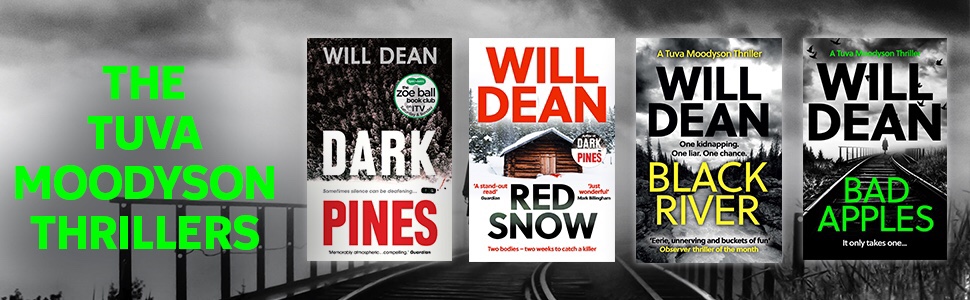
Wow! Will Dean does like to put his heroine in some terrifying situations. There is so much about this series that I love, then a good 20% that makes me feel a bit sick or unsettled. In the last book it was snakes that had me a bit on edge. This time? Well it’s saying something when a severed head is the most comfortable thing about Tuva’s investigation.
We’re back in Gavrik, deep in the northern most part of Sweden and Tuva is back at the local newspaper, but has a more senior role and a new colleague to oversee in the shape of eager young newbie Sebastian. In fact, things are pretty good in Tuva’s world. Best friend Tammy is back in her food truck dishing up the best Thai food around. Tuva is in a steady relationship with police officer Noora, which works really well although they have to keep a boundary between police work and what ends up in the paper. As part of her new role, the Gavrik newspaper will now also cover the nearby hilltop community of Visberg. With a treacherous ascent road through the forest, there’s really enough danger in this assignment, but when Tuva stops for a moment in her truck, she winds down the window and hears a terrified human scream. Never one to run away from danger, she hurries towards the noise and finds a woman covered with blood and a body, without it’s head. The man is Arne Persson: resident of Visberg; local plumber; member of the choir and the town’s chamber of commerce. Tuva’s introduction to Visberg is going to be an unpleasant one. Instead of getting to know the residents and building trust, every one of them will know she discovered Persson’s headless body and every one of them could be a possible suspect.
Dean has a wonderful way of describing these remote northern towns and their eccentric residents. I often wonder whether it is living in such an inhospitable environment breeds eccentricity or whether odd individuals are attracted to it’s remoteness. Quirky details are brought into the narrative that feel surreal and put the reader on edge. Local pizza maker Luke Kodro obliges residents with the oddest pizza toppings I’ve ever heard of – ‘fillet steak, onion, mushroom, bearnaise, peanuts and banana’. However, many view him with suspicion because he’s from Bosnia and one even names him as the ‘our local, friendly, war criminal’. There’s also Hans Wimmer who has a shop in the town square selling all sorts of timepieces, but down in the basement has rare clocks including some handmade ‘organic’ examples. We also meet old friends like the Sorlie sisters, running a pop-up shop selling their unique trolls and masks for the town’s peculiar celebration Pan Night. Tuva asks about this festival, but most residents are secretive about what it entails. Even the sisters warn Tuva that it’s a celebration for hill folk only and that outsiders aren’t welcome after dark. This piques Tuva’s curiosity and she overcomes her revulsion enough to buy an animal mask from the sisters and plans to gate crash. The Pan Night chapter is a highlight of the book for me and the way the author covers all the senses gives the reader a truly immersive experience. There a bonfires, falling apples being crushed underfoot, animal masks, people walking backwards or getting frisky under park benches and the most disgusting balloons it’s ever been my misfortune to imagine. In this town, any one of the residents might have killed Arne Persson and I was a long way from solving the case.
I love how Tuva has changed since the first novel. There was a guarded quality to her at first, a sense of keeping herself separate that might have something to do with her deafness or possibly life experiences. Here there’s a softening to her character. She’s still brave and resilient, with an intrepid sense of adventure, but her ties to people have always been minimal. Her friend Tammy has recovered well from her kidnap ordeal and they are still close, looking after each other as family. Her boss Lena also looks after Tuva in a motherly way that’s very different to the difficult relationship Tuva had with her late mother. I noticed a relationship building between Tuva and the little boy at the flat next door, who isn’t having the easiest family life and seems to trust Tuva. She agrees to baby sit him on a couple of occasions and is touched by his faith in her. I guess most importantly, the biggest change is her long term relationship with Noora. This seems to have a stabilising effect on Tuva, although the relationship terrifies her as much as it makes her happy. What is the future for the couple? Could Tuva be comfortable even sharing her living space with another person? She isn’t sure, even though she knows she loves Noora.
This book picks you up and takes you on a fascinating and thrilling ride that builds in tension to a terrifying ending that I didn’t see coming at all. I had to stop reading at one point, because I realised I was so tense I was gritting my teeth! I’m sure the author has a hotline to my fears and this ending tapped into them perfectly. Needless to say, if I was Tuva, I’d be packing up the Hilux and leaving the hill folk to murder each other! I think the way the author depicts Tuva’s deafness is interesting. Usually Tuva uses it to her own advantage – taking her hearing aids out when she’s writing a piece means she can focus and taking them out at home means she can’t hear next door. However, it can also leave her vulnerable and the author uses it to intensify the horror element of the book, particularly towards the finale. There’s something about another person touching her hearing aids that feels so personal and also like a violation, depending on who it is. Every time I know a Tuva Moodyson book is coming, the excitement starts to build. By the time it’s in my hands I’m ready to drop all my other reading to dive in. Of course when something is so anticipated there’s also a fear about whether the book will live up to expectations. Bad Apples did not disappoint and is a fabulous addition to this excellent series.
Published by Point Blank on 12th October 2021.
Why not check out the other reviews on the blog tour..
Meet The Author.
If you don’t already follow Will Dean on Twitter you’re missing out on fantastic photos, including those of his huge St Bernard and the country surrounding his cabin in the woods. He grew up in the East Midlands and had lived in nine different villages before the age of eighteen. His debut novel, Dark Pines, was selected for Zoe Ball’s Book Club, shortlisted for the Guardian Not the Booker prize and named a Daily Telegraph Book of the Year. The second Tuva Moodyson mystery, RedSnow,won Best Independent Voice at the Amazon Publishing Readers’ Awards, 2019, and was longlisted for the Theakstons Old Peculiar Crime Novel of the Year 2020. His third novel, Black River, was chosen as Observer Thriller of the Month. Will Dean lives in Sweden where the Tuva Moodyson novels are set.
‘Now I regret everything. I regret making Ísafold’s favourite Barbie doll do the splits and breaking it. I regret sneaking into her make-up and ruining her new eye-liner by experimenting with it. I regret the times I called her short-arse once I had grown taller than her. I regret losing the scarf that was a gift from her first boyfriend. I regret the time we had a row, and I called her a whore. I regret not calling her. I regret not getting the first flight to Iceland the last time she needed help.’
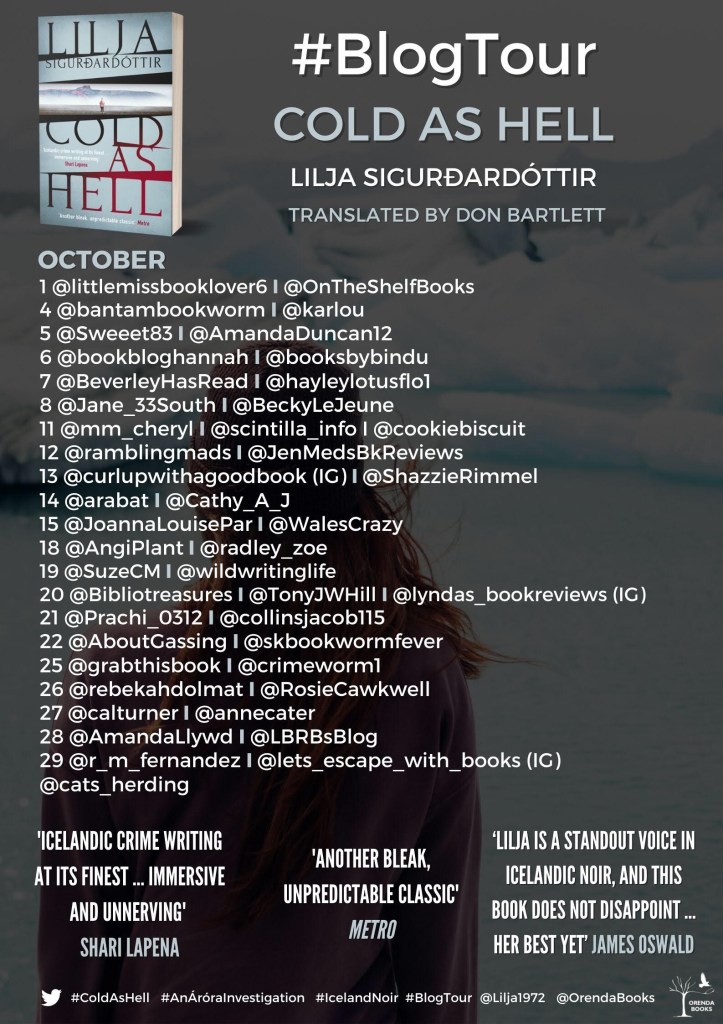
I’ve found myself reading more Scandi and Scottish Noir of late and Icelandic Noir has many of the same traits that draw me to the genres; intelligent and independent female protagonists, an unflinching look at death and loss, and the unapologetic darkness at the heart of the tale. I’ve had the pleasure of reading Lilja Sigurdardóttir before and this novel grabbed my attention very early on with it’s reluctant protagonist, quirky characters, and an almost lunar landscape lit up by twenty four hour daylight. Āróra is being pestered by her mother. She hasn’t heard from Āróra’s sister Īsafold for over two weeks now and she’s very worried. She wants Āróra to fly out to Iceland and find out what’s going on from Īsafold’s partner Björn and their family who are still based there. Āróra lives in the north east of England and rarely goes back to Iceland, despite being born there. She mainly travels there when Īsafold needs rescuing from Björn. The whole family have known for some time that she is suffering domestic violence, but despite several attempts to help and convince her to leave, Īsafold always returns to Björn. Āróra has given up trying to help her sister; you can’t help someone who doesn’t want to be helped. Even now she is reluctant to drop everything and intervene, but her mother is insistent and two weeks is a long time to be silent.
I enjoyed spending time in Āróra’s company and her narration is our main view of the story, although there are short chapters from the perspective of other characters that either add to our knowledge of Īsafold’s life, or contain a clue or twist in the tale. The two sisters have never had an easy relationship and Āróra sees herself as very different from her sister. She describes Īsafold as tiny, almost elfin, with long brown hair and a beauty that she feels is far removed from her own looks. Āróra feels almost giant-like in comparison to her sister, she has a strong body and is statuesque with lighter hair. There’s a sense of inferiority here, as Āróra weighs up her own looks, even if she is thought of as attractive by others she doesn’t see it herself. Other characters however, do describe her as beautiful like her sister and while she’s definitely taller and of a stronger build, many have known she is Īsafold’s sister as soon as they’ve seen her, including the neighbours at Īsafold’s building. In fact, she hasn’t been in Iceland long before attracting a man called Hákon at her hotel. As Āróra starts to question Īsafold’s neighbours about her disappearance she is disturbed to be told that Īsafold has flown to be with her family in the U.K; she never arrived, but did she even leave? Some neighbours have their own reasons for remaining hidden or cagey about Īsafold’s business, but one thing rings true in all their statements. Īsafold was in danger every day she chose to stay with Björn. Grimur in particular gave Īsafold a safe space to come when Björn had attacked her and he would patch her up while trying to talk her into leaving. It never worked.
The author cleverly sets us on edge with certain characters in subtle ways, such as a throwaway line that makes you stop and think or a behaviour that seems suspicious, like a literary double-take. This was a particular favourite:
‘He zipped his jacket up to the neck and walked away. There were only ten minutes before the bus was due. He had finished the walk around the city centre he had decided to take after the film was over. But seeing Björn with a new woman had wrecked any pleasure he might have had from his walk, and now he just wanted to go home and shave all over.’
He seems genuinely upset by Björn’s new girlfriend, who he stumbles on in a nearby restaurant. Everything written in this passage has a sense of real concern and introduces us to someone who must have cared for his friend a great deal. The end line though, is a stroke of genius, and tells us there is something very unusual or possibly disturbed about this character. Olga who lives opposite, hasn’t really noticed much, but she’s trying not to arouse suspicion as she has an asylum seeker living with her who might be denied leave to remain any day. She and Omar are like mother and son. He looks after her with more care than her own family and she trusts him. However, when he is told he can’t remain in Iceland there’s a sudden rage she’s never seen before. When she finds out he used the passport of a murdered man to enter the country she isn’t sure what to think. Olga has never felt scared of Omar but she does start to wonder what he might be capable of. At first my money was on Björn being the killer, then Grimur, and every time there was a new revelation I found myself questioning what I knew and shifting allegiance. In this way the author keeps the reader on their toes. I loved that the book was intelligent and didn’t give up information too easily.
The sense of place was well developed and had an almost alien quality to it that is so strange and adds atmosphere. First of all the reader is wrong footed with twenty four hour daylight, because it is Sumarsólstöður. This is the peak mid-summer solstice, in a whole summer of the midnight sun. Research seems to show that Icelanders actually benefit from this period, because they are outside longer each day. However, I felt the author used it very effectively to add to an eerily strange sense of place. We see Āróra’s Uncle Daniel, compulsively weeding round the edges of his driveway in the early hours of the morning when he can’t sleep. He’s trying to be quiet because he doesn’t want to wake the neighbours, and I felt a sense of loneliness in him being the only person awake. Yet there would also be something special about it, as if the sun had risen to create an extra day just for you. Along with other countries close to the Arctic Circle, there’s a magical aspect to this place where water shoots out of the ground and lava fields look like a barren moonscape. The author also sets the events of the book within recent history. Āróra is a financial investigator and happens upon some interesting accounting irregularities when researching one character. The banking crisis looms over this subplot where she has to decide whether to follow her investigative hunch or let it go and concentrate on her sister.
Most importantly and very moving, is the depiction of the relationship between two sisters. The sibling rivalries, the roles of eldest and youngest, and that push and pull between loving and resenting each other. Āróra has always felt second best to her sister, particularly in terms of their appearance. There are times when she feels obligated to check on Īsafold, rather than wanting to do it for herself. Āróra hates having the role of the sister who ‘rescues’ because she’s aware of how a drama triangle works. Īsafold is continuously putting herself in the role of victim and even though she’s been given nothing but positive encouragement and support from Āróra she can soon flip the switch and say she’s being pushed and persecuted into leaving. I actually wondered whether this behaviour had lead to her death? Had someone become so tired of helping, only to hear her being beaten again the following week, that they’d snapped? Yet Āróra reminisces about the last time Īsafold called her and she chose not to come. Would that have been the turning point? What if she’d said the right thing this time and her sister chose to return to England, safe and sound. In fearing her loss, Āróra stops seeing a problem and starts seeing her sister. The barrier between them melts away as she lists her regrets and acknowledges she hasn’t been the perfect sister either. But is it too late? This was a fascinating tale, from a clever author whose words can manipulate us into racing through the thrilling twists and turns, then stop us in our tracks with a moving tribute from one sister to another.
Published by Orenda Books and out now.
Meet The Author.
Icelandic crime-writer Lilja Sigurdardóttir was born in the town of Akranes in 1972 and raised in Mexico, Sweden, Spain and Iceland. An award-winning playwright, Lilja has written four crime novels, with Snare, the first in a series and Lilja’s English debut shortlisting for the CWA International Dagger and hitting bestseller lists worldwide. Trap soon followed suit, with the third in the trilogy Cage winning the Best Icelandic Crime Novel of the Year, and was a Guardian Book of the Year. Lilja’s standalone Betrayal, was shortlisted for the Glass Key Award for Best Nordic Crime Novel. The film rights have been bought by Palomar Pictures in California. Lilja is also an award-winning screenwriter in her native Iceland. She lives in Reykjavík with her partner.
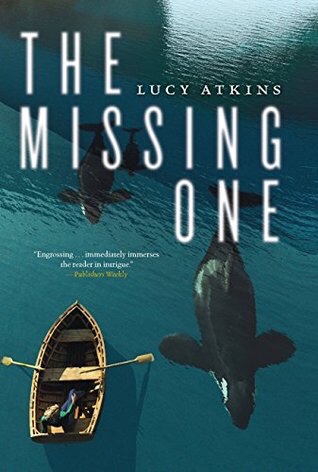
This was the book that first started my love affair with Lucy Atkins’s writing. I remember when I first read this novel for my book club, I was so impatient to find out what happened back in the 1970s to Elena and Susannah. A terrifying and traumatic event has linked these two women for over 30 years and it can’t stay a secret for ever. In the present is Elena’s daughter Kali, who has just lost her mother to breast cancer, a mother she could never make sense of or bond with as she wanted. In the aftermath of Elena’s death, Kali is trying to make sense of that difficult relationship when she finds a hidden pile of postcards from a woman called Susannah in her mother’s things. Thinking she has found the clue to her mother’s past she pursues this woman to find out about events leading up to her birth and a family history that has resolutely stayed hidden.
Driven forward by grief, and the constant worry that her husband is having an affair, Kali takes her son Finn on an odyssey to unearth her mother’s secrets and to find herself. She has many theories about what she might find: maybe her father had an affair; could Susannah have been his lover or her mother’s? Yet, what she finds is something she never suspected. Set against the backdrop of wild North America and Canada we learn about a woman’s quest to understand the Orca. Distressed by witnessing the killer whales at Seaworld in California while doing her PhD, a young Elena leaves everything to record killer whale pods in the, ocean. The Seaworld orca gave birth to a calf that was so disorientated by his tiny tank he kept banging himself against the glass trying to navigate through echolocation. His desperate mother keeps pushing him away from the sides to protect him from damage, but in her efforts to protect she forgets to nurture and the calf dies because she has forgotten to feed him. Kali was similarly starved of nurturing by her mother because she was so intent instead on protecting her from this awful secret.
The novel is an incredible insight into relations between mothers and daughters. Kali’s sister Alice has a great relationship with her mother that seems easy, whereas Kali and Elena clash over everything. Kali sees that her mother finds her hard to nurture and believes it is her fault. It takes putting herself in danger to find out why and in finding out she also discovers that essential piece of the jigsaw that tells her who she is and grounds her in a history. The novel shows how when you become a mother it becomes more importantu cc than ever to know where you are from and how you belong. It also shows how the secrets of one generation have a huge impact on the next, even if the secret is kept with the best of intentions. The book cleverly shows the difference between generations since we have now moved into a world where we put our own lives on show for fun. In a world where counselling and therapy are becoming the norm it is no longer seen as acceptable to keep such huge secrets and we know as post-Freudians what effect those early years of parenting have on the adult we become.
Aside from the complex human relationships are the family ties within the Orca families. We see how there are resident pods and transient pods with different feeding habits and rules to abide by. It is also clear that parallels can be drawn between the whale relationships and the human ones. Elena is so moved by their mothering instincts and the possibilities to map their language and understand their emotions. She gives up everything to spend as much time with them as she possibly can even going to sleep on her floathouse with the sounds of whales drifting up from a microphone in the water. I learned so much about these incredible creatures without losing the majesty of them and the awe a human being feels when a huge tail rises up out of the water next to their boat.
The book reads as a dissection of family relationships, a thriller, a study of whales and a study of grief. Grief causes Elena to suffer with depression throughout her life, grief traumatises Susannah to the extent that she is unbalanced by the things she has witnessed and it is grief that compels Kali to jump on a plane to Vancouver with nothing but a few postcards and the internet to go on. I struggled to put the novel down because of the thriller element. Like a good crime novel, you desperately want to know the truth of who- dunnit. Yet it is those final chapters I like best, after everything is resolved and each character is living in the aftermath of exposed secrets and recovery from physical and mental injury. The novel could have ended there and I am glad that it went further, back into Elena’s past so that we can see her happy on her floathouse making coffee and then hearing those whales come to greet her.
She would go back to that throughout her life, right to the very end. But the last time, when the world had shrunken to the contours of her skin and she leaned over the railings, it wasn’t the whales that she saw in the water. And so she jumped.
Meet The Author
Lucy Atkins is an award-winning British author and journalist. Her most recent novel, Magpie Lane, is a literary thriller set in an Oxford college. Her other novels are The Night Visitor (which has been optioned for TV), The Missing One, and The Other Child.
Lucy is a book critic for The Sunday Times and has written features for UK newspapers including The Guardian, The Telegraph, The Times, and many magazines. She was a Costa Novel Award judge in 2017, and teaches creative writing to Masters students at Oxford University.
She is mother of three and has also written several non-fiction books including the Amazon #1 parenting guide, First Time Parent (Collins). She has lived in Philadelphia, Boston and Seattle and now lives in Oxford, UK.
‘But what if monsters walk among us and they aren’t nut jobs? Sebastian was a seemingly normal guy who grew angry, so angry, he could have killed me. Anger isn’t a mental illness. Maybe regular people do terrible things all the damn time.’
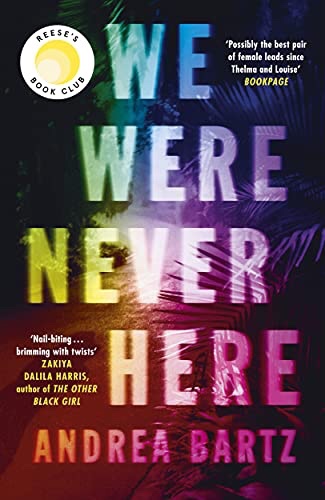
I was really looking forward to getting lost in this book because it has such a great premise. The blurb sounded like a cross between the twisted relationships of Single White Female and the exotic locations of TV’s Race Across the World. Having read SJI Holliday’s Violet last year I was looking forward to experiencing more dark deeds in remote locations off the usual tourist track. Emily and Kristen have been friends since college, but Kristen left her Milwaukee roots and is currently living in Sydney. Emily wasn’t brought up in Milwaukee, but she’s fallen in love with this city and it’s old houses and community spirit. Now they’re living on opposite sides of the world, they have an agreement that once a year they’ll pick up their backpacks and visit somewhere different, to experience the real way of life away from tourist spots. At the opening of the book the girls have met in Chile, rented a car, and are giving off serious Thelma and Louise vibes. Unfortunately, they have no idea how true to the film their experience is going to be. When Kristen meets a Spanish backpacker in a bar on their last night, she’s keen to spend some alone time with him. However, Emily is very uneasy about the plan. Kristen asks her to stay in the bar for an hour, giving her some alone time in their room with her new beau. Emily agrees, but her unease becomes too much and she leaves early, rushing back to the room. She finds Kristen spattered with blood and the backpacker dead on the floor with wide open eyes, a picture that will linger in her head forever. Kristen tells Emily the backpacker attacked her. Emily wants to support her friend, but isn’t this a huge coincidence? Why would something so dreadful happen to them twice?
Emily’s concerns about Kristen being alone with someone she’s just met, came from very bitter experience. Last year, in Phnom Penh, Emily made the same choice. She met a man called Sebastian and invited him back to her room where he sexually assaulted her. Emily froze up, but suddenly Kristen burst in and started fighting Sebastian off. In the struggle, he was hit on the head, which accidentally killed him. Despite this being self-defence, the girls chose not to go to the police and instead they managed to smuggle his body out of their digs and conceal their crime. Now here they are, only a year later, going through exactly the same experience. When it happened to Emily she went to pieces and Kristen was the best support, staying up all night with her if she had to and slowly putting all Emily’s broken pieces back together again. Kristen seems strangely okay though, organised and dedicated to concealing another crime they’ve committed. How can she keep herself together like that? Emily doesn’t want to judge, she knows people react to trauma in different ways. As they fly off to their respective homes she expects Kristen’s emotions to hit as she reaches the safety of her apartment. It never happens. As Emily settles back into normal life, working at the organic pet food business, taking yoga classes at the studio and continuing her fledgling relationship with Aaron, she does unwind a little. Emily had been unsure about mentioning she was seeing someone to Kristen, so she’d played it down but things are going well. She wonders why she was so reticent and organises some counselling with a woman her friend Priya recommends. She wants to talk about her relationships, but the face of the dead backpacker keeps flashing up in her mind when she least expects it. She imagines rain coming down and uncovering his body. What if the police piece together his last movements and go to the bar, where staff might remember two American backpackers with dark hair? She’s trying to get back to normality and enjoy Aaron, when there’s an unexpected knock at the door. She’s shocked to open it and find Kristen standing there. What is she doing turning up like this? Emily feels very disloyal, but wonders how she’s going to manage her normal everyday life and spend enough time on her new relationship with Kristen here?
We’ve all had those friendships where we’ve felt uneasy or as if we’re in competition – this is the situation that the word frenemy was invented for. It’s hard to pinpoint exactly what Kristen is doing, but the undercurrent is there. Emily is very unsure of herself anyway and doesn’t have that stability of a family around her, since her parents split when she was a teenager. This has made her cautious and inward thinking, we do spend a lot of time in Emily’s head and get to know her well. Of course I was very interested in how the author tackled the sessions with her counsellor, Adrienne. She describes her as calm and present, and I loved how she describes imagining Adrienne as so well rooted in her chair she never moves, as clients travel through as if on a conveyor belt. I think this stands out to Emily because she’s never had anyone in her life who feels that permanent. I enjoyed looking for those red flags, where Adrienne puts her pen down and asks Emily to pay attention to what she’s just said. It brings her into the moment, and reminds her to listen to her self- talk; most clients have all the answers within them. Emily mentions that by having Aaron in her life she feels like she’s ‘abandoning’ Kristen, which is strange because she should be able to have a boyfriend and a best friend shouldn’t she? She also wonders whether the distance they had wasn’t a good thing? She’d been getting over Phnom Penh, but with Kristen closer she ‘wondered if the distance between Kristen and me had been a blessing: a long and narrow but viable path toward healing. Now I felt myself sliding the opposite way like someone dragged by the heels.’
Kristen is more difficult to get to know, mainly because we are not inside her head. She is good for Emily in some ways, pushing her to try new things and be more spontaneous. Emily gets a small glimpse into Kristen’s early life when she drives her home to the grandparents who brought her up. Although lovely and polite, Emily notices that all of their questions are focused on her, rather than Kristen. There’s no real fanfare that she’s come all the way from Sydney to see them, in fact they seem quite dismissive. Aaron is a lovely guy, one of the ones who ring when they say they will and make a new date at the end of the last one. Kristen has been a lifesaver before, pointing out when previous boyfriends were not putting the effort in or manipulating her. She’s desperate for Aaron and Kristen to get along, but she also wants to enjoy him without Kristen’s interference. On the first night he goes back to Emily’s apartment with her, Kristen messages that she needs her. Feeling obligated to drop everything, she jumps out of bed and Aaron goes home. When Emily finally gets through to Kristen on the drive over she claims it wasn’t serious and Emily could have just phoned. I was so suspicious at this point and found myself begging for Emily to see what’s happening.
Once the girls have come home from Chile, the tension and pace drop a little to more of a slow burning thriller. Yet as I came towards the end and the revelations started to come, the pace picked up again. I really felt the claustrophobic, trapped feeling that Emily is starting to experience. When she has a panic attack, and it affects her asthma, I did find myself holding my breath. I thought the issues faced by today’s young women, as brought up by both characters, were sadly very true. Emily makes the astute observation that men choose to put themselves in a position of danger – by playing dangerous sports for example – because they want to feel a moment ice cold fear, to make them feel ‘the icy jolt of feeling alive. They crave it because they have no idea how miserable it is to feel that frigid blast a hundred times a day.’ Women should be allowed to roam the world with a backpack without fear, but the truth is they can’t. The author taps beautifully into a rage that women feel, because the remedy for this inequality doesn’t seem to lie in teaching boys not to rape, but in curbing women’s freedom further. The girls also bring up the real-life case of Amanda Knox and the way her sexual experiences were used as a weapon to beat her with in the tabloid press. Both girls know that liking sex can get a woman branded: as promiscuous; as abnormal; even as a murderer. The author paints a scary picture of coercive control and emotional abuse, that can happen in any type of relationship, such as the quiet way Kristen’s grandfather dismisses her. In turn, Kristen manipulates Emily into being a perpetual victim who she can rescue over and over. Woe betide anyone else who steps in to this drama triangle or Emily if she chooses to step out. This novel is a sinister and obsessive look at female friendship and is a fascinating insight into the 21st Century world young women must occupy.
Publisher: Michael Joseph3rd August 2021
Meet The Author
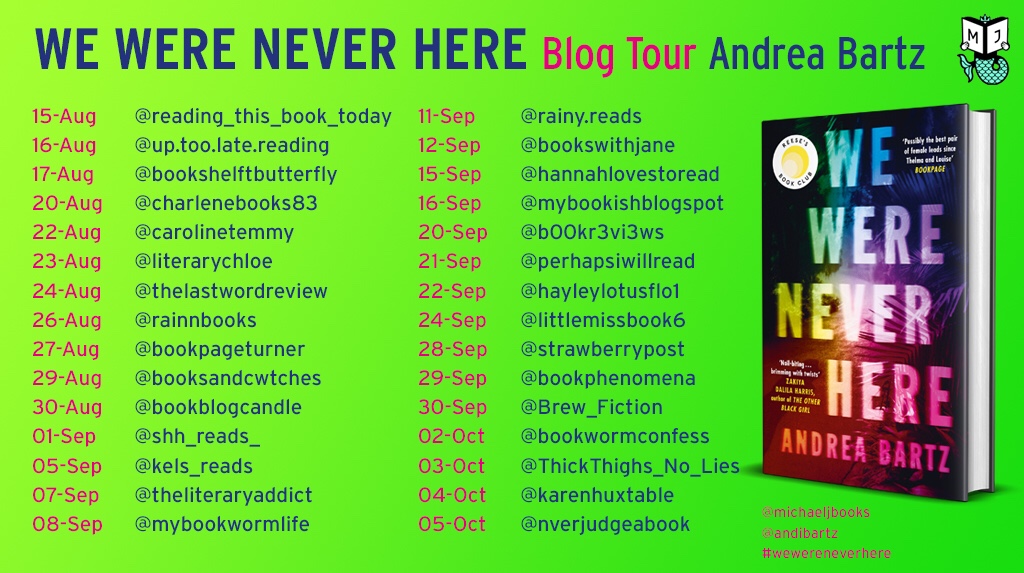
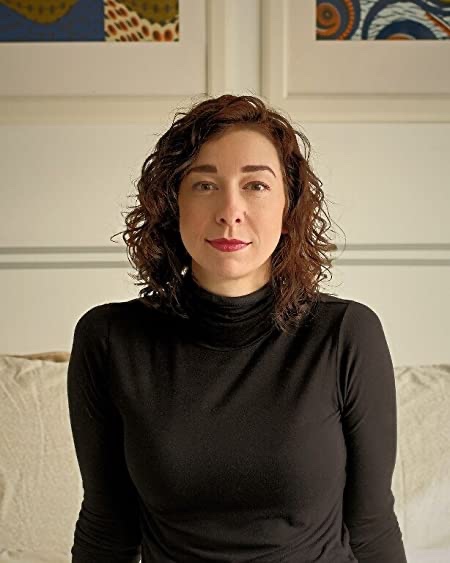
Andrea Bartz is a Brooklyn-based journalist and the author of the forthcoming WE WERE NEVER HERE. Her second thriller, THE HERD, was named a best book of 2020 by Real Simple, Marie Claire, Good Housekeeping, CrimeReads, and other outlets. Her LA-Times bestselling debut, THE LOST NIGHT, was optioned for TV development by Mila Kunis. It was named a best book of the year by Real Simple, Glamour, Marie Claire, Library Journal, Crime Reads, Popsugar, She Reads, and other publications. Her work has appeared in The Wall Street Journal, Vogue, Cosmopolitan, Women’s Health, Martha Stewart Living, Elle, and many other outlets, and she’s held editorial positions at Glamour, Psychology Today, and Self, among other titles.
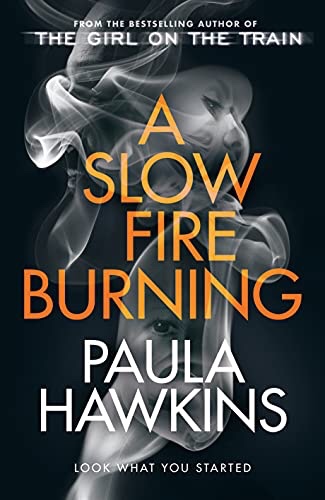
I’m a big fan of this author’s previous novels Into The Water and TheGirl on the Train. Incidentally, I didn’t like the latter’s film relocation to upstate New York, because I didn’t feel it had the necessary grit of the book’s London location and lost something in translation. I’ve been looking forward to her new novel and I spent the weekend on my chaise longue reading it with a bar of Green and Blacks Sea Salt. Pure bliss! The novel is set in London, on a stretch of the Regent’s Canal between Bethnal Green and Islington. We open with a body being found on one of the canals, the deceased is a young man his neighbour only knows as Daniel. When she boards his boat and finds his body covered in blood she knows she must ring the police. However, in typical Hawkins fashion, the author wishes to unsettle the reader and leave them unsure of who to trust. So, although his neighbour Miriam looks like a run of the mill, middle aged and overweight woman, used to being ignored, she does something unexpected. She notices a key next to the body, and as it doesn’t belong to the boat she picks it up and pockets it.
Our other characters are members of Daniel’s family, who live within walking distance of each other in this area. Daniel’s mother Angela is an alcoholic, in a very strained relationship with her only child until his death. Then there’s his Aunty Carla and Uncle Theo who live near the boat. Daniel appears to have a closer relationship with his Aunty Carla, than he did with his mother, but is it really what it seems? Miriam has noticed some odd comings and goings from the boat next door. This is a family with secrets, both old ones and current ones. Miriam noticed that the girl who works in the local launderette, Laura, was with Daniel on the night in question and they had a row. Laura could have killed him, but Miriam doesn’t think so. Then there’s Irene, an elderly lady who lives next door to Angela and has also noticed some strange behaviour next door too. She knows the family well although Angela has often been too distracted by her own life to form a friendship. Irene does have a soft spot for Laura who helps her out from time to time, by going shopping or running errands. Like Miriam, Irene is also wondering if everything is what it seems with this murder. Lonely people observe a lot and although the family won’t realise this, she’s in possession of a lot of information. Something seismic happened to this family years before, something that changed the lives of everyone involved. Might that have a bearing on their current loss? Could that be the small flame, burning slowly for many years, before erupting into life and destroying everything?
I absolutely fell in love with Laura. She has a disability that affects her mobility and, along with many other symptoms, she has problems keeping her temper. Her hot-headed temperament has led to a list of dealings with the police. This isn’t her normal character though, this rage seems to come from the accident she had as a child. She was knocked down by a car on a country road while riding her bike and broke her legs, as well as sustaining a head injury which has affected her ability to regulate her emotions. Further psychological trauma was caused when she found out the man who hit her, was not just driving along a country round, but driving quickly away from an illicit encounter. Who told him to drive away and why? Laura feels very betrayed and now when she feels threatened, or let down, that rage bubbles to the surface. She’s her own worst enemy, unable to stop her mouth running away with her, even with the police. She has a heart of gold, but very light fingers. She’s shown deftly whipping a tote bag from the hallway of Angela’s house, but in the next moment trying to help Irene when she can’t get out. I found myself rooting for her, probably because she’s an underdog, like Miriam. Miriam feels that because of her age, looks and influence she is completely invisible. She has been passed over in life so many times, it’s become the norm. However, there is one thing she is still angry about. She wrote a memoir several years ago and showed it to a writer; she believes he stole her story for his next book and she can’t let that go.
I love how the author writes her characters and how we learn a little bit different about them, depending on who they’re interacting with. They’re all interlinked in some way, and their relationships become more complex with time. As with her huge hit The Girl on the Train, the author plays with our perceptions and biases. She doesn’t just plump for one unreliable narrator, every character is flawed in some way and every character is misunderstood. We see that Miriam is not the stereotypical middle-aged woman others might think she is, as soon as she pockets that piece of evidence at the crime scene. Others take longer to unmask themselves, but when they do there’s something strangely satisfying about it. We even slip into the past to deepen our understanding of this complicated group of people, letting us into all their dirty little secrets, even those of our victim Daniel. When I’m counselling, something I’m aware of is that I’m only hearing one person’s perspective of an event. Sometimes, that’s all it needs, some good listening skills and letting the client hear it themselves. Yet, it is only one part of a much bigger story. Occasionally, I do get an inkling of what the other person in the story might have felt and I might ask ‘do you think your wife heard it like that or like this?’ If I say ‘if my partner did or said what you did, I might feel….’ it makes the client think and asks that they communicate more in their relationship. Sometimes the intention behind what we say becomes lost in the telling. That’s how it was reading this book, because we do hear nearly every perspective on an event, but also how each event or interaction affects the others. The tension rises and it was another late night as I had to keep reading to the end. Paula Hawkins has become one of those authors whose book I would pre-order unseen, knowing I’m going to enjoy it. In my eyes this book cements her position as the Duchess of Domestic Noir.
Meet The Author.
PAULA HAWKINS worked as a journalist for fifteen years before turning her hand to fiction. Born and brought up in Zimbabwe, Paula moved to London in 1989 and has lived there ever since. Her first thriller, The Girl on the Train, has been a global phenomenon, selling 23 million copies worldwide. Published in over forty languages, it has been a No.1 bestseller around the world and was a No.1 box office hit film starring Emily Blunt.
Into the Water, her second stand-alone thriller, has also been a global No.1 bestseller, spending twenty weeks in the Sunday Times hardback fiction Top 10 bestseller list, and six weeks at No.1.
A Slow Fire Burning was published on 31st August by Doubleday.
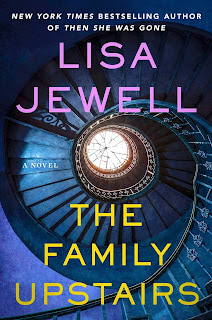
As some of you may know, reviews can get very personal for me. Probably because I’m a therapist and used to lots of self-reflection. When a book hits me emotionally I really think about why and this book had me scurrying to my journal. Lisa Jewell is a master of these domestic thrillers and the psychological suspense created when groups of people are in conflict. Here the conflict is controlled within one house 16 Cheyne Walk in Chelsea, overlooking the river. That is until it’s secrets explode and the truth of the mystery is scattered across the world.
Three narratives weave in and out of each other to tell the story. We meet twenty five year old Libby with her little garden flat and her job at the kitchen design company where she’s worked for five years. Everything about Libby says organised, professional and quiet. That is until a bombshell is dropped on her life. Woven with this is the story of Lucy – if that is her real name. She is living in France but at the moment we meet her is homeless along with her two children and the dog. The family are reduced to sneaking in to the beach club to get showered but that doesn’t happen everyday. Lucy is at rock bottom. She can’t husk for money but needs money to collect her violin. They have nothing left to sell. Does she go and ask her violent but rich ex-husband for help? Or does she let the children stay with their grandparents? Either way she needs her violin and once she sees the date, she develops an urgent need to make her way back to London and a certain house in Chelsea.
Our third narrator is Henry, relating what happened at the house back in the early 1990s. Henry just about remembers family life when things were normal and it was just the four of them: mum, dad, Henry and his sister. He has vivid memories of going to private school in his brown knickerbockers and sitting drinking lemonade while his Dad read the newspaper at his club. The house was filled with curiosities such as animal heads, ceremonial swords and red thrones. It’s so distinctive in style that when the money starts to run out the house is scouted as a location for a music video. The fiddle player in the band is Birdie and she loves the house. So much so that when she needs a roof over their head, she and her partner, Justin, come to stay in the upstairs room. Henry’s father has had a stroke and doesn’t have the same strength and power he used to have. He seems to sit by and watch as Birdie and Justin take up residence. Later another couple join the group. David Thomsen is a man Henry dislikes almost instantly because he seems to sense what his Dad and Justin fail to see. David has charisma and seems to have an effect on every woman in the house. His wife Sally and two children, Phin and Clemency, also join them. It starts to feel like they’re living in a commune but the only consolation is Phin. To Henry, Phin is beautiful with floppy hair, cheekbones and a distinctive style. When Phin takes him shopping, Henry develops a crush and trails after him, wanting to be like him. When it is suddenly announced at the dinner table that David and Birdie are now a couple Henry senses this is the start of something evil. They bring out the worst elements of each other and start to assume a power in the house that goes unchallenged by his parents or the other adults. They are told what they will eat, do and even wear. Henry knows this is out of control and this is only the beginning of the damage this man will inflict in the house. Libby has been set a letter by a group of solicitors telling her she has been left a house. When the solicitor walks her round to the house she realises she is rich. The house is abandoned, but huge and in prime position. It could be worth millions. The solicitor also gives her a newspaper cutting describing the strange events that took place there exactly twenty five years before. Libby has always known she was adopted, but this tells her she was the lone survivor in the house, tucked in her cot with a lucky rabbits foot under the mattress. Downstairs were three people, dressed all in black and dead from poisoning themselves with belladonna. One was David Thomsen. The news story talks of a cult forming within the house and aside from Libby, whose real name is Serenity, all the children living at the house were missing. Libby feels there is more to this story and wants to meet the journalist who wrote the article. What is the answer to how this happened? And who is sneaking in and out of the attic space at the house?
There are so many questions that I won’t answer for fear of ruining the book, but I will tell you about the effect it had on me. When I was 12, the same age as Henry, my parents joined an evangelical church that became all-consuming and took over our lives for a few years. Up until then we’d been part-time Catholic’s and I’d gone to Catholic school for a while through my first confession and communion. These new people felt weird. They were so fervent and all that speaking in tongues was odd. But it got worse. My parents started to have no other social life from church. We were forced into church activities for kids. My dad lit a bonfire and they burned their secular music and all of my mum’s ‘inappropriate ‘ books like the Judith Krantz and Jackie Collins novels. I was scared by this. I started to wonder who my parents were as I was more restricted on what I wore, listened to and read. I couldn’t go to anything where there was a sniff of boys and from what I could see there was a lot of coercive control over women and girls particularly. I felt Henry’s fear when reading this book. I know what it feels to be a kid, looking at your parents and thinking they’ve been taken in by something dangerous. That beliefs are being forced on you and you can’t live like other kids. To feel like all of your security is being taken away.
Of course my solution wasn’t as dramatic as Henry’s but I did have to create coping mechanisms. There are times now when we can laugh about it, because as my brother and I have grown older we have become one of those families that openly discuss everything. However, I still occasionally have dreams where my parents can’t see or hear me and I think it has also bred a lifelong mistrust of authority. So I can understand the seismic effect the arrival of Dave Thomsen had on these children, with repercussions way into adult life. Whether it’s changing who you are to escape, or bouncing from one failed relationship to another or being unable to move on, even geographically, they are all responses to trauma. With a brief nod to the future at the end of the book the author does leave a tiny seed of hope that in future generations a type of healing can be reached. This is a dark, disturbing, look at how sometimes home is the most dangerous place to be.
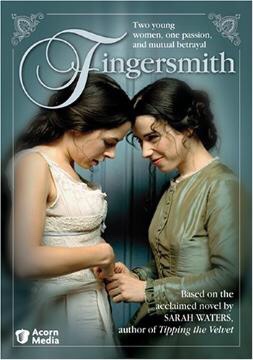
Sarah Waters is one of my favourite writers. Anything she writes is a pre-order in my house, so there may be some bias in my next statement. For me, she is one of the best writers of the 20th Century with, hopefully, more to come. More recently, she has dabbled into the early 20th Century and even WW2 for her novels The Night Watch and The Little Stranger, but she started back in the 19th Century and this is my favourite from that series. Amazon calls her genre Lesbian Victoriana, which made me giggle a little, but I think Waters is doing more than that; she is chronicling women’s experience. She includes lesbian encounters and women falling in love with women, but in this book that’s an aside rather than the main focus of the plot. I think to term these novels as lesbian novels is reductive and has a sense of prurience. I remember the fuss and excitement when Tipping the Velvet was serialised at the BBC, and male journalists practically salivating over Rachel Stirling and Keeley Hawes. I think they’re intended to be read as women’s experiences of living in Victorian England, with the women’s sexual relationships as part of an unspoken subculture only just emerging into the open. She is using the device of ‘writing back’ to the historical period and bringing a group into the limelight who were hidden at the time and never portrayed in fiction. It’s about seeing the Victorian era and women’s lives in totally new eyes, and accepting that the literary canon only shows us a small part of a vibrant and varied world. As with history being written by the victor, literature of the early to mid 19th Century tends to be written by white, straight, middle-class males. Waters is trying to redress the balance and give us a minority viewpoint which I love.
Orphan, Sue Trinder, lives in a family of petty thieves and is trained to become a ‘Fingersmith’. Based in London, the den is run by a motherly woman who has a hard and ruthless side. All the thieves congregate and bring their wares to ready them for sale, while a baby farm is run on the side. It is here that a man called ‘Gentleman’ recruits Sue for a scam to defraud a wealthy heiress. We also meet a young woman called Maud Lily, she’s an orphan too, but with a home in a gloomy mansion as the ward of an odd Uncle. She has a very comfortable life, helping him with his work as some sort of secretary, but his subject matter might raise an eyebrow or two. He is an avid collector of Victorian pornography. This makes Maud very uncomfortable, but it seems an unspoken agreement that her help is in return for his protection. This strange upbringing makes Maud very sheltered and naïve in one respect, but also strangely knowing in others. Gentleman has devised a long con that starts when Sue is placed within the mansion as Maud’s lady’s maid. She will then encounter the Gentleman who will try to court Maud. They hope, that with Sue’s encouragement, Lily will fall for his charms. His long term aim is to marry her, because according to 19th Century marriage law, all of her fortune will then become his property. Then it’s a simple case of claiming she’s mad, and as long as a doctor agrees, a man could sign his wife into an asylum leaving him free to use her money. If she helps, Sue will be entitled to some of the ‘shine’.
As always with Sarah Waters books, the depth of research is obvious and this feels so real. The sense of place is so strong, in the filthy detail of the London terrace streets and the silent unease in the mansion. These two places feel entirely opposite. Where Sue grew up there’s constant noise, people running in and out, babies wailing upstairs and other people’s belongings being appraised and sold on. There’s squalor and poverty, so for her, the change to being a lady’s maid is a massive leap. By contrast the mansion is quiet with the sound of ticking clocks, days without seeing another soul. There’s a feeling of being imprisoned somehow, it’s stifling and the scene where she works in the library with her Uncle feel so uncomfortable. The tension as the con slowly starts to work is terrible. Then, in what is probably my favourite twist in fiction, the pace picks up and the reader is left reeling as everything changes.
In the second section of the book we go back in time a little to Maud’s story, some of this overlaps with the first part and some of it is her history and how she ended up closed away with only a perverted Uncle for company. We follow Sue’s journey as Maud’s lady’s maid and see how a friendship develops between the two young women. Maud is living like a prisoner and has experienced years of coercive control leaving her timid and unsure. The con would only work if Sue stays focused and doesn’t get involved with her new mistress, but their friendship is deepening and Sue is starting to have doubts about the plan. There is an attraction between the two women that was unexpected, but is there anyway to back out of the plan or is it too late? There is something hypnotic about this book. It is a long read, but unlike the Victorian novels it emulates, it didn’t feel long-winded or become boring. I was engaged at every point of the story, absolutely fascinated with the twists and turns of the plot and never quite sure who is telling the truth. I was desperate to find out who has really been conned in the end. This is one book where BBC adaptation is very good too, with great casting and a definite feel of the book.
However, the novel is perfection. It’s a historical thriller, told through unexpected heroines and delving into the more deviant side of Victorian life: pornography, pick-pocketing, theft, fraud, confidence tricksters, and baby selling. Not to mention the lesbian aspects of the storyline that would have been unthinkable in fiction of the time. In fact I clearly remember a tutor at university telling me that all the focus on deviant sexual behaviour was focused on gay men and prostitution – intimating that the thought of two women having a relationship was so taboo that it didn’t even exist in most Victorian minds. I loved that we were seeing a totally different section of Victorian society and it had a voice. There is a feel of Dickens in the poverty and living conditions, and of course he had his own wife detained in an asylum. However, there’s none of that Victorian moralising that comes with fiction of the period. This is the underclass speaking for itself and the character of Maud’s Uncle hits home the idea that even the middle classes were not necessarily as respectable and God-fearing as they seemed. I would recommend this to anyone who enjoys Victorian fiction whether in the form of historical novels or of the period. It’s also a great thriller with enough double-crossing and revelations to keep any reader satisfied. This really is Sarah Waters at the height of her writing powers and should be on your TBR list immediately.
Meet The Author.
Sarah Waters OBE, was born in Wales. She is the author of six novels, Tipping the Velvet, Affinity, Fingersmith, The Night Watch and The Little Stranger, which have been adapted for stage, television and feature film in the UK and US. Her novels have been shortlisted for the Man Booker Prize and the Women’s Prize for Fiction and she has won the Betty Trask Award; the Somerset Maugham Award; The Sunday Times Young Writer of the Year Award; the South Bank Show Award for Literature and the CWA Historical Dagger. Sarah has been named Author of the Year four times: by the British Book Awards, the Booksellers’ Association, Waterstones Booksellers; Stonewall’s Writer of the Decade in 2015; Diva Magazine Author of the Year Award and The Sunday Times Award for Literary Excellence in 2017, which is given in recognition of a writer’s entire body of work. Sarah was awarded an OBE in 2019 for services to literature in the Queen’s Birthday Honours. Sarah Waters lives in London.
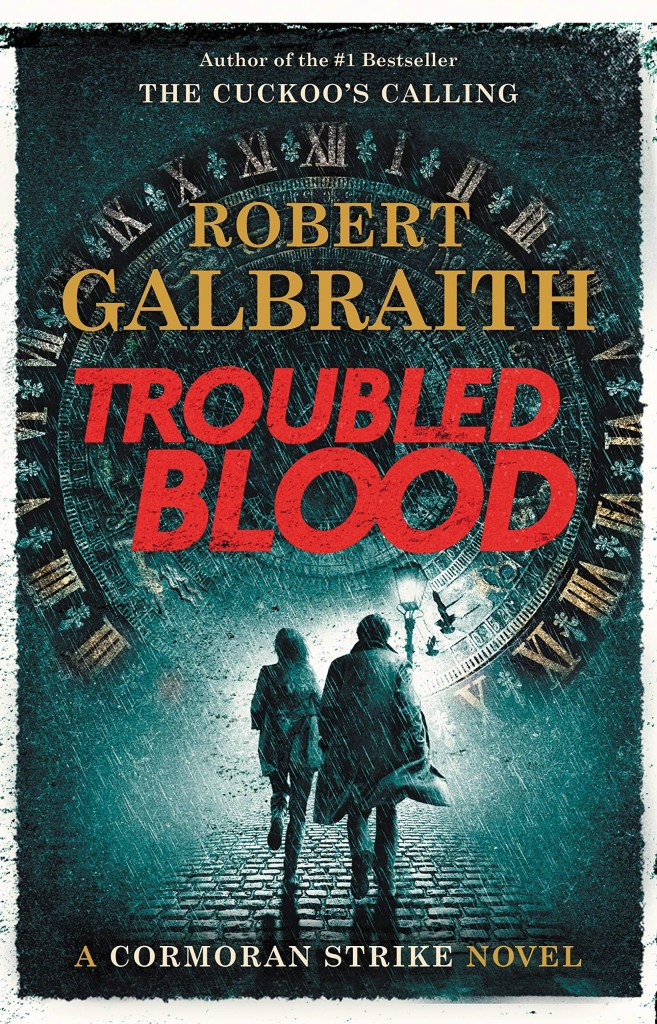
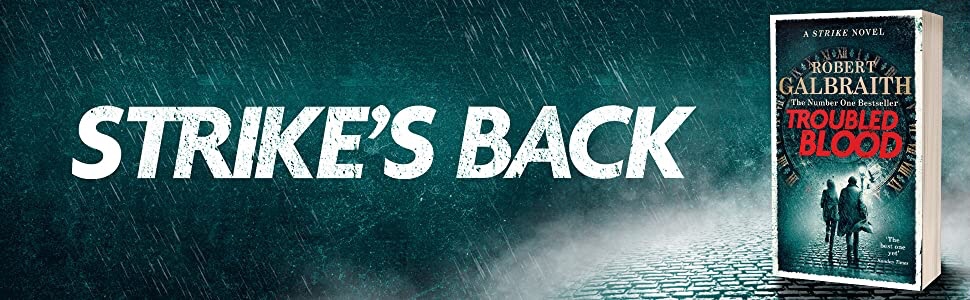
While I’ve been taking time to deal with some family issues, I’ve been reading my own personal choices rather than to a schedule. This has given me the chance to pick up this rather weighty hardback from J.K. Rowling writing as Robert Galbraith. In fact this book was so weighty that my chiropractor had to put my thumb back into place this afternoon. I’d resorted to nestling the book into a soft cushion on my lap so I could finish it. My partner has never seen me so quiet, as I shunned TV and conversation because I was totally engrossed in this novel. Troubled Blood is the fifth book in the Cormoran Strike series and I must admit to being a little in love with the tall, dark, private investigator. I love the author’s slightly shabby descriptions of him with his unkempt curly hair, awkward gait from his prosthetic leg and his broken nose. However. I’m also incredibly fond of his business partner Robin and the obvious love that flows between them, despite both of them denying it, even to themselves.
We meet the pair with Strike’s agency in a good place – there’s a waiting list for clients, three new members of staff and Robin is now a full partner in the business. Some things stay the same though -Robin still drives the Land Rover, Strike is still smoking and living in the attic above the office, and there is still that unresolved tension around how Robin and Strike really feel about each other. Strike is in Cornwall, visiting his aunt and uncle, the closest people he has to parents. Strike’s father is Johnny Rokeby, rock musician and tabloid fodder. Strike’s mother was a beautiful, bohemian groupie who never had an idea of how to be a mum and abandoned Strike to his Aunt Joan in his primary school years. Joan is possibly, after Robin, the most important person in his world and she’s had a diagnosis of terminal cancer. While drinking with best mate Davey at the local pub, Strike is approached by two women. Anna tells Strike the story of her mother’s disappearance over forty years ago. She was working as a GP in London and saw a last minute patient, before leaving to meet a friend in a nearby pub. She never arrived. Despite extensive investigations she appears to have vanished into thin air. They make an agreement with Strike that he will look into it for a year. With several investigations ongoing and a long waiting list, this looks like the busiest the agency has ever been, but how will Strike manage his workload and spend time with Joan when he needs to?
Robin is happy to pick up some of Strike’s workload in London, such as the staff rota and catch up meetings. However, she does struggle to get one of the new staff members to take her seriously as an equal partner in the agency. She’s balancing this problem, her increasingly contentious divorce, important news about ex-husband Matthew, and supporting Strike as much as she can. This means pulling long shifts of surveillance after a day in the office. She loves her job as much as she did at the beginning but she is struggling with panic attacks related to an incident at university and a case where she was attacked with a knife. Anyone trying to push their way into her space, whether by sending inappropriate pictures or brushing up against her in the office, will come off worst from the encounter. She is doing a lot of soul searching in this instalment of the series, as her friendship with Strike deepens she asks herself a lot of questions.
The main case was very satisfying, with lots of clues, red herrings and bizarre twists and turns. The investigating officer at the time of Margaret’s disappearance appears to have had an obsession with Aleister Crowley and astrology. His notebook is a very odd mix of drawings, notes on the main people suspected and the record of a gradual descent into madness. He was sectioned after seeing a horned goat demon. Robin finds more meaning in it than Strike, and it does yield some clues, but it’s clear the original investigation was inadequate. By chance, a serial killer was prowling the very same area and the police’s official line is that she was possibly taken by him but it can’t be proved. I found the case mentally challenging and full of fascinating characters too. The psychological aspects of the interviews was really intriguing, showing that even in a small 1960s doctors surgery there can be a lot of secrets buried. It was interesting to see more of Robin working on her own and how far she’s come since the first book. As the case gathered momentum I found myself gripped and I kept wanting to pick the book up again to read more, even though it was looking likely that the author was going to keep the case unresolved.
Make no mistake, this book was huge. I always reserve the right to DNF a book if I’m not feeling it by a certain point in the story. Like Bradley Cooper’s character in Silver Linings Playbook, I’ll happily throw a book out of the window if it’s not grabbing me or is overlong. I never felt that with this novel, besides I wouldn’t have dared throw this out of the window for fear of killing someone! I never felt a lull in the story, so it kept me engaged all the way through. This wasn’t just down to the cases, in fact I’d worked out one of them almost immediately – men visiting a woman’s house for a period of time where there are large deliveries of nappies – for which I blame a misspent youth watching every fetish going on C4’s Eurotrash. It was the themes running through the novel that kept me reading too. Absent parents loomed large: for their client Anna who having lost her Mum, had to watch her Dad marry the nanny; for Strike whose half-siblings are pestering him moook for a catch up with their rock star Dad, much to his disgust; even Robin feels dislocated from her family, who can’t understand her choice of career brought into stark relief as her ex-husband is about to become a father. We can see what a beautiful, but absent mother has done to Strike as he keeps Robin as his very best friend and struggles to keep ex-girlfriend Charlotte at a distance. Charlotte is the beautiful damsel in distress who will always pull him towards her when she’s vulnerable, only to withdraw as soon as she is back on her feet. It will take Strike to cut their line of communication but will he be able to do it. The stress of losing his aunt, Charlotte’s pestering and his father applying pressure, results in Strike choosing to drink too much and pushing those who love him most away.
I also enjoyed the ongoing development of Robin and the themes around female power and agency. Being Strike’s partner and his absences in Cornwall, mean she’s the boss. Trying to get all of their staff to accept that is difficult for one of their contractors who tries flirting and sexting, goes around her to get Strike’s approval and doesn’t take her seriously at all. She has to really assert her authority, it isn’t comfortable for her but she’s scared of enough in life without having to be wary at work. When she fights back and Strike finds out the true extent of the matter, his instinct is to physically defend her, but Robin doesn’t want to be rescued. She knows logically that her size and strength leave her slightly vulnerable while working in the same environment as the men. However, in terms of management and investigation skills she really does want to be Strike’s equal. I loved the way these themes were echoed in the case, with the missing woman being assertive, well-informed and educated around women’s rights and health. Some of the possible suspects are in the frame, because she was seen to interfere, to get mixed up in domestic violence cases or unwanted pregnancies and find solutions for those women.
I’m aware of there being controversy around the representation of a possible transgender character. I think this aspect of the book could have been handled better. An emergency patient turned up at the surgery just as Margaret was going to leave, and she agreed to see her. In all the accounts of witnesses they describe a woman with some very masculine characteristics and jump to the conclusion that it’s a man dressed as a woman. This then becomes confused with the passing serial killer who is thought to dress as a woman when approaching victims so they are less wary. One character even makes a comment about other serial killers who liked to dress in women’s clothing. I felt this was quite sloppily done and seems to be saying there’s a link between criminality, violence and men who wear women’s clothes or who are transgender. There should have been more emphasis placed on the fact that these men are not transgender, but are dressing as women for the purpose of disarming victims and luring them into a van or an alleyway. It’s purely a disguise for the purposes of murder, rather than a sign that transgender people are all deviant. This is something editors should be more aware of in the 21st Century and it was a shame to see it in a book I otherwise loved.
This latest instalment in the Strike series is a cracking read and keeps you gripped, despite the fact it’s huge! Every case is interesting, but the main story is such a puzzle and each time there’s a revelation it’s like peeling another layer off an onion. I never suspected the person responsible and that says a lot about my prejudices and bias, as well as societal expectations. There’s a real streak of social justice running through this novel with certain characters and from my work within the mental health system I did recognise the worry that people are falling through the net and being let down as government funding is withdrawn due to austerity. I recognised the practice of ‘cuckooing’ where a vulnerable person’s home is taken over for criminal purposes such as storing stolen goods, dealing drugs, or hiding body parts. I find it amazing that the author can bring so many strands together, while fully occupying her characters and showing us their inner worlds. I loved my time with Strike and Robin, and I thought the ending was lovely. This was a gripping, multi-layered and intelligent thriller with a simmering attraction between our two main characters that will have you rooting for them.
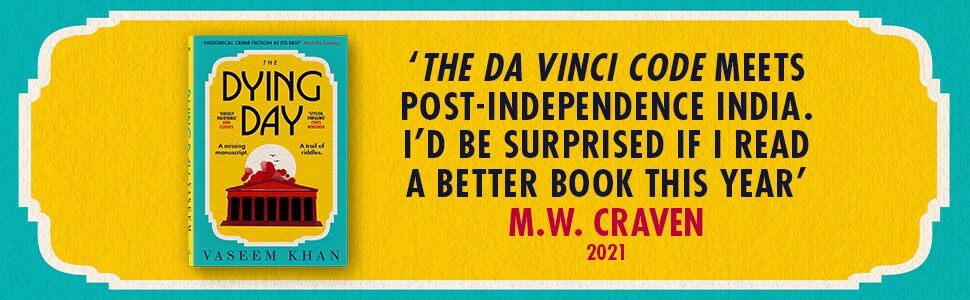
After winning a Twitter competition for a proof copy, I read some of the Inspector Chopra series of books by this author last year and really enjoyed them. This is the second book in a different series by Khan, featuring female police officer, Persis Wadia. Set in post-partition Bombay we get a real sense of the time period and political atmosphere in the background of the novel. I really enjoyed Persis as a character straight away. Her relationship with her family was well written and they were warm and inviting. They felt real, as if I could just walk into a house tomorrow and find them there, eating a meal. I found her relationships with colleagues just as interesting as her family, especially since Persis isn’t always polite or good at small talk. I loved her straight to the point attitude though and think it created a gently humorous exchange here and there.
It must have been very difficult to pitch her character properly, because she’s a police officer at a time and place that’s not the norm. She could have felt too modern for the time period, or too submissive as a woman to feel like a real police officer. I think the author gets this just right, and without her character overshadowing the plot of the mystery she’s investigating. There’s also the attention she receives from the media. As Bombay’s first female police officer she’s something of a trailblazer anyway, but on top of that there’s her notoriety from the last case she investigated (in the novel Midnight at Malabar House). This case dragged her into the spotlight a little, but she’s very unimpressed with fame and media types, plus her personality doesn’t always come across well at first meeting. I found her awkwardness very touching, especially when it extends to her personal life. She seems to have feelings for one colleague, an English forensic scientist called Archie. Of course, if her feelings were reciprocated, there would be the problem of being a mixed race couple. It’s very early in the 1950’s and the country has just gone through the horrors of partition after the British rule ended. Her family think she should steer clear of the controversy that would accompany a relationship with an English colleague, especially since she’s such a high profile police officer.
Her investigation is at the Royal British Asiatic Society where both a manuscript and an employee have gone missing. John Healy is a man traumatised by his experiences as a prisoner of war during WW2. He appears to have left some sort of trail, created in the form of clues and riddles leading to location of his manuscript, but are they genuine and is John even in his right mind? There are also political implications to the case, piling the pressure on Persis to solve the treasure hunt quickly. In the background there’s another case, investigating the murder of a white woman. George Fernandes has been given lead detective on the second case, but Persis is finding it hard to work with him, due to unresolved feelings of betrayal in their last case.
Thanks to Khan’s detailed description of the city I felt fully immersed in the sounds, sights and smells of India in the mid-20th Century. This is an India that’s just learning to stand on its own two feet after years of British rule followed by WW2. Khan evokes a colourful and vibrant, India where the mix of religions and cultural rituals bring the city to life. Persis is an anomaly, the only woman in a man’s world but she is intelligent, focused and up to the job. She does have flaws though, she’s feisty and prickly with others at times and not very good at being a team player. She is a loner, at work and at home. We find out towards the end of the novel that this isolation is something she, and her colleague George, have in common. Of course Persis is in a constant battle with male members of the team, belittling or appropriating her achievements but she handles this well and her results speak for themselves. Just in case any TV executives or producers are reading, this has ‘Sunday night TV drama’ written all over it. I would definitely be tuning in.
Meet The Author.
Vaseem Khan is the author of two crime series set in India, the Baby Ganesh Agency series set in modern Mumbai, and the Malabar House historical crime novels set in 1950s Bombay. His first book, The UNEXPECTED INHERITANCE OF INSPECTOR CHOPRA, was a Times bestseller and an Amazon Best Debut, now translated into 15 languages. The second in the series THE PERPLEXING THEFT OF THE JEWEL IN THE CROWN won the 2017 Shamus Award for Best Original Private Investigator Paperback. The first novel in his new historical crime series, MIDNIGHT AT MALABAR HOUSE, features India’s first female police detective, and is currently longlisted for the Crime Writers’ Association Historical Dagger. The second, THE DYING DAY, is out in July 2021 and follows the theft of a 600-year-old copy of Dante’s The Divine Comedy from Bombay’s Asiatic Society.
Vaseem’s aim with his books is to take readers on a journey to the heart of India, showcasing both the colour and darker aspects of this incredible country. Vaseem was born in England, but spent a decade working in India as a management consultant. When he’s not writing, he works at the Jill Dando Institute of Security and Crime Science at University College London. In 2018, he was awarded the Eastern Eye Arts, Culture and Theatre Award for Literature.
For more information about the world of his books please visit vaseemkhan.com where you can also keep abreast of Vaseem’s latest goings-on, competitions, events, and extracts from upcoming books via his newsletter.