Posted in Publisher Proof

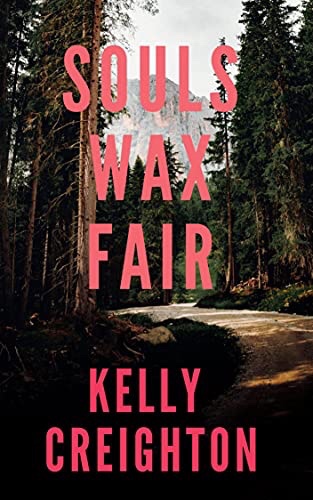
Souls Wax Fair by Kelly Creighton

Powerful men can get away with murder…for only so long.

After a life of hardship, Mary Jane McCord’s life in Rapid City, South Dakota, finally hits a sweet spot. She finds happiness and her singing career takes off. Everything is looking up until she uncovers the dark and secret obsessions of two high-profile men.

Twenty years pass but the people closest to Mary Jane have not forgotten.

Will they bring the truth out into the light?

I had never read this author before and found this latest novel an unusual reading experience. Told in fragments, this is the story of a South Dakota town full of tensions and secrets. There isn’t even one main thread, but what links each fragment and each character is the death of MJ McCord. Mary Jane was as beautiful as Marilyn Monroe, more beautiful even some would say. After a difficult and unsettled childhood with mum Marjorie, MJ’s life looks like it’s finally coming good. She’s married to a lovely man who’s older, but gives her kindness, stability and wisdom. He thinks that MJ is beautiful on the inside as well as the outside, and its that inner beauty that captivates him, because it’s a rare thing in his experience. His money helps her with a dream of becoming a singer and she’s just on the cusp of being known. He knows she’s looked elsewhere of late, but it’s her age and he can overlook it. Then he gets some devastating news, MJ goes to a party at the home of one of the town’s superstar football players, Jordan Pinault, but never comes home. It seems that MJ has been playing away with Jordan, they had a row and MJ picked up a gun. She shot herself in the head.

The fragments of the story meander around this event, moving back and forth in time, to people close to MJ and those with only a tangential connection to that tragic night. I’ll be honest and say that first of all I was confused. The structure and order of the chapters doesn’t always make sense and it’s only when you start to get closer to the events of that night, that things become clearer. In fact the sections in the second half of the novel, seem to fit together easier and make more sense. Each fragment is told by a different person, but not everyone uses their given name, instead using a nickname, or they have a Native American name as well as a more Americanised/Anglicised name for work. This confused me even further. However, when it does become clear it’s like a fog lifting. I’m guessing this structure was deliberate and echoes the confusion and layers of half truths around Jordan Pinault and Ricky Nwafo. They have hidden their secrets behind layers of money, respectability, knowing the right people and the hero worship many in the town still have for them.

This town only has a surface sheen. The author shows us how there are people who matter in Rapid City and people who don’t. Despite America claiming not to have a class system, it certainly does have a hierarchy and here it seems the Lakota people are at the bottom of the pile. The Lakota people are also known as Teton Sioux and live the furthest West of any of the Sioux tribes. The author depicts the Lakota as an integral part of the town, but a struggling one. One character remembers being told in school of the ‘Lazy Lakota’ and one of the Lakota characters hates seeing this characteristic in his nephews who sit around in a trailer, drinking most of the day. There is also petty criminality, such as small time drug dealing and theft. We get the impression that discrimination does still exist, in the job market particularly, which leaves Lakota families in poverty compared with the rest of the population.

There’s also a streak of misogyny throughout, with physical and sexual violence still the norm. I felt so deeply for Celena, a Lakota girl who is friends with MJ and crops up at different points in the book. We see her sleeping at parties when she’s younger, in rooms where her unconscious state leaves her very vulnerable. In later years we see her sleeping in the trailer she shares with family, despite the noise of the TV and the kids around her. My first impression, from her teenage years, was that she must be really drunk or perhaps experimenting with drugs? Of course this is other people’s assumption too. Back in her teens, men joke about what they could do to her in this state, and as a woman her family despair of her. In a section narrated by her Uncle, he finds her asleep in their trailer alongside her grandmother, with the TV on and her cousins drinking and shouting in another room. He marvels at how she can sleep in so much noise and calls her lazy. It’s only when we finally hear Celena’s voice that we find out she has narcolepsy, a neurological condition where the brain can no longer regulate the patient’s sleep cycle. She is so used to people not understanding or believing she has a medical condition, that she doesn’t even bother correcting them anymore. Having had secondary narcolepsy, due to having MS and a viral infection, I know how scared and vulnerable it feels to be unable to stop yourself falling asleep. I did it on busy trains, in cafes and even at the opera. Sometimes I could hear everything around me, but couldn’t speak or open my eyes. So my heart went out to her, because once when she feel asleep at a party, her best friend MJ killed herself with a gun. What happens when those half remembered moments start coming back to her?

The author weaves a complex story here and the best thing to do is not worry too much about whether you have the story straight. Just go along with it, from person to person and slowly the truth starts to emerge. There is an incredible sense of place, almost dreamlike in places, but a town immersed in the surrounding nature, especially for the Lakota. There’s a real sense of shabbiness, poverty and sleaze just below the surface. While Jordan and Ricky are just as culpable, the character of town counsellor Beverley Burgess made me feel sick and there were sections that are a hard read. The author showed how certain people become revered in small isolated towns. We know from contemporary cases of rape and abuse that in many cases, ball players are shielded from scrutiny and have the money to afford the best lawyers. In fact it’s this culture of hero worship that allows these crimes to flourish in the first place. There are always people who know the full truth of what’s going on at the time, but no one wants to point the finger at the star. Young ball players have those ideals of being athletic and good looking, popular with girls and can get to good schools with their skills. They are like the alpha males in a town, and ball teams become part of the fabric of society with local sponsorship and charity work. The ball players gain a sense of entitlement that can allow them to mistreat and manipulate others, especially girls who are blinded by their looks and popularity. There is an element of nostalgia and escapism for the spectators, reliving their own past glories or just wishing they’d fulfilled their potential when they were young. I would hope, in the wake of the #MeToo movement that some change has taken place with people looking long and hard as to why they hero worship athletes.

This novel takes a hard look at small town America through this one incident. What is it that’s positive in these small communities, but also what’s missing? If we liken them to areas in the UK, they seem like our old mining communities where the work that’s been guaranteed for generations dries up and people are left in poverty, unable to afford or aspire to university. Young people have to settle for the work that’s available or move away and in these areas there are many young men who yearn to be footballers, boxers, MMA fighters and young women who want to be models, singers or reality TV stars, because it seems more attainable than expensive years of university education. I thought the book was atmospheric, mysterious and complex. It wasn’t like anything else I’ve read this year and left me thinking long after the book ended.

Published 6th May 2022 by Friday Press

Meet the Author


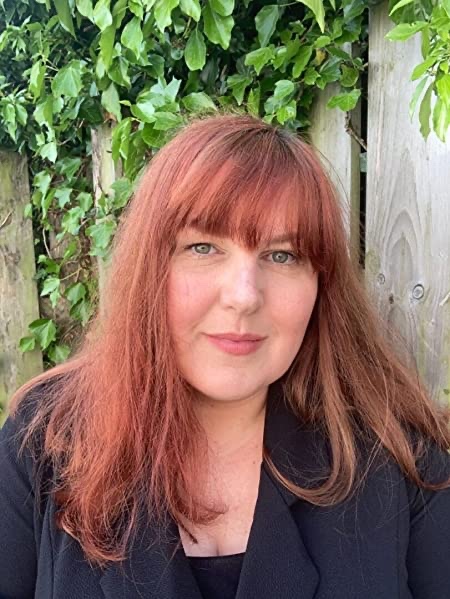
Kelly Creighton facilitates creative writing classes and teaches English as a foreign language. She is the author of the DI Harriet Sloane series, two standalone crime novels (Souls Wax Fair and The Bones of It), two short fiction collections (Bank Holiday Hurricane and Everybody’s Happy), and one book of poetry. Kelly lives with her family in County Down, Northern Ireland.

Posted in Monthly Wrap Up

Books Of The Month! April 2022.

It’s been another bumper book month at The Lotus Readers and it looks like 2022 is going to be an amazing reading year, in fact I’m already worrying about how I’m going to choose between these books when it comes to my end of year list. Can I really do 22 books this year? It’s also a year of fantastic debuts with another four debut novels being top of my list this month. There’s been a few tears shed over some of the stories and characters within these pages, but I’ve been uplifted too by these stories of overcoming. Surviving trauma and recovering through the support of others, particularly where women are supporting women, has been a theme here too. Its been the first month where I’ve been able to sit in the garden with a book, so most of these have accompanied me outside and onto my recliner, usually ending with me falling asleep under a dog and a cat! So here are some shortened reviews, to whet your appetite for these wonderful novels,

Reminiscent of those stylish novels of the great Agatha Christie, this was a brilliant mystery with a glamorous location, wealthy passengers and sumptuous clothes and jewellery. The period detail is spot on whether it’s the latest bathing suit or 1930’s politics. It’s not just a whodunnit either, because woven within are themes of identity, belonging, family and class division. It’s gripping without being showy or depending on shocks, or endless twists and turns. It’s elegant and allows it’s secrets to unfurl slowly. Lena is a sympathetic character, who has sacrificed starting her career to care for her father Alfie who has recently died. To pay the bills Lena has been singing in a club band, but she has always wanted to work on the West End or Broadway. Her chance comes in the aftermath of a death at the club. A favour from a an old friend of her father. She’s found by theatre producer’s assistant, Charlie Bacon, whose boss is offering Lena the chance of a lifetime, a part on Broadway in a new musical. As they set off across the Atlantic in their first class accommodation, they make the acquaintance of a very wealthy family with an ailing patriarch. What follows is intrigue, murder, mayhem and the realities of being a black performer. Lena is now caught up in a murder plot, and doesn’t know if she’ll be the next suspect, or victim.

Incredibly strong women, three generations of a Memphis family, are the focus of this amazing debut by Tara Stringfellow that made me angry, made me cry and somehow helped me feel uplifted all at the same time. Grandma Hazel is the first resident of the house in Memphis, a house her sweetheart Myron builds for their family. When he is lynched by his own police squad, Hazel is nine months pregnant and left heartbroken, angry and scared. Her daughters, Miriam and August, then call this place home and it also becomes August’s place of work. When Miriam leaves home, travelling with her husband Jax who is in the military, August turns the back of the house into a hair salon for a community of black women who gather there to laugh, to support each other and to plan activism. When Miriam returns with her own daughters, Joan and Myra, she has mixed feelings. She needs a roof over her head, she loves where she grew up, but something happened here that daughter Joan can’t quite remember. Yet she feels I’ll, deep down. There’s fear and shame in this place, but she doesn’t know why and we follow her quest to process and heal from this hidden trauma. With a backdrop of the biggest events of the 20th Century from the Kennedy and Martin Luther King assassinations to 9/11, this is a story of what it means to be a black woman in 20th Century America. Simply outstanding.

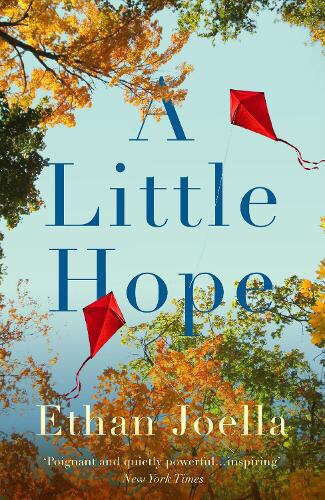
Ethan Joella’s novel was perfect for this moment in life. Set in an idyllic Connecticut town over the course of a year, our story follows the intertwining lives of a dozen neighbours as they confront everyday desires and fears: an illness, a road not taken, a broken heart, a betrayal. Freddie and Greg Tyler seem to have it all: a comfortable home at the edge of the woods, a beautiful young daughter, a bond that feels unbreakable. But when Greg is diagnosed with a rare and aggressive form of cancer, the sense of certainty they once knew evaporates overnight. Meanwhile, Darcy Crowley is still coming to terms with the loss of her husband as she worries over her struggling adult son, Luke. Elsewhere, Ginger Lord returns home longing for a lost relationship; Ahmed Ghannam wonders if he’ll ever find true love; and Greg’s boss, Alex Lionel, grapples with a secret of his own. We are all familiar with the hashtag #BeKind and through these stories, what seems like a platitude, is brought home to the reader. Our characters touch on each other’s lives, sometimes without knowing what each other are coping with just under the surface. Despite taking us through every experience from infidelity to loss, the book never feels overwhelming or melancholy. Yes I wanted to shed tears from time to time, but somehow there is always a ray of hope. It reminded me that things like community, friendship, shared experiences and compassion can change everything. The author doesn’t hold back on how difficult and painful life can be, but yet always finds some element of joy that reminds us what a gift it is too. This book is poetic, achingly beautiful and full of empathy for the human condition.

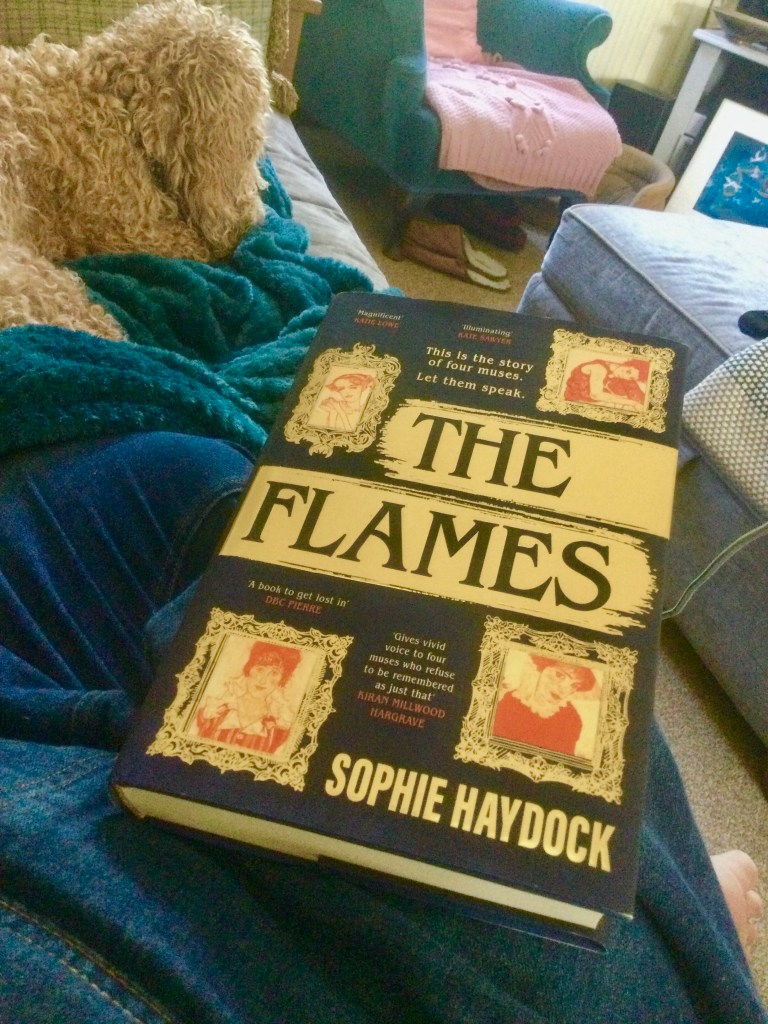
I knew this book would be one I enjoyed, after all it encompasses some of my favourite things: History between the World Wars; the Vienna Secession and Gustav Klimt; Art Nouveau; a feminist narrative. However, I didn’t expect it would grab hold of me in the way it did! I sat down with it in the garden one Sunday afternoon and read two thirds straight away. When duty and blog tours called that week I had to set it aside, but I kept glancing over at it like a lost lover all week. Haydock takes four of Egon Schiele’s portraits and explores the women depicted – society sisters Adele and Edith, artists model Wally and his younger sister Gertie. Schiele’s portraits are not life-like reproductions of his model and while they might shed light on aspects of their characters, they can only ever be the artist’s view of that woman with all the prejudices and biases of his time. Haydock is challenging Schiele’s representation of these women and here we get to hear the women’s stories, how they see themselves and their relationship with Schiele. Some of his life choices felt like betrayals to those women who risked everything by literally laying themselves bare before him and the world, for his sake and for the sake of art. I thought Haydock beautifully captured this sacrifice and it’s consequences, something she picks up beautifully in the short interludes from the 1960’s where an elderly woman searches for a painting she’s glimpsed of someone she loved. Desperate to give an apology she never heard in life. Haydock beautifully captures a rapidly changing Vienna between two World Wars where barriers of class and gender are breaking down. She also captures the complexities of the barriers for women and those who have the pioneering spirit to break them. She gives a voice to their silent gaze. This is one of the best books I’ve read so far this year and I read it greedily in just two sessions. I’m already looking forward to entering Haydock’s world and savouring these wonderful women again.ok”

My interest in 19th Century freak shows, Sarah Baartman (the Hottentot Venus), disability and difference, made Lianne Dillsworth’s debut novel a perfect fit for me. Our setting is a theatre and a performing troupe including singers, magicians and dancers who perform a variety show under the watchful eye of Mr Crillick. His current headline act is Amazonia – a true African tribeswoman, dressed in furs and armed with a shield and spear, her native dancing brings down the house in Crillick’s show. The audience watch, transfixed with fear and fascination, never realising that she is a ‘fagged’ act. Zillah has never set foot in Africa and is in fact of mixed race heritage, born in East London. She is making her money by pretending to be what the, largely white, audience wants to see. It doesn’t sit well with Zillah, but she is alone in the world and does need to make money. Besides it’s better than the other options for a young woman who finds herself in poverty. She’s used to slipping between worlds on stage and in her private life, renting a room in the rough St Giles area of the city, but regularly making her way to a more salubrious area and the bed of a Viscount by night. However, when Crillick brings a new exhibit to his London home, dubbed the Leopard Lady, Zillah’s eyes are opened to the politics and misogyny of displaying difference. A meeting with an activist forces her to think about her own performance, but also the danger that Crillick’s new exhibit might be in, especially his ‘private’ audiences complete with medical equipment. Can Zillah help this woman and what does her own future hold, because in good conscience she can no longer perform? This is a brilliant novel, doing for race and disability, what Sarah Water’s novels did for the representation of sexuality in the 19th Century.

I’d never read a novel by Dolen Perkins-Valdez and she pulled me into her story from the very first page, with Civil seeming real almost immediately. I’ve been interested in eugenics since I wrote my undergraduate dissertation on disability and 20th Century literature. I knew a lot about the movement in the U.K., US and Germany in the lead up to WW2, but this book shocked me because I had no idea that forced sterilisations were still happening in the 1960s and 70s. I knew this had happened in earlier in the century with Native American communities, so I shouldn’t have been surprised that it was still happening to African American women, especially where the woman had a disability too. The writer shows how our biases and emotions feed into the work we do within the caring professions. Having worked in mental health and disability as a support worker, advocate and counsellor, I did identify strongly with Civil and the way she became involved with the Williams family. The Williams girls are her very first patients and she is sent out on a home visit to give them a Depo Provera injection, a long term method of contraception. When she notices that India is only 11 years old her brain immediately starts questioning, who put this little girl on this injection, has anyone asked if she has a boyfriend or worse, is she being preyed upon? Is this an assumption that young African-American women are promiscuous or that African- American men can’t be trusted, even within their own families? The judgement that bringing a child into this family would be disastrous comes from a lack of knowledge around India Williams’s learning disability, but is also an assumption about race too. The fall out from Civil’s discoveries is huge and life-changing, not just for the Williams family but for Civil too. This book sheds light on an important hidden history and took me through a rollercoaster of emotions.

I fell utterly in love with Dot Watson, a rather abrupt and persnickety member of the staff at London Transport’s lost property office. It took me about five pages to be drawn into Dot Watson’s quirky world and her love for the lost property office where honest people bring their found items. Dot is like the backbone of the office and the other workers would be lost without her. A lover of proper procedure and organisation, Dot is the ‘go to’ employee for anyone starting work with the team, or just to answer a question about an item. Dot thinks lost things are very important, almost like an extension of that person. Their lost item can tell her a lot about the person they are and she fills the lost luggage tags with as much detail as possible so that they have the greatest chance of locating it. Dot believes that when we lose a person, their possessions can take us right back to the moment they were with us. When Mr Appleby arrives at the office to find his lost leather hold-all it is what the case contains that moves Dot. Inside is a tiny lavender coloured purse that belonged to his late wife and he carries it everywhere. Something inside Dot breaks for this lonely man and she is determined she will find his hold-all. Her search becomes both the driving force of Dot’s story and the key to unlocking her own memories. I loved our journey into Dot’s past, her relationship with her father and the trauma that she’s tried to lock away for so long. This book has difficult emotions, but also glimpses of humour and is ultimately an uplifting journey with an unforgettable woman.

A teenage girl wanders out of the woods. She’s striking, with flame-red hair and a pale complexion. She’s also covered in blood. She appears in the pub’s beer garden as Jonah is enjoying a beer after a walk with his baby son. Detective Jonah Sheens quickly discovers that Keely and her sister, Nina, disappeared from a children’s home a week ago. Now, Keely is here – but Nina’s still missing. Keely knows where her sister is – but before she tells, but first she wants Jonah’s full attention. Is she killer, witness, or victim? The opening scene is absolutely brilliant, vivid and shocking at the same time. As the girl’s history starts to unfold, they hear about several failed placements and a long stay in a children’s home. The girls made complaints about two of their homes, but were thought to be troublemakers. Jonah and his excellent team have to tread a very fine line. Keeley comes across as cold and calculating one moment, but then like a broken little girl the next. Which is an act? There are some very dark stories here and they could be distressing for people who’ve gone through a similar experience, but it’s that darkness that keeps the reader wanting the truth and to see those responsible punished. If Keeley has planned how to elicit sympathy from the police, she certainly knows what she’s doing. As readers we are pulled along with Jonah, from distress and empathy to disbelief and a sense that something is very, very wrong either with Keeley or the system. This is a great mystery, with huge twists in store and a police team I enjoyed getting to know. Now I’m looking forward to going back to the first novel in this series and filling in the gaps in my knowledge, while enjoying even more of this talented writer’s incredibly creative plots and dark, brooding atmosphere.

So these were my favourite reads in a very busy reading month. I read seventeen books which surprised even me! Next month I’m looking forward to a slightly quieter month with some great thrillers to read, some historical fiction from another of my favourite historical periods – the beginnings of the Tudor dynasty, and hopefully a few choices from NetGalley too so I can keep on beating that backlog. I hope you enjoy these choices as much as I did and i’ll see you again next month.

Posted in Random Things Tours

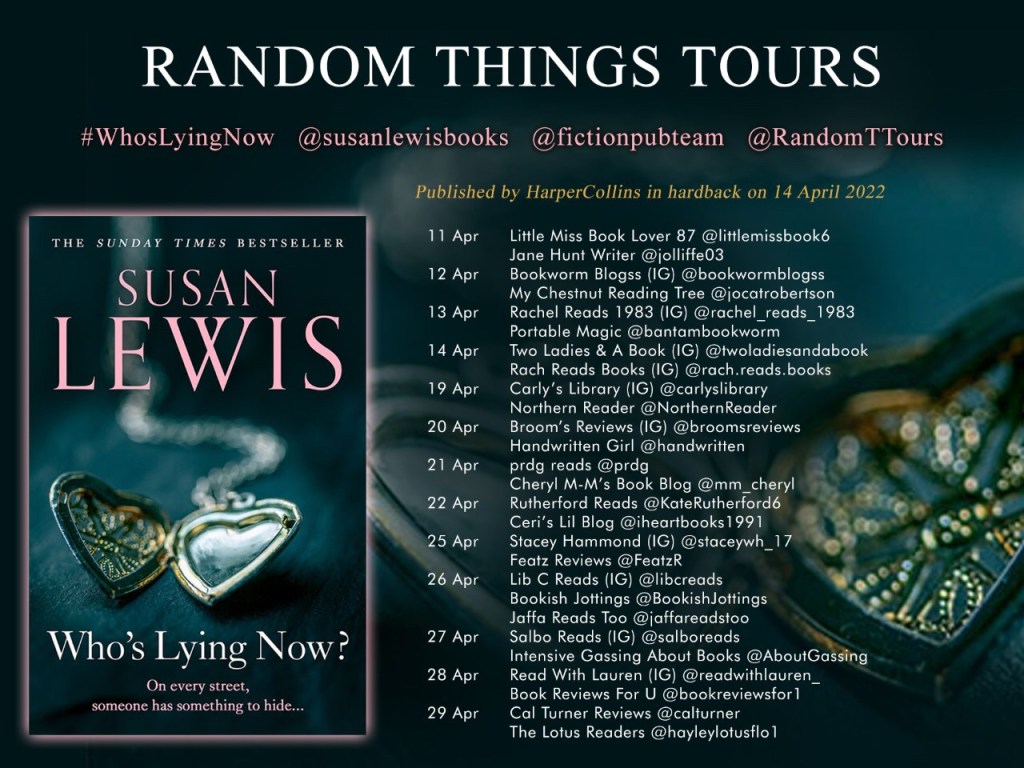
Who’s Lying Now? By Susan Lewis

Susan Lewis is so prolific. I first came across her writing when I was looking for something to read between counselling clients at work. At the MS Therapy Centre where I worked there was a charity shop and someone had brought in a huge pile of books for sale. There I found a few books by this author. I’d never read her before but soon found myself hooked and bought all the Susan Lewis books in the bag. I’ve read most novels since and love joining blog tours for her latest books. This is another delve into crime fiction for Lewis and is based around a community on the south coast called Kesterley-On-Sea, where a small group of people have cultivated some very complex relationships. There’s Jeannie, who works as a publisher, and her husband Guy who is a neurosurgeon and they live at Howarth Hall, a Manor House with beautiful gardens leading to the sea. Not far away, lives Estelle a celebrated debut novelist who hasn’t managed to produce a follow up as yet, and her husband Neil who is a landscape gardener. They have a daughter, Chloe and Estelle’s assistant Primrose lives in an annexe next door. Centre of the community is the Seaview Café where the owner Fliss lives in an apartment above with her son Zac. Jeannie used to be Estelle’s publisher. Neil is Jeannie’s gardener and friend. Fliss used to be married to Neil and he is Zac’s father. When Jeannie goes missing one January day all of these relationships will come under scrutiny. Trying to make sense of this is Cara Jakes, a new trainee investigator who is young, intelligent and eager to prove herself. When she teams up with detective Andee Lawrence to look into the disappearance, she is determined to find out what has really happened to Jeannie. Cara begins to question the residents of this close-knit community, sure that someone has a secret to hide. However, how can she separate the truth within these complicated connections, especially when some of them are lying?

Lewis has undertaken a very difficult task with this novel, not only does she have complicated relationships to untangle, she moves us back and forth to the months leading up to Jeannie’s disappearance and the weeks following. Then she sets it all within the pandemic, which must have been a nightmare to track considering the complicated rules and lockdown dates. I barely know what I was doing and where I was over the past couple of years, never mind following imaginary people through the same rules and regulations. It did make the story more believable though and I was amused to read how difficult these characters found it to interpret and stick to the rules. I don’t think there’s a single character who doesn’t break them at some point, but it’s café owner Fliss who is finding the pandemic the most difficult. Having started her business just before the outbreak, the lockdowns have damaged her financially and without the help of a group of volunteers taking food out in deliveries the business wouldn’t be making any money at all. Her son Zac is also helping and has moved in with her for lockdown, though he usually lives with his dad Neil and Estelle. I think Fliss was the character I most felt for and I was sure there was a secret to why she was living alone and how her marriage to Neil fell apart, when they are clearly both so fond of each other. Despite these secrets, Fliss and Neil feel the most understandable and empathic characters in the novel for me.

Our missing person, Jeannie, is a dynamic professional woman, who I found interesting but difficult to understand. When Cara and Andee first visit her husband Guy they’re confused about the delay in reporting her missing. He explains how their demanding jobs mean they can often miss each other for a couple of days, but he also says something very strange. He suggests that Jeannie might want him to think she’s missing as some sort of test. She’s also made it clear that she finds their gardener Neil attractive and takes long walks with him. There’s an element of game playing going on in their relationship and I’m not sure I liked either of them very much. There is a strained relationship between her and Estelle too, as Jeannie published her novel but then dropped her when a follow up wasn’t forthcoming. Their relationship never recovered so Jeannie’s long walks with Estelle’s husband seem unkind. Yet there are secrets in Jeannie’s past that might explain her character, and they explosively come to light when her brother arrives from New Zealand. I found Estelle a puzzle too. She seems fragile and easily distressed, but also self-centred and very difficult to bond with. Her only friend seems to be her assistant Primrose, but she’s paid to be there. I could see she was insecure in her relationship with Neil, believing him still in love with Fliss, so when she is offered friendship from an unlikely source she jumps at the chance of some outside support. Her relationship with her daughter seems awkward too, as if she’s almost scared to be her mum. Lewis untangles this particular thread slowly and with great care, and it’s clever how it’s woven into Estelle’s character, but also the case the police are pursuing.

I don’t want to reveal any more about the entanglements between these characters, but there are many revelations along the way, both in the past and the present. I found it hard to like any of them, aside from Fliss, but they are fascinating. The dual timeline is clever because it keeps the tension of the case and all it’s twists and turns, while also exploring characters and events in more detail in the past. The women’s characters and backgrounds are explored enough to answer a lot of the questions that cropped up in my mind as I was reading. I didn’t feel the men’s past or motivations were explored as closely so I came away feeling I didn’t know them as well. However, that did make it more exciting when they were questioned as suspects, because they were more of a mystery. We also saw how the female investigation team of Andee and Cara have to draw a line between their work and their private lives, very difficult in a small town where everybody knows each other and uses the same facilities. I didn’t work out what had happened to Jeannie before the team did, because when everyone is lying and holding secrets it’s hard to know what’s coming next. I felt like someone was hiding in plain sight, never showing their true character. This was an enjoyable thriller, full of psychologically complex characters making dreadful mistakes and one clever and manipulative suspect to unmask.

Meet the Author

Susan Lewis is the internationally bestselling author of over forty books across the genres of family drama, thriller, suspense and crime, including I Have Something To Tell You, One Minute Later, My Lies, Your Lies and Forgive Me. Susan’s novels have sold over three million copies in the UK alone. She is also the author of Just One More Day and One Day at a Time, the moving memoirs of her childhood in Bristol during the 1960s. 

Susan has previously worked as a secretary in news and current affairs before training as a production assistant working on light entertainment and drama. She’s lived in Hollywood and the South of France, but now resides in Gloucestershire with husband James, two stepsons and dog, Mimi. @susanlewisbooks

Posted in Netgalley

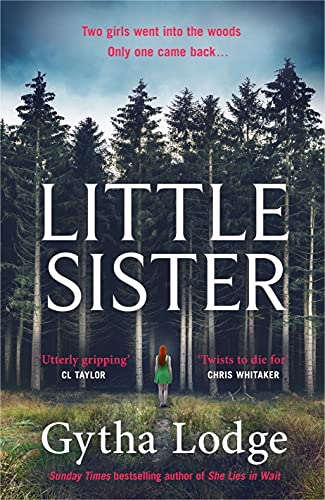
Little Sister by Gytha Lodge.

Two sisters went missing. Only one of them came back . . .
________

A teenage girl wanders out of the woods.

She’s striking, with flame-red hair and a pale complexion. She’s also covered in blood.

Detective Jonah Sheens quickly discovers that Keely and her sister, Nina, disappeared from a children’s home a week ago. Now, Keely is here – but Nina’s still missing.

Keely knows where her sister is – but before she tells, she wants Jonah’s full attention . . .

Is she killer, witness, or victim?

And will Jonah find out what Keely’s hiding, in time to save Nina?

Last year I was lucky enough to receive a prize from Gytha Lodge and now have three of her hardbacks, all individually signed. I haven’t had chance to read them and as I was granted access to this fourth novel in the series on NetGalley I decided to dive in and hope it would work as a standalone novel. I needn’t have worried at all. This was immediately accessible, yes there were aspects of Jonah’s life that I’m looking forward to finding out more about, but on the whole I could enjoy the mystery without feeling like I didn’t know my protagonist.

The opening scene is absolutely brilliant, vivid and shocking at the same time. Jonah sits in a warm beer garden with his baby in a pram at his side. He’s musing on life and his recent choice to return to a relationship with the mother of his child, leaving behind a burgeoning relationship with Jojo who he misses enormously. It takes a moment for him to notice the young woman who has come into the garden. She has red hair and her hands and chest are covered in blood. While others simply stare in shock, Jonah rings his partner Michelle to pick up the baby, then moves over to the girl and offers to get her a drink. They sit and her story starts to come out, but this is going to be a tricky interview and investigation. Jonah wants to take his time, go gently and not rush this young woman, who could be a victim, but could also be a suspect. Then she makes a revelation. Her name is Keeley and her sister is Nina, this could be Nina’s blood and of course they need to find her, but first Keeley wants to tell them a story.

Nina and Keeley have spent their entire childhood in care. Bouncing from children’s home to foster parent, they seem to have been magnets for predators at an early age. There are two foster homes where their placement failed. One was at the Murray-Watts, who live in a large house in the country with their son Callum and the right type of Range Rover. However, Keeley remembers a regime of cruelty and starvation, where their foster father was always pitting the children against each other and for punishment would lock them in a dark basement for days. His wife Sally might not be so cruel, but she never failed to do his bidding. From there to the Pinders, their home is a huge contrast situated on a council estate. There the girls made a complaint of sexual assault against their foster father who groomed them with trendy clothes, alcohol and watched Gossip Girl with them. This was all fine until he started to want things in return. The problem with these accusations is that nobody believed them, and even though they were removed from the homes in question, no one was prosecuted. Jonah and his excellent team have to tread a very fine line. Keeley comes across as cold and calculating one moment, but then like a broken little girl the next. Which is an act? Or are they both the same girl? Either way she won’t compromise; Jonah listens to her full story or she won’t tell them where Nina is. Time is ticking and if Nina is severely injured will she last to the end of the story?

I thought Keeley was a fascinating character, psychologically flawed and clearly traumatised by their past, however much of it is true. The girl’s social worker seems very sure that all the claims are false, just girls making up stories. However, it’s clear that some aspects of the girls accusations are true. So, if someone makes multiple accusations does it mean they’re all false? The book kept me guessing and there were times when I wondered whether I even trusted Keeley with her own sister. The chapters based around Jonah and the investigation are interspersed with Keeley’s first hand testimony. She shows all the traits of a psychopath; has she always been this way or has she been created by the treatment of those meant to care for her? If Nina has been subjected to the same treatment won’t she be afflicted psychologically too? I was also dying to know where these foster parents were. Pinder is giving the same story as the girl’s social worker, but the Murray-Watts have completely disappeared. Did the girls have help to weave a twisted treasure hunt for the police? I started to wonder if Keeley had known that Jonah was in the beer garden that day. She seems to be fascinated with his team so could one of them have come across the girls before?

There are some very dark stories here and they could be distressing for people who’ve gone through a similar experience, but it’s that darkness that keeps the reader wanting the truth and to see those responsible punished. If Keeley has planned how to elicit sympathy from the police, she certainly knows what she’s doing. As readers we are pulled along with Jonah from distress and empathy to disbelief and a sense that something is very, very wrong either with Keeley or the system. This is a great mystery, with huge twists in store and a police team I enjoyed getting to know. Now I’m looking forward to going back to the first novel in this series and filling in the gaps in my knowledge, while enjoying even more of this talented writer’s incredibly creative plots and dark, brooding atmosphere.

Meet The Author

Gytha Lodge is a multi-award-winning playwright, novelist and writer for video games and screen. She is also a single parent who blogs about the ridiculousness of bringing up a mega-nerd small boy. 

She has a profound addiction to tea, crosswords and awful puns. She studied English at Cambridge, where she became known quite quickly for her brand of twisty, dark yet entertaining drama. She later took the Creative Writing MA at UEA. 

Her debut crime novel, She Lies in Wait, has been published by Penguin Random House in the US and UK, and has also been translated into 12 other languages. It became an international bestseller in 2019, and was a Richard and Judy book club pick, as well as a Sunday Times and New York Times crime pick. 

Watching From the Dark, her second novel, was released in February 2020, with her third book lined up for spring of 2021. This fourth novel is published on 28th April 2022.

Posted in Netgalley

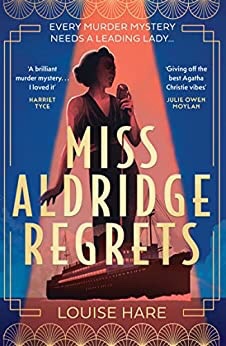
Miss Aldridge Regrets by Louise Hare

London, 1936

Lena Aldridge is wondering if life has passed her by. The dazzling theatre career she hoped for hasn’t worked out. Instead, she’s stuck singing in a sticky-floored basement club in Soho and her married lover has just left her. She has nothing to look forward to until a stranger offers her the chance of a lifetime: a starring role on Broadway and a first-class ticket on the Queen Mary bound for New York.

After a murder at the club, the timing couldn’t be better and Lena jumps at the chance to escape England. Until death follows her onto the ship and she realises that her greatest performance has already begun.

Because someone is making manoeuvres behind the scenes, and there’s only one thing on their mind…

MURDER

Miss Aldridge Regrets is the exquisite new novel from Louise Hare. A brilliant murder mystery, it also explores class, race and pre-WWII politics, and will leave readers reeling from the beauty and power of it.

This is one of my most anticipated books of the year, mainly based on how much I loved her debut This Lovely City, but also because I loved the sound of this mix of historical fiction and murder mystery. It doesn’t disappoint and really has the feel of an Agatha Christie novel, not just the plot either, but the glamorous location, the wealthy passengers and the sumptuous descriptions of their clothes and jewellery. The story has its period detail spot on whether it’s the latest bathing suit or 1930’s politics. Woven within this whodunnit are themes of identity, belonging, family and class division. It’s gripping without being showy or depending on shocks, or endless twists and turns. It’s elegant and allows it’s secrets to unfurl slowly.

Lena is a sympathetic character, who has sacrificed the start of her own career to care for her father Alfie who has recently died after a long illness. In order to pay the bills Lena has worked with the club band, but she has ambition and has always wanted to work in the theatre, preferably the bright lights of the West End or Broadway. We get the sense that she’s good enough too. We meet her first as she embarks on her voyage across the Atlantic with a theatre producers assistant, strangely named Charlie Bacon. Charlie has offered her the chance of a lifetime, a part on Broadway in a new musical. This is a favour from Charlie’s boss who once knew Alfie and felt he owed him for an old transgression. The cabin is first class and Lena has never had such luxury, in fact she has a suitcase of clothes from best friend Maggie because she didn’t own anything grand enough for the first class dining room of the Queen Mary. There’s a sense in which she doesn’t feel like herself, sailing on someone else’s charity, in grand society and in someone else’s clothes. She then finds herself dining with the Abernathy’s. The head of this wealthy family is their father Frank, now disabled due to a stroke (apoplexy) but once an absolute tyrant and still uses the family riches to manipulate his children and grandchildren. Alongside the family are Frank’s assistant Daisy and his own private doctor.

At first Lena is a little intimidated by this entitled and often quite unpleasant bunch. This is a mix of knowing she isn’t of the same class, perhaps opting to gravitate towards Daisy and Dr. Wilding who are the help. However, Lena’s whiff of stardom seems to satisfy the family that she is suitable company and she’s certainly glamorous enough to fit in. However, there’s also the question of race, brought to the fore when Lena encounters one of the ship’s band Will. Will isn’t fooled by glamour or the first class ticket when they meet out on the deck by accident. He doesn’t even ask, simply identifies her as black like him. At first she denies this, not wanting to be found out. Lena has always been able to ‘pass’ because she is so light skinned, but later when she sees Will again she trusts him a little more and owns her identity. It brings home to us the difficulties of being mixed race, perhaps worse for Lena who has never known her mother and didn’t grow up with that side of her identity explored. We can only imagine the taboo nature of a relationship between a black man and a white woman in the early 20th Century, a time when eugenics was gaining a foothold on both sides of the Atlantic. There is discussion at the dinner table of Adolf Hitler and his successes in improving German life after WW1, but this is the run up to WW2 and knowing what comes next in the name of racial purity made this a sobering experience as a reader. Lena isn’t just playing with identity here, in America it may have an impact on her ambitions and her place in society. As Will observes its okay for the black men of the band to entertain the rich and white passengers, but not to fraternise with them and he’s very careful that he and Lena are not seen together. However, when Lena is asked down to steerage for an evening of music in the bar there, it is the most fun she seems to have on the whole voyage. It’s the only time she’s not on tenterhooks and can relax. She feels like she’s with her own kind – people without money and influence, people who scrape by, who play music and really let their hair down.

Yet, she is accepted upstairs and is a hit with both Eliza Abernathy and her daughter Carrie. Lena is invited to tea, asked to go bathing and meets up for drinks. She likes Carrie who seems so young and controlled by her family, desperate for some company of her own age. Eliza is Frank’s daughter, rather aloof at first and seemingly unaware that her husband is seducing Frank’s assistant Daisy when no one is looking. None of the family seem particularly happy, with a lot of sniping at dinner and all the vices of drinking, gambling and … It makes Lena nostalgic for her father and the easy way they got along, and also Maggie who despite her difficult marriage and the terrible drama of her husband Tommy’s recent murder, has always been like a sister to Lena. It’s a huge shock when the rich family patriarch starts to choke at dinner. Dr. Wilding springs into action, but it becomes clear nothing is obstructing his airway and he starts to foam at the mouth. Lena is horrified, he’s acting the same way Tommy did and rather horrifically he dies at the table. An investigation is started immediately and everyone is interviewed. We are privy to Lena’s thoughts and she’s terrified that what happened at the club has happened again here. She didn’t poison him, but maybe someone knows something about Tommy’s murder. Are they taunting her? Is this something to do with her? Surely its too much of a coincidence. The proximity of the group and the inability to get off the boat adds to the tension of the novel. Who will be next?

I thought the mystery was well thought out and unexpected too. There were a couple of moments where I wanted to shake Lena or shout at her not to do something. It really brings home to us that here Lena is alone in this new life. She’s without family and friends to protect or support her. As the bodies begin to pile up I was asking questions of everyone in the party, even Lena herself – could she be an unreliable narrator, committing crimes without really knowing? It all seemed such a big coincidence, but then when the revelations started coming it all made sense. I can honestly say I didn’t have a clue what was coming for Lena’s private life, or who was next in the murderer’s firing line. I thought the pace was perfection and the claustrophobic atmosphere of the Queen Mary, however luxurious, really added to the tension. The opulence of the setting, the fashion and Lena’s new wardrobe are dazzling and so perfectly in tune with the time period. I loved the author’s depiction of difficulties in identity and the distinctions of race and class for these passengers. The contradiction that the band are allowed to entertain first class passengers, but not sit with them, is something that will stay with me. As will the idea of ‘passing’, an interesting part of my own identity as someone with an invisible disability who sits uncomfortably between people with disabilities and the able-bodied. I loved This Lovely City and I think with this novel Louise Hare has repeated her success. I’ve already ordered my special signed copy, because this is definitely a keeper.

Published by HQ 28th April 2022

Meet The Author

Louise Hare is a London-based writer and has an MA in Creative Writing from Birkbeck, University of London. Originally from Warrington, the capital is the inspiration for much of her work, including This Lovely City, which began life after a trip into the deep level shelter below Clapham Common. This Lovely City was featured on the inaugural BBC TWO TV book club show, Between the Covers, and has received multiple accolades, securing Louise’s place as an author to watch. Miss Aldridge Regrets is her second novel.

Posted in Random Things Tours

The Secret of Karabakh by Fidan Bagirova

The Secret of Karabakh had a very intriguing blurb and a powerful opening prologue that drew me in. The horrifying image of a child killed by soldiers while trying to flee a war had a deep resonance, due to reports of such atrocities coming out of Ukraine every day. The way the author describes the child’s ‘pink woolen scarf decorated with chocolate-brown rabbits and butter-yellow ducklings’ contrasts the innocence and softness of the child with the rocky terrain, the gunshots and the lack of mercy shown. It’s a vivid and terrible scene that stays with you throughout.

Then we meet Alana Fulton a committed and gifted student of archaeology completing her PhD at Cambridge University. Her background is surprisingly privileged and we see her meeting her mother at the Dorchester Hotel in London. Her parents find it difficult to understand her fervour for her studies when she could have had all the opportunities their wealth offered her. There’s even a film star boyfriend who she’s keeping at bay with her devotion to study, much to her mother’s confusion. Yet this tea with her mother marks the day her life turns upside down. First she notices a strange man staring intently at her on the street and to avoid him she jumps into a cab for Kings Cross station. Her relief as the doors of her train close and they set off for Cambridge, is wiped out when she sees the same man running down the platform after the train. Her fear is compounded when she reaches her university rooms. Usually her college is the place where she finds calm and feels most like the real her, but when she finds her room wrecked she is shaken. Nothing seems missing at first, and it’s only after the police have gone and Alana starts to tidy that she realises her hair brush and toothbrush are missing. The police start investigating, but there are two questions at the forefront of her mind: who was the man asking for her at the porter’s gate? Who sent the anonymous note, telling her she’s not who she thinks she is and warning her she’s in danger?


Alana isn’t sure who she can trust and she’s shocked to find out the identity of the man asking for her at university. Someone she knows well is now the focus of the police. These early sections didn’t gel with me at first, because I didn’t connect with Alana. Despite that I thought the author had paced the action and revelations very well. As Alana and her boyfriend go on the run, there was a very spy film feel to the action, at they take a private jet to Switzerland. The pace doesn’t let up as they are followed by foreign attackers and if this were a movie, Alana would definitely be the star. She doesn’t come across as a damsel in distress type and seems completely capable of rescuing herself. This makes it even more ironic when we find out her boyfriend has accepted payment in diamonds for keeping her safe. But who has made the payment and which side of this unknown conflict are they on? I was most interested in the psychological journey of Alana, arising from her confusion about the message questioning her identity. Like many people she has memories of childhood, but if she tries to think back to her pre-school years it’s not just hazy, there’s a great big blank. Underneath that blackness is an emotion, a combination of ‘bewilderment and simmering fear’ that she can trace throughout her early school years, but gradually fritters away until she hits adolescence, when it’s gone. This is a raw emotion, the result of a base or primal fear, and this kept me invested in the story, because I really wanted to know where that feeling was from.

In-between the action are personal stories from a war I knew nothing about, the Nagorno-Karabakh war between Azerbaijan and Armenia. This is a real life border conflict, but when we look deeper it’s not just about territory, but natural resources and cultural histories too. The conflict has been ongoing since the 1980s, with various flares into full scale war over the years and has only recently been more settled, but with only some of the issues resolved. It was the dissolution of the Soviet Union that sparked rising ethnic tensions between Armenian and Azerbaijani people especially in the Nagorno-Karabakh region – an enclave of South-West Azerbaijan with majority ethnic Armenian people. It seemed clear that this area was linked to Alana, but how?

From Switzerland onwards these questions are answered in a story filled with action and discovery for Alana, and I found this part of the book much more gripping and memorable. I was interested in how Alana copes with these revelations mentally, as her past and present collide. Those vague emotional memories from childhood come to the fore again as she learns the truth of who she is. More terrifying and muddled childhood experiences start to emerge and Alana will have to find reserves of determination and courage to piece everything together. I thought it was great that those qualities Alana’s parents really didn’t understand, came from this history she knew nothing about. It was also interesting how the author showed our emotional memories as stronger and longer lasting – it’s why sometimes a piece of music makes us feel a certain way, but we don’t know why. Alana’s memory still carried emotional trauma, despite her not remembering the details or the place. I thought the author’s use of research really added to the story and helped my understanding of the complex history of the region. I finished the book satisfied with the story, but wanting to know more about Nagorno-Karabakh and other areas left in difficulties as the Soviet Union disbanded. This was a clever mix of historical fiction and action thriller, with an incredibly strong sense of place.

Meet The Author

Fidan Bagirova is a writer, sculptor and multimedia artist. She was born in Geneva, to parents from Azerbaijan. They, like hundreds of thousands of others, lost everything during the Armenian invasion described in The Secret of Karabakh, and for Fidan, writing this novel has been a way of expressing her longing for the Azerbaijani people’s identity and stolen heritage.

Posted in Random Things Tours

The Shot by Sarah Sultoon.

Samira is an up-and-coming TV journalist, working the nightshift at a major news channel and yearning for greater things. So when she’s offered a trip to the Middle East, with Kris, the station’s brilliant but impetuous star photographer, she leaps at the chance
In the field together, Sami and Kris feel invincible, shining a light into the darkest of corners … except the newsroom, and the rest of the world, doesn’t seem to care as much as they do. Until Kris takes the photograph. With a single image of young Sudanese mother, injured in a raid on her camp, Sami and the genocide in Darfur are catapulted into the limelight. But everything is not as it seems, and the shots taken by Kris reveal something deeper and much darker … something that puts not only their careers but their lives in mortal danger.
Sarah Sultoon brings all her experience as a CNN news executive to bear on this shocking, searingly authentic thriller, which asks immense questions about the world we live in. You’ll never look at a news report in the same way again…

Sarah Sultoon’s debut was a hard hitting belter of a novel so I was really looking forward this one, set in the world of war journalism -something that seems so pertinent right now as I watch Orla Guerrin and Jeremy Bowen on my TV screen, showing us the evidence of what can only be called war crimes in the Ukraine. Having read some of Janine di Giovanna’s writing about covering the genocide in Rwanda, Bosnia and now in Syria, I had a good idea of what the war correspondent’s life looks like. She describes lots of waiting around, mixed with personalities that are driven and easily bored. When you combine that with the things they’ve experienced it can be a potent mix, leading to abuse of drink or drugs in order to cope. It means being shipped off to one of the most dangerous places in the world at a moment’s notice, living on adrenaline and even the risk of being seriously injured, as happened to BBC Security Correspondent Frank Gardener. It’s the type of work that can become addictive, ruin relationships and damage health. I saw that dynamic being played out in Sultoon’s novel following hardened correspondent and star of the show Kris, and his producer Samira who is eager and new to the job.

Kris has something of the hero about him, always looking slightly battered and dishevelled, and ready to jump back into the fray before his injuries have healed from the last mission. He’s loud and full of machismo, but this is a surface layer. He does care about the people he’s reporting on and wants to express to the world everything he is seeing in conflict, but it also takes a toll. We see it as he returns home injured, he’s already desperate to get back out there and his mind is barely on his wife, or her concerns about their son and what he understands about his father’s job. Sami is ambitious, stuck on night shifts but lurking around the news room for that elusive shot at an overseas production role. She finds it when Kris saunters back in looking for trouble and there’s news that the American president is making a flying visit to Afghanistan. Kris is up for a quick trip and Sami is in the right place at the right time. He’s quickly impressed by how organised and well researched she is. Even before they reach Afghanistan, Sami is already thinking about the opportunities to land a big story and with Kris on board, she asks to be taken around an Afghan hospital. In the women’s hospital they find the hidden victims of the Taliban, women who have tried self-immolation as a way out of their restricted lives, but only succeeded in creating a world of agonising pain.

Sami and Kris are praised back at home and become a close team, although Sami does feel that no matter what they report, viewers are not waking up and taking notice. It’s all a journalist wants, ‘the shot’, the one that has impact worldwide and changes the way people think about a place, or a war. The one that has people approaching their MP and protesting for change. They find it covering the conflict in in Darfur, Sudan. A shot of a young mother, the victim of a devastating assault by the armed Arab militia the ‘Janjaweed’, one picture representing a dark, genocide lurking just under the surface of what we know. A way to refocus the eyes of the world on a truly terrible and largely forgotten war, crime. The author has a brilliant way of bringing us right into the moment, without long flowery descriptions, such as the way the sheer beauty of Afghanistan is described with its ring of snowy mountains round Kabul. This gives an eternal feel to the place, it is ancient and will stand here long after the war is over and everyone has returned home. In other scenes it’s something as simple as the clean clothing Kris puts on when he returns home; his cargo trousers and a fleece top, always the same. In barely any words it tells us Kris has a ‘uniform’ and that he’s never off duty and won’t be staying for very long. This isn’t an easy read. War is brutal and should be depicted that way. This really shines the spotlight on those supporting staff, the war correspondents are risking their lives of course, but so are their guides and interpreters. It really brought home to me the fear these men must have felt when America withdrew from Afghanistan suddenly and power was back in the hands of the Taliban. Those who’d worked with the foreign correspondents and without who’s help we wouldn’t have known the raw truth of the conflict, were abandoned and turned away from the airport in those chaotic last days for not having the right papers. I often wonder how many of them are alive now. This is urgent, brutal writing and the pace never lets up, giving us a taste of the adrenalin rush for the correspondents and the terrible fear that their families must live with at home. All of them are the emotional casualties of war.

Meet The Author

Sarah Sultoon is a journalist and writer, whose work as an international news executive
at CNN has taken her all over the world, from the seats of power in both Westminster and Washington to the frontlines of Iraq and Afghanistan. She has extensive experience in conflict zones, winning three Peabody awards for her work on the war in Syria, an Emmy for her contribution to the coverage of Europe’s migrant crisis in 2015, and a number of Royal Television Society gongs. As passionate about fiction as nonfiction, she recently completed a Masters of Studies in Creative Writing at the University of Cambridge, adding to an undergraduate language degree in French and Spanish, and Masters of Philosophy in History, Film and Television. When not reading or writing she can usually be found somewhere outside, either running, swimming or throwing a ball for her three children and dog while she imagines what might happen if… Her debut thriller The Source is currently in production with Lime Pictures, and was a Capital Crime Book Club pick and a number one bestseller on Kindle.

Published on 28th April 2022 by Orenda Books.

Posted in Random Things Tours

Quicksand of Memory by Michael J. Malone

Jenna is trying to rebuild her life after a series of disastrous relationships. Luke is struggling to provide a safe, loving home for his deceased partner’s young son, following a devastating tragedy. When Jenna and Luke meet and fall in love, they are certain they can achieve the stability and happiness they both desperately need.

And yet, someone is watching. Someone who has been scarred by past events. Someone who will stop at nothing to get revenge…

I was looking forward to this latest novel from Michael Malone, because he writes intelligent thrillers that unfold at their own pace. Some thrillers move so quickly I have to re-read the ending to work out what happened, but he never prioritises action or quick shocks over the story or development of character. This grounded and realistic way of letting the story unfold is what really works about his writing and I was eager to get started. Loss and the ways it affects generations of families is the central theme of this latest novel, where we meet Luke who has just lost his partner and become sole parent to his young stepson. Luke is trying to cope with his own grief while supporting his stepson and trying to establish his own counselling practice. However, there are other losses in Luke’s past, some of which he’d rather not revisit. He had terrible car accident as a young man which left his best friend dead. While we’re wondering about Luke’s version of the accident and exactly what was going on between him and his friend, he starts working with a new client. When she was a teenager, Jenna had a boyfriend who was killed. She still feels bad over where their relationship was when she lost him, because she had doubts about being with him and there were huge secrets she hadn’t shared with him. Jenna isn’t sure whether Luke is the counsellor for her and doesn’t book another appointment with him. Does Luke pursue his client and is his interest purely in helping her?

Grief has kept him away from the therapy room, but now Luke needs to prioritise creating a reasonable income for him and stepson to live on. He takes a client by the name of Jamie, but is Jamie who Luke thinks he is? From a counsellor’s perspective Luke doesn’t have great boundaries and the counsellor in me could see he was setting himself up for costly law suits or a hearing about his professional standards and fitness to practice. He sees Jenna after she was a patient and thinks they have a spark, but can he pursue feelings for her without repercussions? He also spends time with Jamie outside of sessions and even trusts him with his stepson incredibly quickly. Luke doesn’t allow time for a person’s character to reveal itself and instead depends on his own gut when making judgements about others, but that judgement seems impaired. He isn’t consulting with a supervisor and we don’t see him consulting his ethical framework. The three basic principles of counselling are empathy, unconditional positive regard and authenticity and while Luke certainly has skills in the first two areas, his authenticity is non-existent.

Luke has secrets. In fact he has a link to his clients that’s hidden and not just from the reader either. Luke isn’t being honest with himself about who he is and while counsellors shouldn’t tell clients their life story, his background should have been disclosed to his professional body. How can Luke expect a client to trust him, when he isn’t even honest with himself? He’s not being authentic in his own life and relationships. Jenna is looking forward to working on herself when she arrives at Luke’s garden counselling room, but something stops her from returning. It’s when they later form a friendship that Luke might have discussed his past, but he doesn’t. Luke does have some great counselling qualities and is an incredible stepfather, but its almost as if he feels these life changes have cancelled out everything that went before. His past unveils itself like a set of Russian dolls, each one looking finished, but with yet more revelations to come. What he ultimately learns is that by compartmentalising certain experiences and keeping secrets, he has even been kept from the full truth about his own actions and could have been saved from years of self-criticism and guilt.

Malone is brilliant at creating characters, with unexpected pasts and incredibly human flaws. I love that conflict his characters create within me about who I’m rooting for and why. Jamie’s sister Amanda feels incredibly vengeful, but there’s some empathy in me for the way she was changed forever by a series of losses when she was a child. Having lost her family she is buffeted about by the care system and further separated from her brother Jamie. Her entire energy is focused on revenge and she manages to pull Jamie into her machinations by triggering his guilt for getting an easier ride as a child. Jamie is torn between loyalty to his sister and anger at the people he’s been told are responsible and on the opposite side, his own more measured judgement on events and the people he meets on her quest for revenge. It’s clever how Malone links everyone in the book and carefully drip feeds information on them, allowing our opinion to twist and turn. There are sequences that are meandering, letting us find out piece by piece what happened in the past, or slowly revealing a character. Then there are gripping events that have your heart racing and the pages turning quicker so you can find out what happens next. Every single character is bogged down in the quicksand of the title, trying to shake free from those historic events that trigger disturbing memories. Only when they resolve these memories can they start to live in the present and they are all at a different point in their journeys. Counsellors believe that every client is capable of change and I like the way that this hope of resolution is woven into the book, even for those characters who think themselves irredeemable. This is another complex, gripping and emotionally intelligent work from Malone who is fast becoming one of my ‘go to’ writers.

Published 9th December 2021 Orenda Books

Michael Malone is a prize-winning poet and author who was born and brought up in the heart of Burns’ country. He has published over 200 poems in literary magazines throughout the UK, including New Writing Scotland, Poetry Scotland and Markings. Blood Tears, his bestselling debut novel won the Pitlochry Prize from the Scottish Association of Writers. His psychological thriller, A Suitable Lie, was a number-one bestseller, and the critically acclaimed House of Spines, After He Died, In the Absence of Miracles and A Song of Isolation soon followed suit. A former Regional Sales Manager (Faber & Faber) he has also worked as an IFA and a bookseller. Michael lives in Ayr.

Posted in Random Things Tours

The Paris Apartment by Lucy Foley

Welcome to No 12 Rue des Amants

A beautiful old apartment block, far from the glittering lights of the Eiffel Tower and the bustling banks of the Seine.

Where nothing goes unseen, and everyone has a story to unlock.

The watchful concierge
The scorned lover
The prying journalist
The naïve student
The unwanted guest

There was a murder here last night.
A mystery lies behind the door of apartment three.

When things go wrong at home in London, Jess is ready for a fresh start. She’s broke, and she’s suddenly left her job. Maybe things would look better from somewhere else? Jess jumps on the train to Paris and makes a quick call to her brother Ben to say she’s on her way. Ben should be set with work and an apartment now, but he did seem unimpressed or distracted when she called. Or was there someone with him? Either way she’s here now and for some reason Ben isn’t answering her calls or messages. She’s also taken aback by the size and luxury of his apartment block, surely Ben can’t afford to live somewhere like this? So with no money and nowhere else to stay, she manages to pick the lock and get in. Next morning there’s still no word from him and the questions keep coming. Why is the cat bloodstained? Why are his neighbours so unfriendly and mysterious? Jess is sure that her brother has been harmed, but by who and why?

This was an enjoyable thriller and I liked the structure, that allowed us behind the other doors at apartment building No 12 and into the worlds of these strangely eclectic residents. We were also taken back in time to Ben’s arrival at the apartments so we could see how his relationship built with the other residents. Who did he get on with and why? It also showed up my own misconceptions about people: I expected Ben to have made a beeline for the beautiful Camille in her tiny bikini; that the grumpy man Jess sees at the beginning to be a relative of the concierge; that Mimi would be the kind, girl next door type. Nothing is what it seems with these residents. However, the residents were not the only ones with secrets. Ben had never told Jess what he was working on in Paris. As for Jess, we don’t know exactly what forced her to flee England or how she’s ended up alone and penniless. We do find that they are half-brother and sister, forced into care at an early age and very close to each other, because their experience of parents is that they can’t be trusted. It is very out of character for Ben to forget or ignore her in this way. Jess is very resourceful, soon finding people she can talk to about her brother, including the residents, although they were less than welcoming. She has good investigative skills that she’s possibly learned from her brother and meets with a friend of his who may be helpful. I couldn’t decide whether I liked her or not, but kept reminding myself that no one is above suspicion, even family.

The writer immerses us in the less salubrious side of Paris. No fairy lit boat rides on the Seine for Jess as she heads deeper into the city’s underbelly. This is not a pretty Paris, but it is compelling and different especially when compared to the apartment building. Although we don’t have to go into the streets, the difference in social class can be see in the courtyard garden where the concierge lives in what sounds like a shed. It’s a humble home and it seems Ben is the only resident who treats her like an equal. She’s shocked by his kindness and is the person who gives us the most snippets about what’s really going on with the residents of these luxury flats. She is invisible to these wealthy people, but she’s always watching, eager to catch those little indiscreet moments that happen when people think you’re invisible. I had a lot of empathy for her, because she’s stuck. She knows too much and has too little to move on in life. I didn’t really like or connect with any of the other characters and that makes it hard to care about what happens to them. However, I’m not sure we’re meant to like them. We’re obviously drawn to Jess because of the position she’s in and her tenacity (and sometimes recklessness) in pursuit of the truth. This book hangs on the mystery and it’s twists and turns. I did enjoy the revelations and the cliffhangers, because there were things I didn’t expect, especially Ben’s life in the building and interactions with other residents. This is a fast, addictive thriller where you’re never sure what will happen next, but when it does everything can be turned on it’s head.

Meet the Author

Lucy Foley is a No.1 Sunday Times bestselling author. Her contemporary murder mystery thrillers, The Hunting Party and The Guest List, have sold over a million copies worldwide and also hit the New York Times and Irish Times bestseller lists. The Guest List was a Waterstones Thriller of the Month selection, a Reese’s Book Club pick, it was chosen as one of The Times and Sunday Times Crime Books of the Year, and it won the Goodreads Choice Award for best mystery/thriller.
Lucy’s novels have been translated into multiple languages and her journalism has appeared in publications such as Sunday Times Style, Grazia, ES Magazine, Vogue US, Elle, Tatler and Marie Claire. Lucy lives in Brussels with her husband their baby.

Posted in Publisher Proof

The Mother Fault by Kate Mildenhall.

To keep her children safe, she must put their lives at risk …
In suburban Australia, Mim and her two children live as quietly as they can. Around them, a near-future world is descending into chaos: government officials have taken absolute control, but not everybody wants to obey the rules.
When Mim’s husband Ben mysteriously disappears, Mim realises that she and her children are in great danger. Together, they must set off on the journey of a lifetime to find Ben. The government are trying to track them down, but Mim will do anything to keep her family safe – even if it means risking all their lives.
Can the world ever return to normality, and their family to what it was?

Every time I read a new dystopian novel I end up feeling a little disturbed about how close it is to the world we’re in now. Especially with the extreme weather events, potential for WW3 and the lingering pandemic all competing for our attention. Yet for some reason I’m drawn to them and when they’re done well they blow me away. There have been a few dystopian novels sitting high on my ‘Books of the Year’ list for the past two years running.

This was another novel set in the near future, where severe climate change events and continued terrorist attacks have made the government take drastic action. They now have a totalitarian government, run under the sinister title of the “Department”. Humans have been installed with the type of microchips anti-vaxxers are terrified by, allowing the government to keep tabs of every single citizen. All civil liberties and freedoms have been swept aside for the false promise of round the clock security provided by their privacy being invaded. Any dissent is dealt with quickly and without mercy, and there are purpose built compounds ready to house anyone who speaks out. Many go in, but nobody comes out again, a though that fills me with dread considering I’m writing this as Russia is dismantling any left-wing TV or radio station and announcing new laws to curb anyone even labelling their invasion of the Ukraine as a war instead of a ‘special military operation.’

So when officials from the Department tell Mim is tell Mim that her husband Ben is missing, she has to think quickly and tactically about the best plan of action for her and their children Essie and Sam. When officials arrive at her home to department to “help and advise’ she knows that she’s being trapped. Their advice warns her to stay home and they offer her some official looking forms to sign, but without giving her a chance to read them. Finally, they’re asked to surrender their Passports. This might be run of the mill stuff in a dictatorial regime, but Mim isn’t so easily controlled or fobbed off. Ben had been working in Indonesia, at a gold mine, so Mim is used to him being away from home, but he’s never been unexpectedly delayed or kept at his place of work without some notice. However, his return ‘in the next few days’ allows Mim time to think and delay telling anyone they know. The only other person who. knows the truth is Raquel – a foreign, independent journalist who had happened to ring because she had heard Ben had disappeared on the grapevine. Mim decides to run, knowing that officials will take them as security to lure Ben to them if they don’t already have him.

The story of this family on the run makes a great thriller, the pace is mostly superb and I was rooting for this family. The Department are relentless though, and Mim finds her way blocked, not just by the confiscated passports, but by frozen bank accounts and phone calls where her children are threatened if she doesn’t return home. I felt torn about Mum’s decision making. I applauded her for sticking to her principles and the belief that her children are in more danger living within this totalitarian regime than by running any. The other half of me was thinking she was crazy to risk their lives this way. An old friend of Mim’s takes the family on a treacherous sea voyage to find Ben, but I kept wondering whether she could trust her friend or if there are ulterior motives. I found some of Mim’s choices here difficult to understand and the story seemed to slow as they tried to reach Borneo. However, once there and towards the end the pace changed suddenly and my only criticism of the book would be that this huge change in pace made the final section feel like it passed too quick, giving me a bit of an anti-climactic feel. I thought the Big Brother elements of the novel were well established and the government felt truly terrifying in their scope and methods of punishment. I enjoyed the fact that it made me think, not just about the politics, but about being a mother in this oppressive situation and the decisions I would have made for my children. Was it worth putting their lives in immediate danger to avoid the potential future consequences of staying put? I found it involving, intelligent and eerily prescient, with the ability to start a few dystopian nightmares of my own.
Published in paperback by Harper Collins on 3rd March 2022.

Meet the Author

Kate Mildenhall is a writer and education project officer, who currently works at the State Library of Victoria. As a teacher, she has worked in schools, at RMIT University and has volunteered with Teachers Across Borders in Cambodia.

Skylarking was her debut novel. She discovered the story while on a camping trip and she wishes for more such fruitful adventures. She lives with her husband and two young daughters in Hurstbridge, Victoria.