Posted in Monthly Wrap Up

Books of the Month! August 2022

It’s been a quieter month in August, at least it is where books are concerned. Personally it’s been the busiest month of the year so far. It’s full on as far as home is concerned because it’s the month where we do trips away my stepdaughters. With their Mum working and me at home, we can easily help each other. We’ve also had their cousins here demo Scotland so theres been a lot of squealing and absolutely no room in the bathroom. They’ve been to Alton Towers, Nottingham’s Kitty Cafe, Yorkshire Wildlife Park and Chatsworth House. Between this I’ve had a back operation that I’ve been waiting for three years now. I’ve had a neurotomy at four sites so have had to spend some time in bed recovering. So I’ve had chance to get ahead with some September reading, because this month I’ve got my MA to restart! We don’t do things by halves in this house. Wishing you all a great September and I hope you enjoy these favourite reads.

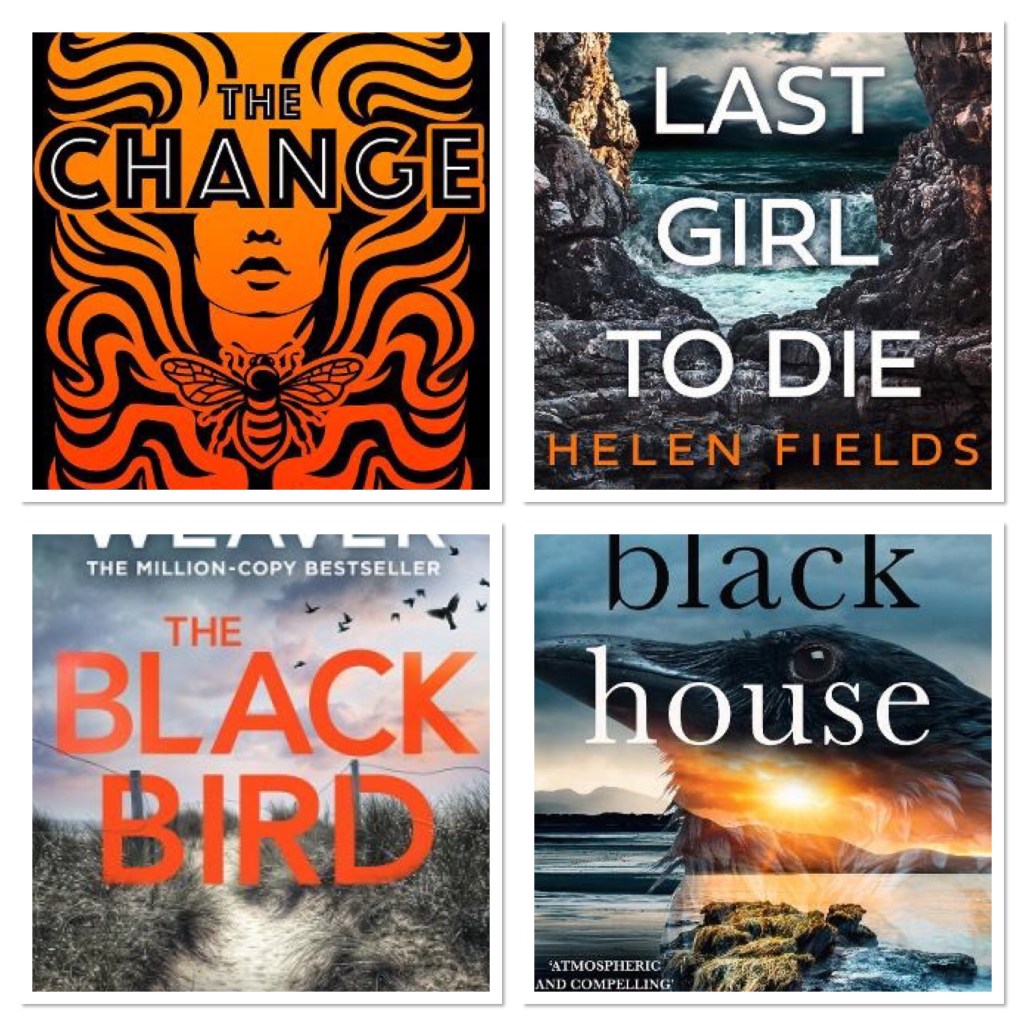
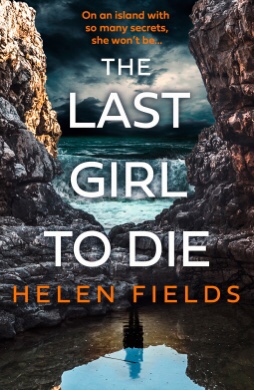
Halfway through my binge read of this fantastic new thriller from Helen Fields, I had to look it up and check that it really was a stand-alone novel. Sadie Levesque is a compelling central character: brave, resourceful, determined, intelligent and ever so slightly impulsive. I could easily imagine her as the backbone of a great crime series. Sadie is a private investigator based in Canada where she’s about to be the birth partner for her sister. She has time to fit in one last job, which takes her to Scotland and the atmospheric island of Mull. The Clark family recently moved to Mull from the United States to start a new life, but their new life has been derailed by the disappearance of their seventeen year old daughter Adriana. With her American accent and dark Latino looks, Adriana caused a stir among the teenagers of Mull. Her desperate parents feel the local police force are doing very little to look for their daughter, possibly because they are outsiders. When Sadie finds the girl’s body while searching local teen hang outs, the police become hostile. Adriana has been drowned. The killer has sexually assaulted her, adorned her with a seaweed crown and filled her mouth and throat full of sand. Sadie’s immediate thought is she’s been silenced. Without police cooperation, Sadie must find the killer and is drawn into local folklore, witches, a misogynistic priest and a community that looks after it’s own. Will Adriana be the last girl to die? Fields turns the island into a powerful character in it’s own right, weaving the landscape, history and folklore of Mull into her story. There are some twists to the final stages that came as a huge shock. I love to be surprised and I really was here, with my heart sat in my throat at times. Could the truth be more prosaic than the legends? That men kill and could use the excuse of ancient folklore and witchcraft to cover their tracks. I was torn between this more logical explanation and the sense of an ancient evil at play on this remote and wild island. If anyone knows, the island does.

I’ve been struggling with menopausal symptoms for the last six years so I was really up for reading a book about women who are moving towards middle age. Women become more interesting as they get older, more confident and full of wisdom and experience. I certainly found that in the characters of this book who I fell immediately in love with. They are definitely meant to be a trio.

Nessa: The Seeker
Jo: The Protector
Harriett: The Punisher

Each woman finds herself bestowed with incredible powers. When Nessa is widowed and her daughters leave for college, she’s left alone in her house near the ocean and has time and quiet hours to hear the voices belonging to the dead – who will only speak to her. They’ve always been there, but she’s been too busy with her family’s needs to hear them. Harriett is almost fifty, her marriage and career have imploded, and she hasn’t left her house in months. Her house was the envy of the neighbourhood and graced the cover of magazines, but now it’s overgrown with incredible plants. However, Harriett realises that her life is far from over – in fact, she’s undergone a stunning metamorphosis. Jo has spent thirty years at war with her body. The rage that arrived with menopause felt like the last straw – until she discovers she’s able to channel it, but needs to control it too. The trio are guided by the voices only Nessa can hear and discover the abandoned body of a teenage girl. The police have already written off the victim. But these women have not. Their own investigations lead them to more bodies and a world of wealth where the rules don’t apply and the laws are designed to protect villains, not the vulnerable. So it’s up to these three women to avenge the innocent, and punish the guilty. I really loved the clever way the author took apart the concept of serial killer stories while writing one. She talked about the popularity of crime thrillers and true crime podcasts and how they appeal to men. They’re written as if the victims are expendable and the killers get special nicknames as if they are comic book villains. The author really got this message across, but without losing any of the power in her story, or the tension that rises as we hope to see the killer caught. Finally, I have to say something about magic realism and being a huge fan of Silvia Moreno-Garcia and Alice Hoffman, I’ve been reading some of the best writers in the genre. Miller’s story is so strong and the characters so well constructed, that I never felt a sense of disbelief. I have quite a collection of magic realism starting with a teenage love for Fay Weldon and Angela Carter. This book can easily sit next to my favourites. It is that good.

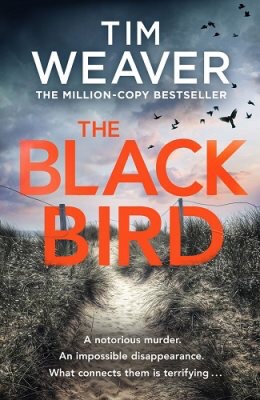
I had never come across Tim Weaver’s novels before so I was very lucky to be offered this by the publisher, especially in such a special edition too. When I learned it was the tenth in his David Raker series, I approached it with some trepidation. Would I be able to keep up or would it even make sense? Now that I’ve finished the novel I can honestly say that within the first few pages, I forgot this was one in a series and just got stuck in! Such was the strength of the story and his characters that I was drawn in and captivated to the end.

David Raker is a Missing Person’s Investigator and a widower with one daughter. The missing people in this story are Cate and Aidan Gascoigne, a devoted couple who have been married for five years and together for nine. The newspapers dubbed their case ‘The Mystery of Gatton Hill’ as they disappeared on their way to have dinner from their home in Twickenham. Catherine ‘Cate’ and Aiden Gascoigne were both 37 years old and worked in creative roles; Aiden was a Creative Director for a Soho web design company and Cate was a full time photographer. As they drove to dinner in Reigate, the couple could be seen on CCTV recording laughing together, just before their car plunged down a 90 foot ravine. Their car burst into flames and even though a fire crew arrived soon after the accident the fire was impossible to stop. They then discover an impossible scenario, when trying to recover Cate and Aiden’s bodies, they find they’re no longer in the car. This turns out to be merely the the tip of the iceberg in a chilling and menacing narrative that goes on to reveal a staggering number of murders over the years, and a extraordinarily intelligent serial killer who has no intention of getting caught. Raker is a remarkably tenacious and determined investigator, even when the pressures and dangers threaten to derail the case. This is a wonderfully complex, riveting and engaging read that kept me glued to the pages from beginning to end with its sky high levels of suspense and tension. This will appeal to crime and mystery readers who love truly twisty. thrilling and superior crime fiction, and I think that this can reasonably be read as a standalone if you have not read any of the series before. Highly recommended

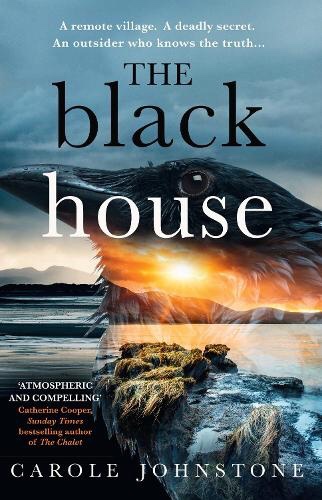
I loved this dark thriller from Carol Johnstone, with its bleak setting, mysterious deaths and Norse folklore. Maggie Mackay is a successful investigative journalist, but has always been held back by a negative inner voice and terrible nightmares. She’s been haunted by the idea that there’s something wrong with her and she can see or sense darkness. She thinks this feeling is linked to her childhood and a small village in the Outer Hebrides called Blairmore. Maggie stayed there with her mother when she was very young and caused a furore when, out of nowhere, she claimed that someone in the village had murdered a man. She left the community in uproar, saying she was really a man called Andrew MacNeil who had lived on the island of Kilmery. Her mother believed and encouraged her claims, but when they returned to the mainland this strange interlude wasn’t referred to again. Now 25, Maggie returns to the island, in search of answers. Mainly, she wants to find out if her claims could possibly have been true, but with her history on the island, Maggie may struggle to get people to talk to her. However, this is an island with few inhabitants, but a wealth of secrets and if Maggie gets too close to the truth she may be in serious danger.

The central mystery is fascinating and makes the book very difficult to put down. Charlie feels like the designated spokesperson for the islanders, he approaches Maggie with an apology for the way they treated her when she was a child and there’s a fatherly feel to the way he talks to her. On one hand I felt he was on Maggie’s side, but I also wondered whether he was a decoy – someone sent to give her just enough information, perhaps to deflect her from the reaching the truth. Other people greet her with outright hostility and I had a lot of admiration for Maggie’s tenacity considering how vulnerable she must feel, staying on the island as a lone woman. Maggie also has a bipolar diagnosis and I thought this was well portrayed by the author, even though it adds another layer of uncertainty – can we trust what Maggie is experiencing? I found Maggie’s narration more compelling than the male narrator, but overall loved the pace and the different perspectives that give us an insight into events back in the 1970’s. There were twists I didn’t expect and the final revelations about the mystery felt satisfying. I love how this author likes to wrong-foot her reader and although this was more gothic than horror, there were parts that were very unsettling and left me listening out for creaks in the dead of night. I came away from it with an uneasy feeling, not about the supernatural aspects, but more about what humans are capable of doing and how isolated communities like this one have the perfect environment in which to plot and keep secrets, in some cases for decades. This cements Carol Johnstone in my mind as an author to look out for and i’ll be buying a finished copy for my collection.

Posted in Publisher Proof

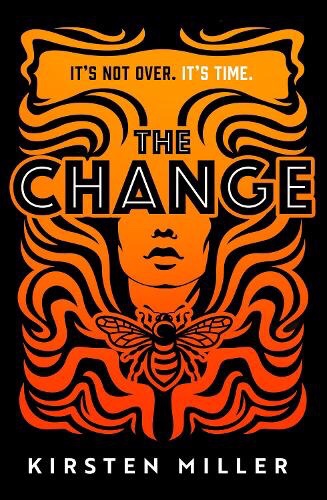
The Change by Kirsten Miller

You have to indulge me with this review, because it’s quite a personal response to Kirsten Miller’s novel. It had to be personal, because as a peri-menopausal woman, I fell in love with the idea of a latent power that women can tap into at an age when we are often dismissed as ‘past it’. An age I’ve now reached. ‘The Change’ was a whispered word in my family. At my Grandma’s house there was a clear dividing line at the front door, right into the living room for my Grandad and left into the dining room for my Grandma. I was the only granddaughter and I did spend a lot of time with Grandad, but the other room with my two aunties, Grandma and Mum was where secret feminine conversations took place. ‘The Change’ was first overheard when I was just getting used to my periods starting. Older family members were struggling with the symptoms of menopause. Now, thirty years later I’m experiencing symptoms of peri-menopause and I realise we never really had full and frank conversations about it. Starting my periods was traumatic. I was constantly worried about leaking through my clothes, particularly at school. I was embarrassed that sometimes I had to take my bag to the toilet with me from the classroom and I was mortified that to get out of swimming I had to shout out, in front of everyone, that I had my period.

I’d started my period in my first week of secondary school, in the same summer that I broke my back so I went through an enormous amount of change. I felt tied down and I certainly wasn’t the same tree climbing, dog walking tomboy I had been up till now. I’m thinking that menopause is going to have another seismic effect. I’m already finding it difficult to contain symptoms like sweating and hair loss, but I don’t want to lose myself. I love that menopause is starting to be talked about thanks to media celebrities like Davina McCall and I’m trying to be open and honest talking about my experiences with friends. So I was really up for reading a book about women who are moving towards middle age. Women become more interesting as they get older, more confident and full of wisdom and experience. I certainly found that in my friends and in the characters of this book who I fell immediately in love with. They are definitely meant to be a trio.

Nessa: The Seeker
Jo: The Protector
Harriett: The Punisher

Each woman finds herself bestowed with incredible powers. When Nessa is widowed and her daughters leave for college, she’s left alone in her house near the ocean. Finally, she has time and quiet hours to herself, and she hears voices belonging to the dead – who will only speak to her. They’ve possibly always been there, but she’s been too busy with her family’s needs to hear them. Harriett is almost fifty, her marriage and career have imploded, and she hasn’t left her house in months. Her house was the envy of the neighbourhood and graced the cover of magazines, but now it’s overgrown with incredible plants. Harriett realises that her life is far from over – in fact, she’s undergone a stunning metamorphosis.

Jo has spent thirty years at war with her body. The rage that arrived with menopause felt like the last straw – until she discovers she’s able to channel it, but needs to be able to control it too. The trio are guided by voices only Nessa can hear and discover the abandoned body of a teenage girl. The police have already written off the victim. But these women have not. Their own investigations lead them to more bodies and a world of wealth where the rules don’t apply – and the realisation that laws are designed to protect villains, not the vulnerable.So it’s up to these three women to avenge the innocent, and punish the guilty…

The time has come to embrace The Change.

I loved these women, they were powerful, sexy, sassy and deeply committed to their fellow women – dead or alive. Some might call them witches, but isn’t that a man’s name for a woman who won’t be controlled? Harriett is wonderful! She’s unapologetically sexy and partakes of beautiful men or women when she fancies, but doesn’t feel a need to be attached. She lets her garden run riot and has her own methods for dealing with those who complain. I loved her fearlessness and sense of humour. Nessa has a gift that’s past down through the generations, but has laid dormant till now. I loved that Nessa’s situation is a positive spin on the empty nest, although her gift is not one most people would want. I loved her compassion for the girls she sees and her drive to help, to the extent of taking a ghost home with her. Jo’s gift felt like the embodiment of the rage a lot of women feel about the injustices of the world we live in. The author tells us tales about what women face every day: husbands who control their lives; young girls preyed on by their sport’s coach; vibrant and intelligent women overlooked for promotion; creative women having their ideas stolen by men; women excluded from the gent’s club where a group of millionaire men rule the world. These women are determined to speak out, be open about what women’s lives are like and educate other women to speak their truth and feel their power. It’s inspiring and exhilarating.

The mystery of the serial killer is compelling and really keeps you reading. I kept picking this up in every spare moment, wanting to spend time with these women and see where their investigations lead. I really loved the clever way the author took on the concept of serial killer stories while writing one. She addresses the popularity of crime thrillers and true crime podcasts and how they appeal to men. They’re written as if the victims are expendable and the killers get special nicknames as if they are comic book villains. I’ve often thought this about the Yorkshire Ripper. He’s notorious, but I couldn’t tell you a single name of his victims. There is a truth about the world right at the heart of her story. It comes to light when the women involve the police. There are women in the world who matter and there are others who are worthless, both to law enforcement and to the powerful men encountered in this book. They can be dismissed, because they’re sex workers, or drug addicts, or live in poverty. The Yorkshire Ripper’s first victims were possibly sex workers, then a young girl was attacked after walking home from a night out. She was perceived, by law enforcement and the media, as coming from a decent family. Media headlines screamed that the Ripper had taken his first ‘innocent’ victim. The implication being that the other victims deserved their fate. The author really got this message across, but without losing any of the power, the tension or the desperate need to see the killer caught. Finally, I have to say something about magic realism and being a huge fan of Silvia Moreno-Garcia and Alice Hoffman, I’ve been reading some of the best writers in the genre. Miller’s story is so strong and the characters so well constructed, that I never felt a sense of disbelief. I have quite a collection of magic realism starting with my teenage love for Fay Weldon’s Life and Loves of a She-Devil and Angela Carter’s short stories. This book can easily sit next to my favourites. It really is that good.

Meet The Author

Kirsten Miller grew up in a small town in the mountains of North Carolina. At seventeen, she hit the road and moved to New York City, where she lives to this day. Kirsten’s first adult novel, The Change, is a feel good feminist revenge fantasy–with witches. The Change is a Good Morning America Book Club pick for May 2022. Kirsten also the author of over a dozen middle grade and YA novels, including the acclaimed Kiki Strike books, which tell the tale of the delinquent girl geniuses who keep Manhattan safe, and How to Lead a Life of Crime. She is not the Kirsten Miller who wrote All That Is Left (which appears on the list of the books she’s written), but she assumes that Kirsten is lovely and talented.

Posted in Netgalley

The Last Girl to Die by Helen Fields.

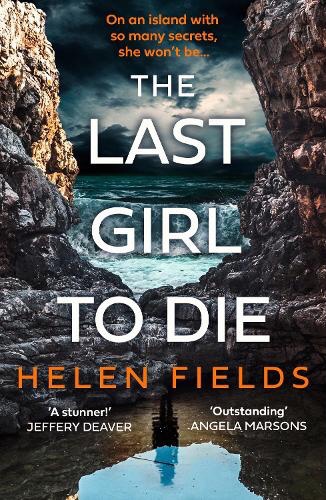
This book is one of my picks for the autumn and I really did pick an absolute cracker of a crime novel. It’s chilling, atmospheric and incredibly clever, especially at weaving the setting into the story. I read this straight through and halfway through my binge read I had to look it up and check that it really was a stand-alone novel. Sadie Levesque is a compelling central character: brave, resourceful, determined, intelligent and ever so slightly impulsive. I could easily imagine her as the backbone of a great crime series. Sadie is a private investigator based in Canada where she’s about to be the birth partner for her sister. She has time to fit in one last job, which takes her to Scotland and the atmospheric island of Mull. The Clark family recently moved to Mull from the United States to start a new life, but their plans have been derailed by the disappearance of their seventeen year old daughter Adriana. With her American accent and dark Latino looks, Adriana caused a stir among the teenagers of Mull and was very noticeable in her job at the local pub. Her desperate parents feel the local police force are doing very little to look for their daughter, possibly because they are outsiders. When Sadie finds the girl’s body while searching local teen hang outs, the police become hostile. Adriana has been drowned. The killer has sexually assaulted her, adorned her with a seaweed crown and filled her mouth and throat full of sand. Sadie’s immediate thought is she’s been silenced. Without police cooperation, Sadie must find the killer and is drawn into a mix of local folklore, witches, a misogynistic priest and a community that looks after it’s own. Will Adriana be the last girl to die?

The island is definitely a character in it’s own right here. It even narrates it’s own chapters. Nature is in every part of the book, starting with Sadie who seems more comfortable outside than in. She feels more powerful out there, sleeping in a tent and lurking around in the dead of night, observing the islanders. For the island’s teenagers, the beaches and stone circles become the backdrop for their vigils and parties. Of course Adriana is also found outdoors, in a cave adorned with the plants and products of the sea. There’s something folkloric about the way she is posed and especially the sand, which Sadie finds out is part of ancient lore dating back to the 16th Century if not further. It is part of a ritualistic killing, if her mouth is full of sand she can’t utter the truth about what or who killed her. It is a method used by witches to silence those who might identify them. The outdoors and the sea is in these people’s DNA for generations, many are fishermen and one of the island’s legends is of a ship from Spain that was wrecked on the coast of Mull. On board was a Spanish princess who had dreamed of a beautiful man on a Scottish island and saw him as they reached the shore at Tobermory and fell instantly in love. The man’s wife saw the look in the princess’s eyes and called on the Mull Witch who destroyed the vessel, killing all 300 souls on board. History tells us that the boat was part of the armada and that islanders sank the vessel, a terrible end for the sailors who were seeking help. These deaths, from the 16th century to the present leave their mark. The island is a living thing, we are told, it feels everything. I loved the poetic way the author writes in the island’s sections:

‘Sea deaths bring furious tides. The waves slap the sides of boats, knocking the sailors from port to starboard, and the fish thrash so hard they break nets. Shells smash, scattering vicious fragments on beaches to slice careless feet. Salty tears form an ocean.’

It’s following her instinct and looking into the death of a young woman years before that first sparks the idea of witchcraft. Flora Kydd’s father laments in the village pub that his daughter’s death was glossed over by the police. Her killer had never been found. Sadie finds the Kydd’s house covered with posies of flowers to deter witchcraft and dark symbols burned into the beams to ward off the evil eye. I loved the way the author paired witchcraft with feminism, showing a deep seated misogyny in some of the islands men, particularly the local priest. Sadie stumbles across a group of women in a forest clearing, late at night. They are naked, but covered in clay, dancing around a fire. Their leader, Hilda, talks to Sadie at length dismissing the idea of darker witchcraft and claiming to be a women’s group, offering support and learning the old healing ways of nature. They protest at a community meeting where women have been told they have a curfew and should stay indoors after dark. Hilda has a strong position on this, maybe men should stop killing women. Sadie’s thoughts are going in two different directions. Could Adriana have been killed by unscrupulous members of Hilda’s group who were pressuring her to join in? Or had she become one of the women dancing around the fire and been killed because she was deemed a witch? There are some twists to the final stages that came as a huge shock. I love to be surprised and I really was here, with my heart sat in my throat at times. Could the truth be more prosaic than the legends? That men kill and could use the excuse of ancient folklore and witchcraft to cover their tracks. I was torn between this more logical explanation and the sense of an ancient evil at play on this remote and wild island. If anyone knows, the island does.

Published by Avon 1st September 2022.

Meet the Author.

Helen is a former criminal and family law barrister. Every book in her brilliant Callanach series has claimed an Amazon #1 bestseller flag. The last book in the series, ‘Perfect Kill’ was longlisted for the Crime Writers Association Ian Fleming Steel Dagger in 2020, and others have been longlisted for the McIlvanney Prize, Scottish crime novel of the year. Helen also writes as HS Chandler, and has released legal thriller ‘Degrees of Guilt’. Her audio book ‘Perfect Crime’ knocked Michelle Obama off the #1 spot. In 2020 Perfect Remains was shortlisted for the Bronze Bat, Dutch debut crime novel of the year. Now translated into 16 languages, and also selling in the USA, Canada & Australasia, Helen’s books have won global recognition. Her historical thriller ‘These Lost & Broken Things’ came out in May 2020. Her first standalone thriller – The Shadow Man – from HarperColllins was published on February 4, 2021. She currently commutes between West Sussex, Scotland and California. She lives with her husband and three children. Helen can be found on Twitter @Helen_Fields for up to date news and information or at http://www.helenfields.co.uk.

Posted in Netgalley

Sunday Spotlight! Autumn Fiction: Crime, Thrillers and Mystery.

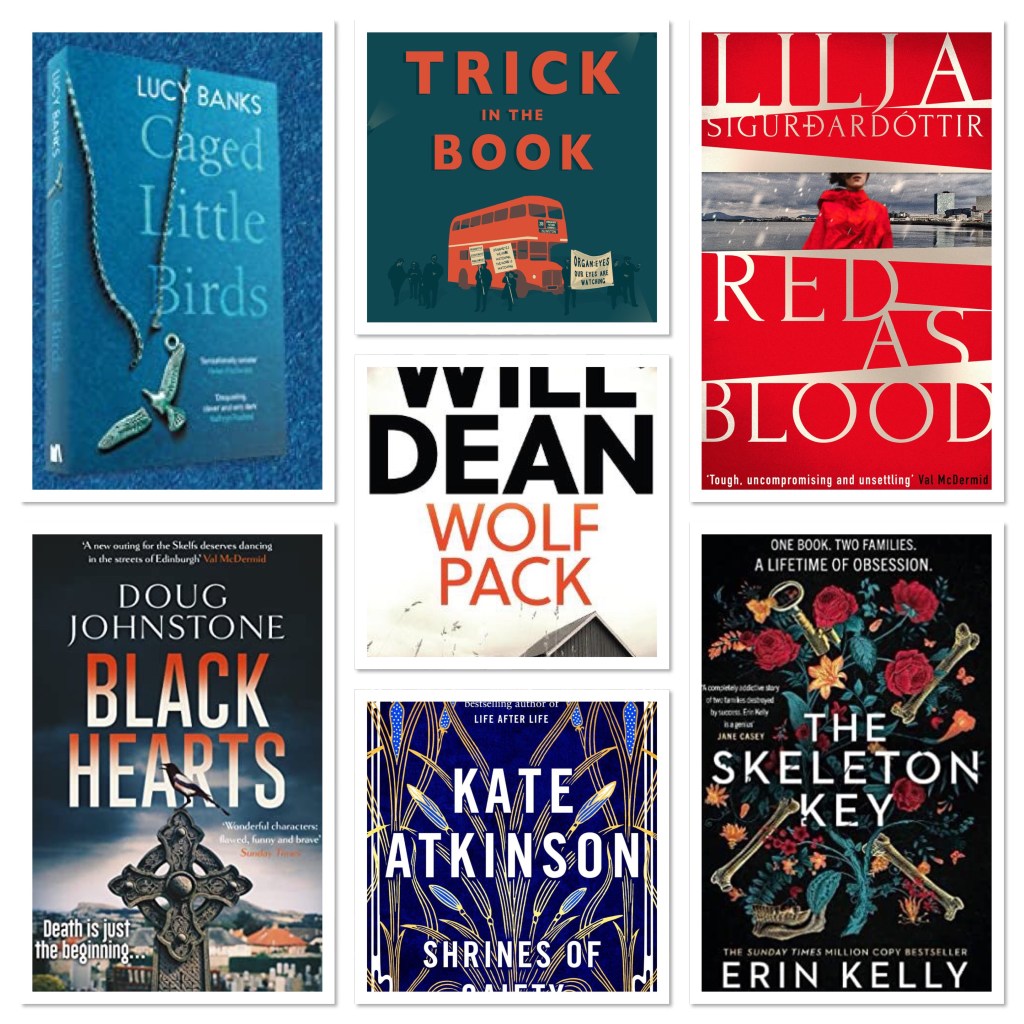
Who doesn’t love a great crime novel or mystery? It seems to be something that’s ingrained in us, perhaps since some of the first literary detectives like Sherlock Holmes. Our enduring love for Agatha Christie and our consumption of Sunday night cozy crime dramas tells me it’s in the blood somehow. I have a strange relationship with crime thrillers that is more to do with the snobbery of my secondary school than the books themselves. Thrillers are something I devour quickly and almost furtively, as if I should be ashamed of enjoying them. Yet some of my favourite contemporary writers are writers of thrillers and crime novels. As we know from last week’s Spotlight I love the Cormoran Strike novels, the Roy Grace series and Doug Johnstone’s Skelf series too. I also enjoy Sophie Hannah, Anne Cleeves, Elly Griffiths, Will Dean, Louise Candlish, Harriet Tyce, and Kate Atkinson’s Jackson Brodie series. I have started reading Agatha Christie too, after my father in law left me an anthology of her stories when he emigrated to New Zealand. So it was no surprise to me that eight of my most anticipated books for autumn were from this genre. See last week’s post too, for three more excellent crime novels on our way this autumn.

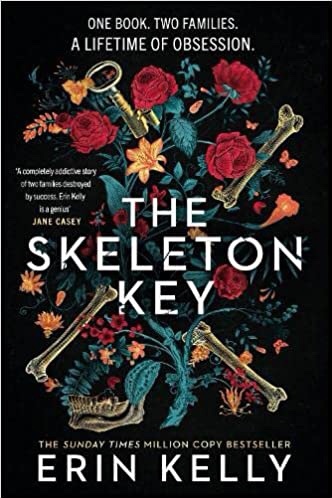
I remember being so impressed with Erin Kelly’s first book The Burning Air, but this book sounds like an incredible feat of imagination and ingenuity. It is ambitious and is one of those books that can only be written when a writer has some experience under their belt. It’s
Summer, 2021 and this is a reunion the family will never forget. Nell has come home at her family’s insistence to celebrate an anniversary. Her father is a writer and fifty years ago he wrote The Golden Bones, part picture book and part treasure hunt. It’s a fairy story about Elinore, a murdered woman whose skeleton was scattered all over England. The Golden Bones led readers via clues and puzzles to seven sites where jewels were buried – gold and precious stones, each a different part of a skeleton. One by one, the tiny golden bones were dug up until only Elinore’s pelvis remained hidden.

The book was a worldwide sensation and a whole community of treasure hunters was formed. The Bonehunters were in frenzied competition with each other, obsessed to a dangerous degree. People sold their homes to travel to England and search for Elinore. Marriages broke down as the quest consumed people. A man died. The book made Frank a rich man. Stalked by fans who could not tell fantasy from reality, his daughter, Nell, became a recluse. But now the Churchers must be reunited. The book is being reissued along with a new treasure hunt and a documentary crew are charting everything that follows. Nell is appalled, and terrified. During the filming, Frank finally reveals the whereabouts of the missing golden bone. And then all hell breaks loose. From the bestselling author of He Said/She Said and Watch Her Fall, this is a taut, mesmerising novel about a daughter haunted by her father’s legacy.

Published by Hodder and Stoughton 1st September 2022.

This standalone thriller from Helen Fields, known for the Luc Callanach series of novels, is an absolute belter of a novel. In search of a new life, seventeen-year-old Adriana Clark’s family moves to the ancient, ocean-battered Isle of Mull, far off the coast of Scotland. Then she goes missing. Faced with hostile locals and indifferent police, her desperate parents turn to private investigator Sadie Levesque. Sadie is the best at what she does. But when she finds Adriana’s body in a cliffside cave, a seaweed crown carefully arranged on her head, she knows she’s dealing with something she’s never encountered before. The deeper she digs into the island’s secrets, the closer danger creeps – and the more urgent her quest to find the killer grows. Because what if Adriana is not the last girl to die? This was a genuinely chilling story, combining the epic landscape, myths and legends, as well as some serious scares. The author embeds this modern murder into the island’s past, with even 16th Century shipwrecks, ancient standing stones and the community’s instinct to look after their own all playing a part in the mystery. Look out for my review on Tuesday this week.

Published by Avon 1st September

As everyone knows, I’m a huge fan of Elly Griffiths’s Ruth Galloway series, so I’m intrigued by this new thriller set in London featuring Detective Harbinder Kaur. A murderer hides in plain sight – in the police. DS Cassie Fitzgerald has a secret – but it’s one she’s deleted from her memory. In the 1990s when she was at school, she and her friends killed a fellow pupil. Thirty years later, Cassie is happily married and loves her job as a police officer. One day her husband persuades her to go to a school reunion and another ex-pupil, Garfield Rice, is found dead, supposedly from a drug overdose. As Garfield was an eminent MP and the investigation is high profile, it’s headed by Cassie’s new boss, DI Harbinder Kaur. The trouble is, Cassie can’t shake the feeling that one of her old friends has killed again. Is Cassie right, or was Garfield murdered by one of his political cronies? It’s in Cassie’s interest to skew the investigation so that it looks like the latter and she seems to be succeeding. Until someone else is killed.

This has some great early reviews and I’m really looking forward to it.

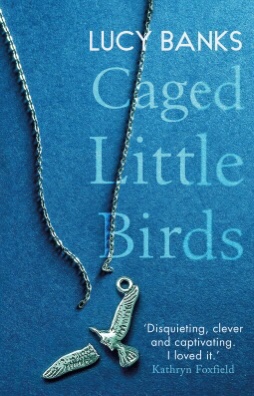
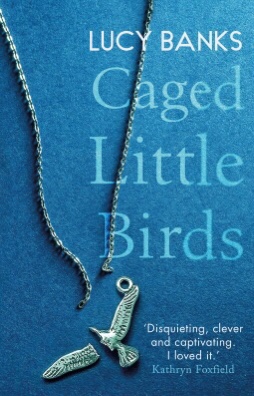
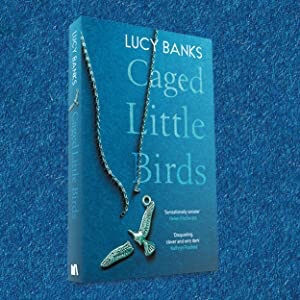
Described as disquieting and sensationally sinister in early reviews from fellow authors, there is a bit of buzz in the blogger community about this thriller from Lucy Banks. It’s set in that tension between someone who protests their innocence and has paid for their crime, versus the general public who often feel differently, seeing a criminal is their midst. The public think Ava’s a monster. Ava thinks she’s blameless. In prison, they called her Butcher Bird – but Ava’s not in prison any more. Released after 25 years to a new identity and a new home, Ava finally has the quiet life she’s always wanted. As she forges a friendship with her neighbour, however when the neighbour’s daughter comes to stay things change. Ava is convinced that she’s worked out who she is and when a brick comes through the window she knows that someone has discovered her secret. The lies she’s told are about to unravel. This is a real psychological suspense novel that really draws you deeply into the character’s experience. It poses the question of whether someone has ever paid for their crimes?

Published by Sandstone Press on the15th September 2022

When is the right time to be who you always were?

Jodi Picoult has always been a must read for me, ever since Her Sister’s Keeper, many years ago now. Here she collaborates with Jennifer Finley Boylan, an author I haven’t come across before. Billed as compelling and moving, this reminds me of earlier Jodi Picoult – a story built around a contentious, contemporary issue such as racism, abuse, school shootings or fertility and reproductive rights. Things that are a real flash point in modern America. Just as Picoult did with her novel Wish You Were Here, the authors have picked an up to the minute contemporary issue and I can already imagine challenging conversations around authenticity, identity and gender at every book club up and down the country.

We follow Olivia who fled her abusive marriage and returned to her hometown to take over the family beekeeping business when her son Asher was six. Now, impossibly, her baby is six feet tall and in his last year of high school, a kind, good-looking, popular ice hockey star with a tiny sprite of a new girlfriend. Lily also knows what it feels like to start over – when she and her mother relocated to New Hampshire it was all about a fresh start. She and Asher couldn’t help falling for each other, and Lily is truly happy for the first time. But can she trust him completely? Then out of the blue Olivia gets a phone call – Lily is dead, and Asher is arrested on a charge of murder. As the case against him unfolds, she realises he has hidden more than he’s shared with her. And Olivia knows firsthand that the secrets we keep reflect the past we want to leave behind ­­- and that we rarely know the people we love well as we think we do. This is my weekend read and I can’t wait to get started.

Published on 15th November 2022 by Hodder and Stoughton

That’s it for this week, but next week I’ll be looking at Fantasy, Magic and all things spooky.

Posted in Random Things Tours

The Girl in the Photo by Heidi Amsinck

As many of you know, I’m a big fan of Scandi and Nordic Noir whether it’s on television or in book form. I was also drawn in by the beautiful covers of these books, in fact I’d like a pair to frame and put on the wall. Sometimes books don’t live up to their covers, but I throughly enjoyed the first book following the investigative reporter known only as Jensen. My Name is Jensen set up the main characters beautifully so it was good to be back in the company of both Jensen and her ex-lover, DI Henrik Jungerson. In this second novel both our main characters are in a state of transition. Jensen is no longer working for newspaper Dagbladet and is working freelance, in a style that becomes a mix of private investigator and reporter. She has the help of a young man called Gustav, the nephew of her editor at the newspaper. Jensen knows he has been in trouble at his school, but not the extent of his problems. As they try and get used to each other’s style of working, Jensen is also adjusting to a new apartment with a difficult landlord. The first crime seems to be a burglary gone wrong, with an elderly woman brutally murdered and an incredibly expensive diamond necklace missing. Henrik is the officer on the case, but Jensen is hired by the woman’s rather unpleasant daughter to find the necklace. More murders follow, but what Henrik notices at each crime scene is a photo of the same young girl. They’re not obvious, just placed somewhere in the room, but Henrik doesn’t like coincidences and wants to connect the investigations. His superiors are unconvinced, especially as Henrik’s issues at home and with drink are starting to get out of control. Working the same case means he will cross paths with the one woman in Copenhagen he wants to avoid, Jensen.

This was an interesting case, told by Jensen and Henrik in turn, from their own perspective and with their individual ideas on what the victims have in common. They are remarkably alike in the way they think and are drawn together both by the threads of the case and what feels like a gravitational force. Nobody thinks like Jensen, except for Henrik. She knows he is only a step behind her. Nobody on the force thinks like Henrik and he almost craves her presence, not necessarily in an emotional way, more than that he wants someone to keep up with him and to bounce ideas off. Jensen has the freedom of being freelance, to work when she wants and makes choices on how she investigates that a police officer couldn’t. Breaking into a client’s summer cabin is risky, but it gets her further forward in the case. Henrik couldn’t do this, because he’s hemmed in by police rules and regulations. Yet there are perks to being an officer, such as the ability to look at official records, that Jensen wishes she had. He can also command respect and get families to cooperate in a way she can’t and this can really hamper her investigation. Despite these differences, no one else has worked out the significance of the photograph, in fact he’s pretty much been told that this is a simple case and he should stop complicating matters. Yet he can’t leave it alone. He knows it’s the key. Really they’re a perfect team, pushing each other on and keeping up with each other intellectually.

I enjoyed Jensen’s working relationship with Gustav. She soon realises he’s a bit of a maverick and that he’s been expelled from school for something much more significant than Margarethe is letting on. The mystery itself is an interesting one, not as clear cut as it first appears and with some deeply unpleasant characters too. The pacing is excellent too. Each character coming at the mystery from their own starting point and working towards each other. The author adds to the information we have in every chapter, just enough to keep the reader engaged, but tantalised and eager to read the next section. As for their personal relationship I found it hard to empathise with Henrik’s perspective. He seems to see her as a temptation that he’s unable to shake off; once in her orbit, he’s inexorably pulled towards her. If he piles all the guilt onto Jensen and avoids seeing her, he avoids facing the fact that he made a choice to cheat on his wife. Then, when he realises that Jensen’s landlord is interested in her, he becomes the jealous spurned lover. As if he didn’t choose to stay with his wife. The author manages to convey these complicated psychological aspects of her characters, so even though we might not agree with their perspective, we can understand their emotions. I was left feeling that we’ve only just scratched the surface when it comes to these two characters and I’m interested to see where we go next.

Meet The Author

Heidi Amsinck is a writer and journalist who was born in Copenhagen and now lives in London. She was London Correspondent for the
Danish daily Jyllands-Posten. She has written many stories
of BBC Radio 4, all read by Tim McInnerny. She was previously shortlisted for the VS Pritchett Memorial Prize. My Name is Jensen, her first thriller, was published to critical acclaim in 2021 and has also been translated into Danish and German.

Posted in Netgalley

The Blackhouse by Carole Johnstone

I loved this dark thriller from acclaimed author of Mirrorland Carol Johnstone, with its bleak setting, mysterious deaths and Norse folklore. Maggie Mackay is a successful investigative journalist, but has always been held back by a negative inner voice and terrible nightmares. She’s been haunted by the idea that there’s something wrong with her and she can see or sense darkness. She thinks this feeling is linked to her childhood and a small village in the Outer Hebrides called Blairmore. Maggie stayed there with her mother when she was very young and caused a furore when, out of nowhere, she claimed that someone in the village had murdered a man. She left the community in uproar, saying she was really a man called Andrew MacNeil who had lived in the village on the island of Kilmery. Her mother believed and encouraged her claims, but when they returned to the mainland this strange interlude wasn’t referred to again. Now 25, Maggie returns to the island, in search of answers. Mainly, she wants to find out if her claims could possibly have been true, but with her history on the island, Maggie may struggle to get people to talk to her. However, this is an island with few inhabitants, but a wealth of secrets and if Maggie gets too close to the truth she may be in serious danger.

Kilmery is sat across a causeway from Lewis and Harris, and the author makes this incredible place a real character of it’s own. It’s isolated position reinforces the feeling of loneliness that surrounds Maggie. She roams around the island, often alone and there were times she felt like an easy target, especially to someone who knows the terrain better than she does. Shipwrecks litter the coast and the author’s description of a ship coming to harm one stormy night enhances that feeling of danger.

‘It wasn’t the screams he remembered the most, although they crashed to shore inside the howling, furious wind and ricocheted around the high cliffs above the beach for hours. It wasn’t the storm or the roaring, foaming waves that carved great snaking wounds through the wet sand and stole its shape from under his feet.’

For Maggie, the island is changeable and I felt the way it was viewed echoed the journey she’s on through this dark, dangerous investigation to the hint of a possible brighter future. The wind, fog, and storms lashing against the rocks are unnerving, but there are places that Maggie finds peace. At the Oir na Tir standing stones, even with the wind and rain driving against them, Maggie senses their permanence. This is something that won’t be moved and stands like a sentinel, weathering every storm that’s passed over them. This is the kind of permanence Maggie wants in her own mind, a sense of peace that stays despite what life throws at her. Then there’s the meadow, shown to her by Will, one of the locals she befriends.

‘At the bottom of the hill is a vast green meadow stretching as far as the eye can see. It’s gorgeous, dotted with silver-still lochans, gold winter heather, and boulders covered in moss and orange lichen. It opens something inside my chest, precarious and fragile; a sense of longing that I suppose is awe or wonder. At this uncannily beautiful place full of a light and colour so at odds with the bronze desolation of those inland bens and glens […] I can feel the sting of ludicrous tears, and blink them away.’

This is machair, a type of dune grassland formed by sand and broken shells blown over from the beach. In opens up a sense of wonder in Maggie, like the childhood awe we have for Christmas and it’s magic. It’s almost as if this piece of the landscape connects her to the child she was before all of this happened. Can she trust it though?

I loved the link to the supernatural and Norse folklore, particularly the idea of ‘thin places’, something I’ve had a feeling about before. As an avid reader of the Outlander series, this ability to move into a different time or experience a haunting feels synonymous with Scotland. Old fisherman Charlie, who decides to talk to Maggie about the past, describes a thin place as where the space between this and other worlds is the shortest. The chance of seeing, knowing or feeling something from another world is high. There’s superstition within the fishermen, who never say a prayer aboard a boat, but douse it in whiskey and salt or even use burning rags to cleanse every corner of the boat, rather like smudging using sage twigs. It’s the ‘Vándr-varði’ that feel really disturbing, left anonymously outside The Blackhouse, where Maggie is staying. They’re mummified crows, old Norse talismans to guard against evil, but Maggie doesn’t know whether they’ve been left to protect her or whether she’s the evil that needs to be kept at bay. All of this superstition adds to the mystery Maggie is trying to solve, but she wonders whether it’s meant to spook her and warn her off the truth. The tension keeps building and by the time Maggie has a midnight visitor, my heart was racing.

The central mystery is fascinating and makes the book very difficult to put down. Charlie feels like the designated spokesperson for the islanders, he approaches Maggie with an apology for the way they treated her when she was a child and there’s a fatherly feel to the way he talks to her. On one hand I felt he was on Maggie’s side, but I also wondered whether he was a decoy – someone sent to give her just enough information, perhaps to deflect her from the reaching the truth. Other people greet her with outright hostility and I had a lot of admiration for Maggie’s tenacity considering how vulnerable she must feel, staying on the island as a lone woman. Maggie also has a bipolar diagnosis and I thought this was well portrayed by the author, even though it adds another layer of uncertainty – can we trust what Maggie is experiencing? I found Maggie’s narration more compelling than the male narrator, but overall loved the pace and the different perspectives that give us an insight into events back in the 1970’s. There were twists I didn’t expect and the final revelations about the mystery felt satisfying. I love how this author likes to wrong-foot her reader and although this was more gothic than horror, there were parts that were very unsettling and left me listening out for creaks in the dead of night. I came away from it with an uneasy feeling, not about the supernatural aspects, but more about what humans are capable of doing and how isolated communities like this one have the perfect environment in which to plot and keep secrets, in some cases for decades. This cements Carol Johnstone in my mind as an author to look out for and I will be buying a finished copy of this book for my collection.

Published 4th August by Harper Collins UK

Meet the Author

Scottish writer Carole Johnstone’s debut novel, Mirrorland, will be published in spring 2021 by Borough Press/HarperCollins in the UK and Commonwealth and by Scribner/Simon & Schuster in North America. 

Her award-winning short fiction has been reprinted in many annual ‘Best Of’ anthologies in the UK and the US. She has been published by Titan Books, Tor Macmillan, Simon & Schuster, and PS Publishing, and has written Sherlock Holmes stories for Constable & Robinson and Running Press.

Posted in Netgalley

The Ruins by Phoebe Wynne

At about 40% into the kindle version of this book it started to become very uncomfortable reading. I’d no idea where it was going to go and I wasn’t sure if I wanted to be along for the ride. I was glad I stayed with it, because of the truth it shows about the effects of trauma. They are life long. Now I’m finding it very difficult to review in my usual way. It felt like reading a client’s journal work, the sort I might ask them to write as part of their counselling journey. There was something prurient about reading Ruby’s account, because it was so intimate and harrowing who could gain pleasure from reading it? Perhaps this is exactly the effect that Phoebe Wynne was hoping to evoke in the reader? Not all reading is pleasurable, sometimes it has a different purpose. To educate, to shock, to show people they are not alone in their experience. In the author’s first novel Madame we were introduced to some of the same themes: the super rich who are above the law and practice exploitation like a religion; young teenage girls being groomed to become Stepford wives to the millionaire class; a creepy gothic school where the girls are educated; the complicity of women in this continuous cycle. Yet with that book the creepy undertones suggested a supernatural element and the malice of some of the pupils was just enough for dislike to creep in. Both help us look past the true horror of what is going on. Once I’d finished the book I felt like I’d glimpsed behind life’s curtain to see the decadent and corrupt inner workings of society. This book felt different. The girls were younger, the setting perhaps more realistic, so the flashbacks to what should have been a blissful summer for three girls at a French château, felt claustrophobic, exploitative and very dark indeed.

Ruby and her family are spending the summer at their Château in France, as usual they are joined by her father’s two best friends; Harley and Angus, with his daughter Imogen. However, added to their party this year are the Fullers and their daughter Annie, plus a woman called Georgina and her teenage daughter Ned (Edwina). Their normal equilibrium is disturbed immediately when one of the Fullers drives back to the château after a few drinks and hits a child in the village. With their combined power and influence, the men ‘handle’ the problem, but Mrs Fuller is not so easily silenced. Was she driving or is she reacting to her husband’s callous disregard for life? Whatever the reason she returns to the château screaming and crying. She has to be sedated and removed back to England as soon as possible. From there the holiday descends into decadence – heavy drinking becomes the norm, little jibes and full blown arguments ensue.

Make no mistake these men are in charge and however they choose to behave, no one will rebuke them. The author creates a sense of powerlessness in the women of the party, from the hysterical Mrs Fuller to the passivity of Ruby’s mum. Within this patriarchy, women are policing the borders. Whether it’s because they believe in the system or because they are keeping quiet to stay safe, every woman here is reacting to male dominance. Ruby’s mum is a walking list of instructions – keep up your flute practice, stay quiet at the table, don’t ask questions and above all don’t read books. Ruby’s love of Agatha Christie is frowned upon by the men and that disapproval is acted on by her mother who eventually stops her. At first her reading is tolerated and admired by Angus. Harley cruelly ruins the end of Murder on the Orient Express, making the point that reading fiction is not the best use of Ruby’s time. Then a seemingly kind birthday present of Death on the Nile becomes tainted – it’s intentions called into question by later events. Events that suggest someone might have been using her love of reading as a way to groom this young girl. Then eventually, the book becomes part of a terrible traumatic memory. I don’t have any personal experience of what Ruby and Imogen go through that summer, but it’s still shocking to read. It was the neglect that bothered me most, the fact that none of these mothers, except perhaps Ned’s mother Georgina, are on their daughter’s side. Not only do they seem curiously detached from how their husbands behave – until it’s in front of other people – they don’t intervene with their daughters, spend time with them or speak up when they are treated badly. Their silence makes them complicit. As a reader I felt powerless to stop what was happening.

In between the flashes of that summer we follow another trip to France, many years later, with Mrs Cosgrove. She’s come to visit the château that’s for sale along with the coast, the venue of childhood memories and events that still haunt her today. Some locals seem to recognise her but she denies being here before, claiming to be taking a holiday. Yet Mrs Cosgrove is jumpy, looking out for particular cars and appearing frightened when two men appear also claiming a link to the château. Does this place and it’s memories still have power over her? Or is she hoping to finally breathe, so that what happened here is no longer such an influence on her life? She might not be the only one who has ghosts to lay here. I found the mood of these sections very different from the tension and seedy atmosphere of the past. Mrs Cosgrove is tense, but curiously I wasn’t even though her story takes us back into the truth of that summer. Maybe because I knew the worst had already happened. Maybe because the after effects of trauma are something I’m more used to, where I have some power to help. Considering the scandals that haunt the headlines these days, whether it’s Harvey Weinstein, Jimmy Saville, Jeffrey Epstein and Ghislaine Maxwell, no one can be surprised by a constructed reality in which the rich and entitled behave as if anything they want they can take. Perhaps my reluctance to read about it says a lot about why these abusers were free to commit crimes against those less powerful for so long – no one wants to face the reality that people can and do act this way. The men in this novel are grotesque, we want to think of them as monsters in order to distance them from ourselves, but sadly they are not. The author wants us to see and not look away, otherwise we are complicit too. In the blurb, Phoebe Wynne says that very little is made up and with my twenty years experience of working in mental health I sadly confirm that childhood abuse is more common than most realise. Perhaps my struggle with reading it is because I’ve seen what abuse does to people and witnessing the effects of trauma is hard to forget. The author also says she wrote the book so that it might ‘provide some consolation for the darkest moments of female experience’ and I truly hope it does that.

Meet the Author

Phoebe Wynne worked in education for eight years, teaching Classics in the UK and English Language and Literature in Paris. She left the classroom to focus on her writing, and went on to hone her craft in Los Angeles and in London. She is both British and French, and currently spends her time between France and England.‘Madam’ is her debut novel, and ‘The Ruins’ is her second.

Posted in Orenda, Random Things Tours

Night Shadows by Eva Björg, Aegisdóttir

The small community of Akranes is devastated when a young man dies in a mysterious house fire, and when Detective Elma and her colleagues from West Iceland CID discover the fire was arson, they become embroiled in an increasingly perplexing case involving multiple suspects. What’s more, the dead man’s final online search raises fears that they could be investigating not one murder, but two. A few months before the fire, a young Dutch woman takes a job as an au pair in Iceland, desperate to make a new life for herself after the death of her father. But the seemingly perfect family who employs her turns out to have problems of its own and she soon discovers she is running out of people to turn to. As the police begin to home in on the truth, Elma, already struggling to come to terms with a life-changing event, finds herself in mortal danger as it becomes clear that someone has secrets they’ll do anything to hide…

I devoured this crime novel in a day while ill in bed. I could barely look up from the book to talk to anyone, because I was so deeply embedded in the cold, bleak Icelandic landscape and the twists and turns of this fascinating story. Having read the previous novels in the Forbidden Iceland series, I was immediately at home with detective Elma and her partner Saever. The investigation starts with a fire in a neighbourhood of Akranes, a small town near Reykjavik. The neighbours hear the smoke alarm and come running to the house to check no one is home. The family are said to be away, but as the fire is put out a body is found in one of the bedrooms and turns out to be the teenage son, Marinó. Elma can’t understand why he is still on the bed, as if asleep. If the neighbours were woken by the fire why wasn’t this boy and why is his the room where the fire started? Soon they get their answers – he is full of sleeping tablets. It seems a party was held at the house that weekend, with a few of the neighbourhood’s teenagers attended. Elma needs to know what went on that night, who was there and where was Marinó when they left. The case becomes complicated when it becomes clear a young woman is missing. Lise was working as an au pair for one of the families living near the fire and was seen at the party. Lise was looking after the daughters of couple Laufey and Unnar, but had decided to leave and had packed everything before the party. She was ready to return to Holland the following morning. Laufey remembers seeing her bags packed that evening and when they were gone the next morning she assumed she’d left for an early flight. But Lise never reached Holland.

I enjoyed reading Elma’s voice in the first novel of this series so it was nice to pick up where we left off. Motherhood is a thread throughout the novel and it was almost as if Elma was learning exactly what being a mum entailed. She is close with her own family, despite sister Dagny getting on her nerves she realises the importance of having them around her and being there for her nieces. Within the teenagers who were present at the weekend party there is a young mother, who is trying everything to keep her relationship with the father going and overlooking a lot too. Laufney is the mum we follow most and she is almost coping as a single mum, with husband Unnar usually out and doing one thing that really infuriates me – referring to ‘babysitting’ his own children. Their own first child is a teenager, living in his own pad in the garage but still enjoying the comforts of home. Laufney is so proud of her son Andri who is soon moving to Sweden to play football at a professional level. Their two daughters are much younger. Klara is ten years old, quiet and slightly reserved, but very talented at drawing. In fact Elma finds her drawing so striking that she notices it pinned on the fridge. With the family in the main house, a girl is drawn up against the window, looking inside. Saever ccomments its like something from a horror film and he’s eerily prescient. It’s Anna the youngest daughter of the family who is sitting on the loo in the middle of the night and notices movement outside. A girl with long hair and a bulky coat is staring into the house. Anna knows it is Lise and shes not scared of Lise who was kind to her, but Lise is dead and dead people don’t come back. She goes to Klara for comfort and she reassures her, she knows she’s seen Lise because a few weeks ago she’d been been in the garden. In one of the scariest scenes Ive read in a while, the girl notices Klara and strides directly over to the window, peering in with both hands resting on the glass. I was sorry that I just happened to be reading that scene at three a.m.

The crime itself and Elma’s personal life is about loyalty and how far we’d go to keep those we love safe and for mothers that’s such a strong instinct. Elma finds these deep instincts at the forefront of her mind throughout, both personally and professionally. One of the biggest question marks I had is over Laufey and Unnar’s marriage. He is very easy to dislike thanks to his habits of sleeping with other women, even those that should be totally off limits. Yet I found myself more horrified by some of the things he did and said around his wife and children. Klara seemed to be on a diet and I was sure this was a result of Unnar’s comments to Anna about Laufey’s weight and how she didn’t want to become fat like Mum. He also makes it clear that he finds her too serious and no fun anymore. These little chips at someone’s confidence are abusive and I didn’t like that the same attitudes were being taught to the girls. I was becoming more and more uncomfortable about him and felt he could be the murderer, then kept looking at the younger generation and kids like Isak who is disrespectful to his girlfriend. It showed how these attitudes are still cross-generational. Could the murderer be one of these youngsters? CCTV showing a slight figure in a down coat near Marinó’s home led me down that path.

I loved how the book addressed Elma’s relationships and how she investigates. Even knowing she has a partner who will back her to the hilt, doesn’t stop her running away with a lead every now and then. As soon as she’s had a hunch, she has to act on it, and that doesn’t usually involve telling someone where she’s going or waiting for back up. This can lead her into danger, something that’s terrifying for those who love her and needs to change. Especially now that life is going to be significantly different. I’m already looking forward to the next chapter for this intelligent and perceptive detective.

Meet the Author

Born in Akranes in 1988, Eva moved to Trondheim, Norway to study her MSc in Globalisation when she was 25. After moving back home having completed her MSc, she knew it was time to start working on her novel. Eva has wanted to write books since she was 15 years old, having won a short story contest in Iceland. Eva worked as a stewardess to make ends meet while she wrote her first novel, The Creak on the Stairs. The book went on to win the CWA Debut Dagger, the Blackbird Award, was shortlisted (twice) for the Capital Crime Readers’ Awards, and became a number one bestseller in Iceland. The critically acclaimed Girls Who Lie (book two in the Forbidden Iceland series) soon followed, with Night Shadows (book three) following suit in July 2022. Eva lives with her husband and three children in Reykjavík.

Posted in Netgalley

The Love of My Life by Rosie Walsh

This is only Rosie Walsh’s second novel, but she’s established herself as one of those authors. Authors who draw you in, leave you wondering what the hell is going on, then pull the rug from under you by turning everything on it’s head. She’s also brilliant at building complex characters, the sort that stay with you. I know that Emma will stay with me for a long time. Emma is an academic, married to Leo and mum to three year old Ruby. Her field of study is the creatures that are brought in by the tide and then swept out again, her claim to fame was finding a new mutation of a Japanese crab. This took her through her masters and eventually resulted in a TV series. Leo adores Emma and the feeling is mutual, but things have been tough lately as Emma has had cancer. Leo is an obituary writer at a newspaper and because Emma was a TV personality the department was writing a ‘stock’ – an obituary they keep on file just in case. Leo asks if he can add some notes that he’d been writing and it’s here that Leo notices something wrong. Emma didn’t graduate from the university she said she did. It’s a minor thing, but along with a lot of messages from very odd male fans and her ‘disappearing times’ when she takes herself away to get her head straight, Leo’s mind is running through hundreds of scenarios. He can’t believe Emma would have an affair, but it’s the simplest explanation. He keeps digging and will have to confront her with what he’s found. Emma is becoming anxious, especially when he starts asking questions. How can she convince him that the life they’ve had together and the love she has for him is true? When everything else has been a lie.

I don’t know any other author who so beautifully combines a tender love story with aspects of a domestic thriller. Usually doubt is cast on the central relationship to such a degree that the reader stops rooting for them. Here I was really confused, because I believed in Leo and Emma. Each character felt so real and they were easy and comfortable together. When we flashed back to their marriage proposal it was probably the wrong moment, rushed and definitely not Insta-ready, but it was touching and honest. I really felt Emma’s eagerness to be with Leo. I couldn’t believe she would then have an affair, but the evidence did point that way. As the truth started to come out I felt so emotional for this young woman, who really had no one left to help her make good choices once she’d lost both parents. No one is harder on Emma than she is on herself and it was sometimes sad and painful to be in her head. I thought the author used the landscape beautifully and knowing Alnmouth well, I could see how it’s cottages and incredible view of the sea would soothe the mind. Although I’ve also been therein the midst of a storm and as the waves lashed against the rocks and driving rain set in, it was very inhospitable. I think this shows the extremes of Emma’s mood as she’s gone through her life, dealing with very deep lows and then sunny, enthusiastic highs.

Her house in Hampstead Heath, which was her grandmother’s, gives us some indication of how her mind feels. She’s never sorted through her grandmother’s things, so is living a new life cluttered with reminders of the past. She feels safe there, it’s possibly the only place she ever has. Leo is coming from a solid background. I loved his relationship with his brother and it’s likely he’s never felt truly lost and alone. Rosie Walsh has created a very rare novel and engrossing novel. So much so that every time I was away from Leo and Emma’s story I longed to back home with my book. She’s packed her book full of twists and turns, but with so much tenderness and love it never fully veered into domestic noir. Despite her secrets and lies, I never stopped wanting Emma to be with Leo and her little girl. I came away feeling that we never truly know another person’s journey, but we can empathise and try to understand. Emma’s mistake was thinking Leo wouldn’t love her if he knew the truth, but maybe she has underestimated the depth of that love.

Published on 23rd June 2022 by Mantle

Meet The Author

Rosie Walsh is the internationally bestselling author of two novels, the global smash hit THE MAN WHO DIDN’T CALL, and – new for 2022 – THE LOVE OF MY LIFE, a heart-wrenching, keep-you-up-all-night emotional thriller, which was an instant New York Times bestseller and stayed in the German top ten for several weeks. 

Rosie Walsh lives on a medieval farm in Devon, UK, with her partner and two young children, after years living and travelling all over the world as a documentary producer and writer. 

The Man Who Didn’t Call (UK) / Ghosted (US) was her first book under her own name, and was published around the world in 2018, going on to be a multimillion bestseller. 

Prior to writing under her own name she wrote four romantic comedies under the pseudonym Lucy Robinson. When she isn’t parenting or writing, Rosie can be found walking on Dartmoor, growing vegetables and throwing raves for adults and children in leaking barns.

Posted in Publisher Proof

Truly, Darkly Deeply by Victoria Selman

My other half was worried when he saw my bookmark.

Twelve-year-old Sophie and her mother, Amelia-Rose, move to London from Massachusetts where they meet the charismatic Matty Melgren, who quickly becomes an intrinsic part of their lives. But as the relationship between the two adults fractures, a serial killer begins targeting young women with a striking resemblance to Amelia-Rose.

When Matty is eventually sent down for multiple murder, questions remain as to his guilt — questions which ultimately destroy both women. Nearly twenty years later, Sophie receives a letter from Battlemouth Prison informing her Matty is dying and wants to meet. It looks like Sophie might finally get the answers she craves. But will the truth set her free — or bury her deeper?

I found this a truly compelling read, shot through with moments of fascination and revulsion. I don’t think I’ve ever read a book that looks at serial murder from this perspective. I remember reading one of Sue Townsend’s first Adrian Mole books, set in the early eighties they cover a period when Peter Sutcliffe, the ‘Yorkshire Ripper’, was eventually caught. Adrian observed in his diary that his wife must have known what her husband was. Or did she think ‘Peter home covered in blood, says he was run over by an offal cart’. Humour aside, we often think this when serial killers are caught and it turns out they’ve been a ‘normal family man’ at home. We want our killers to be monsters, strange looking loners, men who have always ‘kept to themself’. It’s unimaginable to think they might have murdered, then gone home and had a family barbecue. This is such rich territory to exploit and Victoria Selman has done it beautifully here in her narrator Sophie and in her creation of Matty Melgren.

I’m going to share a personal response to one of the aspects of the book I found so beautifully constructed that it rang completely true. My ex-partner was emotionally and psychologically abusive. We were together five years and I had therapy for several years afterwards to feel completely myself again. I’d been gaslighted for so long that my sense of self was broken and I didn’t even trust my own judgement anymore. People always ask why you stay with someone like this and the answer is always that they weren’t like this at first. People like this know how to manipulate, to love-bomb you at first and charm everyone around you. The change is subtle, barely noticeable. Then if you do notice, it was a joke or it came out wrong. By the time they really show their true colours you’re so nervous, under confident and broken that you see yourself differently. Maybe you deserve this? Maybe this is just what relationships are like. The author captures this perfectly in Matty Melgren’s relationship with Sophie’s mum, Ams. Told from Sophie’s perspective, Matty dances her mother round the living room and leaves her loving little Post-It notes, surprises her with flowers and takes her breakfast in bed. Sophie describes the change:

“Things started to change; gradually, the way the tide comes in. Inching closer so you don’t notice it until your shorts are wet and your sandcastle’s a shrinking mound.’

We see Ams start to doubt herself. One scene that really unsettled me for being exactly what my ex would do concerned Ams getting dressed for a works drink party. She puts on a red dress that’s off the shoulder and Sophie thinks she looks pretty. Matty agrees, but wonders whether she might want to wear something ‘less showy’ for a party her boss is attending. She has a black tunic, but it’s a bit frumpy. She puts on the black and leaves for her party and once she’s gone Sophie challenges him. She thought her mum looked pretty in the red. ‘Me too’ Matty replied, commenting that she ought to have more confidence in herself. It’s subtle, but it has Ams doubting her judgement and is driving a wedge between her and her daughter. He encourages Sophie in rebellion and cheeky come backs. Sophie’s fear that he will leave like her father, is a easy thing to exploit and he does. He uses Sophie to pile shame on her mother when she’s ‘demanding’ which translates as Ams asking for her needs to be met. I found his manipulation of Sophie uncomfortable reading, but Sophie presents it differently. She blames her burgeoning hormones and admits it might have been an unconscious desire to draw him to her and isolate her mother. It’s perhaps the success of this bonding process that makes Matty think he can push the boundaries; to exploit her age and natural curiosity in an uncomfortable and completely inappropriate way.

In between Sophie’s story, are contemporary opinions of Matty Melgren and those around him. There are also the terrible facts about the murders and the female victims who are otherwise eclipsed by the fascination into how the killer’s mind worked. I loved the way the author would juxtapose events to place a spotlight on the killings. It brought up a feeling of revulsion, even though the two events are really unrelated. What Sophie and Ams were doing while these murders took place has no connection, but somehow we feel it and it’s a technique many newspapers use to push their agenda. Ams is creaming butter and sugar to make a birthday cake, with the radio playing in the background reporting that two more bodies had been found strangled by their underwear and one almost decapitated by a shovel. Sophie connects the timing years later. Matty suggested that they celebrate Sophie’s birthday properly and make a fuss. Ams thinks that she’s creating patterns that weren’t there, but it’s easy to see why. She’s remembering them, obliviously celebrating her birthday, while two women lay brutalised and their killer was sat charming her school friends.

Sophie couldn’t possibly have known, but she’s heard so much criticism over the years that she’s internalised it. Why didn’t she know? They must have been stupid not to see it. She’s still being manipulated and gaslighted, this time by the press and general public. The tension builds, compelling the reader on towards a resolution to Sophie’s musings and to her scheduled prison visit. It’s an insight into how murder destroys two families, that of the victim but also that of the murderer. Being left with all these internal questions and a sort of survivor’s guilt. I wondered whether it is ever possible to go through an experience like this and trust a man again. Would Sophie have been able to live a normal life after this experience in her formative years? Victoria Selman has written a novel that made me feel so many different things and had enough psychological trauma to keep a counsellor like me thinking long after the book was closed. She also deserves congratulations for concluding it in a way I never saw coming.

Published by Quercus 7th July 2022

Meet The Author

Victoria Selman is the author of the critically acclaimed Ziba MacKenzie series. Her debut novel, Blood for Blood, was shortlisted for the prestigious CWA Debut Dagger Award and an Amazon Charts #1 bestseller for five weeks, selling over half a million copies. 

Victoria has written for the Independent, co-hosts Crime Time FM with critics, Barry Forshaw and Paul Burke, compiles the Afraid of the Light charity anthology series and was shortlisted for the 2021 CWA Short Story Dagger Award.

Her first standalone thriller, TRULY DARKLY DEEPLY, is being published by Quercus in July 2022.