Posted in Netgalley

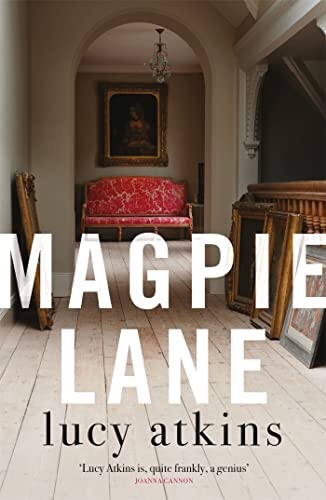
Magpie Lane by Lucy Atkins

One of my April reads is Lucy Atkins’s new novel Windmill Hill, so I thought it was a good opportunity to talk about one of her previous novels. I have been a fan since her very first novel The Missing One and we read it as a book club choice. I have enjoyed all Lucy Atkins other novels and it seems they get better and better. I enjoyed the character of Dee and became drawn in by her straight away. There’s a sense that she doesn’t really belong anywhere, but she is curiously at ease with who she is. Something of an outsider in Oxford, she doesn’t belong to any of the colleges but is one of those invisible people who provide services to those who do belong. Dee is a nanny and makes a very disturbing observation about the academics who use her services – when desperate, people will let a near stranger look after their child. The new master and his wife, Nick and Mariah, hire her after a chance meeting on a bridge early one morning and one hasty conversation. They do not ask for references or do a police check. If they had, they would have found that Dee has a criminal record. It is no coincidence that Mariah restores old wallpaper. She is adept at papering over cracks. She tells Dee that Felicity is selectively mute, that she met Nick after his wife died from a longstanding illness and that they both did everything to get Felicity talking again. There us a stifling atmosphere in the lodgings and the author carefully links the house with the people in it – with both there is a long history being erased and retold through renovation or retelling. Is the start of this couple’s relationship as simple as they portray? Mariah’s chirpy and wholesome exterior might, just like the new decor, hint at a darker, more murky interior world. The house’s history is slowly being unearthed by Linklater, a social historian hired by Nick. It shows how out of step these two characters might really be. Nick wants to disturb and discover the chequered past of their new home, while Mariah is whitewashing it. Linklater discovers family dramas, haunted occupants and a possible answer for the ‘priest’s hole’ in Felicity’s bedroom that may be even more malign than the original poisonous Victorian wallpaper.

Felicity isn’t just mute. She is a very distressed child, seemingly obedient but full of simmering anger and confusion. She roams the house while still asleep, makes patterns on the floor with her collection of bones and artefacts, and seems to be drawn by the ‘priest’s hole’ in the middle of the night. She slowly starts to speak to Dee, but also makes a surprising connection to Linklater when the three of them start to take tea together after school. They are a group of misfits, finding each other and developing trust. There seems to be a distinction made between those who appear genuinely themselves, however odd they may seem, and those who are putting on an act; a natural family forming where there is a forced family unit at home. It has to be significant that the one person Felicity never speaks to at all is Mariah. Dee becomes more than a passing childcare worker, she is deeply involved with this little girl. I like the way the author foreshadows this relationship as Dee sees Felicity for the first time and notices her curls, just like those of another child she once knew. Is this another nanny’s role or is she giving hints of a past we don’t know about? If Dee once had a family what happened to them? This is where we come to discussing Dee’s role as narrator and whether she is not as candid with us as she seems. I kept waiting for a terrible secret to emerge and for Dee’s reaction to being exposed. The tension is ratcheted up when we learn that Felicity has gone missing and the narrative passes back and forth between the present day and what has happened in these character’s pasts.

I enjoyed the ending, although I raced there a little too quickly. I was desperately hoping for a happy ending for both Felicity and Dee. Watching Mariah and Nick’s ‘perfect’ life completely implode was oddly satisfying. With her perfectly calm exterior ravaged by the birth of her first child, Mariah struggles to function normally and seems haunted by Felicity’s mother Ana. She starts to spend days in pyjamas while coping with a colicky baby and this break in her usually ordered world threatens to break her. I was left feeling that Nick and Mariah didn’t deserve Felicity, but was that what the narrator wanted me to feel. I was left wondering whether I’d been manipulated all along. As the police wondered and questioned, the reader does the same. Is Felicity as disturbed as Dee would have us believe? Or was Nick right in his assessment that it was Dee’s presence, her inability to sleep, her encouragement in discovering something supernatural and the constant buckets left in the kitchen to bleach animal skulls that are to blame? Finally, I liked the way maths was used as a theme in their interactions; Dee’s proof is an example of how something seemingly factual and definite can still be manipulated. A maths problem can have two correct answers. It simply has to be worked out differently. Which version do we trust? This is an intelligent, psychological, thriller that keeps you guessing long after reading, Lucy Atkins has done it again! A great read.

Meet the Author

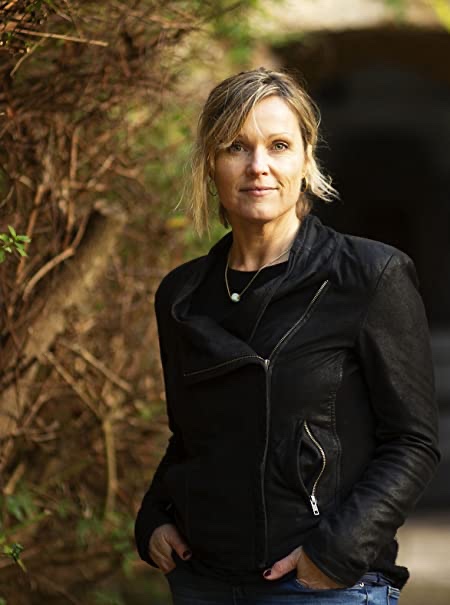
Lucy Atkins is an award-winning British author and journalist. Her latest novel, MAGPIE LANE, was picked as a ‘best book of 2020’ by BBC Radio 4’s Open Book, the GUARDIAN, the TELEGRAPH and GOOD HOUSEKEEPING MAGAZINE. Her other novels are: THE NIGHT VISITOR (which has been optioned for TV), THE MISSING ONE and THE OTHER CHILD. Lucy is book critic for The Sunday Times and has written for publications including the Guardian, the Telegraph, the Times, and many magazines. She teaches on the creative writing Masters degree at the University of Oxford. 

She has written several non-fiction books including the Amazon #1 parenting guide, FIRST TIME PARENT (Collins). 

For news, events and offers see http://www.lucyatkins.com

Follow Lucy on Twitter @lucyatkins Instagram @lucyatkinswriter

Posted in Netgalley, Publisher Proof

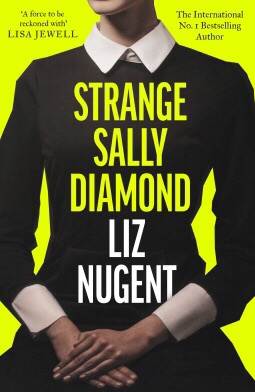
Strange Sally Diamond by Liz Nugent

The first thing I have to say is ‘Wow! What an opening.’ I read the first page then went to find my other half so I could read it to him. He’s one of those people who say ‘just chuck me in a bin bag’ so I thought he’d love it too. Of course it’s horrifying, but I also found it blackly comic and with Irish ancestors myself I can honestly say it’s an Irish trait. We laugh at the story of Mother – my great-grandmother – putting her head in the oven and wondering why it was taking too long. Slowly realising it was an electric oven. Tragic, horrifying, but hilarious at the same time. I felt this all the way through the story of Sally Diamond, a young woman having to negotiate a new life after the death of her incredibly protective father. He was an academic doctor and it turns out Sally was his subject. He leaves Sally letters to read after his death to give her all the information about what to do next. However, Sally can be very literal and by carrying out his verbal wishes to be in a bin bag, it turns out she may have committed a crime. Luckily family friend and GP Angela comes to the rescue, explaining to the police that Sally is ‘different’ she’s been sheltered and her childhood before her adoption was very traumatic. In fact her father left specific instructions in his letters, but as Sally points out he should have labelled the envelope ‘open this as soon as I’ve died’. Sally learns that she was born in terrible circumstances and it’s only chance that saved her. How will Sally cope with the detailed news about her past and how will she integrate into the community and learn how to manage by herself?

I found Sally rather endearing, despite her tendency to ask personal questions and disappearing to play the piano when things get too much. Sally knows that her mother died, in fact she committed suicide after their escape. Sally was born Mary Norton, in a locked extension attached to the home of Connor Geary and his son. Sally’s mother was abducted by Geary and brought back to the specially built annex where he chained her to the radiator. Denise Norton was subjected to all forms of abuse and violence and gave birth to her daughter in captivity. They were only found when a burglar broke into the house and Denise shouted to him ‘I am Denise Norton’ over and over, in the hope he’d tell the authorities. Sally doesn’t remember anything about her earliest years, but when she’s sent a grubby, old teddy in the post she knows instinctively that he’s hers. Sally was adopted by the husband and wife psychologist team who were treating her and her mother after they left hospital. After a short space of time, it became clear that Denise would not recover well and it was decided that in order for her to develop, Mary must be removed from her mother. Tragically, as soon as this happened, Denise committed suicide. Ever since, and with the new name Sally, she has lived an isolated rural life in Ireland. Sally has her quirks: she asks deeply personal questions; she would tear out her hair if upset; she could be extremely violent. As we followed Sally’s journey it started to feel really uplifting and I was so happy for her, finding the ability to live a fuller life would be a real happy ending to the story.

Then the book changes and we’re listening to a boy called Peter from New Zealand, having emigrated from Ireland. I found Peter’s father terrifying, he is a misogynist and incredibly controlling to the extent of telling his son he has a rare disease that means he can’t touch other people. This lie will have terrible consequences, when Peter tries to make connections with others. Slowly a terrifying story emerges about their home in Ireland and the ghost who lived through the wall. Sometimes he’d hear the shrieks and moans from that room. When Peter was left to be looked after by the ghost, something terrible happened and the trauma has stayed with him for life. I felt so moved by Peter’s story, but terrified by what he could become. I felt as if the loss of his friend Rangi that was the turning point. Peter can also be extremely violent and even though he is assailed by guilt afterwards, the damage is done. I hoped and hoped for a point of redemption for him. When his father starts to build a barn and look for another victim he has no choice but to be complicit. If something happened to his father, would he able to come clean and let them victim go? Does he ever wonder about what happened to his mother’s family in Ireland?

I was hoping that these two damaged people would get to meet each other. Both of them need family and a sense of where they’re from, even when the truth is awful to comprehend. The author has such a talent for playing with the reader’s emotions, letting us feel for a character then finding out they’ve done something terrible or making us feel sorry for a character we dislike, because of something they’ve experienced. Her characters are always complicated and flawed, but this was the next level. I loved watching Sally start to thrive with the support of those around her. She uses the money she inherits to renovate a cottage closer to the village. She starts to build relationships with her dad’s sister Aunt Christine and her Uncle Mark too. The high point is a lovely party at Sally’s cottage with a bouncy castle for the kids, which she is even persuaded to try herself. Then a stranger from New Zealand turns up at her door and I was riveted to the story from then on to see how this will affect Sally. Can two damaged people console and support each other, or will they drag each other down? We are about to witness the difference of growing up on opposite sides of the wall. This was a fascinating novel, especially if you love psychological thrillers and studying how someone’s start in life contributes to the person they are. I was also fascinated with the idea that those who heal can also hurt. When your adopted child is also your subject, your academic reputation and possibly even your funding, lines become blurred. I desperately wanted a happy ending for Sally because she’d made so much progress but can so much trauma ever be left behind? The author created a character that I was so emotionally invested in, she will definitely stay with me. She’s so complex and nuanced that she felt completely real to me. The book is incredible and is up there with my top reads of this year, it’s one of those that will keep coming back to me until eventually I grab it from the shelf and read it again.

Meet the Author

Liz was born in Dublin in 1967, where she now lives. She has written successfully for soap opera, radio drama, television plays, short stories and animation for children.

Liz’s first novel Unravelling Oliver was published to critical and popular acclaim in March 2014. It quickly became a firm favourite with book clubs and reader’s groups. In November of that year, it went on to win the Ireland AM Crime Novel of the Year at the Bord Gais Energy Book Awards and was long listed for the International Dublin Literature Prize 2016. She was also the winner of the inaugural Jack Harte Bursary provided by the Irish Writers Centre and the Tyrone Guthrie Centre in Dec 2014. Her second novel, Lying in Wait, was published in July 2016 and went straight to number 1 where it remained for seven weeks. Liz won the Monaco Bursary from the Ireland Funds and was Writer in Residence at the Princess Grace Irish Library in Monaco in Sept/Oct 2016. In Nov 2016, Lying in Wait won the prestigious RTE Ryan Tubridy Listener’s Choice prize at the Irish Book Awards.

Aside from writing, Liz has led workshops in writing drama for broadcast, she has produced and managed literary salons and curated literary strands of Arts Festivals. She regularly does public interviews and panel discussions on all aspects of her writing.

Posted in Netgalley

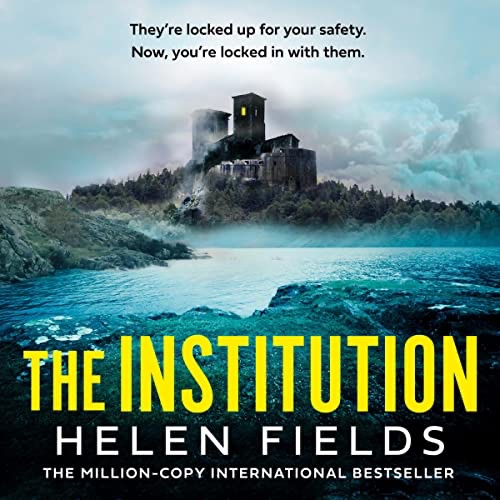
The Institution by Helen Fields.

I was eager to read this having loved her previous novel The Last Girl To Die, so I’ve felt very lucky to be granted early access to it on NetGalley. Our heroine is Dr. Connie Woolwine, a behaviourist and profiler rather than a psychiatrist, she works privately alongside her investigator Brodie. She has access to The Institution to look for a killer within the high security wing. Housed in one of the towers, the wing is known as ‘heaven’ and has six inmates, all of whom are either serial or spree killers. Her cover story is an unusual one. Brodie will go deep undercover as a potential inmate, with Connie as his current therapist. Brodie has been in the millitary and suffers from PTSD amongst other issues, so Connie is there to assess the ward, meet the inmates and decide whether it’s the best place for Brodie to be treated. The truth is a lot more gruesome. A nurse from the ward has been found dead on one of it’s treatment rooms. Tara was restrained and had a rudimentary caesarean performed on her, but was then left to bleed to death. The baby has not been found and the killer could only have been on the unit. With a grieving family waiting for a ransom demand, staff and inmates at the unit have been given a different story about this well-liked member of staff. They are told that Tara will be resting at home for the final stages of her pregnancy. Now Connie is on the clock, desperately trying to find baby Aurora and which one of the killers could have murdered the ward’s most popular nurse in such a brutal way.

Connie seems maverick, with strange methods such as talking to, sniffing and touching Tara’s body. She’s an unusual narrator because I didn’t always feel sure of her. We find out that when she was a young woman she was admitted to a mental health unit after an accident left her mute and doctors couldn’t find a physical cause. She was given ECT and treated by psychiatrists until a new doctor decided to re-scan her brain and found a previously hidden blood clot. Once removed, Connie could speak again. This experience has left it’s mark and it seems very important to her, even when self-disclosing to a patient, that they know she wasn’t really mentally unwell. We’re mainly in Connie’s world with interspersed short chapters on an assessment session, each subject’s name as the title. These sections read like session notes and give us Connie’s views of each inmate. Rubio for example, acts like a baby and wants to be cuddled and nursed. He gave me the creeps, especially when he’s wearing a nappy. The Professor is more on Connie’s level intellectually, but acts very superior. I didn’t feel that the sessions were helping me understand who might have done this. In fact I think I learned more about Connie than the patients. In the meantime, poor Brodie is living with these inmates and has gone through being sedated and restrained by staff. The staff are incredibly suspicious, with orderlies who enjoy their power too much, nurses who seem to resent Connie’s presence and a male doctor who makes a pass at her almost immediately. I kept wondering who would choose to work here, in such a dangerous and bleak place?

I felt it was clever to keep the reader questioning Connie and it wasn’t just her inner world that worried me. There were points in the story where her instincts really concerned me, such as going off alone to very remote places in the building and on the grounds. There was also a major flaw in the plan, in that her investigator is so confined by his role as a patient he can only observe. This really does leave Connie to take on the more dangerous part of physically investigating, but as she’s untrained for this role and potentially more easily overpowered, it left me feeling on edge. Also someone who is thinking ahead of her could use her seemingly erratic behaviour and appearance to make her worst fears comes true. The tension is unrelenting and nowhere is safe, including rooms that have a lock! The claustrophobia is intense and works like a set of Chinese boxes: from the location and the effects of the storm, the compound, the locked building, the high security tower within the whole institution, all the way down to the treatment room and it’s restraints. These layers of confinement did make me uncomfortable and when a character is further confined with drugs or the threat of ECT, it brings it home how powerless patients and the murder victim were. These layers also emphasise the brutality about drugging someone and stealing a baby from the ultimate place of safety, their mother’s womb.

There is a strange fascination in hearing about the inmate’s crimes, mainly because they seem so at odds with the men we encounter through Connie. Her sessions feel slightly strange from a therapy perspective, but of course Connie is not really there to engage in a therapeutic relationship. Unknown to them and the staff, she’s using the session to assess whether they’re behind the crime and I was interested in the ethics of this approach. As disaster strikes and the ward has to be evacuated, the tension jumps up a level with men who are usually in their cells now roaming free. For those left on the ward it becomes a fight for survival, with only a basic knowledge of the inmates to inform them about which ones can be trusted and those who must be avoided. This was an exciting end to the novel and really did keep me gripped to the bitter end, waiting for the perpetrator to admit their role in the murder and kidnap plot. I was biting my nails, worried that Connie wouldn’t find baby Aurora before it was too late. This was an intelligent thriller, full of tension and unexpected twists and turns. It’s cemented my suspicion that Helen Fields really is a must-buy author.

Meet the Author

An international and Amazon #1 best-selling author, Helen is a former criminal and family law barrister. Every book in the Callanach series has claimed an Amazon #1 bestseller flag. ‘Perfect Kill’ was longlisted for the Crime Writers Association Ian Fleming Steel Dagger in 2020, and others have been longlisted for the McIlvanney Prize, Scottish crime novel of the year. Helen also writes as HS Chandler, and has released legal thriller ‘Degrees of Guilt’. In 2020 Perfect Remains was shortlisted for the Bronze Bat, Dutch debut crime novel of the year. In 2022, Helen was nominated for Best Crime Novel and Best Author in the Netherlands. Now translated into more than 20 languages, and also selling in the USA, Canada & Australasia, Helen’s books have won global recognition. She has written standalone novels, The Last Girl To Die, These Lost & Broken Things and The Shadow Man. Her first UK hardback, The Institution, comes out in March 2022. She regularly commutes between West Sussex, USA and Scotland. She lives with her husband and three children. Helen can be found on Twitter @Helen_Fields for up to date news and information or at http://www.helenfields.co.uk.

Posted in Netgalley

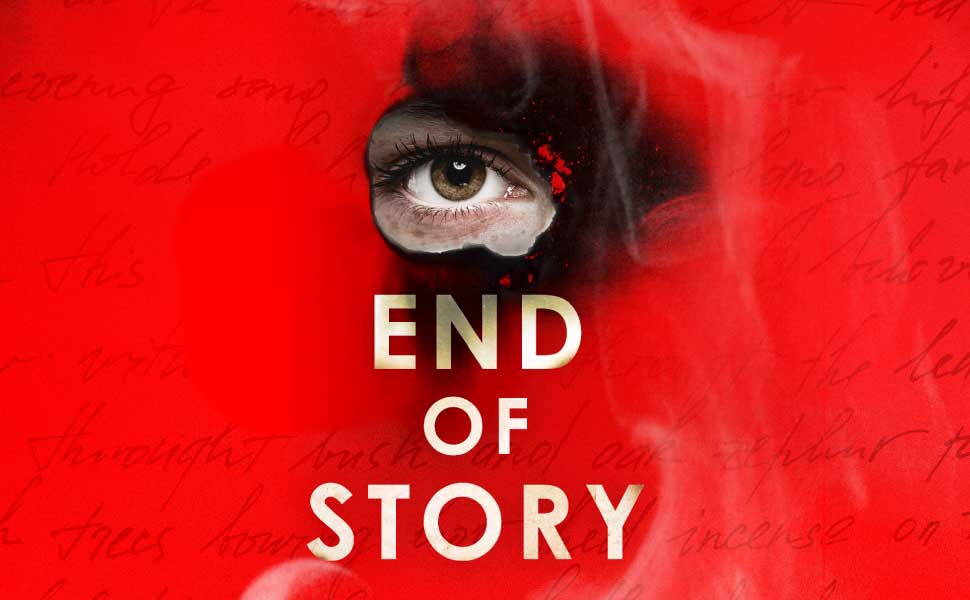
End of Story by Louise Swanson

There are times when I think I could write a book. Why not? I have a first in English and I’ve been reading voraciously since I was 5. I have even started a memoir. Surely I could do it. They say everyone has a book in them don’t they? Then I read this. This astounding, raw, unflinching and inspirationally creative novel is proof that some of us were born to write. This book, is quite simply astonishing.

I can’t write much about the content of the book without ruining it for others and that’s the last thing I want to do, So I’ll tread carefully…

Our narrator Fern Dostoy is a writer, one of the ‘big four’ novelists of the not too distant future. This is a future where the Anti-Fiction Movement’s campaign to have all fiction banned has been successful. It was Fern’s third novel, Technological Amazingness, that was cited as a dangerous fiction likely to mislead and possibly incite dissent in it’s readers. She had created a dystopian future where two major policies were being adopted as standard practice. To avoid poor surgical outcomes, only patients who are dead can have an operation. Secondly, every so often, families would be called upon to nominate one family member for euthanasia – leading to the deaths of thousands of elderly and disabled people. All fiction authors, including Fern, are banned from writing and the only books on sale are non-fiction. The message is that fiction is bad for you, it lies to the reader giving them misleading ideas about the world and how it’s run. Facts are safe. AllBooks dominated the market for books until it became the only bookshop left, state sanctioned of course and only selling non-fiction. From time to time they hold a book amnesty where people can take their old, hidden novels to be pulped. Fern now cleans at a hospital and receives unannounced home visits from compliance officers who question her and search her house to ensure she’s not writing. Added to this dystopian nightmare are a door to door tea salesman, an underground bedtime story organisation, a mysterious appearing and disappearing blue and white trainer, re-education camps for non-compliant writers and a boy called Hunter. All the time I was reading about this terrible new world, I was taking in the details. and trying to imagine living in it.

Yet there was a little voice in the back of my mind telling me this wasn’t the real story. I’d figured that out, even though I was confused, this was one of those books where it would all come together and I would understand. I had strange feelings of anger and frustration with the narrative, not because it isn’t brilliantly and vividly brought to life, but because I could sense something else going on underneath. I couldn’t quite get to the bottom of it. As the pressure built and the compliance officers started to push Fern into telling the truth, I inexplicably felt a lump building in my throat. I’d no idea why I was feeling so choked up. I read the final third with tears streaming down my cheeks, followed by full-on sobbing. I hadn’t known my emotions were so engaged with Fern’s story until my husband came home and I couldn’t even speak to explain why I was crying. It was like I’d known this was where the story was going all along.

I want to say thank you to Louise. Thank you for this incredible book and the emotions it unleashed. I can’t even say why the book had this effect on me without ruining it. This is a real work of genius. It shows us how strong our minds can be at protecting us from things we don’t want to face. I understood Fern and her story moved me deeply. This is, without doubt, a contender for book of the year and an unparalleled look at allowing ourselves to be vulnerable and open; to be human. This is an incredibly powerful novel about storytelling, creativity, grief and fear. It also asks the question: who are we when everything that defines who we are, is taken away?

Published by Hodder and Stoughton 23rd March 2023.

Meet The Author

Louise Swanson is the pen-name of bestselling author Louise Beech, who has published seven novels with Orenda Books. Her work has previously been longlisted for the Not the Booker and Polari prizes and shortlisted for the Romantic Novel awards. She also won Best’s Book of the Year with her 2019 psychological thriller CALL ME STAR GIRL. Aside from being a novelist, she regularly writes travel pieces for the Hull Daily Mail, where she was a columnist for ten years. She also recently worked as the Front of House for the Hull Truck Theatre.

Louise Swanson’s debut End of Story arrives in March 2023. She wrote the book during the final lockdown of 2020, following a family tragedy, finding refuge in the fiction she created. The themes of the book – grief, isolation, love of the arts, the power of storytelling – came from a very real place. Swanson, a mother of two who lives in East Yorkshire with her husband, regularly blogs, talks at events, and is a huge advocate of openly discussing mental health and suicide.

Her memoir, Daffodils, was released in audiobook in 2022, and the paperback version, Eighteen Seconds, will be out April 2023.She blogs regularly on louisebeech.co.uk, and is on Twitter under the name @LouiseWriter.

Posted in Netgalley

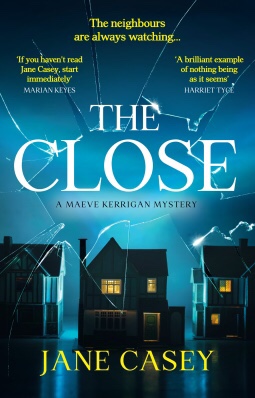
The Close by Jane Casey. A Maeve Kerrigan Mystery.

I absolutely loved being back in the world of Maeve Kerrigan. So much so I read this straight through in one day. The set up was brilliant – a modern slavery racket is suspected and Maeve must get close to one of the conspirators, an unlikely criminal. The mayor of London’s assistant has brought a sad case to their attention. A young man called Davey who died after suffering neglect, starvation and physical abuse. He was the perfect target for slavery, an easily influenced man with learning disabilities but physically strong and capable. Strangely, there have been other young men go missing from the system after using the same address, that of an elderly lady in a normal suburban close. There needs to be close surveillance so Una Burt puts her best officers on it, Maeve must move into the close with Josh Derwent as her boyfriend, pretending to dog sit for the usual occupant. Josh thinks Maeve needs a break from her normal routine, because after the court case convicting her partner of domestic abuse Maeve has been drifting and not herself at all. Similarly, Maeve thinks Josh could do with a break away from his live in girlfriend Melissa. How will they fare as a couple on the close and will they be able to flush out the conspirators in the slavery case?

I loved the tension between Derwent and Maeve in this story, close together in the house and away from all their usual distractions it brings their chemistry into focus. Every time they behaved like a couple it felt completely natural, until it was imagining them going back to colleagues was unthinkable. They have had so many obstacles in their time as friends, always something preventing them from becoming more, so could this be the perfect timing? At times the tension in their house was more unbearable than the tension in the case! There are parts of Derwent that I don’t like, but I can see ways in which he’d be good for Maeve and vice versa. They ingratiate themselves with the neighbours easily because they sense this chemistry, they seem like a real couple. The elderly lady in question is tricky, seemingly an innocent and kindly woman but if she is involved with mistreating these men, her kindness is all a front. She reveals that she does provide a bed for young men with disabilities from time to time, but doesn’t elaborate on whether it’s an official arrangement. When Maeve discovers there’s a oreviously unknown son, whose wife runs a care home, the chain starts to come together. However this isn’t the only crime lurking under the respectability of suburbia. The author uses short chapters narrated by a man who is very unpleasant and possibly dangerous. He lurks after dark watching through the windows of those who don’t close their curtains, even Josh and Maeve. He has a very incel vibe, so could he be a lone male with little female attention and experience, or is he hiding his feelings about women under the veneer of a happy family man?

I enjoyed watching these people through Maeve’s eyes as her instincts are usually spot on and her insight seems to be coming back to her as the novel continues. This break is exactly what she needed. Her interactions with a lady with dementia in the close are brilliant because Maeve doesn’t dismiss what she claims to have seen just because of her illness. Maeve knows there are moments of lucidity and keeps thinking about what she’s said and trying to interpret it. When she goes missing in the dark Maeve is desperate to find her, but so is our unknown man and it’s a real heart pounding part of the book, hoping against hope that Maeve gets to her first. It’s clear that this seemingly happy and respectable close is anything but, with the men hiding all sorts from irritating foibles to murder. Towards the end I was powering through the pages to find out who was hurting girls in the close, whether Maeve’s fire and copper’s instinct was returning, but also whether Josh and aMaeve were going to confront their feelings for each other. This was an addictive thriller, focusing on one of my favourite fictional police duos and I loved seeing them in a different environment, but still flushing out crime.

Published by Harper Collins 2nd March

Meet The Author

Jane Casey is a bestselling crime writer who was born and brought up in Dublin. A former editor, she has written twelve crime novels for adults (including ten in the Maeve Kerrigan series) and three for teenagers (the Jess Tennant series). Her books have been international bestsellers, critically acclaimed for their realism and accuracy. The Maeve Kerrigan series has been nominated for many awards: in 2015 Jane won the Mary Higgins Clark Award for The Stranger You Know and Irish Crime Novel of the Year for After the Fire. In 2019, Cruel Acts was chosen as Irish Crime Novel of the Year at the Irish Book Awards. It was a Sunday Times bestseller. Stand-alone novel The Killing Kind was a Richard and Judy Book Club pick in 2021, and is currently being filmed for television. Jane lives in southwest London with her husband, who is a criminal barrister, and their two children.

Posted in Personal Purchase

Other Women by Emma Flint

It is 1923 and a country is in mourning. Thousands of husbands, fathers, sons and sweethearts were lost in the war, millions more returned home wounded and forever changed.

Beatrice Cade is an orphan, unmarried and childless. London is full of invisible women who struggle to find somewhere to work through their grief. But Bea is determined to make a new life for herself. She takes a room in a Bloomsbury ladies’ club and a job in the City. Just when her new world is taking shape, a fleeting encounter threatens to ruin everything.

Kate Ryan is an ordinary wife and mother. Following the end of the war, she has managed to build an enviable life with her husband and young daughter. To anyone looking in from the outside, they seem like a normal, happy family. But when two policemen knock on her door one morning and threaten to destroy the facade Kate has created, she knows what she has to do to protect the people she loves. And suddenly, two women who never should have met are connected for ever . . .

I can’t say enough great things about this incredible novel, but I’m going to try and do it justice. It’s a historical mystery, extraordinarily clever psychologically and made me think about feminism, sisterhood and the difference between what society expects women’s lives to look like and the life decisions we make for ourselves. Flint has told her story through the eyes of the Kate and Bea, two women who are strangers, but connected by one man. Bea was an orphan and is now an unmarried woman in her late thirties. She’s the book-keeper for a firm in London who has pretty much resigned herself to being a career girl and living in a woman’s hostel. All this changes when she meets the handsome and charming Tom Ryan, a salesman at her firm. Bea struggles to believe that this man, with his movie star looks, would be interested in a woman like her. She expects him to chat up the young women, who have noticed him and are giggling, but he makes a point of stopping at her desk. He comments on her name, telling her that Beatrice was the great love of a poet. Bea is smitten and agrees to meet him, despite the fact that he is married. She is mentally aware of his wife’s presence, the third person always standing between them. Despite this, will Bea allow herself to succumb to Tom’s advances and can it end any other way but heartbreak or disaster?

Flint’s setting is vitally important to this story. We can draw parallels between contemporary women and these two characters, but they are also very much products of their time. This is a post-war Britain and everything has been changed by a war so terrible it is known as the Great War. Men have come home destroyed by what they’ve experienced physically and mentally.

‘There were empty sleeves and eye patches that one must not stare at or draw attention to; there were crutches and bandages and dreadful ridges of thick pink skin; and sometimes there was simply an absence in a face where a man had left a part of himself – the brightest and most vital part – in a muddy foreign field.’

Whereas women could be said to have flourished. Yes, there’s the ever present weight of grief and loss, but some of the changes in women’s lives had been positive. Both Kate and Bea are working women, and represent the many women who became wage earners during the Great War, plugging the gap in the employment market as more men joined up to fight. This was liberating for many women, who were then reluctant to move back to the domestic sphere after the war. There were also a shortage of men in the marriage market, some women had lost their fiancé or husband but there were others who came of age just after WW1 for whom eligible men were scarce. Having the option of throwing themselves into an absorbing career instead proved very fulfilling for some, like Morley’s office manager who clearly expected Bea to be left on the shelf and had marked her out as a potential replacement. Women being outside the domestic sphere meant that the pre-war rigid barriers of social class started to be breached. Different classes of people mingled in work places and matches that would have been impossible a few years before became more common. Bea still longs for love, but as her personal life becomes complicated and painful she does muse on what she has lost. As a single working woman she had women friends and lived in a vibrant city where she could take herself to the theatre, to a museum or for tea with friends. Now that she can see the reality of a relationship, she wonders was she better off before?

Bea knows there is a difference between herself and the girls who have young men to wait for. These are carefree girls, full of life, ‘neat and slender – sleek hair, dainty ankles, flickering glances and quicksilver laughter.’ She’s of a different sort, in looks and class. Where her married sister Jane looks on career girls as modern, smart and fashionable Bea looks a little closer and sees

frizzed modern hairstyles that they’d seen in advertisements and that didn’t suit them; women with lines around their eyes that no amount of cream or powder would cover. And women who, despite the well-cut clothes, had red rough hands and nails cut to the quick.’

Bea is well aware she is plain and there are references to Jane Eyre in the way she sees herself. After talking to Tom, she sees herself in the bathroom mirror and is shocked at the difference between her tumultuous, rich inner life and this pale, plain outside. She feels such overwhelming emotions that she disassociates from her rather normal body; ‘how can all these feelings come out of this plain face and body?’ It immediately took me to the conversation between Jane and Rochester when she challenges him for underestimating her:

‘Do you think, because I am poor, obscure, plain, and little, I am soulless and heartless? You think wrong! I have as much soul as you, and full as much heart!…’

In fact Tom uses the comparison to flatter her, praising her strength and courage in living such a lonely life. Patronised by her sister too, she is full of anger inside and expresses the creeping fear that not only is she without a husband, she’s noticed younger, smarter girls starting to come into the workplace. Bright, young things who might be better at her job and quicker. She admits to being afraid of the day when the axe falls, her clothes become shabbier and she gets more desperate. Yet is it any better to be at the mercy of a man? As Kate’s story unfolds we can see that the state of being a wife, is just as unstable and scary, because where Bea has all the responsibility and makes decisions for herself Kate is powerless, entirely dependent on the whims of her husband. A husband who is capable of terrible things. The more Kate starts to learn about her husband, tiny jigsaw pieces start to slot together in her head. She has to admit to herself that she has always known there was something hidden underneath:

‘Hadn’t I known – hadn’t I always known – that he had something terrible inside him, something that lay rotting under the smooth surface of our normal life? I saw glimpses of it sometimes. I thought of his face as he persuaded me, sweet-talked me, into doing things I did not want to do. I thought of how dirty, how shamed, I felt afterwards.’

Set in the 1920’s, this story is based on the true case of Emily Kaye and her married lover Herbert Mahon. The novel’s aim was to give voice to Mahon’s wife and so Kate’s voice came to life, creating a brilliant interplay between her narration and Bea’s. I loved how well the pace was controlled, from relatively slow at the beginning to a breakneck pace towards the end as Kate makes sense of what has happened and holds the key to solve the mystery. I loved how the author showed us the truth of contemporary attitudes to women, that a man can do something terrible, but it will always be the woman’s fault. How Bea is simply disregarded as shameless, getting old and desperate, brazen and responsible for enticing Tom, despite him being married. It’s quite shocking, but then when I thought about our tabloid’s attitudes to women, I realised that women are judged every day for their appearance, their sexuality, their life choices and if ever there is a marital affair in the papers the ‘other woman’ is always blamed. It’s scary to think how little some people’s attitudes have changed, but thank goodness we can earn for ourselves, own property and have bank accounts. I loved the sense of sisterhood the author brings into the story and it made me think about how it’s the women in my life who have held me up when I couldn’t manage alone. I was on tenterhooks wondering whether Kate would realise that to choose the sisterhood is to change things for her own daughter. To make a decision towards a better world for women. This book was a brilliant piece of historical fiction, an addictive mystery that stirred up the emotions and had me completely hooked. As soon as I’d finished, I wanted to read it again.

Published by Picador 23rd February 2023

Meet The Author

Emma Flint was born and grew up in Newcastle upon Tyne. She graduated from the University of St Andrews with an MA in English Language and Literature, and later completed a novel-writing course at the Faber Academy. She lives and works in London.

Since childhood, she has been drawn to true-crime stories, developing an encyclopaedic knowledge of real-life murder cases from the early 20th century. Her first novel, Little Deaths, was longlisted for the Women’s Prize for Fiction, for the Desmond Elliott Prize, for the Crime Writers’ Association Gold Dagger Award, and for The Guardian’s Not the Booker Prize.

Other Women is her second novel.

Posted in Orenda, Publisher Proof

Beautiful Shining People by Michael Grothaus

I don’t tend to read a lot of science fiction and dystopian novels, often because I find them depressing and life is tough enough at the moment. I often I feel as if the author has become so carried away with world building that they forget the human element of their story. Almost like watching one of those films where the special effects are amazing, but the characters and their dialogue is an afterthought leaving me with an empty feeling. This book sounded intriguing though and once I started reading it I was completely blown away. This is science fiction with a heart and a lot to say about the human experience. Our narrator John is an awkward 17 year old, from a dysfunctional family and with deeply personal body issues. He also happens to be a coding genius, talented in quantum code and greatly in demand by tech companies. He is spending some time in Tokyo while signing a deal with Sony and comes across a small cafe that offers ear cleaning. Inside he finds a huge Japanese man working behind the counter, a quirky dog with a spherical head and his owner, a pretty and rather enigmatic young girl called Neotnia. This chance meeting develops into an incredible journey that will take them from the neon city of Tokyo, to the tragic past of Hiroshima and finally the beautiful mountains of Nagano.

Michael Grothaus also takes us on a journey of genre, starting the novel with a chilled travelogue style, interwoven with a tender story of first love, via body shame and finally becoming a dystopian thriller. The author knows how to build a world that feels dislocated and distant from us with just one simple sentence, such as the description of the night sky with three objects visible from earth. The moon’s light picks out the twin space stations being built by the world’s two superpowers; China and the USA. The author’s journalism background and research into the world of fake video production has helped in creating a believable and brilliant backdrop of warring superpowers in a daily information war. ‘Deep Fake’ videos are used to produce fake news, meaning people must question, not just everything they read, but everything they see. Warfare has become a barrage of misinformation and cyber attacks, at their worst disrupting every aspect of daily life. He also weaves in social issues that are already evident worldwide for us, such as the rapidly ageing population in Japan. People are now routinely living into their nineties, but need care for longer and there simply aren’t enough young people to pay for or provide the care needed. This is a world that’s ours, but not as we know it. I loved how I would be relaxing in a park, looking at a familiar landscape of trees and pagodas and then I’d be blindsided by a tourist information bot. When the group all go on a car journey I couldn’t work out who was driving; the answer was no one. Often I didn’t know where we were going next but I was so bewitched by his writing that I’d have followed him anywhere.

I loved the relationship that builds slowly between Neotnia and John. She has a quiet, calming manner that seems to soothe him and a caring nature that John has never really experienced before. They seem to connect on a deep level very quickly, but there are people around her who are very protective. Goeido is a disgraced sumo wrestler and owns the cafe where Neotnia both lives and works. He doesn’t speak much, but John is aware of his concern because of the barely concealed scowling and head shaking. Neotnia takes John to a nursing home where she volunteers, to meet an elderly American man she has a friendship with. John enjoys meeting him, but also gets a feeling this meeting was some sort of test. Why are these men so protective of her? His relationship with Goeido only improves when they drink sake together and next morning John wakes up still in the booth where they had dinner. They seem to have connected, but John is very confused by a disturbing dream involving a bath and a toaster! Despite this John and Neotnia’s relationship does deepen and I was so drawn into their tender love story. There is something they’re both hiding and strangely it’s the biggest thing they have in common. Then comes the massive twist that I really didn’t see coming. The clues are there but the idea is so fantastical it’s quickly dismissed.

The beautiful backdrop of Japan really brought the place alive for me and made me think deeply about some aspects of it’s history. The city of Tokyo is wonderfully varied with it’s neon signs, bubblegum fashions, restful gardens and kamii shrines dotted everywhere. I learned more about Japanese belief systems, the differences between Buddhism and those who believe in kamii. The history around Hiroshima was so devastating, as was the knowledge that any advance in science seems to be harnessed for the purposes of war. The full impact of the bomb on the population of Hiroshima was devastating as the author tells us about those damaged by the blast, but left with terrible injuries. That complete change of abilities, identity and living standards could be seen as a more terrible end than those at the bomb’s epicentre who were simply vaporised. I loved how philosophies of life were discussed too. In conversation with Neotnia, John explains that her age group’s concerns and anxieties about the space stations and cyber attacks haven’t affected younger generations because they’ve never known anything different. This is probably something we’ve all experienced and it’s interesting to think that a small child now will grow up with the cost of living, climate change and hybrid vehicles as their norm. Whereas someone like me who has lived half their life really feels the changes and is more likely to find them unsettling. I found the end so emotional and I was moved by John’s thought that the common thread of humanity is suffering. It’s something I’ve thought about a lot, both in my personal life and in my therapy work. My brother says that I think everyone needs counselling, because I’m a therapist. I always reply that everybody needs counselling at some point in their life. Yet, John’s experience makes him rethink his original statement and this took me from heartbreak to a glimpse of hope. This is a beautifully written story that’s definitely science fiction, but is also a deeply felt love story about difference and human connection. If this isn’t your usual genre, please give it a go. I’m so glad that I did.

Published by Orenda 16th March 2023.

Meet The Author

Michael Grothaus is a novelist, journalist and author of non-fiction. His writing has appeared in Fast Company, VICE, Guardian, Litro Magazine, Irish Times, Screen, Quartz and others. His debut novel, Epiphany Jones, a story about sex trafficking among the Hollywood elite, was longlisted for the CWA John Creasey (New Blood) Dagger and named one of the 25 ‘Most Irresistible Hollywood Novels’ by Entertainment Weekly. His first non-fiction book, Trust No One: Inside the World of Deepfakes was published by Hodder & Stoughton in 2021. The book examines the human impact that artificially generated video will have on individuals and society in the years to come. Michael is American..

Posted in Random Things Tours

All The Little Bird Hearts by Viktoria Lloyd-Barlow

What an intricately beautiful and nuanced novel this is! I had expected a story along the same lines as Eleanor Oliphant Is Completely Fine or Meredith Alone at first. The beautiful aesthetics of the setting and glamorous lifestyle dazzle us and everything on the surface seems benign as Sunday and her daughter Dolly start a relationship with their new neighbours. Vita is aristocratic in her manner and comes across as a likeable eccentric, perhaps a little pretentious but as my friend Nigel used to say, ‘a little bit of pretension doesn’t hurt anyone’. They love- bomb Sunday and her daughter with gifts and elaborate Friday night dinners. Vita and her husband Rollo are staying in the house next door while ‘Rols’ completes a plan to buy and convert a large institution for children in care nearby. Until this glamorous pair enter their lives, Sunday and Dolly lead a very quiet life. Divorced from Dolly’s father, they still live in a house on his family estate where Sunday works in the gardens. Sunday isn’t great with noise (especially several at once) only eats white food and struggles to read between the lines with others. She gets on best with David who works in the greenhouses with her and uses sign language to communicate. Extremes of anything, cause panic in Sunday, so the slow rhythms of nature and it’s subtle colouring are perfect for her. Sunday didn’t even know anything was missing in her life until Vita wants to become her friend. However, is Vita a genuine friend or does she have an ulterior motive? This is where the slightness of the story and the details of glamorous clothes, extravagant dinners and endless champagne started to remind me of Virginia Woolf and her clever way of hiding so much beneath a beautiful surface. Instead of being an uplifting tale about someone who struggles to make connections finding a friend and embracing their peculiarities, this promised to be something darker.

I felt a kinship with Sunday immediately and the tone is light at first as she meets new neighbour Vita and her comical little dog Beast. Vita is one of those people who never question themselves or worry about their interactions with others. She simply inserts herself into Sunday’s life, without any of the social angst over whether she’s wanted there. Vita and her husband Rollo are dazzling and disarming, from the clothes they wear to the hyperbole in their speech and the very best delicacies on the dinner table, including the most exquisitely wrapped and coloured petit fours. They are disarming in the way they present themselves, classy but bohemian and often a touch of carelessness like sitting on the front step in a silk kimono and old work boots. Is this nonchalance studied or natural? Conversely, Sunday can’t be what she isn’t and her ‘quirks’ are not affectations. She has learned to be less, to mask and try to make herself acceptable from a young age thanks to a mother who never showed her love. She constantly proclaimed Sunday was an ‘it’, a ‘what’, an unsavoury puzzle to be solved. We learn that this animosity towards her daughter worsened when a terrible family tragedy occurred. I loved how the author layered the voices in Sunday’s head: her daughter explaining that her dad and stepmum love each other so much, it’s just that Sunday is incapable of seeing it; her mother saying ‘you’re not wired right you’; her sister saying ‘I don’t know what you are Sunday’. At first, the friendship of Vita and Rollo soothes Sunday’s soul, because she feels accepted. They always make sure white rolls are available at the dinner table, in case the main course is too colourful or complex for her. They also make sure there is champagne or soda water, because Sunday will only drink cold, fizzy liquids. These attentions are simply there, neither one of the couple mention them, but they mean the world to Sunday:

‘their attention to my preferences touched me. I had not been known in this way before and found acceptable. There I was seen and approved of, even indulged’.

At first, Dolly and Sunday would often stay late next door after dinner, but subtle changes start to occur. Dolly wants to stay over with Vita on Friday nights. One night, after leaving for home, Sunday returns with her daughter’s favourite pyjamas and hears music as well as laughter next door. Yet when Rollo answers the door, he holds it closed behind him as he takes the pyjamas. He is perfectly polite, but does not step back as he once might have done to let Sunday inside. These subtleties make the reader nervous and I felt worse because I wasn’t sure whether Sunday could see what I was seeing.

‘painted subjects are easier to read than their physical counterparts […] in real life the details I am drawn to are often secondary, and these often mislead. That evening when I looked at Vita, I saw her pretty hair, her little wrists wrapped in gold chains, and her welcoming smile. I did not notice the grip of her hand on my daughter’s arm’.

I wanted to put myself between Sunday and these charming people. She recalls jealousy, but was it because she envied Dolly’s easy relationship with Vita or was she jealous of Vita’s relationship with her daughter? The subtle foreshadowing becomes more direct as Dolly relates the story of Vita simply taking a friend’s baby for a walk without telling the mother. Vita seemingly could not understand why the woman was so scared or why the police were called. Slowly, Sunday understands that her new friend is possibly not what she seems, by using a system of observation and noting patterns of behaviour. Yet I was still worried that she might underestimate the extent of Vita’s ability to create chaos. Sunday describes her way of analysing people, to look beyond their ‘fleeting expressions’ to see the repeated pattern on their heart. She looks beyond what they say and instead values and interprets them based on their repeated behaviour. Yet with Vita she declares herself too scared to look, because she isn’t sure whether the tick tock of her heart signifies a clock or a bomb.

Dolly’s changes are also subtle at first, but Sunday notices a new confidence and self-possession that she is acquiring from time spent with their neighbours. Whereas once Dolly might have been reserved with new people, Vita unlocks the young girl who is soon easily pushed to near hysteria over a shared joke. This quantity of feeling makes Sunday uneasy. Yet surely this new ease in her daughter’s manner can only make life easier for Dolly? She won’t share Sunday’s fears and awkwardness. The coming summer heralds a rollercoaster of change and emotions, first Dolly’s accent becomes more cut glass and she starts to dress differently, more like Vita. As exams loom and the renovation of the children’s home comes closer, the couple offer Dolly a job helping out with admin and interior design. She announces she’d like to do it for the holidays, but Sunday reminds her she does not need to work. Her father and grandparents get her everything her heart desires. Yet Sunday feels churlish refusing the opportunity, torn between what is best for her daughter’s future. I felt that Dolly used her mum’s inexperience against her at times, claiming that there were simply so many uses for her on site, but Sunday could never imagine them, because she’s only ever known the farm. If she refuses Dolly’s request to spend time in London with them, will it make Vita and Rollo’s offer even more attractive?

Vita isn’t above manipulation herself : ‘I’m so sorry Dolly, you know we love taking you out. And we had such fun planned in London. But…’

Sunday doesn’t know whether she can or should deny her daughter these experiences. It might help her get on in life. Should she be supporting her daughter to reach for something different? Should she be holding her back? However, some base instinct urges her to say no, to ban the trip and keep Dolly home for the summer, knowing this could backfire completely if their offer is benign, nothing more than a favour for the daughter of their friend. Sunday hasn’t had close friends before so can’t compare the situation. When Dolly receives her exam results, the dam breaks and out comes a voice Sunday has never heard before from her daughter, one filled with scorn, shame and no appreciation for her mother’s years of caring attention. Dolly sees her mother’s life as a failure and she will do anything not to be like her. The author cleverly contrasts this awful evening with the story of a fox that arrived in Sunday’s garden, a little too thin and straggly. It made it’s home under their shed for the winter and every day without fail Sunday would set milk and dog food down. In the spring the fox was sleek and flourishing because of Sunday’s steady and dutiful nature.

One of the most heartbreaking revelations for me is Sunday’s slow realisation that others have quirks and oddities, but it is still possible for people to be fond of them. To love them even. She had always thought it simply a fact of life that anyone with quirks like hers would be impossible to love, but that’s not the truth:

‘My mother could still have loved me had she chosen to’.

To befriend someone who has experienced this trauma, to make them feel loved and accepted, but then manipulate them for your own ends is evil. Yet the author keeps the reader unsure whether that’s what Vita is doing an I was constantly waiting for this ticking time bomb of a woman to explode. Yet whatever the outcome, I wasn’t sure that Vita was consciously acting this way. Her behaviour felt like a repeated pattern, possibly an enactment of her own traumas. Rollo knows though and when the truth starts to emerge he is openly affectionate to Sunday. Instead of serving up the usual air kisses, this is a hug that’s more substantial and perhaps honest. Showing a remarkable insight into his wife’s nature he tells Sunday:

‘It’s not you, darling. It’s Vee I’m afraid. She doesn’t think these things through. It might all change again by tomorrow’.

Yet he is willing to let her continue, to collude in destroying others casually and without consequence. At the very least she will offer friendship and take it away on a whim. They will simply slip into another life, with all the security their money and status gives them. Like Nick and Daisy in The Great Gatsby, Vita and Rollo are careless with other people, content to use others and leave them behind. Yet there are threads of hope in the conclusion, not least in Sunday’s ability to reflect on her own actions and feelings with more awareness. This novel is stunning, beautifully written and has such psychological complexity and insight. I loved it.

Meet the Author

Viktoria Lloyd-Barlow has a PhD in Creative Writing from the University of Kent. Like her protagonist, Sunday, in ALL THE LITTLE BIRD-HEARTS, Viktoria is autistic. She has presented her doctoral research internationally, most recently speaking at Harvard University on autism and literary narrative. Viktoria lives with her husband and children on the Kent coast.

Posted in Netgalley

Cut Adrift by Jane Jesmond.

I really enjoyed our first outing with Jenifry (Jen) Shaw so I jumped at the chance to read the second outing for this daring and independent woman. Jen is taking time off to go climbing and has chosen Alajar, Spain as her destination, drawn in by a mysterious postcard showing a bar with decorative cork tiles on the ceiling. We met the shadowy undercover police officer Nick back in Cornwall and in the brief time they met their combined skills kept each other alive. There was also a connection between them that couldn’t be explored due to Nick being pulled straight back into another case. So when the postcard arrives with ‘wish you were here’ as the only message, Jen decides to take a chance and find the bar hoping this might be the right time to connect properly. Their time is limited though and it’s not long before Nick is off on another case. Jen does have a family issue to sort out though. Her brother has called in a panic to say that their father is planning to sell the family farm in Cornwall and the only person who can stop him is their mother. As usual their mother is elsewhere and not easy to contact, apparently teaching yoga to refugees in Malta. Jen takes advantage of Nick’s absence to fly to Malta in the hope of explaining to her mother what she needs to do to save the farmhouse where Jen and her brother grew up.

When Jen arrives though, her mother seems to be in the middle of a crisis with a family of refugees. The mother Nahla is an old friend of Morwenna’s and she’s with her two children Aya and Rania in a state of distress. This links back to a heart stopping prologue where we see that Nahla’s husband has been killed in Libya and the family have fled the country in a boat bound for Malta. Aya is so traumatised that she’s silent and both Rania and her mother are displaced and shellshocked by their experience. Now they’re forced into a refugee camp where disease, crime and trafficking are rife and no one can be trusted. Jen knows her mother and there’s no point trying to bring Morwenna’s mind back to home when she’s on a crusade. Jen’s now committed to helping Morwenna bring her friend and her daughters out of the refugee camp and settle them into a new home. The story is both heart stopping and heart rending. The author knows exactly how to pace her story with thrilling, fast paced set pieces followed by periods of calm that gave me chance to breath and think about what’s just happened. The scene with the fire in the clinic on the refugee camp had me gritting my teeth with anxiety, as Jen desperately tries to save those inside through the roof. Jen’s climbing skills are always at the forefront of the action and I trust her skills, but a part when she’s having to free climb a cliff with a complete novice was nail-bitingly tense.

The Maltese setting is fascinating with a sharp contrast between the picturesque streets with bougainvillea cascading prettily from the walls and the squalor of the camp. The distance between the Malta of the tourist trail and the Malta of those who arrive in the trafficker’s boats is vast. Morwenna is living across the two worlds, set up in a beautiful home with her lover Peter but entering the camp every day to teach yoga and help out at the clinic. The desperation of the refugees is made very clear and the way the traffickers ruthlessly exploit that desperation is horrifying. Nahla expects their escape from Libya to be uncomfortable and frightening, but she doesn’t expect their belongings to be discarded, to be forced into fighting others to make sure her and her children are on the boat, or to have her youngest child Aya hit when she can’t help but cry. Aya’s behaviour from there on is that of a deeply traumatised child, who automatically folds herself into tiny spaces without complaint knowing not to make a sound until she’s told to come out of hiding. Both girls are so vulnerable, clinging to the only person they recognise and so open to exploitation. It is difficult for Jen to get to the bottom of who is behind trafficking from the Maltese camp and when it becomes clear that secret services are also embedded in the camp it becomes even more complex. They have an entirely separate agenda, trying to separate potential terrorists using large movements of people from the Middle East and North Africa to slip into the UK undetected.

Jen is even more of a force to be reckoned with in this second novel and seems surprised at the connection she makes with Nahla’s daughter, particularly Rania. She’s more than an equal for those refugees stirring up trouble in the camp and her fitness skills mean she can escape many tense situations, but there were times when I was very worried. Her urge to protect the girls left her very vulnerable at times, luckily there was help from others but there were a couple of occasions when this was resolved by coincidences that stretched my credibility a little. Despite that I understood why the author had made those choices, for the development of other aspects of the story. Overall this was a page turning thriller, with a heroine I really enjoyed spending more time with.

Published by Verve 28th Feb 2023

Meet the Author

Jane Jesmond writes crime, thriller and mystery fiction. Her debut novel, On The Edge, the first in a series featuring dynamic, daredevil protagonist Jen Shaw was a Sunday Times Crime Fiction best book. The second in the series, Cut Adrift, will be published in Feb 2023, and A Quiet Contagion, an unsettling historical mystery for modern times, in Nov 2023. Although she loves writing (and reading) thrillers and mysteries, her real life is very quiet and unexciting. Dead bodies and dangerous exploits are not a feature. She lives by the sea in the northwest tip of France with a husband and a cat and enjoys coastal walks and village life. Unlike her daredevil protagonist, she is terrified of heights!

Posted in Netgalley

Picture You Dead by Peter James

Detective Superintendent Roy Grace finds himself plunged into an unfamiliar and rarefied world of fine art. Outwardly it appears respectable, gentlemanly, above reproach. But beneath the veneer, he rapidly finds that greed, deception and violence walk hand-in-hand.

It was lovely to be back in the world of Roy Grace, a character I was introduced to by a lovely new neighbour nearly ten years ago. When she moved in across the road from me with her English teacher daughter, they both had an extensive library. So, she asked me over for a cup of tea and to look through their boxes of duplicate books. She’d noticed I had a substantial library of my own when she popped round to introduce herself. This unexpected rummage through their cast offs brought both Elly Griffiths and Roy Grace to my notice. Luckily for me, both mum and daughter had a full set of Grace novels so I was able to spend a few weeks slowly working my way through his entire story. I managed to get access to Peter James’s latest through Netgalley a couple of months ago, but have been a little late in writing up my review.

This time Grace’s case takes him into the world of art collecting and finds that when a collector wants a particular painting, they might pursue it using any means at their disposal, even murder. Everything is set in motion by a couple called Harry and Freya Kipling, an ordinary couple who work as a builder and a teacher. On their weekends they like nothing more than browsing car boot sales for bric a brac and on one particular day Harry brings home a hideous painting of an old hag. He explains to Freya that he bought it for the ornate frame, hoping they could use it for a different painting. He leaves it in the conservatory, but on a sunny day the heat coming through the glass starts to burn the painting. That’s when the couple notice there’s something completely different underneath and after asking an expert Harry cleans the picture with acetone. Underneath is a fêtes galantes style painting of a couple in a garden that looks like others by Fragonard. Of course Harry doesn’t imagine for a minute that it’s worth anything, but for fun they attend a local filming of the Antiques Roadshow. As they queue up in front of the painting expert, they’re shocked to be taken aside and told the he would like to do some quick research on the their picture before filming. He then drops a bombshell, that this painting could be a missing Fragonard; the Spring painting in a series on the seasons. Alone it’s worth upwards of a million pounds, but with the others in the series it’s worth much more. The Kipling’s treat the painting almost like a ticking time bomb, something that worsens when their episode of the roadshow is televised. Now everyone knows they own this painting, including people who want it and will stop at nothing to obtain it.

This is an incredibly tough time for CSI Grace and his wife Cleo, he has only just lost his son Leo in a tragic accident and they are preparing for his funeral. Leo had only lived with Roy and Cleo for a few months, after his mother Sandy’s death in Munich. Sandy was Roy’s first wife who went missing early on in his career, causing so many problems and putting Roy in a position as suspect in her disappearance. He hadn’t even known Sandy was still alive, let alone he had a son, so it’s been a rollercoaster of combined grief and joy. To find out he had a son was shocking and to lose him so soon afterwards has been terrible, plus Cleo is close to giving birth to their second child together. His DI Glen Branson is at loggerheads with his fiancé over her job as a journalist, specialising in crime. Her ambition can mean criticising the force, something Glen is very sensitive about. With all this at home, at work Roy and Glen are looking at a cold case, the murder of an antiques and art dealer on his return home one evening. He was killed in his car on his own drive, as he waited for his electric gates to open, by someone who knew his movements very well. When the Kiplings have their house broken into, with nothing taken, it seems certain to be linked to their appearance on the Antiques Roadshow. Then when another body turns up, this time outside the home of renowned art forger Dave Hegarty, the coincidences start to pile up. As Roy’s team work their way through the collectors of Fragonard, will he find one who’s willing to kill to complete their collection?

This is a very different world to the one Roy’s team usually inhabit, but as always where huge amounts of money are involved, people are ruthless. The author is an absolute master at giving us moments of personal joy and anguish, alongside extreme tension and fear. One section of the book has a home invasion that’s absolutely heart-stopping! Then next we’re at Leo’s funeral, an incredibly personal moment where we’re taken into Roy’s anger over Sandy’s disappearance and guilt about his relationship with his son. Alongside this is the anticipation about the birth of his second child with Cleo, due in the next few weeks. The case is fascinating and I fell completely into this world of art collecting, from those who can afford the real thing to the world of forgeries where being as good as Dave Hegarty can bring plaudits and plenty of cash too. I felt so bad for the Kiplings, who had simply bought a painting at a boot sale and didn’t deserve any of the horror and stress that followed. It was good to be back with the team again; Tanya showing her usual organisation and Norman’s terrible jokes from the 1980’s really bringing the reader back into their world. Then of course there’s Brighton, with the usual mix of the seedy and strange that comes with Roy’s job and how it contrasts with the quieter rural life he’s chosen for his family. I only hope from here on there’s less personal turbulence for a character I’ve come to enjoy so much.

Meet The Author

Peter James is a UK No.1 bestselling author, best known for his Detective Superintendent Roy Grace series, now a hit ITV drama starring John Simm as the troubled Brighton copper. Much loved by crime and thriller fans for his fast-paced page-turners full of unexpected plot twists, sinister characters, and accurate portrayal of modern day policing, he has won over 40 awards for his work including the WHSmith Best Crime Author of All Time Award and Crime Writers’ Association Diamond Dagger.

To date, Peter has written an impressive total of 19 Sunday Times No. 1s, sold over 21 million copies worldwide and been translated into 38 languages. His books are also often adapted for the stage – the most recent being Looking Good Dead.

Visit Peter James http://www.peterjames.com

Follow Peter on Instagram > @peterjamesuk

Follow Peter on Twitter > @peterjamesuk

Follow Peter on Facebook > http://www.facebook.com/peterjames.roygrace