Posted in Random Things Tours

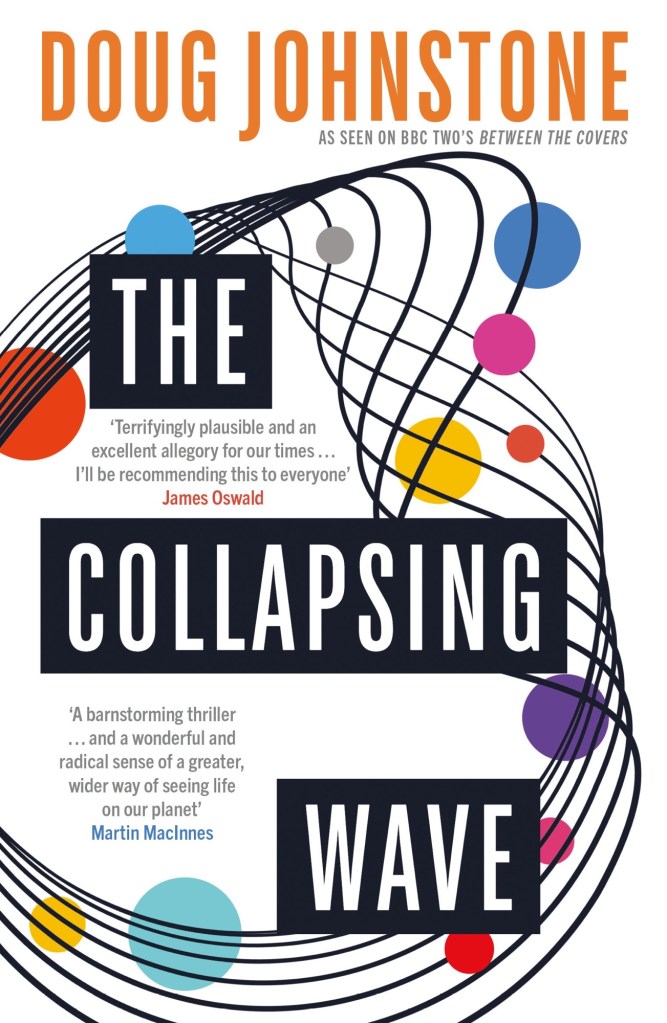
The Collapsing Wave by Doug Johnstone

When I first met the incredible being Sandy in The Space Between Us I had no idea that there would be a sequel, never mind a trilogy. I grew up at the time when home VCRs were becoming affordable and we rented the Star Wars films so many times that I’m sure if we added up the hire fees we probably bought them. Doug Johnstone’s second novel has something in common with the original trilogy in that this second outing is much like The Empire Strikes Back, it’s darker in tone and it looks like our heroes may be beaten. Heather, Ava and Lennox come up against the worst traits of human nature; fear, hate and paranoid self-preservation seem to be winning and it’s the military’s role to carry this ideology through.We start several months after the last book ended as Sandy was reunited with the rest of his species at Ullapool and disappeared into the sea loch. Our three heroes seemed set for different fates as the research scientists and police who’d been tracking their journey finally caught up with them. Ava is confronted by and wreaks revenge on her abusive husband who pushed her to the edge of suicide and now tries to take her baby Chloe away. At the beginning of this novel we find her in Edinburgh for the court case, watched by her sister who is now Chloe’s guardian. As she’s given a suspended sentence Ava’s elation turns to terror as she’s swept up outside the court room by military officers with guns. Lennox and Heather have been in a makeshift compound that’s now become the biggest American military base on British soil, named New Broom it sits at one end of Ullapool’s sea loch in the middle of nowhere, like Guantanamo Bay rebuilt in a beautiful Highland setting. Heather and Lennox are detained, seemingly with no legal basis, as MI7 Agent Oscar and the American military attempt to capture partial enceladons and understand the way they work. Oscar at least has an academic interest, whereas the military seem more fixated on how to exploit their alien powers to overpower and control the Earth. Nothing could be further from the alien’s minds, they are simply looking for somewhere to live now that their oceanic home has become colonised by another species. They are refugees.

I think the political climate and local circumstances had me reading the book on two levels: as a great science fiction story, but also as an allegory. For those who don’t know my closest city is Lincoln and we’re currently experiencing community divisions. The government’s decision to requisition the recently closed RAF base of Scampton, home of the Dam-Busters, and turn it into a centre for asylum seekers has met with uproar. It’s terrifying to hear the opinions of people who drink in the same pub, deliver the mail or wash the windows, in case it’s far removed from your own. There were sensible arguments against the plan: there was already a plan to turn the base into a museum and heritage centre, for which local people had fundraised hard; the government are not using the actual existing barrack blocks to house the men, but putting portacabins on the runway instead; it’s so far away from any services in the city. Yet, instead of being able to protest these points at a local level, a far right extremist group from Yorkshire has hijacked the cause and set up a protest camp at the base’s main gate with racist signage and ideology. They are protesting against any asylum seekers: ‘coming in illegally for the benefits; to commit crime; to be terrorists; to groom children; to take social housing’. They don’t even understand that in order to claim asylum someone must first arrive in their chosen country. Maybe because this is now part of my everyday life, the parallels between the enceladons and asylum seekers/ refugees were undeniable. Both have been forced from their own country for whatever reason and the majority seek to live somewhere peacefully and in harmony with the existing population, not realising that to some people, their very arrival itself is a threat.

New Broom’s research staff are carrying out experiments that wouldn’t have been out of place in concentration camps. They are building Faraday Cages to capture partial enceladons and prevent them communing with others through telepathy. This silence is enough to depress and eventually kill them, because they can’t live separately only as part of the whole. Lennox and Heather miss the sense of communion they get from their telepathic communication with Sandy. They can commune with each other though and do so whenever they can. Heavily guarded wherever they go, they have no idea that Ava and Chloe are on their way, or that a camp of ‘Outwithers’ has built up on the edge of the loch filled with travellers, believers, anti-government protestors and anyone who despises the idea of such a huge military base on Scottish soil or the capture and torture of enceladons. There’s only one American soldier who shows a trace of empathy, the others are simply unquestioning drones taught to believe they are acting in the interests of National Security and the defence of the Western way of life. The two main men in charge are clearly in the grip of obsession, whether it’s a selfish intellectual curiosity or the terrifying birth of a megalomaniac. While I felt Oscar could perhaps be redeemed, General Carson is itching to exert authority over both security and experimentation. The only character who has their freedom is Sandy, but how can they be truly free with their family being captured bit by bit and their peace threatened by a man determined to destroy them all. Make no mistake, this is not the soft humorous story we might have expected from the first novel. In parts it was hard to read and made me feel physically sick, especially when Ava is finally reunited with her friends at New Broom. As Carson separates Ava from her daughter and proceeds to torture Chloe I felt so angry I was tearful. It is horrific and has the reader rooting for the overthrow of the Americans, by whatever means necessary.

It’s the feelings that Doug Johnstone’s writing conjures in the reader, that make this such an immersive read. The moments of love, friendship and sacrifice between these characters are beautiful and are but a small part of the collaborative existence the enceladons share. The moments where Sandy takes a human into the ‘whole’ are euphoric and more than a little trippy! The way the enceladons harness and work with nature to fight back against the military base has a similar feeling. The way Heather decides to stop resisting the cancer invading her body and just enjoy the life she has left living within the collective. All of these are pointing to the same life philosophy. We must work with something, not against it. The enceladons want to exist alongside humans, to become friends and communicate with them. After years of Thatcherism and the message that autonomy is the route to success and freedom, working together actually is an alien concept. It isn’t just the communication between the three friends that proves to be powerful. It’s the mother – daughter bond between Ava and Chloe. It’s the ‘Outwithers’ who have come together to create their protest camp and two women; Jodie, a lifelong activist for connection and Vonnie, whose love connection with Lennox creates it’s own power. Communication with the Outwithers is what changes Oscar, although whether this actually redeems his character overall I don’t know. These are the people who understand that connection with the colony can strengthen society as a whole, rather than destroy it. There are also those who choose not to see, whether that’s by building a fence and only caring about what’s in your own backyard, or by choosing to believe the government and mainstream media narrative, which only exists to manipulate. It reinforced my belief that language is so incredibly important. If we choose the word integration instead of infiltration, opportunity rather than threat, to embrace something changing for the better rather than hankering after a nostalgic past that mustn’t be destroyed, if it ever existed. If we realise that connection is more important than individual attainment we learn to grow, adapt and embrace new things. It’s amazing that E.M. Forster’s quote ‘only connect’, although now it’s over a 100 years old, still has such huge resonance.

Published on 14th March by Orenda Books.

Meet the Author
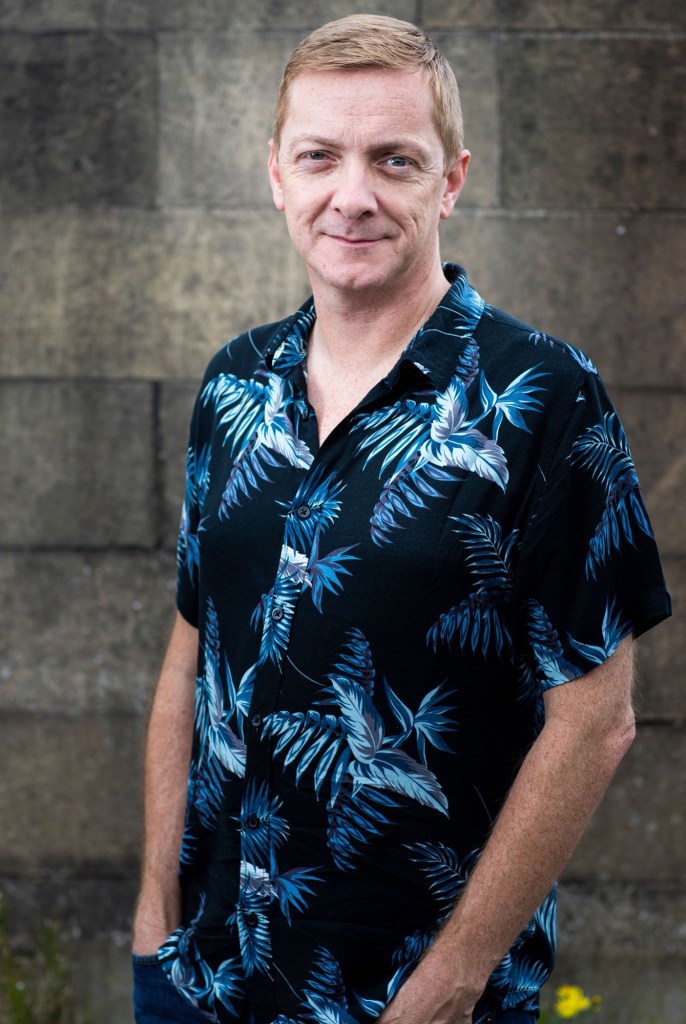
Doug Johnstone is the author of twelve novels, most recently The Great Silence, the third in the Skelfs series, which has been optioned for TV. In 2021,The Big Chill, the second in the series, was longlisted for the Theakston’s Old Peculier Crime Novel of the Year. In 2020, A Dark Matter, the first in the series, was shortlisted for the McIlvanney Prize for Scottish Crime Novel of the Year and the Capital Crime Amazon Publishing Independent Voice Book of the Year award. Black Hearts (Book four), will be published in 2022. Several of his books have been best sellers and award winners, and his work has been praised by the likes of Val McDermid, Irvine Welsh and Ian Rankin. He’s taught creative writing and been writer in residence at various institutions, and has been an arts journalist for twenty years. Doug is a songwriter and musician with five albums and three EPs released, and he plays drums for the Fun Lovin’ Crime Writers, a band of crime writers. He’s also player-manager of the Scotland Writers Football Club. He lives in Edinburgh.
Posted in Netgalley

The Guest by B.A. Paris

I was so glued to this story about a group of friends and the entanglements between them that I read it in one sitting. The action focuses on two couples: Iris and Gabriel who live in a village with their daughter Beth who is currently enjoying a gap year at a dog rescue centre in Greece. Their friends are Laure and Pierre, who reside in Paris. The couples met on holiday, while Laure and Pierre were on honeymoon and Gabriel and Iris had only been married a year. They became firm friends, seeing each other every year and Laure even became their daughter Beth’s godmother. However, this visit is different. Laure has turned up alone, saying Pierre has confessed to having a daughter with a woman he spent the night with at the start of their marriage. Laure needs space to think and so does Pierre, could she stay with them for a short time? Of course the answer is yes, but it’s not an easy time. Gabriel is taking a long period of leave from his job as a GP, because he has struggled mentally after finding a teenage boy who fell into the nearby quarry. He did all he could for Charlie, but sadly he died before the ambulance arrived. Those last moments with the dying boy have weighed heavy on Gabriel, especially his final words. He has decided to use his time off restoring the walled garden that has grown wild over the years. Friends from their village, Esme and Hugh, offer their gardener and handyman Joseph to give Gabriel a hand with the more back breaking jobs. As these people collide over the summer, guests will outstay their welcome, relationships become strained, and huge secrets are on the verge of being disclosed as obsession and jealousy boil over. 

Our story is mainly told by Iris, who throws herself into looking after their new guest in a lull she has between interior design jobs (although she calls herself an ‘enhancer’). Laure is petite and chic, sometimes making Iris feel ungainly by comparison. The irritations are small at first – for some reason Laure hasn’t brought many clothes with her, but when she borrows from Iris’s wardrobe she always seems to pick the very thing Iris was planning to wear and it looks better on their guest. Then after a couple of weeks Laure rearranges their kitchen, meaning everyone is opening the wrong drawers and cupboards and any job takes twice as long. Iris asks her to put it back, but Laure meant no offence, she just thought it made more sense the new way. There are no signs of her seeing Pierre either. In fact no sign of him at all. Gabriel had extended an offer of help, could he perhaps go over to Paris and give him a listening ear? There’s no reply. It’s uncharacteristic of him. When Laure finally goes to Paris for talks, she’s back by evening of the same day saying that he didn’t turn up at the flat. As the summer moves along, the constant presence of another person starts to chafe at Iris’s goodwill. There are only so many times she can listen to the same story, or pull apart their relationship in every detail. Gabriel is also struggling but at least he has his garden escape, but he’s under pressure to speak to the mother of Charlie. He had passed Charlie’s last words to paramedics at the scene, but actually meeting his mother would be difficult. In some ways it might bring closure, but unfortunately Gabriel has kept something to himself. To save his mother more grief he told them Charlie sent his love to her, but that isn’t what Charlie said at all. 

The author has a brilliant way of creating our interest in these characters, even though I wasn’t particularly rooting for any one of them – although I did have enormous sympathy for Iris because Laure felt like an emotional vampire and I’m rubbish with houseguests too. However, I was addicted to finding out what would happen to them next. Which of the various secrets they were keeping from each other would actually be exposed? Joseph is very intriguing and seemingly very tempting for the women who meet him. He feels like a drifter, living in Hugo and Esme’s converted outhouse and picking up gardening jobs here and there. He’s rootless and very tight lipped about his life before arriving in the village, could he have something to hide? Iris certainly thinks so and wonders if there is a secret liaison going on, perhaps with Esme or even Laure as the summer lingers on with no sign of Pierre. As the tension grows and unease develops, you won’t want to stop reading. Even as events implode this small group of friends and you think you have all the answers, you don’t. This is a brilliant thriller, really cementing the author as a definite ‘must buy’ for me. 

Published 20th February 2023 by Hodder and Stoughton.

Meet the Author

B.A. Paris is the New York Times and Sunday Times bestselling author of seven novels including the word-of-mouth hit, Behind Closed Doors, and her latest thriller, The Guest.

Over 7 million editions of her work have been sold worldwide and her books have been translated into 41 languages. Three of her novels have been optioned for major screen adaptations with films of Behind Closed Doors, The Breakdown and The Therapist in development.

Before becoming an author, B.A. Paris, who spent most of her adult life living in France, worked in finance as a trader before retraining as an English teacher. She and her husband then ran a language school together whilst bringing up their five daughters. Today, she writes from her cottage in Hampshire, England.

Follow B.A. on Twitter and Instagram at @baparisauthor. You can also find her on Facebook, Goodreads, and BookBub. Sign up to her newsletter for teasers, giveaways and updates.

Posted in Throwback Thursday

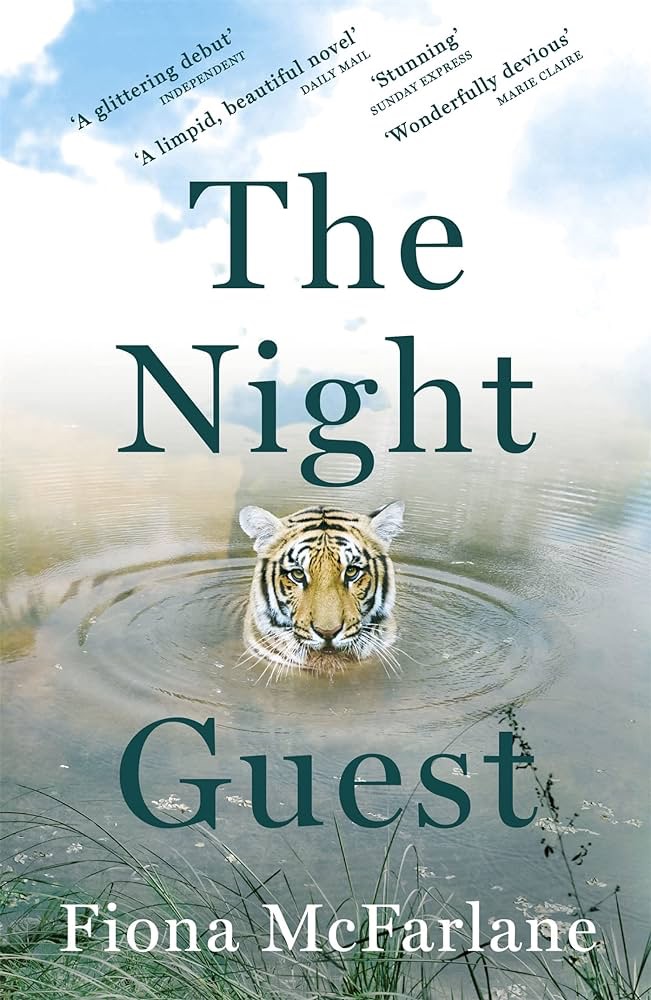
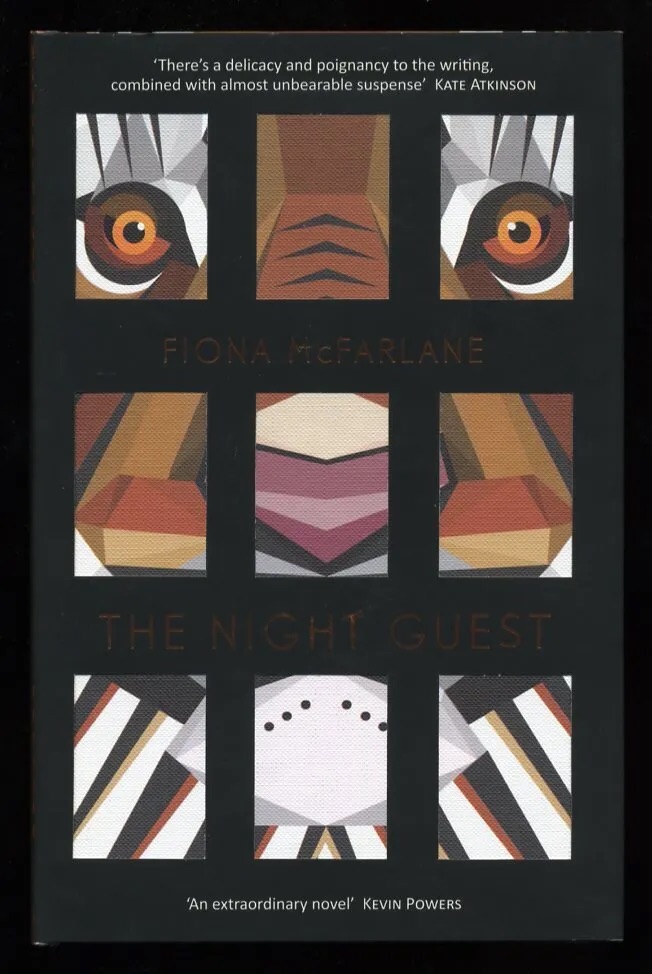
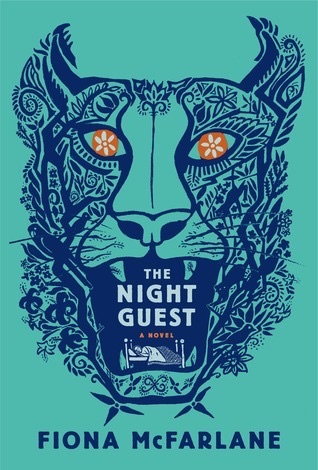
The Night Guest by Fiona McFarlane

Booksellers often joke about customers who come into their shop and ask for help finding a book: they either don’t have the title but vaguely remember the author; they don’t know the author but know there was a bird on it or the book was blue; they saw the book on that programme, the one with Sara Cox but don’t know which episode or even the series it was from; it’s an old book, they read it at school; they think it was set in China, or maybe South America. On it goes and more often than not, once the mystery is solved, they ask the bookseller to write it all down on a slip of paper then go home and order it from Amazon. I was having that sort of experience with this unusual novel, in fact nobody I asked had ever heard of it. Possibly not helped by my description – ‘ it had an old lady in it and a tiger came to visit her at night.’ Inevitably most people heard ‘tiger’ in the story or on the cover and I’d be answered with Life of Pi or The Tiger Who Came To Tea, excellent books but not the one I was looking for. Then finally one day the title sort of came to me. I say sort of, because I kept calling it The Night Visitor which sounds like a creepy name for incontinence or night sweats! I’d taken the book out from the library originally and when funds allowed I wanted to have a copy on my shelves. It is there on Amazon, but maybe pop it on your charity shop list because it is a little gem.

The book tells the story of Ruth, an elderly lady who lives alone in a remote house on the coast of Australia. She has family but her son has relocated for work, meaning that day to day help isn’t something he can provide. Her son phones regularly, but he’s busy with work, kids and a home of his own. However, he does start to worry when she rings to tell them she’s had a night guest; a large tiger came to visit in the night. At first she woke up scared there might be an intruder, but it was a handsome tiger instead. Her son suggests that perhaps she was dreaming? Ruth is adamant, the tiger woke her and she wasn’t asleep. Her son and his wife confer and decide they’re worried. What if their mother’s mind is going? How will they manage to get her the help she needs? Their mother can be low in mood at times, mainly because she’s spending so much time alone and that leads to ruminating on the past such as her girlhood in Fiji. One of my favourite tropes is the unreliable narrator and that’s what we have in Ruth. Her story is so implausible she must be losing her marbles. What unfolds is an unusual psychological thriller with a side order of magic realism, which I love. 

The book tells the story of Ruth, an elderly lady who lives alone in a remote house on the coast of Australia. She has family but her son has relocated for work, meaning that day to day help isn’t something he can provide. Her sonphones regularly, but he’s busy with work, kids and a home of his own. However, he does start to worry when she rings to tell them she’s had a night guest; a large tiger came to visit in the night. At first she woke up scared there might be an intruder, but it was a handsome tiger instead. Her son suggests that perhaps she was dreaming? Ruth is adamant, the tiger woke her and she wasn’t asleep. Her son and his wife confer and decide they’re worried. What if their mother’s mind is going? How will they manage to get her the help she needs? Their mother can be low in mood at times, mainly because she’s spending so much time alone and that leads to ruminating on the past such as her girlhood in Fiji. One of my favourite tropes is the unreliable narrator and that’s what we have in Ruth. Her story is so implausible she must be losing her marbles. What unfolds is an unusual psychological thriller with a side order of magic realism, which I love.  morning after the tiger visits a woman knocks on Ruth’s door. She introduces herself as Frieda and claims to have been sent by the government to help Ruth clean the house and stay on top of things. She’s also from Fiji, so Ruth can talk to her about the past and those memories and regrets that occupy her mind. It would seem that Frieda awakens something in Ruth that’s lain dormant till now. Her memories of Fiji become even more intense and flourish under Friedan’s gaze. In the back of my mind I was a little suspicious that much like the tiger, Frieda might not be everything she seems. Alternatively, she might be everything she seems and more. Ruth is more vulnerable than she cares to admit, a woman whose memory and understanding of events may not be accurate. Her mind wanders, but is she knowingly lapsing into daydreams or does she believe the fantasy? I felt concerned that while Ruth was narrating the more fantastical aspects of her daily life, like her visiting tiger, underneath there might be something more dangerous going on. Elderly people who have altered consciousness are so vulnerable to manipulation and abuse, whether it be sexual, physical, emotional, spiritual or financial. As changes were revealed, baby step by baby step, they were going unnoticed by Ruth. I was desperate for her to sit up and realise something odd was going on, before the results became permanent.

There are things in life that we choose not to see. We erect a wall to shield ourselves and never look over it so we can say ‘I didn’t know…’ This is often the case when someone we love is in deteriorating health, especially if they’re our parents who used to look after and support us. I think this is what Ruth’s son is doing, closing his eyes to the fact that their situations have reversed and now mum needs him. Ruth’s vulnerability is sad, because she’s so open to exploitation. It’s not just that her mind might be affected cognitively, but that she’s so lonely she craves someone to be interested in her. If someone enjoys spending time with her, they could quickly form a bond and shut everyone else out. As Frieda starts to infiltrate all parts of Ruth’s life, taking on more and more responsibility for her affairs, Ruth’s determination and independent spirit become worn down and she starts to depend on Frieda. In contrast with Frieda, Ruth does come across as mentally frail. Whereas the carer is the life and soul of the party. Ruth’s worsening nightmares of being stalked in her own home by a striped predator could be pure imagination, allegorical, magical or a manifestation of a sixth sense telling Ruth she’s in danger. This is a brilliantly complex debut, with layers of manipulation and deception that extend to the reader. All the way through I kept thinking I didn’t want my life to end up like this. Despite this, I was compelled to keep reading and I’ve never forgotten it. Now, thankfully, I have my own copy so I can re-read whenever I like.

Posted in Squad Pod Collective

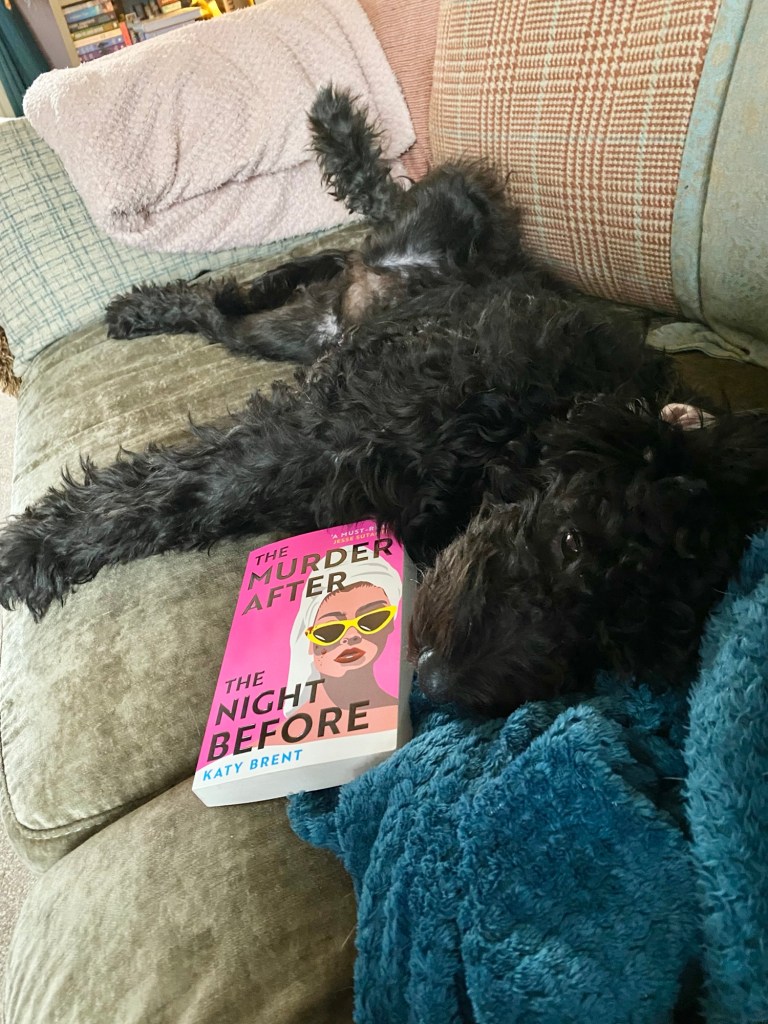
The Murder After The Night Before by Katy Brent

Something bad happened last night. My best friend Posey is dead. The police think it was a tragic accident. I know she was murdered.

I’ve woken up with the hangover from hell, a stranger in my bed, and I’ve gone viral for the worst reasons.

There’s only one thing stopping me from dying of shame. I need to find a killer.

But after last night, I can’t remember a thing…

This was a delicious pick me up for a winter weekend with unexpected depth! It was the perfect mix of witty fun, but also an interesting thriller that captures the moment with some serious social commentary. When Molly wakes up after the Sparkle magazine Christmas party she’s expecting a hangover of epic proportions. What she isn’t expecting is to wake up next to a complete stranger with no memory of the night before. She has a strange combination of complete amnesia, but underneath that a feeling of unease that won’t go away. He tries to reassure her that all he wanted to do was make sure she got home safely, considering the amount that she drank. Yet, his account of the night before doesn’t make any sense to her either and she starts to question everything. Things only get worse when she staggers into work to hear the worst news she could ever hear. Firstly, there’s a sexually explicit video of her at the party going viral on social media. Worse than that she finds out her best friend and flatmate Posey is dead after an awful accident. The version the authorities give Molly just doesn’t ring true though and she suspects her friend may have been murdered. So Molly starts her own investigation, hoping to unearth the truth of what happened that night but also who would want Posey dead and why?

Molly is such a sparky, likeable character and she brings a lightness to this dark story, just enough to keep a good balance. I warmed to her as it becomes clear how much she cared about her friend and the lengths she’s willing to go to for justice on her behalf. She’s a little clumsy in her investigation skills and has flaws, but that makes her more endearing. She’s far from perfect at first, drinking a lot and dealing with loss, struggling to focus and not remotely motivated by her job on a teen magazine. Molly allows the author to tackle some heavy themes within the novel, it’s her personality that makes these difficult subjects accessible to the reader. This is also brilliant because it accesses readers who might not ordinarily pick up a more ‘serious’ novel on these themes. It’s a fine line to tread, remaining serious about a subject while writing an entertaining and engaging story, but the author has pulled it off here.

The author shows incredible skill by weaving some pertinent social commentary into the plot, about the dangers of social media and misogyny, both online and in real life. Since the murder of Sarah Everard by a serving Met Police officer, the rise of the Incel movement online and influencers like Andrew Tate, the depths of the misogyny in our culture have come to light. I’ve never been more aware of the divides in our society when it comes to race, disability and sexism. The recent and very public ableism and misogyny towards comedian Rosie Jones has been staggering and as a disabled woman I was affected by reading it, goodness only knows how Rosie had felt as their target. I expected the ableism, but felt it was tinged with sexism too because the comedian Lost Voice Guy, who has the same disability as Rosie, doesn’t face this relentless wave of hate. The Wild West that is Twitter has given a toxic platform to men who enjoy gaslighting women and putting them down in the most insulting ways possible. I love that Katy Brent has tackled this misogyny within her story line, from the toxic culture of social media through to the terrible experience of sexual assault. The embarrassing viral video of Molly giving a blow job in the street gets a torrent of disgusting, but very authentic comments from trolls and keyboard warriors, not all of them men. It was just like reading Twitter. None of them were levelled at the man, all the negativity is focused on Molly, effectively bullying and slut-shaming her. It really highlights how there are still different societal standards of sexual behaviour for men and women, but now proliferating on social media.

I really enjoyed Molly’s character growth, at the beginning she’s all over the place, but her love for Posey really makes her focus and get results. Molly realises that Posey was working on an investigation that might have been the cause of her murder. So she has to follow the clues her friend has found, working out answers to the questions she had, all in the hope it will bring her closer to finding her killer. Of course that puts Molly in the same danger, but she wants to find the truth for her friend and shows real loyalty and courage. Molly’s flaws and her self- awareness about them, just make her all the more endearing. There’s some snappy dialogue that keeps the story moving, but also introduces an element of wit and humour. Yes, there are moments here that are truly funny, but the balance between the humour and the darker aspects is maintained throughout. The emotional depth of the characters and particularly Molly’s feelings for her friend really did elevate this above the average thriller, but as the truth starts to unfold, there are twists and turns that leave you wondering if we ever know anyone as well as we think we do.

Published in paperback on 1st February 2023 from HQ

Meet the Author

Katy is an author and award-winning journalist from the UK. She has worked on newspapers, magazines and websites since 2005, writing about popular culture. How To Kill Men and Get Away With It was her first novel and The Murder After the Night Before is her second.

Posted in Netgalley

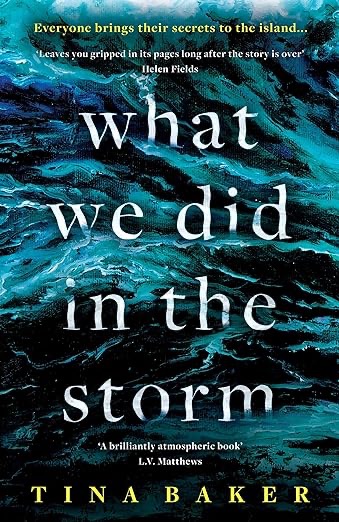
What We Did in the Storm by Tina Baker.

This is my first Tina Baker novel, although I’ve been aware of her others she’s been a new author I hadn’t managed to get on my TBR. Now I feel very stupid and sorry that I haven’t picked up one of her earlier thrillers because I enjoyed this one very much indeed. Tresco is a small island in the Scilly Isles that’s run almost like a club for the wealthy. Owned by ‘the family’ it’s main currency is tourism but often the same families own timeshares or block book the cottages, each named after a seabird, for the same times each year. Those that live there all year round are ‘the workers’ who look after the abbey gardens, work in the pub or the shop, or work directly as gamekeeper or groundsmen for the family estate. This creates a community where everyone knows everyone else, and each is very aware of their status in relation to each other. So when Kit, son of the very wealthy and regular cottage dweller Beatrice Wallace, starts a flirtation with Hannah the barmaid from The Old Ship tongues start wagging. There are many rumours about Hannah: that she’s been dallying with fellow worker Sam who is married with three boys; that she is easy with her favours, especially on poker nights with the boys; that she was spotted dancing naked by the full moon; that she’s possibly a witch. None of that bothers Kit, but as the young lovers become more than a quick fling it bothers other people. Kit’s mother is raging at her son’s choice of girlfriend, knowing the grief of a relationship with someone from a different class to you. She tries to push him towards her goddaughter Charlotte, who might be stupid enough to wear heels and off the shoulder tops on the island, but is at least in the same circles as the Wallace’s. Sam’s wife Christie should be ecstatic, but for some reason she isn’t, still fuming at Hannah any time she comes within an inch of her husband knowing that she has some sort of hold on him. Alison, Hannah’s boss, just wishes that Hannah would stop sleeping with the customers and causing drama in the pub. As a storm approaches and tensions are at their height, two women are attacked at a remote point on the island, but one woman is lost to the sea. But who?

The author uses different narrators throughout the story, which is difficult at first until you get to know each character and their place on Tresco. Interspersed with these voices is a separate narrative entitled ‘After the Storm’ that recounts the events of that day and what the speaker has seen. We don’t know who they are, but they seem to have been in the right place at the right time to have some of the answers, but not all. The rest of the narrative occurs in the lead up to the storm and we get to know all the residents, visitors and workers. Hannah and Kit aren’t the only ones potentially causing problems for the community. There’s John and Mary-Jane from Georgia in the USA, evangelical Christians who seem to have eyes only for each other. Why did they leave their hometown and families and what shameful secret does Mary-Jane impart to the island’s nurse? Thor works in the village shop, where a bottle of wine can cost as much as some of the worker’s weekly salary, but has a rather active internet life that would raise eyebrows. There’s quiet Maisie who cares for her mother’s needs 24/7 and seems devoted, but lays awake at night listening to her sleep apnoea machine helping her breath, just wishing she’d stop. There’s also a strange man who appears at bathroom windows wearing a balaclava and spying on unsuspecting ladies. Even Christie and Sam’s relationship isn’t what it seems, the long suffering wife whose husband drinks more than he should, neglects his family and strays when he can is the accepted narrative, but never assume that what you see is the truth. Beatrice is a horror though, although islanders are sympathetic when she loses her husband, she isn’t perhaps grieving as much as they would assume. She loves her son, but wants him to commit to something more than painting, sailing and cavorting with that barmaid in whichever cottage is free. None of these activities will make a living and although the family have money and he won’t be destitute she still wishes he had some direction.

I loved the way the author created these rigid boundaries between the different groups on the island and how it disrupts everything if they are broken. After the storm, Kit spends more time on the island painting and renting whatever cottage is free. He offers help where needed, even if it’s a shift in the pub or running errands for holiday makers. Yet he’s stuck in limbo. The workers don’t accept him, in fact they wish he’d bugger off and let someone who needs the money have a job. However, they do have to be careful because his mother is a rich timeshare owner and as such must be treated as a guest. As for him and Hannah, a quick bunk-up is overlooked but why did they have to fall in love? There are clever little faux pas that show someone up as an outsider, such as the plague of pink waterproof coats that islanders wouldn’t be seen dead in. Having come from a small village, I enjoyed the way gossip spread, usually via the pub, as one person tells someone else in confidence, then that person tells someone else in confidence, until it’s a chain of Chinese whispers with the truth lost somewhere in the telling. I also loved the incredible sense of place Tina has created, the crashing waves, exotic flora and incredible seabirds are romantic and enthralling to visitors, but islanders know this isn’t some sort of nature’s Disneyland. The wild weather and stormy seas can be lethal and only the workers know the endless maintenance it takes to keep the island to counteract the damage caused by the sea fret. They are stuck in a parasitic relationship, where they can’t do without the tourism but hate it at the same time. There are so many revelations and twists here I made sure I set aside enough time to finish it in one go and I’m glad I did. Right up until the end I was fairly sure what happened during the storm, but how wrong I was! I’m now going back to Tina’s other novels because I think I’ve just become a fan.

Published on 15th February from Viper.

Meet the Author

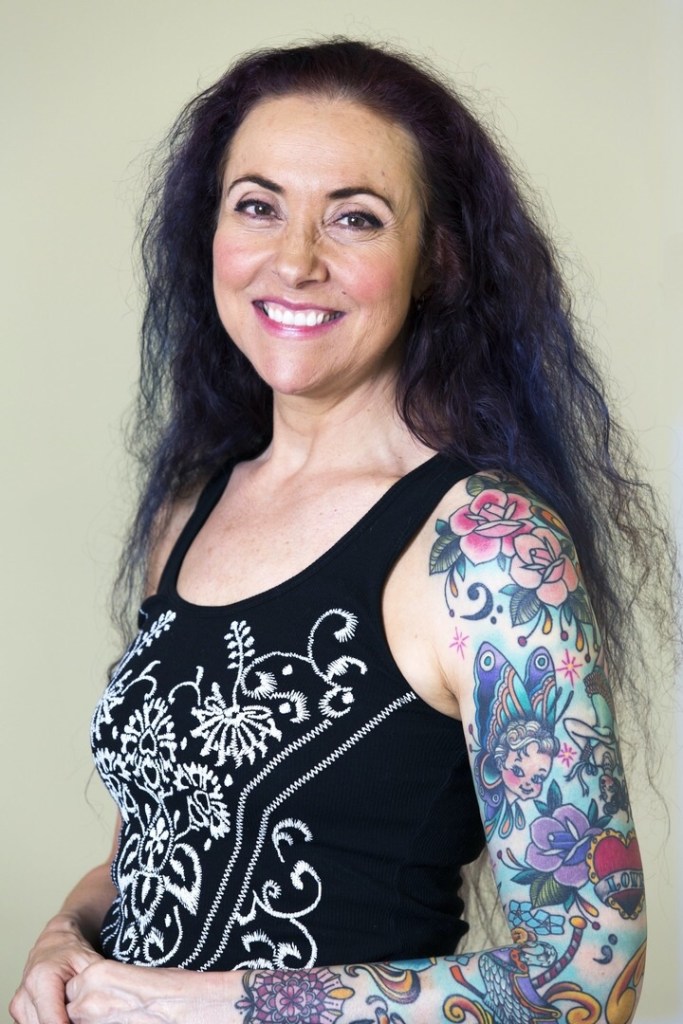
Tina Baker, the daughter of a window cleaner and fairground traveller, worked as a journalist and broadcaster for thirty years and is probably best known as a television critic for the BBC and GMTV. After so many hours watching soaps gave her a widescreen bum, she got off it and won Celebrity Fit Club. She now avoids writing-induced DVT by working as a Fitness Instructor.

Call Me Mummy is Tina’s first novel, inspired by her own unsuccessful attempts to become a mother. Despite the grief of that, she’s not stolen a child – so far. But she does rescue cats, whether they want to be rescued or not.

Posted in Netgalley

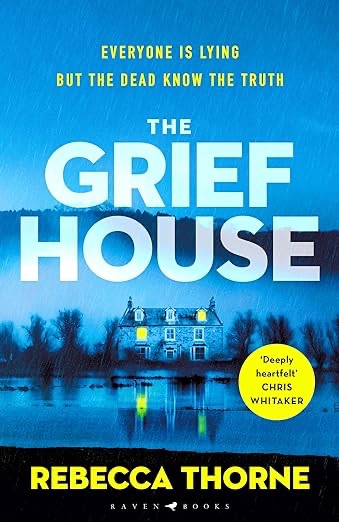
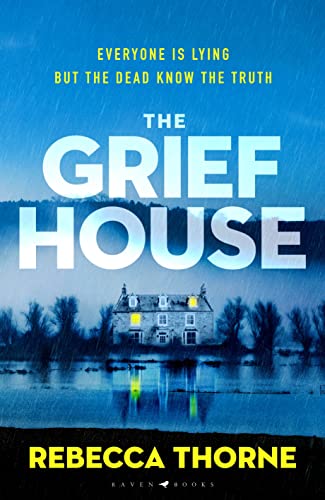
The Grief House by Rebecca Thorne

‘She searches for ways to stop feeling so lonely you fear your brain will melt and your heart will stop and your skin will never be touched again. She searches for ways to make herself feel better. The online forum has been a lifeline. A lifesaver. She can chat to counsellors when she needs to or other women who struggle with similar issues. Every week she receives a piece of advice to help her on the road to recovery or, as she calls it, the road to normality. The path to living a life.’

Blue makes a decision to deal with her unresolved grief and trauma with a residential course she sees advertised when she’s at a low ebb. At Hope Marsh House participants are offered counselling, art therapy and meditation with married couple Molly and Joshua Park. Blue has been struggling for a long time, culminating in the death of her mother with whom she had an uneasy relationship. However her grief journey begins with the loss of her stepfather Devlin, a rotund man with a fondness for kaftans and a talent with tarot. His own skills are based in clever observation, carefully worded open questions and more than average perception, but in Blue he recognises something he isn’t. A lonely child with strong, natural,psychic abilities. Prior to meeting Devlin, Blue’s mother has managed a rather haphazard upbringing at best with choices for Blue that are based in her own problems and inadequacies rather than what’s best for her child. Blue has been home-schooled but any learning was provided by magazines, television and whatever books Blue could lay her hands on. As a result she had no friends and was thought of as weird by the kids nearby. Her mother is equally isolated, not helped by the fact they move constantly. What exactly are they running from? So, Devlin’s attention is welcomed by both mother and daughter. Losing him to a heart attack was devastating and Blue became parent to her heartbroken mother, taking responsibility for her mum’s worsening mental health, the family’s income and single-handedly running Devlin’s mediumship business. Maybe it will take a place like Hope Marsh House to deal with the lonely and exhausting rut Blue finds herself in? It will be kill or cure….

‘And how long have you had your … talents?’ he said. Blue didn’t know what to say. Was hitting a saucepan with a wooden spoon a talent? Was babysitting a toddler in a dry bath whilst her mother cried herself to sleep a talent? She could wash her own clothes in the steel kitchen sink, she could heat soup and tins of beans, she could sing all the words to ‘May the Circle Be Open’. Is this what the strange man meant? She was five years old. She didn’t know.’

The author tells Blue’s story using different timelines: one gives us the present and focuses in on the retreat at Marsh House, while the others are in flashbacks to Blue’s life before her trip and further back in vignettes of her childhood. The flashbacks give us the building blocks of Blue’s personality and the strange abilities she has. She is a little girl simply longing for love and care, we can see this from the way she blossoms if praised by Devlin. Even more than that, the most powerful thing Devlin does is seemingly very simple – when Blue comes off stage, Devlin simply asks ‘are you ok, lass’? These four words mean more to her than anything else because they bypass the person she is on stage and the money her gift can make them and instead asks how she is. He knows and acknowledges what this gift costs her and how arduous a whole show can be, but mainly it’s just a dad checking in on his daughter. It means a lot to Blue, who has probably never been asked if she’s ok before. No one has ever cared enough. It is his care of her that she misses so deeply. I wondered if there were elements of personality disorder. Does Blue know who she is? When Devlin lives with them she’s at her happiest, but I was confused about her relationship with the other two children who live with them – Bodhi and the baby. They seem to be there, but she rarely relates to them. In fact she actively seems to avoid them and almost looks past them if they appear in her eye line.

Other short sections of the book include a story about a loving married couple who haven’t been able to have children, but look after a little girl who lives in a nearby flat with her elder brother. Unfortunately he is a drug addict and the couple, James and Marie, provide that stable family unit for Jessica. They dread something happening to Jessica’s brother because she could then be taken away from them. I knew that this couple related to Marsh House in some way, but I wasn’t sure how. Why does Blue keep hearing the same three girls names, Jessica, Eleanor and Lauren? Who is the strange long haired girl that appears in Sabrina’s room and opens the door when they’re not there. When she appears Blue starts to feel sick and a feeling of dread comes over her, a couple of times she comes close to passing out. The apparitions also have a way of spoiling her food, making it smell like rotten eggs or rubbish bins. They want to be noticed, but what are they trying to tell her?

The retreat itself is disturbed by a storm and the nearby river bursting it’s banks, threatening the house itself. Instead of the therapy they’re supposed to be receiving Blue and the other able bodied participant Sabina, help Mr Park with unblocking debris from the bridge to help the river flow on it’s normal path. The only other resident is Milton, an older man who uses a wheelchair and seems weakened by a lung disease that causes coughing fits. He’s been to the retreat several times, but seems incredibly grumpy with Molly and her husband. He also avoids any of the activities and even rebuffs Molly’s late night cocoa ritual. Is he just one of life’s misanthropes or is there more going on? Obviously, as a therapist, it’s Molly I’m fascinated with. I’ve been through a major bereavement and have run courses like the ones Molly advocates using a combination of meditation and group therapy using creative writing and art. I found her manner with the participants overwhelming at times. Even before the flood interrupted the normal flow of things there was a boundary issue that I couldn’t put my finger on. As time went on I realised the couple had no children, so who is the little girl in the picture that’s hidden in their own private sitting room? Who is the girl that Blue can see, if no children have lived there? Molly seems to mother her guests. It’s difficult to create clear boundaries when working in your own home and especially when participants are also eating with you and staying overnight. However, there’s something about the way Molly nurtures her clients that feels off. There’s a power imbalance at play, almost as if she is the parent and they are children. It’s this element in her personality and the care she gives that Milton seems to resist or even reject outright. Blue is particularly susceptible to her methods, because she has never had a nurturing mother figure. I felt protective towards Blue (my own maternal instinct at play) and my instinct was telling me she needed to keep her wits about her. The author created a sense of impending doom and as the worst of the storm hit it felt like a warning.

I don’t want to reveal any more, because I think the the story unfolds at the right pace and the truths are revealed slowly. The revelations come in both timelines, as Blue unearths the truths about her mother Bridget by looking through archived newspapers in the library. The secrets come out as if they’ve always been there in Blue’s mind, she just needed something to unlock the door. There will be moments at Hope Marsh House where you wonder what’s going on, placing you in exactly the same position as our main characters. The reader discovers the answers when the characters do so we feel their disorientation, confusion and fear. There were one or two moments that were genuinely terrifying! I enjoyed the growing bond between the three guests at Marsh House, something that Blue has never had before and exactly what she needs. I stayed up late to get to the end and I wasn’t disappointed, although it did lead to some disturbing dreams that night. This was a really great read with a perfect balance between psychological thriller and haunting, gothic tale.

Published Jan 18th by RAVEN Books

Meet the Author

Rebecca lives in the West Country with her family and their cat. She has written two best-selling novels under the name Rebecca Tinnelly: Never Go There and Don’t Say A Word, both published with Hodder.

Posted in Netgalley

The Grief House by Rebecca Thorne


‘She searches for ways to stop feeling so lonely you fear your brain will melt and your heart will stop and your skin will never be touched again. She searches for ways to make herself feel better. The online forum has been a lifeline. A lifesaver. She can chat to counsellors when she needs to or other women who struggle with similar issues. Every week she receives a piece of advice to help her on the road to recovery or, as she calls it, the road to normality. The path to living a life.’

Blue makes a decision to deal with her unresolved grief and trauma with a residential course she sees advertised when she’s at a low ebb. At Hope Marsh House participants are offered counselling, art therapy and meditation with married couple Molly and Joshua Park. Blue has been struggling for a long time, culminating in the death of her mother with whom she had an uneasy relationship. However her grief journey begins with the loss of her stepfather Devlin, a rotund man with a fondness for kaftans and a talent with tarot. His own skills are based in clever observation, carefully worded open questions and more than average perception, but in Blue he recognises something he isn’t. A child with strong psychic abilities. Prior to meeting Devlin, Blue’s mother has managed a rather haphazard upbringing at best, making choices for Blue that are based in her own problems and inadequacies rather than what’s best for her child. Blue has been home-schooled but any learning was provided by magazines, television and whatever books Blue could lay her hands on. As a result she had no friends and was thought of as weird by the kids nearby. Her mother is equally isolated, not helped by the fact they move constantly. What exactly are they running from? So, Devlin’s attention is welcomed by both mother and daughter. Losing him to a heart attack was devastating and Blue became parent to her heartbroken mother, taking responsibility for her mum’s worsening mental health, the family’s income and single-handedly running Devlin’s mediumship business. Maybe it will take a place like Hope Marsh House to deal with the lonely and exhausting rut Blue finds herself in? It will be kill or cure…. 

‘And how long have you had your … talents?’ he said. Blue didn’t know what to say. Was hitting a saucepan with a wooden spoon a talent? Was babysitting a toddler in a dry bath whilst her mother cried herself to sleep a talent? She could wash her own clothes in the steel kitchen sink, she could heat soup and tins of beans, she could sing all the words to ‘May the Circle Be Open’. Is this what the strange man meant? She was five years old. She didn’t know.’

The author tells Blue’s story using different timelines: one gives us the present and focuses in on the retreat at Hope Marsh House, while the others are flashbacks to Blue’s life before her trip and further back in vignettes of her childhood. The flashbacks give us the building blocks of Blue’s personality and those strange abilities she has. She is a little girl simply longing for love and care, we can see this from the way she blossoms if praised by Devlin. The most powerful thing Devlin does is seemingly very simple – when Blue comes off stage, Devlin simply asks ‘are you ok, lass’? These four words mean more to her than anything else because they bypass the person she is on stage and the money her gift can make for the family and instead asks how she is. He knows and acknowledges what this gift costs her and how arduous a whole show can be, but mainly it’s just a dad checking in on his daughter. It means a lot to Blue, who has probably never been asked if she’s ok before. No one has ever cared enough. It is his care of her that she misses so deeply. I wondered if there were elements of a personality disorder in Blue. Does she even know who she is? When Devlin lives with them she’s at her happiest, but I was confused about her relationship with the other two children who live with them – Bodhi and the baby. They seem to be there most of the time, but she rarely relates to them. In fact she actively seems to avoid them and almost looks past them if they appear in her eye line. 

Other short sections of the book include a story about a loving married couple who haven’t been able to have children, but look after a little girl who lives in a nearby flat with her elder brother. Unfortunately he is a drug addict and the couple, James and Marie, provide that stable family unit for Jessica. They dread something happening to Jessica’s brother because then she could be taken away from them. I knew that this couple related to Hope Marsh House in some way, but I wasn’t sure how. Why does Blue keep hearing the same three girls names, Jessica, Eleanor and Lauren? Who is the strange long haired girl that appears in Sabrina’s room and opens the door when they’re not there. When she appears Blue starts to feel sick and a feeling of dread comes over her, a couple of times she comes close to passing out. The apparitions also have a way of spoiling her food, making it smell like rotten eggs or rubbish bins. This little girl wants to be noticed, but what is she trying to tell her? 

The retreat itself is disturbed by a storm and the nearby river bursting it’s banks, threatening the house itself. Instead of the therapy they’re supposed to be receiving Blue and the other able bodied participant Sabina, help Mr Park unblock debris from the bridge to help the river flow on it’s normal path. The only other resident is Milton, an older man who uses a wheelchair and seems weakened by a lung disease that causes coughing fits. He’s been to the retreat several times, but seems incredibly grumpy with Molly and her husband. He also avoids any of the activities and even rebuffs Molly’s late night cocoa ritual. Is he just one of life’s misanthropes or is there more going on? Obviously, as a therapist, it’s Molly I’m fascinated with. I’ve been through a major bereavement and have run courses like the ones Molly advocates using a combination of meditation and group therapy with creative writing and art. I found her manner with the participants overwhelming at times. Even before the flood interrupted the normal flow of things there was a boundary issue that I couldn’t put my finger on. As time went on I realised the couple had no children, so who is the little girl in the picture that’s hidden in their own private sitting room? Who is the girl that Blue can see, if no children have lived there? Molly seems to mother her guests. It’s difficult to create clear boundaries when working in your own home, especially when participants are also eating with you and staying overnight. However, there’s something about the way Molly nurtures her clients that feels ‘off’. There’s a power imbalance at play, almost as if she is the parent and they are children. It’s this element in her personality and the care she gives that Milton seems to resist or even reject outright. Blue is particularly susceptible to her methods, because she has never had a nurturing mother figure. I felt protective towards Blue, my own maternal instinct was at play and my it was telling me she needed to keep her wits about her. The author created a sense of impending doom and as the worst of the storm hit it felt like a warning. 

I don’t want to reveal any more, because I think the the story unfolds at the right pace and the truths are revealed slowly. The revelations come in both timelines, as Blue unearths the truths about her mother Bridget by looking through archived newspapers in the library. The secrets come out as if they’ve always been there in Blue’s mind, she just needed something to unlock the door. There will be moments at Hope Marsh House where you wonder what’s going on, placing you in exactly the same position as our main characters. The reader discovers the answers when the characters do so we feel their disorientation, confusion and fear. There were one or two moments that were genuinely terrifying! I enjoyed the growing bond between the three guests at Hope Marsh House, something that Blue has never had before and exactly what she needs. I stayed up late to get to the end and I wasn’t disappointed, although it did lead to some disturbing dreams that night. This was a really great read with a perfect balance between psychological thriller and haunting, gothic tale. 

Out on 18th Jan 2023 from Raven Books

Posted in Squad Pod

First Lie Wins by Ashley Elston

Everything she is about to tell them is a lie…

Evie Porter has everything a girl could want: a doting boyfriend, a house with a picket fence, a fun group of friends.

The only catch: Evie Porter doesn’t exist.

First comes the identity. Once she’s given a name and location by her employer, she learns everything there is to know about the town and the people in it.

Then the mark: Ryan Sumner.

The last piece of the puzzle is the job. For Evie, this job feels different. Ryan has gotten under her skin and she’s started to picture another kind of life for herself – one where her boss doesn’t pull the strings. But Evie can’t make any mistakes. Because the one thing she’s worked her entire life to keep clean, the one identity she could always go back to – her real identity – just walked right into this town. A woman, who looks just like her, has stolen her name – and she wants more. As Evie’s past begins to catch up with her, can she stay one step ahead to save her future?

Evie has never seen herself as the sort of girl who could have everything. The things many young girls dream of -marriage, security, family – have never really factored in her life, especially since she started working for the man on the end of the telephone. They’ve never met in person, but he is able to control her whole life even the person she’s going to be. From petty theft and credit card fraud she has been noticed by the boss and honed into one of his best operatives, able to throw on a new identity and slip into the mark’s life within a matter of days. Strangely, despite her criminality, the writer managed to make me feel empathy for Evie and even root for her a little bit. Her relationship with Ryan is at a stage where the friends are asking questions and want to meet this new woman. It’s a small town where everyone knows everyone else, especially the moneyed circles that Ryan grew up in. The rules dictate that he can dabble where he likes when it comes to liaisons, but when it comes to settling down it should be within their hallowed circles. An outsider might be tolerated if they’re rich, but Evie isn’t and neither is she one of them. As she dresses for a lunch date with the women from his circle of friends I found myself willing her to succeed. She’s clever in how she dresses – a bit like them but with a boho edge, enough to be accepted but still seem as an individual. I was nervous for her because it felt like she was being dropped into a shark tank and I had to keep reminding myself that Evie is the shark. As the weeks go by she’s starting to think she can relax, when she’s thrown a curve ball. At a horse racing event Ryan introduces her to a couple she’s never met before, a man who he clearly knows well with a woman who is closer to home than either of them realise. This is an old friend, but he’s with a woman Ryan doesn’t know and when she introduces herself Evie realises that her boss is playing games. The woman introduces herself as Lucca, Evie’s real name. Could she be about to lose the only thing that belongs to her – her true identity?

The author cleverly uses shorter chapters in between the main timeline that take us back through Evie’s previous jobs. They are glimpses into her past, teasing the reader with tidbits of information until we finally meet the real Evie. Sometimes our questions are answered and other times we’re surprised by a revelation that takes us in a different direction. We see how she’s pulled into her boss’s orbit, then tested until she’s the best operative he has. There’s a sadism and an element of gaslighting in what he does, sometimes sending multiple people on the same job to see who gets there first – the first prize is staying on his payroll. Although, people don’t get to just walk away from his employment because they know too much. So far Evie has had a great track record, earning well and staying on his good side, but on the last job something went wrong, could this new game be her punishment? There are only two people who Evie trusts, one is her fellow operator Devon – a man she employs to keep her safe and one step ahead of the competition. They have become close over time and he is her family. The other person is George, a messenger man for the boss who brings her the paperwork for each new identity. Can she really trust both of them? Oddly, even though she knows there must be something dodgy about him, she’s starting to trust Ryan more too and that’s a dangerous place to be. She knows there must be something dodgy about his haulage operation, because why else would she be here? Yet, even though this started as a job she feels they’re growing closer. It’s a rare feeling that’s never happened to her before. Could her fake relationship be developing into something real? The author keeps us guessing to the final pages and it’s so tense as Evie has to question the loyalties of those closest to her and juggle her burgeoning feelings for Ryan. Could he be playing her too? Has the boss pitted them against each other to see who comes out on top?

I enjoyed the back story of how Evie had ended up in this life of criminality. It was interesting to see her pluckiness and street smarts pitted against the women in Ryan’s circle. They’re so awful that I was rooting for her. The author has created an original and pacy thriller, full of intrigue and adrenaline filled moments. I found my usual loyalties and moral code turned completely on their head and was left hoping the con artist would win.

“There’s an old saying: The first lie wins. It’s not referring to the little white kind that tumble out with little to no thought; it refers to the big one. The one that changes the game. The one that is deliberate. The lie that sets the stage for everything that comes after it. And once the lie is told, it’s what most people believe to be true.”

Published by Headline 2nd January 2024

Ashley Elston lives in North Louisiana with her husband and three sons. She was a wedding and portrait photographer for ten years so most of her Saturday nights included eating cake, realizing no shoe is comfortable after standing for more than six hours and inevitably watching some groomsman do the alligator across the dance floor. Now, Ashley helps her husband run their small business and she writes as often as possible.

Posted in Random Things Tours

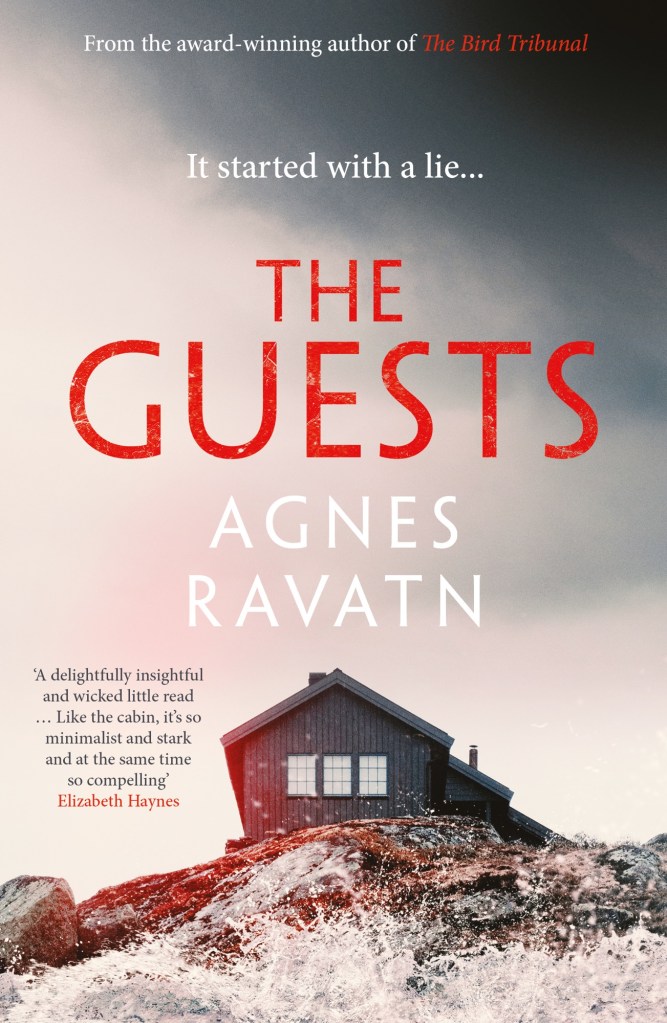
The Guests by Agnes Ravatn


It started with a lie…
Married couple Karin and Kai are looking for a pleasant escape from their busy lives, and reluctantly accept an offer to stay in a luxurious holiday home in the Norwegian fjords.


Instead of finding a relaxing retreat, however, their trip becomes a reminder of everything lacking in their own lives, and in a less- than-friendly meeting with their new neighbours, Karin tells a little white lie…


Against the backdrop of the glistening water and within the claustrophobic walls of the ultra-modern house, Karin’s insecurities blossom, and her lie grows ever bigger, entangling her and her husband in a nightmare spiral of deceits with absolutely no means of escape…

This is a slow burn novel, with a cast of characters that I wasn’t even sure I liked, yet somehow it gets under your skin. It says a lot about the way we want others to perceive us and how appearances can be deceptive. Karin works in local government, in the planning office, and her husband Kai is a joiner by trade and has his own business. Iris, a woman Karin once knew and dislikes, has offered Kai the job of renewing some steps on the jetty of her family’s holiday home. It’s in a very exclusive area of the Norwegian Fjords that’s a playground for the upper middle classes. From the start Kai seems more comfortable about accepting the holiday for what it is – an experience they’d never afford themselves and they might as well enjoy it. Karin is more conflicted and not just because the owner is Iris. Iris found herself a very rich husband, who started out selling solar panels. Karin’s discomfort worsens when she finds out how Mikkel has made his fortune. He invented a search engine with an algorithm that sorts and compiles publicly available data into a report to inform the potential buyer of a new home. However, instead of the usual data we’re used to on RightMove or Zoopla, this provides information that seems a little more intrusive. With the touch of a button the potential buyer can find out:

Salaries, professions, nationalities. Political leanings, religious affiliations, previous convictions, plus links to any social-media profiles they might have. The average grades and results of any national examinations in all schools within the catchment area. The ethnic composition of each individual class at each individual school and nursery in the area. A pie chart showing annual salaries within the neighbourhood, all handily compiled in one diagram. And all of this within a radius of your choosing!

Karin is horrified by the implications of the search. It means people can avoid having neighbours of a different ethnic origin if that’s important to them. They can make sure their children are mixing with others of the ‘right’ class and educational attainment. It allows people’s prejudices to determine their postcode and creates upper class enclaves that exclude people like her and Kai. The children of the buyers would be brought up to look down on others and believe that any weakness in life warrants contempt. There’s a wonderful line where Karin comments on how incredible it is to start your working life selling solar panels and ending up pushing social segregation. While out walking along the water’s edge, Karin comes across some other cabins and a man fishing. As she nears him he tells her she’s on private property. Karin turns back, seething about his rudeness, but she has also recognised him as the author Per Sinding. She hasn’t read any of his novels but she has read and enjoyed those of his wife, Hilma Ekhult. Karin believes Ekhult is a wonderfully authentic author, the ‘real deal’. So when they bump into them later while out on the boat, Karin has a moment of madness and tells the couple that she and Kai own the house and claims to have invented the property search engine she despises. Now seen as the ‘right sort’ of people, they are invited for dinner and now the couple must keep up the pretence.

The tension is incredible as these couples continue to meet. Even just Karin’s internal tension as she veers between thinking she’s getting one over on the famous couple but perhaps underneath she wants to be accepted by them. Kai is a more laid back character, going along with the ruse but really not bothered by what these people think of him. In fact he and Per get along rather well, but would they if they’d met in different circumstances? I was on tenterhooks waiting to see if Karin would break, but in her paranoia she starts to suspect everyone. She views their holiday home on GoogleEarth and sees Kai’s van there, but how could it be? The picture is months ago. Could he have known Iris before they ‘accidentally’ met? The twists are great and though I didn’t like the characters I was fascinated by the way they interact with each other and on what terms. This is beautifully written and very psychologically astute, and the author has her finger on the pulse of modern society’s preoccupations, goals and rules of engagement. If like me you enjoy people, society and how we fit together (or don’t) then this is a great read for you.

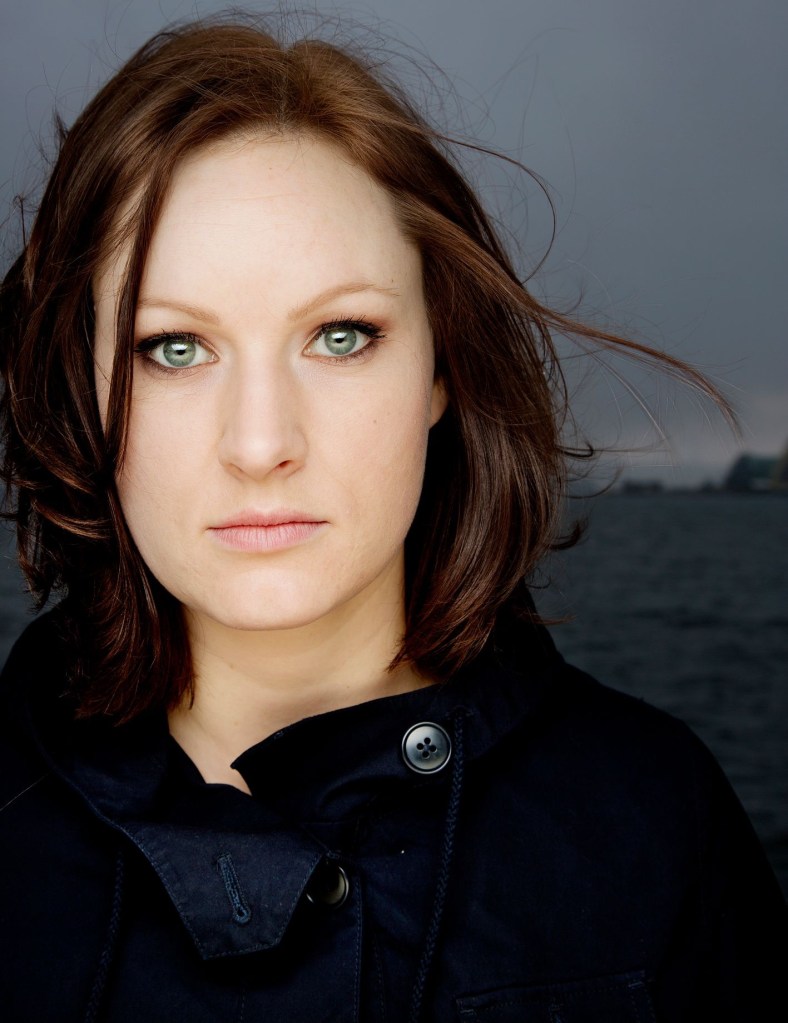
Meet the Author

Agnes Ravatn is a Norwegian author and columnist. She made her literary début with the novel Week 53 in 2007. Since then she has written a number of critically acclaimed and award-winning essay collections, including Standing, Popular Reading and Operation Self-discipline, in which she recounts her experience with social-media addiction. Her debut thriller, The Bird Tribunal, won the cultural radio P2’s listener’s prize in addition to The Youth’s Critic’s Prize, and was made into a successful play in Oslo in 2015. The English translation, published by Orenda Books in 2016, was a WHSmith Fresh Talent Pick, winner of a PEN Translation Award, a BBC Radio Four ‘Book at Bedtime’ and shortlisted for the Dublin Literary Award and the 2017 Petrona Award for Best Scandinavian Crime Novel of the Year. Critically acclaimed The Seven Doors was published in 2020. Agnes lives with her family in the Norwegian countryside.

Posted in Squad Pod

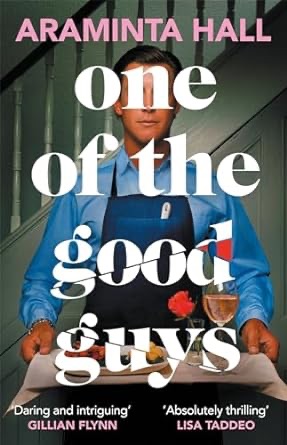
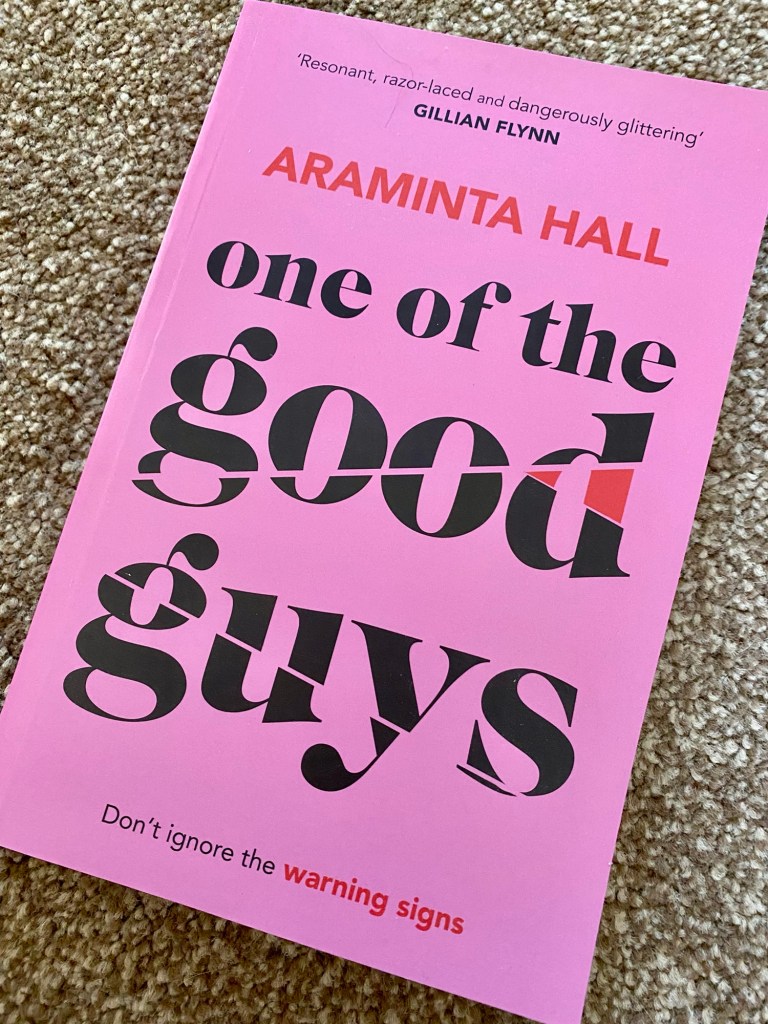
One of the Good Guys by Araminta Hall

Cole is the perfect husband: a romantic, supportive of his wife, Mel’s career, keen to be a hands-on dad, not a big drinker. A good guy.

So when Mel leaves him, he’s floored. She was lucky to be with a man like him.

Craving solitude, he accepts a job on the coast and quickly settles into his new life where he meets reclusive artist Lennie.

Lennie has made the same move for similar reasons. She is living in a crumbling cottage on the edge of a nearby cliff. It’s an undeniably scary location, but sometimes you have to face your fears to get past them.

As their relationship develops, two young women go missing while on a walk protesting gendered violence, right by where Cole and Lennie live. Finding themselves at the heart of a police investigation and media frenzy, it soon becomes clear that they don’t know each other very well at all.

This is what happens when women have had enough.

Wow! This blows your eyes wide open. I warn you not to start reading at night, unless like me you have a total disregard for tomorrow. Even if I wasn’t actively reading it, I was thinking about it. Cole has moved to a remote part of the coast for a total life change after the collapse of his marriage. Cole considers himself one of the good guys. In fact he would probably call himself a feminist. So the marriage breakdown and Mel’s reasons are inexplicable to him. He was proud of Mel, who was launching her own business, but as they crept towards their late thirties he was starting to wonder if they were leaving it a bit late to start the family they both wanted. After trying for a while, they’d decided on IVF which he knows was more gruelling for Mel than him, but was she really giving their embryos their best chance? Always working late, not eating properly and popping back to work after implantation were all endangering their chances of a viable pregnancy. Despite cooking and caring for her, and supporting her business dreams, Cole is now facing a pile of legal papers on the kitchen table – divorce papers, financial settlements and perhaps most hurtful, a form agreeing to destruction of their final three embryos. What can he have done to deserve this?

As he slowly heals he notices someone is living in the old coastguard’s cottage, a woman he can’t stop watching. She seems so feminine, but yet grounded enough to put her wellies on with her dress while she’s gardening. She is an artist and when they meet a party she introduces herself as Lennie. When he asks what it’s short for she tells him it’s Leonora. No one calls her that but Cole insists. It suits her better he tells her, softer and more feminine. Could the two of them strike up a friendship, or even more? In the background, getting air time on radio and television, are two young women in their twenties who have decided to take on a challenge – a fitting continuation of the work done by women’s movement in the 1970’s. They want to highlight the daily misogyny and violence against women that’s endemic in society. So they plan to walk over 300 miles of the coastal path, camping out each night in a tent. They know that this is dangerous but they want to support a domestic violence charity and raise as much awareness as possible for those women and girls living in daily fear of violence. However as the girls go missing one night it seems they may have fallen victim to their own cause. Could they have become lost and died from exposure? Could they have misjudged their steps and fallen from the cliffs? Or has something far more sinister happened – one of their online trolls following through on comments like ‘you deserve to be raped’.

I loved the way the author put her story together, using fragments from lots of different stories and different narrators. Just when we get used to one and start to see their point of view, the perspective shifts. I thought this added to the immediacy of the novel, but also reflected life and the constant bombardment of information and misinformation we sift through every day. As well as Cole we have narration from Lennie and Mel interspersed with transcripts of radio shows and podcasts, Twitter threads and TV interviews. All give their perspective or commentary on the casual misogyny and violence against women that almost seems like the norm these days. Just like real life the book sometimes felt like a merry-go-ground of opinion, counter argument and trolling. Sometimes I was left so twisted around I wasn’t sure what I thought any more. The only thing I was sure about was much I disliked every single character, but I couldn’t stop reading them either. I would believe one narrator, but then later revelations would blow what I thought right out of the water. As the missing person’s case continues, everyone is weighed up then torn apart on social media and in the press. It made me ask questions: about the nature of art and it’s ethics; about whether all men truly hate women; to what lengths do we go to protest; when is enough, enough? It’s been over a week since I finished this extraordinarily controversial story and I still can’t stop thinking about it. Is it too early to predict a book of the year? I don’t think so.

Thanks to Macmillan and The Squad Pod Collective for my proof copy of this amazing novel.

Meet The Author

Hello, I’m a writer of thrillers and a lover of stories. 

My latest book, ONE OF THE GOOD GUYS, was inspired by a groundswell of anger I’ve been feeling myself and amongst the women I know. Because if we don’t feel safe in the world, then it’s still a very unequal world. This is my answer to what happens when women have had enough of being scared.

I hope you enjoy this tense story set in a remote seaside location. I’d love to know if you guess the twist – I’m on instagram and X @aramintahall 

And, if you do enjoy this one, I’ve published five other novels, EVERYTHING & NOTHING (2011), DOT (2013), OUR KIND OF CRUELTY (2017), IMPERFECT WOMEN/PERFECT STRANGERS (2019) & HIDDEN DEPTHS (2021