I have a fascination for the idea of ‘thin places’ – where there’s only a thin veil between our world and the spirit world, or possibly passages to another time or dimension. I am swayed towards the idea that it’s where something traumatic happened and left an imprint on a place, so that however much time passes, the events of that day can break through and be replayed almost like an echo of the original event through time. Ava Brent is a journalist who is investigating one such place. The Overtoun Estate is a strange and looming presence over town and no one seems to know it’s specific history, but it’s rumoured to be a thin place, steeped in myth. The legend is about a bridge where it’s claimed many dogs have thrown themselves to their deaths. The locals steer clear and when Ava begins to ask questions the warm welcome she received at first becomes a cold shoulder. When she discovers that a sick young girl lived there, the sadness that surrounds the building starts to make sense. Ava is expecting her first child so is maybe susceptible to this tale, but a message scratched into a windowsill fills her with horror. What happened here and is she really prepared for what she may discover? What might her fascination with this place cost? As her life begins to unravel, she knows she should cut her losses and walk away. Then threats start to arise, but Ava can’t deny that despite the fear she is compelled to return.
This was an excellent slow burn gothic novel from an author that was completely new to me. I am interested in tales of motherhood and the paranormal, brought to my attention at university where I was influenced by Frankenstein and Rosemary’s Baby on my Gothic, Grotesque and Monstrous course. There’s something about the extraordinary changes in the body and the idea of another person growing inside you that’s open to the world of monsters; rather like a human set of Russian nesting dolls. I think it’s also horrifying when a horror exploits that moment when both mother and baby are at their most vulnerable. Ava is drawn to the specific bridge on the property, despite the strange and eerie feelings that congregate there. Ava is taken in by it’s ’otherworldliness’ and slowly it takes over her life. The author lets us into Ava’s inner world by devoting some of the narrative to her journal entries where page after page is devoted to her ramblings about the place. Her home life starts to become disrupted, self-care goes out of the window and even her pregnancy can’t compete with her drive to discover the truth.
In between Ava’s story we’re taken back to the historic occupants of the house. In the 1920s it’s Marion who lives there, a newly wed who feels lonely as her husband is away a lot for work. Then twenty years later it’s Constance, the sick little girl who is almost a prisoner, kept inside by her over anxious mother. Is she really the sick one in her family? Or is there some other motivation keeping her life so limited? We never know during these narratives whether what we’re being told is the truth. Are the women seeing events truthfully or skewed through the filter of their own experience? We all the view the world through our own learning, experience and emotional state so we have to question whether Ava’s state of mind is colouring her judgement? Is Marion’s loneliness affecting how she views the house? Could Constance’s illness and solitary existence have left her vulnerable to suggestion? All three could be unreliable narrators and the atmosphere can’t help, a sense of unease that settles over them and us. The darkness and mood seem to follow Ava like a miasma, created by every bad thing that’s happened there. It’s this that envelops her and draws her back again. Some historic events are appalling and I was affected by the scenes of animal abuse, as well as pregnancy trauma that’s also depicted. The scenes detailing pregnancy complications left me needing a few deep breaths and a cup of tea. That just underlines how well written the book is. I swear that as the book went on my blood pressure was climbing along with Ava’s. I was also left with a disoriented feeling sometimes and I think it’s a clever writer who can echo the character’s experiences with the feelings she evokes in the reader.
The supernatural elements were very subtly and gently done, with the mere suggestion of the paranormal being enough. The way I felt while reading proved that this was the type of gothic horror I really enjoy. It felt like a classic horror that creeps up on you woven in with the sort of historical background that really grounds the characters in their time. The author uses the supernatural elements and the terrible story of the dogs, to tell us something about mothers and daughters – daughters being an echo of every woman who has come before them in the family line. It’s also about how the women fit into their world and I loved how the author explored the expectations on women and pressure placed on them by others and society in general. The author’s notes at the end are so interesting too, especially the elements of the book based on a true story. Overall this was a great combination of gothic storytelling and a compelling historical thriller.
Out Now from Thomas and Mercer
Meet the Author
C. D. Major writes suspenseful books inspired by strange true stories. Alongside her thrillers she writes big love stories as Cesca Major, rom coms under the pseudonym Rosie Blake and emotional women’s fiction as Ruby Hummingbird. All information about her books, Book Club Questions and more are over on her website http://www.cescamajor.com. Cesca lives in Berkshire with her husband, son and twin daughters. She can be found on Twitter, Facebook and Instagram and enjoys connecting with readers.
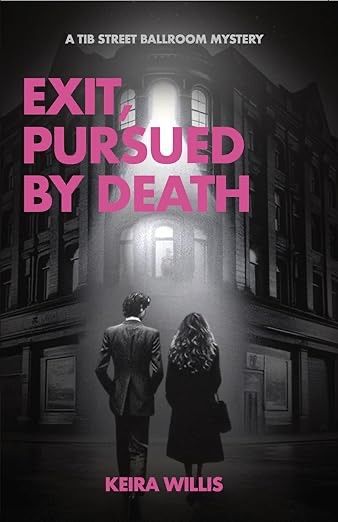
Unusual police departments have been a bit of a theme this month, with this being the third unusual investigation I read in February. This was a very spooky second visit to the unusual police department, housed in Manchester’s Tib Street Ballroom. We follow DI Andy Joyce, his team and their consultant Peggy who has some otherworldly skills and expertise. We’re at the Palace Theatre, where the cast are struggling to rehearse their play thanks to a dark, swirling and angry spirit. For some reason it wants them dead or the play cancelled at the very least. Lady Bancroft’s Rose has been performed only three times since 1922, but there has been a mysterious death each time. Particularly affected is Lavinia, a blonde actress who has taken over the play’s main role, since the original actress is now too traumatised to continue. Lavinia seems to be the focus of most of the spooky activity and she’s quite happy to cast Andy in the role of her rescuer – cue a few eye rolls from Peggy. More disturbing than the theatre is Andy’s home, the same cottage he grew up in with mum Agatha and brother Rob. While he knows Rob is there, he’s never been a difficult or angry ghost. Now strange things have started happening that make him think the ghost is angry, leading his guilt over Rob’s death to go into overdrive. With Andy and Peggy at odds with each other, will he ever found out what’s going on?
Similar confusion was happening at the theatre as more of the spirit’s angry tricks come to light, including an attack on Lavinia and another on her dressing room where words are written in black all over the mirror and the ceiling. Nothing adds up. No one has had time to create this effect and the only person who’s been inside is Lavinia. Peggy makes contact with a rather dapper ghost called Alistair, who tells her that thanks to the theatre’s busy past there’s more than one ghost haunting various parts of the building. He identifies Jock as the swirling shadow ghost who’s causing problems, but what the team need to work out is why this theatre and this specific play? Despite being in shadow form Jock seems capable of manipulating objects and attacking those he isn’t happy with. Or is there a human element to to this mystery? This could explain Higson’s insistence that the team stay at the theatre even though no crime has been committed. Either way it is a bonus for Andy, who can’t bear to go home and sets up a camp in the empty ballroom. For Peggy, family is also a problem. Charlie is his usual self, popping in and out when he feels like it and drinking with Higson. When it becomes clear that the play is being staged for charity her worst fears are realised. It’s the charity run by her mother and her partner Edgar, previously Peggy’s fiancé. How will she cope in the same room as them?
I thought the author managed to combine all the elements of her story well, although it wasnt the theatre case that caught my attention most. It was the terrifying scenes at Andy’s house and the ‘will they, won’t they” of him and Peggy. I love the humour laced through the action, especially the North West tone. I love that female characters are in the thick of the action and Marnie is honestly the ghost that keeps on giving. We’re no further forwards in knowing how she flits from place to place and person to person, but her entertainment value is unrivalled. From a psychological perspective we can see certain characters setting their boundaries in life, especially where parents are concerned whether they are alive or dead. It was interesting to learn more about Andy and his childhood which sounds bewildering. Once his father is gone and mum disappears into her church, the boys are almost abandoned – especially if they don’t fall in line with her new rigid religion. I know the third book is on it’s way and I’m looking forward to it already. I’d love to know more about how Higson set up the unit and what happened to Andy’s predecessor who still haunts the ballroom and chips in at briefings. I’m also looking forward to more of Peggy and Andy’s story too.
Meet the Author
Keira Willis was born in Manchester in 1986. and grew up irresistibly drawn to mystery novels and ghost stories.
Her captivating 1980s-set ‘Tib Street Ballroom’ is a thrilling crime and mystery novel with a ghostly twist, following DI Andrew Joyce’s transfer to an obscure police department in Manchester. Joyce must put aside his inherent scepticism and confront the impossible if he has any chance of solving Marnie Driscoll’s murder, working alongside reluctant ‘consultant’ Peggy Swan, who just so happens to be able to speak to the dead.
Book two of the Tib Street Ballroom series – ‘Exit, Pursued by Death’ – was published to acclaim in October 2024, and follows the Tib Street team as they investigate the dark history of a play, while trying to prevent another death from occurring on opening night.
With a belief that adults deserve their own share of action-packed, thrilling, and humour-infused adventures, Keira tells stories that blend intrigue with spirited storytelling and memorable characters, inviting adults to rediscover the exhilarating action-packed adventures that they immersed themselves in as children.
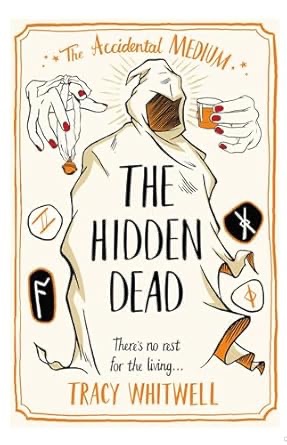
I couldn’t wait to read this, after reading the third book in this series earlier in the year. So I snagged it on NetGalley and read it immediately full of anticipation. I wasn’t disappointed. I love Tanzy and her adventures, usually she’s confined to the UK but this time she’s a little further afield. When she meets charming Icelandic giant Einar in a bar I did wonder whether vampires were about to debut in the series. His ability to ‘glamour’ Tanz seemed almost supernatural. Soon they’re sharing champagne and a bit of naked dancing too. When he invites her to his holiday cabin in Iceland to get some writing done, she decides to be impetuous and throw caution to the wind. This impulsive decision takes her to an isolated cabin with log burners, cosy decor and of course the odd spectre or two, After their first night together Tanz wakes up alone, without even a note and no plans for Einar’s return. She’s annoyed but not heartbroken. At the least she has a few days holiday in a country cabin for free and time to process her last case. Maybe she could start working on ideas for her own play? However, Iceland has its ghosts just as much as London. Did Tanz really think they would leave her alone?
In a nightmare, Tanz sees a man staring over the edge of a cliff. Is he going to jump? Before she can act a second person appears, a strange man whose eyes seem bottomless and hold universes. She can hear a woman crying outside her cabin and eventually a vision comes of this woman and her empty relationship with a man who doesn’t appear to love her. She follows him to work and finds him in bed with another woman, she screams and Tanz can hear his roaring anger as she wakes. It’s clear there’s a mystery here and she’s going to have to find the crying woman to work out why she needs her help. She doesn’t know if it’s going to be dangerous, especially without her friend Sheila in tow. Yet there are signs of protection: the rowan tree at the front porch; the feeling in the bedroom as if there’s a protection spell around her; the strange man from her dream who seems to be magical. Tanz knows she must help the woman, who becomes increasingly desperate and starts to bang on all the lodge’s windows to make herself heard. Tanz just doesn’t know how to help. When her distant neighbour pays a call there’s an instant connection and Tanzy puts it down to the fact they’re both a bit witchy. Birta has the most amazing cabin a short hike away with a seventies style interior that’s retro and cozy. With their combined knowledge and skills surely they can find what their distressed ghost is looking for?
I loved the character of Thor who is Einar’s friend but also a cab driver. He helps Tanz escape the cabin for a while. He has such a wholesome feel about him and is the complete gentleman. He listens to Tanzy’s story and doesn’t seem fazed by her experiences, although the knocking at the cabin is a bit unsettling. Tanzy feels very comfortable and safe around him, as he takes her under his wing. He really does take care of her, cooking for her and showing her some of the sights too. He has been friends with Einar for many years and knows how he operates. He wants Tanzy to feel like her time in Iceland hasn’t been wasted and his care of her really makes her examine why she is drawn towards unavailable men rather than those that show her how much they care. She tends to put nice men in the friend zone before anything has had a chance to develop. There’s part of her that’s addicted to the adrenaline that comes with a ‘bad boy’ and she hasn’t realised before that love doesn’t have to come with a side order of drama. Thor also accepts every bit of Tanz, her charisma and attitude but also the spooky and paranormal side of her life too. He doesn’t ridicule or belittle her psychic abilities, showing real interest and a willingness to help as far as he can. He really does take on her quest as his own, but also knows when to step back – when and where it’s her time to shine. He’s not overwhelmed by her and for someone who might be described as too much, there’s safety and security in that. But can safety and security be sexy?
I’d guessed some of the mystery brought by the distressed woman but thoroughly enjoyed the journey as Tanzy looked for a way of fulfilling her wishes. This takes help from Thor, new friend Birta and the ‘hildunfolk’. All our usual characters are here, including Sheila and Tanzy’s delightful ‘little mam’ whose always there at the end of the phone. She is often more aware of her daughter’s exploits than you’d expect from all the way over in Newcastle. I thought the author delved beautifully into Tanzy’s character and her romantic choices particularly. She has to examine her choices; to follow an unsuitable and unavailable man all the way to Iceland, but to banish a kind, available and warm man to the couch. Why won’t she let good men love her? It works well with the unfolding of the mystery around the cabin and how the choices we make because of desire are often destructive and life-changing. It seems we can be left with so many regrets that they follow us into the afterlife. I enjoyed some of the final revelations, particularly around the character of Birta. This is another solid addition to the Accidental Medium series and I felt like I’d spent a few hours with an old friend. I have a list of literary characters I’d love to have for dinner and Tanzy is definitely there at the table, possibly next to Mr Tumnus. Although she’d have to promise not to flirt with him.
Out on 13th February Pan MacMillan
Meet the Author
Tracy Whitwell was born, brought up and educated in the north-east of England. She wrote plays and short stories
from an early age, then moved to London where she became a busy actress on stage and screen. After having her son, she wound down the acting to concentrate on writing full time. Many projects followed until she finally found the courage to write the first in her Accidental Medium series, a work of fiction based on a whole heap of crazy truth. Apart from the series, Tracy has written novels in several other genres and also writes mini self-help books as the Sweary Witch.
Tracy is nothing like her lead character Tanz in The Accidental Medium. (This is a lie.)
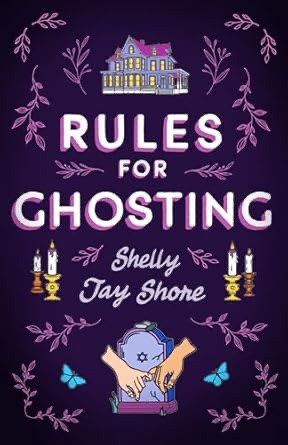
There are three rules about ghosts. Rule #1: They can’t speak. | Rule #2: They can’t move. | Rule #3: They can’t hurt you.
Ezra Friedman grew up in the family funeral home which is complicated for someone who can see ghosts. Worst of all was his grandfather’s ghost and his disapproving looks at every choice Ezra made, from his taste in boys to his HRT-induced second puberty. It’s no wonder that since moving out, he’s stayed as far away from the family business as possible.
However, when his dream job doesn’t work out, his mother invites him to Passover Seder and announces she’s running away with the rabbi’s wife! Now Ezra finds himself back at the funeral home to help out and is soon in the thick of it. He has to deal with his loved ones and his crush on Jonathon, one of their volunteers. Jonathon is their neighbour so Ezra is trying to keep the crush under wraps while also dealing with Jonathon’s relative, a spectre who’s keen on breaking all the rules. Ezra must keep his family together and avoid heartbreak, but is starting to realise there’s more than one way to be haunted.
This book came totally out of left field and I didn’t know what to expect at all, but I fell in love with it. I do connect to books about grief and loss as it’s something I’ve gone through but I also loved it’s emphasis on family, culture and tradition. Yes the book is about grief, but it’s also about love. Ezra is a Jewish trans man so it’s also firmly based in the queer community and I enjoyed that too. The romance is quiet and more of a slow burn than the heat of passion, tempered by Jonathon’s recent loss of his father. It depicts the chaos and disruption of death beautifully, especially in how it affects family members differently and can come between them. Ezra and the funeral staff treat deceased persons with respect; they’re both gentle and caring in their work with them and their grieving families. The author takes us deeply into the customs and rituals surrounding a death in a Jewish family and I find this so interesting because we can all learn from each other’s ceremonies and traditions. I felt that their attention to detail and the respect they had for the people brought to their funeral home was ultimately life affirming. Their deference shows how precious life is and that our relationships with family are the most important thing of all.
I also loved the author’s focus on something that I think is the secret to a happy and contented life – being your authentic self. We can see how Ezra’s connection to his communities – family, religion and the queer community – grounds him and reminds him of who he is. When we’re not true to who we are we start to feel dislocated and uncomfortable. Through Ezra’s story we explore how to find yourself again and hopefully be your authentic self. The book felt so much more than a romance, because it’s really a family story too. With a delicate touch the author also brings a light humour to the story, softening the grief and loss without being disrespectful which is a difficult balance to find. It surprised me that this was a debut novel because she’s managed that balance perfectly. My only criticism is that I was hoping for more ghosts. They were more of a background feature than relevant to the plot and from the blurb and title I expected more. Having said that it’s still a great story and I’d love to read more from this writer.
Published Aug 2024 from Trapeze.
Meet the Author
Shelly Jay Shore (she/they) is a writer, digital strategist, and nonprofit fundraiser. She writes for anxious queer millennials, sufferers of Eldest Daughter Syndrome, recovering summer camp counselors, and anyone struggling with the enormity of being a person trying to make the world kinder, softer, and more tender. Her work on queer Jewish identity has been published by Autostraddle, Hey Alma, and the Bisexual Resource Center.
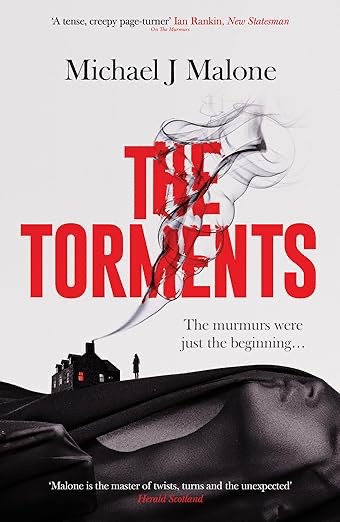
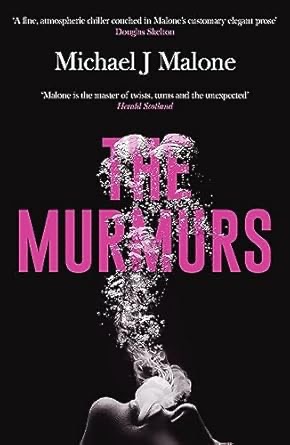
I was bowled over by the first novel in the Annie Jackson series – The Murmurs. I already knew that Michael was an incredible writer, able to bring great compassion and intelligence to his characters while delivering a page turning thriller. The added elements of the paranormal and Scottish folklore really grabbed my attention and fulfilled my craving for all things weird and gothic. Here we find Annie living in her little cottage with a view of the loch, the only place that gives her peace from ‘the murmurs’ that can strike at any time beyond the walls of her home. The murmurs are sibilant whispers letting her know that someone close by is near to death. A vision of a skull appears over the person’s face, followed by a horrible premonition of how they meet their fate. One day, while working a shift in the local coffee shop, Annie can hear the whispers and feel the rising nausea. This vision is for a young local man called Lachlan. Annie sees a terrible car accident and Lachlan’s vehicle wrapped around a tree. Torn between warning him and drawing attention to herself, or walking out and ignoring the vision, Annie chooses a middle ground. She tells him his tyres are bald and he really should change them. Even this course of action backfires as only hours later she is berated by a man who comes to tell her Lachlan is dead and she could have prevented it, but didn’t. The rumours about her powers go into overdrive as people realise Annie is the woman who found the bodies of several murdered women.
Annie can’t win. She’s either dismissed as sinister or even mad or she stays quiet and is blamed for whatever ensues. Desperately wanting to hide from the world, she hopes her little cottage will continue to protect her from the murmurs, but hadn’t banked on how angry locals would be. They break her windows and target her house with red paint. Thankfully, her twin brother Lewis arrives to stay and help just as their adoptive aunt visits, hoping that Annie’s gift might help someone in need. She wants them to look into a missing person case; a young man called Damian has disappeared and she suspects something sinister has happened to him. Damian has had a very complicated past, including ending up in prison on one occasion, but in recent months he had calmed down due to the birth of his son Bodhi. While Annie is keen to explain that she isn’t a medium and can’t find people on command, Lewis thinks they might be able to help. Why not research and interview people like a private investigator? Then during their investigation if anything comes up for Annie they can act on her ideas. What awaits them is a surprising and complex puzzle, that seems to include the dark arts and a woman with the ability to ‘glamour’ others. This time Annie could be in serious danger.
Michael moves us through different timelines and perspectives, from Annie and Lewis’s investigations to new characters called Ben and Sylvia who are pupils at a private school several years earlier. I found their tutor very disturbing, almost grooming both of them into his fascination with the occult. He’s chosen exactly the right students to draw into his web, students who are distanced or estranged from family and potentially vulnerable. His name is Phineas Dance – an awesome name for the villain of the piece! He gives them a reading list including Alastair Crowley and other proponents of the dark arts and they take to his teaching very well, particularly Sylvia who we watch become more obsessive as she matures. Their training involves ritualistic sacrifice, as well as the attainment of wealth and success – using their new powers to ensnare other followers of celebrity and influence. This leaves them both free rein to operate where they live, having local dignitaries in their pocket. Every few years they have a chance of ensnaring the Baobhan Sith, a mythical female deity who can unleash havoc. All they need is a sacrifice and who better than Annie? The author excels at creating a nail-biting game between Sylvia and Annie’s powers, with Sylvia drawing Annie towards her beautiful home and Annie’s murmurs being suppressed then surging again. Annie is confused by this strange sensation, that feels as if her brain is dialling in and out of a radio station! I was mentally begging her to resist Sylvia’s strange abilities and stay with her brother who is in a battle of his own. He’s using detective work to find out about their missing man Damien and unearthing a possible link to a terrible fatal accident that happened when he was only a teenager. Could this incident be behind Damien’s reckless and addictive behaviours? I loved his interactions with the detective working the missing person’s case, Clare is deeply suspicious of the brother and sister team at first. However, when she has an inkling that corruption might be at play she works in tandem with Lewis and they make a formidable team. I even detected a a bit of chemistry between them. This is a fast moving case, especially when Annie is targeted, meaning you won’t be able to put the book down until you know if she can be found before the ritual sacrifice begins.
When you finish this book you’ll feel like you’ve been on a fairground ride! The author has a brilliant way of engaging the reader’s emotions, drawing us into the character’s inner lives in a depth that can be rare in thrillers. It’s his ability to make us root for this brother and sister pairing that drives this novel. I feel so much for Annie, who hasn’t asked for this strange ability she has but has to live with the consequences and it’s a lonely life. She’s misunderstood and shunned by people who really don’t understand how powerless and frightened she feels. It was great to see her with the back up of her brother, who accepts her abilities without question and doesn’t judge. Their bond felt very real and setting aside the paranormal elements of their quest, they did remind of the close bond I have with my own brother. When you add these characters to a great case, full of drama and danger, it makes for a very satisfying reading experience. I absolutely raced to the conclusion, never expecting the outcome and enjoying the twists along the way. It left me hoping for more from Annie and Lewis, with a hope that Annie gets a little bit of respite from the murmurs first.
Published by Orenda Books 12th September 2024
For more reviews check out these bloggers on Septembers blog tour.
Meet the Author
Michael Malone is a prize-winning poet and author who was born and brought up in the heart of Burns’ country. He has published over 200 poems in literary magazines throughout the UK, including New Writing Scotland, Poetry Scotland and Markings. Blood Tears, his bestselling debut novel won the Pitlochry Prize from the Scottish Association of Writers. His psychological thriller, A Suitable Lie, was a number-one bestseller, and the critically acclaimed House of Spines, After He Died, In the Absence of Miracles and A Song of Isolation soon followed suit. A former Regional Sales Manager at Faber & Faber, he has also worked as an IFA and a bookseller. Michael lives in Ayr.
I quickly became fascinated with this mix of historical fiction, psychological suspense and the paranormal. We meet Annie Jackson as she tentatively starts her new job in a nursing home in the West End of Glasgow, hoping to get her life back on track. Annie suffers with terrible nightmares where she’s stuck in a car underwater. She also has the sensation that someone is holding her head under water until her lungs feel ready to burst. She also has debilitating headaches and she can feel one threatening as her new manager introduces her to resident Steve. Then something very odd happens, as a blinding pain in Annie’s head is followed by Steve’s face starting to shake, then reform. A whispering sound begins in her head and she sees Steve as a skull, followed by a vision of him falling in his room and suffering a debilitating stroke. She desperately wants to tell him but how can she without seeming like a lunatic? He becomes agitated and upset, as Annie starts to describe the layout of Steve’s bathroom and he asks her to stop. As she’s sent home from another job she starts to think back to her childhood and the first manifestations of her debilitating problem. Annie survived the terrible car accident that wiped her childhood memories and killed her mother. This strange supernatural phenomenon is why Annie is alone and struggles to make friends. These are ‘the murmurs’.
I felt so much compassion for Annie, as the story splits into two different timelines: we are part of Annie’s inner world as a child, but also in the present as fragments of memory slowly start to emerge. We also go back even further to the childhood of Annie’s mother Eleanor and her two sisters Bridget and Sheila. We experience their lives through other people’s stories and written correspondence, especially that of a nun who also works in a residential home. I enjoyed how this gave me lots of different perspectives and how the drip feed of information slowly made sense of what was happening in the present day. Different revelations have a huge effect on the adult Annie and because her memories have been buried for so long she experiences the shock and surprise at exactly the same time as we do. This brings an immediacy to the narrative and I felt like I was really there alongside her, in the moment. With my counselling brain I could see a psyche shattered by trauma, desperately looking for answers, she is piecing herself back together as she goes.
Teenage Annie had a similar vision about a girl called Jenny Burn, who went missing never to return. The murmurs awakened when her mum’s sister Aunt Sheila came to visit them. She tried to openly discuss an Aunt Bridget who also had a ‘gift’ but has ended up in a home. Eleanor, Annie’s mother, asks Sheila to leave, but it’s too late because Annie has already seen that her aunt is dying of cancer. Annie evades her mum and makes her way to the hotel, the only place Sheila can be staying. Unfortunately, Jenny is working on reception. Annie can see her climbing into a red car and she desperately wants to warn her, but she knows she’ll come across as a crazy person. Eleanor is desperately looking for a way to deal with her daughter, she’s a person of importance in the church and she can’t be seen to have a daughter who has visions. Pastor Mosley has Eleanor exactly where he wants her. There’s a control and fanaticism in him that scared me much more than Annie’s murmurs. When Eleanor takes Annie to the pastor, he demonstrates his control by holding her head firmly under his head as he prays for her. When she almost faints, he’s convinced there’s a demon in her. Annie is scared of him, she gets a terrible feeling about him but doesn’t know why. Religion is portrayed as sinister and controlling, with fervent followers who never question, but live in the way they’ve been instructed is Christian? story takes an interesting turn when Annie’s brother Lewis, a financial advisor, becomes involved with the church once more and it’s new pastor Christopher Jenkins, the son of their childhood neighbour. He’s revolutionised the church and through the internet he’s turning it into a global concern. He’s not just interested in saving souls though, he’s also amassing money from his internet appeals. He also seems very interested in meeting Annie.
As the book draws to a close the revelations come thick and fast as both past and future collide. The search for Aunts Bridget and Sheila seems to unearth more questions than answers. Annie finds out that Jenny wasn’t the only woman who went missing in Mossgaw all those years ago. As she starts to have suspicions about her childhood home, Chris seems very keen to draw her back there. Might he be planning a huge surprise? I was a bit confused at first with all these disparate elements, but as all the pieces started to slot together I was stunned by the truths that are unearthed. Then as Annie’s childhood memories were finally triggered I felt strangely terrified but also relieved for her all at once. I hoped that once she’d regained that past part of herself she would feel more confident and free, despite the strange gift she seemed to have inherited. Maybe by facing the past and leaning in to her relationship with her brother, she might feel more grounded and strong enough to cope with her ‘gift’. I thought the author brought that compassion he’s shown in previous novels but combined it with a spooky edge and some intriguing secrets. I really loved the way he showed mistakes of the past still bleeding into the present, as well as the elements of spiritual abuse that were most disturbing. This book lures you in and never lets go, so be prepared to be hooked.
Meet the Author
Michael J. Malone was born and brought up in the heart of Burns’ country, just a stone’s throw from the great man’s cottage in Ayr. Well, a stone thrown by a catapult, maybe.
He has published over 200 poems in literary magazines throughout the UK, including New Writing Scotland, Poetry Scotland and Markings.
BLOOD TEARS, his debut novel won the Pitlochry Prize (judge:Alex Gray) from the Scottish Association of Writers and when it was published he added a “J” to his name to differentiate it from the work of his talented U.S. namesake.
What a year it’s been for debuts!! This is another excellent read that I’d put on the back burner because I had over committed myself to blog tours. I’m so sorry I didn’t read it sooner because I absolutely LOVED it. This is my absolute favourite genre – gothic, historic fiction – but when added to the elements of spiritualism, transgressive females and dysfunctional families this would definitely come up on Goodreads as highly recommended. In Paris, 1866, a couple of sisters are living very separate lives; Sylvia who is now Baroness Devereaux and Charlotte Mothe, the sister she left behind with a drunken, violent father. When Charlotte pays a heavily disguised visit to Sylvie’s home she assumes their father is ill, but it’s a different aspect of her past she’s bringing to her sister’s door. Their mother had a business as a spirit medium, but Sylvie promised to put such shady dealings in the past when she married the Baron. Charlotte needs her sister for one last con, to pay her father’s medical bills. The aristocratic de Jacquinot family think they are being haunted by an aunt killed in the revolution. They will need to use all their tricks to frighten money out of this family, but they didn’t bank on being absolutely terrified too.
The Perrault fairy tale underpinning this story is ‘The Fairies’ but the sisters don’t necessarily agree on the interpretation. One sister is asked a favour by an old crone, a glass of water from the well, but she ignores her and is cursed to expel toads every time he opens his mouth. On the next day the other sister is commanded to provide a glass of water by a young beautiful woman and grants her the favour. The second sister opens her mouth and gold coins spill out. Perrault says one sister is good and one is bad and Sylvie accepts this, but Charlotte thinks changing her disguise was a mean trick.
“The test is rigged from the start – even before the fairy turned up, when Perrault labelled one sister good and one bad on the very first page, before either got a chance.”
However, by the end Sylvie has changed her perspective. She muses that if she had a daughter would she be toads or gold? She decides not to read her Perrault; ‘I think I will let her decide for herself how a girl should be.”
The de Jacquinot family are dysfunctional and have narrowed all their problems down to the daughter, Josephine. They are clearly struggling to stay afloat, with clear spaces on the wall where there used to be paintings. Yet none of them are working or making any money, still living like the aristocrats they once were. The grandfather seems grumpy but is convinced they have a visiting spectre – Aunt Sabine who died in the revolution when her throat was cut. Brother Maximilien is cynical, in his book there is no such thing as spirits and his sister is suffering from a prolonged bout of lunacy brought on by a dalliance with a once trusted friend of his. Josephine is absolutely convinced there’s a spirit. Charlotte and Sylvie started their routine and I’d not expected them to be charlatans! I loved the details of their routine – the snuffing out of candles, the ring of salt. I thought that the story of creating waxed spectral hands with their mother was a brilliantly quirky childhood memory! Charlotte adopts the patter again straight away, talking about “penumbral disturbances” and “liminal spaces”. Sylvie almost admires her sister as she weaves a tale around the de Jacquinot home and their errant daughter.
However, everyone is shocked when Sabine appears to possess her niece. Josephine has become a different person, babbling about something being taken from her and spitting with anger at her grandfather. Then she’s overcome, with ectoplasm pouring from her mouth. This is something they’ve heard of but have never seen spontaneously like this. That night the library walls are trashed and the ancestral paintings are slashed to pieces, all expect Sabine’s. The family suspect a poltergeist but how could they have slept through such destruction? After this even Maximilien is on board, yet Sylvie suspects something isn’t what it seems. Charlotte was vociferous in her defence of Josephine, almost as if she actually cares. Sylvie knows that her sister has become unnaturally attached to young women before. Before they can go any further Sylvie’s husband confronts her at home. He’s had her followed and suspects an affair with Maximilien de Jacquinot who is closer to Sylvie in age. Sylvie tries to protest her innocence, but it’s difficult when she has betrayed her husband, just in a different way. She can’t reason with him and can only do what he asks, to leave. Now she is back in her miserable childhood home, listening to her father snoring as she lays awake and bereft.
Here the author pulls a brilliant ‘Fingersmith’ style twist, with a change of narrator and perspective of the same events. This narrative is what happens to the girl who spews toads and doesn’t conform. Charlotte is the daughter who stayed behind and still nurses the father who she suspects of killing her mother. In Charlotte’s story, instead of the aristocracy we meet an interesting set of characters who live and love outside the norms of society. I loved meeting Mimi who could fill a book of his own! The atmosphere and settings in the book are brilliant and give a very varied look at the city of Paris, from the poverty Sylvie and Charlotte come from to the remaining aristocrats and their crumbling mansions. This is a society recovering from the shock of revolution and a shift in the existing hierarchy. The de Jacquinot family are like their mansion, falling apart. I loved the dual staircase too, with Josephine and Charlotte using the servant’s exit together when surely they should use the main stairs? There’s are further tantalising hints of people who live outside the rules, quite lavishly if Mimi’s quarters are the example. I could see why Sylvie had opted to disappear into the money classes, because the difference between her rooms and the home she came from is stark. She also truly loves her husband and hasn’t married him for a comfortable life as her sister thinks. Charlotte does feel the dice was loaded when it came to their differing fortunes and I think she sees the Perrault fairy tale as an allegory for her sexuality. Sylvie is able to conform in this way and Charlotte can’t, she’s born the way she is into a world that doesn’t accept her. I was also sympathetic to her situation at home, trying to care for a man who is hard to love and has been violent towards them all. This was an amazing read, genuinely spooky but also a novel about families. Those who fit into their family and those who don’t. This is a fabulous ghost story with an unexpected twist and a wonderful glimpse of a society in flux.
Meet the Author
Carmella Lowkis grew up in Wiltshire and has a degree in English literature and Creative Writing from the University of Warwick. After graduating, she worked in libraries, before moving into book marketing. Carmella lives in North London with her girlfriend. You can follow her on social media @carmellalowkis. Spitting Gold is her first novel.
There’s a queue at her door, and not all of them are living …
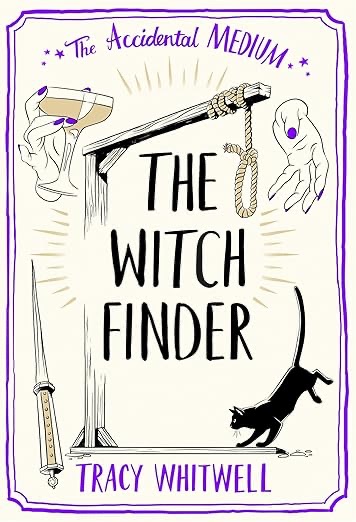
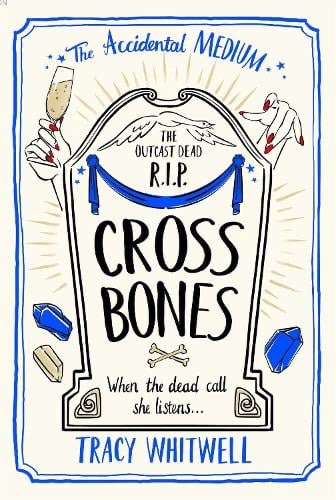
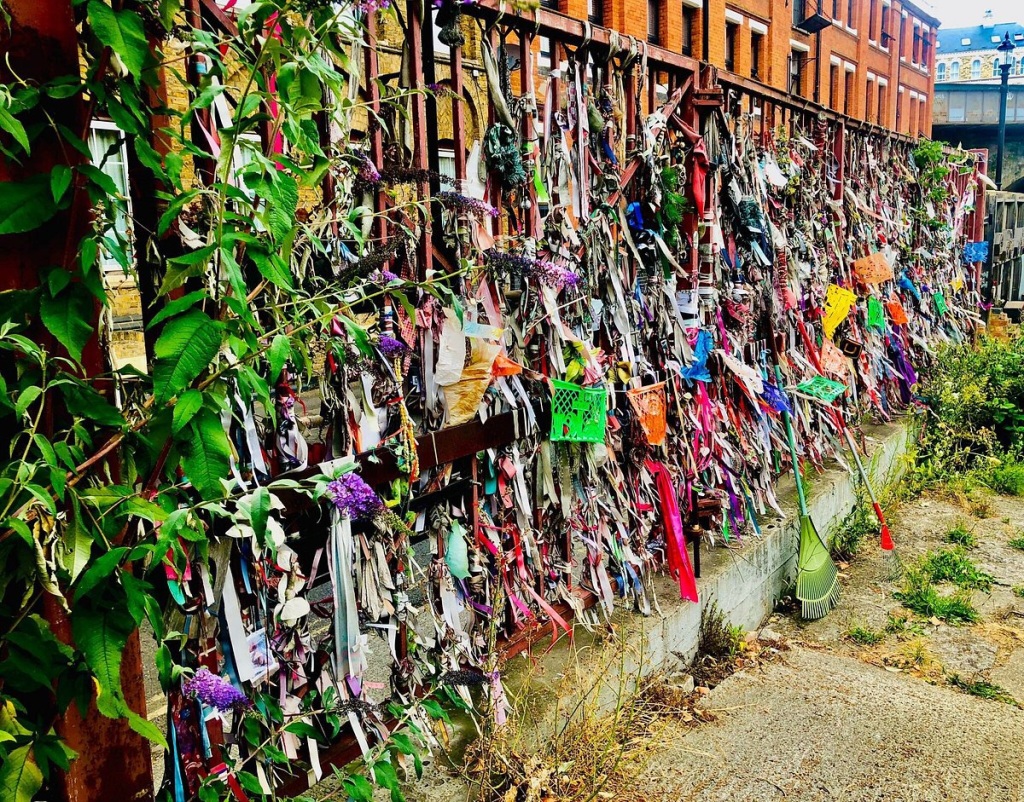
If you haven’t had the pleasure of meeting Tracy Whitwell’s character Tanz yet, you’ve been missing out. This bold, sweary Geordie actress and accidental medium is a delight and this is her third adventure in the series. Tanz is being torn in two directions as she reluctantly agrees to do a fringe play in London, but is also suddenly ‘activated’ as her spirit guide Frank explains. She is sent a new guide who she calls ‘Soft Voiced Lass’ and her flat is suddenly teeming with visions and apparitions, including a nurse who is on duty and walks through the wall into Tanz’s bedroom, which is quite a feat when you don’t have any legs! Luckily she has friend and fellow medium Sheila to rely on, but there’s a lot of sleeping with the light on too. As the play she’s been cast in becomes more dramatic off stage than on, Tanz has time on her hands and is guided down to Southwark and a cemetery known as Cross Bones. This is the burial place of the Winchester Geese, so called because they were prostitutes licensed by the Bishop of Winchester. After their deaths it was decided they could not be buried in consecrated ground and so this small burial ground became theirs and many of the poor in the same parish. Tanz is greeted by a horrific vision of the ground in the Victorian period, when overcrowded tenements spread diseases like wildfire and deaths from cholera, typhus and consumption were the daily norm. What Tanz sees isn’t an ordinary graveyard though. The smell hits her first; death, smoke and sewage creates a miasma that seems to cling to your clothes. In the yard Tanz can see a grave digger with a woman screaming at him, when she looks down she can see some fingers and a skull where he has been digging a body up to make room for more. She is overwhelmed and doesn’t really know what her purpose is here, just that it isn’t going to be easy.
The gates at Crossbones Graveyard
I love Tanz because she’s one of the most real people I’ve ever met in a book, despite the spooky stuff that surrounds her. She’s very down to earth, independent and has a few vices. She’s also very compassionate with the living people she helps and the dead ones too even if they do scare her. She has a couple of solid friends, especially Sheila, but sometimes she gets lonely, especially as she gets older and sees friends pairing off and making new lives together. She’s in the same flat, still scraping by with no big break in sight. The play she’s rehearsing is comical and the small company has such vivid characters they leap off the page. Gerald is a particularly fun addition to her circle – an elderly actor with the old school manners of a man who was inspired to act by Olivier and Gielgud. Everyone except the playwright knows the play is rubbish and the sexual politics in the company are impossible to work with. At home different visions pop up, from an Irish family who look like they’re starving, to a woman at a sewing machine and very strangely, a ghost that lurks in the hallway with a blackened face. She knows all of this must make sense to someone and keeps visiting Southwark and doing her research into the area. The history behind the story is fascinating and had me searching and reading for information afterwards. Eventually the graveyard was used for all the poor in the area and with an influx of families from Ireland, escaping the dreadful famine ( to quote Sinead O’ Connor ‘there never really was one’) overcrowding was common. The place inside that should have been somewhere to view the dead, especially for Catholic families who prefer to have an open coffin, became a charnel house. There were rotting bodies everywhere from those they had no room to bury and those who’d been dug up to make room for more. It’s a vision of hell, made worse when the traumatised gravediggers, dulled by compassion fatigue and possible PTSD, started playing skittles with human skulls. No wonder the woman in Tanz’s vision is screaming.
No 2 in The Accidental Medium Series
Tanz thinks her visions relate to a single Irish family, the family she sees in a tenement room starving and looking completely shell-shocked by their circumstances and their losses. When Tanz sees a soldier called Robert, shot in the head and looking for his wife she starts to piece things together. Could this be several generations of the same family and could any of them still be alive? Between the spooky action there’s a huge injection of dark humour that I really appreciated. I love Tanz’s slightly prophetic phone calls from her ‘mam’ who strangely seems to always know when her daughter’s up to something while scolding Tanz for meddling in spooky situations. Thank God she doesn’t find out about the black faced woman, the homeless man and the knife! There’s also a side order of romance in this novel, with a younger police officer stirring up rather unexpected feelings for Tanz. Usually she wouldn’t consider a younger man, especially one of the good guys, but maybe now is the time for changing habits. It’s nice to see Tanz meet someone who likes and respects her for a change. Maybe Tanz has developed some boundaries and boosted her self-worth enough to accept that someone like this could like her. She’s also stopped the habit of always keeping her eye on the exit in her romantic affairs. She’s taking her gift seriously and maybe has to accept that it’s this type of work that she finds most fulfilling. Although, she also makes a radical move in her acting career too. It’s lovely to see Tanz in such a strong position in life, she’s ready to take on the world and I can’t wait for her next adventures.
Out on 17th July from MacMillan
The first novel in the series.
Meet the Author
Tracy Whitwell was born, brought up and educated in the north-east of England. She wrote plays and short stories
from an early age, then moved to London where she became a busy actress on stage and screen. After having her son, she wound down the acting to concentrate on writing full time. Many projects followed until she finally found the courage to write the first in her Accidental Medium series, a work of fiction based on a whole heap of crazy truth. Apart from the series, Tracy has written novels in several other genres and also writes mini self-help books as the Sweary Witch.
Tracy is nothing like her lead character Tanz in The Accidental Medium. (This is a lie.)
If you’d like to know more about Crossbones Graveyard this is a great site to start with:
This week I’ve been writing a Sunday Spotlight post about the Victorian novels of Sarah Waters and while I was thinking about some of the themes of Affinity this book popped into my mind. So I decided to make it this week’s Throwback Thursday. At the time I’d never read Julie Cohen’s work, so I didn’t know what to expect from her writing. Only a few weeks before, on Twitter, I was discussing when a new Sarah Waters novel would be appearing. Spirited by Julie Cohen has definitely filled that gap. It’s also made an impact on me that’s all it’s own. Viola Worth has grown up cared for by her clergyman Father, as well as his ward, a little boy called Jonah. Viola and Jonah are the best of friends, spending their childhoods largely inseparable. As we meet them in adulthood, they are getting married, but in mourning. A lot has happened during the period of their engagement. Jonah had been out to India, staying at his family’s haveli and checking on his financial interests. For Viola, it’s been a tough time nursing, then losing, her father. He encouraged her in his own profession as a photographer and she has become accomplished in her own right. Viola’s father wanted her to marry Jonah, and they are still the best of friends, but the time apart has changed them and neither knows the full extent of the other’s transformation. As they try to settle into married life on the Isle of Wight, Jonah spends his time sketching fossil and bone finds with his scientific a friend. Viola feels cut adrift and without purpose, as we find out later she doesn’t even feel she is fulfilling her role as Jonah’s wife. Through new friends the couple meet a visiting spirit medium, although as daughter of a clergyman, Viola would never normally enjoy this type of entertainment. Little do they know, this woman will change their lives.
The author slips back and forth in time to tell us about Henriette, who worked her way in life from being a servant to a respected spirit medium. She is a woman who started with no advantage in life, and as a young servant models herself on the governess in the house, a French woman known as Madame to the family. Henriette diligently listens to the children’s French lesson and nurses a hope of a future where she doesn’t clean up after other people or have to wish for a roommate so she isn’t sexually assaulted in the night. Her attacker labels her a whore and one early morning, after there’s been a house party, she stumbles on a group of men in the stables betting. They are playing cards for money, but once they see Henriette they become intent on a different sport. It is Madame who interrupts the attackers and she gives Henriette advice from one woman surviving alone in the world to another. The author also takes us back to Jonah’s time in India. We discover that in social circles Jonah is a hero, because during a massacre he rescued a young girl who lived in his haveli after all her family are killed. Viola wonders if it is this experience that has changed Jonah. They live as if they are brother and sister, Jonah spends less time with her than before and at bedtime they still go to their separate bedrooms and sleep apart. Viola knows there is more between husband and wife but doesn’t really know what and has no idea who to talk to. Through Henriette, Viola is asked to take a photograph of a child who has died so the parents have an image to keep. No one is more stunned than Viola when she develops the image and sees a blurred figure standing next to the bed, the likeness to their child shocks and comforts the parents; they feel reassured that their child lives on in spirit. This experience, and her experience of her first proper female friendship, is like a floodgate opening for Viola. She starts to question the limits of her faith, whether there is more in life she would like to try and as time goes on, whether the burgeoning feelings she has for Henriette are friendship or something else.
I loved the feminist threads running through this novel. The central women in the novel are each in liminal spaces, different from the conventional Victorian women we see like Mrs Newham. Henriette is a self-made woman, unmarried and travelling from space to space offering her spiritualist services for enough to survive on. She has moved from bar girl, to servant, to nursing and losing her elderly husband, and now into a semi-respected occupation. She gets to visit the homes of those she might have once waited upon, but isn’t tied by their social rules and conventions. In India we meet Pavan, who has made the exceptional choice within her societal rules to become educated and has made huge sacrifices in order to achieve that. Love was not on her agenda, and when it comes she experiences a painful separation between her intellectual choice and her emotions. Viola may seem the most conventional of these women, but her relationship with her father has set her apart from others of her class. He believed in educating Viola the same way as Jonah, then teaches her the art of photography too, usually considered a male pastime. Viola is respectful of many conventions, but finds herself emboldened by Henriette and the new experiences she brings to her life. She tries bathing in the sea and is bold enough to start accepting her ‘gift’ of capturing spirits. Behind them all is the french governess Madame. The role of Victorian governess is the very definition of a liminal space: she works in the home but is not a servant, educated and unmarried, respectable, but not on the same level as the family she works for. She has power in that she works for herself, has and controls her own money and can choose to leave her position and join another family, in a different place. Her acknowledgment of Henriette’s fate, as a pretty face in the power of men, inspires Henriette to be more. It gives her aspiration, although she may never be a gentlewoman, with careful decision making she could be more like Madame.
It is within the physical liminal spaces where there are beautiful passages of writing from the author. The scene where Henriette and Viola go bathing is absolutely exquisite because I could feel everything. The strangeness of undressing in a darkened box on wheels, the feel of the swimming dress, the rough and tumble of being pulled into the sea by a horse, then opening the door to see nothing but the ocean in front of you. This is a play on conventional baptism for Viola. She fully immerses herself in the water, supported by Henriette, and feels a rebirth. The heaviness in the uncoiling of her hair and letting it float free signifies a freeing from the constraints of Victorian fashion, as is the unlacing of the corsets. As they trundle back up to the sand after their swim, Viola wishes they could stay in this space in the dark for the intimacy with Henriette, and the knowledge of the freedom she will feel as she opens the door and sees nothing but ocean. When the women share Viola’s room the writing is so tender. Viola worries what the servants might think, but Henriette frees her thinking again. Love between women does not exist, she tells her, there are laws and conventions regarding love between a man and a woman, and even the love between men. What they are to each other is beyond the thoughts of most people, the servants will see two friends staying together and nothing more. Pavan and Jonah, don’t meet in the main haveli but in an ancient old temple in its grounds, a space no longer used for its purpose and outside the family structure inside the house. They meet as two people of different cultures and beliefs, but find a connection so powerful that each would put their lives on the line for the other. Jonah wonders whether he could live a different life to the one laid out for him back in England. He’s seen other English men here who have married Indian women and had children. They’re neither totally respectable, but are not shunned either. This is a novel of people, particularly women, learning to live in the spaces between; the places that promise more freedom.
This was an original, emotional and beautifully written novel that weaves a powerful story from a combination of painstaking historical research and imagination. Each character is fully fleshed out and has a rich inner life. Where real events such as the 1857 Siege of Delhi are used in the novel, they are deeply powerful and the author treats them with respect. The elements of spiritualism and spirit photography are well researched and based on a real fascination for the paranormal in Victorian society. Cohen acknowledges that this is a novel about faith: religious faith, faith in the paranormal and that the ties to those we love don’t end in death; faith in romantic love and the promises we make to each other; even the faith she has in herself. In the acknowledgements to this novel Julie Cohen says ‘I wrote the first draft of this book when I thought my writing career was over’. Judging by this book, it’s far from over. However, by allowing herself to think of that possibility, she gave herself the space to write something truly extraordinary.
Meet The Author
Julie Cohen grew up in the western mountains of Maine and studied English at Brown University and Cambridge University before pursuing a research degree in nineteenth century fairies. After a career as a secondary school English teacher, she became a novelist. Her award-winning novels have sold over a million copies worldwide. DEAR THING and TOGETHER were both selected for the Richard and Judy Book Club. Julie runs an oversubscribed literary consultancy which has helped many writers go on to be published. She is a Vice President of the Romantic Novelists’ Association, founder of the RNA Rainbow Chapter for LGBTQ+ authors, and a Patron of literacy charity ABC To Read. You can find Julie on Twitter: @julie_cohen or you can visit her website: http://www.julie-cohen.com
Latest Novel from Julie Cohen
‘Marriages end with a whisper, not a bang. Not an argument, which is after all about passion, waves crashing on a shore, but with the small pockets of coldness that an argument creates. It’s like islands. They don’t sink like Atlantis. They wear away, little by little, until all you’ve got left is a single rock and a light. A warning to safer travellers to stay away’.
Sitting on my TBR is this latest novel from Julie Cohen, a very different novel to Spirited in that it’s contemporary, but still about love and relationships. The last time Vee left the shores of Unity Island, she thought she’d left forever. But this summer, she’s returning with her charming husband, Mike. Vee’s unexpected arrival, this time as one of the wealthy ‘summer people’, sets the small island community alight with gossip. What’s more, her childhood best friend, Sterling, is furious that she’s come back – Vee abandoned him when he needed her most.
And then Vee meets Rachel, Sterling’s wife, and a spark is ignited within her that she can’t extinguish. And as summer turns to autumn, long-buried secrets emerge that will cause a storm greater than any of them could ever have imagined.
But when autumn comes, who will sail away with the tide and who will choose to stay behind on the island…?
Who doesn’t love a witchy novel at this time of year? In fact, the only thing better than a witch novel is a whole series of them. Here I’m recommending series and one-offs that really fit the bill on these cold autumn afternoons. They’re exactly what I want on a Sunday afternoon, snuggled on the chaise langue with the log burner lit and preferably a pack of M&S Belgian Chocolate Toffee Popcorn. Bliss. There are golden oldies and a few new books to bring a sprinkle of magic into your Halloween.
Joanne Harris’s Chocolat Series
Whenever I pick up Chocolat I immediately feel enclosed by this sumptuous and magical world that Joanne Harris has created. It is the book equivalent of sitting in a candlelit room, Christmas tree sparkling magically in the corner, a warm fire and some real hot chocolate. It’s as if Vianne Rocher is enchanting me from between the pages. From the moment the changing wind blows her into the village of Lansquenet she begins to work her magic on the villagers, much to the disgust of parish priest Father Reynaud. She establishes a chocolate shop directly opposite the church and so begins a struggle for power. Her magic is subtle, but she is an amazing chocolatier and she has the ability to discern which one of her chocolates will be someone’s favourite. With her chocolate pot always simmering and ready with a listening ear, her shop soon becomes the regular haunt of some of the villagers. However, the priest is preaching against Vianne Rocher. He doubts her morals, dislikes the sense of indulgence she’s creating, and is suspicious that she may be a witch. Maybe he’s seen Pantoufle, the imaginary friend of Vianne’s little girl Anouk. This push and pull between church and chocolate is left behind in her second novel The Lollipop Shoes where we follow Vianne to Paris where they live above her chocolate shop. Then Zozie De L’Alba sweeps into their lives, the woman with the lollipop shoes, but she isn’t all she seems. Seductive and charming on the surface, she can also be ruthless and devious. Again, Vianne finds herself with a powerful enemy. Should she do what she’s always done before and run?
Peaches for Monsieur Le Curé takes us back to Lansquenet and feels like a lighter novel, more suited as a sequel to Chocolat. It’s a letter from an old friend that brings her back to the village, but this is an unusual letter, because Vianne’s friend is dead. She finds the village changed since her last visit, with a new community blown in with the wind. Where once the river gypsies were the village has grown, there’s now a hint of spices, veiled faces and a minaret as North African migrants have settled. So Reynaud could have a new enemy. However, Vianne finds that he’s in trouble, could this possibly be the reason she’s been drawn back to the village? I loved the feel of this novel, with old characters popping up and old adversaries seeking change. It really felt like the story had come full circle so I was surprised when I heard there was another part to the series. The Strawberry Thief is every bit as atmospheric as Chocolat and all seems settled in Lansquenet. Vianne and her youngest daughter Rosette have settled in the chocolate shop. Even her relationship with Reynaud has settled into a friendship. It’s when the florist Narcisse dies that the wind changes. His will is cause for gossip and then someone opens a shop in the square, opposite Vianne, The strange pull it exerts seems familiar, but what could this mean for Vianne. This series is so warm and the settings are absolutely enchanting. The magic is sprinkled throughout, but Vianne is not just an enchantress. She’s a catalyst. A force for change. She inspires people to cast off rules and do what makes them happy. She gives women who are unhappy and even abused, the strength to leave. She frees people and that is an incredibly powerful gift to have.
A Witch in Time and The Ladies of the Secret Circus by Constance Sayers.
I’m relatively new to the work of Constance Sayers, but I’ve certainly made up for the oversight since. A Witch in Time is high on my TBR for the end of this year, but it sounds just up my street. We go to four different time zones, into the lives of four different women, but between them there’s just one star-crossed love. In 1895, sixteen-year-old girl called Juliet begins a passionate, doomed romance with a married artist. Next we’re in 1932, with aspiring actress Nora as she escapes New York for the bright lights of Hollywood and a new chance at love. Then it’s 1970 and we meet Sandra who lives in California, it’s perfect for her music career but she’s threatening to tear her band apart with a secret love affair. Finally, we reach the 21st Century and a confused Helen who has strange memories of lives that she hasn’t lived. These are tragic lives, cursed with doomed love, because Helen was bound to her lover in 1895, and trapped by his side ever since. She’s lived multiple lifetimes, under different names, never escaping her tragic endings. Only this time, she might finally have the power to break the cycle.
I was determined to have an early copy of The Ladies of the Secret Circus as soon as I saw a trailer for it on Twitter.
The surest way to get a ticket to Le Cirque Secret is to wish for it . . .
As a huge fan of The Night Circus I knew this was for me and thankfully I managed to get a copy on NetGalley. This time Sayer’s takes us back to Paris in 1925 where to enter the Secret Circus is to enter a world of wonder. See women weave illusions, let carousels take you back in time, and see trapeze artists float across the sky. Bound to her family’s circus, it’s the only world Cecile Cabot knows until she meets a charismatic young painter and embarks on a passionate affair that could cost her everything. In the 21st Century, Lara Barnes is getting married and feels on top of the world, but when her fiancé disappears on their wedding day every plan she has for the future comes crashing down. Desperate, Lara’s search for answers unexpectedly lead to her great-grandmother’s journals and is swept into a story of a dark circus and ill-fated love. There are secrets about the women in Lara’s family history, which need to come to light. They reveal a curse that has been claiming payment from the women in her family for generations. A curse that might be tied to her fiancé’s mysterious fate. Both of these tales are full of spells, magic and ancient curses, but they’re also colourful, romantic and full of wonder.
The Practical Magic Series by Alice Hoffman.
I write about these four books every Halloween and I should perhaps look for some new material, but I can’t stop because I love this author and these four books are a brilliant witch series. Although Practical Magic was the first book in the series, followed a very successful film with Nicole Kidman and Sandra Bullock, it’s actually the third instalment of this story following the Owens family try to juggle life with their witchy heritage. Hoffman went on to write two prequels and a sequel to Practical Magic where we meet a different generation of the Owens family, both as teenagers and then as elderly ladies, hoping to change change the curse that’s been controlling their lives ever since the witch trials. We start in Magic Lessons when baby Maria is left abandoned in a snowy field near the home of Hannah Owens. Hannah is a healer who lives in isolation, but the women of the town manage to make their way to her door for the remedies they sorely need usually due to the pains and consequences of love. When men feel threatened they do terrible things and when Hannah is set upon by the men of the village, Maria escapes and makes her way down to the Caribbean as a servant. However, when the man she loves betrays her, Maria follows him back to Massachusetts and begins a war against the Puritan settlers. Will her quest for revenge blind her to real love and curse her family for a generation? Then we jump to the 20th Century and the Owens sisters Franny and Jet, with their brother Vincent. Their mother knew they were special because they each have their own talent: Franny with the blood red hair can talk to birds, Jet is so beautiful and incredibly shy but in the quiet she can read what people are thinking. As the teenagers start to interact more with the outside world, it seems that Vincent’s charisma may get him into trouble. Yet it’s Jet’s world that may be turned upside down by the curse of the Owen family.
Practical Magic is actually the third in the series and we’re one generation on, in the same house in Massachusetts. Gillian and Sally live with their aunts Franny and Jet, they keep themselves to themselves mostly, but the girls know that if the porch light is left on at night, women who wouldn’t give them a glance by day seem to find their way at night. Gillian is the wilder one of the sisters, roaming from state to state and attracting all the wrong men. When she returns to Massachusetts, homebody Sally knows that she’s brought trouble home with her. Even their magic might not cover her tracks as a handsome investigator arrives in town asking questions. Since her husband died Sally has lived quietly, avoiding her magical skills and men. Now her sister’s return might jeopardise the stability she’s created for her girls. They may need help from the aunties for this. Hoffman’s fourth in the series, published last year, is The Book of Magic. The three generations of Owens women who all live in the same small town in Massachusetts, have found a way to accommodate their family curse and their magic skills. Until Sally’s youngest daughter Kylie falls in love with her best friend. As the curse does it’s worst the family must find a book of magic, the only one with the knowledge that might break the family curse and allow the younger generation to love without limits or fear of tragedy, Sally will have to embrace the skills she’s avoided for so long and as the family fight to save their youngest member, one of the oldest gets wind of a change coming. A fitting end to a brilliant series,
The Waverley Sisters Series by Sarah Addison Allen.
This is a lovely and light two part series set in Bascom, North Carolina. They’re warm books that focus on family first and spells second, plus it’s full of food and charm so it wins me over straight away. It seems everyone in Bascom has a story to tell about the Waverley women. They live in a house that’s been in the family for generations, have a walled garden that mysteriously blooms year round, and then those rumours of dangerous love and tragic passion that surround them. Every Waverley woman is somehow touched by magic, but Claire has always clung to the Waverleys’ roots. She stays grounded by tending the enchanted soil in the family garden and makes her sought-after delicacies – famed and feared in town for their curious effects. She has everything she thinks she needs – until one day she wakes to find a stranger has moved in next door and a vine of ivy has crept into her garden . . . Is Claire’s carefully tended life is about to run gloriously out of control.
In the second book we see more of Claire’s sister Sydney and her daughter Bay. It’s October in Bascom, North Carolina, and autumn will not go quietly. As temperatures drop and leaves begin to turn, the Waverley women are also made restless by the whims of their mischievous apple tree…and the magic that swirls around it. But this year, first frost has much more in store. Claire Waverley has started a successful new venture, Waverley’s Candies. She makes handcrafted confections with specific intentions, like rose to recall lost love, lavender to promote happiness and lemon verbena to soothe throats and minds. Her remedies are effective, but the business of selling them is costing her the everyday joys of her family, and maybe even her belief in her own precious gifts.
Sydney Waverley, too, seems to be losing her balance. With each passing day she longs more for a baby — a namesake for her wonderful Henry. Yet the longer she tries, the more her desire becomes an unquenchable thirst, stealing the pleasure out of the life she already has. Sydney’s daughter, Bay, has lost her heart to the boy she knows it belongs to…if only he could see it, too. But how can he, when he is so far outside her grasp that he appears to her as little more than a puff of smoke?
When a mysterious stranger shows up and challenges the very heart of their family, each of them must make choices they have never confronted before. And through it all, the Waverley sisters must search for a way to hold their family together through their troublesome season of change, waiting for that extraordinary event that is First Frost. This is a real happy ever after story, filled with magic and warmth.
Next Up!
I must admit there are witchy books that are still on my TBR. I’m so surprised, but I’ve never read A Discovery of Witches and would love to read them after seeing a couple of episodes of the TV series. I love the mix of historical fiction and the gothic, and the addition of other magical beings such as demons and vampires. It also has incredible settings from Cambridge UK, to Venice and Elizabethan England. I must make time for them. Also on my pile is Witches Steeped in Gold by Ciannon Smart, a YA fantasy that’s based in a Jamaican tradition. I love reading about witches and magic from such different parts of the world and this is nearly at the top of my stack. I love that this is marketed as a more thrilling, fiery and powerful tale. Iraya Adair and Jazmyne Cariot are sworn enemies, but come together to carry out their revenge on a woman who threatens them both. This is an uneasy alliance and nothing is certain, except the lengths these women will go to for vengeance.
The Ex-Hex is a brand new rom-com that has apparently been a huge hit on TikTok. Vivienne was broken-hearted when she and Rhys broke up nine years ago. She tried bubble baths, then vodka and in the end she cursed him. Now Rhys is back to adjust the town’s ley lines, but everything he touches goes wrong and the village of Graves Glen seems out of balance. What if Vivienne’s hex wasn’t as harmless as she’d thought? Finally there’s The Secret Society of Irregular Witches by Mangu Sandanna, a book recommended to me buy one of my fellow bloggers in the Squad Pod. As one of the few witches in Britain, Mika Moon has lived her life by three rules: hide your magic, keep your head down, and stay away from other witches. An orphan raised by strangers from a young age, Mika is good at being alone, and she doesn’t mind it . . . mostly. But then an unexpected message arrives, begging her to travel to the remote and mysterious Nowhere House to teach three young witches, and Mika jumps at the chance for a different life. However, as this new life might be threatened, Mika must decide whether to risk everything to protect her found family. You’ll be the first to hear how I get on.