Posted in Netgalley

The Keeper of Happy Endings by Barbara Davis.

This was an incredibly charming book, so hopeful and uplifting. I’d read The Last of the Moon Girls so had some idea what to expect, but I actually preferred this tale of two women crossing paths in Paris. Soline works in the family’s bridal salon where a little bit of magic is sewn into the fabric. This magic gives each bride the promise of a long and happy relationship. However, there have been so many losses in WW2 that Soline’s hope has dampened and she has lost her faith in magic. She packs away her work in boxes, determined to forget the life she once enjoyed. We then join another woman, decades on from WW2. Rory has always wanted to open a gallery and she leases the same building that houses those pre-war wedding memories. Rory is also grieving, and knows the importance of remembrance, so when she finds a box with a vintage wedding dress and a pile of letters inside, she wants to return them to their rightful owner. The wedding dress looks unworn, but so much care and attention has gone into making it, Rory feels that the owner would want it returned. When she finds Soline, an unexpected friendship develops and the two women find a lot of parallels in their life stories. Is it possible that magic is still at work and these two women were destined to meet? Could Rory be the one to clarify and put right something that happened forty years ago?

I never seem to tire of these time slip novels and I really did enjoy this tale, with its little bit of magic thrown in. I am a believer that we shouldn’t fully lose that sense of magic we had as children, especially at this time of year. I think it’s only by keeping that childlike wonder and hope that we get to fully experience life. Here Soline has been closed off to magic, it’s been too painful to hope. However, when she and Rory cross paths and that faith is reignited, she starts to fully participate in life again and enjoy it. It was an easy read from the start so I looked forward to getting a mug of tea and my favourite chocolate slipping into their cozy world, even though there was some sadness in store for the our main characters. Soline and Rory do dominate and they are the most three-dimensional characters- none of the secondary characters have much depth. However, these were very personal stories and I don’t think the book would have felt as intimate if we’d had too many other viewpoints. Soline’s story follows her work in the bridal salon and her love for Anson, who has a difficult relationship with his father. As the Nazi’s start to infiltrate France, Soline escapes to America and it is her belief that Anson has died at their hands which knocks all the hope and joy out of Soline. She can’t continue with her work and watch others in love, fulfilling their destinies with each other.

Rory (short for Aurora) has a boyfriend called Hux. He’s a doctor and goes out to South Sudan to work with Doctors Without Borders, but is unfortunately captured. Rory doesn’t know where he is or even if he’s still alive. This is the experience that Rory and Soline have in common, they’re separated from their loves and have had to face up to the fact they may be dead – that might be preferable to thinking about what they could be going through instead. Both are very strong women, however, Rory is still entwined with her mother in a very unhealthy dynamic. She hasn’t realised she can simply walk away from her. The abuse is psychological and it is devastating to a young woman still growing up and finding out who she is. You might find that, like me, you’ll be mentally yelling at Rory to stand up to her mother. I just knew that if she finally did, it would be epic. It would be the catalyst to change her entire life. Rory might have the key to Soline’s wartime memories, but she has a lot to learn from Soline who has grown wise through loss and age. The book has a dusting of magic, but it’s subtle and more akin to perception than anything else. I often let people know how easy it can be to be manipulated into thinking someone’s a psychic by showing them how much I can intuit from them walking into a room and sitting down. As counsellors we do this all the time, reading people’s subtle cues in their body language and the words they choose to express themselves. It can be quite easy to work out why a client has come for counselling before they even open their mouths. So, the magic here isn’t overdone and is more about the sense of destiny and heightened perception we can get: in a house, when we walk into a party, or seeing a couple arguing in the DIY store. It’s also about that magical coincidence of these two women crossing paths, when they are perhaps the only person who could help and understand the other. I like this message that it’s not just romantic destiny that happens in lives. Soul mates are not always our romantic counterpart and I loved the friendship between these two. I think Soline helps Rory stand up and claim who she is.

Yes the ending is a bit schmaltzy, but I expected that and it didn’t ruin the book as some sugary endings can tip the book into being too saccharin and off-putting, I think this story has enough complication to keep the reader’s interest and something for everyone with the mix of historical period (although the 1980s doesn’t feel like history to me), dual narration, family strife and the mystery to solve. The tone of the novel is so relaxing and gentle, even when dealing with complex emotions. All in all, an intelligent story of love, loss, and friendship that I really enjoyed.

Published by Lake Union Publishing 1st October 2021

Meet the Author.


After twelve years in the jewelry business, Barbara Davis left the corporate world to pursue her lifelong dream of becoming a writer. She was born in Fair Lawn, New Jersey, but grew up and attended school in Florida. When she’s not writing she’s an avid reader, foodie, and lover of music, a rabid football fan, and a devoted Florida Gator. She also likes to travel with her husband/sweetheart, who over the years has learned much more about publishing and the craft of writing than he ever wanted to know.

Her most recent novel, THE KEEPER OF HAPPY ENDINGS, released October 1, 2021. She is currently working on her eighth novel, and professes to be just as delighted with her job as she was when she set her first word on the page!

For more about Barbara and her books, please visit her website at: http://www.barbaradavis-author.com, or find her on social media: Facebook: https://www.facebook.com/barbaradavisauthor OR on Twitter: @bdavisauthor.

Posted in Throwback Thursday

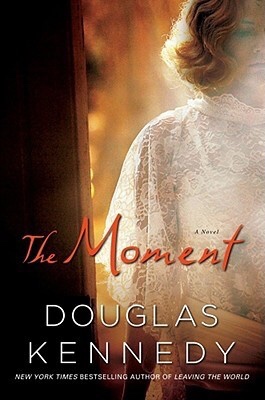
Throwback Thursday! The Moment by Douglas Kennedy.

A secret from the past can change your life for ever. The Moment is a heart-breaking love story set in Cold War Berlin by the author of The Pursuit of Happiness and Five Days.

Thomas Nesbitt is a divorced American writer living a very private life in Maine. Until, one wintry morning, his solitude is disrupted by the arrival of a package postmarked Berlin.

But what is more unsettling is the name accompanying the return address on the package: Petra Dussmann. For she is the woman with whom Thomas had an intense love affair twenty-five years before in a divided Berlin, where people lived fearfully under the shadows of the Cold War.

And so Thomas is forced to grapple with a past he has always kept hidden. For Petra Dussman was a refugee from the police state of East Germany. And her tragic secrets were to re-write both their destinies.

I found myself strangely captivated by this tale of lost love in a divided Germany. I worked my way through all of Douglas Kennedy’s books around five years ago after enjoying A Special Relationship and while they’re all great reads something about this one stayed with me. Perhaps because I’ve lost someone I loved. Or because I once had a short, intense love affair that, given different timing, could have blossomed into a something beautiful. We have probably all had similar experiences, where the timing was just wrong. However, when added to this restrictive Cold War environment, love becomes so precious by contrast. Like a flower blooming through the cracks in a pavement.

This story unfolds like a set of Russian dolls. When the package arrives with Petra’s return address it sends Thomas back to the account he wrote of his time in West Germany. We read his narrative and are drawn into this impossible love story that left him with so many unanswered questions. When he opens the package, he finds Petra’s account of that time and we are lost in the same story, but from a different viewpoint. What he discovers is shocking and illuminating, but will it answer his questions? More importantly, will it confirm and deepen the love he felt for Petra and how will that change his life moving forward? There are so many things I love about Kennedy’s writing and this book showcases them beautifully. The historical research and detail feel genuine. He takes a period of history beyond the facts, to show how this world affected the people who lived through it’s events – not just physically, but emotionally too. The stark, grey, concrete world of East Germany and it’s citizen’s fear of the Stasi, become real through Petra’s story. There is so little to look forward to and an absence of joy here. I remembered back to my younger years and the pictures on the news as the Berlin Wall came down. Now I understood their euphoria and their need to physically take hold of this symbol of oppression and dash it to the ground with their bare hands.

Kennedy also has the uncanny ability to write convincingly from the viewpoint of both men and women. This was a skill first seen in his novel A Special Relationship, where he wrote from the viewpoint of a new mother whose husband thought she was suffering from post-natal depression. Here again he writes from the viewpoint of a woman and mother, torn between romantic and motherly love. Even, as we wonder which of these loves will win out in the end, we realise neither choice can ever truly fulfil Petra without the other. There are no winners, whichever choice is made. The only outcome here is betrayal.

As we come back to Thomas’s current circumstances, further enlightened by the stories we have experienced, we see how the psychological damage of childhood and our youth can colour the rest of our lives. It seems we spend the latter part of our adult lives trying to untangle, then heal these wounds, as we recognise how much damage these traumatic experiences have had on our choices – in Thomas’s case, during his failed relationship with his wife. I also think Kennedy is telling us something very important about stories. Thomas’s story would have made a novel all on it’s own, but by adding Petra’s version we start to see something of the ‘whole’ story. Our version of events, even factual ones, are just that; our version. It’s just one piece of a patchwork quilt of perspectives. Even our own version can change as we get older, gain experience and develop new ways of understanding. This novel is unusual, because it’s a love story for people who don’t read love stories. Or a novel about Cold War Germany, for people who understand the importance of love. For me, it’s that unusual, niche, mixture that made it stay with me.

Meet The Author

Douglas Kennedy is the author of ten novels, including the international bestseller Leaving the World and The Moment. His work has been translated into 22 languages, and in 2007 he received the French decoration of Chevalier de l’Ordre des Arts et des Lettres. Born in Manhattan, he now has homes in London, Paris, and Maine, and has two children.

Posted in Rachels Random Resources

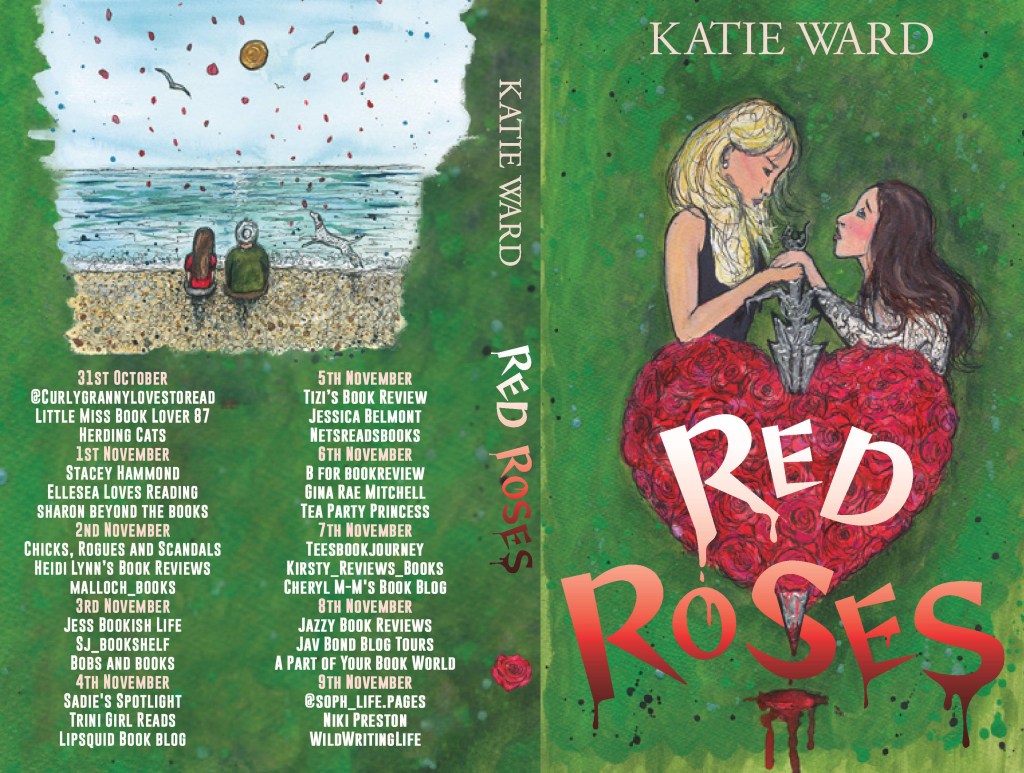
Red Roses by Katie Ward.

Today I’m sharing some thoughts on a book about friendship, love, and following your dreams.

Autumn is stuck in a rut and desperate to escape the fears that bind her to the life she’s outgrown. Back home and living with her parents after university, with a degree that seems to count for nothing, she knows something has to change. After a chance meeting with a stranger at the beach, she makes the spontaneous decision to move to Dublin and chase her dreams. However, what Autumn doesn’t realise is that she has just made the decision that will lead to her death. But does a short life have to mean an unsuccessful life? Will she be able to make it count?

Red Roses is a great book for grabbing a cuppa or a glass of wine (tea and chocolate for me) and settling in for an afternoon read. It’s a simple story of a young woman called Autumn who wants a different life for herself and has the bravery to up sticks and move to another country to make her life goals happen. I felt that the most successful parts of the novel were based around female friendship, especially with Amelia who is also travelling to Dublin before going around the world. I also loved Maggie, an older lady who Autumn meets on the beach, where Maggie is throwing rose petals out to sea in memory of her late husband. There was so much more that I wanted to know about Maggie and I felt she could be a rich and wise source of advice for the younger woman.

Red Roses is an uplifting story that shows the beauty of life, love and friendship.

Katie Ward always knew she wanted to write for a living. However, she was told by her careers advisor that “it might be more appropriate for you to work in a shop”. When Katie didn’t get the grades she needed to get into college, she negotiated a three month trial. After successfully completing the course she secured a place at her first choice university to study Journalism.

After realising she wanted to be an author, Katie moved to Dublin where she worked her way up from receptionist to Executive Assistant at Merrill Lynch. Katie continued to write in her spare time, submitting her short story into the “Do the Write Thing” competition being run by Irish TV show ‘Seoigeand O’Shea’. This story was originally written when Katie was 14 after she was inspired by an article in her favourite teen magazine. Katie was the only non-Irish author selected to have her story published in an anthology of the same name which reached 19 in the Irish Best sellers List. Katie was also shortlisted for a competition judged by MAN Booker Prize winning author Roddy Doyle which was run by Metro Eireann newspaper. 

Katie currently lives in Devon with her cat (aka ‘Her Royal Fluffiness’) where she sings in a community choir and has recently taken up Archery. Katie’s favourite author has been Roald Dahl since she was a child as she loves the dark edge he brings to his books. On the flip side though, Katie loves Disney, magic, unicorns and a good rom com film at the cinema with her friends.

Twitter – https://twitter.com/KatieWWriter

Facebook – https://www.facebook.com/KatieWWriter

Website – https://katiewardwriter.com/

Posted in Publisher Proof

The Secret Life of Albert Entwhistle by Matt Cain.

I don’t know how many of you are Strictly Come Dancing fans, but I hope there are a few of you out there. Last weekend we watched the third episode of this series and the professional dancers did one of their group numbers at the top of the show. Johannes was a handsome Prince and a ball was being held in his honour. As he entered the ballroom he saw the couples dancing on the floor, but seemed isolated and alone. Until a male dancer, Kai, stepped forward and asked him to dance. As they started to move round the floor his face lit up and so did mine. The other couples on the floor reformed until the ballroom was full of same sex couples. It was a joyous dance about acceptance for who we are and the ability to be open about our sexuality. It really brought tears to my eyes to see how happy Johannes was to do this dance. So, for me this was exactly the right week to read a book I’ve seen doing the rounds of BookTwitter for since January. I know I’m seriously behind most people in reading this little gem from Matt Cain, but I couldn’t miss a chance to talk about it- just in case there are other people living under a rock like me who haven’t encountered Albert Entwhistle yet.

The books sits perfectly next to the Strictly dance I mentioned, not just because of the subject matter, but because both are simply little parcels of joy! I felt uplifted every time I sat to read a few pages of this wonderful story. There’s a further little link to Strictly too, as Albert reminisces about a trip to Blackpool with his friend George. They were both young men at the time and they visit the iconic tower ballroom, where George is taken with the dancers whirling round the floor. He asks Albert to think of a world where they could take a turn round the floor like every other couple there. George exclaims how romantic it is and Albert agrees. It would be romantic, but it’s inconceivable for two men to partner up and take to the floor. In fact it seems so taboo that Arthur imagines there’s a written rule against it. Years later, when he’s 64, he revisits the ballroom to show his friend Nicole and sees a couple of men his own age, waltzing round the floor with no one batting an eyelid. A realisation follows; how can anything change while gay men remain hidden? It takes trailblazers, people willing to be uncomfortable and face public displeasure, to make things change. This gives him the courage he needs to face his fears and perhaps even alter the lonely future he imagines. Maybe he could find his friend George and talk again? He doesn’t dare to hope that the feelings could still be there, but there is a small nugget of longing for that dream. Why not? After all, he still feels the same way about George.

Until now Albert has lived very closed off from the rest of society. He’s a postman, and has a routine of arriving at the sorting office at the same time each morning, organising and sorting his load for that day. He doesn’t really interact much with his colleagues, beyond normal pleasantries. We see his lonely life at home, with rare moments of joy when he puts on a show tune and dances with his cat Gracie. So, I loved how Albert’s search for George opened him up to other experiences, particularly his friendship with single mother Nicole. He’s never been to a soft play centre before or even been this close to children. Yet she doesn’t let him hesitate or worry, and just places her daughter on Albert’s knee before he can argue. He’s never been to a pub quiz before either, but once he takes the plunge, he’s surprised how much he enjoys these new experiences. It also makes him more aware of other people’s loneliness and he starts to make little changes to try and make their lives better. His dread about revealing his sexuality to people seems disproportionate, because we live in more tolerant times. Yet, when we think back to Albert’s teenage years, homosexuality was still a crime. It’s amazing to think it was as recent as Sam Gyhima’s stint as justice minister in 2017 for a government pardon to be made to everyone jailed for their sexuality. This followed a royal posthumous pardon in 2013, for the mathematician Alan Turing. The writer’s trips back into Albert’s past, remind the reader that there are years of prejudice behind these uplifting stories. Strictly’s same sex dance routine elicited tears of emotion, because what’s now accepted enough to be on family television at prime time on Saturday night, used to elicit abuse, rejection and even criminal charges. So I found this book moving and I really did fall utterly in love with Albert. The story was heartfelt and uplifting. I would really recommend it to anyone looking for beautiful characters to engage with and story full of human emotion.

Published 27th May 2021 by Headline Review

Meet The Author


Matt Cain is an author, a leading commentator on LGBT+ issues, and a former journalist. He was Channel 4’s first Culture Editor, Editor-In-Chief of Attitude magazine, and has judged the Costa Prize, the Polari Prize and the South Bank Sky Arts Awards. He won Diversity in Media’s Journalist Of the Year award in 2017 and is an ambassador for Manchester Pride and the Albert Kennedy Trust, plus a patron of LGBT+ History Month. Born in Bury and brought up in Bolton, he now lives in London.

Posted in Random Things Tours

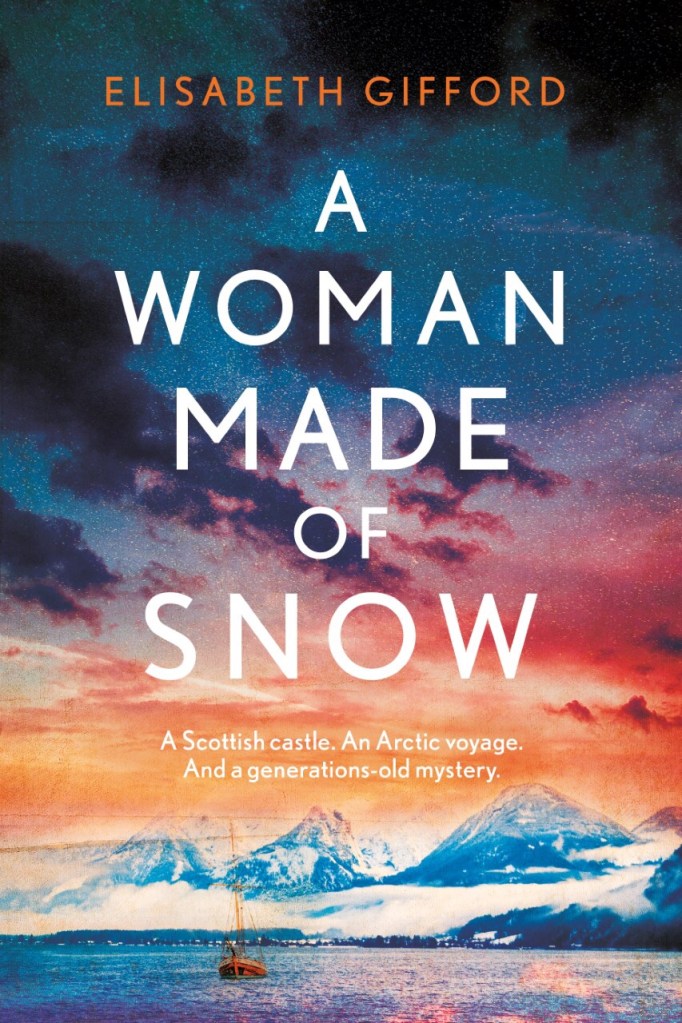
A Woman Made of Snow by Elizabeth Gifford.

I slowly became more and more intrigued by Elizabeth Gifford’s new novel. Even the title whetted my appetite for more of the same beautiful writing that made The Lost Lights of St Kilda such a memorable book. We’re still in Scotland, this is the late 1940’s and our heroine Caro lives with her husband Alasdair and baby Felicity in the Laundry Cottage situated in the grounds of his ancestral home. They met at Cambridge University and married less than six months later much to his mother Martha’s surprise. She was expecting him to marry someone of their class, maybe even their family friend Diana who’s valuing heirlooms at the family’s castle. Caro’s mother-in-law wanted her and Alasdair to live at the castle with her, but Caro wanted a little bit of privacy and distance. At Laundry Cottage she can still be in her dressing down at lunchtime or having a sleep while baby Felicity has a nap. Yet, the past is about to make it’s way into the present both physically and mentally. Caro is asked to research the family archives for a mysterious, missing member of the family. A great-grandmother seems to have been scrubbed from the archives, along with a missing diary from her husband Oliver’s trip to the Arctic. When the Laundry Cottage floods suddenly and workers inspect the Victorian drainage system they find a body of a woman. Could this be the missing bride?

It seems formidable mothers are the norm at Castle Kelly, because when I read the second narrative it took me back to the late Victorian period and tension between Oliver and his mother. From early childhood Louisa and Charlotte Strachan have been summer visitors to the castle and Oliver’s playmates. However, as they get older it’s clear that feelings have developed between Oliver and Louisa. Could she be the missing grandmother from the archives and the body found in the grounds? How come Oliver ended up in the Arctic? What effect will Caro’s findings have on the family and her marriage? With so many questions I was compelled by the story and some of the characters caught up in these dramatic circumstances. Also the historical shifts behind these stories was fascinating too, showing how much the world changed over two world wars.

Caro is such a sympathetic character and I felt immediately on her side in this very difficult situation she finds herself in. She’s an intelligent woman and understands a lot about how the world is changing. Her expectation of life after the war is that she and Alasdair will live in London as lecturers at one of the city’s universities. She didn’t bank on having Felicity so quickly or for Alasdair’s only offer of employment coming from St Andrew’s university. She describes feeling ‘ambushed’ by her own fertility, but she loves Felicity and wants to be a good Mum. I understood her need to be separate from the castle – it’s a compromise between his obligations and the total freedom they expected in London. I also empathised with her feelings of struggling as a new mum and being isolated from everyone and everything she knows. It’s a huge leap from being organised, full of energy, totally independent and career minded, to living in a cottage with a new baby feeling tired and slightly inadequate. She can’t understand why looking after Felicity seems so arduous and exhausting, when she’s always been so lively and alert. She also finds her emotions difficult; she’s struggling to understand why she wants to keep mother-in-law Martha at bay, or why she feels threatened by the presence of Diana. Her interest in the missing grandmother is linked to these emotions, maybe they were both outsiders in this family. It’s painful to her when she hears Martha say she’d hoped Alasdair would marry someone of his own class, surely those barriers don’t exist any more?

When I started to compare it with the 1940’s I could see that there is change, but within the Gillan family it has been minimal compared to the rest of society. Early in the novel Caro remarks that ‘she was secretly rather proud of her ability to make good friends across the classes’ because ‘once the war was over, class was not going to mean anything after all the country had been through together’. This was probably true in more metropolitan areas, but it hasn’t reached the upper class residents of rural Scotland. Martha is trying, but her true feelings are old-fashioned. The mistress of Kelly Castle in the Victorian period is Sylvia and she resents her husband’s adherence to an old obligation. He invites the daughters of old family friends, Charlotte and Louisa Strachan, to the castle every summer. Whereas Louisa tries desperately to fit in, Charlotte is a more fiery and independent character and I fell in love with her. As soon as she cut her own hair off I knew I would enjoy her way of being in the world.

To Sylvia’s disgust, Charlotte brings a young girl called Mary into the children’s circle. They run wild in the grounds and don’t seem to notice the differences between them. This changes as they get older until one summer Mary’s aunt asks Charlotte not to run in and out of Laundry Cottage where they live, tempting Mary to play when this year she had to work. As far as Sylvia’s concerned the girl is lucky to be merely helping her aunt, because the true destiny of the poor girls of Dundee is in the jute mills that pay for Kelly Castle. When Charlotte defies her, bringing Mary along on an outing to see the family’s new whaling ship and dinner in the Castle Hotel. When Sylvia asks Charlotte to remove her beret at dinner, she sees her unseemly cropped hair. Charlotte knows a punishment is coming, but what her aunt does next makes her sick and heartbroken. Without any emotion she tells the driver to take them home via the jute mill. There, she ushers Mary into the office as a new mill girl for the foreman to set to work. Sylvia has wanted Mary in her proper place for some time, but the opportunity to put Charlotte in her place at the same time was too good to miss. Charlotte is devastated. Sylvia now has to find a way of dealing with the Strachan girls, she has her eye on a young lady for Oliver and she doesn’t want her plans scuppered by a crush on someone unsuitable.

I found it interesting how patterns seemed to have formed down the generations. Some brides were suitable to be the next mistress of Kelly Castle, and others were not. Caro’s mother-in-law kept her misgivings and disappointment over her son’s choice to private conversations. Sylvia had been so determined and cruel in her treatment of Charlotte and Louisa that I wondered what fate awaited Oliver’s unsuitable bride, whoever she was. Since there are family rumours surrounding the Arctic voyage with hints of cannibalism, I was worried for this unnamed woman.

This author always creates an incredible sense of place and the beautifully atmospheric opening is reminiscent of Daphne Du Maurier’s Rebecca and the ghostly walk up the drive of Manderley. A woman sees Caro and tries to call out to her from her place beneath the earth.

‘Wrapped in darkness beneath the trees I watch rain falling on the earth where I have slept for so long. Light from the Cottage windows stretches across the lawns, but it does not reach me. Find me, I whisper. Give me my name.’

Her need for Caro to hear her showed a spirit undimmed by death. I was really interested in this and the theme of women being controlled or even erased by forces or expectations beyond their control. As the unnamed woman sits beneath the earth, Caro feels removed from the life she wanted by motherhood. Mary is taken from a carefree childhood to the responsibilities and restrictions of adulthood overnight. It had been hoped that she might be given a maid’s position in the castle, but her destiny is at the jute mill. Charlotte isn’t even allowed to cut her hair, and she hates the prissy dresses she’s expected to wear as a guest of the Gillan family. She doesn’t understand why her friendship with Oliver has to change, just because she’s older.

‘Angry tears pricked her eyes.While they were away at school that year it seemed that someone had decreed that childhood was over, a closing down of what a girl may or may not do – and a forewarning of the hardening of roles to come that she saw in the lives of the adults around her. Well, Charlotte was not going to accept it. She would stay true to herself and true to the things she loved.’

I was sad for her, and her sister Louisa. It’s interesting to see how both girls react to the effects of being from a poorer and lower class background. I was compelled to read on and find out about these girls in adulthood, not just their relationship with Oliver, but how they were making their way in the world. I wanted Charlotte to have retained that fire and attitude and hoped that circumstances hadn’t tamed her. There is just so much to love about this novel: the well written characters; the intriguing mystery of the unnamed woman; the depth of research into the two time periods especially into societal changes, class difference and the lives of women. I heartily recommend it to all lovers of historical fiction, women’s lives and family secrets. This is one of those books that I loved so much, I will be buying a finished copy, despite having the proof. It’s so atmospheric, romantic, and deeply poignant.

Meet The Author.

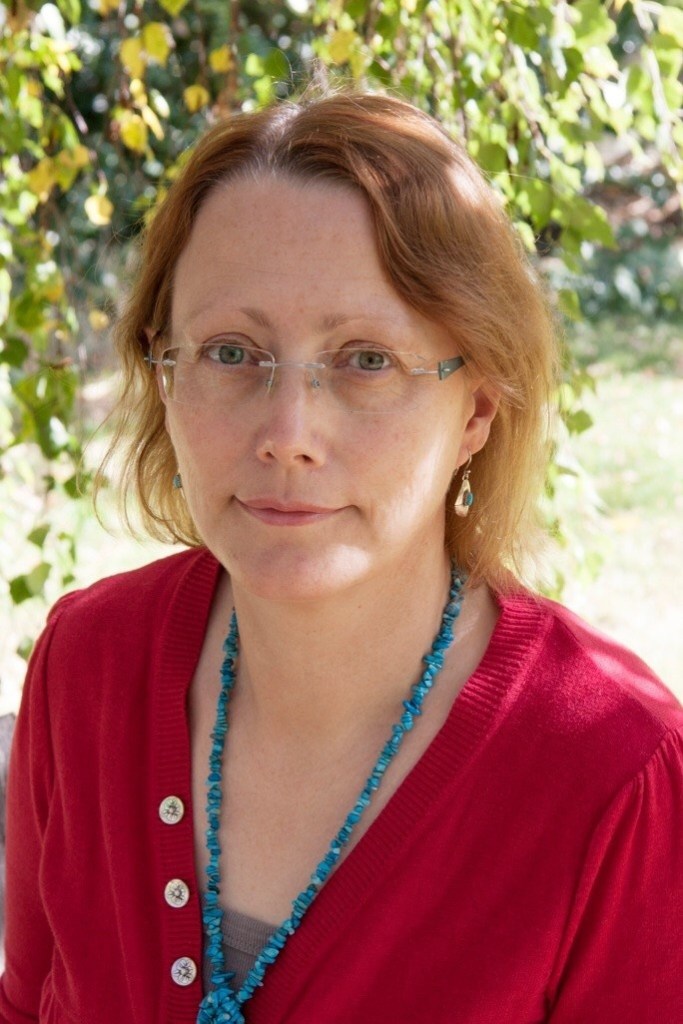
Elisabeth Gifford grew up in a vicarage in the industrial Midlands. She studied French literature and world religions at Leeds University. She has a Diploma in Creative Writing from Oxford OUDCE and an MA in Creative Writing from Royal Holloway. She is married with three children, and lives in Kingston upon Thames. A Woman Made of Snow is her fifth novel.

Posted in Netgalley, Publisher Proof

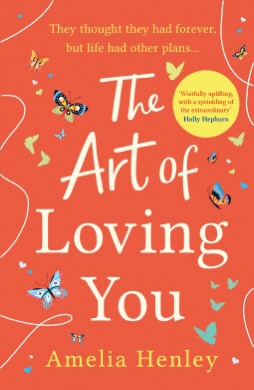
The Art of Loving You by Amelia Henry

Oh my goodness this beautiful novel really did pull at my heartstrings. It was stunningly romantic and reduced me to a hormonal weeping mess. I just knew something was going to happen to this lovely couple, because everything was perfect in their world and they were embarking on a project to help others. Libby and Jack were bringing to life his dream by developing an arts centre/retreat for underprivileged children. They already had the keys to the property and were ready to go, when a phone call changed everything. Just as I’d fallen in love with this gorgeous couple, the author shatters their lives. I don’t want to ruin the plot for everyone, so I’m not going to talk about what happens, but I am going to talk about the characters.

Libby is our narrator and I really felt for her so much. Her world has been so rocked that she’s struggling to trust anything or anybody. She’s scared of everything, because now she knows that the worst things we imagine can happen. The author cleverly lets Libby drop little hints and ideas about what’s coming next, they work like cliff hangers, so that I kept jumping to the next chapter and reading a bit more. Just a head’s up – can end up half way through without realising!

I loved Sid, just loved him. He has just moved into a care facility, because he needs extra support, and gifted Libby and Jack his house. This is the only way they’re able to realise Jack’s dream of opening the arts centre. Sid is like a surrogate grandfather to the couple, and the way his relationship develops with Libby as the novel progresses was really touching. At a time when she feels hopeless and lost, he is so supportive, positive and uplifting. I wanted my own Sid for his wise advice alone. I would love to read a whole book about Sid’s past, because I want to know how he came about his philosophy on life.

Although the book has an obvious film inspiration, I kept thinking of the moment at the end of the Steve Martin film Parenthood. He’s panicking because he walked out on his job and his wife has just announced she’s pregnant with baby No 4. His grandma starts to talk about the fairground, and while other people like safer rides like the dodgems, she loved the rollercoaster. He doesn’t get it at first, but later at his children’s play when everything starts to go wrong, he realises that instead of panicking, he could just laugh and go with it. Sit back and enjoy the ride. It makes you realise that how you view life is always a choice.

I don’t know much about the author, but I’d hazard a guess that this is someone who’s life experience has informed these characters and their situation. Truth and real pain shines out from these pages. Readers can tell if a person’s writing comes from their heart, and this truly does. It seems easy to dismiss ‘romance’ as something silly and frivolous when it isn’t. Love, real love, changes our lives. We move house for love, we change lifestyle, we make lifelong commitments. If we think about the love we have, from partners, friends, family, it’s without doubt the most uplifting thing in our lives. When we lose someone we love it’s devastating and life altering. Yet, we still love. This inner hope and endless capacity to love, is the most important thing we can write about, because it’s the most important thing in our lives. I felt the writer understood this. The story teaches us not to waste time, to hold on tight to those we love and to love life even when it isn’t ‘all beer and skittles’.

Published 21st July 2021 by HQ

Meet The Author

Amelia Henley is a hopeless romantic who has a penchant for exploring the intricacies of relationships through writing heart-breaking, high-concept love stories. 

Amelia also writes psychological thrillers under her real name, Louise Jensen. As Louise Jensen she has sold over a million copies of her global number one bestsellers. Her stories have been translated into twenty-five languages and optioned for TV as well as featuring on the USA Today and Wall Street Journal bestsellers list. Louise’s books have been nominated for multiple awards.

Posted in Throwback Thursday

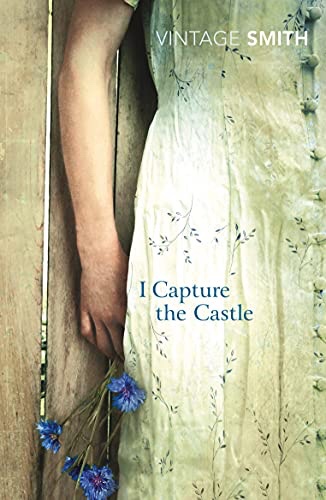
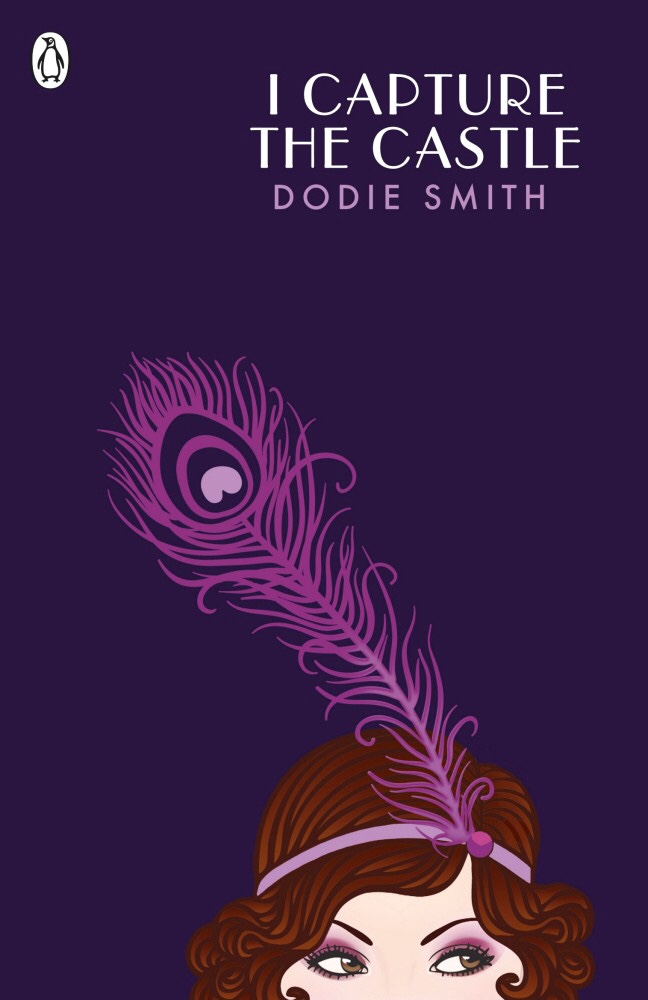
Throwback Thursday! I Capture the Castle by Dodie Smith.

“I write this sitting in the kitchen sink. That is, my feet are in it. The rest of me is on the draining board, which I have padded with our dog’s blanket and the tea-cosy.”

I’m going a long way back in time for Throwback Thursday this week. I read this book in my early teens, but still hold it close to my heart. I’d read 101 Dalmations much earlier and hadn’t realised that the author had written anything other than children’s books. The truth is I’d been waiting my whole life for a heroine like Cassandra Mortmain. There are a lot of different influences to blame for turning me into the adolescent I was. Years trawling round stately homes had given me a yearning for a house I could hide in. We lived in a 1960’s bungalow with just enough rooms to live in, but I longed to hear lines like ‘ Hayley? No I haven’t seen her since breakfast. Could she be in the pink drawing room?’ Period dramas, particularly 1970s productions of D.H. Lawrence novels and L.P. Hartley’s The Go-Between , both loved by my mum, had left me hankering after a wardrobe of full, floaty skirts and the sort of accessories that looked out of place. Like tramping down to the village shop wearing a feather boa, ten layers of petticoats, whilst dragging a grumpy spaniel. I would constantly imagine I was in a book or a film, walking the poor dog’s legs off while hoping to meet a man who looked like Mr. Rochester and lived in a Gothic mansion, minus the mad wife.

I also developed a fascination with Edith Holden thanks to the TV series of Country Diary of an Edwardian Lady and I even wrote off for a pack about the series. We already had the book, so I bought a sketchbook and some watercolour pencils with my pocket money. My brother and I would go out early, him with his fishing gear, and me with my books and paints. There was an old track down to the woods with a drainage dyke running alongside. About halfway down there were two willow trees that had bent so far over the water it was possible to climb up and lay down along the trunk. My brother would fish from his tree, and in mine I would paint flowers and butterflies and read my book. It was the closest thing I had to room of my own. So, in finding Cassandra Mortmain I felt like I’d found exactly who I was supposed to be. I wasn’t meant to be Hayley Baxter, lives in a sixties bungalow, with a working class family and no money. I was meant to be the broken down castle, bohemian sort of poor. Where parents were trying to make money from art, roof leaks dripped into buckets instead of being fixed and they were invited to tea by the landed gentry or their new American millionaire estate owners.

I loved Cassandra Mortmain’s confidence. She was determined she was going to be a writer and nobody told her she couldn’t be, so she was always curled up in some unlikely place, writing in her journal. If I said I wanted to write novels, my close family were supportive – my mum had always wanted to write. Wider family and friends would say ‘well, as long as you do well at school and have something to fall back on.’ There were aunts and uncles who would have been bemused if I walked constantly around with a journal and pen. Writing was seen as something you had to do – you wrote a letter, or a postcard – but not something pleasurable that you devote time to. That came much later, when I had my own home and my own wardrobe of floaty skirts. When I first read her story I was much like Cassandra herself, there were parts of life that she was recording without really knowing their importance or meaning. Although she narrates her own story, as an older reader there were things I understood that Cassandra didn’t as yet. This is a story of growing up and leaving some of that innocence of youth behind.

I thought on first reading that her sister Rose was incredibly beautiful, but grumpy and not very nice to be around. However, reading her years later I could see that because Rose was older, she understood more about the realities of life. For her, the broken roof and the lack of income were not romantic, but a real problem that needed fixing. Their father’s only published book can’t keep them forever and his writer’s block makes him a very difficult man to live with. Rather comically the women lock him in his study, in the hope that inspiration will strike when he’s forced to stare at his typewriter. It’s very clear to Rose that they are in dire financial straits. This is where the book takes on some Austen-like romantic tropes, as the Cotton family come to visit the estate where they are the rightful heirs and the Mortmains are their tenants. Mrs Cotton brings her two sons, the eldest Simon being the rightful heir, and Neil, the younger son. Simon is ‘detestably bearded’ but the most eligible and able to rescue the Mortmains from their current circumstances. Cassandra’s father and stepmother Topaz are seen as delightfully eccentric by the Cottons and the whole family are invited for dinner. This is where the romantic problems begin, as Simon is besotted with the beautiful Rose, and as Cassandra develops a crush on Simon, she is in turn adored by the Mortmain’s servant and helper, Stephen. Stephen is incredible handsome, but the Mortmain girls are about to find out that the heart is an unruly organ and wants what it wants. Despite this, it isn’t long before Rose announces her engagement to Simon. This solves so many of the Mortmain’s problems – it’s as if one of the Bennett sisters actually accepted Mr Collins. As the preparations for the wedding gather pace, Rose and Cassandra spend more time with the Cotton brothers.

Simon finds that he gets on well with Cassandra. He is the more cerebral of the brothers and while Rose is beautiful, she is not blessed with brains. Yet, Cassandra is too young for romance, and a very touching friendship starts to develop. The younger brother, Neil, is more stereotypically American, loud, brash and very active. He and Rose are usually swimming or messing around in boats, with Neil often play fighting or indulging in horse play. Cassandra has never seen her sister so lively, actually forgetting to be lady like and being in the moment. Everyone is touched to see Rose so happy, and assume it is her approaching wedding. To an adult reader the attraction between these two beautiful people is obvious, but Cassandra is stunned to find out they have run away together. If we hark back to Austen, her sister has turned out to be more of a Lydia than a Jane. How can the Mortmain’s fortunes be improved by their daughter’s marriage to the second son?

This is a novel drenched in charm and nostalgia. Interestingly, it was written by Smith when she was living in America, and that may explain it’s rose-spectacled view of England. There is something slightly melancholy in that we’re watching a young girl lose the charming innocence that makes her narration a delight to read. She falls in love, but not with the person who adores her and sees the devastation that can be caused by betrayal and jealousy. We realise, as Cassandra grows up in front of us, the chaos of a household run by adults who have no money and no rules, the embarrassment of having a stepmother who will happily walk around in the nude and that moment when you find your own sister inexplicable, because you understand storybook romance, but not adult desire. Cassandra is mostly in love with life. One character describes her as ‘the insidious type–Jane Eyre with of touch of Becky Sharp. A thoroughly dangerous girl.” Her narration makes even minor characters jump off the page and straight into your heart. Finally, I loved how Cassandra leaves us with an open ending. We shouldn’t be surprised that some loose ends are left dangling, because she has told us how much she hates ‘a brick wall happy ending.’ I think it’s true to say that in me, she found a reader as romantic about life as she is. This is one of those books I’ll re-read again and again, so I’m on the look-out for a very special copy to put on my forever shelves.

Posted in Throwback Thursday

The Legacy of Elizabeth Pringle by Kirsty Wark.

I’m wary of books written by people in the public eye. There are those who have clearly used a ghost writer. Others have no writing skill, just a big enough name to sell the book anyway. I worry for myself and all those other aspiring writers who won’t be able to get a book deal because the lists are full with celebrity memoirs and books set in Cornwall! However, there are some celebrity authors who get it right, often those who started out as reporters before becoming famous. Jeremy Vine’s debut novel was a pleasant surprise, and my stepdaughters loved David Walliams stories. I knew Dawn French could write well only a few pages into her memoir. I can now add Kirsty Wark to this list, since stumbling on her book second hand in Barter Books, Alnwick. I started to read it while still on holiday and loved it.

The author lets her characters tell the story. Firstly we are told Elizabeth’s story from her journal and we meet her at the beginning of the First World War, a time of big changes for her family. She is moving with her mum from the isolated family farm to the small fishing village of Lamlash on the Isle of Arran. The house they will live in is Holmlea, which has a beautiful sea view out to Holy Isle and the monastery. We are then immersed in Elizabeth’s life: their family friendship with the Duchess of Montrose; an incredible passion for gardening; all the relationships in her life. These relationships ebb and flow, but into her old age she has two men in her life. There is Niall the rather passionate gardener who works as an architect and Saul, a Buddhist monk from Holy Isle. When working in her front garden she notices a young woman, walking past with her baby in a pram. The young woman is Anna, and she is very taken with Holmlea and asks Elizabeth to contact her if she ever decides to sell it.

Our other narrator is Martha, the daughter of Anna Morrison, who is surprised to find her mother has been offered the legacy of a house on the Isle of Arran by a woman she’s never heard of before. Anna is now struggling with dementia, so much so that Martha is now her full time carer and deals with her finances. It is Martha who organises help for her mother and takes a trip up to Arran to see the house. So it is also up to Hannah to uncover Elizabeth’s reasons for leaving the house, but also discover more about her life and secrets. There was once a fiancé in Elizabeth’s life who moved out to Australia to start a sheep farm. Elizabeth was reluctant to go, feeling she needed to be there for her mother. She passes her time walking in the hills and during the war, helped in looking for lost and crashed airmen. Eventually, it is too late to follow her fiancé and at the end, Elizabeth has lived on Arran for 90 years. More recently she’s had friendships with a young man whose sister runs the local hotel and he has worked with her to create her beautiful garden. It is her friend Saul who encourages her to write her story down. He is a struggling Buddhist monk who is staying at Holy Island and meets Elizabeth when she volunteers in the gardens.

The books major strength is in description, creating a strong sense of place. This is a bleak but beautiful place, and she situates Arran and Holy Island as sustaining to the people who live there or come for solace. These islands feel like a cornerstone or anchor for the people who are born there and almost like medicine to those lonely or desperate people who seek them out. Gardens are featured heavily as a source of sustenance for the body and the soul and I truly understand that need to be in nature and feel your senses drink it in. I thought it was a wonderfully calm and quiet novel, but quiet doesn’t mean it’s without impact. I really loved Elizabeth’s story, it shows how quiet and seemingly unassuming people can have hidden depths. We often overlook the elderly, thinking they have lived their lives. I’ve worked in nursing homes and advocacy, and it’s surprising how many elderly people are cared for by people who don’t really know them and never try to. They talk to other carers as if the person they’re helping is deaf or not really there. I created a memory project where I found old photographs of residents and wrote down stories they told me about their lives. I then put up a display outside each bedroom, so that carers could see their residents as individuals with experience and stories to share. This book reminded me of that project and what a difference it made to the resident’s everyday lives.

Meet The Author

Kirsty Wark is a journalist, broadcaster and writer who has presented a wide range of BBC programmes for more than twenty five years, from the ground-breaking LATE SHOW to the weekly arts and cultural review show THE REVIEW SHOW and the nightly current affairs show NEWSNIGHT.

Kirsty has won several major awards for her work, including BAFTA Awards for Outstanding Contribution to Broadcasting, Journalist of the Year and Best Television Presenter. Her debut novel, THE LEGACY OF ELIZABETH PRINGLE, was published in March 2014 by Two Roads and was shortlisted for the Saltire First Book of the Year Award, as well as nominated for the International DUBLIN Literary Award. Her second novel, THE HOUSE BY THE LOCH, was inspired by her childhood memories and family, particularly her father. She is currently working on her third novel, set in Glasgow.

Born in Dumfries and educated in Ayr, Scotland, Kirsty now lives in Glasgow.

Posted in Netgalley

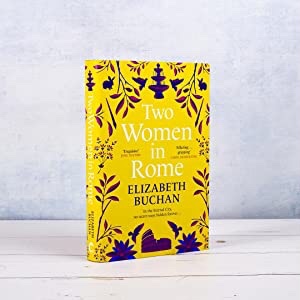
Two Women in Rome by Elizabeth Buchan.

Regular readers may remember how much I loved Elizabeth Buchan’s last novel The Museum of Broken Promises, in fact it was one of my top twenty of the year. So, I was very excited to be approved to read this via NetGalley. The story is split into two timelines and follows the lives of two British women who spend some time living in Rome. Lottie Archer arrives at the Eternal City as a new wife and with a new job as an archivist at the Archivo Espatriati. Her very first task is to archive the papers and journal of a woman called Nina Lawrence who worked as a gardener in Rome in the late 1970s. This was a difficult time for the country socially and politically, known as the ‘Years of Lead’ – a period which stretched from the 1960s to the 1980s and resulted in many incidents of far right and far left terrorism. Nina’s task was to redesign gardens that still lay devastated by WW2, something she was passionate about and very talented. Within her papers, is a large leather journal, rather worse for wear and full of drawings and pressed plants. However, Lottie also finds a painting of the Annunciation – the moment where the Virgin Mary is visited by the angel Gabriel to tell her she will be the mother of Jesus, the son of God. Lottie thinks it may be medieval, due to the colours used and the iconography. This piques her interest and she is disturbed to learn that Nina was murdered in Rome, and that very few people attended her funeral in the Protestant cemetery. Interestingly though, one mourner was a Catholic priest, which strokes Lottie as very unusual. She wants to find out more about the painting, but she also finds herself sucked into the mystery of what happened to Nina, who murdered her and why did she seem so friendless in this beautiful city?

I found the novel a little slow at first. I didn’t click with Lottie straight away, the detail and discussion of medieval art was quite dense (or I was) and the complexity of the political situation wasn’t always easy to follow. I also thought the intricacies and machinations of the Catholic Church might be a little difficult to penetrate for those who don’t know much about Catholicism – luckily I am one, with convent teaching under my belt, so this was not so difficult for me. However, I did like that the author didn’t simplify these areas of the book because in a way they added to the mystery of a city that has an incredibly complicated history. I was drawn in most by the story of Nina, just like Lottie is. I could understand why her story would get under your skin as someone interested in the past and trying to make sense of it. There is a kinship between the two women, even though they can never meet. Lottie is unsure of her position in Rome for several reasons. Firstly, when she arrives to work at the archive, her new role hasn’t quite been vacated. She moves into the apartment that her husband Tom shared with his previous partner Clare, and all around her are memories that don’t belong to her (including an ugly lamp, that should be kept because it works perfectly well, according to their formidable housekeeper). All of this is compounded by an underlying sense of abandonment, formed because she was left by her birth mother. There’s something lost about Nina that she latches onto and the more she finds out, the more she wonders whether Nina was more than a gardener?

Nina is a rather fascinating woman, who shares Lottie’s sense of rootlessness and lack of ties. There is definitely a deeply woven reason for Nina’s death, involving politics, security services, the church and a rather unwise, but beautiful love affair that unfolds in her journal. It is this aspect of her character that really humanises her for me, she becomes a real, living and breathing person and it is then even more tragic when the end comes. One thing both narratives capture beautifully is the city itself. Just like the narrative structure of the book, we get a sense of Rome as place where the past is very closely layered under the present. I thought about the tunnels and cave structures that run under the city’s streets, some still populated with WW2 vehicles, as an embodiment of this feeling. The present is full of tourists, rushing around on their itineraries getting a sense of the past and present city, but not necessarily the world underneath their feet. The author evokes the sights and smells beautifully: describing the less followed paths, the street fountains carved with dolphins and maidens, the detail of the plants so precious to Nina, the smells and sight of the deli counters full of salami, olives and beautifully ripe tomatoes. I found myself craving a trip to Italy all the time while reading!

However, she also shows its impenetrability to outsiders who know nothing of Catholicism, Roman etiquette or it’s slightly corrupt ways of getting business done. This is captured most beautifully in Lottie’s burgeoning relationship with their housekeeper. I also enjoyed her friendship with the book binder, who she asks to authenticate the painting she finds without understanding his significance. The background on medieval painting is vital here, not just to understand the symbolism within the traditional aspects, but to identify those that are far more transgressive and intensely personal. This is a complicated mystery/thriller, mixed with a travelogue of Rome and an intense love story. It asks questions about where we belong and whether our final destinations have been reached by choice, accident or a deep sense of duty to our family, our religion and our country. By the end I realised I’d become so enthralled, I was very sad to leave Rome behind.

Thank you to Atlantic Books for my digital copy via NetGalley.

Posted in Throwback Thursday

Throwback Thursday! The King’s General by Daphne du Maurier.

The King’s General is not usually people’s first choice when they start to read Du Maurier’s novels. Most read her more famous novels: Rebecca, My Cousin Rachel or Jamaica Inn. Yet this piece of historical fiction was my first Du Maurier novel and I first read it when I was a girl. To understand why you probably need to know something about my childhood. For the most part I’d been an active and lively tomboy, out climbing trees, riding ponies and gallivanting round the countryside with my younger brother. Then, when I was 11 years old I had an accident while somersaulting at school and ended up with two fractured vertebrae and a crushed disc in my spine. I was very lucky. The fractures were mid-thoracic and because they broke down and away from the spine my spinal cord was undamaged. I was centimetres away from becoming paraplegic. I missed the last few months of primary school, instead going up to the local grammar school in the autumn. The accident did cause long term problems though. A lack of proper rehabilitation meant the muscles around the break seized up affecting my ability to use my shoulder and arm. Even now, repetitive movements like typing or painting can seize up my whole right side. I have a chiropractor for regular acupuncture and manipulation to free up that side.

The Kings General was the first time I encountered an adult character with a disability. Of course before my accident I’d read Pollyanna, a rather saintly little girl who can’t walk after a fall and is still looking for things to be glad about. I’d also read the What Katy Did series where the spirited and tomboyish Katy has a fall from the yard swing and can’t walk. She spends a year as an ‘invalid’ and the experience quietens her and she learns to run a household from her bed, becoming a more tamed and acceptable version of femininity. The King’s General tells the story of Honor, a lively young woman who in 1653 decides to write her life story, based around the love she had for the charismatic soldier Richard Grenville. She then takes us back 30 years to when she was 10 years old and her brother Kit brings his bride Gartred back to the family home of Lanrest. Gartred is from the very important Grenville family and doesn’t make a great impression on the slightly more humble Harris family. She has a sharp tongue and Kit thought she flirted with other men, especially his brother Robin. For Honor their marriage is an eye opener and she learns a lesson about marriage:

“For the first time I realized, with something of a shock, that marriage was not the romantic fairy legend I had imagined it to be, but a great institution, a bargain between important families, with the tying-up of property.”

The marriage is short-lived as Kit dies from smallpox, and when Gartred leaves, Honor hopes to never see another Grenville again. Fate has something different in store as she encounters a dashing young soldier on her 18th birthday. She visits Plymouth Sound with her brother and sister to watch His Majesty’s Fleet sail into Plymouth Sound, followed by a banquet held by the Duke of Buckingham. Richard Grenville is quite sarcastic, even rude, and Honor has some barbed and witty exchanges with him. They immediately have a rapport and he actually shows his kinder side when Honor has to leave early. They meet in secret after this, often meeting in an apple tree at the bottom of the orchard where Honor likes to climb up and read. They’re clearly very compatible and start to fall in love with each other. Honor might just get the fairy tale after all as Richard decides to speak to her family and proposes marriage. However, their happiness comes to an abrupt end the day before their wedding when Honor has a terrible accident when they’re out hunting with falcons. Honor’s horse is spooked, becomes disoriented and falls into a ravine. Sadly, Honor’s injuries are serious as her legs and spine are shattered and she can no longer walk. Realising she will probably never walk or have children, she calls off the engagement and tells Richard to be happy with another woman. They don’t see each other until civil war breaks out and Honor must leave Lanrest where she was living alone to go to her sister’s house Menabilly. It is here where Honor will encounter Richard again. Will things have changed between them?

From this point in the story we start to get Du Maurier’s trademark mystery elements and as usual she is very adept at creating tension and suspicion. I really enjoyed the way that her two main characters are so linked to the land around them. Their emotions are often mirrored by the weather and landscape in a rather Brontë way. Her strength here though is in these characters, who love each other despite being able to see their flaws. Honor finds the older Richard bitter, proud and arrogant, but just as attractive as ever. However, he’s quite gentle and tender with Honor and there’s a scene where she even shows him her damaged legs. There’s a feel of Heathcliff about him in these war years, as he’s quite cruel. Honor observes that war seems to make beasts of men. I enjoyed this book because it showed me that an accident doesn’t have to stop you being you. Yes, experience changes us in some ways but her accident doesn’t stop Honor being adventurous or taking on a challenge. It also doesn’t mean she has to become quiet and ladylike. Most of all, Honor is still loved. Despite what happened Richard still loves her, and this was the first book that showed me life doesn’t stop because you have a disability.