Posted in Squad Pod Collective

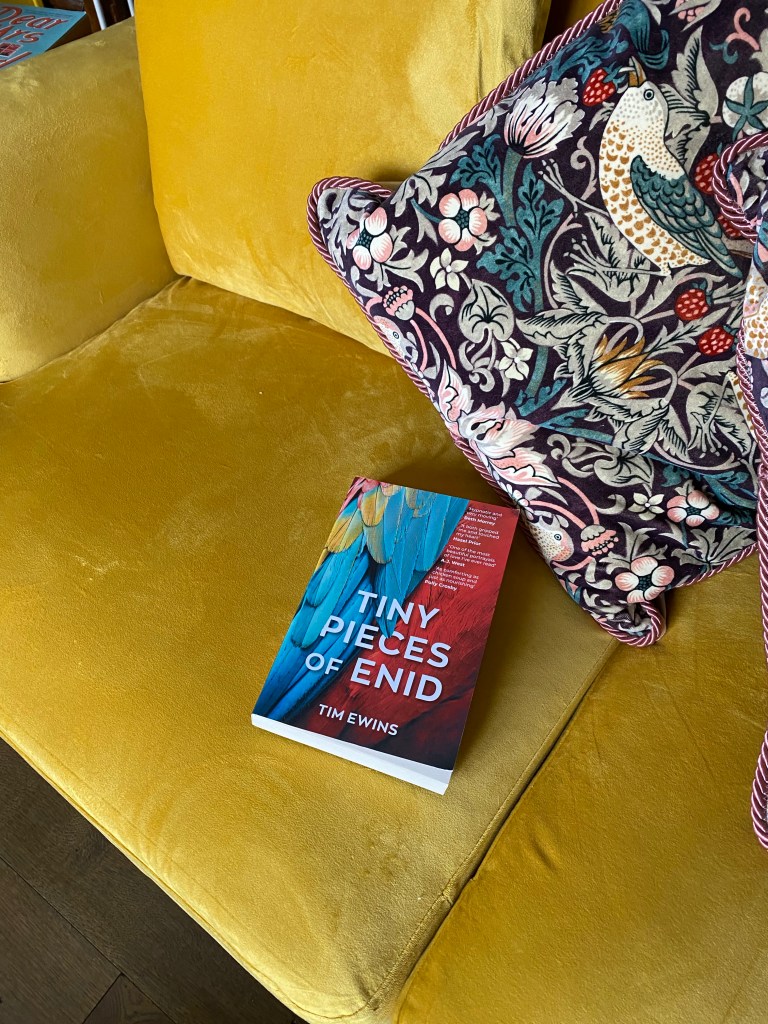
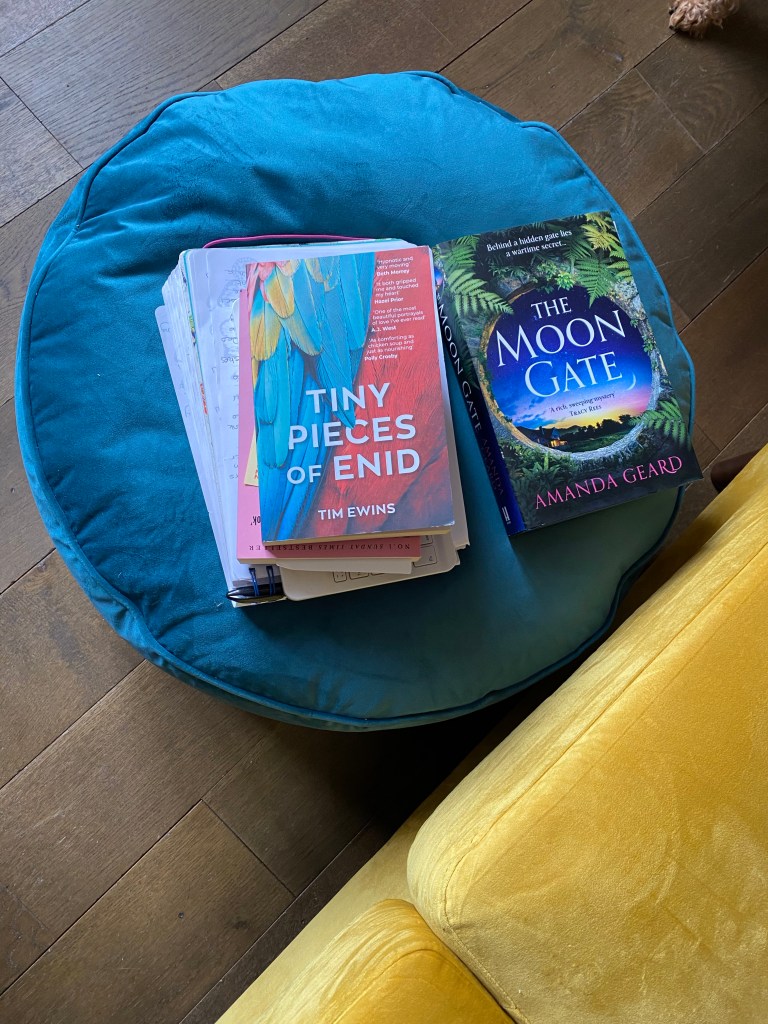
Tiny Pieces of Enid by Tim Ewins

I was so emotionally invested in this deeply moving story, written with such care and empathy for the characters, but also the people who are going through similar experiences in real life. I would also suggest hankies or tissues, a big bar of chocolate and a cat to cuddle. This is an incredible read – but you will cry, in fact if you don’t there’s probably something wrong with you. Our heroine Enid has had a stroke and also has a diagnosis of dementia. She has aphasia causing problems with comprehension and formulation of words. Often, people with aphasia know what they want to say, but find something stops them expressing it. Having looked after people who’ve had a stroke I know it is one of the most frustrating neurological symptoms someone can have. The author has set the book inside Enid’s brain – we learn that she’s not completely senile, in fact she has moments of incredible clarity and is often witty, with a great sense of humour. However, she is forgetful and shows a lot of frustration about her lot. Enid has lived with husband Roy for many years, but after another incident at home their daughter Barb has to make a horrible decision. She decides her mum would be better in a specialist nursing home, but this means separating her from her beloved husband. Enid believes that this is a temporary separation and that soon Roy will come live with her in the nursing home. Meanwhile Roy is trying to cope alone, missing his wife terribly but having to plod on without her.

In the home Enid meets Olivia, a young mum who frequently visits another resident and they have an affinity. While they might seem to be very different on the surface, they connect on a deep emotional level. Every time Olivia visits, Enid is reminded of her first marriage and the memories are painful. Enid’s husband was violent and she can see that Olivia’s husband is also a very angry man. She wants to help, to explain that she doesn’t have to stay with him, that there is happiness beyond here. The fact that Olivia and Enid become friends, despite all of Enid’s challenges is so important because Enid’s life experience could help Olivia make a definitive decision. To save her own life. Their experience shows that friendship comes in so many forms and we shouldn’t make snap judgements about who can bring something meaningful to our lives. It made me think of an observation I made a long time ago, when someone has a long term illness their life doesn’t stop at the time of diagnosis. Some people seem to think that an unwell person steps out of life, has treatment, then comes back when they’re cured but it isn’t so. There are so many of us out here, like Enid, living with an illness and even if our lives look different they’re still meaningful and worthwhile.

When Enid isn’t watching life pass by she’s remembering, it’s like her own personal movie running behind her eyes. She sees Roy, from their earlier life together and when they’re falling in love after the trauma of her first marriage. There’s her old home and her daughter Barb who was fascinated with birds, her Tom Jones & Elvis records waiting to be played. She then remembers a scar she has on her forehead. When was that from? It feels like another life. Then she’s back with Roy. Remembering their love story. Roy is her best friend.

The way the author has constructed Enid’s inner world is brilliant. All the information is there, but it’s fractured and complicated. It isn’t always there when she needs it. She’s a time traveller, not present in the moment but enjoying her early years with Roy. Then she’s with a little girl, her daughter. These memories are so clear, but the moments of lucidity are so fleeting and we’re aware that eventually they may disappear altogether. I’ve worked in a dementia unit and every week I would push one of our residents down through the village to the home he’d shared with his wife. He seemed to have no idea where we were, he was rarely, fully in the room. Mostly we would do jigsaws and he would try to wipe his nose on my cardigan. One day we were sat with his wife in the kitchen and I was helping him with his cup of tea when he looked over at her. Then he looked at me and said ‘I don’t know who this lady is, but isn’t she kind? I like her’. It made me cry that they had a whole history that he couldn’t recall, but in that moment he knew she was special. There was a little glimmer of feeling. It’s hard to live separately from someone you’ve had a life with, especially when the relationship hasn’t ended. You’re living like a single person again and while you can always visit your partner (and appreciate the respite from being a full time carer) there are parts of that person you miss. The tragedy is you didn’t need to separate from the person, just their condition. So it was easy to understand Roy’s decline without Enid, he’s lost the shared jokes, the conversational shorthand and that sense of it being the two of them against the world. Although Enid is safe, part of Roy will wish she was still at home with him. I would imagine he must miss her sense of mischief more than anything. Enid will try anything to be with Roy again, and she relies on an imaginary parrot to help her.

Tim Ewins has written a really special book with such fully rounded characters who have busy inner lives, including Enid. I have a long-term illness and it’s great to read a writer who understands that journey and shows how rich our lives can be, even if they are different. My late husband had the same illness as me and this book reminded me of the snatched moments we spent together between carers, district nurses, palliative stays and hospital admissions. Despite all of that ‘stuff’ no one could take away that connection we had and some of my happiest memories were in those snatched moments; the tiny pieces of life that Enid remembers might seem commonplace, but they are the very moments I’ve treasured and remembered ever since. This is a special book, written with such heart and compassion.
Meet The Author
Tim has enjoyed an eight-year stand-up career alongside his accidental career in finance.

He has previously written for DNA Mumbai, had two short stories highly commended and published in Michael Terence Short Story Anthologies, and enjoyed a very brief acting stint (he’s in that film Bronson, somewhere in the background). We Are Animals is his first novel.

When not writing, he enjoys travel, reading (of course), cycling and spending time with his wife, son and dog in Bristol. Follow him on Instagram @timewins and @quickbooksummaries where he writes inaccurate but humorous book reviews.
Posted in Squad Pod

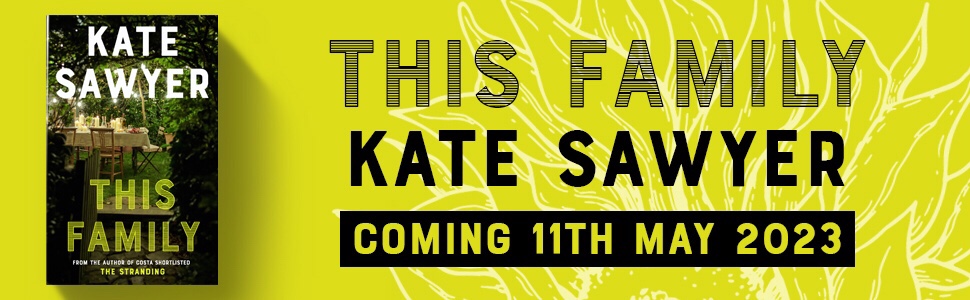
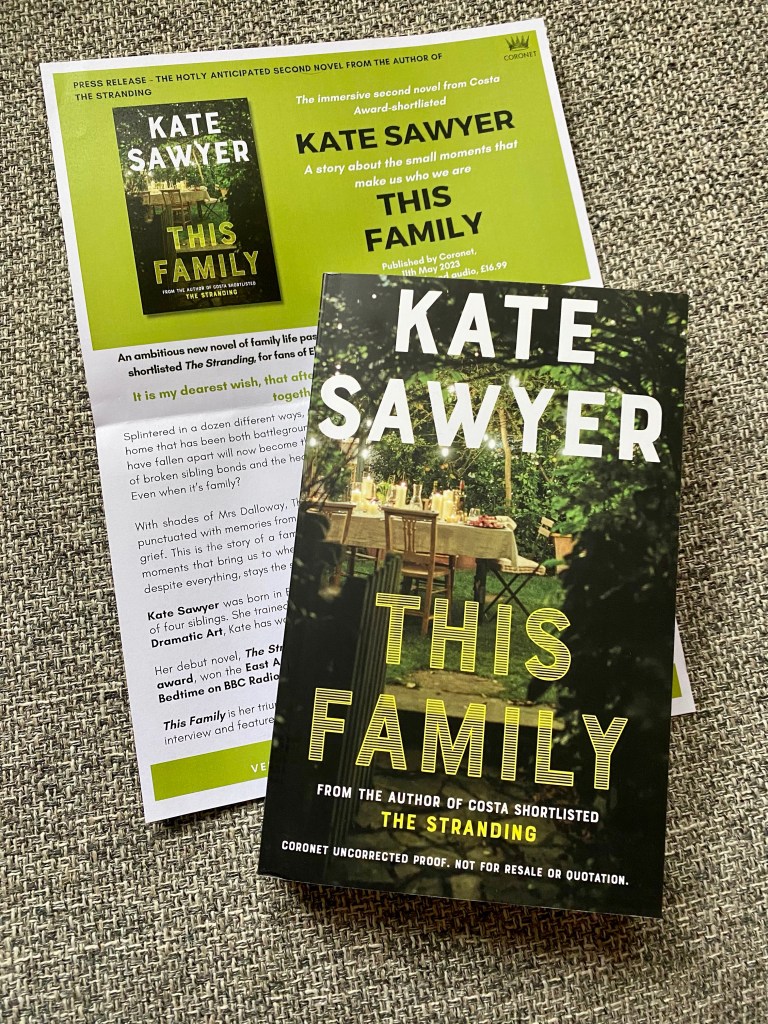
This Family by Kate Sawyer

I fell in love with Kate Sawyer’s imagination and writing skill when I read her debut novel The Stranding, so I was excited when the Squad Pod were able to confirm her new novel for our May book club. I didn’t know what to expect, whether there would be more of the same dystopian themes and emotional intelligence that I’d loved before or something completely different? This Family is different in that it’s set on one day where a family, with all it’s fractures and memories, are celebrating a wedding day. I often read books where I know I’m getting only a fragment of a much bigger picture. Kate Sawyer writes on several levels at once, from the personal to the universal. Each character has their inner world, their current outer world, other times and events, other people’s perspective on the character and events, then national and international concerns. It’s like someone shaking out the contents of my mind into a big jumble and seeing every single thought: I need to get some bread, last night’s dinner party was boring, thoughts of another dinner party years ago where I said something stupid, a worry about my dad’s health, thoughts on the book I’m reading, concern about the state of the health service and the war in Ukraine. Kate constructs her characters with all those levels creating a tapestry of this family’s life and how they all fit together to make a beautiful whole.

This was one of those books where I was conscious of empathising with an older character – Mary – who is getting married today and wants to have just one day where everyone behaves and is thinking of her happiness above their own concerns. She wants Phoebe to stay sober. She wants Emma to speak to her sister. Could her first husband Richard not be a dick? That’s all she wants. Just one day. As the family come together we see aspects of the day from different perspectives with all of the details I’ve mentioned. We see Phoebe’s inner thoughts. Then Mary’s thoughts and impressions of Phoebe. Rosie brings up a global concern – usually climate change, but Mary says it’s banned for one day. There is talk of COVID, the financial crisis, and even small boats crossing the Channel. Life is a tapestry of all these things, multi-layered and with contrasting colours. Kate gives each character their section, but she includes those events over the last few years that have stopped us all in our tracks like 9/11, theBoxing Day tsunami, the London terror attacks. Mary’s thread of worry when she hears of the tsunami, knowing one of her daughters is in Thailand. The thought she might be hurt pushing aside all irritations and harsh words. As a worker in the NHS Rosie’s proximity to the terror attacks and the pandemic cause other’s concern. This family is a jumble of memories, hurts caused, joint history, change, and then those moments of sharp focus when all that matters is their love for each other.

Their relationships are complex and at first it’s hard to know who everyone is and how they relate to each other. In fact the story of Mary is told so slowly I didn’t know who she was marrying until at least half way through the book. Going back over time, characters were married to different people and the relationships change. Even the sisters relationships with each other turn out to be complicated, yet they are still family. Emma’s story hit me deeply, because it was a story of childlessness and grief tearing lives apart. Emma married Michael, who was Phoebe’s best friend at university. Their marriage suffered due to pregnancy loss and when they lose their son, just as Emma was starting to think everything would be okay, it’s Mary that she asks for. She shuts Michael out and starts divorce proceedings, holding tightly to her feelings and unable to take on anyone else’s feelings of loss. Yet Michael will be at the wedding and will Emma be able to face him? There’s also her sister Phoebe to face and she has had a family, including a newborn. There’s a lack of communication between these two sisters, all pent up anger, jealousy and loss that they must put aside at least for today. When the truth of their rift is revealed the scene physically winded me. I felt for Emma, but could also see she’s her own worst enemy at times. It made me think about my own childlessness and the things people have said to me that hurt deeply at the time, but I could see if I held on to them I was hurting myself. At a time of great loss Emma cuts out the very people who might have helped and has missed seeing her niece and nephew.

Phoebe is a real talking point to and discussing her with other members of the squad has been enlightening, with many disliking her intensely. I could see where she’s hurt people with her reckless temper and with her addiction. Phoebe is now sober and married with a family, somewhere it’s hard to imagine her being when we delve into her past. I could understand how the family feel cannibalised by Phoebe’s successful newspaper column and her book, Mary particularly. She tried not to read it because she didn’t want to be blindsided by something her daughter recalls, in her own inimitable way. Phoebe needs her family, but their relationships with her are being slowly devoured, sentence by sentence. I found it interesting that when others recall terrible things Phoebe has done in the past, she really couldn’t see their position because she’s clouded by drink. She feels sorry for herself and can’t see past the self pity to wonder how others feel. As she recalls the terrible thing she said to her sister all the feelings of shame come bubbling to the surface, but she repeats a mantra to herself – ‘I do not hate myself; I hate the actions of my addiction’. She accepts that even though she has made amends, Emma doesn’t have to forgive her or accept her apology. Phoebe can only forgive herself.

I loved the meta-fiction element of how the story is told. Mary comments on the nature of stories, how the same event can be viewed differently by every person who was there just as the book’s structure shows. The wedding, when it finally arrives, feels like a natural full stop. As Mary looks out of the kitchen window and sees the three sisters laughing under the tree that made her want this house, she sees closure. As they laugh in the dappled un light and Emma holds her nephew Albie for the first time something has healed. This beginning – the start of Mary and her husband’s married life – is also an ending. He commits to a new chapter, leaving his first wife behind, but knowing that both he and Mary share their memories. Mary is moving from the house that the sisters have spent their whole lives in. She knows she will miss that tree. But she will no longer have the care of her previous mother-in-law, Irene. She observes that this day is only the end of a chapter, not the end of the book. More will happen, shown in that surprising fragment of an ending. We long for the closed answer, the neat and tidy ending, but that’s not life. Life is unexpected, messy, cruel and joyous. Then the author throws in a shock we aren’t expecting and despite Phoebe having done so much damage to this family, I didn’t want this ending for her. Yet her daughter Clara is only looking back, a memory she grasps at but can’t fully know. Is it a true memory, or is it a memory constructed from other people’s stories of that day? The author is always questioning how we construct reality, whether there is one true account of an event, or whether the story is fragmented, fluid and ever changing? This was a fascinating read psychologically and really made me think about how others see events we’ve shared and how families choose to overlook each other’s faults and bad behaviour, to come together and choose love, again and again.

Published by Coronet 11th May 2023

Kate was born in Bury St Edmunds, Suffolk, UK where she grew up in the countryside as the eldest of four siblings, after briefly living with her parents in Qatar and the Netherlands. 

Kate Sawyer worked as an actor and producer before turning her hand to fiction. She has previously written for theatre and short-film. Having lived in South London for the best part of two decades with brief stints in the Australia and the USA she recently returned to East Anglia to have her first child as a solo mother by choice.

Posted in Netgalley

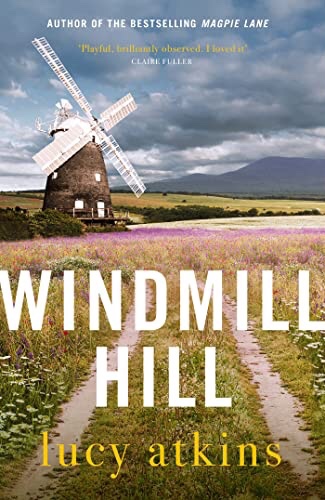
Windmill Hill by Lucy Atkins

One night in a remote hunting lodge with a Hollywood director causes an international scandal that wrecks Astrid’s glittering stage career, and her marriage. Her ex-husband, the charismatic Scottish actor Magnus Fellowes, goes on to find global fame, while Astrid retreats to a disintegrating Sussex windmill.

Now 82, she lives there still, with a troupe of dachshunds and her long-suffering friend, Mrs Baker, who came to clean twenty years ago and never left. But the past is catching up with them. There has been an ‘Awful Incident’ at the windmill; the women are in shock. Then Astrid hears that Magnus, now on his death bed, is writing a tell-all memoir. Outraged, she sets off for Scotland, determined to stop him.

Windmill Hill is the story of two very different women, both with painful pasts, and their eccentric friendship – deep, enduring, and loyal to the last.

I’m a big fan of Lucy Atkins and I love the multi-faceted female characters she creates and Windmill Hill is no exception. Astrid is in her eighties and shares her rather unique home with her friend Mrs Baker and several dachshund’s named after brands of gin. They live in a cottage attached to a windmill which has a quite a history but is now derelict and badly in need of renovation. We find the women in the aftermath of a terrible incident, something that is referred to but not explicit. A young writer is on her way to talk to Astrid about her ex-husband’s memoir. Nina has been hired by Magnus’s son Dessie and it’s Dessie who is shaping his father’s story and perhaps censoring the less palatable aspects of his life. Nina’s visit is about a party that took place in an old Tudor Lodge, where one thing happened between Magnus, the director Rohls and an aspiring young actress called Sally. Astrid was present and was blamed by the tabloids for the whole thing, it ruined her reputation, her career and her marriage. Dessie wants Nina to stick to the ‘official’ story, but Nina knows it’s not the truth and would like to hear it from Astrid. There’s also the fact that Magnus is dying and he would like to see Astrid one final time. Will she travel all the way to Scotland to confront him?

The more recent ‘incident’ that took place only a few months ago is only hinted at and involves Mrs Baker. She has always been mysterious, coming to the cottage as a cleaner, with no family or friends to speak of, then staying. I was immediately intrigued by her past, what was she escaping from? There are hints of a man called Alan, possibly a violent ex and I wondered whether her past had finally caught up with her. We’re seeing this through Astrid’s eyes and having it all replayed through Astrid’s memory. It didn’t take long for me to wonder whether Astrid’s memory was reliable. There’s an opacity to her recollection and the information comes in fits and starts. At one point I wondered if we were delving into magic realism, because she almost seems to slip back into the past like a time traveller. I think it was the intensity of the memories that drew her back. Some of these memories she avoided for a long time, popping them in a lockable box and tucking them to the back of her mind. So, once she did open the box it was like reliving the memory all over again. By dropping these little nuggets of information, the author kept me reading and wanting to know more too. However, Astrid also learns what can happen when these locked memories are addressed and let into the open. Lucy has a brilliant grasp of psychology and complicated relationship dynamics. We often see our ‘self’ as the constant, never changing core of us, but Lucy has been so clever here by showing us how fragmented, fleeting and changeable the self can be. There are maybe some core traits, but our sense as self can be eroded, altered by experience and through these women she shows that life has seasons.

The women’s relationship is the real strength of this novel and I loved that these two women lived together and are each other’s significant person. They’re not in a sexual relationship, but they are each other’s support, strength and companionship. These qualities are seriously underrated and when I look back in my own life it’s women who have kept me standing and helped me survive some of life’s hardest experiences. Some of the happiest times in my life have also been with my women friends. There’s also the fact that both women are survivors and that has created a strong bond between them. What better way to live your later years than with your best friend? Soul mates don’t have to be lovers. Men don’t come across well in this novel, although age and perspective have mellowed some of them and allowed them to be vulnerable and honest. Nina is a lovely character who I really warmed to soon after her arrival. The fact that she’s giving Astrid a right to reply speaks well of her, because she could have taken the money and written the book Dessie wanted. She’s more honest than that and is risking her contract by travelling to the windmill and asking awkward questions. She’s also open to friendship with these eccentric older women and their various dogs in wooly jumpers. A lot of people overlook friendship with people older than them, but they can be the richest relationships and I’ve learned so much from friendships with older men and women. Nina also wants to help the women with the windmill, a character in it’s own right. Through letters that Astrid finds in the windmill she’s let into the world of Lady Constance Battiscombe who owned the windmill in the 1920’s. I loved her antics and how they scandalised the village. It felt like the windmill also had a life of many seasons from the terrible story of the little girl killed by one of the sails, to Lady Constance’s bohemian scandals. Now, with the help of Nina, the windmill will shelter Mrs Baker, Astrid, the dogs and Tony Blair the taxidermy stoat, but will last beyond them too into another season. Full of wit, warmth and fabulous characters this is a great addition to Lucy’s body of work.

Meet the Author

Lucy Atkins is an award-winning British author and journalist. Her latest novel, MAGPIE LANE, was picked as a ‘best book of 2020’ by BBC Radio 4’s Open Book, the GUARDIAN, the TELEGRAPH and GOOD HOUSEKEEPING MAGAZINE. Her other novels are: THE NIGHT VISITOR (which has been optioned for TV), THE MISSING ONE and THE OTHER CHILD. Lucy is book critic for The Sunday Times and has written for publications including the Guardian, the Telegraph, the Times, and many magazines. She teaches on the creative writing Masters degree at the University of Oxford. 

She has written several non-fiction books including the Amazon #1 parenting guide, FIRST TIME PARENT (Collins). 

For news, events and offers see http://www.lucyatkins.com

Follow Lucy on Twitter @lucyatkins Instagram @lucyatkinswriter

Posted in Netgalley, Publisher Proof

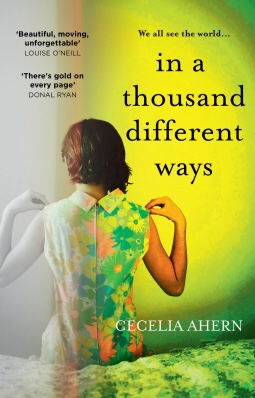
In A Thousand Different Ways by Cecilia Ahern

Cecilia Ahern gets better and better. I loved Freckles, which I’d tried despite hating her early books (especially P.S. I Love You, a book I hated with such a passion I wanted to throw it on the fire). This was such a profound book and touched me deeply. It was no stretch to believe in our heroine Alice and her ability to see people’s emotions as colours. I could also empathise with how difficult it is for her to cope with. I identified with our heroine so strongly, both physically and mentally. To explain, ever since I was diagnosed with MS I get strange crossed wires with my senses, especially around sight and taste. If I see a beautiful display of daffodils, I suddenly taste delightfully sour sherbet lemons and my mouth waters to the point of pain. Every so often, if I’m anxious, the smell and taste of Mum’s cottage pie drifts in and I can actually experience it as a physical sense. It’s obviously something that’s comforting to me. These experiences are as vivid and real as if what I smell and taste is directly in front of me. I think this ability to make strange connections and perceive senses in different ways also stretches to other people’s emotions. There are times when someone walks into a room when I can feel their emotion as strongly as my own. It goes beyond a knowledge of body language, I can actually feel their anger, confusion, grief or joy in my own body. As you can imagine this has been incredibly useful in my counselling work, but it’s also completely exhausting, especially when a lot of people are around.

Alice is from a dysfunctional family and we’re thrown directly into their daily life, where elder brother Hugh and Alice are desperately trying to keep their family together. Alice has to get her younger brother up and ready for school, trying so hard not to wake their mother Lily and incur her wrath. Sometimes when they return Lily still hasn’t surfaced, but if she has it’s still best to remain under the radar because she’s usually irritable, lethargic and unable to connect with her children. Other days they may come home and find Lily up, dressed and full of energy. She may be frantically cooking pancakes, multiples of them, while working out the overheads of running a mobile pancake van. This tendency to flit between extremes is spoken of in whispers between the children, quick warnings to brace themselves or expect the worst. One day after school Alice comes home and finds Lily still in bed, even worse there’s an eerie blue mist emanating from the bed and filling the room. Alice fears the worst and rings an ambulance, then runs into her room and hides. It’s only when she hears her mother screaming and swearing at the paramedics that she realises Lily is alive. What’s baffling to Alice is that no one else seems to see the blue colour emanating from her mum.

I absolutely loved the way the author described Alice’s adjustment to having this vivid colour display wherever there are people. In the school environment it’s a nightmare for her, everyone gives off a different mix of colours, moving and flashing at her eyes until she starts to suffer migraines. Her insistence on wearing sunglasses to school brings her to the teacher’s attention and they think she’s playing up and being insolent. Hugh knows though and seems to realise instinctively that it’s part of Alice’s hyper-sensitivity; the colours are simply a physical manifestation of her ability to feel other’s emotions. Alice is what might be called an empath, she has a highly tuned radar for the moods and sensitivities of people in close proximity to her. As a child she sees the negatives in her situation, mainly because she doesn’t have autonomy. If Lily is blue, red, or at worst black, there’s nothing Alice can do to avoid it. She can get out of the house if Lily hasn’t seen her, but that’s not always possible, leaving her at the mercy of her mother’s mood. The author brilliantly conveys Alice’s feeling of powerlessness and the fear she feels as she comes home, unsure of what will happen when she goes inside. Scenes where Lily is at her most angry, in one scene towards Hugh and his plans to go to university, the furious and messy black colour Alice can see is really menacing. Yet they go on hiding Lily’s condition, because the alternative is social services and possibly having to split the family up.

I found myself really worried for Alice, because in the swirl of colours and emotions that assail her every hour of the day how can she ever find peace? Between that and the terrible situation at home there’s never a moment for her to develop herself. We only know who Alice is in relation to everyone around her. She becomes subsumed by their emotions, needs and wants to such an extent that her own don’t get a look in. I was devastated by her choice to stay at home after leaving school with Lily and her little brother, who’s rapidly becoming a violent criminal. His antagonism towards Alice comes from being the baby of the family and not yet being able to view his mum objectively. Lily has the ability to threaten and manipulate quietly, deliberately under the radar of her youngest son. So he only sees Alice’s attempts to stick up for herself, which cause such a furore that in his eyes Alice is the problem. I was worried that she would never be able to leave home, follow a career or get married and have her own children. She has become so emotionally literate though and still worries about her family members, even the ones who treat her badly. I was worried she wouldn’t be able to discover her authentic self and develop the life she wants without leaving. One catalyst for change is the man she happens to see on his way to work. He stands out instantly because he isn’t giving off any colours and Alice is so fascinated that she follows him. Andy is a strange mix of both restful and mysterious. Alice has never had to work so hard on getting to know someone, it’s both scary and intoxicating to peel back the layers. However, when they’re just ‘being’ – taking a walk or watching a movie – Alice can relax fully, because she can’t sense all the colours lurking underneath the surface. I was intrigued to know whether this could mean he is Alice’s ‘one’, but also whether there were other colourless people in the world.

From the perspective of this reader with a disability it was so interesting to watch someone negotiate the world with a difference like this. I’d probably call it an ability rather than a disability. I loved discovering whether Alice grows to cope with her colours or moves beyond the difficulties of her childhood. As we moved through her life I forgot she wasn’t a real person, that’s how well-rounded a character she is. I felt like I was having a conversation with one of my counselling clients because of the depth the author goes to and the richness of her inner world. It was a surprise to see how her age and experience changes her relationships with other characters. I found the final sections of the novel, deeply moving and strangely comforting. I felt privileged to have moved through life with this extraordinary woman.

Meet the Author

After completing a degree in Journalism and Media Communications, Cecelia wrote her first novel at 21 years old. Her debut novel, PS I Love You was published in January 2004, and was followed by Where Rainbows End (aka Love, Rosie) in November 2004. Both novels were adapted to films; PS I Love You starred Hilary Swank and Gerard Butler, and Love, Rosie starred Lily Collins and Sam Claflin.

Cecelia has published a novel every year since then and to date has published 15 novels; If You Could See Me Now, A Place Called Here, Thanks for the Memories, The Gift, The Book of Tomorrow, The Time of My Life, One Hundred Names, How To Fall in Love, The Year I Met You, The Marble Collector, Flawed, Perfect and Lyrebird. To date, Cecelia’s books have sold 25 million copies internationally, are published in over 40 countries, in 30 languages.

Cecilia Ahern writes on her Amazon author page that the thread linking her work is in capturing that transitional period in people’s lives. She is drawn to writing about loss, to characters that have fallen and who feel powerless in their lives. She is “fascinated and inspired by the human spirit, by the fact that no matter how hopeless we feel and how dark life can be, we do have the courage, strength and bravery to push through our challenging moments. We are the greatest warriors in our own stories. I like to catch my characters as they fall, and bring them from low to high. My characters push through and as a result evolve, become stronger and better equipped for the next challenge that life brings. I like to mix dark with light, sadness with humour, always keeping a balance, and always bringing the story to a place of hope.”

Posted in Throwback Thursday

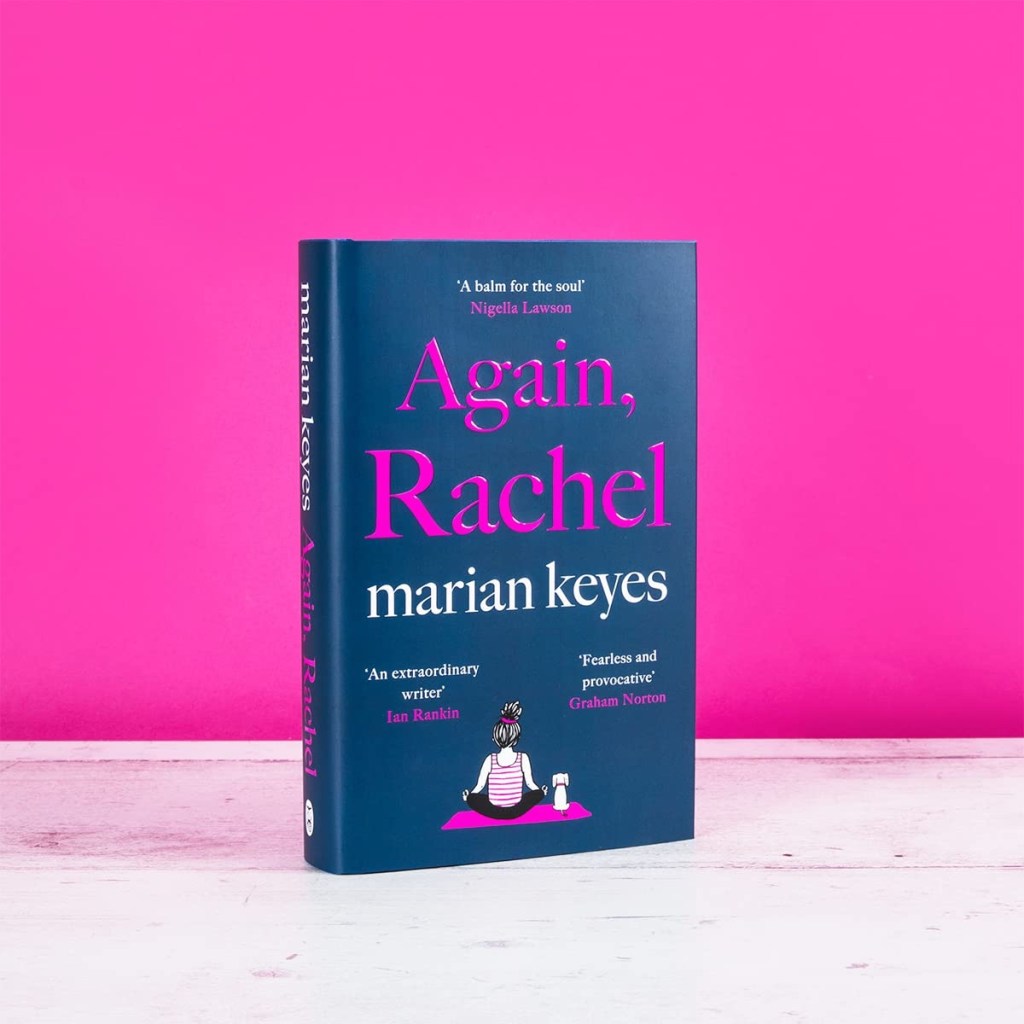
Again Rachel by Marian Keyes

Over the last couple of weeks I’ve had the brilliant experience of buddy reading with my eldest stepdaughter. I bought her Rachel’s Holiday and this sequel Again, Rachel for Christmas and she decided to read them in her down time from revising for her A’Levels. I realised it would be a great opportunity to share the reading experience together. I finished this on my weekend away and I genuinely found it hard to look up from the story. For the author, the anxiety of revisiting a much loved character must be huge, because I felt it too. I’d kept it on one side for this long because of that anxiety. I loved Rachel and the whole Walsh family and I wasn’t sure I wanted to know what happened next. We’re twenty years on from the end of the last book and Rachel is settled, with a job she loves and a happy home. She works as a senior counsellor at The Cloisters – the place where she started her own recovery journey. She owns a beautiful little house and a garden that’s become an unexpected part of her ongoing recovery and mental well-being. She also has a little dog, Crunchie. There’s also a man, Nick Quinliven (known as Quin) who has a penchant for trying new and exciting things from from the latest restaurant to wild swimming and escape rooms. They haven’t said they love each other yet, but he is an important part of her life. Life is great until Rachel hears that Rose Costello has died. Rose was her mother-in-law and although she hasn’t seen her since she and Luke divorced, she does feel an obligation. Should she go to the funeral or not?

Rachel and Luke have never spoken since he left their Brooklyn flat several years ago and cut all contact. I kept thinking what on earth could have separated these two people who really loved each other? Skilfully taking us back and forth in time, Marian Keyes constructs the intervening years as Rachel copes with the unexpected present and the painful past. Rachel’s whole life is upended as she sees Luke for the first time and tries to cope with the emotions of their reunion. However, she’s also plunged deeply into the past and the reasons she and Luke ended. Rachel is emotionally intelligent and knows all about buried trauma, but is surprised when she experiences all of those emotions afresh as if it only happened yesterday. It upsets her equilibrium, but has that sense of calm recovery merely been a front? Rachel hasn’t wilfully deceived others. She’s deceived herself. Is her version of what happened back then even the truth? If given the chance to connect with Luke and unpick their past, should she take it?

Marian Keyes really knows her stuff when it comes to addiction and mental health. It’s always a joy to read her books because they’re so emotionally intelligent. This framework provides so much depth to the characters and their story. Here she shows us a wounded healer, as Rachel struggles through addiction and loss, but still supports clients to achieve psychological change. I love her courage, because anyone who uses their own pain to help others is an incredible human being. I love how Keyes describes group sessions, as Rachel keeps her boundaries and sticks to her script, no matter how strongly she might be identifying with the client or feeling deeply moved by their story. We get to see that conflict in her; as a human being she might want to comfort that person, but as a therapist she must hold back to effect change. She knows that sometimes it’s important to sit with the feelings, to truly feel negative emotions without distractions or outside comfort. They always pass. I loved the wisdom she’s acquired over the years and how she rides to cope with her own trauma the same way.

I was deeply moved by Luke and Rachel’s experience because I’ve been through something similar. It made some parts hard to read, but it was written beautifully and with an accuracy I really appreciated. Keyes offsets the sadness with the usual comic touches, with Walsh family conferences being a great source of humour. All the sisters have their own idiosyncratic characters, causing conflict at times but we know that love is always present. Mrs Walsh is typically overbearing and contrary and her upcoming ‘surprise’ birthday party is an extra source of stress, especially when she decides to invite her ex-son-in-law. Luckily, the meticulously organised Claire has everything in hand, despite also trying to negotiate a session of swinging for her and her husband. Husband Adam is reluctant, but once convinced he becomes so enthusiastic that Claire is furious with him! The love stories are convincing and both Rachel’s current beau Quin and ex-husband Luke have their strengths. I held out hope for Quin and Rachel because I thought they suited each other. However, once Luke is on the scene the chemistry and unfinished business between him and Rachel is undeniable. Quin isn’t the only obstacle either, Luke’s partner Callie is with him in Ireland and seems very determined to keep Rachel close. I didn’t know if Rachel and Luke would be able to move past their history and connect again, as the people they are now. I loved how they tried their hardest to work through what happened, despite the pain it’s clearly causing. Could they possibly remain friends and share their loss, after all only the two of them can fully understand what they went through. Despite knowing that that Rachel didn’t need either man to build a happy life, I knew where my loyalties as we approached the end. Oh what an ending!! I was snap chatting my stepdaughter and we’d both cried buckets at the ending. I was so glad that Marian Keyes had been brave enough to revisit Rachel again.

Published by Penguin 13th April 2023

Marian Keyes is the international bestselling author of Watermelon, Lucy Sullivan is Getting Married, Rachel’s Holiday, Last Chance Saloon, Sushi for Beginners, Angels, The Other Side of the Story, Anybody Out There, This Charming Man, The Brightest Star in the Sky , The Mystery of Mercy Close, The Woman Who Stole My Life, The Break and her latest Number One bestseller, Grown Ups. Her two collections of journalism, Making it up as I Go Along and Under the Duvet: Deluxe Edition are also available from Penguin.

Posted in Random Things Tours

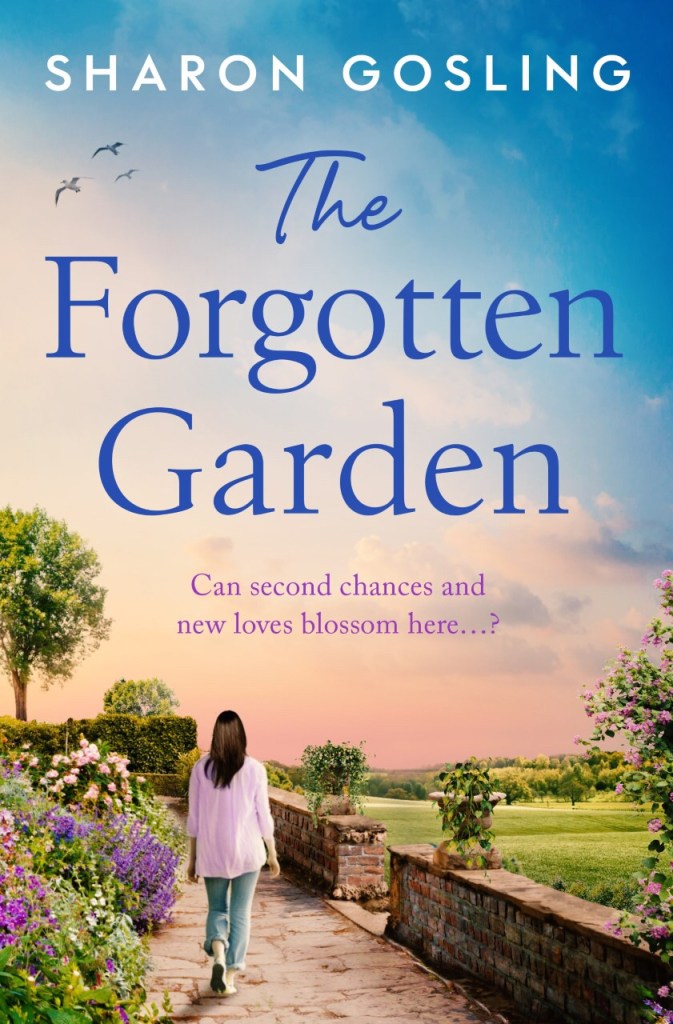
The Forgotten Garden by Sharon Gosling

Thanks to enjoying the blog tour for Sharon Gosling’s first novel, The House Beneath the Cliffs, she became an author I kept an eye on. I was on the look out for her next and The Lighthouse Bookshop confirmed for me that if I’m looking for an escapist read, she is one of my go-to authors. She seems to effortlessly blend a mix of sadness and heartache, secrets, warmth and potential romance into an engrossing read that’s so enjoyable. Our main character, Luisa McGregor, has allowed herself to become stuck. A life that once felt safe, secure and predictable is now starting to stifle Luisa and she needs more, a new challenge perhaps. Then into her lap falls great opportunity. Her friend Oliver presents a daunting, but tantalising proposition. Instead of carrying on as a gardening assistant to a woman she feels increasingly out of step with, she should check out an opportunity to build a whole new garden at a site near the Cumbrian coast. There’s a pot of money available to build a community garden on wasteland next to a gym and youth club. Luisa agrees to visit the site and is daunted by the amount of work needed, but also inspired by what could be achieved there. As we meet the people of this disadvantaged area of Collaton, we can see what a community garden could mean to these people. There’s teacher Cas, who is pouring all of his energy and spare time into the young people of the area. Harper is a teenager with a lot on her plate, but determined to find a way out of Collaton towards a different future. Can Luisa design a garden that brings both healing, inspiration and a stronger sense of community for the residents?

I did connect with Luisa and the position she has become stuck in. She has had to recover from the terrible trauma of losing her husband in an accident. She has dragged herself up from the darkest and most difficult days following her husband’s death, to a point where she feels she has rebuilt her life. She’s working in garden design, even if she doesn’t like her boss, she has a nice home and great support in her sister. Really though, she’s just treading water and terrified of stretching herself or reaching for something that she could lose. I loved the way the author shows Luisa coming alive again as she works on the new garden. She literally blooms alongside her plants and seems to gain something from working with others and passing on her skills. Without trying too hard, the garden draws in those who need it including a woman who’s been her husband’s carer since an accident paralysed him. He’s initially sceptical and annoyed that his wife’s attention has been captured by Luisa’s plans, but just a few hours a week gaining respite from her caring role has transformed her. It’s not long before he’s creating bespoke benches for the garden, adapting the way he uses his joinery skills to his disability. Harper is a character who really stands out, she’s a young girl brimming with potential, but struggling to escape the difficult circumstances of her life. She is the main caregiver for her younger brother, now that their mum has died and their father has escaped into the bottle. Harper has a skill for mechanics, engineering and invention. She spends her spare time either at the club with Cas or helping at the local garage where she’s doing up a battered old Mini that Cas has gifted to her. Harper’s story shows us how hard it can be for someone to escape where they live and their family circumstances. Her cousin Darren is out of prison and is back dealing drugs in the area again, Harper is devastated when he preys upon her younger brother, Max. Max is easily influenced, especially when it comes to friendships. He struggles to make friends and has been subjected to bullying, so when someone older and seemingly cool pays him attention it’s an easy conquest. Darren wants him as a drug runner or lookout, but Harper puts her foot down and offers herself up instead. I was on tenterhooks, knowing that this decision would have consequences in the future.

There are a few powerful scenes that really stand out. Max has a secret that he’s been working on in Harper’s absence, inspired by the garden and when it was unveiled I almost held my breath. I loved the idea for his garden and the description was so lush and vivid I could almost smell the vegetation and feel the warmth. I could imagine sitting there, early on a sunny morning and enjoying a coffee. I also kept thinking what an incredible wedding venue it would be. It’s clear as soon as Cas and Luisa meet that there is potential for romance, but I wondered if both of them were too hurt by their pasts to take the chance. I was sure it needed a catalyst and the author certainly gives us one. The scene where Darren’s thugs get into the garden was heartbreaking and heart-stopping. I could actually feel the fear of the volunteers and residents as Darren shows his true colours and the bad boy reputation he’s trying to create for himself in the community. However, the gang don’t expect to be challenged, with devastating results. I was rooting for Cas and Luisa, with their endeavours in the community and their potential romance too. I read to the end quickly, determined to see the garden succeed and whether Luisa would overcome her fear of love and inevitable loss. I took the book on holiday with me and it was an enjoyable and emotional read, with an ending that was truly satisfying. This is an author who understands that life has seasons and that women have an amazing capacity to accept life’s changes, as well as the resilience to reinvent themselves and start over again.

Published by Simon and Schuster UK 27th April 2023

Meet the Author

I’ve been writing since I was a teenager, which is now a distressingly long time ago! I started out as an entertainment journalist – actually, my earliest published work was as a reviewer of science fiction and fantasy books. I went on to become a staff writer and then an editor for print magazines, before beginning to write non-fiction making-of books tied in to film and television, such as The Art and Making of Penny Dreadful and Wonder Woman: The Art and Making of the Film. 

I now write both children’s and adult fiction – my first novel was called The Diamond Thief, a Victorian-set steampunk adventure book for the middle grade age group. That won the Redbridge Children’s prize in 2014, and I went on to write two more books in the series before moving on to other adventure books including The Golden Butterfly, which was nominated for the Carnegie Award in 2017, The House of Hidden Wonders, and a YA horror called FIR, which was shortlisted for the Lancashire Book of the Year Award in 2018. 

My debut adult novel was published by Simon & Schuster in August 2021. It was called The House Beneath the Cliffs and it was set in a very small coastal village in Scotland. The idea for it had lodged in my head years before. I have a love for unusual dwelling places and I came across a tiny house that completely captured my imagination. My adult fiction tends to centre on small communities – feel-good tales about how we find where we belong in life and what it means when we do. Although I have also published full-on adult horror stories, which are less about community and more about terror and mayhem…

I was born in Kent but now live in a very small house in an equally small village in northern Cumbria with my husband, who owns a bookshop in the nearby market town of Penrith.

Posted in Netgalley, Publisher Proof

Every Happy Family by Sarah Stovell

‘All happy families are alike; each unhappy family is unhappy in it’s own way’. Anna Karenina Leo Tolstoy

I’ve been wanting to try a Sarah Stovell novel for the last couple of years, because it’s a name that’s come up with other bloggers as someone I would enjoy. This story had me gripped to the very last page. This is the history of a family, but told like a thriller. We know that one central incident is the lynchpin of the whole story, explaining the family’s geography, personalities and dynamics with each other. Yet the incident isn’t laid bare for the reader. We must go back and forth in time, with the truth only revealed in short bursts and from different family member’s perspectives. Minnie is an academic, a professor of sociology and women’s studies and is married to Bert, another academic. Minnie is also the matriarch of the Plenderleith family: Owen, his wife Sophie and daughter Layla; Lizzie who lives in a platonic partnership with Tamsin and has a daughter, Ruby; then there’s baby Jessie and her wife Anna who have had two babies in quick succession. For the first time, Minnie will have her entire family under one roof for Christmas. This is a rare occasion because Owen lives in Australia and everyone leads very busy lives. Plus there is a tension at the centre of this family, something they never talk about, which has led to misunderstanding, distance and fear. Fear that if the incident is brought into the open and talked about, the family might implode. However, Owen hasn’t brought his wife to England and his teenage girlfriend Nora is in the village, sorting out her father’s house after his death. Could Nora be the catalyst that for an explosive Christmas?

The depth of characterisation in these family members is brilliant. I found myself understanding each family member as I read their section of the narrative. Even where their point of view clashed completely with someone else, or where they’re acting from a complete misunderstanding, I could empathise with their position. I fell in love with Lizzie, probably because I am overweight, nearing middle age and have an abusive relationship behind me. There was an instant understanding of her emotional need for calm, quiet and meditation. I also understood her medication, whether it was food or a prescription from the GP. Lizzie left a physically abusive relationship when her daughter Ruby was 16, with her self-esteem and sense of self eroded almost beyond repair. Lizzie is the jolly, overweight sister who jokes about her love of cake and seems outwardly confident, someone who owns her choices. Underneath though, is a animal that stays curled into a ball waiting for the next kick. Perhaps unable to trust men, or even trust her own judgement, she has found solace in a platonic family unit with friend Tamsin and although they perhaps don’t fully understand it, the family accepts it as a life choice and Tamsin is very much part of the family. Twenty years earlier, when Owen started dating Nora, Lizzie made friends with this unusual girl. Nora is the opposite of Lizzie, she looks like a fragile waif that you would want to feed and look after. Having lost her mother at a young age, Nora only had her father and it wasn’t an ideal relationship, so when Owen started bringing her home, his family became Nora’s family too. Minnie is impressed with her son’s choice, because she’s not into fashion or anything superficial, she’s bright, idealistic and wants to change the world. She’s going to spend summers working on conservation projects in different parts of the world and she follows through on her dreams. She might seem frail, but she’s determined and not scared of stepping out into the world alone. She’s so different to Owen but they have a connection that’s natural, deep and all encompassing.

I really did understand Minnie, a woman with so much education, intelligence and personal experience. She is the centre of the incident and takes so much of the blame for what happened, even though her point of view isn’t unreasonable. Minnie is on her second marriage, her first was to Owen and Lizzie’s father who was a drunk. Minnie was trying to hold down an academic position, run a household and two children, but always on tenterhooks for the next crisis to hit. Would she come home from work and find their father had hurt himself, given away the family car or worse? When he died, it was more of a relief than anything but Minnie was burned out. I could see immediately that Minnie was one of life’s ‘copers’. She’s used to picking up the pieces of whatever disaster her family members bring home, always without complaint and assuring them it will be ok. Holding the anxiety and responsibility for everyone creates burn out and resentment. When is it someone else’s turn to hold it together? She just wants one opportunity to fall apart. So when the big incident happened Minnie decided this was one mess she would not be clearing up. The fall out from this decision will last twenty years, compounded by miscommunication, layers of regret and grief, and the blame never apportioned out loud.

When trauma isn’t processed and discussed it grows and can come out in the most unexpected ways. Like on Christmas Day, when at least three generations of the family bring the trauma into the present. I loved how the author brought all those strands together to create this tension filled and momentous day. There’s all the usual stuff; prepping the veg, opening the presents and playing games. Between the celebrations, we’re told parts of the story by those who were there and those who are living in the aftermath. Even the grandchildren are affected, because things that are never spoken about can be misunderstood and blown out of proportion. The sections become shorter and faster towards the end, driving then tension and compelling you to keep reading. This is a brilliant, emotional and addictive read that’s a must read for this spring and would make a great TV thriller.

Published by HQ 30th March 2023

Meet the Author


Sarah lives in Northumberland, England, with her family. She teaches creative writing at Lincoln University. During the Covid pandemic, she was unable to write because her children kept interrupting her, so she started baking instead. She now spends her time writing, teaching, hanging out with her kids, baking fine patisserie and trying to believe her luck.

Posted in Netgalley

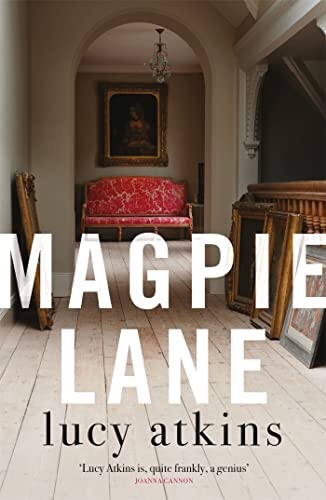
Magpie Lane by Lucy Atkins

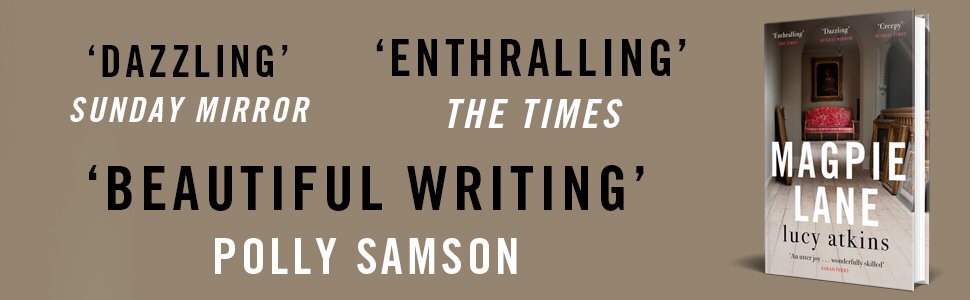
One of my April reads is Lucy Atkins’s new novel Windmill Hill, so I thought it was a good opportunity to talk about one of her previous novels. I have been a fan since her very first novel The Missing One and we read it as a book club choice. I have enjoyed all Lucy Atkins other novels and it seems they get better and better. I enjoyed the character of Dee and became drawn in by her straight away. There’s a sense that she doesn’t really belong anywhere, but she is curiously at ease with who she is. Something of an outsider in Oxford, she doesn’t belong to any of the colleges but is one of those invisible people who provide services to those who do belong. Dee is a nanny and makes a very disturbing observation about the academics who use her services – when desperate, people will let a near stranger look after their child. The new master and his wife, Nick and Mariah, hire her after a chance meeting on a bridge early one morning and one hasty conversation. They do not ask for references or do a police check. If they had, they would have found that Dee has a criminal record. It is no coincidence that Mariah restores old wallpaper. She is adept at papering over cracks. She tells Dee that Felicity is selectively mute, that she met Nick after his wife died from a longstanding illness and that they both did everything to get Felicity talking again. There us a stifling atmosphere in the lodgings and the author carefully links the house with the people in it – with both there is a long history being erased and retold through renovation or retelling. Is the start of this couple’s relationship as simple as they portray? Mariah’s chirpy and wholesome exterior might, just like the new decor, hint at a darker, more murky interior world. The house’s history is slowly being unearthed by Linklater, a social historian hired by Nick. It shows how out of step these two characters might really be. Nick wants to disturb and discover the chequered past of their new home, while Mariah is whitewashing it. Linklater discovers family dramas, haunted occupants and a possible answer for the ‘priest’s hole’ in Felicity’s bedroom that may be even more malign than the original poisonous Victorian wallpaper.

Felicity isn’t just mute. She is a very distressed child, seemingly obedient but full of simmering anger and confusion. She roams the house while still asleep, makes patterns on the floor with her collection of bones and artefacts, and seems to be drawn by the ‘priest’s hole’ in the middle of the night. She slowly starts to speak to Dee, but also makes a surprising connection to Linklater when the three of them start to take tea together after school. They are a group of misfits, finding each other and developing trust. There seems to be a distinction made between those who appear genuinely themselves, however odd they may seem, and those who are putting on an act; a natural family forming where there is a forced family unit at home. It has to be significant that the one person Felicity never speaks to at all is Mariah. Dee becomes more than a passing childcare worker, she is deeply involved with this little girl. I like the way the author foreshadows this relationship as Dee sees Felicity for the first time and notices her curls, just like those of another child she once knew. Is this another nanny’s role or is she giving hints of a past we don’t know about? If Dee once had a family what happened to them? This is where we come to discussing Dee’s role as narrator and whether she is not as candid with us as she seems. I kept waiting for a terrible secret to emerge and for Dee’s reaction to being exposed. The tension is ratcheted up when we learn that Felicity has gone missing and the narrative passes back and forth between the present day and what has happened in these character’s pasts.

I enjoyed the ending, although I raced there a little too quickly. I was desperately hoping for a happy ending for both Felicity and Dee. Watching Mariah and Nick’s ‘perfect’ life completely implode was oddly satisfying. With her perfectly calm exterior ravaged by the birth of her first child, Mariah struggles to function normally and seems haunted by Felicity’s mother Ana. She starts to spend days in pyjamas while coping with a colicky baby and this break in her usually ordered world threatens to break her. I was left feeling that Nick and Mariah didn’t deserve Felicity, but was that what the narrator wanted me to feel. I was left wondering whether I’d been manipulated all along. As the police wondered and questioned, the reader does the same. Is Felicity as disturbed as Dee would have us believe? Or was Nick right in his assessment that it was Dee’s presence, her inability to sleep, her encouragement in discovering something supernatural and the constant buckets left in the kitchen to bleach animal skulls that are to blame? Finally, I liked the way maths was used as a theme in their interactions; Dee’s proof is an example of how something seemingly factual and definite can still be manipulated. A maths problem can have two correct answers. It simply has to be worked out differently. Which version do we trust? This is an intelligent, psychological, thriller that keeps you guessing long after reading, Lucy Atkins has done it again! A great read.

Meet the Author

Lucy Atkins is an award-winning British author and journalist. Her latest novel, MAGPIE LANE, was picked as a ‘best book of 2020’ by BBC Radio 4’s Open Book, the GUARDIAN, the TELEGRAPH and GOOD HOUSEKEEPING MAGAZINE. Her other novels are: THE NIGHT VISITOR (which has been optioned for TV), THE MISSING ONE and THE OTHER CHILD. Lucy is book critic for The Sunday Times and has written for publications including the Guardian, the Telegraph, the Times, and many magazines. She teaches on the creative writing Masters degree at the University of Oxford. 

She has written several non-fiction books including the Amazon #1 parenting guide, FIRST TIME PARENT (Collins). 

For news, events and offers see http://www.lucyatkins.com

Follow Lucy on Twitter @lucyatkins Instagram @lucyatkinswriter

Posted in Netgalley

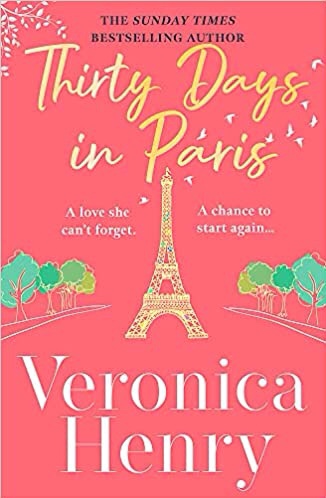
Thirty Days in Paris by Veronica Henry.

Because Paris is always a good idea…

Years ago, Juliet left a little piece of her heart in Paris – and now, separated from her husband and with her children flying the nest, it’s time to get it back! So she puts on her best red lipstick, books a cosy attic apartment near Notre-Dame and takes the next train out of London.

Arriving at the Gare du Nord, the memories come flooding back: bustling street cafés, cheap wine in candlelit bars and a handsome boy with glittering eyes. But Juliet has also been keeping a secret for over two decades – and she begins to realise it’s impossible to move forwards without first looking back.

Something tells her that the next thirty days might just change everything…

I hadn’t read any of Veronica Henry’s novels until I did a blog tour for her novel The Impulse Purchase. I found it delightfully escapist and optimistic while exploring female relationships, especially familial ones, in an interesting way. In her new novel we’re more focused on one woman; Juliet is a middle-aged, ghost-writer who’s at a huge crossroads in life. She and her husband have taken the very brave decision to separate as their last child leaves home for university. Most of their friends think they’re crazy, because the couple still get along, they’re probably the best of friends in fact. However, they feel they’ve drifted into two different paths. As her husband has embraced all things cycling – including the Lycra and the diet – Juliet isn’t enamoured and would rather curl up with a good book or go to the theatre. They’ve each become comfortable in their own routines and as the time to sell their large family home has come around, they can’t see the point of trying to meld their differing lifestyles into another joint home. So each will take half of the house sale and do their own thing and Juliet would like to take a trip into her past. Years ago, when she was still a teenager, Juliet went to work as an au pair in Paris, but returned in shame and sadness only a few month later. She has rented an apartment for a month to reacquaint herself with the city and spend some time writing her own story. However, revisiting the past is never easy and Juliet finds there are experiences she still needs to process and come to terms with.

I found reading this book a little lie watching Sex and the City or perhaps more aptly, Emily in Paris which I binge-watched over the Christmas period. Everything about Juliet’s time in Paris is simply gorgeous from the description of the patisseries near her apartment, to the clothes worn by her friend ….. and the work Juliet starts on her book project. Thanks to the two series mentioned, along with a teenage diet of Judith Krantz novels, I find Paris ridiculously romantic and imagine it full of quirky shops, artists, vintage bookshops and incredibly elegant women. Every walk she takes I was imagining the decorative shop windows, acres of pastel coloured macarons and fairy lit trees, not to mention the incredible bridges, cathedrals and art galleries. I’m also a sucker for transformation shows like the old Gok Wan and those wedding shows where people choose their dress and I also had that vibe too. This might seem like I’m making the book sound trivial or all about appearances, but it’s far from that. This isn’t just about visual transformation. The author takes what can be a difficult period in a woman’s life: empty nest syndrome; menopause; relationship breakdown and that sense of having lost who you are. Veronica Henry takes us into that process of grieving and growth and I kept reading in the hope Juliet would come to that place of finding herself – the person she is now and the way she wants the rest of her life to be. Before she can do that she needs to face what happened all those years ago when she was such a young girl and just starting out in life.

I really felt for the younger Juliet and these sections leapt off the page. I loved how brave she was in leaving her cozy home and family to do something completely different. That sense of being a fish out of water really comes across as she tries to settle into the apartment of the French family she’ll be living with. Her French is minimal and I could feel the nerves as she tries to fit in, especially when the children’s mother is quite volatile and erratic in mood. However, the father seems kind and tries to make Juliet feel at home by taking her out for Sunday lunch with the children. Juliet comes across as a kind young girl, good with the children and concerned about their mother whose moods fluctuate between treating Juliet like a little sister and angry, tearful outbursts. I warmed to Juliet because she doesn’t become angry or resentful, but is worried that her employer is struggling as a working mum of three children and perhaps needs extra support. I had concerns about the way the children’s father acted around Juliet early on and couldn’t decide whether he was trying to make her feel like family, or whether the late nights, sharing a bottle of wine, might lead to more. Juliet’s affections are completely engaged by Luke as soon as they meet. Her friend calls it a ‘coup de foudre’ or love at first sight and it does seem to be an immediate connection, as if their souls know each other before they even speak the same language. In the present day sections, Juliet hints at a disastrous ending to her time in Paris and a separation from Luke that leaves unfinished business. I wondered whether she would feel the urge to reconnect and explain what happened all those years before.

If you’re looking for an enjoyable, escapist read this winter/spring then this is definitely the book for you. Juliet is interesting and her earlier years in Paris really help us understand her character’s choices later on. I wondered how much her stable, but safe, marriage was a response to these early romantic mistakes and terrible heartbreak. I would say that her return to Paris, especially her rekindled friendship with Nathalie, brings out her spontaneous and playful side. Nathalie takes risks, from visiting less salubrious parts of the city, to accepting random invitations and wearing some quirky outfits. Their friendship picks up where they left off and I would definitely be the demographic buying Nathalie’s memoir and cookbook. I loved the way Juliet tackled what happened in the past and it showed the difference in attitudes between then and now; where once Juliet took on a lot of the blame, she can now see other people’s part in what happened and how they took advantage of her naivety. While I wasn’t necessarily rooting for a romantic ending to the story I was rooting for Juliet to build a totally new life for herself where she’s with the people who inspire her. I enjoyed the ending and felt it worked well for the character, especially when a call from home dangles her old safe life in front of her. I wanted her to continue growing and trying new things, because just reading about it felt like taking a holiday.

Meet The Author

I was so interested in reading Veronica’s author section on Amazon because it’s so personal. So I’ve reproduced part of it below.

‘People often ask me what kind of books I write and it’s a very difficult question to answer in one sentence. Primarily, I love to take my readers somewhere they might like to be, whether a gorgeous house in the countryside or on a seaside clifftop. There, my characters go through the trials and tribulation of everyday life, embroiled in situations and dilemmas we can all relate to. Love is at the heart of it, but all kinds of love, not just romantic: the love of friends and family, or a place, or a passion for what you enjoy (food, wine and books, in my case . . .)

I have a background in writing television drama (Heartbeat, Holby City) so that has been an influence – creating lots of characters whose lives impact on each other. Working on The Archers I was taught ‘Make ’em laugh; make ’em cry; but above all, make ’em wait’!

I hope my books are beautifully written, uplifting and a little bit escapist. I’d love to know what you think, so do leave a review. Or you can contact me via Twitter @veronica_henry, or on Facebook or Instagram @veronicahenryauthor

A little bit about me: I live by the sea and head to the beach every day with my dog Zelda. I love cooking and discovering new restaurants on city breaks, with a bit of yoga to offset the calories – and I’ve just bought an e-bike. My biggest writing influences are HE Bates, Nancy Mitford, Jilly Cooper and any book that has a big rambling house and an eccentric family.’ From http://www.amazon.co.uk

Posted in Personal Purchase

Someone Else’s Shoes by Jojo Moyes.

MEET SAM
She’s not got much, but she’s grateful for what she has: a job she’s just about clinging on to and a family who depend on her for everything. She knows she’s one bad day away from losing it all – and just hopes today isn’t it . . .

MEET NISHA
She’s got everything she always dreamed of – and more: a phenomenally rich husband; an international lifestyle; and . . . she’s just been locked out of all of it after her husband initiates divorce proceedings . . .

Sam and Nisha should never have crossed paths. But after a bag mix-up at the gym, their lives become intertwined – even as they spiral out of control.

Each blames the other as they feel increasingly invisible, forgotten, lost – and desperately alone.

But they’re not.

No woman is an island. Look around. Family. Friends. Strangers.
Even the woman you believe just ruined your life might turn out to be your best friend.
Because together you can do anything – like take back what is yours . . .

When Sam and Nisha swap bags accidentally at the gym, one a Marc Jacobs knock-off, the other is the real deal, they are in very different places in life. Nish is living in the penthouse suite of the Bentley Hotel, even though her husband Carl owns several homes around the world. She is living the high life and has for the past eighteen years. She’s used to the best service and the bespoke experience, as Sam finds out when she opens the bag before a business meeting to find a pair of red Christian Louboutin heels instead of her trusty black pumps. Destined for a business meeting where she can’t turn up bare foot, Sam has to take the plunge and put them on. They’re the sort of shoes that get a woman noticed, not always for the right reasons. Sam is so easy to get to know and love, because if you’re a middle aged woman you’ve probably been there. She’s feeling the squeeze of still having a teenage daughter at home, while taking on the shopping and cleaning for her parents too. Husband Phil has been no further than the sofa for months, he lost his job and then his dad died. Since then Phil’s been suffering with depression, but won’t go for counselling or go to the GP for medication. He’s not touched the camper van he bought with the last of their savings and can’t even get up to let their geriatric dog Kevin out. Sam is greeted by dog mess in the hallway and a tired husband who immediately goes off to bed on her return. Yet this day feels different. When Sam notices clients looking at her shoes, they make her feel powerful. At the end of the day she’s made three out of four deals for the printing company, but will that appease new boss Simon who seems to have made a beeline for the only 40+ woman in the office?

Nisha is also facing massive changes since the bag swap. On her return to the hotel she is told that Carl has given orders to his security not to let her in. He’s locked her out of the penthouse, their bank accounts and his line of credit at the hotel. All she has is Sam’s bag and the clothes she’s standing up in. Left penniless and homeless after eighteen years, Nisha is mourning the loss of her life and the fact she can’t call her son in New York to let him know. Ray is in a mental health unit and usually they speak every day. Hoping to gain access to the penthouse and all of her clothes, Nisha dresses like one of the housekeeping staff but is mistaken for the real deal by Jasmine, a senior housekeeper who rushes Nisha through checks and has her working alongside her in minutes. Nish can’t believe she’s fallen from the penthouse, to scrubbing poo marks off a toilet bowl. However, she needs something to pay for the cheap B and B she’s found. All the time she’s scrubbing, she’s assessing her eighteen year marriage and realising she’s come out of it with no friends, no family and not a single person she can call for help. After a disastrous attempt to get her clothes, Jasmine stands up for her and fixes the issue. Once Nish has come clean, Jasmine becomes her guardian angel and takes her home to the little flat she shares with daughter Grace that’s covered with laundry and clothing needing alterations – Jasmine’s second job. When she finally gets to confront Carl she’s baffled by his position; there will be no financial settlement until she has the red Louboutins back. Nisha has no idea how to find them, but is determined try as it is the only way she can be reunited with her beloved son.

There is a little touch of romance in the novel, which was a lovely thread, but I loved the sense of sisterhood in the novel most, particularly those who come to learn the importance of the women in their lives. Nisha needs to learn about female friendship, having had only one friend in NYC who Carl persuaded her to give up. She’s stunned that Jasmine would help her and the depths of her generosity in giving her a job, a bed and a roof over her head. This flat that Jasmine shares with her daughter Grace is not large and what space they do have is often covered with clothes that she’s either laundering or altering. It’s amazing to Nish that someone who has so little, is prepared to share it. When Sam and her friend Andrea come along, the last thing Nish expected was to like her, but she’s also impressed with the way Sam lives. She notices that Sam’s home is a huge contrast to the way she’s been living. Having several homes and living in a hotel is impersonal. While she wouldn’t want Sam’s decor, she can see it’s a celebration of her family and their life together. This is something Nish has never had. She’s stayed in some of the most expensive places in the world, but has never had a home. Could this group of women become that for her? I loved how they all embraced each other and the times that they were all together simply leapt off the page. These are complex, funny and generous women who felt completely real and made me miss my women. I’m out of the habit of socialising after shielding during lockdown and I miss that camaraderie, swapping wisdom and having a laugh. It has inspired me to reach out to my friends and try to see them a bit more, because when it comes to those tough parts of life, it’s your women who hold you up and see you through.

Meet the Author

Jojo Moyes is a novelist and screenwriter. Her books include the bestsellers Me Before You, After You and Still Me, The One Plus One, The Giver of Stars, the forthcoming Someone Else’s Shoes and her short story collection Paris for One and Other Stories. Jojo’s novels have beentranslated into forty-six languages, have hit the number one spot in twelve countries and have sold fifty-one million copies worldwide. Me Before You has now sold over fifteen million copies worldwide and was adapted into a major film starring Sam Claflin and Emilia Clarke. Jojo lives in London.