Fin and his wife Martha are travelling in South America. Their eventual destination are the salt flats in Bolivia, an other worldly natural phenomenon where the horizon becomes endless and you’re standing in the sky. Martha and Fin are not just sight-seeing, although the urge to take photographs and capture the illusion is strong. Having been together for 11 years, lately they’ve struggled as Martha has been in the grip of an obsessive anxiety over the climate crisis. They are booked into a retreat on the salt flats, found by Martha and extortionately expensive, it promises a transcendent experience using salt to purify mind and body. So the couple find themselves crammed into a pick-up truck alongside Rick and Barb, a middle aged and out of shape American couple, and partners Hannah and Zoe. They are now in the hands of their driver who doesn’t speak a word of English and an elusive shaman called Oscar. They will spend the next few days meditating, relaxing in warm salt pools and participating in a series of salt ceremonies where hallucinogenic visions bring them face o face with their subconscious reality. Yet the final ceremony descends into chaos, Martha and Fin need to grapple with Martha’s anxiety and the moral implications of their trip. As for their marriage, could this nightmare bring them together or are some wounds too deep to heal?
I’ve been fascinated with the salt flats after seeing them on an episode of World’s Most Dangerous Roads. It was incredible to see the sky reflected in the shallow saltwater surface, giving the impression of standing in the sky. It’s an image recently repeated on Race Across the World and even on a small screen it’s an incredible landscape. The author recreates that otherworldly and alien environment so well, creating an atmosphere of dislocation from the normal world even before any hallucinogens. It struck me as an odd place for a spa or well-being centre, something I always imagine as comfortable and with lush surroundings. This landscape is hard and barren. It left me dubious about the benefits of such a place and how professional it would be. As they’re collected by a taciturn driver I half expected him to rob them and leave them in the middle of nowhere. When they break down en route it doesn’t help, giving an impression of something run on a shoestring in a very inhospitable place. The building is much less luxurious than the group imagined, considering the high price they’ve paid to be there. It’s an igloo type structure built from blocks of salt. Even the beds in the dormitory have salt bases and the group are less than impressed to be sleeping in the same room. Each of the group have personal reasons to be there and the first salt ritual brings up themes of infidelity, assault and intrusive negative thoughts about the future. By confronting these issues, Oscar tells them they can process the trauma and move on. Trust has to build very quickly between the group who are letting each other into their personal spaces, both physical and mental. They’re baring their souls to each other. It’s clear that none of them will come out of this experience unchanged. Whether that’s a negative or positive change is hard to say. When Fin wakes up with a blooded face he is completely confused about how he got there. He knows he interacted with Zoe and that Barb had an accident, but the rest is fluffy and unclear. Where is the blood from and what horrors has he blacked out from his memory.
I didn’t bond with all of the characters but I was definitely intrigued by them. I could understand why all of them needed change in their lives. It was easy to understand Martha’s concerns about the direction the world is taking. Although her preoccupations are with climate change, Brexit, Covid and wars breaking out across the world have left me with anxieties about the future, especially for the younger members of our family. It only takes a few swipes of the iPad to see how climate is changing the lives of those in low lying countries. However, that proximity to information can radicalise people as the most extreme viewpoints shout loudest online and I felt this had happened to Martha. Finn couldn’t keep living with constant anxiety about the future and needed Martha to meet him in the present every so often. The author’s depiction of their relationship felt very real, showing how people in long term relationship can change over time. Sometimes out takes a conscious choice to re-commit to that person or a bit of compromise that reminds why you committed to each other in the first place. Agreeing to the salt spa was Finn’s act of commitment, to show that he can give Martha a little of what she needs in the hope it will be enough. However, he ruins that a little with his scepticism and his shock at how spartan the spa is for the money spent. As horrors start to unfold will he blame Martha or will everything they’ve experienced bring them closer together? That’s if they both get out alive. The monumental stupidity of allowing themselves to be taken into the middle of nowhere at the mercy of people who don’t speak their language and have taken a huge chunk of their savings, starts to sink in. As things start to unravel you won’t be able to put this fascinating debut down.
Out Now from Hodder and Stoughton
Meet the Author
Rachelle Atalla is a Scottish-Egyptian novelist, short story writer and screenwriter based in Glasgow. Her debut novel The Pharmacist was published by Hodder & Stoughton in May 2022.
The Government have declared a state of emergency in this tense and thought provoking thriller from Louise Swanson. They’re introducing a temporary policy of electricity rationing, so at 8pm every night the lights and all other electrical power will turn off. For Grace this is her worst nightmare, because she’s terrified of the dark and no reassurance or safety measure from her husband is going to change that. She knows that at some point she will be forced to face the dark alone. An experience of being enclosed in the dark as a child has left it’s mark. All she can do is take as many night shifts at the hospital as possible, where they’re exempt from the switch off. In the house she will have to carry a torch and try to be alone as little as possible. When the switch off comes it’s effects are worse than she could possibly have imagined. Someone is coming into her home. Late at night when she’s shivering under the covers, too scared to move. Someone is leaving behind strange gifts – a third goldfish is swimming beside Brad and Jennifer in the bowl, a horrible painting of a dragon has replaced her own photo on the stairs, a pair of candlesticks in the kitchen. With them he leaves a strange and unsettling note:
‘I have you in my sights. Love, the Night.’
Where can Grace feel safe if not in her own home? She’s an interesting character, clearly badly affected by childhood trauma and the memories of her previous, abusive relationship. The author opens with a first person account of being locked in a small pitch black space, it’s so vivid I could feel her fear. Grace tells us she was locked in a cupboard by the other children at school, where they continue taunting her until she wets herself. Since then she has always kept the lights on after dark and her partner sleeps in an eye mask to avoid the constant light. She also works at night where she can and sleeps in the day at home. She works as a carer in the hospice, spending a lot of time sitting beside those who are close to death, once her other tasks are completed. She didn’t go to university because she had a baby boy while very young and he has recently left home to live with his partner. Grace moved in with her own boyfriend and he has promised to be home in time for first big switch off. However, when she’s counting down the minutes, torch in hand, her partner is nowhere to be seen.
The author shows brilliantly how even a strong and capable woman can be triggered by something that others barely notice. She touches on how the lights out policy affects the wider population – hypothermia in the elderly, rotting food defrosting and causing waste, a rise in crime. For others the lack of power has some positives, people can’t hide or be distracted by screens and communication within families will improve. Grace has been a single mum and she works well with people who are dying, so we know she isn’t scared of the big stuff. So why has one experience from childhood left such a huge impression? Her mother had always hoped she’d grow out of it and now the twelve hours of darkness must surely mean she must face the fear? It’s like state sponsored exposure therapy. Then ‘the night’ starts visiting and suddenly the dark covers up worse fears, new ones that are very real indeed. Even worse, her night visitor isn’t breaking in, so surely they must have a key. She is unsure how to deal with it and ringing the police is pointless when they’re dealing with a darkness induced crime wave.
In between Grace’s sections of the story we meet a man who is in therapy. He left me feeling very on edge and I found myself wondering how I’d react if he were my client. He seems very unaware how counselling works, despite it being a fairly common concept these days. He also responds strangely to the therapist’s standard introduction. He fidgets, stands and paces round the room and I was uneasy on the therapist’s behalf. He seemed agitated. He’s convinced that his girlfriend is seeing another man. Is he paranoid? We have no idea how he fits into the story, but I was intrigued by him. Grace’s world becomes even more confusing when someone from her past turns up at the hospice as a patient. She knows she should disclose their connection, but if she does she knows she won’t be able to work with them. She decides to keep it to herself so she can sit with them. What clues, if any, might they have about her childhood and could what they know help her fear of the dark? As the pages turned I became more and more suspicious of her partner. Never home when he says he will be, distracted and very unsympathetic. I didn’t like him from the start and wondered if he was exercising coercive control over her. The moments when she’s under the covers with her heart racing as she hears her intruder moving around downstairs are truly terrifying. Yet he doesn’t seem malicious. He seemed to enjoy her fear and I even wondered if the night was closer to home than she thought. The truth was even stranger than expected and I found myself rooting for Grace, wanting her to get some resolution about her night visitor but also more long term relief from her phobia. That could only come from openness and facing the truth of her childhood and that time in the pitch dark cupboard. This is an enjoyable thriller with interesting insights on how childhood trauma affects us and how early relationships can inform the attachments we form in later life.
Out Now from Hodder and Stoughton
Meet the Author
Louise Swanson’s debut, End of Story, was written during the final lockdown of 2020 – also following a family tragedy, it offered refuge in the fiction she created. The themes of the book – grief, isolation, love of the arts, the power of storytelling – came from a very real place. The second Swanson book will arrive in hardback and eBook spring 2024. Watch this space.
Swanson, a mother of two who lives in East Yorkshire with her husband, regularly blogs, talks at events, and is a huge advocate of openly discussing mental health and suicide.
She also writes as Louise Beech. Beech’s nine books have won the Best magazine Book of the Year 2019, shortlisted for the Romantic Novel of the Year, longlisted for the Polari Prize, and been a Clare Mackintosh Book Club Pick. Her memoir, Daffodils, was released in audiobook in 2022, and the paperback version, Eighteen Seconds, in April 2023..
I’ve really enjoyed Sharon’s last couple of novels, because I love their mix of strong female protagonists who are facing challenges and growing into themselves. This novel focuses on sisters Nina and Bette, set on their family’s farm in Scotland. When their father dies they have no choice but to be under the same roof for the funeral. The sisters are very different, Bette is ten years older than Nina so the age gap meant they weren’t very close anyway, but when Bette left for university she never came back to the farm. Living in London, Bette is a sought after divorce lawyer and her work is her life. She flies back to Scotland the day before the funeral and aims to leave the next day. Nina is hostile towards her sister, she has the opinion that Bette left the farm and never looked back. As their mother tries to smooth things over, Nina is shocked to discover that Bette and her father kept in regular contact by email and that Bette paid for the new roof on the barn. Both sisters are shocked at the will reading when they find out that their father left them both the farm in two equal shares. However, there are massive debts to manage and Nina has always left the finances to their father, preferring to do the farm work than sit in the office. This is the only safe place Nina and her son Barnaby have ever lived. Could they be about to lose it? When getting the farm valued, Bette and the agent walk the perimeter on the land and stumble across a secret orchard, tucked away with it’s entrance concealed off the coastal path. Could this hidden fruit be the answer to their money woes and possibly a mystery to bring both of them together?
We’re drawn in by an intriguing prologue that suggests an historic love story between two local but rival families. I was dying for Bette and Nina to do some digging on this story and unravel their orchard’s complex back story. The author leaves the crumbs of this story to tantalise us while we move through the present day and the emotional aftermath of Nina and Bette’s father’s death. It’s clear from the outset that these two sisters could be an incredible team. Nina is good at the day to day farming work, rushing between baling and milking while also being there for her son Barnaby. I was on board with Barnaby straight away because he wears his Spider-Man costume everywhere, possibly even to his grandfather’s funeral. This titbit of character and humour reminded me of a little boy who always attended our church for Saturday evening mass and would go up the aisle during communion dressed in costume. Watching his long tail wend it’s way up the aisle so the priest could give a blessing to a mini dragon absolutely made my week. His mum made him take the head off for the blessing, but it was straight back on as he skipped back to his seat. Barnaby is a delight and I enjoyed watching him build a relationship with his Aunt Bette. Bette is brilliant with the financial and legal details, something nether Nina or their father has been able to do. She sets herself the task of working methodically through their chaotic office and showing the bigger picture; they might have been working themselves to the bone, but was all this work actually generating profit?
Bette understands legal procedures and processes too. When she explains they’ll have to get the farm valued Nina immediately flares up, she doesn’t want to sell the farm. She assumes Bette is looking to cash in, but when Bette explains it’s just the first stage in any plan they make whether that’s to sell or to finance the farm better for the future. She’s calmer and more patient with the process and because Bette’s less attached to the land she can make sensible, dispassionate choices which is just as vital for the farm’s survival. Added to the main plot of saving the farm there are a couple of sub-plots. Nina is often helped out around the farm by neighbouring farmer Cam, who is very capable and good with Barney, not to mention easy on the eye. What would I take for friendship to turn into love. There’s also the mystery of why Bette left the farm so definitively all those years ago and when Ryan enters the picture her reaction left me wondering if he was involved. Cam suggests a visit from an expert he knows, to see if the orchard is viable and what would be the best way to bring some income from it. Nina has never known why her sister left, so her reaction to Ryan is puzzling for her. He has great ideas for the apple trees, some of which appear to be very old species that are rarely grown. He sets them on a programme of managing the trees, pruning and grafting them to enhance their health and yield. There isn’t an off putting amount of detail on how to turn the orchard into a cider business, but there’s enough to pique the reader’s interest and I was rooting for the sister’s success.
The sisters have such depth to their characters and their lack of communication with each other has led to so much misunderstanding between them. Nina comes across as quite bitter towards Bette and to some extent she sees her sister as someone who has everything: the job, the money and the fancy London lifestyle. Actually it’s Nina whose had everything – a wonderful relationship with her father and precious time working together. She has Barnaby and although her relationship with his father broke down, she loves her son more than anything. With her mother living abroad with her new husband, Nina has taken on the lion’s share of the work around the farm and keeping an eye of their father but Bette has never expected any financial gain from the business, assuming that it belongs to Nina. I could see how the new plans might bring about a better personal relationship between them and I was kept reading by the promise of a warmer relationship between them, the makings of a new generation of the family. There’s a lot of forgiving to do here, but once they’d discussed why Bette left in the first place I could see another life opening up, one in which she might stay. As always with this author, this was such an uplifting and heartwarming story. The potential for both sisters to have their own love stories was also joyous to read, especially if you’re a sucker for an ‘enemies to lovers’ scenario. There are setbacks of course, some of them natural disasters and others caused by deep-seated rivalry. Sharon Gosling writes this type of story beautifully, as she weaves the threads of the sister’s story and the mystery surrounding the orchard’s origin, not to mention why it had been hidden all these years. The setting is wonderful, particularly the orchard with the salt air and the sounds of waves crashing against the cliffs. It’s so romantic and I loved the detail of how the salt permeates and changes the taste of the fruit making it so unique. This was a wonderfully escapist novel, driven by the character’s of Bette, Nina and of course, Barnaby. I thoroughly enjoyed being in their world for a while and I’m sure you will too.
Out 12th September from Simon and Schuster
Meet the Author
I’ve been writing since I was a teenager, which is now a distressingly long time ago! I started out as an entertainment journalist – actually, my earliest published work was as a reviewer of science fiction and fantasy books. I went on to become a staff writer and then an editor for print magazines, before beginning to write non-fiction making-of books tied in to film and television, such as The Art and Making of Penny Dreadful and Wonder Woman: The Art and Making of the Film.
I now write both children’s and adult fiction – my first novel was called The Diamond Thief, a Victorian-set steampunk adventure book for the middle grade age group. That won the Redbridge Children’s prize in 2014, and I went on to write two more books in the series before moving on to other adventure books including The Golden Butterfly, which was nominated for the Carnegie Award in 2017, The House of Hidden Wonders, and a YA horror called FIR, which was shortlisted for the Lancashire Book of the Year Award in 2018. My last children’s book (to date) is called The Extraordinary Voyage of Katy Willacott, and was published by Little Tiger in 2023.
My debut adult novel, The House Beneath the Cliffs, was published by Simon & Schuster in August 2021. Since then I’ve written three more: The Lighthouse Bookshop, The Forgotten Garden, and The Secret Orchard, which is out in September 2024. My adult fiction tends to centre on small communities – feel-good tales about how we find where we belong in life and what it means when we do. Although I have also published full-on adult horror stories, which are less about community and more about terror and mayhem…
I was born in Kent but now live in a very small house in an equally small village in northern Cumbria with my husband, who owns a bookshop in the nearby market town of Penrith.
Amber Parrish has worked her way up from being invisible nobody Lana Crump, to prominent socialite over a number of years. There have been many bumps along the way but now she’s made it. Even her husband Jackson’s current status hasn’t stopped her reigning supreme over the Bishop’s Harbour community on the Long Island Sound. Jackson is coming to the end of a prison sentence for tax evasion, but with a month or so left to serve Amber is fast running out of money. Daphne, the first Mrs Parrish, left Bishop’s Harbour after her divorce from Jackson and swore she would never return. She believed that he would never change. His abuse was psychological, physical and emotional, but she has tried to keep the truth of her marriage secret from her girls until they’re older. When she sees daughter Tallulah struggling and desperate to see her father, Daphne relents and agrees to spend the summer in Bishop’s Harbour. For as long as Jackson agrees to her boundaries and rules. Jackson proclaims he is a changed man and agrees to family therapy, but Daphne is on her guard, unsure whether a man like him can ever change. Daisy Anne lives in Texas with husband Mason and their children and enjoys a very close relationship with her in-laws, especially her mother-in-law Birdie. Even so, Daisy Anne feels the loss of her father very deeply, especially since she suspects foul play. After her mother’s death he jumped into an ill-advised relationship with a younger woman and was killed while they were elk hunting. The death was ruled an accident, because his wife claimed she’d mistaken movement up ahead for an elk, but Daisy Anne knows it was murder. When this woman walks into an exhibition for Daisy Anne’s White Orchid jewellery company in New York, she is furious and has her thrown out. The incident hardens her resolve to bring this woman to justice. Amber, Daphne and Daisy Anne’s lives become interlinked, in a dangerous game with complicated motives of revenge, justice and greed.
This is one of those books where it’s hard to like any of the characters, instead it’s driven by it’s complicated and thrilling plot of deceit and betrayal. I found myself mentally berating some characters and hating others with a passion, but still I felt compelled to keep reading. I’ll admit this was mainly because I wanted to see some people get their comeuppance. I did a lot of internal screaming if I thought one of the women was doing something stupid. My husband will tell you it wasn’t all silent screaming, because I honestly wanted to give others a swift slap. I had sympathy for Daphne, especially when learning the extent of the abuse she suffered while married. I desperately wanted to intervene and tell her not to return to Bishop’s Harbour ever. I could understand her concern about her daughters, but when the abuse was so extensive and he showed signs of starting to control their children it has to be non-negotiable. I would have had to draw a line. Instead of allowing him access to the family, she needed to have a very hard, but honest conversation with her eldest daughter. Once they knew the truth, she needed to work on blocking his access and maybe relocating. Daphne came across as wary one moment then far too trusting the next. When she made the decision to stay close to Jackson for the summer and he stepped over her first boundary, I was screaming at her to get back on a plane. I probably had a huge reaction to this storyline because I have been through psychological abuse and I had to set hard boundaries after leaving. It was great to see the author use this subject in one of her novels and portraying it so accurately, because she shows how pervasive and relentless coercive control is. She covers all the red flags too, showing the initial love bombing – something that’s really off the scale with a man as wealthy as Jackson Parrish. Then she shows him slowly ramping up the control, starting with what Daphne wears and weighs. It isn’t clear if he continues this pattern with current wife Amber, but she’s quite the operator herself having used every trick in the book to end up in such a wealthy position as the second Mrs Parrish.
As Jackson comes out of prison, their relationship deteriorates over Amber’s solution to their short term cash flow problems. Seemingly having no jealousy or feelings for her husband, Amber agrees to help with his plan to get Daphne and the girls back. Only if she gets the right terms of divorce of course – the guarantee of this standard of living for life. She aims to get her own back on someone from the past, someone who got in the way of her social climbing and humiliated her. She’s determined to buy into their business, setting up a dummy company to buy the controlling share and ruin it from the inside. She is utterly ruthless and there’s a definite pleasure in knowing that she got one over on Jackson but it’s hard to empathise with her, especially when she knows Jackson plans for Daphne. Meanwhile, Daisy Anne continues to be suspicious of the woman who married her father. His sudden death left Daisy Anne without either parent and although she’s since had a family of her own, she’s missed out on that grounding and support we get from our parents. She starts looking into his death in more detail, searching out CCTV and witnesses to the shooting ‘accident’. She also puts out feelers to find out where his widow came from, someone with her father’s interests of fly fishing and shooting would probably have lived on a large estate or been known in their social circle. She can feel in her bones there was a scam involved and she’s not going to let it go. You’re not quite sure how these women overlap at first, as the author ekes out the revelations and takes us on a rollercoaster of twists and turns. Often books have twists just for the sake of it but this was a belter and totally unexpected. I devoured the last few chapters, desperate to get the ending I wanted; finally I could find out how these women link together and watch certain characters get their just desserts. This is the perfect summer read with a great combination of serious issues, the beautiful Long Island beach backdrop and those delicious glimpses into the lives (and wardrobes) of the wealthy women who live there. Definitely one for your suitcase if you’re popping off for some late summer sun.
Meet the Author
Liv Constantine is the pen name of sisters Lynne Constantine and Valerie Constantine. Lynne and Valerie are New York Times and international bestselling authors with over two million copies sold worldwide. Their books have been translated into 29 languages, are available in 34 countries, and are in development for both television and film. Their novels have been praised by The Washington Post, USA Today, The Sunday Times, People Magazine, and Good Morning America, among many others. Their debut novel, THE LAST MRS. PARRISH, is a Reese Witherspoon Book Club selection.
I have already created two new hashtags for this third novel in the Skelf family series. The first was #bookbereavement, because when I finished it I wanted to turn straight back to the first page and start again. The second was #Skelfaholic and I am a fully paid up member. It is agreed that if this series ends (please no!) then we Skelfaholics will be holding a wake by drinking whiskey in a funeral home, followed by star-gazing at the observatory. It’s hard to put across how much I love the Skelf women, their cases, the way they conduct their funeral business with such dignity, and their investigation business with more balls than most men. I read this book almost as soon as I received it, and I’ve been sitting on it excitedly ever since, desperately trying not to say anything until the blog tour. Now I can happily say Doug Johnstone has done it again. This is a fantastic read.
For those who are new to the series, the Skelf women are three generations living under the same roof: Dorothy the grandmother, Jenny the mother, and Hannah the granddaughter. They ‘live above the shop’; their businesses being a strange mix of funeral directors and private investigators. Oh and Dorothy is a music teacher too, so there are often teenagers wandering in and out and playing the drums. In fact there are often waifs and strays under the Skelf’s roof. Hannah’s girlfriend Indy was one of their waifs, brought into the fold when her parents died and the Skelf’s organised their funeral. She now looks after the funeral business with the same calm and dignity she brings to Hannah’s life. Einstein the dog arrived when a police chase ended with a van crashing nose first into one of their graves, during the funeral. The dog was in the van and with his owner dead, he became part of the household and a companion of Schrodinger, the cat. Jenny mainly works on the private investigation side, but has a lot of her time taken up by her ex and Hannah’s father, Craig who escaped prison and is now closer than they think. Finally, there’s Hannah, starting her PhD with the astrophysics department and pondering the question of why other life in the universe has never tried to contact us – the ‘Great Silence’ of the title.
The book begins with a strange event. Dorothy takes Einstein for a walk in the park and he fetches a human foot, even more strange is that it appears to be embalmed. This embroils Dorothy in a very unusual case that could be deadly. Jenny is dealing with the aftermath of her ex-husband’s actions in the last book, she’s still healing emotionally and potentially regretting the end of her relationship with painter, Liam. She misses him, and wonders if perhaps they could rekindle something. Then the other daughter of her ex-husband disappears and Jenny wonders if her life will ever be free of this man, as she joins forces with the other woman in his life to find her daughter. Finally, Hannah is facing massive changes in her academic and personal life. In a sense she’s being pulled between past and future. Her graduation becomes a double celebration when Indy proposes, but then she’s pulled into the past when their flat is broken into and someone makes it clear they still want to be part of her life. Her academic supervisor asks her if she’ll look into one of the central questions of astrophysics, if there is extraterrestrial life, why haven’t they replied to our messages? José has had a reply, but doesn’t know where it’s come from. Is it really from another life form or is someone playing game with him?
There’s so much packed into this novel, but Doug Johnstone never loses a thread. Each storyline is given equal time and care. As I was reading the novel and writing this review, my husband saw my search history on my iPad and looked confused. I had tabs open for SETI (an institute set up to search for possible extraterrestrial life), the embalming process, numbers of big cats kept in domestic homes in the U.K, and Hindu funeral rites. Yes, the author does go to all these different places in the novel, not to mention the Italian gigolo and elderly lady, and they all interweave harmoniously. I love the unexpected situations they find themselves in, such as Indy and Hannah taking a walk in the park and encountering a black panther. I also love how these women throw off expectations and be themselves. Dorothy is an elderly lady, but she goes to clubs when one of her students is playing a gig, and has a healthy sex life with her long time friend and police contact, Thomas. She’s investigating the ‘foot’ incident, which becomes more urgent once another foot turns up belonging to someone different. She’s also investigating the panther incident and visits experts keeping wildcats at their homes. In between she’s supporting Abi, now living with the Skelfs, who gets a huge shock when a man claiming to be her birth father shows up.
Jenny has to face her ex- husband and there is a sense that this might be their final showdown. They had originally thought he’d be far away in another country, but with huge estates covering thousands of acres in Scotland, it’s not inconceivable that he’s been hiding close by all along. The strength of both Hannah and Jenny in facing him again, is amazing. They’re scared – so much so that Hannah and Indy move back in to the family home – but know that the only way to stop this man ruling their lives is to find him and have him locked away again. I felt for Jenny, who had just turned a corner emotionally and was considering her life moving forward, and whether she wanted to remain alone. She’s also investigating on behalf of a brother and sister who are concerned their elderly mother is being misled by an Italian playboy. As usual Jenny is professional with her investigation, but uneasy about her clients and their motives. Meanwhile, behind all these fireworks, the kind and loyal Indy is having a crisis about her grandparents. They are traditional, but to Hannah’s surprise they want to fly over from India for their wedding. They don’t mind their granddaughter marrying a woman it seems, but they do have a huge request relating to the death of Indy’s parents. Leading to some very hard choices for Indy, who I’m especially fond of.
Doug Johnstone is so many things at once: a gritty crime writer; a poet; a philosopher; a lover of the city where he bases this series; and an incredible writer of women. Johnstone writes real women, women who are intelligent, ballsy and true to themselves which is why I love them so much. One philosophical idea that stood out to me was ‘sonder’. It’s a word I’ve become aware of because it’s the title of my work in progress – where there are people in a difficult situation desperately trying to understand each other. Sonder is the sense I often get in a very busy train station when I look around at all the people and realise that every one of them has a complex and unique life just like mine. It’s the name of a cafe that Hannah visits near the university campus and as she sits there after her graduation, with Indy, Jenny and Dorothy she realises something. These three women come into people’s lives at a terrible moment, but have the ability to treat each person’s grief as if it was the most important thing to them. It reminded me of bringing a client into my counselling room, creating a safe space where, for an hour, the most important thing in the room is this person and whatever they bring to talk about. I think this is possibly why I feel such a strong kinship with these women. Jenny will take a drink with a homeless person and pass the time of day and Dorothy will connect with a young person fifty years her junior and make them feel welcome. I hope a little of the Skelfs rubs off on all of us. There was something about this book that felt like a finale, but I’m hoping against hope there’s more to come from these characters who I love. I’ll miss them, till next time.
Meet the Author
Doug Johnstone is the author of fifteen novels, most recently The Space Between Us (2023). Several of his books have been bestsellers, The Big Chill (2020) was longlisted for the Theakston Crime Novel of the Year, while A Dark Matter (2020), Breakers (2019) and The Jump (2015) were all shortlisted for the McIlvanney Prize for Scottish Crime Novel of the Year. He’s taught creative writing and been writer in residence at various institutions over the last two decades including festivals, libraries, universities, schools, prisons and a funeral directors.
Doug is a Royal Literary Fund Consultant Fellow and works as a mentor and manuscript assessor for many organisations, including The Literary Consultancy, Scottish Book Trust and New Writing North. He’s been an arts journalist for over twenty years and has also written many short stories and screenplays. He is a songwriter and musician with six albums and three EPs released, and plays drums for the Fun Lovin’ Crime Writers, a band of crime writers. He’s also co-founder of the Scotland Writers Football Club.
On a trip abroad with her mother, Agnes Templeton meets a handsome young doctor called Christian Fairhaven. He seems completely besotted with her and a romance soon develops. Surely his swift proposal can only mean one thing,it must be love or this a relationship of convenience? Dr Fairhaven needs a wife and a stepmother for his daughter Isobel, while Agnes needs an expert in tuberculosis for to look after her mother who is now dying from the disease. Christian is researching a new cure, something he’s working on at the institute he runs called Hedoné. He lives in a cottage alongside the institute, which is split into an infirmary for very unwell patients and ‘spa’ type accommodation for TB patients who can benefit from the fresher air and rest that the institute provides. When Agnes arrives she finds that not everything is as she imagined. The guests are more glamorous and wealthy than she expected, with their part of the building adjoined by a swimming pool, beautiful grounds and many places for parties. Their access to alcohol and gourmet food gives the place a feel of a luxury hotel. Agnes’s mother is taken into isolation, to be monitored closely and have a period of quarantine. Agnes is allowed to visit her mother’s room as she seems to be immune to TB having nursed both her father and mother through the disease without succumbing herself. As she adjusts to the contrasts of lavish dinners and the sound of partying with the very authoritarian Matron and strict quarantine restrictions, Agnes starts to notice things. Isobel seems to flit around largely unmonitored and doesn’t live with them in the cottage. The beautiful actress Juno Harrington holds court here and seems to have unfettered access to Christian, even in his office. There’s nothing Agnes can put her finger on, but she feels uneasy. She senses there are secrets at Hedoné and perhaps in her marriage too.
The book is largely narrated by Agnes, with small chapters every so often that seem to be narrated by a child. Through this we see the institute in two different ways; Agnes’s conflicting and unexpected impressions alongside those of a person who knows this place inside out and has explored every nook and cranny. I was very interested in the hare motif that repeats itself throughout the book as a symbol for the institute. It’s the keyring on which matron keeps her keys as well as the keys to the cottage, it’s on the signage and repeats throughout the building. I’m very interested in hares as a mystical symbol and a spirit animal, ever since my father found a leveret on the farm and let a four year old me touch it’s silky fur. For me it’s a symbol of huge leaps I have taken in life, some of which paid off and others that didn’t – something you have to accept if you are one of life’s ‘jump in with both feet’ people. I wondered if it had been chosen as a symbol of renewal, recovery and potentially the cure that Christian thinks he may be on the verge of discovering. However, it’s also a fertility symbol, having possible implications for his expectations of Agnes and their marriage. Agnes has jumped in to this marriage with a very short courtship away from the institute that dominates her husband’s life. There is a lot to learn about each other and where Agnes saw a competent and successful doctor, able to run an institute and bring up his daughter alone, the real picture is more complex. Isobel seems to be brought up by whoever is available, but spends a huge amount of time alone. Agnes wants to be a mother to her, but doesn’t want to impose and change what’s clearly a familiar routine. She hadn’t expected formal dinners with a new dress magically appearing each time. Who is choosing them? Christian courts investors for the institute, all drawn in by his claim of a cure. It starts to feel like the
man she met and married was something of an illusion, incidentally that’s one of the risks of taking ‘hare leaps’.
I thought the author cleverly placed doubts in the reader’s mind very slowly and strategically. I was immediately alert to a couple of characters: Juno Harrington who seems to run the social aspects of the institute and Matron, who at first gives off Mrs Danvers vibes and reprimands Agnes if she isn’t following the rules. I could see red flags popping up with Christian, who is clearly not as financially successful as the institute might suggest and the revelation that it is Juno Harrington’s family who are the largest investors answers one or two questions. Being very fond of fashion, I didn’t like the fact someone was choosing Agnes’s clothes, always placing just one new dress in her room as her only option for the evening. It showed a element of control that had my senses pinging straight away. Christian’s strange obsession with her colouring and complexion seemed odd too, constantly referring to her as his ‘English Rose’. When she finally sees a picture of Isobel’s mother, Agnes finds herself eerily similar. He’s also very quick to ask whether she could be pregnant. Agnes has been learning to enjoy their love-making and finds herself actively looking forward to it in their honeymoon period. Is his attention to her genuine or purely based on the potential outcome of having a child? He’s also very cagey about his claims of a potential cure and if the graveyard Agnes finds in the woods is a measure of his competence, it clearly isn’t working.
I wasn’t surprised when the idea of eugenics started to come up, especially considering the period the book is set. It started as a theory in the late 19th Century and was the catalyst for horrific crimes against people deemed genetically inferior. In the USA it was used as the justification for sterilising huge numbers of Native American and young African-American women, especially those living in poverty in the southern states. In the UK it became a way of herding out those who were degenerate, linking criminality to certain facial features. Obviously, the Holocaust was the single biggest crime against humanity based in eugenicist theory. Hitler’s obsession with creating an Aryan master race, was used as a justification for mass murder of those he deemed as ‘life, unworthy of life’. This was mainly those of the Jewish faith, but also included Roma people, Catholics and people with disabilities. His program of sterilising those with disabilities and removing disabled children from their families started in the early 1930’s. In this novel, eugenics are linked to the institute and possibly Agnes’s particular traits – her immunity to tuberculosis and her English Rose colouring. I was becoming worried that the graveyard where Christian’s first wife is buried, alongside so many of his patients, might be the result of experimentation or simply weeding out those too far advanced for him to cure. I loved how these ideas unfolded. We only see what Agnes does so we might suspect, but we
only discover the truth as she does which brings an immediacy to the revelations.
I loved Agnes’s burgeoning relationship with Isobel who felt to me like an abandoned little soul, wandering the grounds and all the secret spaces within the institute, trying to to help sick people where she could and spending time at her mother’s grave. Christian seems to have no plan for her and doesn’t even discuss what his parenting strategy is, probably because he doesn’t have one. He leaves Agnes to get on with it and she does well, simply assuring Isobel that she is there for her and showing a willingness to share the memories she has of her mother and their life together. I think Agnes shows her more love than anyone else. Juno Harrington seems very interested in her but treats her almost as a little pet. I thought Sippy was interesting too, a nightclub singer and the institute’s only black patient. She is valued for her entertainment potential and her voice is incredible, but I didn’t feel she was included as part of the creative and bohemian crowd. She could be on display but not one of them, and I had the sense she was quite lonely day to day. Her friendship with Agnes is based on a real understanding and connection between the women. She’s also enough of a friend to warn Agnes that everything here is not as it seems. As the closing chapters began, secrets unravelled and the tension really did build. I loved how these women helped each other and how the most help came from a totally unexpected source. It is a timely reminder that people can surprise you, especially the ones you are most afraid of. One of the most interesting things for me was the subversion of the Romantic trope of the beautiful, frail and young artist wasting away from consumption. This quote from Byron sums it up beautifully:
‘I look pale. I should like to die of a consumption’. ‘Why?’ asked his [Byron’s] guest. ‘Because the ladies would all say, Look at that poor Byron, how interesting he looks in dying.’
The pale complexion, the fatigue and the ‘rosy’ cheeks of advanced TB were a Romantic staple in fiction, whereas the truth of dying from this disease was different according to gender, race and most particularly, social status. The reality is often saved in literature for those in dire poverty and terrible living conditions. This excerpt from Liberty Hall gives a more accurate picture of the disease:
‘Her body was bent forward on her knees; the joints of this body so thin, that it was almost deformed, were swelled and red and painful. She laboured and coughed for her breath; each time that she breathed she coughed up blood …’
Despite this, TB was a Romantic fashion and the figure of the beautiful, young woman slowly giving her soul up to God was a staple of 19th Century literature – just think of Dora in David Copperfield or Beth in Little Women. I felt like these two contrasting views of TB were embodied by the two types of patient; the free, bohemian and intellectual party-going patients and those locked down in the basement, having a very different experience of the same disease. The visible parts of Hedoné are based on the Romantic ideal and the illusory cure, while the locked and hidden parts contain secrets and patients whose outlook is at best poor and with only matron to tend to them in their final hours. One is an ideal and one is the truth, rather like Agnes’s expectations of her marriage and the strange reality. As the real horror starts to unfold, I was desperate for Agnes to escape and I was desperate for that she not leave Isobel behind, because a definite bond between them. Polly nails the historical background to her story and really emphasises the fate of women between two world wars. Agnes is of a social status where earning a living as a nightclub singer like Sippy or an actress like Juno isn’t possible. In fact she seems in that liminal space where becoming a governess or nurse like matron might be her only working options. I wanted her to be free though, to explore her authentic self and make the life she wants. I wasn’t sure, right up to the final chapters, what her fate would be. This is an entertaining and interesting novel from an author who understands the nuances of relationships and always creates fascinating characters within the most unusual settings.
Meet the Author
Polly Crosby grew up on the Suffolk coast, and now lives with her husband and son in the heart of Norfolk.
Polly writes gothic historical mysteries for adults. Her first novel for young adults – This Tale is Forbidden – a dystopian fractured fairytale with hints of the Brother’s Grimm and The Handmaid’s Tale, came out in January with Scholastic.
In 2018, Polly won Curtis Brown Creative’s Yesterday Scholarship, which enabled her to finish her debut novel, The Illustrated Child.
Later the same year, she was awarded runner-up in the Bridport Prize’s Peggy Chapman Andrews Award for a First Novel. Polly received the Annabel Abbs Creative Writing Scholarship at the University of East Anglia.
Polly can be found on Twitter, Instagram & Tiktok as @WriterPolly
Sam Shephard is on the verge of returning to work after maternity leave and the traumatic circumstances around Amelia’s birth. In order to make the transition as easy as possible, Paul is staying home with Amelia for the first week Sam returns. As is predictable, her boss DI Johns isn’t the most welcoming and gives her a cold case – the murder of Rev. Mark Freeman outside his own church. There’s one potential issue, Mark Freeman was the father of DI Johns wife Felicity. Felicity’s mother has been diagnosed with cancer and the boss would like her to go to her grave knowing who killer her husband. My first thought was that this had the potential to blow up in his face: he’d be all over her progress, creating conflict of interest for Sam that would be exploited if a case ever went to court. He was also being his typical sensitive self by ensuring that his mother-in-law would spend her final months reliving the most terrible experience of her life. Rev. Freeman was found at the bottom of the stone stairs leading up to the church entrance. He had been stabbed in the stomach by a small knife, but that wasn’t the cause of death. His subsequent fall down the steps broke his neck, immediately cutting off his ability to breathe. Horrifically he was found by his son Callum, who had ventured back out into the pouring rain when his father hadn’t returned home after the service. Yet we know at least one other person witnessed the killing, because the book begins with their anonymous account of the murder. The boss has essentially handed Sam a poisoned chalice and she fears one of two outcomes – she won’t be able to solve the case, so will be held responsible for disappointing his wife and her mother or she will solve it, making the previous investigation seem incompetent and potentially tearing his family apart in the process. If we as readers know one thing, it’s that Sam will not rest until the case is solved.
I loved the happy family life Sam and Paul have created with baby Amelia. Their relationship feels like a real long-term partnership with the added bonus that Paul is also a detective. They understand that it’s hard for either of them to switch off when they’re working a case, so can happily bounce ideas and theories off each other in the evening. The addition of Amelia to their relationship is something they’ve taken in their stride. It isn’t always easy. There’s a return to work poonami that had me laughing; how do you shit in your own hair? There’s also an afternoon where each thinks the other is picking her up from childcare, but other than this they’re coping well. The author brings home to us the difficulties of being a working mum. Sam misses Amelia and has to call home to check in and hear what they’re doing. There’s also the issue of expressing milk at work, the family room is at her disposal but it feels awkward and isn’t as private as it could be. It doesn’t take long to get used to her new routine though and she’s soon busy using the time to go through interview notes and test out different scenarios. Paul is incredibly supportive, totally backing Sam up in her eventual decision to swap to bottle-feeding. Of course her mother has plenty to say, but she’s besotted with her granddaughter so that helps ease tensions. This is a case that brings up a lot of personal feelings and memories for Sam, because she too was brought up in a church environment and talking to Callum and Felicity, Mark Freeman’s children, brings up some memories of her own that it might be time to disclose.
“What I hadn’t factored in, though, was the emotional toll it took. The wrench of being away from Amelia when I loved every second of being in her company. The regret about going back to work and putting her into childcare, which felt like paying for someone else to bring up my child. And the guilt over the immense sense of relief I felt at getting away from her and from the relentless demands and responsibility of looking after a baby.”
The Freeman children and their mother are first on the list of people Sam needs to re-interview, but as she suspected, keeping her boss away from her case is difficult. He blows up over the fact she’s interviewed his wife without his knowledge and express permission. He wants all access to the family to come through him, but Sam stands her ground. If his fingerprints are all over this case it doesn’t matter what she finds out. The case would be thrown out of court, a fate even worse than failing to find the killer. I loved how Sam stuck to her guns though and called him out in front of the whole team. He has to stay away from the case and trust her. If he keeps a stranglehold on who she can talk to and what avenue her investigation takes, he will ultimately be responsible for it’s failure. The Freeman family seem lovely, but as Sam knows that’s no indicator of innocence. Sam has had a church upbringing, something I have in common with her, so we know better than anyone that sometimes people hide within a congregation. Their Christianity is a mask, a mask that seems to confer an unquestioning trust on them. Most people Sam talks to see the Reverend as a saint, but Sam isn’t taken in and knows she just has to ask the right people. Luckily, she has two potential witnesses: Aaron Scott was an operative in an Organised Crime Group and he certainly appears ferocious with his size and his Māori tattoos, then there’s Mel Smythe, former youth leader and now a drunk living in a hostel. What Aaron tells her blows the Freeman’s timeline totally off kilter and gives her a glimpse into an angrier and self-righteous Mark Freeman. Mel was well-known for being a bit of a rebel, mainly because she was gay yet she was still a youth leader. I found myself wondering whether the church was quite progressive after all. Despite her heavy involvement at the church during the time of the murder, she was soon caught up in the aftermath. She also brings throws new light on the case, but only twenty-four hours later she’s dead. Stabbed in the stomach in her lonely and bleak hostel room.
The author brings up something about church people that I was very aware of as a Christian teenager. They can seem welcoming, hospitable, even saint-like but if you breach one of their most important rules you can meet a completely different side to that person. While they might preach forgiveness, there are certain things they hold true and they are immovable. Aaron certainly places a new spin on the Reverend, with whom he’d had a great friendship. What he overheard that night showed that when faced with a challenge to his Christian values he wasn’t so great at forgiving. Mel Smyth backs up his story with a revelation of her own, a problem that was brought to her perhaps because she was different and lived outside the traditional Christian view of relationships. These new statements show that the original investigation missed so many leads or simply didn’t follow them up. That it took the saintliness of the Reverend and others around him at face value, perhaps because he was a figure of authority in the community. It’s also leading her towards conclusion that the boss isn’t going to like. As the rest of the team, including Paul, take on the Mel Smyth case Sam feels more supported. She knows that Paul and Shortie have her back and trust her methods to get results. I loved how the author gave us more on the relationship between Sam and her mother too, especially now she has a grandchild to dote on. It’s clear to see in any conversation with her mother where Sam’s self-doubt and over-thinking come from. Trying to please a critical parent is a self-defeating task and even here when talking about the Reverend Freeman case, her mother shows a total belief in the church and it’s figures of authority that’s probably hard for us to fathom in this day and age. Yet it gives us some indication of why the original case had been conducted in the way it was and how powerful church figures were several decades ago.
At the end of the case I felt so sad, that belief in the church and it’s rules were often put before the well-being and love of family and the real and flawed people who make up a congregation. I felt it because I lived it, being a teenager in an evangelical church was no picnic and I got out as soon as I could. I regularly see other waifs and strays who are no longer in the church and thankfully we get a lot of humour and relief or closure from each other. We can say ‘that was a bit mad wasn’t it?’ and hear confirmation that yes, it was utterly bonkers. I was so incredibly proud of Sam to know she was ready to talk to her mother about what happened during those years. It’s common that having your own child triggers feelings about your childhood and how you were parented, especially where there are unresolved issues. It’s no coincidence that in this novel she’s ready to take on the boss and the past, perhaps not just because of Amelia but because of the family unit she’s building with Paul. That was the feeling I took away from this novel overall, it’s main theme is family whether that’s a nuclear family in its most traditional sense, a work family that grows in professions like policing, or a church family. It also gave me a reminder that in all of these relationships, it’s communication and honesty that are the most important facets. If those two things are broken or over-shadowed by authority, a web of secrets and lies are woven that can prove very difficult to unravel. I love Sam, she’s a no bullshit character and at this moment when I am still struggling with my health and keeping up, she gave me some healthy reminders that it’s ok to let things slide a little. This was another great novel in this series, Sam is a character I’d love to go for a drink with and seeing her stand up to her boss was a real highlight!
“I suspected I’d get bored and frustrated with a life of domestic bliss. I certainly wasn’t cut out to be a domestic goddess. Six months of maternity leave had driven that home. Fortunately for me, I wasn’t aware of anyone dying from a lack of vacuuming, bed-making and not managing to get out of their PJs all day.”
Out in August 2024 from Orenda Books
Meet the Author
Vanda Symon is a crime writer from Dunedin, New Zealand, and the President of the New Zealand Society of Authors Te Puni Kaituhi o Aotearoa. The Sam Shephard series, which includes Overkill, The Ringmaster, Containment, Bound and Expectant, hit number one on the New Zealand bestseller list, and has also been shortlisted for the Ngaio Marsh Award. Overkill was shortlisted for the CWA John Creasey (New Blood) Dagger and Bound and Expectant have been nominated for USA Barry Awards. All five books have been digital bestsellers, and are in production for the screen. She is also the author of the standalone thriller Faceless, and lives in Dunedin with her family.
This is one of those books that needs to be discussed. A perfect book club choice or book you can foist onto a friend because you will want to discuss it. As the cover suggests this is a marriage and a book that splits into two – one of life’s seismic fault lines that has a very definite before and after. Niklas and Bea have been married for over thirty years with two teenage daughters Alexia and Alma. They have what most people would consider the perfect life. They live in a beautiful and sought after area of Stockholm in an apartment that Bea has spent so much time perfecting. They are currently remodelling the kitchen, but it’s bespoke and at huge cost. Niklas is a doctor and has recently taking a job heading up a maternity department. Historically, Bea stayed home with the girls and more recently took a job with the Red Cross. It doesn’t pay a lot but with Niklas’s new wage they don’t need to worry about it. As we meet the family they are preparing to take their annual summer holiday to Holgreps and the home of Niklas’s parents. They go every year at the same time as his brother Henke because this is the only time the cousins get to be together. Niklas has forgotten to book the ferry tickets and Bea is furious. This means spending an extra week in the sweltering heat of the city with no outside space or a long drive to a different ferry crossing. He only has to do one thing, she does everything else and he’s so wrapped up in his new job he can’t do it.
“Bea is busy emptying the dishwasher in the kitchen, but she stops as he comes in. The look on her face is demanding […] Her jaw seems tense, and he can see her chest rising and falling rapidly beneath her blouse. She is disappointed. No, disappointed probably isn’t the right word. She’s angry. Furious. How the hell could you forget to pay the bill? This means we can’t go to Gotland tomorrow, the tickets are all sold out!”
“Niklas feels like shouting back at her, telling her there are worse things. Like being a single mother who has just found out that her newborn son has Down’s syndrome, for example. Or being the man on the ICU ward, watching over his wife as his stillborn daughter is taken down to a cold storage unit two floors below. He feels like roaring that his head is so full there isn’t room for the damn ferry tickets and all the terrible, exhausting planning she has apparently had to do. Niklas wants to shout, but instead he turns and walks away while she is mid-sentence. He can hear Bea’s agitated voice behind him, but to his surprise, he just keeps on walking […] Each step is a relief.”
Bea narrates the first part of the book and we get the sense she feels badly done too. Niklas wouldn’t be where he is without her and she has made sure he lives up to his potential. She talked him into accepting the new job because left to his own devices he would still be pottering along in his paediatrician role at the small local hospital. It’s the same with the apartment, he couldn’t see the problem with the existing kitchen. He’d have made do with it for years, never thinking about what the room could be. Bea looks forward to Hogreps every year, she never really had much of a family herself especially after her brother Jacob died. In the aftermath Niklas had taken her to stay with his parents and on her first mornings there, his mother Lillias took Bea wild swimming. She credits those mornings with saving her sanity, more effective than counselling. Niklas had been Jacob’s friend so they shared their grief and it brought them together. Bea has always thought that anything they do together becomes fun, even if it’s taking items to the recycling tip. So it comes as a huge surprise to her when Niklas sends her a text message to say he isn’t coming home. There’s no further explanation and she doesn’t know if he means he isn’t coming home that afternoon, till tomorrow or at all. Bea’s texts and voicemails are ignored so she tells him that their daughter was expecting him to take her out in the car and she’s upset. She’s still ignored and infuriatingly, when she checks in with their daughter Alma says it’s okay. Her dad has called her and said he’ll take her another time. As one night seems to be extending, Bea is beside herself. Niklas says he wants space, but what from and how long for? Where is he staying? She’s going through that strange feeling that the person you shared space with; the person you could touch whenever you wanted; the person who you spoke to several times a day, is now off limits. It was clear to me that the balance of power had shifted in this relationship but I couldn’t understand why.
“Bea picks up her phone again, staring at the screen as though she an coax Niklas into sending her another message. An explanation of why he is acting so oddly […] but the only messages in their chat thread are Bea’s own attempts to reach him. A long string of questions and exclamation marks. CAPS. Angry emojis. Furious red faces with slanting eyebrows and bubbling volcano heads. Demands for communication”.
“The condescending pat on the head, talking to him as though his choices are reprehensible. As though it’s him who is in the wrong, who is unhinged, when all he is trying to do is be true to himself. The clear subtext is that his feelings don’t matter, and nor do his choices or wishes.”
Halfway through the novel, as Bea sets off with her girls to Hogreps and their stay with the in-laws, Niklas takes over the narration. I’d got used to my narrator at this point and I was feeling some empathy with Bea who is clearly distraught. Yet now I started to hear her husband’s story and his inner world: the pressure he’s under at work; the diagnosis he feels he should have made that changed someone’s outcome; the responsibility of financially supporting his family and keeping up with Bea’s remodelling ambitions. He’s on the proverbial hamster wheel and feels totally trapped. The author puts across his tension and despair so beautifully and I could feel the panic in his mind. I started to feel that Bea’s needs were seen as more important than his, not just in the marriage but with his family too. This is a problem rooted in the way they became a couple, both were grieving for Bea’s brother Jacob but she had the claim of being his sister. He took her to his family as this lonely, wounded little bird and they all took her under their wing. Niklas was effectively pushed to one side, not only negating his grief for his best friend but piling on the pressure. He now feels held to account, forced to swallow his own needs and look after Bea at all costs. It isn’t until he ends up talking to one of their neighbours at a party that he even realises he has a choice. The sense of freedom he gets from someone listening to him is exhilarating. Everyone assumes he’s having a midlife crisis, but is he? As he and Bea go to couple’s therapy can they save their marriage?
‘She knows exactly what song Lillis means. ‘If You Love Somebody Set Them Free’ by Sting. Bea herself has never even a fan. Surely freedom also involves responsibility? Taking responsibility for those you love? She doesn’t have a problem with giving other people space, but leaving your partner in the lurch? That’s just cowardly.”
“She has liberated his mind somehow. Lifted the hundred-kilo weight from his chest. Sometimes he wonders what might have happened if they’d met earlier. Would he have been able to avoid all this? Would he have forgiven himself sooner? Realised that he isn’t responsible for other people – other than his children, of course – or at least not in a way that makes him a slave.”
I loved how the author shows us the difference in communication styles between these two characters. Bea is performative and you are never in doubt about how she’s feeling. He anger and distress leap out immediately, even all the way back to the beginning and Jacob’s death. Niklas seems shell-shocked by Jacob’s death and he internalises all of the feelings he has to look after Bea. However, it starts to become clear there are bigger things hidden deep inside this couple than tears. Grief is complicated and Niklas’s feelings have been discounted from the beginning, by his parents Lillis and Tores, by Bea and by himself. He hasn’t allowed himself to process what happened and this becomes his coping style. So, when he finally does start to express his feelings they come as a surprise to Bea and to him. He can’t blame her for not knowing how he’s felt, because he’s never tried to tell her. Or is it more that there’s never been room for anything but Bea’s feelings. As we go back and forth, especially section three which passes between the two of them, secrets come to surface that I really didn’t expect. It’s also interesting to see how the people around the couple adjust and cope with what’s going on, brought into sharp focus by the illness of Tores. I felt so much for Bea because she has a lot of catching up to do, it’s as if the world has moved on without out her suddenly. Then in Niklas’s sections of the story I could feel how free he is, exploring his likes and dislikes, changing long held traditions and doing things he never expected like having a tattoo. They might look like mistakes from the outside, but it’s his exploration and he’s finally finding his authentic self. This novel is so beautifully written and exquisitely structured to have impact on the reader. Reading this felt like a counselling session and I mean that in the best way possible. We delve deeply into these two characters and their shared history, looking for clues and patterns of behaviour till we can understand why they’ve reached this crisis point. The question of whether they can come together again and be a family I will leave you to find out.
“Maybe things are different for Bea and Niklas because their life together began in tragedy, with Jacob’s death. Because that, strangely enough, is what brought them together. Maybe that’s why she knows they can handle anything: because they fell in love at rock bottom. She wouldn’t have survived without Niklas”.
Out Now in hardback from Manila Press
Meet the Author
Moa Herngren is a journalist, former editor-in-chief of Elle Magazine and a highly sought-after manuscript writer. She is also the co-creator and writer on Netflix hit- show Bonus Family. Alice Menzies is a freelance translator based in London. Her translations include work by Jonas Hassen Khemiri, Fredrik Backman, Tove Alsterdal and Jens Liljestrand.
A Missing person … a headless corpse … Jensen is on the case.
June, and as Copenhagen swelters under record temperatures, a headless corpse surfaces in the murky harbour, landing a new case on the desk of DI Henrik Jungersen, just as his holiday is about to start.
Elsewhere in the city, Syrian refugee Aziz Almasi, driver to Esben Nørregaard MP has vanished. Fearing a link to shady contacts from his past, Nørregaard appeals to crime reporter Jensen to investigate.
Could the body in the harbour be Aziz? Jensen turns to former lover Henrik for help. As events spiral dangerously out of control, they are thrown together once more in a pursuit of evil, more dangerous than they either could have imagined.
It seems a long time since I last accompanied Jensen on her investigative adventures, so I was very pleased to receive a proof for this third instalment. As usual this was a complex plot involving politics, organised crime, hackers and headless bodies being fished out of the water. Jensen fears that one of the bodies might belong to a Syrian refugee named Aziz who was working as security for MP Esben Nørregaard, a friend of Jensen. Esben asks Jensen and her assistant Gustav to look into it for him as he doesn’t yet want to involve the police. Meanwhile, detective Henrik Jungersen and his team try to find out who the bodies belong to and where their heads have gone. This complicated investigation means that Jensen and Henrik are going to cross paths. Jensen is in a good place, after a round of redundancies at her newspaper Dagbladet she has become chief crime reporter. Also, she has just moved in with her tech billionaire boyfriend Kristoffer Bro. Henrik can’t believe that Jensen has left him behind for good. He’s still married, just barely, and is due to go on holiday to Italy with his family when the first body is found. Guiltily he can’t imagine anything worse than the holiday, but if he doesn’t go he knows it’s probably the last straw for his long suffering wife. That’s before she knows Jensen is involved in his case.
The story is told from both of their perspectives alternately, giving us all the case action but also their private lives too. Inevitably, their paths will cross although Henrik doesn’t know about Aziz’s disappearance at first. When the second body turns up in the harbour it’s clear that this is much more complex than either of them expected. I always find myself very unsure about Henrik. He’s a competent detective even where he doesn’t always play by the rules. Once he knows Jensen is investigating, he can’t get her out of his head. I find their relationship very like those old Rock Hudson – Doris Day movies where they seem to hate each other, but not really. Even though this is a crime novel, there are witty exchanges and Jensen aggravates him to a comical level. This is especially obvious at press conferences where Henrik can be a liability and Jensen can really press his buttons. He’s also furious that she hasn’t told him about the disappearance of Aziz, because he’s a Syrian refugee there are national security implications. The story moves fast and I loved how much Gustav has come on with his investigative skills. He seems to intuitively know what Jensen needs him to do now, but his aunt (and Jensen’s boss) wants him to return to school in the autumn. I think I would miss him if this comes to pass.
I’ve been suspicious of Kristoffer Bro from the start, based on the premise that if something looks too good to be true it usually is. His flat just isn’t Jensen. In fact she’s kept her small flat that she was renting from him and a lot of her stuff is still there. Their shared home is pristine, with clean lines and absolutely zero clutter. Like Jensen I tend to collect piles of books, magazines and other stuff so I certainly couldn’t live in such an austere place. If I go into a home and there are no belongings, nothing to tell me who this person is, it makes me really uncomfortable. When Jensen starts to look for something of Kristoffer’s that’s personal I could understand why, even if it is an invasion of his privacy. How do people get through life without things? However, Jensen’s investigative urge could come between them and up until now this is the healthiest relationship she’s ever had. Henrik has never made himself available, but that attraction is still there. The story is compelling, well-structured and there were revelations I wasn’t fully expecting. What’s fascinating about Jensen is that by instinct she’s a lone wolf, suspicious of everyone and very headstrong. Yet she seems to be slowly collecting people in her work and private life. I think these ties make her feel vulnerable, but she’s starting to realise that without them she’d be in a much worse place. The ending was tooth-clenchingly tense and I’m already looking forward to their next adventure. I want to end with a plea to Muswell Press to release the covers of these books as prints, I need them on my wall at home.
Out now from Muswell Press
Meet the Author
Heidi Amsinck won the Danish Criminal Academy’s Debut Award for My Name is Jensen (2021), the first book in a new series featuring Copenhagen reporter sleuth Jensen and her motley crew of helpers. She published her second Jensen novel, The Girl in Photo, in July 2022, and the third in April 2024. A journalist by background, Heidi spent many years covering Britain for the Danish press, including a spell as London Correspondent for the broadsheet daily Jyllands-Posten. She has written numerous short stories for BBC Radio 4, such as the three-story sets Danish Noir, Copenhagen Confidential and Copenhagen Curios, all produced by Sweet Talk and featuring in her collection Last Train to Helsingør (2018). Heidi’s work has been translated from the original English into Danish, German and Czech.
Having only just read her debut The Maiden, I was very keen to get started on this second novel from Kate Foster. This novel is based during the reign of Elizabeth I and James VI of Scotland (James I of England). I knew of James VI’s obsession with witches after studying the Malleus Malificarum at university while writing about disability representation in fiction. I looked at witches while discussing how disfigurement and disability in novels is used as a symbol for evil. The Malleus Maleficarum was the bible for witch finders, describing all the behaviour and characteristics of possible witches and signs to look out for. The book features in this novel as a guide for James VI, who had been alarmed by news of witch hunts in Germany. His proposed bride, Princess Anna of Denmark, set sale for Scotland in 1590 and was driven back by catastrophic storms. The storms were blamed on witches in Denmark and when James travelled to meet her in Norway he heard allegations of witchcraft first hand. Around the same time, in North Berwick, a housemaid called Geillis Duncan was accused of sorcery and when tortured she implicated several other witches, allegedly conspiring with the Earl of Bothwell to take the throne from the King. Kate Foster has taken this history and weaves a story from three women’s points of view, giving a feminist slant on the witch trials that killed thousands over the next two centuries, the majority of them women over forty.
There are three narratives in the book, each one from women who hold different positions in society. Princess Anna of Denmark was a young girl of fourteen when he was betrothed to James VI and attempted to reach Scotland. This has been updated to seventeen in the novel, but at either age there’s an enormous pressure on her shoulders. She has been sent on the basis of a Scottish hand-fasting, if she should please James within the next year he will marry her. If not, she will be ruined for any other marriage and her future looks set to be a life within an abbey. Adding to the pressure, there is a witch burning just before they leave and Anna is compelled to watch, because burnings are a warning to all women. Anna is sickened by what she sees and can’t forget it, convinced as they set sail that the witch is stood on the harbour cursing the voyage and her union with the Scottish king. As it is the sailing does feel cursed because the weather is terrible, sea-sickness is rife and when Anna meets her Scottish tutor Henry every thought of the king is driven from her mind. Anna’s companion and lady-in-waiting is Kristen Sorenson, a pious woman who once lived in Scotland. She is charged with keeping Anna focused on her duty, but she also has her own personal reasons for wanting the royal marriage to be a success. Jura is a housemaid working in the house of the local bailie in North Berwick. Her mother was a cunning woman, treating local women’s ailments with natural ingredients and she passed her knowledge on to Jura. She heals the daughter of the house from a rash and redness on her face using an oatmeal poultice and soon other women in their circle are asking for cures of their own. However, she and the daughter clash over a dalliance with a local farmer’s son and when Baillie Kincaid starts to force his attentions on Jura she decides to flee to Edinburgh. All three women are now caught up in the witchcraft rumours and may have to come together in order to save themselves.
Within a few chapters of the book I felt taken right back to the 16th Century. The witch burning scene in Denmark is see through Anna’s eyes and it is sickening and barbaric to imagine people killed in this way. Before she sees Doritte Olsen burned Anna mentions that even though she is to be betrothed, she doesn’t feel like a woman yet. She doesn’t fully know who she is. She can’t eat and can’t sleep, smelling the smoke on her own hair and knowing that on the beach, Doritte Olsen is still burning down to ash. She starts to see that women have no power in this world and the burning is a lesson – this is what happens if women step outside their role. It left me knowing I was in a different world, where women’s roles are wholly defined by men. Jura senses freedom as she flees to the capital city. Her descriptions of Edinburgh are so vivid as she marvels at houses with four storeys that put the whole street in shadow. She is dazzled by Canongate with it’s gleaming shop fronts, tennis courts and cork-fighting pits. She marvels that her mother never told her such variety existed in one place. The use of Scottish dialect in Jura’s narrative really helps ground the reader in that place and her use of bawdy language made me smile and feel warm towards her.
Here and there, Kate uses letters between the chapters and they had the effect of reminding me that a true story lies behind this novel. After their first night together, she strategically places a letter to the king from his friend Douglas Murray, a fictional character who stands in for a series of lovers the king is known to have had. In a letter that is mainly keeping the king up to date with news from court, he signs off with a curious line:
‘Mostly I await your return […] so that we might embrace each other once more in the manner to which we have become so dearly accustomed’.
The consensus among 21st Century historians is that the king was homosexual or bisexual, but in the context of this story it makes us realise that Anna’s task is a difficult one. She truly will be a wife in duty only and she knows this as she tells Kristen it feels unnatural to be intimate with someone she doesn’t care for in the right way. Her role is to stay quiet and bear children, turning a blind eye to the king’s extra curricular activities. Anna’s description of their intimate relations made me feel sick for her, she senses there is no ‘longing’ in him and I realised that should she become Queen this is her life. She won’t be able to have lovers and her only romance in life would be the way she feels for her tutor Henry. In fact James seems more aroused when torturing potential witches. How I wanted her to run away.
The only women in the novel with a small amount of freedom are those able to earn their own money like Jura and her Aunt Mary who is a healer and cunning woman in Edinburgh. Mary lives alone on what she earns, not in any sort of luxury but at least she has autonomy. The ability to consult a cunning woman is vital for women who might want to stop a pregnancy, boost their fertility or need a charm for love or protection. In this way these autonomous women empower the women around them and accusations of witchcraft subdue not just the woman accused, but every woman in that area. When Jura heals Hazel Kincaid’s facial rash and gets the chance to meet with other local women who gather at the house, she glimpses the chance of a better life:
‘I like healing far better than I like polishing and sweeping and mibbie, one day, soothing grumbling guts and easing flaking skin will help me out of horrible Master Kincaid’s house and away from his prick, and able to rent a dwelling of my own.’
The hypocrisy of the men in the book is infuriating at times. The renowned witch finder Dr Hemmingsen from Copenhagen assures the king that he has a unique way to identify witches, using a bodkin to prick them and find the devil’s mark on their body – the only spot where it won’t hurt. In the same package he has sent the king a golden amulet for protection, carved by a man who knows how to ward off evil. It seems signs and charms are only witchcraft when a man says they are. In fact Anna has never heard so much about the practises of witches as she does from the king, regaling her with tales of baby-killing and orgies with man, woman and beast. Kristen tells Anna that James is becoming a danger to ordinary women and his fervour is a kind of madness, or a licence to abuse and degrade women. Anna has a realisation; a woman’s body is never truly her own, no matter what their position in society. Whether you’re a housemaid whose master decides you’re his property, a witch who can be stripped and examined by men who call themselves god-fearing, or a princess whose family hand-fasted her to James Stuart and didn’t ask her if it was what she wanted. Women must work together if they want to survive. These women are strong, but are they intelligent enough to try and outsmart a king? Kate is brilliant with twists and turns, so I wasn’t surprised to find a few revelations towards the end. I was driven to finish to know what happened to all three women and whether any of them would achieve the freedom they craved. This was a compelling and atmospheric read and cements Kate Foster’s position as a writer of historical fiction at it’s best.
Published on 6th June by Mantle Books
Meet the Author
Kate Foster has been a national newspaper journalist for over twenty years. Growing up in Edinburgh, she became fascinated by its history and often uses it as inspiration for her stories. The Maiden won the Bloody Scotland Pitch Perfect 2020 prize for new writers and is long-listed for the Women’s Prize for Fiction. She lives in Edinburgh with her two children.


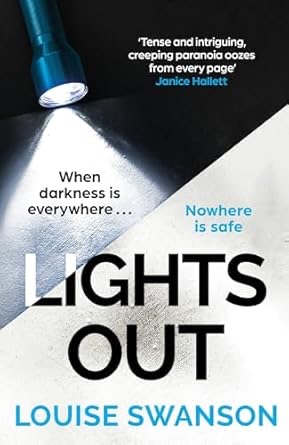

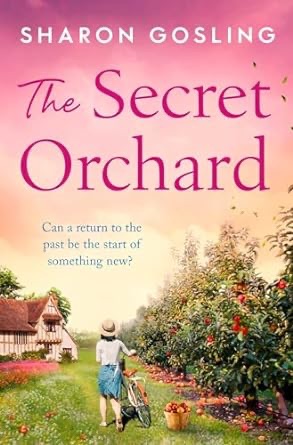
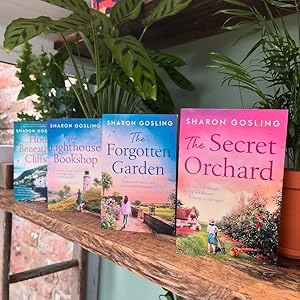
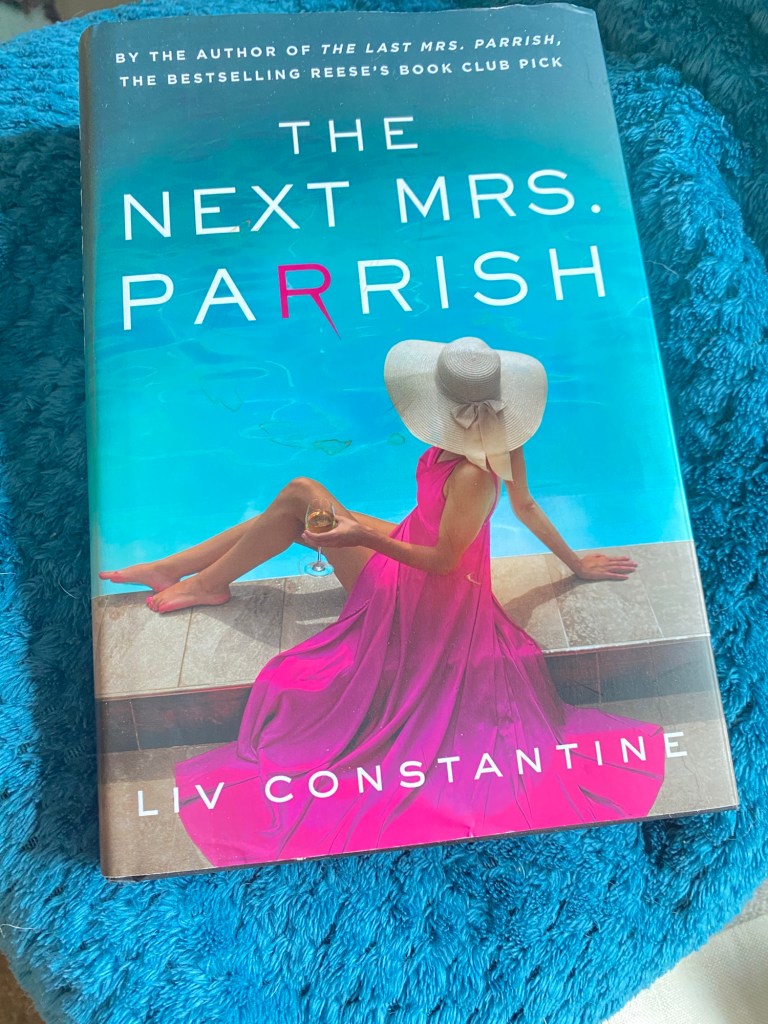


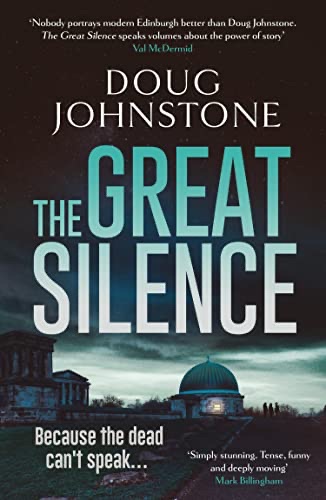

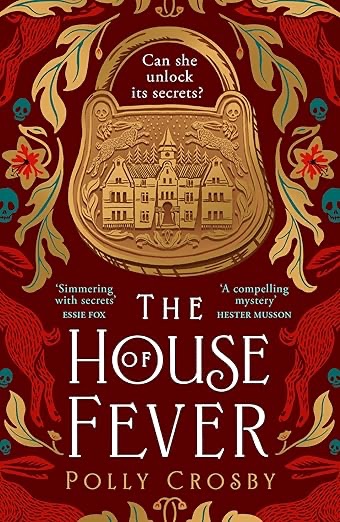

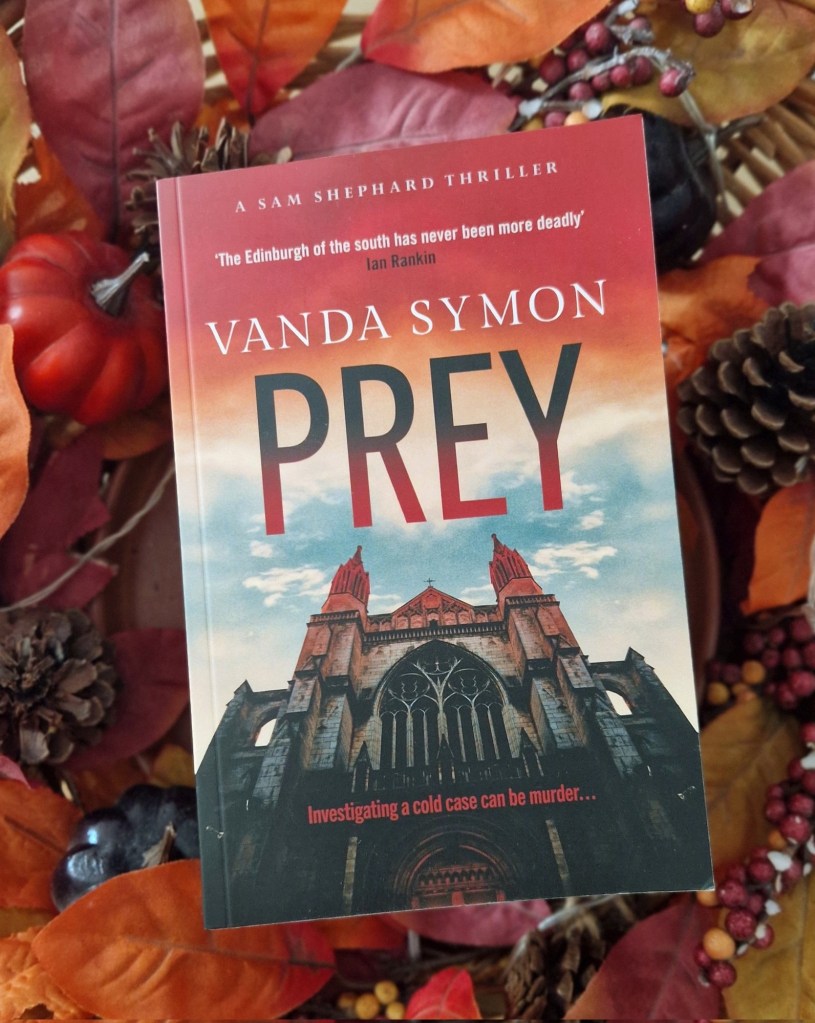
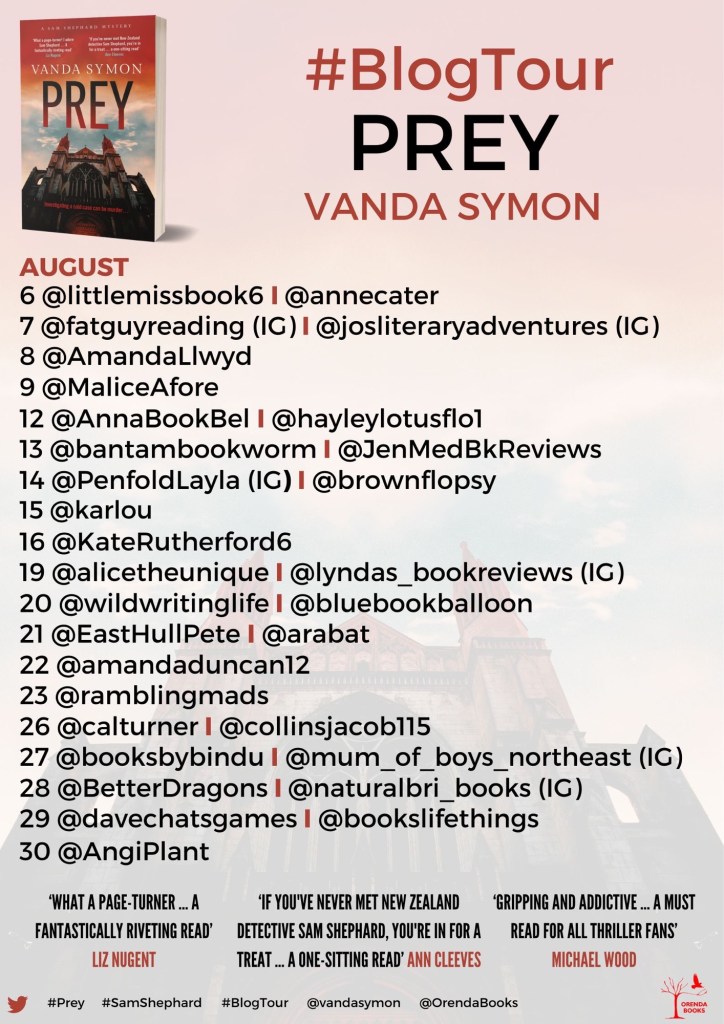
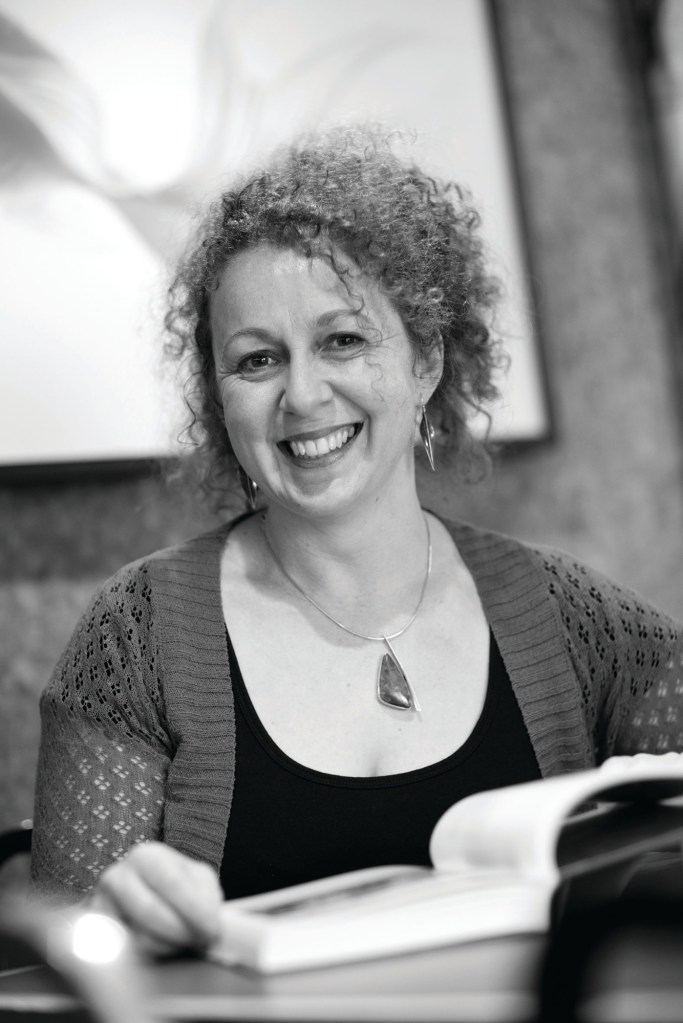


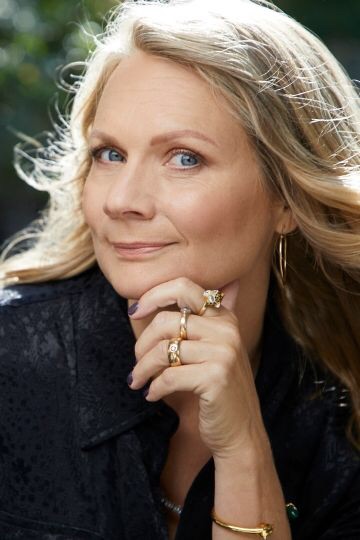


 The Lotus Readers