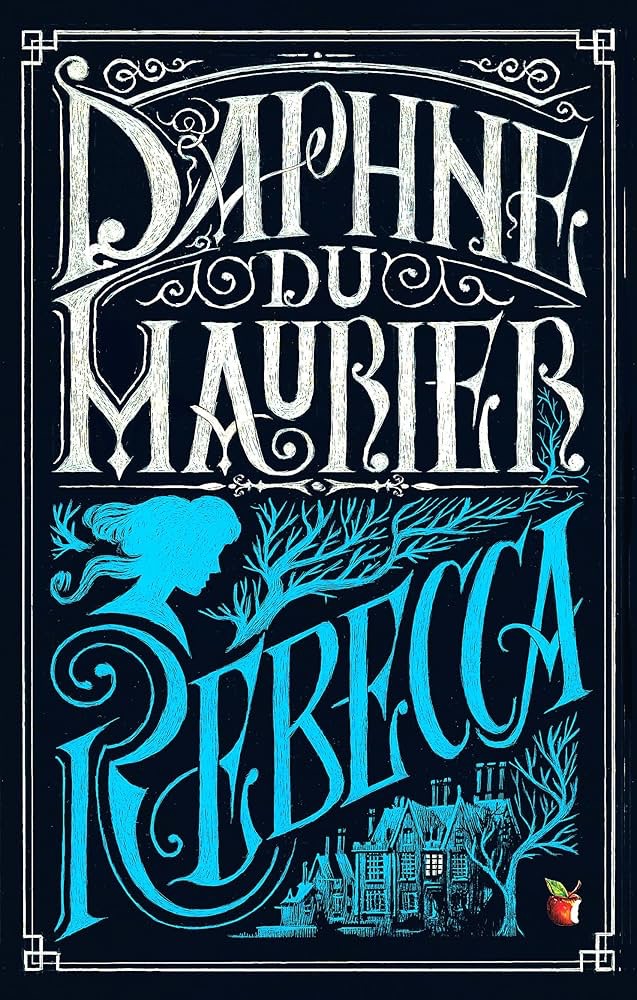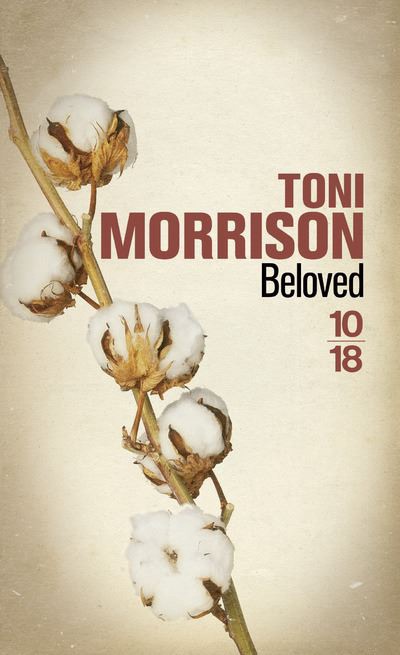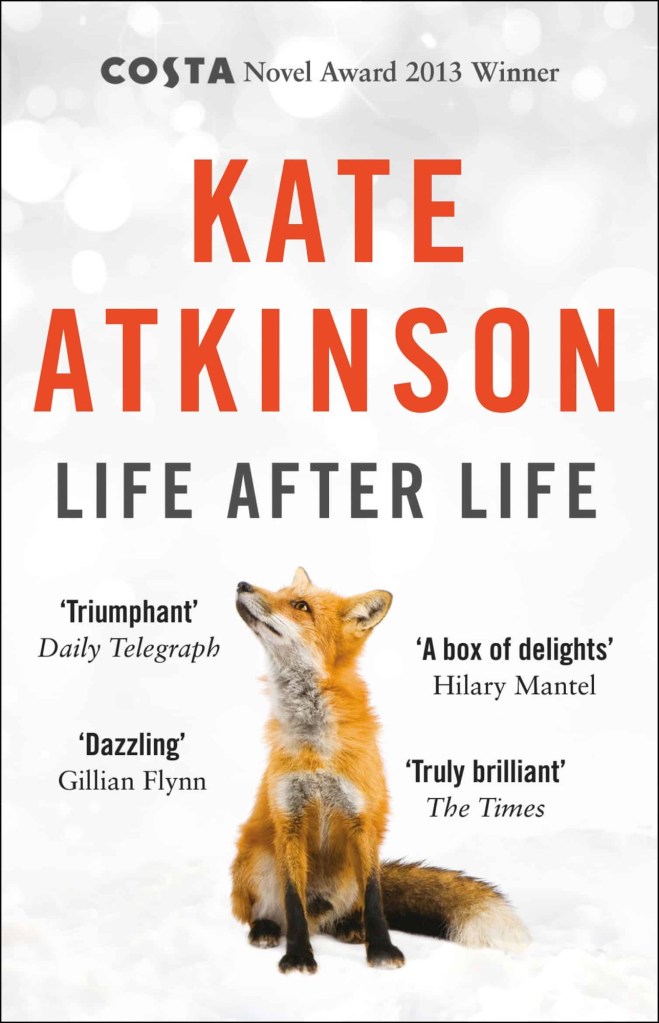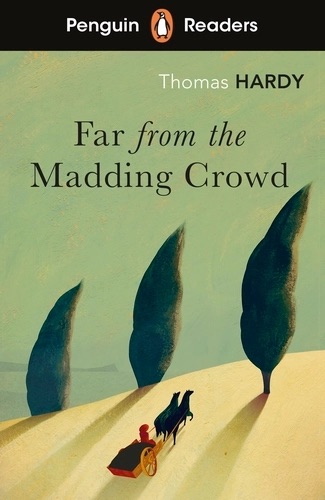
Posted in Banned Books

Banned Books Week – Lady Chatterley’s Lover

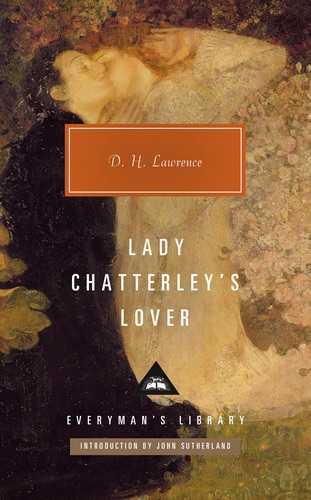
Defending free expression has become a challenge. Words seem to matter more than ever and their impact. Just having an X account in the past week has been painful if you have empathy. It’s a battle for control where the desperate need to counter someone’s post, fights with common sense. By replying, even if it’s scathing, we have entered the arena and boosted that person’s profile. On the other side there are more people taking offence, on their own behalf and on the behalf of others. In this endless spiral of offence and discrimination it can be easy to become apathetic. It’s a political strategy the Kremlin has been using for years, bombard the people with so much opinion and disinformation that they become completely overwhelmed and withdraw. In this war of words, art is a form of activism, said the publisher Crystal Mahey-Morgan in an interview published online this week and as more books seemingly disappear from schools and libraries in America, we have to think carefully about the books we fight for. If we’re asserting that all books matter, then that applies equally to the books we like and those we don’t. If we’re saying books that offend others can’t be banned, we’re fighting equally for books we find distasteful or are offended by. There are books I rather not have read – there were definitely parts of American Psycho I could have done without, but I would never say they shouldn’t exist. Yet we seem to be stuck in a world where various groups in society want to ban or cancel books that don’t align with their views or misrepresent them. Even the writer’s behaviour, political views and private life can contribute to the moral panic around their work and our permission to read them. J.K. Rowling is a case in point and the controversy extends to her Robert Galbraith books which I still read. I grew up a long time before the internet and the cancel culture and I know that my ability to separate art from the artist is frowned upon. I want to talk to you about one of my favourite banned books and it’s the one people remember most – Lady Chatterley’s Lover by D.H.Lawrence. 

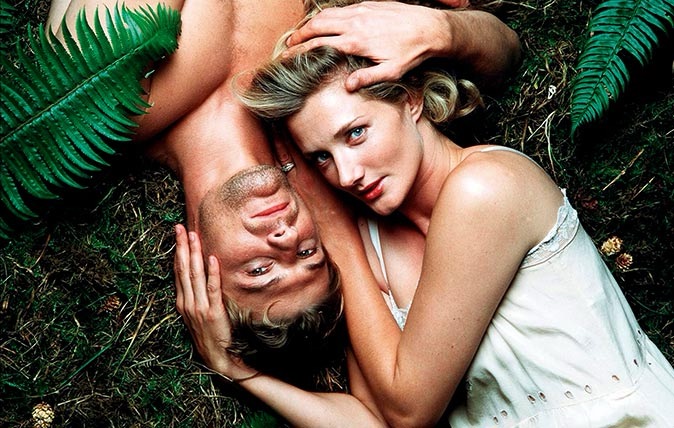
An adaptation of Lady Chatterley’s Lover has come to Netflix, where streamed shows are probably the 21st Century’s most popular creator of water cooler moments. The fact that this banned story is there for everyone to watch in their own homes would have shocked the 1960’s general public. The story is a simple one, about a young married woman (Connie Chatterly) and her husband’s gamekeeper (Oliver Mellors), and the forbidden love between them. First published privately in 1928, it took until 1959 for a ban on the book to be lifted in the U.S., and then 1960 when an uncensored version was published in the United Kingdom. Lawrence’s novel was also banned for obscenity in Canada, Australia, India, and Japan. People were genuinely shocked by the explicit descriptions of sex, use of four-letter words, and depiction of a relationship between an upper-class woman and a working-class man. To my mind, the most outrageous part of the book was the author’s portrayal of female sexual pleasure. In fact, Sean Bean’s ‘we came off together that time m’lady’ still lives rent free in my head. Maybe that’s because I spent most of the 1990’s dreaming, like the Vicar of Dibley, that Sean would come striding in and say ‘come on lass’ beckoning me with a single nod towards the door. I believed in him and Joely Richardson as those characters in the Ken Loach adaptation, more so than many others I’ve seen. Although I do have memory of going to see a more explicit French version of the book, wedged between a group of elderly ladies who gasped every time they saw a penis and a man who had a large bag of sweets that he would rummage in, very forcefully, at certain parts of the film. I moved seats in the interval. 

Once I’d read the book, in my teens, I hated the way people talked about it. In my dad’s family, any mention was met with raised eyebrows and Monty Python’s ‘a nudge is as good as a wink’ type of humour. My mum loved D.H.Lawrence and I could see it bothered her to have him relegated to the role of pornographer. My dad’s brothers didn’t have a single bookshelf back in the 1970s and still don’t. They would come to our house with its massive bookshelves and ask ‘have you read them all? It was a question I never really understood. Did they think we were bluffing? Mum let me plunder her bookshelves all the time and this is why I know it isn’t just a ‘dirty book’. If I wanted to read something dirty I’d go for her Jackie Collins, Judith Krantz or Lace by Shirley Conran. I never reached for this as a prurient read, because it isn’t about sex. It’s about love. 

“Sexual intercourse began

In nineteen sixty-three

(Which was rather late for me) –

Between the end of the Chatterley ban

And the Beatles’ first LP.” 

Wrote Larkin and perhaps that’s why my Uncles and Aunties raised their eyebrows, being teenagers pre-1960 and very unlikely to pick up a book by D.H. Lawrence. In fact once they’d seen the naked wrestling of the film adaptation Women in Love, they were convinced Lawrence was a pornographer. My mum happily shared these films with me as a teenager with no comment or explanation, she just let me make sense of it for myself and I knew there was something more complex at play here. 

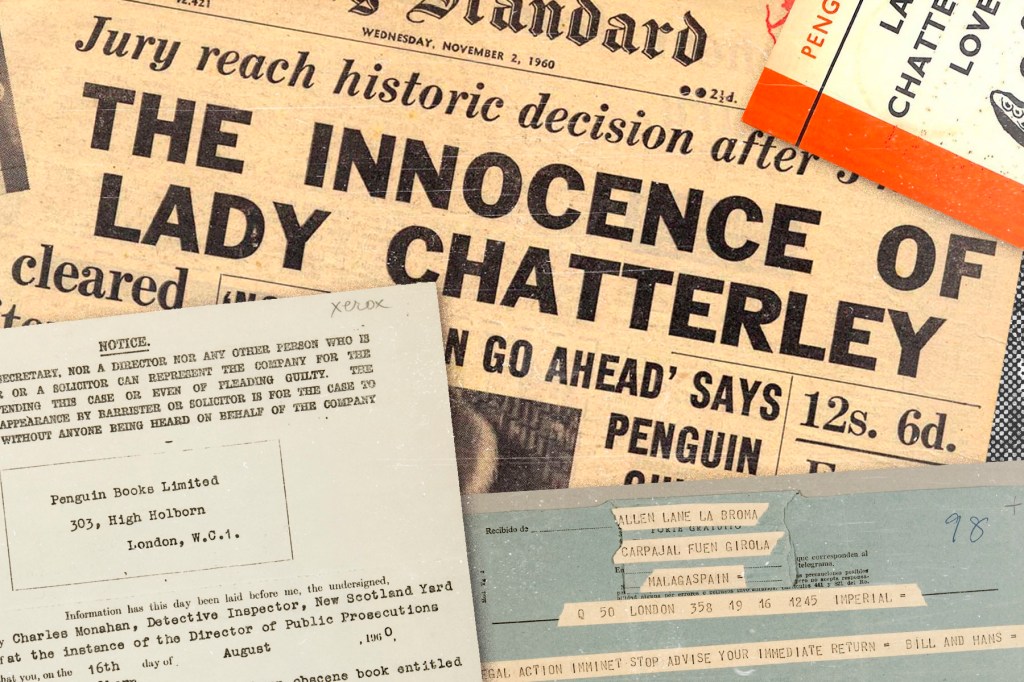
There is so much more to Lady Chatterley than the sex, although the sex is glorious and we’ll finish with that. Firstly it was fitting that when Penguin did publish in 1959 and challenged the previous year’s Obscene Publications Act, it was sold deliberately at a price that meant the working class and women could afford to buy it. Objections mainly came from the middle and upper classes, who weren’t necessarily concerned that Connie Chatterley committed adultery, but were objecting to her choice of lover. In fact it was this discrepancy between the classes that finally forced the court case, echoing the attitude of Clifford Chatterley. He was quite matter of fact about his wife taking a lover. He realised that his war injury would force Connie into a lifetime of celibacy and no chance of becoming a mother. He also wouldn’t have an heir. In one conversation he is quite open about the fact he doesn’t expect Connie’s fidelity, in fact he thought a lover might be the best thing for her. At least then they could have a child who would take on the title and estate. However, she was to choose someone from their class and he’d like to meet him. This turned Connie’s stomach for two reasons, she didn’t want to be passed from one Lord to another like a chattel and secondly she was shocked that Clifford didn’t seem to care.  She’d expected there would still be some intimacy between them, even if it was confined to the care he needed. Yet, he chooses to employ a woman from the village who’s nursed during the war and there is something intimate in her care of him, something he gains some pleasure or comfort from. This leaves Connie free, but to do what. All their needs are taken care of by servants, she doesn’t need to work and while she does check in on tenants, they are isolated and she has few friends. She’s married and not married. She wants to find someone she has desire and feelings for, not just to jump in bed with someone of the right class and hope it scratches an itch. She wants true intimacy and she has that with Mellors. What we’re seeing in this affair is the breakdown of the aristocracy after WW1 and in this love story is the mixing of different social strata and the changing roles of women. 

There’s also a massive shift for the working classes between the two World Wars. We see Clifford visit the colliery he owns and the workers are restless. They’ve been through terrible experiences on the battlefield and to come back and slot into their old social status, working under a man they’ve fought with in the trenches doesn’t sit right. They want better wages, better living standards and for the respect to work both ways. We can also see mechanisation creeping in. Clifford is ready to try anything new, whether it’s his new motorised bath chair or mechanising the pit. There’s an uncomfortable scene where Clifford uses his chair to walk with Connie in the grounds, but it becomes stuck in the mud. He angrily calls for Mellors to push the chair and he gamely tries to climb on the back and weigh it down enough for the wheels to grip. It’s a metaphor for the death of the aristocracy, all while Connie looks on awkwardly and Clifford becomes more and more frustrated. 

Then there’s Connie and Mellors (Oliver) who are an interesting mix and their sexual tension is palpable but endearingly awkward at first. Mellors clearly desires her but doesn’t know how to treat a woman of her class. That’s not to say Mellors is stupid, because he isn’t. He’s self-taught and he reads too. Their conversations are on the same level as they get to know each other, but their dialect shows the huge difference socially and geographically. Connie has an openness that comes from being the daughter of an artist and it has always afforded her a huge amount of freedom. She and sister Hilda were expected to have lovers, to drive themselves around to parties and different stately homes. They have the opportunity to be upper class, particularly now that Connie is mistress of the Chatterley house, but are also eccentric and bohemian. They can use this to push the boundaries a little and Connie is encouraged to by her sister and her father when they visit near the beginning of the book, noticing she is pale, listless and a little depressed. They see the chasm that has opened up between husband and wife leaving them with the appearance of a marriage, but missing all the elements that make a marriage work – a shared humour, joint outlook, deep conversation and intimacy. 
It’s no wonder that as Connie and Mellors think about a longer term relationship they know they’ll have to emigrate to somewhere new like the USA or Canada. These are the places where a relationship like theirs would be accepted. We see the incongruity of it in their early sex scenes where they move from intimacy to Mellors calling her m’lady because at the same time as being under him she will always be over him. There is tenderness between them, something more than sex. There’s real care and Mellors’s link to nature is important too, such as the first time they meet when he is placing pheasant chicks in their new enclosure. She sees a gentleness and a nurturing side that Clifford does not have. He would care if she was to be with another man and he wants to her to enjoy their encounters, not just him. When she does orgasm with him he comments on it and how special it is when that happens between a couple. He makes her feel safe. They have a joint childlike joy with nature, running around naked in the rain and threading wildflowers in each other’s pubic hair. He wants to be with her after the orgasm, which she hasn’t experienced before. I’m touched by this book and I’m infuriated that it was treated as pornography when it’s a comment on WW1, disability, masculinity, nature and so much more. It’s also a touching love story and you’ll root for this couple. They have an immediate connection, that goes beyond the boundaries of their class. They see each other as two equal human beings (an equality that Clifford disputes even exists) and recognise the loneliness in each other. Even if you do find the sex scenes awkward and you’ve never read this book due to its reputation, go give it a chance. 
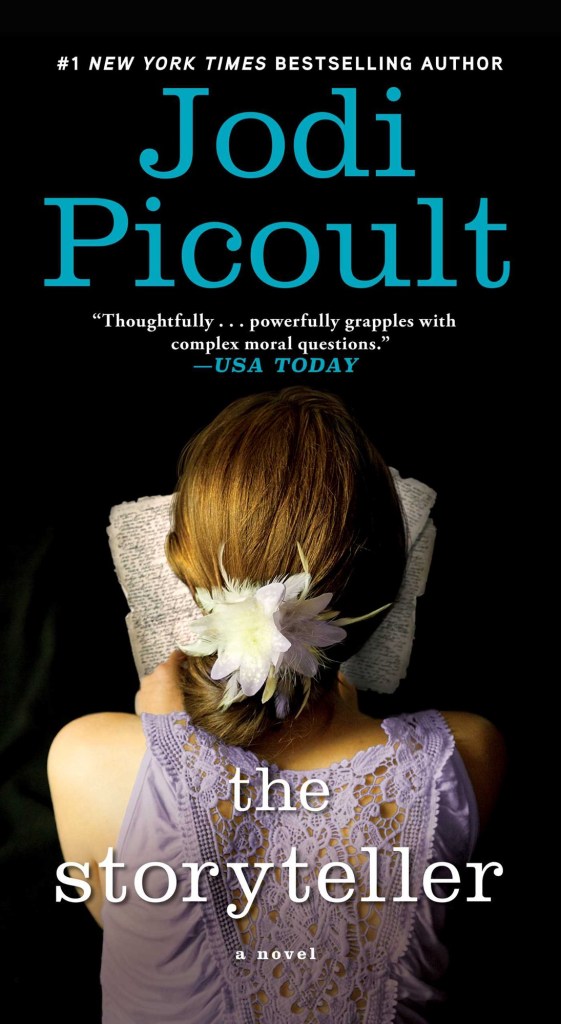
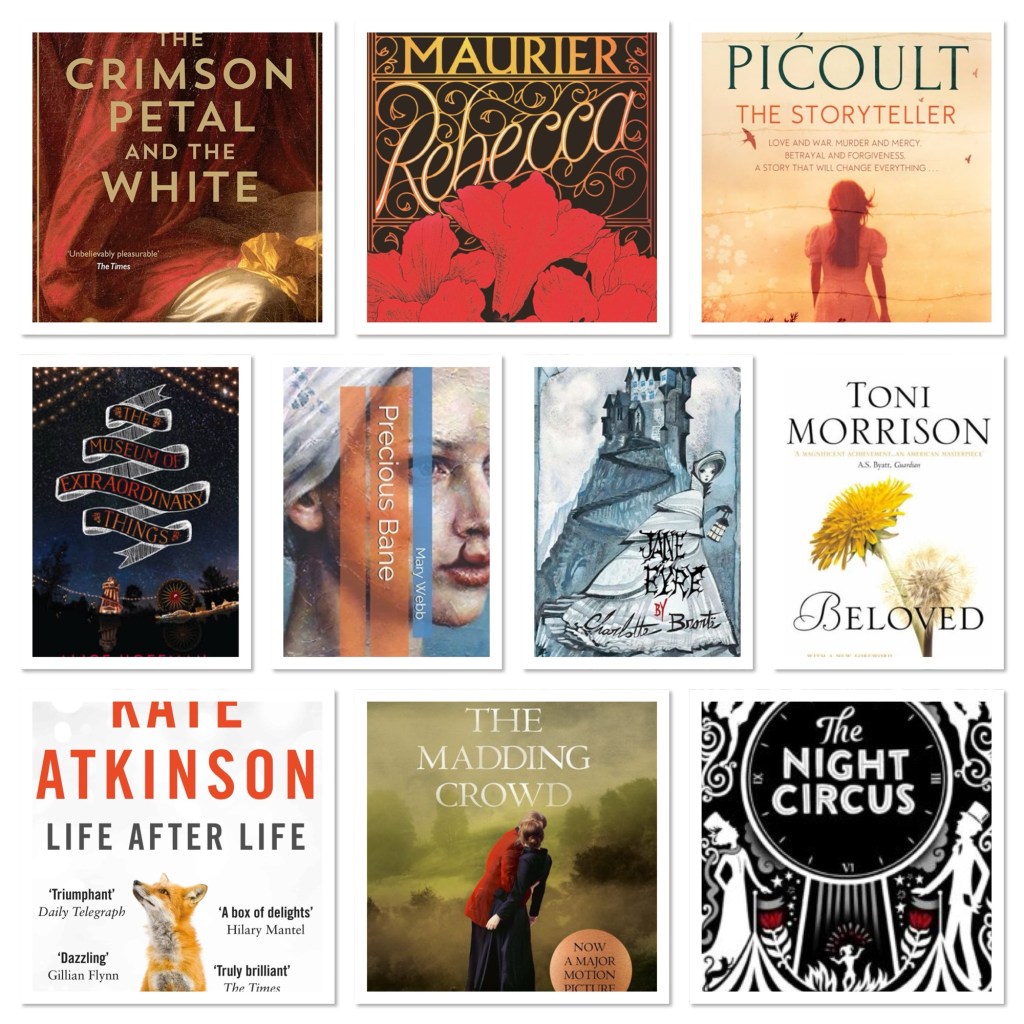
The political and religious climate in the USA has seen 16,000 book bans in public schools nationwide since 2021, a number not seen since the Red Scare McCarthy era of the 1950s. This censorship is being pushed by conservative groups of people, such as evangelical Christian and has spread to nearly every state. It targets books about race and racism or individuals of color and also books on LGBTQ+ topics as well those for older readers that have sexual references or discuss sexual violence. One of the most banned authors across America is Jodi Picoult with her novels Nineteen Minutes (school shootings), Small Great Things (Racism) and A Spark of Light (abortion).  In the 2023-2024 school year, PEN America found more than 10,000 book bans affecting more than 4,000 unique titles. Here are a few of them: 

The Bluest Eye by Toni Morrison and The Colour Purple by Alice Walker 

Both these books are banned for themes of racism, sexual abuse and assault. Both break the silence around domestic violence and depict how tough life is for black women in the early 20th Century. 

The Handmaid’s Tale by Margaret Atwood – the book that some people believe is coming to life before their eyes has themes of enslavement, sexual assault, misuse of religion and power. In a future where the elite class are unable to have children ‘handmaids’ are kept in the family home to provide the couple with children. 

Call Me By Your Name by Andre Aciman – is a first love story that springs up between a teenager and an older man, cited for depictions of homosexuality 

The Kite Runner by Khalid Hosseini – was put forward by a group of mums concerned about their children reading an account of ‘homosexual rape’ but Hosseini fought the ban with a letter that talked about the book’s insight into Afghan lives and inspired children to ‘desire to volunteer, learn more, be more tolerant of others, mend broken ties, muster the courage to do the right and just thing, no matter how difficult.’

Small Great Things by Jodi Picoult – begins with a black midwife assigned to a woman in early labour who is then refused by the father, a white supremacist. When the baby is ill and there is only one midwife available does she touch the baby or wait for someone else? This really does have impact and made me think about my own privilege. 

For more info on Banned Books Week visit ⬇️⬇️

https://bannedbooksweek.org/

Posted in Netgalley

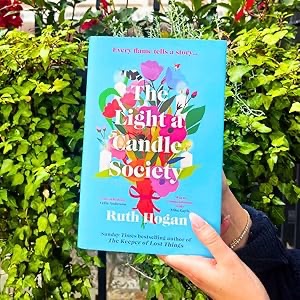
The Light a Candle Society by Ruth Hogan

Ruth Hogan is one of my cozy authors. These are books I read when I need comfort and boy did I need it last week. I’m having the kitchen renovated, not just new units but ripping out the floor and ceiling, putting in new joists and laying a floor that’s been so wonky I’ve tripped over it a couple of times. We’ve taken out an island that was hogging all the space and finally new units are slowly going in. I’ve been without a kitchen sink for a fortnight and my other half has wired the oven up in the garage so everything we cook has to be oven or microwave only and I keep meeting neighbours as I’m walking past with oven gloves and a tray of chicken kievs. I’m washing up in the bath tub (not while I’m in it) so this time last week I lost my marbles and we’ve been staying in a holiday cottage nearby for some quiet. So I’ve spent a lovely week being mostly unreachable, laying back in a huge bubble bath with a view, and reading my cozy books. 

So let’s talk about the book which was a lovely oasis of calm in my personal chaos. It covered a subject close to my heart. My first job in mental health was as a support worker and since I lived in a small town I would often see clients I worked with on days off and even for years after I left. These were usually single people, living alone and only just managing to function with the basics. They were so isolated and when I stopped working I would volunteer at a local community centre twice a week to have a drop-in place for people struggling or feeling isolated. Sometimes though I would find out someone had died and if I wasn’t too late I would go to the funeral. However if someone is estranged from their family due to their mental health history and lived alone I wouldn’t always be able to find out when and where it was. I hated the idea of no one being there, so I immediately understood our main character George and where he was coming from. He has lost his wife Audrey and takes her flowers every week down at the cemetery. It’s there he meets Edwin, a local undertaker who appears to be lurking by the bins. He explains that he’s watching the new council worker responsible for the funerals of those who had died without family or funds of their own. Edwin is making sure that new recruit Niall knows what he’s doing and giving the person the reverence and dignity they can. George hates the idea of such a lonely send off with no one to witness your journey beyond this life. He muses about it and talks to his friends at the Dog and Duck pub where he goes to the quiz night. He would like to mark these funerals in some way so he invites Edwin to join his group at the pub for a chat. From a simple wish to be there for these send offs the Light a Candle Society is born. 

Like all Ruth’s books this has a wonderful cast of interesting and quirky characters, many of whom do live alone. There’s Roxy, George’s friend and colleague from the library where he works part-time. She has an alternative look, with tattoos and piercings and is probably not the person you’d expect to be so close with an older widower. Slowly we’re drawn into their circle. There’s Elena from the florist who does George’s flowers for Audrey every week and would like to make a contribution to the funerals. There’s Captain and his dog Sailor, one of the library regulars who comes in and reads most days. He talks very little about himself, only seeming to warm up when people pet his canine companion. Then there’s Briony who works for the local paper and decided to write a piece about the funerals, something she can take to her rather dismissive and sneaky boss and show him she can write more than a few words about someone’s giant vegetable. Her downstairs neighbour Allegra is an absolute riot and I would have loved to be friends with her. She has led a rather colourful life and acts like a mentor to Briony, pushing her to trust her own instincts and talent. Briony needs her combination of feminism, cocktails and a kindly kick up the behind. 

The funerals grow when Edwin tips George off about a house clearance firm, who log all the deceased belongings, sorting through them for valuables and taking them away to sell. He agrees to tip George off if he’s doing the house of someone who has no relatives or friends, allowing him to come to the house and get more of a sense of who they were. From there he can write a eulogy that matters and resonates with anyone who does come along unexpectedly. The author has created short chapters that take us back in that person’s life in between the main narrative, showing us a moment from their life and the sometimes devastating circumstances of their death. It’s a reminder that no matter who it is or how their lives have ended, we can’t judge because we haven’t lived their life or experienced the unique and sometimes traumatic circumstances they find themselves in. This resonated strongly with me having had clients with addictions and mental illnesses that have driven family away. I was so touched by one young man who had the dream and potential of become a professional footballer. I was also touched by Captain who slowly builds a relationship with Roxy for a very particular purpose. When we’re taken back into his life it explains completely why a man called Captain lived so far from the sea. I may have shed a tear or two there.

As the society grows it takes in people who would have otherwise been alone. There are younger people like Briony or Niall who have often moved to start a career they’ve longed for, but have to then make a life far away from home where they don’t know anyone. There are older people who have retired and perhaps lost their partner who have the time and the enthusiasm for the society. However the society is also a lifesaver for them, getting them out of the house and making new connections. They’ve needed to make friends and have a home from home like the Dog and Duck to meet new people and of course, come to quiz night. There are potential romances but they’re kept quite low key because they’re not the story’s focus. The focus is one friendship and how the society isn’t just honouring those who have died, it’s making sure that lonely people who might easily have become one of the statistics, are looked after. It made me think of people I’ve let go off in life. Those I’ve lost touch with when one of us has moved or has had a partner who isn’t keen on me or vice versa. It reminded me that when someone pushes you away, it might be the time when they need you the most.  

Meet the Author

My new novel – THE LIGHT A CANDLE SOCIETY – is out in NOW! It’s about a man called George McGlory – recent widower, part-time librarian, pub quiz enthusiast and lover of loud shirts – who witnesses a public health funeral and is deeply moved by the sight of the lonely coffin with no flowers and no mourners in attendance. George believes that everyone deserves a decent send-off and decides to do something about what he calls these ‘lonely funerals’ – and so THE LIGHT A CANDLE SOCIETY is formed. The book contains a number of short stories which give a glimpse into the lives of those whom George and his friends take it upon themselves to honour and remember in their own unique way. Despite it being a story about funerals, it’s full of life, love, humour, community and human connections. And, of course, there is a very special dog!

THE PHOENIX BALLROOM, MADAME BUROVA, THE KEEPER OF LOST THINGS, THE WISDOM OF SALLY RED SHOES and QUEENIE MALONE’S PARADISE HOTEL – are out now in all formats.

I was brought up in a house full of books, and grew up with an unsurprising passion for reading and writing. I also loved (and still do) dogs and ponies, seaside piers (particularly the Palace Pier in Brighton) snow globes and cemeteries. And potatoes. So of course, I was going to be a vet, show jumper, or gravedigger. Or potato farmer.

Or maybe a writer…

Posted in Personal Purchase

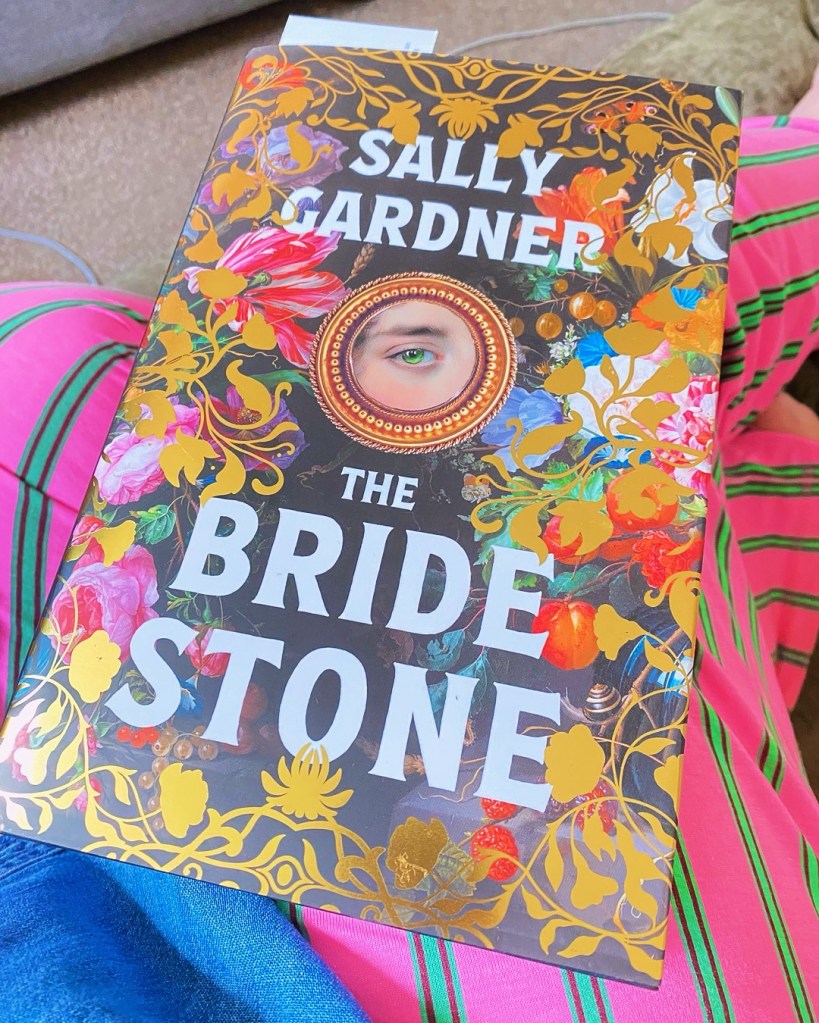
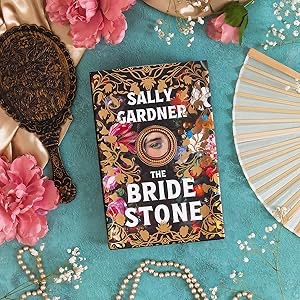
The Bride Stone by Sally Gardner 

According to our narrator, a ‘bride stone’ is a precious stone given to the groom’s family as a dowry. Sometimes though, a beautifully made fake stone was used, one they could only have valued when it was too late. It’s an apt title for a book where women are traded in many different ways and in the human sense the most unprepossessing stones may turn out to be priceless. It is set just after the French Revolution where Marie Antoinette, who would have had no choice in marrying Louis VII, was condemned to the guillotine as his Queen. Many aristocrats left France for British shores at this time and were often welcomed in high society. Edmée has somehow made her way to Britain, despite seemingly being an ordinary citizen and she is being offered at a ‘wife sale’, something I had no idea existed until I read Thomas Hardy’s Mayor of Casterbridge where Michael Trenchard sells both his wife and daughter as chattels he can no longer afford. When I first read it at 14, I felt how degrading it must be and was automatically revolted but now, I’m even more aware of the implications of being sold to the highest bidder. The thought of being owned by a man, a complete stranger, to be treated as he wishes is horrifying. Yet for Edmée this chapter surely can’t be worse than the last? For Duval Harlington it’s something he would never usually countenance, but his circumstances are uniquely desperate. Having been captured by the French while fighting and treating wounded soldiers, he is met by one of the family servants who bears bad news. Duval Harlington so now Lord Harlington because his father has recently died. Although he now has the title, his right to the ancestral home of Muchmore and his father’s wealth is rather more complex. Duval had a tough relationship with his father who didn’t see the point of him training as a doctor. Once he departed for France, Duval’s father installed a distant relative, Mr Carson and his wife, to manage the day to day running of the estate. So his will has an interesting stipulation, in order to claim his inheritance Duval must be married and now he has only two days to achieve this aim. Otherwise the estate becomes Mr Carson’s. When his servant points out the wife sale it seems like a means to an end. Duval notices a young woman being led around the room by a scarf round her neck. Her hair has been shorn away like a boy’s and she has a veil covering her face, but the buyers call out for it to be removed and he’s shocked to see that one side of her face is swollen and covered in bruises. Someone has recently beaten her very badly. On impulse he puts up his hand and bids for her, his intention being to marry her quickly and claim his inheritance. Then he could seek an annulment. However he does find Edmée fascinating and with Mr and Mrs Carson ready for a fight this marriage might not be as easy to shrug off as he thinks. 

This is a fascinating period of history and I didn’t know as much about it as I thought. I knew bits about Versailles, the French Revolution, Marie Antoinette and the guillotine but my understanding was very vague. I hadn’t realised how many aristocrats fled here to escape the Reign of Terror and their fate at the guillotine. Edmée is interesting because she is French but claims not to be an aristocrat, so how else did she end up here? Could she be a Jacobin or a spy? The fear that something similar to the overthrow of the ancién regime could spread here was a real one, because it would remove the power held by the Royal Family and other aristocrats, instead creating a republic where all people would share natural rights of liberty, property, security, and resistance to oppression. Yet a book is always the product of its time and I could definitely see parallels with today’s politics. A dinner guest, Sir Wilfred Fairley MP talks about the influx of French emigrés saying he was asked if he thought ‘we’d been too lenient with the number of emigrés we have allowed into the country and my answer is yes’. However, a Marquis replies very strongly that no one wants to be in that position: 

“To be forced to leave their lands, their houses, to start again in a country that doesn’t possess their humour or their language and is frightened of their religion […] to cross La Manche in a small unseaworthy boat to discover they have paid a fortune to be at the mercy of sailors threatening to throw them overboard if they do not pay double.” 

It felt like it could have been two people arguing on social media today. 

It’s evident Edmée has gone through a terrible ordeal at the hands of her previous husband, the Reverend Hughes. At first she must fear a similar fate from this stranger and Duval doesn’t help by abandoning her as soon as they reach Muchmore to go and sleep with a long term mistress. I was fascinated with Edmée because she’s such an unusual character and like me she keeps a journal and writes daily. The author lets us into that diary and we get to know how unsure she feels and that she has secrets. Duval’s aunt notices Edmée’s vulnerability and really takes a shine to her as they dine together and she takes her to buy gowns from the local dressmaker, a fellow French woman called Madame DuPont. Now that she’s Lady Harlington, she must look like a lady. It’s hard to know who she really is because she could just be fitting into each person’s expectations. Maybe this is something she’s used to doing in order to survive. When she falls ill and Duval returns to Muchmore, using his knowledge as a doctor to treat her, he shows great care and tenderness. As he waits for her to recover he reads her journal and learns so much about this woman he’s married to. With Duval she seems to blossom a little. Something unlocks in her and it’s like watching a mistreated animal learning to trust a human. Until now she’s been a blank space for others to write on, but it seems like Duval might be the person who brings out the real her. It is hard not to like this woman, who is described by her previous husband’s natural son as courageous: 

“There was hardly anything of her but she had a will of steel. I don’t say that lightly. Some soldiers profess bravery and talk about courage, but that’s a woman who says nothing and has survived a Revolution and a violent bastard of a husband […] she would be a hard candle to blow out.” 

This isn’t just a love story though, it’s a thriller. Just as Duval starts to settle in to being home, the unthinkable happens. The couple are talked into holding a ball to introduce the new Lady Harlington to society. Their guests come from the local area, but also from London and some are French emigrés. Mr and Mrs Carson are even invited and unbelievably accept. Edmée is a great success as the host in her new role as mistress of Muchmore, but the next morning she has vanished. Did she leave of her own accord – perhaps spooked by someone she saw the previous night. Or has something more sinister happened? It could be the work of someone closer to home – a disgruntled lover of Duval’s or someone determined that their marriage won’t succeed. I was drawn so deeply into the story of these unlikely partners. Duval and Edmée have both had difficult starts in life. The relationship between Duval and his father is typified by the ridiculous terms of his inheritance. The only thing he has to guide his search is her journal and the book that came with her, seemingly an ordinary history book but beautifully bound.

The theme of domestic violence and sexual assault is distressing and hard to read, but what shocked me most was other people’s ability to ignore what was happening even when they witnessed it with their own eyes. It brought home to me how dependent women were, in fact the only women in control of their own destiny are those who have a skill or their own business such as Madame DuPont the dressmaker or the brothel madam where Duval was a loyal customer in his youth. This is absolutely in line with social history of the 18th and 19th Century, but so much literature adapted for television focuses on the upper and middle classes where marriage is the only means of improving a woman’s status. I love when writers go back and write people back into a history they’ve been erased from due to race, disability or sexuality or when characters are more complicated figures in society. Duval isn’t your average privileged heir and Edmée would never normally be his wife. During dinner discussion on the revolution, Sir Wifred points out that its biggest folly was that all people should be equal, meaning men and women. Duval surprises him by stating that in his view “it was one of the most exciting things to have come out of the revolution.” I love that he is starting to see women as equals. Edmée is surviving the only way she knows how and by the skin of her teeth, so why would she choose to move on again? Duval has no choice but to retrace his steps, go back to where he bought his wife and find the clues. I was hoping for Edmée to have a happy ending, but it was clear this might not be the case making for a tense read in those final chapters. The book has a mix of hardship, adventure and mystery interlaced with the romantic possibility of an unlikely match being perfect. If only Duval can find her again. The author has created a fascinating mystery and an extraordinarily modern hero and heroine that I desperately wanted to find each other again.

Meet the Author

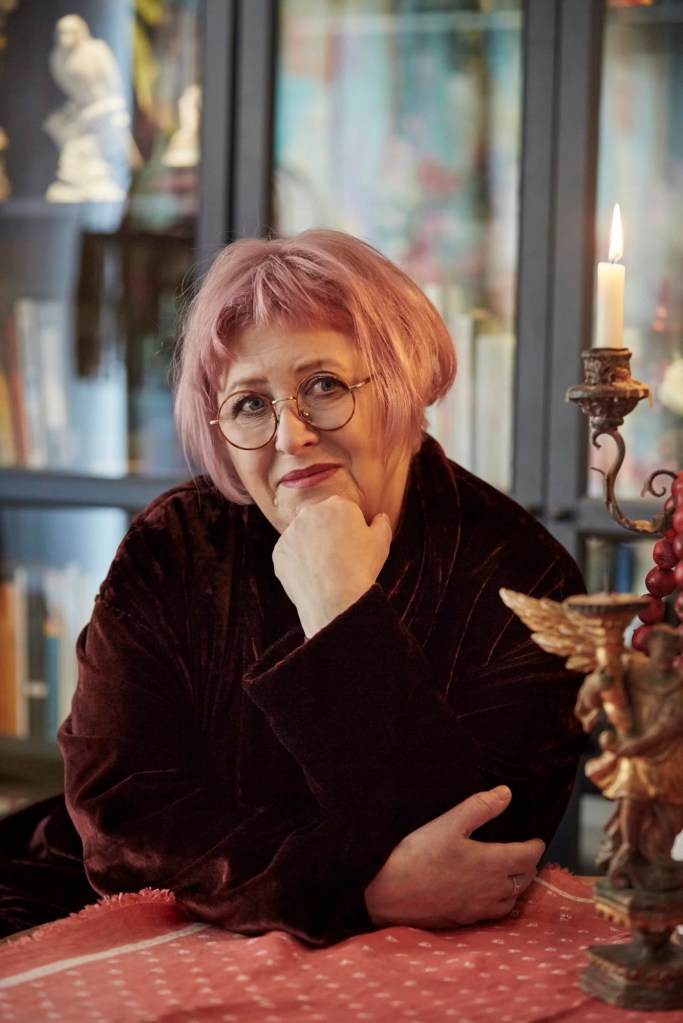
Sally Gardner gained a first class degree at a leading London art college and became a successful theatre costume designer before illustrating and writing books. Her debut novel, I, Coriander won the Nestle Gold Award and she is also a Costa and Carnegie prize-winner. Her books have been translated all over the world and have sold over two million copies. Find Sally online at sallygardner.co.uk, or on Twitter @TheSallyGardner.

Posted in Netgalley

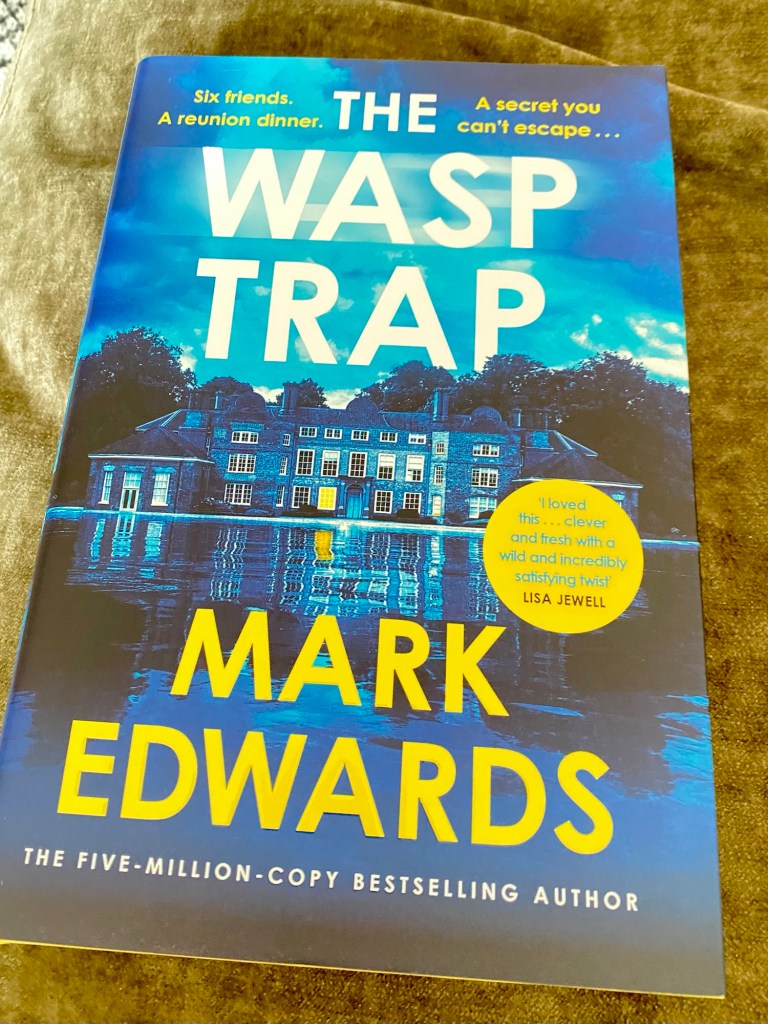
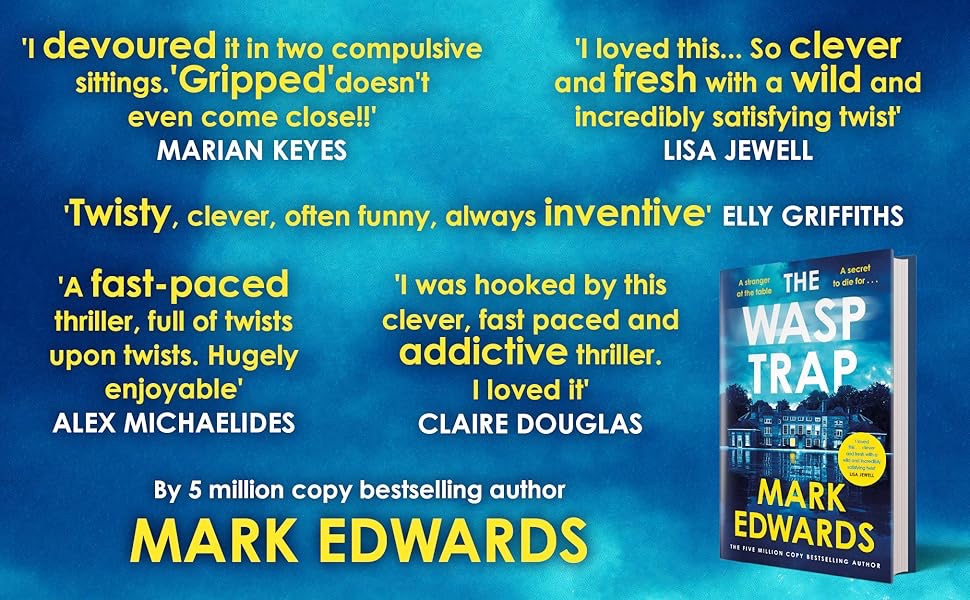
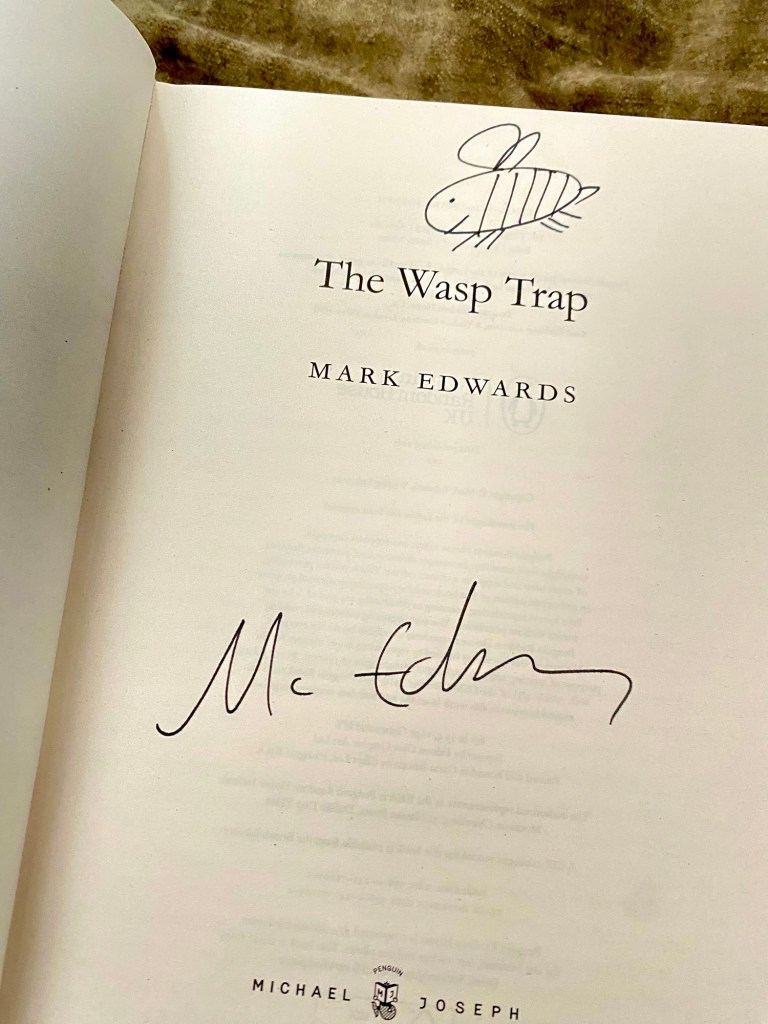
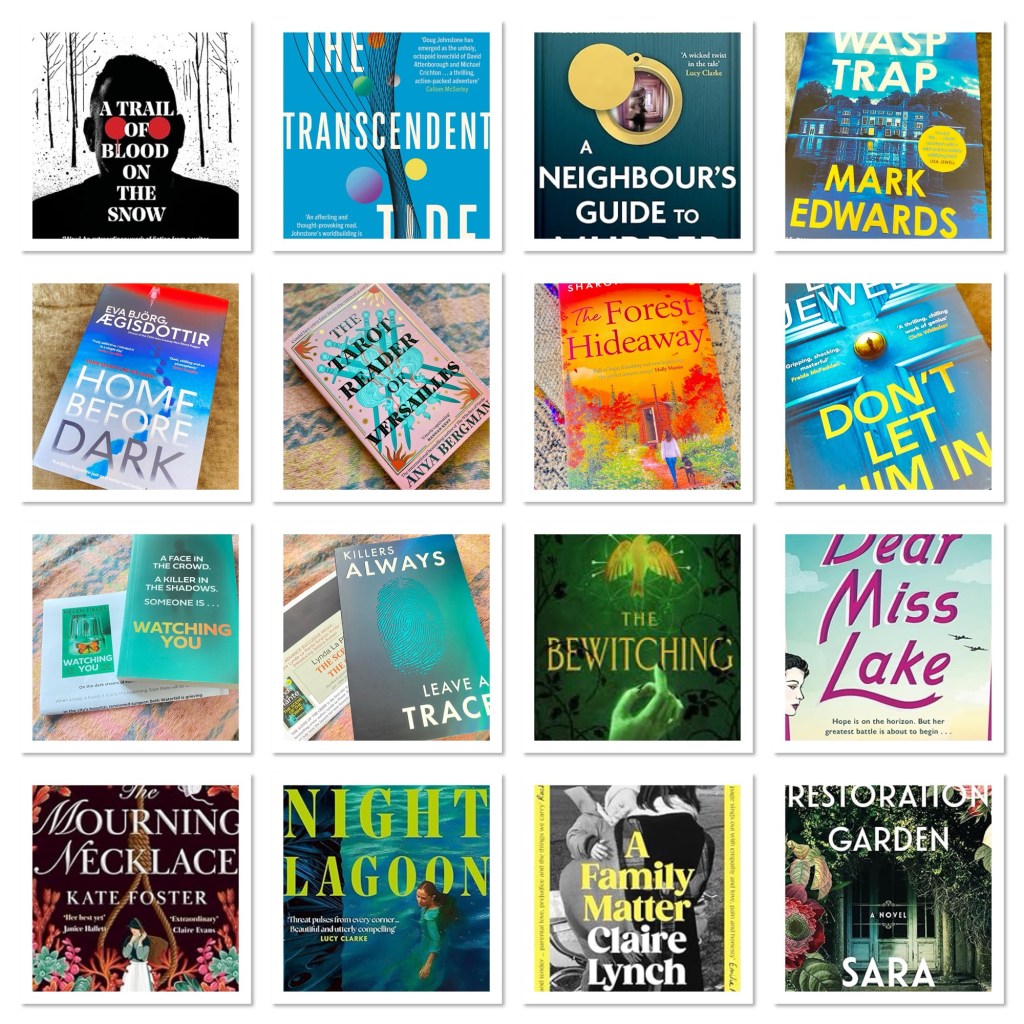
The Wasp Trap by Mark Edwards 

It’s been so enjoyable to read two of Mark Edwards’s novels back to back. I found myself completely engrossed and The Wasp Trap was definitely an interesting premise. Will is travelling to his friends Theo and Georgina’s house for a reunion dinner. Years ago, at their elite university in the 1990’s, Will and his group of friends were selected by their professor to spend the summer at his house in the countryside and work with him on a project he’s developed. He wants to create the first online dating site, one that truly works by using psychology. He wants the group to create an algorithm based on personality types – such as the Myers-Briggs scale, often used in business more than psychology. He recruits a mix of coders, web designers, psychology graduates and creatives like Will, who has an ambition to write a book. Here, he is tasked by finding a name for the site and Sebastian wants it to be poetic. That shouldn’t be difficult for a man who’s falling in love, with fellow student Sophie and after seeing an unusual butterfly he chooses “butterfly.net”. A little creepy when we consider what happened to those butterflies once they were caught. Lily is definitely the lynchpin intellectually, the person trying to create an algorithm that works, but even she’s distracted. Within the research are papers on using certain tests to determine whether someone is a psychopath. Since the team are being used as guinea pigs for the dating questionnaires why not use them for this? No one’s going to turn out to be a psychopath are they? This side research becomes named as “The Wasp Trap”. Decades later, as the group converge for dinner, it’s clear there’s so much to talk about, not least the disappearance of Georgina and Theo’s daughter Olivia. Why are they still holding the reunion? Who are the strange couple doing the cooking for the night? As secrets begin to unravel about that summer it’s clear this isn’t going to your average reunion. 

I have to get it out first and foremost. I didn’t like any of these people, but Theo and Georgina are one of those couples I love to hate. The perfect home, perfect careers and plenty of money to throw around, not to mention those lovely teenage daughters too. How much was this reunion about rubbing other people’s noses into their success, especially Will who gets plenty of comments about his never finished book? They don’t seem like parents whose daughter is missing, because I’d be beside myself if it was one of my stepdaughters. I certainly wouldn’t be able to concentrate on a dinner for people I hadn’t seen for years. Make no mistake, these are the people who make me avoid school reunions like the plague. There’s so much nostalgia here and that element I did enjoy. I was a sixth former in the early nineties and I loved all that Manchester scene music and played my Stone Roses album so much it drove my mum and dad crazy. I was also a massive Pulp and Blur fan and still love those films of that decade from Tarantino and Danny Boyle through to Four Weddings and a Funeral. So I do reminisce, but I kept the most important friends and still see them, I don’t need to see the others thanks very much. My ‘now’ is much more interesting than my yesterday. Professor Sebastian certainly chose his students well because there are some incredibly intelligent people here, but I’m not sure about their emotional intelligence or morality. Will seems to have the most emotional intelligence but is hampered by his fear of failure when it comes to his career and love. In the past he’s clearly in love with Sophie, but fears telling her so much that he misses his chance. Will he do so again? It’s no surprise then that it’s Will who senses a weird atmosphere with the catering couple. I was so caught up with the emotional drama between these people that it was a shock when the chef and his assistant burst into the room with guns and give an ultimatum. They have a set amount of time to tell a secret they’ve been holding since that summer. When they come back into the room time is up; they either tell the secret or someone will be killed. Even though this is what they promise to do, I’m not sure I quite believed it. So when they come back in and the shooting starts it definitely concentrates the mind a bit, but the problem is they all have secrets. How do they know which secret the couple want to know? 

As usual with Mark Edwards, the tension is almost painful. Especially those last few minutes of time before Callum returns with his gun and he’s definitely not bluffing. There’s a body in the hall to prove his intent. Of course, being the people they are, they start wondering if they can somehow outwit their captors by causing a distraction and one of them getting out of the house. Will does wonder if there’s a third conspirator hidden upstairs though. Despite the tension, there’s also that incredibly awkward sense of having to expose your darkest secrets in front of people you were at college or university with. I’ve spent most of my life embarrassed by something, so I could feel their reluctance to be shamed in this way. It’s as if the tables have been turned and the unpopular or bullied kids have decided to get their revenge but Callum certainly wasn’t at university with them so how could he know their secrets? He definitely seems to be getting a kick out of terrifying people he sees as better off in life, they certainly don’t have the upper hand now. There is one person though who knows something terrible happened that weekend and who was involved in covering it up. They’ve kept it to themselves all these years. Was it linked to the psychopath tests Lily was running on her friends without them knowing? Maybe one of them did turn out to be a psychopath and if they did, are they in the room?

I was on tenterhooks as the body count started to rise and I found myself rooting for Sophie and Will against the odds. I loved the appearances of the family’s fat cat here and there throughout the action and that he’s the only one who knows someone is definitely upstairs. There are two people from that summer who aren’t here tonight. Local girl Eve was their age, employed by the Professor to clean and cook for everyone over the summer but often around in the group’s leisure time too. There was also Sebastian’s nephew, an extra when it came to socialising and chilling out at weekends that summer, but not really one of them. He was usually running errands for his uncle but when he did join them he was a divisive figure, in fact some found him a bit creepy. Will had conversations with Sophie about how strange it was for him to still be driving the classic car that his parents had been killed in. Their outsider status shows in the fact that neither of them are there tonight, but could they be the key to a secret? I was absolutely gripped in the final chapters and couldn’t wait to find out which secret Callum wanted and what was his link to the group? I was also interested in where Theo and Georgina’s daughter was. We do know by this point who is upstairs but would they intervene or remain hidden? One thing is for sure, as the secrets come out it’s quite clear that no one is going to come out of this well. This is definitely one reunion they’ll wish they lost the invitation to. Brilliantly twisty, full of complex and unpleasant characters and so tense my teeth hurt. 

Out now from Michael Joseph

Meet the Author

I write books in which scary things happen to ordinary people, the best known of which are Follow You Home, The Magpies, and Here To Stay. My novels have sold over 5 million copies and topped the bestseller lists numerous times. I pride myself on writing fast-paced page-turners with lots of twists and turns, relatable characters and dark humour. My next novel is The Wasp Trap, which will be published in July in the UK/Australia and September in the US/Canada. 

I live in the West Midlands, England, with my wife, our three children, two cats and a golden retriever.

Posted in Monthly Wrap Up

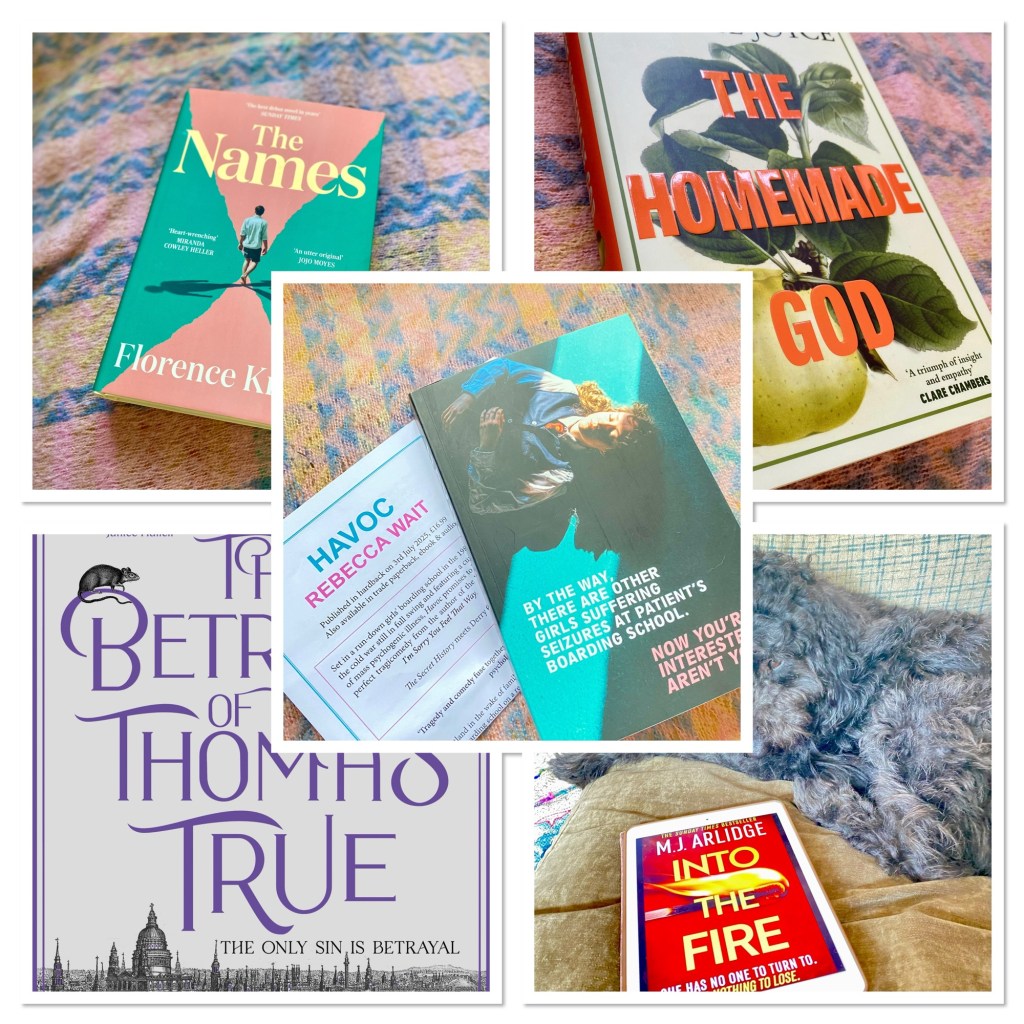
Best Books July 2025.

I’ve had a lovely reading month because even the books I had for blog tours, turned out to be fantastic reads. Any of these could easily make my end of the year list and some are by authors I’ve never read before. Others were from series I’d lost touch with and one has an incredible back story of the struggle the author had to get it published. I feel very privileged, looking back and realising what an incredible month of reading I’ve had. I’m already looking forward to next month’s choices.

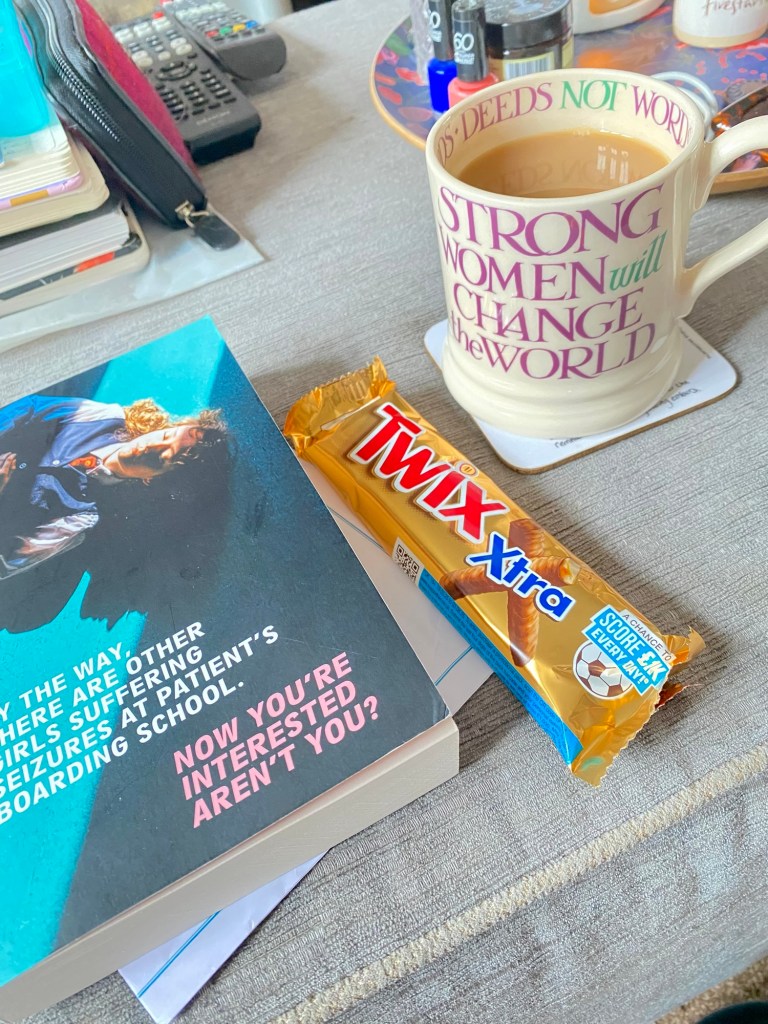
This was one of those unexpected joys, a book I’d heard very little about and chose to read with my Squad Pod just on a short synopsis. I had no idea whether I’d enjoy it or not, but it turned out to be fascinating and very apt, because I’d been reading about Functional Neurological Disorder. Havoc is a brilliant combination of school drama, mystery and dark comedy featuring a wonderful character called Ida who lives on a remote Scottish island with her mother and sister, after fleeing from her mother’s boyfriend Peter. What started as a lonely but safe place to live, became impossible when her mother did something unforgivable and the island’s inhabitants turned against them. Deciding she wants to leave, Ida looks for private boarding schools who provide scholarship places and discovers one, as far away from Scotland as she can find. St Anne’s sits on the south coast of England, so remote and underwhelming that the school are terribly surprised when their scholarship student actually turns up. No one ever has before, so they don’t have anywhere suitable to put her. The school is ramshackle and in danger of falling off the cliffs and the food is questionable and often tastes of fish, even when it isn’t. Ida is placed in a double room with school miscreant Louise and starts to settle in. However, things take a very strange turn when Head Girl Diane becomes unwell, starting with strange jerks of the arms and soon descending into full blown seizures. Soon after, Diane’s friend April is sick and then starts the familiar pattern of jerks. By the time a third girl has the same symptoms outside agencies such as environmental health, doctors and the police start to descend on the school. Is this illness a virus or is it environmental? Could it be something more sinister like poison? This was a fascinating and often amusing read, with an illness that shares the symptoms of FND – a syndrome where neurological symptoms are present and real, but are often somatic. Although it’s also possible some malign force is at work, especially when rat poison appears in an unexpected place. Louise and Ida are a dastardly duo and I also loved the friendship between the school’s geography teacher and her strident and rather cynical flatmate. Little surprises are everywhere and I would love to meet the characters again,

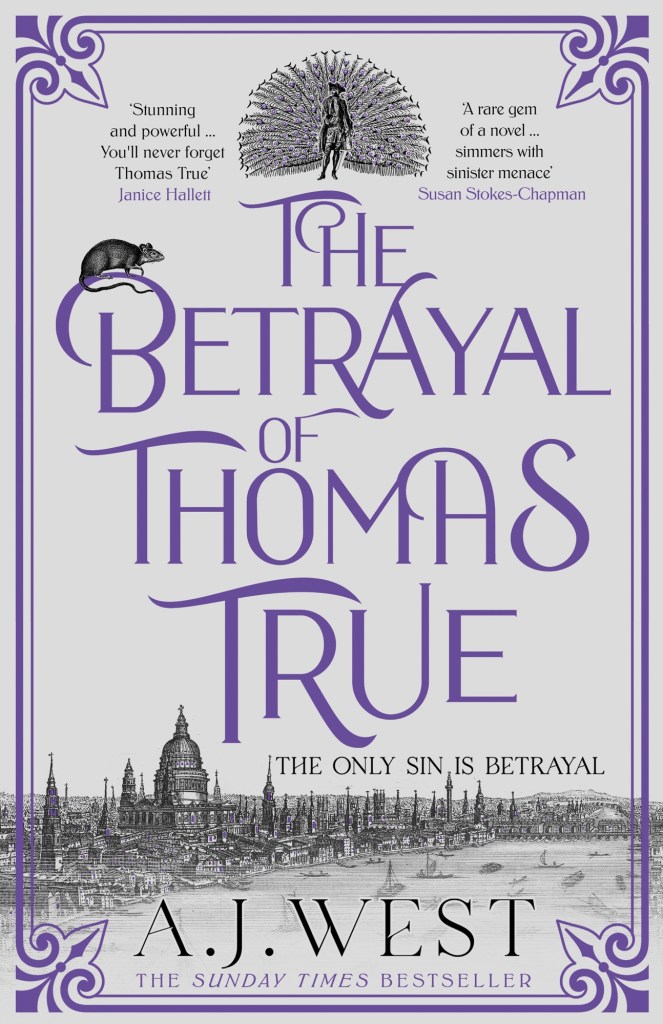
This book was the total opposite of the last in that I’ve heard nothing but praise for A.J.West’s newest novel. I’d loved The Spirit Engineer so much and I knew the struggle he’d had to get this published, but he believed in it and I’m so glad he was picked up by my favourite indie publisher Orenda Books. A match made in heaven. Having been supervised for my university dissertation by a lecturer who specialises in 18th Century Literature and secret sexualities, this was the perfect marriage of subject and style for me. I love when post-modern authors write back to a time in history to place people into their historical context. These are people who were erased from history due to their disability, sexuality or the colour of their skin. This has been done so well by authors like Sarah Waters who features 19th Century lesbians, Lila Cain whose main character were freed slaves in The Blackbirds of St Giles and Suzanne Collins, whose novel The Crimson Petal and the White is narrated by Sugar, a young prostitute with a disability.

Thomas True wears its vast amount of research lightly and definitely follows the style of the picaresque novel, where a young naive person makes their way into the big wide world with some humorous and rather risqué adventures. This young innocent travels to seek his fortune in London and is robbed on the highway, falling into the ‘wrong’ company – here this is the Molly House run by Mother Clap. A giant but gentlemanly man called Gabriel has brought him here and he is intrigued by the merriment, the wearing of women’s clothes and the safety of a place without scrutiny. This is above all a love story.  Thomas can’t possibly know how important this moment will be in his life, but it’s pivotal to his journey, his future and his heart. Far from the genteel worlds of Bridgerton and Jane Austen, the author creates a richly imaginative setting that brought all my senses to life – but not always in a good way. London is grim, overcrowded and disgusting. One scene where a body needs to be extracted from a ditch full of sewage is revolting. Even Mother Clap’s has a grotesque feel. These are not the preened and powdered men you might expect. Gabriel is huge, hairy and spends all day doing a heavy building job. He and Thomas have a complicated journey, one naive and optimistic and the other haunted by his past. You’ll be transfixed, hoping for their outcome to be a happy one but knowing this is a city that punishes ‘mollies’ by hanging and when the mysterious ‘rat’ betrays the men from Mother Clap’s the danger becomes very real. You can tell I loved it by the amount I write about it! It’s a definite must read.

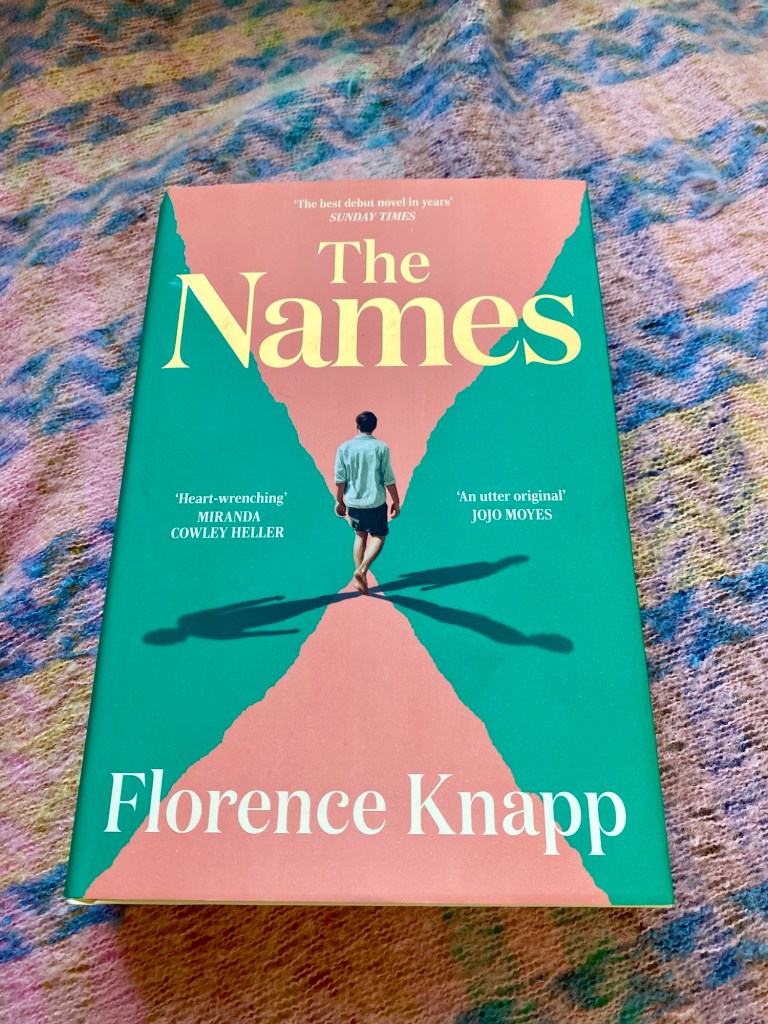
I knew from the first page that this novel was going to be special and it is utterly brilliant and an unbelievably good debut from Florence Knapp. It’s 1987 and Cora is going to register the birth of her baby boy. His name has been settled on because Cora’s husband has chosen his own name for his son – Gordon. But it wouldn’t be Cora’s choice. Cora’s choice would be something that doesn’t tie him so obviously to his father. She thinks Julian would suit him. Little sister Maia looks in the pram at her brother and decides he looks like he should be called Bear. All of these options swirl around in Cora’s head. In this moment, Cora has the power to make a choice and it’s done. It can’t be changed. What would happen if she went with Julian or even Bear? In the short term Gordon would be furious. How bad would it be this time? Long term, would it change her baby’s character or path in life? This is exactly what Florence Knapp does with her story. The book splits into three narratives and we discover what happens to this whole family, depending on Cora’s choice for her baby boy’s name. 

We then move on seven years and meet Bear, a name that proves to be a catalyst for change. We also meet Cora’s choice, Julian – the choice she hoped would break him free from domineering generations of Gordons. Although, what if he is called Gordon? Brought up by a cruel father to continue in the same mould perhaps? Or he might just break free from the shackles of his name? Each life is sparked by this one decision but it isn’t just Cora’s son’s story. This is the life of the whole family with all its ups and downs. It’s about how trauma shapes lives and whether love brings healing and hope to every version of who we are. Even her minor characters absolutely shine. Grandmother Silbhe and her friend Cian are so wonderful, modelling healthy male/female relationships for Julian and Maia. Cian is also Julian’s mentor at work, bringing out a creative side that needs nurturing. Julian needs to work with his hands and meeting fellow creatives helps him find his tribe. Lily is lovely character and we get to know her best during Bear’s narrative. I loved how she has to find a balance between giving Bear the freedom he needs without breaking her own boundaries in the relationship. It’s an utterly compelling debut and zooms straight into the list of best books I’ve read so far this year. The author brings incredible psychological insight to a story about how our names shape our identity, our relationships and our life choices. Something we didn’t even choose. Can it influence us to a huge extent, or do we become the same person no matter what the choice? 

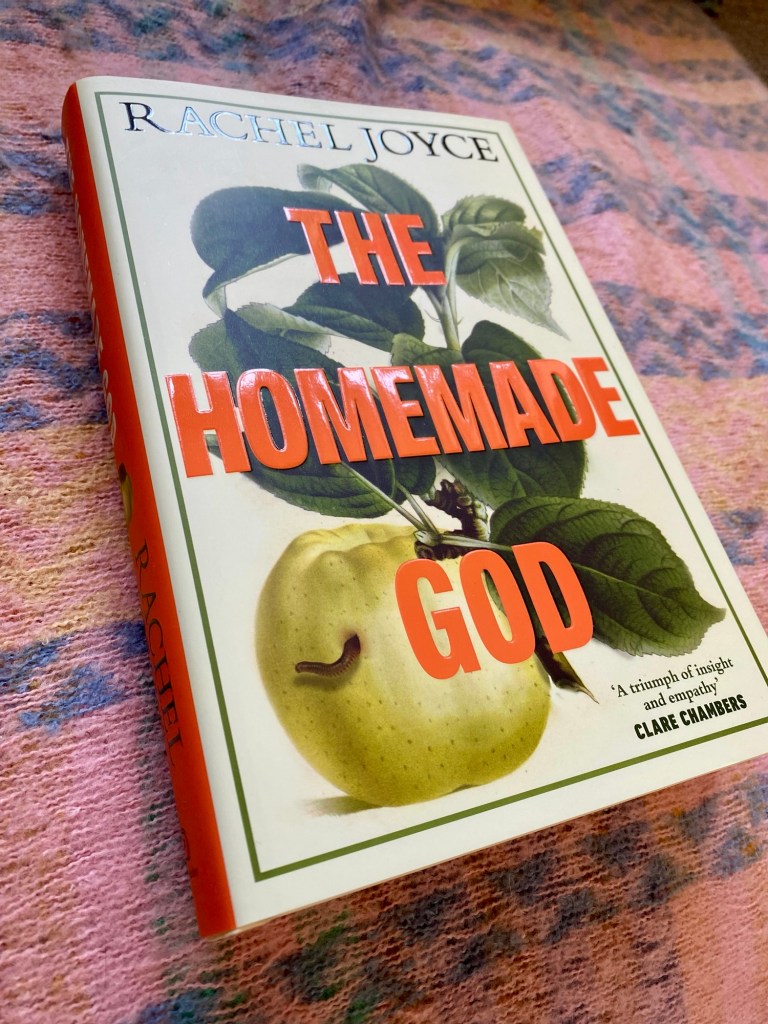
Rachel Joyce is a must-buy author for me and she gets better and better. This brilliant novel focuses on a bohemian family; Vic the father who is an artist and his four children – Netta, Susan, Iris and Goose (short for Gustav and the only boy). They’ve been parented by Vic and a series of au pairs after the sudden death not long after Iris was born. Their father’s art came first always and the conditions he needed in order to create were paramount so the oldest girls often played the mother role for Iris and Goose, especially when Vic inevitably slept with the au pairs. Vic was not an artist celebrated by the establishment. The description of his paintings brought Jack Vettriano to mind, criticised heavily by the art world, but very popular with the public. Now grown up, his children are stunned when Vic starts losing weight and drinking green, sludgy health drinks. His diet is being looked after by his new girlfriend, 27 year old Bella-Mae. None of his children have met her and she doesn’t seem keen to try. Within weeks Vic announces they’re engaged and Netta suggests that they all stand back and give this the space it needs to fizzle out. A couple of weeks later, Vic announces their marriage with a single photograph from the family home in Orta on Isola Son Guilio with Bella-Mae in such a heavy veil they can’t make out her face. They are staying at the house, situated on an island in the middle of a lake, but only two days later Netta is stunned by a phone call from a stranger called Laszlo, claiming to be Bella’s cousin. Vic has been dragged from the lake, drowned after a morning swim went wrong as the mist descended. Why would Vic go swimming in the mist? His children come together to travel to Orta, to finally meet their new stepmother and to find out whether she has killed their father. 

Bella isn’t what the siblings expect and nor is the villa, which has been changed in decor and atmosphere. She seems insubstantial and too fragile to have caused such an uproar. Especially when they’ve pictured her with an iron will, imposing her diet on their father and gaining their inheritance. She will prove to be a mirror through which each of them evaluate their lives. I love family sagas and this one is brilliant. It’s psychologically fascinating and I’m not going to ruin that for you by delving too deeply. I was absolutely transfixed! I couldn’t work out whether there was deliberate manipulation at play or if this was just a case of an outsider causing people to view everything through a different lens. Is Bella a destructive force or a helpful one? Whatever she is, the siblings will have to look at themselves, their choices and their relationship to their father. Some revelations will be explosive and take place in the open air- one particular meal is cataclysmic. Other revelations are quieter, insidious or internal but no less devastating. An utterly brilliant read for someone who loves complicated and tangled relationships. I LOVED it.

This book opened with a heart-stopping scene that set the pace for the rest of the story. Helen is relaxing after meeting her lover in a luxury hotel. While he has a shower, she is in her nightgown and robe enjoying the night time view over downtown Southampton. Movement suddenly catches her eye and she’s drawn to a woman who’s running down a darkened street towards a precinct of shops, pursued by two men. As they catch up, one of them pulls out a bicycle chain and starts to beat the woman. Helen doesn’t wait or think, tearing out of the hotel room and down several flights of stairs as she’s too impatient to wait for the lift. She tears down the dark street hoping that someone has called the police. Helen flies at one of the attackers, who is taken completely by surprise and she soon disables the second attacker before turning to the woman who has been badly beaten. She looks like she’s from the Middle East perhaps, with two very distinctive tattoos placed on her forehead and chin. Unfortunately, Helen has committed the cardinal sin of combat and has turned her back on her attackers. The next thing she feels is a huge bang to her head and then everything goes dark. This opening scene tells me this will be a gritty, modern thriller with a kick-ass heroine. 

This is the thirteenth novel in the DI Helen Grace series and I’m seriously out of touch with the character, having only read the first couple of novels after picking them up in a book swap. Helen is working on her own initiative after handing in her notice at the end of the last novel, with her protege Charlie being promoted in her place. Helen doesn’t know what the next step is, but she’s been enjoying the break. The only thing she misses is the camaraderie of a team and although she has enough money to really think about what’s next, she is anxious about it. Although life will bring it’s own answer soon enough and it might be the last thing she’s expecting. She starts to investigate alone, feeding into Charlie who is trying to target traffickers and their victims coming through the port in lorries and containers. The story is told mainly through Helen’s eyes, but also through the narratives of two other women. Viyan is another trafficked Kurdish Syrian woman and Emilia is a journalist whose father is dying in prison. At first we’re not sure how all of these narratives fit together but slowly they form a cohesive picture. Helen is formidable! You will hold your breath for the final showdown and all the women involved. Each short punchy chapter is action packed and will keep you reading ‘just the next chapter’ until it’s 2am. I now need to set aside time and read the ten novels between this and the last one I read. I’ll probably load up the kindle with them before I go on holiday so I can carry on without interruption. This was a belting, action-packed, female led, crime thriller and I recommend it highly. 

August TBR

Posted in Squad Pod Collective

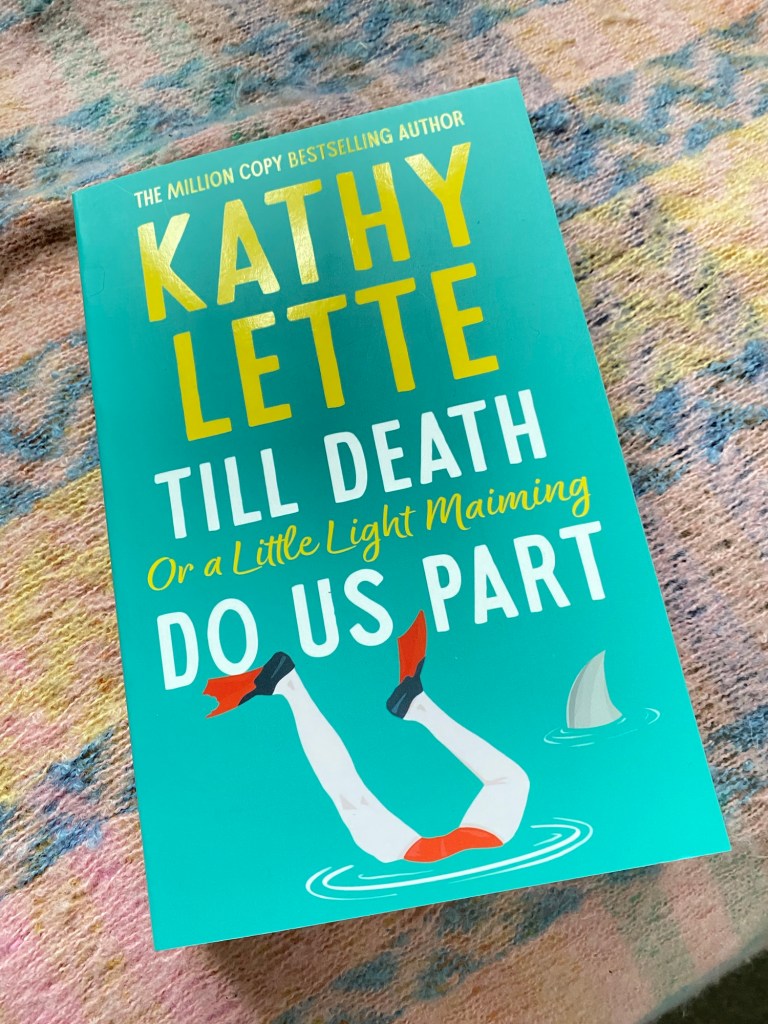
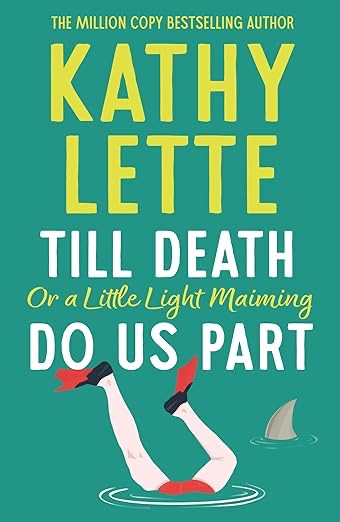
Death or a Little Light Maiming Do Us Part by Kathy Lette 

One dead husband. Three grieving widows.

When she hears a man has been killed by a Great White shark, Gwen races to the beach only to find that all that remains of her husband is his swimming cap and a piece of torn, blood-stained wetsuit. Her grief is soon interrupted by Tish, screaming for information about the accident. When Gwen reassures her that it’s her husband, Jason Riley, who’s perished, Tish’s response is earth-shattering for them both: Jason was her husband too.

The women’s mutual animosity is not assuaged when they learn that Jason recently sent all his – make that their – money to a mysterious ‘business partner’ in Egypt called Skye. But when they fly to Cairo to confront her, they find another grieving widow whose life-savings have gone missing…

As this double-crossed threesome cross continents in their search for truth and retribution, they start to realise they’re embarking on a journey of self-discovery, renewal and friendship too.

I’ve read Kathy Lette before so I was expecting ballsy women, lots of wit, perhaps some raunchy behaviour and definitely laughter. I wasn’t disappointed. I’ve seen this described as a revenge caper and that is the perfect description. Gwen has a happy life with her children and second husband Jason, who’s a real hottie. He is a big blonde surfer type with a sprinkling of grey, but a body honed to perfection by Iron Man training. She sometimes wonders how they got together. She sees herself as a rather ordinary widow nearing her sixties, while he’s a lot younger and so fit. However, tragedy comes along when Jason is training. Gwen hears on the radio that there’s been a shark attack in the bay and she makes her way there immediately. When she arrives, she knows by the scrap of wetsuit on the sand that the lost man is Jason. She hardly has time to breathe before a leather clad ball of fury catapults herself into the situation. Tish is there because she thinks her husband is missing too, she’s married to a tall, blonde hunk called Jason. Surely they can’t both be married to the same man? 

Gwen wants to quietly go home and cope with the double shock of Jason’s death and the news that he’s a bigamist. Tish has the grip of a small terrier and has about a million questions that Gwen is incapable of answering. She’s totally gobsmacked by Tish’s biker girl style, they couldn’t be more different so why was he attracted to both of them? It seems that when Gwen thought he was working or training, he was with Tish and vice versa. They’ve been together a similar amount of time. They make a very uncomfortable trip to Jason’s lawyer, Tish is adamant there should be a will and she wants to see it. She invested a large amount of money in a business start-up he was working on. Gwen is keeping her cards close to her chest but she too has invested some of her widow’s inheritance in his endeavours. Where has it gone? They soon find out. His lawyer tells them that Jason signed a document that transfers their joint investment to a woman in Cairo. Tish wants to be on the next plane and wants Gwen to go with her. Can they find this woman, solve the mystery of her connection to Jason and retrieve their money? 

I found the novel intriguing and funny at first. Tish is an absolute ball of energy and her power as a character did overpower everyone else slightly. I wonder if Kathy based Tish on her most extrovert side. I felt a little bit like the momentum of the story was lost in long verbal exchanges between the two women that seemed more about the jokes than developing characters or their relationships. Some are admittedly very funny, but when they come thick and fast the humour sometimes misses the mark. It’s also difficult to change the tone and I think the novel could have done with some light and shade. However, it’s a madcap caper that takes on an escapist feel as we travel all over the world with the women and try to work out if Jason faked his own death and whether they’ll be able to retrieve their money. Cairo brings even bigger surprises, leading to Tanzania, the Maldives and throughout Europe. It’s an absurd plot, but it is fun and a great escape read. I read this in one afternoon and had some laugh out loud moments. There’s also some lovely female camaraderie as these women start to come together, overcoming their differences to bond and keep chasing their love rat husband. I really enjoyed the suggestion that there’s a re-evaluation of life as women reach middle-age. A realisation that if we are going to do the things we’ve always wanted we need to start planning now. It’s the chance to throw off things that no longer suit us – not just in our wardrobes! In amongst the action and the laughs is the very profound idea that just when you learn to make the most of your life, it is almost over. 

For more information on Kathy Lette and her books visit

https://www.kathylette.com/

Posted in Throwback Thursday

The Darkest Water by Mark Edwards

Calvin owns Therapy, the bakery of his dreams in an idyllic village in the Lake District, but business is a little quiet. He’s reluctant when wife Vicky suggests social media but it’s not long before assistant Tara has filmed and posted a reel of him making brownies. Suddenly he’s a local celebrity. It seems everyone wants a piece of Chef Calvin and creepy little DMs start to arrive, including some from a stranger claiming to be his biggest fan. At the same time a local recluse has been found dead on a nearby beach, buried up to the neck in sand and left for the tide to come in. Detective Imogen Edwards is under pressure to solve the case, but who would plan such a long, drawn out murder and did they stay to watch the man’s fate? Calvin’s admirer turns up at Therapy, just as Tara is injured and unable to work. Much to his wife Vicky’s horror, new girl Mel ends up standing in and Calvin offers her a job. At least until Tara returns. Then events seem to start spiralling out of control and Calvin doesn’t know who to trust or what to do. Perhaps these wheels were put in motion a long time before, putting those Calvin loves in terrible danger. 

This is such a page turning thriller that I swept through it in an afternoon and evening. Seemingly unrelated events start to make potentially intriguing patterns. Mark Edwards has a way of sending your mind down a dozen different paths before getting to the truth. He also has the skill of leaving horrifying images in your head. This time it was the sight of Leo James’s head sticking out of the sand as the tide went out. I have a fascination with Anthony Gormley’s Another Place also known as the Iron Men of Crosby Beach in Liverpool. There is something slightly macabre and even profound about watching the tide come in, slowly submerging some figures underwater completely. This was a terrible human version and I couldn’t help musing on how it must have felt to be left waiting for the tide and what sort of man could watch it unfold. I enjoyed the internet element of the story and how reluctant Calvin is to put himself and his bakery out there – something which makes more sense later in the novel. I could understand his reticence. While Book Twitter was once a benign space, there are now arguments and attempts to police what other people are reading. It seems it’s no longer acceptable to separate art and the artist and I definitely spend less time there. When Tara creates her video, the baker starts to gain customers very quickly and this is definitely welcome. However, it comes with a side order of relative fame and that means teenagers want to take a look as well as a certain amount of women. Mel is one of these and the timing of her arrival in the bakery seems very suspect. Both Tara and Vicky are suspicious and my radar for emotionally damaged women was definitely going off. She seems to establish herself as someone who needs to be rescued, something that is Calvin’s kryptonite. She drops hints about a group of teenagers making a nuisance of themselves on the beach near her cottage and trying to intimidate or frighten her. 

It soon becomes clear that Calvin is a rescuer. He has lived in the Lakes all his life and has an experience when he was a teenager that makes him susceptible to women needing him to be the hero. His teenage sister died in a car accident and in flashbacks we go back to that summer and the lead up to this awful event, it’s clear that Calvin carries a lot of guilt around her death but this is only half the story. Our other narrative is that of the murder and the police investigation. Imogen’s first port of call is the dead man’s home which isn’t easy to find, tucked away in the woods and completely off grid. Inside they find the most hideous paintings, possibly created by Leo himself. They show visions of torment and retribution in hell and seem to be inspired by Heironymus Bosch. The house is spartan and gloomy, suggesting that Leo leads a lonely and possibly depressed lifestyle. The paintings point towards his state of mind, but does he believe someone else should receive this punishments or himself? If himself, it seems like at least one other person agreed with him. When Imogen finds a young local girl called Billie lurking nearby she’s determined to find her link to this unusual man. In fact Imogen and Calvin’s wife Vicky seem the most level-headed of the characters. Imogen is a good police officer, methodical and not easily swayed by one thread of the investigation. She lets it reveal itself, but is still only minutes behind the culprit at times. Everything is linked and she just has to find that one person who holds the key. She does come under pressure from above but stays focused.

Vicky is perceptive and there were times I was mentally screaming at Calvin to listen to his wife. She senses someone has been in their house early on and is adamant she didn’t close their bedroom door and shut their cat Jarvis inside. She also wants rid of Mel, not specifically because she has feelings for Calvin, but because she simply doesn’t trust her. Where has she sprung from and why does she seem so keen to please? She thinks the story about teenagers is a deliberate ploy. The tension in each of the narratives is heightened and when Vicky disappears, Imogen has to work out whether this a choice to take time for herself after a row, or something more serious. Although when she speaks to Calvin and finds out that Vicky owns an animal rescue centre, it does seem unlikely for her to leave without warning leaving everything to her assistant Louise. As Imogen starts to join the dots I was praying she wouldn’t be too late for Vicky. How would Calvin cope if he lost Vicky after losing his sister, especially if Mel is involved? As Mel lures him into accompanying her home I was on tenterhooks over whether she would proposition him or whether something more disturbing was going on? The author takes us through some serious twists and turns, just when I thought my suspicions about a character were mistaken they were back on the hook again. I didn’t get to the truth before Imogen though and I managed to do that really annoying thing of rushing through to the end, then wishing I’d taken it slower. This is a first class thriller and has whetted my appetite beautifully for his latest book, The Wasp Trap. 

Meet the Author

I write books in which scary things happen to ordinary people, the best known of which are Follow You Home, The Magpies, and Here To Stay. My novels have sold over 5 million copies and topped the bestseller lists numerous times. I pride myself on writing fast-paced page-turners with lots of twists and turns, relatable characters and dark humour. My next novel is The Wasp Trap, which will be published in July in the UK/Australia and September in the US/Canada. 

I live in the West Midlands, England, with my wife, our three children, two cats and a golden retriever.

Posted in Random Things Tours

The Betrayal of Thomas True by A.J. West

In simple terms, this fascinating book is a love story. Two people meet in unlikely circumstances and fall in love. However, it’s so much more than that, but that’s what happens when something as simple as love is an act of subversion or rebellion. When I last read a novel like this I was on my 18th Century literature module at university and I had the luck to be taught and supervised for my dissertation by Dr. Ian McCormick who was an 18th Century literature specialist and also taught our Gothic, Grotesque and Monstrous module. He wrote a book called Secret Sexualities, a collection of 17th and 18th Century writing that covered cultural constructions of eunuchs, hermaphrodites, cross dressing, mannish women, female husbands, trials for sodomy and other legal injustices. I was absolutely fascinated because it was an utterly different picture from the 18th Century literature I’d read before. To be honest that was mainly Jane Austen and from her writing you might think that a fellow’s main preoccupation was finding a suitable wife and all women were waiting for Mr Darcy to come along – although I’m a Captain Wentworth girl, all day long. What my tutor’s book did for me was the academic equivalent of Sarah Water’s transgressive novelisation of the 19th Century. Variations in sexual preference is nothing new and taking a marginalised group and placing them firmly within their historical context is what is going in with A.J. West’s novel. Thomas True is well-researched, beautifully characterised and fits perfectly into its time period rather like an 18th Century version of Tipping the Velvet. 

The book that came most to mind, because of its bawdy humour and characterisation of a young innocent seduced into licentiousness on their adventures into the big city, was Moll Flanders by Daniel Defoe. However, I also had Tom Jones in mind by Henry Fielding, a picaresque novel where our hero embarks on a journey and is lured into bawdy and roguish adventures. A picaresque novel is also critical of the society it represents, using satire to make its point usually in the favour of the lower classes. Here our hero is drawn into the ‘Molly’ culture, practiced at Mother Clap’s house and while considered corrupt by some, it turns out to be less judgemental and violent than both the religious and legal communities, both seemingly riddled with cruelty and corruption. In this case they employ a spy known by the mollies as the ‘Rat’, his purpose is to give up individual mollies to the justices who would have them hung. The hangings are a horribly public spectacle with the crowd baying for blood and the selling of candles or other mementoes by shop keepers. This is where the novel sits for me, yes it’s crime fiction, historical fiction and also a love story, but it’s the picaresque novel’s bawdy, episodic and satirical mix that grounds Thomas firmly in the tradition of 18th Century literature. 

Thomas sets off for London to escape a miserable family life, where he’s clearly not the man his father would like him to be. On his journey he is accidentally parted from his coach and luggage, deciding to trust a huge bear of a man who offers him help. What he doesn’t know is that Gabriel is a Molly, one of a group of men who enjoy dressing in women’s clothes and have names for their alter egos. They also prefer the love of another man, something taboo and unnatural in contemporary society. The law would punish them by death. Thomas can’t possibly know how important this moment will be in his life, but it’s pivotal to his journey, his future and his heart. Far from the genteel worlds of Bridgerton and Jane Austen, the author creates a richly imaginative setting that brought all my senses to life – but not in a good way. London is grim, overcrowded and disgusting. One scene where a body needs to be extracted from a ditch full of sewage is revolting. The two rescuers slipping and sliding into faeces and almost losing the body to the depths. Even Mother Clap’s has a grotesque feel. These are not the preened and powdered men you might expect. Gabriel is huge, hairy and spends all day doing a heavy building job. The atmosphere is also dark and threatening, if the mollies are the light then their nemesis belongs in the shadows as do the curious urchins who are so ignored and forgotten they’ve literally become the darkness they inhabit in the menacing surroundings of Alsatia. The ever present fear of not knowing who the Rat is, make even the lighter scenes hum with tension. While the mollies are dancing, wearing their finery or even sneaking off to be ‘married’ – their euphemism for sex – no one knows if the Rat is among them, watching and biding his time. 

How far would the Rat go to gain information or incriminate the mollies? I was intrigued as to what their motive was? Religion, fear, money or more personal motives? Whatever the Rat, or the justice’s motives they mete out terrible violence. As if the public hangings were not enough, the Rat is handy with a knife too. One molly has his tongue cut out and another is stabbed and left in sewage. Being pilloried turned out to be way more violent than being popped in the stocks for the afternoon and being pelted with rotten vegetables. This is all told in the same detail the author describes the London streets running with urine and smelling so bad it takes a few days to become immune to it. It brings a reality into sharp focus, this isn’t just our current climate of punching down against the poorest and most vulnerable or venting hate on social media. This is wanting someone dead for the perceived crime of who they love. Thomas is naive, clumsy, endearing and ripe for the picking. He guides us through most of this in wide eyed wonder at first, but we also have Gabriel’s take on events and he really is the opposite of Tom. He is older, has known who he is for a long time and battles with regret, grief and shame. Gabriel is haunted, emotionally and literally. His profession means he’s in an intensely masculine environment, working on completing St. Paul’s and the chandlers where Tom is learning a trade. He’s drawn to Tom’s naivety and excitement at the new life he’s found and his molly name – Verity True Tongue. They’re so different but have that chemistry. It’s undeniable, but only Gabriel who fully understands the price they may pay for choosing each other. 

I was bowled over by the incredible detail in the setting but also the characters they meet. Every one of the mollies is different are so different from each other. Some are welcoming and nurturing, while others are cynical and suspicious. I have a hatred for people who want to control other’s behaviour through a moral or religious code. Thomas’s family believe they’re doing the right things to save their souls and to lie with a man is a sin against God. The justices are no better than- using the legal code to outlaw sodomy, but then resorting to punishments of horrific violence without irony. It’s inevitable that with such blood lust and religious fervour, we might have to say goodbye to some of the wonderful characters yet it is still devastating when it happens. This group of men, when in their safe environment, are full of joy, fun and laughter. When they are free to be themselves they create an incredible atmosphere. It’s a party I’d love to go to and I honestly can’t wait for it to become a film. The eventual ending might leave you needing a box of tissues, but the journey Thomas and A.J. West takes us on is glorious. 

Meet the Author


A.J. West’s bestselling debut novel The Spirit Engineer won the Historical Writers’ Association Debut Crown Award, gaining international praise for its telling of a long-forgotten true story. His second novel, The Betrayal of Thomas True, is published July 2024.

An award winning BBC newsreader and reporter, he has written for national newspapers and regularly appears on network television discussing his writing and the historical context of contemporary events.

A passionate historical researcher, he writes at The London Library and museum archives around the world.

Posted in Personal Purchase

The Names by Florence Knapp

This is one of those books that’s been on the periphery of my wishlist for ages, but I’ve never had time to pick it up. I always set aside a bit of money for visiting a book shop when we go on holiday so when we visited the Lake District this was the first book I saw when I walked into a bookshop in Pooley Bridge. Afterwards, as I looked through the purchases in the pub I read the first few lines, then read the whole chapter and I told my other half it was something special. In 1987 Cora is going to register the birth of her baby boy. His name has been settled on for some time. Cora’s husband has chosen his own name for his son, Gordon. But it wouldn’t be Cora’s choice. Cora’s choice would be something that doesn’t tie him so obviously to his father. She thinks Julian would suit him. Little sister Maia looks in the pram at her brother and decides he looks like a he should be called Bear. All of these options swirl around in Cora’s head. In this moment, Cora has the power to make a choice and it’s done. It can’t be changed. What would happen if she went with Julian or even Bear? In the short term Gordon would be furious. How bad would it be this time? Long term, would it change her baby’s character or path in life? That’s exactly what Florence Knapp does. The book splits into three narratives and we discover what happens to this whole family, depending on Cora’s baby boy’s name. 

We then move on seven years and meet Bear, a name that proves to be a catalyst for change. Or we meet Cora’s choice, Julian – the choice she hoped would break him free from domineering generations of Gordons. Although, what if he is called Gordon? Brought up by a cruel father to continue in the same mould perhaps? Or he might just break free from the shackles of his name. Each life is sparked by this one decision and it isn’t just Cora’s son’s story. This is the life of the whole family with all its ups and downs. It’s about how trauma shapes lives and whether love brings healing and hope to every version of who we are. Even her minor characters absolutely shine. Grandmother Silbhe and her friend Cian are so wonderful, modelling healthy male/female relationships for Julian and Maia. Cian is also Julian’s mentor at work, bringing out a creative side that needs nurturing. Julian needs to work with his hands and meeting fellow creatives helps him find his tribe. Lily is lovely character and we get to know her most during bear’s narrative. I loved how she has to find a balance between giving Bear the freedom he needs without breaking her own boundaries in the relationship. It’s an utterly compelling debut and zooms straight into the list of best books I’ve read so far this year. The author brings incredible psychological insight to a story about how our names shape our identity, our relationships and our life choices. Something we didn’t even choose. Can it influence us to a huge extent, or do we become the same person no matter what the choice? 

One of our family narratives is that mum wanted to call me Little Green after the Joni Mitchell song. Mum is definitely a hippy and Dad is definitely not. My whole life I’ve said ‘thank goodness for Dad’, as I ended up with Hayley Marsha Ann which felt unusual enough. However, when I read the lyrics of the Joni Mitchell song, it was just so beautiful. Written for a child she had when she was very young. She felt she was too young to be a mum and gave her up for adoption. The song is so full of the hopes a mother would have for their daughter: 

“Just a little Green

Like thе color when the spring is born

There’ll be crocuses to bring to school tomorrow

Just a little Green

Like the nights when the Northern lights perform

There’ll be icicles and birthday clothes

And sometimes there’ll be sorrow.”

The book made me wonder whether I’d be a different person now had I been Little Green. Would I have been more confident? Perhaps I’d have been more comfortable in my creativity. Might I have written my book by now? How could I have failed with a name imbued with such hope? I liked that the author included the meaning of all the character’s names at the back of the book. It’s fascinating to look at them after reading knowing they were so carefully chosen. 

Each of three arcs has its share of joy and heartache as Cora’s children cope with the aftermath of that day in 1987. For Gordon the legacy of his father is perhaps the most damaging as Cora feared. Growing up in his father’s presence means he could pass on the misogyny passed down through all the Gordons in his ancestry. It damages his relationship with his mother as he can be used as a tool for his father to oppress Cora further or to spy on her behaviour. It will also affect his own relationships with women, both his sister and potential partners – his teenage crush on Lily becomes something that’s very hard to read, but it’s right to include it. The author depicts inter-generational trauma and how it can damage the next generation in different ways. Abusers can’t always break patterns and sometimes I was compelled to read on in sheer hope. 

Each narrative has its moments of emotion where you have to look up from the book and breathe for a moment. Just to take it in. However, one narrative broke me. I was reading quietly in the same room as my husband and I actually responded out loud. He had to give me a cuddle because I did have tears coming and I’m astonished by the writer’s ability to absorb to that degree. To make words into a flesh and blood person I can shed tears over and another who has the potential to become a monster. Gordon Sr really is terrifying in his reach and I felt Cora’s constant fear and the way she made herself small, not taking up space or making him notice her. The author doesn’t forget Maia either and the effect this monster has had on her life, emphasised in a single moment of panic and horror. Yet would she have become a doctor without witnessing his competence as a doctor or his patient’s respect for his skills. Throughout her love for her brother shines through. This is an absolutely incredible debut with a brilliant grasp of domestic abuse and how it affects every member of a family, their friends and even neighbours. She depicts how the children and grandchildren in this chain have to consciously break the chain. As a daughter and a wife of two men who’ve survived violence in the home I know the struggle to change things and I felt the truth of Knapp’s depiction. It’s easily one of my best reads so far his year (what a year we’re having) and I have no doubt it will still be up there in December. 

Meet the Author

You can find out more about my writing, or what I’ve been reading lately, on the other pages. But for now, a few things about me.

I live just outside London with my husband, our dog, and sometimes one (or two) of our now-adult children. Some of my favourite things are: words, photo booths, old tiles, rain, long phone calls, clothing with pockets, book covers, dimples (I don’t have any of my own, but I covet the cheeks of those who do), houses lit up at night, the word eiderdown, notebooks, kaleidoscopes, homemade soup, Italy, taking photos, book chat, hummus, barre, house plants, a thick duvet with wool blankets piled on top, hand-stitching, making lists.

I’m less keen on condiment bottles, driving on motorways, and socks where the heel slips down.

Posted in Personal Purchase

The Homemade God by Rachel Joyce

I have always loved Rachel Joyce’s work, especially the Harold Fry series, but I also adored her more recent novel Miss Benson’s Beetle. This novel was slightly different from her other work, while it did have an eccentric character on a very singular quest and kept that complexity of emotions she does so well, it also had an historical context which I loved. In A Homemade God we see similar complex relationships, but within a family who have a famous father. Vic Kemp is a painter and I have an absolute fascination with painter’s lives and relationships. I love art and have read widely on groups like the Pre-Raphaelite Brotherhood and the group who gathered around Vanessa Bell and Duncan Grant down at Charleston in Sussex. After seeing a Lucien Freud retrospective at the Tate I was intrigued by his family. His children seemed to be the epitome of that creative and eccentric family we come to expect from artists. Bohemian upbringings are just so interesting because of how the development and character of the children are affected by it and how that family copes with the ‘genius’ in their midst.

Here the family in question are Vic and his four children – Netta, Susan, Iris and Goose (short for Gustav and the only boy). They’ve been parented by Vic and a series of au pairs after the sudden death of their mother just after Iris was born. Their father’s art came first always and the conditions he needed in order to create were paramount, so the oldest girls often played the mother role for Iris and Goose, especially when Vic inevitably slept with the au pairs and they left. Vic was not an artist celebrated by the establishment. The description of his paintings brought Jack Vettriano to mind, criticised heavily by the art world, but very popular with the public. Many of Vic’s paintings had a sexual element to them, a sort of soft BDSM theme, except for his only painting of one of his children, Iris. Depicted on the beach with a sandcastle and a man in the background, it brings up mixed memories for Iris. Now grown up, his children are stunned when Vic suddenly starts losing weight and drinking green, sludgy health drinks. It’s just so out of character. His diet is being looked after by his new girlfriend, 27 year old Bella-Mae. None of his children have met her and she doesn’t seem keen on trying. Within weeks Vic announces they’re engaged and Netta suggests that they all stand back and give this the space it needs to fizzle out. A couple of weeks later, Vic announces their marriage with a single photograph from the family home in Orta on Isola Son Guilio with Bella-Mae in such a heavy veil they can’t make out her face. They are staying at the family villa, situated on an island in the middle of Lake Orta and only two days later Netta is stunned by a phone call from a stranger called Laszlo, claiming to be Bella’s cousin. Vic has been dragged from the lake, drowned after a morning swim went wrong as the mist descended. Vic knew that lake so well. Why would he go swimming in the mist? His children come together to travel to Orta, to finally meet their new stepmother and to find out whether she has killed their father. 

I really enjoyed the different personalities of the Kemp siblings and how they complement and clash with each other. Netta has definite older sister energy. She’s the most organised and ambitious of all the siblings with a background in law. She is the most cynical too, convinced Bella’s health drinks have poisoned her father and now after two days of marriage she could inherit everything. Her instinct was to ransack Vic’s London home for the anything resembling a will and to find Vic’s final painting. There’s nothing, but maybe he was painting in Orta? Susan is also older and very organised especially when it comes to food or her stepsons. Married to Warwick who is a much older man she has some empathy and understanding for her father’s relationship. She hasn’t worked, but stayed at home to look after Warwick’s boys which has been a thankless task as they’ve barely accepted her. Susan is passionate about food, but she chose a relationship without that same feeling. Perhaps viewing the volcanic nature of Vic’s relationships she decided to go for a calmer and more stable love. It has proved a successful partnership but there are wild depths underneath Susan’s calm exterior and when she meets Bella’s cousin Laszlo they might rise to the surface. 

Goose and Iris, the younger siblings, both seem lost somehow, perhaps because they don’t have those memories of their mother and only remember the erratic presence of Vic and the revolving au pairs. Since his father’s agent Harry set up Goose’s first exhibition, he has never painted again. When left alone just before his open view, he destroyed his canvasses and nobody knows why. He seemed catatonic and voluntarily checked into hospital for his mental health. He lives quite a lonely life and never talks about his sexuality or takes a partner home to meet family. He works quietly as his father’s studio assistant and lives alone. Iris lives alone too and she comes across a bit liked a startled fawn. She follows behind her sisters and dotes on her father more than others, struggling to keep her distance when Netta suggests it. She does keep secrets though, seismic in their power. As they all travel to their villa in Northern Italy, ready to confront their father’s 27 year old widow and her cousin, Netta tells them they have two objectives. Find anything that could be a will, even if it’s on the back of an envelope and find that last painting Vic claimed to be working on. 

Bella isn’t what the siblings expect and nor is the villa. The villa looks beautiful and tidy for once. Bella seems insubstantial and too fragile to have caused such an uproar. She looks like she might blow away in a breeze. Yet they’ve pictured her with an iron will, imposing her diet on their father and gaining their inheritance. She will prove to be a mirror through which each of them evaluate their lives. I love family sagas and this one is brilliant. It’s psychologically fascinating and I’m not going to ruin that for you by delving too deeply. I was absolutely transfixed! I couldn’t work out whether there was deliberate manipulation at play or if this was just a case of an outsider causing people to view everything through a different lens. Is Bella a destructive force or a helpful one? Whatever she is, the siblings will have to look at themselves, their choices and their relationship to their father. Some revelations will be explosive and take place in public – one particular meal is cataclysmic. Other revelations are quieter, insidious or internal but no less devastating. Goose’s story left me furious and devastated at the same time. The book works almost like therapy, but without the care and ethics. No one will come out of this trip unaffected.

The author made me think about how we view artists and our expectations of them – whether they are potters, painters or writers. We read about their messy and eccentric lives with fascination, but we don’t always consider the damage they do to those closest to them. I’ve always wondered how Lucien Freud’s daughters felt about posing for him, especially in their awkward teenage years. Iris’s story gave me some insight and made me feel deeply uncomfortable. This was such a beautifully complex study of a family’s dynamics and how each sibling positions themselves within it. Rachel Joyce has depicted the way we mythologise people within our family groups and the stories we choose to represent us. We choose stories to tell others who we are and when we do that we can embroider or edit for the effect we want. Think about the stories in your families and whether they’re honest or whether you are trying to represent yourselves within a particular class, religion or other social structure? Do we do this consciously or unconsciously? This is a very different novel for the author but it’s definitely built on her ability to present very deep emotions and the truth of human experience. I think it’s her best yet. 

After reading the novel, you might enjoy reading this article about Lucien Freud’s relationship with his daughter Annie.

https://www.vanityfair.com/culture/2013/10/lucian-freud-nude-portrait-daughter-annie#:~:text=His%20complex%20relationship%20with%20daughter,recalls%20the%20artist’s%20paternal%20demons.

Meet the Author