Posted in Random Things Tours

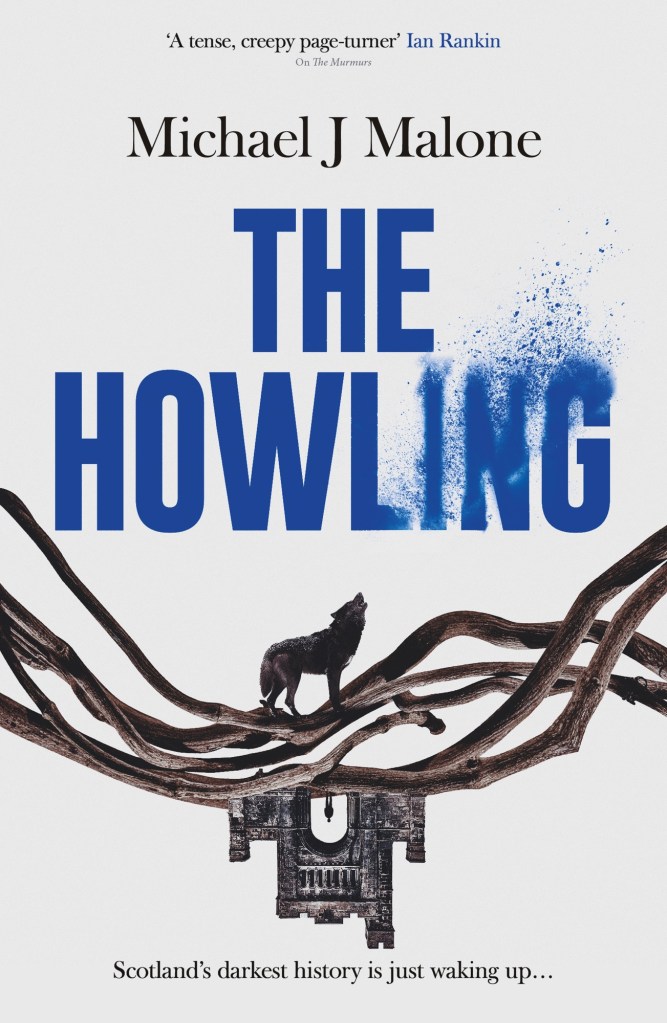
The Howling by Michael Malone 

There was such an atmospheric opening to this last novel in the Annie Jackson series, setting up the link between the incredible scenery and Scottish folklore. Then we see Annie in her safe place, the little cottage she calls home nestled in the middle of nowhere. The only place where she gets some respite from the ‘murmurs’, the terrible portents of death she suffers when she meets someone who is going to die. They are a curse, not just because of the painfully loud noise in her head but because if she tells someone they rarely listen and if she doesn’t she’s left racked with guilt. She is taking in some fresh air outside, when she falls into the stream that runs at the front of the cottage. It’s freezing cold and reminds us that whenever Annie starts to feel safe, something comes along to challenge that sense of peace. This time it’s her brother Lewis and his girlfriend Clare with some brilliant news, they’re having a baby. Annie is so excited for them, but there is a downside. Even though it’s very early days, Annie is worried that this child will inherit the family curse of the murmurs. Maybe there’s a chance she can put the curse to bed? The woman who tried to kill her wants Annie to visit her in prison. Sylvia Lowry-Law was pulled into the dark arts by a professor at her university and believed that sacrificing Annie would raise an ancient demon to do her bidding. Now she needs Annie’s help in tracing the son she had adopted 17 years ago. Could this boy be the key to a future where she’s not waiting for the next murmurs to hit? That would be life-changing for Annie, not to mention Claire and Lewis’s baby. 

This is a complicated story that Michael Malone tells with multiple narrators and different time frames, slowly bringing them all together to solve the mystery. Linking with the opening section, there’s a boy called Drew who feels bonded with a wolf cub more than the family around him. 

“I was a wolf. And I was a boy. It was a long time ago. They wore funny clothes […] I would run away from my mother and be a wolf. And we were killed. They said we were witches”. 

It’s been quite a year for witches and books that hark back to King James VI of Scotland and all of them have been incredible reads. Here Malone alludes to the dangerous atmosphere in that time, where even the remotest villages were aware the King had given licence for witchfinders to root out anyone seen as different or troublesome. They would be tested against the king’s book Daemonologie then strangled and burned at the stake. Drew clearly has a similar ancestry to Annie and perhaps a long line of ancestors fighting against lycanthropy. His family are emigrating and as usual the author takes us deep inside the character. Drew’s childhood narrative is so emotive because I understood his feeling overwhelmed in an airport full of people and having to feel all the layers of their anxiety. All he wants to do is curl up quietly with his fellow wolf cubs and when he’s pushed, his shout sounds more like a wolf howl – a definite cold feeling down the spine moment. Then there’s Annie and Lewis who are a great investigative pairing, Annie has bags of empathy and insight even without the murmurs and Lewis is well versed in the technology side of investigation, but one thing they both have is a stubbornness that means once they’ve started looking they can’t stop until it’s done, even when the costs for Lewis become very high. They both go to Ashmoor Hospital, the psychological facility where Sylvia is being treated, but she wants to see Annie alone. What she asks for is help finding her son and puts them on to her lawyer Bernard Peters, a timid soul who has worked for her several years as his grandfather did before him. They were helping trace her family and a rather familiar and colourful tale emerges: 

“Witches and curses and twin sisters who fought over a man, leading to one of them being burned at the stake”. 
There is a sense here of history repeating itself through generations. It blends with Scottish folklore and it being a ‘thin place’, the term for places where the veil between this and the spirit world is almost transparent – those that believe and can tune into it of course. Bernard is astounded by the prominent people who are caught up in this strange ancient order that Sylvia belongs to. She tells him she owned his grandfather and that there are secret records that must be protected. Bernard’s grandfather dying suddenly, leaves some of this dark and dangerous business undone. Even as they try to help him they can’t wait to get into the secret room he’s been searching in. There are secrets in here that could bring down very powerful people, but why would the order keep them? Again it brings to mind current news, the Epstein Files and the buzz around having them released, bringing into the spotlight people we could never have imagined to be involved. I felt for Bernard because everyone else has some understanding of the background to this, but he’s blindsided. Also everyone else is here by choice, whereas he is thrust into the middle of it by birth and the death of someone he loved and looked up to. Now he’s implicated in a widespread network of influence and blackmail. The author balances all these narrative viewpoints so well and each section brings a little more information, with sudden little discoveries that fill in gaps and definitely drip feed tension to the story. 

This series has always been an unusual mix of thriller, family saga, horror, magic, folklore and crime. It defies being placed in a genre and I often find that’s where the best and most surprising reads are. It was lovely to have Sister Theresa make a cameo, with her sketchy grasp of data protection she’s a real asset in finding out about the past and nuns are often very quirky and unusual individuals I’ve always found. I left this novel less worried about Annie, I had always wondered if the isolation and loneliness of life with her gift would overwhelm her. Here I felt like Annie’s murmurs took a bit of a back seat, but she gets stronger with each book; a more resilient heroine who still has an otherworldly and mysterious air about her. I always imagine her rather like Kate Bush, which is always a compliment. The more she finds out about her family, the more settled she seems to be and is still working in the local café despite previous incidents with customers whose deaths she could see. However, as we raced towards the ending with tension in bucketloads I couldn’t be sure she’d be safe. The order is a many tentacled monster and I wondered if they would really be able to sever and destroy all its parts. As Sylvia says, they have ‘fingers in a lot of very interesting pies’. There is no depth they won’t stoop to and they operate very quickly indeed as Lewis finds out. I can’t ever imagine that Lewis and Annie will give up investigating and trying to help others, it doesn’t seem in their nature to kick back and enjoy the quiet life. Not for long anyway. 

Meet the Author

Michael Malone is a prize-winning poet and author who was born and brought up in the heart of Burns’ country. He has published over 200 poems in literary magazines throughout the UK, including New Writing Scotland, Poetry Scotland and Markings. Blood Tears, his bestselling debut novel won the Pitlochry Prize from the Scottish Association of Writers. His dark psychological thriller, A Suitable Lie, was a number-one bestseller, and is currently in production for the screen, and five powerful standalone thrillers followed suit. The Murmurs and The Torments, first in the Annie Jackson Mysteries series, were published to critical acclaim in 2023. A former Regional Sales Manager (Faber) he has also worked as an IFA and a bookseller. Michael lives in Ayr, where he also works as a hypnotherapist.
Posted in Random Things Tours

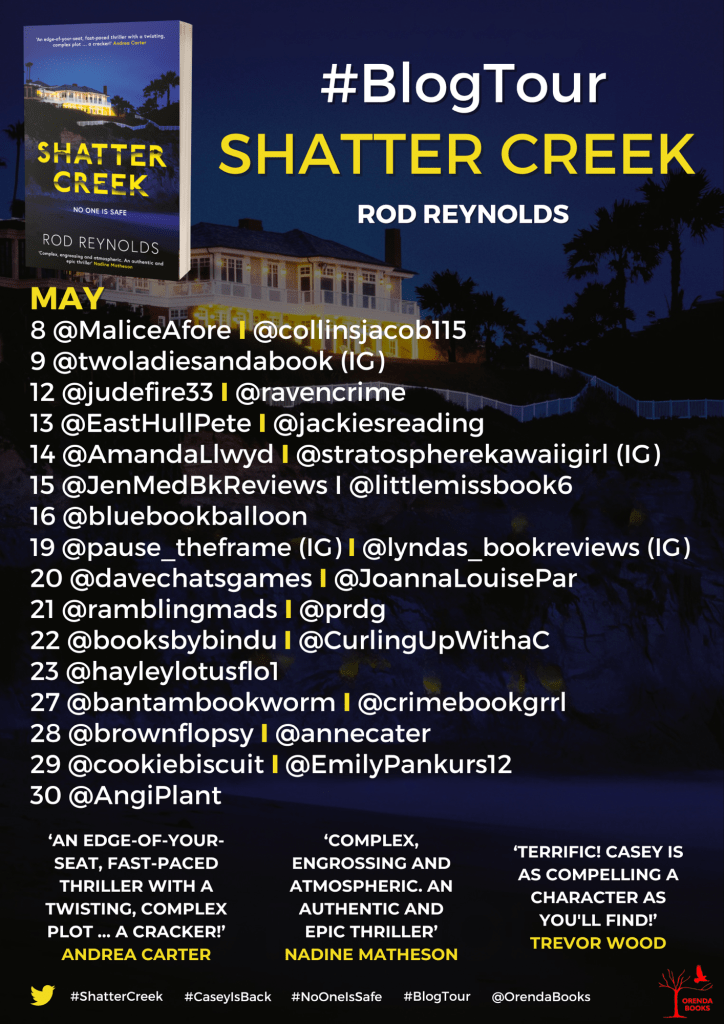
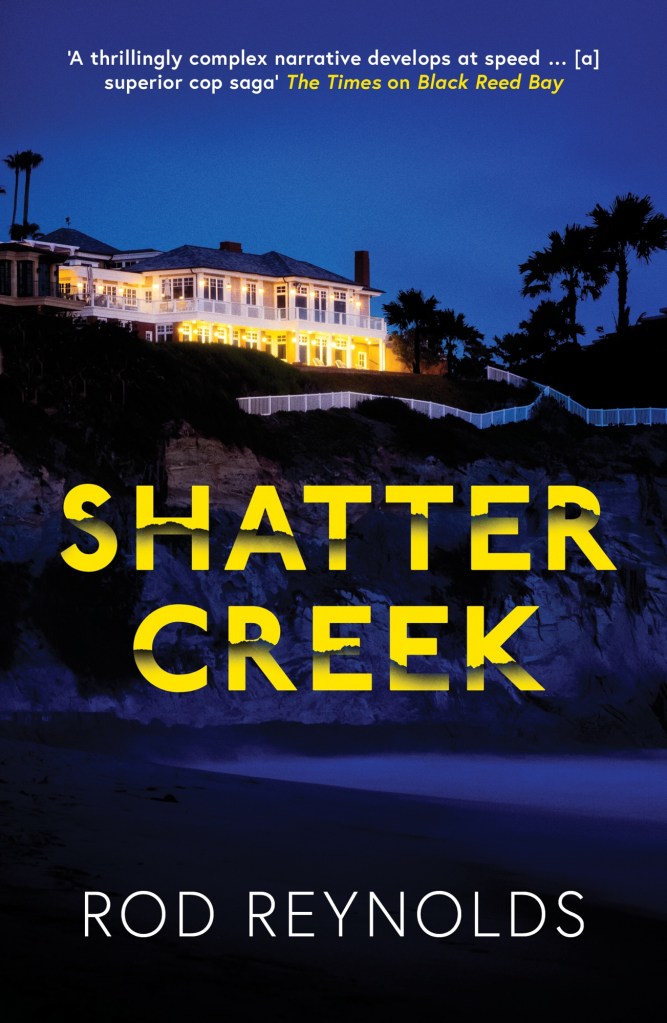
Shatter Creek by Rod Reynolds

Shatter Creek is the second novel in Reynold’s Casey Wray series, set in Hampstead County Police Department on Long Island. The department has been under investigation and the corruption reached to the very top. Casey’s boss and mentor, Ray Carletti, was found to be a dirty cop and it’s clear that she’ll have to do a lot of proving herself to the new Lieutenant. Until then she’ll suspect Casey of being a corrupt cop, who managed to elude the investigation. She’s also under pressure from the Mayor/DA’s office, in fact it seems like Casey is piggy in the middle between the two, vying over who gets the news first. When there’s a double shooting outside a gym in Rockport, Casey and partner Billy Drocker are first on scene. A woman has been shot just outside the gym entrance, but there’s also a second victim slightly further away down a side road. Luckily, Casey finds an off duty cop already there, tending to his wound so she’s free to chase down the shooter. After trying a few side streets, she realises that there are too many possible escape routes for her to cover. It’s like he disappeared and Casey is left trying to work out who was the target. The two victims have nothing in common. The male victim leaves a wealthy widow who has contacts in the mayor’s office – the last thing Casey needs. Surely a self-made man who could afford a home on Shatter Creek has his fair share of enemies though? Then comes the shooting of another woman outside her home and they uncover a link. Both female victims turn out to be just two in a line of women strung along by potential suspect, Adam Ryker. He has a reputation and not just as a womaniser but as a man who likes to control women. Casey has more questions than answers: Who are the couple seen in a car taking photographs? Could one of Ryker’s girlfriends have hired a hit? Why did the male victim have Casey’s phone number on a business card? This is an incredibly complex case, in particularly tough circumstances and Casey needs to solve it, not just to take a murderer off the streets but to prove she isn’t the cop that her new lieutenant thinks she is. 

Wow, this really was a labyrinthine case! Full of red herrings and distractions from an endless parade of women claiming to be in a relationship with their suspect and a lot of political machinations behind the scenes. Casey really is in a tough situation and I don’t mind saying that I might have gone for the potential transfer or the unexpected job offer she gets. It’s clear right from the start that her new Lieutenant doesn’t even want to give her a chance. Whatever happens, this case has placed her at a crossroads and if she stays she’s going to have to solve this fast and prove her worth. There is one key witness, a woman with red hair carrying a little girl who seemingly disappeared from the gym during the shooting. Where does she fit? Casey was already in an impossible situation and now she has to rein in her rookie partner who is a little over enthusiastic. She’s still grieving the death of her previous partner, a fact that still hits her hard in the gut whenever she thinks of him. When she meets ex-cop McTeague in a bar, both for information and a catch up, he offers her a way out. Would she want to come and work for him? She’d still be using her skills, but with steadier hours, less politics and doing things on her own terms. She allows herself to think about it, but knows that she has to solve this case first. I’m not sure whether it’s professional pride, a determination to show she’s not dirty or that urge to serve and protect the public. Probably a bit of all three.

Casey is a people pleaser underneath, someone who finds it hard to say no and struggles to let cases go. It’s the reason she becomes caught in the headlights of Rita Zangetty, the chief of staff to the County Executive Franklin Gates. Zangetty wants someone inside who can keep her abreast of this case, but also the ongoing review of the whole police department. A part of her had expected to be placed in the acting lieutenant’s role after being cleared of any wrong doing. She’d put in her application, not even expecting an acknowledgement so to be shortlisted and interviewed gave her hope. To be placed under someone completely new, with no warning was a blow to her confidence. The shootings happen only 24 hours later. When evidence emerges that puts Casey even further under the spotlight I was surprised. Could Casey possibly be as bad as Carletti? I loved her conversations with the dead man’s wife, out at their incredible home on Shatter Creek. There’s a sense that here are two opponents who have the measure of each other, they’ve finally met their match. As Casey starts to interview the previous partners of Adam Ryker it seems like she’s set on a direction, but she’s still juggling questions in her mind. Questions that won’t go away. Why is the woman she saw reading in a bar still on her mind? What was it about the meeting with McTeague that’s bugging her? Who is the man seen taking photographs, not just near the crime scene but at different locations throughout the case – almost like they’re working in parallel. When the truth slowly starts to dawn on Casey she takes us with her at a breathtaking pace, leading a totally unexpected and heart-stopping show down. This was a gritty, inventive and compelling thriller, with a lead detective who’s dogged and determined to find the truth – even when it’s a truth she doesn’t want to face.

Out now from Orenda Books

Meet the Author

Rod Reynolds is the author of five novels, including the Charlie Yates series. His 2015 debut, The Dark Inside, was longlisted for the CWA New Blood Dagger, and was followed by Black Night Falling (2016) and Cold Desert Sky (2018); the Guardian has called the books ‘Pitch-perfect American noir.’ A lifelong Londoner, in 2020 Orenda Books published his first novel set in his hometown, Blood Red City. The first in the Casey Wray series, Black Reed Bay, published in 2021, was shortlisted for the CWA Steel Dagger, with its long-awaited sequel, Shatter Creek, out in 2025. Rod previously worked n advertising as a media buyer, and holds an MA in novel writing from City University London. Rod lives with his wife and family and spends most of his time trying to keep up with his two daughters.

Posted in Random Things Tours

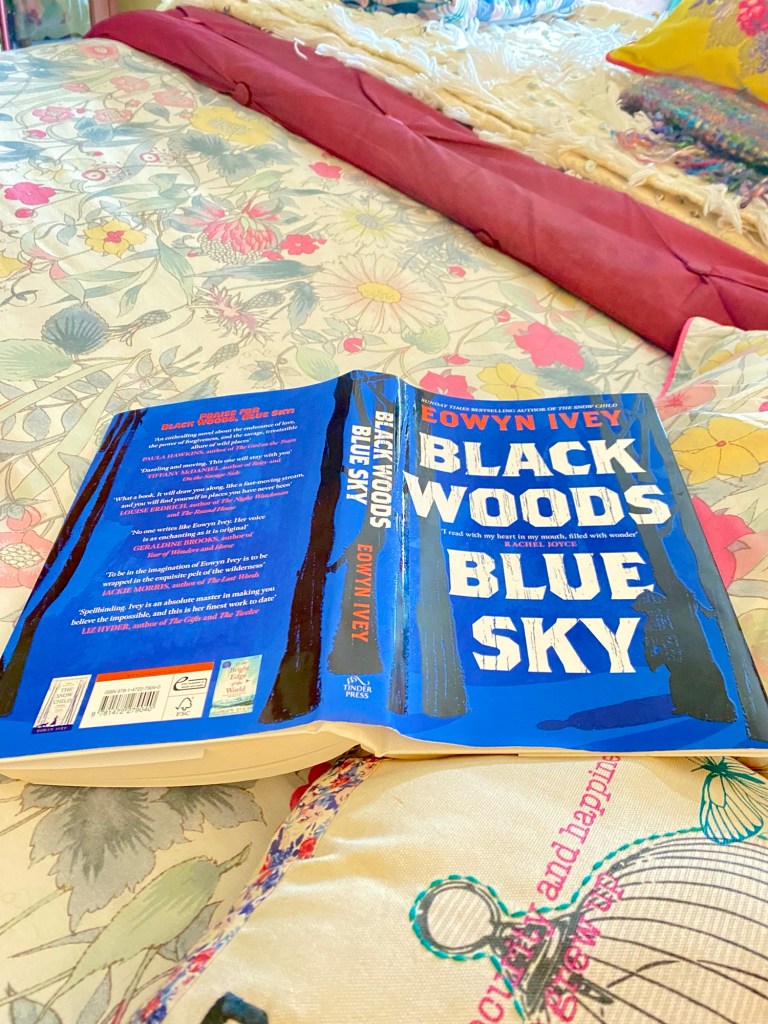
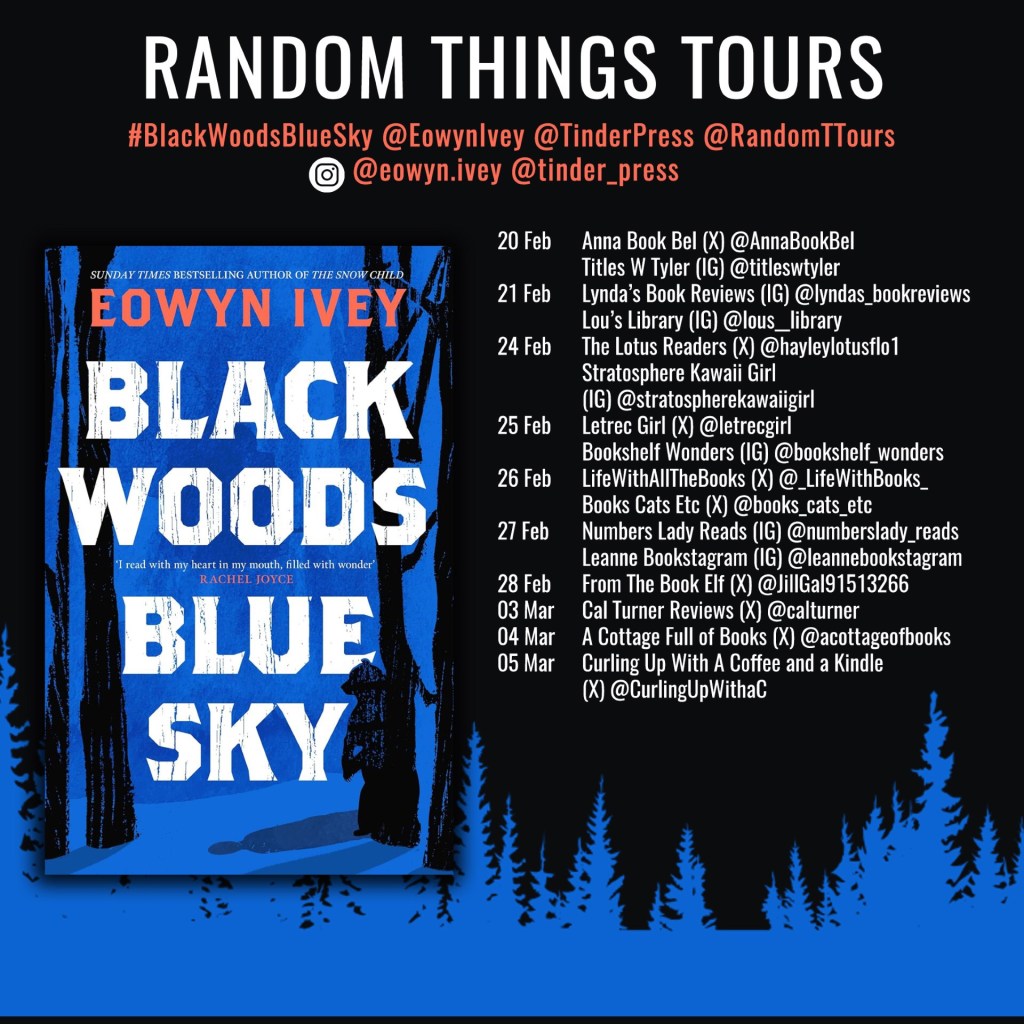
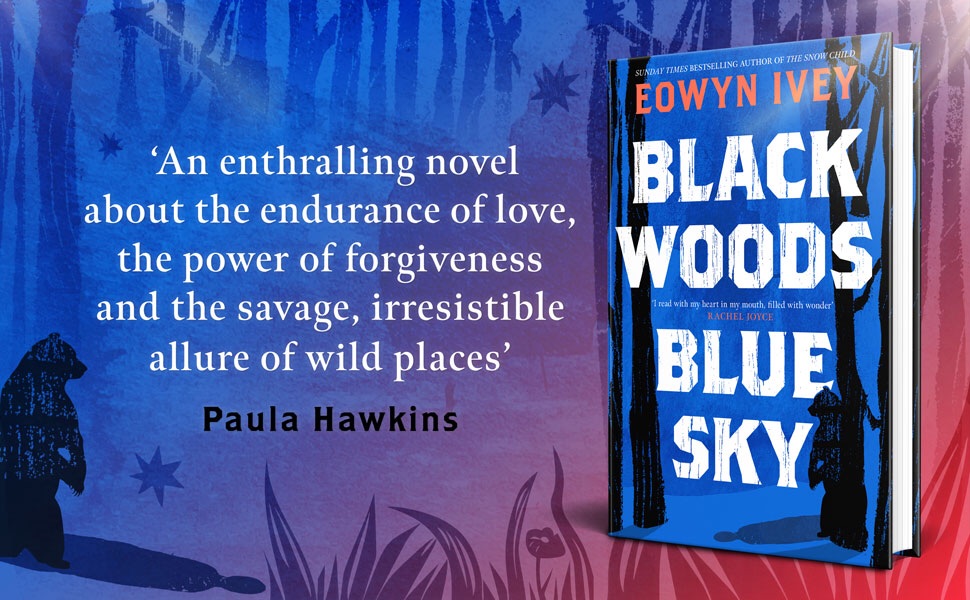
Black Woods Blue Sky by Eowyn Ivey

“Now are the woods all black, but still the sky is blue. May you always see a blue sky overhead.”  Proust. 

I was utterly mesmerised by this unusual grown-up fairy tale. Having read the author’s work before I was expecting a certain strangeness and this story definitely delivered. It’s hard to write about without revealing anything and you need to go into this book without spoilers. The story is told through the eyes of Birdie and her little girl Emmaleen. Birdie is a young, single mum. She’s living in a cabin out behind the bar where she works for Della. Birdie is just getting by. She has a wild spirit and although she loves Emmaleen, she’s not the most consistent parent. We meet her on a beautiful morning where she has woken up from the night before relatively unscathed. Yes, she’s a bit hungover and she knows Della is going to have words for her when she goes into work. For now though, the woods and creek are calling her, so she takes her fishing rod and leaving Emmaleen asleep and alone she walks through the trees and down to the water. She rationalises that she won’t be long and Emmaleen will sleep for a while yet. She catches a rainbow trout, guts and cleans it in the creek, before setting off back to the cabin. When she gets there, Emmaleen is gone. Birdie goes into panic mode, desperate to find her daughter but terrified to admit to Della that she’s left her alone. It’s a man called Arthur who eventually emerges from the woods with Birdie’s daughter on his shoulders and she’s never been more relieved. She knows Della will have something to say about this, but for now she’s just happy that Emmaleen is safe. When Della moves her onto the day shift, it’s a comment on her partying and parenting lifestyle. She has to bring Emmaleen into the lodge with her, but she sits colouring and doesn’t pester while she’s trying to work. 

Arthur comes in most mornings, he sits through the bar side of the lodge alone and orders toast. She’s fascinated by this strange, wild man. He has scarring and only the remains of an ear one side of his face. Birdie thinks he smells of wild places, never artificial scent. He smells mossy and like earth. From time to time she brushes his shoulder and if Della is out getting supplies, she might take a moment and sit with him. He’s so natural and gentle with Emmaleen too. He’s quiet and when he does say something it’s strangely, always in the present. She asks him why and he tells her that for him the world is like that. He’s always in the here and now. He understands the wildness in Birdie and her yearning to be out in the mountains. His parents have had a cabin in the woods since before he was born and it’s become his more or less. For several months of the year he takes himself up into the mountains and lives off the land and whatever supplies his dad flies in. It’s total isolation, off grid and without comforts. When he asks Birdie if she and Emmaleen would like to make a home out there in the mountains, there is only one answer. Yes.

“That’s how it was with Arthur. Getting close to him, feeling his eyes on her – like touching something dark and wild, then watching it dart away.’

Between the pages of this book I was totally lost in the wildness of Alaska. The author’s descriptions are vividly beautiful and I found myself wondering about a place I’d imagined as being full of snow. All of my senses were engaged and I became entranced by Emmaleen’s discovery of nature as Arthur shows her the forest floor with it’s springy moss and tiny wildflowers. There’s a strangeness and even a danger to being so far away from civilisation. Arthur’s cabin has been needing a woman’s touch for a long time. The floor is covered with leaves and dirt from the forest and mosquitoes are squeezing through the gaps round the windows. Birdie sets about cleaning the cabin and Emmaleen gets used to her environment, playing with her gnome friends and tasting bluebell flowers. The days are harsh, but Birdie’s enjoying the challenge of cooking and laundry out here without heating or electricity. She likes not knowing what time it is and working to her own body clock. She feels like part of the place. Yet underneath these drowsy and idyllic warm days, there’s a sneaky sense of unease. Arthur’s father Warren seems reluctant to leave the woman and her daughter alone in such a secluded place with Arthur. He’s never seen his son  be so tender as he is with this little girl. He even flies over 48 hours later and sees all three of them hiking up one of the mountains and they wave to him. Maybe he’s worrying about nothing. Yet Arthur does disappear and reappear without warning and sleeps on the floor. He seems curiously unsure when it comes to sex. There’s a mound near the cabin where Arthur yells at Emmaleen, telling her not to play there.
There’s a hidden animal pelt under the earth and caribou bones under the bed. How long before Birdie and Emaleen learn the terrifying truth about Arthur? 

This incredible story fits it’s unusual background perfectly. I loved how accepting Birdie was, despite the fact that she’s making risky decisions she doesn’t doubt Arthur for a moment. She accepts his unusual and seemingly inexperienced caresses without question. I didn’t know what to expect from the sections where we’re in Emmaleen’s world, but they are really strong, with bags of imagination and inventiveness. She’s so innocent and precious. I’ve lived in rural Lincolnshire as a child, mainly on farms so her wanderings and imaginary games reminded me of being small. I used to draw flowers and bark patterns or lie in a willow tree that hung over the water and read all day while my brother fished. I was fascinated with wild flowers so the details of plants and berries, which to eat and which were poisonous are so familiar. I also grew a strong stomach, having sat and watched my Dad gut rabbits and pheasants. I loved that Birdie could do these things, she has basic survival skills but that’s for expected dangers. I had a feeling that the potential threat would be out of the ordinary. Even though she makes mistakes I had a real maternal fondness for this young woman and her acceptance of this taciturn young man. Love comes in so many different forms and even though I could feel something looming on the horizon for this new little family I was hoping against hope for the transformative power of love. 

Out Now from Tinder Press

Meet the Author

Eowyn Ivey’s debut novel, THE SNOW CHILD, was published in twenty-six languages, and became an international bestseller. It was a finalist for the Pulitzer Prize 2013, and Eowyn won the International Author of the Year category at the 2012 National Book Awards. A former bookseller, Eowyn lives in Palmer, Alaska, with her family.

Posted in Throwback Thursday

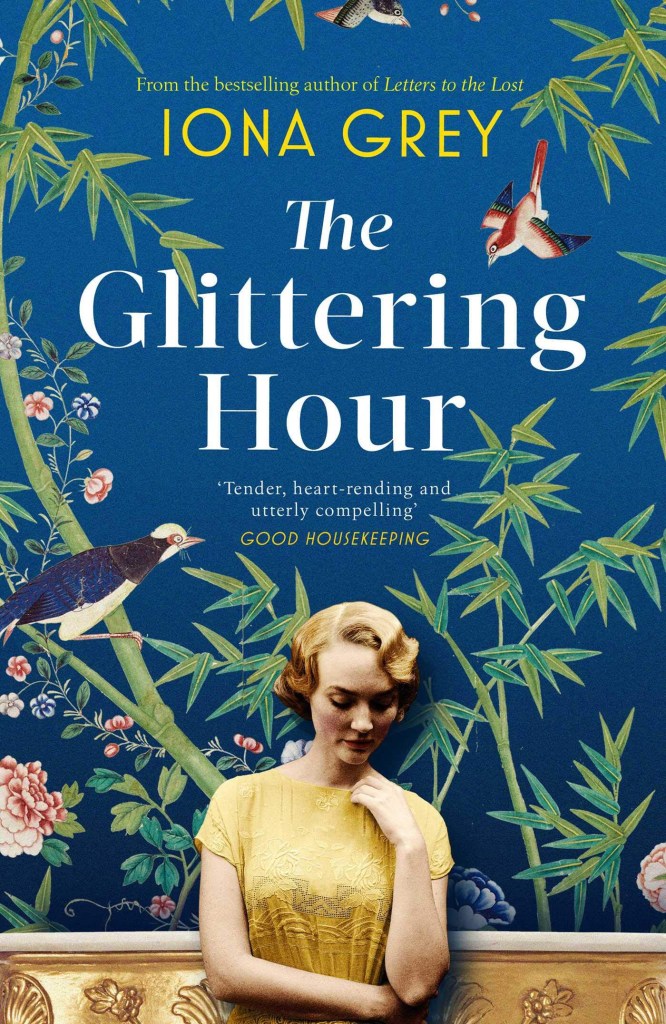
Throwback Thursday! The Glittering Hour by Iona Grey.

This week’s reading took me back into the world of the Bright Young Things, the young generations of aristocrats in 1920s Britain intent on living it up and shaking off the aftermath of WWI. The Mitford sisters were part of this scene and it was while reading about Nancy Mitford’s exploits in 1920’s London that my mind was drawn back to this beautiful book depicting that new generation. A book I read originally for the blog tour back in 2019. Iona Grey shows young people coping with a legacy of loss and parents that are still stuck in the hierarchical society of the Edwardian period. Our heroine, Selina Lennox, is one of those ‘Bright Young Things’ who were followed by the press from party to party, determined to the live the full life that their parents, and especially older siblings, have missed out on. Her family are part of an ailing aristocracy that still has its property, but is running short on money. Her elder sister is making an advantageous marriage and since the death of their brother in the war they have the pressure of producing a male heir. Selina is being steered towards the heir of a ruby mining business situated in Burma. Rupert is a war veteran, and it is possibly active service that has made him so stiff and taciturn. Selina finds him too serious and prefers the company of her friends and the social whirl of extravagant parties thrown during the season. One night, while careering through London on a treasure hunt, the car she is travelling in hits a cat. Selina can’t leave the poor creature and is horrified to see her friends disappearing into the night, leaving her in a garden square somewhere in Bloomsbury.

Young, struggling artist Lawrence Weston chances upon Selina and offers his help. They climb into the locked garden square and give the cat a proper burial. Selina is drawn to this dark haired young man but also knows she is taking a huge risk disappearing at night with a stranger who isn’t from within her social circle. Lawrence is transfixed by Selina’s golden beauty and feels an instant connection. He knows she is far above him and her family would be horrified. He lives in a shared house and rents a studio where he paints portraits of the aristocracy’s lost sons of war in all their military splendour. This pays the bills, but he would really love to be a photographer and as yet no one sees this as art. Realistically, he has no chance with Selina but can’t seem to stay away despite receiving warnings from most of his friends.

Interspersed with this is the story of Selina’s daughter Alice in the years before WW2. Alice lives on the family estate and is looked after by Polly who was Selina’s maid. Alice’s grandparents are still in residence, still living the values of a bygone age. Miranda has now given birth to Archie, the all important heir for the estate. Selina is in Burma with her husband and we see their journey in a series of letters she writes to Alice. They clearly have a very loving relationship, so it seems strange that Alice is hidden away in the cold nursery corridor? I kept wondering why, if she loves her daughter as much as she seems to, would Selina leave her with a family who show her no affection? Alice has been sent a treasure hunt from her mother and Polly gives her the clues to follow. Solving the clues takes her to different parts of the estate and her mother explains their significance, they’re part of Alice’s origin story. The clues help Alice come to know and love the gardens, especially the deserted Chinese House with its old gramophone. What exactly is their link to Selina’s past and Alice’s future?

Iona Grey has created a beautiful novel here, filled with moments of joy and sadness. For me, the meaning of the title is so poignant encompassing both the historical period and the love story at the heart of the novel. The 1920’s is a decade that stands alone. A moment of extravagance, partying and glamour, between two world wars – a glittering hour. This glittering generation defied the death that had stalked their fathers and elder brothers in the trenches and were determined to enjoy life while they could. It has a romantic meaning too – for Lawrence, Selina is his glittering hour, they share a moment of pure love and beauty that burns bright but can’t burn forever. Grey shows what happens when we dare to break away from the boundaries and societal rules of our class and how the reverberations from this can last for several generations. The love may not last, but the memories can sustain us for a lifetime.

Thanks to Simon and Schuster UK and Random Things Book Tours for the chance to read this novel and join the blog tour. See below for the next stops.

Posted in Random Things Tours

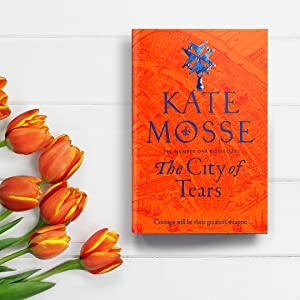
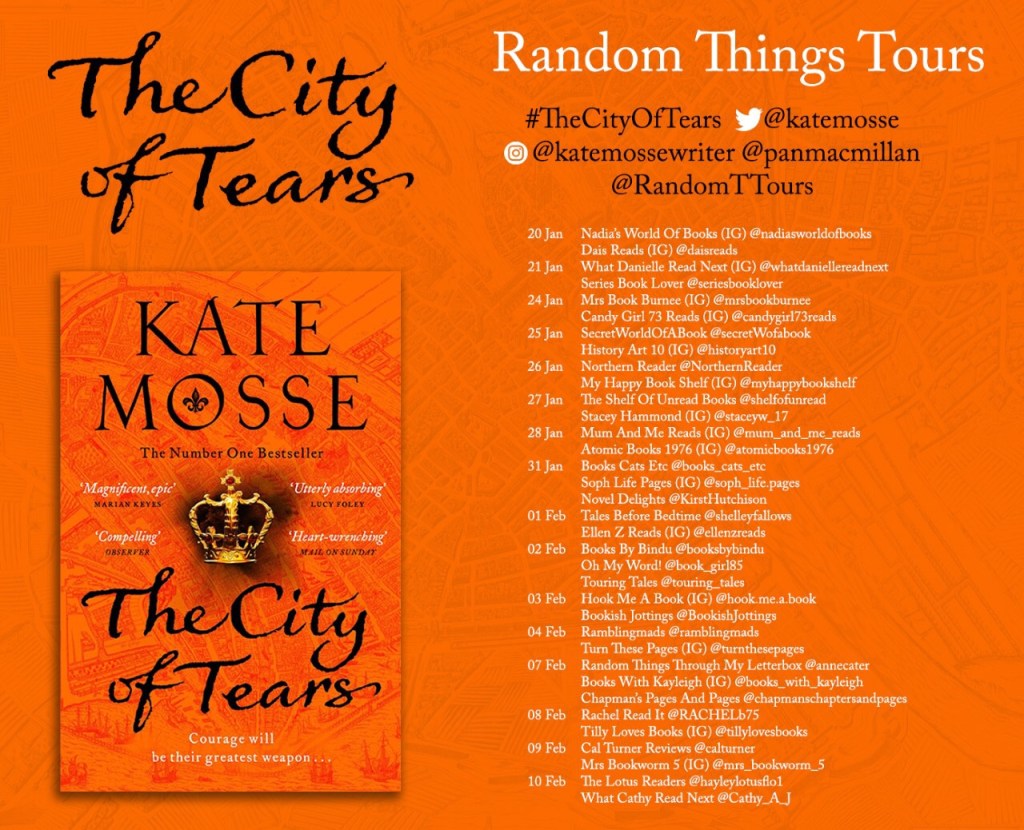
The City of Tears (The Burning Chambers 2) by Kate Mosse.

I’ve been reading Kate Mosse since Labyrinth all those years ago and I’m always impressed by the level of detail and knowledge of French history she weaves into her books. Every detail is considered and you have the impression straight away that you’re in safe hands. In The City of Tears she combines her fictional narrative with fascinating real events focusing on the Catholic and Huguenot conflicts of the 16th Century. This is the second book in the Burning Chambers series and I did choose to go back and read the first book. However, due to Mosse’s ability to immerse you in her world, I think this could be read as a stand alone novel. It continues the adventures of Minou Reydon-Joubert and Piet Reydon, characters caught up in a period beset by complicated religious and political wars. Mosse walks the tightrope between these warring factions carefully, illustrating that there is honour and corruption on both sides, but keeping the focus on the family at the centre of these conflicts.

We return to the Languedoc region of France and the wars have now raged for ten years. It’s May 1572 and Minou and Piet travel with their two children, Marta and Jean Jacques, to Paris for the royal wedding of Charles IX’s sister, Catholic Marguerite de Valois, and Protestant Henry III of Navarre. This wedding has the political and religious benefits of uniting both Catholic and Protestant factions, so could mark the start of peace, but it’s a fragile accord. Piet’s old acquaintance Cardinal Valentin (Vidal) is in Paris too, but he’s now an enemy, unbeknownst to Piet he has a plan to kill all important Huguenots during the celebrations. The terrible violence that follows was known as the St Bartholomew’s Day Massacre and thousands of Huguenots were murdered. Seven year old Marta is separated from her parents in the chaos and goes missing. It’s a parent’s worst fear, but unable to find her, Minou and Piet have to flee the city without her. The pair are devastated as they cross the border and make their way to safety in Amsterdam. I loved the way Mosse depicted the strain this decision places on the couple’s relationship. They have managed to ensure the safety of their two year old son, but are filled with guilt for leaving their daughter behind.

Minou and Piet only return to France twelve years later after hearing of a woman who bears a resemblance to Minou. Could it be Marta? They have to take a chance and search for their daughter, but danger is still everywhere. They don’t know that family enemy Vidal is there, with his collection of fake relics, that he intends to use with the ambition of gaining power and position. He believes Piet is in possession of a stolen relic and is driven by bitterness and revenge. His evil nature and conviction he is carrying out God’s work, is beautifully offset by Minou who is a strong willed and opinionated woman doing the best for her family rather than a religion. Piet is also more logical and open-minded, he’s a Huguenot by religion, but doesn’t believe there is only one way to God, particularly when religious difference is used as an excuse to oppress and murder. The couple’s return has raised the tension and jeopardy for all their friends and family, and Mosse delivers some suspense filled twists and turns where the hunted and hunter just miss each other.

I felt like I was in the hands of a master storyteller here. Mosse is able to bring historical fiction to life, and really makes the reader care about the lives of people long gone. She delivers the drama at such a pace, her characters barely have time to draw breath. The depth of her research is truly impressive, even if sometimes I found myself having to read very carefully so I didn’t become confused – but that’s my failing, not hers. The family are so well drawn I truly cared about their outcome and the dynamics between them are written with emotional intelligence. The character’s emotions feel so real and add depth to an already absorbing story. My heart broke for Minou at the loss of her daughter, and I was so invested in her grief that I couldn’t see how she would adjust to living without her. The strain they were under and the constant danger they’re in added an intensity to Minou and Piet’s relationship that was so romantic. Mosse’s incredible skill is to make the reader care about and feel a connection with people who lived in the 16th Century. They are so different to us in dress, daily life and beliefs but the themes of family, parenthood and loss are so universal that they cross the centuries. It will be interesting to see where these fascinating characters go next.

Check out the other reviews from these great bloggers:

Meet The Author

Kate Mosse is a number one international bestselling novelist, playwright and non-fiction writer. The author of eightnovels and short story collections –including the multimillion-selling Languedoc Trilogy (Labyrinth, Sepulchreand Citadel) and Gothic fiction The Winter Ghosts and The Taxidermist’s Daughter, which she is adapting for the stage –her books have been translated into thirty-eightlanguages and published in more than forty countries. She is the Founder Director of the Women’s Prize for Fiction and a regular interviewer for theatre & fiction events. Kate divides her time between Chichester in West Sussex and Carcassonnen in south-west France.

Posted in Random Things Tours

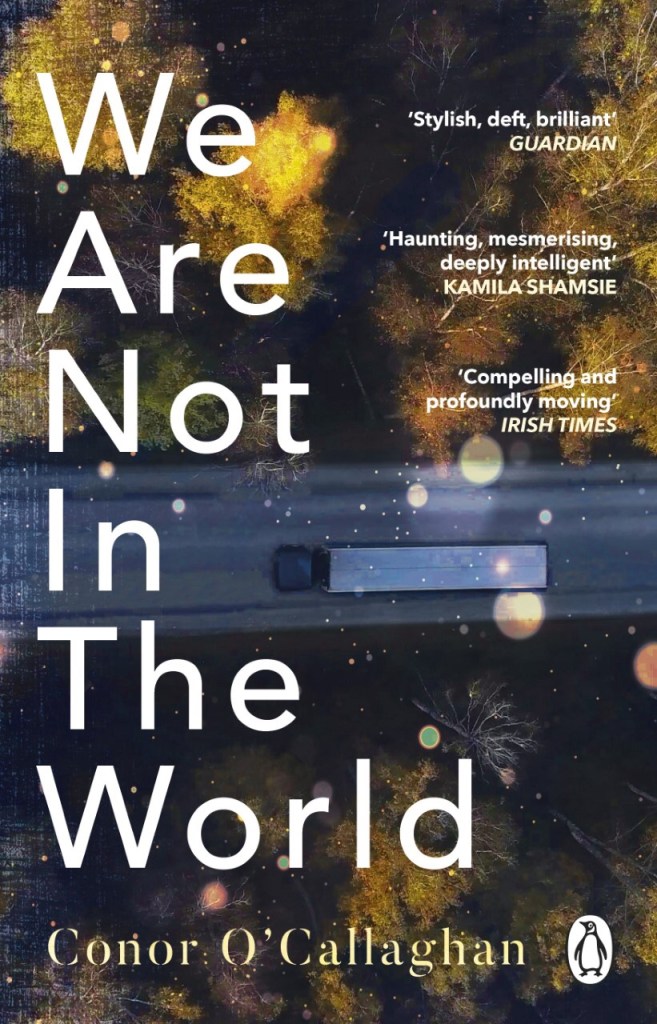
We Are Not In The World by Connor O’Callaghan.

‘The cargo door opens. It opens incrementally. It falls forward, away from us, into foreign day. There are men down there, stevedores in hi-viz and hardhats shouting to one another. I rotate the ignition to halfway, to check for evidence of light. The instrument panel flashes and falls still. There are chains. There is shrieking of iron like gates of hell. Then this fluorescence gradually floods the floor between rows and creeps towards us and feels warm.’

As soon as I read these lines, following Paddy as he and his lorry emerges from the ferry and out into the light, I knew the writing was going to be spectacular and that this was a poet’s novel. Paddy is travelling from England to France, with his stowaway daughter in tow. It’s hard to explain, but this is a book that manages to be both bitter and beautiful. There’s a bleakness to Paddy’s existence, but such a richness in the language used to describe it. It feels bang up to date too, despite the fact no pandemic is mentioned, the author captures a sense of unreality that is all too commonplace these days. The feeling that the world we know and understand has gone, and we are plunged into something other, like Alice down her rabbit hole. We Are Not In The World is an apt title indeed. We follow Paddy on his mundane journey, punctuated by graphic brief encounters and interactions with his daughter Kitty. However, we are also taken into Paddy’s memories of the past and into his relationships, which are largely disastrous. This is an intelligent rendering of psychological damage wrought within families. His marriage is broken, his brother is more successful than he is and there is a complex, almost Oedipal, relationship between him and his mother – also named Kitty. His daughter is wild and rebellious, and in another nod to Paddy’s mother, she wears her gran’s mink coat at all times.

This is not an easy read, but the right readers will love it. Having searched out some of the author’s poetry, it’s clear that the novel touches on some of the same themes. Family and sibling rivalry are represented in Paddy’s relationship with his brother. There’s a jealousy of his apparent successes, but Paddy has still made him the godfather of his daughter. There’s a sense that family is inevitable and no matter how much we wish to escape it we can’t. Separation is explored too – separateness from the land where he grew up, from family and even from his own self. There’s a sense of wanting to be home, but not being able to and the feeling of homesickness that pervades Paddy’s daily existence. He describes it as like a ‘low level virus’ that he permanently lives with. To me it felt like a low-level depression, one that would drop under the radar of most GP’s charts, but is debilitating nonetheless. There’s a numbness in Paddy. He’s on auto-pilot in his daily life, only living in his head until an interaction jolts him out of his memories. The separateness he describes is something I’ve felt when depressed or going through grief. I was physically in the world, but felt no connection to my surroundings or other people. It was like looking at the world through glass.

The only thing Paddy seems to look forward to is some sort of homecoming. He looks at the family home of Tír na nÓg as both a rose-tinted past and a future redemption. Situated on a shingle beach in Ireland, it feels like his chance of happiness or at least a respite from the homesickness that plagues him. Can it be a place of things coming full circle? A completion of this endless mental push and pull between past and future. It feels like a pipe dream, far removed from the reality he’s in and the way he thinks about certain family events, referred to by him and Kitty as ‘the thing we never mention.’ There are times when I wondered if Kitty was real, or whether her birth from the hiding place of his bunk behind the cab was purely metaphorical. I had moments of confusion, moments of being unsure how these fragmented memories and feelings fit together. I was even unsure of what was real and what was imagined occasionally. However, I loved the feelings it induced in me and the sheer beauty of the prose. There’s a haunting quality to the novel that will stay with me. It was a reading experience that I let wash over me, rather like listening to an opera or viewing a beautiful painting. This is for those readers who like their novels to be strange, and bleak, but beautiful at the same time.

Published by Doubleday 18th February 2022

Meet The Author

Conor O’Callaghan is originally from Dundalk, and now divides his time between Dublin and the North of England. His critically acclaimed first novel Nothing on Earth was published by Doubleday Ireland in 2016.

Posted in Random Things Tours

This Is How We Are Human by Louise Beech.

I absolutely loved this incredible book about love, disability, sex and the secrets we keep from each other. Veronica and her son Sebastian live together in Hull. Veronica wants the best for her son and just like all parents, she wants him to grow up and have a full life. However, Veronica isn’t like other parents, because despite Sebastian being twenty years, six months and two days old, he’s struggling with the love and relationships part of his life. Seb is autistic and he is lonely. Seb loves swimming, his fish, fried eggs and Billy Ocean, he’d also love to have sex but no one will have sex with him. He’s already been in trouble after the girl next door convinced him to write an explicit letter to her underage sister. When their lives collide with Violetta, Veronica thinks she can see a way forward. She’s thought of paying someone before, but has stopped herself. Here though, is someone they’ve met before and who was natural with Seb. Veronica couldn’t have known she was leading a double life as a high class escort, in order to earn enough money to keep her seriously ill father at home. These three lives come together and change each other in unexpected ways.

There were scenes in this that made me laugh and some that made me cry. His need for sexual release is having a huge impact on his carefully ordered life. His swimming sessions have continued at the same time and day of the week, all the way from childhood, but his inability to see why his nakedness is different to the children’s has meant they must stop. When Veronica takes Seb to the sexual health clinic, because she’s desperate for advice, their lack of help and understanding infuriated me. The nurse seemed more concerned about whether Seb might hurt someone, or how Veronica’s thoughts about paying for it would be harming him. She even threatens to report her to social services. There’s no compassion or admission that they really don’t know what to do. It’s an issue I’ve thought about for a long time, having supported people with learning difficulties or autistic spectrum disorders in an advocacy role. Sadly, the figures for sexual violence against women with learning disabilities are terrifyingly high. While young people are often infantilised by parents who don’t want to accept their child is an adult. I read many years ago about an initiative in Holland very like our Direct Payments/Personal Budget system for care if you have a disability. However, social workers could add a component that would pay for the disabled person (physical disabilities) to hire a sex worker if they needed that for an sexual outlet. As Seb himself says:

‘People seem to get dead upset about it. But it’s just like paying for swimming lessons. You want to learn to do it and someone who knows how to will show you for an agreed fee’.

He sees it as a simple business transaction. Offsetting the worry, sadness and anger I felt in their behalf it’s Seb’s frankness that brings the humour. His mother greets him in the morning with a cheery ‘what do you want to do today?’ and his reply is ‘I want to have sex’. He goes on to explain that he might pay for sex:

‘If I was rich. But I’m not. I’ll just have to find someone who appreciates me before I die. I hope it’s this week. I’m feeling very sexual today.’

Seb is such a loveable and interesting character. He’s also handsome, so does draw attention from women when out and about, but Veronica knows that as soon as he speaks they will start to lose interest. She meets with Violetta and proposes her plan. However, there are real ethical concerns here and everyone is keeping secrets. Veronica isn’t planning on telling Seb the truth about his ‘sessions’ with Violetta, but she isn’t planning on telling Seb she’s been hired or why she needs the money. Seb has his own secrets and there is an ending to this that neither woman envisaged, showing a prejudice they didn’t know they had. They’ve discussed concerns that Seb may become attached to his tutor, but they didn’t imagine that she might become compromised in some way or that Seb might transfer his affections to someone new.

This is brave new ground in fiction. I have a physical disability, and I can count on one hand books that have a disabled character who openly discusses or explores their sexuality. This is almost society’s last taboo – the sexual disabled body is not to be looked at or mentioned. This is partly about the infantilisation of people with disabilities, they need care and are therefore vulnerable and untouchable. It’s partly to do with an innate reflex to reject what is different – often the fear of urine bags, colostomy bags, and other paraphernalia is so great, that the person becomes neutral to other people and they close their minds to the fact that this person is a sexual being. We saw this prejudice in action with the controversy around Marc Quinn’s statue of Alison Lapper. Not only was this a disabled woman who was naked, she was also pregnant. People rejected her body strongly, calling it ugly and disgusting. However, I think a large part of the furore was down to people being uncomfortable that Lapper’s pregnancy was a visual clue of a healthy sex life. Most of the same people would probably be uncomfortable with this book, but I was so excited to see the issue out in the open. We need to talk about it more. People with disabilities are having sex, often more adventurous and inventive sex, because they have to communicate more and find a way round their disability. It’s only by talking about it that we start to break down these prejudices and accept that a healthy sex life is a normal part of life for all adults able to consent. This was a difficult subject, handled with frankness, but also the greatest care and sensitivity. I’m so grateful that this talented writer turned her hand to this subject, writing characters that felt utterly real and incredibly relatable. It was funny, moving, and full of love, of every kind.

Meet The Author

Louise Beech is an exceptional literary talent, whose debut novel How To Be Brave was a Guardian Readers’ Choice for 2015. The follow-up, The Mountain in My Shoe was shortlisted for Not the Booker Prize. Both of her previous books Maria in the Moon and The Lion Tamer Who Lost were widely reviewed, critically acclaimed and number-one bestsellers on Kindle. The Lion Tamer Who Lost was shortlisted for the RNA Most Popular Romantic Novel Award in 2019. Her 2019 novel Call Me Star Girl won Best magazine Book of the Year, and was followed by I Am Dust.

Posted in Random Things Tours

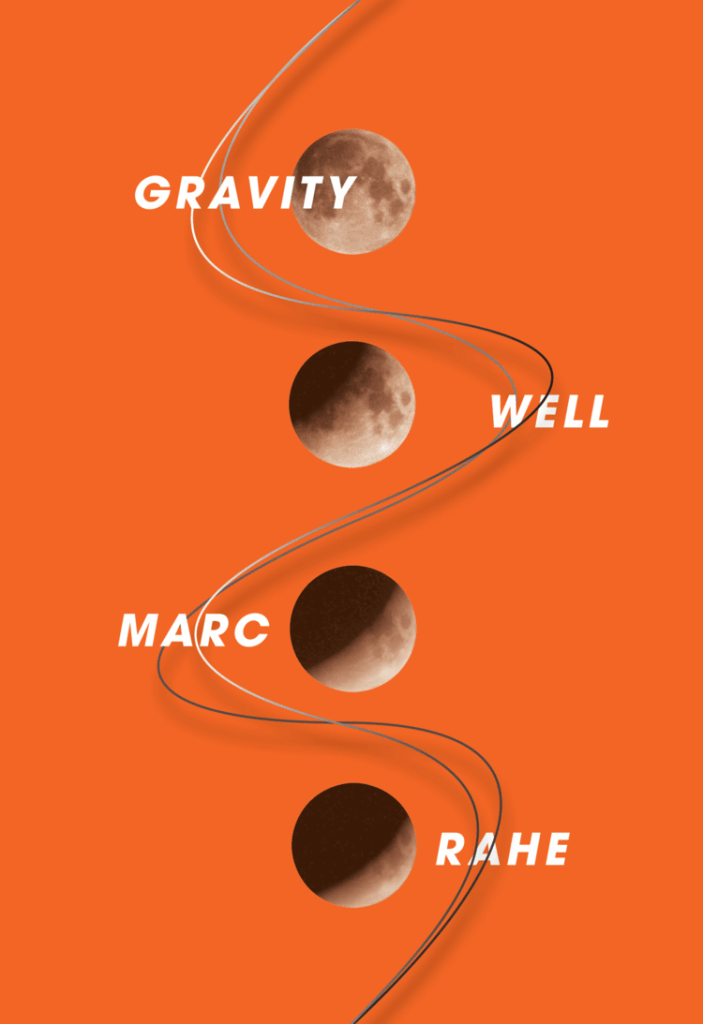
Gravity Well by Marc Rahe

#RandomThingsTours #GravityWell #Poetry #BlogTour

My Thoughts | I haven’t read any new poetry for a long time so I jumped at the chance to read this new collection. For me, poetry is very emotional. It’s about whether a poem connects with my feelings in some way; is the poet describing something I recognise, something I’ve felt or seen? There tend to be certain images that make me stop and think and Marc Rahe’s new collection Gravity Well did all of these things and resurrected my interest in poetry.

Some images made me smile because of how clever they were or because of the beautiful combination of words. In Writer Friend the narrator describes an unsettled afternoon as a ‘forecast-come-true afternoon of cloudy and scattered’. I also loved the Schroedinger reference in Our Shared Life of ‘The bee trapped with you inside/ your helmet in traffic, will or will not’. It made me think of that moment before something happens. In that moment, playing simultaneously in the biker’s mind, are the bee that stings and the bee he successfully releases back into the world unharmed. We get another sense of the in-between reading his poem Stellar, as if moments in time are simply Russian dolls with each possibility stacked within each other – touching but separate:

‘This tree was my favorite the day it rained during my walk. Uncanny when it’s raining and it’s sunny at the same time. As if being in someone’s presence and feeling the presence of their ghost’.

Another line I loved was ‘the air was as wet as dog’s breath’ because it made me feel the humidity of a wet day in August, that moisture hangs like warm misted breath in the air.

There were also themes running through the work that interest me greatly, because of my own writing work which is focused on how the body, particularly a faulty or malfunctioning body, interacts with the world. Rahe has a way of describing age and the changes of the body that are surprising and moving. In his poem Appetite I loved the following section:

‘I’ve been reopened along the same incision

and though metal plates and wires, metal screws,

can only be said to ache, I say

it is the metal in this leg that tells me

the sky is so full of mountains and trenches

as the ocean, metal that warns me

of my own weight held past a certain angle from the center.’

I love how he describes the constant ache of the structure that holds the speaker’s leg together, but it isn’t a negative statement, it’s just something that’s there. Also it’s a way of gauging the world, like I know if my joints ache it’s going to be wet or if my muscles seize it’s going to be cold. The unnatural pins and wires he needs for his limb to work naturally, actually link him to the natural world too – to the heights and lows of the lands, and even how the force of gravity can be sensed as he finds the balance of walking with these metal supports.

In Fable of the Cephalopod he uses humour to describe a sense of coughing up a foreign body, something that feels like ‘an octopus that was trying to wear a sweater’ giving the reader a sense of how stuck it feels, trying to force eight woollen legs from the ‘wrong bronchial tree’. Later he describes the moment of having a blood test, very routine for me and others who are ill, but tense all the same. He perfectly describes that moment when you almost hate yourself for trying to make the medics life easier. When you feel guilty for being difficult, as if you could control the way your veins and body work:

‘at a blood draw my vein resisted the needle. The needle

slipped aside inside my arm, despite repeated attempts. I made,

for the phlebotomist, a joke I hoped would defuse her growing anxiety.’

I felt a connection with parts of the work, and as always with poetry, I know that re-reading will bring further meaning and interpretation, depending on my mood. Poetry’s meaning lies with the readers once it has left the author’s pen. It may well have had an original meaning, but really the beauty of poetry comes out when the reader brings their ‘stuff’ to the poem. I’m sure there are other bloggers who have had totally different experiences with the images and themes but that’s the beauty of it, it can touch a multitude of people very differently. I thought this was an imaginative and thoughtful collection from a poet I’d never read before. It sparked my interest in poetry again and I am looking forward to reading more for the blog and for my own enjoyment.

Other Reviews | Marc Rahe’s luminous poems find grace in acts of intentional remembrance, in turning back to sing ‘what can be seen / looking behind.’ The speaker’s world resembles our own fraught moment–fallen, divided–but never numb. These poems hum with moments of transcendence, between body and weather, air and breath, between today’s pain and the deep wounds of the past. In precise, lucid lyrics, this voice insists that our capacity to feel is what binds us, ecstatically, to our planet and to one another.–Kiki Petrosino

Ever since his first book, THE SMALLER HALF, was published, I’ve kept my eyes open for new work by Marc Rahe, and whenever new work has come, I’ve celebrated, actually celebrated. No poet writing in English today is better at making poems stuffed full of being and of things seen, things heard, things touched, things tasted, and things thought hard about nonetheless quiet. And yet, though they approach silence, these poems resonate, and, like Rahe’s previous work, they will resonate for years.–Shane McCrae

Biography | Marc Rahe is the author of THE SMALLER HALF (Rescue Press, 2010), ON HOURS (Rescue Press, 2015), and GRAVITY WELL (Rescue Press, 2020). His poems have appeared in The Iowa Review, jubilat, MAKE Literary Magazine, PEN Poetry Series, Sixth Finch, and other literary journals. He lives in Iowa City.