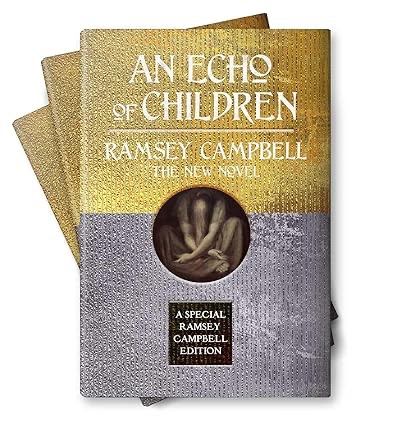
That title is enough to get the hackles raised because everyone knows that the most terrifying type of ghost is a child ghost! The novel’s opening does nothing to dissuade us of our fears. Thom and Jude are an elderly couple visiting their son Alan, his wife Coral and their grandson Dean. Recently moved to the seaside town of Barnwall, it’s an environment that should be perfect for children, but there is something right from the outset that feels ‘off’. While Thom and Jude seem natural and doting grandparents, they are warm and seem to have real affection for one another. However, the house feels stifling and distinctly unnatural. There are no toys scattered around and Alan and Coral’s dialogue is stilted and cold, even towards their son. As his other grandparents arrive, it doesn’t improve. As his grandparents give him a present Dean is reminded to thank them even before he’s had chance to do so. Jude’s quiet replies try to chip away at their reserve, thinking perhaps that they’re worried about how she and her husband will perceive Dean’s behaviour. She makes it clear that they’re fine, not at all concerned or bothered by a bit of mess or a late thank you. It simply does not matter. Yet as the day continues I began to think this is how they are all the time. There are so many rules, all of them contrary to how a child of that age would normally behave. It’s no surprise that he’s conjured up an imaginary friend called Heady, who he talks to from time to time. Although he does point out that it’s sometimes hard for Heady to hear him, because he doesn’t always have a head. It’s the first sign that something very weird is going on in this sterile and unpleasant atmosphere. All too soon the significance of Childer Close will be revealed.
The author clearly has a knack for making the reader uncomfortable and I certainly was. The dialogue didn’t feel real to me and this company of people made me squirm. As someone who immediately sits on the floor with children and starts to play I’m afraid I’d have been very vocal. My first thought was intergenerational child abuse and there are certainly clues that Coral’s parents are disciplinarians when compared to Jude and Thom, but why would Alan go along with it? It really did stretch my belief when time after time Dean is told that his wants and needs don’t matter, in tiny little micro-aggressions from his parents – not being able to play with his present as it will be untidy, talking too much, not leaving his grandparents alone, not finishing his fish and chip dinner. It’s a slow drip drip drip of negativity that drove me crazy. Why wasn’t Thom taking his son aside and asking what the hell was going on? We learn that an unusual number of children have died in Barnwall’s history, so why would a loving parent move there? Alan and Coral believe the house may have a malevolent spirit and perhaps an exorcism needs to be performed. He seems the least likely child to be possessed and by focusing on him in particular, again he gets the message that he’s not like other children and something is wrong with him. What unfolds I will leave you to find out….
Meet the Author
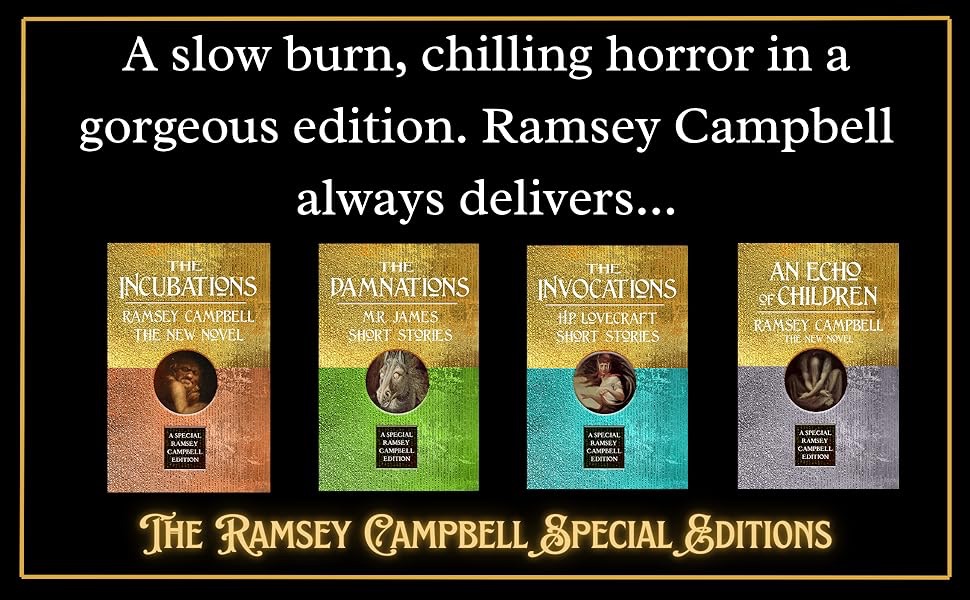
The Ramsey Campbell Special Editions. Campbell is the greatest inheritor of a tradition that reaches back through H.P. Lovecraft and M.R. James to Mary Shelley’s Frankenstein and the early Gothic writers. The dark, masterful work of the painter Henry Fuseli, a friend of Mary Wollstonecraft, is used on these special editions to invoke early literary investigations into the supernatural.
Ramsey Campbell (born 4 January 1946 in Liverpool) is an English horror fiction writer, editor and critic who has been writing for well over fifty years. Two of his novels have been filmed, both for non-English-speaking markets. Since he first came to prominence in the mid-1960s, critics have cited Campbell as one of the leading writers in his field: T. E. D. Klein has written that “Campbell reigns supreme in the field today”, and Robert Hadji has described him as “perhaps the finest living exponent of the British weird fiction tradition”, while S. T. Joshi stated, “future generations will regard him as the leading horror writer of our generation, every bit the equal of Lovecraft or Blackwood.”
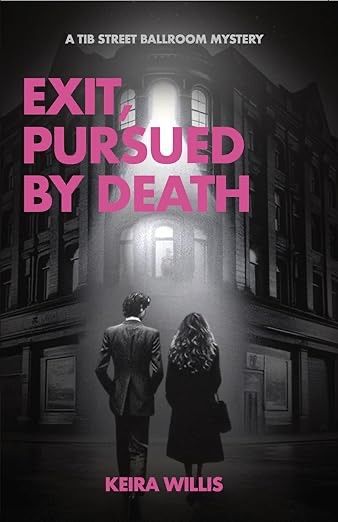
Unusual police departments have been a bit of a theme this month, with this being the third unusual investigation I read in February. This was a very spooky second visit to the unusual police department, housed in Manchester’s Tib Street Ballroom. We follow DI Andy Joyce, his team and their consultant Peggy who has some otherworldly skills and expertise. We’re at the Palace Theatre, where the cast are struggling to rehearse their play thanks to a dark, swirling and angry spirit. For some reason it wants them dead or the play cancelled at the very least. Lady Bancroft’s Rose has been performed only three times since 1922, but there has been a mysterious death each time. Particularly affected is Lavinia, a blonde actress who has taken over the play’s main role, since the original actress is now too traumatised to continue. Lavinia seems to be the focus of most of the spooky activity and she’s quite happy to cast Andy in the role of her rescuer – cue a few eye rolls from Peggy. More disturbing than the theatre is Andy’s home, the same cottage he grew up in with mum Agatha and brother Rob. While he knows Rob is there, he’s never been a difficult or angry ghost. Now strange things have started happening that make him think the ghost is angry, leading his guilt over Rob’s death to go into overdrive. With Andy and Peggy at odds with each other, will he ever found out what’s going on?
Similar confusion was happening at the theatre as more of the spirit’s angry tricks come to light, including an attack on Lavinia and another on her dressing room where words are written in black all over the mirror and the ceiling. Nothing adds up. No one has had time to create this effect and the only person who’s been inside is Lavinia. Peggy makes contact with a rather dapper ghost called Alistair, who tells her that thanks to the theatre’s busy past there’s more than one ghost haunting various parts of the building. He identifies Jock as the swirling shadow ghost who’s causing problems, but what the team need to work out is why this theatre and this specific play? Despite being in shadow form Jock seems capable of manipulating objects and attacking those he isn’t happy with. Or is there a human element to to this mystery? This could explain Higson’s insistence that the team stay at the theatre even though no crime has been committed. Either way it is a bonus for Andy, who can’t bear to go home and sets up a camp in the empty ballroom. For Peggy, family is also a problem. Charlie is his usual self, popping in and out when he feels like it and drinking with Higson. When it becomes clear that the play is being staged for charity her worst fears are realised. It’s the charity run by her mother and her partner Edgar, previously Peggy’s fiancé. How will she cope in the same room as them?
I thought the author managed to combine all the elements of her story well, although it wasnt the theatre case that caught my attention most. It was the terrifying scenes at Andy’s house and the ‘will they, won’t they” of him and Peggy. I love the humour laced through the action, especially the North West tone. I love that female characters are in the thick of the action and Marnie is honestly the ghost that keeps on giving. We’re no further forwards in knowing how she flits from place to place and person to person, but her entertainment value is unrivalled. From a psychological perspective we can see certain characters setting their boundaries in life, especially where parents are concerned whether they are alive or dead. It was interesting to learn more about Andy and his childhood which sounds bewildering. Once his father is gone and mum disappears into her church, the boys are almost abandoned – especially if they don’t fall in line with her new rigid religion. I know the third book is on it’s way and I’m looking forward to it already. I’d love to know more about how Higson set up the unit and what happened to Andy’s predecessor who still haunts the ballroom and chips in at briefings. I’m also looking forward to more of Peggy and Andy’s story too.
Meet the Author
Keira Willis was born in Manchester in 1986. and grew up irresistibly drawn to mystery novels and ghost stories.
Her captivating 1980s-set ‘Tib Street Ballroom’ is a thrilling crime and mystery novel with a ghostly twist, following DI Andrew Joyce’s transfer to an obscure police department in Manchester. Joyce must put aside his inherent scepticism and confront the impossible if he has any chance of solving Marnie Driscoll’s murder, working alongside reluctant ‘consultant’ Peggy Swan, who just so happens to be able to speak to the dead.
Book two of the Tib Street Ballroom series – ‘Exit, Pursued by Death’ – was published to acclaim in October 2024, and follows the Tib Street team as they investigate the dark history of a play, while trying to prevent another death from occurring on opening night.
With a belief that adults deserve their own share of action-packed, thrilling, and humour-infused adventures, Keira tells stories that blend intrigue with spirited storytelling and memorable characters, inviting adults to rediscover the exhilarating action-packed adventures that they immersed themselves in as children.
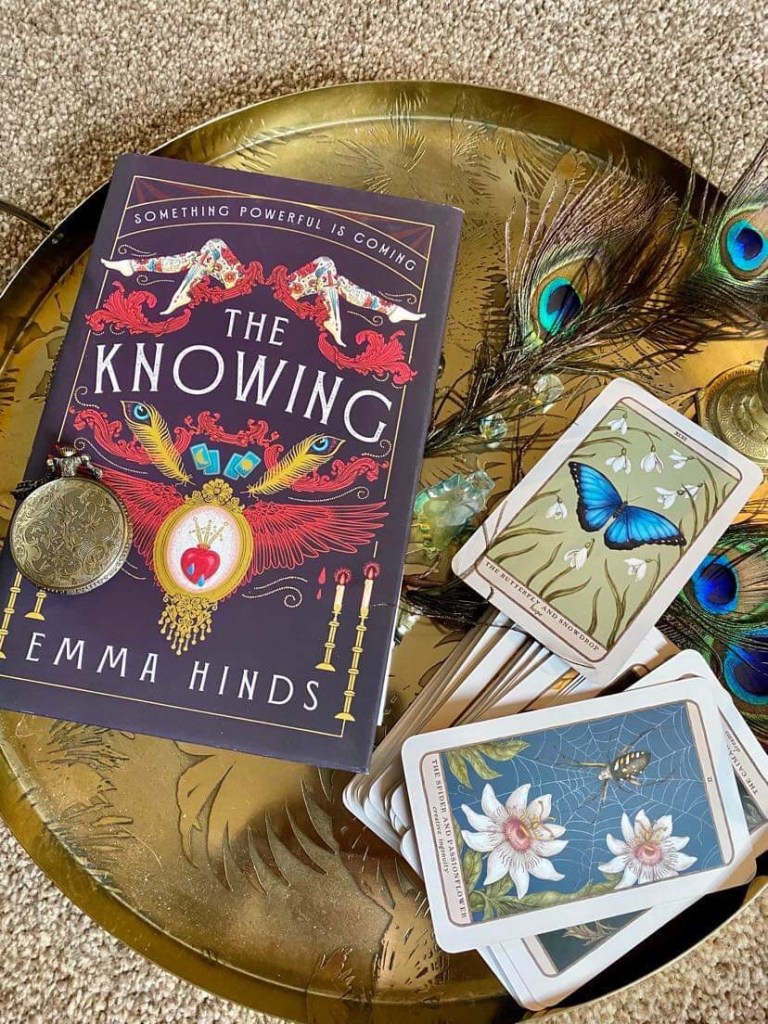
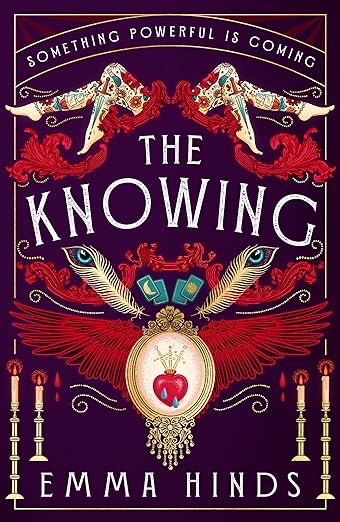
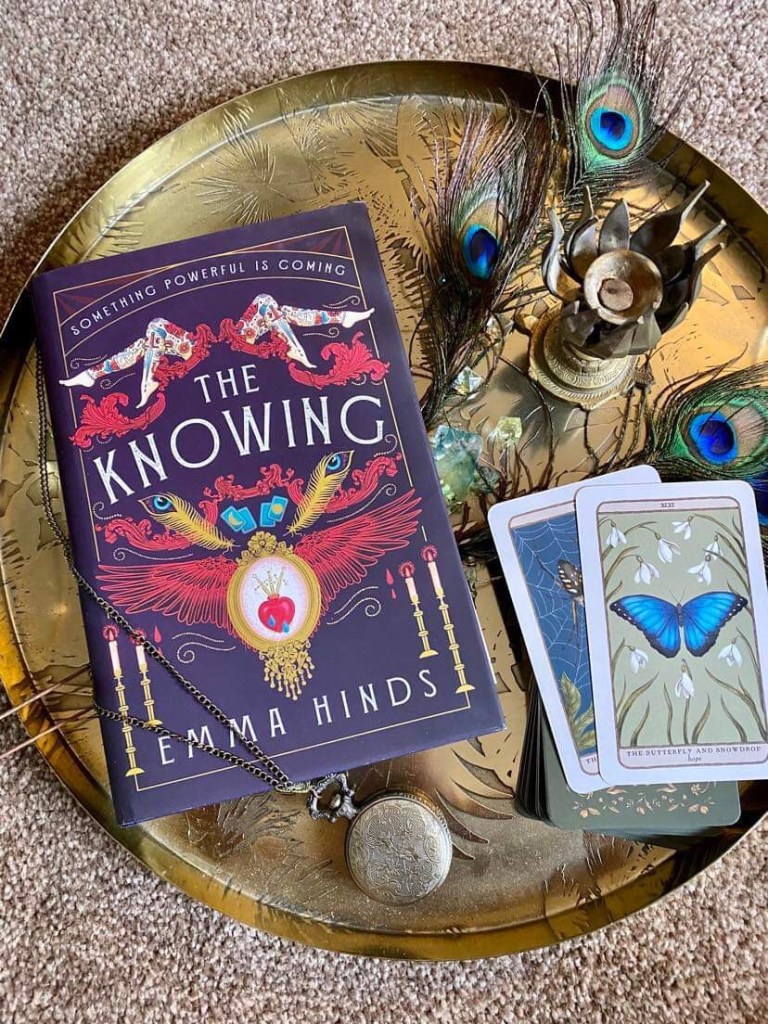
If this author had a certain readership in mind when writing this debut novel, she might as well have had a picture of me. I would have picked this book up on the strength of the cover alone. Three of my all time favourite books are: The Crimson Petal and the White set in the seedier areas of 19th Century London with a heroine is a prostitute called Sugar; The Night Circus that appears without warning, held together by real magic and the result of an epic battle between two magicians; The Museum of Extraordinary Things where our heroine is a mermaid, exhibited in a freak show at Coney Island. See what I mean? It’s perfect for me. The blurb promised me a tattooed mystic, a show run by a prostitute with dwarfism and real life New York gangs and Barnum as their contemporaries. It’s quite a heady mix and I was enthralled from page one. Flora is a tattoo artist and mystic, in an abusive relationship with a tattooist called Jordan, a member of an Irish gang the Dead Rabbits. She longs for escape from the slums of Five Points and the degrading relationship she’s been in since she was a teenager. Then she meets Minnie, a beautifully dressed woman whose dwarfism has led her to a career as a circus and freak show performer. Minnie promises Flora a career and life in an opulent town house uptown, not to mention her freedom. However, the freedom she’s promised comes with certain conditions.
Flora stays with Minnie, in her palatial bedroom and bathroom within the townhouse that belongs to her lover, Chester Moreton. Avoiding Chester’s advances seems to be one condition of Flora’s freedom, along with constant worry about being found by Jordan’s friends in the Dead Rabbits gang. She’s to earn her keep as a mystic, with her tattoos and tarot cards the centre of attention. Minnie knows that Flora’s skills run deeper, although she’s always been warned to hide them and ‘tell nuthin’. Flora’s gift is ‘the knowing’ an ability to summon the dead that’s always on the periphery of her performances, but kept at bay by Flora’s willpower. It’s when she’s pushed into allowing her spirit guide to break through that the trouble begins. At the Hotel du Woods she exposes the abuser and killer of a young boy, setting in motion a chain of events including suicide, murder and madness. Flora and Minnie escape and voyage to Manchester, where they try to survive on what they can earn from sex work and Flora’s tarot readings, but the past is never far behind and once again Flora finds herself at the centre of a love triangle where obsession and betrayal are medicated with drugs and alcohol and a tragic end seems inevitable.
I felt fully immersed in the novel immediately as the author creates an incredible sense of place. Five Points is grimy, deprived and controlled by gangs. I loved how the author used the grotesque throughout the novel and particularly where she’s describing the slums of New York and Manchester, filled with rats, unwashed bodies and an ever present grime that’s sticky on the skin. This took me straight back to university and Kristeva’s theory of abjection. The things that women’s bodies can do are magical or monstrous. Flora’s body is a conduit, allowing the dead to speak through her. Minnie’s body is seen as grotesque by others, but she wears angel’s wings and when she’s in bed with Flora it’s the softness of her skin that’s noticed first. All women have a transformative power to produce another life, when their pregnancy isn’t terminated by the men in their lives. The author doesn’t hold back when describing the reality of life for women, particularly women like Flora who haven’t had choices. Bodies seem divorced from minds when it comes to sex with men, as torsos become slabs of meat, breaths are whisky sour and skin is raw, red and broken. Sex is rarely consensual and always comes with violence. It’s a grim world so any chance to escape into a better future is welcome. The gentle and pleasurable attentions of Minnie are a promise of things to come, where Flora could have choices and sexual experiences that come from a loving place instead of a place of ownership.
No one here is perfect. Each character is morally grey and I loved that complexity in their personalities and the ambiguity it brought to their actions. I was also transfixed by the sheer power of Flora’s ‘knowing’. Mediumship has become something of a joke these days, a formulaic stage show where people are picked out of the audience and told that Grandad left the priceless clock in the attic or under the floorboards. It’s always benign and a little bit boring. Flora’s spirits are not there to guide her and they’re definitely not benign. They want to expose truths, tell the subject’s darkest secret and even mete out punishment where necessary. The first seance at Hotel du Woods is successful from one viewpoint – the spirits do come through – but a disaster from the other side when a vengeful spirit talks a man into killing himself. No one will be booking them again! Flora will have to learn how to control the spirit’s power and keep the vengeful ones at bay. Strangely, for a story where our main character is prevented from carrying children, this felt like a story about mothers too. It’s about the lack of a mother when growing up and how the lack of motherly love and protection feels, but it also shows the people who fill that void and become mother figures. This could be a difficult read for some, especially the sexual violence, but it would have been the daily reality for women living in 19th Century slums and for some women in upper Manhattan townhouses. I desperately wanted Flora to survive and have the right people around her, to give her the feeling of being loved and wanted. This is an addictive read of vengeance, betrayal and obsessive love and I couldn’t stop reading until I knew the truth of Flora’s fate.
Meet the Author
Emma Hinds is a queer novelist and playwright from Manchester. She focuses on untold historical Queer narratives and her debut novel, The Knowing, from Bedford Square Publishers is coming in January 2024.
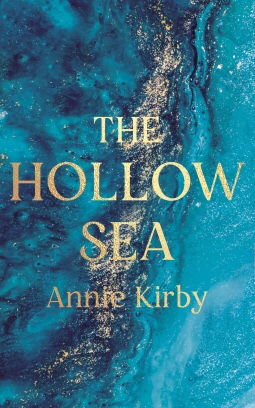
I have to say this sounds like an incredible debut. It’s more of a monstrous fantasy than a spooky, Halloween type book.The story goes that, many years ago, the remote North Atlantic archipelago of St Hia was home to a monster. Her name was Thordis, and she had been adored. But when she was unable to provide her husband with a child, he sought one elsewhere – and Thordis was driven to a terrible act, before disappearing from her home. Today, lashed by storms and far from the mainland, the islands are dangerous. Many have been lost to a wild stretch of water known as the Hollow Sea.
But to one visitor, it feels like a haven. After several years trying to become a mother, Scottie has made the heart-breaking decision to leave her home and her husband in search of a fresh start. Upon her arrival on St Hia, the islanders warn her against asking questions about Thordis – but Scottie can’t resist the mystery of what happened to the woman whose story became legend.
After years of secrecy, can Scottie unravel Thordis’s story? And how will doing so change her own . . . ? I love this mix of motherhood, infertility and the monstrous. In fact monstrous births hark back to one of the most famous gothic novels; Mary Shelley’s Frankenstein. It sounds like such an ambitious debut and I can’t wait to tell you all about it.
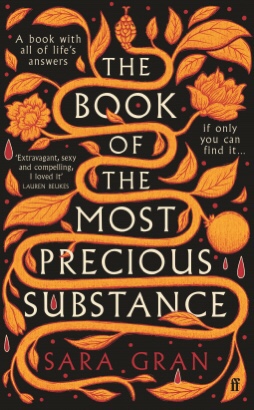
Billed as a horror/ thriller this is one of my favourite themes in fiction – books about books. Rare book dealer Lily Albrecht has just been given a tip-off about The Book of the Most Precious Substance, a 17th century manual rumoured to be the most powerful occult book ever written, if it really exists at all. With some of the wealthiest people in the world willing to pay Lily a fortune to track it down, she embarks on a journey from New York to New Orleans to Munich to Paris. If she finds it, Lily stands to gain more than just money. This could erase the greatest tragedy of her life. But will Lily’s quest help her find some answers, or will she lose everything in search of a ghost?
A book with all of life’s answers, if only you can find it...
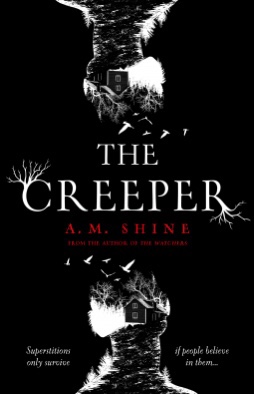
I absolutely loved A.M. Shine’s last novel The Watchers and it had such a killer ending! I chose it as one of my books of the year so my hopes are high for The Creeper.
Superstitions only survive if people believe in them. Renowned academic Dr Sparling seeks help with his project on a remote Irish village. Historical researchers Ben and Chloe are thrilled to be chosen – until they arrive. The village is isolated and forgotten. There is no record of its history, its stories. There is no friendliness from the locals, only wary looks and whispers. The villagers lock down their homes at sundown. It seems a nameless fear stalks the streets, but nobody will talk – nobody except one little girl. Her words strike dread into the hearts of the newcomers. Three times you see him. Each night he comes closer. That night, Ben and Chloe see a sinister figure watching them. He is the Creeper. He is the nameless fear in the night. Stories keep him alive. And nothing will keep him away…
Last Minute Mentions
I’ve just been granted access to these spooky titles so thought I’d give you a quick preview.
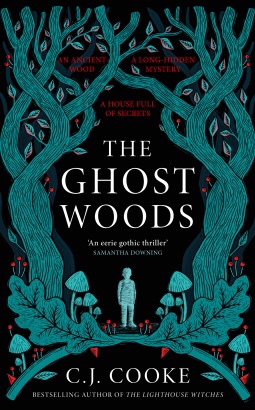
I loved C.J.Cooke’s The Lighthouse Witches, an interesting mix of isolated Scottish location, a history of witches, ghostly apparitions, disappearances and time travel. The Ghost Woods sounds downright spooky.
In the midst of the woods stands a house called Lichen Hall. Even the name starts to conjure up an atmosphere of decay. This place is shrouded in folklore – old stories of ghosts, of witches, of a child who is not quite a child. Now the woods are creeping closer, and something has been unleashed. Pearl Gorham arrives in 1965, one of a string of young women sent to Lichen Hall to give birth. And she soon suspects the proprietors are hiding something. Then she meets the mysterious mother and young boy who live in the grounds – and together they begin to unpick the secrets of this place. As the truth comes to the surface and the darkness moves in, Pearl must rethink everything she knew – and risk what she holds most dear. This sounds like a great mix of the supernatural and women’s history.
ELSPETH NEEDS A MONSTER. THE MONSTER MIGHT BE HER.
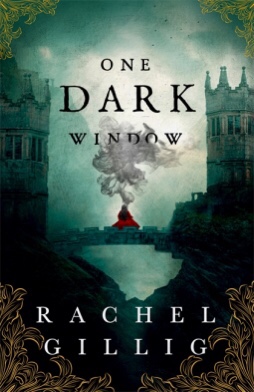
One Dark Window is billed as a gothic fantasy romance. An ancient, mercurial spirit is trapped inside Elspeth Spindle’s head – she calls him the Nightmare. He protects her. He keeps her secrets. But nothing comes for free, especially magic. When Elspeth meets a mysterious highwayman on the forest road, she is thrust into a world of shadow and deception. Together, they embark on a dangerous quest to cure the town of Blunder from the dark magic infecting it. As the stakes heighten and their undeniable attraction intensifies, Elspeth is forced to face her darkest secret yet: the Nightmare is slowly, darkly, taking over her mind. And she might not be able to stop him.
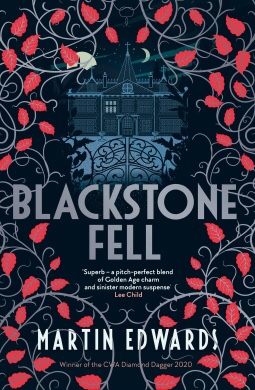
I’m so excited to be on the blog tour for this gothic mystery novel, with such a lush cover I want to frame it.
1930. Nell Fagan is a journalist on the trail of a intriguing and bizarre mystery: in 1606, a man vanished from a locked gatehouse in a remote Yorkshire village, and 300 years later, it happened again. Nell confides in the best sleuth she knows, judge’s daughter Rachel Savernake. Thank goodness she did, because barely a week later Nell disappears, and Rachel is left to put together the pieces of the puzzle. Looking for answers, Rachel travels to lonely Blackstone Fell in Yorkshire, with its eerie moor and sinister tower. With help from her friend Jacob Flint – who’s determined to expose a fraudulent clairvoyant – Rachel will risk her life to bring an end to the disappearances and bring the truth to light. A dazzling mystery peopled by clerics and medics; journalists and judges, Blackstone Fell explores the shadowy borderlands between spiritual and scientific; between sanity and madness; and between virtue and deadly sin. Full of my favourite themes and brimming with all things gothic, this is surely an autumn must—read.
How good do all these picks sound? Look out next Sunday for my look at Historical Fiction and Romance.
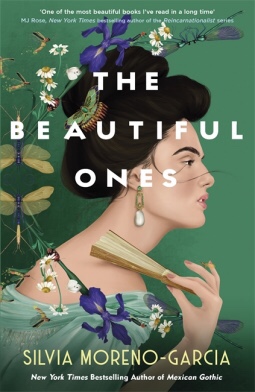
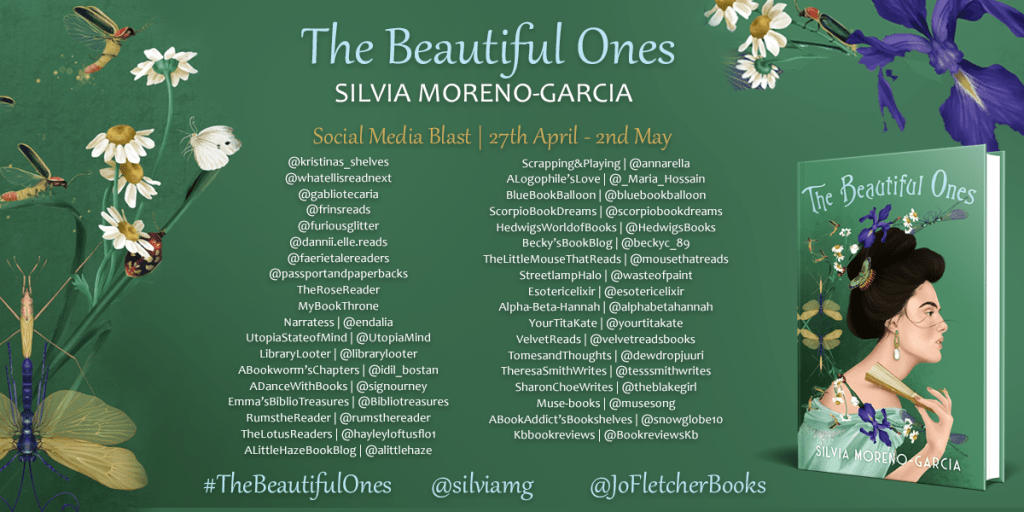
Last year I read Silvia Moreno-Garcia’s incredible novel Mexican Gothic and I absolutely loved it. So when I was offered the chance to read one of her earlier novels, being reissued in a beautiful hard back copy this week, I was really excited to tell you all about it as part of the blog blast.
They are the Beautiful Ones, Loisail’s most notable socialites, and this spring is Nina’s chance to join their ranks, courtesy of her well-connected cousin and his calculating wife. But the Grand Season has just begun and already Nina’s debut has gone disastrously awry. She has always struggled to control her telekinesis: the haphazard manifestations of her powers have long made her the subject of gossip – malicious neighbours even call her the Witch of Oldhouse.
But Nina’s life is about to change, for there is a new arrival in town: Hector Auvray, the renowned entertainer, who has used his own telekinetic talent to perform for admiring audiences around the world. Nina is dazzled by Hector, for he sees her not as a witch, but ripe with magical potential. Under his tutelage, Nina’s talent blossoms – as does her love for the great man.
But great romances are for fairy-tales, and Hector is hiding a secret bitter truth from Nina – and himself – that threatens their courtship.
This book is different from either Mexican Gothic or Gods of Jade and Shadow. This is a romance, brim full of melodrama and heartache. Yet there are also those wonderful threads that seem to exist through her work: feminism, awakening sexual desire, an eye for women’s self-expression through clothing, and a sprinkle of the paranormal. I didn’t know where the book was set at first, because the city name Loisail and personal names have a French feel to them, but certain word usage such as fall for autumn made me think of North America. The manners and etiquette seem almost British regency in date (this could give Bridgeton a real run for its money on the small screen), but the far off place Iblevard sounds like South America. This is our world, just not as we know it.
I absolutely adored Nina from the start, because I’ve felt like the slightly awkward girl who doesn’t fit. Next to her cousin’s wife Valerie she seems a bit of an ugly duckling, but she’s chaperoning Nina through the Loisail season in hope of finding her a suitable husband. Valerie is the stereotypical blonde, blue-eyed, perfectly coiffed, graceful beauty and her marriage to Gaetens was a great match, because he was a steady, slightly older man with financially stability. His finances have kept her family afloat. Whereas Nina has none of the superficial qualities of Valerie. Her hair is raven black and there’s more of a handsomeness to her than prettiness. Worse still, she is awkward, often saying the wrong thing, but she’s physically clumsy too and there’s more to Nina’s clumsiness than meets the eye.
From a young age Nina has been able to move objects with the power of her mind. Sometimes it’s involuntary, such as when her emotions are roused in anger or sadness. Nina doesn’t know much about telekinesis, it has simply always been with her and back at the family home in the country she is known as the Witch of Oldhouse. Here in Loisail though, nobody knows about her strange ability and if she is dressed well, schooled in how to behave and tries her hardest to be ‘normal’ maybe she could make a good marriage. Nina is inexperienced and naive, but trusts Valerie implicitly. Her cousin Gaetens has always had her best interests at heart so she happily puts her future in Valerie’s hands, but there’s a bitterness and envy in Valerie that runs very deep. She knows that her husband dotes on his cousin and he wouldn’t force her to marry anyone she didn’t consent to, but she thinks that Nina is spoiled. Valerie had to make a decision, to marry a man she didn’t love to get better conditions for her family. She had to grow up, put thoughts of love and romance aside, and take the best decision rationally as if marriage is a business. If she had to do this, why shouldn’t Nina be expected to grow up and accept someone chosen for her?
Then Hector Auvray comes into the picture, gentlemanly, handsome and, because he’s a performer, just a whiff of scandal about him. He’s definitely not the sensible choice, but controlling her emotions has never been one of Nina’s strengths. I loved that the pair shared this talent, Hector as the mentor and Nina as the ingenue, just starting out. When he calls on Nina at home, they can easily spend hours talking about telekinesis and practicing control. Nina visits his show which is quite glitzy, and he has an incredible finale of dancing mirrors. For me, there wasn’t quite enough magic. It’s as if magic realism was something she was toying with, then in later novels she really had the confidence to go for those paranormal elements. I knew this was a reissue, but those who don’t could be disappointed there isn’t more made of Nina’s skills. It’s almost as if she learned to control it rather than celebrate it. I’d have loved the author to write sections where they perform together, because I know how incredible they would have been.
There was something very Jane Austen about this society, it’s manners and it’s dilemmas for women. I thought of the disappointment a lot of readers feel when Lizzie Bennett’s friend Charlotte Lucas accepts the proposal of the ludicrous vicar Mr Collins in Pride and Prejudice. Lizzie has rejected him and by doing so, placed her family in financial uncertainty, but Charlotte is more pragmatic. She knows he’s ridiculous, but she also knows he has a living, the patronage of a fine Lady, and a large enough house to lose him in. This is the decision that Valerie has made, but is very angry about. Her anger is at her family, but is also directed inward. She doesn’t like to face the truth; that she was the one who made this choice.
“She wanted to cry and could not. She wanted to weep for that proud girl who had broken her own heart and tossed it to the dogs, and she wanted to weep for the woman who had been left behind with a gaping hole in her soul. But if she could do it again, she knew she’d still retrace her steps. She was not Antonina Beaulieu, who offered herself like a sacrificial lamb, who gave everything of herself to the world for the world to devour. She was Valérie Véries. She hated herself sometimes for it, but she was Valérie Véries, a Beautiful One, not some weakling nor a halfwit”.
I also got hints of The Great Gatsby, every time I saw a character allude to an elite group of ‘Beautiful Ones’ the Lana Del Ray song ‘Young and Beautiful’ kept floating through my head. I felt it in this passage when Hector talks of the love he had when he was younger, the girl he asked to wait for him. He thinks he’s still in love with this woman, but he’s really still in love with his idea of this girl and what they could have had.
“He was chained to her, to this brilliant ideal of a perfect love. Because he had always known that if he could have (her) in his arms again, all would be well. It would be as though the decade that separated them had never happened and they would return to the happy days of their youth when everything was possible. It was as if he could unwind the clock with her aid. And once this happened, there would be nothing but joy.”
The first part of the novel is quite slow and as Hector and Nina meet and form their friendship, but I enjoyed getting to know them. I felt as if I was watching them fall in love very slowly, but it’s as if only the reader knows it. Then comes a terrible betrayal, and Nina loses that innocence of youth, but grows so much as a person. She starts to have pride in who she is, because she has space to be herself. When she returns to Loisail the following season she is a different woman, confident enough to make her own choices. There’s a new found confidence and experience in her character as she steps out into city. She’s refusing to be the ugly duckling of this story and has blossomed, but from the inside. There’s a feminist soul in Nina and I loved seeing that awakening. She’s also more comfortable with her ‘talent’ even if it isn’t on display very much. Before long a very suitable young man starts to court her; it would be a great match, but not love. As Hector Auvray drifts back to the city again, and wishes to resume their friendship, what effect on Nina will he have? I enjoyed this novel because it’s unashamedly romantic, and magical. It’s a coming of age story, showing this young woman’s awakening conscience as well as her desire. Nina Beaulieu learns to live life on her own terms and makes her own choices, especially where her heart is concerned.
Meet the Author
Silvia Moreno-Garcia is the New York Times bestselling author of the novels Mexican Gothic, Gods of Jade and Shadow, Untamed Shore, and many other books. She has also edited several anthologies, including the World Fantasy Award-winning She Walks in Shadows (a.k.a. Cthulhu’s Daughters).
Synopsis | Tanz is living in London and still grieving her friend Frank, who died in a car crash three years ago. As acting jobs dry up, she has to find a normal job to fund her cocktail habit. When she starts work in a new age shop, Tanz discovers that the voices she’s hearing in her head are possibly real psychic messages, not the first signs of schizophrenia. Alarmed, she confronts her little mam and discovers she is from a long line of psychic mediums. Despite a whole exciting new avenue of life opening up to Tanz, darkness isn’t far away and all too soon there’s murder in the air. In book two, after her fast paced introduction to the world of clairvoyance, Tanz is hiding in bed, having nightmares about a suicidal psychopath, drinking red wine, irritating her cat and waiting to be evicted. Life as she knew it seven months ago has turned on its head and only the prospect of a new TV job in Newcastle and a month with her best friend Milo can help pick her up off the floor. But when she gets home, the Newcastle of more than a century before decides to haunt her bringing all kinds of spooks and horrors with it
Review | Tanz is a cocktail drinking, straight talking, Geordie actress, with a talent for swearing. She is an absolute breath of fresh air. Within pages she felt like my long lost friend and I was mentally inviting her to my fantasy dinner party (alongside Mr. Tumnus, Ruth Galloway, Sugar from The Crimson Petal and the White, Jo March, and Vianne Rocher).
I read both of these short novels in a weekend and have been left longing for more. The story begins as Tanz is working at a new age shop, between acting jobs. She has made friends with one of the ‘readers’ in the shop, but is starting to have an inkling that her own family might have their own gift. Her Mam seems to have prophetic dreams, but doesn’t make a big thing of it even though her grandmother was a Romany. Tanz had started hearing voices, but wondered if it was a symptom of grief following the sudden death of her friend Frank three years before. She even starts to worry if she could he schizophrenic. Luckily she has a great mentor at hand – Sheila is another reader at the shop, an older woman with years of experience in this strange world of mediumship. She describes Tanz as a ‘natural’ and her strong reaction to an odd couple who visit the shop seems to set them on an investigative path. Sheila is vital to Tanz and their friendship grows as the mystery becomes disturbing and dangerous. What are this strange couple hiding and why is Tanz hearing a woman wailing every time they’re near? Despite being terrified Tanz and Sheila let their spirit guides lead them towards the answers and into danger.
Gin Palace situates Tanz back in her hometown of Gateshead, where she has a role in a TV series after months without work. She would have loved the main role, but is playing the tart with greasy hair, dark circles under the eyes and the shortest skirt. She’s the only one with a genuine Geordie accent. After her introduction to clairvoyance, she was hoping for a quieter time, but it seems the spirits aren’t ready to leave her alone. Tanz finds herself haunted by visions of an 18th Century Gateshead and the tenements down by the docks. On a ghost walk she finds out about the brutal murder of a prostitute, the terrible warehouse fire that razed the tenements to the ground, and the role gin played in the lives of these unfortunate residents. This gives her some background but doesn’t explain the violent man who keeps beating her to death in terrifying dreams. Nor does it explain her visions of a little boy who looks like the Artful Dodger, with the face of a pitiful waif one moment, and eyes that burn like the coals of hell the next. Is she being warned off? Or is there another mystery the spirit world like her to unearth?
I loved both of these books for their characters and the company of Tanz. I loved her Mam and Dad, who are traditional Northerners through and through. They were very like my parents – always half way down a cup of tea, have tea at 5pm and seemingly happy to potter at home together. Tanz’s dad has his shed to tinker in, but her ‘little Mam is always there with some very down to earth and wise advice. I love how Whitwell presents mediumship and it’s effects on the practitioner. Sheila teaches Tanz how to protect herself against certain types of spirits, but there are still times when she is terrified by what transpires in her own mind and in front of her. Her nightmares affect her sleep, she feels unnerved and often wonders if her gift is worth it. It’s great if it helps someone, but otherwise it’s very inconvenient and not making her any money. It made me think of taking a counselling session, it can be exhausting and the counsellor needs a self-care regime in place to replenish their reserves. I enjoyed Tanz’s loyalty, not just to her close friends, but to those people she picks up along the way and even those from the spirit world who need release. Her bravery in confronting the scarier paranormal events, while being absolutely terrified, is endearing. By the second book she is starting to trust her powers a little, to understand the strength of her gift and her guides. These books are fresh, modern and comfortingly Northern. The mix of gothic and supernatural subjects, with this down to earth, 21st Century heroine is different and such great fun. Tanz is a woman you’d like to go for a few cocktails with and the mingling of her familiar worldly worries and her other worldly gift is irresistible.
Biography|Tracy Whitwell was born, brought up and educated in Gateshead in the north east of England. She wrote plays and short stories from an early age, then had her head turned and ran off to London to be an actress. By 1993 she was wearing a wig and an old fashioned dress and pretending to be impoverished on telly in a Catherine Cookson mini-series, whilst going to see every indie/rock band she could afford.
After an interesting number of years messing about in front of the camera and traveling the world though, Tracy discovered she still loved writing and completed her first full length play. A son, many stage-plays, screenplays and two music videos followed until one day she realised she was finally ready to do the thing she’d longed to do since she was six. She wrote her first novel. A crime/horror/comedy tale about an alcohol-soaked, gobby, thrill-seeking actress who talks to ghosts. (Who knows where the inspiration came from, it’s almost like she based it on her own ridiculous life.) Then she wrote a follow up and realised she couldn’t stop writing books.
Now Tracy lives in north London with her son, still travels whenever possible and has written novel number four. Now being edited.







 The Lotus Readers