Posted in Netgalley, Uncategorized

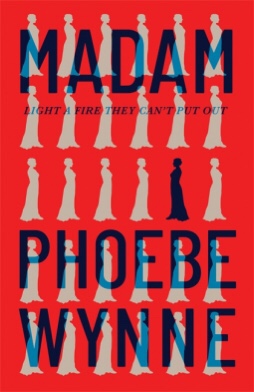
Madam by Phoebe Wynne

Publisher: Quercus (18 Feb. 2021) ISBN: 978-1529408720

Why is it always so hard to write a review when the book is so good? It’s as if I have to wrestle with it for ages, in the hope of doing it justice! All I can do is try and put across all of the reasons I liked it. In fact, I loved everything about this feminist gothic novel from start to finish. First the setting – the eerie, almost otherworldly atmosphere around Caldonbrae School, the strange weather conditions suggesting it’s own micro-climate, and the school’s position as an English outpost (or invader) in Scotland. It’s appearance is like a hulking beast on the coastline, something that shouldn’t be disturbed lest it swallow you up. Secondly, there’s our main character Rose, addressed at all times as ‘Madam’ and finally the dark secret her predecessor tried to uncover at the heart of Caldonbrae, before it was Rose’s turn to fight it’s terrible tradition.

For 150 years, Caldonbrae Hall has sat as a beacon of excellence in the ancestral castle of Lord William Hope. A boarding school for girls, it promises a future where its pupils will emerge ‘resilient and ready to serve society’. Rose Christie, a 26-year-old Classics teacher, is the first new hire for the school in over a decade. At first, Rose feels overwhelmed in the face of this elite establishment, but soon after her arrival she begins to understand that she may have more to fear than her own imposter syndrome. When Rose stumbles across the secret circumstances surrounding the abrupt departure of her predecessor – a woman whose ghost lingers over everything and who no one will discuss – she realises that there is much more to this institution than she has been led to believe. As she uncovers the darkness that beats at the heart of Caldonbrae, Rose becomes embroiled in a battle that will threaten her sanity as well as her safety.

This novel was incredible from start to finish. I loved it. Straight away I noticed echoes of two of my favourite books; Jane Eyre by Charlotte Bronte and Rebecca by Daphne Du Maurier. The younger girls school uniforms reminded me of the aprons of Lowood School. The constant references to the previous classics teacher, and the mystery surrounding what happened to her had definite echoes of Rochester’s wife – hidden from view in the attic for being other than the perfect, meek and gentle wife he wanted. What exactly does this school expect of the teachers and how did Madam fall from grace so spectacularly? The training at the school starts to feel more sinister as time goes on. It begins to feel as if they’re trying to shape young women in a very old fashioned image; teaching them how to stay it in their place and be the 19th Century ideal of the ‘Angel in the House’. Although there’s something a lot more knowing about these girls, they put on this ideal as if its a disguise, designed to please but very aware it’s a conceit sure to reap the rewards of wealth and privilege. The previous ‘Madam’, whose name is Jane, is like the ghostly presence of Rebecca, still holding sway over the girls – especially Bethany who seems to have developed an obsession with her teacher. Jane seems to be everywhere Rose turns, but tantalisingly just out of reach. The author creates an edgy and eerie atmosphere where you feel she might be just ahead of Rose, her gown swishing round the corner.

Rose tries to understand the place she’s come to teach. There is a sense in which this school is a complete culture shock – like a child affected by poverty or a tough inner city environment being expected to thrive at Oxford or Cambridge where there’s an etiquette and language that’s alien to most outsiders. She has to muddle through this aspect of life at Caldonbrae and it makes sense to her if the purpose is to educate and prepare the girls for further education and professions like the law and politics. Yet, alongside this traditional, classical education there are hints of the old ‘finishing school’ where attributes like poise, social etiquette and deportment are deemed equally important. What exactly is she preparing these girls for?

As the secret starts to come to the surface so the tension of the novel rises. Is Rose being trained too? An outsider brought in to see if new teachers can be moulded to the school’s purpose. As Bethany’s attachment to Madam becomes clearer she seems to stalk Rose. and the reader isn’t sure whether she resents Rose being in the place of her former favourite or whether she has simply transferred her affections. When she makes allegations about Rose she threatens her whole future at the school, but is Bethany trying to harm her or warn her? A strange hierarchy operates amongst the girls who know themselves to be the elite performers and those who don’t make the grade are offered inducements to improve, but these inducements can be threats as well as rewards. The horror of a young woman having her head shaved for performing badly is enshrined in patriarchal systems and is designed both to shame the woman and act as a warning to others. Rose guesses what might be happening, before the secret is fully revealed but it’s such an alien and deviant concept in modern society that she can’t believe it could be true. Could she ever be complicit in such a scheme? I found myself wondering how far the girls are ‘groomed’ into accepting this future or how many are knowingly acquiescing to it for the rewards of wealth, status and family honour. Rose is backed into a corner, by fear of what may have happened to her predecessor certainly, but also the knowledge that the school can reward her far beyond what she’s imagined. Her mother, severely disabled by multiple sclerosis, is placed within a state of the art care facility. Can Rose be bought, or will she try and walk away? However, does anyone walk away from Caldonbrae unscathed? Could Rose, as quiet as she seems, finds a way to walk away, but also bring down the whole system in her wake. This was an incredible, unputdownable, novel full of gothic atmosphere, and dark, patriarchal, purpose. However, there is also a feminist heroine ready to shine a light on long held secrets, even at the risk of that light becoming a burning flame.
Posted in Netgalley

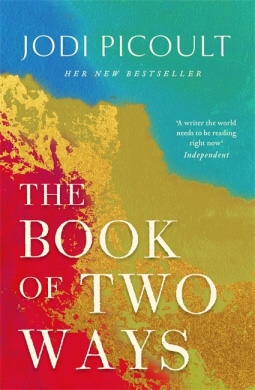
The Book of Two Ways by Jodi Picoult

#NetGalley #TheBookOfTwoWays #HodderandStoughton

A few years ago I was lucky enough to meet Jodi Picoult, and ask her some questions. She was promoting her novel Sing You Home and the question I asked was about the ideas she has for her novels; do the characters or the issue come to her first? Most of her novels are based round a controversial issue – from childhood illness, to abortion, racism and the rights to IVF embryos. These are not easy issues to tackle, particularly in the USA. Picoult replied that it was usually the issue that came first. She would mull it over for a while and if it stayed with her for a few weeks, she would know it had the potential for a novel. Then, slowly, the characters would start to come and tell their story. I have now read all of her novels so I was really excited to have an ARC of this via NetGalley.

The background to her latest work is Egyptology, most specifically The Book of Two Ways – an ancient text that tells of the two ways a Pharoah had of successfully reaching the Underworld, one by water and one by land. Picoult uses this as the PHD research subject for our main character Dawn, but it also informs the structure of the novel. Two narratives are told side by side, representing a split in Dawn’s life where she could have turned in a different direction. So we appear to be following parallel lives. Dawn has been married to Brian for several years and they have a teenage daughter, Meret. They are comfortably sliding into middle age and a mature stage of marriage, where Dawn observes love is not just a feeling, it’s a choice. Brian is a scientist, teaching at university and Meret takes after him, also having an interest in scientific experiments. From the outside they must look like a steady, settled marriage, but as always it’s a different story beneath the surface. The catalyst seems to come when a woman at Brian’s workplace strikes up a friendship, asking him to help with DIY around the flat and eventually offering the chance of an affair. Brian doesn’t take it, but for some reason even the possibility shakes Dawn to the core. It sends her spiralling back to her graduate years when she went to Egypt in pursuit of her PhD research and met Wyatt. Wyatt was a fellow researcher, their lines of enquiry complement each other, but he’s everything she hates in a person – arrogant and privileged. However, just as their dislike turns to passion, Dawn is dragged back to the USA for her mother’s death. She leaves Egypt with no idea whether she will be able to return. Now, in light of Brian’s revelations, Dawn wonders whether she made the right choice back then and is it too late to change her mind? Our other narrative follows that route.

I was fascinated by Dawn’s job as death doula – I’m only just aware of the existence of birth doulas so this was totally new to me. Once I’d read what her job entailed, I realised it would suit my experience and skills. I have had the privilege to be with someone as they’ve died a few times, through my husband’s final weeks but also when I’ve worked in a nursing home both as carer, and years later as an advocate for people with complex disabilities. Occasionally, if there was a resident I was fond of and they had no relatives to sit with them I would go in on my day off to be with them. I was young, and not always sure of what to do but sensed instinctively that someone needed to be there as these people left the world. Dawn fulfils a role many other professionals can’t and liaises between those professionals and the patient. She makes sure that what that person wants – whether it’s ice cream at midnight or to contact a long lost love – they get. Her relationship with client Win was one of best parts of this novel for me. To respond to a dying person with total focus and compassion, whilst making sure their final wishes and their dignity is intact, is a skill that can’t be taught. It is a great example of a therapeutic relationship because the women affect each other, this isn’t a one way street. Win has wisdom and counsel for Dawn.

The women can see echoes of each other’s lives in their early passionate first loves, followed by their stable, loving and respectful marriages. The care that Win gets from her husband is a world away from the affair she had as an art student with Thane Bernard, a famous painter. It reminded me of the UEA Fanthorpe poem ‘Atlas’ which begins ‘ there is a kind of love called maintenance’ and details the many practical ways people show love. Win proposes that we each have experience of these different kinds of relationships and the one we have last is wiser, more nurturing and understanding. The things we need as we’re older are very different from our idealistic and impulsive younger years, but we must never doubt that both are types of love. The Egyptian return narrative is interesting because we’re never fully sure where it fits or even whether it’s real or Dawn’s day dreaming. It’s also fascinating to see what her reception will be. All the time we’ve been listening to Dawn’s version and now we see the effect her sudden departure had on Wyatt. The rascally Indiana Jones I’d been expecting was really Dawn’s view of him. In reality he was shattered by her choice not to return. There’s a sense of time standing still in this ancient place, not just for the Pharaoh’s tombs but for the dig itself. Dawn finds the same house, serviced by the same family, but will her hope, that Wyatt hasn’t moved on either, come to pass? Even if his feelings haven’t changed what hope is there for a relationship that belonged in this temporary home, thousands of miles away. How will Wyatt respond to her marriage and her daughter? He doesn’t seem like the kind of person who will drop his work and become the family man.

This wasn’t my favourite Jodi Picoult novel, but it’s far from her worst. The research for the Egyptian sections alone must have been painstaking and I did have a belief in her characters – particularly in sections between Dawn and Win. I did feel there was a bit too much academic Egyptian detail too early and it prevented me getting into the emotions of the story. It was an interesting background to Dawn’s current work and how death rituals are very important and vary so much in different cultures. There were also a couple of aspects of Dawn’s return to the US that I didn’t understand, such as the timing of her return and meeting Brian. The big revelation towards the end of the book seemed unlikely. I couldn’t imagine that Dawn had never asked herself or even suspected. It was also amazing that her relationship to Brian had endured despite such a hurried start. I wondered if her strong reaction to his student’s crush was more about finding a way out. Brian has been a bit oblivious to this woman’s advances, but there is something endearing about that. He wouldn’t expect anyone to be interested and as soon as it’s apparent how she feels, he leaves and tells Dawn. There is a sense that Dawn wants out of this relationship, but is struggling to be the one who ends it. She doesn’t want to be the bad guy. This worry about hurting others can be seen as she tries to carry out Win’s final wishes too.

Often with Picoult’s books you can see that the ‘issue’ has come first, and I did wonder if the exploration of Ancient Egypt was something she’d wanted to write about for some time. It sat neatly with Dawn’s job and the whole novel’s theme of the end of life. It was interesting to think about the rituals carried out by the Egyptians – I’ve always wondered how they got a whole brain out of someone’s nose – and our squeamish response to death. We don’t talk about it, so we never express our feeling about the sort of death and funeral we want. It’s almost as if our enduring fascination with the burial chambers of the Pharaohs is in direct contrast to our avoidance of the subject in relation to ourselves. Dawn’s job cuts through that and in its way is a lot like counselling, in that she asks the questions and has the conversations that the dying person can’t have with their family. Interestingly, despite her role to be open about death, Dawn isn’t being honest or open about life. She’s settled herself into a default position where she’s felt safe, but a brush with death changes everything. I think I wanted a different ending. I felt for Meret who doesn’t seem to get much quality time with her mother and I can’t remember a point in the novel where they simply have fun together as a family. She’s expected to get her head round massive changes very quickly too. I would have liked Dawn to take some time with her daughter, just the two of them and get settled on their own terms. While it just doesn’t reach the heights of Small Great Things or The Storyteller for me, there was a lot to like here. The depth of research, the themes of life and death, and her characterisation of the central characters are strong and as always with Picoult you can relax knowing you’re with an absolute master at storytelling.

Posted in Netgalley, Publisher Proof

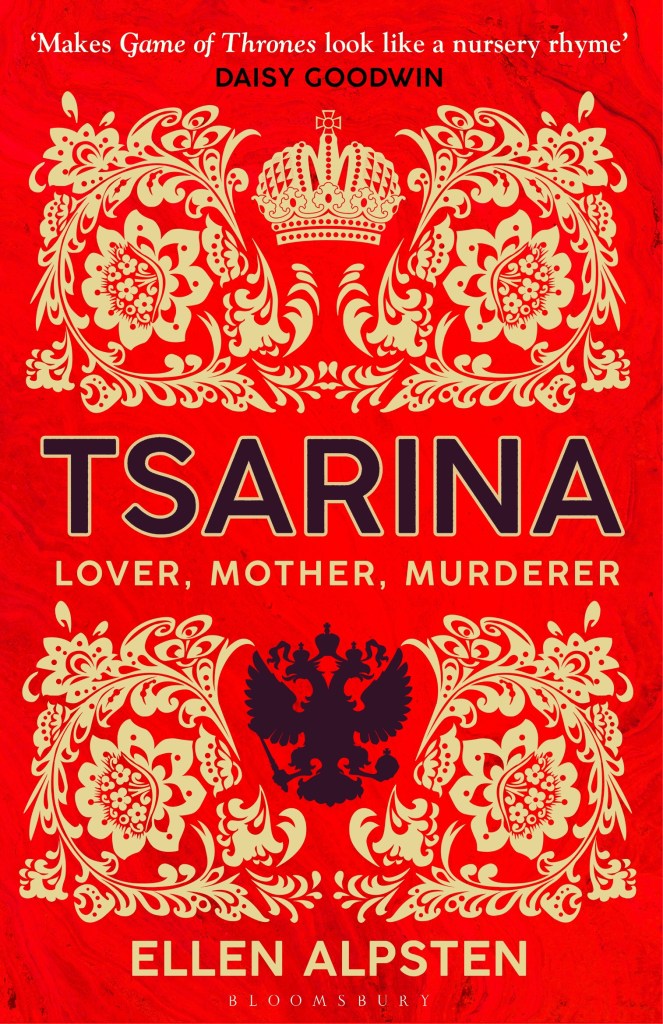
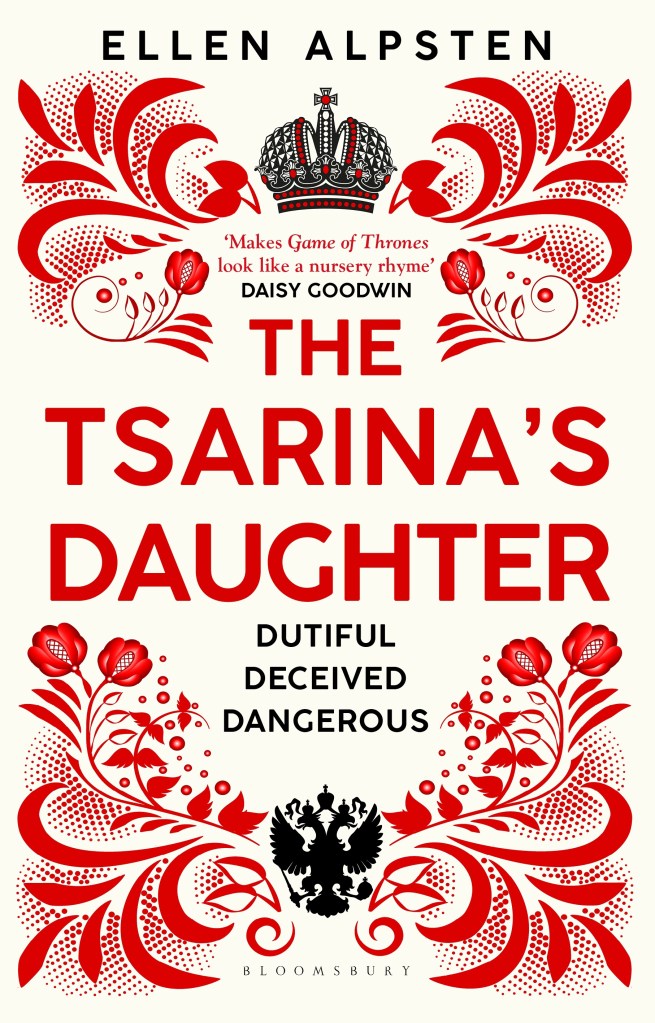
Tsarina by Ellen Epstein.

Catherine Alexeyevna rose from peasant beginnings to become one of the most powerful women in Russia as the second wife of Peter the Great. Known as Marta to her family she was born in 1684 in the village of Livonia. Her meteoric rise from illiterate servitude to the Russian throne is one of chance, but also, as the author puts it ‘intellect, wit and sensuality’. Her parents sold her into the service of a man called Vasilly from the town of Walk. The author pulls us into the world of this nine year old girl as she experiences the town for the first time. She is overwhelmed by the number of people and all the chimneys she can see, each one representing a family. In her wonder, she loses the count and becomes mesmerised by the foods being sold by street vendors. This experience inspires her and she begins to work in the kitchen, soon able to prepare delicious meals of her own.

It’s very hard not to admire the way this incredible woman rose through the ranks of Russian high society, almost always by catching the attention of men. This was a dangerous and volatile period of history and it must have taken a great deal of resourcefulness and cunning to succeed. She was observant, able to read people and their interactions, successful at manipulation and doesn’t let herself be used by men – unless she wants to be of course. There are moments when she is struggling but the right advice or opportunity seems to come along. She takes to heart a lesson taught by Menshikov, the Tsar’s best friend:

Use life’s surprises to your advantage. See your power over men like a hand of cards; play them, to trump your life’.

I really enjoyed it when the focus was on Catherine (Marta) and her rise. When she reaches her position as Peter the Great’s wife and Empress of Russia, the story starts to open up and include others within the court. When we’re not concentrating on Catherine, I wasn’t as engaged with the book, but maybe that was just me. Her life becomes swallowed up by the demands of being a monarch’s wife – the demands on her to produce an heir resulted in twelve pregnancies! The cruelty of Peter starts to come to the fore as well as his contrary nature. He upholds religious and cultural custom to a stubborn degree and then when it suits him, simply discards custom for his own advantage. He’s a textbook narcissist. Even though Catherine is surrounded by riches, lavish banquets and incredible jewels I didn’t envy her position. She knows the dangers of being his wife, because his first wife ended up in a prison cell and her lover was impaled alive, on a spike in Red Square.

Despite this being more fiction than biography, I think the author researched her subject well and worked hard to bring Catherine to life. There are some really dark moments of rape and torture, but this is probably an accurate portrayal of very bloodthirsty time in history. Its also a very sensual book, not just the lusty moments, which I really enjoyed, but also the author’s focus on the senses. The taste of the incredible dishes she creates, the smell of the incense and incredible interiors of the Russian Orthodox Church, all the way down to the sweat and fear of the torture chambers. When Catherine’s trying to keep Peter’s death a secret in order to keep the crown, I was drawn back into the action. As he lies there, dying in the Winter Palace, Peter has to face the fact he is leaving his country without an heir. His only son Alexei, was killed under interrogation for conspiring against him. This is when Catherine undertakes her greatest political manoeuvre and becomes Queen, despite Alexei’s son being the heir apparent. I enjoyed reading from Catherine’s perspective, especially considering the way her male enemies spread misogynistic stories about her suppose voracious sexual appetite. The book did it’s work in making me want to know more about this time and place in history. I’ll be going to All4 and watching their series starring Helen Mirren to learn more about this fascinating character.

Next month I will be reviewing the author’s next novel

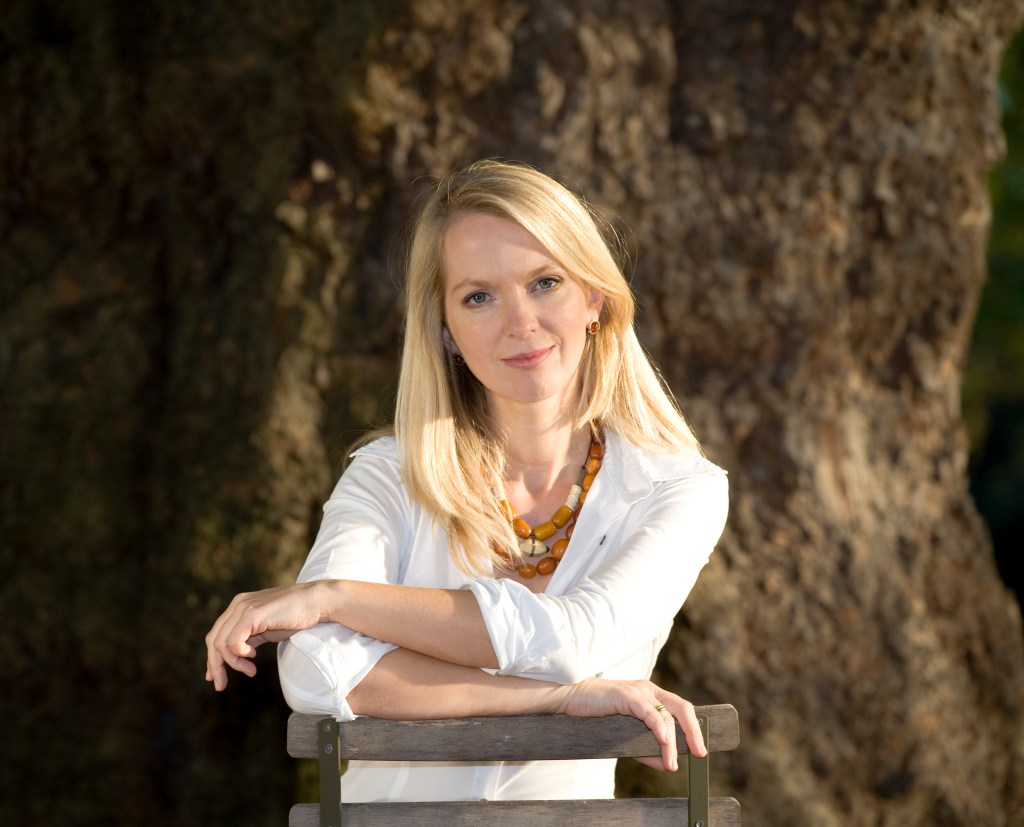
Meet The Author

Ellen Alpsten was born and raised in the Kenyan highlands, where she dressed up her many pets and forced them to listen to her stories. Upon graduating from the ‘Institut d’Etudes Politiques de Paris’, she worked as a news-anchor for Bloomberg TV London. While working gruesome night shifts on breakfast TV, she started to write in earnest, every day, after work, a nap and a run. So much for burning midnight oil!

Today, Ellen works as an author and as a journalist for international publications such as Vogue, Standpoint, and CN Traveller. She lives in London with her husband, three sons, and a moody fox red Labrador.

‘Tsarina’ is her debut novel. For more information about her literary life follow her on social media.

Coming Soon…

Posted in Uncategorized

The Silent Treatment by Abbie Greaves


This interesting novel grabbed me right from the start, as Maggie calmly swallows a handful of tablets, then gets up to make dinner for her husband. It takes till half way through prepping the green beans and she has collapsed suddenly, so suddenly there is no time to break her own fall. Frank is so engrossed in his study that the smoke alarm is the first sign of the tragedy that has unfolded in their kitchen. He finds their tea on fire in the oven and a little way away, Maggie is unconscious on the floor. Frank’s voice is hoarse and he’s unused to the sound as he calls the emergency services. This is when The reader first finds out that Frank hasn’t spoken to anyone, even his beloved wife, for the past six months.When I requested the novel from Netgalley it was this premise that first drew me in. Probably because, as my long-suffering partner will tell you, I never stop talking. I imagine that not chatting to the person you live with takes concerted effort. Greaves came across the premise for her novel when she read an article about a Japanese boy who had never seen his parents speak to one another. It’s intriguing and does ensure that you keep reading; I kept wondering why and how this situation could have started.

I hadn’t realised that the book was about pregnancy loss and infertility. Greaves writes about the grief and helplessness of this experience with real insight. Having been through the same experience, it was important to me that Maggie’s response feel genuine. We see the ups and downs of a long term relationship as Frank starts to reminisce, and the romantic beginnings of building their home together. As Maggie lies in a coma at the hospital, her nurse Daisy encourages Frank to talk, to say everything he can to her because the time they have left together may be limited. This Is where Frank’s secret is revealed and we know why he hasn’t spoken for six months.

I enjoyed the novel, even though there were parts I didn’t fully connect with. Although Frank’s narration is emotional I found him difficult to understand. It’s a if there is a barrier between the reader and Maggie, both because she’s in a coma and because we only see her through Frank’s eyes at first until the narrative voice changes. I found myself waiting for a contrasting chapter from Maggie’s point of view early on, then with Maggie’s letters we start to see her inner life. I found this a moving and honest portrayal of pregnancy loss and parenthood. It’s hard to imagine a relationship where all the usual day to day things happen like eating together, sleeping together and sex, without a word passing between them. I guess it shows the strength of love, that Maggie can continue to give while receiving silence. I won’t spoil the ending, but it is emotional and I can see it staying with readers. This is an intriguing debut and I would definitely look out for future novels from this author.