Posted in Random Things Tours

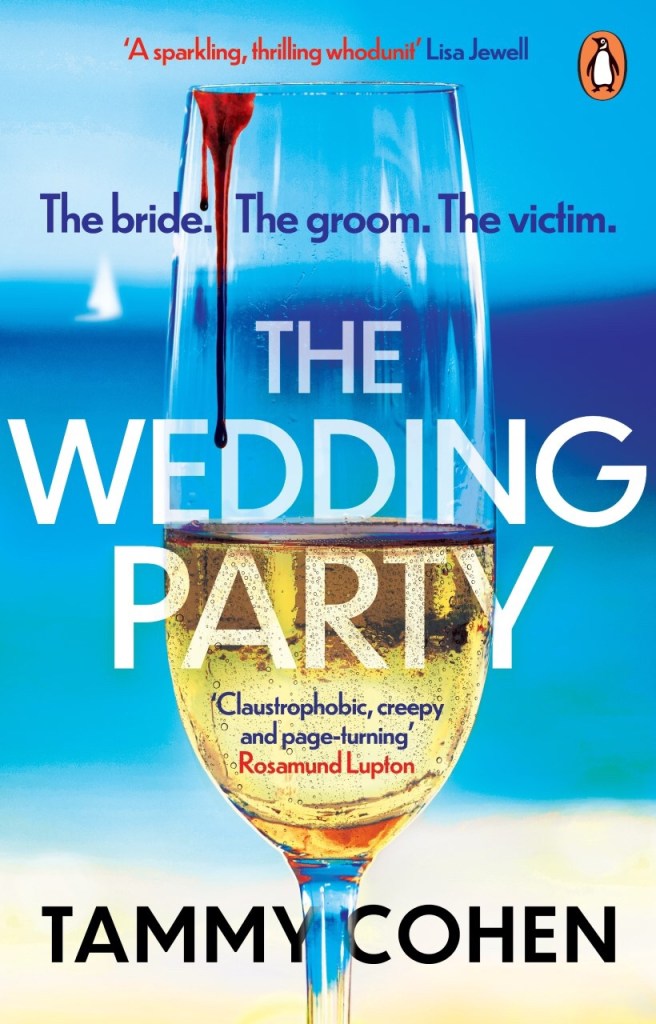
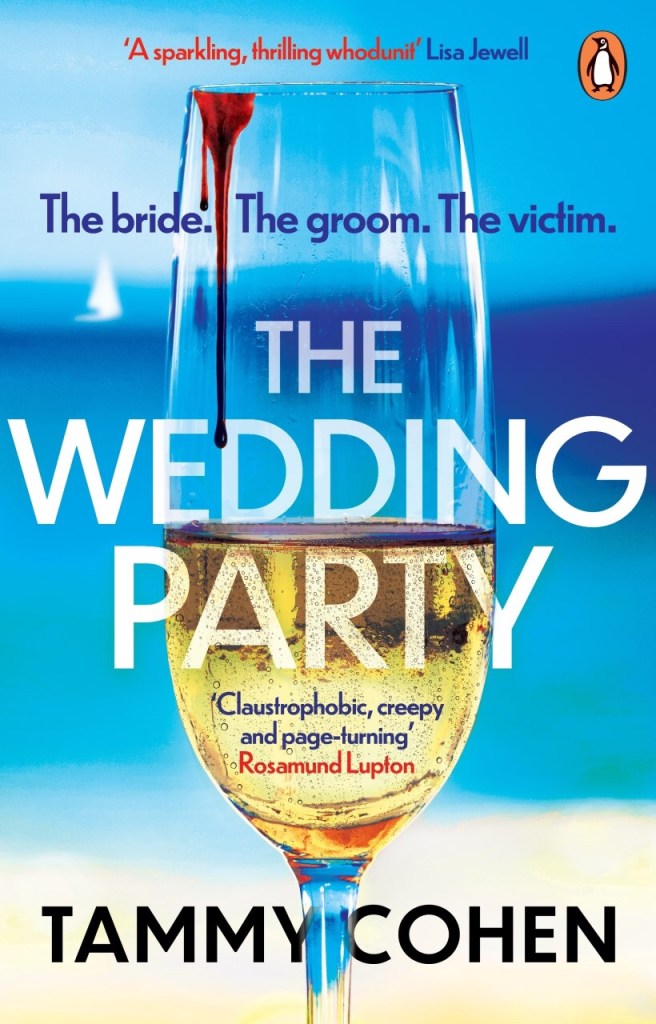
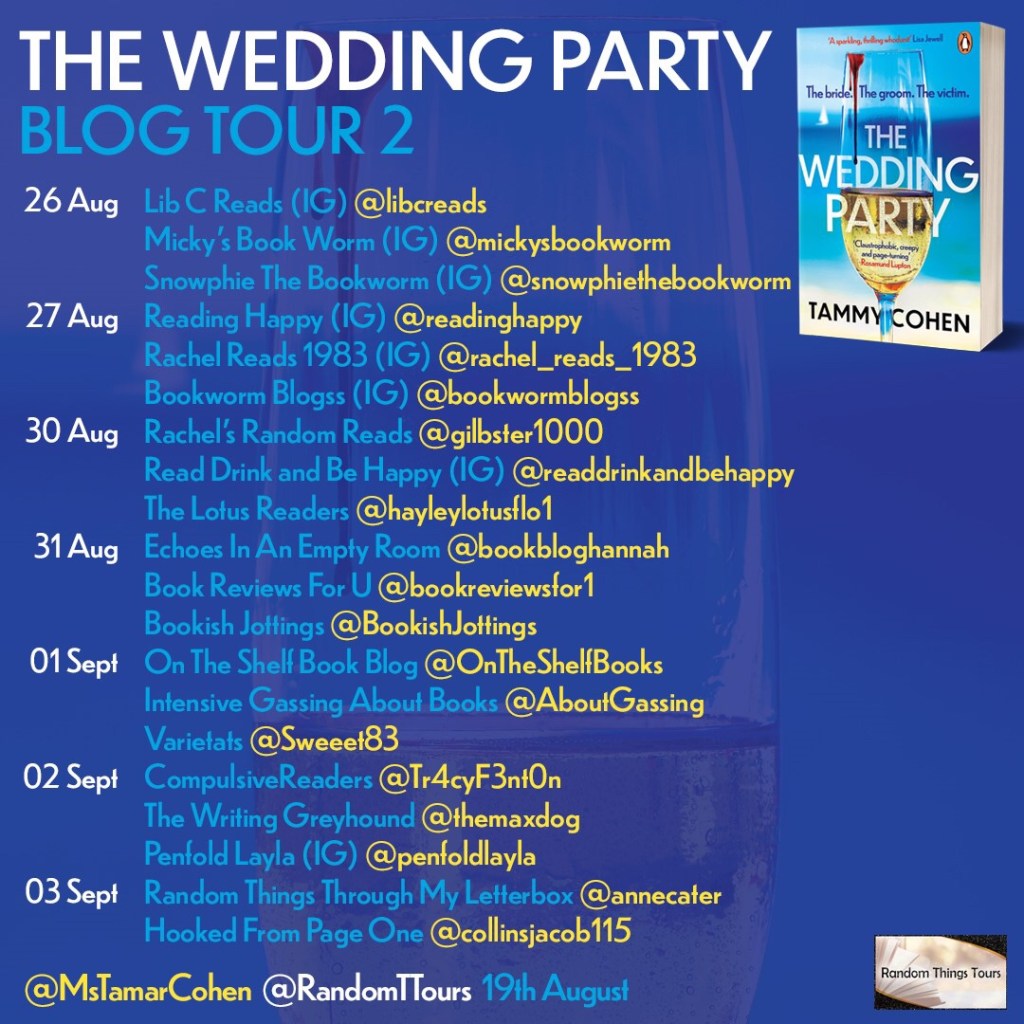
The Wedding Party by Tammy Cohen.

This was a real turn up for the books as they say. I’ve been ill for a few days with a virus – not that one – so I’ve been bundled up in bed, not really able to bear much noise or fuss. Yesterday morning I picked up this book, I’ve never read the author but had decided to give her a try for this tour. I’m so glad I did because once I’d started, that was me engrossed for the whole day. I read it in four hours straight and enjoyed it immensely. The action all takes place at a wedding venue hotel on the island of Kefalonia. Lucy has been planning her wedding to Jase for a very long time and she’ll be okay as long as everything she’s planned is perfect, down to the last napkin. However, she’s about to find out that once you bring other people into the equation, plans can veer off course. There’s her alternative sister Jess who has promised to behave but turns up with a stranger in tow and a psychedelic dress instead of the tasteful dusky pink they’d agreed on — not to mention her dyed pink hair will turn a straggly peach colour once she hits the sea. There’s a strange old lady who they met washing her breasts in the airport toilets, but who now seems to be everywhere. Best man Gil, who used to be Jess’s boyfriend, is here with his wife Zoe, with all the tension that could cause. Surely Lucy can rely on the older generation to behave? Her mum Hazel and Dad Dom are solid, and although they’re irritatingly close, Jase’s mum Cora is lovely. Thank God though for her best friend Shelley, who is an absolute rock and would have been a better maid of honour than her sister. There’s also wedding planner Nina, who has everything in hand, except perhaps the small matter of money. What could go wrong?

The setting was wonderful, with beautiful descriptions of stunning sunsets over the beach – Lucy has chosen this hotel specifically because although it might be a bit shabbier than some of its counterparts on the other side of the island, they can’t create a wedding at sunset. A perfect photograph for Instagram of course (I loved how even on her wedding day Lucy is itching to update her status). The author’s descriptions of olive trees, swaying grasses full of poppies, the scent of honeysuckle on the breeze, all made me want to fly out there tomorrow. I was fascinated with the idea of illusion, what’s real and what isn’t and which we present to the world. This applied to the people present as well as the online content Lucy keeps imagining in her head. When Jase said he would have married her in a registry office with none of the fuss, it really makes her think. Who was all this expense and stress for? Even wedding planner Nina has been seduced by an illusion, that of the island as an idyllic place to set down roots, but also in destination weddings themselves. She’s placed her entire financial future into a house she doesn’t fully own (thanks to local land laws) and the certainty that people will always want to buy into the dream of a destination wedding. It seems like she must have a wonderful lifestyle, but actually the island is deserted and bleak out of season and she’s literally one pay cheque from going bust. Especially when the people who buy into this illusion can’t always afford it. Almost everyone in the wedding party is hiding something. Jess, although irritating to her sister, is actually the most open and authentic person there. She just needs some self-awareness and discretion. Gil is possibly the only other member of the group with no secrets and is seemingly devoted to wife Zoé and seems to understand her, despite her brittle exterior. I enjoyed some of the evening dinner, when a lot of the smaller secrets are out in the open and people can really get to know each other, on a deeper level.

If you simply want a good thriller read, this book really delivers. We know something goes drastically wrong because in-between the story are transcripts of police interviews with members of the wedding party. The author is very skilled in giving away snippets of information, enough to get your brain whirring, but not enough to work it out. This keeps you reading just one more chapter. There are also therapy journal entries – which I loved because it’s something I ask my clients to do – but we don’t know which member of the wedding party they belong too. Every so often there’s a delicious red herring thrown in, like the groom disappearing during a dare on the fishing trip. There’s also the rising tension and suspicions of each other, even the married couple are keeping some secrets close to their chests. Watching them try to avoid being exposed, made me cringe. There are also some comedic moments, in the descriptions and behaviour of old lady Vivienne particularly, but also I the eccentricities and foibles of those in the wedding party. The author is adept at showing us aspects of human behaviour that feel totally authentic – such as the shopping day the women have, where almost everyone rejects their purchases as something they’ll never wear as soon as they return to the hotel. She also nails that feeling of loneliness, and how having no family leaves you rootless and free-floating. There’s nothing to ground you. It’s this understanding of human behaviour that made me feel there’s something subtly different going on. Underneath the thriller there’s an underlying message that I felt really elevated this above the ordinary and said something about the times we’re currently living in. It’s the old cliché of walking a mile in someone else’s shoes, because some suspicions that arise in the novel, say more about that character’s prejudices than the person under suspicion. Once the secrets are in the open and disagreements are resolved, there are a lot of deep conversations and apologies to be made. We can never know what another person has gone through and while our brain may well go into overdrive when we’re unsure about someone, I felt the author was telling us to hang back a bit, find out more and be kind.

Published by Black Swan, 19th August 2021.

Meet The Author

Tammy Cohen is the author of six psychological thrillers, the latest of which is Stop At Nothing. She is fascinated by the darker side of human psychology. Her books explore how ‘ordinary’ people react when pushed into a corner, the parts of ourselves we hide from the world – and from ourselves. Previously she also wrote three commercial women’s fiction novels as Tamar Cohen debuting with The Mistress’s Revenge which was translated all round the world. In addition, she has written three historical novels under the pseudonym of Rachel Rhys. The first, Dangerous Crossing, was a Richard & Judy book club pick in Autumn 2017. She is a member of the Killer Women crime writing collective and lives in North London with her partner and three (allegedly) grown up children and her highly neurotic rescue dog. 

Visit http://www.tammycohen.co.uk to find out more, or find her on facebook or twitter as @MsTamarCohen or on Instagram as @tammycohenwriter

Posted in Netgalley

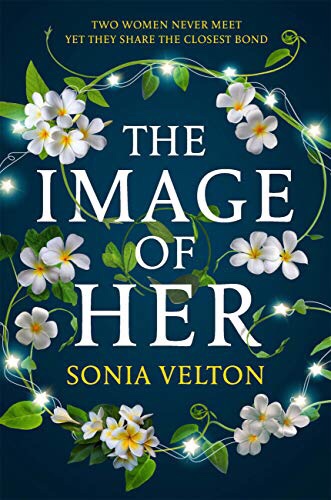
The Image of Her by Sonia Velton

From the author of Blackberry & Wild Rose comes an extraordinary story of two women who never meet and yet share the closest possible bond.

STELLA and CONNIE are strangers, brought together by two traumatic events – cruel twists of fate that happen thousands of miles apart.

Stella lives with her mother, a smothering narcissist. When she succumbs to dementia, the pressures on Stella’s world intensify, culminating in tragedy. As Stella recovers from a near fatal accident, she feels compelled to share her trauma but she finds talking difficult. In her head she confides in Connie because there’s no human being in the world that she feels closer to.

Connie is an expat living in Dubai with her partner, Mark, and their two children. On the face of it she wants for nothing and yet … something about life in this glittering city does not sit well with her. Used to working full time in a career she loves back in England, she struggles to find meaning in the expat life of play-dates and pedicures.

Two women set on a collision course. When they finally link up, it will not be in a way that you, or I, or anyone would ever have expected.

This was an unusual follow up to Sonia Velton’s historical fiction debut Blackberry and Wild Rose, but had the same stunning characterisation and detail that set her writing apart. This was a classy domestic thriller with two characters on such a fascinating journey. Connie and Stella are such complex characters, written with incredible psychological insight, that I felt immediately drawn into their disparate worlds.

Stella’s life has been dominated by her mother, who died after a long struggle with dementia. Stella has been her full-time carer and this would be enough to explain her sense of dislocation from the rest of the world, but their relationship was always difficult anyway. She’s now 39 and as well as feeling burnout from her caring role, she thinks her inability to connect with others has a root in their mother-daughter relationship. Utterly ground down by life, Stella realises that her mother has been psychologically abusive and manipulative her whole life. It felt to me that Stella’s mental health issues were directly related to having a narcissistic parent. It’s clear that Stella’s mother belittled her, knowing exactly which buttons to push to inflict the most pain. There was also an element of gaslighting, where her mother would deny things she’d said or convince Stella she’d misconstrued them. She never validates Stella’s feelings, so instead of acknowledging her words and apologising, she says she’s sorry that Stella felt upset.

Her mother’s love came with conditions, turning Stella into a perfectionist, constantly feeling she has to change or placate the other person to deserve their love. The perfectionism has bled into all areas of Stella’s life. Her mother wanted her to be successful, because it reflected on her own skills as a mother. Stella is very aware of how others might see her, because it was all her mother cared about – the emphasis on how things appear rather than caring how they actually are. If Stella was well-behaved, well turned out and looked pretty it didn’t matter to her mother how she felt. As she wrestles with these issues in later life, Stella doesn’t really have anyone in whom to confide. However, when she’s recovering from a serious accident, she starts a dialogue with a woman called Connie on social media. It may be the safety of not being seen, being able to hide behind the anonymity of the keyboard, but Stella feels this is someone she can trust with even her most private thoughts.

Connie is a stay at home Mum, on a compound of British families in Dubai. Her husband was offered a great job opportunity, but it left her in an unfamiliar place with all her usual support network thousands of miles away. Connie doesn’t find Dubai inspiring and, perhaps because of where they’re living, she doesn’t feel as immersed in local culture as she expected. Dubai is a man made and designed space. Although it existed as a small fishing village as far back as the 18th Century, the current expanded city is very much focused on tourism with sculptured and themed island complexes such as the Palm Jumeirah. This means it is a place that people pass through, rather than stay. Feeling increasingly lonely and isolated, Connie needs something to do outside the home, and her husband Mark has suggested they have a live-in housekeeper. This would free Connie to do other things, but her keen sense of social justice means she finds this a difficult prospect. She finds she can’t ignore the exploitation of local people by the foreign settlers. She simply can’t ignore the inequality in front of her and her marriage starts to feel the strain, not helped by in-laws she doesn’t see eye to eye with. Although this two women are geographically miles away from each other, their overwhelming sense of isolation and loneliness is very similar.

I thought the author was brilliant at letting her characters tell the story. Stella narrates in the first person and I felt completely absorbed in her narrative. Maybe that was because she talks like a client would speak to me in the counselling room. I was soon drawn in to her world and the difficulties she’s having. Connie’s narrative is in the third person, so it didn’t feel quite as immersive as Stella’s, although it did allow for the points of view of other characters like her husband or in-laws. I thought the authors insight into an ex-pat life in the Middle East was brilliant, because it felt raw and honest, and a million miles away from how people often describe Dubai. I really became incensed with the social injustice and know I couldn’t have lived there and let it wash over me, without trying to change things. I also liked her honesty about motherhood – there are no rose- tinted spectacles here.

I thought that this complete change of genre and time period really showed this author’s range as a writer and her incredible skill at creating complex and believable characters. I loved the focus on themes of self- worth and what we draw on to create our identity; is it our inner life or our outer appearance that informs us of who we are? It brought me back to an idea that fascinates me as a therapist that we call congruence. Are we presenting to the world the authentic person we are inside or a constructed identity based on outer appearances? Do our inside and outside selves match up and how does it feel when they don’t? This was a thoroughly enjoyable novel that will be fascinating to anyone interested in character driven narratives, identity and social justice. It will be interesting to see what this talented writer creates next.

Meet The Author

Sonia Velton has been a solicitor in Hong Kong, a Robert Schuman Scholar in Luxembourg and spent eight years being an expat Mum of three in Dubai. She now lives in Kent. Her first novel, BLACKBERRY AND WILD ROSE was short-listed for the Lucy Cavendish Fiction Prize, long-listed for the HWA Debut Crown and has been optioned for film. Her second book, THE IMAGE OF HER, is a literary thriller about two women whose lives come together in a way that is both chilling and awe-inspiring.

Posted in Netgalley, Personal Purchase

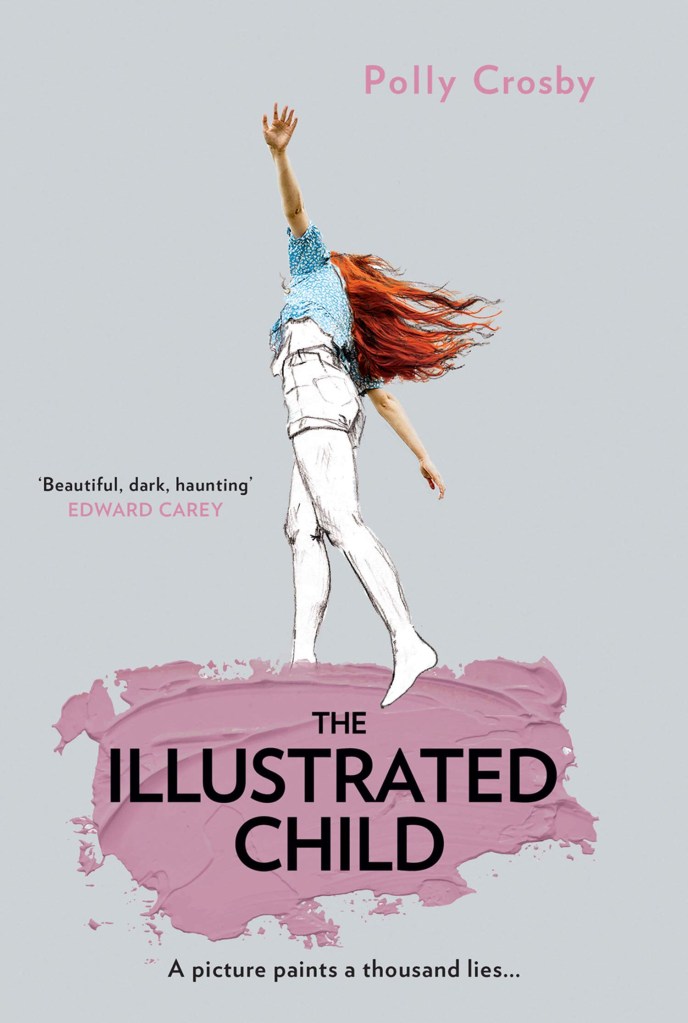
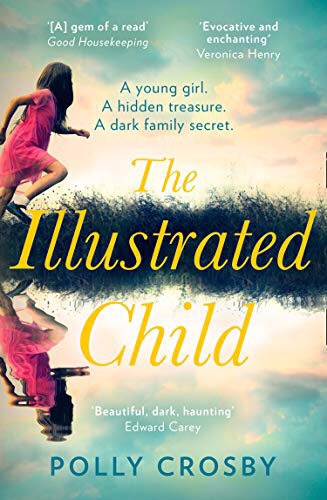
The Illustrated Child by Polly Crosby.

This beautiful and original book hit me straight in the heart and I was reading the last few pages with a massive lump in my throat. Romilly Kemp lives in the run down Bräer House with her father Tobias, an artist who is both inventive and eccentric in equal measure. This situation reminded me of a classic favourite I Capture the Castle, but Romilly’s story is much more than a coming of age tale. Romilly and her father live alone and are struggling for money, when Tobias has an idea for a children’s book based on his daughter. Featuring his original illustrations, the books follow Romilly and her Siamese cat Monty through a series of adventures at the circus, in a windmill and at Christmas. She is preserved forever as a 9 year old in her patchwork dress and her red hair flying behind her. Romilly loves looking for the tiny little additions to his main illustrations – a tiny mouse holding a forget-me- not, two miniature hares boxing, and sometimes Romilly herself being chased by a animal. The public fall in love with the books and the idea grows that there is some sort of treasure hunt contained in the pages leading to trespassers at Bräer and some horrible encounters with reporters and photographers.

Romilly can see secrets of a different kind in the pages her father has drawn, but she’s used to secrets. She hasn’t seen her mum for so long she’s largely forgotten her and they have no other family. Where does her friend Stacey go when she is missing for weeks? Who is the beautiful, pink costumed circus lady she meets who knows her father? She notices differences in the way she’s drawn in the book and also a very faintly painted lady in the background often with her head in her hands. Her dad gives her a puzzle box he’s made, which starts to tick when it’s her birthday releasing a memento or object that’s important to her – Monty’s silver bell, a pink feather. When her dad’s memory starts to fail, Romilly wonders if all these clues are for her, or are they triggers for her dad’s memory? More importantly, I was starting to wonder who would look after Romilly and what had torn this close family apart?

is meant to be home schooled, but has no real curriculum or structure. There are times when heat and food are scarce, and set mealtimes never seem to happen unless someone is visiting. As Tobias declines, Romilly is having to cope alone with no family to help. I wanted to swoop in and look after her and Monty. There’s no doubt that she’s independent, resourceful and intelligent, but is that innate or something she’s had to develop having been left to fend for herself so often? There’s a deep understanding of the psychology of a child in this position underlying Romilly’s story. Even her name means ‘strength’ and she has so much, using it to defend her tiny family and her home.

Underlying all of this is an understanding of trauma and how grief can tear apart the strongest families. In one part of the book Tobias explains to his daughter that people grieve in different ways and sometimes that means doing it apart. I know grief well, and at different stages in my journey I’ve done things differently, avoided certain places and people. At first I struggled to talk to anyone who was as shattered by my husband’s death as I was. I couldn’t deal with anyone else’s needs, only my own. I was very angry with people who turned out for the funeral claiming a relationship with my husband, who I had never met in the seven years we’d been married, the last four of I’d been caring for him 24/7. Later I wanted to seek out people who grieved as strongly as I did because we could reminisce and understand each other’s profound sadness. When reading the book I found myself both very angry with Romilly’s mother because I felt she was selfish, but I also sympathised and understood her decision that she shouldn’t be a parent. There were parts of the novel where I felt nobody understood or fully cared how much their decisions impacted on this little girl. I was so profoundly sad for her and at that point where she realised she needed help, she allowed herself to be vulnerable which must have been so difficult for her.

This is a beautiful book: it’s invocation of childhood and play; the magical atmosphere of Bräer and it’s surroundings; the stunning artworks done by Tobias and the complex history he’s trying to convey. I loved how the author showed objects sparking memories, for Romilly, but also for Tobias who, befuddled by dementia, recognises his daughter through Monty’s silver bell. I hadn’t unravelled the mystery so I could sit back and enjoy it as it played out and when the truth was finally revealed everything made sense, even if I did think Tobias could have handled it so differently. I have a particular affinity with hares, so his drawing under the book’s dust jacket of the two hares was particularly moving. What I loved most was the way the author showed a difficult childhood still being magical and full of memories. I think we can probably all look back and remember times that feel golden to us, but might be very different from our parent’s perspective. Romilly’s freedom, her ability to invent and imagine, to follow her own interests when mixed in with the magical circus, the panther stalking the area round the village and buried treasure seem magical. How much of this would she be willing to trade for security, routine and someone to care for her? This book will stay with me for a long time and is a definite candidate for my ‘forever shelves’.

Meet The Author


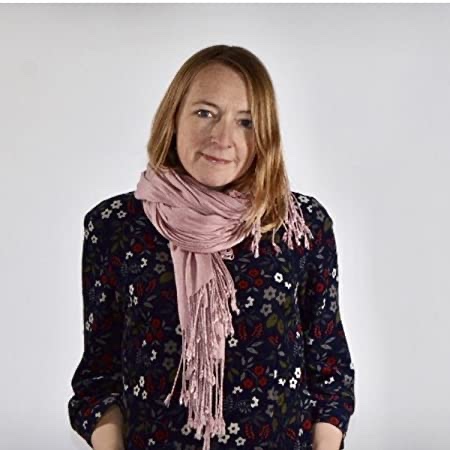
Polly Crosby grew up on the Suffolk coast, and now lives with her husband and son in the heart of Norfolk.

Her debut novel, The Illustrated Child (The Book of Hidden Wonders in the US and Australia) is out now.

In 2018, Polly won Curtis Brown Creative’s Yesterday Scholarship, which enabled her to finish her novel. Later the same year, The Illustrated Child was awarded runner-up in the Bridport Prize’s Peggy Chapman Andrews Award for a First Novel. Polly received the Annabel Abbs Creative Writing Scholarship at the University of East Anglia, and is currently working on her second novel.

Twitter: @WriterPolly
Instagram: @polly_crosby
Website: pollycrosby.com

Posted in Publisher Proof

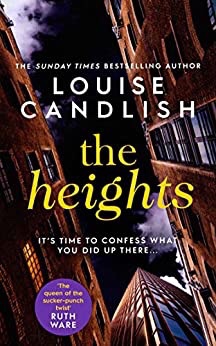
The Heights by Louise Candlish.

I feel slightly sucker punched only seconds after finishing this fantastic new thriller from Louise Candlish – a name I only came across when it appeared as a ‘you might also like’ recommendation on Amazon, but is now top of my list when it comes to twisty, delicious and impossible to put down thrillers. After the final twists in The Heights I think this might be her best yet. She has an incredibly incisive way of portraying middle class southern morés and the way they change and mutate under immense pressure. It’s like reading a weaponised Jane Austen for the 21st Century; what if Willoughby had been a killer or Wickham had kidnapped then killed Lydia? These are the same type of people, centuries apart, but still playing out gender and class politics. Except now it’s from a beautiful Victorian semi (with a large family room leading to bifold doors into the garden with pizza oven).

Kieran Watts has been dead for over two years. Yet, there he is, on the roof terrace of an exclusive building in Shad Thames. Called the heights – all lower case – this is a tall, thin building that you might not notice at all, had you not been standing in the window of the flat opposite. There are subtle changes. The physique for a start has had some work. There may even be a touch of plastic surgery here and there, but you know it’s him. Even though he’s meant to be dead. You were sure he was dead, because you were the one who had him killed.

Ellen Saint lives with husband Justin, their daughter Freya and Ellen’s son Lucas from her previous marriage to Vic. They really are the perfect family unit, with a shared parenting ethos for Lucas and everyone getting along well. Lucas is a bright teenager, possibly on course to apply to Oxbridge, who loves gaming and spending time with friends and girlfriend Jade. Then along comes Kieran Watts. Kieran moves nearby after being taking into care and placed into a foster home with Prisca. This puts him into the catchment area for Lucas’s school and on Kieran’s first day, Lucas is asked to ‘buddy’ Kieran and help him settle in. The two boys really hit it off and from here starts a spiral that’s only travelling one way, towards tragedy. Firstly, Lucas goes out a lot with Kieran and some older kids, who have cars. Then his grades start to slip and he uses bad language at home. Ellen fears his late nights, mornings in bed and red- rimmed eyes are down to drugs. She tries to reduce his time with Kieran, but only succeeds in pushing them together. Lucas and his girlfriend Jade, find Kieran funny. Ellen doesn’t. She sees the way Kieran looks at her. It’s bad enough when he’s dead behind the eyes, but when focused on her, Ellen sees defiance, challenge and threat. Tragedy strikes one evening, as the boys are out in Kieran’s car and veer off road into a lake. Kieran escapes, but Lucas’s seatbelt is jammed. Ellen can stop imagining her son in his final moments of realisation, panic and terrible fear. Kieran will be made to pay for this.

Ellen is a very single-minded character and I was never sure whether I liked her or not. There are times I think she was a snob, only wanting her son to be with other middle class kids. She also seems to be obsessed with Lucas at the expense of her daughter. Obviously she loves her children, but how much of her interest in Lucas is fuelled by his good looks, his academic prowess and future promise as a potential Oxbridge student. There is an element of Ellen’s concern which is caught up in what others think. She’s still very close with Vic, Lucas’s father, but he has a very different way of parenting. He has no qualms about Kieran, and let’s them hang out at his place. Ellen likes to think that she and Vic are on the same page and is proud of their ability to co-parent alongside her new husband Justin, but is Vic really in tune with Ellen’s values? I kept wondering if this small act of undermining Ellen, was a sign of greater betrayals to come. Similarly, Ellen acts unilaterally as soon as she sees Kieran at the heights. I was surprised that she never once talked with Justin, so they don’t work together on this discovery. After Kieran was sentenced for his part in Lucas’s accident, Ellen starts a media campaign about stronger sentencing for deaths caused by dangerous driving. However, Vic is her partner in this with Justin holding the fort at home. Don’t they agree? Or does Ellen simply disregard his feelings? Her love for her son and her deep sense of grief are driving her forwards and are stronger than her feelings for either husband or her daughter.

As usual Louise Candlish has written a fantastic thriller here. It has all the ingredients that keep you reading till the early hours. Short, snappy chapters keep the pace and tension throughout. There are twists and turns galore! Her incredible ability to analyse and dissect human nature is forensic in its detail. She lampoons middle class concerns here perfectly, from Ellen’s home that Vic remarks is just the right location and style for his ex-wife, to her determination that Lucas is Oxbridge material and shouldn’t be dragged backwards by someone like Kieran. Her children, on the other hand, are more than happy to mix with friends from different backgrounds. Ellen would probably consider herself liberal, but her actions and attitude betray other, perhaps more conservative values. Her very public campaign for longer sentencing seemed to be a distraction, something to throw herself into that potentially delays her grief. It was fascinating to see how such a seismic loss, affects each family member differently. This combination of raw family emotion and tense, thrilling, revelations makes for an incredibly intelligent and enjoyable read that’s impossible to put down until you read the final page.

Meet The Author

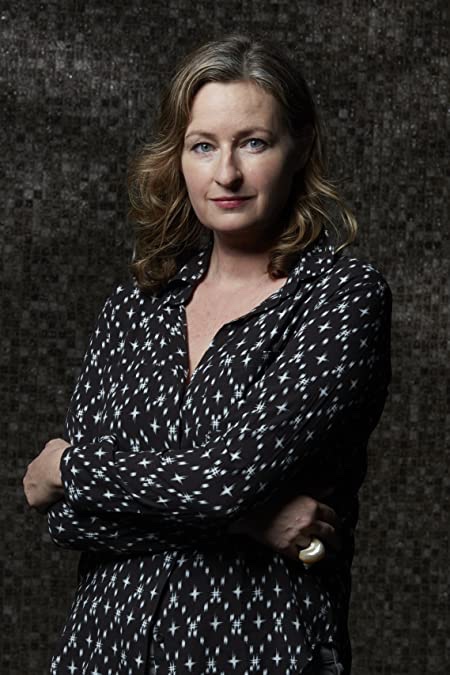
Louise Candlish is the author of 15 novels, a fact she can’t quite believe herself. THE HEIGHTS is her newest – Louise Candlish describes it as a ‘twisty revenge thriller whose narrator, Ellen, has a strange fear of heights known as ‘high place phenomenon’. You could say she’s my most Hitchcock-inspired character yet! I can’t wait for you to read it and share your thoughts.’

‘A bit about me: I live in a South London neighbourhood not unlike the one in my books, with my husband, teenage daughter, and a fox-red Labrador called Bertie who is the apple of my eye. Books, TV and long walks have been my top sanity savers during recent times. Oh, and wine’. From her Amazon Author page.

Posted in Netgalley, Publisher Proof

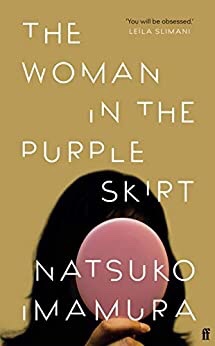
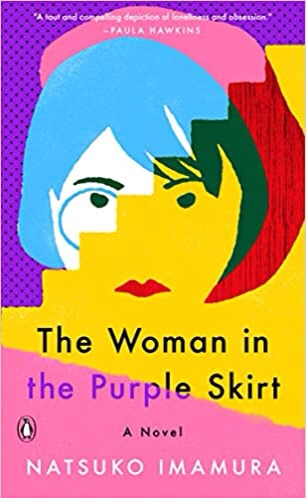
The Woman in the Purple Skirt by Natsuko Imamura.

This was an unexpectedly quirky and refreshing take on the obsessional friendship trope, a theme I’ve loved ever since watching Single White Female back in the 1990’s. This is the first of the author’s novels to be translated into English from the original Japanese. I was surprised by that, because there was something about the writing style and the main character that I thought would appeal to the British reader. I thought earlier novels might have also appealed to British readers. The daily eccentricities of the the Woman in the Purple Skirt the man m were charming and intriguing, so it was that and my curiosity about the motives of the Woman in the Yellow Cardigan that drew me in to the story. There is also an interesting, melancholic sense of humour that struck me as something British reader would enjoy.

There are some characteristics that the two women share, such as living standards and finances. It’s possible that both are lonely and are living from hand to mouth, but what drives the Woman in the Yellow Cardigan to get up and watch her every move? What does she want? Eventually, she lures the Woman in the Purple Skirt to a job with the cleaning agency where she works as a hotel housekeeper. This brings the women into proximity, but instead of a friendship emerging, the Woman in a Purple Skirt falls into an affair with the boss. This is the main difference between the women; the Woman in a Yellow Cardigan only watches, while the Woman in a Purple Skirt actually lives. I felt this distinction very strongly and wondered whether there would be resentment or even anger towards the Woman in a Purple Skirt. This is where the book really ventures into thriller territory as the women meet and we see the dynamics of female relationships, the obsessiveness and that human need to be seen, recognised and even desired. This woman simply wants to be noticed and considered by someone else. Why do people recognise the Woman in the Purple Skirt? What does she have that makes people sit up and take notice?

I found myself thinking about the word ‘sonder’ – one I’m using for my own writing at the moment. It’s a German word to describe the realisation that every random passer by has a life as rich and varied as our own. This seems to be what the Woman in the Yellow Cardigan wants to know, the rich complexity of the Woman in the Purple Skirt’s life. The woman always wears a purple skirt, it is possibly this and her set daily routine that makes people notice her. As she leaves her apartment every day she is followed and insulted by neighbourhood children, in fact she’s great entertainment for the neighbours who seem equally fascinated by her set routine. Every day she walks to the bakery and buys a single cream cake, takes it to the same park bench and eats it. No one knows who her family are or where she’s from. Her jobs are temporary, she lives alone and doesn’t even attempt to relate to others. She is an enigma, and the Woman in the Yellow Cardigan watches her every move, until she knows her daily routine uby heart. Even her appearance is intriguing. From a distance she could pass for a schoolgirl, but up close she has liver spots that belie her age. Her hair is dry, she lives in a small, shabby apartment and is short on money. She looks like one thing, but could very well be another. She’s different, but seems to have carved a life out in the world, something that the Woman in the Yellow Cardigan seems to find so difficult.

I thought it was wonderful to have two such complex and multi-dimensional female characters, especially where the relationship between them is the focus. There was a peculiar creeping unease built into the narrative. Japan seems to exude ‘otherness’ like nowhere else, a theme explored in the film Lost in Translation. I lived next to a Japanese Garden for seven years, where English plants and trees were pruned into the shapes of Japanese topiary. Stepping into it from my cottage garden made felt like entering a surreal and alien landscape. That’s a little bit what this book felt like. It was original and refreshing, perfect for if you’re in a reading slump, and a fascinating take on the thriller genre.

Posted in Netgalley, Publisher Proof

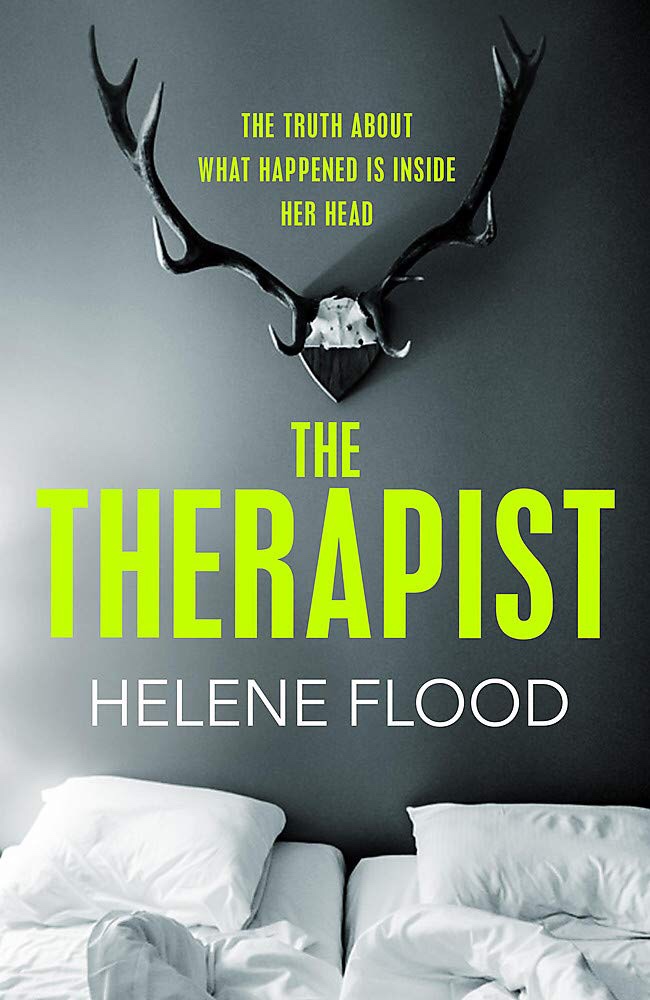
The Therapist by Helene Flood.

Helene Flood has written a fascinating thriller about a therapist, set in Oslo. It’s complexity of character and their motivations probably comes from the fact that the author is a psychologist. Straightaway, I was invested and really excited me to get inside the character’s minds. Sara. and her husband Sigurd live in his family home, a large three storey house they’re currently renovating. Next door is a small addition to the property, housing Sarah’s office and therapy room. On this Friday, Sara is seeing three clients and then settling in for a quiet weekend while Sigurd is on a boy’s weekend away with his best friendS. At lunchtime he leaves Sara a message to say they’ve arrived safely at his family’s cabin and his friend is gathering firewood. She expects to speak to him that evening, so is shocked when one of his friends calls to ask where Sigurd is, as he hasn’t arrived yet. In the days following Sigurd’s disappearance Sara must cope with a very thorough detective searching her house and dissecting her relationship, an intruder breaking into the house, breaking the news to her distracted and narcissistic father, and constantly wondering where Sigurd has gone. On top of everything, she has clients to see.

The story is told in two narratives from Sara’s point of view. In one, we’re in the present day, experiencing the investigation and Sara’s interactions with family and friends in the wake of Sigurd’s disappearance. In the second we meet a very different Sara, as she first meets Sigurd, spends time with friends and makes the decision to move to Oslo. This Sara seems lighter mentally, she’s obviously younger but not by much, so what has changed? The past Sara seems to be enjoying life, despite a stressful clinical post with drug users. Sigurd is also completing his training in architecture and is incredibly busy. The distance between them is something she hadn’t anticipated, she knew they would both be busy, but thought the strength of their feelings would keep them on track. A brief interlude away at a festival with friends sees Sara’s mood lift completely. She starts to relax and enjoy herself. However, there will be secrets kept about this weekend that have huge implications for her future.

Present day Sara seems very controlled and reserved. The author creates this interesting gap between Sara’s interior world and the way she presents herself to the world outside. She is always thinking, analysing and wondering, but her conversation is minimal and gives very little away about how she feels. There’s something called cognitive dissonance going on here, a huge gap between the Sara she presents to others and how she truly feels. There are three core values a therapist should have when seeing clients: authenticity, non-judgement and prizing the client. Sara seems strangely detached from her emotions – still seeing clients even after Sigurd’s disappearance as if nothing’s happened. While this is great for continuity, it isn’t very authentic and I felt that instead of practicing authentically she is wearing her therapist’s role like a mask. Even before she knows about her husband, Sara’s thinking is very ordered. She has the day split into therapy hours, admin time, lunch until she can throw on some pyjamas and chill out. It feels like she’s listing tasks just to get through the day, mentally ticking it off seems like a habit borne out of anxiety or trying to keep motivated when depressed. I wouldn’t say she’s enjoying life much. Their home seems the same, with plans for a beautifully finished house, that are currently a list of tasks they can’t afford. In trying to achieve something ambitious and beautiful, they’ve made their current lives very uncomfortable and messy. The state of the house seems to get Sara down and Sigurd wants her to take on more clients so they have more money to get on with the plans. However, I don’t think Sara is in the mental state to cope with more therapy hours.

I loved the author’s creation of Sara’s narcissistic father, a professor and philosopher with controversial right wing views about crime, family and vigilantism. Sara describes talking to her father, almost like an audience with royalty. It’s so rare to have all his attention on you, it’s difficult just to be his daughter. He seems to give off the sense they should be grateful for his unwavering attention and if either daughter struggles to make use of the time, conversation soon turns to him, his work or one of the many students who seem to loiter round the house like acolytes. In fact Sara is so bewildered by his attention on this occasion she doesn’t tell him her devastating news, but instead debates something totally unrelated with him then goes home again. It’s no surprise that she keeps her vulnerabilities and worries to herself – there’s never been anyone interested in hearing them. Even her sister Annika, although she looks after Sara, drops into her role as lawyer as well as sister. This is partly to remind Sara how she’s being viewed by the police, to remind the police not to take liberties, but also to give herself a professional role to hide behind. It is only when one of Sara’s friends arrives and acts naturally by hugging her, that she even feels like crying.

As Sara starts to undertake her own investigation, secrets start to emerge about the couple’s life together. There has been some distance between them for a while. Her relationship with his family is not a warm one, with Sigurd’s mother resentful that they live in her childhood home – left to Sigurd by his grandfather. They don’t even attempt to look after h er and she foresees a long wrangle over Sigurd’s will. There were arguments at Sigurd’s work with differences in architectural perspectives, and who is the mystery blonde that sometimes wait for Sigurd after work? If his work on the Atkins house was finished long ago, why is it still in his diary and where is he really spending his time. The author keeps us brilliantly on edge with red herrings and reveals galore. We see the police through Sara’s eyes, which might explain why they seem curiously non-committal about everything. We never truly know how they feel about Sara or where the investigation is going. Obviously she is a possible suspect. However, there are points in the investigation, when Sara is sure there is an intruder at the house, where they seem indifferent to her worries and her safety. I was never quite sure whether Sara was the ultimate unreliable narrator and would turn out to be implicated in her husband’s disappearance. She seemed detached from the reality of it, even within the context that their relationship has deteriorated over time. The ending was a surprise and the double reveal was beautifully done, and very satisfying. I stayed up late to finish the last few chapters, because I was so hooked on the story. This was a psychological thriller I would definitely recommend.

Meet The Author

Helene Flood is a psychologist who obtained her doctoral degree on violence, revictimization and trauma-related shame and guilt in 2016. She now works as a psychologist and researcher at the National Centre for Violence and Traumatic Stress. She lives in Oslo with her husband and two children. The Therapist is her first adult novel. It has been sold in 27 counties and film rights have been bought by Anonymous Content. Her second novel, The Lover, will be published in English in 2022.

Posted in Netgalley

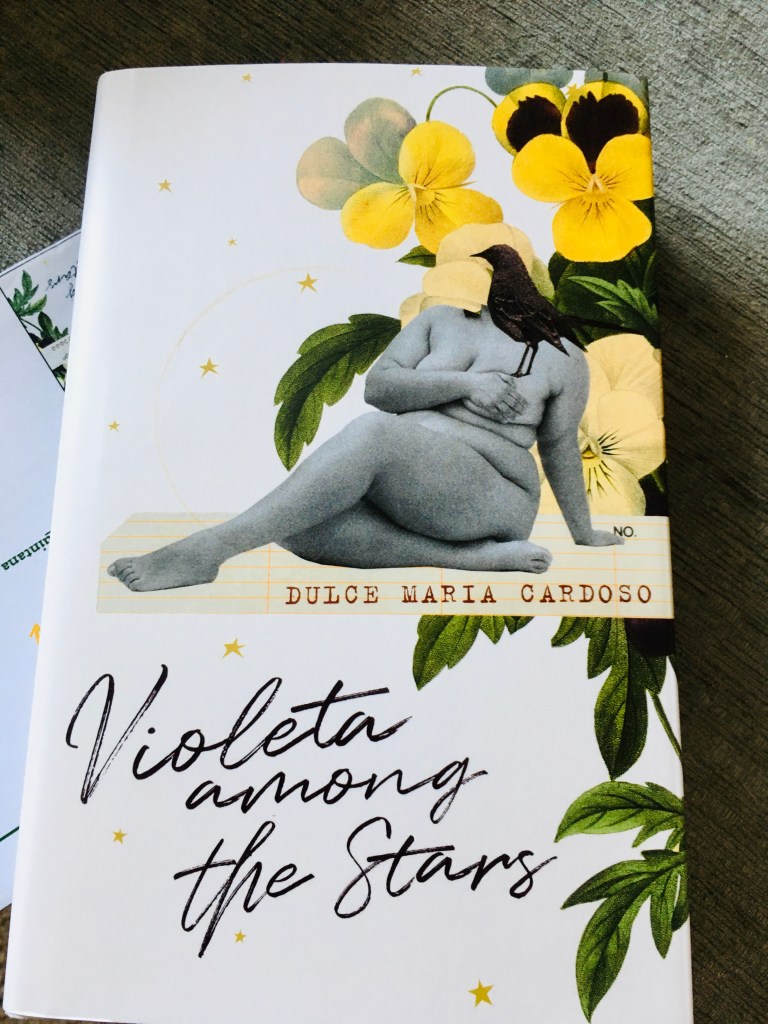
Violeta Among The Stars by Dulce Maria Cardoso.

I think this beautiful novel was sent to me at the right time. Two things have happened lately. I’ve had a relapse of my long term illness Multiple Sclerosis, and it has affected my sight, balance and vertigo. Secondly, I’ve been reading several books where the central theme is that even small lives can be extraordinary or have a huge effect in the world. I think the two things are linked, because I’m a big believer in finding the right book at the right time. When I don’t have a groaning TBR bookcase, I tend to choose my reading very emotionally. What do I feel like reading? I can’t understand readers who are able to read books in chronological order, whatever the subject or however they’re feeling. I really have to be in the mood. It took me several years to read Middlesex by Jeffrey Eugenides, but when I did I absolutely loved it. I think this is the reason many bookworms have buckling shelves – we know we’ll want to read that new book, just not right now. Well, this book was the right one for right now – a look at how the ordinary life of one woman, becomes extraordinary because of the way it is told. A reminder for me that though I may live a quiet and often restricted existence, I can still have an impact on the world.

This particular novel is unique, because it carries a whole lifetime suspended in a single moment. Violeta is drunk and in utter despair when she crashes her car. As she’s thrown around in the car, her seat belt locks and she’s left suspended both physically and metaphorically. As she hangs between life and death, memories of her life flash before her all at once and in no particular order. Memories of her distant mother collide with her everyday life on the road selling waxing products. She remembers moments fumbling on toilet floors with truck drivers she barely knows at motorway service stations. A thousand seemingly ordinary encounters pass through her mind and make up a life. Her past comes up for scrutiny, culminating in how she sacrificed the dreams she had for adolescent relationships that simply let her down. Through this poetic meditation, an ordinary life becomes epic.

This whole book is written as a stream of consciousness so don’t expect tidy chronological memories or carefully constructed sentences. This is one, long paragraph without punctuation, cleverly keeping the reader hanging in the same position as the author. This is a raw examination of the ‘self’, how it is constructed and whether it is ever a constant, unchanging thing. Or is it more like Frankenstein’s creature? Hastily stitched from parts of our parents, our experiences, and those things we like and dislike. An ever changing collage rather than a single, fixed identity. Memories weave in and out of each other, past and present collide and sentences drift away unfinished. We are listening in on Violeta’s inner thoughts so they are never censored or tidy. This is a troubled woman. She’s at war with her family, her own body and her own anonymous sexual conquests. Yet, even though there’s no real structure or plot, we start to understand her. She has an incredible sense of humour and there is a feminist element too, particularly the way we wage war on body hair – Violeta sells waxing products. There’s also the open expression of sexuality, when young she would experiment with local boys and age now visits truck stops for anonymous sexual with strangers. What is transgressive about these encounters, is that the narrator’s active sex life should not be available to a fat woman. I’m a bigger woman, we’re not meant to be attractive in our imperfect bodies. Yet, just like Violeta, I’ve never had a problem finding someone to have sex with. Men are not meant to want sex with fat women, but the truth is, they do.

However, it’s not just other people and our identity under scrutiny. The physical world and concept of time also shifts around us; the reader’s perception of this world expands alongside Violeta. She stands beside us. She experiences the world around her as layers of time, shown in time-slip moments such as when she recalls the previous day’s meal at a restaurant, but simultaneously remembers visiting the shop when it was a hair salon, alongside her mother. Places and people exist simultaneously in the past and future, something I can definitely understand as I get older. Violeta awoke a fire in me. I had a few moments full of emotion and kinship for those bigger women who accept being the butt of a joke, feel inadequate or even hate their bodies so much they accept the abuse meted out by others. There are elements of the book that are painful, especially when we read about her childhood. This goes some way to explaining the detachment we see in the interactions with her own daughter, highlighting the concept of inter-generational pain. I’ve never read a book like this one, especially the structure and the leaps from poetry to philosophy. It reminds me of another book I recently read, where the author attempts to grasp what it is to be a human being. A wonderful, occasionally dark, but unusual look at life from the perspective of someone whose life is, quite literally, hanging in the balance.


suddenly


I should have stayed at home, I should have stayed at home, I should have stayed at home, for some time, seconds, hours, I can do nothing,


suddenly I stop

Posted in Netgalley

The Maidens by Alex Michaelides

There’s probably a word in another language that properly describes the weird combination of trepidation and excitement a bookworm feels when they see a second book coming. You see they loved the first one. It was different. With an incredible twist that no one saw coming! It was like seeing The Sixth Sense for the first time, being blown away, then wondering what M. Night Shymalan could possibly do to follow it? If this is what it likes for the reader, imagine the writer’s fear in following such a smash hit as Alex Michaelides’s The Silent Patient. It must have been incredible. So I approached The Maidens as if it was a piñata filled with bees!

The premise sounded interesting. Psychologist Mariana Andros is summoned to Cambridge University by her niece Zoe. It’s a place filled with memories for Mariana, because it’s where she met her late husband Sebastian. For Zoe it is now the place where her best friend Tara has been murdered. Zoe is very special to her aunt, because they are each other’s only family. They have been closer since the death of Sebastian, who drowned on a romantic holiday in the Greek Islands only a year ago. Mariana knows how desperate Zoe must feel, so cancels her group therapy clients and sets off to meet her in Cambridge, where she stays in university lodgings. Here she meets the charismatic and Byronic Professor Fosca who teaches Classical Philology. Mariana is disturbed by him and his habit of gathering together ‘special scholars’ who receive group tuition from him. They are called The Maidens – although whether this is Fosca’s invention or the girls we are never sure and, of course, each one of them is incredibly beautiful, including their missing member, Tara.

Zoe is convinced Fosca is behind the murder, but with no evidence except a strange feeling and dislike of his odd circle of academic groupies, nothing can be done. I had the feeling that this tutor was perhaps a genius in his field, but was socially awkward and unaware of societal norms. Did he think his maidens gave him an air of eccentricity perhaps? However, he was too obvious to be the real villain of the piece. Yet, no matter how hard I tried, I couldn’t guess the answer. Thankfully the book had a great pace and once it had it me hooked, I just couldn’t leave it alone. I read it in my car on the way to our holiday cottage, in the bath, and in the park. However, I still couldn’t possibly have guessed at the incredibly tense showdown at the end.

For me there were some negatives. I had difficulty connecting to the characters emotionally, especially Mariana who never fully came to life for me. The Greek tragedy element was clever, as quotes on postcards sent to the victims felt like clues to the killer’s identity. However, I was taught classics at school so these references were familiar to me and I wondered how this whole theme would be received for someone without any knowledge of Greek myths. I also felt that how Mariana inserted herself into the investigation was highly unlikely. However, I did enjoy the academic setting and I felt the author captured that sense of importance academics can have about their subject area. I thought the he represented academia well, like being in a bubble, living and breathing your passion. The murders punctured their way through this protective layer, bringing the real world into a rarefied way of life. The passing connection to The Silent Patient wasn’t needed, but did add an interesting aspect to the ending; I now have my own epilogue running in my head, following certain characters into that other fictional world.

I was disturbed by the visitation of a swan, described as having black eyes that bored right through Mariana. I wondered what this represented and thought of the famous Greek myth of Leda and the swan – where Zeus disguises himself as a swan in order to rape/seduce Leda who has no knowledge of the swan’s true identity. For me this conjured up ideas around love or infatuation being blind, loving and trusting someone who isn’t what they seem. What I loved most of all though, was perhaps linked to the swan. The author has created a therapist with all the skills of perception and understanding in her toolbox, but an inability to apply them in her own life. She loves those closest to her blindly, never seeing their true nature just as Leda only sees a swan. Swans are also our analogy for someone very serene on the surface, but masking anxiety or the great effort it takes to be present. Swans look beautifully calm and composed above the water and this reminded me of Mariana; the calm and stability is only skin deep. I thought the novel was part psychological suspense, part crime fiction, and part gothic novel, but it was definitely all thriller.

Meet The Author.


Alex Michaelides was born and raised in Cyprus. He has a MA in English Literature from Trinity College, Cambridge University, and a MA in Screenwriting from the American Film Institute in Los Angeles. The Silent Patient was his first novel. It spent over a year on the New York Times bestseller list and sold in a record-breaking 49 countries. He lives in London.

Posted in Netgalley

For The Wolf by Hannah Whitten.

The first daughter is for the throne. The second is for the Wolf.

Every so often I venture into reading fantasy and have been enchanted by some of the books I’ve stumbled upon, often because of their stunning covers in the first instance. When I think of my favourite books – The Night Circus, Ten Thousand Doors of January, Alice Hoffman’s Practical Magic series and Jonathon Strange and Mr Norrell – all come up very high on the list. Yet I certainly don’t think of myself as solely a fantasy blogger, I don’t have enough knowledge of the genre. I love that sense of total escape and I often read with a smile on my face because I’m so charmed by the audacity of these writers and how they bend the rules of our world with some magic realism or create a beautiful wild new world for the reader to explore. I was drawn to this book by a very beautiful cover and the thought that someone would be playing with the boundaries of a well known fairy tale.

Redarys has always known her fate. As the kingdom’s second daughter, she is doomed to become a sacrifice to the wolf who keeps Wilderwood’s gods captive in the forest. Red seems to have acquiesced to this fate and her mother’s cool and distant attitude tells Red that she too has prepared herself for this moment, by never becoming close with her daughter. Red’s sister Neve wants to rage against the kingdom and tempts Red to run away that night, as far as she can. She has even spoken to the man who loves Red and sets up a secret moment where he can declare his plans to help her run away. He is promised to Neve, but vows to help Red escape her fate. But does she want to? Red has a hidden power deep within that scares her, and she never wants to hurt someone she loves again. She feels the woods luring her and her power is exactly what they need. The stories she’s been told from childhood are not the full truth. The spirits have weakened. The wolf is just a man, as pushed into his fate as she is. Can Red use her power for good and set them all free?

From the very first pages I was drawn into this other world by the author’s use of detailed imagery. She builds an incredible new world, from words: the sumptuous clothing and the meaning behind their colours, the rooms of the castle and even the dark woods beyond are all rendered beautifully. As guests gather for a celebration on the eve of the sacrifice, Red has chosen a blood red dress contrasting strongly with her mother and sister’s choices and making it very clear who she is. There’s a certain pride in her, of who she is and the role she’s decided to accept. I enjoyed the sisterly love between Red and Neve. We do have sections narrated by Neve to give some contrast from Red’s point of view. Although they’re quite different Neve and Red are incredibly close, they have each other’s backs and in a difficult situation I have no doubt each would fight for the other. I liked both characters, but Red is definitely the more dominant sister despite their opposing fates. Her bravery in accepting her fate and her sense of duty to the kingdom were very admirable. She has some attitude too and I loved that feistiness in her. She’s also a voracious reader and the magnificent library was like something out of my dreams.

There is romance too, a slow burning attraction between Red and her unusual beau. I liked that it wasn’t overdone or flowery, and that Red didn’t lose any of her feistiness in the relationship. She wants to be loved for the person she is, not to change. I won’t reveal her love interest, but it’s their feeling of being trapped into a life they didn’t choose that brings them together. They are bound by blood and sacrifice. He’s a proper Gothic hero too, just as strong and fierce as Red but with an edge. He’s definitely the boyfriend you wouldn’t take home to Mum. It’s a complete awakening once Red enters the wood and she learns that the myths she’s been told about the world are far from the truth. I really enjoyed my foray into the world of fantasy. We all need a brooding love interest, with dark woods and crumbling castles. This isn’t all romance though, it’s more reminiscent of the original blood thirsty fairy tales where women are willing to saw off their own toes to fit a glass slipper or where an enchantment forces them to dance every night till their feet are bleeding. There is blood, so if you’re thinking of sweet, fluffy, fairy tales it might be better to imagine Disney meets Game of Thrones. This is a well written Gothic fairy tale, with a heroine who can not only save herself, but the world as well.

Meet The Author

Hannah Whitten has been writing to amuse herself since she could hold a pen, and sometime in high school, she figured out that what amused her might also amuse others. When she’s not writing, she’s reading, making music, or attempting to bake. She lives in Tennessee with her husband and children in a house ruled by a temperamental cat.

Posted in Netgalley

Two Women in Rome by Elizabeth Buchan.

Regular readers may remember how much I loved Elizabeth Buchan’s last novel The Museum of Broken Promises, in fact it was one of my top twenty of the year. So, I was very excited to be approved to read this via NetGalley. The story is split into two timelines and follows the lives of two British women who spend some time living in Rome. Lottie Archer arrives at the Eternal City as a new wife and with a new job as an archivist at the Archivo Espatriati. Her very first task is to archive the papers and journal of a woman called Nina Lawrence who worked as a gardener in Rome in the late 1970s. This was a difficult time for the country socially and politically, known as the ‘Years of Lead’ – a period which stretched from the 1960s to the 1980s and resulted in many incidents of far right and far left terrorism. Nina’s task was to redesign gardens that still lay devastated by WW2, something she was passionate about and very talented. Within her papers, is a large leather journal, rather worse for wear and full of drawings and pressed plants. However, Lottie also finds a painting of the Annunciation – the moment where the Virgin Mary is visited by the angel Gabriel to tell her she will be the mother of Jesus, the son of God. Lottie thinks it may be medieval, due to the colours used and the iconography. This piques her interest and she is disturbed to learn that Nina was murdered in Rome, and that very few people attended her funeral in the Protestant cemetery. Interestingly though, one mourner was a Catholic priest, which strokes Lottie as very unusual. She wants to find out more about the painting, but she also finds herself sucked into the mystery of what happened to Nina, who murdered her and why did she seem so friendless in this beautiful city?

I found the novel a little slow at first. I didn’t click with Lottie straight away, the detail and discussion of medieval art was quite dense (or I was) and the complexity of the political situation wasn’t always easy to follow. I also thought the intricacies and machinations of the Catholic Church might be a little difficult to penetrate for those who don’t know much about Catholicism – luckily I am one, with convent teaching under my belt, so this was not so difficult for me. However, I did like that the author didn’t simplify these areas of the book because in a way they added to the mystery of a city that has an incredibly complicated history. I was drawn in most by the story of Nina, just like Lottie is. I could understand why her story would get under your skin as someone interested in the past and trying to make sense of it. There is a kinship between the two women, even though they can never meet. Lottie is unsure of her position in Rome for several reasons. Firstly, when she arrives to work at the archive, her new role hasn’t quite been vacated. She moves into the apartment that her husband Tom shared with his previous partner Clare, and all around her are memories that don’t belong to her (including an ugly lamp, that should be kept because it works perfectly well, according to their formidable housekeeper). All of this is compounded by an underlying sense of abandonment, formed because she was left by her birth mother. There’s something lost about Nina that she latches onto and the more she finds out, the more she wonders whether Nina was more than a gardener?

Nina is a rather fascinating woman, who shares Lottie’s sense of rootlessness and lack of ties. There is definitely a deeply woven reason for Nina’s death, involving politics, security services, the church and a rather unwise, but beautiful love affair that unfolds in her journal. It is this aspect of her character that really humanises her for me, she becomes a real, living and breathing person and it is then even more tragic when the end comes. One thing both narratives capture beautifully is the city itself. Just like the narrative structure of the book, we get a sense of Rome as place where the past is very closely layered under the present. I thought about the tunnels and cave structures that run under the city’s streets, some still populated with WW2 vehicles, as an embodiment of this feeling. The present is full of tourists, rushing around on their itineraries getting a sense of the past and present city, but not necessarily the world underneath their feet. The author evokes the sights and smells beautifully: describing the less followed paths, the street fountains carved with dolphins and maidens, the detail of the plants so precious to Nina, the smells and sight of the deli counters full of salami, olives and beautifully ripe tomatoes. I found myself craving a trip to Italy all the time while reading!

However, she also shows its impenetrability to outsiders who know nothing of Catholicism, Roman etiquette or it’s slightly corrupt ways of getting business done. This is captured most beautifully in Lottie’s burgeoning relationship with their housekeeper. I also enjoyed her friendship with the book binder, who she asks to authenticate the painting she finds without understanding his significance. The background on medieval painting is vital here, not just to understand the symbolism within the traditional aspects, but to identify those that are far more transgressive and intensely personal. This is a complicated mystery/thriller, mixed with a travelogue of Rome and an intense love story. It asks questions about where we belong and whether our final destinations have been reached by choice, accident or a deep sense of duty to our family, our religion and our country. By the end I realised I’d become so enthralled, I was very sad to leave Rome behind.

Thank you to Atlantic Books for my digital copy via NetGalley.