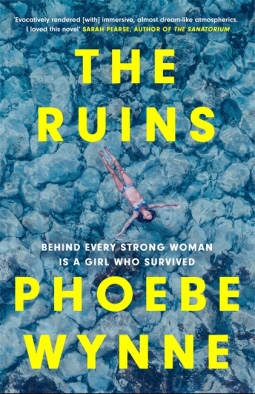
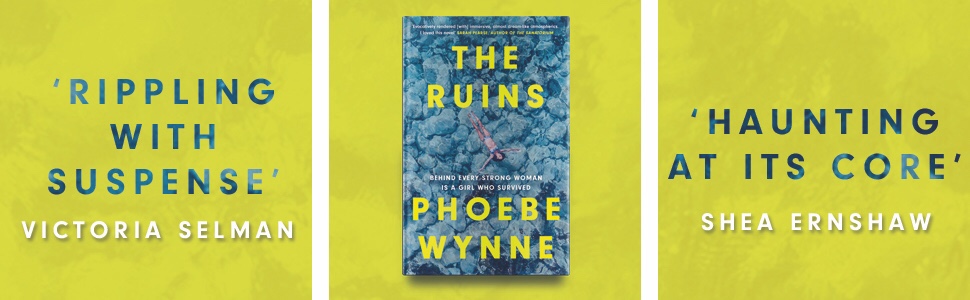
At about 40% into the kindle version of this book it started to become very uncomfortable reading. I’d no idea where it was going to go and I wasn’t sure if I wanted to be along for the ride. I was glad I stayed with it, because of the truth it shows about the effects of trauma. They are life long. Now I’m finding it very difficult to review in my usual way. It felt like reading a client’s journal work, the sort I might ask them to write as part of their counselling journey. There was something prurient about reading Ruby’s account, because it was so intimate and harrowing who could gain pleasure from reading it? Perhaps this is exactly the effect that Phoebe Wynne was hoping to evoke in the reader? Not all reading is pleasurable, sometimes it has a different purpose. To educate, to shock, to show people they are not alone in their experience. In the author’s first novel Madame we were introduced to some of the same themes: the super rich who are above the law and practice exploitation like a religion; young teenage girls being groomed to become Stepford wives to the millionaire class; a creepy gothic school where the girls are educated; the complicity of women in this continuous cycle. Yet with that book the creepy undertones suggested a supernatural element and the malice of some of the pupils was just enough for dislike to creep in. Both help us look past the true horror of what is going on. Once I’d finished the book I felt like I’d glimpsed behind life’s curtain to see the decadent and corrupt inner workings of society. This book felt different. The girls were younger, the setting perhaps more realistic, so the flashbacks to what should have been a blissful summer for three girls at a French château, felt claustrophobic, exploitative and very dark indeed.
Ruby and her family are spending the summer at their Château in France, as usual they are joined by her father’s two best friends; Harley and Angus, with his daughter Imogen. However, added to their party this year are the Fullers and their daughter Annie, plus a woman called Georgina and her teenage daughter Ned (Edwina). Their normal equilibrium is disturbed immediately when one of the Fullers drives back to the château after a few drinks and hits a child in the village. With their combined power and influence, the men ‘handle’ the problem, but Mrs Fuller is not so easily silenced. Was she driving or is she reacting to her husband’s callous disregard for life? Whatever the reason she returns to the château screaming and crying. She has to be sedated and removed back to England as soon as possible. From there the holiday descends into decadence – heavy drinking becomes the norm, little jibes and full blown arguments ensue.
Make no mistake these men are in charge and however they choose to behave, no one will rebuke them. The author creates a sense of powerlessness in the women of the party, from the hysterical Mrs Fuller to the passivity of Ruby’s mum. Within this patriarchy, women are policing the borders. Whether it’s because they believe in the system or because they are keeping quiet to stay safe, every woman here is reacting to male dominance. Ruby’s mum is a walking list of instructions – keep up your flute practice, stay quiet at the table, don’t ask questions and above all don’t read books. Ruby’s love of Agatha Christie is frowned upon by the men and that disapproval is acted on by her mother who eventually stops her. At first her reading is tolerated and admired by Angus. Harley cruelly ruins the end of Murder on the Orient Express, making the point that reading fiction is not the best use of Ruby’s time. Then a seemingly kind birthday present of Death on the Nile becomes tainted – it’s intentions called into question by later events. Events that suggest someone might have been using her love of reading as a way to groom this young girl. Then eventually, the book becomes part of a terrible traumatic memory. I don’t have any personal experience of what Ruby and Imogen go through that summer, but it’s still shocking to read. It was the neglect that bothered me most, the fact that none of these mothers, except perhaps Ned’s mother Georgina, are on their daughter’s side. Not only do they seem curiously detached from how their husbands behave – until it’s in front of other people – they don’t intervene with their daughters, spend time with them or speak up when they are treated badly. Their silence makes them complicit. As a reader I felt powerless to stop what was happening.
In between the flashes of that summer we follow another trip to France, many years later, with Mrs Cosgrove. She’s come to visit the château that’s for sale along with the coast, the venue of childhood memories and events that still haunt her today. Some locals seem to recognise her but she denies being here before, claiming to be taking a holiday. Yet Mrs Cosgrove is jumpy, looking out for particular cars and appearing frightened when two men appear also claiming a link to the château. Does this place and it’s memories still have power over her? Or is she hoping to finally breathe, so that what happened here is no longer such an influence on her life? She might not be the only one who has ghosts to lay here. I found the mood of these sections very different from the tension and seedy atmosphere of the past. Mrs Cosgrove is tense, but curiously I wasn’t even though her story takes us back into the truth of that summer. Maybe because I knew the worst had already happened. Maybe because the after effects of trauma are something I’m more used to, where I have some power to help. Considering the scandals that haunt the headlines these days, whether it’s Harvey Weinstein, Jimmy Saville, Jeffrey Epstein and Ghislaine Maxwell, no one can be surprised by a constructed reality in which the rich and entitled behave as if anything they want they can take. Perhaps my reluctance to read about it says a lot about why these abusers were free to commit crimes against those less powerful for so long – no one wants to face the reality that people can and do act this way. The men in this novel are grotesque, we want to think of them as monsters in order to distance them from ourselves, but sadly they are not. The author wants us to see and not look away, otherwise we are complicit too. In the blurb, Phoebe Wynne says that very little is made up and with my twenty years experience of working in mental health I sadly confirm that childhood abuse is more common than most realise. Perhaps my struggle with reading it is because I’ve seen what abuse does to people and witnessing the effects of trauma is hard to forget. The author also says she wrote the book so that it might ‘provide some consolation for the darkest moments of female experience’ and I truly hope it does that.
Meet the Author
Phoebe Wynne worked in education for eight years, teaching Classics in the UK and English Language and Literature in Paris. She left the classroom to focus on her writing, and went on to hone her craft in Los Angeles and in London. She is both British and French, and currently spends her time between France and England.‘Madam’ is her debut novel, and ‘The Ruins’ is her second.
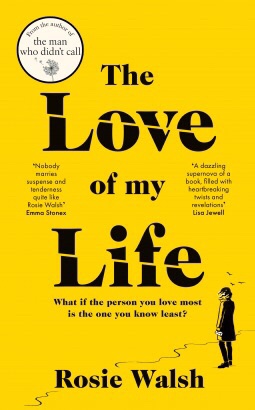
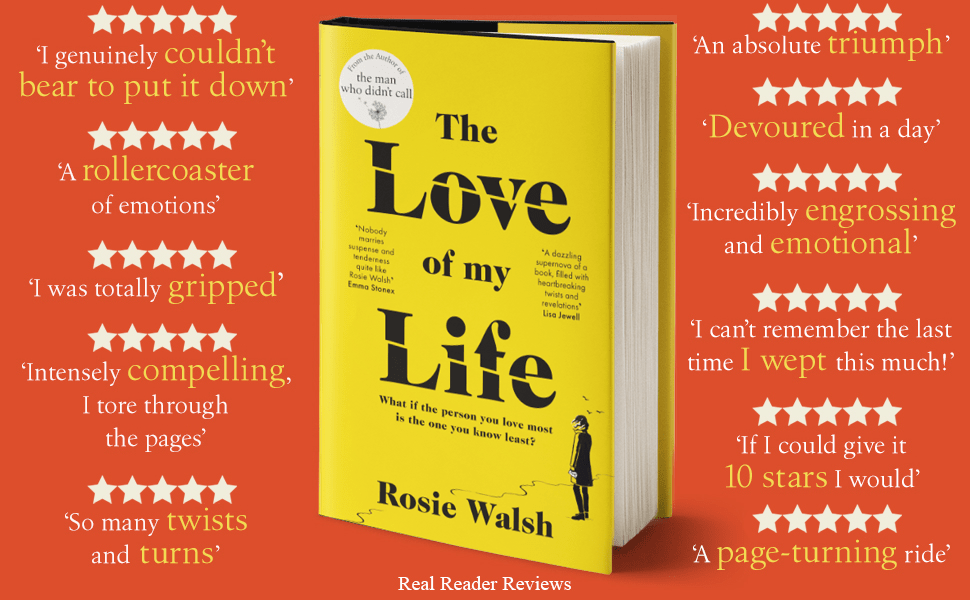
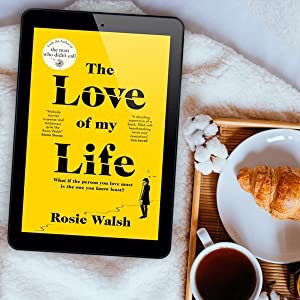
This is only Rosie Walsh’s second novel, but she’s established herself as one of those authors. Authors who draw you in, leave you wondering what the hell is going on, then pull the rug from under you by turning everything on it’s head. She’s also brilliant at building complex characters, the sort that stay with you. I know that Emma will stay with me for a long time. Emma is an academic, married to Leo and mum to three year old Ruby. Her field of study is the creatures that are brought in by the tide and then swept out again, her claim to fame was finding a new mutation of a Japanese crab. This took her through her masters and eventually resulted in a TV series. Leo adores Emma and the feeling is mutual, but things have been tough lately as Emma has had cancer. Leo is an obituary writer at a newspaper and because Emma was a TV personality the department was writing a ‘stock’ – an obituary they keep on file just in case. Leo asks if he can add some notes that he’d been writing and it’s here that Leo notices something wrong. Emma didn’t graduate from the university she said she did. It’s a minor thing, but along with a lot of messages from very odd male fans and her ‘disappearing times’ when she takes herself away to get her head straight, Leo’s mind is running through hundreds of scenarios. He can’t believe Emma would have an affair, but it’s the simplest explanation. He keeps digging and will have to confront her with what he’s found. Emma is becoming anxious, especially when he starts asking questions. How can she convince him that the life they’ve had together and the love she has for him is true? When everything else has been a lie.
I don’t know any other author who so beautifully combines a tender love story with aspects of a domestic thriller. Usually doubt is cast on the central relationship to such a degree that the reader stops rooting for them. Here I was really confused, because I believed in Leo and Emma. Each character felt so real and they were easy and comfortable together. When we flashed back to their marriage proposal it was probably the wrong moment, rushed and definitely not Insta-ready, but it was touching and honest. I really felt Emma’s eagerness to be with Leo. I couldn’t believe she would then have an affair, but the evidence did point that way. As the truth started to come out I felt so emotional for this young woman, who really had no one left to help her make good choices once she’d lost both parents. No one is harder on Emma than she is on herself and it was sometimes sad and painful to be in her head. I thought the author used the landscape beautifully and knowing Alnmouth well, I could see how it’s cottages and incredible view of the sea would soothe the mind. Although I’ve also been therein the midst of a storm and as the waves lashed against the rocks and driving rain set in, it was very inhospitable. I think this shows the extremes of Emma’s mood as she’s gone through her life, dealing with very deep lows and then sunny, enthusiastic highs.
Her house in Hampstead Heath, which was her grandmother’s, gives us some indication of how her mind feels. She’s never sorted through her grandmother’s things, so is living a new life cluttered with reminders of the past. She feels safe there, it’s possibly the only place she ever has. Leo is coming from a solid background. I loved his relationship with his brother and it’s likely he’s never felt truly lost and alone. Rosie Walsh has created a very rare novel and engrossing novel. So much so that every time I was away from Leo and Emma’s story I longed to back home with my book. She’s packed her book full of twists and turns, but with so much tenderness and love it never fully veered into domestic noir. Despite her secrets and lies, I never stopped wanting Emma to be with Leo and her little girl. I came away feeling that we never truly know another person’s journey, but we can empathise and try to understand. Emma’s mistake was thinking Leo wouldn’t love her if he knew the truth, but maybe she has underestimated the depth of that love.
Published on 23rd June 2022 by Mantle
Meet The Author
Rosie Walsh is the internationally bestselling author of two novels, the global smash hit THE MAN WHO DIDN’T CALL, and – new for 2022 – THE LOVE OF MY LIFE, a heart-wrenching, keep-you-up-all-night emotional thriller, which was an instant New York Times bestseller and stayed in the German top ten for several weeks.
Rosie Walsh lives on a medieval farm in Devon, UK, with her partner and two young children, after years living and travelling all over the world as a documentary producer and writer.
The Man Who Didn’t Call (UK) / Ghosted (US) was her first book under her own name, and was published around the world in 2018, going on to be a multimillion bestseller.
Prior to writing under her own name she wrote four romantic comedies under the pseudonym Lucy Robinson. When she isn’t parenting or writing, Rosie can be found walking on Dartmoor, growing vegetables and throwing raves for adults and children in leaking barns.
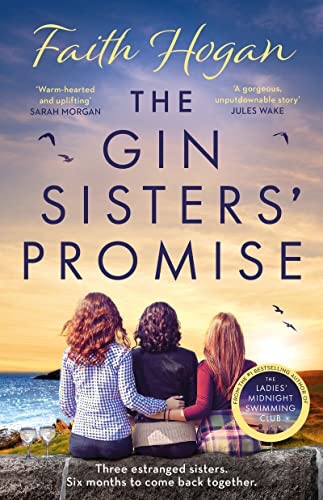
Three estranged sisters. Six months to come back together.
When Georgie, Iris and Nola’s mother died and their father disappeared into his grief, the sisters made a pact: they would always be there for one another, no matter what.
Now, decades later, they haven’t spoken for years and can barely stand to be in the same room. As his health declines, their father comes up with a plan to bring them back to one another. In his will, he states that before they can claim their inheritance, they must spend six months living together in their childhood home in the village of Ballycove, Ireland, and try to repair their broken relationships.
As the months progress, old resentments boil over, new secrets threaten to come out and each sister must decide what matters more: their pride, or their family. Can they overcome their past and find a way to love each other once more?
This is another comforting instalment of what Faith Hogan does best – the charm and quirks of an Irish village, picturesque settings, a pinch of humour, and complicated female relationships. The latter being three sisters with so many differences it might take a lifetime to sort them out, never mind six months. Each has enough endearing qualities that it’s possible to see through the more difficult parts of their personalities. Iris is the oldest sister and, to borrow a phrase from Helen Fielding, the other two see her as ‘the smug married one’. Neither can stand Iris’s husband Miles, who is controlling, unfaithful and created a rift in the family when he was caught stealing from the family distillery. Georgie loathes him for that and the creepy hold he seems to have over their elder sister, a resentment that possibly dates back to Iris’s role as mum to the younger girls when their mother died. I felt for Iris the most. Having stuck her neck out for Miles in their teenage years, he repaid her by stealing when he should have been learning the distillery’s secrets in order to take over from their father. Over the years Iris has become lost, acquiescing to Miles’s wishes even when it came down to something very important to her. She wanted children. He didn’t. Now he has a mistress, a baby on the way and would like to talk Iris into giving him everything they own. Georgie has the balls in the family and was determined to leave Ballycove and make a success of her life. Now in her thirties she’s expecting promotion and a partnership at the marketing firm where she works, but the board have decided against it. It turns out that Georgie is universally disliked by all her co-workers. Her work is exceptional, but her manner is rude and condescending. Unable to take being passed over, Georgie’s summons home comes at just the right time. However, underneath her bullish exterior she is devastated at the loss of her father who she was very close to. The youngest sister, Nola, is the beauty of the family and the baby. She spent her teens desperate for a life beyond Ballycove and moved to London as soon as she could to study acting. Having had a burst of success playing a favourite new addition in a British soap opera, she turned an original two week part into years, but was recently shocked to be told she was being killed off. Unable to admit to failure, after a long time attending auditions which came to nothing, Nola is returning home broke and without an agent.
I loved the way these sister’s personalities rub against each other, often in complete ignorance or misunderstanding of how the other is feeling. They neglect to realise that they need to meet as they are now. They’re making assumptions about each other based on old information, they base it on the way they acted as teenagers because that’s when they were last this close. To place them back in the family home, while grieving and with all these old resentments flying around, is a massive gamble and I enjoyed finding out whether it would pay off. The way that each sister veered towards their own niche within the estate was fun, because it balanced out the arguing and negativity. Here each woman was in their element: Iris loves creating homes and cozy spaces for people to enjoy; Georgie loves a challenge and when that’s matched with a tribute to their mother she’s all fired up; Nola starts to realise that here in Ballycove she’s been successful and can now use that experience to help others follow their dreams. There’s a wisdom that comes with age and the sisters are surprised to meet others who stayed or returned home. It’s Iris who seems to make that connection in her mind, that she can have what she wants and be fulfilled as she is. She doesn’t need a man to help her reach her dreams and she is surprisingly capable. I was desperate for her to send Miles on his way and realise her own worth, to fight her corner, but I had to wait to the very end to find out whether she would. The main focus though is the three sisters and whether they can come together, to use their complimentary skills to keep their childhood home and their parent’s memories alive. This is a cozy but emotionally intelligent read, all set within beautiful countryside and written by an author whose love for rural Ireland is evident throughout.
Meet The Author
Faith Hogan is an award-winning and bestselling author of seven contemporary fiction novels. Her books have featured as Book Club Favorites, Net Galley Hot Reads and Summer Must Reads. She writes grown up women’s fiction which is unashamedly uplifting, feel good and inspiring.
Faith’s Kindle Number 1 bestselling book, The Ladies Midnight Swimming Club is published in May 2021. Your 2022 Faith Hogan fix – The Gin Sisters’ Promise is out now!
She writes twisty contemporary crime fiction as Geraldine Hogan.
She lives in the west of Ireland with her family and a very busy Labrador named Penny. She’s a writer, reader, enthusiastic dog walker and reluctant jogger – except of course when it is raining!
Ever since reading Lisa Jewell’s novel The Family Upstairs I’ve been hoping she’d write a sequel. The book was certainly satisfying as a standalone, but the characters were so complex and their situation so traumatic I was certain it would bubble up to the surface sooner or later. Detective Samuel Owusu thinks the same, when human remains are found washed up on the banks of the Thames by a mud lark. When he sends the bones for forensic examination it’s clear that she was murdered; there’s an injury to the skull that could only have come from blunt force trauma. The other clue from the bag is a mulch of leaves, unusual ones for London, taking him to a mansion house in Chelsea. There, thirty years ago, three people were found dead in a kitchen and upstairs was an unharmed baby girl with a rabbit’s foot tucked into her cot. The clues are pointing to two missing teenagers, Henry and Lucy Lamb, belonging to two of the deceased. Yet, neighbours had said they hadn’t seen the children for years. We follow DCI Owusu’s investigation, but also this missing brother and sister who are doing some investigating of their own. They’re looking for a third teenager, Phinneas Thomsen, son of the third deceased adult and also a resident of the Chelsea mansion, hoping he can make sense of their childhood. Why was the Thames body separate from the other three and what was her link to the adults living there? The house has just sold for over seven million pounds and it’s owner is a young woman called Libby, so she must be their first port of call. This is just the first step in untangling a very dark web of trauma, murder and a family who have tried to bury secrets that just won’t stay dead.
Lisa Jewell really is the master of this domestic noir genre. She could have plodded along, unravelling secrets from long ago and it would still have been a very good book. However, she doesn’t take the easy option, she chooses to introduce new characters and storylines that are equally compelling and link into to the Cheyenne Walk mystery. As well as Samuel, Henry and Lucy narrating the story, we have a woman called Rachel narrating a present day storyline too. Rachel is a jeweller, just waiting for a big store to pick up her designs and thrust her work into the limelight. After years of dating and not finding the one, she meets a man called Michael who seems almost perfect for her. He is attractive, attentive, wealthy and seems available emotionally, which makes a change from other men she’s dated. He’s been married before, to a woman he met while she was busking in France and he was staying at his home in Antibes. Rachel doesn’t really pry into his past and all Michael volunteers is that she was musical and ‘a nightmare.’ Her name was Lucy. In a whirlwind, Rachel and Michael get married and she’s of an age where people don’t tend to take you aside and ask if its all moving a bit fast. Perhaps friends are just glad that this has finally happened for her and her father seems happy for her too, believing Michael to be that rare thing – an older, unmarried, great bloke. On honeymoon, amongst the rose petal strewn sheets and days spent reading by the ocean, Rachel thinks she might suggest a bit of fun in the bedroom. She’s happy with vanilla sex, but wonders if some light BDSM games might bring variety. She unpacks some special underwear, some ties and a leather whip and is looking forward to a fun night, but Michael looks embarrassed, then furious. He flies into a rage, accusing her of having no class, sleeping around and ruining their honeymoon. Rachel is bewildered as he storms off to sleep separately and refuses to talk about it. All she can hope is that he calms down, but she is starting to feel like she must apologise, although she doesn’t really know why. How can she return from her honeymoon and tell anyone her husband is disgusted by her?
I loved how these four narratives were interwoven, because they cleverly show us how abuse in all it’s forms leaves it’s legacy. Whether it’s self-hatred and body dysmorphia, a deep seated rage thats ready to boil over, or a desperate need for love and a tendency to repeat the patterns of childhood. I thought Rachel’s story was particularly compelling, because I’ve experienced that pattern of abuse – the love bombing, rejection, gaslighting and fits of rage. I hated Michael and really understood her need to find Lucy and talk to her. It felt like she’d lost the ability to trust her own judgement, so if there was someone else he was abusive to, she could start to accept and own her own truth. Her confidence had sunk so low she was struggling to fight for herself, but as soon as Michael’s behaviour affected someone else she loved she was able to stand up to him. Henry is also struggling with what happened in childhood, his twisted and confused emotions surrounding Phinn were complex. Phinn was held up as an example of what a boy should be, with Henry receiving punishments and neglect for not being more like him. We might expect Henry to feel hatred and even harbour harmful thoughts about Phinn, and to an extent he does feel these things. There’s a part of him that never wants to see Phinn again. However, there is a part of him that is still the little boy who wants to please, so he has changed the way he looks and now looks at Phinn in the mirror every morning. There’s definitely an element of hero worship and sexual desire too. I was actually scared of what Henry might do if he ever found Phinn, who is thought to be working on a game reserve in Africa. Lucy is living with her brother at the start of the book, along with her two children. Henry’s upmarket flat with it’s high thread count sheets and all the right TV packages is the height of luxury to her two children. They have slept in some terrible places while homeless and they don’t want to be on the run again. Lucy is scared and not just about the events in her childhood, because she’s been replicating the pattern of abuse she learned to endure at Cheyne Walk, into her adult relationships. She’s also used to running from people she owes money to. She hopes that now the house is sold, she can find a secure and happy home for her children close enough to keep in touch with her brother. She knows that Henry is more fragile than he seems, but also that there’s a darkness at his centre and she doesn’t know what might happen if he ever lets it come to the surface.
The pace of the novel is pretty fast and I almost read it in one sitting. Short chapters mean it’s very easy to get caught by that little voice that goes ‘just one more chapter won’t hurt’ when it’s gone midnight and you have to be up in the morning. The tension is builds, then decreases, then builds again by using clever tactics like finding something out at the end of a chapter, then the next chapter going back in time or dismissing what you’ve just found out. Although the storyline seems clear she throws in little curveballs like a spot of blackmail here or an unexpected murder there, to take us off the main track. I found some dark humour in two people turning up to murder the same person. I thought that the author also managed to inject some hope for the future too, in what has been a very dark and painful story. If you’ve been through childhood abuse, domestic violence and sexual violence there are some tough paragraphs here and there. I must admit I found some of the coercive control and verbal abuse difficult, and I found myself holding my breath in parts, but that’s how I knew the author had got it absolutely right. This was a fantastic sequel, that I would say needs to be read after the first novel and not as a stand-alone. It really stands up to the power of the first novel with it’s tension, darkness and psychological game playing but also offers some measure of healing too. A fantastic sequel from an author at the top of her game.
Meet The Author
Lisa Jewell has written and published another sixteen books, since her debut Ralph’s Party, from the ‘curry and flatmates’ novels of the nineties and noughties like Thirtynothing, One Hit Wonder, A Friend of the Family and Vince & Joy, to more family-themed novels like After The Party, The Making of Us and The House We Grew Up In and more recently, psychological thrillers such as I Found You, Then She Was Gone, Watching You and The Family Upstairs, which charted in the summer of 2019 at number one in the hardback charts.
Lisa lives in London with her husband, two daughters, two hairy cats, two nervous guinea pigs and a lovely auburn dog. She writes every day, a minimum of one thousand words, in a cafe, with no access to the internet, in two to three hour sessions
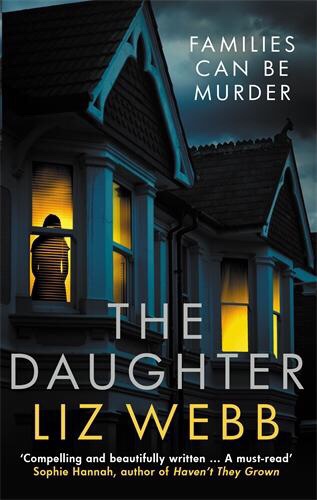
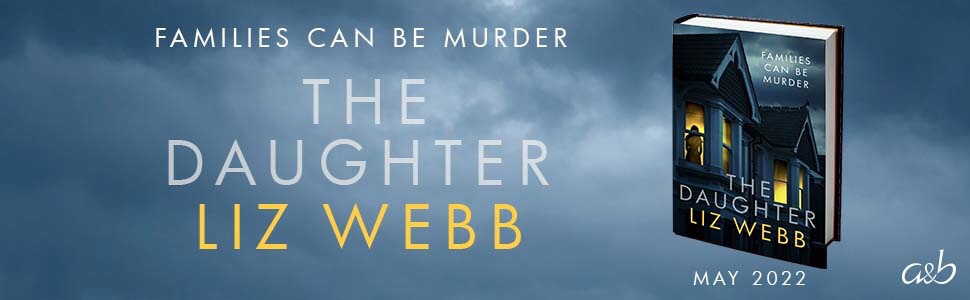
One of the first things my therapy supervisor said to me was ‘no two kids have the same childhood, even those who grow up together’. This kept going through my mind as I started to read Liz Webb’s book and grew ever more apt as the story unfolded. As regular readers know I do like to indulge in a good thriller and despite knowing nothing about the book or the author, something drew me in when I read the blurb. I’m so glad I took the chance to read it because it is a dark, psychological, and unsettling domestic noir based around the violent death of the charismatic mum in the Davidson family. Hannah doesn’t always have her life on track and she lives away from her physicist father Phillip, but is called when he ends up in hospital. Now suffering with Alzheimer’s and at the end of his life, Hannah has to make a tough choice; does she leave him in the hands of strangers or should she be the one to nurse him in his final months? It’s not long before Hannah finds herself back home and falling into a time warp. Not only has her father left the decorating and furnishings back in the 1990’s, there are piles of magazines and other detritus still littering the same place. It’s as if he stopped when his wife Jennifer was found in the woods at the back of the house, with a kitchen knife plunged into her chest. Hannah finds her surroundings bringing memories and inevitable questions to the forefront of her mind; no one was ever charged for her mum’s murder. This house is haunted. Her mum’s most successful photographs are still hung on the walls and her dark room is untouched, the wardrobe is full of her colourful clothes with the ghost of Chanel No 5. Just the faintest trace touches the air when Hannah runs a hand over her mother’s clothes. Hannah’s very presence completes the picture, she’s a waif compared to the overweight woman she’s been for most of her life. Now she’s the image of her mum, so much so that an unexpected glimpse in a mirror makes her jump. Her brother Ryan, now a famous actor, has commented on her ‘stuckness’, her inability to move beyond that day in the 1990’s. Hannah doesn’t think she’ll ever be able to move forward and pursue a life for herself, until she can resolve what truly happened that day and who killed her mother.
I did find myself rooting for Hannah, despite her flaws and her past behaviour – with more revelations popping up when I didn’t expect them. She feels more vulnerable and is honest about how broken she is by the past. The author carefully keeps her on that edge so I was mostly on board with her version of events, but every now and again I would question whether she was truly a reliable narrator. There was her drinking and the impression she has of her family life and her mother. She sees her mother as a beautiful free spirit, with her gorgeous rainbow clothes, her glamorous and creative career as a photographer with it’s world of gallery openings and meeting other artists. She sees her parents as very different, her father being much older and in a more steady career as a physics professor. When her parents couldn’t be there, Mrs Roberts and her husband from next door would step in with her more old-fashioned parenting style and her good looking son Marcus. This return home and her father’s deterioration seem to trigger something in Hannah and her brother is convinced she’s in a downward spiral where her mental health is concerned. He now stars in a BBC murder mystery series based in Spain, where his wise-cracking detective solves murders within the ex-Pat community and has famous co-stars happy to swap a guest starring role for a week in the sun. He’s also written a book titled Solving Me which Hannah thinks is pompous at best, but probably arrogant and a potential challenge. His childhood is peppered with incidents of their parents arguing, usually about their mother’s behaviour and he’s completely convinced that their father murdered her after years of being pushed too far.
I loved how the author balanced the story with the darkness and tension, broken by the realties of being a carer and the humorous little allusions to her father’s research subject. Their pets are named after Feynmann (the dog) and Schrödinger (the cat of course) á la Sheldon’s cats in The Big Bang Theory. The Schrödinger reference is very apt with Hannah alluding to their mother as potentially living and dead at the same time. For years her head has been full of simultaneous movie reels, each one with a different ending to the story, she would love to be able to shut down all those other screens and see what really happened. The caring details, everything she’ll need to bring Dad home from the hospital, are spot on. One detail I loved because it showed experience, or at least talking to those with it, and it was the ‘shit-stained’ sole of her father’s foot visible to to a person standing at the bottom of the bed but often missed by the busy healthcare assistant doing this morning’s strip wash. The investigation she conducts gives her a lot more questions about her mother, as she remembers her. She’s warned by the original detective on the case that she might not like what she finds. Even her mum’s art seems to hold clues: the close-ups of tiny domestic objects till it’s hard to know what they are; the fascination with motorcycle stuntman Evil Knieval and the moment of being in free fall; an entire series called Falling showing objects in that moment before they land. What she seemed to forget is that Evil Knieval’s stunts finally went too far with disastrous consequences. As the revelations about Jennifer Davidson begin the story becomes even more fascinating, because Hannah gets to see the person her mum was before becoming a parent and whether motherhood changed her at all. I enjoyed the interplay between the siblings and was engrossed in finding out whose version of events was closer to the truth. This was incredibly well-written, tense and psychologically very clever. It left me thinking about how others see our parents and who they truly are when they’re not being mum and dad.
Meet the Author
Liz Webb originally trained as a classical dancer, then worked as a secretary, stationery shop manager, art class model, cocktail waitress, stand-up comic, voice-over artist, script editor and radio drama producer, before becoming a novelist. She lives in North London with her husband, son and serial killer cat Freddie.
It’s been an odd month here, because I went into the month full of energy and looking forward to a busy blog month. Then I felt very unwell and sadly had to let blog tour organisers and publishers which I hate. Thankfully I’d written this ahead of time as I read each novel, so all I had to do was write this little intro. My favourite books this month were mainly dual narrative novels, a structure I really enjoy especially when it’s done as well as these authors. I hope you all have a lovely Jubilee weekend, whether you are a royalist or are just looking forward to a long weekend off work. My carer and other half are helping me with a stall at our village jubilee celebrations. I’m at our book exchange with a box full of old proofs to swap, book suggestions and a tombola with books from the Jubilee Big Read as prizes. All the books are from Commonwealth writers so I’m looking forward to introducing people to a different perspective on our Queen’s long reign. Photos to follow!
I enjoyed this book much more than I’d expected to. It’s not that there was anything wrong with the blurb or the cover, but I thought it might be just another ‘stately home + mystery’ novel with no huge surprises. However, the depth of characterisation and complexity of the story drew me in and kept me reading for two straight days. Ellie is our present day narrator and she’s having to take leave from work as an investigative journalist after trying to expose an important businessman ended badly. So she returns to her family home in County Kerry, Ireland to spend time with her mother. Trying to keep a low profile is a lost cause in a small Irish village. It’s only because she’s desperate for reading material that she braves the charity shop to collect a box of books that have come from the large stately home nearby, Blackwater Hall. Ellie is grateful to see a few Agatha Christie novels on the top and takes the whole box. Inside is a mysterious letter, addressed only to ‘T’ but clearly belonging to the Rathmore family. It ignites a spark in Ellie and she tries to do the right thing and return it, but is bitten by the mystery surrounding the family. Charlotte Rathmore disappeared during the early part of WWII leaving a broken string of pearls by the lake. The official version is that Charlotte killed herself, but Ellie senses a story and starts to seek out other remaining members of the family. Can she solve the mystery of Charlotte’s disappearance and what changes will the truth bring to Blackwater Hall and the Rathmore family? Despite wanting all the answers, I didn’t want this book to end and there’s no better compliment than that.
Another dual timeline novel here, with another mysterious set of letters. This was our Squad Pod read for May and as usual my review is late, but it’s no secret that I LOVED this book. I even made Chocolate Mojito cupcakes to celebrate the fact. I was unsure where this book was going to go, considering the rather modern looking cocktail cover. However, it’s story was deeper and more moving than I expected. In the 1970’s Ava Winters lives in a New York apartment with her mother and a father who seems to wander in and out. Her mother shows signs of mental illness and seems haunted by something in her past. With both parents AWOL Ava is lonely and becomes fascinated by a box sent to her apartment addressed to a woman called Gillian. It’s from Paris and holds letters as well as a butterfly necklace and a photo with LIAR scrawled across it. In the same apartment, but twenty years earlier, teachers Dovie and Gillian are roommates. However, they’re very private and guard their home lives fiercely until one unguarded moment exposes the wrong person to the truth. This novel showed me a side of life I knew nothing about. A time where ‘unnatural activities’ and desires could lead to a loss of everything from your job to your liberty. I will save the rest for my review, but don’t miss this one. It’s an incredible debut from a very talented writer.
This beautiful novel covers the early Twentieth Century in the lives of one family, from WWI to WWII. This book feels like an epic. A whale washes up on the beach of the Chilcombe Estate and is claimed for the Seagrave family by Cristabel who is the orphan cousin and doesn’t really fit anywhere. She loves adventure, activity, and endeavours, conquering the Seagrave estate rather than being the lady her stepmother would expect. The Seagrave children are an odd bunch, brought up by staff and each other, while their parents stay in bed late, are never without houseguests and like to drink as early as it is socially acceptable to do so. This is the story of the heir and the spare. Jasper Seagrave brings his new wife home to the Chilcombe Estate and Rosalind is thrown into being mistress of the house and stepmother to his daughter Cristabel. Rosalind is happy to have bagged an aristocratic husband, considering they’re in very short supply since the war. That is until the ‘spare’ arrives. Willoughby is everything his elder brother isn’t; a dashing war hero fascinated by speed whether it’s a new car or learning to fly. There’s an immediate attraction, deepening when Rosalind is on bed rest in the last stages of pregnancy and Willoughby keeps her company. Is the Chilcombe estate about to lapse into scandal and what will become of Cristabel? As the family grows to include a half-sister and brother for Cristabel we follow them towards WWII. The author shows what a toll both wars took on people and the rapid changes they forced on society. I won’t reveal whether any of our characters survive, but Cristabel remembers a saying, that war can bring out the best in people. There are those who shine through difficult days and in their own ways I think the Seagrave children all stepped up to the mark. This is a beautiful piece of historical fiction and I would happily read it all over again.
This book is my only thriller this month and it’s a cracker. This is perfect summer holiday reading whether you’re somewhere exotic or lounging in your own back garden. Hot in every sense of the world and set in picturesque Italy with a sense of growing menace all the way through. I read this one in the garden, with a Pimms in hand and with every chapter became more convinced of the old saying; the grass is never greener on the other side. Laura and Nick have been through a lot. Back in London they were struggling with infertility and Laura hadn’t felt like herself for a long time, the fertility drugs pumping her full of hormones and the grief of miscarriage left her feeling broken. When she discovers a betrayal, after Nick accidentally leaves his phone at home, she’s angry and resentful too. In his eagerness to make it up to her, Nick suggests they do what Laura has always wanted, move to Italy and create a holiday hideaway for couples. They discovered Luna Rossa on a visit to Italy several months ago, after which Laura suffered a third miscarriage. It is in the Marche region, a largely unknown area of Italy next to Tuscany but less expensive. Luna Rossa is isolated, includes a pool, a small cottage and beautiful grounds that fall away steeply gifting the house with incredible views across the countryside. Only a few months later they are preparing to welcome their first couple for a three week stay. It seems idyllic, but they’re taking a risk in welcoming complete strangers into their home. Laura has stalked her guest Madison on social media and she seems very outgoing and glamorous. Laura and Nick could be underestimating how disruptive it can be to have strangers living in your home, especially these strangers…. This is a real sizzler of a novel! My full review is coming next week.
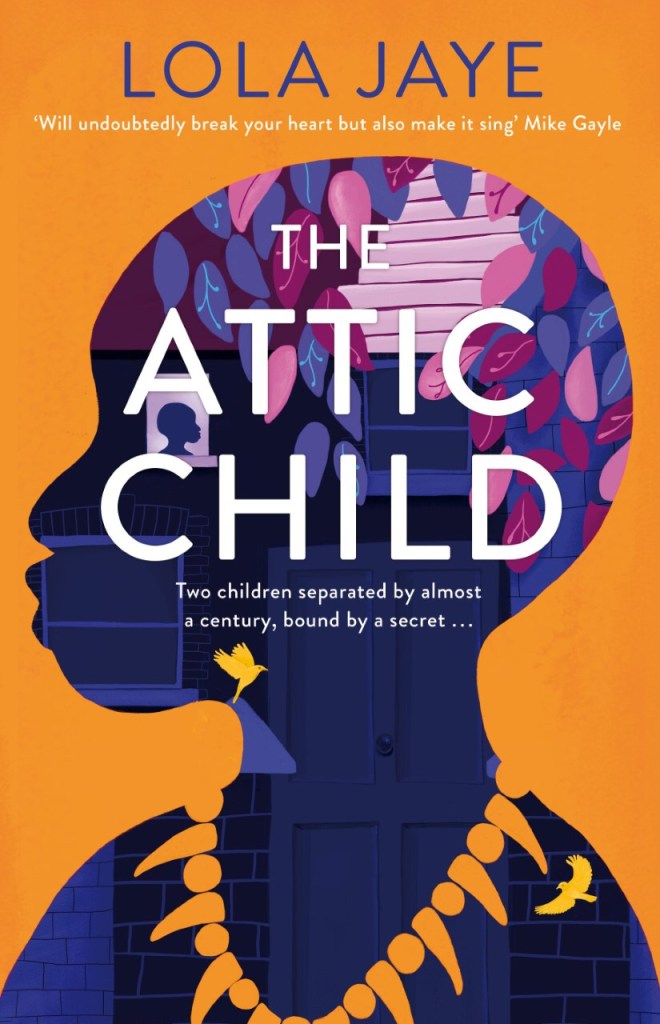
This book is a beautiful example of writing back in history to give a voice to someone who was silenced. Celestine Babbington is recorded for history in a silent form, photographed wearing clothes he didn’t choose and posing with a man whose relationship to him is very problematic. The man, Richard Babbington, is a rich explorer who has a love for Africa and a large mansion house in England. Yet by 1907, Celestine is being kept in the attic of the house, only allowed out to work as a domestic slave. Years later, a young girl called Lowra is suffering the same fate. Locked in the attic as punishment for any transgression, when her fate has been left in the hands of her resentful stepmother. While locked in the attic she finds an unusual necklace with clawed hands, unlike anything she’s seen before. There’s also an old-fashioned porcelain doll and a sentence on the wall, written in an unfamiliar language. These are her only comfort, because she feels as if the person that owned them is with her in some way. As an adult, her stepmother’s abuse still affects her and she’s conflicted when she inherits Babbington’s house. People seem to think she’s lucky and the town is proud of this intrepid explorer. Looking into the house’s history leads her to an exhibition of Babbington’s life, where she sees photographs of Babbington and a young black boy wearing an African wrap and what looks like her necklace, the one from the attic. However, the thing that keeps Lowra transfixed, is the young boy’s eyes. Lowra sees someone filled with sorrow, a fellow sufferer of the darkness inside that house. His name is Celestine Babbington. Lowra wants to find out more about this boy, how he came to be in England and what happened to him after Babbington’s death. This book was moving and had me in it’s grip straight away. It takes me back full circle to the beginning of my post and hearing voices from the Commonwealth countries and from Black British writers. I’ll be taking a copy of this book to my stall at the weekend and I’m looking forward to sharing it with new readers.
“A year never passes without me thinking of them. India. Erica. Their names are stitched inside every white coat I have ever worn. I tell this story to stitch their names inside your clothes, too.”
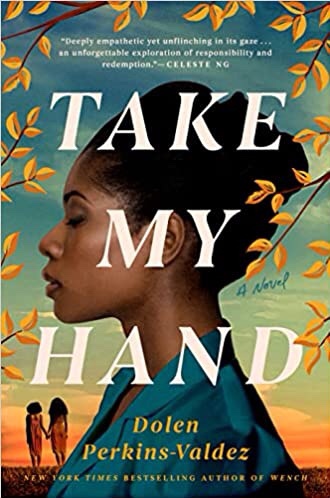
Wow! This novel absolutely blew me away. In fact I loved it so much that my other half kept asking whether I was ok and I couldn’t understand why, until I looked at the clock and three hours had gone past without me speaking. I was three quarters of the way through the book and even went to bed early so I could finish the story. This writer pulled me in from the very first page and Civil was as real to me as my poor other half. I’ve been interested in eugenics since I wrote my undergraduate dissertation on disability and 20th Century literature. I knew a lot about the movement in the U.K., US and Germany in the lead up to WW2, but this book shocked me because I had no idea that forced sterilisations were still happening in the 1960s and 70s. I knew this had happened in earlier in the century with Native American communities, so I shouldn’t have been surprised that it was still happening to African American women, especially where the woman has a disability too. I think this jumped out at me, because people with disabilities are having a very hard time currently, something that able-bodied people aren’t always aware about. For example, the University of York published research in the BMJ Open that concluded the joint impact of cuts to healthcare, public health and social care since 2010 caused at least 57,550 more deaths of disabled people than would normally have been expected between 2010 and 2014. Disability groups place the figure at 120,000 deaths over a seven year period and some activists even think that the government’s COVID policies were based on herd immunity and eugenics. It seems like eugenics never really goes away.
This novel shows how our biases and emotions feed into the work we do within the caring professions. Having worked in mental health and disability as a support worker, advocate and counsellor, I did identify strongly with Civil and the way she became involved with the Williams family. As a nurse, Civil is professional and is aware of things like codes of practice and ethics, but we are never the finished article and Civil’s naïvety plays a huge part in how she works. Civil has been brought up to care for and look after others as part of her Christian faith. However, there are other personal circumstances that she isn’t aware of taking into work with her. Civil’s mother struggles with depression and events that took place in her personal life have also left her vulnerable, particularly where it comes to her nurturing instincts. Her very name brings to mind civil rights, equality and fairness, so it’s not a surprise that where she sees injustice she’s willing to fight. The Williams girls are her very first patients and she is sent out on a home visit to give them a Depo Provera injection, a long term method of contraception. When she notices that India is only 11 years old her brain immediately starts questioning, who put this little girl on this injection, has anyone asked if she has a boyfriend or worse, is she being preyed upon? We are privy to her thoughts and her shock at the way the family are living is evident. Her first thought is that she must do something for them, get them away from the dirty shack where their clothes seem to be stored on the floor. What she does notice is that the girls smell and when she finds out they don’t have sanitary towels, she decides to buy some for them from her own money. This is the first line crossed and although Civil’s actions are generous and could change the family’s lives for the better, it’s a boundary crossed. This makes it so much easier to cross even further as time goes on.
I thought the author grasped the complexity of Civil’s feelings and her role in the girl’s lives beautifully. Civil knows that she should be following instructions, asking her supervisor the questions that have come to mind, and advocating for the girls. Yet she knows that just by talking to the right people and calling in a few favours she could get the girls some clothes, find a job for their father, perhaps get them a new flat in town. What she doesn’t realise is that she’s acting from a bias, not racism but a classism of sorts. Civil’s parents are a doctor and an artist, they live in a nice home and have a certain status. She has walked in to the Williams’s home and assumed they want to move, go to school, and have better things. She’s looking at them through her own world view, instead of moving into theirs and then takes their agency away by filling in forms on their behalf. Her heart is in the right place, but she’s mothering the girls; the girls have lost their mother and Civil has maternal feelings to spare. It’s a co-dependent dynamic that could get complicated and painful on both sides. Her nursing instinct is to gain the girl’s trust and find out who put them on contraceptive injections, especially when India hasn’t even started her period. There are no boys around where they live and neither girl goes to school. As she confides in fellow nurse Alicia and friend Ty, they start doing some research. There are many conclusions they could draw: the federal government could be experimenting on poor black communities; there could be a programme of stopping certain groups in society from reproducing; the government are leaving local employees to make decisions based on their own biases about poor communities; their supervisor believes the Williams girls aren’t safe and could be open to abuse from within the family. All are based on so many assumptions, but what was angering me was that no one had sat down with the family and asked the questions about the girl’s development, access to the opposite sex, or India’s ability to make decisions. Life changing decisions are being made, based on judgments made with no real evidence.
Judgement is at the heart of this terrible case, I won’t reveal more about the decisions made, but it does lead to a court case and repercussions for everyone involved. The colour of the family’s skin, their poverty and the death of the girl’s mother has led to assumptions about the girl’s morals and safety but also the possibility that a black man is not safe, even around his own children. India is non-verbal, but whether that’s through trauma or a learning disability is not clear. Civil’s superiors have decided that it would be disastrous to bring a child into this family, but it’s amazing to see how much the Williams do change over the course of the novel. Civil has taken the decision to act on behalf of the girls, rather than making suggestions and motivating them to advocate for themselves. The changes we see in them, just from having different surroundings, is incredible. Civil believes that we adjust our standards according to where are in life, so once their home becomes a clean, dry space they start to look after it. Civil’s happiness when she sees the girl’s grandmother has bought guest towels for the bathroom is so funny, because these are her standards, what she sees as the correct way to do things, without question. I could see her attachment to the girls growing, the way she brings her support network into their lives also leaves their lives further enmeshed with hers. How will they separate themselves? If Civil takes their part in their court case, she may lose everything, so what happens when the Williams start to have confidence to make their own decisions? What if Mace meets a woman – a potential stepmom for the girls? I wondered if Civil would cope were these girls taken away from her, whether by her work or by changes in the Williams’s circumstances.
The author weaves fact into fiction so seamlessly here, with contemporary medical research questioned and the family’s meeting with real life senator Teddy Kennedy. This grounds the book beautifully and it feels even more true to life; the girls aren’t real, but I’m guessing that this story could be the reality for many poor, young, African American women. I thought Civil’s home life was really interesting, especially when her Aunty arrived and talked plainly about her Mum’s depression. Even in a household where there are always guest towels, there are struggles and issues that are overlooked, either due lack of understanding or through avoidance of something too painful to acknowledge. In fact there’s a way this whole episode is fuelled by avoidance, because if Civil buried herself in this family’s trouble she could avoid her own loss. The present day sections are evidence of that avoidance, because we see Civil finally having to confront and process feelings long buried. She’s close to retirement, yet is still haunted by what happened back then. There are positives in her visit back home, in that her relationships have adjusted so there’s more equality with some people than there was back then. I was left with a sense of how incredible women are, the strength we have to survive life altering circumstances and what can be achieved when we support each other.
Meet The Author
Dolen Perkins-Valdez is the New York Times bestselling author of WENCH, BALM, and the forthcoming TAKE MY HAND. *USA Today* called WENCH “deeply moving” and “beautifully written.” *People* called it “a devastatingly beautiful account of a cruel past.” *O, The Oprah Magazine* chose it as a Top Ten Pick of the Month, and NPR named it a top 5 book club pick of 2010. Dolen’s fiction has appeared in The Kenyon Review, StoryQuarterly, StorySouth, and elsewhere. In 2011, she was a finalist for two NAACP Image Awards and the Hurston-Wright Legacy Award for fiction. She was also awarded the First Novelist Award by the Black Caucus of the American Library Association. Dolen received a DC Commission on the Arts Grant for her second novel BALM. Publishers Weekly writes “Her spare, lyrical voice is unsentimental yet compassionate.” Library Journal writes “No sophomore slump is in evidence here. Readers who were captivated by Perkins-Valdez’s first novel, Wench, will be intrigued by the post–Civil War lives of three Southern transplants to Chicago.” Dolen is an Associate Professor of Literature at American University. A graduate of Harvard and a former University of California President’s Postdoctoral Fellow at UCLA, Dolen lives in Washington, DC with her family.
Joan can’t change her family’s past. But she can create her future.
Joan was only a child the last time she visited Memphis. She doesn’t remember the bustle of Beale Street on a summer’s night. She doesn’t know she’s as likely to hear a gunshot ring out as the sound of children playing. How the smell of honeysuckle is almost overwhelming as she climbs the porch steps to the house where her mother grew up. But when the front door opens, she does remember Derek.
This house full of history is home to the women of the North family. They are no strangers to adversity; resilience runs in their blood. Fifty years ago, Hazel’s husband was lynched by his all-white police squad, yet she made a life for herself and her daughters in the majestic house he built for them. August lives there still, running a salon where the neighbourhood women gather. And now this house is the only place Joan has left. It is in sketching portraits of the women in her life, her aunt and her mother, the women who come to have their hair done, the women who come to chat and gossip, that Joan begins laughing again, begins living.
Memphis is a celebration of the enduring strength of female bonds, of what we pass down, from mother to daughter. Epic in scope yet intimate in detail, it is a vivid portrait of three generations of a Southern black family, as well as an ode to the city they call home.
There’s a point in this book where Miriam remembers her mother Hazel waking her up, leaving her little sister August asleep in bed, then she fixed her a breakfast fit for a king. There were green tomatoes and grits, spicy pork and scrambled eggs, and they were chatting like a normal day. Miriam was distracted by the delicious meal and didn’t notice her mother running the tap. Then suddenly she threw a whole jug of cold water over her daughter. Miriam thought her mother had lost her mind. All she said was ‘you ready’ and that afternoon took her to her first activist’s sit in. Miriam’s experience is similar to the one I had reading this incredible book. I’d just settled into the story when suddenly something was revealed that was so momentous I would have to take a moment, blind-sided by what had just happened. Memphis is the home of three generations of African-American women from grandmother Hazel, her two daughters Miriam and August, and Miriam’s daughters Myra and Joan. Their personal lives are set against a backdrop of American history from the early 1950s through to the 2000s, taking in world-changing events like the Kennedy assassinations and 9/11. Told in sections from each woman’s viewpoint, Stringfellow takes us back and forth across the 20th Century. Each step back in time informs the present, showing us where Joan has come from and each day forward moves Joan into her future.
I loved the earliest years where grandmother Hazel meets Myron and they fall in love. Their courtship is so sweet and has an innocence about it and I think that’s what makes later events such a shock. The fact that Myron has come so far and become part of law enforcement in those times feels like such an incredible achievement. Your fellow officers are supposed to be your brothers, but despite working alongside him, this all white squad don’t count him as one of them. We don’t see the lynching, but we don’t need to. Our place is with the women of this story. Hazel is nine months pregnant, filled with grief, anger and a frustration borne from knowing that whatever you achieve, however loud you scream, your achievement and voice mean nothing. The author managed to deeply touch me with that sense of powerlessness. There’s such a maelstrom of emotions when she gives birth: knowing this little girl will never know her daddy; wishing Myron was there to support her; the fear of knowing she’s alone as a parent and her girls depend on her; the joy of this new life coming into the world. These women feel so real because Stringfellow cleverly evokes the complexity of human emotions, it’s rare that we only feel one at a time. In grief we can still feel moments of joy and even if we are happy, there can be moments of doubt or fear. Such moments of inner conflict follow us into the second generation of women, sisters Miriam and August. When Miriam escapes domestic violence, returning to the house Myron built in Memphis, she’s torn in two directions. She really has nowhere else to go and she longs for home and the consolation and support of her sister, but Joan has a moment of recognition. Have they been here before? The truth is they have.
The women in this family are strong and they need to be. Some of what happens to them over their three generations is terrible and you will probably have a good cry like I did. I was touched by what Hazel, Miriam and Joan go through, but there were also quieter struggles that touched me such as August’s decision to care for her mother, the loneliness she must feel with both her mum and sister gone, the fear she feels for her son Derek, growing up as a black man in a place where shootings and gangs are commonplace. Her mixed feelings of guilt, anger and love that come with being a mother of a son who does things that are unforgivable. I also loved the camaraderie of her salon and the strength she gets from the women who are her customers and her community. I was touched by her ability to take pleasure and solace when it’s offered, despite it not being the love and companionship she craves – from the women in her life. The pain these women go through makes the good times even more enjoyable and I really felt the joy and relief when they came out of a tough time. The author manages to capture that sense of peace I have seen in my counselling room, when the long held fear, anger and shame that comes from trauma is finally let go. That need for revenge finally silenced. The chance for joy and celebration to fill the void left behind and communing with others who know your journey.
Former attorney, Northwestern University MFA graduate, and Pushcart Prize nominee Tara M. Stringfellow’s debut novel Memphis (Dial Press, an imprint of Penguin Random House) is a multi-generational bildungsroman based on the author’s rich Civil Rights history. A recent winner of the Book Pipeline Fiction Contest, Memphis was recognized for its clear path to film or TV series adaptation and is due out in 2022. Third World Press published her first collection of poetry entitled More than Dancing in 2008. A cross-genre artist, the author was Northwestern University’s first MFA graduate in both poetry and prose and has been nominated for two Pushcart Prizes, as well as Best of the Net. Her poems have appeared in Collective Unrest, Jet Fuel Review, Minerva Rising, Women’s Arts Quarterly, Transitions and Apogee Journal, among others.
If she isn’t writing, she’s gardening. If she’s isn’t in Memphis, she’s in Italy.
It’s been another bumper book month at The Lotus Readers and it looks like 2022 is going to be an amazing reading year, in fact I’m already worrying about how I’m going to choose between these books when it comes to my end of year list. Can I really do 22 books this year? It’s also a year of fantastic debuts with another four debut novels being top of my list this month. There’s been a few tears shed over some of the stories and characters within these pages, but I’ve been uplifted too by these stories of overcoming. Surviving trauma and recovering through the support of others, particularly where women are supporting women, has been a theme here too. Its been the first month where I’ve been able to sit in the garden with a book, so most of these have accompanied me outside and onto my recliner, usually ending with me falling asleep under a dog and a cat! So here are some shortened reviews, to whet your appetite for these wonderful novels,
Reminiscent of those stylish novels of the great Agatha Christie, this was a brilliant mystery with a glamorous location, wealthy passengers and sumptuous clothes and jewellery. The period detail is spot on whether it’s the latest bathing suit or 1930’s politics. It’s not just a whodunnit either, because woven within are themes of identity, belonging, family and class division. It’s gripping without being showy or depending on shocks, or endless twists and turns. It’s elegant and allows it’s secrets to unfurl slowly. Lena is a sympathetic character, who has sacrificed starting her career to care for her father Alfie who has recently died. To pay the bills Lena has been singing in a club band, but she has always wanted to work on the West End or Broadway. Her chance comes in the aftermath of a death at the club. A favour from a an old friend of her father. She’s found by theatre producer’s assistant, Charlie Bacon, whose boss is offering Lena the chance of a lifetime, a part on Broadway in a new musical. As they set off across the Atlantic in their first class accommodation, they make the acquaintance of a very wealthy family with an ailing patriarch. What follows is intrigue, murder, mayhem and the realities of being a black performer. Lena is now caught up in a murder plot, and doesn’t know if she’ll be the next suspect, or victim.
Incredibly strong women, three generations of a Memphis family, are the focus of this amazing debut by Tara Stringfellow that made me angry, made me cry and somehow helped me feel uplifted all at the same time. Grandma Hazel is the first resident of the house in Memphis, a house her sweetheart Myron builds for their family. When he is lynched by his own police squad, Hazel is nine months pregnant and left heartbroken, angry and scared. Her daughters, Miriam and August, then call this place home and it also becomes August’s place of work. When Miriam leaves home, travelling with her husband Jax who is in the military, August turns the back of the house into a hair salon for a community of black women who gather there to laugh, to support each other and to plan activism. When Miriam returns with her own daughters, Joan and Myra, she has mixed feelings. She needs a roof over her head, she loves where she grew up, but something happened here that daughter Joan can’t quite remember. Yet she feels I’ll, deep down. There’s fear and shame in this place, but she doesn’t know why and we follow her quest to process and heal from this hidden trauma. With a backdrop of the biggest events of the 20th Century from the Kennedy and Martin Luther King assassinations to 9/11, this is a story of what it means to be a black woman in 20th Century America. Simply outstanding.
Ethan Joella’s novel was perfect for this moment in life. Set in an idyllic Connecticut town over the course of a year, our story follows the intertwining lives of a dozen neighbours as they confront everyday desires and fears: an illness, a road not taken, a broken heart, a betrayal. Freddie and Greg Tyler seem to have it all: a comfortable home at the edge of the woods, a beautiful young daughter, a bond that feels unbreakable. But when Greg is diagnosed with a rare and aggressive form of cancer, the sense of certainty they once knew evaporates overnight. Meanwhile, Darcy Crowley is still coming to terms with the loss of her husband as she worries over her struggling adult son, Luke. Elsewhere, Ginger Lord returns home longing for a lost relationship; Ahmed Ghannam wonders if he’ll ever find true love; and Greg’s boss, Alex Lionel, grapples with a secret of his own. We are all familiar with the hashtag #BeKind and through these stories, what seems like a platitude, is brought home to the reader. Our characters touch on each other’s lives, sometimes without knowing what each other are coping with just under the surface. Despite taking us through every experience from infidelity to loss, the book never feels overwhelming or melancholy. Yes I wanted to shed tears from time to time, but somehow there is always a ray of hope. It reminded me that things like community, friendship, shared experiences and compassion can change everything. The author doesn’t hold back on how difficult and painful life can be, but yet always finds some element of joy that reminds us what a gift it is too. This book is poetic, achingly beautiful and full of empathy for the human condition.
I knew this book would be one I enjoyed, after all it encompasses some of my favourite things: History between the World Wars; the Vienna Secession and Gustav Klimt; Art Nouveau; a feminist narrative. However, I didn’t expect it would grab hold of me in the way it did! I sat down with it in the garden one Sunday afternoon and read two thirds straight away. When duty and blog tours called that week I had to set it aside, but I kept glancing over at it like a lost lover all week. Haydock takes four of Egon Schiele’s portraits and explores the women depicted – society sisters Adele and Edith, artists model Wally and his younger sister Gertie. Schiele’s portraits are not life-like reproductions of his model and while they might shed light on aspects of their characters, they can only ever be the artist’s view of that woman with all the prejudices and biases of his time. Haydock is challenging Schiele’s representation of these women and here we get to hear the women’s stories, how they see themselves and their relationship with Schiele. Some of his life choices felt like betrayals to those women who risked everything by literally laying themselves bare before him and the world, for his sake and for the sake of art. I thought Haydock beautifully captured this sacrifice and it’s consequences, something she picks up beautifully in the short interludes from the 1960’s where an elderly woman searches for a painting she’s glimpsed of someone she loved. Desperate to give an apology she never heard in life. Haydock beautifully captures a rapidly changing Vienna between two World Wars where barriers of class and gender are breaking down. She also captures the complexities of the barriers for women and those who have the pioneering spirit to break them. She gives a voice to their silent gaze. This is one of the best books I’ve read so far this year and I read it greedily in just two sessions. I’m already looking forward to entering Haydock’s world and savouring these wonderful women again.ok”
My interest in 19th Century freak shows, Sarah Baartman (the Hottentot Venus), disability and difference, made Lianne Dillsworth’s debut novel a perfect fit for me. Our setting is a theatre and a performing troupe including singers, magicians and dancers who perform a variety show under the watchful eye of Mr Crillick. His current headline act is Amazonia – a true African tribeswoman, dressed in furs and armed with a shield and spear, her native dancing brings down the house in Crillick’s show. The audience watch, transfixed with fear and fascination, never realising that she is a ‘fagged’ act. Zillah has never set foot in Africa and is in fact of mixed race heritage, born in East London. She is making her money by pretending to be what the, largely white, audience wants to see. It doesn’t sit well with Zillah, but she is alone in the world and does need to make money. Besides it’s better than the other options for a young woman who finds herself in poverty. She’s used to slipping between worlds on stage and in her private life, renting a room in the rough St Giles area of the city, but regularly making her way to a more salubrious area and the bed of a Viscount by night. However, when Crillick brings a new exhibit to his London home, dubbed the Leopard Lady, Zillah’s eyes are opened to the politics and misogyny of displaying difference. A meeting with an activist forces her to think about her own performance, but also the danger that Crillick’s new exhibit might be in, especially his ‘private’ audiences complete with medical equipment. Can Zillah help this woman and what does her own future hold, because in good conscience she can no longer perform? This is a brilliant novel, doing for race and disability, what Sarah Water’s novels did for the representation of sexuality in the 19th Century.
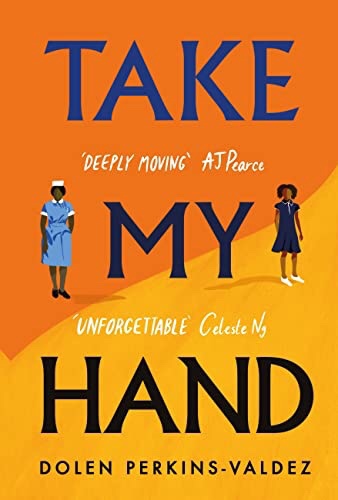
I’d never read a novel by Dolen Perkins-Valdez and she pulled me into her story from the very first page, with Civil seeming real almost immediately. I’ve been interested in eugenics since I wrote my undergraduate dissertation on disability and 20th Century literature. I knew a lot about the movement in the U.K., US and Germany in the lead up to WW2, but this book shocked me because I had no idea that forced sterilisations were still happening in the 1960s and 70s. I knew this had happened in earlier in the century with Native American communities, so I shouldn’t have been surprised that it was still happening to African American women, especially where the woman had a disability too. The writer shows how our biases and emotions feed into the work we do within the caring professions. Having worked in mental health and disability as a support worker, advocate and counsellor, I did identify strongly with Civil and the way she became involved with the Williams family. The Williams girls are her very first patients and she is sent out on a home visit to give them a Depo Provera injection, a long term method of contraception. When she notices that India is only 11 years old her brain immediately starts questioning, who put this little girl on this injection, has anyone asked if she has a boyfriend or worse, is she being preyed upon? Is this an assumption that young African-American women are promiscuous or that African- American men can’t be trusted, even within their own families? The judgement that bringing a child into this family would be disastrous comes from a lack of knowledge around India Williams’s learning disability, but is also an assumption about race too. The fall out from Civil’s discoveries is huge and life-changing, not just for the Williams family but for Civil too. This book sheds light on an important hidden history and took me through a rollercoaster of emotions.
I fell utterly in love with Dot Watson, a rather abrupt and persnickety member of the staff at London Transport’s lost property office. It took me about five pages to be drawn into Dot Watson’s quirky world and her love for the lost property office where honest people bring their found items. Dot is like the backbone of the office and the other workers would be lost without her. A lover of proper procedure and organisation, Dot is the ‘go to’ employee for anyone starting work with the team, or just to answer a question about an item. Dot thinks lost things are very important, almost like an extension of that person. Their lost item can tell her a lot about the person they are and she fills the lost luggage tags with as much detail as possible so that they have the greatest chance of locating it. Dot believes that when we lose a person, their possessions can take us right back to the moment they were with us. When Mr Appleby arrives at the office to find his lost leather hold-all it is what the case contains that moves Dot. Inside is a tiny lavender coloured purse that belonged to his late wife and he carries it everywhere. Something inside Dot breaks for this lonely man and she is determined she will find his hold-all. Her search becomes both the driving force of Dot’s story and the key to unlocking her own memories. I loved our journey into Dot’s past, her relationship with her father and the trauma that she’s tried to lock away for so long. This book has difficult emotions, but also glimpses of humour and is ultimately an uplifting journey with an unforgettable woman.
A teenage girl wanders out of the woods. She’s striking, with flame-red hair and a pale complexion. She’s also covered in blood. She appears in the pub’s beer garden as Jonah is enjoying a beer after a walk with his baby son. Detective Jonah Sheens quickly discovers that Keely and her sister, Nina, disappeared from a children’s home a week ago. Now, Keely is here – but Nina’s still missing. Keely knows where her sister is – but before she tells, but first she wants Jonah’s full attention. Is she killer, witness, or victim? The opening scene is absolutely brilliant, vivid and shocking at the same time. As the girl’s history starts to unfold, they hear about several failed placements and a long stay in a children’s home. The girls made complaints about two of their homes, but were thought to be troublemakers. Jonah and his excellent team have to tread a very fine line. Keeley comes across as cold and calculating one moment, but then like a broken little girl the next. Which is an act? There are some very dark stories here and they could be distressing for people who’ve gone through a similar experience, but it’s that darkness that keeps the reader wanting the truth and to see those responsible punished. If Keeley has planned how to elicit sympathy from the police, she certainly knows what she’s doing. As readers we are pulled along with Jonah, from distress and empathy to disbelief and a sense that something is very, very wrong either with Keeley or the system. This is a great mystery, with huge twists in store and a police team I enjoyed getting to know. Now I’m looking forward to going back to the first novel in this series and filling in the gaps in my knowledge, while enjoying even more of this talented writer’s incredibly creative plots and dark, brooding atmosphere.
So these were my favourite reads in a very busy reading month. I read seventeen books which surprised even me! Next month I’m looking forward to a slightly quieter month with some great thrillers to read, some historical fiction from another of my favourite historical periods – the beginnings of the Tudor dynasty, and hopefully a few choices from NetGalley too so I can keep on beating that backlog. I hope you enjoy these choices as much as I did and i’ll see you again next month.
Two sisters went missing. Only one of them came back . . . ________
A teenage girl wanders out of the woods.
She’s striking, with flame-red hair and a pale complexion. She’s also covered in blood.
Detective Jonah Sheens quickly discovers that Keely and her sister, Nina, disappeared from a children’s home a week ago. Now, Keely is here – but Nina’s still missing.
Keely knows where her sister is – but before she tells, she wants Jonah’s full attention . . .
Is she killer, witness, or victim?
And will Jonah find out what Keely’s hiding, in time to save Nina?
Last year I was lucky enough to receive a prize from Gytha Lodge and now have three of her hardbacks, all individually signed. I haven’t had chance to read them and as I was granted access to this fourth novel in the series on NetGalley I decided to dive in and hope it would work as a standalone novel. I needn’t have worried at all. This was immediately accessible, yes there were aspects of Jonah’s life that I’m looking forward to finding out more about, but on the whole I could enjoy the mystery without feeling like I didn’t know my protagonist.
The opening scene is absolutely brilliant, vivid and shocking at the same time. Jonah sits in a warm beer garden with his baby in a pram at his side. He’s musing on life and his recent choice to return to a relationship with the mother of his child, leaving behind a burgeoning relationship with Jojo who he misses enormously. It takes a moment for him to notice the young woman who has come into the garden. She has red hair and her hands and chest are covered in blood. While others simply stare in shock, Jonah rings his partner Michelle to pick up the baby, then moves over to the girl and offers to get her a drink. They sit and her story starts to come out, but this is going to be a tricky interview and investigation. Jonah wants to take his time, go gently and not rush this young woman, who could be a victim, but could also be a suspect. Then she makes a revelation. Her name is Keeley and her sister is Nina, this could be Nina’s blood and of course they need to find her, but first Keeley wants to tell them a story.
Nina and Keeley have spent their entire childhood in care. Bouncing from children’s home to foster parent, they seem to have been magnets for predators at an early age. There are two foster homes where their placement failed. One was at the Murray-Watts, who live in a large house in the country with their son Callum and the right type of Range Rover. However, Keeley remembers a regime of cruelty and starvation, where their foster father was always pitting the children against each other and for punishment would lock them in a dark basement for days. His wife Sally might not be so cruel, but she never failed to do his bidding. From there to the Pinders, their home is a huge contrast situated on a council estate. There the girls made a complaint of sexual assault against their foster father who groomed them with trendy clothes, alcohol and watched Gossip Girl with them. This was all fine until he started to want things in return. The problem with these accusations is that nobody believed them, and even though they were removed from the homes in question, no one was prosecuted. Jonah and his excellent team have to tread a very fine line. Keeley comes across as cold and calculating one moment, but then like a broken little girl the next. Which is an act? Or are they both the same girl? Either way she won’t compromise; Jonah listens to her full story or she won’t tell them where Nina is. Time is ticking and if Nina is severely injured will she last to the end of the story?
I thought Keeley was a fascinating character, psychologically flawed and clearly traumatised by their past, however much of it is true. The girl’s social worker seems very sure that all the claims are false, just girls making up stories. However, it’s clear that some aspects of the girls accusations are true. So, if someone makes multiple accusations does it mean they’re all false? The book kept me guessing and there were times when I wondered whether I even trusted Keeley with her own sister. The chapters based around Jonah and the investigation are interspersed with Keeley’s first hand testimony. She shows all the traits of a psychopath; has she always been this way or has she been created by the treatment of those meant to care for her? If Nina has been subjected to the same treatment won’t she be afflicted psychologically too? I was also dying to know where these foster parents were. Pinder is giving the same story as the girl’s social worker, but the Murray-Watts have completely disappeared. Did the girls have help to weave a twisted treasure hunt for the police? I started to wonder if Keeley had known that Jonah was in the beer garden that day. She seems to be fascinated with his team so could one of them have come across the girls before?
There are some very dark stories here and they could be distressing for people who’ve gone through a similar experience, but it’s that darkness that keeps the reader wanting the truth and to see those responsible punished. If Keeley has planned how to elicit sympathy from the police, she certainly knows what she’s doing. As readers we are pulled along with Jonah from distress and empathy to disbelief and a sense that something is very, very wrong either with Keeley or the system. This is a great mystery, with huge twists in store and a police team I enjoyed getting to know. Now I’m looking forward to going back to the first novel in this series and filling in the gaps in my knowledge, while enjoying even more of this talented writer’s incredibly creative plots and dark, brooding atmosphere.
Meet The Author
Gytha Lodge is a multi-award-winning playwright, novelist and writer for video games and screen. She is also a single parent who blogs about the ridiculousness of bringing up a mega-nerd small boy.
She has a profound addiction to tea, crosswords and awful puns. She studied English at Cambridge, where she became known quite quickly for her brand of twisty, dark yet entertaining drama. She later took the Creative Writing MA at UEA.
Her debut crime novel, She Lies in Wait, has been published by Penguin Random House in the US and UK, and has also been translated into 12 other languages. It became an international bestseller in 2019, and was a Richard and Judy book club pick, as well as a Sunday Times and New York Times crime pick.
Watching From the Dark, her second novel, was released in February 2020, with her third book lined up for spring of 2021. This fourth novel is published on 28th April 2022.