Posted in Personal Purchase

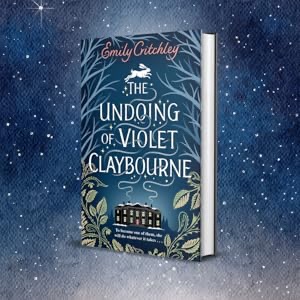
The Undoing of Violet Claybourne by Emily Critchley 

This was my read for over Christmas week and having started a couple of novels only to put them down again, I was beginning to think I’d lost my reading mojo. I was crying out for something that would draw me in quickly so I went for a tried and tested genre. A genre that maybe has a title, but I don’t know it. A preference I blame on reading Jane Eyre as a very imaginative ten year old. The formula is: huge rambling country house; time period from Victorian – 1930’s; young unsure girl/woman; aristocratic families with huge secrets. This fantastic novel from Emily Critchley fit the bill perfectly and was the only thing that drew me away from watching Black Doves all in one go! Our heroine is Gillian Larking, a rather invisible girl at boarding school who does her best to fit in but has no real friends. Gillian has lost her mother and with her dad working in Egypt feels very much alone. However, when she gets a new roommate that feeling starts to change. Violet is a bright, lively girl whose first goal is to break school rules and sneak up onto the school roof to check out the view. Despite her mischievous and seemingly confident nature, Violet is anxious and has a series of rituals to perform that help her cope: 

“She had to do certain things at certain times, like twirl around on the spot before she flushed the lavatory or touch a door handle twice before she opened a door. I often caught her whispering certain words to herself three times or counting to fifty on her fingers. When I asked her why she had to do these things, she struggled to tell me. For protection, was all she would say, or so that nothing bad will happen.”

She is also prone to emotional outbursts when things become overwhelming. Gillian is seemingly more aware that as young ladies of the middle and upper classes they must manage their emotions. She herself has had moments of despair and loneliness but has kept her tears for under the covers late at night. She also aware that girls in packs tend to sniff out weakness or odd behaviour and worries whether Violet’s rituals or ‘undoings’ as she calls them, could affect both their positions at school. Yet the other girls don’t seem to bother Violet and Gillian wonders whether that’s because she’s from a wealthy family. As Christmas approaches Gillian is delighted to receive an invitation from Violet to spend the holidays with her family at Thornleigh Hall. There she is dazzled by their slightly shabby country home, being waited on by the servants and Violet’s rather beautiful older sisters. Emmeline, the oldest and definitely in charge, wafts around in old Edwardian gowns whereas Laura is a rather more modern and fragile beauty. Both girls accept Gillian as one of their own, but their new friendship is tested by an incident on Boxing Day that will reverberate through the years. 

I have a soft spot for books set between the two World Wars and this had a lot of the themes pertinent to aristocratic families of the time. Thornleigh Hall is badly in need of repair but has a faded grandeur that is still impressive to Gillian. They’re a family living a way of life that ended twenty years before. They clearly don’t have the funds to maintain their estate, but Gillian notices the lavish breakfasts laid out every morning under silver dishes. Emmeline, the eldest sister, is the family’s great hope. She must find a suitor with money and secure the family’s fortunes with a sensible marriage. She has a candidate in mind, much older than her but definitely of the right class and enough money to save the hall for another generation. Gillian is enthralled by the sister’s unique style and confidence and realises that to some extent her friend Violet is the odd one out. Her nervous rituals, like her need to read Peter Pan over and over, suggest a deep insecurity in her character and even a fear of growing up. She warns Gillian that her sisters are not all they seem to be, but Gillian feels accepted for the first time in her life. There was an element of L.P. Hartley’s The Go-Between in her relationship with the sisters because she is naive and doesn’t realise when she’s being manipulated. On that fateful Boxing Day, Emmeline takes charge as always, instructing Gillian and Laura to lie or even pass blame onto a man who lives in the lodge house. Gillian feels obliged to go along with the plan because they’ve been kind to her. Again there are shades of another book here, Ian McEwan’s Atonement, where naivety and misunderstanding could lead to a terrible end for an innocent man of a lower social status. The full implications of these lies are utterly life changing for Violet, but almost no one escapes unscathed.

The novel is structured into four parts, taking us to different points in the life of Gillian and her relationship to the events of that Christmas in 1938. I’ve already mentioned L.P.Hartley’s The Go-Between and the first section has echoes of it’s opening page, from the naivety and social position of Gillian to the sense of delving into a past that’s long dead with it’s own social codes; “the past is a foreign country – they do things differently there’. We start the novel in 1999 when Gillian visits Thornleigh Hall, now under the guardianship of the National Trust. Over a slice of lemon and poppy seed cake, she ponders life from her time as a guest here to the recent death of her husband and the diary from 1938 that she’s come across while clearing out cupboards. This 1999 visit to Thornleigh is like travelling into the past as she strolls the rooms now on show and sees Lord and Lady Claybourne in the dining room complaining about their eggs and Laura in her stockinged feet reading a book on the library sofa. There is so much about this first chapter that draws us in: the suggested tragic circumstances of some members of the family; the emotional state of Gillian as a young girl who has lost her mother and is desperate for a role model; there’s also the hint of darker secrets lurking underneath the surface of this beautiful stately home. In the other three parts we’re taken to the aftermath of that fateful day in 1938 and then to London in 1942 where Gillian bumps into Laura’s husband Charlie. 

Finally part four brings us to the 1990s when Gillian and the Claybourne sisters are old women, taking us full circle to the beginning of the book. In each part there shocking revelations that leave Gillian in no doubt that the secrets from all those years ago are still having their effect. She has received a letter from Henry Cadwallander who has written to Gillian at his Aunt Violet’s request. Will she meet Violet and let her know that with the wisdom of experience she now understands her warning about the older sisters? I wondered if there would be closure or whether Gillian is always fated to be a horrified observer of the Claybourne’s family dynamics? This was an enthralling and fascinating look at a tumultuous time in history and it’s effects on one aristocratic family, observed through the eyes of a naive visitor. The author has created an incredible atmosphere that drew me in so strongly I felt like I was there. This is an amazing debut from Emily Critchley and I look forward to reading more of her work. 

Out now from Zaffre Books

Meet the Author

Emily Critchley has an MA in Creative Writing from Birkbeck, University of London. She currently lives in Hertfordshire in the UK. 

Posted in Netgalley

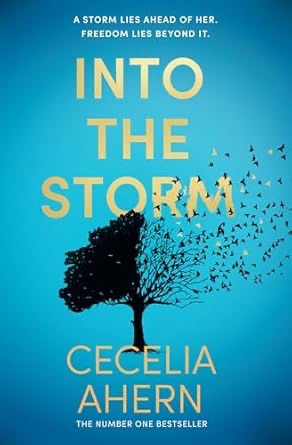
Into the Storm by Cecilia Ahern

One wild night in the middle of December, local GP Enya is driving home from a house call in a dreadful storm and visibility is poor. She comes across a taxi parked in the middle of the road and a boy lying motionless on the wet ground. Oscar, the taxi driver, tells her he has just found the boy like this and he doesn’t know if he’s breathing. As the rain pours down Enya kneels in the road and performs CPR, desperately hoping she can save his life. After she’s questioned by the police and returns home she sits in the car for moment, soaked to the skin and thinks about her mother. Brigid, a rather eccentric and free-spirited woman, died at the age of 47 while swimming in the sea. For a while, as Enya battled to save the teenage boy’s life she felt the water running down her face and wondered if this was how her mother felt? Enya struggles in the aftermath of the incident and can’t seem to put it out of her mind. Is it because the boy was so like her son, of a similar age and wearing the same clothes? The storm propels her into huge life changes as she walks away from her loveless marriage and takes a job in the small town of Abbeydooley. There she lives in a remote spot, but with a rag tree in the garden that brings people from far and wide to tie their ribbons and fabric to it’s branches. Even though her days are filled with patients and she starts to make friends, that night in the rain just won’t leave her. As she looks out of the window at the sacred tree she is faced with the stories of all the people who’ve tied a memento there. Could it be time to face the truth of her own story as well as the memory of her mother? 

We meet Enya in the middle of a crisis and the night of the storm is really the breaking point of that crisis. Enya is 46 and the day after her 47th birthday she will be older than her mother ever was. She has always had the sense that her mother was still going before her but from that day it’s only her. Alone. The grief hits her like a tsunami wave. There’s also the matter of her marriage and living situation. Xander made me feel cold. He comes across as clinical and controlling. The house they live in doesn’t feel like a home to Enya. Their home was the new build that she poured all her effort into, it’s where she had Ross and where she learned him to ride a bike in the garden. Now it’s their GP surgery and they’ve lived in Xander’s inherited family home ever since his parent’s death. There is nothing of Enya in the house and every ornament and painting is exactly where it was when Xander was a boy. If she moves the coat rack slightly or repositions an ornament it is soon quietly placed back where it should be. He even controls her relationship with Ross, having chosen his boarding school and at home telling her not to disturb him when all she wants is to spend time with her son. There’s an invisible barrier there and I could feel her sense of powerlessness. Enya has been struggling for some time: feeling overwhelmed at work; making small mistakes with forms and requests; desperately trying to find an escape, somewhere she can breathe. She has also struggled to let the injured boy go and has visited the hospital and made contact with the boy’s mum. When the offer comes to relocate to Abbeydooley she jumps at the chance. 

Her introduction to Abbeydooley life isn’t a smooth one. The tree is baffling to her. It has filthy and torn rags all over it and completely obstructs her view from the window, taking all her light. She sees it as an eyesore and asks the maintenance person to come out and remove it. Margaret is a brilliant character and the women don’t get off to the best start. Margaret has assumed the tree is damaged and turns up the next morning with a chainsaw, but when she sees the tree is intact she refuses to touch it. Doesn’t Enya realise this is a rag tree, a sacred tree that’s watered by a spring from the site of the original abbey? People believe it’s a sacred site, that their prayers will be answered if they leave something to represent the person or problem they’re facing. It seems ridiculous to Enya, especially when a tour mini-bus arrives with a group of pensioners excited to see this symbol of pagan traditions. Alongside this observance of pagan religion, Enya also has to contend with the church. A visit from the parish priest makes her realise that traditionally the GP and priest have worked quite closely together, sharing information and forming a team to help parishioners and patients. Enya is reluctant, but is starting to learn that in these remote rural areas being a GP is a very different thing to the app led computerised system she and Xander used. Maybe she will have to adapt to a new way of working and living. 

The whole book is a combination of a woman trying to find her way in the world and navigate emotional challenges, with a darker mystery woven in. The backdrop of Abbeydooley is almost like the light relief in the story, with it’s old-fashioned ways and humorous characters like Handyman Willy. I wondered whether it would be a redemption arc, where the town’s quirky ways would win Enya over and change her life. However it’s more complex than that. Abbeydooley becomes a space for Enya to breathe and think, but her demons have definitely followed her. We’re not sure whether she’s a narrator we can rely on. It’s not Xander’s opinion or the little slips at work that concerned me, it’s more about her rising paranoia and the small reveals that prove she isn’t telling us everything. When an agitated man turns up at the surgery to confront Enya we have no idea who he is or what bearing he might have the story. She sees another man through her window late at night, are they the same man or is someone making a late night visit to the tree? All this time Xander keeps her from her son so she’s reduced to leaving voice notes for him in the hope he’ll listen to them alone. Xander claims he’s protecting their son, but from what? I really enjoyed Margaret because she sees Enya at her worst and remains her friend. Margaret knows what it’s like to make a mistake and blow your own life apart. So she’s the best person for Enya to spend time with. What I found sad is that Enya has had support there all along. Although Xander has slowly controlled her, she has allowed her life to restrict her to the point where she felt her only choice was total escape. Yet she has her sister and brother-in-law, they are warm and welcomed her into their home when she first left. She could have made changes, been closer to her son and faced up to everything. Enya seems like a person who runs away: from grief, from her marriage, from the truth. I didn’t always understand her as a character, but her journey was fascinating. With my counsellor head on I wanted her to find a way to break free from all the restrictions she placed on herself. She would certainly make a fascinating client.


Meet the Author

Cecelia Ahern is an Irish novelist who wrote her debut novel PS, I LOVE YOU at the age of 21 years old, which was published in 2004. It became one of the biggest selling novels in recent years and was made into a hit film starring Hilary Swank, as was her second novel LOVE, ROSIE starring Lily Collins. She is published around the world in 40 countries, in over 30 languages and has sold over 25 million copies of her novels. She has published 19 novels, including a Young Adult series FLAWED and PERFECT, and the highly acclaimed collection of short stories ROAR. Her 20th novel INTO THE STORM will be published in October 2024.

She is the co-creator of TV comedy series SAMANTHA WHO? starring Christina Applegate and ROAR, the TV series, is streaming now on Apple TV+ starring Nicole Kidman.

Posted in Netgalley

Lights Out by Louise Swanson

The Government have declared a state of emergency in this tense and thought provoking thriller from Louise Swanson. They’re introducing a temporary policy of electricity rationing, so at 8pm every night the lights and all other electrical power will turn off. For Grace this is her worst nightmare, because she’s terrified of the dark and no reassurance or safety measure from her husband is going to change that. She knows that at some point she will be forced to face the dark alone. An experience of being enclosed in the dark as a child has left it’s mark. All she can do is take as many night shifts at the hospital as possible, where they’re exempt from the switch off. In the house she will have to carry a torch and try to be alone as little as possible. When the switch off comes it’s effects are worse than she could possibly have imagined. Someone is coming into her home. Late at night when she’s shivering under the covers, too scared to move. Someone is leaving behind strange gifts – a third goldfish is swimming beside Brad and Jennifer in the bowl, a horrible painting of a dragon has replaced her own photo on the stairs, a pair of candlesticks in the kitchen. With them he leaves a strange and unsettling note: 

‘I have you in my sights. Love, the Night.’

Where can Grace feel safe if not in her own home? She’s an interesting character, clearly badly affected by childhood trauma and the memories of her previous, abusive relationship. The author opens with a first person account of being locked in a small pitch black space, it’s so vivid I could feel her fear. Grace tells us she was locked in a cupboard by the other children at school, where they continue taunting her until she wets herself. Since then she has always kept the lights on after dark and her partner sleeps in an eye mask to avoid the constant light. She also works at night where she can and sleeps in the day at home. She works as a carer in the hospice, spending a lot of time sitting beside those who are close to death, once her other tasks are completed. She didn’t go to university because she had a baby boy while very young and he has recently left home to live with his partner. Grace moved in with her own boyfriend and he has promised to be home in time for first big switch off. However, when she’s counting down the minutes, torch in hand, her partner is nowhere to be seen. 

The author shows brilliantly how even a strong and capable woman can be triggered by something that others barely notice. She touches on how the lights out policy affects the wider population – hypothermia in the elderly, rotting food defrosting and causing waste, a rise in crime. For others the lack of power has some positives, people can’t hide or be distracted by screens and communication within families will improve. Grace has been a single mum and she works well with people who are dying, so we know she isn’t scared of the big stuff. So why has one experience from childhood left such a huge impression? Her mother had always hoped she’d grow out of it and now the twelve hours of darkness must surely mean she must face the fear? It’s like state sponsored exposure therapy. Then ‘the night’ starts visiting and suddenly the dark covers up worse fears, new ones that are very real indeed. Even worse, her night visitor isn’t breaking in, so surely they must have a key. She is unsure how to deal with it and ringing the police is pointless when they’re dealing with a darkness induced crime wave. 

In between Grace’s sections of the story we meet a man who is in therapy. He left me feeling very on edge and I found myself wondering how I’d react if he were my client. He seems very unaware how counselling works, despite it being a fairly common concept these days. He also responds strangely to the therapist’s standard introduction. He fidgets, stands and paces round the room and I was uneasy on the therapist’s behalf. He seemed agitated. He’s convinced that his girlfriend is seeing another man. Is he paranoid? We have no idea how he fits into the story, but I was intrigued by him. Grace’s world becomes even more confusing when someone from her past turns up at the hospice as a patient. She knows she should disclose their connection, but if she does she knows she won’t be able to work with them. She decides to keep it to herself so she can sit with them. What clues, if any, might they have about her childhood and could what they know help her fear of the dark? As the pages turned I became more and more suspicious of her partner. Never home when he says he will be, distracted and very unsympathetic. I didn’t like him from the start and wondered if he was exercising coercive control over her. The moments when she’s under the covers with her heart racing as she hears her intruder moving around downstairs are truly terrifying. Yet he doesn’t seem malicious. He seemed to enjoy her fear and I even wondered if the night was closer to home than she thought. The truth was even stranger than expected and I found myself rooting for Grace, wanting her to get some resolution about her night visitor but also more long term relief from her phobia. That could only come from openness and facing the truth of her childhood and that time in the pitch dark cupboard. This is an enjoyable thriller with interesting insights on how childhood trauma affects us and how early relationships can inform the attachments we form in later life. 

Out Now from Hodder and Stoughton

Meet the Author

Louise Swanson’s debut, End of Story, was written during the final lockdown of 2020 – also following a family tragedy, it offered refuge in the fiction she created. The themes of the book – grief, isolation, love of the arts, the power of storytelling – came from a very real place. The second Swanson book will arrive in hardback and eBook spring 2024. Watch this space. 

Swanson, a mother of two who lives in East Yorkshire with her husband, regularly blogs, talks at events, and is a huge advocate of openly discussing mental health and suicide.

She also writes as Louise Beech. Beech’s nine books have won the Best magazine Book of the Year 2019, shortlisted for the Romantic Novel of the Year, longlisted for the Polari Prize, and been a Clare Mackintosh Book Club Pick. Her memoir, Daffodils, was released in audiobook in 2022, and the paperback version, Eighteen Seconds, in April 2023..

Posted in Netgalley

The Blue Hour by Paula Hawkins

Set on an isolated Scottish island called Eris, where the mainland is only accessible at high tide, an infamous artist has retreated from the world. Twenty years ago Vanessa’s notoriously unfaithful husband visited the island then went missing. After Vanessa’s death, the island became the home of local GP Grace, often referred to as Vanessa’s companion or friend. However, all her artworks were left to an art foundation set up by her first agent. The curator of the foundation is Becker, hired for his expertise in Vanessa’s work. He is under pressure from the new owner to extract the last of Vanessa’s work from Eris. They have tried polite enquiries, legal letters and ultimatums but they are sure this has all been in vain and that Grace is deliberately holding back. Now a situation has arisen with one of Vanessa’s found object installations already on display in the gallery. A visiting doctor is convinced that the bone suspended in a glass box is human. They withdraw the box from view and contemplate having to break it open to have the bone properly tested. The unspoken thought on everyone’s mind is whether this might solve the mystery of Vanessa’s missing husband? It’s an opportunity for Becker to tell Grace face to face, but also to address the missing works that must be on Eris. He feels this is the best way forward; a last ditch attempt before legal action. However, visiting Eris is not without it’s risks. Are all of it’s secrets and lies about to be uncovered. 

I’ve been waiting to love a Paula Hawkins novel ever since the brilliant The Girl on the Train, which was THE novel to be reading when it first came out. It was a successful film too, even though I felt it lost something when transferred to America rather than it’s London setting. Her following novels haven’t really stayed with me in the same way, even though they were page turners. This story really did grab me. I love reading about the lives of authors and artists, because they’re always interesting characters with depth and complexity. They also usually have atmospheric settings with the sort of rambling houses I dreamed of living in when I was little. This had all three and I truly couldn’t put it down, choosing it over TV in the evening and going to be early with it too. The story was intriguing too, with the mystery of the human bone to be solved but also the missing works of art, not to mention Vanessa’s husband. Vanessa has always insisted he left the island and his wallet was found washed up near the causeway suggesting his leaving was ill-timed and the tide came in as he was crossing. Becker is torn. He knows that they must test the bone, but he feels sick at the thought of destroying one of Vanessa’s works in the process. His boss agrees that he must travel to Eris to discuss it with Grace in person and take the opportunity to bring back any works he finds that should be in the gallery. 

I loved the complicated relationships in this story. Even Becker is in a strange relationship triangle. He arrived at the foundation specifically look after Vanessa’s legacy, but there was more change when Vanessa’s agent died and the house, grounds and art foundation passed from father to son. Also left behind were his frail and elderly wife and his son’s fiancée Helen. Becker was immediately attracted to Helen and to his surprise his feelings were reciprocated. This ultimately resulted in Helen leaving her fiancé for Becker and moving to his cottage on the estate. They are now married and Helen is pregnant with their first child. Becker had expected to lose his job over the affair, but his new boss was surprisingly gracious. Becker is from a modest background and he sometimes can’t believe that Helen chose him, besides her ongoing friendship with her ex-fiancé leaves him uneasy. This is a man who has everything and now he must leave Helen in his hands, so he’s feeling very conflicted about his trip to Eris. 

Grace is absolutely fascinating and her relationship with Vanessa is complex. She is aggrieved that Vanessa ‘left her with nothing’ neatly ignoring the fact that she now owns the house and island. The foundation’s position is that Grace has withheld certain paintings, sketches and Vanessa’s diaries. She comes across as a borderline personality. Her early experiences have left her feeling unwanted and inadequate leaving her unable to form healthy relationships. In order to be accepted she has learned to blend her personality to fit whoever she’s with, but sadly has no idea who she really is. When she wants to form an attachment she makes herself indispensable to the other person. In Vanessa’s case she becomes quietly present, in the background preparing meals, cleaning the house and making sure Vanessa has all the conditions she needs in order to create. In her way she feels she has contributed to the works Vanessa produces. There is no word for what Grace is – friend or companion is the usual – but really she’s like a servant, always anticipating their mistress’s needs. Most of the time she feels indispensable to Vanessa, but occasionally she is displaced from her position, by the latest lover or her ex-husband popping in and monopolising Vanessa, until she abandons work and spends time with him, often not leaving the bed for the duration of his visit. Grace hates him, often retreating to her cottage across the causeway until she sees his little red sports car departing the village. Then there are heated arguments and recriminations over his visit until the pair settle once more into their usual routine. Grace fears abandonment. She remembers the relief she felt when she found her tribe at university only to return home from lectures one day and find that her two friends have moved out of their shared house without even a note. As the village GP Grace is clearly intelligent and skilled but I worried about her access to vulnerable patients. I couldn’t decide whether she was a tragic figure, or a sinister one. 

Vanessa could be volatile. Her tempestuous friendship with her agent was well known and friends were surprised that she left him such a huge bequest on her death. Her marriage was also a rollercoaster of ups and downs, both of them drawn to each other but utterly incapable of living together. Could one of their legendary fights have gone wrong? As Becker arrives on Eris a battle of wills develops between him and Grace and secrets will out. The author keeps you guessing; is Grace the victim or persecutor? Is she holding on to the diaries because they incriminate Vanessa? Or is she trying to preserve the memories of her life with her friend, in the only place where Grace has felt like she’s home? The author pitched the tension perfectly and I devoured the final third of the book. We move between Becker’s narrative and Grace’s, alongside excerpts from Vanessa’s diary where each excerpt or reminiscence reveals about her clue or changes the story dramatically. Above it all is the artist – a figure we might imagine we know through their work, but art can be a mask, just a way of painting over the cracks. The diaries offer a less curated Vanessa, as well as the raw and unvarnished truth. Eris stands above all as a mystical landscape, like one of those places in a horror film that you can never leave no matter how hard you try. This was a brilliant thriller where you’re never sure about the truth until the very end.

Out Now from Doubleday

Meet the Author

PAULA HAWKINS worked as a journalist for fifteen years before writing her first novel. Born and brought up in Zimbabwe, Paula moved to London in 1989. Her first thriller, The Girl on the Train, has sold more than 23 million copies worldwide. Published in over fifty languages, it has been a Number 1 bestseller around the world and was a box office hit film starring Emily Blunt.

Paula’s thrillers, Into the Water and A Slow Fire Burning, were also instant Number 1 bestsellers.

Posted in Random Things Tours

Dark as Night: Forbidden Iceland 4 by Lilja Sigurdardóttir

I always look forward to a new book in the incredible Àrora series and this one really delivers! It takes two long-standing mysteries in the novels and sheds new light on everything we thought we knew. The disappearance of Àrora’s sister was the only reason she came to Iceland from the UK. She works as a financial investigator, usually in the area of tax. She’s built a life here, including a relationship with detective Daniel. Now she’s contacted by a woman who says her young daughter has memories of being Arora’s sister Isafold and they’d like to meet with her. Àrora is a straightforward and rational woman, but I remembered those lonely months where she trawled old lava flows with a drone, based on nothing but a feeling. She knows that Isafold is dead but finding her has been a compulsion for so long. How can she ignore what this little girl has to say? Lady Gugulu has been living in Daniel’s garage conversion for a long time. Once a science student and potential academic, he leads a quiet life and makes his money performing as a drag artiste. He and Daniel have become close so he’s shocked to find that his tenant has suddenly vacated the garage without a forwarding address. When three men turn up, Daniel has a sense that they’re investigators or secret service. Whoever they are, they’re leaving no stone unturned. A black eye and split lip later, he enlists Àrora to look into his friend’s finances in the hope of finding his whereabouts.

In turn Daniel convinces his superiors to take another look at the missing person case opened on Isafold and her violent boyfriend, nicknamed the ‘Ice Bear’. He also wants to look into the parents and background of the little girl who knows things only those closest to Àrora and her sister would know. How does she know these details and could she possibly be genuine? I loved how the author played with doubt and belief when it came to this little girl. Àrora is very shocked that she knows Bjorn’s nickname and that their father called Àrora his troll girl and Isafold his elf girl. Their father was a weight trainer and Àrora definitely took after him. She still trains and is currently trying to increase her lifting weight. She’s been having steroid injections but knows they’re having an affect on her libido and emotions. She’s been irritable and takes her moods out on Daniel at times. Now she’s transfixed by the little girl and genuinely feels like she’s back with her sister when they meet. Every time they talk I felt she left Àrora on a cliffhanger. Just when Àrora is trying to stay rational, she reveals something that only Isafold could know, even confirming that Àrora is right and her sister is lying in black lava. Daniel is sceptical and suspects the parents of coaching their daughter. He brings in a child psychologist and I was absolutely glued to their session, dying to see what would come next with so many unexpected twists! 

I’d always been intrigued by Daniel’s lodger but I’d never imagined this background and I was so worried for him. Having been treated to a second visit from the men in black, Daniel knows he’s dealing with either foreign agents or interpol. The best thing is to put Àrora on the trail and as she sets off to the Canary Islands to talk to Lady Gugulu’s mother. She’s suspects he’s used several identities over the years, but what exactly is he running from? As the men in black turn over the whole garage, Daniel gets the feeling they’re not just looking for his friend, they’re looking for something. It’s great to see Daniel and Àrora going the extra mile for each other in their investigations. There’s an incredible trust built up between them, because these people are so precious to them and the outcome of the investigations could be life-changing. They’re also confronting a reality that stretches their credulity: Daniel has to suspend his disbelief around all things mystical. He sets out expecting to find a rational explanation for the little girl’s apparently supernatural knowledge, treating the family as suspects rather than witnesses. I was glued to this part of the story, truly expecting evidence that they were scamming Àrora in some way. Similarly the revelation that Lady Gugulu has been on the run from the authorities is utterly unexpected. Daniel’s always known that his friend was intelligent but as Àrora starts to uncover an academic background at Oxbridge and a very unexpected career path Daniel has to accept the possibility that his friend is not what he seemed. As he says, it’s as if he has James Bond on his trail. It was lovely to spend some time with a character who always been in the background up till now. I enjoyed learning about his academic and romantic past, moving beyond his sexuality and drag persona. He proves himself incredible resourceful and resilient on this journey and my admiration for him grew enormously. 

This was an enthralling addition to the Forbidden Iceland series. I loved that the author isn’t easy on her heroine, allowing the reader to see her flaws and her vulnerabilities and how they drive her actions. She’s a proper three dimensional character and hard to like in parts, particularly in the way she treats Daniel. Although, their teamwork is incredible and their ability to lean on and trust each other speaks volumes. We all know thrillers that are addictive at the time, but instantly forgettable. Here the writing was tense and addictive, but the deep and intelligent characters stay with you. The unifying story across all these novels has been Àrora’s loss of her sister so to see her search potentially moving forward was quite emotional. While someone is missing there’s always an element of hope and this is the first breakthrough in a long search. This could tip Àrora and her mother from hope, into the depths of grief. It also opens up the question of Àrora’s prolonged stay in Iceland which might come to an end if Isafold is found. The little girl who holds all this potential knowledge is a fascinating character, beautifully written with a feeling of the uncanny and otherworldly about her. Could she genuinely hold the key to Isafold’s disappearance? A strange separate narrative that’s unattributed took me all the way back to the first book and a potential clue about what might have happened to Àrora’s sister. I didn’t want to put this book down at any point. It is simply the best so far in a series that gets better and better. 

Published by Orenda Books 10th October 2024

Meet the Author

Icelandic crime-writer Lilja Sigurdardottir was born in the town of Akranes in 1972 and raised in Mexico, Sweden, Spain and Iceland. An award-winning playwright and screenwriter, Lilja has written eleven crime novels, many of which have been translated into multiple languages and hitting bestseller lists worldwide. Lilja has won The Icelandic Performing Arts Award for ‘Best Play of the Year’, The Icelandic Crime Fiction Awards twice, been longlisted for the CWA International Dagger, been shortlisted for the prestigious Glass Key Award twice and had a Guardian Book of the Year. The film rights for the Reykjavik Noir trilogy (Snare, Trap and Cage) have been bought by Palomar Pictures in California. She lives in Reykjavík, Iceland, with her partner but also spends considerable time in Scotland.

Posted in Random Things Tours

The Torments by Michael J. Malone

I was bowled over by the first novel in the Annie Jackson series – The Murmurs. I already knew that Michael was an incredible writer, able to bring great compassion and intelligence to his characters while delivering a page turning thriller. The added elements of the paranormal and Scottish folklore really grabbed my attention and fulfilled my craving for all things weird and gothic. Here we find Annie living in her little cottage with a view of the loch, the only place that gives her peace from ‘the murmurs’ that can strike at any time beyond the walls of her home. The murmurs are sibilant whispers letting her know that someone close by is near to death. A vision of a skull appears over the person’s face, followed by a horrible premonition of how they meet their fate. One day, while working a shift in the local coffee shop, Annie can hear the whispers and feel the rising nausea. This vision is for a young local man called Lachlan. Annie sees a terrible car accident and Lachlan’s vehicle wrapped around a tree. Torn between warning him and drawing attention to herself, or walking out and ignoring the vision, Annie chooses a middle ground. She tells him his tyres are bald and he really should change them. Even this course of action backfires as only hours later she is berated by a man who comes to tell her Lachlan is dead and she could have prevented it, but didn’t. The rumours about her powers go into overdrive as people realise Annie is the woman who found the bodies of several murdered women. 

Annie can’t win. She’s either dismissed as sinister or even mad or she stays quiet and is blamed for whatever ensues. Desperately wanting to hide from the world, she hopes her little cottage will continue to protect her from the murmurs, but hadn’t banked on how angry locals would be. They break her windows and target her house with red paint. Thankfully, her twin brother Lewis arrives to stay and help just as their adoptive aunt visits, hoping that Annie’s gift might help someone in need. She wants them to look into a missing person case; a young man called Damian has disappeared and she suspects something sinister has happened to him. Damian has had a very complicated past, including ending up in prison on one occasion, but in recent months he had calmed down due to the birth of his son Bodhi. While Annie is keen to explain that she isn’t a medium and can’t find people on command, Lewis thinks they might be able to help. Why not research and interview people like a private investigator? Then during their investigation if anything comes up for Annie they can act on her ideas. What awaits them is a surprising and complex puzzle, that seems to include the dark arts and a woman with the ability to ‘glamour’ others. This time Annie could be in serious danger. 

Michael moves us through different timelines and perspectives, from Annie and Lewis’s investigations to new characters called Ben and Sylvia who are pupils at a private school several years earlier. I found their tutor very disturbing, almost grooming both of them into his fascination with the occult. He’s chosen exactly the right students to draw into his web, students who are distanced or estranged from family and potentially vulnerable. His name is Phineas Dance – an awesome name for the villain of the piece! He gives them a reading list including Alastair Crowley and other proponents of the dark arts and they take to his teaching very well, particularly Sylvia who we watch become more obsessive as she matures. Their training involves ritualistic sacrifice, as well as the attainment of wealth and success – using their new powers to ensnare other followers of celebrity and influence. This leaves them both free rein to operate where they live, having local dignitaries in their pocket. Every few years they have a chance of ensnaring the Baobhan Sith, a mythical female deity who can unleash havoc. All they need is a sacrifice and who better than Annie? The author excels at creating a nail-biting game between Sylvia and Annie’s powers, with Sylvia drawing Annie towards her beautiful home and Annie’s murmurs being suppressed then surging again. Annie is confused by this strange sensation, that feels as if her brain is dialling in and out of a radio station! I was mentally begging her to resist Sylvia’s strange abilities and stay with her brother who is in a battle of his own. He’s using detective work to find out about their missing man Damien and unearthing a possible link to a terrible fatal accident that happened when he was only a teenager. Could this incident be behind Damien’s reckless and addictive behaviours? I loved his interactions with the detective working the missing person’s case, Clare is deeply suspicious of the brother and sister team at first. However, when she has an inkling that corruption might be at play she works in tandem with Lewis and they make a formidable team. I even detected a a bit of chemistry between them. This is a fast moving case, especially when Annie is targeted, meaning you won’t be able to put the book down until you know if she can be found before the ritual sacrifice begins. 

When you finish this book you’ll feel like you’ve been on a fairground ride! The author has a brilliant way of engaging the reader’s emotions, drawing us into the character’s inner lives in a depth that can be rare in thrillers. It’s his ability to make us root for this brother and sister pairing that drives this novel. I feel so much for Annie, who hasn’t asked for this strange ability she has but has to live with the consequences and it’s a lonely life. She’s misunderstood and shunned by people who really don’t understand how powerless and frightened she feels. It was great to see her with the back up of her brother, who accepts her abilities without question and doesn’t judge. Their bond felt very real and setting aside the paranormal elements of their quest, they did remind of the close bond I have with my own brother. When you add these characters to a great case, full of drama and danger, it makes for a very satisfying reading experience. I absolutely raced to the conclusion, never expecting the outcome and enjoying the twists along the way. It left me hoping for more from Annie and Lewis, with a hope that Annie gets a little bit of respite from the murmurs first.  

Published by Orenda Books 12th September 2024

For more reviews check out these bloggers on Septembers blog tour.

Meet the Author

Michael Malone is a prize-winning poet and author who was born and brought up in the heart of Burns’ country. He has published over 200 poems in literary magazines throughout the UK, including New Writing Scotland, Poetry Scotland and Markings. Blood Tears, his bestselling debut novel won the Pitlochry Prize from the Scottish Association of Writers. His psychological thriller, A Suitable Lie, was a number-one bestseller, and the critically acclaimed House of Spines, After He Died, In the Absence of Miracles and A Song of Isolation soon followed suit. A former Regional Sales Manager at Faber & Faber, he has also worked as an IFA and a bookseller. Michael lives in Ayr.

Posted in Netgalley

The Book of Witching by C.J.Cooke

On a small uninhabited island off Orkney, the body of a young man is found burned alongside a girl who is barely alive. She has suffered terrible burns to her arms and hands. When Clem receives the call that her daughter Erin is in the burns hospital in Glasgow, she races to her bedside and is horrified to find her in a coma with her damaged eyes stitched shut. Erin had been on a trip to Orkney with her boyfriend Arlo and a new friend Senna, leaving her daughter Freya with Clem. Arlo has been found dead, but Senna is missing. Erin desperately looks for clues as to how this has happened and is startled by a sudden vision of a strange book, with a bark cover and black pages that appear to be blank. Searching her daughter’s room she finds a note that reads ‘Arlo’s hands will need to be bound’. Could Erin have harmed her friends? We’re taken back to 16th Century Orkney as Alison Balfour wakes up and finds both of her children missing in the middle of the night. She tracks them to a clearing where masked and robed figures are holding a ceremony, initiating her children into the Triskele, just as she once was. Her own mother steps forward with the Book of Witching, inviting her grandchildren to ‘sign’ the book with a primal scream. Only a few weeks later she is approached by a nobleman when visiting her husband, who is working as a stone mason on the cathedral. He asks if Alison could create a powerful hex that would end the life of a powerful Earl. She refuses, so it’s a huge shock when she is arrested for practising witchcraft and thrown into a dungeon. Alison knows she has only ever used herbs and charms to help people with their ailments, particularly women. However, she knows what will follow; interrogation, violation and torture unless she confesses to something she didn’t do. Then she faces burning, with her only hope that she is strangled before the fire takes hold. Alison’s story is interwoven with Clem’s story, set in present day Glasgow where she lives with her daughter Erin. Clem is devastated when out of the blue she receives a call from the city’s burns unit. Erin has been admitted to the unit with serious burns and is in an induced coma. Clem is confused because Erin was on a trip to Orkney with her boyfriend Arlo and her friend Savannah. Now Arlo is dead, Savannah is missing and Erin has terrible burns to her arms and hands. She was found on the beach of Gunn, an uninhabited island off Orkney. Why were they in such a remote place and why is Clem had a vision of a blackened, bark covered book which opens to reveal a woman burning at the stake? 

C.J. Cooke combines these two stories into a narrative about Scottish heritage, the history of witchcraft and of women. She creates an eerie atmosphere where supernatural abilities abound, based within a breadth of research around the 17th Century moral panic about witches spearheaded by King James himself. These earlier sections are an unusual mix that ground us within the history of a place, but also creates a sense of unease. Alison renounced the Triskele years before and is angry with her mother for going behind her back, so when she’s arrested for witchcraft it’s a shock. The period where Alison is interrogated is incredibly accurate and hard to read in parts. She is entirely at the mercy of the powerful men who keep her in a filthy dungeon, restrict food and water, then use intimidation, violation and torture to elicit a confession. The historical background to the witch trials in Scotland has come up in a couple of novels this year and it might seem strange to the reader that such a belief in witchcraft existed. King James VI of Scotland had a marriage contract with a Danish princess, but her voyage to Scotland is threatened by fierce storms. Witch burnings had already swept across Germany and into Scandinavia and there are rumours that a witch had cursed the princess’s voyage. The North Berwick trials started a wave of panic over witches who might be accused of something as silly as causing a farmer’s cows to stop giving milk. King James voyaged across the North Sea to collect his bride, but does become obsessed with witchcraft using the Malleus Maleficarum as his witch finder’s bible. It includes the idea that witches will have a mark on their body where the devil has left his mark. One of the men interrogating Alison uses a pin to test marks on her naked body, looking for one that doesn’t produce pain when stabbed by the needle. He claims to have found the mark under Alison’s tongue, but also perceives the outline of a hare that turns into a shadowy figure. They are so sure of what they’ve seen that Alison almost thinks she’s seen it herself, but she’s starving, dehydrated, filthy and exhausted from being walked up and down all night to prevent her sleeping. Yet every time she denies their accusations, until they start hurting the people she loves. 

Clem meanwhile is horrified by the state of her daughter who is on a ventilator to protect her airway. She’s so vulnerable that she’s even grateful for the presence of her ex-husband at Erin’s bedside. She’s devastated for Arlo’s parents and for those waiting to hear news of Savannah. They’d only become friends very recently and there had been no red flags. Now the police are sniffing around the ICU, waiting for Erin to wake up and give them her account of what happened. When Clem pops home she goes into Erin’s room to feel her daughter. As she looks around she finds a slip of paper and written in Erin’s hand is he instruction that ‘Arlo’s hands must be bound ‘. That is exactly how Arlo was found. Instinctively, Clem pockets the evidence before the police ask to search their home. She must protect her daughter. Yet when Erin wakes up she claims to be someone else. Someone called Nyx. Clem only has to hear her voice to know that this is not her daughter. For me Alison’s narrative is more compelling, possibly because we’re in the midst of the action and everything is so immediate as we experience it through her eyes. By contrast we come into Clem’s story after the terrible event has happened. She’s in the dark, desperately trying to work out what has happened to her daughter. This only gets more complex as Erin wakes up different and she isn’t sure whether it is a case of ICU psychosis as her nurse suggests. This is a psychiatric response to the strange environment where sleep deprivation, being dependent on others and the sensory overload from the various machines and lights being on constantly. It’s also disorientating to wake up and find part of your life is missing. Yet there’s clearly a paralysing fear that something much worse is wrong. Erin has been through something so traumatic she’ll never recover or never be Erin again. The more Clem uncovers the more she feels something paranormal is at play. 

I was so impressed with the historical detail put into this novel and how real it made Alison’s experience. The punishments she and her family go through are more horrific than any of the paranormal stuff. We might fear the unexplained and the unknown but the things humans do to each other are far worse. I’ve loved this writer since her first novel and this one had me utterly gripped because she captures the fear of being labelled, noticed as different and blamed for things you haven’t done. Many witches served a purpose in their community, particularly for fellow women and I think she captured the complexity of that position. What’s the difference between giving a herbal remedy, a harmless charm or a spell and who makes that decision? Certainly not women and not those who are powerless or living in poverty. Even the most altruistic intention can be misconstrued or twisted by someone malicious. This was a dangerous time to be a wise woman. I also loved how the author based her story in a magic that was so powerful it could still wreak havoc today. This is another solid read from a fascinating author who has rapidly become a favourite of mine and a ‘must buy’ writer.

Published by Harper Collins 10th Oct 2024

Meet the Author

C J Cooke (Carolyn Jess-Cooke) lives in Glasgow with her husband and four children. C J Cooke’s works have been published in 23 languages and have won many awards. She holds a PhD in Literature from the Queen’s University of Belfast and is currently Senior Lecturer in Creative Writing at the University of Glasgow, where she researches creative writing interventions for mental health. Two of her books are currently optioned for film. Visit http://www.cjcookeauthor.com

Posted in Publisher Proof

My Hummingbird Father by Pascale Petit

This extraordinary novel weaves a mystical and hypnotic spell around the reader, using the flora and fauna of our heroine’s home in Venezuela and slowly unravelling the truth about her childhood. Dominique is an artist who receives a vision of her father in her dream, so powerful she is able to recreate it on canvas. She hasn’t seen him since her early childhood, so it’s a surprise when he gets in touch and asks her to come to Paris. He is dying and wishes to reconcile with his daughter. Longing for paternal love Dominique travels to Paris, on a physical and spiritual journey to recover that part of her early childhood she spent in Paris with both her parents. There she uncovers repressed memories that reveal the truth of her parent’s marriage and her own birth. She also visits the Venezuelan Amazon where she meets Juan, a mystic and shaman who guides her journey. A gentle and tender love story emerges between them as Dominique tries to heal from what she has uncovered. 

I would have known this writer was a poet and an artist from the very beginning because she writes lyrically and creates such striking visual imagery. At first it’s an assault on the senses, a maelstrom of imagery from the Amazonian jungle filled with colour and fantastical animals. A beautiful example of magic realism, the author’s vivid imagery tells of jaguars, birds of paradise and in one case a very disturbing anteater I expected to see in my nightmares. It’s almost hypnotic and I was so overwhelmed and beguiled by the beauty of her words that I didn’t realise the pain and devastation underneath. It’s through her artwork, which is almost shamanistic at times, that she processes her trauma. Her childhood was tainted by her father leaving, seemingly without explanation when she was six years old. She then experienced abuse and resentment from her mother. The process of recovery from trauma is a major theme in the book and we can see how Dominique’s reintroduction to her father triggers the emotions that she hasn’t resolved. In fact his presence triggers nightmares and the re-emergence of events she’s kept locked away in her subconscious. She wants answers to the mystery of her father’s disappearance, but I feared she would be re-traumatised by the truth.These are dark, harrowing memories in parts but it’s clear that the beauty of nature really does have a healing effect on her. 

Her descriptions of Venezuela and the incredible Angel Falls made me want to see it for myself! Here things become more mystical as we see Dominique’s beautiful connection to this place and a man she meets from the Pemon community, indigenous to Venezuela. Juan helps her to go deeper inside herself and face whatever unresolved feelings lurk there. He is a shaman to the community and can ward off malevolent spirits, including the type of dark and disturbing emotions that can haunt people who’ve experienced abuse. This is an incredibly personal journey and her time in Venezuela, the rediscovery of her childhood home in Paris as well as reading her father’s correspondence all contribute to her recovery. I found her story deeply moving and challenging to read at times. However, I recognised the catharsis in Dominique’s artistic expression and the importance of documenting traumatic experiences. She needs others to bear witness to the truth of her childhood, because only then can she achieve acceptance and healing. This is a beautifully written novel, that’s lyrical and treads a line between poetry, visual art and prose. I was touched by it and by the deep connection Dominique has with the natural world. There she can be her true self, an imperfect human woven back together by animals who always accept us as we are.

Meet the Author


Pascale Petit’s eighth poetry collection, Tiger Girl (Bloodaxe, 2020), was shortlisted for the Forward Prize and for Wales Book of the Year. A poem from the book, ‘Indian Paradise Flycatcher’, won the 2020 Keats-Shelley Poetry Prize. Her seventh collection, Mama Amazonica (Bloodaxe, 2017) won the inaugural Laurel Prize in 2020, the 2018 Royal Society of Literature’s Ondaatje prize, was shortlisted for the Roehampton Poetry Prize and was a Poetry Book Society Choice. Her sixth collection, Fauverie, was her fourth to be shortlisted for the T. S. Eliot Prize and a portfolio of poems from it won the 2013 Manchester Poetry Prize. T. S. Eliot shortlisted What the Water Gave Me: Poems after Frida Kahlo (Seren, 2010), was also shortlisted for Wales Book of the Year. Salt published her debut novel, ‘My Hummingbird Father’, in 2024 and her ninth poetry collection, Beast, is forthcoming from Bloodaxe in 2025, and is awarded the Arthur Welton Prize.

Posted in Squad Pod

Circus of Mirrors by Julie Owen Moylan

I really have been blown away by this story set just after WW1 and progressing to the mid-twentieth century. Our characters are two German sisters Leni and Annette who live in Berlin and are the last living members of their family. When we first meet them they’re in dire straits, living in a makeshift shelter in an abandoned garden. Thanks to war and the influenza epidemic they’ve lost their family, so are totally reliant on each other. Leni, the older sister, gets a chance to earn some money at a notorious and rather seedy cabaret club called Babylon Circus. There the naive and rather shy Leni becomes a cigarette girl in a second hand and pinned costume that just covers her modesty, but she is at first shocked by what she sees. With shades of the musical Cabaret the author creates a club that is a mirage of clever lighting, fairground mirrors and risqué musical numbers. It’s enchanting by dark and unwelcoming by day, but it doesn’t matter because this is the type of fun that can only be had at night. The girls are shameless on stage and nudity is everyday in the dressing room, but Leni sees something attractive in their boldness, bawdy gossip and loud raucous laughter. They have a freedom she’s never seen before in women, they’re not afraid of taking up space. The illusion extends to the girl’s costumes, covered at first glance but offering a cheeky glimpse here and there. This is what the crowd turn up for, but one girl manages to shock the audience by crouching on the table of a misbehaving customer and pissing in his face. Everything is overseen by owner Dieter, a man with his own disguise. He rarely enters the cabaret room, but sits in his office with it’s resident cat. Having left half his face on a battlefield he wears a tin mask which chafes at his wounds and leaves his expressions slightly lopsided. This gives a certain sense to the fairground mirrors, if everyone is distorted then no one stands out. 

It’s Paul the pianist’s good looks that capture Leni; his talent, his smile and the lock of hair that escapes onto his forehead. When he starts to walk her home she’s evasive, how can she tell him he doesn’t have one? She invents a family, but then has to keep Annette out of her business. Paul’s also in trouble, as his brother has run up debts he can’t repay and the lenders are leaning on him to pay instead. After a warning in the form of a beating he knows he must leave, but what will he do about Leni? Leni and Annette now have rooms, with a landlady who doesn’t mind watching Annette in the evenings while Leni works. I had so many questions. Would Paul ask Leni to go with him? Does he even feel that strongly about her? Where would Annette fit into this? Even after all these questions are answered, jealousy and fate intervene changing everything. 

In our second timeline we’re in the midst of the Cold War and a middle-aged Leni is living in Berlin with her teenage daughter, following the death of her husband. She’s surprised by a sudden visit from her sister Annette who now lives in the USA. She seems agitated and anxious, spending all her time in flat brooding and smoking. Leni’s daughter is in the throes of first love, using the guise of drama rehearsals to meet her boyfriend. With nowhere to go they find solace in a strange old cabaret club where there’s a fairground mirror amongst the ruins. This is the perfect place for secret assignations. Leni is concerned that with her sister here the past seems closer than it’s been for years. So many secrets are being kept between these women and when Leni sees a face from the past, it could all come tumbling down like a pack of cards. 

Julie writes mid-century women like no one else. I feel like I know them. This is my grandmother’s generation and my grandad actually went to Germany after WWII to help rebuild the country. I remember being shocked by the utter devastation of German cities when they were depicted in the film The Aftermath. I was haunted by a woman getting her daughter ready for school, brushing her hair in their normal routine, but with the outer wall blown away. It was like looking into a doll’s house. The author made me feel the contrast of that wild decadence in the 1920’s with the Cold War period where everything feels grey and routine with nothing to look forward to. The bleakness of Leni’s flat really comes across as it seems to echo the desolation of Annette. Even the once rowdy and colourful club is now derelict and abandoned. I love the way the author plays with place and identity in this way, as well as how the characters see themselves. Their internalised sense of how they look forming part of their identity, but is often at odds with how we see them. Dieter and the girls at the club are almost gaudy grotesques, using appearance and performance to mask true feelings. As for Dieter, I kept thinking about his inability to express emotion in his face and how that affected his ability to connect with others. If we can’t express what we feel what effect does that have on our identity? Dieter can’t look at his new face because it doesn’t reflect the image he has of himself in his mind. It’s only once everyone else becomes distorted that he fits in, only the cat accepts him utterly as he is. 

The secrets between the sisters are beautifully constructed. Annette’s adult behaviour is a faint echo of her childhood feelings. Her jealousy and fury when she discovers Leni with Paul is the fear of a child who has almost lost everything and everyone she knows. She only has Leni and what if she leaves her too? As an adult, pulling secrets or feelings from her is almost impossible. She has been holding the past inside herself so tightly and for so many years I was unsure if she would bring it’s truths to the surface without breaking. Towards the end, as another terrible event outside their control looms over Berlin, my heart was in my mouth! Not knowing whether the ending would be what I wanted had my heart racing. I couldn’t bear either sister to suffer any more heartache and this is the beauty of Julie’s writing. She makes you believe in this world and these characters so much, that you’re able to shed real tears for them. This novel is easily one of the best I’ve read this year and I’m in no doubt it will feature in my end of year list too. I’ve loved Julie’s first two novels, but this is certainly Julie’s best novel so far. 

Published by Penguin on 12th September. Thanks to Julie and the Squad POD Collective for including me in this month’s book club.

Meet the Author

Her debut novel That Green Eyed Girl was a Waterstones’ Welsh Book of the Month and the official runner up for the prestigious Paul Torday Memorial Prize. It was also shortlisted for Best Debut at the Fingerprint Awards and featured at the Hay Festival as one of its TEN AT TEN debuts.

73 Dove Street was recently named as a Waterstones’ Book of the Year and Daily Mail Historical Fiction Book of the Year with the paperback still to come in April 2024.

As a filmmaker Julie won the Celtic Media Award for her graduation film “BabyCakes” before going on to win Best Short Film at the Swansea Film Festival.

Her writing and short stories have appeared in a variety of publications including Sunday Express, The Independent, New Welsh Review and Good Housekeeping.

She has a Masters in Filmmaking and an additional qualification in Creative Writing & English Literature. Julie is an alumna of the Faber Academy. Circus of Mirrors is the third novel.

Posted in Publisher Proof

The Secret Orchard by Sharon Gosling 

I’ve really enjoyed Sharon’s last couple of novels, because I love their mix of strong female protagonists who are facing challenges and growing into themselves. This novel focuses on sisters Nina and Bette, set on their family’s farm in Scotland. When their father dies they have no choice but to be under the same roof for the funeral. The sisters are very different, Bette is ten years older than Nina so the age gap meant they weren’t very close anyway, but when Bette left for university she never came back to the farm. Living in London, Bette is a sought after divorce lawyer and her work is her life. She flies back to Scotland the day before the funeral and aims to leave the next day. Nina is hostile towards her sister, she has the opinion that Bette left the farm and never looked back. As their mother tries to smooth things over, Nina is shocked to discover that Bette and her father kept in regular contact by email and that Bette paid for the new roof on the barn. Both sisters are shocked at the will reading when they find out that their father left them both the farm in two equal shares. However, there are massive debts to manage and Nina has always left the finances to their father, preferring to do the farm work than sit in the office. This is the only safe place Nina and her son Barnaby have ever lived. Could they be about to lose it? When getting the farm valued, Bette and the agent walk the perimeter on the land and stumble across a secret orchard, tucked away with it’s entrance concealed off the coastal path. Could this hidden fruit be the answer to their money woes and possibly a mystery to bring both of them together? 

We’re drawn in by an intriguing prologue that suggests an historic love story between two local but rival families. I was dying for Bette and Nina to do some digging on this story and unravel their orchard’s complex back story. The author leaves the crumbs of this story to tantalise us while we move through the present day and the emotional aftermath of Nina and Bette’s father’s death. It’s clear from the outset that these two sisters could be an incredible team. Nina is good at the day to day farming work, rushing between baling and milking while also being there for her son Barnaby. I was on board with Barnaby straight away because he wears his Spider-Man costume everywhere, possibly even to his grandfather’s funeral. This titbit of character and humour reminded me of a little boy who always attended our church for Saturday evening mass and would go up the aisle during communion dressed in costume. Watching his long tail wend it’s way up the aisle so the priest could give a blessing to a mini dragon absolutely made my week. His mum made him take the head off for the blessing, but it was straight back on as he skipped back to his seat. Barnaby is a delight and I enjoyed watching him build a relationship with his Aunt Bette. Bette is brilliant with the financial and legal details, something nether Nina or their father has been able to do. She sets herself the task of working methodically through their chaotic office and showing the bigger picture; they might have been working themselves to the bone, but was all this work actually generating profit? 

Bette understands legal procedures and processes too. When she explains they’ll have to get the farm valued Nina immediately flares up, she doesn’t want to sell the farm. She assumes Bette is looking to cash in, but when Bette explains it’s just the first stage in any plan they make whether that’s to sell or to finance the farm better for the future. She’s calmer and more patient with the process and because Bette’s less attached to the land she can make sensible, dispassionate choices which is just as vital for the farm’s survival. Added to the main plot of saving the farm there are a couple of sub-plots. Nina is often helped out around the farm by neighbouring farmer Cam, who is very capable and good with Barney, not to mention easy on the eye. What would I take for friendship to turn into love. There’s also the mystery of why Bette left the farm so definitively all those years ago and when Ryan enters the picture her reaction left me wondering if he was involved. Cam suggests a visit from an expert he knows, to see if the orchard is viable and what would be the best way to bring some income from it. Nina has never known why her sister left, so her reaction to Ryan is puzzling for her. He has great ideas for the apple trees, some of which appear to be very old species that are rarely grown. He sets them on a programme of managing the trees, pruning and grafting them to enhance their health and yield. There isn’t an off putting amount of detail on how to turn the orchard into a cider business, but there’s enough to pique the reader’s interest and I was rooting for the sister’s success. 

The sisters have such depth to their characters and their lack of communication with each other has led to so much misunderstanding between them. Nina comes across as quite bitter towards Bette and to some extent she sees her sister as someone who has everything: the job, the money and the fancy London lifestyle. Actually it’s Nina whose had everything – a wonderful relationship with her father and precious time working together. She has Barnaby and although her relationship with his father broke down, she loves her son more than anything. With her mother living abroad with her new husband, Nina has taken on the lion’s share of the work around the farm and keeping an eye of their father but Bette has never expected any financial gain from the business, assuming that it belongs to Nina. I could see how the new plans might bring about a better personal relationship between them and I was kept reading by the promise of a warmer relationship between them, the makings of a new generation of the family. There’s a lot of forgiving to do here, but once they’d discussed why Bette left in the first place I could see another life opening up, one in which she might stay. As always with this author, this was such an uplifting and heartwarming story. The potential for both sisters to have their own love stories was also joyous to read, especially if you’re a sucker for an ‘enemies to lovers’ scenario. There are setbacks of course, some of them natural disasters and others caused by deep-seated rivalry. Sharon Gosling writes this type of story beautifully, as she weaves the threads of the sister’s story and the mystery surrounding the orchard’s origin, not to mention why it had been hidden all these years. The setting is wonderful, particularly the orchard with the salt air and the sounds of waves crashing against the cliffs. It’s so romantic and I loved the detail of how the salt permeates and changes the taste of the fruit making it so unique. This was a wonderfully escapist novel, driven by the character’s of Bette, Nina and of course, Barnaby. I thoroughly enjoyed being in their world for a while and I’m sure you will too.

Out 12th September from Simon and Schuster

Meet the Author

I’ve been writing since I was a teenager, which is now a distressingly long time ago! I started out as an entertainment journalist – actually, my earliest published work was as a reviewer of science fiction and fantasy books. I went on to become a staff writer and then an editor for print magazines, before beginning to write non-fiction making-of books tied in to film and television, such as The Art and Making of Penny Dreadful and Wonder Woman: The Art and Making of the Film.

I now write both children’s and adult fiction – my first novel was called The Diamond Thief, a Victorian-set steampunk adventure book for the middle grade age group. That won the Redbridge Children’s prize in 2014, and I went on to write two more books in the series before moving on to other adventure books including The Golden Butterfly, which was nominated for the Carnegie Award in 2017, The House of Hidden Wonders, and a YA horror called FIR, which was shortlisted for the Lancashire Book of the Year Award in 2018. My last children’s book (to date) is called The Extraordinary Voyage of Katy Willacott, and was published by Little Tiger in 2023.

My debut adult novel, The House Beneath the Cliffs, was published by Simon & Schuster in August 2021. Since then I’ve written three more: The Lighthouse Bookshop, The Forgotten Garden, and The Secret Orchard, which is out in September 2024. My adult fiction tends to centre on small communities – feel-good tales about how we find where we belong in life and what it means when we do. Although I have also published full-on adult horror stories, which are less about community and more about terror and mayhem…

I was born in Kent but now live in a very small house in an equally small village in northern Cumbria with my husband, who owns a bookshop in the nearby market town of Penrith.

Taken from Sharon’s Amazon Author Page.