I’m a big fan of historical fiction and Suzanne Fortin cemented her place as an author to look out for when I read her debut novel The Forgotten Life of Arthur Pettinger. Her combination of time-slip narrative, history and romance is irresistible. I’m interested in the stories people don’t tell us about themselves and the years spent at war often feel like a parallel dimension where people and stories were lost. People died, became displaced, or were simply too traumatised to relive the events of those years. For many, their ordinary every day lives stopped in 1939 and they lived a completely different life away from friends and family, with a new occupation and a changing sense of self. They could act completely out of character in the high pressure of combat or became worn down by the difficulties of being a civilian in a bombed city, living on rations and making new friendships with the unlikeliest people.To then return and pack everything that’s happened neatly away to restart where you left off seems impossible, but many people did. How often do we hear people say that their father or grandfather never talked about the war? My own father-in-law had been sent to a Russian work camp in Siberia, because his father was in the military. His brother didn’t survive, but he and his Mum escaped and lived in a forest camp with the Polish resistance, gradually walking their way down through the Middle East, across Northern Africa and into Europe and eventually England. I would never have known this incredible story if I hadn’t seen a photo of him as a boy, standing in front of the pyramids. My mother-in-law was a child in the Warsaw Ghetto who escaped through the sewer system. Yet neither dwelled on that life, preferring to look forward where life was less painful. Suzanne’s novels fill that gap, that silence where someone’s experience is perhaps too painful to share. She writes these stories that are often complex and present something new about the war, and about people, that I hand’s thought of before.
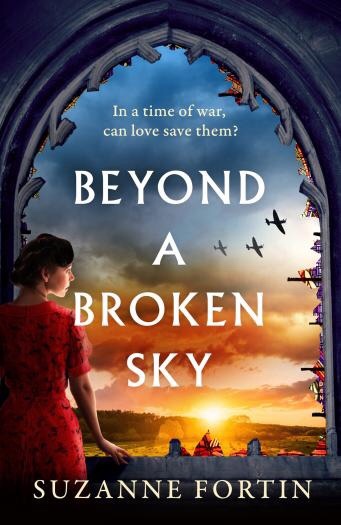
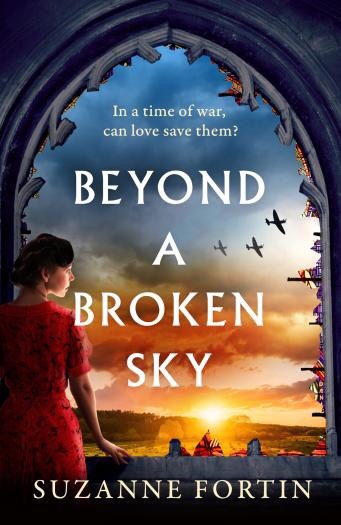
It just happened that I’d read Ruth Druart’s The Last Hours in Paris and Joanna Quinn’s The Whalebone Theatre very recently, both of which included characters who were enemy prisoners of war, brought to English camps, but often released into the community to help out farmers or do other work that helped the Allied war effort. Some of these men waited up to three years after the war ended to be returned to their homeland and working within communities led to friendships and relationships with some British people. In Fortin’s latest novel we are taken to Somerset in 2022. Telton Hall is the home of Jack Hartwell, a farmer in his eighties, trying to come to terms with the compulsory purchase of his land and home. Rhoda Campbell is a stained glass expert and restorer, visiting to look at a stained glass window designed by POW Paulo Sartori. She works for a museum that conserves old historic buildings and they hope to move the whole chapel and window to their site. However she finds Jack blocking the driveway in his tractor, in the hope of delaying a little bit longer. It takes Rhoda’s charm and the arrival of his son Nate to get things moving again. As the three of them look at the chapel, Jack’s terrier disappears down a gap between flagstones. Rhoda lays on her front to see where he’s gone and makes a terrible discovery, human bones buried underneath the flagstones. This puts in place a chain of events that reaches all the way back to WW2 and has an effect on Rhoda whose own brother is a missing person.
The story alternates between 2022 with Rhoda’s urge to investigate the mystery she’s uncovered and back to the end of WWII when a young woman called Alice Renshaw finds herself pregnant to an American airman, Brett. As she prepares to marry Brett at the village church, Alice is so happy even though it’s an uncertain future she faces, possibly over in America. However, Brett doesn’t turn up at the church and thanks to his father’s connections he is transferred out of the country immediately. Alice is heartbroken. A few weeks later she’s at Telton Hall, where Louise Hartwell takes on young girls ‘in trouble’ and finds homes for their babies with couples who can’t have children. Louise is also still running the farm, with the help of Jack who is ten, his step-brother Billy, who needs to walk with a stick after being wounded. There are also two Italian POW’s helping with the produce gardens, one of whom is Paolo Sartori. Every time the book delves into the past we hear a little more about the story of Telton Hall, the diverse characters staying there and the connections they form with each other. Each time we go back to WW2, we’re getting closer to the answers and the tension builds, while in the present those that would like Rhoda silenced, come ever closer.
I was gripped by the drama of Telton Hall in the 1930’s and desperate for the hateful Billy to get his just desserts before he can permanently hurt anyone. In the present I was convinced I wouldn’t like the answers to the mystery. I was worried that it would have an impact on characters I’d become attached to, who might have only acted badly due to the extreme circumstances. The ending was a surprise and gave me the answers, as well as putting a smile on my face knowing that there was a happy ending for some. I loved Alice’s ability to trust and love after her experience with Brett. I felt the author really captured that sense of displacement and dislocation that many felt during the war, their separation from ‘normal’ life and the way their actions within that time had repercussions for years to come. Ultimately, the story shows us the amazing ability we humans have to heal, our incredible resilience and capacity to love. This could manifest in holding on to a love that won’t die or in finding we have an endless capacity of love, even when our experiences have shown us a depth of loss that seems insurmountable. For Rhoda it means the possibility of letting love in, despite having no blue print of family life from her own childhood. This book is heartfelt and moving, showing us that like Rhoda’s stained glass we are made up of many parts, each experience and influence adding together to make something uniquely beautiful.
Published on 22nd July by Aria
Meet the Author
Suzanne writes historical fiction, predominantly dual timeline and set in France. Her books feature courageous women in extraordinary circumstances with love and family at the heart of all the stories.
Suzanne also writes mystery and suspense as Sue Fortin where she is a USA Today bestseller and Amazon UK #1 and Amazon US #3 bestseller. She has sold over a million copies of her books and been translated into multiple languages.
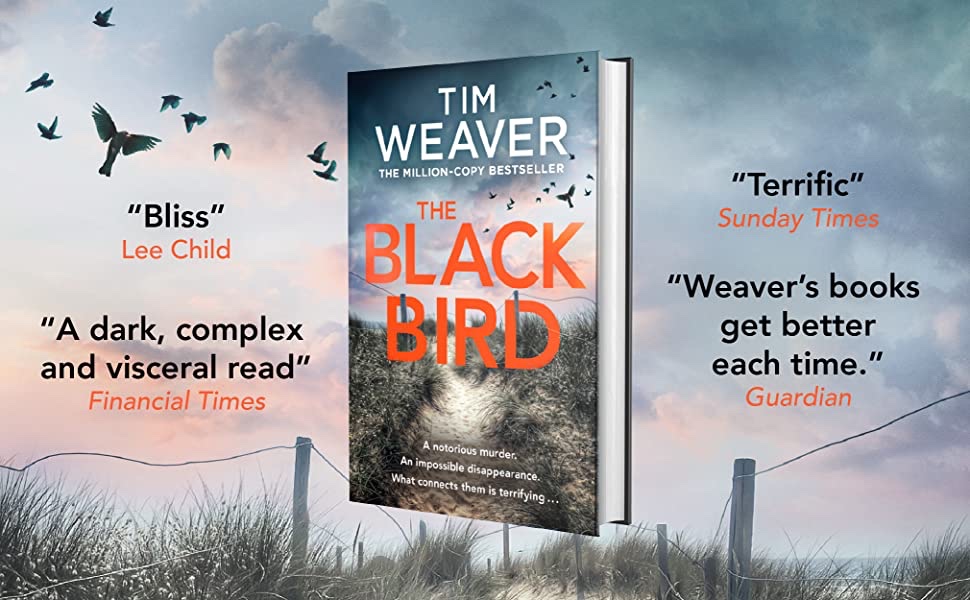
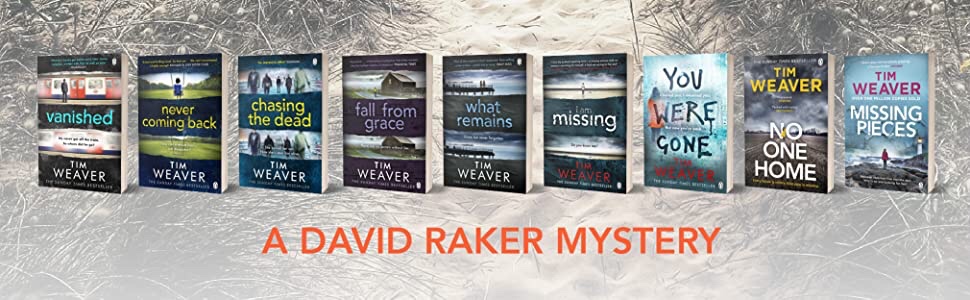
I had never come across Tim Weaver’s novels before so I was very lucky to be offered this by the publisher, especially in such a special edition too. When I learned it was the tenth in his David Raker series, I approached it with some trepidation. Would I be able to keep up or would it even make sense? Now that I’ve finished the novel I can honestly say that within the first few pages, I forgot this was one in a series and just got stuck in! Such was the strength of the story and his characters that I was drawn in and captivated to the end.
David Raker is a Missing Person’s Investigator and a widower with one daughter. The missing people in this story are Cate and Aidan Gascoigne, a devoted couple who have been married for five years and together for nine. The media dubbed their case ‘The Mystery of Gatton Hill’ as they disappeared there, travelling from their home in Twickenham to have dinner. Catherine ‘Cate’ and Aiden Gascoigne were both 37 years old and worked in creative roles; Aiden was a Creative Director for a Soho web design company and Cate was a full time photographer. Cate’s work isn’t of the portrait or wedding variety and David is quite blown away by her talent as he looks for clues in her work. For Cate, photography is an art form and she’s had several successful exhibitions with enigmatic titles. As they drove to dinner in Reigate, the couple could be seen on CCTV recording laughing together, just before their car plunged down a 90 foot ravine. Their car burst into flames and even though a fire crew arrived soon after the accident, the fire was impossible to stop. However, they also find an impossible scenario, when trying to recover Cate and Aiden’s bodies; they’re no longer in the car. The Mystery of Gatton Hill remains unsolved two and a half years later.
Cate’s parents, Martin and Sue Clark, hire Raker because they find themselves unable to live with the unknown aspects of their daughter’s disappearance and feeling their emotional distress he does what he shouldn’t, he promises them he will get to the truth. However, he has no idea just how dangerous, macabre, and twisted the case will turn out to be, as he delves into Cate and Aiden’s lives. His first port of call is to interview 2 witnesses, Audrey Calvert and Zoe Simmons, who came upon the site of the burning car almost immediately. He gets help accessing the police files and photographs on the incident from a Met source, Ewan Trasker, and works his way through the couple’s phone records that he gets from Spike, the hacker. He never expected to be forced to go on the run as he follows the leads that point to Northumberland, and a 30 year old unsolved case of 3 murdered women, a case worked by DI Makayla Jennings. Three is merely the tip of the iceberg in a chilling and menacing narrative that goes on to reveal a staggering number of murders over the years, and a extraordinarily intelligent serial killer who has no intention of getting caught. Could Cate’s artistic interest in the beach where the bodies were found have been the catalyst for her murder? Is it something else altogether? Could Cate and Aiden still be alive? I found Raker a remarkably tenacious and determined investigator, even when the pressures and dangers threaten to derail the case, and he has the added complications of trying to keep Colm Healy safe. This is a wonderfully complex, riveting and engaging read that kept me glued to the pages from beginning to end with its sky high levels of suspense and tension. This will appeal to crime and mystery readers who love truly twisty. thrilling and superior crime fiction, and I think that this can reasonably be read as a standalone if you have not read any of the series before. Highly recommended. Many thanks to the publisher for an ARC.
Published by Michael Joseph 9th June 2022
Meet The Author
Tim Weaver is the Sunday Times bestselling author of twelve thrillers, including You Were Gone and No One Home. He has been nominated for a National Book Award, twice selected for the Richard and Judy Book Club, and shortlisted for the Ian Fleming Steel Dagger. He is the host and producer of the chart-topping Missing podcast and is currently developing an original TV series with the team behind Line of Duty. A former journalist and magazine editor, he lives near Bath with his wife and daughter.
I loved this dark thriller from acclaimed author of Mirrorland Carol Johnstone, with its bleak setting, mysterious deaths and Norse folklore. Maggie Mackay is a successful investigative journalist, but has always been held back by a negative inner voice and terrible nightmares. She’s been haunted by the idea that there’s something wrong with her and she can see or sense darkness. She thinks this feeling is linked to her childhood and a small village in the Outer Hebrides called Blairmore. Maggie stayed there with her mother when she was very young and caused a furore when, out of nowhere, she claimed that someone in the village had murdered a man. She left the community in uproar, saying she was really a man called Andrew MacNeil who had lived in the village on the island of Kilmery. Her mother believed and encouraged her claims, but when they returned to the mainland this strange interlude wasn’t referred to again. Now 25, Maggie returns to the island, in search of answers. Mainly, she wants to find out if her claims could possibly have been true, but with her history on the island, Maggie may struggle to get people to talk to her. However, this is an island with few inhabitants, but a wealth of secrets and if Maggie gets too close to the truth she may be in serious danger.
Kilmery is sat across a causeway from Lewis and Harris, and the author makes this incredible place a real character of it’s own. It’s isolated position reinforces the feeling of loneliness that surrounds Maggie. She roams around the island, often alone and there were times she felt like an easy target, especially to someone who knows the terrain better than she does. Shipwrecks litter the coast and the author’s description of a ship coming to harm one stormy night enhances that feeling of danger.
‘It wasn’t the screams he remembered the most, although they crashed to shore inside the howling, furious wind and ricocheted around the high cliffs above the beach for hours. It wasn’t the storm or the roaring, foaming waves that carved great snaking wounds through the wet sand and stole its shape from under his feet.’
For Maggie, the island is changeable and I felt the way it was viewed echoed the journey she’s on through this dark, dangerous investigation to the hint of a possible brighter future. The wind, fog, and storms lashing against the rocks are unnerving, but there are places that Maggie finds peace. At the Oir na Tir standing stones, even with the wind and rain driving against them, Maggie senses their permanence. This is something that won’t be moved and stands like a sentinel, weathering every storm that’s passed over them. This is the kind of permanence Maggie wants in her own mind, a sense of peace that stays despite what life throws at her. Then there’s the meadow, shown to her by Will, one of the locals she befriends.
‘At the bottom of the hill is a vast green meadow stretching as far as the eye can see. It’s gorgeous, dotted with silver-still lochans, gold winter heather, and boulders covered in moss and orange lichen. It opens something inside my chest, precarious and fragile; a sense of longing that I suppose is awe or wonder. At this uncannily beautiful place full of a light and colour so at odds with the bronze desolation of those inland bens and glens […] I can feel the sting of ludicrous tears, and blink them away.’
This is machair, a type of dune grassland formed by sand and broken shells blown over from the beach. In opens up a sense of wonder in Maggie, like the childhood awe we have for Christmas and it’s magic. It’s almost as if this piece of the landscape connects her to the child she was before all of this happened. Can she trust it though?
I loved the link to the supernatural and Norse folklore, particularly the idea of ‘thin places’, something I’ve had a feeling about before. As an avid reader of the Outlander series, this ability to move into a different time or experience a haunting feels synonymous with Scotland. Old fisherman Charlie, who decides to talk to Maggie about the past, describes a thin place as where the space between this and other worlds is the shortest. The chance of seeing, knowing or feeling something from another world is high. There’s superstition within the fishermen, who never say a prayer aboard a boat, but douse it in whiskey and salt or even use burning rags to cleanse every corner of the boat, rather like smudging using sage twigs. It’s the ‘Vándr-varði’ that feel really disturbing, left anonymously outside The Blackhouse, where Maggie is staying. They’re mummified crows, old Norse talismans to guard against evil, but Maggie doesn’t know whether they’ve been left to protect her or whether she’s the evil that needs to be kept at bay. All of this superstition adds to the mystery Maggie is trying to solve, but she wonders whether it’s meant to spook her and warn her off the truth. The tension keeps building and by the time Maggie has a midnight visitor, my heart was racing.
The central mystery is fascinating and makes the book very difficult to put down. Charlie feels like the designated spokesperson for the islanders, he approaches Maggie with an apology for the way they treated her when she was a child and there’s a fatherly feel to the way he talks to her. On one hand I felt he was on Maggie’s side, but I also wondered whether he was a decoy – someone sent to give her just enough information, perhaps to deflect her from the reaching the truth. Other people greet her with outright hostility and I had a lot of admiration for Maggie’s tenacity considering how vulnerable she must feel, staying on the island as a lone woman. Maggie also has a bipolar diagnosis and I thought this was well portrayed by the author, even though it adds another layer of uncertainty – can we trust what Maggie is experiencing? I found Maggie’s narration more compelling than the male narrator, but overall loved the pace and the different perspectives that give us an insight into events back in the 1970’s. There were twists I didn’t expect and the final revelations about the mystery felt satisfying. I love how this author likes to wrong-foot her reader and although this was more gothic than horror, there were parts that were very unsettling and left me listening out for creaks in the dead of night. I came away from it with an uneasy feeling, not about the supernatural aspects, but more about what humans are capable of doing and how isolated communities like this one have the perfect environment in which to plot and keep secrets, in some cases for decades. This cements Carol Johnstone in my mind as an author to look out for and I will be buying a finished copy of this book for my collection.
Published 4th August by Harper Collins UK
Meet the Author
Scottish writer Carole Johnstone’s debut novel, Mirrorland, will be published in spring 2021 by Borough Press/HarperCollins in the UK and Commonwealth and by Scribner/Simon & Schuster in North America.
Her award-winning short fiction has been reprinted in many annual ‘Best Of’ anthologies in the UK and the US. She has been published by Titan Books, Tor Macmillan, Simon & Schuster, and PS Publishing, and has written Sherlock Holmes stories for Constable & Robinson and Running Press.
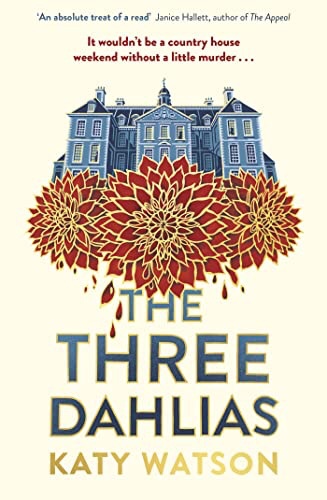
Dahlia Lively is the redoubtable heroine of a long series of books by crime author Lettuce Davenport. Over the years she has been portrayed on the big and small screen by two actresses Rosalind and Caro, both of whom were well loved. Our novel takes place at a Dahlia Lively convention, held at a stately home called Aldemere, the home of the Davenport family for generations. In fact, Lettuce wrote some of her novels in the study. Now it is home to her nephew Hugh Davenport, his wife Isobel and his stepdaughter Juliette. This is the first time the convention has taken place at Aldemere and VIP attendees have paid to stay in the house for the weekend. In an amazing coup for the convention, organiser Marcus has secured all the Dahlias including Hollywood actress Posy Starling who is about to start filming a 21st Century version of the books. Posy was a child star who became the enfant terrible of the tabloids as she grew up in the glare of publicity. With addiction and criminal convictions behind her, she wouldn’t be everyone’s choice for Dahlia – rather like casting Lindsey Lohan in a young Miss Marple series. Posy is hoping this movie will erase her previous bad girl status and industry insiders will start to take her seriously. With Aldemere House needing repair and money running out, Posy isn’t the only person depending on this film. The Davenport family are getting desperate and are selling heirlooms to stay afloat as Aldemere starts to look a little threadbare. Staying at Lettuce Davenport’s home is an immersive experience, so when murder becomes part of their eleven course dinner many people aren’t surprised, but this is no act and that means one of them is a murderer.
There are so many secrets flying around at Aldemere, you’d need a Dahlia Lively to keep track. Luckily we have three. I enjoyed all three characters and we see the action in three separate sections through their eyes. I felt for Posy who has really been thrown in at the deep end this weekend. Dahlia fans are obsessive and know every detail about their favourite literary character and her creator. Posy is coming into this completely blind and has only just starting reading the books. The film makers have given this adaptation a reboot, casting Posy against type and casting Kit, a young Black British actor, as her police sidekick Johnnie. Traditionalist are complaining, but Rosalind and Caro can see that perhaps each generation needs it’s own Dahlia. Besides, keeping the character in the limelight keeps the royalties coming in for them. I thought Posy really thrived as these two strong women believed in her and almost became Dahlia in front of their eyes as the women embark on some amateur sleuthing of their own. Each woman has also received a blackmail note, because each woman has their own secrets. Rosalind was older and wiser than the other two, really able to sit back and sift through the evidence in her mind until a solution presents itself. Rosalind also has the strongest links with the Davenport family, having dated Hugh before he married Isobel. I felt Rosalind’s sadness and loneliness, but also her confusion that he chose to marry someone else after what they felt for each other. It’s a question she’s never been able to ask, but now she might have to. She regrets staying quiet and wishes she’d been more like Caro who set fire to her ex-husband’s tie – while he was still wearing it. Caro is the firecracker and the driving force behind the Dahlia’s investigative efforts. She likes the centre of attention and relishes the role of interrogator so that she can take centre stage at the end and unmasks a murderer. I did feel like she was playing a role though, and aside from knowing she was married to Annie I didn’t feel we got fully under her skin.
The mystery itself is clever and labyrinthine, at times I started to lose my way with who was where and when. That possibly says more about my brain than the plot. There wasn’t just the murder to solve but lots of smaller mysteries like who the blackmailer was, who had stolen Lettuce’s jewelled loupe from the study and who was making the creepy little dolls left behind to signal the next victim. I loved the dolls, but other than that I never felt this was a creepy or violent murder mystery. It’s more of a cosy puzzle and potentially good Sunday evening viewing on TV. I loved the odd couple who had come to the convention for their 25th wedding anniversary and knew everything there was to know about Dahlia. There was something sweet, but slightly obsessive about them that was fun. I loved the quirky elements of the house too – such as Posy’s room, named the ‘China Room’ for it’s very famous blue and white patterned wall paper that featured in one of the books. We never find out exactly what the wall paper does, but that makes it more scary. I also thought the Murder Spiral was incredible, a garden planted with poisonous specimens featured in Lettuce’s writings and giving her the title ‘Princess of Poison’. It feels wrong to say a murder mystery is fun, but this one was. With nostalgia, vintage fashion, a quirky old house and three formidable heroines this was a clever and well-constructed read with an affectionate nod to the golden age of detective fiction.
Published by Constable on 21st July 2022
Meet the Author
Growing up in a family of murder mystery addicts, Katy learned early to look for means, motive and opportunity.
After studying English Literature – with a sideline in crime fiction – at Lancaster University, she set about teaching herself to write her own stories, while also experiencing enough of the world to have things to write about.
Two careers, a lot of airmiles, one husband, two children, three houses and forty five published books for children and adults later, lockdown finally gave her the means, motive and opportunity to create her own murder mystery – with the aid of her scientist husband’s worryingly thorough knowledge of poisons.
Ever since I had the good fortune to fall upon a blog tour for The Secret Life of Arthur Pettigrew I have looked out for other works by Suzanne Fortin. It was such a well researched and emotional piece of historical fiction, it became one of my books of that year. Since then she has published two more novels, All That We Have Lost and now this novel, another piece of history from WW2 with an emotive dual-timeline story woven throughout. In 2022 we meet Rhoda Sullivan who works as a stained glass expert, called in by museums to value, then oversee and conserve important works in glass. She”s tasked to go to Telton Hall and assess a stained glass window that dates to WW2 and was designed by an Italian POW. There she end up at an impasse when the gates are blocked by an elderly man in a tractor, Jack is the hall’s last inhabitant and he’s lived there all his life. He’s making a final protest about the development at the hall, but his son Nate arrives to help Rhoda gain access. With Nate, Rhoda makes a terrible discovery – a body under the chapel’s flagstones. It has a huge effect on Rhoda who imagines someone missing this person, just as she still misses her twin brother who disappeared before their 18th birthday. A decade on she still looks for him everywhere,
In 1945 we are taken to Somerset and a young woman called Alice Renshaw. Alice is alone and pregnant. Shes been sent to a farm in Somerset where Louise Hartwell is running things with the help of POW’s. As well as the farm work, Louise helps young pregnant women. Alice soon starts to make friends, but not everyone at the hall is happy about this. As peace is declared, the war at Telton Hall is just beginning.
I’ve just started the book and I’m already hooked by Alice’s story and I love how the author pulls us straight back into the 1940’s with only a few lines. I am also fascinated by Rhoda’s job and the making and restoration of stained glass. I heartily recommend this author, even though I’ve only read a few chapters I know I’m in safe hands. If you love historical fiction and haven’t already encountered her work, go grab her first novel. You won’t regret it.
Meet The Author
Suzanne writes historical fiction, predominantly dual timeline and set in France. Her books feature courageous women in extraordinary circumstances with love and family at the heart of all the stories.
Suzanne also writes mystery and suspense as Sue Fortin where she is a USA Today bestseller and Amazon UK #1 and Amazon US #3 bestseller. She has sold over a million copies of her books and been translated into multiple languages.
Having spent a bit of time hanging round Peterborough train station over the years, I thought it seemed an unpromising place to set a novel, but Louise Doughty has proved me wrong. In Platform Seven, she weaves an unmissable whodunnit where Lisa tries to understand why she died.The book opens following security guard Dalmar, a refugee from Somalia, as he carries out his night shift. After midnight the station goes quiet and most people might assume it is closed, but it runs with a skeleton staff and between the hours of 3am and 6am only freight trains rumble through at platform seven. This is the last platform, towards the back of the station and only partially viewable by CCTV. It is the perfect place for homeless people to hide out and try to sneak into the warmth of the waiting room for a few hours. Dalmar has been desperate, so sometimes he doesn’t have the heart to move them on, feigning ignorance so they can grab a few moments of warmth. At first, he mistakes the man walking through the station, for a homeless person and pays no attention. The man, wearing a cap and donkey jacket makes for platform seven and waits. To Dalmar he seemed hunched in the cold and seems to almost be in a trance.
There is only one other witness to his arrival and that is Lisa. Lisa is trapped in the station, she knows all the staff by name but can’t get them to see and hear her. On this occasion she is sure she understands the desperation in this mans eyes and she worries he isn’t just here for the warmth. As a freight train trundles towards the station he steps towards the platform edge and Lisa desperately tries to stop him but he can’t hear her. Dalmar finally sees the man, but is too far away to make a difference. He shouts. But the man keeps going. He steps through Lisa and straight under the train. Doughty explores the effect this man’s suicide has, firstly on the railway staff. PC Ashcroft from the British Transport Police, and his boss face the task together. Ashcroft has never experienced a railway death before and the horrifying detail of gathering body parts, sorting through clothing to look for ID and organising a cleaning team affects him and us at the same time. He doesn’t want to break down but struggles and wants to understand what could make a man die like this? Dalmar, who witnesses the incident with Lisa, is triggered into a flashback of his own. We are transported back to a dinghy on a river and a woman who’s head is the only part up above the water. In reality it’s detached, merely floating on the surface, but screaming at the same time. Lisa wanted to stop the man and is horrified by what she’s seen. She comes to a horrifying realisation.
In the days that follow Lisa becomes fascinated with a distraught young man she sees in the cafe, while PC Ashcroft discovers that a young woman died recently on the same platform. Something about her death piques his interest and makes him wonder whether the events leading up to her apparent suicide were properly investigated. He asks if he can do some digging and gets the go ahead. Lisa also has a breakthrough, she finds that she can follow this young man out of the station and accompanies him on his walk home. This begins her wanderings and the unlocking of her story. Doughty’s description of the romance between Lisa and her doctor boyfriend, Matty, is brilliantly written and shows a real understanding of domestic abuse. Psychological or emotional abuse has only been made a criminal offence more recently, but it is subtle and difficult to pinpoint even for the victim. I was in an emotionally abusive relationship for five years and despite having therapy there are still times when I am confused about how and why I let this happen. Of course I’m not responsible for the abuse, but I was responsible for allowing it to continue. We see how slow and subtle the behaviour begins; a throwaway comment that could be a criticism, a moment of jealousy, an insistence that a hurtful comment was simply a joke and you’re too sensitive. I highlighted a whole passage to use with writing therapy clients: The sad, sobering and undramatic truth is that I made the same mistake that women and girls throughout the ages and across continents have so often made. The one that is so easy, seductive, and most flattering to ourselves. I mistook possessiveness for love. By the time I realised the magnitude of that mistake, I had too much invested in the relationship tosimply undoit. I had to keep on making the mistake in order to justify the fact that I had made it in the first place. It was too large and complex an error to admit and how could I explain I had made a mistake to family and friends when I didn’t even understand how I had made it myself? This section of the book is such a beautiful piece of writing and answers perfectly the question everyone asks; ‘why didn’t you leave?’ When asked by my family why I’d never told them, the answer was the same. My husband had died, I had been broken and this person professed to love me. I was ready for something positive to happen in my life. I glossed over a couple of red flags, because he was stressed at work, or moving house and as well as an excuse he made promises to change. If I admitted that my relationship was a sham I would have to admit there was no happy ending and I would be back where I started: bereaved, broken and alone.
It took me five years to admit to others and myself that I had to leave. I’d had to gather my strength over time and eventually he behaved so badly I couldn’t gloss over it any more. I was aware reading Lisa’s story that things could have been so much worse. Matty breaks her confidence and by using the technique of gaslighting leaves her in a place where she doesn’t even trust her own judgement anymore. The outcome is devastating. I really enjoyed the way Doughty slowly frees Lisa. Firstly, she is liberated from the station, then finds a way to whisper a suggestion to someone, then m finally she travels all over Peterborough and even beyond the city towards the end. She finds others like her: the old man from the station suicide pops up soon after his death; a woman in an orange suit striding towards the station; the weird grey blob at the top of the multi-storey car park who she knows to stay away from. However, there are places she wants to be. Most importantly, an urgent visit to a woman she once saw through a window who seemed to need her help. This is domestic noir at it’s absolute best and has stayed with me ever since.
Meet The Author
Louise Doughty is the author of nine novels, including the soon-to-be-published Platform Seven. She has also written one work of non-fiction and five plays for radio.Her most recent book, Black Water, is out now from Faber & Faber UK and Farrar Straus & Giroux in the US, where it was nominated as one of the New York Times Book Review Top 100 Notable Books of 2016.
Her previous book was the number one bestseller Apple Tree Yard. First published in 2013, it has sold over half a million copies in the UK alone and has been translated in thirty territories worldwide. A four-part TV adaptation with Emily Watson in the lead role was broadcast on Sunday nights on BBC1 in January 2017.
Doughty’s sixth novel, Whatever You Love, was shortlisted for the Costa Novel Award and longlisted for the Orange Prize for Fiction. She has also won awards for radio drama and short stories, along with publishing one work of non-fiction, A Novel in a Year, based on her popular newspaper column. She is a critic and cultural commentator for UK and international newspapers and broadcasts regularly for the BBC and has been the judge for many prizes and awards including the Man Booker Prize and the Costa Novel Award. She lives in London.
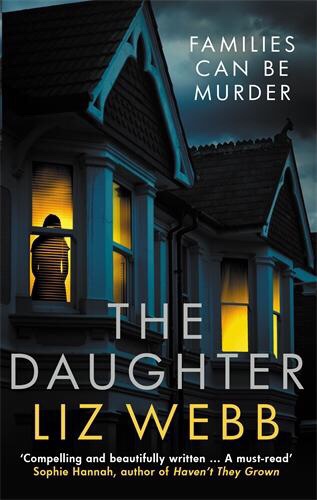
One of the first things my therapy supervisor said to me was ‘no two kids have the same childhood, even those who grow up together’. This kept going through my mind as I started to read Liz Webb’s book and grew ever more apt as the story unfolded. As regular readers know I do like to indulge in a good thriller and despite knowing nothing about the book or the author, something drew me in when I read the blurb. I’m so glad I took the chance to read it because it is a dark, psychological, and unsettling domestic noir based around the violent death of the charismatic mum in the Davidson family. Hannah doesn’t always have her life on track and she lives away from her physicist father Phillip, but is called when he ends up in hospital. Now suffering with Alzheimer’s and at the end of his life, Hannah has to make a tough choice; does she leave him in the hands of strangers or should she be the one to nurse him in his final months? It’s not long before Hannah finds herself back home and falling into a time warp. Not only has her father left the decorating and furnishings back in the 1990’s, there are piles of magazines and other detritus still littering the same place. It’s as if he stopped when his wife Jennifer was found in the woods at the back of the house, with a kitchen knife plunged into her chest. Hannah finds her surroundings bringing memories and inevitable questions to the forefront of her mind; no one was ever charged for her mum’s murder. This house is haunted. Her mum’s most successful photographs are still hung on the walls and her dark room is untouched, the wardrobe is full of her colourful clothes with the ghost of Chanel No 5. Just the faintest trace touches the air when Hannah runs a hand over her mother’s clothes. Hannah’s very presence completes the picture, she’s a waif compared to the overweight woman she’s been for most of her life. Now she’s the image of her mum, so much so that an unexpected glimpse in a mirror makes her jump. Her brother Ryan, now a famous actor, has commented on her ‘stuckness’, her inability to move beyond that day in the 1990’s. Hannah doesn’t think she’ll ever be able to move forward and pursue a life for herself, until she can resolve what truly happened that day and who killed her mother.
I did find myself rooting for Hannah, despite her flaws and her past behaviour – with more revelations popping up when I didn’t expect them. She feels more vulnerable and is honest about how broken she is by the past. The author carefully keeps her on that edge so I was mostly on board with her version of events, but every now and again I would question whether she was truly a reliable narrator. There was her drinking and the impression she has of her family life and her mother. She sees her mother as a beautiful free spirit, with her gorgeous rainbow clothes, her glamorous and creative career as a photographer with it’s world of gallery openings and meeting other artists. She sees her parents as very different, her father being much older and in a more steady career as a physics professor. When her parents couldn’t be there, Mrs Roberts and her husband from next door would step in with her more old-fashioned parenting style and her good looking son Marcus. This return home and her father’s deterioration seem to trigger something in Hannah and her brother is convinced she’s in a downward spiral where her mental health is concerned. He now stars in a BBC murder mystery series based in Spain, where his wise-cracking detective solves murders within the ex-Pat community and has famous co-stars happy to swap a guest starring role for a week in the sun. He’s also written a book titled Solving Me which Hannah thinks is pompous at best, but probably arrogant and a potential challenge. His childhood is peppered with incidents of their parents arguing, usually about their mother’s behaviour and he’s completely convinced that their father murdered her after years of being pushed too far.
I loved how the author balanced the story with the darkness and tension, broken by the realties of being a carer and the humorous little allusions to her father’s research subject. Their pets are named after Feynmann (the dog) and Schrödinger (the cat of course) á la Sheldon’s cats in The Big Bang Theory. The Schrödinger reference is very apt with Hannah alluding to their mother as potentially living and dead at the same time. For years her head has been full of simultaneous movie reels, each one with a different ending to the story, she would love to be able to shut down all those other screens and see what really happened. The caring details, everything she’ll need to bring Dad home from the hospital, are spot on. One detail I loved because it showed experience, or at least talking to those with it, and it was the ‘shit-stained’ sole of her father’s foot visible to to a person standing at the bottom of the bed but often missed by the busy healthcare assistant doing this morning’s strip wash. The investigation she conducts gives her a lot more questions about her mother, as she remembers her. She’s warned by the original detective on the case that she might not like what she finds. Even her mum’s art seems to hold clues: the close-ups of tiny domestic objects till it’s hard to know what they are; the fascination with motorcycle stuntman Evil Knieval and the moment of being in free fall; an entire series called Falling showing objects in that moment before they land. What she seemed to forget is that Evil Knieval’s stunts finally went too far with disastrous consequences. As the revelations about Jennifer Davidson begin the story becomes even more fascinating, because Hannah gets to see the person her mum was before becoming a parent and whether motherhood changed her at all. I enjoyed the interplay between the siblings and was engrossed in finding out whose version of events was closer to the truth. This was incredibly well-written, tense and psychologically very clever. It left me thinking about how others see our parents and who they truly are when they’re not being mum and dad.
Meet the Author
Liz Webb originally trained as a classical dancer, then worked as a secretary, stationery shop manager, art class model, cocktail waitress, stand-up comic, voice-over artist, script editor and radio drama producer, before becoming a novelist. She lives in North London with her husband, son and serial killer cat Freddie.
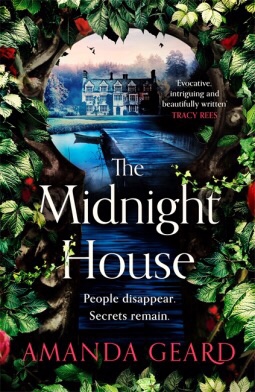
I enjoyed this book much more than I’d expected to. It’s not that there was anything wrong with the blurb or the cover, but I thought it might be just another ‘stately home + mystery’ novel with no huge surprises. However, the depth of characterisation and complexity of the story drew me in and kept me reading for two straight days. Ellie is our present day narrator and she’s having to take leave from work as an investigative journalist after trying to expose an important businessman ended badly. So she returns to her family home in County Kerry, Ireland to spend time with her mother. Trying to keep a low profile and prevent all and sundry from knowing about her return, is a lost cause in a small Irish village. It’s only because she’s desperate for reading material that she braves the charity shop and her mother’s chatty friend Tabby Ryan. Tabby has set aside a box of books that have come from the large stately home nearby, Blackwater Hall. Ellie is grateful to see a few Agatha Christie novels on the top and takes the whole box. Inside is a mysterious letter, addressed only to ‘T’ but clearly belonging to the Rathmore family. It ignites a spark in Ellie, but she tries to do the right thing and return it. At the hall she meets Albert, the lone member of the Rathmore family left behind, but he seems confused about who Ellie is and keeps asking for his mother. Her concern for Albert leads her to his son Milo, but also the mystery surrounding the family. Charlotte Rathmore disappeared during the early part of WWII leaving a broken string of pearls by the lake. The official version is that Charlotte killed herself, but Ellie senses a story and starts to seek out other remaining members of the family. Can she solve the mystery of Charlotte’s disappearance and what changes will the truth bring to Blackwater Hall and the Rathmore family?
The author tells the story across three timelines. We travel back to Blackwater Hall and Nancy’s first visit to meet her boyfriend Teddy Rathmore’s family. This timelines really establishes the characters within the Rathmore family and the beginning of a friendship between Nancy and Teddy’s sister Charlotte. This is before WWII and the aristocratic family are thriving, but there are little hints of a change on the horizon. Charlotte has rebellion and adventure in her soul, while Teddy is ready and somewhat relieved to strike out into a new life with Nancy, since elder brother Hugo carries the pressure of being the heir apparent. The present day timeline with Ellie shows she is an interesting character in her own right. There’s some resistance to becoming comfortable back home, even though she’s finding it suits her in some respects. She may be uprooting other people’s secrets, but theres a sense she has some of her own lurking under the surface; a possible broken relationship and a reluctance to talk about it that intrigued me and made me want to know more. In these split timeline narratives there’s often a lack of character or strong storyline in the present day, leaving the reader more intrigued with the past and creating an imbalance to the story. The reader can find themselves racing through the present bits to get to the ‘real’ story. The author doesn’t fall into that trap here, Ellie is interesting in her own right and her journey feels important too. The third timeline is something of a surprise as we follow a little girl called Hattie at Blackwater House and her emerging friendship with gardener and handyman Tomas. She is interested in how he makes things grow and starts to help him planting the potato crop in the garden. There’s a connection between these two that’s immediate and I was touched by them, possibly remembering days in the garden shed with my Grandad, tying onions up and hanging them from the ceiling and chitting potatoes. Tomas isn’t always the calm and shy man he is with Hattie and if he hears a bang, particularly a gunshot, he is back at war in an instant. His solitary and quiet work is clearly important in managing his PTSD. I was immediately drawn to this character and intrigued by his possible importance to the Rathmore’s story.
There are other flashbacks too, a section from the Blitz in London is particularly tense and heartbreaking. The author describes the air raids from the Lufwaffe so clearly I felt I was there with the characters. I thought the sense of foreboding was incredible and the slow realisation of the danger the characters were in was beautifully written. She captures the terrifying sense that the help needed, the help that’s usually there, is out of reach and something terrible might happen. The damage wrought in these streets and the fortitude of the people caught up there was powerfully portrayed and really gripped my emotions. I felt the author balanced those moments of terrible tension and drama beautifully with the lightness of rural Ireland and the people Ellie meets in her old neighbourhood. This is a place where only those in the big house were able to keep their secrets and everyone knows everyone. The people are strong, community minded and often Ellie’s interactions with them have a light humour about them, while avoiding caricature. I enjoyed her growing friendship with Milo Rathmore – another returnee to the village, now the village GP and carer for his father Albert. He is from Ellie’s world and the pair can look at the place with a critical eye, but also a good humoured and fond heart. I was interested in whether Ellie’s more recent personal issues would come to light. Could she finally confide in her mother and accept someone’s comfort and care, despite that solid streak of independence? I also wondered whether her career would ever be restored and if she could return, would she want to? Mostly though I was interested in what had happened to Charlotte, this beautiful, rebellious girl with so much spirit. I couldn’t believe she would kill herself, but feared that her true end was even more heartbreaking. That extra timeline post WWII also held surprises I really didn’t expect. Despite wanting all the answers I was sorry when this novel ended and there’s no better compliment than that.
Meet the Author
The inspiration for The Midnight House appeared in the rafters of our home, a two-hundred-year-old stone building perched on the edge of the Atlantic. Hidden there was a message, scratched into wood: ‘When this comes down, pray for me. Tim O’Shea 1911’. As I held that piece of timber in my hands, dust clinging to my paint-stained clothes, I was humbled that a person’s fingerprint could, in a thousand ways, transcend time, and I wanted nothing more than to capture that feeling of discovery on the page. I have always loved dual-timeline novels, where stories from the past weave with those of the present day. I want to write books that transport you to another time and place, where secrets lie just beneath the surface if only the characters know where to look.
Before all this, I was a geologist exploring the world’s remote places. Luckily for me, writing novels provides a similar sense of wonder and discovery; but the warm office, fresh food and a shower in the evening make the conditions rather more comfortable! The wild weather of County Kerry, where I live with my husband and two red setters, gives me the perfect excuse to regularly curl up by a fire with a great novel. I treasure my reading time, and I know you do too, so thank you for taking a chance on my books.
Come over to Instagram and Twitter (@amandageard) where I share plenty of photos of the wild settings in The Midnight House. You can also find me on Facebook (@amandageardauthor).
It’s been another bumper book month at The Lotus Readers and it looks like 2022 is going to be an amazing reading year, in fact I’m already worrying about how I’m going to choose between these books when it comes to my end of year list. Can I really do 22 books this year? It’s also a year of fantastic debuts with another four debut novels being top of my list this month. There’s been a few tears shed over some of the stories and characters within these pages, but I’ve been uplifted too by these stories of overcoming. Surviving trauma and recovering through the support of others, particularly where women are supporting women, has been a theme here too. Its been the first month where I’ve been able to sit in the garden with a book, so most of these have accompanied me outside and onto my recliner, usually ending with me falling asleep under a dog and a cat! So here are some shortened reviews, to whet your appetite for these wonderful novels,
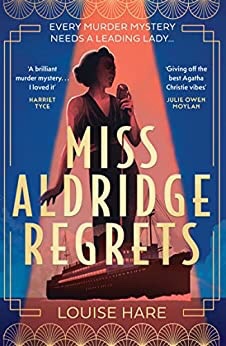
Reminiscent of those stylish novels of the great Agatha Christie, this was a brilliant mystery with a glamorous location, wealthy passengers and sumptuous clothes and jewellery. The period detail is spot on whether it’s the latest bathing suit or 1930’s politics. It’s not just a whodunnit either, because woven within are themes of identity, belonging, family and class division. It’s gripping without being showy or depending on shocks, or endless twists and turns. It’s elegant and allows it’s secrets to unfurl slowly. Lena is a sympathetic character, who has sacrificed starting her career to care for her father Alfie who has recently died. To pay the bills Lena has been singing in a club band, but she has always wanted to work on the West End or Broadway. Her chance comes in the aftermath of a death at the club. A favour from a an old friend of her father. She’s found by theatre producer’s assistant, Charlie Bacon, whose boss is offering Lena the chance of a lifetime, a part on Broadway in a new musical. As they set off across the Atlantic in their first class accommodation, they make the acquaintance of a very wealthy family with an ailing patriarch. What follows is intrigue, murder, mayhem and the realities of being a black performer. Lena is now caught up in a murder plot, and doesn’t know if she’ll be the next suspect, or victim.
Incredibly strong women, three generations of a Memphis family, are the focus of this amazing debut by Tara Stringfellow that made me angry, made me cry and somehow helped me feel uplifted all at the same time. Grandma Hazel is the first resident of the house in Memphis, a house her sweetheart Myron builds for their family. When he is lynched by his own police squad, Hazel is nine months pregnant and left heartbroken, angry and scared. Her daughters, Miriam and August, then call this place home and it also becomes August’s place of work. When Miriam leaves home, travelling with her husband Jax who is in the military, August turns the back of the house into a hair salon for a community of black women who gather there to laugh, to support each other and to plan activism. When Miriam returns with her own daughters, Joan and Myra, she has mixed feelings. She needs a roof over her head, she loves where she grew up, but something happened here that daughter Joan can’t quite remember. Yet she feels I’ll, deep down. There’s fear and shame in this place, but she doesn’t know why and we follow her quest to process and heal from this hidden trauma. With a backdrop of the biggest events of the 20th Century from the Kennedy and Martin Luther King assassinations to 9/11, this is a story of what it means to be a black woman in 20th Century America. Simply outstanding.
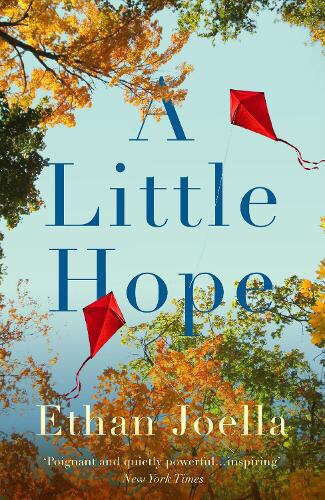
Ethan Joella’s novel was perfect for this moment in life. Set in an idyllic Connecticut town over the course of a year, our story follows the intertwining lives of a dozen neighbours as they confront everyday desires and fears: an illness, a road not taken, a broken heart, a betrayal. Freddie and Greg Tyler seem to have it all: a comfortable home at the edge of the woods, a beautiful young daughter, a bond that feels unbreakable. But when Greg is diagnosed with a rare and aggressive form of cancer, the sense of certainty they once knew evaporates overnight. Meanwhile, Darcy Crowley is still coming to terms with the loss of her husband as she worries over her struggling adult son, Luke. Elsewhere, Ginger Lord returns home longing for a lost relationship; Ahmed Ghannam wonders if he’ll ever find true love; and Greg’s boss, Alex Lionel, grapples with a secret of his own. We are all familiar with the hashtag #BeKind and through these stories, what seems like a platitude, is brought home to the reader. Our characters touch on each other’s lives, sometimes without knowing what each other are coping with just under the surface. Despite taking us through every experience from infidelity to loss, the book never feels overwhelming or melancholy. Yes I wanted to shed tears from time to time, but somehow there is always a ray of hope. It reminded me that things like community, friendship, shared experiences and compassion can change everything. The author doesn’t hold back on how difficult and painful life can be, but yet always finds some element of joy that reminds us what a gift it is too. This book is poetic, achingly beautiful and full of empathy for the human condition.
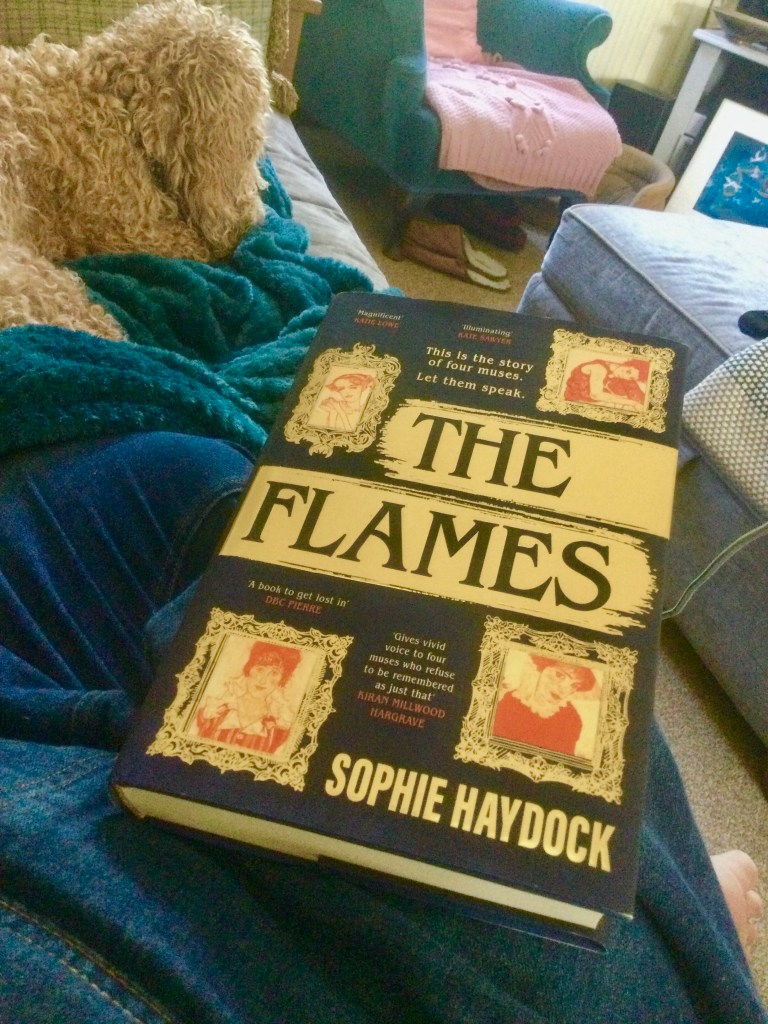
I knew this book would be one I enjoyed, after all it encompasses some of my favourite things: History between the World Wars; the Vienna Secession and Gustav Klimt; Art Nouveau; a feminist narrative. However, I didn’t expect it would grab hold of me in the way it did! I sat down with it in the garden one Sunday afternoon and read two thirds straight away. When duty and blog tours called that week I had to set it aside, but I kept glancing over at it like a lost lover all week. Haydock takes four of Egon Schiele’s portraits and explores the women depicted – society sisters Adele and Edith, artists model Wally and his younger sister Gertie. Schiele’s portraits are not life-like reproductions of his model and while they might shed light on aspects of their characters, they can only ever be the artist’s view of that woman with all the prejudices and biases of his time. Haydock is challenging Schiele’s representation of these women and here we get to hear the women’s stories, how they see themselves and their relationship with Schiele. Some of his life choices felt like betrayals to those women who risked everything by literally laying themselves bare before him and the world, for his sake and for the sake of art. I thought Haydock beautifully captured this sacrifice and it’s consequences, something she picks up beautifully in the short interludes from the 1960’s where an elderly woman searches for a painting she’s glimpsed of someone she loved. Desperate to give an apology she never heard in life. Haydock beautifully captures a rapidly changing Vienna between two World Wars where barriers of class and gender are breaking down. She also captures the complexities of the barriers for women and those who have the pioneering spirit to break them. She gives a voice to their silent gaze. This is one of the best books I’ve read so far this year and I read it greedily in just two sessions. I’m already looking forward to entering Haydock’s world and savouring these wonderful women again.ok”
My interest in 19th Century freak shows, Sarah Baartman (the Hottentot Venus), disability and difference, made Lianne Dillsworth’s debut novel a perfect fit for me. Our setting is a theatre and a performing troupe including singers, magicians and dancers who perform a variety show under the watchful eye of Mr Crillick. His current headline act is Amazonia – a true African tribeswoman, dressed in furs and armed with a shield and spear, her native dancing brings down the house in Crillick’s show. The audience watch, transfixed with fear and fascination, never realising that she is a ‘fagged’ act. Zillah has never set foot in Africa and is in fact of mixed race heritage, born in East London. She is making her money by pretending to be what the, largely white, audience wants to see. It doesn’t sit well with Zillah, but she is alone in the world and does need to make money. Besides it’s better than the other options for a young woman who finds herself in poverty. She’s used to slipping between worlds on stage and in her private life, renting a room in the rough St Giles area of the city, but regularly making her way to a more salubrious area and the bed of a Viscount by night. However, when Crillick brings a new exhibit to his London home, dubbed the Leopard Lady, Zillah’s eyes are opened to the politics and misogyny of displaying difference. A meeting with an activist forces her to think about her own performance, but also the danger that Crillick’s new exhibit might be in, especially his ‘private’ audiences complete with medical equipment. Can Zillah help this woman and what does her own future hold, because in good conscience she can no longer perform? This is a brilliant novel, doing for race and disability, what Sarah Water’s novels did for the representation of sexuality in the 19th Century.
I’d never read a novel by Dolen Perkins-Valdez and she pulled me into her story from the very first page, with Civil seeming real almost immediately. I’ve been interested in eugenics since I wrote my undergraduate dissertation on disability and 20th Century literature. I knew a lot about the movement in the U.K., US and Germany in the lead up to WW2, but this book shocked me because I had no idea that forced sterilisations were still happening in the 1960s and 70s. I knew this had happened in earlier in the century with Native American communities, so I shouldn’t have been surprised that it was still happening to African American women, especially where the woman had a disability too. The writer shows how our biases and emotions feed into the work we do within the caring professions. Having worked in mental health and disability as a support worker, advocate and counsellor, I did identify strongly with Civil and the way she became involved with the Williams family. The Williams girls are her very first patients and she is sent out on a home visit to give them a Depo Provera injection, a long term method of contraception. When she notices that India is only 11 years old her brain immediately starts questioning, who put this little girl on this injection, has anyone asked if she has a boyfriend or worse, is she being preyed upon? Is this an assumption that young African-American women are promiscuous or that African- American men can’t be trusted, even within their own families? The judgement that bringing a child into this family would be disastrous comes from a lack of knowledge around India Williams’s learning disability, but is also an assumption about race too. The fall out from Civil’s discoveries is huge and life-changing, not just for the Williams family but for Civil too. This book sheds light on an important hidden history and took me through a rollercoaster of emotions.
I fell utterly in love with Dot Watson, a rather abrupt and persnickety member of the staff at London Transport’s lost property office. It took me about five pages to be drawn into Dot Watson’s quirky world and her love for the lost property office where honest people bring their found items. Dot is like the backbone of the office and the other workers would be lost without her. A lover of proper procedure and organisation, Dot is the ‘go to’ employee for anyone starting work with the team, or just to answer a question about an item. Dot thinks lost things are very important, almost like an extension of that person. Their lost item can tell her a lot about the person they are and she fills the lost luggage tags with as much detail as possible so that they have the greatest chance of locating it. Dot believes that when we lose a person, their possessions can take us right back to the moment they were with us. When Mr Appleby arrives at the office to find his lost leather hold-all it is what the case contains that moves Dot. Inside is a tiny lavender coloured purse that belonged to his late wife and he carries it everywhere. Something inside Dot breaks for this lonely man and she is determined she will find his hold-all. Her search becomes both the driving force of Dot’s story and the key to unlocking her own memories. I loved our journey into Dot’s past, her relationship with her father and the trauma that she’s tried to lock away for so long. This book has difficult emotions, but also glimpses of humour and is ultimately an uplifting journey with an unforgettable woman.
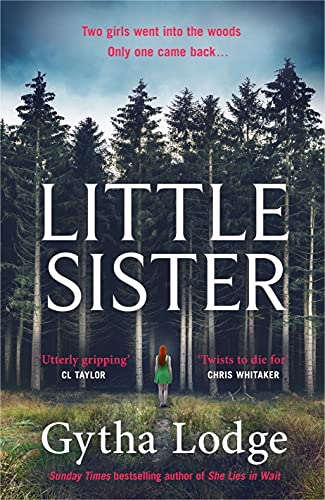
A teenage girl wanders out of the woods. She’s striking, with flame-red hair and a pale complexion. She’s also covered in blood. She appears in the pub’s beer garden as Jonah is enjoying a beer after a walk with his baby son. Detective Jonah Sheens quickly discovers that Keely and her sister, Nina, disappeared from a children’s home a week ago. Now, Keely is here – but Nina’s still missing. Keely knows where her sister is – but before she tells, but first she wants Jonah’s full attention. Is she killer, witness, or victim? The opening scene is absolutely brilliant, vivid and shocking at the same time. As the girl’s history starts to unfold, they hear about several failed placements and a long stay in a children’s home. The girls made complaints about two of their homes, but were thought to be troublemakers. Jonah and his excellent team have to tread a very fine line. Keeley comes across as cold and calculating one moment, but then like a broken little girl the next. Which is an act? There are some very dark stories here and they could be distressing for people who’ve gone through a similar experience, but it’s that darkness that keeps the reader wanting the truth and to see those responsible punished. If Keeley has planned how to elicit sympathy from the police, she certainly knows what she’s doing. As readers we are pulled along with Jonah, from distress and empathy to disbelief and a sense that something is very, very wrong either with Keeley or the system. This is a great mystery, with huge twists in store and a police team I enjoyed getting to know. Now I’m looking forward to going back to the first novel in this series and filling in the gaps in my knowledge, while enjoying even more of this talented writer’s incredibly creative plots and dark, brooding atmosphere.
So these were my favourite reads in a very busy reading month. I read seventeen books which surprised even me! Next month I’m looking forward to a slightly quieter month with some great thrillers to read, some historical fiction from another of my favourite historical periods – the beginnings of the Tudor dynasty, and hopefully a few choices from NetGalley too so I can keep on beating that backlog. I hope you enjoy these choices as much as I did and i’ll see you again next month.
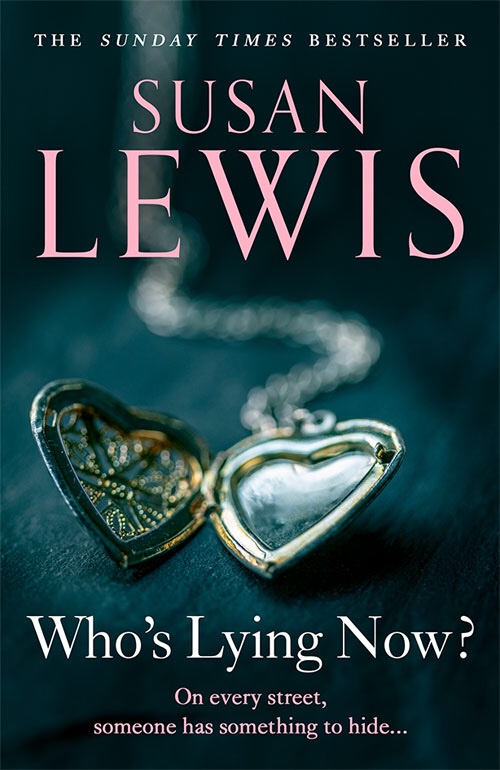
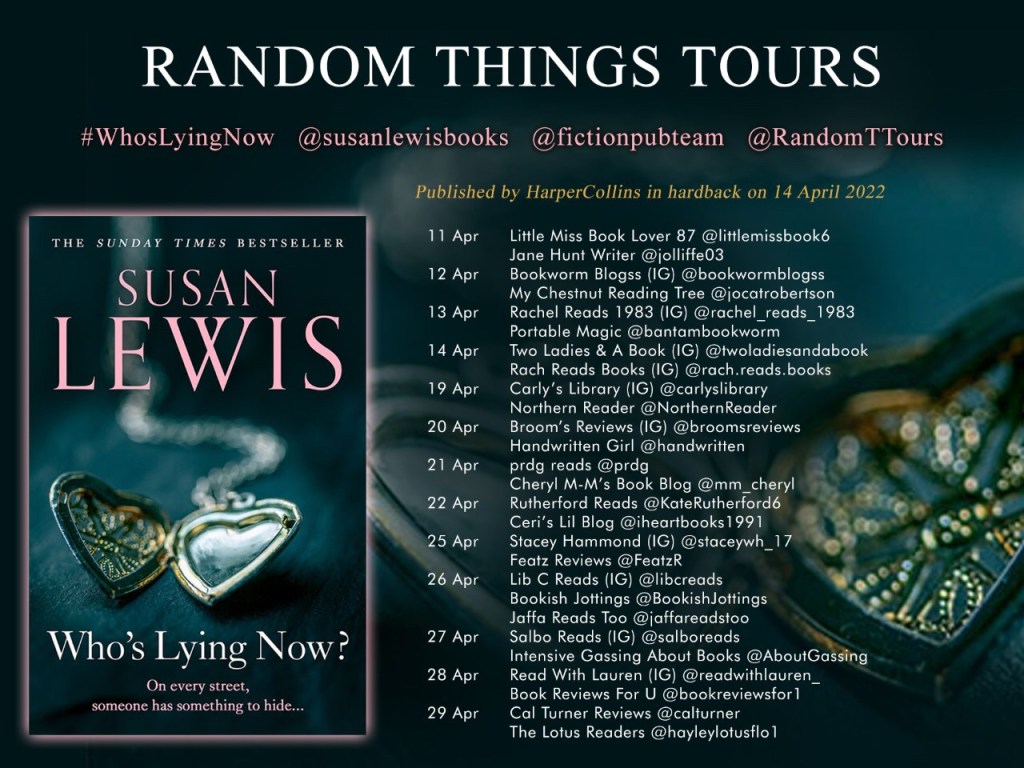
Susan Lewis is so prolific. I first came across her writing when I was looking for something to read between counselling clients at work. At the MS Therapy Centre where I worked there was a charity shop and someone had brought in a huge pile of books for sale. There I found a few books by this author. I’d never read her before but soon found myself hooked and bought all the Susan Lewis books in the bag. I’ve read most novels since and love joining blog tours for her latest books. This is another delve into crime fiction for Lewis and is based around a community on the south coast called Kesterley-On-Sea, where a small group of people have cultivated some very complex relationships. There’s Jeannie, who works as a publisher, and her husband Guy who is a neurosurgeon and they live at Howarth Hall, a Manor House with beautiful gardens leading to the sea. Not far away, lives Estelle a celebrated debut novelist who hasn’t managed to produce a follow up as yet, and her husband Neil who is a landscape gardener. They have a daughter, Chloe and Estelle’s assistant Primrose lives in an annexe next door. Centre of the community is the Seaview Café where the owner Fliss lives in an apartment above with her son Zac. Jeannie used to be Estelle’s publisher. Neil is Jeannie’s gardener and friend. Fliss used to be married to Neil and he is Zac’s father. When Jeannie goes missing one January day all of these relationships will come under scrutiny. Trying to make sense of this is Cara Jakes, a new trainee investigator who is young, intelligent and eager to prove herself. When she teams up with detective Andee Lawrence to look into the disappearance, she is determined to find out what has really happened to Jeannie. Cara begins to question the residents of this close-knit community, sure that someone has a secret to hide. However, how can she separate the truth within these complicated connections, especially when some of them are lying?
Lewis has undertaken a very difficult task with this novel, not only does she have complicated relationships to untangle, she moves us back and forth to the months leading up to Jeannie’s disappearance and the weeks following. Then she sets it all within the pandemic, which must have been a nightmare to track considering the complicated rules and lockdown dates. I barely know what I was doing and where I was over the past couple of years, never mind following imaginary people through the same rules and regulations. It did make the story more believable though and I was amused to read how difficult these characters found it to interpret and stick to the rules. I don’t think there’s a single character who doesn’t break them at some point, but it’s café owner Fliss who is finding the pandemic the most difficult. Having started her business just before the outbreak, the lockdowns have damaged her financially and without the help of a group of volunteers taking food out in deliveries the business wouldn’t be making any money at all. Her son Zac is also helping and has moved in with her for lockdown, though he usually lives with his dad Neil and Estelle. I think Fliss was the character I most felt for and I was sure there was a secret to why she was living alone and how her marriage to Neil fell apart, when they are clearly both so fond of each other. Despite these secrets, Fliss and Neil feel the most understandable and empathic characters in the novel for me.
Our missing person, Jeannie, is a dynamic professional woman, who I found interesting but difficult to understand. When Cara and Andee first visit her husband Guy they’re confused about the delay in reporting her missing. He explains how their demanding jobs mean they can often miss each other for a couple of days, but he also says something very strange. He suggests that Jeannie might want him to think she’s missing as some sort of test. She’s also made it clear that she finds their gardener Neil attractive and takes long walks with him. There’s an element of game playing going on in their relationship and I’m not sure I liked either of them very much. There is a strained relationship between her and Estelle too, as Jeannie published her novel but then dropped her when a follow up wasn’t forthcoming. Their relationship never recovered so Jeannie’s long walks with Estelle’s husband seem unkind. Yet there are secrets in Jeannie’s past that might explain her character, and they explosively come to light when her brother arrives from New Zealand. I found Estelle a puzzle too. She seems fragile and easily distressed, but also self-centred and very difficult to bond with. Her only friend seems to be her assistant Primrose, but she’s paid to be there. I could see she was insecure in her relationship with Neil, believing him still in love with Fliss, so when she is offered friendship from an unlikely source she jumps at the chance of some outside support. Her relationship with her daughter seems awkward too, as if she’s almost scared to be her mum. Lewis untangles this particular thread slowly and with great care, and it’s clever how it’s woven into Estelle’s character, but also the case the police are pursuing.
I don’t want to reveal any more about the entanglements between these characters, but there are many revelations along the way, both in the past and the present. I found it hard to like any of them, aside from Fliss, but they are fascinating. The dual timeline is clever because it keeps the tension of the case and all it’s twists and turns, while also exploring characters and events in more detail in the past. The women’s characters and backgrounds are explored enough to answer a lot of the questions that cropped up in my mind as I was reading. I didn’t feel the men’s past or motivations were explored as closely so I came away feeling I didn’t know them as well. However, that did make it more exciting when they were questioned as suspects, because they were more of a mystery. We also saw how the female investigation team of Andee and Cara have to draw a line between their work and their private lives, very difficult in a small town where everybody knows each other and uses the same facilities. I didn’t work out what had happened to Jeannie before the team did, because when everyone is lying and holding secrets it’s hard to know what’s coming next. I felt like someone was hiding in plain sight, never showing their true character. This was an enjoyable thriller, full of psychologically complex characters making dreadful mistakes and one clever and manipulative suspect to unmask.
Meet the Author
Susan Lewis is the internationally bestselling author of over forty books across the genres of family drama, thriller, suspense and crime, including I Have Something To Tell You, One Minute Later, My Lies, Your Lies and Forgive Me. Susan’s novels have sold over three million copies in the UK alone. She is also the author of Just One More Day and One Day at a Time, the moving memoirs of her childhood in Bristol during the 1960s.
Susan has previously worked as a secretary in news and current affairs before training as a production assistant working on light entertainment and drama. She’s lived in Hollywood and the South of France, but now resides in Gloucestershire with husband James, two stepsons and dog, Mimi. @susanlewisbooks

















 The Lotus Readers