Posted in Netgalley

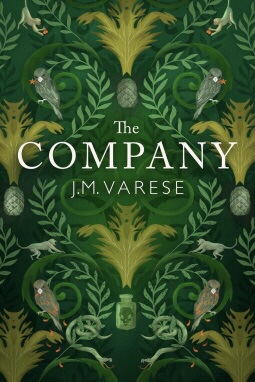
The Company by J.M. Varese

I once began a masters in Victorian Studies and did a lot of work around literature, art and visual culture. Through it I developed a lifelong love of the Pre-Raphaelites and the design of the Arts and Crafts period, so the scandal of Victorian wallpaper poisonings was something I’d researched and written about before. I was very keen to see how the author had used this moment in history to inspire a Gothic story and I was utterly seduced by that divine green cover. As the 19th century progressed, more intricate and vibrant wallpapers were the fashion, in much the shame way that they’re having a moment now. In the early part of the century a rich, vibrant green named Scheele’s Green had pemerged. The colour was so incredibly popular that by the 1850’s it was being used in the production of household items from wallpapers, paints, and candles, to clothes and children’s toys. A vibrant green called Schiele’s Green emerged in the 1850’s, but was manufactured using large amounts of copper arsenite. Arsenic had a completely unique property that enhanced colour pigments and stopped them from fading, perfect for items like wallpaper that would be affected by sunlight over time. Manufacturers knew that arsenic was toxic, but chose to promote the line that it was only harmful if ingested – a dangerous lie that lasted decades. As wallpaper became ever more popular, reports began of people suffering slow and agonising deaths. Damp homes amplified the problem because of toxic fumes released by moisture on the walls. Rooms with large fires created the same problem meaning that many Victorian homes were veritable death traps. Alison Matthews David, who wrote about the problem in ‘Fashion Victims: The Dangers Of Dress Past And Present’, explains that “arsenic didn’t fade and looked bright under lights. It was stunning and became hugely popular in clothes. A ball gown would contain enough arsenic to kill 200 people and a hair wreath 50. The amounts used were lethal.’ This background knowledge had me champing at the bit for some horrifying deaths and characters terrified by intricate, poisonous wallpaper.

Examples of Victorian wallpaper patterns using Scheile’s Green

Braithwaite and Company are a Victorian wallpaper company caught up in the arsenic scandal and murky work practices at their copper mines in Devon, where the family are from. When our heroine Lucy Braithwaite, along with her brothers Tom and John were young and living at the family’s country home there was an accident in the copper mine. There were small children from the village sent into the most remote and claustrophobic points of the mine, because only they could fit. They were all killed. Mr Braithwaite died soon after and the family chose to move to their London home, nearer to the company’s offices. The company ran under the management of long running manager Mr Luckhurst, who had worked closely with Mr Braithwaite for many years. Mrs Braithwaite concentrated on the home front, filling their home with the latest wallpaper patterns from the company. Apart from Being I love oLucy who chose to have her room painted in the palest blush pink to be a calm and quiet space in contrast to the rest of the house. Yet the family’s luck was still on a downward turn after the death of Tom, who seemingly declined while being tortured by terrible hallucinations. Were these visions from within or without?

Their luck seems set to change completely when Lucy is a young woman and a new, young and dynamic manager takes over after the death of old retainer Mr Luckhurst. Mr Rivers is young, handsome, gallant and personable, immediately charming Lucy’s mother and brother John. John is the obvious successor to the company, but he has become frail since moving to London. Lucy decided to move his bedroom down to their father’s old study so he doesn’t have to contend with stairs. His room is a combination of workplace and bedroom, the desk enabling to go through company papers and keep abreast of matters. He and Mr Rivers hit it off immediately and it’s soon common for them to retire to John’s bedroom after dinner and talk about the company. Lucy finds it strange that despite coming from Devon and apparently working under Mr Luckhurst for years, she has never met Rivers before. However, his knowledge of the company and it’s history is entirely accurate. I found Rivers suspicious straight away and I loved how the author creates this uneasiness in the description of his expressions, his speech and the sense that he’s saying all the right things, but is he just saying what the family want to hear? His name in a Victorian novel seemed significant, because my brain went immediately to Jane Eyre and St.John Rivers. The author’s description of Rivers and his gleaming eyes reminded me of the Jane Eyre character whose own eyes betrayed his fanaticism, of a religious kind in his case. Jane didn’t accept his proposal because there was no love there, but also due to this steeliness and determination, which meant he would pursue his aims to the end. I sensed this same determination in Rivers here but his aim seemed more dangerous and liable to bring harm to the family.
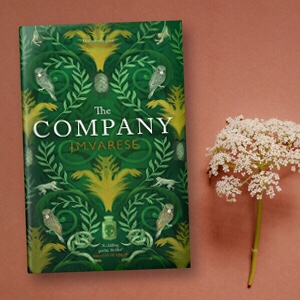
I loved the tension the author heightened towards the end and as I was reading on NetGalley I didn’t expect it to stop where it did. It felt rather sudden. Rivers assures Lucy and her mother that the recipe for the wallpaper colours is not being altered and isn’t causing any harm. However, his endless industrious meetings with brother John would suggest some sort of changes were being made. Also, John’s health is in serious decline. Lucy is called to his room in the night by screams of terror, apparently he sees phantoms but are they caused by his green wallpaper and it’s writhing botanical pattern? He insists on how much Rivers means to him and I started to wonder if there was more than a working connection. Was the attachment one that was considered unnatural? I felt like Rivers was trying to romance every member of the Braithwaite family, using whatever weakness he could find. I found Lucy intelligent, perceptive and able to think differently from her mother. Mrs Braithwaite really did want someone to sweep in and look after everything for her, whereas Lucy has been actively looking for evidence, befriending the boy Rivers uses as a lookout and appealing to those in their circle that they can still trust. Is there a chink in her armour? It’s perhaps likely that Rivers expects the archetypal Victorian heroine who might swoon at a mention of romance, but I was desperately hoping he was wrong. As the reckoning approaches would she be able to remain clear headed and courageous enough to form a plan? I found the final part of the book perplexing. It was exciting and nail-biting, but still with a shroud of mystery over certain details. I came away wondering and I still find myself thinking about it three or four days later. I know sooner or later I will have to pick it up and read it again. Another novel that left me with this feeling was The Turn of the Screw by Henry James; it’s scary and unsettling but difficult to pinpoint exactly what happens. I think this author wanted to wrap the reader in those toxic fumes till we were unsure which parts are real and where the supernatural creeps in, rather like Charlotte Perkins Gilman’s The Yellow Wallpaper. It doesn’t ruin the book, in fact it enhances that sense of the uncanny that always terrifies. Mysterious, gothic and brimming with historical detail I definitely recommend it, but don’t expect a mystery where every loose end is neatly tied.

Published by Baskerville 16th March 2023

Meet the Author

Jon Michael Varese (J.M. Varese) is an American novelist and literary historian whose first novel, The Spirit Photographer (2018), was published to critical acclaim. He has also written widely on Victorian literature and culture, and has served in various capacities, most recently as Director of Outreach, for The Dickens Project at the University of California for over two decades.
Posted in Netgalley

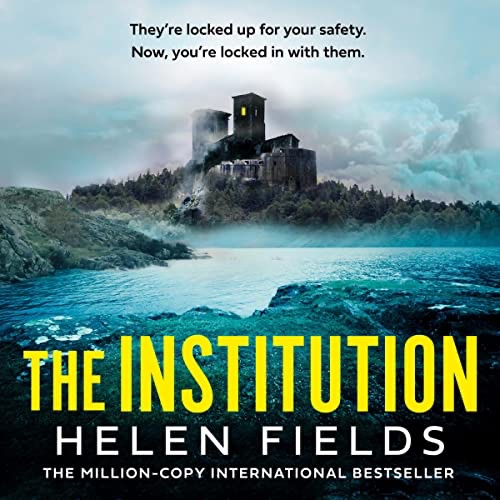
The Institution by Helen Fields.

I was eager to read this having loved her previous novel The Last Girl To Die, so I’ve felt very lucky to be granted early access to it on NetGalley. Our heroine is Dr. Connie Woolwine, a behaviourist and profiler rather than a psychiatrist, she works privately alongside her investigator Brodie. She has access to The Institution to look for a killer within the high security wing. Housed in one of the towers, the wing is known as ‘heaven’ and has six inmates, all of whom are either serial or spree killers. Her cover story is an unusual one. Brodie will go deep undercover as a potential inmate, with Connie as his current therapist. Brodie has been in the millitary and suffers from PTSD amongst other issues, so Connie is there to assess the ward, meet the inmates and decide whether it’s the best place for Brodie to be treated. The truth is a lot more gruesome. A nurse from the ward has been found dead on one of it’s treatment rooms. Tara was restrained and had a rudimentary caesarean performed on her, but was then left to bleed to death. The baby has not been found and the killer could only have been on the unit. With a grieving family waiting for a ransom demand, staff and inmates at the unit have been given a different story about this well-liked member of staff. They are told that Tara will be resting at home for the final stages of her pregnancy. Now Connie is on the clock, desperately trying to find baby Aurora and which one of the killers could have murdered the ward’s most popular nurse in such a brutal way.

Connie seems maverick, with strange methods such as talking to, sniffing and touching Tara’s body. She’s an unusual narrator because I didn’t always feel sure of her. We find out that when she was a young woman she was admitted to a mental health unit after an accident left her mute and doctors couldn’t find a physical cause. She was given ECT and treated by psychiatrists until a new doctor decided to re-scan her brain and found a previously hidden blood clot. Once removed, Connie could speak again. This experience has left it’s mark and it seems very important to her, even when self-disclosing to a patient, that they know she wasn’t really mentally unwell. We’re mainly in Connie’s world with interspersed short chapters on an assessment session, each subject’s name as the title. These sections read like session notes and give us Connie’s views of each inmate. Rubio for example, acts like a baby and wants to be cuddled and nursed. He gave me the creeps, especially when he’s wearing a nappy. The Professor is more on Connie’s level intellectually, but acts very superior. I didn’t feel that the sessions were helping me understand who might have done this. In fact I think I learned more about Connie than the patients. In the meantime, poor Brodie is living with these inmates and has gone through being sedated and restrained by staff. The staff are incredibly suspicious, with orderlies who enjoy their power too much, nurses who seem to resent Connie’s presence and a male doctor who makes a pass at her almost immediately. I kept wondering who would choose to work here, in such a dangerous and bleak place?

I felt it was clever to keep the reader questioning Connie and it wasn’t just her inner world that worried me. There were points in the story where her instincts really concerned me, such as going off alone to very remote places in the building and on the grounds. There was also a major flaw in the plan, in that her investigator is so confined by his role as a patient he can only observe. This really does leave Connie to take on the more dangerous part of physically investigating, but as she’s untrained for this role and potentially more easily overpowered, it left me feeling on edge. Also someone who is thinking ahead of her could use her seemingly erratic behaviour and appearance to make her worst fears comes true. The tension is unrelenting and nowhere is safe, including rooms that have a lock! The claustrophobia is intense and works like a set of Chinese boxes: from the location and the effects of the storm, the compound, the locked building, the high security tower within the whole institution, all the way down to the treatment room and it’s restraints. These layers of confinement did make me uncomfortable and when a character is further confined with drugs or the threat of ECT, it brings it home how powerless patients and the murder victim were. These layers also emphasise the brutality about drugging someone and stealing a baby from the ultimate place of safety, their mother’s womb.

There is a strange fascination in hearing about the inmate’s crimes, mainly because they seem so at odds with the men we encounter through Connie. Her sessions feel slightly strange from a therapy perspective, but of course Connie is not really there to engage in a therapeutic relationship. Unknown to them and the staff, she’s using the session to assess whether they’re behind the crime and I was interested in the ethics of this approach. As disaster strikes and the ward has to be evacuated, the tension jumps up a level with men who are usually in their cells now roaming free. For those left on the ward it becomes a fight for survival, with only a basic knowledge of the inmates to inform them about which ones can be trusted and those who must be avoided. This was an exciting end to the novel and really did keep me gripped to the bitter end, waiting for the perpetrator to admit their role in the murder and kidnap plot. I was biting my nails, worried that Connie wouldn’t find baby Aurora before it was too late. This was an intelligent thriller, full of tension and unexpected twists and turns. It’s cemented my suspicion that Helen Fields really is a must-buy author.

Meet the Author

An international and Amazon #1 best-selling author, Helen is a former criminal and family law barrister. Every book in the Callanach series has claimed an Amazon #1 bestseller flag. ‘Perfect Kill’ was longlisted for the Crime Writers Association Ian Fleming Steel Dagger in 2020, and others have been longlisted for the McIlvanney Prize, Scottish crime novel of the year. Helen also writes as HS Chandler, and has released legal thriller ‘Degrees of Guilt’. In 2020 Perfect Remains was shortlisted for the Bronze Bat, Dutch debut crime novel of the year. In 2022, Helen was nominated for Best Crime Novel and Best Author in the Netherlands. Now translated into more than 20 languages, and also selling in the USA, Canada & Australasia, Helen’s books have won global recognition. She has written standalone novels, The Last Girl To Die, These Lost & Broken Things and The Shadow Man. Her first UK hardback, The Institution, comes out in March 2022. She regularly commutes between West Sussex, USA and Scotland. She lives with her husband and three children. Helen can be found on Twitter @Helen_Fields for up to date news and information or at http://www.helenfields.co.uk.

Posted in Squad Pod

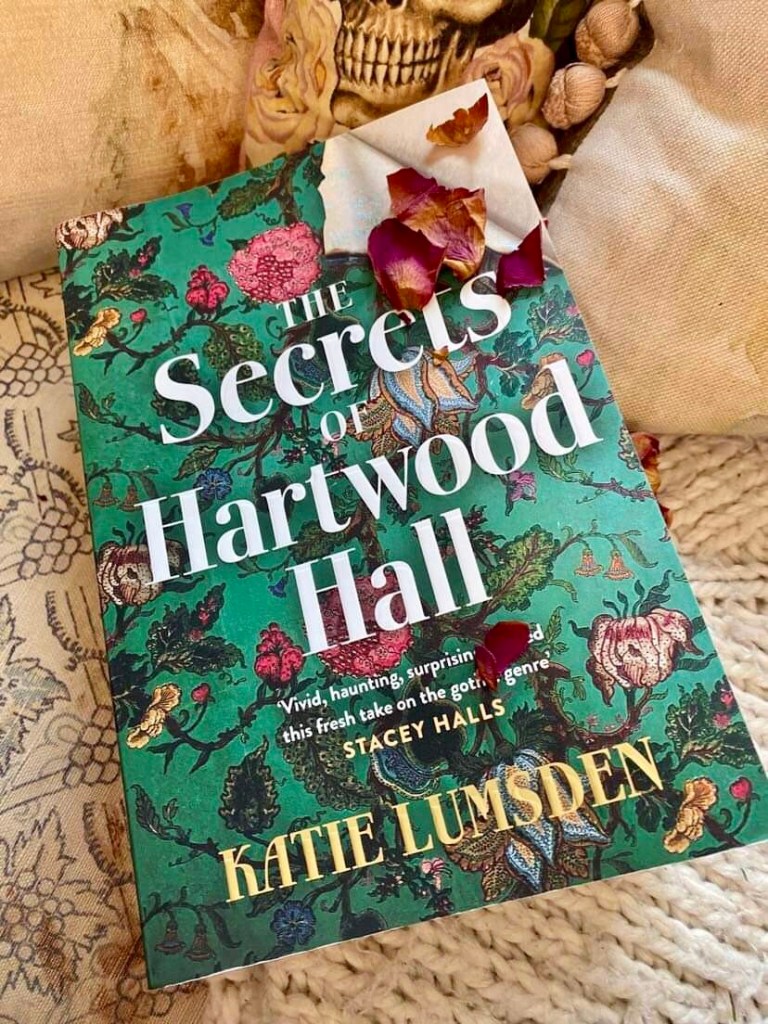
The Secret of Hartwood Hall by Katie Lumsden.

There couldn’t have been a better choice for a squad of female bookworms than this gothic mystery, full of spooky incidents, forbidden love, an orphan governess and within a house that holds many secrets. There was such a Jane Eyre feel about the book and also an hint of the Daphne Du Maurier opening as our narrator looks back to the hall’s approach.

‘when i think of Hartwood Hall, there are moments that come back to me again and again, moments that stain me, that cling like ink to my skin. My first view of the house: a glimpse of stone, of turrets and gables, tall windows and long grass’.

Our heroine is Margaret Lennox, recently widowed and forced to find paid work when her husband leaves his estate to his mother. She is offered a post by the mysterious Mrs Eversham, to educate her son Louis. This should be a moment of freedom for Margaret, but she notes the strange mood of the coach driver as soon as they enter the boundaries of the hall. Local people do not come near here. There is also a very clear rule: do not enter the East Wing of the house, because it is no longer used. As Margaret starts to find her way in Hartwood Hall and enjoys her time with Louis, she does notice a few strange things. She seems under suspicion from one of the existing staff, Susan. She has noticed Margaret’s response to a letter she receives at the breakfast table and is keen to find out more. Stranger than that, she has seen a distance figure in white out in the gardens and followed a figure with a candle down the stairs and towards the East Wing. Maybe the house is haunted, but there are other mysteries too such as what happened to Mr Eversham and why do people in the village treat this woman and her boy with such suspicion and fear?

I was hooked by this story straight away. Just like the author, Jane Eyre was the first grown up book I ever read and I was enthralled with it as a gothic story, years before I started to deconstruct it’s complexity at university. I was also hooked by the Sunday teatime BBC series starring Timothy Dalton as Mr Rochester. It’s the perfect mix of ghostly mystery, intrigue and romance. This book was inspired by the classic but breaks new ground of it’s own in terms of forbidden relationships, marital abuse, and freedom. The freedom of women making their own choices, having freedom of sexual expression and to earn their own living. The governess has always been a liminal figure in literature because they are educated more than other servants and even the woman of the house. They are usually single so have more freedom in their lifestyle and finances. Here Margaret is a widow, she chooses her own destiny and can shape her life as far as choosing where she works and for whom. She also has the choice of what to do with her spare time, no household chores or husband and family to consider. We learn that Margaret’s marriage was not a happy one and she has never felt the love that’s spoken of in literature and poetry. In fact she is surprised to learn it exists and it is joyous to watch her explore that chemistry, even if I did fear for her recklessness. She also becomes the face of Hartwood Hall in the village, choosing to take Louis to church and sit in the hall’s pew, whereas the hall’s gardener sits with his family. She even makes friends with the minister’s wife, although the rest of the village seem to avoid and ostracise them.

As always in these mysteries Margaret is drawn towards the very part of the house she is told not to enter, in fact it is a perfect way into the house after the main doors are locked at night. She is sure she’s seen a candle moving around the East Wing’s rooms when walking in the gardens one evening. There are also noises in the dead of night that can’t be accounted for, but for me the tension really arises at the less mysterious points in the novel. The sly, unpleasant Susan really made my pulse race at points and her blackmail of Margaret feels grubby. She really enjoys the power of knowing something that gives her power over the other person and she seems to enjoy taking something valuable or precious from her victim. The way she commits little acts of dissent when only Margaret is looking, such as stuffing bacon in her mouth in the breakfast room shows resentment about her position. As I could see Margaret settling and enjoying her new pupil I desperately didn’t want Susan to ruin it. The period where both Louis and Susan are ill was truly tense as the whole house waits for the fever of the measles virus to pass. The isolation of Mrs Eversham and her boy is brought into stark relief when they can’t secure a nurse from the village to care for the patients. Mrs Eversham is in despair:

‘So these people will let a child and a young woman die because they suspect me, because they distrust this house? […] Because they believe in ghosts and spirits and curses? Or because they think I am a woman of low character, that I have never had a husband?’

This speech reveals another possibility about their isolation, that Mrs Eversham’s widowhood is not what it seems. It also shows me that Mrs Eversham has a different set of morals to the Victorian norm, she is wiling to set aside ideas about decency and propriety when it comes to saving a life. Margaret is so relieved when Miss Davis appears from nowhere claiming she’s come from the further village of Medley because she heard there was a child who needed a nurse. Yet the other servants seem uncomfortable and even Mrs Eversham seems on edge. Margaret wonders whether Mrs Pulley knows something troubling about this young woman. This brings another yet another layer of mystery to the house: why isn’t Miss Davis as prejudiced against the hall as the locals? Where did she spring from so quickly? By this time I was fascinated and couldn’t stop myself from picking the book up at every opportunity to resolve all my suspicions. Needless to say that when the truth comes out, it was nothing I expected and I loved it! I loved that these strong, determined female characters were living according to their authentic selves. There’s a lot of discussion around the ending of Jane Eyre, I’ve even had an argument about it at a literature talk. A woman said that she felt let down by the ending and Jane’s choice to return to Rochester, because it betrayed her feminism. I argued that she goes back a different woman, with her own money and able to make her own choices. Rochester is her choice and their relationship is on her terms. The ending of Hartwood Hall definitely goes further. It was really heart-stopping, but also satisfying. Both Mrs Eversham and Margaret make their independent choices and decide to live life on their own terms. I throughly enjoyed this atmospheric gothic mystery and it’s strong, forward-thinking, female characters.

Meet the Author.

Katie Lumsden read Jane Eyre at the age of thirteen and never looked back. She spent her teenage years devouring Victorian literature. She has a degree in English Literature and History from the University of Durham and an MA in Creative Writing from Bath Spa University. Her short stories have been shortlisted for the London Short Story Prize and the Bridport Prize, and have been published in various literary magazines. Kate’s YouTube channel Book and Things has more than 20,000 subscribers and was long listed for the Book Vlogger of the Year Award at the London Book Fair Awards 2020. She lives in London and works in publishing.

Posted in Netgalley, Publisher Proof

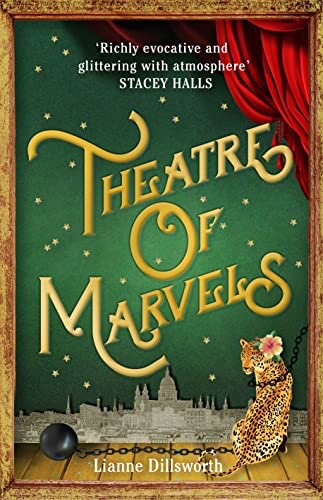
Theatre of Marvels by Leanne Dillsworth

You may have heard of Sarah Baartman, a Khoekhoe woman from South West Africa who was exhibited as a freak show attraction in 19th-century Europe under the name the Hottentot Venus. She was even exhibited after her death, with one showman dissecting her body and keeping her genitalia and skull. Another museum displayed her skeleton and a body cast, which were still exhibited up till the 1970’s. She was exhibited for her steatopygic body type, where body fat is concentrated on the bottom and thighs. This body type wasn’t seen in Europe and was perceived as a curiosity. She was also a subject of scientific interest, but through the gaze of racial bias and erotic projection. In the 19th Century her body could be viewed for two shillings and for a bit extra you could poke her with a stick. Her genitalia were of specific interest as they were said to show her sexual primitivism, although this was more about the men’s erotic projection than Sarah’s own sexuality or libido. Recently, black women in academia and culture have been using her story and reframing it as a source of empowerment, rejecting the ideals of white mainstream beauty, and embracing more curvaceous figures as a source of female beauty. This is the historical and social background that I had in mind while reading this fascinating debut novel from Lianne Dilsworth. I was swept up into her world straight away and my personal academic interest in disability and the display of ‘other’ bodies added to my enjoyment.

Our setting is a theatre and a group of performers from singers to magicians who perform a variety show under the watchful eye of Mr Crillick. His current headline act is Amazonia – a true African tribeswoman, dressed in furs and armed with a shield and spear, her native dancing brings down the house in Crillick’s show. The audience watch, transfixed with fear and fascination, never realising that she is a ‘fagged’ act. Zillah has never set foot in Africa and is in fact of mixed race heritage, born in East London. She is making her money by pretending to be what the, largely white, audience wants to see. It doesn’t sit well with Zillah, but she is alone in the world and does need to make money. Besides it’s better than the other options for a young woman who finds herself in poverty. She’s used to slipping between worlds on stage and in her private life, renting a room in the rough St Giles area of the city, but regularly making her way to a more salubrious area and the bed of a Viscount by night. She and Vincent have been lovers for some time, but he is estranged from his family and can easily keep her a secret, never even walking with her in public. Their shared bed is situated in the middle class home of her boss Crillick. Now, everything is about to change, as Zillah’s consciousness is raised in several ways.

First, she realises that Vincent will never admit to their relationship in public, as he yet again cancels plans to take her to Richmond for the day. Secondly, she meets a young black man called Lucien, who is campaigning in the street. He addresses her in Swahili, with a suggestion this may be the native language of her ancestors, and he places a question in her mind that she can’t shake off. How does it feel to earn money misrepresenting her ancestors? In fact she is representing her ancestors through the gaze of a white audience. The sense that this is wrong, has always been on the edge of her conscience, but Lucien gives her doubts a voice and opens a door towards embracing both sides of her identity. While she dismisses him at first, the thought of him seeing her as Amazonia seems to fill her with shame. Lucien is working on a campaign to relocate black and mixed race Londoners to Africa and the first site is in Sierra Leonne. Meanwhile, Crillick has returned from a trip abroad with shipping containers that suggest he’s been gathering props and it seems he’s been finding new acts too. He taunts Zillah with the suggestion he has found an act that may even eclipse her and one night at his house she sees a new act unveiled to a small group of people. She is horrified to see him parade a terrified women he’s called the ‘Leopard Lady’, with strange white patches all over her dark skin. The men in the party are fascinated, drawing near and touching her skin, even roughly scratching it to see if it comes off. When Zillah notices medical implements laid out on a tray, the horror of what might happen to this woman overwhelms her. She must rescue the Leopard Lady from Crillick’s clutches. There’s a freedom Zillah has compared to a lot of Victorian heroines we might remember, due to her station in life there are certain rules and etiquette of dress and behaviour that don’t apply. Although that freedom does come at a cost – poverty, not belonging anywhere, and the way she is viewed in more polite society. She knows that if she could be with someone like Lucien then she’d be settled in a place society expects of her, still in poverty but at least belonging to a community. Her feelings for Vincent can never come to anything, because his society would never accept her and they would always be a secret.

Through Zillah’s search for the Leopard Lady, we see the truth of a man wiling to make his money treating human beings as objects for display. Whereas before Zillah’s act has at least had the sheen of the theatre world, the Leopard Lady will not be afforded that excitement and sense of performance. This is because Zillah was acting a part, whereas this poor woman is being shown as she is because due to how she looks and where’s she’s from. Zillah chooses to put on her Amazonia costume and take to a stage, if living hand to mouth is ever a choice. Crillick’s plans revolve around his ‘Odditorium’, but in the meantime he plans to show his new acquisition privately to small groups of men. I could imagine these sordid gatherings taking place, with men enjoying an after dinner viewing where the woman is both viewed, potentially sexually assaulted and experimented on. It made me feel sick. I was willing Zillah on in her efforts to find and free the lady, and I found her quest tense and gripping. I thought Zillah’s awakening was handled really well, but I was in two minds about where I wanted her to story to end. Of course there’s an opportunity of relocation to a new life in Sierra Leone, but here I felt strangely similar feelings to those I had about another 19th Century heroine Jane Eyre. We know that Jane’s flight from Thornfield Hall, and the man she loves, is the right move for her. Yet despite the space and time it’s given her to process Rochester’s attempt at bigamy, I never warm to St John Rivers. Although he rescues her from the moors and gives her life purpose again, when he proposes, I can’t be the only reader who’s screaming ‘No’ in her head. As for Zillah, I though Lucien was a good, honest and intelligent man, but to me he feels like the wrong choice. The contrast between him and the passionate relationship she has with Vincent is rather like the two sides of her identity battling against each other. I was hoping that, for a while at least, she could find a way for herself, separate from them both.

This was an exciting and fascinating tale, with elements of the thriller and a central character who is resilient and brave in her quest. I found the settings of the theatre, and Crillick’s home, beautifully rich. Whereas the St Giles area is brought to life with descriptions of sights, smells, many bodies sharing rented rooms and even beds in an attempt to keep costs down. The author has backed up her tale with solid research into freak shows, the many layers of Victorian society and details of food, fashion and leisure time. Through her main character we get an insight into women’s lives, the realities of being bi-racial and the struggles of identity and belonging. I also enjoyed the themes of ‘otherness’ and how outsiders survive in society; the complexities of display and exploitation when weighed against poverty and deprivation. Can freak shows be acceptable if individuals make a choice to exhibit themselves? Or should any exhibition of ‘different’ bodies be unacceptable? This is a question that still needs debate in light of television shows that exhibit overweight and disabled bodies in a prurient way. I really liked Zillah‘s quest to rescue another woman in danger and her own personal journey too. I read this so quickly and will definitely be putting a finished copy on my bookshelves, because I know it’s one I’ll want to read again and again. I just know I’ll find more and more detail in this brilliantly atmospheric exploration of the dark corners of Victorian London.

Published Penguin 28th April 2022.

Meet The Author

Lianne Dillsworth

Lianne Dillsworth has MAs in Creative Writing and Victorian Studies and won a place on the London Library Emerging Writers Programme. She was first runner up in the 2020 SI Leeds Literary Prize for Black and Asian Women Writers in the UK. Lianne lives in London where she works on growing inclusion within the Civil Service. Theatre of Marvels is her debut novel.

Posted in Netgalley

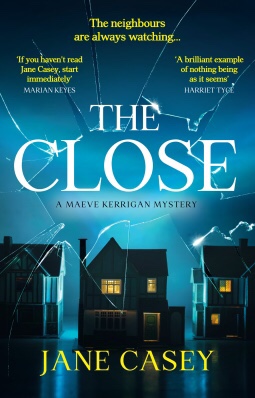
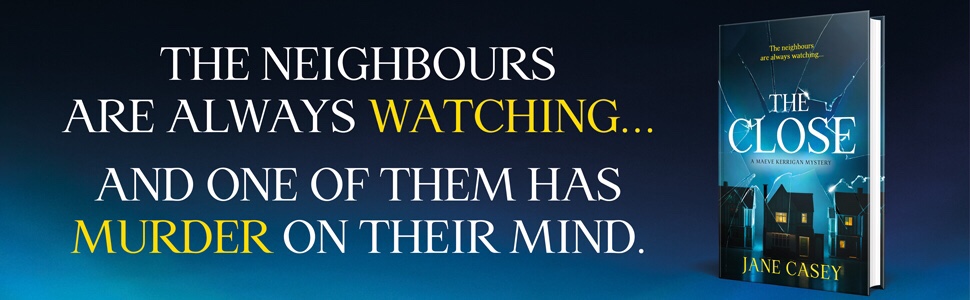
The Close by Jane Casey. A Maeve Kerrigan Mystery.

I absolutely loved being back in the world of Maeve Kerrigan. So much so I read this straight through in one day. The set up was brilliant – a modern slavery racket is suspected and Maeve must get close to one of the conspirators, an unlikely criminal. The mayor of London’s assistant has brought a sad case to their attention. A young man called Davey who died after suffering neglect, starvation and physical abuse. He was the perfect target for slavery, an easily influenced man with learning disabilities but physically strong and capable. Strangely, there have been other young men go missing from the system after using the same address, that of an elderly lady in a normal suburban close. There needs to be close surveillance so Una Burt puts her best officers on it, Maeve must move into the close with Josh Derwent as her boyfriend, pretending to dog sit for the usual occupant. Josh thinks Maeve needs a break from her normal routine, because after the court case convicting her partner of domestic abuse Maeve has been drifting and not herself at all. Similarly, Maeve thinks Josh could do with a break away from his live in girlfriend Melissa. How will they fare as a couple on the close and will they be able to flush out the conspirators in the slavery case?

I loved the tension between Derwent and Maeve in this story, close together in the house and away from all their usual distractions it brings their chemistry into focus. Every time they behaved like a couple it felt completely natural, until it was imagining them going back to colleagues was unthinkable. They have had so many obstacles in their time as friends, always something preventing them from becoming more, so could this be the perfect timing? At times the tension in their house was more unbearable than the tension in the case! There are parts of Derwent that I don’t like, but I can see ways in which he’d be good for Maeve and vice versa. They ingratiate themselves with the neighbours easily because they sense this chemistry, they seem like a real couple. The elderly lady in question is tricky, seemingly an innocent and kindly woman but if she is involved with mistreating these men, her kindness is all a front. She reveals that she does provide a bed for young men with disabilities from time to time, but doesn’t elaborate on whether it’s an official arrangement. When Maeve discovers there’s a oreviously unknown son, whose wife runs a care home, the chain starts to come together. However this isn’t the only crime lurking under the respectability of suburbia. The author uses short chapters narrated by a man who is very unpleasant and possibly dangerous. He lurks after dark watching through the windows of those who don’t close their curtains, even Josh and Maeve. He has a very incel vibe, so could he be a lone male with little female attention and experience, or is he hiding his feelings about women under the veneer of a happy family man?

I enjoyed watching these people through Maeve’s eyes as her instincts are usually spot on and her insight seems to be coming back to her as the novel continues. This break is exactly what she needed. Her interactions with a lady with dementia in the close are brilliant because Maeve doesn’t dismiss what she claims to have seen just because of her illness. Maeve knows there are moments of lucidity and keeps thinking about what she’s said and trying to interpret it. When she goes missing in the dark Maeve is desperate to find her, but so is our unknown man and it’s a real heart pounding part of the book, hoping against hope that Maeve gets to her first. It’s clear that this seemingly happy and respectable close is anything but, with the men hiding all sorts from irritating foibles to murder. Towards the end I was powering through the pages to find out who was hurting girls in the close, whether Maeve’s fire and copper’s instinct was returning, but also whether Josh and aMaeve were going to confront their feelings for each other. This was an addictive thriller, focusing on one of my favourite fictional police duos and I loved seeing them in a different environment, but still flushing out crime.

Published by Harper Collins 2nd March

Meet The Author

Jane Casey is a bestselling crime writer who was born and brought up in Dublin. A former editor, she has written twelve crime novels for adults (including ten in the Maeve Kerrigan series) and three for teenagers (the Jess Tennant series). Her books have been international bestsellers, critically acclaimed for their realism and accuracy. The Maeve Kerrigan series has been nominated for many awards: in 2015 Jane won the Mary Higgins Clark Award for The Stranger You Know and Irish Crime Novel of the Year for After the Fire. In 2019, Cruel Acts was chosen as Irish Crime Novel of the Year at the Irish Book Awards. It was a Sunday Times bestseller. Stand-alone novel The Killing Kind was a Richard and Judy Book Club pick in 2021, and is currently being filmed for television. Jane lives in southwest London with her husband, who is a criminal barrister, and their two children.

Posted in Personal Purchase

Other Women by Emma Flint

It is 1923 and a country is in mourning. Thousands of husbands, fathers, sons and sweethearts were lost in the war, millions more returned home wounded and forever changed.

Beatrice Cade is an orphan, unmarried and childless. London is full of invisible women who struggle to find somewhere to work through their grief. But Bea is determined to make a new life for herself. She takes a room in a Bloomsbury ladies’ club and a job in the City. Just when her new world is taking shape, a fleeting encounter threatens to ruin everything.

Kate Ryan is an ordinary wife and mother. Following the end of the war, she has managed to build an enviable life with her husband and young daughter. To anyone looking in from the outside, they seem like a normal, happy family. But when two policemen knock on her door one morning and threaten to destroy the facade Kate has created, she knows what she has to do to protect the people she loves. And suddenly, two women who never should have met are connected for ever . . .

I can’t say enough great things about this incredible novel, but I’m going to try and do it justice. It’s a historical mystery, extraordinarily clever psychologically and made me think about feminism, sisterhood and the difference between what society expects women’s lives to look like and the life decisions we make for ourselves. Flint has told her story through the eyes of the Kate and Bea, two women who are strangers, but connected by one man. Bea was an orphan and is now an unmarried woman in her late thirties. She’s the book-keeper for a firm in London who has pretty much resigned herself to being a career girl and living in a woman’s hostel. All this changes when she meets the handsome and charming Tom Ryan, a salesman at her firm. Bea struggles to believe that this man, with his movie star looks, would be interested in a woman like her. She expects him to chat up the young women, who have noticed him and are giggling, but he makes a point of stopping at her desk. He comments on her name, telling her that Beatrice was the great love of a poet. Bea is smitten and agrees to meet him, despite the fact that he is married. She is mentally aware of his wife’s presence, the third person always standing between them. Despite this, will Bea allow herself to succumb to Tom’s advances and can it end any other way but heartbreak or disaster?

Flint’s setting is vitally important to this story. We can draw parallels between contemporary women and these two characters, but they are also very much products of their time. This is a post-war Britain and everything has been changed by a war so terrible it is known as the Great War. Men have come home destroyed by what they’ve experienced physically and mentally.

‘There were empty sleeves and eye patches that one must not stare at or draw attention to; there were crutches and bandages and dreadful ridges of thick pink skin; and sometimes there was simply an absence in a face where a man had left a part of himself – the brightest and most vital part – in a muddy foreign field.’

Whereas women could be said to have flourished. Yes, there’s the ever present weight of grief and loss, but some of the changes in women’s lives had been positive. Both Kate and Bea are working women, and represent the many women who became wage earners during the Great War, plugging the gap in the employment market as more men joined up to fight. This was liberating for many women, who were then reluctant to move back to the domestic sphere after the war. There were also a shortage of men in the marriage market, some women had lost their fiancé or husband but there were others who came of age just after WW1 for whom eligible men were scarce. Having the option of throwing themselves into an absorbing career instead proved very fulfilling for some, like Morley’s office manager who clearly expected Bea to be left on the shelf and had marked her out as a potential replacement. Women being outside the domestic sphere meant that the pre-war rigid barriers of social class started to be breached. Different classes of people mingled in work places and matches that would have been impossible a few years before became more common. Bea still longs for love, but as her personal life becomes complicated and painful she does muse on what she has lost. As a single working woman she had women friends and lived in a vibrant city where she could take herself to the theatre, to a museum or for tea with friends. Now that she can see the reality of a relationship, she wonders was she better off before?

Bea knows there is a difference between herself and the girls who have young men to wait for. These are carefree girls, full of life, ‘neat and slender – sleek hair, dainty ankles, flickering glances and quicksilver laughter.’ She’s of a different sort, in looks and class. Where her married sister Jane looks on career girls as modern, smart and fashionable Bea looks a little closer and sees

frizzed modern hairstyles that they’d seen in advertisements and that didn’t suit them; women with lines around their eyes that no amount of cream or powder would cover. And women who, despite the well-cut clothes, had red rough hands and nails cut to the quick.’

Bea is well aware she is plain and there are references to Jane Eyre in the way she sees herself. After talking to Tom, she sees herself in the bathroom mirror and is shocked at the difference between her tumultuous, rich inner life and this pale, plain outside. She feels such overwhelming emotions that she disassociates from her rather normal body; ‘how can all these feelings come out of this plain face and body?’ It immediately took me to the conversation between Jane and Rochester when she challenges him for underestimating her:

‘Do you think, because I am poor, obscure, plain, and little, I am soulless and heartless? You think wrong! I have as much soul as you, and full as much heart!…’

In fact Tom uses the comparison to flatter her, praising her strength and courage in living such a lonely life. Patronised by her sister too, she is full of anger inside and expresses the creeping fear that not only is she without a husband, she’s noticed younger, smarter girls starting to come into the workplace. Bright, young things who might be better at her job and quicker. She admits to being afraid of the day when the axe falls, her clothes become shabbier and she gets more desperate. Yet is it any better to be at the mercy of a man? As Kate’s story unfolds we can see that the state of being a wife, is just as unstable and scary, because where Bea has all the responsibility and makes decisions for herself Kate is powerless, entirely dependent on the whims of her husband. A husband who is capable of terrible things. The more Kate starts to learn about her husband, tiny jigsaw pieces start to slot together in her head. She has to admit to herself that she has always known there was something hidden underneath:

‘Hadn’t I known – hadn’t I always known – that he had something terrible inside him, something that lay rotting under the smooth surface of our normal life? I saw glimpses of it sometimes. I thought of his face as he persuaded me, sweet-talked me, into doing things I did not want to do. I thought of how dirty, how shamed, I felt afterwards.’

Set in the 1920’s, this story is based on the true case of Emily Kaye and her married lover Herbert Mahon. The novel’s aim was to give voice to Mahon’s wife and so Kate’s voice came to life, creating a brilliant interplay between her narration and Bea’s. I loved how well the pace was controlled, from relatively slow at the beginning to a breakneck pace towards the end as Kate makes sense of what has happened and holds the key to solve the mystery. I loved how the author showed us the truth of contemporary attitudes to women, that a man can do something terrible, but it will always be the woman’s fault. How Bea is simply disregarded as shameless, getting old and desperate, brazen and responsible for enticing Tom, despite him being married. It’s quite shocking, but then when I thought about our tabloid’s attitudes to women, I realised that women are judged every day for their appearance, their sexuality, their life choices and if ever there is a marital affair in the papers the ‘other woman’ is always blamed. It’s scary to think how little some people’s attitudes have changed, but thank goodness we can earn for ourselves, own property and have bank accounts. I loved the sense of sisterhood the author brings into the story and it made me think about how it’s the women in my life who have held me up when I couldn’t manage alone. I was on tenterhooks wondering whether Kate would realise that to choose the sisterhood is to change things for her own daughter. To make a decision towards a better world for women. This book was a brilliant piece of historical fiction, an addictive mystery that stirred up the emotions and had me completely hooked. As soon as I’d finished, I wanted to read it again.

Published by Picador 23rd February 2023

Meet The Author

Emma Flint was born and grew up in Newcastle upon Tyne. She graduated from the University of St Andrews with an MA in English Language and Literature, and later completed a novel-writing course at the Faber Academy. She lives and works in London.

Since childhood, she has been drawn to true-crime stories, developing an encyclopaedic knowledge of real-life murder cases from the early 20th century. Her first novel, Little Deaths, was longlisted for the Women’s Prize for Fiction, for the Desmond Elliott Prize, for the Crime Writers’ Association Gold Dagger Award, and for The Guardian’s Not the Booker Prize.

Other Women is her second novel.

Posted in Random Things Tours

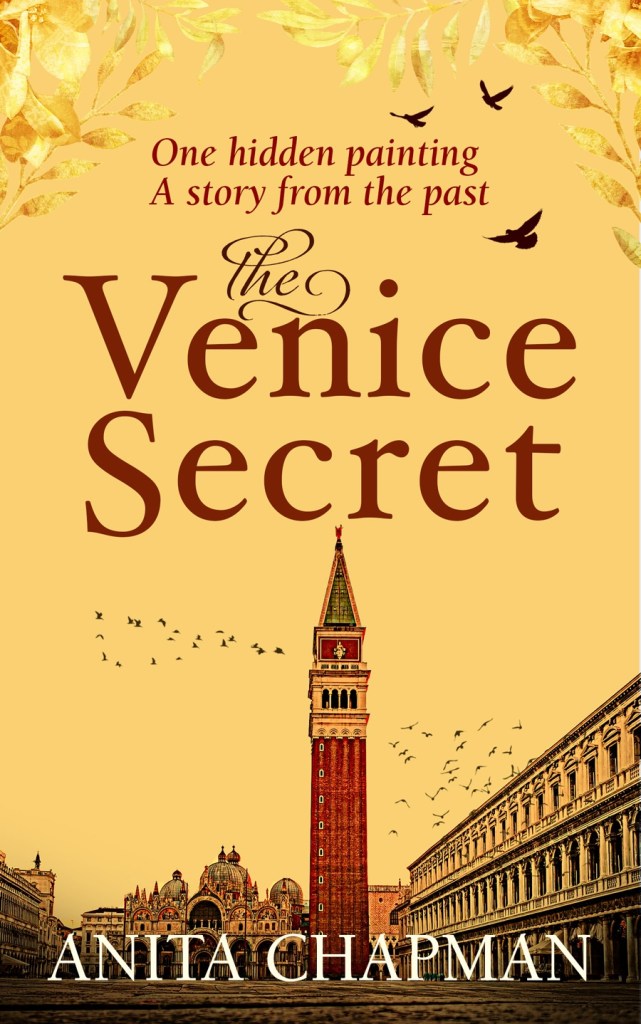
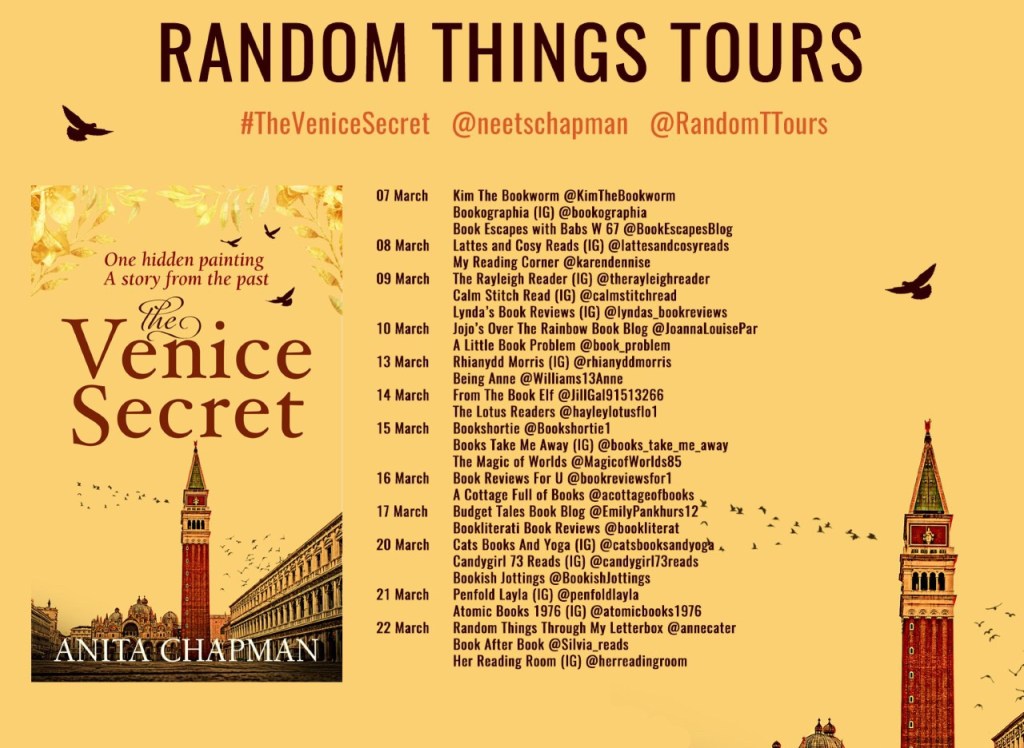
The Venice Secret by Anita Chapman.

I’m sure amongst those who travel a lot, saying that Venice is your favourite travel destination is a bit of a cliché. I’d first wanted to go aged around ten years old, when I first read the children’s book What Katy Did Next. This third book in the Katy series followed the eponymous heroine as she travelled Europe as companion to a woman and her little girl and is lucky enough to be in Venice for Carnival. I first travelled there with my mum as a fortieth birthday celebration and we both fell completely in love. A couple of years later I visited again, this time with my best friend and enjoyed exploring more of the city, beyond the usual tourist sites. Mainly I enjoyed wandering the labyrinthine streets, taking photographs and soaking up the atmosphere. It has a magic that’s part romance and part mystical, with an edgy gothic darkness that can easily unnerve you – especially when the fog comes down, you’ve lost your way and keep finding lonely dead ends. There’s a little maze behind Teatro La Fenice where you can spend untold hours, wondering if you’re stuck in a time loop. It is one of those places where I wouldn’t have been surprised to turn a corner and find myself back in the 18th Century. So it seemed fitting to me that Venice is a backdrop to Anita Chapman’s debut, a dual timeline story with two narrators; firstly in 2019 with Rachel, then back to the late 18th Century with Phillipa. Both women are going through a period of upheaval and change, another uncanny similarity to fit a city that seems to be a ‘thin place’: a city without the normal barriers of space and time.

In the present we meet Rachel who is helping to sort through her grandmother’s belongings while temporarily living in her cottage. She will soon have to make a decision, to share a home with her mother and her horrible new partner, or become homeless. Rachel is feeling a bit lost and displaced, so needs a project to get her teeth into. She certainly gets more than she bargained for! She discovers what appears to be a Canaletto painting in her grandmother’s loft along with a note addressed to Philippa in 1782. With help from Jake at the local art gallery, Rachel endeavours to find out if the painting is an original and uncovers a secret from the past. The painting depicts a view of St Mark’s Square towards the Basilica from one of the south corners of the piazza. It seems to have some provenance and Rachel sets out to discover who painted it and whether it’s really as old as it’s style suggests. It purports to be a Canaletto, but can it really be genuine and if so, what is it doing in her grandmother’s attic? If it is the real deal, it could be the link between Rachel and our 18th Century narrator, Philippa. Phillipa has gone through a huge change in circumstances, following the death of her father who was a preacher. He has left behind a family struggling to make ends meet and Phillipa feels weighed down by responsibility for them. So she takes the decision to become a governess, leaving her family behind in order to earn enough money to keep them. She manages to get a position at the prestigious Chipford Hall, the family seat of the Duke of Oxon, who has two little girls. Yet, it isn’t long before Phillipa is forced on the move again but this time she’s asked to accompany a family friend, Lady Cordelia, on a trip to Venice, researching her latest novel. It was Phillipa’s part of the story that really engaged me as I felt a real kinship with her. She is quite a level-headed and sensible young woman, prepared to take on her father’s responsibilities. There was common sense, but also a deep kindness in her – she’s willing to give up any dreams of her own to keep the family going.

While I enjoyed aspects of Rachel’s story, I didn’t feel she was as strong and her character didn’t quite grab me in the same way Phillipa did. Rachel’s difficulties often seemed to come from her own choices, but I did feel sorry for her. Nevertheless, her sections do hold the story together well and the history of the painting she finds is fascinating and very well researched too. The author has the skill of bringing the historical aspects of the story to life, full of vivid details and characters. For someone who loves Venice, those sections of the story were particularly enjoyable, taking me back to those tiny streets and romantic canals, triggering some incredible memories along the way. I was also interested in the way the author used the figure of the governess, which ever since Jane Eyre has provided rich material for the writer of historical fiction. Governesses are in a position within the house as neither servant nor master, she is rather unique and potentially dangerous. She has access to the centre of the home, working upstairs with the children and often living with the family, rather than in the servant’s quarters. This position allowed the author to really open up the 18th Century for us, particularly in terms of society and it’s hierarchies. The pace is slower at first, but soon speeds up as the clues start to be revealed and we each time we get a bit closer to the truth and the link with Phillipa. We also come closer to the resolution of each woman’s inner journey. Would Phillipa’s be able to construct better boundaries and gain some wisdom in discerning someone’s character before trusting them? Would Rachel learn to stand on her own feet more, despite the difficulties in her background? I loved how we could see the changes in women’s lives since the 18th Century and how we were less at the mercy of the men in our lives, some of whom seemed perfectly happy to sacrifice a woman if it brought them closer to the power they sought. Each part of the story was woven together beautifully towards a satisfying conclusion, ensuring that I’ll be be looking forward to whatever Anita Chapman writes next.

Meet The Author

Anita Chapman enjoyed writing stories from a young age, and won a local writing competition when she was nine years old. Encouraged by this, she typed up a series of stories about a mouse on her mum’s typewriter and sent them to Ladybird. She received a polite rejection letter, her first.

Many of Anita’s summers growing up were spent with her family driving to Italy, and she went on to study French and Italian at university. As part of her degree, Anita lived in Siena for several months where she studied and au paired, and she spent a lot of time travelling around Italy in her twenties.

Anita likes to read journals and diaries from the past, and one of her favourite pastimes is visiting art galleries and country houses. Her first published novel, The Venice Secret is inspired by her mother taking her to see the Canalettos at The National Gallery in London as a child.

Since 2015, Anita has worked as a social media manager, training authors on social media, and helping to promote their books. She’s run several courses in London and York, and has worked as a tutor at Richmond and Hillcroft Adult Community College.

Posted in Netgalley

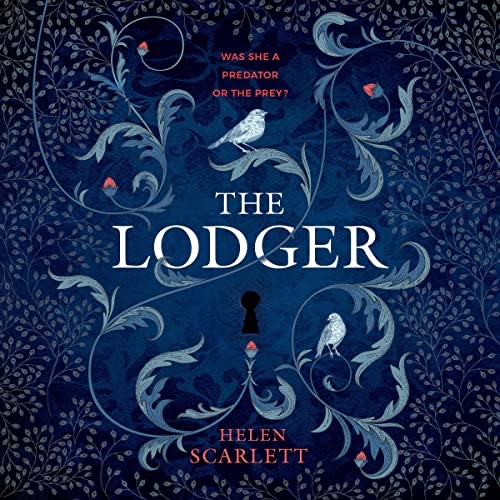
The Lodger by Helen Scarlett

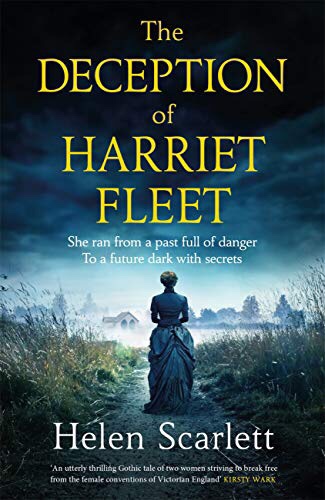
I’d throughly enjoyed Helen’s last book The Deception of Harriet Fleet, so I was looking forward to this release. The Lodger is an interesting historical fiction novel set in the period post WW1 and the Spanish Flu epidemic.. It’s a period I’m particularly interested in and I was drawn to the premise and how it brought the changes of that time into the plot of the story. This was a time of personal and national mourning, with the war appearing like a scar cut right across the public’s consciousness that hasn’t yet had time to heal. Our heroine, Grace, has a family torn apart by grief. She lost her brother Edward at the front and her parents grieved very differently, with her father keeping quite stoic and her mother struggling to cope. Eventually it was decided that for her own good, Grace’s mother would go and rest in an institution where she could be cared for properly. Grace also lost her fiancé Robert at the Somme, a loss she’s struggling to come to terms with as she keeps seeing him on the street, in crowds and on buses. Yet she can never find him. In order to make ends meet and to further an ambition Grace has taken a job at a nursing newspaper and wants to become a journalist, something that would have been unthinkable a few years before. Similarly, to make ends meet in their London home, they have taken in a lodger. Many well-to-do families were forced to do this at the time and Grace has struck up quite a friendship with Elizabeth, a church going woman who was proving to be a great friend. So when Elizabeth is found dead in the river and the police quickly rule it a suicide, Grace is shocked but determined to leave no stone unturned in finding out about the death of her friend.

The historical background was woven into the story so well: a general sense of everyone mourning someone, the fact that women’s positions in society were changing and the difficulties for those returning from the horrors they’ve seen. It was great that this was sometimes incidental background, such as someone Grace goes to speak to having a bad morning, because it’s the anniversary of his son’s death. It gave a real sense that this was an all pervasive grief and hung over the whole country. We would see it in more depth in certain characters. Her friend Edward still has an air of the last century in the way he deals with what he’s seen. He’s very protective of Grace and doesn’t want to tell her things that might distress her, and you get the sense he will take his experiences to the grave. Whereas his friend Tom is willing to be more vulnerable and has clearly suffered mentally since he returned with PTSD. He’s more willing to share with Grace and be honest about what the war has cost him. A character that really shows a change in women’s behaviour is Lady Bunty Jaggers, a friend of Grace’s mother. Grace asks for help in reaching a society lady whose husband knew Elizabeth, so goes to meet Bunty in her London home. She is a very colourful character and has an interesting way of looking at her marriage and what it gives her. She could leave her husband, but at the moment she has the best of both worlds. She’s cushioned by his money and title, but he remains resolutely in the country and she stays in their London townhouse living entirely separate lives. She’s also very forthright about Grace’s mother, suggesting that all the care home does is medicate her to the point of being unconscious. She thinks Grace should take her away from there and simply let her cope with the grief unmedicated, after all grief is normal.

Grace uncovers a terrible story of Elizabeth’s past life, including sexual impropriety, blackmail and possibly murder. None of which seems to fit with the Elizabeth she knew. She will need to interview many people, some of the them wealthy and very dangerous, to get to the truth. Was Elizabeth a changed woman because of all the wrongs she’d committed before or is there more to this story than meets the eye. Grace will need all of her investigative skills to uncover what really happened and she needs to keep an eye out for whoever is watching her and potentially wants to stop her. There were parts of the book that were a little slow and it could have benefited from a chapter or two from Elizabeth’s point of view in a separate timeline. However, I did enjoy that this news about female friendship and going the extra mile for someone who has been good to you, no matter what others say. Grace’s loyalty and determination are evident here. She also shows loyalty to her mother and a willingness to defy her father when she thinks he’s wrong. I really enjoyed how their mother daughter relationship developed.over the book. Finally there’s a little bit of romance too and a choice to be made between a man who is loyal, kind and would keep her safe or a different man who is more progressive, open and would see her as a partner, not a dependent. I liked that this choice was left till late in the book, because it would signify how Grace saw her future and whether or not she was in charge of it.

Out now from Quercus.

Meet the Author

The Deception of Harriet Fleet’ is my first novel and is set in the north east of England. I’ve always loved the big, classic novels from the nineteenth century, with lots of governesses and intrigue, and I sometimes wonder whether I was born in the wrong era! Although the Victorian period was a time of huge changes, the inhabitants of Teesbank Hall are trapped in the past by the destructive secrets they hold. Teesbank Hall itself is fictional but most of the other settings in the novel are real and close to where I live with my husband and two daughters. I teach A Level English and write whenever I can grab a spare moment. (Taken from Helen’s Amazon Author Page).

You might also enjoy Helen’s first novel. A dark tale that’s brimming with suspense, an atmospheric Victorian chiller set in brooding County Durham for fans of Stacey Halls and Laura Purcell

1871. An age of discovery and progress. But for the Wainwright family, residents of the gloomy Teesbank Hall in County Durham the secrets of the past continue to overshadow their lives.

Harriet would not have taken the job of governess in such a remote place unless she wanted to hide from something or someone. Her charge is Eleanor, the daughter of the house, a fiercely bright eighteen-year-old, tortured by demons and feared by relations and staff alike. But it soon becomes apparent that Harriet is not there to teach Eleanor, but rather to monitor her erratic and dangerous behaviour – to spy on her.

Worn down by Eleanor’s unpredictable hostility, Harriet soon finds herself embroiled in Eleanor’s obsession – the Wainwright’s dark, tragic history. As family secrets are unearthed, Harriet’s own begin to haunt her and she becomes convinced that ghosts from the past are determined to reveal her shameful story.

For Harriet, like Eleanor, is plagued by deception and untruths.

Posted in Netgalley

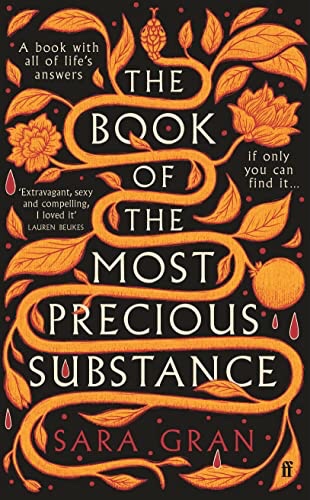
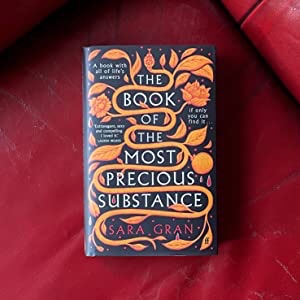
The Book of the Most Precious Substance by Sarah Gran.

This was one of the most unusual books I’ve ever read, with a mix of history, mystery, philosophy, magic and erotica that was most unexpected. Lily Albrecht is a writer turned book dealer who lives in a farmhouse in upstate New York. Several years ago she met husband Abel, the love of her life. Abe was a brilliant man, a writer and professor who inspired others and drew friends and colleagues to their home as guests. Then he started to forget things and after spending a fortune on neurologists, tests and treatments she’d come to accept that Abe was not getting better. It was like a form of dementia. He was now using a wheelchair and was completely mute, and Lily was left grieving for him while he was still alive. With full time nursing care from Awe, Lily is able to travel into NYC to run a stand at a book fair. It’s there she runs into Lucas, a librarian and book dealer friend, and it’s through him that Lily first hears of the book.

They are approached by a third party who knows someone willing to pay upwards of half a million dollars for the book. Some of the most wealthy book collectors in the world tend to covet books about magic or sex. Dissatisfied with the paltry millions they have, they want to look at ancient ways to manipulate and accumulate power. This book has both, something Lily jokingly refers to as ‘sex magic’, but as she listens to how the book works she does feel a stirring. Sex is something she and Abe had to lay aside a long time ago. She’s used to early nights, flannel pyjamas and a bed to herself. She wouldn’t consider herself sexy, but as she sits with Lucas and they talk about the steps to the magic of the book. It contains a symbol, something that’s not quite a circle and not quite a triangle. The first step requires the sweat from a woman’s neck and from there each step requires a bodily fluid elicited during sex. The final step is to anoint the book with the most precious substance – a substance that a woman produces at her most aroused. Once all the steps are complete, the pair will receive the thing they most wish for which is usually money and power beyond their wildest dreams.

Finding this book takes them on an erotic odyssey from New York to LA, the humidity of New Orleans, then on to Munich and Paris. Lily and Lucas will find the book, convince the collector to sell it to their buyer and hopefully make a lot of money. They will also embark on a sexual relationship with no boundaries and no restrictions and neither tells the other what they’re hoping for from the book. Of course the money will be incredible, it would help Abe enormously, but Lily wants something more. She wants Abe back. More than that, she wants Abe to return to himself with all the vitality, intelligence and allure he’s always had. She wants them to spend evenings talking about books and watch him hosting friends at their home. She wants Able to have his life back. In the meantime she’s going to enjoy her first vacation for a long time, staying in five star hotels and experimenting with Lucas while they try to find the elusive book.

This is an incredible, escapist, fantasy and travelogue, that could have been quite shallow and empty without the skill of the author. She has put so much genuine emotion and compassion into the story, along with the gritty realism of living with a loved one who is leaving you piece by piece. Lily’s memories of Abe and their relationship are heartbreaking when you realise he is now a motionless, mute, man unable to do anything but watch TV. Lily emphasises the loss of this man’s intelligence. He looms large in her memory and there’s a little bit of hero worship with the love she has for him. She describes the loss of his voice, their friends slowly disappearing, the loneliness of separating their sleeping arrangements and the torture of Abe being there, but not. It’s heartbreaking and I’ve been through exactly this experience as I slowly lost my husband fifteen years ago. Perhaps this is why I empathised with Lily so strongly and I understood why she was taken in by this adventure and by being desired for the first time in a long time. It’s like watching a flower bloom as she slowly awakens again, but even though I could understand her need I worried that somehow the book was exploiting her vulnerability. I didn’t get to know Lucas as well as Lily, so his motivations were slightly unclear. He mentioned being used to a five star lifestyle, but his money running low. This felt greedy or shallow when compared to Lily’s motivation. I worried that most people wanting to acquire the book were greedy and materialistic and there would be some sort of come-uppance, but I didn’t know if Lily deserved that. Each time they performed a step, the magic felt dark and it seemed to have an addictive quality. A new avenue would open up as if the book was drawing them closer and making their path easier. It wanted to be found, but why?

The pace towards the end really picks up and I was racing through the action with my jaw dropped open. However, it was the chapter after Paris that really hit me emotionally. It emphasised how much we look at the people we’ve lost with rose tinted spectacles. No matter how much we feel nostalgic for a certain place and time in our lives, it can’t be replicated. It reminded me of the saying ‘you can’t wade into the same river twice; because you have changed and so has the river’. I’ve read erotica where it’s all sexual acts with barely any story in between. This was an incredible story that I could have read happily without the sex, but to make the sexual acts an integral part of the story and the search was clever. The author has achieved an intelligent and fantastical book, that succeeds in being both erotic and a fascinating mystery.

Published 30th August 2022 by Faber and Faber

Meet The Author

Sara Gran is the author of The Book of The Most Precious Substance. Previous work includes Saturn’s Return to New York, Come Closer, Dope, Marigold, and the Claire DeWitt series. She is the founder of small press Dreamland Books and writes for television and film.

Posted in Romance Rocks, Throwback Thursday

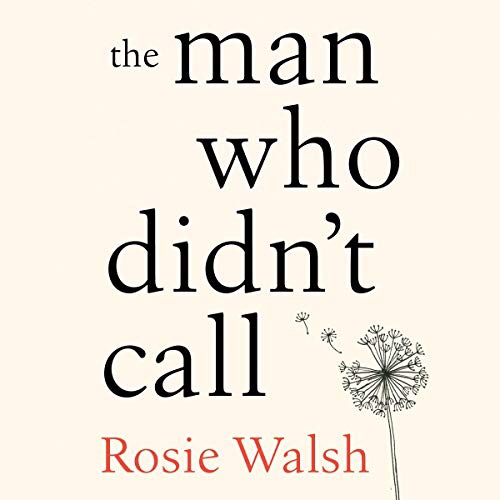
Romance Rocks: The Man Who Didn’t Call by Rosie Walsh

I read this in two long bursts – one of which started at 3am. It’s a book I couldn’t put down because all I wanted was these two people back together. The harsh realities of grief and lifelong family rifts are well drawn by the author and completely believable. All of these people are trying to move forward despite their lives missing a beat one day on a country road, where a split second decision has lifelong consequences. This book explores grief, loss, loyalty, loneliness and the eventual incredible ability the human heart has to heal.

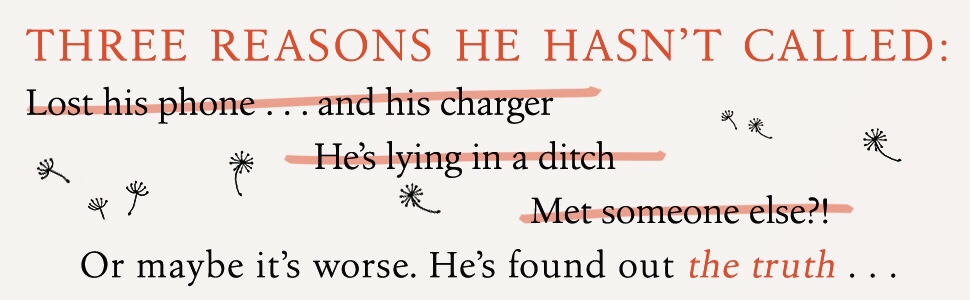
Sarah has a 7 day whirlwind romance with Eddie. They meet by chance on a country road while Sarah is visiting her parents. She thinks Eddie just might be the one. But, Eddie goes away on holiday and she never hears from him again. Is Eddie a heartless playboy who never intended to call? Did Sarah do something wrong? Or has something terrible happened to him? Instead of listening to friends and writing this off as a one night stand, Sarah begins to obsess and is determined to find the answer. Every clue she has comes to a dead end and she is in danger of completely losing her dignity. As her time back home in the UK starts to run out, Sarah looks for clues to track Eddie down. What she hears is confusing her further. His friend doesn’t give the simple answer, that Eddie has moved on, but gives her a warning; if she knows what’s best for her, she needs to stop looking for Eddie. 

Walsh has successfully intertwined a love story with a mystery. I veered between wondering if Sarah was becoming irrational and willing her to succeed. Interspersed with the narrative are beautiful letters of love and loss addressed to the writer’s sister, affectionately nicknamed ‘Hedgehog’. The letter writer’s sister died when they were young, but we don’t know what happened or who the letter writer is. If Sarah is the author of the letters does this loss have something to do with the warning she’s been given? Is her sister the key – not just to Eddie’s disappearance, but to why Eddie was on that particular stretch of road on that day? 

I quickly became invested in Sarah and Eddie’s story. I think we’ve all been subjected to the watched phone that never rings and how crazy it can make us. It could have made me dislike Eddie early on, but for some reason I never did. I’m definitely a hopeless romantic so I seemed to accept Sarah’s hope that this could still work out. The other characters in the novel are also well-written and compelling. I’m a therapist so I was particularly interested in Eddie’s mother and her mental ill health. I think her symptoms and the way she manipulated Eddie showed a streak of narcissism. She finds it impossible to see this situation from his point of view, only how it might  her. Anything that threatens their dynamic as carer and patient is a huge threat to her and she responds with emotional blackmail and hostility. Eddie is as much a prisoner of her mental ill health as she is. I also had empathy for Sarah’s friend Jenny who is struggling to conceive and undergoes IVF treatment to the point of financial ruin. Her character probably leapt out at me because I’m also not able to have children, and know how difficult it can be to come to terms with. Her stoicism and determination to support her friend in the face of her own loss is very moving. 

I stayed up until 2am to finish the book, because I had everything crossed that the mystery would be explained and these two people could move forward together. To different degrees, all the novels characters are imprisoned by the past and losses they can’t accept. My husband died when he was 42 and I was 35. It’s like a chasm opened up and I had to choose between staying on one side forever, with the past and my feelings of loss and fear. Or I could choose to jump over that chasm into a new future. I never forget what happened or the love I have for Jerzy, but twelve years later I have a wonderful partner and two beautiful stepdaughters. Thankfully, I had the bravery to move forward knowing I can’t lose my memories of the past, but I still have a future full of possibilities I never imagined. That’s what the characters in the novel are trying to do. Grief is different for everyone and there are always tensions between those who are trying to heal and those who can’t imagine healing because it feels like a betrayal. Rosie Walsh draws these different threads together beautifully, creating a bittersweet novel that captures the incredible ability the human heart has to heal.

Meet the Author


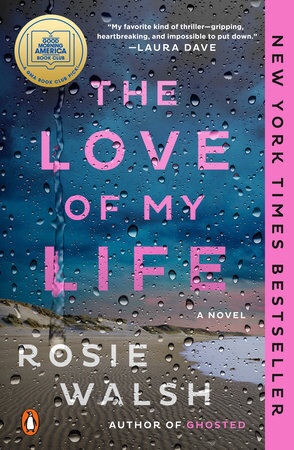
Rosie Walsh is the internationally bestselling author of two novels, the global smash hit THE MAN WHO DIDN’T CALL, and – new for 2022 – THE LOVE OF MY LIFE, a heart-wrenching, keep-you-up-all-night emotional thriller, which was an instant New York Times bestseller and stayed in the German top ten for several weeks. 

Rosie Walsh lives on a medieval farm in Devon, UK, with her partner and two young children, after years living and travelling all over the world as a documentary producer and writer. 

The Man Who Didn’t Call (UK) / Ghosted (US) was her first book under her own name, and was published around the world in 2018, going on to be a multimillion bestseller. 

Prior to writing under her own name she wrote four romantic comedies under the pseudonym Lucy Robinson. When she isn’t parenting or writing, Rosie can be found walking on Dartmoor, growing vegetables and throwing raves for adults and children in leaking barns. 

Author photos © Anna Pumer Photography / Verity Rivers

Rosie’s new novel The Love of my Life is another heartbreaking romance, mixed with an addictive mystery you’ll be begging for one more chapter.

I have held you every night for ten years and I didn’t even know your name. We have a child together. A dog, a house.
Who are you?

Emma loves her husband Leo and their young daughter Ruby: she’d do anything for them. But almost everything she’s told them about herself is a lie. And she might just have got away with it, if it weren’t for her husband’s job. Leo is an obituary writer and Emma is a well-known marine biologist, so, when she suffers a serious illness, Leo copes by doing what he knows best – reading and writing about her life. But as he starts to unravel her past, he discovers the woman he loves doesn’t really exist. Even her name is fictitious.

When the very darkest moments of Emma’s past life finally emerge, she must somehow prove to Leo that she really is the woman he always thought she was . . . But first, she must tell him about the love of her other life.

Available now in hardback and on Kindle, but due out in paperback in July 2023.