Posted in Publisher Proof

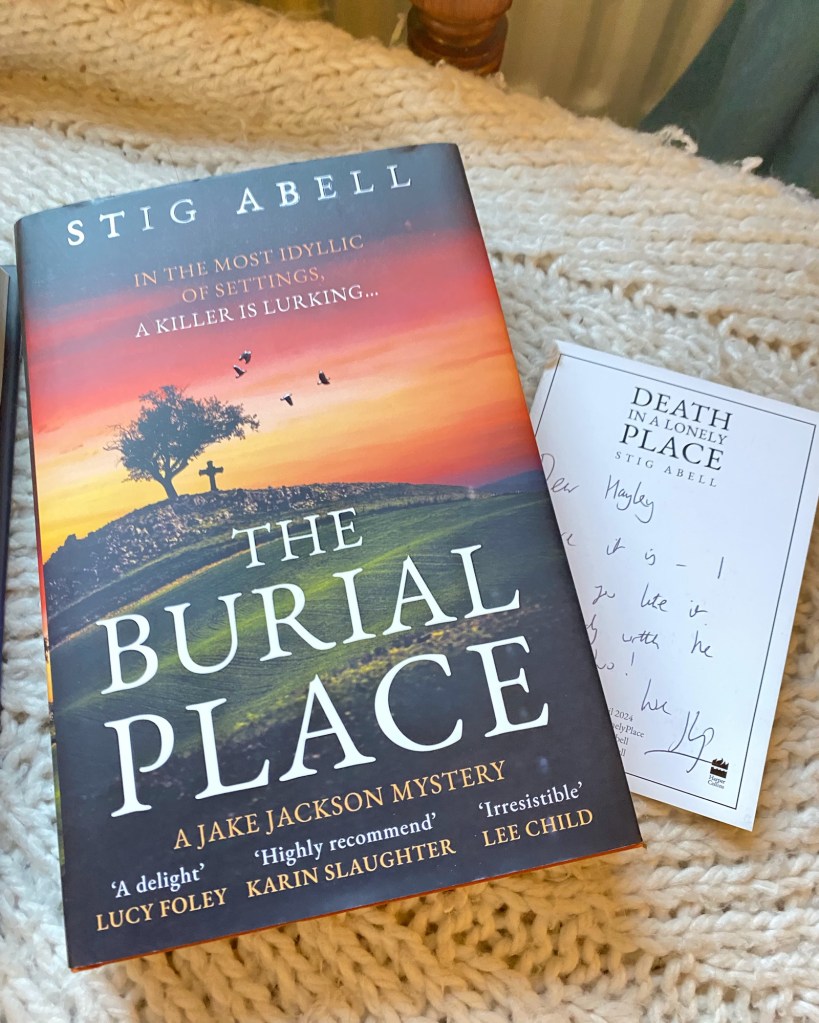
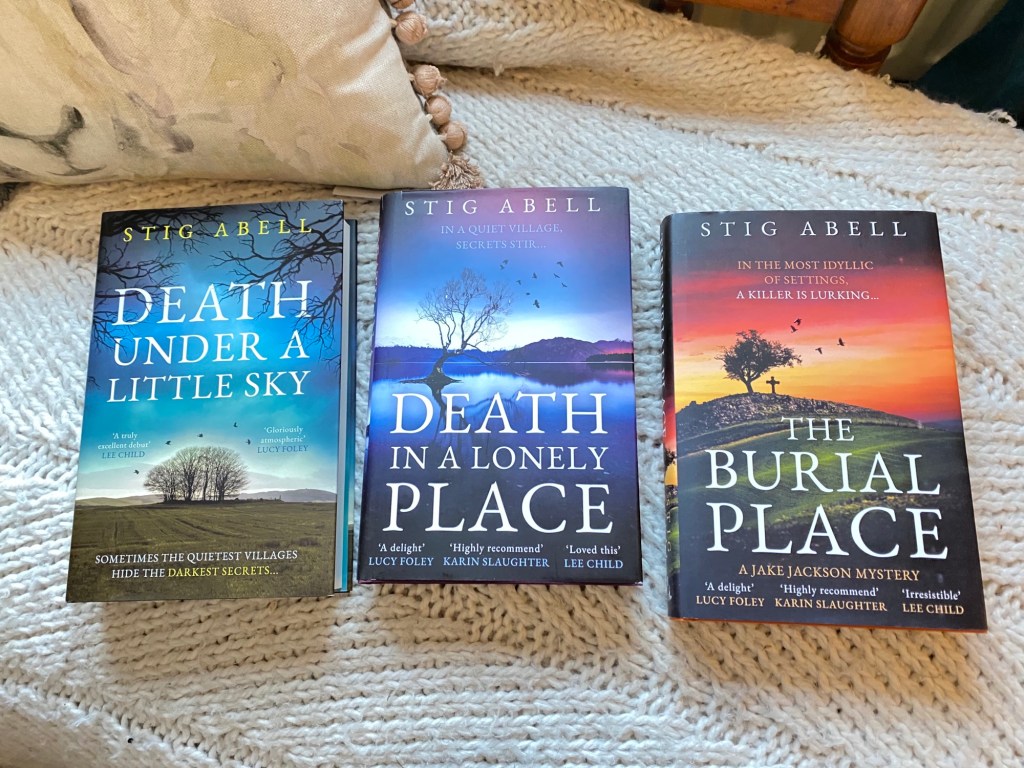
The Burial Place by Stig Abell

I was so lucky to be sent a copy of this new book in the Jake Jackson series, based on a conversation about my love of Martha – an abrupt but super intelligent analyst and crime writer. I love a no nonsense woman and Martha is one of the best bits of this series. After Jake and his ‘team’ tangled with an international criminal gang in the last book, this is more of a home grown mystery but just as dangerous. There has been an archaeological dig close to Little Sky and a recent hoard of treasure found close by. The ownership of this treasure is in dispute because it’s unclear who owns the land it was found in. Meanwhile, work carries on for the archaeologists, academics and local enthusiasts who have been working on the site, but when a body is found it must shut down. It’s hard for new DCI McAllister to understand the motive and being new to the area he enlists Jake’s help, both for his investigative skills and his local knowledge. The community are aware that several nuisance letters have been sent to the dig office and various people who’ve worked on the site. They’re a strange mix of threats, Bible verses and ancient prophecies signed off by Wulfnoth – an ancient Briton purportedly from the area. The writer promises a terrible end for the dig and whoever benefits from the treasure found. Can Jake find the killer before anyone else is hurt? 

Again it’s mainly the brilliant characters that attract me in this novel. Although it’s also interesting to see Jake working with his team, I noticed that Livia is fully committed this time and has definitely earned a chair at the table with Jake, Martha and Aletheia. They are definitely growing closer, since the finale of the last case ended with Livia driving through the wall of her own front room to save their lives. She and her daughter have relocated to Little Sky while the house is being repaired. I must admit I didn’t fully take on board all the dig characters, but the dig itself and the history behind it was really interesting. I’ve often wondered how digs are run and they’re every bit as complex as I thought, with a real mix of motivations and different pressures. Some people have their jobs and reputations on the line, while others seem to have more personal reasons for taking part. What’s difficult for Jake to understand is the gap between letters written when the first dig started and those that came when the second dig site and treasure were discovered. It’s as if Wulfnoth comes out of retirement for some reason, possibly the treasure or could it be more complex than that?

One of the other interesting aspects of the story is the importance of belonging and the sacredness of land. The fact that the burial place of the title holds both ancient and recent burials shows an interesting continuation of the land’s purpose. Jake hears one of the academics talking about different layers or strata of soil, but it all looks like mud to him. The same can be said of the ancient remains, having newly buried bodies on top, as if years of history is mimicking the layers of soil. We live upon years and years of history, something I think about regularly having never moved far away from the River Trent. I have ancestors who are Dutch and arrived in the area with engineer Vermuyden in the 14th Century, designing and creating a system of drainage that would create much of Lincolnshire’s farmland. The fact that my father has spent more than thirty years of his life working as a land drainage engineer, without knowing this history, feels like an echo but also a sense of belonging to that particular land. If I’m ever feeling a bit lost I go the river, take off my shoes and stand barefoot on the bank. Then I know I’m home and on the bank of the same river where I took my first steps. Jake talks about how human spirituality is linked to water, from sacred springs to floating lanterns and wishing wells. Humans have cast their prayers and wishes on water for generations. Livia brings up belonging in one of their case discussions. She doesn’t understand how anyone could feel so connected to ‘patches of ground’. Aletheia points out that Livia has a rare ability to belong, to fit exactly where she is. Her own family roots are in Ghana, but points out that she is now where she is because her ancestors were uprooted. People who are removed or separated from land that belonged to their ancestors for generations can struggle to belong. It’s Livia’s ability to belong, as another woman of colour that she’s really commenting on, because Aletheia does understand that if someone is cheated out of their birthright it can become an obsession. 

Across the book, new relationships are being built and I love that, in what could have been a very lonely place, Jake’s has a healthy support system around him. I did worry a little for Martha though, even though the author writes her with great affection I did feel her ‘aloneness’ in this novel, something I’m describing carefully because there’s a difference between alone and lonely. I feel he writes about her disability with great understanding. Martha lost both her legs in a shoot out when working as a detective and he describes her as suffering constant pain. I’ve suffered chronic pain for many years, particularly nerve pain so I know how strange and maddening it can be. I have had referred pain, very similar to phantom limb pain, where the site of pain bears no relation to the actual problem. Without my medication I have constant burning sensation outside my body – for those of you who are a certain age I often describe this as my ‘Ready Brek’ feeling. The author refers to Martha’ ability to function on drugs that are prescription and those that aren’t. Her skill is a sad one, known to most pain patients, where she copes with a certain level of pain and can still function but there are also days where functioning is impossible. There’s a real sense of sadness that while she can numb the pain it is ever present. I found this portrayal so authentic and possibly researched through lived experience. 

Jake is already an introspective man but he has a lot to think about in this book. He and Livia have decided to start a family together, much to Diana’s disgust. It almost seems like fate when his ex-wife Faye needs to see him. He’s just starting to have concerns about infertility, because he and Faye split up after a traumatic time trying to have a family. He’s worried that it’s taking a while for him and Livia. What if he’s the problem? It’s immediately obvious when they meet that Faye is pregnant and they have a lovely heart to heart in the park. It’s clear that Faye is in a good place and Jake is so happy for her, but nagging doubts are creeping in. If Faye can get pregnant without him, what does it mean for him and Livia’s chances? I still find many male detectives and investigators who don’t have this complex inner life and I love that Jake does. He might seem like a moody loner at times, someone who keeps his feelings hidden even from himself, but he’s just a deep thinker and so empathic. Even when he finds a body, his response is different. He is appalled by the body of one murdered woman who has been left exposed and was potentially murdered during sex. He feels for her dignity and has an urge to cover her up, even though he knows he can’t and must preserve the crime scene as is. It’s as if he takes on the shame this woman might have felt at being left exposed and perhaps taken for a fool by her lover. He has such a strongly developed feminine side and this helps enormously when dealing with Diana. She is clashing with Livia about potentially having a new baby around. Jake is the one who manages to calm her down and show her the positives. I’m so glad Jake has Little Sky and all it offers to balance out these tumultuous feelings. I think his Uncle Arthur knew him very well. 

Posted in The Book Folks

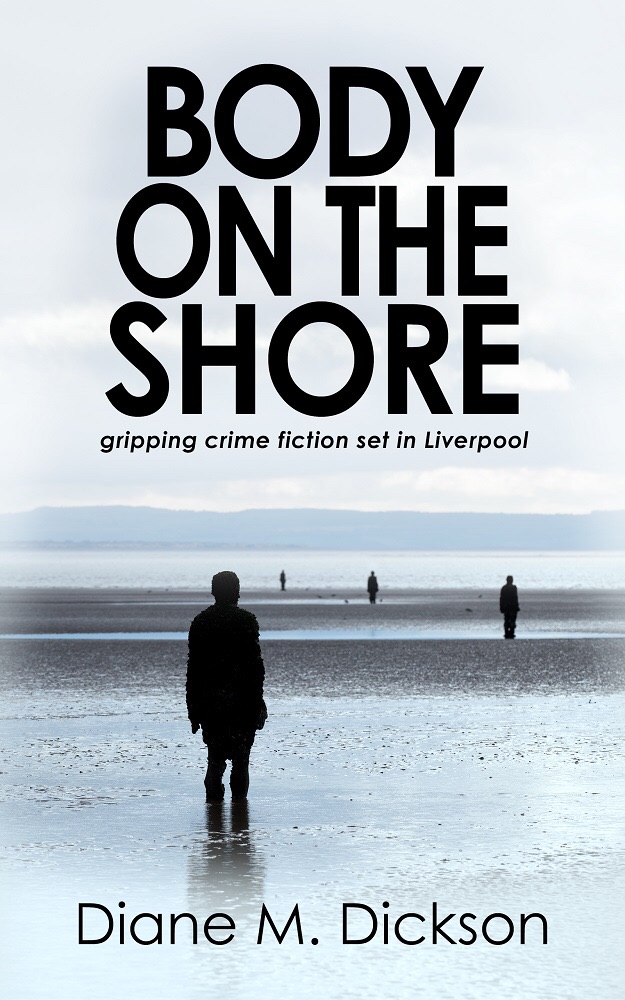
Body on the Shore by Diane M. Dickson

I jumped at the chance to read crime fiction set in my favourite city, Liverpool. I’m half Liverpudlian and half Lincolnshire Yellow Belly. It’s my mum’s home city and now it’s where my step-daughter lives while she’s at university. One of the first things I took my husband and step-daughters to see was Antony Gormley’s Another Place on Crosby Beach. 100 Iron Men stare out to sea, some submerge and reappear as the tide turns and I’ve always found them eerie but moving at the same time. Here they’re the backdrop to a body being found by a dog-walker (it’s always dog walkers bless them). The body is wrapped in a bin bag, caught on one of the sculptures, else they might never have found her. The author has really captured the other-worldly feel of the place and it’s bleakness on a cold day, especially as a place to end up discarded like waste. This is DI Jordan Carr’s new case and he’s joined by a new DC, Terry Venn, who just makes it through his first post-mortem without disgracing himself. To be honest I had to swallow a couple of times as the author described peeling the face down! 

The victim is a young woman by the name of Beatrice Sharp, a secretary for a printing company. She comes from Northumberland and moved to Liverpool quite recently so Jordan and his team need to understand why she’d made such a huge life change and how she’s ended up with such a terrible end, killed by blows from a hammer. The characters are slightly different from a lot of detective fiction where the main character is often old, washed up, and exhausted, with marriage or drink problems on the side. Jordan is stretched and he does work late, but his wife Penny is supportive and understanding about the pressures of his job. They have a baby boy called Harry, who Jordan absolutely dotes on. He stops and watches his son’s bedroom routine on FaceTime if he’s stuck at work and can’t be there. In his working life he comes across as thorough and by the book, keeping the over exuberant and frustrated DC Venn in check when he wants to jump the gun. 

As for the setting, I don’t think you can beat Liverpool because it ranges from the tourist trail and glitzy hotels of the city centre, to the industrial Baltic Quarter and the Wirral just a tunnel away, not to mention the poorer areas – I remember Toxteth in the 1980s. The police station itself is beautifully non-descript, serves absolutely shocking coffee and often gets buried under late night takeaway containers. There are no glass boards and panoramic views here. We concentrate mostly on the case and the author sets the scene by starting with the victim. Her final moments will stay with you as the story unfolds, reminding us that this isn’t just about twists and turns and tension. This is about a young woman’s life being taken away. There’s also a narrative from a character called Ben, cleaning his van and  lamenting over the sheer amount of blood. Having watched forensic programmes he’s aware he might have to torch the van because no matter how vigorously he cleans, will it really be spotless? He’d hoped just to scare her off, but it went too far. He’s also blackmailing someone, considering asking for more money and leaving his victim to stress a while. What is his connection to Beatrice and who is he blackmailing? 

The case is relatively speedy, despite it’s complexity and is very tense in parts with police chases, more victims and one very agitated pregnant woman. It was a really quick read for me, because it was such a great story that shows our past can and often does catch up with us. I really did enjoy Terry Venn on his first case. He’s quite the character and could just have easily turned out to be an absolute scally. Luckily, he’s more ‘poacher turned gamekeeper’, slipping into Scouse slang when the conversation demands, great for witnesses who are reluctant to talk. I’d happily read the rest of DI Carr’s cases. I hadn’t realised at first that this is just one of his many adventures, so I’m really going to enjoy seeing his character develop from book one. This reads well as a stand alone novel and I definitely recommend this to other readers who enjoy crime fiction. 

Posted in Netgalley

The Secret Room by Jane Casey

A closed door. An impossible murder.

2:32 p.m. Wealthy, privileged Ilaria Cavendish checks into a luxury London hotel and orders a bottle of champagne. Within the hour, her lover discovers her submerged in a bath of scalding water, dead.At first glance it looks like an accident. No one went in with her. No one came out. But all the signs point to murder.

For DS Maeve Kerrigan, the case is a welcome distraction. But when shock news hits close to home, affecting her partner, DI Josh Derwent, she faces the toughest challenge of her career. And if she fails her world will never be the same again…

There’s an extra secretive element to this twelfth book in the DS Maeve Kerrigan series. In her afterword Jane begs readers not to reveal aspects of the novel for those who have yet to read it, in fact for those people who have only just discovered this addictive mix of murder investigation and ‘will they – won’t they’ love story. So I’m trying my best to keep it to myself while telling you all what a great read this. The murder at hand is a tricky one and will probably remain in my brain forever after reading that when the victim’s lover tries to pull her from the bath her scalp comes away. She has, rather disturbingly, been boiled like a lobster. However it isn’t the water or the heat that has killed her, Illaria has been strangled with a cord then dragged into the bath. The fact that she was meeting her lover and had the room booked for exactly the same time every Wednesday is an interesting little detail. Sometimes they only use it for a few hours but it is always booked, exactly the same. These are the actions of someone wealthy and it’s no surprise to find she has a rich husband. Angus is incredibly frank when interviewed; he loved his wife and wanted her to be happy and she wanted Sam. They had met at a glitzy dinner and Angus reveals that when he saw them talking together he knew, it was a coup de foudre, when love hits instantly like a bolt of lightning. Ilaria had a great life, filled with travel, events and a little interior design business with her friend that Angus funds too. They seem to be going nowhere when Maeve has a sudden lightbulb moment leading to a discovery. 

Aside from this case and arguably being the most compelling part of the novel is the drama surrounding DI Josh Derwent. Josh has been living with psychotherapist girlfriend Melissa and her son Thomas for a while now, much to Maeve’s sorrow. Melissa is due to pick Thomas up from school, when she gets a phone call from a distressed patient. Knowing she has to see them and needing someone to collect and keep Thomas for a few hours, Josh calls Maeve’s parents. They’ve been like grandparents to the little boy who hasn’t been well of late. Hours later when they return Thomas, Maeve’s father runs into a panicked young girl on the driveway, screaming that Melissa has been hurt. Melissa is at the bottom of the stairs, motionless and covered in bruises as if she’s been beaten badly. As she’s rushed to hospital and the police arrive, so does Josh and quickly finds himself arrested for the attack. When Maeve arrives Josh tells her to stay out of it, walk away and don’t get involved. However, readers of the series know that this is something Maeve simply can’t do. Despite Derwent’s disapproval she has to find a way of clearing his name, because she knows he isn’t capable of this. 

I have to be honest and admit I was so caught up in the Melissa/Derwent storyline that there were points when I forgot about the other case. It was more psychologically complex and of course had the added weight of caring about these characters over eleven previous books. I couldn’t believe the suspicions I had about it and I was desperately hoping Maeve would come to the same conclusion, if she didn’t get herself suspended for meddling first. When the book went back to Ilaria’s murder I found myself going ‘oh yes, where were we’. Having said that it’s a cracking case in it’s own right with a seemingly impossible premise. With the only people seen on CCTV of the corridor being a chambermaid and the man who delivered the room service champagne, but he wasn’t in there long enough to murder anyone. When he’s found dead on a building site, it looks very much like someone is covering their tracks. On the face of it Ilaria’s life seemed perfect, so why was she sneaking around? Was it really love or was something else going on? 

I whipped through the final chapters in an afternoon to find out and to see what would happen with Melissa, who I was beginning to hate! I loved the little vignettes of normal life in between, especially with the men in the book. Derwent’s eldest son Luke and Thomas have a lovely growing relationship and with Maeve’s nurturing and loving parents he had a great stand-in gran and grandad. It was interesting to see how Melissa’s ex-husband and Derwent were with each other too. Through Luke, Maeve was introduced to a decent man called Owen and their dates were going well. It was nice to see her being treated with kindness and consistency. This was an addictive read from an author who knows exactly when to leave the reader hanging and when to deliver heart-stopping action sequences – the suspicious man at the front desk of the police station had my pulse racing. I’m interested in where she takes DS Kerrigan next and I’ll definitely be queueing up for my copy. 

From Hemlock Press 24th April 2025

Meet the Author


Jane Casey is a bestselling crime writer who was born and brought up in Dublin. A former editor, she has written twelve crime novels for adults (including ten in the Maeve Kerrigan series) and three for teenagers (the Jess Tennant series). Her books have been international bestsellers, critically acclaimed for their realism and accuracy. The Maeve Kerrigan series has been nominated for many awards: in 2015 Jane won the Mary Higgins Clark Award for The Stranger You Know and Irish Crime Novel of the Year for After the Fire. In 2019, Cruel Acts was chosen as Irish Crime Novel of the Year at the Irish Book Awards. It was a Sunday Times bestseller. Stand-alone novel The Killing Kind was a Richard and Judy Book Club pick in 2021, and is currently being filmed for television. Jane lives in southwest London with her husband, who is a criminal barrister, and their two children.

Posted in Monthly Wrap Up

My Best Reads March 2025

Hello Readers,

Spring is here!! Finally. Today is warm -ish, but sunny with daffodils and jasmine brightening up the garden. My other half is cutting the lawn and washing is going on the line for the first day this year. I’ve had a lot of chances to read this month as I still can’t move far, so I’ve taken on some new and some older reads too. My favourites of the new books I’ve read this month are a balanced mix of historical fiction and crime novels. Our historical offerings take us to the South of France and the home of Henri Matisse, to Paris on a train that might be lucky to arrive and a Scottish island that’s closer to Norway. The crime novels are set in two of my favourite places, Snowdonia and Northumberland, while the final one is a Scandinavian setting, written by two talented authors it’s an unforgettable novel.

Hope you’re all enjoying this beautiful weekend.

When in Northumberland I visit a couple of bookshops, Barter Books in Alnwick for second hand finds and Cogito Books in Hexham for their non-fiction and new releases. Last time I had some book vouchers so I went to Hexham and was recommended Mari Hannah’s Stone and Oliver series. I bought the first one then found more of the series in charity shops, but hadn’t got round to reading them yet. So when a publisher offered this I wondered whether I should, but I can’t resist and now Im setting aside time to read the rest of this series.

Frankie Oliver and David Stone have been working together in the same MIT for the a few years, but this book starts in a much darker place when another detective was called to a body found on some waste ground. Horrified, he drops to the floor unable to contain his devastation. The body on the ground is his daughter. It’s such a powerful and emotive opening, leaving us in no doubt that this is a defining event for the loved ones of this girl. An absence that the Oliver family feel every day. It’s arguable that this case is the very reason that Frankie Oliver became a detective. She and David Stone are an incredible team at work and have the potential to take their relationship further. It’s clear there’s been some ‘will they won’t they’ over the course of the previous novels. Now Frankie is taking a break from the team in Newcastle, a promotion to DI means she must fill a post back in uniform based out of the most northerly police station in the county, Berwick-Upon-Tweed. Frankie accepts and the team organise a leaving ‘do’. It’s there that Dave overhears an argument that immediately propels him back to the murder of Joanna, Frankie’s sister. What’s said between the two men outside the venue sparks an idea in Dave’s mind. He has had an idea of how to investigate the cold case, but knows that he doesn’t want to bring more pain to the family. Hopefully Frankie’s secondment to Berwick means they won’t have to. 

Meanwhile Frankie’s first job is an RTC on the A1 and in the total chaos she finds a little boy handcuffed in the back of a van. The driver and passenger are dead and the van is a write off so Frankie can’t believe this little boy has survived. As she rescues him, an onlooker tells her that a man escaped out of the back doors straight after the crash. This opens up a trafficking case that might take her straight back out of uniform again. The boy, Amir, takes to Frankie. Possibly the first person in a long time who has made him feel safe. As for the relationship between Frankie and Dave, I was very much invested despite not knowing everything that’s gone before. The setting is beautifully captured in it’s contradictions: the modernity and buzz of Newcastle with the contrast of the wild countryside and beautifully rugged coastline. This really is a nail-biting story, written in very short chapters that are easy to devour very quickly. So many have a brilliant cliff-hanger ending too. I can’t wait to read more.

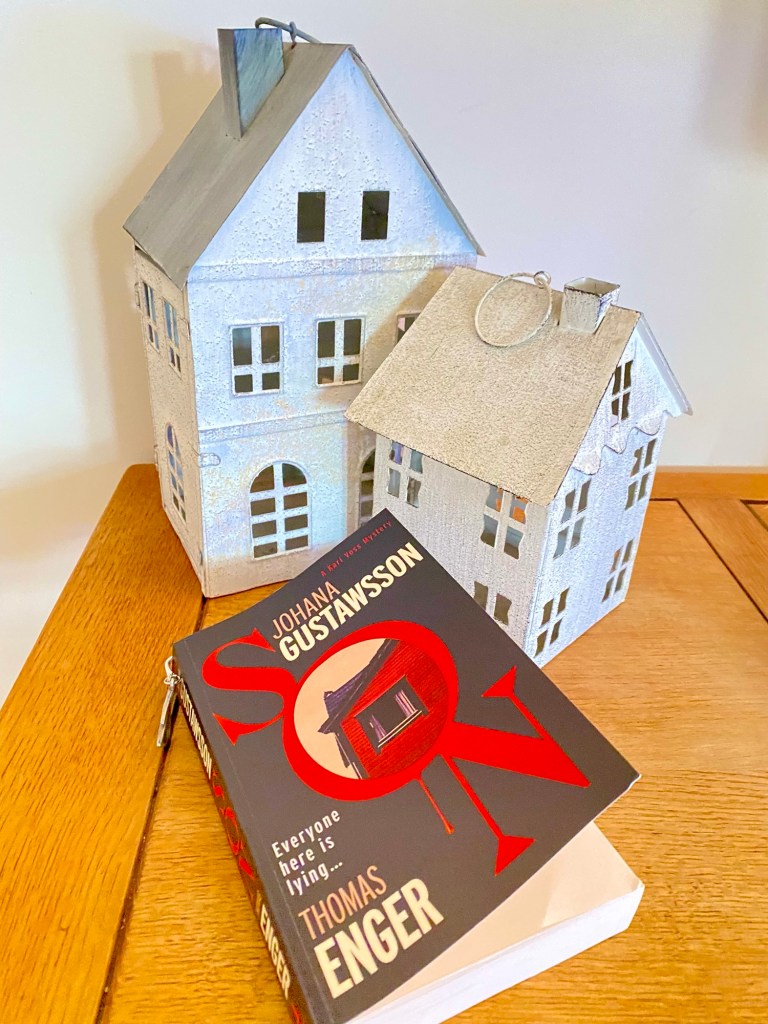
The blurb on the back of this novel promises an electrifying blockbuster that will be the start of a ‘nerve shattering’ new series. So there’s a lot to live up to, but Son definitely delivers. To use a rather inelegant phrase, this novel is a therapist’s wet dream of a novel – hidden characters, unexplained black outs, grief, trauma and an investigator who is dubbed The Human Lie Detector. I was definitely in my element here. Kari Voss is the centre of this tangled web, a psychologist who specialises in memory and body language and acts as a consultant to Oslo’s police force. When two girls are brutally killed in a summer house in the village of Son, it’s a crime that’s closer to home than she would want. The girls, Eva and Hedda, were best friends with Kari’s son Vetle when they were younger. In fact it was while on a holiday seven years ago that Vetle disappeared in nearby woods and was never found. The girls are now teenagers and were planning a Halloween party for their friends, but were found tied to dining chairs with their throats cut. They were found by a third friend, Samuel Gregson, when he turned up to start the festivites and it is also an old friend of Vetle’s that police chief Ramona Norum arrests and starts to question. When Kari is asked to consult she knows this will be difficult, not only is she friends with the girl’s families, their lives are inextricably linked to her missing son. How will she negotiate all the emotions this case will unleash and find the girl’s killer? 

No one is what they appear here. As Kari starts to ask questions about Eva and Hedda, it turns out that they aren’t always the polite children or young teenagers they appear to be. The authors are very clever about the amount of introspection they use, creating a hidden layer to the crimes and a breathing space between the character driven chapters and the ones filled with nail-bitingly intense action. There’s even subterfuge in the title, Son is a place slightly north of Oslo, steeped in Nordic history and full of that unsettling atmosphere that I find Nordic Noir is so good at. Yet it’s also a person, so missed by those who love him and inextricably linked to this landscape, that has potentially become his final resting place. I was compelled to read this to the end, taking it everywhere with me on holiday so I could grab a chapter in a coffee shop or even in the car. This is an engrossing and addictive start to a promised new series and I’m already craving the next instalment.  

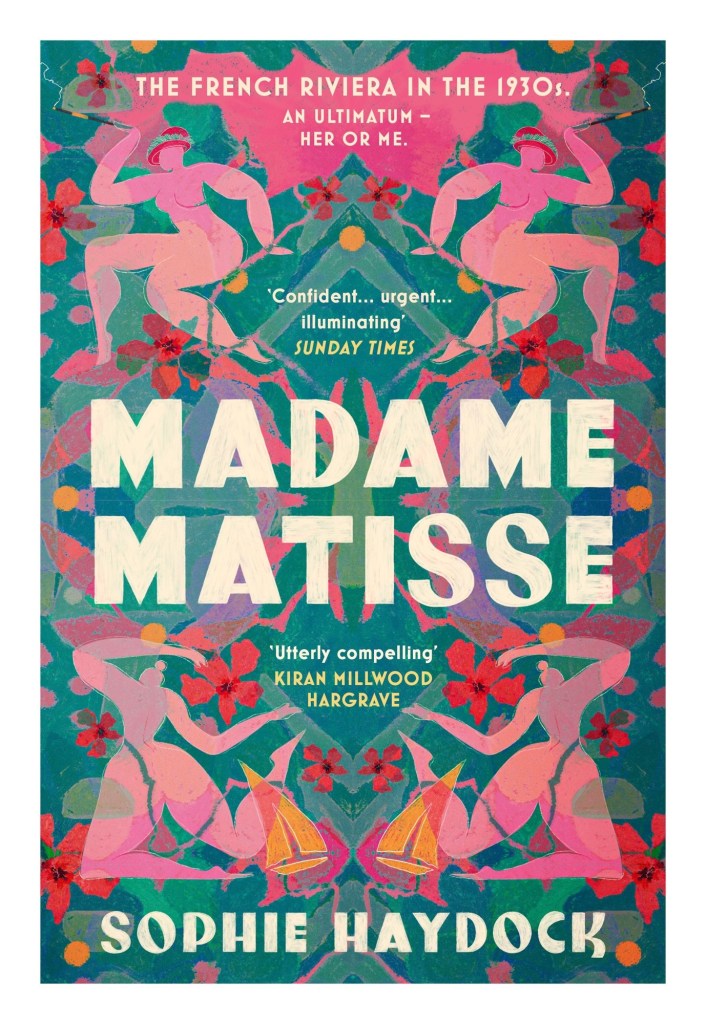
This is the story of three women – one an orphan and refugee who finds a place in the studio of a famous French artist, the other a wife and mother who has stood by her husband for nearly forty years. The third is his daughter, caught in the crossfire between her mother and a father she adores. Amelie is first drawn to Henri Matisse as a way of escaping the conventional life expected of her. A free spirit, she sees in this budding young artist a glorious future for them both. Lydia Delectorskaya is a young Russian emigree, who fled her homeland following the death of her mother. After a fractured childhood, she is trying to make a place for herself on France’s golden Riviera, amid the artists, film stars and dazzling elite. Eventually she finds employment with the Matisse family. From this point on, their lives are set on a collision course. Marguerite is Matisse’s eldest daughter. When the life of her family implodes, she must find her own way to make her mark and to navigate divided loyalties.

Based on a true story, Madame Matisse is a stunning novel about drama and betrayal; emotion and sex; glamour and tragedy, all set in the hotbed of the 1930s art movement in France. In art, as in life, this a time when the rules were made to be broken. I loved reading about these fascinating women, all of which step outside the traditional role of most women of the time. Sophie beautifully situates Matisse within his peer group, especially his great rival Picasso. Then situates each woman perfectly within their history, the most in depth being Lydia’s Russian background and Marguerite’s incredible bravery in WW2. I thoroughly enjoyed looking up the paintings mentioned and seeing Matisse’s representation of the three women who were closest to him and I found myself reading articles about him and Picasso. It left me with a sense of anger and empathy for how much women sacrifice so that men can excel at what they do, realising their ambitions while their wive’s ambitions are forgotten or buried under a suffocating mental load – still the thing women in my group talk about most. These women never take the limelight away from Matisse, even while stripped bare for people to view. The focus is always on the painter, their brush strokes, choice of colour and artistic decisions. I love that in this novel they are more than body parts, they’re shown as the vital, brave, complex and generous women they clearly were.  

Set in 1895 when a train did crash onto the platform at Montparnasse, Donoghue places us very definitely in the fin de siecle, with every little detail. It isn’t just her description of the train, which I could picture very clearly, it’s the character’s clothing and their attitudes. There’s certainly evidence of a shift in the Victorian ideals that held firm throughout the 19th Century. In one journey we can see women being more outspoken, having a definite sense of purpose, and a need to determine their own destiny. Women are travelling alone or for work, in the case of Alice she is travelling with her boss as the secretary for his photographic business. She takes the opportunity to talk to him about moving pictures, she has researched the subject and thinks it could be a new market for the firm. Marcelle is researching in the field of science and huge fan of Marie Curie who is so work focused that she went to get married in an everyday blue dress and returned to the lab.I was absolutely fascinated with Mado. She stands out more than she realises, with her androgynous clothing and short hair, not to mention the lunch bucket she’s clutching as if her life depends on it. She’s a feminist, an anarchist and seems to have an interest in reading other people. Her own internal struggle is so vivid that I could feel the tension in her body as I read. She seems contemptuous of many of her fellow passengers, particularly the men, knowing that the Victorian feminine ideal is simply a role women are forced to play. To step outside of the norm is brave and a deliberate outward show of her inner strength and determination to change women’s place in the world. How far might she go to show her resolve?

Gradually I was compelled to keep reading because the tension was rising with every new passenger and because as the reader I was omniscient: Donoghue gives her reader the full story and we know the potential fate of every character on this train. Brilliant as always!

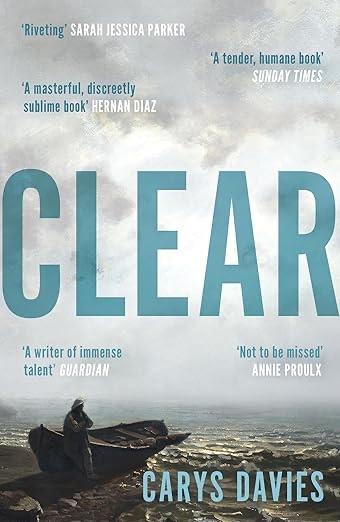
1843. On a remote Scottish island, Ivar, the sole occupant, leads a life of quiet isolation until the day he finds a man unconscious on the beach below the cliffs. The newcomer is John Ferguson, an impoverished church minister sent to evict Ivar and turn the island into grazing land for sheep. Unaware of the stranger’s intentions, Ivar takes him into his home, and in spite of the two men having no common language, a fragile bond begins to form between them. Meanwhile, on the mainland, John’s wife, Mary, anxiously awaits news of his mission.
Against the rugged backdrop of this faraway spot beyond Shetland, Carys Davies’s intimate drama unfolds with tension and tenderness: a touching and crystalline study of ordinary people buffeted by history and a powerful exploration of the distances and connections between us.

Clear is so beautifully set within some very significant events. In the 19th Century evangelical worshippers moved away from the Church of Scotland to form the Free Church of Scotland. Also, there was a second wave of Scottish landowners driving their tenants from the land, choosing to make a better profit grazing sheep. This was just one part the Highland Clearances. Our characters are deeply involved with these events. This is such a gentle story that contains so much. Instead of pushing an agenda or viewpoint, the author just lets it play out naturally. Ivar is part of this island, a bear of a man with only his animals for company. There’s a purity to his life that’s almost spiritual, an interesting contrast to John’s organised religion. There’s so much under the surface of the story, told in the tiny details of everyday life: their gestures, the intimacies they share and how those connections change as a language is formed between them. It’s interesting to see the established dynamic of John and Ivar affecting how Mary settles into the cottage. The men’s connection brings the three of them into a unit, so that they don’t feel like a married couple and a lone man any more. Each of them forms a strong connection with each other and the landscape. I found reading this an almost meditative experience, because it’s so slow and calm, until the sudden end.

Living and working in Snowdonia was always retired detective Frank Marshal’s dream. Until a phone call asking for his help turns it into his worst nightmare. Retired detective Frank Marshal lives in a remote part of Snowdonia with his wife Rachel who is suffering from dementia. Working as a park ranger, Frank gets a phone call from close friend Annie, a retired judge. Her sister Meg has gone missing from a local caravan park and she needs his help to find her.

As Frank and Annie start to unravel the dark secrets of Meg’s life, it seems at first that her disappearance might be linked to her nephew and a drug deal gone wrong. In a shocking twist, their investigation leads them to a series of murders in North Wales from the 1990s and a possible miscarriage of justice. Can Frank and Annie uncover the sinister truth so they find her sister in time to save her? Or will a brutal serial killer add Meg to his list of victims?

I’m always complaining about thrillers and crime novels that rely on their twists and turns without any depth to the characters or the story. I couldn’t complain at all here. There are twists, including one I only started to suspect few pages before it was revealed. This book was full of emotion: Frank and his wife sitting in bed and looking at old photos was so poignant since both know her dementia is progressing and she is slowly forgetting it all; the beautiful relationship between Frank and his grandson; Annie’s grief over her sister’s disappearance and her nephew’s accident. All felt like fully realised people, even those only in the novel a short time. I could see Frank locking horns with police chief Dewi in the future or the scouse drug dealers. I loved the setting too, the author has managed to capture it’s beauty and it’s bleakness. This was a cracking mystery that crept up on you slowly then didn’t let you put it down. I’m looking forward to many more adventures with Frank Marshal. 

So that’s all for March, but next month’s reading is busy as always. Here are a few books still lurking on my TBR for April. It’s going to be a great month.

Posted in Netgalley

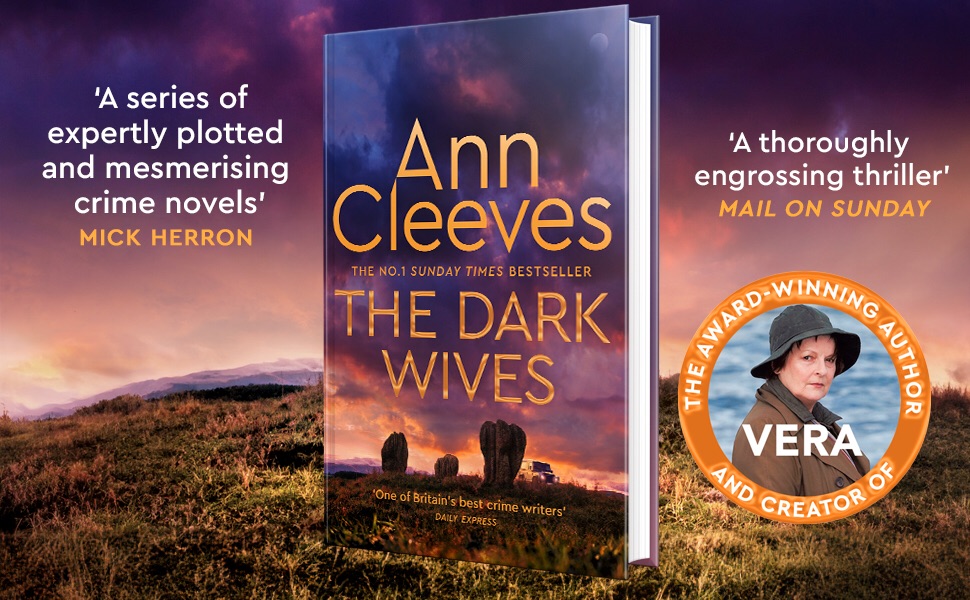
The Dark Wives by Anne Cleeves

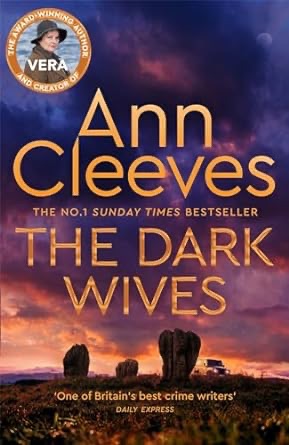
Vera is another of my favourite female detectives. She’s like a little, inquisitive bird. She’s generally a bit grumpy and sharp when the occasion demands it. She’s stubborn and lives for her job, knowing instinctively which of her team is best for which task and often expecting long days and nights. That’s definitely the case when a missing person report comes in for a young girl called Chloe living in care. Even more disturbing is the discovery of a body in the nearby park. This young man with a head injury turns out to be a new recruit to the children’s home called Josh Woodburn. Josh was a student but had recently taken a part-time post as a support worker and had worked closely with Chloe. She had come to the home after her mother was hospitalised with mental health problems. Despite the offer to stay with her paternal grandparents Chloe chose the home. She was learning to express herself, trying things on and seeing what fitted. Josh had encouraged her to write about her feelings, so she was journaling daily and dabbling with poetry. The social workers at the home had noticed she maybe had a slight crush on the new worker, so they can’t imagine her harming Josh. On the night Chloe disappeared Josh had come into work and then popped out again, everyone else was enjoying film night and pizza. Their only clue is that a dark, high end Volvo had been seen parked outside the home a few times recently. At the moment, Vera and the team don’t know if they’re looking for a vulnerable witness who is missing or the fleeing perpetrator. Either way they need to find her as soon as possible, before anyone else is harmed. 

The team are getting used to new girl Rosie, as they lost one of their own on the last case. Rosie is what Vera considers a proper Geordie with the obligatory fake eyelashes, fake tan and never going out with a coat. Vera is determined she will have to get used to the breadth of their patch which takes in both cities and vast countryside. Joe is suspicious and is watching her closely, but actually she has good instincts and her empathic manner with the victim’s families yields results and they seem to trust her. Chloe’s grandparents live in Whitley Bay, after selling up their farmhouse in the country. Her granddad tells them how sorry he is that they haven’t made more effort with her. Sadly her parent’s difficult split lead to bitterness and Chloe’s father felt she blamed him for her mother’s mental health. Her grandad would message her and take her out to the hills where they used to live and an old bothy that he still owned with an incredible view. They would take a picnic and simply enjoy being in the open air together. He admits that her relationship with her grandma was more difficult. His wife owns a boutique and was always trying to get Chloe to make more of herself, disliking the Goth look that Chloe had adopted. Vera can see that Chloe doesn’t fit the stereotype of a child in care; she still has connections with family and hasn’t been drawn into drink, drugs or violence. Vera keeps asking herself – what is Chloe running away from? 

Josh’s parents are obviously shocked and grief stricken, but also confused. They had no idea he’d taken a job and financially he didn’t need to work. He could have lived at home and gone into university, but he wanted the full student experience and they could afford it so why not? Josh’s big love was film so the work isn’t even linked to his course at all. His father wonders if he was still trying to impress a girl he’d been involved with called Stella. Stella’s family ran an organic farm where people with mental health issues or who were homeless could help out and gain work experience. Stella seemed almost embarrassed by Josh’s comfortable, middle-class background and put him on the spot. What was he doing to make a difference in the world? Maybe taking this job was a way of showing her he did have a social conscience. Coincidentally the farm is near the village of Gilstead, where Chloe’s granddad’s bothy is. Could Chloe be hiding out there until she can get away. When they arrived at the bothy the next day, Vera is horrified by what they find. There’s another body and the suggestion that someone has been living here. This body must have something that links it to Josh and Chloe, not just that they’re from the same care home but something they seem to be missing at the moment. Gilstead is a pretty village that tourists like to take a look at and this week is no exception. This week sees the annual witch hunt in the village, where children search for the ‘witch’ on the hills and in the dark. Outside the village are three monolithic stones, the so-called ‘Dark Wives’ of the title. Eerie posters of an all seeing eye appear in cottage windows to repel witches and let them know the villagers have their eye on them. It seems a little odd and creepy but essentially harmless. 

The relationships in the team are interesting and Joe’s relationship with Vera is problematic, not least because he feels stuck between his boss and his wife. Sometimes he feels like he’s always trying to please women, whether he’s at work or home. Vera lives alone and doesn’t always understand that responsibility to another person. She seems to assume everyone is as free as she is when she suggests a pie and ping after work. Other times she’s almost motherly and affectionate towards him. It was really interesting how this case seemed to get under Vera’s skin and bring back memories of her father. She still lives in his old cottage with all his things surrounding her and never seems to make it her own. Is she just camping there? Or setting down roots? She thinks about her relationship with her father and how difficult he could be when drunk. Maybe she understands Chloe’s need for a stable and loving parent who’s there for her, instead of the other way round. Sometimes police work is a thrilling chase and other times it’s doing the boring background checks and looking at the detail. This case is a bit of both, but the finale of the Gilstead Witch Hunt is genuinely spooky. With the monolithic Dark Wives in the background and the sun setting, the village comes alive with people taking to the hills to look for the witch. It’s dark and menacing, so as Vera, Joe and Rosie set out with them there’s real tension in the air. Chloe could be out here in the dark, but so could a killer. As they stumble around in the cold, with Rosie finally wearing a coat, it was hard to know whether screams were just excited kids or something more sinister. I love Anne Cleeves’s plots because they’re like a labyrinth, looping round and back on themselves. There are always secrets to unravel within families and these ones are no exception, they’re also emotional because these families are struggling or have broken apart. Most of all I love Vera. She’s like a little terrier and leaves no stone unturned in her determination to find a killer. 

Out now from Pan McMillan

Meet the Author

Ann is the author of the books behind ITV’s VERA, now in it’s third series, and the BBC’s SHETLAND, which will be aired in December 2012. Ann’s DI Vera Stanhope series of books is set in Northumberland and features the well loved detective along with her partner Joe Ashworth. Ann’s Shetland series bring us DI Jimmy Perez, investigating in the mysterious, dark, and beautiful Shetland Islands…

Ann grew up in the country, first in Herefordshire, then in North Devon. Her father was a village school teacher. After dropping out of university she took a number of temporary jobs – child care officer, women’s refuge leader, bird observatory cook, auxiliary coastguard – before going back to college and training to be a probation officer. In 1987 Ann moved to Northumberland and the north east provides the inspiration for many of her subsequent titles.

For the National Year of Reading, Ann was made reader-in-residence for three library authorities. It came as a revelation that it was possible to get paid for talking to readers about books! She went on to set up reading groups in prisons as part of the Inside Books project, became Cheltenham Literature Festival’s first reader-in-residence and still enjoys working with libraries.

In 2006 Ann Cleeves was the first winner of the prestigious Duncan Lawrie Dagger Award of the Crime Writers’ Association for Raven Black, the first volume of her Shetland Quartet. The Duncan Lawrie Dagger replaces the CWA’s Gold Dagger award, and the winner receives £20,000, making it the world’s largest award for crime fiction.

Ann’s books have been translated into sixteen languages. She’s a bestseller in Scandinavia and Germany. Her novels sell widely and to critical acclaim in the United States. Raven Black was shortlisted for the Martin Beck award for best translated crime novel in Sweden in 200.


Posted in Netgalley

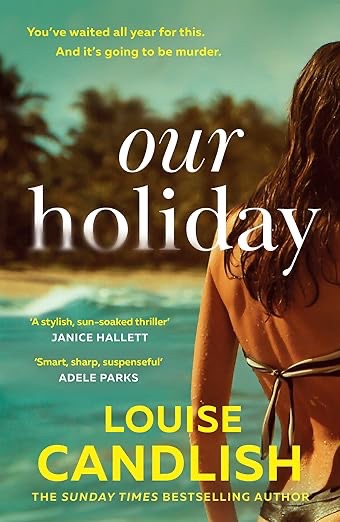
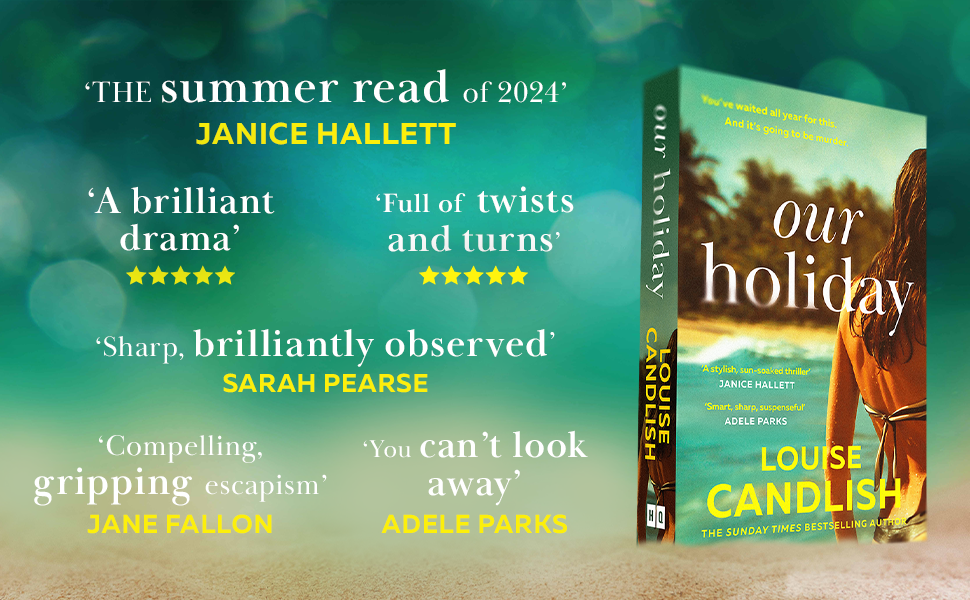
Our Holiday by Louise Candlish

Pine Ridge is a small coastal village off the south coast, somewhere near Bournemouth and has that castaway feeling from the moment you cross on the car ferry. However, this idyllic village is the setting for discontent and divided loyalties between those DFL (down from London) residents and those who have grown up in Pine Ridge and mainly work servicing those August visitors. The ridge has a resort hotel, beach bar and spa to keep holiday makers happy, but some visitors have gone away dreaming of their own little slice of south coast heaven. One summer Pine Ridge becomes the centre of a dispute over second home ownership. This is a bad time for Amy and Linus who have just bought their own little bungalow with coastal views up on the ridge. It needs work, having been the home of an elderly couple, but she has a plan and builders starting this summer. She was inspired by friend Charlotte whose banker husband Perry used a huge bonus to buy their perfect holiday home with it’s own summer house overlooking the sea, nicknamed The Nook. It’s people like this that friends Robbie and Tate are angry about. They grew up here but are stuck living in static caravans on a temporary site because they can’t afford to buy or rent anywhere. The private rental market has shrunk as people refurb for the AirBnB market and no new houses are being built. People on service wages can’t hope to pay the prices of houses on the ridge, so they’re snapped up by Londoners who only come in August. This leaves huge homes empty all year while villagers are homeless, this is why the men have set up the NJFA – ‘Not Just For August’ Campaign. As tensions rise towards the August bank holiday, the NJFA are gearing up to make their final public protest of the summer. As the music festival gears up on the beach, people are interested in the design they’ve created on the sand, but they’re stopped in their tracks when half way through the day a summer house is bulldozed from the cliff and into the sea. Was this the NJFA plan all along or is something else going on?

Louise Candlish is brilliant at satirising the middle classes and she’s hit upon an issue that holiday destinations around the world are facing. I’ve always visited Venice in winter or early spring because I can’t stand cruise crowds and I was emotionally drawn in by the problem of keeping that balance between tourists and residents. They’ve addressed the cruise ship issue in recent years, have set up campaigns that show tourists which are the authentic Venetian restaurants and shops rather than the tourist traps. Authorities are now considering curbing numbers. Otherwise, it will become little more than a Disneyland experience; can Venice be the city it is, without it’s people? It’s a problem that areas like Devon and Cornwall have faced for years, with second home owners and holiday cottages turning whole villages into ghost towns in the winter. Even worse, it means the opinions of people who are not even year round residents, hold more sway in local matters than people trying to earn their livelihood. This came to the fore a few years ago in Cornwall where local fishermen’s need for a new jetty was being blocked by second home owners objecting to the planning application. There is always a tipping point and Candlish has demonstrated that exquisitely here. I had so much sympathy for Tate and his girlfriend Ellie, working in the beach bar and spa but not able to buy a home where they were born. They finished long shifts, only to broil all night in the heat of a static caravan. Tate’s friend Robbie is determined to take action and his NJFA campaign starts with throwing eggs and soup at DFL cars at the ferry stop. He pushes his agenda at council meetings and in the press, especially when he parks his caravan on the drive of a Pine Ridge home that’s been empty all year.

When we meet the DFL families their privilege is apparent. Candlish has this brilliant way of creating the stereotype we expect then subverting it. Perry is the archetypal banker – big car, egocentric and totally unapologetic about his banker’s bonus that allowed him to buy their holiday home and retire early. It’s easy to find fault with him; the drinking, the toxic masculinity and the absolute rejection of the type of ‘woke’ causes the younger people are hung up on. His son Benedict has brought girlfriend Tabitha to Pine Ridge, but she’s so ‘woke’ that she gets under Perry’s skin. Her sympathy for the NJFL cause grinds his gears, especially when she criticises his lifestyle while happy to enjoy the benefits for herself. Perry is simply incapable of keeping the peace, tearing up to the caravan park to give Robbie a piece of his mind and his fists. He’s also irritated by Linus, who is more aware of his impact on the world and travels everywhere in the village by bicycle. Perry finds his middle-aged Lycra wearing ridiculous and vents much of his rage on him and his bike. Yet there’s another side to Perry, a fear of being who he really is perhaps? He’s on the wagon after years of alcoholism and has formed an attachment to a resident at the halfway house for addicts where he volunteers in London. Charlotte is suspicious of his weekly drives back up to the city, but it’s fair to say doesn’t suspect the identity or gender of the object of his affections. It’s clear that Perry’s lies are starting to stack up and he won’t be able to hold his perfect life together for very long.

Another interesting character is Linus and Amy’s daughter Beatrice, who at 17 has blossomed into a goddess, something her mother realises when she sees her on the beach in a bikini. Beatrice could be an rich bitch, totally unaware of how privileged she is. Of course they’re not as well off as Perry and Charlotte, but still they can afford to renovate the bungalow as a second home and she has the usual teenage accoutrements of manicured nails, the latest iPhone and enough clothing to dress the whole family. Underneath Beatrice doesn’t seem happy though and when Charlotte notices a wrap she’s wearing on the beach is genuine designer and not the Vinted fake she claimed it was, her mind starts whirring. Where is Beattie getting the money for all these designer items? Candlish has all the right brands here including the designer collaboration Birkenstocks. It turns out that Beattie has a way of acquiring her goods that is less than savoury. I was expecting OnlyFans or an online sugar daddy! Yet what does Amy expect when she’s already going out of her way to keep up with Charlotte and Perry? It’s something that’s very apparent when she purchases her own summer house to sit overlooking the bay and christens it The Niche. Beattie has other secrets too, involving the The Niche and a certain beach barman. All hell will break loose if Linus finds out that this man, with a pregnant girlfriend, is hanging around his daughter. Tate is feeling ever more desperate and utterly trapped. He can’t bear the idea of the winter in the confines of their static with a screaming baby. He isn’t ready. While Ellie is planning to tell her parents and lobbying the council for more permanent housing, he is meeting his teenage lover and planning his escape.

There are so many strands to this story that by the time the summer house slides off the cliff and onto the beach I had no idea who had done it. The shockwaves ripple through the villagers when the police find a body in the wreckage and start a murder enquiry. Tate knows he and Robbie will be in the frame for their activist antics and their ability to use a bulldozer. I couldn’t help but think that it wouldn’t be as simple as that. Despite their circumstances driving them to criminal behaviour, they really aren’t bad boys. My money was on one of the DFL crowd: had Charlotte found out about Perry’s extra-curricular activities? Was Beattie so scared of her secrets coming to light she’d silenced someone? Had Perry been driven to distraction by Linus and his bike? We didn’t even know whose summer house was wrecked at first. This labyrinth of possibilities slowly unravels, including some fascinating twists and turns. I loved how Candlish highlighted a very real injustice, while weaving a unputdownable thriller around it. I genuinely felt for locals having to sofa surf, while huge houses stood empty all year. To then add insult to injury they then have to earn their money servicing these families and their houses, providing their massages in the spa and listening while they complain about their busy lives and seeing how much they spend without thinking on their food and drink. I could see why they were angry and it was interesting to see how those inequalities lead to other ideologies – when locals find out that asylum seekers might be housed nearby they are incensed. Their antipathy comes from fear that someone will jump them in the queue, but they’re missing who the real enemy is. Everybody has to do a lot of learning as we rush towards her conclusion, there’s some learning around respecting differing opinions, understanding why the other person thinks like they do and finding ways of working together. This is a fabulously current morality tale with some delicious satire and lots of secrets to uncover. The perfect summer read.

Out Now in Hardback from HQ

Meet the Author

Hello and welcome! You join me as my new thriller OUR HOLIDAY is published – it is out now in paperback, ebook and audio and was just announced as a Richard & Judy Book Club pick for the summer! It features my favourite ever love-to-hate characters (wait till you meet Perry and Charlotte!), second home owners in an idyllic beach resort who think they’re in town for another summer of sun, sea and rosé… But instead, they’re in for a bit of a reckoning…

I’m also celebrating my 20th year as an author this summer – that’s right, my first book came out in 2004, which somehow manages to feel both like yesterday AND a hundred years ago. 

OUR HOUSE is the one you may know me for as it’s on our screens as a major four-part ITV drama starring Martin Compston, Tuppence Middleton and Rupert Penry-Jones (watch the full series free on ITVX). This is the novel that turned my career around – right when I was about to give up. It won the 2019 British Book Awards Book of the Year – Crime & Thriller and was shortlisted for the Goldsboro Books Glass Bell Award, the Capital Crime Amazon Publishing Best Crime Novel of the Year Award​, and the Audible Sounds of Crime Award. It was also longlisted for the Theakston Old Peculier Crime Novel of the Year Award and the Specsavers National Book Awards. 

It recently received a Nielsen Bestseller Silver Award for 250,000 copies sold and I feel so proud that readers are continuing to discover it and recommend it far and wide.

My 1990s-set thriller THE ONLY SUSPECT just won the 2024 Capital Crime Fingerprint Award for Thriller of the Year and I was recently nominated for a CWA Dagger in the Library Award, voted for by librarians and readers. 

OUR HOLIDAY, THE ONLY SUSPECT, THE OTHER PASSENGER, THE SWIMMING POOL and THE DAY YOU SAVED MY LIFE have all been optioned for the screen – I’ll share development news on those as soon as I can.

A bit about me: I live in a South London neighbourhood not unlike the one in my books, with my husband, daughter (when she’s not at uni), and a fox-red Labrador called Bertie who is the apple of my eye. Books, TV and long walks are my passions – and drinking wine in the sun with family and friends. My favourite authors include Tom Wolfe, Patricia Highsmith, Barbara Vine and Agatha Christie.

Be the first to hear about new releases and price drops by clicking on the ‘Follow’ button under my pic or: 

Website: louisecandlish dot com

X/Twitter: louise_candlish

Instagram: louisecandlish

FB: LouiseCandlishAuthor

Author photos: ©Neil Spence; ©Johnny Ring; ©Joe Lord/Archant

From Louise’s Amazon Author Page.
Posted in Netgalley

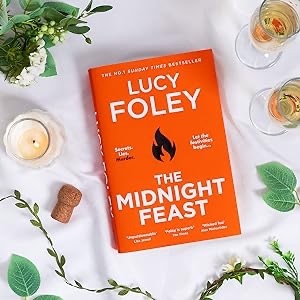
The Midnight Feast by Lucy Foley

I started this book in bed at night, which turned out to be a big mistake because I didn’t want to go to sleep once I’d started. There was a lot of yawning the next day. We’re introduced to the village of Tome (pronounced ‘tomb’ by the locals just to add a sense of foreboding) and the new wellness retreat created there by Francesca Woodland who inherited The Manor and it’s land from her grandfather. Her husband Owen is the architect on the project and has created woodland ‘hutches’ for guests, featuring outdoor showers and luxurious linens. The Manor itself is the central hub where there are classes in meditation and yoga, with a spa that has reiki alongside all the usual treatments. The opening weekend looms and while there’s a hint of anxiety around the late building of the tree houses, Fran is sure she has everything under control. On the final night of the stay she has planned a mini-festival with live music, a meal out in the woods and strange wooden sculptures. Every guest must wear a crown fashioned from twigs creating the look and feel of a pagan celebration. While the music is at it’s loudest she has given Owen the go ahead to start digging the foundations for the tree houses, in the hope the music drowns out the noise. However, that’s not the only problem on the horizon. In order to build the houses, they must take down some of the ancient trees and when Owen arrives the workmen are confused by the new symbols on their bark. They look like seagulls in flight. By the morning there’s a burned effigy and a body on the beach, a wrecked Aston Martin with blood inside and the manor hiss been rased to the ground by a ferocious fire. There’s also an elderly fisherman rambling on about seeing giant birds. It looks like the midnight feast was a rather Bacchanalian event, with discarded drink bottles, feathers and clothes littering the ground, but something went badly awry. Everyone in Tome knows the local saying- ‘Don’t disturb the birds’. Could Francesca’s dream be over when it had only just begun?

The book starts with the aftermath of the festivities, but there are two more timelines: fifteen-twenty years ago when Francesca was a teenager living at the manor with her grandparents and twin brothers and the beginning of the weekend leading up to the feast twenty-four hours later. This multi-layered effect is multiplied with several narrators – Bella who is befriended by a young Francesca and later becomes a mystery guest at The Manor’s opening weekend; Owen who is Francesca’s husband but also hides a secret past; a young man called Eddie who is the retreat’s kitchen help and Francesca, the founder. It seemed like a lot of perspectives and timelines at first but the author is very skilled at creating distinctive characters so I soon got to know them and I didn’t feel lost. Francesca radiates a sense of calm and purity. However, like many people who put up a facade like this, it’s only so long before they blow and I was waiting for that moment. Bella is very secretive, realising she isn’t The Manor’s target demographic she’s worried she might stand out. Owen is very successful architect, wealthy and absolutely in love with Francesca, but seems to know a lot about local folklore and knows his way to a secret beach. Eddie, who I was rather fond of, lives in the shadow of his older brother who went missing years ago after becoming an addict. He lives at home with his parents on the family farm and feels his father’s despair that the son who loved working the farm is gone. Eddie wants something different, but given his parent’s disapproval of the retreat, he hides his job there while hoping to work up the organisation. Finally there’s the DI on the case, who is trying to piece together the night before and recovering a body from the beach, while the only witness to the death is the elderly man who still blaming giant birds.

There’s a sinister ‘them and us’ feel to this novel, a distinction that’s in one way about class and in another way about belonging. Locals are different from tourists and even though Francesca is local because she comes from the big house she can’t be one of them. Bella’s mother scolds her for spending her summer up at the manor and wishes she would make more friends from the village. Those at the big house don’t understand the village ways. When Bella bumps into a good-looking surfer down on the secret beach there’s an instant attraction, but when she takes him to the manor Francesca and her brothers tease him as if he’s a yokel. Bella starts to wonder where she fits in at all. There are those who have transcended where they came from, but the transformation was painful and has left it’s scars. I could sense a lot of references, such as The Wicker Man and Midsommer where a seemingly pastoral and innocent celebration slowly builds towards violence. The note left for Francesca, the marked trees and the chicken nailed to her door could have been someone disgruntled with the retreat, but it felt more personal. Francesca struck me as a powder keg. When younger, she appears to have very little empathy, especially for those she views as beneath her. Her brothers have a similar outlook, convinced they can do whatever they like to the locals and it will be swept up by the family as if it never happened. Francesca was like a cat playing with a mouse and the pleasure she got from hurting others gave the impression of a psychopath in the making. Then at the opening weekend, the local kids make their protest felt by pelting the pool with stones and building fires on the section of the beach reserved for guests only. They have bigger plans too, but they’re saving them all for the night of the Midnight Feast. They want to make clear that Tome’s forest and it’s beaches are for the villagers and not to be fenced off for the use of rich visitors.

Bella wants her revenge to be more permanent than a simple one-off disturbance and she’s determined. With bleached, short hair she’s not easily recognisable as the girl she was and manages to be under the radar. When she first sees Eddie she’s taken aback, he looks so much like someone she used to know. Is she seeing ghosts everywhere? She is psychologically haunted by what happened all those years ago at another midnight feast and she’s appalled by Francesca’s decision to name the event after their final night as friends. Bella wants to make sure that the perfect, pious Sunday supplement Francesca is shown up for who she really is. By this time I was desperate for her to get her comeuppance to as we slowly see the consequences of that night long ago spreading into several local families. Each one has their own grudge: a father who’s been drinking ever since; a baby growing up without it’s mum; a young man with an addiction so strong he’s willing to lie and steal. Yet Francesca and her twin brothers are still rich, successful and as insufferable as ever. So it isn’t just our narrators who have reason to hate The Manor and some of them exact their revenge in amusing ways, while others want to end the retreat and Francesca for good. I loved the folk ritual element, reminiscent of Thomas Tryon’s Harvest Home mixed with a dose of Hitchcock’s killer birds. They are the size of a human, covered in black feathers and under their cloak is the huge beak. The villagers take them seriously, even the contractors who turn up to remove the trees don’t want to mess with those marked by the birds, they’d rather give the money back. Are the birds a simple folk tale that keeps Tome safe or are they real? As we countdown to what happened on the big night, two parties twenty years apart reveal their secrets and the birds will have their final say. The ending is terrifyingly final for some, while others will wake up hungover and wondering what exactly they witnessed. As for me, I devoured this book overnight and the final page reveal really made me smile.

Out now from Harper Collins

Meet the Author

Lucy is the No.1 New York Times and Sunday Times bestselling author of The Hunting Party, The Guest List and most recently The Midnight Feast. It’s set at a luxury new countryside resort built on old secrets beside an ancient wood. The opening weekend takes place during a heatwave (and with a big summer solstice celebration) and temperatures and tensions are rising, the local community is incensed by the influx of wealthy newcomers and some unexpected guests have come to stay. Then a body is found… 
Lucy always knew wanted to work with books somehow, so studied English at university before working in a bookshop, a literary agency and then as a fiction editor at a big publishing house, during which time she realised that every book starts off as a messy first draft full of plot holes and mistakes. She thought she’d have a go at writing herself — the result of which was her first historical fiction novel, The Book of Lost and Found. She wrote two more historicals, The Invitation and Last Letter to Istanbul, before turning to the dark side and writing her first crime thriller, The Hunting Party: her first Sunday Times and New York Times bestseller and Waterstones Book of the Month, set over New Year’s Eve at a remote, snowy spot in the Scottish Highlands. 

Next came The Guest List, a murder mystery set at a wedding on an island off the coast of Ireland, which was a Reese’s Book Club pick, a Goodreads Choice Awards winner, a Waterstones Book of the Month, and has sold over three million copies. Then came The Paris Apartment, which is a number one New York Times bestseller and Sunday Times bestseller. Her books have been translated into over 40 languages and all three murder mysteries are currently being adapted for TV and film. 

She’s also written a short story for the brand new Marple collection, a brand new series of short stories featuring Agatha Christie’s legendary detective Jane Marple, alongside writers such as Val McDermid, Kate Mosse, Alyssa Cole, Ruth Ware and Leigh Bardugo, out September 2022 to coincide with Christie’s birthday! 

If you enjoy her books or want to say hi, she’d love to hear from you: She’s @lucyfoleytweets on Twitter and @lucyfoleyauthor on Instagram, or you can check out her Facebook author page @lucyfoleyauthor

Posted in Netgalley

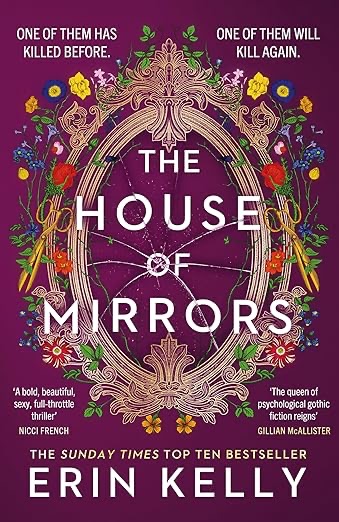
House of Mirrors by Erin Kelly

Erin Kelly’s latest novel is a return to characters who started life in The Poison Tree. Rex and Karen are a bohemian couple, who like a quiet life and love their daughter Alice who has flown the nest to live in London with her boyfriend Gabe. Karen is still living with the secret of what she did years ago, constantly worrying that Rex or Alice will discover the truth. Rex came from the wealthy Capel family, but the couple are far from comfortable. Rex is estranged from his wealthy father Roger Capel who has new and much younger wife and family. There’s a reason the couple keep a low profile, as a young man Rex was convicted of double murder. What happened on ‘The Night Of’ has overshadowed them all. Rex and his sister Biba were alone at the family home, when Biba’s boyfriend turned up and an argument ensued. The disturbance alerted the neighbours and one came round to see if everything was okay. Within minutes both Biba’s boyfriend and the neighbour are dead. There are so many questions about what happened that night. What was the argument about? Where did the gun come from? Were Rex and his sister the only ones there that night? Rex took the blame for the murders and served his time, with Karen staying faithfully by his side throughout. Did Rex really commit the crime? However, the mystery that has haunted the family for years is what happened to Biba? After that night she has never been seen again.

Rex and Karen’s daughter Alice is starting a vintage dress shop called Dead Girls Dresses. Strange things have happened since the opening though. Alice has had dropped phone calls at the shop and an oddly dressed woman with her face covered visited the shop. Could it be her Aunt Biba? Then Alice’s grandfather Roger Capel dies and leaves his granddaughter all of the womens clothes from the family home and it’s a treasure trove! Trawling through these pieces and trying them on brings Alice even closer to Biba. I thoroughly enjoyed the Alice in Wonderland details in the book, from the mirrors and chequered floors of the ‘the night of..’ to an Alice themed event at the dress shop. There is a sense, as the story goes on, that we are falling further and further down a rabbit hole. I’m a sucker for fashion and vintage so Alice’s shop was a glorious pick ‘n’ mix of beautiful pieces. This was a shop I would visit and the aesthetic sounded like my study – taxidermy, a white rabbit, antique inkwells, Venetian masks and a candlestick that’s in the shape of a monkey wearing a dress are just some of my weird objects! I thought the general shabbiness of Alice’s apartment was very believable. It’s in a large house where the ground floor is uninhabitable, so they have to squeeze upstairs having no money for repairs. I thought that the author captured Alice’s naivety very well and I could easily believe she would end up in a relationship with Gabe who’s a militant climate change activist. I felt like his activism and relationship with best friend Stef came first in his life, despite professing to be madly in love with Alice. I know that once you start siding with parents in novels and films you’ve reached ‘old’, but I had the same misgivings as Karen. I thought Gabe was gaslighting Alice and making her doubt herself, I just didn’t know why. I kept wishing that Alice would have the strength to recognise and resist him.

Erin Kelly is an author I’ve read since her very first novel and she has a way of writing something utterly compelling and full of tension, but also full of unusual details. There’s the quirky references to Lewis Carroll’s Alice and funny little everyday instances, like trying to unmask the dog constantly using the opposite shop’s doorstep as a toilet. There were also those ideas about twinning, doppelgängers and mirrors that added an uncanny element to the story. Using Alice and Karen to narrate the story in alternate chapters means we can see the relationship between mother and daughter. Karen’s fears for Alice with regards to Gabe and his coercive control really amplified the tension. We see Alice’s frustration with her mum, but also her concern for her father who she believes was innocent of murder. She knows that Rex is loyal to those he loves and she starts to suspect he may have been covering for someone else. I also sensed that there was so much more to the double murder then either Rex or Karen were admitting to, especially to Alice. Possibly something to do with aunt Biba? As Biba started to overshadow Alice’s thinking and the strange calls continued I was on tenterhooks waiting for the truth to be revealed. It’s a massive shock when someone from the past does turn up, but it’s not anyone the family expected. For Karen and Rex this newcomer is an eerie reminder of his sister. They also upset the dynamic of Alice’s relationship and Gabe feels very put out when his attempts to control their role in the group fails and it looks like Alice might become influenced by someone else. I would have thought that Gabe being pushed out would be exactly what Karen wanted but strangely she seems concerned too. I kept remembering that someone in this family is a murderer and they could strike again. I also wondered what those involved might be driven to, in order to keep their secrets. As the final pages came I was still shocked by what actually happened! It’s amazing the lengths people might go to for someone they love.

Out now from Hodder & Stoughton

Meet the Author

Erin Kelly is the Sunday Times bestselling author of The Poison Tree, The Sick Rose, The Burning Air, The Ties That Bind, He Said/She Said, Stone Mothers/We Know You Know, Watch Her Fall and Broadchurch: The Novel, inspired by the mega-hit TV series. In 2013, The Poison Tree became a major ITV drama and was a Richard & Judy Summer Read in 2011. He Said/She Said spent six weeks in the top ten in both hardback and paperback, was longlisted for the Theakston’s Old Peculier crime novel of the year award, and selected for both the Simon Mayo Radio 2 and Richard & Judy Book Clubs. She has worked as a freelance journalist since 1998 and written for the Guardian, The Sunday Times, Daily Mail, New Statesman, Red, Elle and Cosmopolitan. Born in London in 1976, she lives in north London with her husband and daughters. erinkelly.co.uk twitter.com/mserinkelly

Posted in Squad Pod

Past Lying by Val McDermid. Karen Pirie Series.

I was so blown away by my first Val McDermid novel last month that I couldn’t settle to any other reading when I knew that this sequel was waiting for me on the book trolley! So in the end I gave in. We left DCI Karen Pirie at the beginning of lockdown, which she’d decided to spend in her lover Hamish’s huge Edinburgh flat with her new constable Daisy. It was a hurried and unexpected choice, with Hamish retreating to his Croft in the Highlands where he was now making hand sanitiser and profiting nicely. The team are officially stood down from working, but Karen had ordered some cold case files to be taken to the flat so they could at least read and review them. She isn’t known for being good at following rules so lockdown is a challenge, with her midnight walks and checks on the old flat she bends things a little to suit her. It would be impossible to imagine her not working though and luckily her DS Jason gets an unexpected call that triggers something. A librarian is using lockdown to file away items donated to the archive and she has been working on the papers of the late author Jake Stein. In them she found an unfinished manuscript that bothered her. The narrator is a crime writer and he abducts an aspiring writer from one of his workshops, a young girl called Laurel Oliver. He describes taking her to a shack in the woods and strangling her, then planting her body in the garage of another crime writer, Rob McEwan. Rob and Jake met at a festival and became friends, with Jake being the big name and Rob just starting out. They discovered a mutual love of chess and would play each other each week at Jake’s house, where he has the classic car, the high end kitchen decor and a beautiful wife. A beautiful wife who seems to get along with Rob very well. Stars in any creative field can fall as well as rise and as the tables start to turn for these two could Jake have carried out this murderous blueprint? All the way down to the detail of concreting her body into the inspection pit of Ron’s swanky new house? Since once of their cold cases is a young girl called Lara Hardie who did disappear in Edinburgh at the time of this manuscript, Karen can’t afford to take any chances.

It must have been very hard to write tension and excitement into a situation where people can’t go far and are largely researching online and in archives. It’s not fast paced activity and I always remember laughing out loud at a moment in one of Dan Brown’s thrillers where his hero tries to make running to the library sound macho and full of action. It could have gone horribly wrong, but somehow Val McDermid brings real tension to the case. That’s without the anxieties of every day life at this very surreal time, which are captured perfectly by the author. She relates to us the strange emptiness of a busy capital city and the difficulty of having to apply the intricacies of COVID legislation to your every movement, even if it’s just looking at papers in a library. Karen is possibly even more impatient in her working life, so there are times to bend the rules a little, but it means she never slips into the slapdash lazy ways of other people who seem to think it’s an excuse to shut down. Her boss ‘the Dog Biscuit’ thinks she could easily stay at home because HCU cases can wait; the case has no urgency, since the main suspect, Jake Stein, will never come to trial. However, maybe because she lost the love of her life to murder, Karen understands that the sooner a victim’s family finds out the truth, the better. This applies whether the suspected killer is alive or not. Besides, despite what the manuscript suggests, she’s not going to pigeon hole the case just yet. Things aren’t always what they seem.

Her relationship with Hamish is proving difficult and not because he’s in the Highlands on his croft. They actually have more problems when they see each other, probably because they shouldn’t be. There’s something about Hamish’s cheerful ability to make money out of other people’s misery that rankles with Karen. He’s angry to find Karen isn’t home in the night, but she’s out walking. Unbeknownst to Hamish, there’s an asylum seeker staying in Karen’s flat after threats were made against his life. It’s a favour for a good friend and Karen is so moved by his situation that she buys him new clothes and stocks the cupboards. We see a side to Hamish we’ve never seen before when he has a confrontation with Daisy after turning up at the flat with no warning and against regulations. This time he threatens Daisy, but on a second illegal visit he becomes violently angry to find this strange man staying in Karen’s flat. When he tries to break the door down Karen is furious: it’s her flat and it’s not Hamish’s place to tell her who can be in it; he has no empathy for the man’s plight and zero understanding of his own privilege. Plus, he shouldn’t be here in the first place. Could this be the end for their relationship? Despite this, the COVID journey that Daisy and Karen have is a lot better than most. They have plenty of room in the flat they’ve borrowed from Hamish and their frustrations are small ones, mainly confined to how difficult it is to investigate a case when every establishment seems to be working to their own idea of the rules. Jason has a truly terrible experience when his mum is hospitalised with the virus, because they can’t see her or reassure her unless the staff organise a FaceTime session. Jason’s brother takes his frustration to the extreme while Jason is just terribly sad and scared for her. The snippets of her small team’s personal lives are more apparent now that their living and working spaces are in one place. Jason is in lockdown with girlfriend Eilidh, but has proximity made their relationship stronger? Daisy has been hiding a secret about her personal life and finds lockdown a difficulty when embarking on a new romance.

Karen’s grief for Phil ebbs and flows, not helped by the extra time she has to overthink. She has to think about whether her relationship with Hamish gives her what she needs. They miss a shared outlook on the world, something she had and lost with Phil. The case didn’t go the way I expected at all, making the last sections really gripping. Karen’s ability to get results in a global pandemic doesn’t surprise me. Where some potential witnesses try to fob her off, using COVID as an excuse, Karen always tries to find a way to stay within the law while still getting the job done. I love seeing her come across petty bureaucracy, it makes me laugh because they have no idea what they’re dealing with if they take on Karen. This is crime fiction at it’s best and I’m now starting back at the beginning with the first novel featuring this interesting and incredibly insightful detective.

Out on 12th October 2023 from Sphere

Meet the Author

Val McDermid is a number one bestseller whose novels have been translated into more than forty languages, and have sold over eighteen million copies. She has won many awards internationally, including the CWA Gold Dagger for best crime novel of the year and the LA Times Book of the Year Award. She was inducted into the ITV3 Crime Thriller Awards Hall of Fame in 2009, was the recipient of the CWA Cartier Diamond Dagger in 2010 and received the Lambda Literary Foundation Pioneer Award in 2011. In 2016, Val received the Outstanding Contribution to Crime Fiction Award at the Theakstons Old Peculier Crime Writing Festival and in 2017 received the DIVA Literary Prize for Crime, and was elected a Fellow of both the Royal Society of Literature and the Royal Society of Edinburgh. Val has served as a judge for the Women’s Prize for Fiction and the Man Booker Prize, and was Chair of the Wellcome Book Prize in 2017. She is the recipient of six honorary doctorates and is an Honorary Fellow of St Hilda’s College, Oxford. She writes full-time and divides her time between Edinburgh and East Neuk of Fife.

Posted in Squad Pod

Still Life by Val McDermid. Karen Pirie Series

As you all know I’m quite happy to admit so called ‘guilty pleasures’ and glaring omissions from my library. You also know I like nothing better than discovering someone I haven’t read before, who has along back catalogue to enjoy. I am absolutely thrilled that the Squad Pod chose Val McDermid for our October book club. This is probably sacrilegious in crime reading circles, but I haven’t read a single book by the Queen of Tartan Noir. She is definitely deserving of the title and after reading Still Life I’ve purchased all the Karen Pirie series so I can read from the beginning and start my Val McDermid journey. Next month we have her new novel in the series Past Lying so my October is going to be pretty much dedicated to her.

Our story is a complicated combination of current and historic case that Pirie is set to investigate from the Historic Cases Unit. A trawler pulls a body from the Firth, eventually identified as a man called James Auld. His brother, Iain Auld, worked in the Scottish Office in Westminster and also disappeared, ten years ago. Even more odd, James had been living as Paul Allard and working in a jazz band in Paris. Two other events come up when researching the two men. Firstly, the paintings chosen from the National Collection for the Scottish Office, were found to be barely passable fakes when the government changed. Secondly, when a fire that destroyed an art gallery in Brighton appears in the press, a photograph seemed to show Iain Auld. An old school friend swears it was Iain, but he was already declared dead by this point. DCI Pirie’s starting point will have to be Iain’s widow Mary, who lives alone and has stayed in touch with brother-in-law James ever since Iain disappeared. Their second case seems less urgent and regards historic remains found in the camper van in the garage of an empty house. The van might have belonged to a young silversmith called Dani, a free spirited and bohemian girl in a relationship with a slightly older accountant called Andrea. Could this body be one of those women?

Both cases were intriguing and grabbed the attention. The story that emerges from their investigation into the camper van skeleton is one of opposites attracting. Opposites can attract, but can they co-exist over time? Dani was clearly the more bohemian of the pair and a bit younger too. She wanted to travel, design her jewellery and perhaps gain inspiration from staying at an artist’s commune. Andrea was more conservative, happy to stay in the same home and go to the same job. Andrea’s parents are abroad, could she have killed her partner and left the country? However, when they visit Dani’s father his first reaction is to ask what his daughter has done this time? So the weight of suspicion falls on her. Then they find a lead, a possible art collective where Dani is mentioned, over near Manchester. Karen sends her sergeant Jason to check things out, putting him in terrible danger. The visit quickly goes from being slightly comical (an elderly person’s painting class) to absolutely filled with tension and deadly. The case of the Auld brothers had so many facets to it and opened up the characters for me. It covered the issue of finding yourself in love with someone of the same sex after years of being heterosexual. The art and political elements were so interesting too. The criticism of the old Lib/Con coalition and the way Westminster works in general was something that chimed with my own views. The musing on Scottish independence and the way Scottish people feel about England really did interest me, but it also firmly sets a character in their place and time.

These subjects showed the reader how forthright and decisive Karen is, something we see in her professional life too – sometimes to her detriment. She had so many sneaky ways around her boss, known as the ‘Dog Biscuit’ thanks to her surname being the same as a brand of dog treats. It might not always be appreciated by her superiors but she does it to get results, out of a desire to help those affected by the crime and also because she has a disgust for unwanted bureaucracy and procedures. When she needs a European arrest warrant she goes direct to a contact who can organise it immediately, not through the boss. Often though, these short cuts do get the job done. She knows it pisses the boss off, but she’s willing to take the flak and smooth it over later. She’s a maverick whose not afraid to take a risk or spend money if it brings results for the victims of crime. I found her intelligent, determined, rebellious and competitive. She would probably drive me crazy in reality, but as a character I loved her. I also loved the way she’s trying to cope with ongoing grief for her partner Phil, while starting a new relationship with Hamish. I’ve been there so I understand the conflicting emotions, the guilt and the desire to move forward. This was so well written. She’s asserting her boundaries and trying not to jump in with both feet? There’s something she’s uncomfortable with about the relationship, but she talks herself round to the positives. Hamish’s business and the Croft in the Highlands keeps him busy and sometimes absent which I think suits her. It gives a distance to the relationship that she needs for now.

Her dogged determination and that of her team can lead to taking risks, but they don’t hesitate. Karen gives Jason his own tasks showing trust and confidence in him. She keeps her borrowed recruit Daisy close to her, they’re very different but there’s definitely an attention to detail in Daisy that echoes Karen’s. She instils in both of them her philosophy that just because it’s a cold case doesn’t mean they do half a job, or a slow one. She holds these mispers and victims of crime in high regard and expects the same from her team. As the COVID pandemic starts to move across the world there’s a further sense of urgency to their work. While the case of the body in the camper van starts to resolve, the Auld brothers case takes many unexpected turns. As the trail moves over to Ireland, using the art world to unravel some clues, it was great to see that Karen is happy to get her hands dirty and isn’t the sort of boss who hands that stuff to her juniors. Here she’s sitting in vegetation, watching a house for suspects and deftly deploying a tracker. She’s just as deft when walking into a small gallery and questioning an art dealer. Whatever it takes to uncover the next steps. When talking about her cold cases, Karen articulates something that crime readers often feel. She knows there’s an explanation that solves all these clues and exposes a pattern, but she just can’t see it yet. You have to let it wash over you, read more and hope that all will become clear. The difficulties solving this one kept me reading and kept me thinking about the case when I was doing other things. As COVID worsens and starts to lock down the country, decisions have to be made about how the team work and live. Karen makes a choice I didn’t see coming and I would be interested to read how it works out moving forward. This was one of the best crime novels I’ve ever read, with a fascinating central character that I can’t wait to read more about.

Meet the Author

Val McDermid is a number one bestseller whose novels have been translated into more than forty languages, and have sold over eighteen million copies. She has won many awards internationally, including the CWA Gold Dagger for best crime novel of the year and the LA Times Book of the Year Award. She was inducted into the ITV3 Crime Thriller Awards Hall of Fame in 2009, was the recipient of the CWA Cartier Diamond Dagger in 2010 and received the Lambda Literary Foundation Pioneer Award in 2011. In 2016, Val received the Outstanding Contribution to Crime Fiction Award at the Theakstons Old Peculier Crime Writing Festival and in 2017 received the DIVA Literary Prize for Crime, and was elected a Fellow of both the Royal Society of Literature and the Royal Society of Edinburgh. Val has served as a judge for the Women’s Prize for Fiction and the Man Booker Prize, and was Chair of the Wellcome Book Prize in 2017. She is the recipient of six honorary doctorates and is an Honorary Fellow of St Hilda’s College, Oxford. She writes full-time and divides her time between Edinburgh and East Neuk of Fife.