Posted in Netgalley

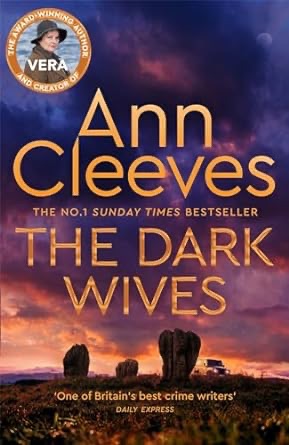
The Dark Wives by Anne Cleeves

Vera is another of my favourite female detectives. She’s like a little, inquisitive bird. She’s generally a bit grumpy and sharp when the occasion demands it. She’s stubborn and lives for her job, knowing instinctively which of her team is best for which task and often expecting long days and nights. That’s definitely the case when a missing person report comes in for a young girl called Chloe living in care. Even more disturbing is the discovery of a body in the nearby park. This young man with a head injury turns out to be a new recruit to the children’s home called Josh Woodburn. Josh was a student but had recently taken a part-time post as a support worker and had worked closely with Chloe. She had come to the home after her mother was hospitalised with mental health problems. Despite the offer to stay with her paternal grandparents Chloe chose the home. She was learning to express herself, trying things on and seeing what fitted. Josh had encouraged her to write about her feelings, so she was journaling daily and dabbling with poetry. The social workers at the home had noticed she maybe had a slight crush on the new worker, so they can’t imagine her harming Josh. On the night Chloe disappeared Josh had come into work and then popped out again, everyone else was enjoying film night and pizza. Their only clue is that a dark, high end Volvo had been seen parked outside the home a few times recently. At the moment, Vera and the team don’t know if they’re looking for a vulnerable witness who is missing or the fleeing perpetrator. Either way they need to find her as soon as possible, before anyone else is harmed. 

The team are getting used to new girl Rosie, as they lost one of their own on the last case. Rosie is what Vera considers a proper Geordie with the obligatory fake eyelashes, fake tan and never going out with a coat. Vera is determined she will have to get used to the breadth of their patch which takes in both cities and vast countryside. Joe is suspicious and is watching her closely, but actually she has good instincts and her empathic manner with the victim’s families yields results and they seem to trust her. Chloe’s grandparents live in Whitley Bay, after selling up their farmhouse in the country. Her granddad tells them how sorry he is that they haven’t made more effort with her. Sadly her parent’s difficult split lead to bitterness and Chloe’s father felt she blamed him for her mother’s mental health. Her grandad would message her and take her out to the hills where they used to live and an old bothy that he still owned with an incredible view. They would take a picnic and simply enjoy being in the open air together. He admits that her relationship with her grandma was more difficult. His wife owns a boutique and was always trying to get Chloe to make more of herself, disliking the Goth look that Chloe had adopted. Vera can see that Chloe doesn’t fit the stereotype of a child in care; she still has connections with family and hasn’t been drawn into drink, drugs or violence. Vera keeps asking herself – what is Chloe running away from? 

Josh’s parents are obviously shocked and grief stricken, but also confused. They had no idea he’d taken a job and financially he didn’t need to work. He could have lived at home and gone into university, but he wanted the full student experience and they could afford it so why not? Josh’s big love was film so the work isn’t even linked to his course at all. His father wonders if he was still trying to impress a girl he’d been involved with called Stella. Stella’s family ran an organic farm where people with mental health issues or who were homeless could help out and gain work experience. Stella seemed almost embarrassed by Josh’s comfortable, middle-class background and put him on the spot. What was he doing to make a difference in the world? Maybe taking this job was a way of showing her he did have a social conscience. Coincidentally the farm is near the village of Gilstead, where Chloe’s granddad’s bothy is. Could Chloe be hiding out there until she can get away. When they arrived at the bothy the next day, Vera is horrified by what they find. There’s another body and the suggestion that someone has been living here. This body must have something that links it to Josh and Chloe, not just that they’re from the same care home but something they seem to be missing at the moment. Gilstead is a pretty village that tourists like to take a look at and this week is no exception. This week sees the annual witch hunt in the village, where children search for the ‘witch’ on the hills and in the dark. Outside the village are three monolithic stones, the so-called ‘Dark Wives’ of the title. Eerie posters of an all seeing eye appear in cottage windows to repel witches and let them know the villagers have their eye on them. It seems a little odd and creepy but essentially harmless. 

The relationships in the team are interesting and Joe’s relationship with Vera is problematic, not least because he feels stuck between his boss and his wife. Sometimes he feels like he’s always trying to please women, whether he’s at work or home. Vera lives alone and doesn’t always understand that responsibility to another person. She seems to assume everyone is as free as she is when she suggests a pie and ping after work. Other times she’s almost motherly and affectionate towards him. It was really interesting how this case seemed to get under Vera’s skin and bring back memories of her father. She still lives in his old cottage with all his things surrounding her and never seems to make it her own. Is she just camping there? Or setting down roots? She thinks about her relationship with her father and how difficult he could be when drunk. Maybe she understands Chloe’s need for a stable and loving parent who’s there for her, instead of the other way round. Sometimes police work is a thrilling chase and other times it’s doing the boring background checks and looking at the detail. This case is a bit of both, but the finale of the Gilstead Witch Hunt is genuinely spooky. With the monolithic Dark Wives in the background and the sun setting, the village comes alive with people taking to the hills to look for the witch. It’s dark and menacing, so as Vera, Joe and Rosie set out with them there’s real tension in the air. Chloe could be out here in the dark, but so could a killer. As they stumble around in the cold, with Rosie finally wearing a coat, it was hard to know whether screams were just excited kids or something more sinister. I love Anne Cleeves’s plots because they’re like a labyrinth, looping round and back on themselves. There are always secrets to unravel within families and these ones are no exception, they’re also emotional because these families are struggling or have broken apart. Most of all I love Vera. She’s like a little terrier and leaves no stone unturned in her determination to find a killer. 

Out now from Pan McMillan

Meet the Author

Ann is the author of the books behind ITV’s VERA, now in it’s third series, and the BBC’s SHETLAND, which will be aired in December 2012. Ann’s DI Vera Stanhope series of books is set in Northumberland and features the well loved detective along with her partner Joe Ashworth. Ann’s Shetland series bring us DI Jimmy Perez, investigating in the mysterious, dark, and beautiful Shetland Islands…

Ann grew up in the country, first in Herefordshire, then in North Devon. Her father was a village school teacher. After dropping out of university she took a number of temporary jobs – child care officer, women’s refuge leader, bird observatory cook, auxiliary coastguard – before going back to college and training to be a probation officer. In 1987 Ann moved to Northumberland and the north east provides the inspiration for many of her subsequent titles.

For the National Year of Reading, Ann was made reader-in-residence for three library authorities. It came as a revelation that it was possible to get paid for talking to readers about books! She went on to set up reading groups in prisons as part of the Inside Books project, became Cheltenham Literature Festival’s first reader-in-residence and still enjoys working with libraries.

In 2006 Ann Cleeves was the first winner of the prestigious Duncan Lawrie Dagger Award of the Crime Writers’ Association for Raven Black, the first volume of her Shetland Quartet. The Duncan Lawrie Dagger replaces the CWA’s Gold Dagger award, and the winner receives £20,000, making it the world’s largest award for crime fiction.

Ann’s books have been translated into sixteen languages. She’s a bestseller in Scandinavia and Germany. Her novels sell widely and to critical acclaim in the United States. Raven Black was shortlisted for the Martin Beck award for best translated crime novel in Sweden in 200.


Posted in Netgalley

Our Holiday by Louise Candlish

Pine Ridge is a small coastal village off the south coast, somewhere near Bournemouth and has that castaway feeling from the moment you cross on the car ferry. However, this idyllic village is the setting for discontent and divided loyalties between those DFL (down from London) residents and those who have grown up in Pine Ridge and mainly work servicing those August visitors. The ridge has a resort hotel, beach bar and spa to keep holiday makers happy, but some visitors have gone away dreaming of their own little slice of south coast heaven. One summer Pine Ridge becomes the centre of a dispute over second home ownership. This is a bad time for Amy and Linus who have just bought their own little bungalow with coastal views up on the ridge. It needs work, having been the home of an elderly couple, but she has a plan and builders starting this summer. She was inspired by friend Charlotte whose banker husband Perry used a huge bonus to buy their perfect holiday home with it’s own summer house overlooking the sea, nicknamed The Nook. It’s people like this that friends Robbie and Tate are angry about. They grew up here but are stuck living in static caravans on a temporary site because they can’t afford to buy or rent anywhere. The private rental market has shrunk as people refurb for the AirBnB market and no new houses are being built. People on service wages can’t hope to pay the prices of houses on the ridge, so they’re snapped up by Londoners who only come in August. This leaves huge homes empty all year while villagers are homeless, this is why the men have set up the NJFA – ‘Not Just For August’ Campaign. As tensions rise towards the August bank holiday, the NJFA are gearing up to make their final public protest of the summer. As the music festival gears up on the beach, people are interested in the design they’ve created on the sand, but they’re stopped in their tracks when half way through the day a summer house is bulldozed from the cliff and into the sea. Was this the NJFA plan all along or is something else going on?

Louise Candlish is brilliant at satirising the middle classes and she’s hit upon an issue that holiday destinations around the world are facing. I’ve always visited Venice in winter or early spring because I can’t stand cruise crowds and I was emotionally drawn in by the problem of keeping that balance between tourists and residents. They’ve addressed the cruise ship issue in recent years, have set up campaigns that show tourists which are the authentic Venetian restaurants and shops rather than the tourist traps. Authorities are now considering curbing numbers. Otherwise, it will become little more than a Disneyland experience; can Venice be the city it is, without it’s people? It’s a problem that areas like Devon and Cornwall have faced for years, with second home owners and holiday cottages turning whole villages into ghost towns in the winter. Even worse, it means the opinions of people who are not even year round residents, hold more sway in local matters than people trying to earn their livelihood. This came to the fore a few years ago in Cornwall where local fishermen’s need for a new jetty was being blocked by second home owners objecting to the planning application. There is always a tipping point and Candlish has demonstrated that exquisitely here. I had so much sympathy for Tate and his girlfriend Ellie, working in the beach bar and spa but not able to buy a home where they were born. They finished long shifts, only to broil all night in the heat of a static caravan. Tate’s friend Robbie is determined to take action and his NJFA campaign starts with throwing eggs and soup at DFL cars at the ferry stop. He pushes his agenda at council meetings and in the press, especially when he parks his caravan on the drive of a Pine Ridge home that’s been empty all year.

When we meet the DFL families their privilege is apparent. Candlish has this brilliant way of creating the stereotype we expect then subverting it. Perry is the archetypal banker – big car, egocentric and totally unapologetic about his banker’s bonus that allowed him to buy their holiday home and retire early. It’s easy to find fault with him; the drinking, the toxic masculinity and the absolute rejection of the type of ‘woke’ causes the younger people are hung up on. His son Benedict has brought girlfriend Tabitha to Pine Ridge, but she’s so ‘woke’ that she gets under Perry’s skin. Her sympathy for the NJFL cause grinds his gears, especially when she criticises his lifestyle while happy to enjoy the benefits for herself. Perry is simply incapable of keeping the peace, tearing up to the caravan park to give Robbie a piece of his mind and his fists. He’s also irritated by Linus, who is more aware of his impact on the world and travels everywhere in the village by bicycle. Perry finds his middle-aged Lycra wearing ridiculous and vents much of his rage on him and his bike. Yet there’s another side to Perry, a fear of being who he really is perhaps? He’s on the wagon after years of alcoholism and has formed an attachment to a resident at the halfway house for addicts where he volunteers in London. Charlotte is suspicious of his weekly drives back up to the city, but it’s fair to say doesn’t suspect the identity or gender of the object of his affections. It’s clear that Perry’s lies are starting to stack up and he won’t be able to hold his perfect life together for very long.

Another interesting character is Linus and Amy’s daughter Beatrice, who at 17 has blossomed into a goddess, something her mother realises when she sees her on the beach in a bikini. Beatrice could be an rich bitch, totally unaware of how privileged she is. Of course they’re not as well off as Perry and Charlotte, but still they can afford to renovate the bungalow as a second home and she has the usual teenage accoutrements of manicured nails, the latest iPhone and enough clothing to dress the whole family. Underneath Beatrice doesn’t seem happy though and when Charlotte notices a wrap she’s wearing on the beach is genuine designer and not the Vinted fake she claimed it was, her mind starts whirring. Where is Beattie getting the money for all these designer items? Candlish has all the right brands here including the designer collaboration Birkenstocks. It turns out that Beattie has a way of acquiring her goods that is less than savoury. I was expecting OnlyFans or an online sugar daddy! Yet what does Amy expect when she’s already going out of her way to keep up with Charlotte and Perry? It’s something that’s very apparent when she purchases her own summer house to sit overlooking the bay and christens it The Niche. Beattie has other secrets too, involving the The Niche and a certain beach barman. All hell will break loose if Linus finds out that this man, with a pregnant girlfriend, is hanging around his daughter. Tate is feeling ever more desperate and utterly trapped. He can’t bear the idea of the winter in the confines of their static with a screaming baby. He isn’t ready. While Ellie is planning to tell her parents and lobbying the council for more permanent housing, he is meeting his teenage lover and planning his escape.

There are so many strands to this story that by the time the summer house slides off the cliff and onto the beach I had no idea who had done it. The shockwaves ripple through the villagers when the police find a body in the wreckage and start a murder enquiry. Tate knows he and Robbie will be in the frame for their activist antics and their ability to use a bulldozer. I couldn’t help but think that it wouldn’t be as simple as that. Despite their circumstances driving them to criminal behaviour, they really aren’t bad boys. My money was on one of the DFL crowd: had Charlotte found out about Perry’s extra-curricular activities? Was Beattie so scared of her secrets coming to light she’d silenced someone? Had Perry been driven to distraction by Linus and his bike? We didn’t even know whose summer house was wrecked at first. This labyrinth of possibilities slowly unravels, including some fascinating twists and turns. I loved how Candlish highlighted a very real injustice, while weaving a unputdownable thriller around it. I genuinely felt for locals having to sofa surf, while huge houses stood empty all year. To then add insult to injury they then have to earn their money servicing these families and their houses, providing their massages in the spa and listening while they complain about their busy lives and seeing how much they spend without thinking on their food and drink. I could see why they were angry and it was interesting to see how those inequalities lead to other ideologies – when locals find out that asylum seekers might be housed nearby they are incensed. Their antipathy comes from fear that someone will jump them in the queue, but they’re missing who the real enemy is. Everybody has to do a lot of learning as we rush towards her conclusion, there’s some learning around respecting differing opinions, understanding why the other person thinks like they do and finding ways of working together. This is a fabulously current morality tale with some delicious satire and lots of secrets to uncover. The perfect summer read.

Out Now in Hardback from HQ

Meet the Author

Hello and welcome! You join me as my new thriller OUR HOLIDAY is published – it is out now in paperback, ebook and audio and was just announced as a Richard & Judy Book Club pick for the summer! It features my favourite ever love-to-hate characters (wait till you meet Perry and Charlotte!), second home owners in an idyllic beach resort who think they’re in town for another summer of sun, sea and rosé… But instead, they’re in for a bit of a reckoning…

I’m also celebrating my 20th year as an author this summer – that’s right, my first book came out in 2004, which somehow manages to feel both like yesterday AND a hundred years ago. 

OUR HOUSE is the one you may know me for as it’s on our screens as a major four-part ITV drama starring Martin Compston, Tuppence Middleton and Rupert Penry-Jones (watch the full series free on ITVX). This is the novel that turned my career around – right when I was about to give up. It won the 2019 British Book Awards Book of the Year – Crime & Thriller and was shortlisted for the Goldsboro Books Glass Bell Award, the Capital Crime Amazon Publishing Best Crime Novel of the Year Award​, and the Audible Sounds of Crime Award. It was also longlisted for the Theakston Old Peculier Crime Novel of the Year Award and the Specsavers National Book Awards. 

It recently received a Nielsen Bestseller Silver Award for 250,000 copies sold and I feel so proud that readers are continuing to discover it and recommend it far and wide.

My 1990s-set thriller THE ONLY SUSPECT just won the 2024 Capital Crime Fingerprint Award for Thriller of the Year and I was recently nominated for a CWA Dagger in the Library Award, voted for by librarians and readers. 

OUR HOLIDAY, THE ONLY SUSPECT, THE OTHER PASSENGER, THE SWIMMING POOL and THE DAY YOU SAVED MY LIFE have all been optioned for the screen – I’ll share development news on those as soon as I can.

A bit about me: I live in a South London neighbourhood not unlike the one in my books, with my husband, daughter (when she’s not at uni), and a fox-red Labrador called Bertie who is the apple of my eye. Books, TV and long walks are my passions – and drinking wine in the sun with family and friends. My favourite authors include Tom Wolfe, Patricia Highsmith, Barbara Vine and Agatha Christie.

Be the first to hear about new releases and price drops by clicking on the ‘Follow’ button under my pic or: 

Website: louisecandlish dot com

X/Twitter: louise_candlish

Instagram: louisecandlish

FB: LouiseCandlishAuthor

Author photos: ©Neil Spence; ©Johnny Ring; ©Joe Lord/Archant

From Louise’s Amazon Author Page.

Posted in Netgalley

The Midnight Feast by Lucy Foley

I started this book in bed at night, which turned out to be a big mistake because I didn’t want to go to sleep once I’d started. There was a lot of yawning the next day. We’re introduced to the village of Tome (pronounced ‘tomb’ by the locals just to add a sense of foreboding) and the new wellness retreat created there by Francesca Woodland who inherited The Manor and it’s land from her grandfather. Her husband Owen is the architect on the project and has created woodland ‘hutches’ for guests, featuring outdoor showers and luxurious linens. The Manor itself is the central hub where there are classes in meditation and yoga, with a spa that has reiki alongside all the usual treatments. The opening weekend looms and while there’s a hint of anxiety around the late building of the tree houses, Fran is sure she has everything under control. On the final night of the stay she has planned a mini-festival with live music, a meal out in the woods and strange wooden sculptures. Every guest must wear a crown fashioned from twigs creating the look and feel of a pagan celebration. While the music is at it’s loudest she has given Owen the go ahead to start digging the foundations for the tree houses, in the hope the music drowns out the noise. However, that’s not the only problem on the horizon. In order to build the houses, they must take down some of the ancient trees and when Owen arrives the workmen are confused by the new symbols on their bark. They look like seagulls in flight. By the morning there’s a burned effigy and a body on the beach, a wrecked Aston Martin with blood inside and the manor hiss been rased to the ground by a ferocious fire. There’s also an elderly fisherman rambling on about seeing giant birds. It looks like the midnight feast was a rather Bacchanalian event, with discarded drink bottles, feathers and clothes littering the ground, but something went badly awry. Everyone in Tome knows the local saying- ‘Don’t disturb the birds’. Could Francesca’s dream be over when it had only just begun?

The book starts with the aftermath of the festivities, but there are two more timelines: fifteen-twenty years ago when Francesca was a teenager living at the manor with her grandparents and twin brothers and the beginning of the weekend leading up to the feast twenty-four hours later. This multi-layered effect is multiplied with several narrators – Bella who is befriended by a young Francesca and later becomes a mystery guest at The Manor’s opening weekend; Owen who is Francesca’s husband but also hides a secret past; a young man called Eddie who is the retreat’s kitchen help and Francesca, the founder. It seemed like a lot of perspectives and timelines at first but the author is very skilled at creating distinctive characters so I soon got to know them and I didn’t feel lost. Francesca radiates a sense of calm and purity. However, like many people who put up a facade like this, it’s only so long before they blow and I was waiting for that moment. Bella is very secretive, realising she isn’t The Manor’s target demographic she’s worried she might stand out. Owen is very successful architect, wealthy and absolutely in love with Francesca, but seems to know a lot about local folklore and knows his way to a secret beach. Eddie, who I was rather fond of, lives in the shadow of his older brother who went missing years ago after becoming an addict. He lives at home with his parents on the family farm and feels his father’s despair that the son who loved working the farm is gone. Eddie wants something different, but given his parent’s disapproval of the retreat, he hides his job there while hoping to work up the organisation. Finally there’s the DI on the case, who is trying to piece together the night before and recovering a body from the beach, while the only witness to the death is the elderly man who still blaming giant birds.

There’s a sinister ‘them and us’ feel to this novel, a distinction that’s in one way about class and in another way about belonging. Locals are different from tourists and even though Francesca is local because she comes from the big house she can’t be one of them. Bella’s mother scolds her for spending her summer up at the manor and wishes she would make more friends from the village. Those at the big house don’t understand the village ways. When Bella bumps into a good-looking surfer down on the secret beach there’s an instant attraction, but when she takes him to the manor Francesca and her brothers tease him as if he’s a yokel. Bella starts to wonder where she fits in at all. There are those who have transcended where they came from, but the transformation was painful and has left it’s scars. I could sense a lot of references, such as The Wicker Man and Midsommer where a seemingly pastoral and innocent celebration slowly builds towards violence. The note left for Francesca, the marked trees and the chicken nailed to her door could have been someone disgruntled with the retreat, but it felt more personal. Francesca struck me as a powder keg. When younger, she appears to have very little empathy, especially for those she views as beneath her. Her brothers have a similar outlook, convinced they can do whatever they like to the locals and it will be swept up by the family as if it never happened. Francesca was like a cat playing with a mouse and the pleasure she got from hurting others gave the impression of a psychopath in the making. Then at the opening weekend, the local kids make their protest felt by pelting the pool with stones and building fires on the section of the beach reserved for guests only. They have bigger plans too, but they’re saving them all for the night of the Midnight Feast. They want to make clear that Tome’s forest and it’s beaches are for the villagers and not to be fenced off for the use of rich visitors.

Bella wants her revenge to be more permanent than a simple one-off disturbance and she’s determined. With bleached, short hair she’s not easily recognisable as the girl she was and manages to be under the radar. When she first sees Eddie she’s taken aback, he looks so much like someone she used to know. Is she seeing ghosts everywhere? She is psychologically haunted by what happened all those years ago at another midnight feast and she’s appalled by Francesca’s decision to name the event after their final night as friends. Bella wants to make sure that the perfect, pious Sunday supplement Francesca is shown up for who she really is. By this time I was desperate for her to get her comeuppance to as we slowly see the consequences of that night long ago spreading into several local families. Each one has their own grudge: a father who’s been drinking ever since; a baby growing up without it’s mum; a young man with an addiction so strong he’s willing to lie and steal. Yet Francesca and her twin brothers are still rich, successful and as insufferable as ever. So it isn’t just our narrators who have reason to hate The Manor and some of them exact their revenge in amusing ways, while others want to end the retreat and Francesca for good. I loved the folk ritual element, reminiscent of Thomas Tryon’s Harvest Home mixed with a dose of Hitchcock’s killer birds. They are the size of a human, covered in black feathers and under their cloak is the huge beak. The villagers take them seriously, even the contractors who turn up to remove the trees don’t want to mess with those marked by the birds, they’d rather give the money back. Are the birds a simple folk tale that keeps Tome safe or are they real? As we countdown to what happened on the big night, two parties twenty years apart reveal their secrets and the birds will have their final say. The ending is terrifyingly final for some, while others will wake up hungover and wondering what exactly they witnessed. As for me, I devoured this book overnight and the final page reveal really made me smile.

Out now from Harper Collins

Meet the Author

Lucy is the No.1 New York Times and Sunday Times bestselling author of The Hunting Party, The Guest List and most recently The Midnight Feast. It’s set at a luxury new countryside resort built on old secrets beside an ancient wood. The opening weekend takes place during a heatwave (and with a big summer solstice celebration) and temperatures and tensions are rising, the local community is incensed by the influx of wealthy newcomers and some unexpected guests have come to stay. Then a body is found… 

Lucy always knew wanted to work with books somehow, so studied English at university before working in a bookshop, a literary agency and then as a fiction editor at a big publishing house, during which time she realised that every book starts off as a messy first draft full of plot holes and mistakes. She thought she’d have a go at writing herself — the result of which was her first historical fiction novel, The Book of Lost and Found. She wrote two more historicals, The Invitation and Last Letter to Istanbul, before turning to the dark side and writing her first crime thriller, The Hunting Party: her first Sunday Times and New York Times bestseller and Waterstones Book of the Month, set over New Year’s Eve at a remote, snowy spot in the Scottish Highlands. 

Next came The Guest List, a murder mystery set at a wedding on an island off the coast of Ireland, which was a Reese’s Book Club pick, a Goodreads Choice Awards winner, a Waterstones Book of the Month, and has sold over three million copies. Then came The Paris Apartment, which is a number one New York Times bestseller and Sunday Times bestseller. Her books have been translated into over 40 languages and all three murder mysteries are currently being adapted for TV and film. 

She’s also written a short story for the brand new Marple collection, a brand new series of short stories featuring Agatha Christie’s legendary detective Jane Marple, alongside writers such as Val McDermid, Kate Mosse, Alyssa Cole, Ruth Ware and Leigh Bardugo, out September 2022 to coincide with Christie’s birthday! 

If you enjoy her books or want to say hi, she’d love to hear from you: She’s @lucyfoleytweets on Twitter and @lucyfoleyauthor on Instagram, or you can check out her Facebook author page @lucyfoleyauthor

Posted in Netgalley

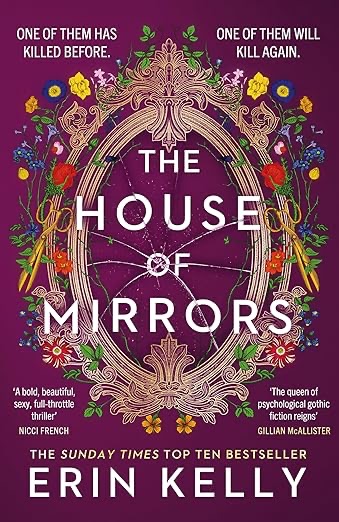
House of Mirrors by Erin Kelly

Erin Kelly’s latest novel is a return to characters who started life in The Poison Tree. Rex and Karen are a bohemian couple, who like a quiet life and love their daughter Alice who has flown the nest to live in London with her boyfriend Gabe. Karen is still living with the secret of what she did years ago, constantly worrying that Rex or Alice will discover the truth. Rex came from the wealthy Capel family, but the couple are far from comfortable. Rex is estranged from his wealthy father Roger Capel who has new and much younger wife and family. There’s a reason the couple keep a low profile, as a young man Rex was convicted of double murder. What happened on ‘The Night Of’ has overshadowed them all. Rex and his sister Biba were alone at the family home, when Biba’s boyfriend turned up and an argument ensued. The disturbance alerted the neighbours and one came round to see if everything was okay. Within minutes both Biba’s boyfriend and the neighbour are dead. There are so many questions about what happened that night. What was the argument about? Where did the gun come from? Were Rex and his sister the only ones there that night? Rex took the blame for the murders and served his time, with Karen staying faithfully by his side throughout. Did Rex really commit the crime? However, the mystery that has haunted the family for years is what happened to Biba? After that night she has never been seen again.

Rex and Karen’s daughter Alice is starting a vintage dress shop called Dead Girls Dresses. Strange things have happened since the opening though. Alice has had dropped phone calls at the shop and an oddly dressed woman with her face covered visited the shop. Could it be her Aunt Biba? Then Alice’s grandfather Roger Capel dies and leaves his granddaughter all of the womens clothes from the family home and it’s a treasure trove! Trawling through these pieces and trying them on brings Alice even closer to Biba. I thoroughly enjoyed the Alice in Wonderland details in the book, from the mirrors and chequered floors of the ‘the night of..’ to an Alice themed event at the dress shop. There is a sense, as the story goes on, that we are falling further and further down a rabbit hole. I’m a sucker for fashion and vintage so Alice’s shop was a glorious pick ‘n’ mix of beautiful pieces. This was a shop I would visit and the aesthetic sounded like my study – taxidermy, a white rabbit, antique inkwells, Venetian masks and a candlestick that’s in the shape of a monkey wearing a dress are just some of my weird objects! I thought the general shabbiness of Alice’s apartment was very believable. It’s in a large house where the ground floor is uninhabitable, so they have to squeeze upstairs having no money for repairs. I thought that the author captured Alice’s naivety very well and I could easily believe she would end up in a relationship with Gabe who’s a militant climate change activist. I felt like his activism and relationship with best friend Stef came first in his life, despite professing to be madly in love with Alice. I know that once you start siding with parents in novels and films you’ve reached ‘old’, but I had the same misgivings as Karen. I thought Gabe was gaslighting Alice and making her doubt herself, I just didn’t know why. I kept wishing that Alice would have the strength to recognise and resist him.

Erin Kelly is an author I’ve read since her very first novel and she has a way of writing something utterly compelling and full of tension, but also full of unusual details. There’s the quirky references to Lewis Carroll’s Alice and funny little everyday instances, like trying to unmask the dog constantly using the opposite shop’s doorstep as a toilet. There were also those ideas about twinning, doppelgängers and mirrors that added an uncanny element to the story. Using Alice and Karen to narrate the story in alternate chapters means we can see the relationship between mother and daughter. Karen’s fears for Alice with regards to Gabe and his coercive control really amplified the tension. We see Alice’s frustration with her mum, but also her concern for her father who she believes was innocent of murder. She knows that Rex is loyal to those he loves and she starts to suspect he may have been covering for someone else. I also sensed that there was so much more to the double murder then either Rex or Karen were admitting to, especially to Alice. Possibly something to do with aunt Biba? As Biba started to overshadow Alice’s thinking and the strange calls continued I was on tenterhooks waiting for the truth to be revealed. It’s a massive shock when someone from the past does turn up, but it’s not anyone the family expected. For Karen and Rex this newcomer is an eerie reminder of his sister. They also upset the dynamic of Alice’s relationship and Gabe feels very put out when his attempts to control their role in the group fails and it looks like Alice might become influenced by someone else. I would have thought that Gabe being pushed out would be exactly what Karen wanted but strangely she seems concerned too. I kept remembering that someone in this family is a murderer and they could strike again. I also wondered what those involved might be driven to, in order to keep their secrets. As the final pages came I was still shocked by what actually happened! It’s amazing the lengths people might go to for someone they love.

Out now from Hodder & Stoughton

Meet the Author

Erin Kelly is the Sunday Times bestselling author of The Poison Tree, The Sick Rose, The Burning Air, The Ties That Bind, He Said/She Said, Stone Mothers/We Know You Know, Watch Her Fall and Broadchurch: The Novel, inspired by the mega-hit TV series. In 2013, The Poison Tree became a major ITV drama and was a Richard & Judy Summer Read in 2011. He Said/She Said spent six weeks in the top ten in both hardback and paperback, was longlisted for the Theakston’s Old Peculier crime novel of the year award, and selected for both the Simon Mayo Radio 2 and Richard & Judy Book Clubs. She has worked as a freelance journalist since 1998 and written for the Guardian, The Sunday Times, Daily Mail, New Statesman, Red, Elle and Cosmopolitan. Born in London in 1976, she lives in north London with her husband and daughters. erinkelly.co.uk twitter.com/mserinkelly

Posted in Squad Pod

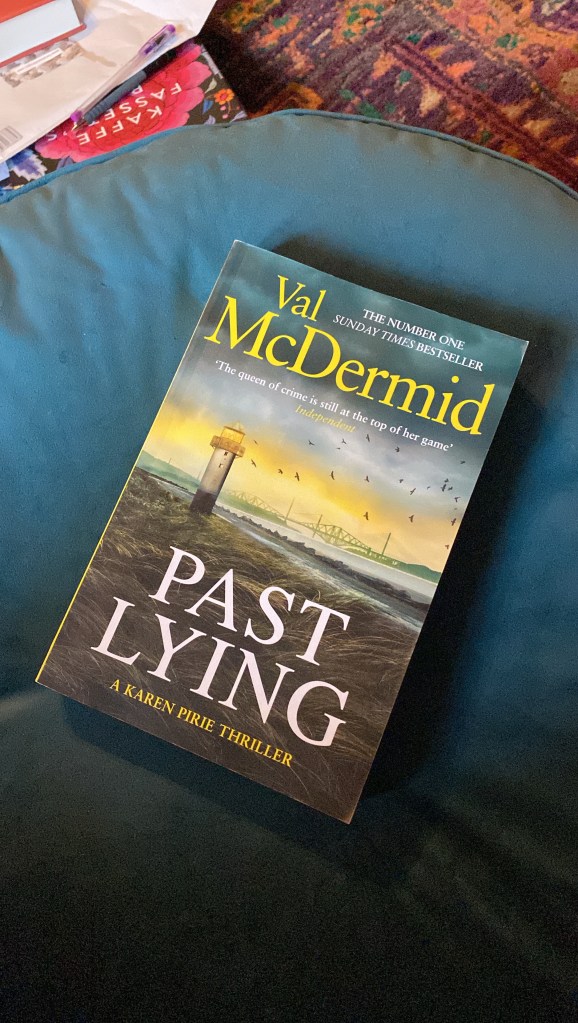
Past Lying by Val McDermid. Karen Pirie Series.

I was so blown away by my first Val McDermid novel last month that I couldn’t settle to any other reading when I knew that this sequel was waiting for me on the book trolley! So in the end I gave in. We left DCI Karen Pirie at the beginning of lockdown, which she’d decided to spend in her lover Hamish’s huge Edinburgh flat with her new constable Daisy. It was a hurried and unexpected choice, with Hamish retreating to his Croft in the Highlands where he was now making hand sanitiser and profiting nicely. The team are officially stood down from working, but Karen had ordered some cold case files to be taken to the flat so they could at least read and review them. She isn’t known for being good at following rules so lockdown is a challenge, with her midnight walks and checks on the old flat she bends things a little to suit her. It would be impossible to imagine her not working though and luckily her DS Jason gets an unexpected call that triggers something. A librarian is using lockdown to file away items donated to the archive and she has been working on the papers of the late author Jake Stein. In them she found an unfinished manuscript that bothered her. The narrator is a crime writer and he abducts an aspiring writer from one of his workshops, a young girl called Laurel Oliver. He describes taking her to a shack in the woods and strangling her, then planting her body in the garage of another crime writer, Rob McEwan. Rob and Jake met at a festival and became friends, with Jake being the big name and Rob just starting out. They discovered a mutual love of chess and would play each other each week at Jake’s house, where he has the classic car, the high end kitchen decor and a beautiful wife. A beautiful wife who seems to get along with Rob very well. Stars in any creative field can fall as well as rise and as the tables start to turn for these two could Jake have carried out this murderous blueprint? All the way down to the detail of concreting her body into the inspection pit of Ron’s swanky new house? Since once of their cold cases is a young girl called Lara Hardie who did disappear in Edinburgh at the time of this manuscript, Karen can’t afford to take any chances.

It must have been very hard to write tension and excitement into a situation where people can’t go far and are largely researching online and in archives. It’s not fast paced activity and I always remember laughing out loud at a moment in one of Dan Brown’s thrillers where his hero tries to make running to the library sound macho and full of action. It could have gone horribly wrong, but somehow Val McDermid brings real tension to the case. That’s without the anxieties of every day life at this very surreal time, which are captured perfectly by the author. She relates to us the strange emptiness of a busy capital city and the difficulty of having to apply the intricacies of COVID legislation to your every movement, even if it’s just looking at papers in a library. Karen is possibly even more impatient in her working life, so there are times to bend the rules a little, but it means she never slips into the slapdash lazy ways of other people who seem to think it’s an excuse to shut down. Her boss ‘the Dog Biscuit’ thinks she could easily stay at home because HCU cases can wait; the case has no urgency, since the main suspect, Jake Stein, will never come to trial. However, maybe because she lost the love of her life to murder, Karen understands that the sooner a victim’s family finds out the truth, the better. This applies whether the suspected killer is alive or not. Besides, despite what the manuscript suggests, she’s not going to pigeon hole the case just yet. Things aren’t always what they seem.

Her relationship with Hamish is proving difficult and not because he’s in the Highlands on his croft. They actually have more problems when they see each other, probably because they shouldn’t be. There’s something about Hamish’s cheerful ability to make money out of other people’s misery that rankles with Karen. He’s angry to find Karen isn’t home in the night, but she’s out walking. Unbeknownst to Hamish, there’s an asylum seeker staying in Karen’s flat after threats were made against his life. It’s a favour for a good friend and Karen is so moved by his situation that she buys him new clothes and stocks the cupboards. We see a side to Hamish we’ve never seen before when he has a confrontation with Daisy after turning up at the flat with no warning and against regulations. This time he threatens Daisy, but on a second illegal visit he becomes violently angry to find this strange man staying in Karen’s flat. When he tries to break the door down Karen is furious: it’s her flat and it’s not Hamish’s place to tell her who can be in it; he has no empathy for the man’s plight and zero understanding of his own privilege. Plus, he shouldn’t be here in the first place. Could this be the end for their relationship? Despite this, the COVID journey that Daisy and Karen have is a lot better than most. They have plenty of room in the flat they’ve borrowed from Hamish and their frustrations are small ones, mainly confined to how difficult it is to investigate a case when every establishment seems to be working to their own idea of the rules. Jason has a truly terrible experience when his mum is hospitalised with the virus, because they can’t see her or reassure her unless the staff organise a FaceTime session. Jason’s brother takes his frustration to the extreme while Jason is just terribly sad and scared for her. The snippets of her small team’s personal lives are more apparent now that their living and working spaces are in one place. Jason is in lockdown with girlfriend Eilidh, but has proximity made their relationship stronger? Daisy has been hiding a secret about her personal life and finds lockdown a difficulty when embarking on a new romance.

Karen’s grief for Phil ebbs and flows, not helped by the extra time she has to overthink. She has to think about whether her relationship with Hamish gives her what she needs. They miss a shared outlook on the world, something she had and lost with Phil. The case didn’t go the way I expected at all, making the last sections really gripping. Karen’s ability to get results in a global pandemic doesn’t surprise me. Where some potential witnesses try to fob her off, using COVID as an excuse, Karen always tries to find a way to stay within the law while still getting the job done. I love seeing her come across petty bureaucracy, it makes me laugh because they have no idea what they’re dealing with if they take on Karen. This is crime fiction at it’s best and I’m now starting back at the beginning with the first novel featuring this interesting and incredibly insightful detective.

Out on 12th October 2023 from Sphere

Meet the Author

Val McDermid is a number one bestseller whose novels have been translated into more than forty languages, and have sold over eighteen million copies. She has won many awards internationally, including the CWA Gold Dagger for best crime novel of the year and the LA Times Book of the Year Award. She was inducted into the ITV3 Crime Thriller Awards Hall of Fame in 2009, was the recipient of the CWA Cartier Diamond Dagger in 2010 and received the Lambda Literary Foundation Pioneer Award in 2011. In 2016, Val received the Outstanding Contribution to Crime Fiction Award at the Theakstons Old Peculier Crime Writing Festival and in 2017 received the DIVA Literary Prize for Crime, and was elected a Fellow of both the Royal Society of Literature and the Royal Society of Edinburgh. Val has served as a judge for the Women’s Prize for Fiction and the Man Booker Prize, and was Chair of the Wellcome Book Prize in 2017. She is the recipient of six honorary doctorates and is an Honorary Fellow of St Hilda’s College, Oxford. She writes full-time and divides her time between Edinburgh and East Neuk of Fife.

Posted in Squad Pod

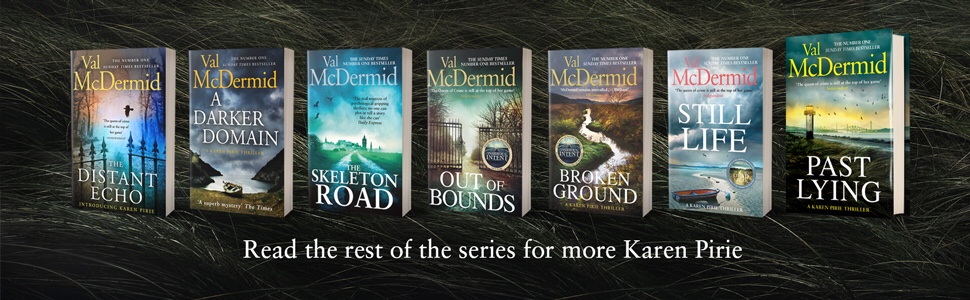
Still Life by Val McDermid. Karen Pirie Series

As you all know I’m quite happy to admit so called ‘guilty pleasures’ and glaring omissions from my library. You also know I like nothing better than discovering someone I haven’t read before, who has along back catalogue to enjoy. I am absolutely thrilled that the Squad Pod chose Val McDermid for our October book club. This is probably sacrilegious in crime reading circles, but I haven’t read a single book by the Queen of Tartan Noir. She is definitely deserving of the title and after reading Still Life I’ve purchased all the Karen Pirie series so I can read from the beginning and start my Val McDermid journey. Next month we have her new novel in the series Past Lying so my October is going to be pretty much dedicated to her.

Our story is a complicated combination of current and historic case that Pirie is set to investigate from the Historic Cases Unit. A trawler pulls a body from the Firth, eventually identified as a man called James Auld. His brother, Iain Auld, worked in the Scottish Office in Westminster and also disappeared, ten years ago. Even more odd, James had been living as Paul Allard and working in a jazz band in Paris. Two other events come up when researching the two men. Firstly, the paintings chosen from the National Collection for the Scottish Office, were found to be barely passable fakes when the government changed. Secondly, when a fire that destroyed an art gallery in Brighton appears in the press, a photograph seemed to show Iain Auld. An old school friend swears it was Iain, but he was already declared dead by this point. DCI Pirie’s starting point will have to be Iain’s widow Mary, who lives alone and has stayed in touch with brother-in-law James ever since Iain disappeared. Their second case seems less urgent and regards historic remains found in the camper van in the garage of an empty house. The van might have belonged to a young silversmith called Dani, a free spirited and bohemian girl in a relationship with a slightly older accountant called Andrea. Could this body be one of those women?

Both cases were intriguing and grabbed the attention. The story that emerges from their investigation into the camper van skeleton is one of opposites attracting. Opposites can attract, but can they co-exist over time? Dani was clearly the more bohemian of the pair and a bit younger too. She wanted to travel, design her jewellery and perhaps gain inspiration from staying at an artist’s commune. Andrea was more conservative, happy to stay in the same home and go to the same job. Andrea’s parents are abroad, could she have killed her partner and left the country? However, when they visit Dani’s father his first reaction is to ask what his daughter has done this time? So the weight of suspicion falls on her. Then they find a lead, a possible art collective where Dani is mentioned, over near Manchester. Karen sends her sergeant Jason to check things out, putting him in terrible danger. The visit quickly goes from being slightly comical (an elderly person’s painting class) to absolutely filled with tension and deadly. The case of the Auld brothers had so many facets to it and opened up the characters for me. It covered the issue of finding yourself in love with someone of the same sex after years of being heterosexual. The art and political elements were so interesting too. The criticism of the old Lib/Con coalition and the way Westminster works in general was something that chimed with my own views. The musing on Scottish independence and the way Scottish people feel about England really did interest me, but it also firmly sets a character in their place and time.

These subjects showed the reader how forthright and decisive Karen is, something we see in her professional life too – sometimes to her detriment. She had so many sneaky ways around her boss, known as the ‘Dog Biscuit’ thanks to her surname being the same as a brand of dog treats. It might not always be appreciated by her superiors but she does it to get results, out of a desire to help those affected by the crime and also because she has a disgust for unwanted bureaucracy and procedures. When she needs a European arrest warrant she goes direct to a contact who can organise it immediately, not through the boss. Often though, these short cuts do get the job done. She knows it pisses the boss off, but she’s willing to take the flak and smooth it over later. She’s a maverick whose not afraid to take a risk or spend money if it brings results for the victims of crime. I found her intelligent, determined, rebellious and competitive. She would probably drive me crazy in reality, but as a character I loved her. I also loved the way she’s trying to cope with ongoing grief for her partner Phil, while starting a new relationship with Hamish. I’ve been there so I understand the conflicting emotions, the guilt and the desire to move forward. This was so well written. She’s asserting her boundaries and trying not to jump in with both feet? There’s something she’s uncomfortable with about the relationship, but she talks herself round to the positives. Hamish’s business and the Croft in the Highlands keeps him busy and sometimes absent which I think suits her. It gives a distance to the relationship that she needs for now.

Her dogged determination and that of her team can lead to taking risks, but they don’t hesitate. Karen gives Jason his own tasks showing trust and confidence in him. She keeps her borrowed recruit Daisy close to her, they’re very different but there’s definitely an attention to detail in Daisy that echoes Karen’s. She instils in both of them her philosophy that just because it’s a cold case doesn’t mean they do half a job, or a slow one. She holds these mispers and victims of crime in high regard and expects the same from her team. As the COVID pandemic starts to move across the world there’s a further sense of urgency to their work. While the case of the body in the camper van starts to resolve, the Auld brothers case takes many unexpected turns. As the trail moves over to Ireland, using the art world to unravel some clues, it was great to see that Karen is happy to get her hands dirty and isn’t the sort of boss who hands that stuff to her juniors. Here she’s sitting in vegetation, watching a house for suspects and deftly deploying a tracker. She’s just as deft when walking into a small gallery and questioning an art dealer. Whatever it takes to uncover the next steps. When talking about her cold cases, Karen articulates something that crime readers often feel. She knows there’s an explanation that solves all these clues and exposes a pattern, but she just can’t see it yet. You have to let it wash over you, read more and hope that all will become clear. The difficulties solving this one kept me reading and kept me thinking about the case when I was doing other things. As COVID worsens and starts to lock down the country, decisions have to be made about how the team work and live. Karen makes a choice I didn’t see coming and I would be interested to read how it works out moving forward. This was one of the best crime novels I’ve ever read, with a fascinating central character that I can’t wait to read more about.

Meet the Author

Val McDermid is a number one bestseller whose novels have been translated into more than forty languages, and have sold over eighteen million copies. She has won many awards internationally, including the CWA Gold Dagger for best crime novel of the year and the LA Times Book of the Year Award. She was inducted into the ITV3 Crime Thriller Awards Hall of Fame in 2009, was the recipient of the CWA Cartier Diamond Dagger in 2010 and received the Lambda Literary Foundation Pioneer Award in 2011. In 2016, Val received the Outstanding Contribution to Crime Fiction Award at the Theakstons Old Peculier Crime Writing Festival and in 2017 received the DIVA Literary Prize for Crime, and was elected a Fellow of both the Royal Society of Literature and the Royal Society of Edinburgh. Val has served as a judge for the Women’s Prize for Fiction and the Man Booker Prize, and was Chair of the Wellcome Book Prize in 2017. She is the recipient of six honorary doctorates and is an Honorary Fellow of St Hilda’s College, Oxford. She writes full-time and divides her time between Edinburgh and East Neuk of Fife.

Posted in Publisher Proof

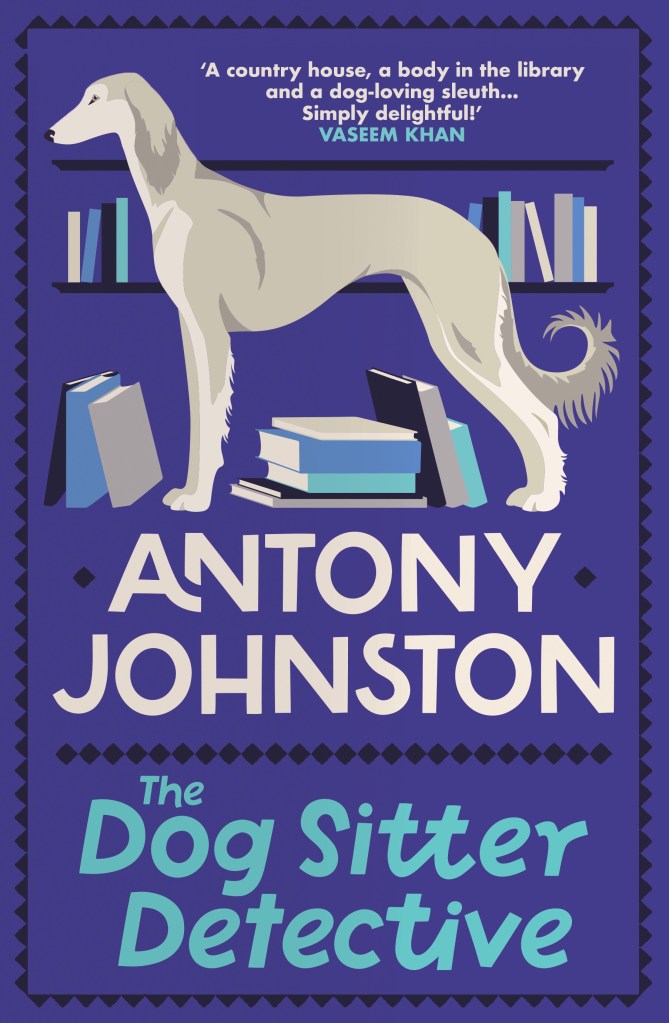
The Dog Sitter Detective by Antony Johnston

Meet Gwinny, an unlikely bloodhound, and her four-legged friends determined to dig up the truth.

Penniless Gwinny Tuffel is delighted to attend her good friend Tina’s upmarket wedding. But when the big day ends with a dead body and not a happily-ever-after, Gwinny is left with a situation as crooked as a dog’s hind leg.

When her friend is accused of murder, Gwinny takes it upon herself to sniff out the true culprit. With a collection of larger-than-life suspects and two pedigree salukis in tow, she is set to have a ruff time of it.

When I was offered a chance to review this novel I jumped at it because it sounded so quirky and charming. I was pulled into the novel quickly because it was a book that was perfect for the time – a cozy crime novel in the middle of some dark Scandi Noir – but also due to the author’s vivid characters. It was like putting on a cozy blanket and escaping into an Agatha Christie novel with added dogs. It had all the expected ingredients of a cozy crime novel; a country house, a wedding and the worst present of all – a body in the library. Especially when that body is one of the wedding party! At first it seems like an open and shut case, because the person stood over the body must be the main suspect. It’s not as simple as it looks though, the author has the odd red herring and revelation up her sleeve sending the police and the reader scurrying off in the wrong direction. Gwinny lives in an affluent part of town and from the outside it’s not exaggerating to say she lives with a certain amount of luxury. However, she is asset rich and money poor, with a bank balance that could do with a cash injection. Quickly! Since her father became ill she has been his sole carer and her acting career has paused indefinitely. She knows she can’t keep herself in the black if nothing changes.

A posh country wedding offers the perfect chance to pause and enjoy herself. So making promises to address the situation on her return, she plans to enjoy watching her best friend Tina walk down the aisle. Once the body is found the wedding grinds to a halt and for some reason Gwinny is volunteered to look after Spera and Fede, two beautiful Saluki dogs. With the dogs in tow she gets to work on the murder mystery, with her intuition and talent for deduction she knows straight away that something is ‘off’. I really enjoyed Gwinny’s character because she is so formidable, rather like that eccentric spinster aunt who has no time for idiots and won’t take any nonsense, from anyone. She can be rash and jump in with both feet, but she’s kind and incredibly loyal too. Even though she’s only just acquired the dogs she really does put herself out to protect them especially when other people don’t want them around. Her companion is Alan Birch, a retired police detective however, they blend perfectly together as an investigating team. The plot twists and turns in quite a modern thriller style, but then the author brings in that classic final scene when all the characters are brought together to unmask a murderer. It felt like the author loved this genre and although he updates it slightly, I think he really did give an elegant nod to classic cozy crime through his main character and the setting. Meanwhile keeping the story quite modern and crafting an ending that satisfies the reader. This was an enjoyable escape from everyday life and I would recommend it to anyone who enjoys classic crime novels with a dash of humour and a sprinkle of clever deduction.

Published by Allison and Busby 18th May 2023

Meet the Author

Photo Credit: Sarah Walton Photography

ANTONY JOHNSTON is a New York Times bestselling writer and podcaster. For more than twenty years he’s written books, graphic novels, non-fiction, videogames, film, and more. Much of it has been done with a snoozing hound curled up in his study.

Antony’s crime and thriller titles include the Brigitte Sharp spy thriller novels (The Exphoria Code, The Tempus Project and The Patrios
Network
) currently being developed for TV by Red Planet; The Fuse, a series of sci-fi murder mystery graphic novels (starring an older female police detective); adapting Anthony Horowitz’s Alex Rider books to graphic novels; and the Charlize Theron movie Atomic Blonde, which was adapted from Antony’s graphic novel. He also wrote Stealing Life, an SFF crime caper novel, and Blood on the Streets, a ‘superhero crime noir’ for Marvel comics.

His productivity guide The Organised Writer has helped authors all over the world take control of their workload, and he interviews fellow writers on his podcast Writing and Breathing. Antony is joint vice chair of the Crime Writers’ Association, a member of the International Thriller Writers group, a Shore Scripts screenwriting judge, and formerly sat on the Writers’ Guild of Great Britain’s videogames committee. Born in Birmingham, Antony grew up in nearby Redditch before moving to London for work. He now lives and works close to Pendle Hill in Lancashire.


Find out more about Antony’s other work at AntonyJohnston.com, and follow him on Twitter at @AntonyJohnston.

Visit https://dogsitterdetective.com/

Posted in Netgalley

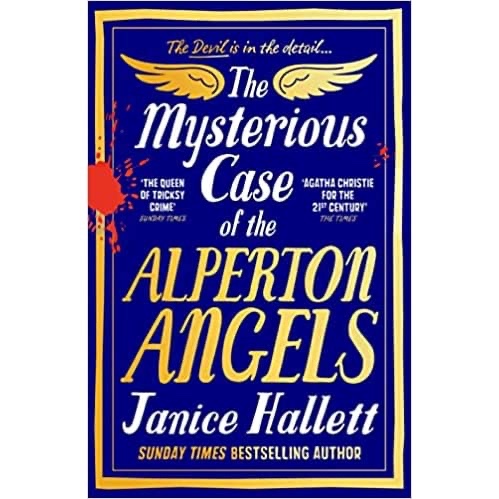
The Mysterious Case of the Alperton Angels by Janice Hallett

I’m going to start with a bold statement. This is my favourite Janice Hallett novel so far. I’ve been lucky enough to finish my blog tours very early this year, so I now have free reading time until January. That doesn’t mean I don’t have a bulging TBR though. My shelves are groaning with books I’ve purchased and physical proofs that I’m behind on. Similarly, my Netgalley shelves are embarrassing! So I still have things to read, its just I can read them in the order and at the speed I want. I’ve also had my usual autumnal multiple sclerosis relapse ( one at the spring equinox and one in the autumn like clockwork) so I’m rarely able to go out and I’m sat resting for long periods. So thanks to that combination of circumstances I was able to pick this up on Friday and I finished it within twenty-four hours. I was enthralled, addicted and so desperate to find out what actually did happen on the night when the police found a strange cult massacre in a deserted warehouse.

Open the safe deposit box. Inside you will find research material for a true crime book. You must read the documents, then make a decision. Will you destroy them? Or will you take them to the police? Everyone knows the sad story of the Alperton Angels: the cult who brainwashed a teenage girl and convinced her that her newborn baby was the anti-Christ. Believing they had a divine mission to kill the infant, they were only stopped when the girl came to her senses and called the police. The Angels committed suicide rather than stand trial, while mother and baby disappeared into the care system. Nearly two decades later, true-crime author Amanda Bailey is writing a book on the Angels. The Alperton baby has turned eighteen and can finally be interviewed; if Amanda can find them, it will be the true-crime scoop of the year, and will save her flagging career. But rival author Oliver Menzies is just as smart, better connected, and is also on the baby’s trail. As Amanda and Oliver are forced to collaborate, they realise that what everyone thinks they know about the Angels is wrong. The truth is something much darker and stranger than they’d ever imagined. And the story of the Alperton Angels is far from over.. After all, the devil is in the detail…

This author is an absolute master of this genre, adept at throwing all the pieces of a puzzle at you, in an order that will intrigue and tempt you to solve it. Eventually I always feel like I’m holding the equivalent of those giant boards used by TV detectives and CSIs to record all the facts of a case, but mine is in my head. We are then fed these snippets of information by different narrators, who we’re not always sure about and might be there to mislead us. In this case, our main narrator is writer Amanda Bailey and we are privy to all her communications: letter, emails, WhatsApp conversations and recorded conversations or interviews. Her transcripts from interviews are typed up by assistant Elly Carter – who brilliantly puts her own little asides and thoughts into the transcript. Amanda seems okay at first, but there are tiny clues placed here and there that made me doubt her. As she starts research for her book on the so-called Alperton Angels, she finds out that a fellow student from a graduate journalist’s course many years before, is working on a similar book for a different publisher. Maybe she and Oliver should collaborate, suggests the publisher, share information but present it from a different angle. Over time, through their WhatsApp communications, we realise that Oliver is far more susceptible to paranormal activity. In fact he seems to be a ‘sensitive’, often feeling unwell in certain locations or with people who have dabbled in the occult or in deeply religious beliefs.

I spent a large part of my childhood in a deeply evangelical church, a sudden switch from the Catholic upbringing I’d had so far. Even though I’d been at Catholic School, had instruction with the nuns at the local convent and went on Catholic summer camps, I never felt like an overwhelming or restrictive part of life. It felt almost more of a cultural thing than a religious thing, and no matter what I was being taught to the contrary I would always be a Catholic. Many people would dispute that evangelical Christianity is a cult, but my experience with it did flag up some of the warning signs of these damaging organisations. We were taught to avoid friendships or relationships with people not from the church, even family. Our entire social life had to be within church circles, whether that be the Sunday double services with Sunday School inbetween, or mid-week house groups, weekly prayer meetings, women’s groups and youth club on Friday nights. If you attended everything the church did, there wasn’t a lot of time for anything else. I was told what music I could listen to, the books I could read and suddenly my parents were vetting all my programs for pre-marital sex and banning them. They even burned some of their own music and books because they were deemed unsuitable or were ‘false idols’. I worked out at the age of twelve that something was very wrong with this way of life, but the hold of a group like this is insidious and it has had it’s long-term effects. Talking about angels and demons fighting for our souls and appearing on earth was quite normal for me, although it sounds insane now. So, the premise of Gabriel’s story and his hypnotic hold over his followers felt very real too. I was fascinated to see whether something divine was at work or whether Holly. Jonah and the baby were caught up in something that was less divine and more earthly, set in motion by the greed of men.

It’s hard to review something where I don’t want to let slip any signal or clue, so I won’t comment on the storyline. It’s drip fed to you in the different communications and I loved how we were presented with other people’s opinions and thoughts on the discoveries being made. Who to trust and who to ignore wasn’t always clear and the red herrings, including the involvement of the Royal Family, were incredible. I felt that Amanda had an agenda, that possibly had nothing to do with the story at hand and was more about a personal grudge. Janice Hallet’s research is impeccable and here she has to cover the early 1990’s and 2003, as well as the workings of the police, special forces and the social services – some of which is less than flattering and even corrupt. The e-copy I had from NetGalley was a little bitty in it’s format and I can’t wait to read my real copy when it arrives and see if there’s anything I’ve missed. It wouldn’t be surprising considering the detail and different versions of events the author includes. I found delving into the True Crime genre fascinating considering how popular it is these days, something I’m personally very conflicted about. This has all the aspects of a sensational True Crime investigation with a more nuanced perspective from other characters to balance things out. I was gripped to the end and the end didn’t disappoint.

Published by Viper 19th Jan 2023.

Janice Hallett is a former magazine editor, award-winning journalist and government communications writer. She wrote articles and speeches for, among others, the Cabinet Office, Home Office and Department for International Development. Her enthusiasm for travel has taken her around the world several times, from Madagascar to the Galapagos, Guatemala to Zimbabwe, Japan, Russia and South Korea. A playwright and screenwriter, she penned the feminist Shakespearean stage comedy NetherBard and co-wrote the feature film Retreat, a psychological thriller starring Cillian Murphy, Thandiwe Newton and Jamie Bell. The Appeal is her first novel, and The Twyford Code her second. The Mysterious Case of the Alperton Angels is out in January 2023.

Posted in Publisher Proof

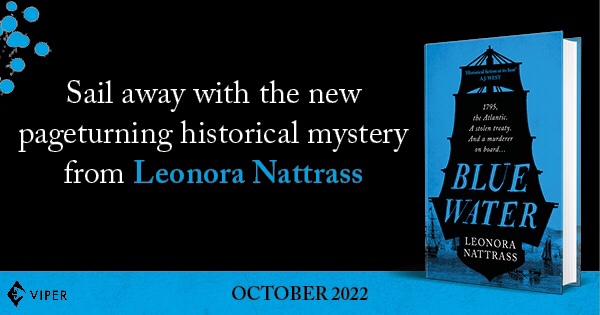
Blue Water by Leonora Nattrass

Death came aboard with the cormorant. It arrived on the seventh day of our voyage…

This is the secret report of disgraced former Foreign Office clerk Laurence Jago, written on the mail ship Tankerville en route to Philadelphia. His mission is to aid the civil servant charged with carrying a vital treaty to Congress that will prevent the Americans from joining with the French in their war against Britain.

When the civil servant meets an unfortunate ‘accidental’ end, Laurence becomes the one person standing between Britain and disaster. It is his great chance to redeem himself at Whitehall – except that his predecessor has taken the secret of the treaty’s hiding place to his watery grave.

As the ship is searched, Laurence quickly discovers that his fellow passengers – among them fugitive French aristocrats, an American plantation owner, an Irish actress and her performing bear – all have their own motives to find the treaty for themselves. And as a second death follows the first, Laurence must turn sleuth in order to find the killer before he has an ‘accident’ of his own.

I loved that atmospheric opening. The cormorant sitting there on the bow of the ship, nonchalantly drying it’s wings in the wind and oblivious to the superstitions it’s arousing in the crew. If you ever wanted to know what it was like to take a voyage from Falmouth to Philadelphia in the 18th Century then look no further than this novel from Leonora Nattrass. It is so detailed and grabs the reader immediately, within a couple of pages the ship was as real to me as the cat sitting on my lap. Everything from the period appropriate language to the workings of the ship come together to entice you back into the 1790s. I felt like all my senses were engaged from the feel of cold sea spray to the sound of a passenger throwing up over the stern rail. The discomfort and claustrophobia of being stuck on the ship, at one point for three days near the French coast thanks to the prevailing winds, is very apparent. I loved the little details like the full ‘piss-pot’ sliding up and down the deck, the cacophony of the dog barking incessantly at the turkeys they are transporting, and the bear cub that turned out to have ‘tolerable table manners’. The author also emphasises how cramped the cabins are, with Jago almost able to reach out and touch both walls. At least its his own space though and somewhere he can relax, which he does with a drop or two of laudanum to combat the stress he’s feeling from all the subterfuge.

I hadn’t read Black Drop, the first outing with Laurence Jago, but I think this stands well alone. It’s a clever idea to take your characters and put them into a totally different situation. Laurence is a likeable fellow, a disgraced foreign office clerk, with a few downfalls in his character. Not only does he like a drop of laudanum, he’s a little bit gullible when it comes to a pretty face. He is tasked with helping a civil servant who’s carrying an important treaty to the Americans, to prevent them joining the French in their war against the British. When they come up against a French warship in the channel the treaty needs to be hidden, so when a death occurs on board not only is the treaty lost, but there might be a murderer on board. There’s such a cast of characters on board: two French aristocrats escaping the changes in the run up to the revolution; an Irish actress; a man who is possibly a freed slave; a plantation owner; and a dancing bear! Most of them have a vested interest in the treaty and all of which could be a murderer. Of course Jago can’t rule out one of the crew being involved, perhaps hiding the treaty for financial gain. As for the murder, they are investigating a locked room mystery, it’s just that this room is a cabin.

I loved how the tension built as Jago tries to find the treaty and solve the murder, especially as the stakes grow ever higher and Jago himself could become a target for the murderer. I became more attached to him as the story progressed because I felt he was a bit of an innocent, totally out of his depth and with poor judgement, such as with Lizzie. He’s perpetually confused, which isn’t surprising considering his shipmates and their antics. One of the aristocrats holds a seance, the crew mates are full of maritime stories and superstitions, including the usual giant sea creatures, plus they’re eating slop and feel exhausted. I wasn’t surprised Jago’s brain was muddled!. Aside from the subterfuge and untrustworthy passengers, there’s the constant underlying tension of being unable to get off the boat and knowing that whoever committed the murder is still there too. Once they’ve left the sight of land, these misfits are stuck together for weeks. Oh, and I forgot about the pirates. This is a fabulous adventure, a murder mystery some full on comedy here and there. I’m now looking forward to going back and reading Jago’s first adventure.

Posted in Publisher Proof

Grave Issue by Julia Vaughan.

Today as part of the Bookstagram tour for Julia Vaughan’s new novel Grave Issue, I’m spotlighting and sharing an extract from the novel.

Grave Issue is the second book in the DCI Kath Fortune series of novels and is released on 16th September 2022. This follows on from Daisy Chain, Julia’s debut novel.

“Who killed Abraham and Esther Downing in the 1970s?

What is the significance of the seven tiny skeletons unearthed in the garden of Downing’s cottage?

And why does no-one care?

As DCI Kath Fortune and her cold case team deep dive into their second investigation, they come up against a wall of silence surrounding the reclusive couple. With Kath trying to piece together the clues and keep her personal and professional relationships on track, her past comes back to haunt her with time running out on all counts.”

Extract.

6th March 1963

Now it begins. New life comes again—surely my last chance. The good Lord blessed me with fertility, but my work is nearly done now, and I know that He can take away the gift of life. I must write quickly now. A spends less time in the fields now that I am close to my time. My new waters cover the stains of the seven birth waters gone before. The bare boards soak in the fluid that the child no longer needs to live inside me. The pains come now. Soon, A will come with the rope to pull the life from my body. There’s the scream of the back door. He moves about beneath me. I pray for God’s love…God’s love and forgiveness through the pain.
Always and Ever.

Chapter One

‘What time do you call… Oh!’ Ruth halted her admonishment as Kath stepped into the room. Kath grinned and rubbed the back of her now naked neck.
‘Yeah… thought it was time for a new look.’ She threw her bag onto her desk, soaking in the admiring glances from her team.
‘Makes you look months younger,’ Shirl said, laughing and pointing at her boss.
‘You look great, Boss. Really suits you.’ Marvin continued pouring coffee into mugs as Kath sat down. ‘Well, I was looking a bit like Worzel Gummidge’s half-cousin.’
She’d made a sudden decision the day before and called up her hairdresser of many years, who always came to her house and worked her magic. She felt lighter in spirit and now in hair as she and her colleagues had wrapped up their first cold case.
‘New look for a new man.’ Ruth accepted her mug from Marvin, and Kath laughed. ‘Old man, you mean. I mean… no, not old… Oh, you all know what I’m trying to say.’


Kath had reignited her relationship with her school sweetheart, Lenny. The young love that had brought them together across algebra and Romantic poets had survived the intervening time and his marriage of many years. Now, his marriage had ended, and they were moving forward into a new era of love and companionship. Marvin pointed to a newly labelled box in the corner. ‘I’ve put all the paperwork in there. Case closed.’ Kath nodded. ‘Onwards and upwards now, guys.’ She swivelled in her chair to face Byron Lord, the civilian member of the team, who had been invaluable in their first case and in bringing together all the details to find the murderer of five-year-old Daisy Prospero. Kath felt his skills in finding hidden information secreted within the wheels of the dark web were going to continue to be key in all their cases. He had proved his worth and, as a reward, Kath had suggested that he might like to choose their next case from the hundreds stacked in the boxes lining the back wall of the office. ‘Byron, what do you think? Are you happy to choose the next case? I don’t want you to feel any pressure but I want to ensure you feel as much a part of this team as anyone else. ‘Byron nodded, his waist-length hair falling forward as he reached for a folder on his desk. He stood up and handed the manila file to Kath. He did appreciate the responsibility. He had come into an already established group of detectives who had worked together on active cases for some years. Ruth, Kath and Shirl go back many years previous, Marvin a more recent addition but still with experience under his belt. Byron’s skills as a ‘technical wizard’, as Ruth called him, had proved so important in their first case, and he felt useful and enthusiastic about his new role.


‘Have you lost weight, Byron?’ Ruth pinched taut flesh through his T-shirt, and he skipped out of her reach, smarting at the harshness of her fingers.
‘No.’ Byron sat down and hid behind his two huge monitors. ‘I’m naturally skinny. Runs in the family.’
‘I’m naturally jealous.’ Ruth patted the spare roll of fat around her middle.
‘Look at it this way.’ Shirl stood up and took the lid off the biscuit tin next to the kettle, her finger poking around in the crumbs. ‘You’re providing a warm and comfortable home for Mr Gregg and Mr Kipling.’
‘Cheeky cow.’ Ruth tried a tone of superiority, but she couldn’t pull it off, knowing that her over-enjoyment of certain food groups had not helped her post-menopause weight gain. ‘And you can talk… get your hand out of there.’
Shirl pulled her hand out of the tin and licked the few measly crumbs off her finger. ‘Talking of Mr Gregg…’
Kath smiled, reached into her bag and pulled a twenty pound note from her purse. She flourished it at Shirl, who grabbed it, smiling. ‘Yes, go to Greggs, get us all some sustenance.’
‘Salad for Ruth, obviously,’ Shirl said, grabbing her coat from the back of the door.
‘Fuck off,’ Ruth replied.


‘I’ll take a look at this whilst Shirl goes into the depths of Madeley, and we’ll discuss it when she gets back.’ Kath opened the manila folder.
‘I’ve done some notes for everyone.’ Byron patted a pile of the folders on the edge of his desk. Shirl disappeared down the stairs, and there was a companionable silence as Kath skimmed through the file and Marvin and Ruth tapped away on keyboards, answering emails and starting new documents ready to receive the information Byron would input for them. Kath read quickly, nodding to herself, then grabbed her cigarettes and made her way outside. Shirl was just reversing her car out of the rear car park when Kath stopped her. Shirl opened her window.
‘Don’t get me anything; feed the others.’
Shirl looked her boss up and down. ‘This new diet of yours is paying off. New hair, pounds dropping off. What’s going on?’
Shirl knew Kath too well, and Kath was not about to reveal the secret behind her weight loss. A Volvo stopped in the road, indicating to turn in but unable to because Shirl was in the way.
‘Go.’ Kath waved her hand in apology to the PCSO trying to get into the station, who was building up a stream of traffic behind him.
‘Fine.’ Shirl was still muttering as she closed the window and reversed quickly, turning off up Madeley High Street—a short distance that would not have taken her long on foot. But Shirl didn’t walk anywhere she didn’t have to.


Kath stood back as the Volvo turned in and the traffic continued down Legges Way into the Ironbridge Gorge. She lit a cigarette and walked a little way down the path that led down from the police substation, opening onto a wild grass area with woodland fringing it, the rooftops of the Sutton Hill housing estate visible in the distance. She paced and smoked. The pounds were indeed dropping off at an amazing rate, but Kath couldn’t tell anyone it wasn’t a new diet or exercise regime but the relief in the knowing that she had truly got away with murdering an aged paedophile over twenty years ago. She had kept her secret past hidden for so many years now, and there was every reason to believe she could carry on doing so. She skirted dips in the packed earth pathway, softened by the regular nightly September rain. Byron had picked an interesting case: two bodies unearthed in Broseley, a mile up the hill from the gorge, one male and one female and seven tiny bodies buried alongside them. This was truly a cold case, the bodies of the seven infants only being found eight years later in 1983 when a developer brought in excavators to demolish a rundown cottage in a large expanse of land bordered by woodland off the main road.


Kath flicked her cigarette butt into the long grass as Shirl returned to the car park at the back of the station, brandishing bags from the bakery. The thought of the contents of the bags made Kath feel slightly queasy as she caught up with her colleague. They made their way back through the small station and up into their office, the smell of fresh pastry and meat wafting into the nostrils of Marvin, Ruth and Byron.
As Shirl passed around the assorted bags, Kath sat down and patted the folder on her desk. ‘Okay, guys, our new case is an old one—eighties and beyond, I think.’ Byron looked at Kath and nodded. She knew he would have already done some work in the hope that she would agree to his choice. Marvin and Ruth chewed on their steak slices.
‘We have two adult bodies—one male, one female—both murder victims, according to the initial report, but that’s not all.’
The chewing stopped, and all eyes turned to Kath.
‘As if that isn’t enough of a tragedy, we have seven small bodies as well. Babies. Seven dead babies.’
The team looked at each other and then back at Kath as Shirl sat down in her chair, turned her back on her colleagues and blinked away tears of sorrow and memory.

Chapter Two


The sun had finally broken through the clouds, warming the bones of the old man in the churchyard. He stretched and put his hands onto the small of his back, pressing the kinks out of his eighty-five-year-old spine. The trees surrounding the pretty Norman church were still hanging onto their leaves, reluctant to let the autumn season have its way. A pair of magpies squabbled at the top of the biggest oak tree, their harsh chatter the only sound in the quiet of the countryside. A tall man of slight build emerged from the dark interior of the church. He raised a hand in greeting to the other man, walking slowly towards him and glancing up at the sky.
‘Morning, Sam.’ He placed his hand on the man’s shoulder. ‘God’s majesty in all His glory.’
‘Reverend.’ Sam Williams tipped his cap, holding the rake upright, tines resting against the grass.
‘It’s looking lovely, Sam. As usual.’

Sam nodded his thanks. ‘I’ve been bringing on some roses at home, thinking of clearing that patch down there.’ He pointed to the left of the church, where some of the oldest gravestones rested. ‘Get them nettles cleared. Good soil, sun and shade. Should bring on a nice display in years to come.’
Reverend Michael Thomas smiled. ‘A rose garden. Joyous. The Lord has blessed you with a great gift. I, myself, cannot tend a houseplant.’
Sam gazed off into the distance. ‘Your gift is with people, Reverend, not plants.’
‘You’re very kind.’ Reverend Thomas pushed his hands into the pockets of his jacket, his dog collar moving with the motion of his Adam’s apple as he swallowed several times, knowing what he was about to say would break the moment. He moved forward a few strides, coming to stand and look at the side of the church where a lone stone, small and sunken, sat apart from all other gravestones in the bucolic churchyard. The earth around the stone was barren. A few rogue blades of grass pushed valiantly through the tired earth and a single dying dandelion held onto its last few fluffy seeds. He kept his back to Sam, knowing the reaction that would come with his next words.
‘Maybe we could try some bulbs here, for next year.’
Sam approached the vicar but stayed a little way back. ‘I tell you every year, Reverend, and I’ll repeat myself once more: I’ll not tend to this.’

The vicar sighed and his shoulders dropped. ‘His sins have been forgiven by the highest order in the land. Yet you still judge him.’
Sam coughed, and a globule of phlegm sailed past Reverend Thomas’s shoulder and landed on the leaf of the dandelion. ‘The Lord can forgive whoever He likes, that’s His job and well He does it. But you know me, Reverend… you’ve known me many years. Those of us who know won’t forgive and won’t ever forget, and I’ll not plant beauty in poisoned soil. Won’t grow anyway, you know that.’ He turned and walked back to continue raking up the small leaves that drifted on the winds from across the neighbouring fields. The vicar knew Sam was right. Ever since the body had been buried, the surrounding soil seemed against supporting life. No worms turned the earth. Any seeds dropped naturally by passing birds that would have flourished anywhere else on landing would not survive in this bare section of the churchyard. A large twig had lodged itself against the gravestone, and the reverend leant forward to move it. He was unaware of the thorny spines until it was too late. He straightened up as he winced and sucked the circle of red blooming from his finger.
‘Damn you, Abraham Downing,’ he muttered.

Chapter Three

They’d all spent twenty minutes or so quietly eating and looking over the notes Byron had provided and now Kath was eager to get into it.
‘So, thanks to Byron for the abridged notes of the case,’ Kath said, waving her copy of the paperwork. ‘We pare it down to the bare facts. Feel free to offer ideas, suggestions.’ Kath moved the front sheet further away from her face, trying not to look as though she was squinting.
‘Get some glasses, woman,’ Ruth said, trying to hold in a laugh.
‘I’m fine. Leave me and my eyes alone.’ Kath shook the paper and cleared her throat. ‘Two adults, Esther and Abraham Downing. Police were called when a dog walker discovered Abraham’s body.’
‘Thank god for dog walkers,’ said Marvin.
‘Indeed. He was lying in front of his cottage with his head caved in,’ Kath continued. ‘A shovel, covered in blood, lay next to him. Presumed murder weapon. Police discovered a shallow grave containing the body of his wife, Esther. Cause of death: shotgun blast to the torso. Said shotgun was inside the house. Only one cartridge discharged. So, the first question is, why two different weapons?’


Shirl lay back in her office chair, almost horizontal. ‘Ruth, you’re gonna wear a hole in the carpet.’
Ruth was pacing at the other end of the office. She did her best thinking on her feet, the movement seeming to aid her brain in putting thoughts together in some sort of natural order. She liked her external world to be clean and ordered, everything in place, and now her brain was in chaos mode, trying to unscramble the information.
‘My question is, why was one body buried and the other left exposed?’
‘Marvin.’ Kath pointed at him, and he sat up straight at his desk. ‘You’re the killer. Go.’
‘Erm… well, I go to shoot Abraham, but Esther gets in the way.’
Kath nodded. ‘Okay. Shirl?’
Shirl tossed her papers onto her desk. ‘Why wouldn’t Abraham stop you?’ She peered at Marvin, who was tapping his pen against his forehead.
‘He can’t get to me in time.’
‘So, why not turn the gun on Abraham and shoot him?’ Shirl asked.
‘The gun…’ Marvin struggled to focus his brain, trying to insert himself into the killer’s head. ‘Okay, how about the gun jams?’ He smiled and held out his hands. ‘So, I throw the gun to one side and pick up the nearest weapon, which is the shovel. I bash him in the head. Job done.’
‘Maybe Abraham wasn’t there when Esther was shot,’ said Ruth, still pacing.
‘So, why didn’t he report it?’ Marvin was throwing questions out now. There was a moment of silence.
‘Okay,’ Byron said. ‘But why would you bury Esther and not Abraham?’
They all turned to Marvin for an answer.
‘I… don’t have time.’
Kath nodded. ‘It can take a while to dig even a
shallow grave.’
‘Is that the voice of experience talking?’ Ruth
laughed, and her colleagues joined in. Kath feigned indignation but her insides flipped at the thought of her teammates discovering her own murderous past. She needed to bring the discussion back to the case in hand.
‘Marvin, why didn’t you bring your own weapon with you if you meant harm to them?’
The office was silent as Marvin processed the question.
‘I didn’t mean to do it; it was spur of the moment, so I used what was already there.’

Ruth nodded, flapping her own paperwork and causing a draft. ‘But why did you put the gun back inside the cottage? The shovel was outside, next to Abraham’s body, but the gun was inside.’
‘Maybe…’ Marvin shrugged. ‘I’ve got nothing.’
Byron picked up the thread. ‘Maybe someone else killed Esther, and Marvin—sorry, the killer—found out and Abraham’s murder was something else entirely.’
Kath went back to her notes. ‘Autopsy showed Esther’s approximate day of death was the same as her husband’s.’
‘Which was?’ Shirl asked.
‘August sixteenth 1975,’ said Byron. ‘No one heard the gunshot and thought to go and see what had happened?’
‘Everyone’s got a shotgun in that neck of the woods, pardon the pun,’ said Kath. ‘It’s the regular form of maintenance, shooting foxes and such. All the farmers have one, and the cottage is quite remote, set back in woodland away from the main road, no other houses around.’

The cottage in question, at the heart of the case, was still standing but was a shell of a construct. With no traceable relatives, the Downing property had passed, after many years, into trust, and there was no possibility of selling the land to build on. Broseley was full of sinkholes from its mining history, and portions of woodland and road had slowly disappeared over the years as the land shifted and tree roots snaked their way through the underbelly. The cottage could just about be seen from the main road running from Broseley centre down the Ironbridge. In times of torrential, prolonged rainfall, the whole area in front of the cottage turned into a mini lake fringed by ancient trees and scrub. The cottage was still standing, despite the shifting of the land around it. The roof was all but gone, the window spaces resembling empty eye sockets.
‘You’ve picked a good one here, Byron.’ Ruth stopped pacing and perched on the edge of one of the tables in front of the window.
‘Sorry.’
‘No, don’t apologise.’ Kath grabbed her cigarettes and stood up. ‘I think what Ruth is hinting at is that this all happened in the mid-1970s. Forensics was sketchy, nothing at all like we are now blessed with, and there is practically a whole generation that has died off, so witnesses are few and far between.’
‘Didn’t anyone miss the Downing couple?’ Byron asked. ‘Surely someone would have said that they hadn’t seen them around and gone to check if they were okay.’
‘Can’t answer that one,’ Kath said. She headed for the door, and Shirl got up to follow her.
‘It’s the babies,’ said Byron quietly.

Everyone turned to look at him. He lowered his head, his curtain of hair falling forward to cover his face.
‘I had a baby brother.’
No one moved, not wanting to break the spell. Byron took a deep breath and looked up. ‘I was
seven, I think. So excited to have a brother. But he died when he was around three months old. Sudden infant death syndrome.’
‘Oh, mate.’ Marvin moved to him and put a hand on his shoulder, wanting to give him a hug but feeling it was maybe too much.
‘It’s okay.’ Byron gave a weak smile. ‘Mum called him Percy. He was adorable.’
Shirl’s sudden movement made them all start, and she pushed past Kath and headed down the stairs. Kath frowned and looked over at Ruth, who shrugged and raised her eyebrows.
‘There’s no explanation for SIDS. I guess I just want to try and find out what happened to those seven little babies.’ Byron moved to the coffee machine, and Kath rubbed his back lightly as she passed him on the way to meet Shirl downstairs for a much-needed fag break.
‘We’ll find out, won’t we, guys?’ Kath looked over her shoulder at Marvin and Ruth, who muttered words of encouragement, and she continued downstairs to find Shirl smoking underneath her favourite tree next to the Madeley station.

That was the part of the case they were all not talking about: the seven baby bodies found in graves at the side of the cottage. It wasn’t until the council had released the ground many years after the deaths of the Downing couple that the graves had been unearthed. A developer had made inroads into looking at the prospect of using the land for building houses and had used a team of surveyors to look at the potential of the ground if the council was willing to let it go for the right price. The seven bodies had seemed to be a forgotten aspect as the police had concentrated their efforts on looking for Abraham and Esther’s murderer. Now, the babies were most definitely in Kath’s sight, and the team would be investigating their deaths just as thoroughly as the two adult bodies. The case wasn’t so much cold as frozen. Although the adult bodies had been discovered in 1975, the corpses of the seven babies had only been unearthed, literally, when developers had been testing the soil. The officer in charge had amazingly had the bright idea of getting a local archaeological group to take a look, realising they may have some relation to the case of the two adults found murdered on the same spot eight years earlier. The would-be archaeologists had surmised the tiny bodies might even have stretched back into the 1960s, but the focus had been on the adults, and the seven skeletons were considered a mystery not worth the time and effort of investigation.

‘You okay?’ Kath lit up and waited for Shirl to speak. Shirl kicked at the mass of leaves already forming in the September sunshine under the tree.
‘I have to show you something.’ Shirl exhaled a plume of smoke and looked at her boss and friend of many years.
‘Will you take a ride with me?’
‘Of course, mate, whatever you need. We’ll go after we’ve finished these, okay?’
Shirl nodded, took one last drag and dropped her cigarette butt, crushing it with force into the leaves. ‘Thanks, yeah. I’ll see you up there.’
Kath looked up at the branches as Shirl went back into the station. ‘Always another mystery.’ She flicked her cigarette butt into the road and followed Shirl inside.
The churchyard was quiet. A woman sat on a bench against the front wall of the church, hands clasped in her lap. The only other person was a man collecting grass cuttings from an old lawnmower. He moved to an area on the far side where the oldest graves leant at impossible angles against the low perimeter wall and deposited the grass into a boxed construction that appeared to be some kind of compost heap. Planks of new wood encased the cuttings and decaying flowers, and the elderly man stepped into the box and began trampling the contents.

Kath followed Shirl to a gravestone to the right of the lychgate. She still had no idea why Shirl had asked her to come but knew that her friend and colleague would tell her when she was ready. Shirl had seemed unsettled ever since Byron had produced the new case for the team.
The gravestone was an old one, rounded at the top and bearing two names.
‘Oliver and Mary Carling,’ Kath murmured as Shirl lay a small posy of roses against the headstone. They had stopped off at a florist on the way, Kath again choosing not to ask questions.
Shirl patted the grass and stepped back. ‘My grandparents,’ she said. ‘And also the resting place of Rose Thompson.’
Kath waited, watching her friend as she took deep breaths. Shirl turned to Kath and pulled her cigarettes from her pocket. Kath waited as she lit one. Shirl looked up at the clear sky and exhaled a large plume of smoke.
‘My firstborn. My daughter.’
‘Oh, Shirl.’ Kath put her hand on Shirl’s arm, searching for the right words to comfort her friend. She had not seen this coming. ‘Tell me about her.’
‘She breathed for two hours. Short, snuffly breaths. We were told she probably wouldn’t live very long. Heart defect.’ Shirl paused and took another deep drag of nicotine. ‘It was there on the scans. They said they couldn’t do anything but wait until she was born and then they could perhaps look at operating once she was strong enough, but even then, she might not survive the surgery.’

Shirl wasn’t known for being overly emotional and she kept it together now in the warm sunshine, with the sound of birdsong and the hum of tractors in the far fields.
‘You must have been really young.’ Kath took out her own cigarettes and lit one. Everyone knew that Shirl had four sons, two sets of twins, grown men now, who Shirl and her husband adored.
Shirl nodded. ‘Eighteen. Both of us. We knew we wanted a family straight away, and I was pregnant when we got married, here in this church.’
‘And she’s buried here?’ Kath stared at the gravestone, confused, failing to find another name on it.
‘There’s a centuries-old tradition where babies who died were often buried with a grandparent or elderly lady so they could take care of them in… Heaven, I guess, or wherever.’
Kath smoked quietly and let her friend talk, amazed at the revelation. They had known each other for over eighteen years and Kath had not had any clue. Shirl had been very careful to keep this little part of her past well and truly buried. She suspected that very few people knew this story, and she was humbled that Shirl could share it with her.

‘My family have been buried here for generations.’ Shirl pointed across the churchyard, next to the makeshift compost heap. ‘Great-great-grandparents over there, great-uncles next to them. We asked if Rose could be buried with my grandmother.’
‘That’s lovely,’ said Kath. ‘Comforting, I should think. For all of you.’
Shirl nodded and looked at her burned down filter, flicking off the remaining ash and putting it in her pocket.
‘I understand now why this case has hit a nerve. We don’t have to carry on…’
Shirl held up her hand. ‘It’s fine. It’s time.’ She gave a weak smile. ‘It just made me sad when we started out. I mean, we were looking at the murder of two adults, then the dead babies turned up…’ She moved away, and Kath followed, keeping hold of her filter until she could flick it into the road.
‘Any time you want to talk about her, you know you can come to me now. Right?’
Shirl turned and embraced Kath. ‘Thank you. But it’s all good. I have one day a year—her birthday—when I cry and come here to talk to her, tell her about her brothers, our lives.’
Kath released her and stepped back. ‘June fourteenth. You have it off every year.’
Shirl smiled. ‘What a good detective you are.’

They got into Shirl’s car and sat looking out across the fields.
‘It’s weird how Byron picked up on this case,’ Shirl said. ‘And how we now have this strange connection. Not that he knows.’
‘I don’t know… it might have something to do with Lane,’ Kath replied.
Shirl turned in her seat to face Kath. ‘Go on.’
Lane Petreus was the psychic who had helped the team on their first case a few weeks previous. Kath had watched the interaction between her and Byron as she’d said goodbye.
‘I think Byron has some… capabilities that even he doesn’t know he has. We can’t explain it, and we don’t want to because we just accept that it is what it is, but maybe Byron was just guided somehow to pick this case.’
‘Okay, I’ll take that. You may be right. He’s an extraordinary young man.’ Shirl paused. ‘Have you thought about inviting Lane onto this case?’
Kath had been wrestling with the idea. The team was still in its infancy, and she didn’t yet know if Lane could be a permanent part of the team, even if it were possible and it was what Lane desired. Her talent was in great demand, and Kath felt a little selfish in asking Lane to commit completely to them.
‘I don’t honestly know yet. I kind of feel we should press on as we are. If we hit a stumbling block and Lane is available to us, then maybe we can consider calling her in. What do you think?’
Shirl nodded and started the car. ‘I think your instincts are spot on, as ever. You’ll make the right call when the time comes.’
She nosed the car forward and headed back to the station, considering the idea of sharing an intimate piece of her past with the rest of the team.

Grave Issue Julia Vaughan
Cahill Davis Publishing Limited

Copyright © 2022 Julia Vaughan
The moral right of Julia Vaughan to be identified as the Author of the Work has been asserted by her in accordance with the Copyright, Designs and Patents Act 1988.
First published in Great Britain in 2022 by Cahill Davis Publishing Limited.
First published in paperback in Great Britain in 2022 by Cahill Davis Publishing Limited.
Apart from any use permitted under UK copyright law, this publication may only be reproduced, stored, or transmitted, in any form, or by any means, with prior permission in writing of the publishers or, in case of reprographic production, in accordance with the terms of licences issued by the Copyright Licencing Agency.
All characters in this publication are fictitious and any resemblance to real persons, living or dead, is purely coincidental.
ISBN 978-1-7398015-6-4 (eBook) ISBN 978-1-7398015-5-7 (Paperback)
Cahill Davis Publishing Limited

To purchase the book follow the link here: http://www.books2read.com/graveissue