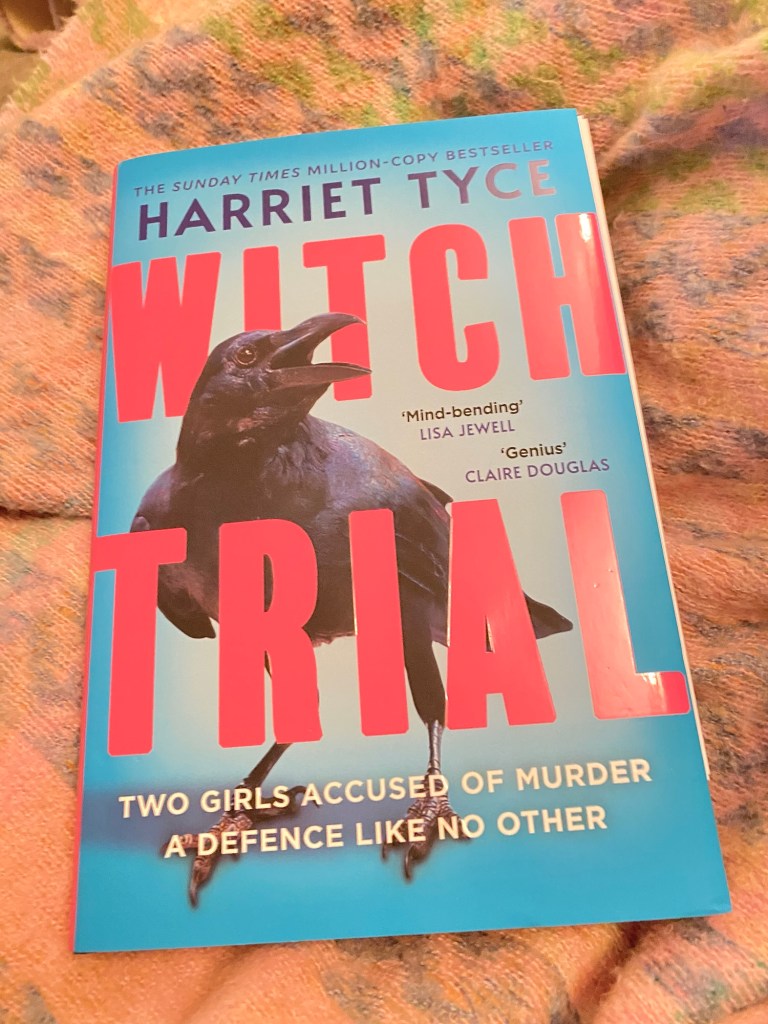
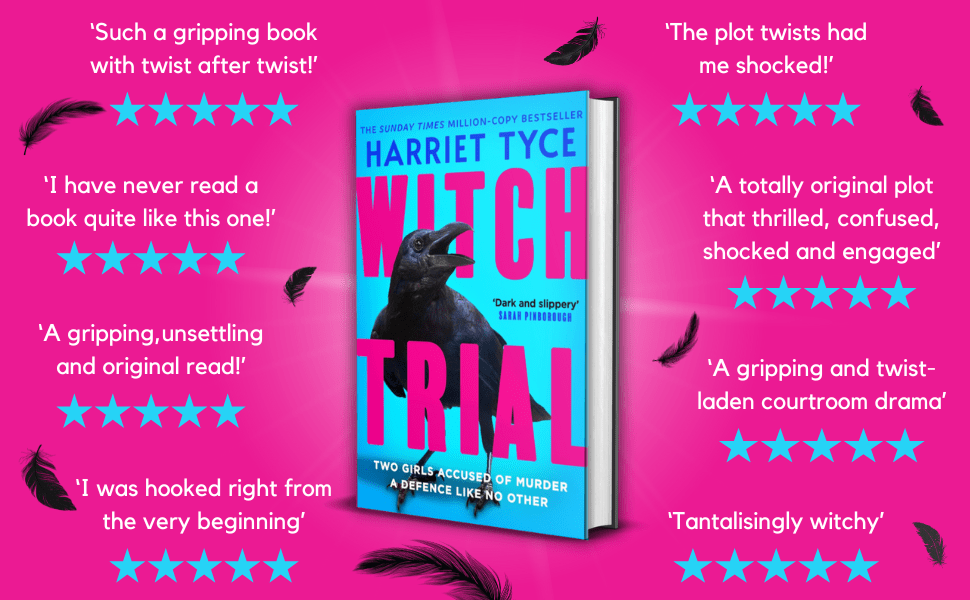
When 18-year-old Christian Shaw is found dead in an Edinburgh park, the city reels – and the shock only deepens when police charge her best friends, Eliza Lawson and Isobel Smyth, with her murder.
As social media explodes and headlines scream for justice, rumours of bullying spiral into something darker: whispers of rituals, obsession, and a teenage pact gone wrong.
Matthew Phillips, a respected heart surgeon, is called for jury duty on the case. But as the trial unfolds – and the girls reveal a chilling defence no one saw coming – he begins to question everything: the motives, the evidence, even his own judgement.
Who’s telling the truth? Who can be trusted?
And what really happened to Christian Shaw?
Let the Witch Trial begin . . .
I finished this book and had to give my head a little shake wondering what I’d just read. Harriet’s one of those writers where I end up devouring the book in a couple of sittings and then wish I’d taken my time because it’s come to an end! This grabs you from the very start as we follow Matthew, an esteemed heart surgeon, for jury duty. He is without question the perfect juror – intelligent, used to making life and death decisions and level headed. However, due to his job he could have easily been excused from jury duty so why does he stay? His colleagues seem incredibly annoyed that he has disappeared and is uncontactable for the foreseeable, because it turns out this is a complex murder case. Although Matthew seems an upstanding character he does seem remarkably keen on having a murder case and with this one he’s truly found the most intriguing. This is one of the most complicated and unlikely cases threaded with fanciful notions of devil worship and witchery. Matthew is our eyes so we view the case at the same time he does, as each witness takes the stand for cross examination. What they must prove is this point of Scottish law:
“Murder is constituted by any wilful act causing the destruction of life, whether wickedly intended to kill, or displaying such wicked recklessness as to imply a disposition depraved enough to be regardless of consequences.”
Put simply, the prosecution must prove that the defendants Isobel and Eliza knew that their friend Christian had a heart condition but were reckless enough to bully and fill her with such fear it killed her. Because of the immediacy of the narrative, the reader drinks in each gasp from the gallery and every revelation from the witness box, so much so that it was halfway through the book before I stopped to wonder how such a case could have made it’s way to court? Can someone deliberately frighten someone to death?
Matthew is observant, he has weighed up his fellow jurors and which ones might be trouble. He has checked out the defendants and wonders whether their appearance might prejudice the witnesses and jurors. Eliza is dressed well, whereas Isobel’s demeanour is surly and uncooperative. She looks down at the floor mostly and has a gothic appearance. She is being painted as the ringleader, but is she or are people being swayed by how she looks? The author adds small details that you barely notice at first such as Matthew’s own appearance. Fully suited and booted on his first few days, he is soon without a tie and then in jeans. His hygiene slips too and a rash starts to affect his hands, itching so badly during the evidence he struggles not to move. He drinks more and avoids his family, staying in his small apartment in the city. There’s also the strange journalist who catches his eye, then seems to disappear. One night she appears at his flat with a bottle and an ouija board, wishing to discuss the more gothic aspects of the case. The suggestion that the girls are practising witches is salacious enough to gain the headlines, but Matthew knows he shouldn’t be talking about the case at all. However, we as the reader are compelled to enjoy the suggestions of animal sacrifice, tarot cards and trying to summon the devil. It’s easy to forget that at the heart of this case are two young girls, who may have been unpleasant and even wicked but surely not criminal? We believe our narrator still, but should we? There are multiple layers to the books final chapters, something that this writer excels at. The occult elements are truly vivid and I found myself engrossed and even believing them in part. This is one of those books, where, like The Sixth Sense, you’ll be going back to see how you missed certain things. The final twists left me awe struck. This is a belting thriller, utterly addictive and compelling to the final page.
Out now from Wildfire Books
Meet the Author
Harriet Tyce was born and grew up in Edinburgh. She graduated from Oxford in 1994 with a degree in English Literature before gaining legal qualifications. She worked as a criminal barrister for ten years, leaving after having children. She completed an MA in Creative Writing – Crime Fiction at UEA where she wrote Blood Orange, the Sunday Times bestselling novel, winner of a gold Nielsen Bestseller Award in 2021. It was followed by The Lies You Told and It Ends At Midnight, both also Sunday Times bestsellers. A Lesson in Cruelty was published in 2022 and met with great critical acclaim and her fifth novel Witch Trial will be published on 26 February 2026. She is a contestant on series 4 of The Traitors. Follow Harriet on Instagram @harriet_tyce and find her Facebook page @harriettyceauthor.
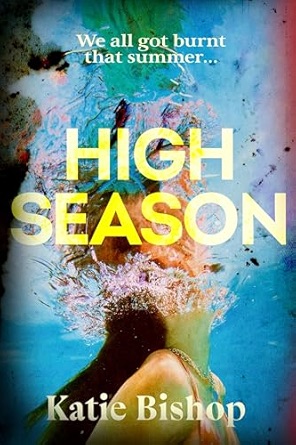
In the heat of summer, the past can become hazy. . .
For twenty years, Nina Drayton has told herself that she must have seen her sister, Tamara, being murdered by the family babysitter – Josie Jackson. That she doesn’t remember it because she was five, and amnesia is a normal trauma response.
But now, with the anniversary of Tamara’s death approaching and true crime investigators revisiting the case, Nina finds it harder to suppress her doubts.
Returning to her family’s sparkling villa on the Cote d’Azur for the first time since the murder, she wants to uncover more about the summer that changed so many lives.
Because if she was wrong, then she sent an innocent woman to jail – and the real killer is still walking free.
I really enjoyed Katie’s debut novel The Girls of Summer so this was a definite must buy for me. The setting was so evocative and I loved the tension between the two different versions of this small town on the Cote d’Azure. There’s the statement holiday home of the Drayton’s, architect designed and jutting out over the sea as if imposing itself on nature. This house and the parties held there in the summer season are all about the rich heiress impressing her friends and other society families holidaying in the area. From it’s viewpoint on the cliff top, the beach shack and the local dive school seem rather shabby but these belong to the families who live here all year round and are simply trying to make a living. They work hard, long hours in the summer season so that they can make the money for the rest of the year, when the everything closes and people like the Draytons return to London or go skiing in the Alps. Through two timelines we’re shown what happens when these two sets of people collide, sparking an event that changes lives and still affects those involved in the present day. Nina Drayton has returned to sort out her mother’s affairs and decide what to do with the crumbling property they never use. However, her visit has stirred up memories of that summer when her sister Tamara died and she gave evidence that put a young local woman called Josie in prison. Now released, Josie has returned to the dive shop her family owned, now run by her brother and his girlfriend. She will be moving in with them until she can get her life on track, but in the meantime Tamara’s murder has become a social media sensation and a podcaster is in town researching the case. Will Josie be able to build a life for herself with this much publicity surrounding the case and will Nina be able to shake off the uneasy feeling she has about what she saw the night her sister died?
There were shades of Atonement in this story that explores memory, identity and how we view events at different points in life. As a child Nina gave her evidence, but even after years of psychology training she’s unsure about exactly what she saw. Her husband Ryan asks her outright:
“How do you know you weren’t making it up? Kids make things up all the time right?”
It’s the first time anyone has ever had the guts to ask her the very thing she has always wondered. It’s something she has tried to cover up, shove to the back of her mind and starve out of her body. She’s tormented by the elusive nature of her memories, as one summer becomes conflated with several others, just a stream of partying adults and often forgotten children. Josie was in and out of the Drayton’s house that summer, either earning money with her friend Hannah for keeping an eye on Nina and the guests smaller children or by invite when Blake Drayton started to take an interest in her. The author takes us back in time between that summer and the present when Josie has been released from prison. Josie has always claimed to be innocent and her yearning for an ordinary life is very endearing. I felt for her as she struggles to keep hold of her sense of self in a world where other people will only see an ex-prisoner. She may have served her sentence but to others she will always be a murderer, so she’s not expecting to be given a chance. She’s surprised when Nic stops to pass the time of day and asks if she would like to go out. We’re shown exactly who Josie is when she feels uncomfortable in the posh restaurant he takes her to and they ditch their booking for lobster rolls at the beach shack instead. When we see her with her brother or out in the water we can see how at home she is here, in tune with nature and the simple things in life.
The author uses transcripts from TikTok videos and the true crime podcast to show us how human lives are no more than a commodity to be packaged in sensational one minute reels to keep the conversation going. Engagement is the goal and there’s plenty, showing us exactly what happens when people become gripped by a puzzle to solve forgetting that behind the headlines are real people trying to live their lives. Here the truth is especially elusive. Josie is fixated on the person who is destroying her second chance, just throwing out wild theories and ludicrous cliffhangers for her followers to pass judgement on. Josie has been judged and served her time, so she didn’t expect to be tried in the court of social media opinion once again. We never truly know who is behind the anonymous profile picture, it could be someone next door or it could be someone on the other side of the world. When we go back to that summer we can see that both Tamara Drayton and her brother Blake are damaged by their upbringing. When he shows an interest in Josie she’s unbelievably flattered. She knows there is a gulf between their lifestyles and for a teenage girl attention from the wealthy, good looking Blake Drayton gives her a sense of acceptance. This, much younger Josie, would stay in the posh restaurant because she’s not comfortable enough to say ‘this isn’t me.’ It’s this uncertainty and inadequacy that Blake has noticed, he sees the local girls as expendable but he assures Josie that it’s over with his rich girlfriend and he really likes her. Meanwhile, Josie’s friend Hannah has struck up a friendship with the rich and popular Tamara Drayton. However assured she seems, under the expensive clothes and air of sophistication, Tamara is still a teenage girl struggling with her own identity and lack of support from her mother. As the days become hotter, the tension between these young people is certain to boil over.
I found the final third of this book impossible to put down. I was waiting desperately for a confrontation between Nina and Josie, something that could help both of them. I wasn’t sure whether these tentative connections would spark another terrible event or whether as adults there could be reconciliation. Would Nina be able to voice her uncertainty and guilt? Would Hannah reach out to her friend, now released and needing to hear about what happened between her and Tamara? At the very least I was rooting for Josie to find a peace within herself. As their present lives threaten to move out of control, Josie starts to have a dream she’s had all her life at times of pressure. A dream of falling..
“The future seems to gape in front of Josie, vast and undefined […] a fall from a very high cliff”.
I really wanted her to think about the times she dives, with all the confidence of someone who’s done this since they were a child. Underneath the water she is both at home and awed by the wonder of what’s living just underneath the surface, especially when she dives for the first time since her release. I wanted her to remember how comfortable she is in the water and realise that it never mattered if she fell: she knows how to swim.
Meet the Author
Katie Bishop is a writer and journalist based in the UK. Her debut novel, The Girls of Summer published in 2023 with Transworld, UK and St. Martin’s Press, US. Her second novel, High Season, was published in August 2025.
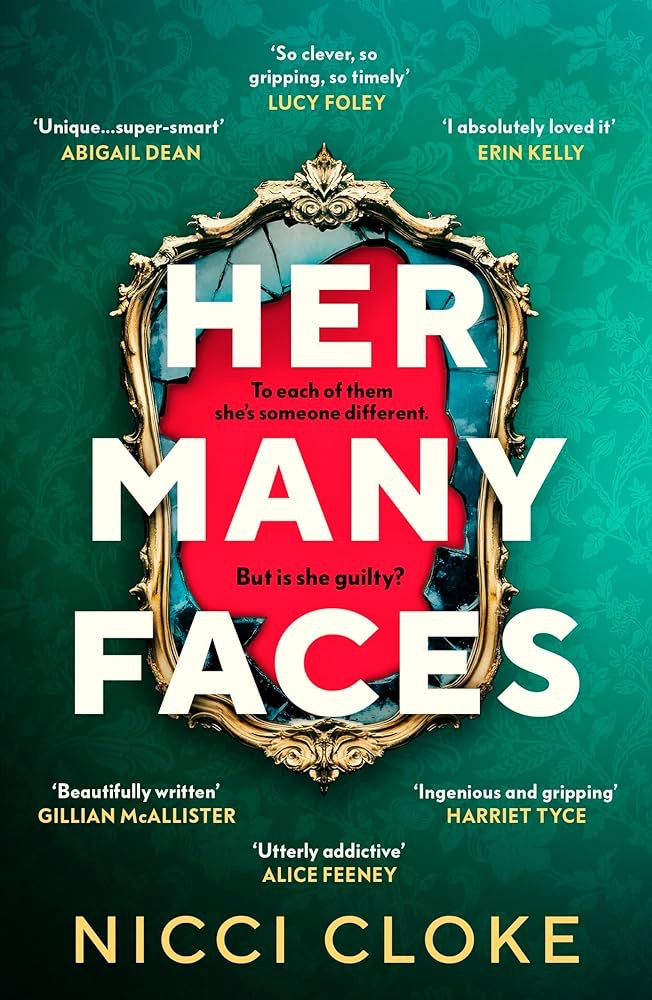
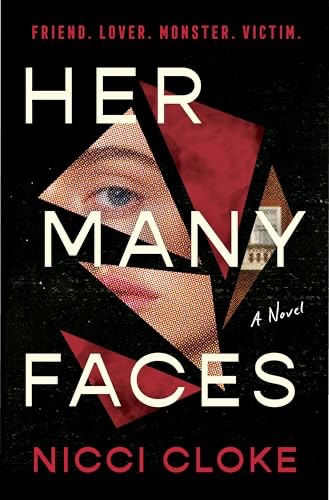
ONE TRIAL. FIVE TRUTHS. BUT ARE THEY READY FOR HERS?
When a waitress is charged with murdering four men at an exclusive private club, her personal life and upbringing are thrust into the spotlight. During the trial, people closest to Katie start to question what they know about her.
Her father remembers the sweet schoolgirl.
Her childhood friend misses her kindness and protection.
Her lover regrets ever falling for her.
Her lawyer believes she is hiding something.
A journalist is convinced she is a cold-blooded killer.
To each of them she’s someone different. But is she guilty?
This thriller grabbed me straight away and never let go! The pace was fast, with short punchy chapters containing the narratives of five men each linked in some way to a woman called Katie. Each man has his own name for this woman and their narratives tell us her story as they see it. John is her father, Gabe is her childhood friend, Conrad is her lover, Tarun is a lawyer and Max is a journalist. Each one thinks they know her, each one presents a different face. But who is she and which is her real identity? Is she a combination of all five or nothing like this at all. It’s a timely, compelling and addictive story that you’ll want to finish in one go.
The murder that has taken place at March House has killed four very important men at once. Lucian is a businessman and owner of March House, a private members club for the richest and most influential men in the UK and their guests. His guests that night were Harris Lowe, Lucian’s new right hand man, Dominic Ainsworth MP and Russian millionaire Aleksander Popov. They appear to have been poisoned with an incredibly expensive bottle of brandy laced with poison. Only one person has been serving the party all evening and that is waitress Katie. She is soon under arrest, but what possible motive could she have had to kill these men? Yet when police apprehend her not long after she’s left work for the evening she is reported as saying ‘they got what they deserved’. Is this an admission of guilt or an acknowledgment that whoever killed them, did the world a favour?
It’s hard to get to know Katie because she is simultaneously a wildcat, a conspiracy theorist, a squatter, a farmhand, a waitress or the accused. These are just some of the descriptive words used to label her by the men in her life, but we have to remember that they are viewing her through their own lens. How much can we trust their impressions of her and do we accept that they’re telling the truth? She’s clearly beautiful, even without the ‘right’ clothes she has something that men desire. Conrad feels this when she’s helping out with the pigs on her uncle’s farm but then is shocked when she turns up at his club and his boss Lucien clearly desires her too. Both of them see a sex object rather than the young, troubled woman in front of them. John still sees his little girl, unable to equate the terrible crime she’s accused of with his daughter. However, we learn that she’s always been sympathetic and perhaps a little soft where his daughter is concerned whereas her mother sees her as a naughty child who grew up still getting into trouble. If anyone sees a more rounded Katie it’s her childhood friend Gabe, even if he is in love with her. She pulls him into her internet wormhole of conspiracy theories and he follows her down to London, ready for direct action to change everything that’s wrong with society. Yet when he gets there, Katie is living in a squat and has moved on in her belief system. Gabe has fallen under the spell of the elusive Mr E who appears in the comments under YouTube videos, disparaging the rich and the corruption within the system. He’s saddened to find her working at March House, the centre of online rumours about secret cabals and the ‘real’ people who run the world. He sees the Katie who had these beliefs as the real Katie and now she doesn’t believe or belong to him anymore. Similarly, Conrad sees her as this beautiful, innocent farmhand:
“You’d taken on a hazy, pure quality, a perfume ad of a person. In the cafe you looked ordinary.”
Every so often a book comes along that captures a moment and this definitely does. It isn’t the first book I’ve read where online radicalisation is part of the story and how dangerous it can be to become drawn in by conspiracy theorists. We tend to use the word grooming when it refers to children, but young adults and people with learning disabilities are also vulnerable and political or conspiracy theories seem to be changing the way people view the world without them even leaving the house and experiencing it for themselves. The echo chambers created when we look at certain subjects means people can be left thinking they have the majority viewpoint, no matter how crazy or extreme the ideas. Conspiracy theories are popular because it gives explanations for events that are incredibly complex and totally outside of our control. The realisation that a small group of individuals could hijack a few planes and attack the most powerful cities in the USA is almost too scary. People didn’t want to feel that their country was that vulnerable and open to attack, so they created stories that their own government must have been involved. Mr E directs his followers to March House as the real seat of power and their list of members could easily feed into that narrative. There is no doubt that some dodgy deals and introductions go on there, but the difficulties facing the country are international and much more complex than a few smoking men in a private room, but for some, life being random chaos is a scary prospect.
At the centre of all this is Katie, a lost young woman unsure of who she is and what she wants from life. With no plan or purpose, she lurches from one crisis to the next never feeling safe or grounded. The novel made me angry, especially with Conrad and Max who want to use and exploit Katie. Conrad has the audacity to suggest his connection to her was flimsy at best:
“I could barely even remember your real name. You had come onto me so hard, when I looked back, that in a way it was embarrassing. I was embarrassed for you”.
I was furious and desperately wanted him pulled apart in court by her barrister Tarun. It reminded me of how women who are seen as controversial, such as Caroline Flack or the Duchess of Sussex, are presented and packaged by the media. There’s misogyny at the root of this and it’s the same with the male characters in the book who package Katie into roles and personalities that absolves them for the harm they cause and assuages their guilt. This is brilliantly done by the author who doesn’t put a foot wrong in her characterisation and the pace of this novel. It’s fast moving and she doesn’t waste a single word, keeping you gripped by what might happen next. We’re never sure on what has happened or who is responsible and the courtroom scenes are brilliant meaning it was impossible to put down – there was one late night where I completely wrote off the following day for anything useful. This is powerful and will make you angry, but you won’t be able to stop those pages turning.
Meet the Author
Nicci Cloke is an author and editor based in Cambridgeshire. Her novels have been published in twelve languages, and she has previously worked as a nanny, a cocktail waitress and a Christmas Elf. Before being published, she was a permissions manager, looking after literary estates including those of Sylvia Plath, Ted Hughes and T. S. Eliot, and was also communications manager at the Faber Academy.
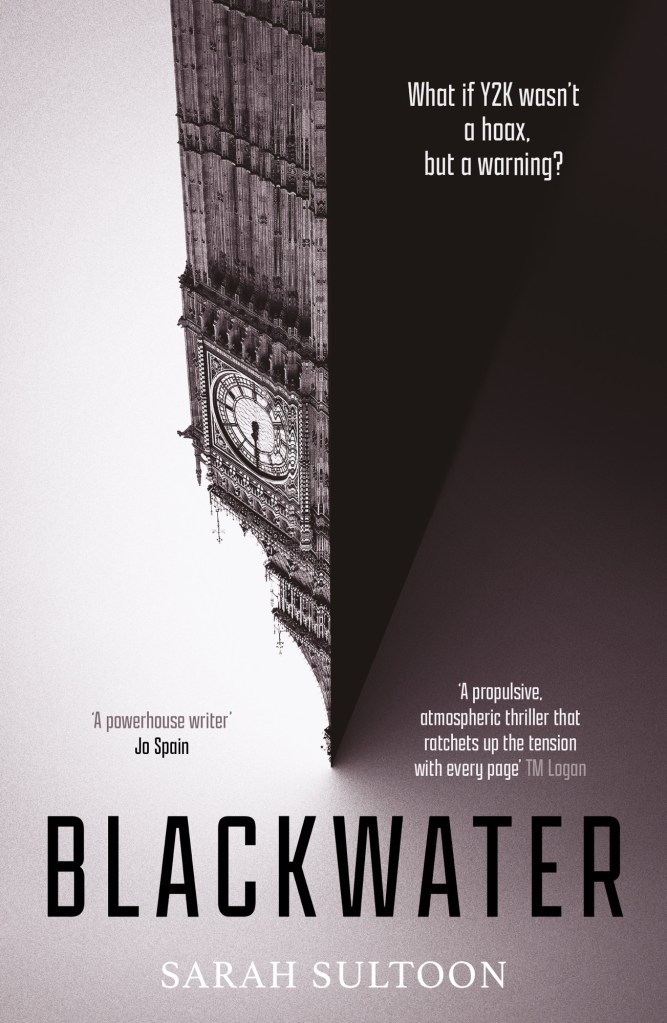
As the clock ticks towards the millennium – and the threat of a potentially new apocalyptic reality – Jonny Murphy is sent to investigate the discovery of a child’s body on a deserted swamp island, fifty miles from London. What he finds is more than just a tragedy, it’s a warning. Something big is coming … Can Jonny stop it? Should he?
London, Christmas 1999. The world is on edge. With the new millennium just days away, fears of the Millennium Bug are spiralling – warnings of computer failures, market crashes, even global catastrophe. But fifty miles east, on the frozen Blackwater Island, a different kind of mystery unfolds. A child’s body is discovered on the bracken, untouched by footprints, with no sign of how he died. And no one has come forward to claim him.
At the International Tribune, reporter Jonny Murphy senses something is off. Police are appealing for relatives, not suspects. An anonymous call led officers to the scene, but no one knows who made it. While the world fixates on a digital apocalypse, Jonny sees the real disaster unfolding closer to home. With just twenty-hour hours before the century turns, he heads to Blackwater – driven by curiosity, desperation, and the sting of rejection from his colleague Paloma.
But Blackwater has secrets buried deep in the frozen ground. More victims – some dead, others still paying for past sins. And when Paloma catches up to him, they stumble onto something far bigger than either of them imagined. Something that could change everything. The millennium is coming. The clock is ticking. Can Jonny stop it? Should he?
I went into this novel quite late, so I was incredibly pleased to find that this is definitely a gripping, read in one sitting type of thriller. This is Sarah Sultoon’s third novel featuring investigative journalist Jonny Murphy, but could very easily be read as a standalone. For people like me, old enough to be an adult at the time of the possible ‘millennium bug’, I remember the panic and the predictions that planes would fall out of the sky, banking systems would collapse and the apocalypse would begin. I remember the money spent trying to mitigate its potential effects but like the British seem to do, we gathered with friends and family anyway and set off fireworks in the freezing cold and precisely nothing happened. It feels like an innocent time now, when we think that 9/11 came only 18 months later, followed by going to war in Afghanistan and Iraq and then years of austerity followed by a pandemic. It’s certainly been turbulent ever since. My dad was convinced that the bug was a made up bogeyman, allowing technology companies and their shareholders to clean up by proposing to ‘fix’ something that didn’t exist. Maybe he was right. We don’t call him Fox Mulder for nothing.
Here Sarah Sultoon has created a fast paced thriller that plays out in the days before Millennium Eve. The timing gives us a countdown, but believe me this story creates its own tension. The setting of Blackwater Island is familiar but alien at the same time. Situated in an inlet only 50 miles from London and with a direct route by boat into the Channel and the Thames this place is hiding in plain site. Beyond the last village, the terrain feels like the eerie marshlands at the beginning of Charles Dickens’s David Copperfield. The mist is so thick someone could be standing next to you and the black, viscous mud has the feel of quicksand. It sucks all explorers into its depths and is enough to put anyone off reaching the island itself. As if that wasn’t enough, the author brings elements of folk horror to the narrative as Jonny is warned off by very unfriendly and odd locals. The only place to stay is an old inn in the village, but the landlady isn’t very welcoming. She warns him that the only resident of Blackwater is Inka who is depicted in a framed picture behind the bar and on graffiti near the island:
“it’s apparently a picture of a ghost that’s been haunting Blackwater since the Dark Ages. Our landlady told me some mad story about a mythical Icelandic warrior named Inka with a diamond-tipped spear and a mermaid’s tail.”
Jonny is canny enough to know when he’s being warned away from something and it only sets his investigative skills tingling. On the other hand, actual protection for the crime scene is very thin on the ground. He meets the only police officer in the area and she feels like she’s been dumped in the backwaters of Essex with no support or back up. The facts are that the body of a boy was found on the island with no visible cause of death, but the weirdest part is that he was dressed like an extra from Oliver! His Victorian urchin clothing is so incongruous, but could mean anything from local amateur dramatics to time travel. It’s once Jonny manages to get on the island that answers start to come and it was nothing I’d considered.
Jonny is a rather fascinating character. He’s absolutely determined to track down his story and has defensive walls a mile high where friendship and romance are concerned. Yet he does have empathy and tries to take the honourable route where possible. He clearly has feelings for photographer Paloma, but has been determined not to pursue them, not wanting to inflict himself on someone else. What does he know about himself that makes him hesitate? Will the story always come first? The scariest part of the whole story is that it’s believable and the afterword really does show that sometimes, what feels far fetched, is only the beginning. Taking in biological experimentation and weaponry, black ops, government conspiracies and the price paid by the locals caught up in it, it’s the writing and the very real atmosphere at the time that makes this a believable story. Jonny’s mission becomes unbearably tense as he has to make it to the centre of London with the city’s ’River of Fire’ fireworks display under threat. Thousands are gathered to hear Big Ben strike midnight and the start of a new century. Jonny fears they may be the target, but there’s also the press area where Paloma is hoping to catch the display on camera, no matter his reservations he’s determined to save her. Events and emotions build and I was half expecting a huge explosion, but Sarah Sultoon is more subtle than that and the fear here is insidious. It warns us not to trust those in authority, to question and investigate everything – an instinct that in real life seems to have been lost since the pandemic. Jonny is a brilliant hero because he has that instinct still and a moral compass that guides his work, something that’s a rare combination. This is incredibly tense, gripping and packed full of action with the added nostalgia of millennium memories.
Out now from Orenda Books
Meet the Author
Sarah Sultoon is a novelist and journalist, whose prior work as an international news executive at CNN has taken her all over the world, from the seats of power in both Westminster and Washington to the frontlines of Iraq and Afghanistan. She has extensive experience in conflict zones, winning three Peabody awards for her work on the war in Syria, an Emmy for her contribution to the coverage of Europe’s migrant crisis in 2015, and a number of Royal Television Society gongs. As passionate about fiction as nonfiction, she recently completed a Masters of Studies in Creative Writing at the University of Cambridge, adding to an undergraduate degree in languages, chosen mainly so she could spend time itinerantly travelling the world. She likes running, Indian food, cocktails, playing sport with her children and throwing a ball for her dog, order dependent on when the cocktails are consumed.
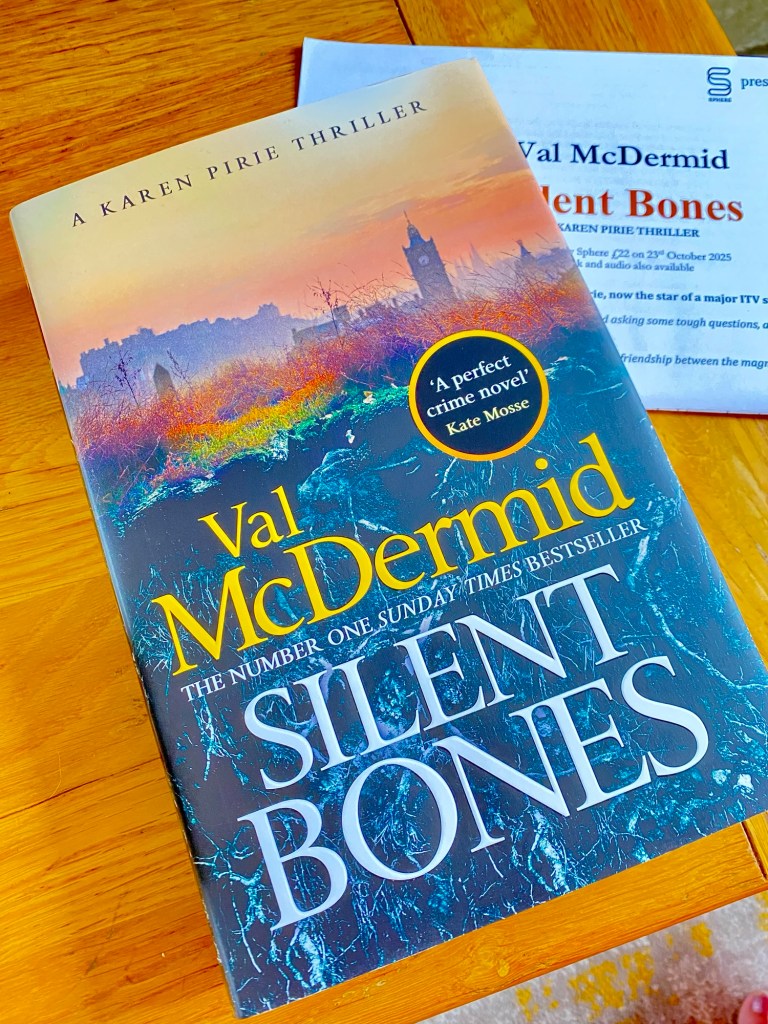
It’s delightful to be back in the hands of a consummate storyteller like Val McDermid and to be reading with my fellow Squad Pod friends. She takes us straight into the story and I always feel like her characters are real people going about their business and we just drop into their world from time to time. Here the Historic Cases Unit are working two cases: the death of a high-end hotel manager and the identity of a body found after a landslip in heavy rain on the M73. Tom Jamieson’s death is flagged up by his brother in New Zealand. Thought to be an accidental death, Tom’s brother has footage that shows someone was behind Tom as he left the hotel after his shift and in the staircase where he met his death. If this man entered the steps after Tom and can be seen exiting then he must at least have seen Tom’s fall, or is there a more sinister explanation? The body in the M73 has to have been placed there deliberately. It turns out to be the body of investigative journalist Sam Nimmo, thought to have killed his pregnant girlfriend Rachel before going on the run about eleven years ago. The discovery opens up her murder case as well as Sam’s. I was hooked by the evidence that leads to a secretive book club of successful men who meet once a month in Edinburgh. They’re named the Justified Sinners, alluding to a James Hogg book that’s based on the Calvinist principle that once a person is ‘saved’ they can commit any sin, even murder, and still enter the kingdom of heaven. Is this a joke between literary friends or something more more? Have they stumbled upon an unofficial Freemasons’ club where the members share business tips and inside knowledge? The team start to wonder about the potential benefits of becoming one of the twelve members and whether those benefits are worth subterfuge or even criminal acts.
Every time I pick up one of the books in this series the same thing happens. I start off slowly, savouring each chapter until about halfway, then I’m racing all the way to the end. It’s superbly plotted, creating a build-up of tension through the short chapters. Each chapter flits to a different viewpoint or separate lead in the cases, causing cliffhangers that last for three or four chapters. This means ‘just one chapter’ at bedtime becomes just three more and finally – I may as well finish. As we near the end of the book those revelations come thick and fast and I had to keep reading till I couldn’t keep my eyes open. I loved the red herrings thrown up in Sam Nimmo’s case as they try to find out what story he was working on. Every lead has to be followed and Jason is tireless on his match fixing leads but is this the story that got Sam killed? The political intrigue is as always murky and fascinating. Between the Independence Referendum and COVID there are plenty of possibilities for corruption and cover-ups.
What I love most about Karen is her tenacity and absolute belief in her own skills as a police officer. She knows she’s a good detective and believes in the team she’s built, even if Jason and Daisy do bicker and become competitive. She knows how to use their skills and how much free rein to give them. I loved her conversations with the boss, the Fruit Gum and other men who outrank her. She doesn’t allow them any room for misogyny or sexism. When she’s told mockingly that the force can do better than rely on ‘women’s intuition’, she’s quick to tell him that it’s no different from a hunch or copper’s nose, a phrase male officers use frequently. She also won’t be bulldozed into moving their office, stating that it would mean longer commutes and distance from the research and forensic teams they rely on most. She also pushes for what she wants in the course of the investigation. When she doorsteps the Justified Sinners, their facilitator mentions they have plenty of pull with the Chief Constable who calls Karen and tells her to back off. She insists on him supplying a list of members before she does and even follows up in the morning to make sure she wasn’t fobbed off. Even in her private life she’s very sure of what she needs. She is still involved with Syrian refugee Rafiq who’s currently working as a surgeon in Canada. With British and US politics ‘beyond satire’ and political funding becoming ever more shady Karen does worry about their future. She’s flown to Montreal several times but she can’t wait until he has Canadian citizenship and can visit Scotland again, maybe even returning for good at some point. When she has a heartbreaking choice to make she faces it by staying true to herself, because she can be romantic but has a hefty dose of realism too. She can also be ruthless, at one point perhaps a little too ruthless for a softy like me. She has her eye on the end goal, not the other person’s feelings because in her eyes the end justifies the means. The truth is not found by treading lightly.
I enjoyed getting to know more about Daisy and Jason’s home lives and it’s here where a bit of humour creeps in. Jason and Meera’s stake-out of a football match with the aftermath being a ‘follow that cab’ tour of Scotland’s motorways made me smile. Especially when the reward that clinched Meera’s attendance was a match day pie. Food looms large in Daisy and Stephanie’s relationship too, in fact Daisy eats so much that Jason is sure she has a tapeworm. That’s not a problem for Daisy, in fact she ponders that it might be the only thing that ensures she stays thin. She’s always scoring leftovers from lunches out and between Italian biscuits, french pastries and the South Indian curry that lures a suspect out of hiding I kept feeling hungry. All of this is to balance the darkness at the heart of these cases, where we see powerful and rich people doing what they like, safe in the knowledge that their status and privilege will always protect them from answering to their crimes. It’s also set in dark times and the weariness Karen feels about what’s happening in the world is something I’ve felt myself for the last couple of years, finding myself thinking the world can’t get any worse. Not only is a sex offending, fraudulent, narcissist running the biggest country in the world, but we have politicians here happy to emulate him. The book is rooted firmly in the now with cancel culture, the MeToo movement, the Covid pandemic and all the corruption surrounding it, as well as the cost of living crisis all pertinent to these cases. I think the team are feeling overwhelmed, even without the quagmire surrounding the Justified Sinners and Sam’s quest for the truth. Some characters did behave unpredictably, just like they do in life. The outcome isn’t straightforward and there were people to blame that I genuinely didn’t expect. This is an enthralling read from a writer at the very top of her game. Someone who knows exactly how to pitch a story and keep the reader engrossed until the final pages. She knows that the joy of a book is in the journey not just those final revelations and that sometimes we don’t get the answers we expect and it’s a better read for that.
Out on 23rd October from Sphere
Meet the Author
Val McDermid is a number one bestseller whose novels have been translated into more than forty languages, and have sold over eighteen million copies. She has won many awards internationally, including the CWA Gold Dagger for best crime novel of the year and the LA Times Book of the Year Award. She was inducted into the ITV3 Crime Thriller Awards Hall of Fame in 2009, was the recipient of the CWA Cartier Diamond Dagger in 2010 and received the Lambda Literary Foundation Pioneer Award in 2011. In 2016, Val received the Outstanding Contribution to Crime Fiction Award at the Theakstons Old Peculier Crime Writing Festival and in 2017 received the DIVA Literary Prize for Crime, and was elected a Fellow of both the Royal Society of Literature and the Royal Society of Edinburgh. Val has served as a judge for the Women’s Prize for Fiction and the Man Booker Prize, and was Chair of the Wellcome Book Prize in 2017. She is the recipient of six honorary doctorates and is an Honorary Fellow of St Hilda’s College, Oxford. She writes full-time and divides her time between Edinburgh and East Neuk of Fife.
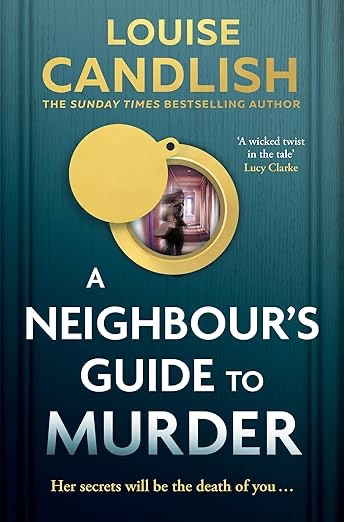
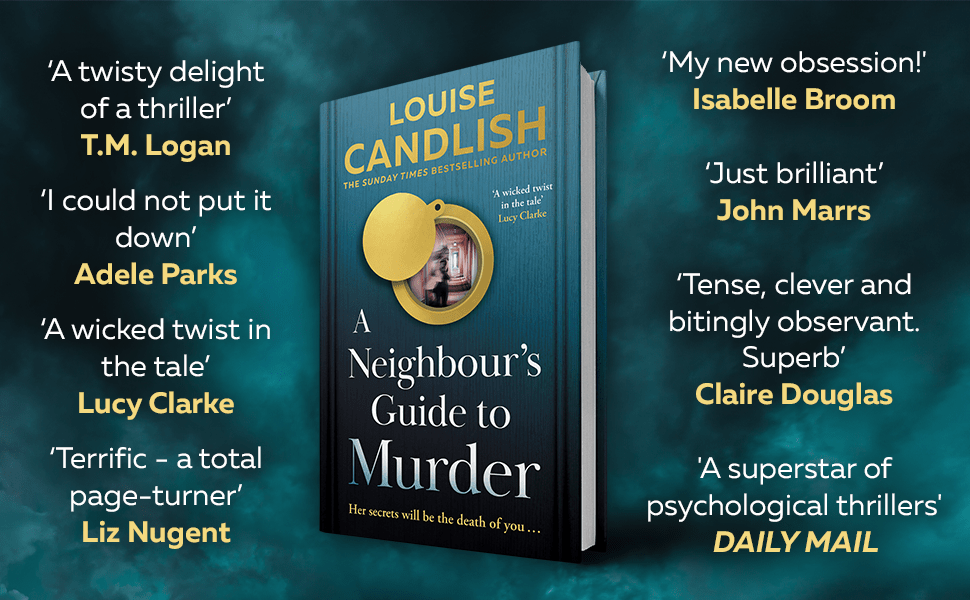
Gwen loves her home, finally settling into her apartment after a very difficult divorce. She loves the community feel in the building and is often part of the organisation of events as she’s now on the building’s resident association with her friend Dee. Everything changes when she meets a young girl called Pixie who is hoping to rent a room in the flat opposite Gwen’s. Gwen’s neighbour Alex is a Britpop one hit wonder and Pixie seems like one of life’s waifs and strays. As she moves in next door Gwen decides she will keep an eye on her, recommending she get a job in the local coffee shop. Slowly they are becoming friends. However, Gwen isn’t sure that all is well across the landing. She’s heard a few arguments already and she would hate to think that Alex is bullying Pixie or taking advantage. Yet Gwen isn’t always up to speed with life in the 21st Century or the modern battle of the sexes. When she fears a crime is being committed she’s soon up to her neck in both Pixie and Alex’s private life and a ‘sex for rent’ scandal. Sex for rent is a morally dubious, but not illegal practice that she soon learns is rife in London and other big cities. With social media, investigative podcasts and shifting ideas around morality, this could become the next #MeToo movement with Pixie as its poster child, but what does this all mean for Gwen?
I love Louise Candlish’s domestic thrillers and this has all her usual trademarks; a narrator we’re unsure about, push button issues that are ripe for rage baiting and on the verge of becoming the next moral panic. Shes always got her finger on the pulse of modern life. She’s also brilliant at letting the tension rise and rise, oh so slowly, until someone eventually snaps. I must admit I did have some sympathy with Gwen, probably because I’m nearer her age than the younger characters in the novel. Although I use social media all the time, I don’t always understand how best to use it or know the personalities and slang that my step-daughters take for granted. They talk about YouTubers like my age group did tv personalities. They’re more likely to watch TikTok or YouTube than tv and then use us to answer questions about the background or history behind issues, especially since we’re actively Anti-Fascist at home. Having lived in the country my whole life and only being lucky enough to own my home when I became a widow, the struggle to find a roof over your head in the bigger cities came as a shock to me about ten years ago. A friend told me she’d been living with five other people in London, all of them in their thirties and working in well paid jobs. I’d been on my own or living with a partner since I was 23.
This novel seemed to confirm something I’ve been feeling since COVID, like society as a whole is slipping backwards on Maslow’s Hierarchy of Need and in our new found instability we’ve lost compassion for each other. Forty years ago we had Live Aid and the recent showing of the concert footage on BBC2 only added to my memories of the event. We were a country united in shock and a willingness to support. Now we want to shoot refugee boats in the channel. A combination of austerity, COVID, fear of terrorism after 9/11 and access to a social media that’s like the Wild West means we’re bombarded with so many terrible images and lied too so often we’ve become apathetic. This is the world this novel comes from: where people are struggling and making choices that seemed unthinkable, just to keep roof over their heads. Where people are finding new ways to make money. Where the lines of what’s legal, ethical or even true have become so blurred. Those who don’t keep up are simply left behind to flounder.
In this story, it was fascinating to see that young women seemed to be adapting quickly, taking advantage of new marketplaces and revenue streams. Gwen’s own daughter has gone from staunch feminist to a ‘trad wife’ and an Instagram sensation. She creates content daily for her audience of thousands by dressing in a modest but cutesy way, sharing mum hacks, videos of her beautiful home and ways to keep her man happy. All the while her followers are wishing to live like her, but even she doesn’t live like her. It’s a fiction, designed to illicit envy and send followers scurrying to her affiliate links. How much of her new life and views are real? Gwen isn’t sure that her daughter knows or recognises the difference between the image and reality. There’s manipulation of another sort too – the facade of being a decent middle class family, untouched by a scandal they are instrumental in creating. Gwen’s neighbour Dee is the unspoken Queen of the apartments and is always immaculately turned out. Her daughter Stella is an investigative journalist who would love to cover Pixie’s story. Gwen has Pixie living in her flat and relations with her neighbour have gone from frosty to downright hostile, pushed any further and things might explode. Stella manages to get television coverage, no doubt paid very well for her trouble, but is then unable to control the story leading social media content creators, pod casters and news outlets to their door, harassing residents as they come in and out. It isn’t long before they have Alex’s name and start exploiting the aging pop star angle.
I met someone like Pixie once and I learned the hard way that they are best avoided and ignored. They are usually life’s survivors, have learned how to get by in the world and will happily turn on those trying to help. I attended a meditation class and got on well with the teacher, so when she moved the class to her own home I didn’t hesitate. There was talk of working together and I wrote a course on authenticity that combined meditation with art and writing therapy. It started successfully, then one weekend she disappeared with the keys to the premises we were hiring and wouldn’t divulge where she was. We carried on, but she told everyone we had pushed her out and stolen her idea. I found out she’d run a class in another town that she claimed was taken away from her by an ex-partner so she was having to start again. She didn’t mention that she’d stolen his car while drunk and crashed it, losing her licence. She hadn’t mentioned being bi-polar either, something I’d have supported her with. The last I heard she was in a relationship with a man who was buying her a hotel that she could run as a recovery centre. I realised that this was a pattern of self-sabotage and lashing out. Pixie felt like a similar character, who landed herself in difficult situations then found people who would rescue her. I worried that Gwen was going to lose out in helping this young woman. That she might easily cause Gwen harm, if it meant she could move on to the next ‘mark’.
I was absolutely gripped by this story and definitely recognised elements of it. I could see that some people would come out of this totally untouched while others could be left confused or even culpable. I don’t want to ruin the book by giving you any more details, but it is classic Candlish. Like her last novel that tackled the problem of second homes on the coast, she’s hit the zeitgeist with this one. We’ve all seen how social media has become lawless with so many different people, including authors, caught up in a public judge and jury situation. It’s hard to know how a targeted individual copes psychologically when they’re being exposed or made out to be something they’re not. How do they keep their self-image intact when the general public have a very different idea of who they are? Everyone in this story, apart from Gwen, has a very fluid set of morals. Even her own children. There’s a lot here that’s totally unfair and raises the blood pressure a little! It’s no wonder the atmosphere in the apartments becomes a pressure cooker. I devoured this in two sittings and I’m sure you will too.
Meet the Author
Louise’s latest release, A NEIGHBOUR’S GUIDE TO MURDER, was published in July 2025 and her latest paperback is OUR HOLIDAY, a Sunday Times bestseller, WHSmith Richard & Judy Book Club pick and Theakston Old Peculier Crime Novel of the Year 2025 nominee. It features love-to-hate characters Perry and Charlotte, second home owners in the idyllic English beach resort of Pine Ridge. It’s now in development for the screen.
Last year Louise celebrated her 20th anniversary as an author with the news of two prestigious awards for her 90s-set thriller THE ONLY SUSPECT: the Capital Crime Fingerprint Award for Thriller of the Year and the Ned Kelly Award for Best International Crime Fiction. Stay tuned for TV news on that one too.
OUR HOUSE is now a major four-part ITV drama starring Martin Compston and Tuppence Middleton (watch the full series free on ITVX). This is the novel that turned her career around, winning the 2019 British Book Awards Book of the Year – Crime & Thriller and shortlisted for the Goldsboro Books Glass Bell Award, the Capital Crime Amazon Publishing Best Crime Novel of the Year Award, and the Audible Sounds of Crime Award. It was also longlisted for the Theakston Old Peculier Crime Novel of the Year Award and the Specsavers National Book Awards. A Waterstones Thriller of the Month, it recently received a Nielsen Bestseller Silver Award for 250,000 copies sold.
Louise lives in a South London neighbourhood with her husband, daughter and a fox-red Labrador called Bertie. Books, TV and long walks are her passions and she loves Tom Wolfe, Patricia Highsmith, Barbara Vine, Agatha Christie and Evelyn Waugh. Her favourite book is Madame Bovary.
Be the first to hear about new releases and price drops ⬇️
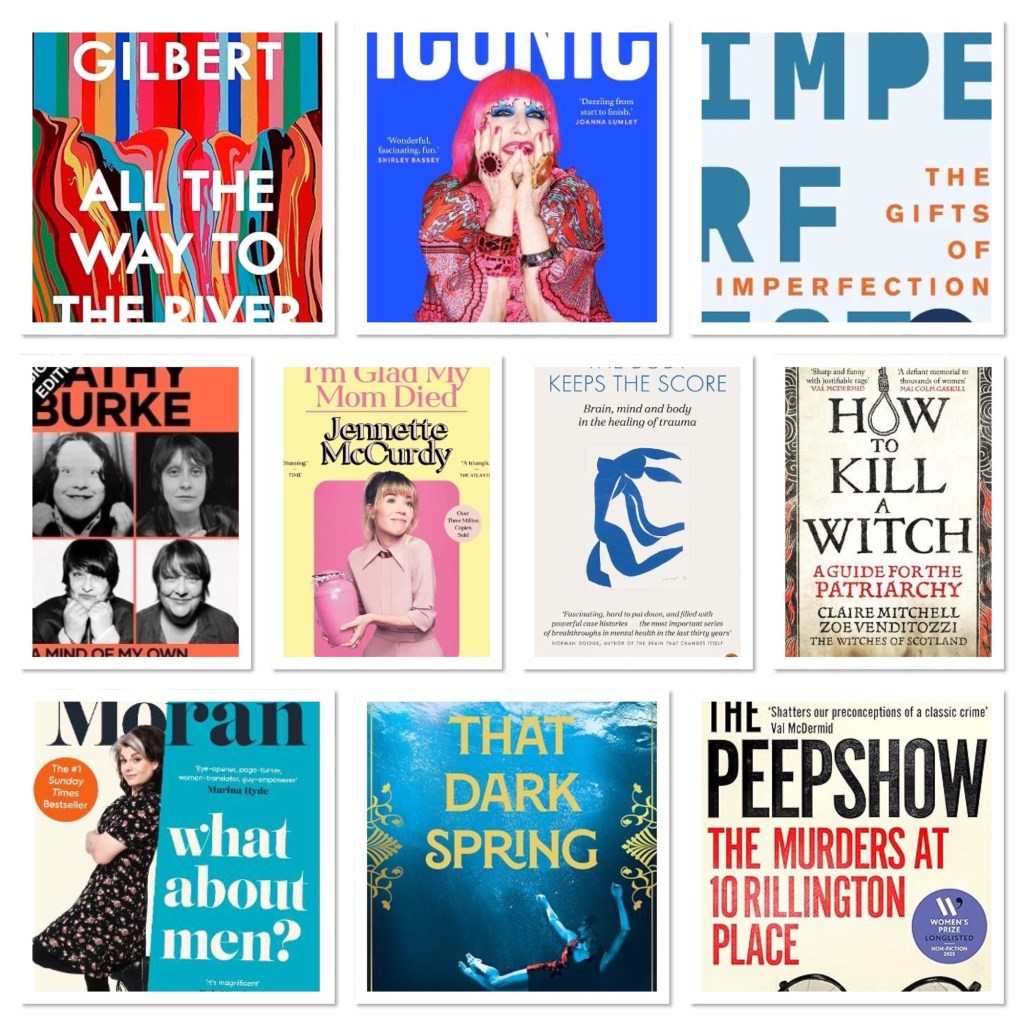
I started the year wanting to read more non-fiction, something I usually do when I need a literary ‘palate cleanser’. We all get those slumps or brain fog moments because we’ve not stopped reading for weeks. My usual pick -me-up is to grab a memoir or psychology book and for some reason that always works. So I want to share with you a few of the books I’ve read or that are on my TBR and wishlist.
Books I Re-Read
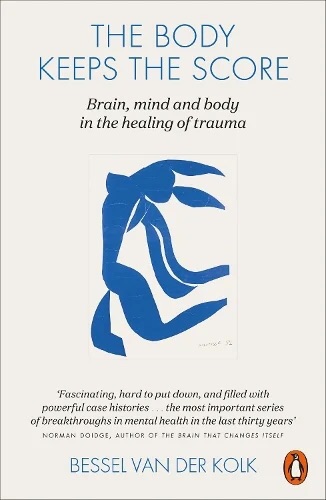
This book was one I picked up during my training in counselling. I was working with people who have acquired a disability through disease or trauma and I was really interested in how people process such a huge change in life. There’s such a long grieving process for what is lost, including the life they were expecting to have. This is the effect of a physical illness or disability on mental health. This book made me think about the opposite effect though, the effect thar emotional trauma has on the body. Mental pain, felt bodily, can be devastating for sufferers, their families and future generations. If you think about something mentally painful that has happened to you – the loss of a loved one or pet, workplace or exam stress, the breakdown of a friendship or relationship – now think about your behaviour or responses at that time. Some of them will be mental but others will be physical: feeling sick or losing your appetite; having a headache or migraine; sleeping more than usual or insomnia. Some people are unable to feel mental pain until they feel it in the body, in fact most of you will have thought about how stressed you’ve been when your shoulders feel tense or a headache is creeping up on you. It’s believed some people never feel mental pain immediately when the trauma is happening and the body stores it, converting it into physical symptoms. Written by one of the world’s experts on traumatic stress, this book offers a bold new paradigm for treatment, moving away from standard talking and drug therapies and towards an alternative approach that heals mind, brain and body.
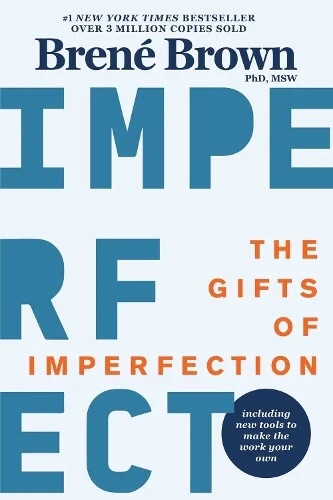
I’m a huge fan of Brené Brown and as a perfectionist I get a lot out of her work on accepting imperfection. I’ve always wanted to write a book but I’m impeded by imposter syndrome and fear of failure. In this book she approaches this as both a social scientist and a friend. She tells the truth, makes us laugh, and even cry with you. And what’s now become a movement all started with The Gifts of Imperfection. She doesn’t just give us statistics and words on a page, but creates effective daily practices called the ten guideposts to wholehearted living. These guideposts help us understand the practices that will allow us to change our lives and families, they also walk us through the unattainable and sabotaging expectations that get in the way. I found this incredibly helpful and I dip in and out of the book when I’m having imposter moments or have fallen out of practice with my writing.
My Non- Fiction TBR
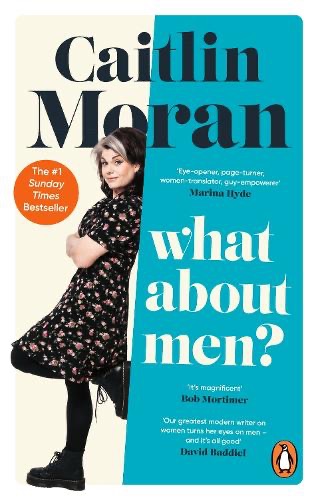
I am a huge fan of Caitlin Moran and have been since her NME days in the 1990s. Her How to be a Woman book is my go to gift for teenage girls. Her writing is frank, raw, informative and hilariously funny. She lays out her teens for us as she struggled with identity, menstruation, weight gain and having so many siblings exploring masturbation was almost impossible. She talks about the things no one talks about openly and with my book group it really opened up some difficult conversations. Here she takes a look at men, at a time where misogyny is a daily occurrence and men like Andrew Tate are inciting hatred of women online. Written before the recent drama Adolescence, she proposes it has never been a more difficult time to be a teenage boy. And, therefore, there has never been a more difficult time to be the parent of a teenage boy.
We’ve all read the headlines, boys are failing in education; facing a hopeless jobs market; getting their sexual education from violent pornography; and being endlessly targeted by online influencers who, yes, tell them to make their beds, and go to the gym – but also push dodgy cryptocurrency schemes, and think the best place for a woman is ‘working in a Romanian sex-dungeon’. She opens with a group of angry teenage boys claiming feminism has ‘gone too far’, and asks: what do boys actually mean when they say that? Are all angry boys, underneath everything, scared? What happens when your son becomes a fan of Andrew Tate? And why do one-in-ten gym-going boys say they’ve felt ‘suicidal’ about their bodies?
Having spent a decade writing about women, girls, and their problems, Caitlin Moran found that, in reality, boys and girls have more in common than they think. Women have spent decades trying to feel better about their bodies; trying to find positive role-models; and feeling angry, and scared, about their place in the world. If feminism has ‘gone too far’ is it because we have started to solve these problems? And, if so, what can boys, and men, learn from this? I am possibly the only person who hasn’ t watched Adolescence yet and I’d like to read this first.
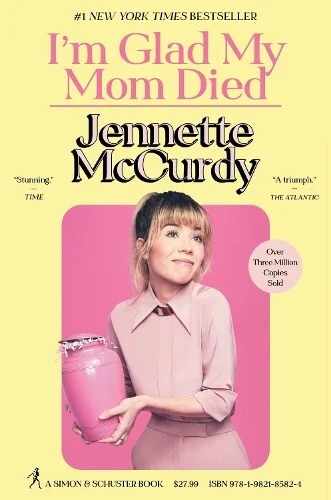
I’m a big believer, whether it’s with friends or in therapy, I’m giving people permission to say the unsayable. In fact this is probably most useful in my conversations with Mum who has to deal with a parent who’s definitely in denial and is so focused on appearing nice to others that it’s pretty much impossible to have an honest conversation. So we make an effort as I’m in middle age and she’s in old age, to be honest with each other and say ‘this made me angry’ or ‘that made me feel sad.’ I thought the title of this book was definitely one of those unsayable things! This memoir by iCarly and Sam & Cat star Jennette McCurdy about her struggles as a former child actor—including eating disorders, addiction, and a complicated relationship with her overbearing mother—and how she retook control of her life.
I didn’t know Jennette until my stepdaughters explained she’d been acting since she was six years old when she had her first audition. Her mother’s dream was for her only daughter to become a star, and Jennette would do anything to make her mother happy. So she went along with what Mom called “calorie restriction,” eating little and weighing herself five times a day. She endured extensive at-home makeovers while Mom chided, “Your eyelashes are invisible, okay? You think Dakota Fanning doesn’t tint hers?” She was even showered by Mom until age sixteen while sharing her diaries, email, and all her income.
Jennette recounts all this in unflinching detail—just as she chronicles what happens when the dream finally comes true. Cast in a new Nickelodeon series called iCarly, she is thrust into fame. Though Mom is ecstatic, emailing fan club moderators and getting on a first-name basis with the paparazzi (“Hi Gale!”), Jennette is riddled with anxiety, shame, and self-loathing, which manifest into eating disorders, addiction, and a series of unhealthy relationships. These issues only get worse when, soon after taking the lead in the iCarlyspinoff Sam & Cat alongside Ariana Grande, her mother dies of cancer. Finally, after discovering therapy and quitting acting, Jennette embarks on recovery and decides for the first time in her life what she really wants. I received this for Christmas and I know I’m going to love it.
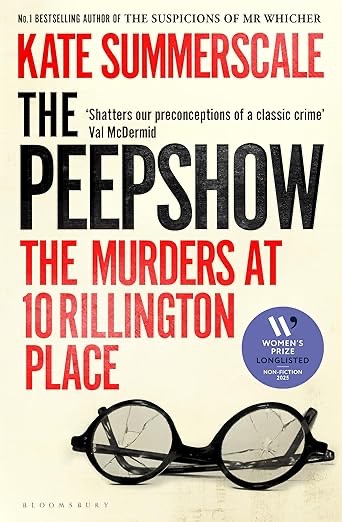
Another book I bought at Christmas, but I haven’t managed to read it yet. I had heard of 10 Rillington Place as a murder site but hadn’t read the story. In London, 1953. Police discovered the bodies of three young women hidden in a wall at 10 Rillington Place, a dingy terrace house in Notting Hill. On searching the building, they found another body beneath the floorboards, then an array of human bones in the garden. But they had already investigated a double murder at 10 Rillington Place, three years ago, and the killer was hanged. Did they get the wrong man?
A nationwide manhunt is launched for the tenant of the ground-floor flat, a softly spoken former policeman named Reg Christie. Star reporter Harry Procter chases after the scoop. Celebrated crime writer Fryn Tennyson Jesse begs to be assigned to the case. The story becomes an instant sensation, and with the relentless rise of the tabloid press the public watches on like never before. Who is Christie? Why did he choose to kill women, and to keep their bodies near him? As Harry and Fryn start to learn the full horror of what went on at Rillington Place, they realise that Christie might also have engineered a terrible miscarriage of justice in plain sight. In this riveting true story, Kate Summerscale mines the archives to uncover the lives of Christie’s victims, the tabloid frenzy that their deaths inspired, and the truth about what happened inside the house.
I love fashion and have quite a collection of fashion books, mainly from visiting exhibits and museums. Zandra Rhodes is fascinating because she’s an unapologetic maximalist. In this insightful memoir, Zandra shares her life story for the first time. Told through a variety of mementos collected over the years, it is a vibrant account filled with rockstars and royalty, of life-changing friendships and poignant reflections on her personal triumphs and tragedies, as well as the fears, sacrifices and pressures that come with being an era-defining designer.
Full of poignant reflections and life lessons on achieving success while defying convention, Zandra takes the reader right alongside her as she recounts being inspired by her avant-garde mother to her time at the Royal College, from a road trip to Rome with Ossie Clark and Celia Birtwell, to opening her first London store thanks to a kind loan from Vanessa Redgrave with Joe Cocker singing With a Little Help From My Friends, from hanging out with Andy Warhol and Halston in New York’s Studio 54 to lifelong friendships with legends such as Karl Lagerfeld and Diana Vreeland; from designing for everyone from Freddie Mercury to Diana Ross, Princess Dianato Barbra Streisand to founding the Fashion and Textile Museum.
Capturing the rich and unexpected life of a British icon, this memoir explores what it is to defy the norm.
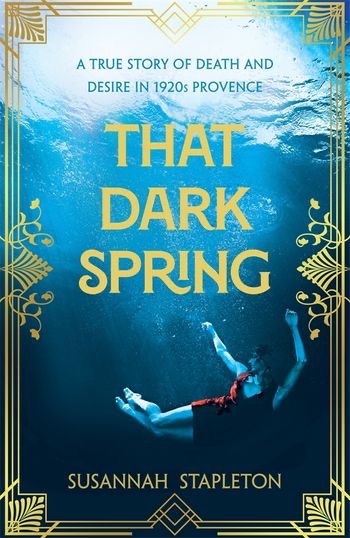
I must admit that the cover drew me to this book and I didn’t initially realise this was a true crime book. In April 1929, the body of British artist Olive Branson was found submerged in a water tank outside her farmhouse in a picturesque Provence village. Dressed only in a pink shirt and stockings, she had a bullet hole between her eyes and a revolver by her side.
Was it suicide – or murder?
The initial investigation concluded suicide, but under pressure from Olive’s family to conduct a murder enquiry, city detective Alexandre Guibbal was brought in to reopen the case. Examining never-before-seen evidence, acclaimed true crime writer Susannah Stapleton builds a vivid and absorbing picture of an unconventional life and a violent death, and an investigation that shines a bright light on a village simmering with resentments and dangerous rivalries . . .
On My Wishlist
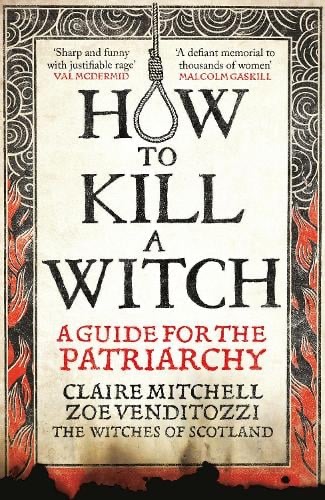
Last year I read two books based within the history of witch hunters in Scotland and I became fascinated with the truth behind these stories so I’ve been waiting for this to come out. As a woman, if you lived in Scotland in the 1500s, there was a very good chance that you, or someone you knew, would be tried as a witch. Witch hunts ripped through the country for over 150 years, with at least 4,000 accused, and with many women’s fates sealed by a grizzly execution of strangulation, followed by burning.
Inspired to correct this historic injustice, campaigners and writers Claire Mitchell, KC, and Zoe Venditozzi, have delved deeply into just why the trials exploded in Scotland to such a degree. In order to understand why it happened, they have broken down the entire horrifying process, step-by-step, from identification of individuals, to their accusation, ‘pricking’, torture, confessions, execution and beyond. With characteristically sharp wit and a sense of outrage, they attempt to inhabit the minds of the persecutors, often men, revealing the inner workings of exactly why the Patriarchy went to such extraordinary lengths to silence women, and how this legally sanctioned victimisation proliferated in Scotland and around the world.
With testimony from a small army of experts, pen portraits of the women accused, trial transcripts, witness accounts and the documents that set the legal grounds for the hunts, How to Kill A Witch builds to form a rich patchwork of tragic stories, helping us comprehend the underlying reasons for this terrible injustice, and raises the serious question – could it ever happen again?
Out on 15th May from Monoray
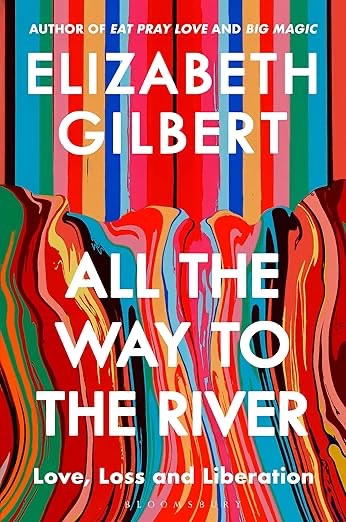
I loved Eat, Pray, Love when I read it and hoped Elizabeth Gilbert had found happiness with the man she met in Bali towards the end of the novel. Then I was vaguely aware that her life had become tumultuous. This memoir details that time. In 2000, Elizabeth Gilbert met Rayya. They became friends, then best friends, then inseparable. When tragedy entered their lives, the truth was finally laid bare: the two were in love. They were also a pair of addicts, on a collision course toward catastrophe.
What if your most beautiful love story turned into your biggest nightmare? What if the dear friend who taught you so much about your self-destructive tendencies became the unstable partner with whom you disastrously reenacted every one of them? And what if your most devastating heartbreak opened a pathway to your greatest awakening?
All the Way to the River is a landmark memoir that will resonate with anyone who has ever been captive to love – or to any other passion, substance or craving – and who yearns, at long last, for liberation.
Out on 9th September 2025 from Bloomsbury Publishing
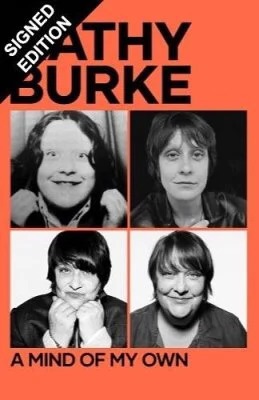
Who doesn’t love Kathy Burke? She’s an absolute treasure. I loved the documentaries she did for Channel 4. Just following her on X keeps me amused so the idea of a memoir is so exciting. There’s only a short blurb for this one but it’s already on my birthday list.
Even when she was a kid in Islington, Kathy Burke did things her own way. After gaining a place at the Anna Scher Theatre when she was a teenager changed the course of her life, she became an actor in 1982. By the mid-1990s Kathy was a household name. Whether you know her as the beloved Perry, for her award-winning acting, or for being proudly woke and calling out tw*ts on social media, Kathy has always had a mind of her own. Funny and wise, this is her memoir.
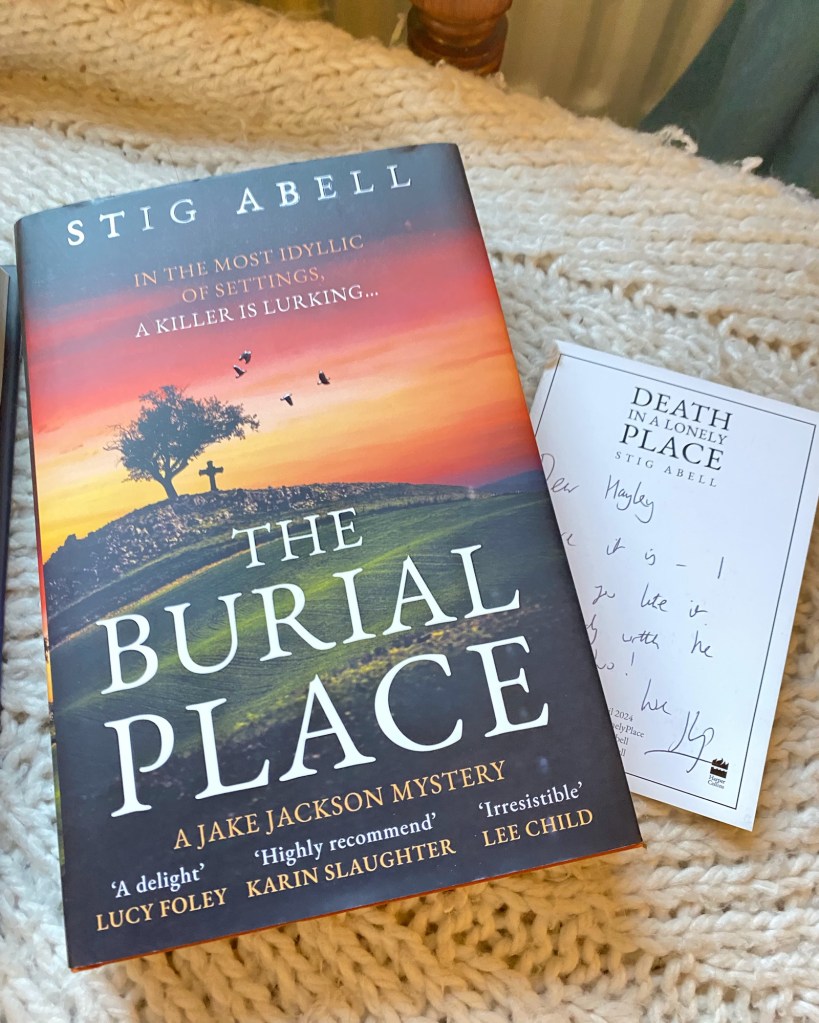
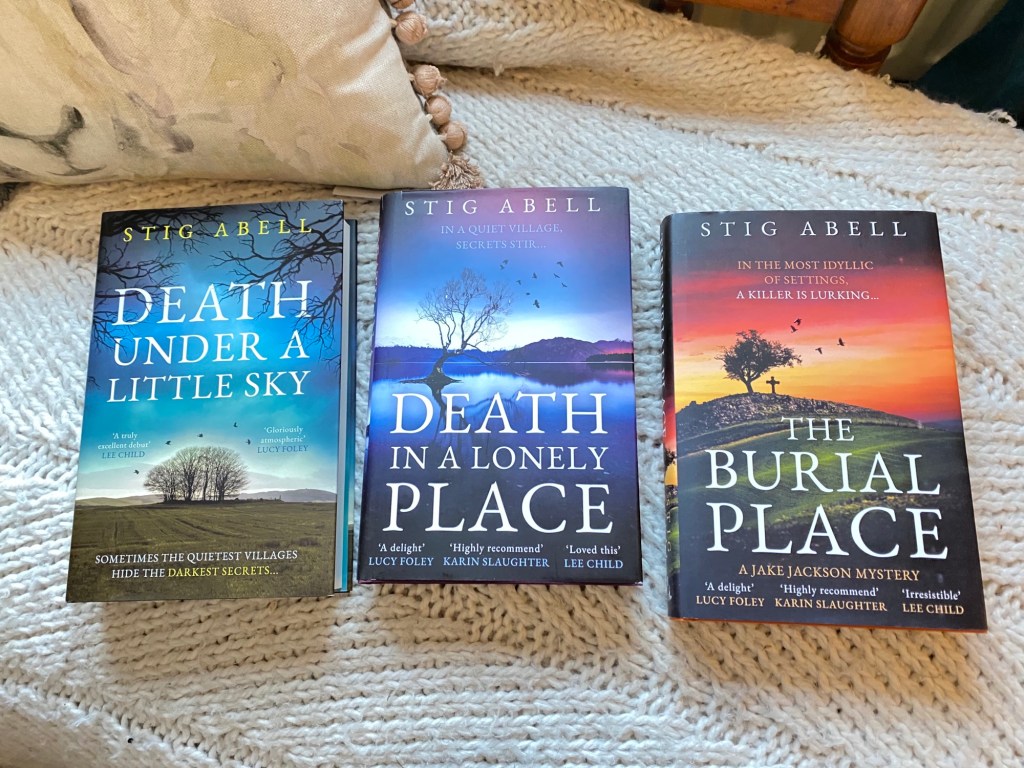
I was so lucky to be sent a copy of this new book in the Jake Jackson series, based on a conversation about my love of Martha – an abrupt but super intelligent analyst and crime writer. I love a no nonsense woman and Martha is one of the best bits of this series. After Jake and his ‘team’ tangled with an international criminal gang in the last book, this is more of a home grown mystery but just as dangerous. There has been an archaeological dig close to Little Sky and a recent hoard of treasure found close by. The ownership of this treasure is in dispute because it’s unclear who owns the land it was found in. Meanwhile, work carries on for the archaeologists, academics and local enthusiasts who have been working on the site, but when a body is found it must shut down. It’s hard for new DCI McAllister to understand the motive and being new to the area he enlists Jake’s help, both for his investigative skills and his local knowledge. The community are aware that several nuisance letters have been sent to the dig office and various people who’ve worked on the site. They’re a strange mix of threats, Bible verses and ancient prophecies signed off by Wulfnoth – an ancient Briton purportedly from the area. The writer promises a terrible end for the dig and whoever benefits from the treasure found. Can Jake find the killer before anyone else is hurt?
Again it’s mainly the brilliant characters that attract me in this novel. Although it’s also interesting to see Jake working with his team, I noticed that Livia is fully committed this time and has definitely earned a chair at the table with Jake, Martha and Aletheia. They are definitely growing closer, since the finale of the last case ended with Livia driving through the wall of her own front room to save their lives. She and her daughter have relocated to Little Sky while the house is being repaired. I must admit I didn’t fully take on board all the dig characters, but the dig itself and the history behind it was really interesting. I’ve often wondered how digs are run and they’re every bit as complex as I thought, with a real mix of motivations and different pressures. Some people have their jobs and reputations on the line, while others seem to have more personal reasons for taking part. What’s difficult for Jake to understand is the gap between letters written when the first dig started and those that came when the second dig site and treasure were discovered. It’s as if Wulfnoth comes out of retirement for some reason, possibly the treasure or could it be more complex than that?
One of the other interesting aspects of the story is the importance of belonging and the sacredness of land. The fact that the burial place of the title holds both ancient and recent burials shows an interesting continuation of the land’s purpose. Jake hears one of the academics talking about different layers or strata of soil, but it all looks like mud to him. The same can be said of the ancient remains, having newly buried bodies on top, as if years of history is mimicking the layers of soil. We live upon years and years of history, something I think about regularly having never moved far away from the River Trent. I have ancestors who are Dutch and arrived in the area with engineer Vermuyden in the 14th Century, designing and creating a system of drainage that would create much of Lincolnshire’s farmland. The fact that my father has spent more than thirty years of his life working as a land drainage engineer, without knowing this history, feels like an echo but also a sense of belonging to that particular land. If I’m ever feeling a bit lost I go the river, take off my shoes and stand barefoot on the bank. Then I know I’m home and on the bank of the same river where I took my first steps. Jake talks about how human spirituality is linked to water, from sacred springs to floating lanterns and wishing wells. Humans have cast their prayers and wishes on water for generations. Livia brings up belonging in one of their case discussions. She doesn’t understand how anyone could feel so connected to ‘patches of ground’. Aletheia points out that Livia has a rare ability to belong, to fit exactly where she is. Her own family roots are in Ghana, but points out that she is now where she is because her ancestors were uprooted. People who are removed or separated from land that belonged to their ancestors for generations can struggle to belong. It’s Livia’s ability to belong, as another woman of colour that she’s really commenting on, because Aletheia does understand that if someone is cheated out of their birthright it can become an obsession.
Across the book, new relationships are being built and I love that, in what could have been a very lonely place, Jake’s has a healthy support system around him. I did worry a little for Martha though, even though the author writes her with great affection I did feel her ‘aloneness’ in this novel, something I’m describing carefully because there’s a difference between alone and lonely. I feel he writes about her disability with great understanding. Martha lost both her legs in a shoot out when working as a detective and he describes her as suffering constant pain. I’ve suffered chronic pain for many years, particularly nerve pain so I know how strange and maddening it can be. I have had referred pain, very similar to phantom limb pain, where the site of pain bears no relation to the actual problem. Without my medication I have constant burning sensation outside my body – for those of you who are a certain age I often describe this as my ‘Ready Brek’ feeling. The author refers to Martha’ ability to function on drugs that are prescription and those that aren’t. Her skill is a sad one, known to most pain patients, where she copes with a certain level of pain and can still function but there are also days where functioning is impossible. There’s a real sense of sadness that while she can numb the pain it is ever present. I found this portrayal so authentic and possibly researched through lived experience.
Jake is already an introspective man but he has a lot to think about in this book. He and Livia have decided to start a family together, much to Diana’s disgust. It almost seems like fate when his ex-wife Faye needs to see him. He’s just starting to have concerns about infertility, because he and Faye split up after a traumatic time trying to have a family. He’s worried that it’s taking a while for him and Livia. What if he’s the problem? It’s immediately obvious when they meet that Faye is pregnant and they have a lovely heart to heart in the park. It’s clear that Faye is in a good place and Jake is so happy for her, but nagging doubts are creeping in. If Faye can get pregnant without him, what does it mean for him and Livia’s chances? I still find many male detectives and investigators who don’t have this complex inner life and I love that Jake does. He might seem like a moody loner at times, someone who keeps his feelings hidden even from himself, but he’s just a deep thinker and so empathic. Even when he finds a body, his response is different. He is appalled by the body of one murdered woman who has been left exposed and was potentially murdered during sex. He feels for her dignity and has an urge to cover her up, even though he knows he can’t and must preserve the crime scene as is. It’s as if he takes on the shame this woman might have felt at being left exposed and perhaps taken for a fool by her lover. He has such a strongly developed feminine side and this helps enormously when dealing with Diana. She is clashing with Livia about potentially having a new baby around. Jake is the one who manages to calm her down and show her the positives. I’m so glad Jake has Little Sky and all it offers to balance out these tumultuous feelings. I think his Uncle Arthur knew him very well.
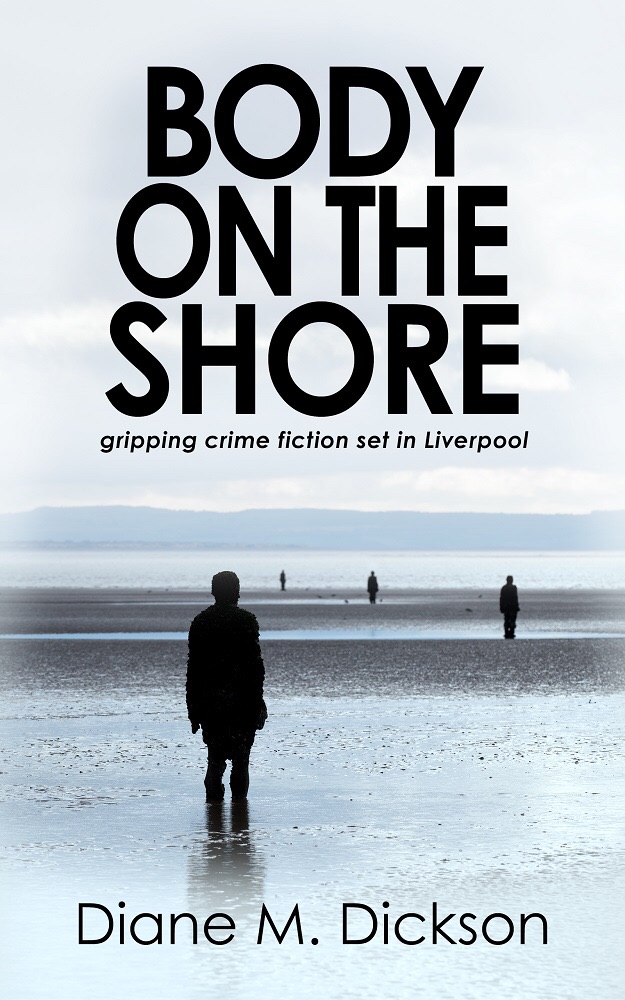
I jumped at the chance to read crime fiction set in my favourite city, Liverpool. I’m half Liverpudlian and half Lincolnshire Yellow Belly. It’s my mum’s home city and now it’s where my step-daughter lives while she’s at university. One of the first things I took my husband and step-daughters to see was Antony Gormley’s Another Place on Crosby Beach. 100 Iron Men stare out to sea, some submerge and reappear as the tide turns and I’ve always found them eerie but moving at the same time. Here they’re the backdrop to a body being found by a dog-walker (it’s always dog walkers bless them). The body is wrapped in a bin bag, caught on one of the sculptures, else they might never have found her. The author has really captured the other-worldly feel of the place and it’s bleakness on a cold day, especially as a place to end up discarded like waste. This is DI Jordan Carr’s new case and he’s joined by a new DC, Terry Venn, who just makes it through his first post-mortem without disgracing himself. To be honest I had to swallow a couple of times as the author described peeling the face down!
The victim is a young woman by the name of Beatrice Sharp, a secretary for a printing company. She comes from Northumberland and moved to Liverpool quite recently so Jordan and his team need to understand why she’d made such a huge life change and how she’s ended up with such a terrible end, killed by blows from a hammer. The characters are slightly different from a lot of detective fiction where the main character is often old, washed up, and exhausted, with marriage or drink problems on the side. Jordan is stretched and he does work late, but his wife Penny is supportive and understanding about the pressures of his job. They have a baby boy called Harry, who Jordan absolutely dotes on. He stops and watches his son’s bedroom routine on FaceTime if he’s stuck at work and can’t be there. In his working life he comes across as thorough and by the book, keeping the over exuberant and frustrated DC Venn in check when he wants to jump the gun.
As for the setting, I don’t think you can beat Liverpool because it ranges from the tourist trail and glitzy hotels of the city centre, to the industrial Baltic Quarter and the Wirral just a tunnel away, not to mention the poorer areas – I remember Toxteth in the 1980s. The police station itself is beautifully non-descript, serves absolutely shocking coffee and often gets buried under late night takeaway containers. There are no glass boards and panoramic views here. We concentrate mostly on the case and the author sets the scene by starting with the victim. Her final moments will stay with you as the story unfolds, reminding us that this isn’t just about twists and turns and tension. This is about a young woman’s life being taken away. There’s also a narrative from a character called Ben, cleaning his van and lamenting over the sheer amount of blood. Having watched forensic programmes he’s aware he might have to torch the van because no matter how vigorously he cleans, will it really be spotless? He’d hoped just to scare her off, but it went too far. He’s also blackmailing someone, considering asking for more money and leaving his victim to stress a while. What is his connection to Beatrice and who is he blackmailing?
The case is relatively speedy, despite it’s complexity and is very tense in parts with police chases, more victims and one very agitated pregnant woman. It was a really quick read for me, because it was such a great story that shows our past can and often does catch up with us. I really did enjoy Terry Venn on his first case. He’s quite the character and could just have easily turned out to be an absolute scally. Luckily, he’s more ‘poacher turned gamekeeper’, slipping into Scouse slang when the conversation demands, great for witnesses who are reluctant to talk. I’d happily read the rest of DI Carr’s cases. I hadn’t realised at first that this is just one of his many adventures, so I’m really going to enjoy seeing his character develop from book one. This reads well as a stand alone novel and I definitely recommend this to other readers who enjoy crime fiction.
2:32 p.m. Wealthy, privileged Ilaria Cavendish checks into a luxury London hotel and orders a bottle of champagne. Within the hour, her lover discovers her submerged in a bath of scalding water, dead.At first glance it looks like an accident. No one went in with her. No one came out. But all the signs point to murder.
For DS Maeve Kerrigan, the case is a welcome distraction. But when shock news hits close to home, affecting her partner, DI Josh Derwent, she faces the toughest challenge of her career. And if she fails her world will never be the same again…
There’s an extra secretive element to this twelfth book in the DS Maeve Kerrigan series. In her afterword Jane begs readers not to reveal aspects of the novel for those who have yet to read it, in fact for those people who have only just discovered this addictive mix of murder investigation and ‘will they – won’t they’ love story. So I’m trying my best to keep it to myself while telling you all what a great read this. The murder at hand is a tricky one and will probably remain in my brain forever after reading that when the victim’s lover tries to pull her from the bath her scalp comes away. She has, rather disturbingly, been boiled like a lobster. However it isn’t the water or the heat that has killed her, Illaria has been strangled with a cord then dragged into the bath. The fact that she was meeting her lover and had the room booked for exactly the same time every Wednesday is an interesting little detail. Sometimes they only use it for a few hours but it is always booked, exactly the same. These are the actions of someone wealthy and it’s no surprise to find she has a rich husband. Angus is incredibly frank when interviewed; he loved his wife and wanted her to be happy and she wanted Sam. They had met at a glitzy dinner and Angus reveals that when he saw them talking together he knew, it was a coup de foudre, when love hits instantly like a bolt of lightning. Ilaria had a great life, filled with travel, events and a little interior design business with her friend that Angus funds too. They seem to be going nowhere when Maeve has a sudden lightbulb moment leading to a discovery.
Aside from this case and arguably being the most compelling part of the novel is the drama surrounding DI Josh Derwent. Josh has been living with psychotherapist girlfriend Melissa and her son Thomas for a while now, much to Maeve’s sorrow. Melissa is due to pick Thomas up from school, when she gets a phone call from a distressed patient. Knowing she has to see them and needing someone to collect and keep Thomas for a few hours, Josh calls Maeve’s parents. They’ve been like grandparents to the little boy who hasn’t been well of late. Hours later when they return Thomas, Maeve’s father runs into a panicked young girl on the driveway, screaming that Melissa has been hurt. Melissa is at the bottom of the stairs, motionless and covered in bruises as if she’s been beaten badly. As she’s rushed to hospital and the police arrive, so does Josh and quickly finds himself arrested for the attack. When Maeve arrives Josh tells her to stay out of it, walk away and don’t get involved. However, readers of the series know that this is something Maeve simply can’t do. Despite Derwent’s disapproval she has to find a way of clearing his name, because she knows he isn’t capable of this.
I have to be honest and admit I was so caught up in the Melissa/Derwent storyline that there were points when I forgot about the other case. It was more psychologically complex and of course had the added weight of caring about these characters over eleven previous books. I couldn’t believe the suspicions I had about it and I was desperately hoping Maeve would come to the same conclusion, if she didn’t get herself suspended for meddling first. When the book went back to Ilaria’s murder I found myself going ‘oh yes, where were we’. Having said that it’s a cracking case in it’s own right with a seemingly impossible premise. With the only people seen on CCTV of the corridor being a chambermaid and the man who delivered the room service champagne, but he wasn’t in there long enough to murder anyone. When he’s found dead on a building site, it looks very much like someone is covering their tracks. On the face of it Ilaria’s life seemed perfect, so why was she sneaking around? Was it really love or was something else going on?
I whipped through the final chapters in an afternoon to find out and to see what would happen with Melissa, who I was beginning to hate! I loved the little vignettes of normal life in between, especially with the men in the book. Derwent’s eldest son Luke and Thomas have a lovely growing relationship and with Maeve’s nurturing and loving parents he had a great stand-in gran and grandad. It was interesting to see how Melissa’s ex-husband and Derwent were with each other too. Through Luke, Maeve was introduced to a decent man called Owen and their dates were going well. It was nice to see her being treated with kindness and consistency. This was an addictive read from an author who knows exactly when to leave the reader hanging and when to deliver heart-stopping action sequences – the suspicious man at the front desk of the police station had my pulse racing. I’m interested in where she takes DS Kerrigan next and I’ll definitely be queueing up for my copy.
From Hemlock Press 24th April 2025
Meet the Author
Jane Casey is a bestselling crime writer who was born and brought up in Dublin. A former editor, she has written twelve crime novels for adults (including ten in the Maeve Kerrigan series) and three for teenagers (the Jess Tennant series). Her books have been international bestsellers, critically acclaimed for their realism and accuracy. The Maeve Kerrigan series has been nominated for many awards: in 2015 Jane won the Mary Higgins Clark Award for The Stranger You Know and Irish Crime Novel of the Year for After the Fire. In 2019, Cruel Acts was chosen as Irish Crime Novel of the Year at the Irish Book Awards. It was a Sunday Times bestseller. Stand-alone novel The Killing Kind was a Richard and Judy Book Club pick in 2021, and is currently being filmed for television. Jane lives in southwest London with her husband, who is a criminal barrister, and their two children.










 The Lotus Readers