Posted in Writing Therapy

Literary Glimmers

I don’t know how many of you have come across the term ‘glimmers’ but it’s one I love and notice more and more, it’s about finding joy in the everyday, but not expecting to feel cock-a-hoop all the time. Instead recognise those moments when we’re stopped in our tracks by something beautiful – a sight or a sound, but any combination of the senses is okay. In that moment we are purely happy. Glimmers are the opposite of triggers. Where triggers might send us spiralling back into negative emotions, glimmers do the opposite, a mixture of happiness, wonder, calm and contentment. The word was coined by social worker Deb Dana who suggested that in between moments of extreme joy – getting married, getting your dream job – we need to look for micro joys. They may be fleeting moments, but the more we stop and enjoy them they can have a very positive effect on our mental well-being. In an article in Stylist magazine, clinical psychologist at Headspace Dr Sophie Mort describes them as ‘safety cues’ that tell the nervous system we’re okay.

“Glimmers don’t tend to lead to euphoric moments; instead, they gently nudge us towards ease, relaxation, connection and a feeling that the world is OK. And, they can be fleeting. We will all have our own specific brand of glimmers and they can be found in a number of different places and senses.”

https://www.stylist.co.uk/health/mental-health/glimmers-how-to-spot/814102 18/09/23

Their list of possible glimmers included:

  • A phone call from your best friend
  • Watching your favourite tv show
  • Cuddling pets
  • Being in nature – from a walk in the woods to watching the stars

It made me realise that I get these moments when I read quotes or passages from one of my favourite novels. Those moments where you read a paragraph then pop the book down for a minute to soak in the words. There are some that whenever I hear them I notice myself smiling, they bring such joy into every day life! I’m going to share with you my twelve literary glimmers.

1. “And at home by the fire, whenever you look up, there I shall be — and whenever I look up, there will be you.“ Far From the Madding Crowd Thomas Hardy

2. “His heart beat faster and faster as Daisy’s white face came up to his own. He knew that when he kissed this girl, and forever wed his unutterable visions to her perishable breath, his mind would never romp again like the mind of God. So he waited, listening for a moment longer to the tuning fork that had been struck upon a star. Then he kissed her. At his lips’ touch she blossomed like a flower and the incarnation was complete.” The Great Gatsby F.Scott Fitzgerald

3. “It has always seemed to me, ever since early childhood, amid all the commonplaces of life, i was very near to a kingdom of ideal beauty. Between it and me hung only a thin veil. I could never draw it quite aside, but sometimes a wind fluttered it and I caught a glimpse of the enchanting realms beyond-only a glimpse-but those glimpses have always made life worthwhile.” Anne of Green Gables by L.M Montgomery

4. “This was the simple happiness of complete harmony with her surroundings, the happiness that asks for nothing, that just accepts, just breathes, just is’. The Enchanted April by Elizabeth Von Armin

5. “The wood was silent, still and secret in the evening drizzle of rain, full of the mystery of eggs and half-open buds, half unsheathed flowers. In the dimness of it all trees glistened naked and dark as if they had unclothed themselves, and the green things on earth seemed to hum with greenness.” Lady Chatterley’s Lover by D.H.Lawrence

6. “George had turned at the sound of her arrival. For a moment he contemplated her, as one who had fallen out of heaven. He saw radiant joy in her face, he saw the flowers beat against her dress in blue waves. The bushes above them closed. He stepped quickly forward and kissed her.” Room With A View by E. M. Forster

7. “almost met in the middle. From either hand the notes of the small birds that had not yet given up singing went winging out across the water, and so quiet it was that though they were only such thin songs as those of willow wrens and robins, you could hear them all across the mere. Even on such a burning day as this, when I pulled the honeysuckle wrathes, there was a sweet, cool air from the water, very heady and full of life. For though Sarn was an ill place to live, and in the wintry months a very mournful place, at this one time of the year it left one dreaming of sorrow and was as other fair stretches of wood and water. All around the lake stood the tall bulrushes with their stout heads of brown plush, just like a long coat Miss Dorabella had. Within the ring of rushes was another ring of lilies, and at this time of the year they were the most beautiful thing at Sarn, and the most beautiful thing I’d ever seen. The big bright leaves lay calm upon the water, and calmer yet upon the leaves lay the lilies, white and yellow. When they were buds, they were like white and gold birds sleeping, head under wing, or like summat carven out of glistering stone, or, as I said afore, they were like gouts of pale wax. But when they were come into full blow they wunna like anything but themselves, and they were so lovely you couldna choose but cry to see them. The yellow ones had more of a spread of petals, having five or six apiece, but the white ones opened their four wider and each petal was bigger. These petals are of a glistening white within, like the raiment of those men who stood with Christ upon the mountain top, and without they are stained with tender green, as if they had taken colour from the green shadows in the water. Some of the dragon-flies look like this also, for their lacy wings without other colour are sometimes touched with shifting” Precious Bane by Mary Webb

8. “If you listen, you can hear it. The city, it sings. If you stand quietly, at the foot of a garden, in the middle of the street, on the roof of a house. It’s clearest at night, when the sound cuts more sharply across the surface of things, when the song reaches out to a place inside you. It’s a wordless song, for the most, but it’s a song all the same, and nobody hearing it could doubt what it sings. And the song sings the loudest when you pick out each note.” If Nobody Speaks of Remarkable Things by Jon McGregor

9. “Every life has its kernel, its hub, its epicentre, from which everything flows out, to which everything returns. This moment is the absent mother’s: the boy, the empty house, the deserted yard, the unheard cry. Him standing here, at the back of the house, calling for the people who had fed him, swaddled him, rocked him to sleep, held his hand as he took his first steps, taught him to use a spoon, to blow on broth before he ate it, to take care crossing the street, to let sleeping dogs lie, to swill out a cup before drinking, to stay away from deep water. It will lie at her very core, for the rest of her life.”

“He feels again the sensation he has had all his life: that she is the other side to him, that they fit together, him and her, like two halves of a walnut. That without her he is incomplete, lost. He will carry an open wound, down his side, for the rest of his life, where she had been ripped from him. How can he live without her? He cannot. It is like asking the heart to live without the lungs, like tearing the moon out of the sky and asking the stars to do its work, like expecting the barley to grow without the rain.” Both from Hamnet by Maggie O’ Farrell

10. One by one, the snowflakes floated down on to his warm snout, and melted. He reached out to grab them so he could admire them for a fleeting moment. He looked towards the sky and watched them drift down towards him, more and more, soft and light as a feather. “So that’s how it works,” thought Moomintroll. “And I thought somehow that the snow grew from the ground up!” Moominland Midwinter by Tove Jansson

11. “One of the strange things about living in the world is that it is only now and then one is quite sure one is going to live forever and ever and ever. One knows it sometimes when one gets up at the tender solemn dawn-time and goes out and stands out and throws one’s head far back and looks up and up and watches the pale sky slowly changing and flushing and marvelous unknown things happening until the East almost makes one cry out and one’s heart stands still at the strange unchanging majesty of the rising of the sun–which has been happening every morning for thousands and thousands and thousands of years. One knows it then for a moment or so. And one knows it sometimes when one stands by oneself in a wood at sunset and the mysterious deep gold stillness slanting through and under the branches seems to be saying slowly again and again something one cannot quite hear, however much one tries. Then sometimes the immense quiet of the dark blue at night with the millions of stars waiting and watching makes one sure; and sometimes a sound of far-off music makes it true; and sometimes a look in someone’s eyes.” The Secret Garden by Frances Hodgson Burnett

12. The Peace of Wild Things

When despair for the world grows in me
and I wake in the night at the least sound
in fear of what my life and my children’s lives may be,
I go and lie down where the wood drake
rests in his beauty on the water, and the great heron feeds.
I come into the peace of wild things
who do not tax their lives with forethought
of grief. I come into the presence of still water.
And I feel above me the day-blind stars
waiting with their light. For a time
I rest in the grace of the world, and am free.”

Wendell Berry.

Posted in Throwback Thursday

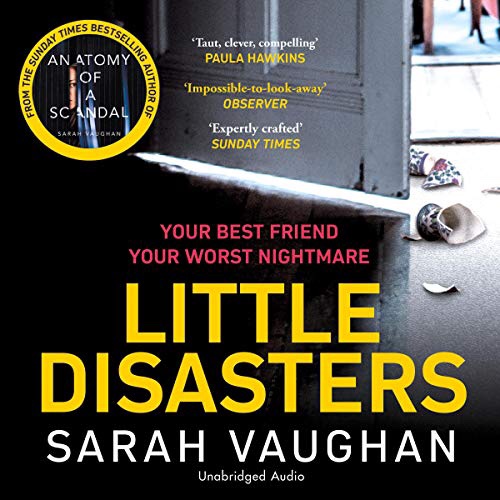
Little Disasters by Sarah Vaughan

You think you know her…

But look a little closer

She is a stay-at-home mother of three with boundless reserves of patience, energy and love. After being friends for a decade, this is how Liz sees Jess.

Then one moment changes everything.

Dark thoughts and carefully guarded secrets surface – and Liz is left questioning everything she thought she knew about her friend, and about herself.

As regular readers know, between my blog tour and current fiction reads I always like to go back and read an author’s earlier works. I thoroughly enjoyed this novel from Anatomy of a Scandal writer Sarah Vaughan, first published in 2020. It starts with an ordinary evening on duty for Liz, who is a registrar in paediatrics. She’s called down to A&E to see a ten-month-old baby presenting with strange symptoms. She’s been vomiting, and seems drowsy but doesn’t have a temperature which rules out a virus or infection. However, Liz is familiar with this particular baby girl, because she belongs to her best friend Jess and she’s definitely not acting normally. Jess has always seemed an absolute natural when it came to motherhood, certainly more than Liz. Jess made parenting seem easy, spending so much time making sure her children have the right foods, and lots of activities to try and nurture their minds. She’s the stay at home full time parent, but where Liz would struggle without working, Jess seems born for the role. Yet, this is not the same Jess that Liz knows outside of work – she’s edgy and claims her daughter had a fall. All children fall and through no fault of the parent, but the accident Jess describes doesn’t account for the boggy head injury that Liz can feel at the back of her baby’s head. Why would Jess lie?

Told through different perspectives, from Jess to Liz, this is a brilliant domestic thriller with tension so tight it might snap. This tension in the writing echoes Jess’s mind, at any time she might completely unravel but that doesn’t mean she hurt her baby. Vaughan is exceptional at drip feeding us a little at a time. A tiny bit of extra information here. A new viewpoint there. But never more than you need to keep the story flowing. It’s a powerful and emotive story, but Vaughan never descends into sentimentality or melodrama, this is sharp, addictive and never slows down, insisting you read another chapter, then another.

She is painfully honest about parenthood, so much so that it’s painful to read at times. Especially when the perspective shifts to one of the children and we’re suddenly reminded in the midst of all this, just how vulnerable they are. We are never really aware, until it happens to us or a close friend or family member, just how transformative giving birth can be. Some births are difficult, violent even. Yes, it’s a time of incredible joy and celebration, but my friends were exhausted in those first few days. Exhausted to the point of being almost catatonic. They were uncomfortable, dealing with caesarean scars and infection, stitches, painfully swollen breasts so that every bit of them seemed to be either hurting or leaking! It didn’t look like fun to me and there was a small part of me that was a little bit glad I couldn’t have children. We hear comedians and celebrities publicly talking about how difficult parenting can be and it isn’t just the body that’s affected. The birth can leave you feeling traumatised. The lack of sleep wears you down and you can’t remember things. Then your mind can play tricks on you. Are you really up to this? What if you’re not doing this right? Some women don’t bond with their baby straight away then berate themselves for being terrible mothers. We know so much more about post-natal depression and post-partum psychosis these days, but women still get missed because they’re too scared to say how they feel. If you’re having thoughts of harming your baby, how can you tell anyone?

I think this story that will resonate with many women. Jess and her baby really do pluck your heartstrings. At first I was so suspicious, because she’s cagey and closed off. I couldn’t understand why you would wait nearly six hours to get help for an obvious head injury. I was pretty sure where the narrative was going, but then the author surprised me with a new perspective and a huge twist that was really unexpected. This is a far darker path than I’d expected. Domestic thrillers are one of my a favourite genres and this is up there with the best. It really delves under the layers of motherhood and overturns that old expectation that every woman is naturally maternal. That post-natal depression can happen to anyone, even when they’ve not experienced it with their other children. It brings home to the reader that looking after a newborn baby is a giant undertaking and it how vital it is to ask for help. This is such a perceptive novel with an unexpectedly treacherous conclusion. Sarah Vaughan is an incredibly clever writer, balancing both our sympathy for Jess and her baby, but also our thriller reader’s desperation to uncover what has happened.

Published by Simon and Schuster 2020

Meet the Author

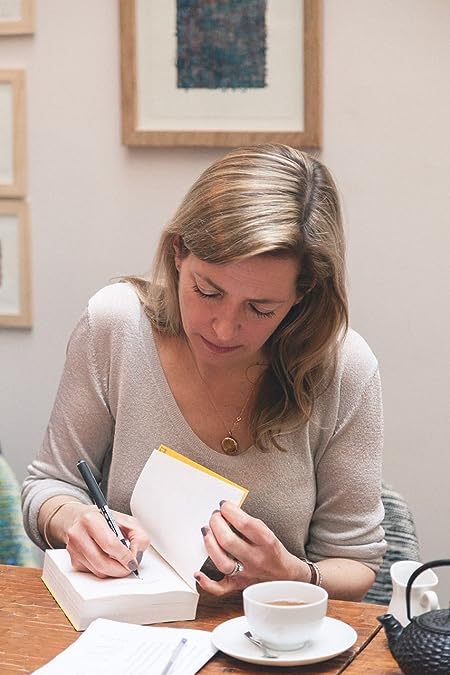
Sarah Vaughan is the international bestselling author of the Number one Netflix TV series, Anatomy of a Scandal, and four other novels. A former journalist, she read English at Oxford before training at the Press Association and spending 11 years at the Guardian as a news reporter and political correspondent. After having her second baby, she left to freelance, and eventually to write fiction. Two women’s fiction novels followed before Anatomy of a Scandal, her 3rd novel and her first courtroom drama/psychological thriller, heralded a new direction and became an instant international bestseller. Sold to 24 countries, it was also a Sunday Times top five bestseller, spending 10 weeks in the top 10 charts; a kindle number 1 bestseller; and one of Richard & Judy’s best dozen books of the decade. In April 2022, it dropped as a six-part Netflix mini-series, written by David E Kelley and Melissa James Gibson, and starring Sienna Miller, Michelle Dockery, and Rupert Friend. In its first 3 days, it debuted at number 3 worldwide and was the number 1 most watched Netflix TV show in multiple countries, including the UK and US. In its first 3 days alone, it notched up 40.28 million viewing hours.

Little Disasters, published during the first and third lockdowns, was a Waterstone’s Thriller of the Month and is in the process of being adapted for a UK broadcaster. It was also WH Smith paperback of the month, a Kindle bestseller, and has been published in the US and various other countries. Reputation, published in March 2022, has also been optioned by the team behind Anatomy of a Scandal with a view to being developed for TV. It will be published in the US in July, and in various other countries throughout the year

Posted in Random Things Tours

In Bloom by Eva Verde

‘This is my family story. From all I’ve sown together, through all I couldn’t ask. I want to be the bud who makes it.’

In Blooms tells of strength, survival, forgiveness, resilience and determination, and the fierce love and unbreakable bonds between mothers and daughters.

Ever since Sol’s untimely death left her pregnant and alone at twenty-two, Delph’s kept herself small as a form of self-protection. Now, over a decade later, she lives with their daughter Roche and her new partner Itsy, a kind and protective cabbie, on the fourteenth floor of Esplanade Point on the Essex coast.

But Delph’s protective bubble bursts when Roche moves in with her estranged nan, Moon. Feeling on the outside of the bond between her fierce-yet-flaky tarot-reading mother and volatile martial-arts-champion daughter, Delph begins questioning her own freedom. And when Roche’s snooping into her grandmother’s past unearths a familial line of downtrodden women; a worrying pattern emerges. Has keeping small and safe truly been Delph’s choice all these years…?

I don’t believe in trigger warnings, despite their intended purpose to flag up material that may ‘trigger’ difficult emotions in the reader, I feel that they might stop someone experiencing a connection with a text. It might well be a trigger, but that doesn’t always have to mean it’s a negative one. It might be a trigger that starts a healing process. If anyone should have avoided this book it was me, because I was Delph. I lost the love of my life in my early thirties and then sleepwalked into a coercive and damaging relationship. Yes, it was a hard read at times, but it wasn’t remotely negative. Moon, Delph and Roche are three generations of a family. Each woman has her own issues, but they all stem from one place. Right back at the beginning. As the book opens Roche can no longer live with her mother and Itsy, the man she’s been living with for most of Roche’s life. So she decamps to her grandmother Moon’s house. Roche can’t stand Itsy, he dislikes her and wishes she wasn’t there. In fact what he wants is Delph all to himself, it’s easier to control someone who’s isolated. Delph has had a glazed over look ever since he arrived in her life and she doesn’t seem like her mum anymore. Delph has done everything she can to keep Itsy happy. She’s changed how she dressed, made herself less beautiful, stayed at home and stopped going out with friends. Every day she makes herself smaller to make more space for him and Roche can’t watch it anymore. However, things are changing slowly. Delph has a job she enjoys at B & Q, new connections with her colleagues and today she has made a choice. Delph is pregnant and she knows deep down in her soul that ‘the thought of more years, more life, tied to him’ is more than she can bear. She goes secretly on her own for an abortion, the quietest but most powerful act of rebellion she can make. Then comes her opportunity, Itsy receives a phone call from Jamaica to tell him his mother is dying. He must jump straight on a flight, so Delph lets him go alone, knowing that now she has several weeks to herself. She doesn’t stop Roche from moving out and accepts this as her time to heal, time to be the parent that so often Roche has to be for her. However, this isn’t the only recovery needed in the three generations of this family thanks to the actions of men.

I felt at first that I was slowly piecing together the story of a client. Being a person- centred therapist means letting the client choose what they want to talk about. I would use my counselling skills to tease out that story and ask questions where it needs to be clarified or where I might only be getting one perspective. Here the story has it’s own pace and each woman narrates her own section. We flit back and forth between the women, also delving into the past here and there. It’s like doing a jigsaw puzzle but only being handed one piece at a time, then another from a different place. It takes some time to perceive the whole and that was definitely the case here. Only we the reader can see where they all are in relation to one another. The reality of being a woman in today’s world is explored fully, there is no doubt that these women’s lives would have been immeasurably better had they not encountered the men they do. It takes Roche to articulate this properly with the words and wisdom of her generation.

“Roche knows, remembers, how her life changed at around the time she started secondary, and her bubble of invisibility popped. How, despite the school uniform screaming otherwise, she very suddenly became the inhabitant of a woman’s body, complete with a depressing self-awareness that this was now Roche’s life until one day men deemed her invisible again. In fairness, it’s not her contemporaries who usually do the perving – no, it’s men, grown–ass men who have always done the bulk of the wolf–whistling, the innuendoes and basic compliments that they expect her to ‘smile, love’ and be grateful for.”

As a middle aged woman I now know the power of that invisibility and how, in many ways, it’s a blessing.

I love how carefully the author drew the threads between generations, those behaviours that create a pattern of intergenerational trauma. There are moments in her journey where Delph needs her daughter by her side, but she recognises that it’s a selfish need. Delph’s lived experience stops her; “is not for a child to fix the parent. Nor is Roche the ointment to Delph’s current troubles”. She’s spent enough time trying to help Moon. Then we go back into Moon’s early years, when her grandmother is in hospital, suffering from mental ill health. Her name was still Joy back then and her job is to dispense sunshine to a women who can’t even remember her name. ‘Come on,’ Ma says, in a giddy-up way. ‘You know how happy your little face always makes her.’ This a learned behaviour, people pleasing and exactly what Delph is trying to avoid for her own daughter, three generations later. By sitting with her own pain, Delph is avoiding instilling that behaviour in Roche, she’s actively breaking the cycle. Yes, there are traumatic moments in these women’s lives, Moon’s story being particularly harrowing, but we can also see the women’s determination to change. It’s that change and what it means for Roche that brings such an uplifting feeling to the book. For me it’s Delph’s struggle that touched me deeply. The loss of Sol, who’d been there her entire life, is devastating. So moving out of Itsy’s orbit and the mental paralysis she’s been living with means opening up her emotions. That’s all of the emotions including her grief, but it’s a process that needs to happen so that Roche can talk about her father openly and in a joyful way. I found myself more engrossed in the later stages of the book as I had to see whether these women could heal together. This is beautifully written and manages to be funny, moving and hopeful.

Meet the Author

Eva Verde is a writer from East London. Identity, class and female rage are recurring themes throughout her work and her debut novel Lives Like Mine, is published by Simon and Schuster.

Eva’s love song to libraries, I Am Not Your Tituba forms part of Kit De Waal’s Common People: An Anthology of Working-Class Writers. Her words have featured in Marie Claire, Grazia, Elle and The Big Issue, also penning the new foreword for the international bestselling author Jackie Collins Goddess of Vengeance.

Eva lives in Essex with her husband, children and dog.

In Bloom will be published in August 2023.

Twitter @Evakinder

Instagram @evakinderwrites

Posted in Netgalley

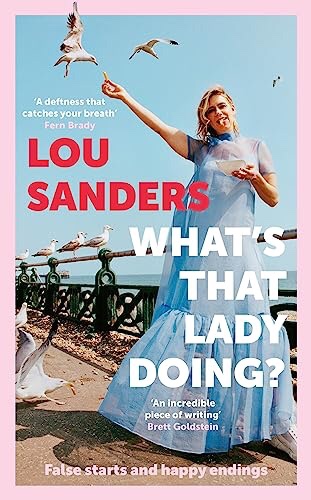
What’s That Lady Doing? By Lou Sanders

I’ve felt over the last year that every comedian has a book out. This is the result of the pandemic, where comedians could write material but had no way of testing it out on audience. It seems that a lot of them decided to use this time to write a memoir and this is up there with the best of them. One of the most important things about a memoir written by a celebrity is that it feels authentic and this book feels like a rambling conversation with Lou. She has such a strong narrative voice. I must admit to being a bit fascinated with Lou Sanders for a while now. I’d seen snippets of her stand-up, appearances on panel shows and a gloriously deranged turn as Mel Giedroyc’s sidekick on Unforgivable. However, it was her appearance on another Dave comedy show that cemented her in my memory as someone I’d like to know more about. On Outsiders, she was in a team with Ed Gamble, tackling activities out in the woods to earn Scout-style badges devised by David Mitchell. It was her effect on Ed that absolutely floored me. She slowly drove him to distraction by agreeing a plan, then as he struggled with it, she would get bored and wander off to start a Plan B by herself. His exasperation is delightful. Similarly, on Chris and Rosie Ramsay’s BBC2 show, she dissolved the presenters to puddles of uselessness by beautifully relaying a story about a dog’s back end while visibly gagging! I felt like this was a lady with a gloriously quirky and unapologetic way of being herself in the world that I simply loved. I learned while reading this memoir that her ease with herself, her authenticity, has been very hard won. I now admire her all the more and plan on buying this book for all the teenage girls in my life by the bucketload.

Lou tells her story with no frills or filter and that led to a really intimate reading experience. I could hear her voice immediately and that is the best thing about it. She tells the story of a difficult early life – struggles with ADHD and a very late diagnosis, coupled with devastatingly low self-esteem. Totally misunderstood at home, she was drinking and drug-taking from an early age. All to mask feeling different and as if she didn’t belong anywhere. Leaving home at 15 and working in pubs, she learned to use drink to create a new persona, one that made people laugh. She used whatever it was that made her feel different and strange for laughs. Drama followed her and some of her stories, especially around the opposite sex are starkly told and are all the more devastating for their honesty. She only realises in reverse that it’s impossible to give consent when you’re incapacitated. She’d learned that it was sometimes easier to give in and drink numbed the reality of what had happened. Each wound is almost unnoticed and that’s not just because she was obliterated. She’s totally unaware that she has the ability to keep to her boundaries, in fact I don’t think she was aware of her ability to set them. People who are worth nothing can’t ask for things. They’re not even aware they have the right to say no.

Lou is very matter of fact and unshowy about choosing to get sober and change her life. She credits AA with her success and it took a few false starts to get passed the times she kidded herself – ‘I’ve not had a drink for months, surely one or two would be okay?’ She learned that for her, one leads to many so she can’t have any. Ever. It only became clear for her when she realised she was ruining her own chances, self-sabotaging her career. She would ask comic friends why new comics were getting TV gigs and she wasn’t. After shows where she was obliterated, threw things into the audience and even bit someone, it took a good honest friend to tell her the truth. TV producers didn’t trust her, she was too unpredictable. That friend probably saved her career, in act they saved her life. I found her clarity around this part of her life really admirable, but she doesn’t want to see herself as a heroine or an example. This book doesn’t have a self-help vibe. She knows that she is a work-in-progress and only sticking with AA and practicing abstinence will work for her. In fact she also realises that therapy keeps her life ticking over, it gives her a release – like the pressure valve for her life. I loved the raw honesty of Lou’s writing. This is a book that never could have happened if she hadn’t learned to love every bit of herself. Well, most bits anyway. Some celebrity books are a list of achievements or a ‘how I became famous’ journey, but you don’t really meet the person. I’m not very good at surface stuff. Small talk is impossible for me, because it feels totally inauthentic. I put this book down feeling like I’d really met the person between it’s covers and we’d had a long, honest conversation about life.

Meet the Author

Lou Sanders is a British comedian. She is the champion of series eight of Taskmaster, co-hosts Mel Giedroyc: Unforgivable and has made a host of other television appearances from Live at the Apollo to The Late Late Show.

Lou has performed stand up around the world, including venues in New York, LA, Berlin and sell-out runs in Edinburgh and Soho. Lou has written articles for The Guardian, Time Out and GQ magazine.

More from Lou

Cuddle Club – The podcast where each week Lou Sanders (Taskmaster, QI, Would I Lie To You) asks a special guest the hard hitting questions that other non-cuddle based podcasts don’t dare to. Hot stuff like: Which kid did your parents prefer? Why are we all pretending massages are normal? And, can you ever trust anyone to order for you?

https://www.lousanders.com/gigs

Posted in Netgalley, Publisher Proof

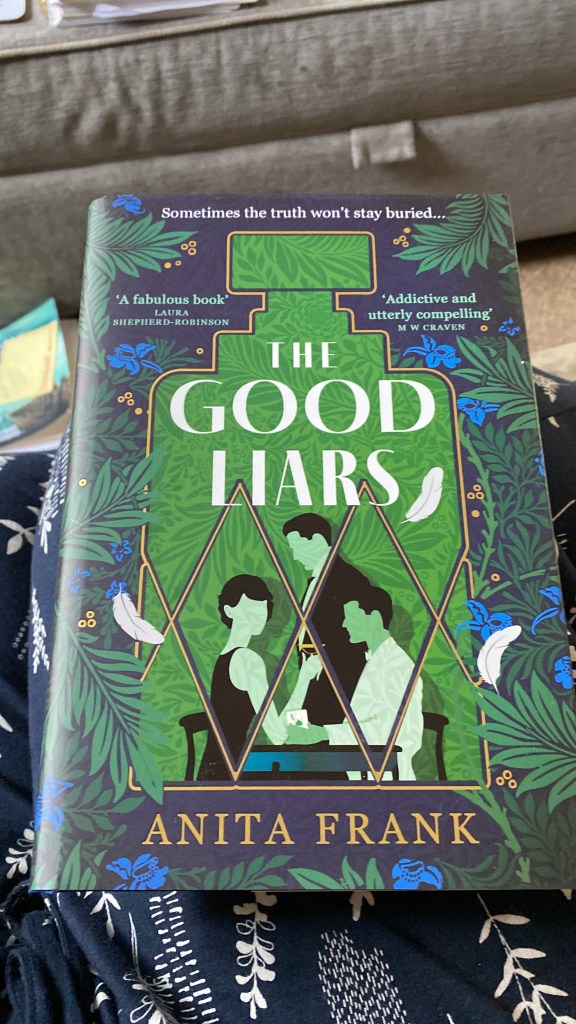
The Good Liars by Anita Frank

This is my favourite of Anita Frank’s novels so far. She’s chosen a fascinating period of history to set this gothic mystery and it adds something a little different to the ‘new servant in a creepy old house’ story. This is time when the country is traumatised, mired in grief and adjusting to the changes wrought by World War One. A time when loss looms large and people are searching for answers. Sarah is the new employee arriving at Darkacre, the family seat of the Stilwells. Like many aristocratic families, WW1 has wreaked havoc on the men in this family. When their father died, the eldest son Hugo became the heir of Darkacre. Yet his time as heir was very short, as he was killed on his return to the front leaving middle brother Maurice as heir to the Stilwell estate. Maurice was not prepared to be the master of the house and with double death duties already crippling the estate, he has learn fast. Unfortunately Maurice has returned from war a changed man, plagued by nightmares, flashbacks and extreme responses to loud noises, he has PTSD or what was then referred to as shell shock. With youngest brother Leonard severely disabled by his war injuries and struggling to come to terms with the loss of his limbs, the family are depleted and barely coping. However, as Leonard so cryptically tells us, perhaps it is no more than they deserve? Sarah’s arrival is the catalyst for this story and it isn’t just the relationship between family members that points to there being issues at Darkacre, soon a series of unexplained happenings start to gnaw away at the nerves of even the most stoic inhabitants.

Darkacre is the perfect gothic setting for the story and to some extent she represents the changes wrought on the aristocracy during this time period. Where before the war the family would have had several house servants, as well as gardeners, land agents, farm managers and so on, there is now just the brothers, Maurice’s wife Ida and Victor, a lifelong friend of Maurice. Due to the way army units were organised, Hugo Stilwell would have found himself the officer to a group of men he knew well, comprised of his brothers, tenants, young men and boys from the village. The losses were astronomical and not a single family in the parish missed out on their share of grief. This also left Maurice facing families of the young men he led to their deaths on a regular basis, including the upcoming ceremonies at the new war memorial. Servants were now in short supply and the tradition of going ‘into service’ had started to decline. We can see how social groupings have become blurred in the way Ida invites Sarah to eat with the family, instead of in the kitchen alone. They converse as equals, often as sitting together after dinner in the parlour. We can see how Ida has been craving female friendship and where it would be unsuitable to be passing confidences on to village women, Ida does start to confide in Sarah. Up till now it has very much been Victor’s role to inject a little levity into the proceedings and to amuse Ida. He confides to Sarah that both he and Maurice fell in love with her on sight, but she was more interested in Maurice and possibly the house and land that have her a title she craved.

On Sarah’s part there are few confidences shared and I found her rather mysterious and enigmatic. I was at first sure this was only a residue of the deference she had always shown employers in the past, but perhaps there is more to it than that. In a therapy situation, silence tends to draw the client forward and share confidences. In fact silence has often been my most powerful skill in terms of growth for the client and Sarah seemed to be using it for good effect. Is she simply trying to forge good relationships with her employers or is there something more sinister going on? The growing closeness between her and Leonard definitely feels genuine and I wondered what it was about their relationship that made Sarah relate to him differently. Was it that she saw him differently due to his disability, or is it a natural affinity? He seems to have different world views to the rest of the group, more compassionate and accepting of human imperfections. This is ironic given the family skeletons hiding out in closets and cupboards all over Darkacre. What was behind the sense of collaboration I felt between Ida and Victor? Why was Maurice so disturbed, not just by flashbacks and dreams, but possibly by his own conscience? Why is Ida unwelcome at the village’s ceremony for the new war memorial and does it have something to do with the disturbing parcel of an animal’s heart covered feathers that she receives?

Since I have a disability it would be remiss of me not to mention the veterans of WW1 left disabled by this horrifying war. Over one million men were killed in combat, but a further two million were left with some form of disability, 40,000 of which were amputees like Leonard Stilwell. He sits alongside such contemporary literary characters as Clifford Chatterley with a lot of the same emotional issues coping with the change of self-identity. Sarah represents a new stage in Leonard’s recovery, one he might resent, but yet they do become friends. On her first morning, Sarah arrives at Leonard’s room to find Victor smoking and Maurice laid across his brother’s bed rather like they’re still in barracks or the hospital. It’s a little glimpse into the institutionalisation of the men, more used to other male company in a military setting than the domestic sphere. Sarah could be seen as a barrier between Leonard and his fellow veterans, whereas before his care was kept within the sphere of the family now it is contracted out for money. Leonard could have felt as if he belonged, that his brother and Victor were still in the trenches with him, sharing the seismic shift his life has taken. His getting up routine was part of family life, whereas now it’s a job. A stranger has to perform the most intimate care for him and they are obliged to do it for money. He is now facing his disability alone. Yet he and Sarah muddle on quite well together, helped in part by Sarah’s training and professionalism, but also because they perhaps share the same anger and disdain for the futility of war.

Early on in the novel we see that Maurice is tormented by the memory of a young soldier who has half his face blown away. He can’t forget the horror of it, so it is perhaps fitting that the visiting Sergeant who arrives in the storm has a facial disfigurement. It’s as if Maurice’s worst nightmare has come knocking on the door. The inspector has only visited the day before and the sergeant seems to be following up, carrying out orders by interviewing the family. His disfigurement is covered by a copper mask, it’s smoothness belying the tangled and complex injuries underneath. For Maurice it almost seems worse that his injury is covered, because he can imagine in detail what’s actually there and imagination is worse than the reality. His mask also gives that element of disguise, it conceals his expression and leaves people wondering what he’s really thinking. There’s a definite Agatha Christie feel as a storm cuts the house off from civilisation and the family are trapped with these two outsiders. One of them a detective, trained to uncover secrets and the other has shown herself to have psychic tendencies. There are twists and turns, more than I expected in fact! I loved the atmosphere and Anita is brilliant at those little creepy happenings, that might have an innocent explanation, but start to unnerve you. The battle scenes are so well written too, perfectly capturing the chaos, the fear and a different kind of horror. This is a great read and Anita goes from strength to strength.

Published 17th August by HQ Stories.

Meet the Author

Born in Shropshire, Anita studied English and American History at the University of East Anglia. She now lives in Berkshire with her husband and three children.

You can connect with Anita via social media:

Twitter – @Ajes74

Instagram – @anitafrankauthor

Posted in Netgalley

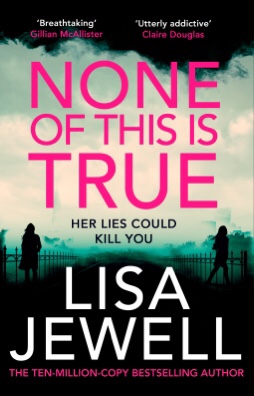
None Of This Is True by Lisa Jewell.

I always look forward to a new novel by Lisa Jewell, because I know I’m going to be engrossed in it for the weekend, oblivious to everything else that’s going on around me. This new novel was so addictive I’m not sure I looked up and luckily my other half knows when to disappear into his workshop and to deliver a hot brew on the hour. I have no idea how this writer manages to be so prolific, but thank goodness she does! She always manages to find a new angle to the thriller and this novel has a really interesting premise based around the phenomenon of podcasts. One of our protagonists, Alix, has been running a successful weekly podcast based around women’s lives and interviewed women who would inspire her listeners. However, it was time for some new ideas and so far Alix hasn’t had one. Then she meets Josie Fair. Josie is celebrating her forty-fifth birthday with her husband in a restaurant that’s a little more upmarket than they would usually book. She notices a group at a large table celebrating the birthday of a rather glamorous woman. Later in the night, the women bump into each other in the lady’s loo. Josie mentions to Alix that they share a birthday and is surprised to discover they are both 45 years old. They make a joke about being birthday twins then go back to their tables where the huge contrast between them becomes clear. Alix’s table is filled with friends, flowers and balloons whereas Josie is having a quite dinner, just her and her husband Walter. A few days later they accidentally meet again outside Alix’s children’s school. This time they chat about Alix’s work and Josie admits she’s been listening to some of Alix’s podcast since they met. Alix has made a successful series interviewing inspiring women, but admits she’s now looking for a change of direction. Josie volunteers herself as a subject, admitting that she’s about to go through some major life changes and seemingly convinced that Alix’s listeners will want to hear her story. They swap contact details and each comes away feeling positive, but Josie wasn’t exaggerating. Big changes are on the way, just not in the positive, life-affirming way Alix is used to. After interviewing Josie once Alix knows her story will appeal to listeners, because despite being very unsettled by her subject, she can’t help wanting to dig further.

The format really does work, with the interviews providing so much information to unravel and tantalise the reader. In-between we see the effect Josie’s revelations have on her own family life and on Josie’s as well. Each interview works very like a counselling session, but perhaps most like the early sessions when the client is telling you their story so far and what brings them to therapy. Alix is a fantastic listener and allows Josie to tell her story in her own way and at her pace, only asking questions to clarify or encourage her interviewee to expand on a point. I detected a subtle shift as the interviews progressed, but it’s almost imperceptible. While at first Alix is in control of the project, Josie starts to take charge both of the content and how often they meet and work together. This could simply be a woman finding her confidence or having an emotional need to offload her story quickly, while she has the courage. Josie weaves a tale of grooming and domestic abuse that’s not easy to listen to. Her husband Walter is much older and very set in his ways, they started their relationship when Josie was a teenager and Walter was in his thirties. There are little clues to the control he has over his wife, such as wearing double denim to please him and not having a job, even though their daughters are beyond school age. At this point I feared for Josie, but also for her daughters: why has one left home at 16 and why does the other one seem locked in her bedroom with a diet that consists of nothing but baby food? One tiny act of Josie’s made me go cold. Each time she visits, she starts to take small items from Alix’s home, starting with a coffee pod that she hides in her underwear drawer.

As Josie becomes more involved in Alix’s life, Alix’s Instagram lifestyle seems to erode.

“She thinks of Alix’s home: from the front, a neat, terraced house with a bay window, no different to any other London Victorian terraced house, but inside a different story. A magazine house, ink-blue walls and golden lights and a kitchen that appeared weirdly to be bigger than the whole house with stone-grey cabinets and creamy marble counters and a tap that exuded boiling water at the touch of a button. A wall at one end reserved purely for the children’s art!”

Her husband Nathan has always had issues with alcohol, but they really come to the fore. He’s always had a line he doesn’t cross, but now he starts to stretch to one more drink, staying out later with work colleagues, going out for a normal lad’s night then not coming home. Alix knows that once it reaches a certain time, it’s likely he will be on a bender, only coming home when he’s run out of funds or sobered up. Where is he when he doesn’t come home? Alix starts to doubt Nathan’s fidelity and finds herself searching for evidence. As the stress at home cranks up a notch, Alix notices that Josie is pushing the boundaries of their agreement. She turns up where Alix doesn’t expect her, stays longer than their agreed session and Alix can’t tell if she’s becoming subsumed by Josie’s world, or if Josie is starting to take over hers. There’s a claustrophobic feeling and a sense of menace starts to creep in, as Josie controls her story and will only let it unfold in the way she has planned. I sensed something was very wrong and wanted Alix to back off the story, even though it could make her name in the world of podcasts. Alix seems transfixed by Josie’s story, her life is like a car crash you can’t look away from and although part of Alix has the journalistic interest in a great story, another part is fascinated by the horror of what Josie is telling her. In much the same way as the reader is fascinated too, I genuinely couldn’t put the book down until I’d worked out what was going on. Were Josie’s revelations putting herself and Alix in danger from Walter? Will telling her story change Josie, acting as the catalyst to leave the situation and get help for her daughter? I kept wondering about the other daughter, the one who left home. I couldn’t help but think she might be the key to the truth about Josie and Walter’s marriage.

I thought the structure, using the podcast for Josie to tell her story, was really clever considering how popular true crime podcasts are these days. I thought the idea for Alix’s podcast, interviewing inspirational women was very like the Megan podcast in tone showing how up to the minute Lisa Jewell has been in the creative way she frames her story. As coercive control is now so well known, as compared to four or five years ago. Everyone understands what it means and terms like ‘gaslighting’ have become the norm, showing up in soap storylines and all over social media. I think what Lisa has tapped into here is the overuse of these terms, so much so that they’ve become diminished. It seems that daily someone is claiming their ex was a narcissist but these are huge psychological labels that shouldn’t be used lightly – in the same way people say ‘I’m a bit OCD’ the real understanding of the disorder has become lost. It isn’t all about arranging your kitchen shelves so the labels show at the front. We are all educated into believing the victim of abuse, but in a society where these terms are so misused, should we reserve a little bit of judgment? If I was Alix I might have been inclined to walk away from the story – especially as she starts to have questions and doubts – to concentrate on my own problems. Josie’s story and it’s fallout are almost too messy and she seems very adept at knowing when Alix is doubting her, on one occasion turning up on the doorstep having apparently confronted Walter, and definitely outstaying her welcome. Lisa Jewell really is a master at these dark, almost nightmarish, stories about women’s lives while weaving so many twists and turns the reader can’t stop guessing until they’ve reached the final page. While I’ve enjoyed her recent novels I was absolutely gripped by this one and think she’s outdone herself. The setting and situation are so believable, the characters are incredibly well drawn, full of enough flaws and contradictions that you’ll be questioning everything they tell you.

Published by Random House 20th July 2023

Thank you to the publisher for allowing early access to the novel in exchange for an honest review.

Meet the Author


LISA JEWELL was born in London in 1968.

Her first novel, Ralph’s Party, was the best- selling debut novel of 1999. Since then she has written another nineteen novels, most recently a number of dark psychological thrillers, including The Girls, Then She Was Gone and The Family Upstairs and The Night She Disappeared, all of which were Richard & Judy Book Club picks.

Lisa is a New York Times and Sunday Times number one bestselling author who has been published worldwide in over twenty-five languages. She lives in north London with her husband, two teenage daughters and the best dog in the world.

Posted in Author’s Choice

Maybe It’s About Time by Neil Boss

This is Neil’s first novel and fulfils a long held ambition, possibly fuelled by the exact same crisis that hits all of his characters. It’s clear that there’s going to be some sort of social awakening for Marcus at this mid-point in his life. He’s been totally immersed in The Firm’s culture until recently and he’s only just realising how blinkered he’s been as he starts to see people in difficulties all around him – like the homeless man he shares a coffee with on the bench outside St. Paul’s Cathedral. His narration is alternated with that of Claire, who also has a huge landmark building dominating the skyline, Grenfell Tower. This is the south of Kensington and a place where gentrification is slowly pushing poorer and ethnic minority residents out of the area. Claire’s flat is social housing, it’s small but is also cozy and quite quirky especially her reconditioned egg chair that she worked on herself. Her children Alexa and NAME are well looked after and we get the sense that despite the shoplifting Claire is a great mum, just struggling to get by on the universal credit that’s supposed to keep her and her family fed. Claire relies on Gavin quite heavily for emotional support. She’s estranged from her family and friends fell by the wayside long ago. She’s happy to be offered a coffee by one of the new mums at school, Beverley who’s been living in Hong Kong and lives in a home straight out of an interiors magazine. Gavin also brings a little luxury into her life, with his Fortnum’s teas and now offering to come and cook a meal for her in the flat with his neighbour Marcus. For Claire it’s a chance to put on one of her dresses and have someone else cook for a change, something a step up from pasta and cottage pie. For Marcus it’s a chance to have something different from his wife and daughter’s relentless descent into veganism, something he doesn’t remember signing up for.

Marcus’s sections do have some financial jargon but it’s fairly easy to get a grasp of the type of company he works for and he certainly has some fun at their expense. His sections are laced with humour; training sessions in communicating without micro-aggression, joyless drone employees who ditched having fun before university, unhelpful departments like TOOL who seem guaranteed to take a financial pitch and turn it into a pantomime. I particularly loved his lock-down game ‘Through the Zoomhole’ complete with erotic paintings. His home life isn’t short of comic moments either, with his son’s contraband scotch eggs hanging out of his bedroom window advertising entirely the wrong sort of supermarket for their area. He hears about the mystery virus in China at the beginning of the year and his regular attempts to draw people’s attention to it fall on deaf ears. He becomes increasingly anxious as it draws nearer, incredulous that nothing is being prepared but still never realising the shattering personal impact it will have on his life. For Claire, who has asthma, and other residents of the flats it could be even worse. Mr Mahoney who pops in for cake and The Chase every afternoon is very elderly, neighbour Ian who has motor neurone disease and both could succumb to the virus. There’s a great contrast made in how the virus hits those in poverty hardest: Marcus’s boss Kelvin scoots down to his second home in Cornwall just before the lockdown starts whereas Claire and two children are locked down in a tiny flat with no outdoor space of their own. Those who can afford to bulk buy can hoard basic household items and food, whereas universal credit keeps claimants hand to mouth and if the shelves are empty on payday the only answer is to go without. As the circumstances really bite and Gavin is shut away on his parent’s estate in Scotland, it is Marcus who steps up for Claire in altruistic ways he might never have expected before.

I was lucky enough to have a discussion about the book with the author and I mentioned feeling conflicted about the balance of the story. There were long passages describing Marcus’s job where perhaps just a couple of scenes would have given us a flavour of working at The Firm and why Marcus was falling out of love with his role. I think it was an area where the author’s wealth of experience meant the writing flowed and more judicious editing could have cut some of that back. Neil felt the book needed this amount of focus on The Firm because he wanted to satirise the work culture and the corporate world in general. We discussed character and I observed that we had narration from Marcus and Claire throughout but nothing from Gavin’s perspective until the very end. He has some interesting anomalies in his life. He’s wealthy enough to have grown up on an estate in Scotland and while he isn’t the heir, he isn’t short of money. His flat next to Marcus would be unaffordable on a social worker’s pay and his extravagant taste in tea, wine and food is that of someone with an independent source of income. His lifestyle is possible due to a large inheritance from his grandfather, but this has dwindled a little – something explored briefly at the end of the novel and Neil promised there is more focus on this in his next instalment. I worried about Gavin because he seems such a solitary character and I found myself wondering what he did on those evenings when he wasn’t having dinner with Marcus. He has no significant other and dating or previous relationships are never mentioned. I wondered whether he had a lifestyle that wouldn’t have fit in with his wealthy and traditional family, hence the distance between his life and theirs. He is the most intriguing of the three main characters and these questions were never answered, so it was great to discuss them with Neil. I told him how much I wanted to hear Gavin’s perspective and live for a while inside his head so felt this was a wasted opportunity. Neil was happy that I was so involved with his character and told me that he deliberately left the question of Gavin’s sexuality ambiguous. He felt that Gavin was attracted to Marcus, but wanted the reader to think and make their own minds up. It’s a surprise when we do have a section narrated by him and witness something that came completely out of the blue and made me worry about his future. We discussed how, on the whole, I thought the novel made it’s point well and I really enjoyed the social justice aspects of the story as Marcus came ever closer to possibly changing his life. I was intrigued as to whether his wife Alice would be open minded enough to go with him and make radical changes to their lives. I certainly hoped so.

Out Now

I retired from a career in the corporate world in November 2019 with three objectives. To travel around the world and fly fish in the most exotic locations, to play my electric guitar better than I do and to write a novel that I could be genuinely proud of. The pandemic and lockdown in March 2020 put my first two objectives on hold leaving me no option but to start writing. Two and half years later, ‘Maybe It’s About Time’, my first novel, was published.

As a piece of work, I am incredibly proud of it. It makes me laugh and cry in equal measure. I am even more proud that readers seem to be enjoying it just as much and it is getting great reviews. 

Travel and fly fishing has now started again, my guitar playing is improving and a sequel to ‘Maybe It’s About Time’ is planned to start in 2023!

Posted in Throwback Thursday

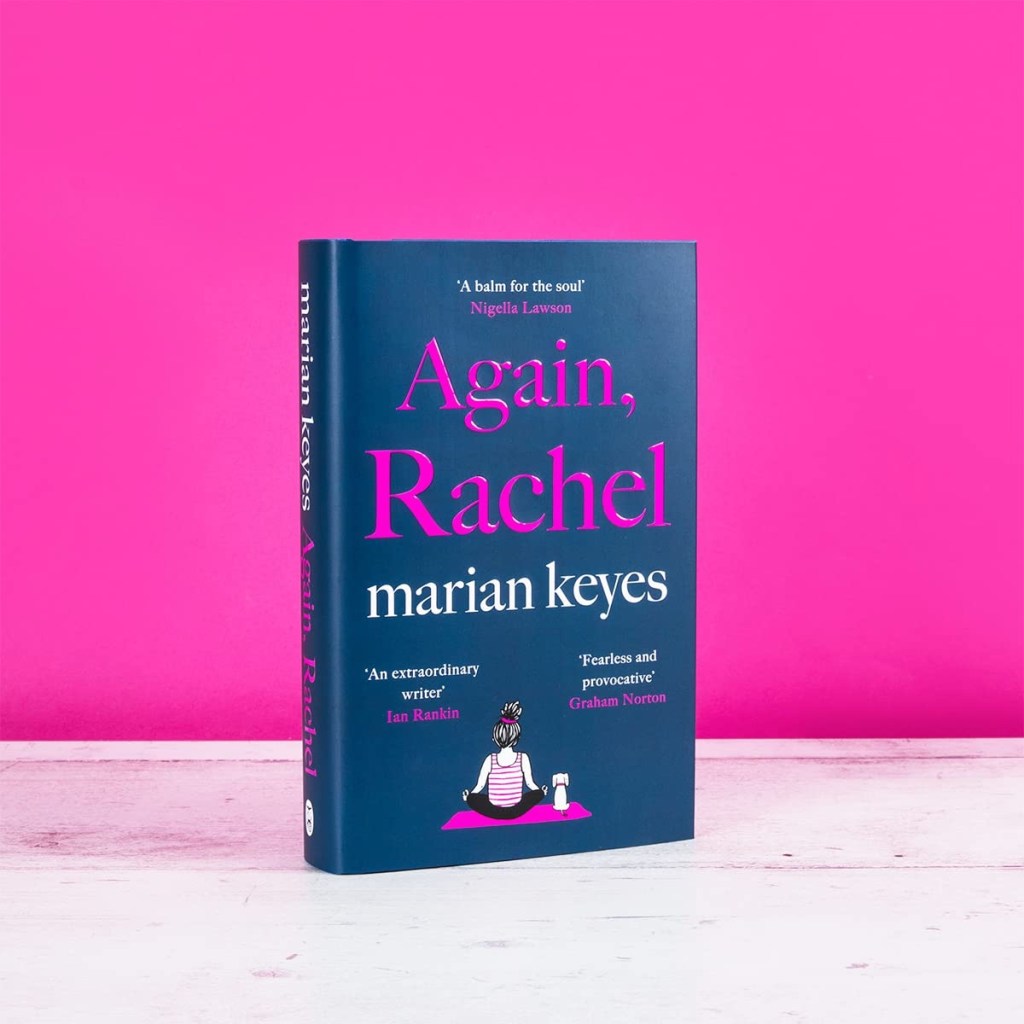
Again Rachel by Marian Keyes

Over the last couple of weeks I’ve had the brilliant experience of buddy reading with my eldest stepdaughter. I bought her Rachel’s Holiday and this sequel Again, Rachel for Christmas and she decided to read them in her down time from revising for her A’Levels. I realised it would be a great opportunity to share the reading experience together. I finished this on my weekend away and I genuinely found it hard to look up from the story. For the author, the anxiety of revisiting a much loved character must be huge, because I felt it too. I’d kept it on one side for this long because of that anxiety. I loved Rachel and the whole Walsh family and I wasn’t sure I wanted to know what happened next. We’re twenty years on from the end of the last book and Rachel is settled, with a job she loves and a happy home. She works as a senior counsellor at The Cloisters – the place where she started her own recovery journey. She owns a beautiful little house and a garden that’s become an unexpected part of her ongoing recovery and mental well-being. She also has a little dog, Crunchie. There’s also a man, Nick Quinliven (known as Quin) who has a penchant for trying new and exciting things from from the latest restaurant to wild swimming and escape rooms. They haven’t said they love each other yet, but he is an important part of her life. Life is great until Rachel hears that Rose Costello has died. Rose was her mother-in-law and although she hasn’t seen her since she and Luke divorced, she does feel an obligation. Should she go to the funeral or not?

Rachel and Luke have never spoken since he left their Brooklyn flat several years ago and cut all contact. I kept thinking what on earth could have separated these two people who really loved each other? Skilfully taking us back and forth in time, Marian Keyes constructs the intervening years as Rachel copes with the unexpected present and the painful past. Rachel’s whole life is upended as she sees Luke for the first time and tries to cope with the emotions of their reunion. However, she’s also plunged deeply into the past and the reasons she and Luke ended. Rachel is emotionally intelligent and knows all about buried trauma, but is surprised when she experiences all of those emotions afresh as if it only happened yesterday. It upsets her equilibrium, but has that sense of calm recovery merely been a front? Rachel hasn’t wilfully deceived others. She’s deceived herself. Is her version of what happened back then even the truth? If given the chance to connect with Luke and unpick their past, should she take it?

Marian Keyes really knows her stuff when it comes to addiction and mental health. It’s always a joy to read her books because they’re so emotionally intelligent. This framework provides so much depth to the characters and their story. Here she shows us a wounded healer, as Rachel struggles through addiction and loss, but still supports clients to achieve psychological change. I love her courage, because anyone who uses their own pain to help others is an incredible human being. I love how Keyes describes group sessions, as Rachel keeps her boundaries and sticks to her script, no matter how strongly she might be identifying with the client or feeling deeply moved by their story. We get to see that conflict in her; as a human being she might want to comfort that person, but as a therapist she must hold back to effect change. She knows that sometimes it’s important to sit with the feelings, to truly feel negative emotions without distractions or outside comfort. They always pass. I loved the wisdom she’s acquired over the years and how she rides to cope with her own trauma the same way.

I was deeply moved by Luke and Rachel’s experience because I’ve been through something similar. It made some parts hard to read, but it was written beautifully and with an accuracy I really appreciated. Keyes offsets the sadness with the usual comic touches, with Walsh family conferences being a great source of humour. All the sisters have their own idiosyncratic characters, causing conflict at times but we know that love is always present. Mrs Walsh is typically overbearing and contrary and her upcoming ‘surprise’ birthday party is an extra source of stress, especially when she decides to invite her ex-son-in-law. Luckily, the meticulously organised Claire has everything in hand, despite also trying to negotiate a session of swinging for her and her husband. Husband Adam is reluctant, but once convinced he becomes so enthusiastic that Claire is furious with him! The love stories are convincing and both Rachel’s current beau Quin and ex-husband Luke have their strengths. I held out hope for Quin and Rachel because I thought they suited each other. However, once Luke is on the scene the chemistry and unfinished business between him and Rachel is undeniable. Quin isn’t the only obstacle either, Luke’s partner Callie is with him in Ireland and seems very determined to keep Rachel close. I didn’t know if Rachel and Luke would be able to move past their history and connect again, as the people they are now. I loved how they tried their hardest to work through what happened, despite the pain it’s clearly causing. Could they possibly remain friends and share their loss, after all only the two of them can fully understand what they went through. Despite knowing that that Rachel didn’t need either man to build a happy life, I knew where my loyalties as we approached the end. Oh what an ending!! I was snap chatting my stepdaughter and we’d both cried buckets at the ending. I was so glad that Marian Keyes had been brave enough to revisit Rachel again.

Published by Penguin 13th April 2023

Marian Keyes is the international bestselling author of Watermelon, Lucy Sullivan is Getting Married, Rachel’s Holiday, Last Chance Saloon, Sushi for Beginners, Angels, The Other Side of the Story, Anybody Out There, This Charming Man, The Brightest Star in the Sky , The Mystery of Mercy Close, The Woman Who Stole My Life, The Break and her latest Number One bestseller, Grown Ups. Her two collections of journalism, Making it up as I Go Along and Under the Duvet: Deluxe Edition are also available from Penguin.

Posted in Publisher Proof

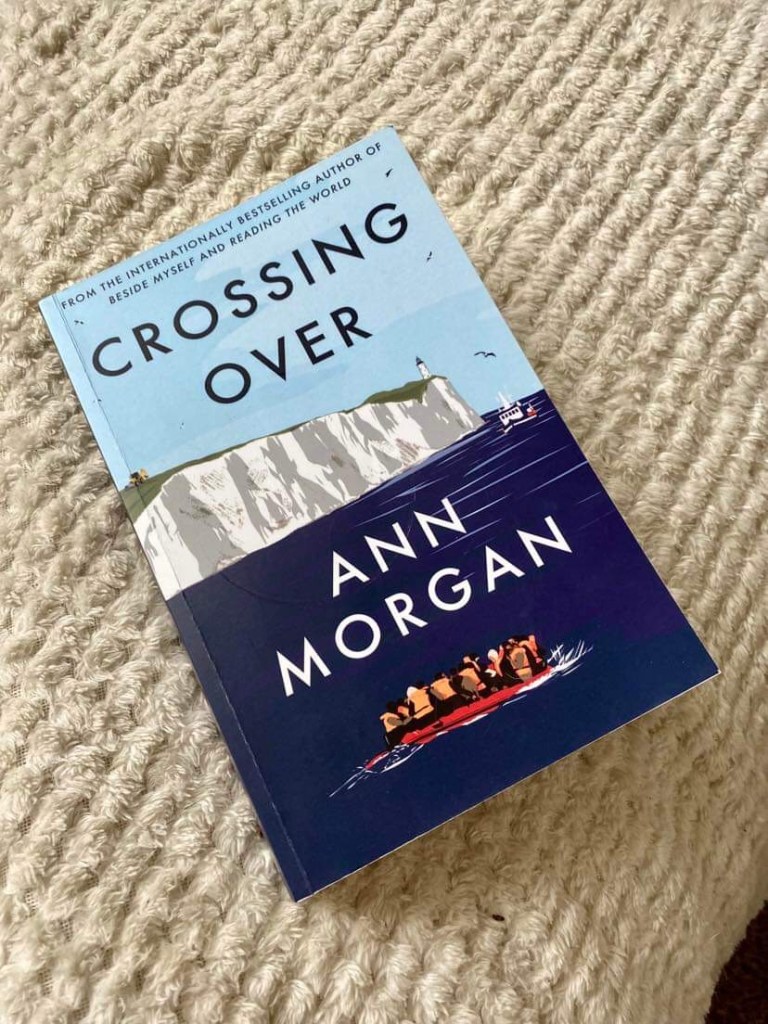
Crossing Over by Ann Morgan

Blurb

Edie is finding the world around her increasingly difficult to comprehend. Words are no longer at her beck and call, old friends won’t mind their own business and workmen have appeared in the neighbouring fields, preparing to obliterate the landscape she has known all her life. Rattling around in an old farmhouse on the cliffs, she’s beginning to run out of excuses to stop do-gooders from interfering when one day she finds an uninvited guest in the barn and is thrown back into the past.

Jonah has finally made it to England where everything, he’s been told, will be better. But the journey was fraught with danger and many of his fellow travellers didn’t make it. Sights set firmly on London, but unsure which way to turn, he is unprepared for what happens when he breaks into Edie’s barn.

Haunted by the prospect of being locked away and unable to trust anyone else, the elderly woman stubbornly battling dementia and the traumatised illegal immigrant find solace in an unlikely companionship that helps them make sense of their worlds even as they struggle to understand each other. Crossing Over is a delicately spun tale that celebrates compassion and considers the transcendent language of humanity.

My Review

My Review

As I started to read Crossing Over I was knocked backwards by how incredibly innovative the narration was, but also how incredibly brave. Edie’s inner world is fractured and of course we don’t know why or what’s going on at first. The author trusts her reader to carry on, to make sense of what’s happening and never underestimates us. We’re plunged headlong into Edie’s world and her desperate attempts to communicate her place in it. The timeless farmhouse she seems to have known all her life, the villagers and her routine of church or WI events all seem to be constants. What’s changing is Edie, as she drops backwards through time, forgets commitments and even visitors or why they are there. As we get to know her, the narrative works on two levels. We are with Edie in whatever time and circumstance her mind places her, but also with Edie as she becomes painfully aware that there’s a way she should be behaving, but even when she’s sure of the proper behaviour it’s often in the wrong context. She’s just on the edge of awareness most of the time, just about recognising from people’s response or facial expressions that she’s not quite hit the mark. Her brusqueness and artificial bonhomie only faintly cover the confusion and fear underneath. The chaos is brilliantly written, in jagged prose that contrasts the inner truth of how much Edie is struggling and the world’s response as it becomes more and more obvious that all is not okay. As Jonah comes into the narrative, also operating at fight or flight level, things become even more confused and complicated. Edie thinks he’s there to spy on her and he’s baffled by the way she communicates, her poor memory and her lapses into the past. Can they come to an understanding of each other and somehow help each other move forward?

This could have been one of those really sentimental novels, designed to be uplifting, but the author avoids that with these complex characters. Not everything about them is sympathetic, they are real and flawed. Edie isn’t a cosy little granny and through her time lapses we start to realise she has experienced traumatic events in her younger years. She has also made bad choices in life. There’s a deeply ingrained sense that there’s one correct way to be and her standards are slipping. Some of the muddled events are a strange mix of humorous and heartbreaking. The cake sale springs to mind, where she has lapsed back to being younger and wears an outfit that’s far too colourful and revealing for an elderly lady with varicose veins to cover. She then offers to keep track of the money and ends up making mistakes, as well as eating a whole batch of highly prized cakes. These types of escapades made me giggle and I loved the way she keeps her head high and won’t bow to their concerns or questions. Yet the fear and anxiety running underneath this forceful front made me feel for her, perhaps because I have a life limiting and degenerative illness I could understand her desperation to stay independent and deny what’s happening to her. Fear makes her angry and lash out, imagining the embarrassment of the vicar and other do-gooders if she let slip some of the secrets she holds about them. I could sense that the past held the clues to Edie’s character and I was waiting for something quite dark to be revealed.

Jonah also holds some dark secrets and memories deep inside, things he has experienced on the journey and from his life before. I read that the author had been very careful writing his character, with a great awareness of the sensitivities involved in writing a black character without that lived experience. She has used sensitivity readers and has revised the novel several times. Yet Jonah isn’t a stereotype or a cardboard cut-out, he has real depth. No one can go through what Jonah has and remain untouched and all credit to the author for not following an easier, and potentially more lucrative, redemption narrative. As a result this might not be to everyone’s taste, but I thoroughly enjoyed delving into two such complex and damaged characters and the disjointed way their stories are told. Have patience with it, get used to the complicated and unreliable narration and you will be rewarded with a rich and thoughtful read about people society increasingly sees as problems to solve, rather than human beings.

Thank you to Renard Press for my proof copy in exchange for an honest review.

Posted in Netgalley, Publisher Proof

Every Happy Family by Sarah Stovell

‘All happy families are alike; each unhappy family is unhappy in it’s own way’. Anna Karenina Leo Tolstoy

I’ve been wanting to try a Sarah Stovell novel for the last couple of years, because it’s a name that’s come up with other bloggers as someone I would enjoy. This story had me gripped to the very last page. This is the history of a family, but told like a thriller. We know that one central incident is the lynchpin of the whole story, explaining the family’s geography, personalities and dynamics with each other. Yet the incident isn’t laid bare for the reader. We must go back and forth in time, with the truth only revealed in short bursts and from different family member’s perspectives. Minnie is an academic, a professor of sociology and women’s studies and is married to Bert, another academic. Minnie is also the matriarch of the Plenderleith family: Owen, his wife Sophie and daughter Layla; Lizzie who lives in a platonic partnership with Tamsin and has a daughter, Ruby; then there’s baby Jessie and her wife Anna who have had two babies in quick succession. For the first time, Minnie will have her entire family under one roof for Christmas. This is a rare occasion because Owen lives in Australia and everyone leads very busy lives. Plus there is a tension at the centre of this family, something they never talk about, which has led to misunderstanding, distance and fear. Fear that if the incident is brought into the open and talked about, the family might implode. However, Owen hasn’t brought his wife to England and his teenage girlfriend Nora is in the village, sorting out her father’s house after his death. Could Nora be the catalyst that for an explosive Christmas?

The depth of characterisation in these family members is brilliant. I found myself understanding each family member as I read their section of the narrative. Even where their point of view clashed completely with someone else, or where they’re acting from a complete misunderstanding, I could empathise with their position. I fell in love with Lizzie, probably because I am overweight, nearing middle age and have an abusive relationship behind me. There was an instant understanding of her emotional need for calm, quiet and meditation. I also understood her medication, whether it was food or a prescription from the GP. Lizzie left a physically abusive relationship when her daughter Ruby was 16, with her self-esteem and sense of self eroded almost beyond repair. Lizzie is the jolly, overweight sister who jokes about her love of cake and seems outwardly confident, someone who owns her choices. Underneath though, is a animal that stays curled into a ball waiting for the next kick. Perhaps unable to trust men, or even trust her own judgement, she has found solace in a platonic family unit with friend Tamsin and although they perhaps don’t fully understand it, the family accepts it as a life choice and Tamsin is very much part of the family. Twenty years earlier, when Owen started dating Nora, Lizzie made friends with this unusual girl. Nora is the opposite of Lizzie, she looks like a fragile waif that you would want to feed and look after. Having lost her mother at a young age, Nora only had her father and it wasn’t an ideal relationship, so when Owen started bringing her home, his family became Nora’s family too. Minnie is impressed with her son’s choice, because she’s not into fashion or anything superficial, she’s bright, idealistic and wants to change the world. She’s going to spend summers working on conservation projects in different parts of the world and she follows through on her dreams. She might seem frail, but she’s determined and not scared of stepping out into the world alone. She’s so different to Owen but they have a connection that’s natural, deep and all encompassing.

I really did understand Minnie, a woman with so much education, intelligence and personal experience. She is the centre of the incident and takes so much of the blame for what happened, even though her point of view isn’t unreasonable. Minnie is on her second marriage, her first was to Owen and Lizzie’s father who was a drunk. Minnie was trying to hold down an academic position, run a household and two children, but always on tenterhooks for the next crisis to hit. Would she come home from work and find their father had hurt himself, given away the family car or worse? When he died, it was more of a relief than anything but Minnie was burned out. I could see immediately that Minnie was one of life’s ‘copers’. She’s used to picking up the pieces of whatever disaster her family members bring home, always without complaint and assuring them it will be ok. Holding the anxiety and responsibility for everyone creates burn out and resentment. When is it someone else’s turn to hold it together? She just wants one opportunity to fall apart. So when the big incident happened Minnie decided this was one mess she would not be clearing up. The fall out from this decision will last twenty years, compounded by miscommunication, layers of regret and grief, and the blame never apportioned out loud.

When trauma isn’t processed and discussed it grows and can come out in the most unexpected ways. Like on Christmas Day, when at least three generations of the family bring the trauma into the present. I loved how the author brought all those strands together to create this tension filled and momentous day. There’s all the usual stuff; prepping the veg, opening the presents and playing games. Between the celebrations, we’re told parts of the story by those who were there and those who are living in the aftermath. Even the grandchildren are affected, because things that are never spoken about can be misunderstood and blown out of proportion. The sections become shorter and faster towards the end, driving then tension and compelling you to keep reading. This is a brilliant, emotional and addictive read that’s a must read for this spring and would make a great TV thriller.

Published by HQ 30th March 2023

Meet the Author


Sarah lives in Northumberland, England, with her family. She teaches creative writing at Lincoln University. During the Covid pandemic, she was unable to write because her children kept interrupting her, so she started baking instead. She now spends her time writing, teaching, hanging out with her kids, baking fine patisserie and trying to believe her luck.